Update: Venezuela-U.S. Tensions Rise

By CLALS Staff

Photo credit: andresAzp / Foter / CC BY-NC-ND

Photo credit: andresAzp / Foter / CC BY-NC-ND

AULA BLOG lets policymakers’ own words characterize the state of relations between Washington and Caracas.

Venezuelan Government Statements

I have ordered the Foreign Minister of the Republic … to declare persona non-grata y to expel from the country these three consular officers from the United States Embassy in Venezuela. We have been watching them for two months already, holding meetings in universities. The story is that they’re offering visas. … Well, let them go and conspire in Washington. …

The demands [made in a statement delivered by Deputy Assistant Secretary of State Alex Lee to Venezuelan Ambassador to the OAS, Roy Chaderton] are unacceptable, insolent. I ordered a diplomatic response. In Venezuela, we are willing to accept all consequences in defense of democracy. I take orders from no one. …

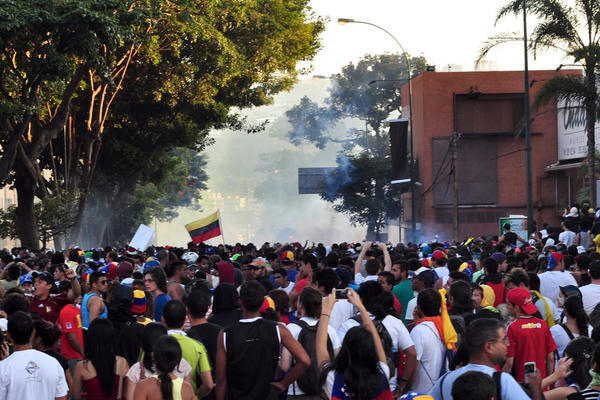
The government of the United States should take responsibility, before the Venezuelan people and the world, for allowing U.S. institutions and individuals to finance, legitimize and promote the actions of persons and groups who attack Venezuelan society violently, and who look to twist the democratically expressed will of our people to build their sovereign destiny in peace.
—President Maduro, February 16
AP, EFE (CLALS translation)

The Bolivarian Republic of Venezuela forcefully rejects the statements made today, Wednesday, February 19, by the President of the United States, Barack Obama, insofar as they constitute new and crude interference in the internal affairs of our country, made worse by being based on false information and baseless accusations.

This is an offense to the heroic land of the Aztecs, of Juárez, of Villa, and of Zapata; to the noble and courageous people of Mexico, the sister nation from which President Obama continues attacking a free and sovereign nation of Latin America and the Caribbean because its policies, principles, and decisions are the result the democratic expression of popular will.

The statement that the independent governments and people of the world await is that in which the government of the United States of America explains why it finances, encourages, and defends opposition leaders who promote violence in our country, and clears up what right Deputy Assistant Secretary [of State] Alex Lee has in sending a message from his government that tries to impose conditions on and threaten the Venezuelan state for having taken judicial action against those responsible for the violent acts of recent days.

As a final point, the Venezuelan government reiterates that it will continue monitoring and taking the necessary actions to prevent U.S. agents attempting to cause violence and destabilization, and informs the world of the nature of the interventionist policies of the Obama administration in our country.
—Despacho de la Presidencia, February 20
(CLALS Translation)

I have just read recent statements by John Kerry – arrogant, interventionist and insolent – that confirm the terms of the threat that I denounced. John Kerry is threatening Venezuela with more violence through his statements giving the green light to violent groups to attack our people. Let the brutal and insolent imperialists know that we will continue defeating it with the force of our people, which is the force of Bolívar and Chávez.
—President Maduro, February 21
Tweets, via TeleSur (CLALS translation)

I call for a dialogue with you, President Obama. I call for a dialogue between the patriotic and revolutionary Venezuela and the United States and its government. Accept the challenge. Let’s initiate a high-level dialogue and let’s put the truth out on the table. … I say this, and some will say, ‘Maduro is naïve.’ No, we will always find a new situation through political dialogue – a change in the historic relations between the U.S. elite and Latin America and Venezuela. … I propose therefore a grand dialogue, and that we name ambassadors, since they haven’t been accepted so far, so they can sit down and talk.
—President Maduro, February 21
Various media (CLALS translation)

There’s a global campaign against Venezuela. It’s a campaign to justify an intervention in the domestic affairs of Venezuela. … [There is] a brutal manipulation campaign, [which] has created a perception in the world that Venezuela is on the verge of civil war, that here in Venezuela we have a group of docile students opposing an illegitimate government.
—President Maduro, February 22
CNN

U.S. Government Statements

In general, when it comes to Venezuela, we’ve made clear that we’re open to having a constructive relationship with the Government of Venezuela. Quite frankly, we haven’t seen that – we have not seen that reciprocated, to be clear. So we also, I think, see a lot of conspiracy theories or rumors out there in the press about how the U.S. is interested in influencing the domestic political situation in Venezuela, which is absolutely not true. It’s not up to us to comment on internal Venezuelan politics.
—State Department Spokesperson, February 13

So we are deeply concerned by rising tensions, by the violence surrounding these February 12th protests, and by the issuance of a warrant for the arrest of opposition leader Leopoldo Lopez. We join the Secretary General of the OAS in condemning the violence and calling on authorities to investigate and bring to justice those responsible for the deaths of peaceful protestors. We also call on the Venezuelan Government to release the 19 detained protestors and urge all parties to work to restore calm and refrain from violence.
—State Department Spokesperson, February 14

The United States is deeply concerned by rising tensions and violence surrounding this week’s protests in Venezuela. Our condolences go to the families of those killed as a result of this tragic violence.

We are particularly alarmed by reports that the Venezuelan government has arrested or detained scores of anti-government protestors and issued an arrest warrant for opposition leader Leopoldo Lopez. These actions have a chilling effect on citizens’ rights to express their grievances peacefully.

We join the UN High Commissioner for Human Rights, Secretary General of the Organization of American States, EU High Representative for Foreign Affairs, and others in condemning this senseless violence. We call on the Venezuelan government to provide the political space necessary for meaningful dialogue with the Venezuelan people and to release detained protestors. We urge all parties to work to restore calm and refrain from violence.

Freedoms of expression and peaceful assembly are universal human rights. They are essential to a functioning democracy, and the Venezuelan government has an obligation to protect these fundamental freedoms and the safety of its citizens.
—Secretary of State Kerry, February 15

The allegations that the United States is helping to organize protestors in Venezuela is baseless and false. We support human rights and fundamental freedoms – including freedom of expression and of peaceful assembly – in Venezuela as we do in countries around the world. But as we have long said, Venezuela’s political future is for the Venezuelan people to decide. We urge their government to engage all parties in meaningful dialogue.
—State Department Spokesperson, February 17

We have seen many times that the Venezuelan Government tries to distract from its own actions by blaming the United States or other members of the international community for events inside Venezuela. These efforts reflect a lack of seriousness on the part of the Venezuelan Government to deal with the grave situation it faces. … With the OAS and our regional partners, we are working to urge calm and encourage a genuine dialogue among all Venezuelans. There is no room for violence by either side.
—State Department Spokesperson, February 18

In Venezuela, rather than trying to distract from its own failings by making up false accusations against diplomats from the United States, the government ought to focus on addressing the legitimate grievances of the Venezuelan people. So, along with the Organization of American States, we call on the Venezuelan government to release protestors that it’s detained and engage in real dialogue. And all parties have an obligation to work together to restrain violence and restore calm.
—President Obama, February 19

More Cracks in the EU’s “Common Position” on Cuba

By William M. LeoGrande*

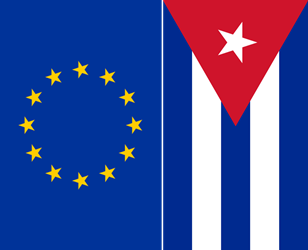
eu cubaThe visit of Dutch Foreign Minister Timmermans to Cuba earlier this month marks yet another crack in the European Union’s 1996 Common Position on Cuba, which conditions normal relations with the island on democratic reforms. Days later, EU Commission President Barroso acknowledged that a number of member states were pressing for a reevaluation of the Common Position, and Spanish Foreign Minister García Margallo announced that the issue would be taken up at the EU foreign ministers meeting on 10 February – adding, however, that any new policy “would have, as a determining factor, respect for human rights.” Amending the Common Position will require unanimity among the EU’s member states, something conservative governments – especially in the former socialist countries – have thus far blocked.

The Common Position has severely constrained the ability of Brussels to respond creatively to rapidly changing conditions in Cuba today, but various European governments have expanded their bilateral economic and political ties with Cuba despite its strictures. Trade between Cuba and Europe, at 2.5 billion euros annually, has roughly tripled since 1996, and official development assistance to Cuba has quadrupled to nearly 60 million euros annually. Policies of engagement have proven more successful than policies of hostility and confrontation.  In 2010, quiet diplomacy by José Luis Rodríguez Zapatero’s government enabled Spain to play a crucial mediating role between the Cuban government and the Catholic Church, leading to the release of more than a hundred political prisoners – the largest such release since the 1970s.

Cuba today is moving in directions that the EU has long favored.  The “updating” of the Cuban economic model, begun in 2011, entails greater economic openness, reduced government regulation of private markets, and a larger role for private sector businesses. At the same time, although challenging Cuba’s one-party system or its socialist society is still out of bounds, there has been a very gradual opening of political space to debate the shape of Cuba’s future.  Replacing the Common Position does not mean that European states, individually or collectively, would abandon their commitment to encouraging greater human rights and democracy in Cuba.  But a warmer political climate would enable them to express their concerns more effectively through quiet diplomacy. What offends Cuba’s leaders is not that other states have different views on these issues; it is that the Common Position makes normal relations contingent on Cuba conforming to European norms, a litmus test that no other Latin American country is required to pass.

*Dr. LeoGrande is Professor of Government in the School of Public Affairs at American University.  This article is excerpted from an essay (click here) he wrote for the London School of Economics and Political Science blog.

Brazil-U.S.: Implications of Postponed State Visit

By Luciano Melo

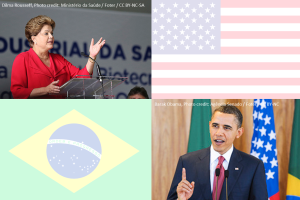
Picture2The postponement of Brazilian President Dilma Rousseff’s state visit to Washington was officially cast as the consequence of the lack of a good explanation for the National Security Agency’s cyber-espionage targeting her, the cabinet, Petrobras (the national oil company), and others.  Although the Brazilian Foreign Ministry issued a letter stating that both countries agreed to the postponement, Dilma’s remarks at the UN General Assembly on September 25 about NSA’s activities were so harsh that it was clear that frustration with the Americans’ widespread spying on Brazilians remains extremely high in Brasilia.

Experts agree that economically the postponement and bilateral tensions hurt the United States more than Brazil.  Contracts worth billions of dollars between Boeing and the Brazilian air force (FAB) are at stake, as are agreements that would favor cooperation in oil exploration and development of biofuels and others that would facilitate the transfer of “sensitive technologies.”  For Brazil, on the other hand, the postponement jeopardizes progress in talks to allow Brazilian citizens to enter the United States without visas – a project long-desired by Brazilians that was on the agenda for the state visit. Some observers in Brazil also speculate that, with the overall Brazilian economic slowdown, Dilma may actually prefer to have Brazilians spending their reais at home, not in the United States.

In a tactical sense, Dilma may have feared that Edward Snowden will leak more damaging information during her visit to the U.S., causing her even greater embarrassment at home and abroad.  In this way, fear and self-protection certainly played a role in her decision. On the other hand, the Brazilian president almost certainly saw domestic political advantages in a good old fight between the Brazilian David and the American Goliath.  She is desperately in need of boosting her popularity after the demonstrations against corruption in the country.  In fact, opinion polls show that public approval of her leadership increased from 45 to 54 percent just since the NSA dustup.

In strategic terms, the postponement fits Brazil’s strategy for claiming its position as a global player – and expressing unhappiness when it feels frustrated.  Dilma already had told President Obama in 2011 that Brazilians would seek a “more balanced relationship” with the United States. The postponement, like the speech at the UN, clearly reflects Brazilians’ desire to be treated better by the United States.  Obama’s speech at the General Assembly the same day, on the other hand, was interpreted by many Brazilians as emphasizing the United States’ traditional role as world policeman – not as the respectful neighbor in a new, multi-polar world order.  In this battle of self-images, Brazil sees itself as one of the global leaders, while the United States sees itself as the mighty one, considering only the European powers as full equals.  The broad base of Brazilians that Dilma is reaching out to is not “anti-American” in sentiment, and indeed wants a robust and respectful U.S.-Brazil relationship.  That is in the interest of both countries, but for this shared objective to be achieved, Washington will need to recalibrate its responses to Brazilian concerns.

Luciano Melo is a PhD candidate in the Department of Government at American University.

The 50 States and U.S.-Latin America Relations

By Aaron Bell

48outlineObservers seeking to fully understand U.S. relations with Latin America often focus on the federal level, but much is occurring in the majority of U.S. states as well.  Over 40 state governments have engaged with issues related to Latin America, most commonly confronting the legal aspects of immigration (particularly rights for undocumented workers who are overwhelmingly Latin American in origin), and organizing trade missions for local businesses.  Arizona, frustrated with federal policies to counter illegal immigration, enacted its own package of restrictive measures under SB 1070 in 2010, which was followed by similar legislative efforts in Alabama, Georgia, Mississippi, and South Carolina.  On the trade front, after abandoning pursuit of a hemisphere-wide free trade area and then focusing on bilateral trade deals, the federal government has shifted focus toward development of a Pacific Alliance. States meanwhile have pursued commercial opportunities themselves, sending at least 17 trade delegations to Latin America over the past three years, primarily to Brazil, Mexico, and Chile.  Trade initiatives have infrequently clashed with federal policy, but a 2012 law in Florida — blocking the state government from contracting with companies with direct or subsidiary business ties to Cuba and Syria – was a rebuke of what some Floridians perceive as a weak approach by Washington. The Brazilian company Odebrecht, which has projects in Cuba that do not violate the U.S. Embargo, successfully sued the state for overstepping federal jurisdiction.  The bill’s sponsors say they intend to pursue new legal means and rally local political opposition to discourage state contracts with “sponsors of terrorism.”

Coordination initiatives by Arizona and Colorado stand out as unique models for other U.S. states.  The Arizona-Mexico Commission and its counterpart, La Comisión Sonora-Arizona, were founded in 1959 by the governors of Arizona and Sonora to coordinate local support for improvements to infrastructure, education, and security in order to benefit economic development in both states. In Colorado, the Biennial of the Americas was first organized in 2010 to highlight Denver’s role as a site of Pan-American cultural exchange.  The second Biennial, held this summer, hosted art exhibitions and roundtable discussions of social issues facing the region.

The trade and immigration focus of most of the state-level initiatives usually does not clash with Washington’s priorities and indeed are complementary of them.  When the states’ initiatives do challenge the federal government, however, the courts usually come down on the side of the latter.  Yet when states have ultimately lost out to federal power, their actions have at times brought U.S.-Latin American relations to the forefront of national debate, such as when Arizona passed tough immigration laws in 2010.  Bold initiatives from the states are rare, but there are alternatives to the standard trade-and-immigration fare.  The binational approaches of Arizona and Colorado aren’t perfect – critics of the Biennial of the Americas note that corporations use it as a platform for their own interests —but the connections they build are valuable and promote progress by connecting actors with shared interests and developing economic and cultural organizations around those ties.


Aaron Bell is a PhD candidate in the Department of History at American University.


What’s Up with Cuba Policy?

By William M. LeoGrande

Photo by Rinaldo W. / Flickr / Creative Commons

Photo by Rinaldo W. / Flickr / Creative Commons

A little over six months into President Obama’s second term, the administration is giving hints that something is afoot in relations with Cuba.  Back in 1994, Fidel Castro told a group of former U.S. ambassadors that he needed a two-term U.S. president to normalize relations with Cuba because no first-term president would have the political courage to do it.  Could Barack Obama be that president?  Efforts to engage with Cuba during his first term were frozen after the 2009 arrest of USAID subcontractor Alan Gross.  Despite evidence that Gross had violated Cuban law, the administration insisted that Gross had done nothing improper and demanded that he be freed immediately.  When he wasn’t, the U.S. position hardened: there would be no improvement in relations with Cuba, not even on issues of mutual interest, until Gross was released.  Gross is still in jail four years later; the non-negotiable demand strategy failed utterly.

The second Obama administration appears to be trying something new.  In May, the Department of Justice dropped its insistence that René González, a member of the “Cuban Five,” serve out his probation in Miami rather than Cuba.  Shortly thereafter, Cuba granted Alan Gross’ request to be examined by his own doctor.  In late May, Josefina Vidal, the Cuban Foreign Ministry official in charge of relations with the United States, met in Washington with Assistant Secretary of State for Western Hemisphere Affairs Roberta Jacobson – the highest-level U.S. official to meet with a Cuban diplomat in several years. After this reportedly constructive encounter, the State Department announced the resumption of bilateral talks on immigration (suspended since January 2011), and on re-establishing direct postal service. Working-level diplomats have resolved most points of disagreement on a postal accord, a Coast Guard search and rescue accord, and an oil spill containment protocol – although the U.S. side is loath to use the word “agreement,” lest it stir up trouble with a small but loud contingent in Congress.

Although U.S. policy is no longer completely paralyzed by the predicament of Alan Gross, it remains tentative, cautious, and incremental – far from the bold stroke that Fidel Castro was hoping for from a second-term president.  In May, the State Department again listed Cuba as a “state sponsor of terrorism” in its annual report, although the rationale read more like a justification for removing Cuba from the list—a move reportedly under discussion by the Obama team.  When the administration sent its FY2014 budget request to Capitol Hill, it again requested $20 million for “democracy promotion” in Cuba, continuing programs like the one that got Alan Gross arrested.  Radio and TV Martí, which cost U.S. taxpayers $28 million a year, continue to beam programs below Voice of America standards to a shrinking radio audience and non-existent TV viewers.  (Cubans call TV Martí “la TV que no se ve” —No-See TV.)  If Obama had the mettle to make the bold stroke, these provocative, ineffectual programs  would be on the chopping block in tough budgetary times.  More positively, the president could take the initiative by appointing a special envoy to talk turkey with Havana, and he could promote a U.S. policy debate on Cuba that’s long overdue.  Incrementalism will only take us so far.  Real change in U.S.-Cuban relations requires vision and courage – qualities Obama displayed on comprehensive health care and immigration reform.  After all, as Lyndon Johnson once said, “What the hell’s the presidency for?”

Dr. LeoGrande is Professor of Government in the School of Public Affairs at American University.

U.S.-Cuba: Time to End the Visa Charade

By Eric Hershberg

Slide1Bad habits die hard, especially when they involve Cuba and American bureaucrats eager to appease the right wing.  For more than 50 years, Washington has been at loggerheads with a revolutionary regime eager to reciprocate incessant aggression and stick its finger in the eye of the Colossus to the North.  Although nothing as absurd as a confrontation at the brink of nuclear war has occurred since 1962, during the ensuing decades both governments have repeatedly provoked one another to exacerbate a conflict that even in 2013 bizarrely perpetuates the Cold War.  To this day, the U.S. proclaims “regime change” as its bottom line condition for normalizing relations with a sovereign country for which such imperial proclamations are justly anathema.  Havana, in turn, is not beyond demonizing American citizens – people who have no connections to the U.S. government or its misguided regime-change programs – who seek to engage their Cuban counterparts.  Last month I spent two hours in the Havana airport answering hostile questions from government goons for whom my assurances that my visit was academic in nature were mysteriously insufficient to get me smoothly admitted through immigration.  An American University colleague reports that she suffered similar harassment at the Havana airport in March.

One manifestation of the anachronistic dispute between the two governments is the infantile tit for tat that both parties play with permitting travel across the Florida Straits even for purposes both claim to support. The dynamic is pernicious, and reflects a combination of ideological extremism and petty bureaucratic behavior on both sides.  Organizers of scholarly meetings in Cuba are increasingly being told that the participation of one person or another would not be acceptable to unspecified authorities in Havana, and the result has been that they have been “disinvited” from workshops in which their participation would have been appropriate.  More troubling, from my perspective as an American citizen, is that since the Center for Latin American and Latino Studies was established three years ago, on three separate occasions the State Department delayed the visas of Cuban academics who I had invited to the University and refused to say why.  Last week, when the Latin American Studies Association convened its annual meeting in Washington, assembling 5,000 scholars from around the world, Cuban researchers who have long traveled to and from the U.S. were denied visas, again for no stated reason. They included three individuals with whom the Center has time-tested, ongoing working relationships:  Rafael Hernández, who edits one of Cuba’s principal journal of society and culture and has taught as a Visiting Professor at Harvard and Columbia; Milagros Martínez, who directs international academic affairs at the University of Havana; and Juan Luís Martín, arguably Cuba’s most innovative sociologist.

That the Cuban government interferes with academic life should be no surprise.  That the practice continues on the U.S. side is another matter.  One would think that Washington would by now have gotten beyond this shameful charade, five years into an administration that knows better.  Somewhere in the system and its mysterious processes –the opacity contradicts our democratic principles – bureaucrats are denying visas arbitrarily and with no accountability.  What threat do these academics, whose work has at times catalyzed important debates in Havana, conceivably pose to the United States?  What is the U.S. national interest in slamming the door on people eager to hear what we have to say in our universities and academic conferences?  The State Department’s visa denials undermine the professional activities of American citizens and contradict the Administration’s own policy of “people-to-people” relations.  It may be too much to expect President Obama to risk incurring the wrath of a shrinking minority in the Cuban-American community and in the Congress to put forth a rational Cuba policy.  But one would have thought that Secretary of State Kerry has the wherewithal and influence required to put an end to the use of visa requests as a means of restaging scenes from a cold war era that ought to have been left behind twenty years ago. The State Department’s actions over the past month evidence its disregard for academic freedom and the hollowness of its assurances to the scholarly community that it does not intend to interfere with our work.  I say: Enough is enough.


Obama’s Second Trip to Central America

SICA logo | Wikimedia Commons | GNU Free Documentation License

SICA logo | Wikimedia Commons | GNU Free Documentation License

The White House has cast President Obama’s trip to Mexico and Central America on May 2-4 as “an opportunity for the President to demonstrate his leadership in the international community in a really important way.”  The spokesman emphasized the “important people-to-people ties” between the United States and Central America because “there are a lot of immigrants” from the region.  The Administration’s press releases stress that the summit in San José, with the presidents of the Central American countries and the Dominican Republic under the rubric of the Central American Integration System (SICA), will focus on collective efforts to promote economic growth and development in the region and on “our ongoing collaboration on citizen security.”

Regional reaction to the visit and summit has been positive – Obama’s interest is clearly welcome – but leaders are already managing expectations.  Costa Rican Foreign Minister Castillo last weekend cautioned that the United States is not able to provide significant new assistance for either economic or security programs.  Commentators note that the visit has not been preceded by the sort of diplomatic activity that would indicate the rollout of significant new policies or programs.

At a summit in Guatemala with Vice President Biden one year ago, Costa Rican President Chinchilla crystalized regional criticism of the U.S. counternarcotics strategy when she said that Central America “is sacrificing the lives, making its enormous sacrifice” and, in a clear reference to Washington, called on the “international community [to] take greater co-responsibility in this struggle.”  Hosting the SICA summit with Obama suggests she is prepared to put such criticism aside, perhaps in hopes that talks focus on the economic and immigration issues.  The White House spokesman’s reference to immigrants – at a time that Obama is pushing ahead with related legislation – may indicate that immigration will be a primary concern for him also.  The last time Obama went to Latin America, for the Summit of the Americas in Cartagena in April 2012, he seemed ill-prepared for criticism of U.S. policies, including its counternarcotics strategy, even from Washington’s closest friends.  With perhaps the exception of Nicaraguan President Ortega, the participants in this Central American get-together seem less likely to deliver a similar grilling, making what diplomats call a “successful meeting” very likely.

High Time for a U.S.-Bolivia Reset

By Rob Albro, CLALS Faculty Affiliate

President Evo Morales in a climate meeting at the University of Oslo | by Utenriksdept | Flickr | Creative Commons

President Evo Morales in a climate meeting at the University of Oslo | by Utenriksdept | Flickr | Creative Commons

Little has changed in the U.S-Bolivia relationship since each expelled the other’s ambassador and suspended full diplomatic ties in 2008.  Last month a Bolivian official accused the United States of trying to sabotage the administration of President Evo Morales, and Morales has not dropped his pugnacious anti-U.S. rhetoric.  Washington, for its part, has persistently criticized Bolivian anti-drug policies, while not acknowledging the failures of its own decades-long “war on drugs.”  As discussions surrounding Secretary of State Kerry’s January 24 confirmation hearing suggested, U.S. policy toward several Latin American countries – including Bolivia – is still on Cold War autopilot, continuing to use code-words like “socialism,” implicitly and incorrectly viewing the recent and historic changes in that country largely through the prisms of Venezuela and Cuba.

Along with many observers outside of Washington, the Bolivian government understands itself to be addressing long-standing demands to correct a historical lack of social inclusion, to institute a more participatory (and “plurinational”) democratic process, and to pursue economic sovereignty.  In notable contrast to Venezuela, with which Bolivia is often lumped together, the country’s long-marginalized indigenous majority is in the national political driver’s seat for the first time.  Despite Morales’s rhetoric to the contrary, Bolivia is far from rejecting the free market. It recently applied for full participation in MERCOSUR, and has welcomed foreign investment in its sizable petroleum and lithium deposits. Along with Peru and Ecuador, Bolivia has also sought ways to maintain economic growth while protecting the environment and avoiding unsustainable extractivist policies.  Bolivia’s is a hybrid approach: mixing an alternative democratic tradition domestically with the promotion of Bolivia Inc. globally.

It is past time for Washington to move on from its one-size-fits-all approach toward Andean countries, and to take more seriously the perspectives and priorities of their peoples and governments.  And Bolivia’s recent history provides ample opportunity for the U.S. to identify common – if not identical – ground.  Morales’s frequent statement that Bolivia is looking for “partners, not bosses” echoes President Obama’s own 2009 speech about “partnership” in our hemispheric “neighborhood.” Obama’s recent inaugural call for more effective “collective action” resonates with the spirit of Bolivia’s ongoing plurinational democratic experiment.  And if climate change is back on the U.S. political agenda, Bolivia continues to be a global catalyst for this important multilateral discussion. Emphasizing these shared problems, experiences, and aspirations, can provide a foundation for closer relations.

Impasse in U.S.-Cuba Relations Enters 54th Year

Three American University professors recently traveled to Cuba for research and discussions on Cuba’s reform process – called “Updating Socialism” – and the island’s relations with the United States.  Today’s entry looks at the bilateral relationship.

Flags in front of U.S. Interests in Malecón.  By: Luiza Leite "Luiza" | Flickr | Creative Commons

Flags in front of U.S. Interests in Malecón. By: Luiza Leite “Luiza” | Flickr | Creative Commons

U.S. and Cuban experts at a conference in Havana in December observed that, despite important areas of mutual interest, the Obama Administration has so far shown little inclination to accept a dialogue.  Some experts opined that the imprisonment of USAID contractor Alan Gross has become a convenient excuse for Obama to avoid any serious engagement.

Other key points:

  • There is no effective political channel for resolving bilateral problems – indeed, no contacts at all at political levels.  The Interests Sections in each other’s capitals handle routine matters, but Washington has rejected Cuban requests to continue semi-annual migration talks.  Cuba gave the United States a proposal for resolving the Gross situation, which the State Department has not even acknowledged receiving.
  • In addition to reiterating longstanding frustration that U.S. policy is stuck in the regime-change mode forged by President George W. Bush, Cuban experts lamented that many Americans latch onto every challenge Cuba faces – such as whether the passing of Venezuelan President Chávez will lead to reductions in oil supplies – as evidence that the Cuban government will “collapse” and therefore that dialogue with it would be foolish.
  • Cuban rhetoric espousing the swap of the “Cuban Five” for USAID contractor Alan Gross has fueled powerful political expectations in Cuba, but Havana’s bottom line on the elements of a humanitarian release is far from clear.  Experts from both countries are perplexed that Washington will not have a dialogue at any level to discuss whether a deal is possible.
  • Many Cuban and American experts believe that one incentive for the United States to improve relations is to rebuild its image in Latin America.  But they note – ruefully – that Latin American does not seem to be a priority for the Obama Administration anyway.

The Gross situation is merely the most recent of a long string of issues blamed for the dysfunctional relationship.  The real causes of the impasse at this point are whether Washington can shift away from policies and well-funded programs fashioned to achieve regime change in Cuba, and whether the two governments can manage the influence that both have given ultra-conservatives unprepared to broach compromise – be it Cubans opposed to releasing Alan Gross while four of the “Cuban Five” remain in U.S. jail, or Cuban-Americans benefiting from the sort of regime-change operations that Gross was conducting.  The lack of a reliable channel for political leaders above both bureaucracies to talk creates the risk of manageable problems spinning out of control, to the detriment of both countries’ interests.

Obama and Peña Nieto: Turning the same page?

By Tom Long
CLALS doctoral research fellow

Official White House photo by Pete Souza | public domain

Official White House photo by Pete Souza | public domain

On Saturday, Mexico’s new president Enrique Peña Nieto took office and the country’s oldest party, the Partido Revolucionario Institucional, returned to power. After six years dominated by an exhausting and bloody war against drug cartels, Mexico seems ready to turn the page on outgoing President Felipe Calderón. During the last few months, Peña Nieto has tried to steer the attention of the world—and the United States—away from a disproportionate focus on drug violence. In a recent article published in The Economist, the new president downplayed drug cartels, focusing instead on plans for the economy and to “recover our leadership in Latin America.” Security was just one of thirteen proposals in his inaugural speech. In part, Calderón has given Peña Nieto a head start as he begins his term, leaving behind strong economic growth and a dip in violence. Although Calderón himself started the switch to a violence-reduction strategy, his name is likely to remain closely associated with the frontal military assault on the cartels launched at the beginning of his administration and recalibrated only in his final year; Peña Nieto is positioned to gain credit for a return to normalcy.

This desire to turn the page also marked Peña Nieto’s s pre-inaugural meeting with President Barack Obama. Both leaders seemed to be playing the same tune.  Mexico has become the front line in the war on drugs, and the U.S. has spent billions on military, police, and other projects lumped under a “Merida Initiative” label. After their meeting, Obama and Peña Nieto promised to expand the bilateral agenda to include an expansion of trade, cooperation on energy, and discussions of immigration that go beyond border fences. Obama spoke effusively of Mexico’s importance as a partner, while Peña Nieto said the two had a “shared vision” of how to create jobs in both countries. On the stage with Obama as elsewhere, Peña Nieto reiterated calls for the United States and Canada to build on NAFTA and further regional integration to improve competitiveness.

It would be a healthy change if the two presidents could restore balance between economic and security aspects of U.S.-Mexico relations. Image matters – and the deterioration of Mexico’s brand has undermined both investment and tourism. The military approach to drug trafficking has inflicted enormous costs in economic and human terms with questionable payoffs, but Mexico cannot go back to old patterns of accommodation. Domestically, the new president needs to attack the culture of impunity by building a stronger and more independent judiciary in order to reduce the frightful percentages of crimes that are never investigated or prosecuted. Accountability remains weak, especially at state and local levels; improving it would require Peña Nieto to take on powers in his own party. Placing all these objectives under a “Merida plus” framework would counterproductively squeeze broad reforms into the drug-war box. If the two presidents are sincere about rebuilding a balanced partnership, they need to take action quickly on immigration and commerce. Otherwise, the gravitational pull of the war of drugs will again consume bilateral ties.