Biden’s executive order to protect immigrant spouses of citizens from deportation will benefit their families and communities

by Jane Lilly López, Kristina Fullerton Rico*

President Joe Biden prepares to board Air Force One in California on June 16, 2024. Mandel Ngan/AFP via Getty Images/ Creative Commons License

Rodrigo Salazar is a man who entered the U.S. without a visa and has been living in the country without legal status ever since. Because of this, Rodrigo, who asked that we not use his or his wife’s real names in order to protect their identity, cannot advance from low-paying jobs at restaurants and car washes. 

His wife, Carmela, is a U.S. citizen, but she is also facing career limitations. Carmela doesn’t feel safe moving to a place where she could get a higher-paying job. She worries that Rodrigo’s lack of legal status would be more obvious in a city with a smaller Latino population, which would put him at risk for arrest and deportation.

The entire Salazar family, including their two children, live with the constant fear of family separation if Rodrigo is deported.

Immigrants like Rodrigo, who are living in the U.S. without legal status but are married to U.S. citizens, will now have protectionfrom deportation, President Joe Biden announced on June 18, 2024. In order to qualify, they must have arrived 10 or more years ago and be married to a U.S. citizen. Those who meet these criteria will be able to get work permits and can get on the pathway to citizenship while working and living in the U.S. legally. 

The Biden administration estimates that about 500,000 immigrant spouses of citizens will be protected from deportation with this policy change. The policy will also apply to approximately 50,000 U.S. citizens’ stepchildren who are living in the U.S. without legal immigration status.

We are migration scholars who study mixed-citizenship marriages – meaning some family members are citizens or have the legal right to stay in the U.S., while others do not – and the consequences of being undocumented. Our research shows that when one family member lacks legal immigration status in the U.S., the family as a whole assumes an undocumented status. 

When one family member cannot safely travel, work or access health careall family members suffer. The opposite is also true. When a family member is able to shift from living without legal status in the U.S. to getting legal status, the lives of the entire family improve.

A shift in immigration policy in the 1990s

Generally, having an immediate family member who is a U.S. citizen gives a foreign citizen the chance to live legally in the U.S. with permanent residency and a pathway to citizenship. 

For most of the 20th century, all spouses of U.S. citizens who met the legal standards for qualified marital relationships were able to become citizens through a relatively straightforward process, but that changed in 1996

A 1996 law called the Illegal Immigration Reform and Immigrant Responsibility Act imposed harsh penalties for people living in the U.S. without legal immigration status. One of the penalties is a 10-year “bar to re-entry” for anyone who has lived without a visa in the U.S. for one year or more. This ban goes into effect as soon as that individual leaves U.S. territory.

Technicalities create a divide

A consequence of this 1996 law was that getting a green card, which is an identity document that gives someone legal permanent residency in the country, became dependent on whether an immigrant entered – and remained in – the U.S. with or without a visa. 

This change in the law produced a stark inequality in U.S. citizens’ ability to legally sponsor their immigrant spouses for permanent residency.

If an immigrant spouse of a U.S. citizen has overstayed a visa, this person can apply for legal immigration status – through their spouse – from within the U.S. In these cases, the spouse does not have to leave U.S. territory and is not subject to the 10-year ban. 

In contrast, if a U.S. citizen’s spouse entered the U.S. without a visa or other legal permission, they must leave the country for the final step in their legal immigration application process. But when they leave the country, their 10-year ban automatically goes into effect. 

This means that although every U.S. citizen’s spouse, including those lacking legal immigration status, technically qualifies for legal permanent residency, some of them will have to spend a decade or more outside the country before they can actually get a green card.

As a result, over the past few decades, millions of immigrants who were living in the U.S. without legal permission but were married to U.S. citizens have not gotten legal immigration status

While the 10-year bar applies only to immigrants without legal status, in practice it also profoundly affects their citizen spouses, too

In these cases, citizens married to immigrants without legal permission to be in the U.S. have two difficult options. They can resign themselves to a life of fear and limitations in the U.S., including the ever-present threat of their spouse’s deportation, or they can give up living in the U.S. altogether for a decade or more.

A new U.S. citizen, originally from Mexico, poses with his family after a naturalization ceremony in November 2023 in Long Beach, Calif. Biden’s new policy will make it easier for undocumented immigrants with citizen spouses to become citizens. Mario Tama/Getty Images

The impacts of Biden’s immigration policy changes

The Biden administration has connected this new executive action on families to its recent announcement that it will heighten restrictions for seeking asylum, which scholars have called a ban on asylum.

The administration said in a press release that it both wants to “secure the border” and expand “lawful pathways to keep families together.” 

Under this new policy, immigrant spouses who entered the country without a visa before June 17, 2014, will be allowed to “parole in place,” which is similar to a policy that benefitsmilitary veterans’ immigrant spouses who lack legal immigration status in the U.S. Parole in place means that these immigrants will have authorization to work and increased protection from deportation. 

Parole in place will also allow immigrant spouses of U.S. citizens to have their immigration applications processed within the U.S., whether they arrived with or without a visa. This means they will no longer need to leave the country for 10 years or more if they entered the U.S. without a visa.

Having the legal right to work in the U.S. will allow these immigrant spouses to find jobs that better match their education and skills. Some estimates suggest that this could increase an immigrant’s wages anywhere from 14% to 40% more than what they currently earn

The executive action will also yield economic benefits for the communities where mixed-citizenship families live.

Economic analyses measuring the impact of expanding work authorization and access to citizenship predict that this will create new jobs, boost incomes across communities, increase local and federal tax revenues and encourage ongoing economic growth.

As scholars of migration, we believe that this executive action is an important step toward guaranteeing that U.S. citizens who marry immigrants do not end up experiencing negative consequences because their spouses cannot legally live, work or vote in the U.S. It will also prevent the de facto deportation of U.S. citizens alongside their noncitizen spouses.

In essence, this policy change benefits American families and protects the rights of U.S. citizens to marry the person they love, keep their families together and even live in their own country. Beyond helping families, this change will have far-reaching economic benefits for the communities – and country – where they live.

Copyleft Creative Commons. Reproduction with full attribution is possible by news media and for not-for profit and educational purposes. Minor modifications, such as not including the “About the Study” section, are permitted. 

*Jane Lilly López is an Assistant Professor of Sociology, Brigham Young University. Jane Lilly López’s research on mixed-citizenship couples has received funding from the National Science Foundation, UC MEXUS, and the Center for US-Mexican Studies.

*Kristina Fullerton Rico is a Research Fellow, Center for Racial Justice, Ford School of Public Policy, University of Michigan. Kristina Fullerton Rico’s research on the impact of long-term undocumented immigration status has received funding from the Russell Sage Foundation and Sociologists for Women in Society. 

This is reproduced from The Conversation with the authors’ permission.

https://theconversation.com/how-bidens-executive-order-to-protect-immigrant-spouses-of-citizens-from-deportation-will-benefit-their-families-and-communities-231651

The Legacy of U.S. Immigration Policy Towards Cuba

by William M. LeoGrande*

Cuban Privilege by Susan Eckstein / Creative Commons License

Susan Eckstein’s recent book, Cuban Privilege: The Making of Immigrant Inequality in America, is a deep dive into how the U.S. government structured its immigration policy to the advantage of Cuban migrants as part of its Cold War policy to destabilize Fidel Castro’s revolutionary government. The book caused quite a stir among some Cuban Americans, who were insulted that someone pointed out policies that helped make the Cuban American community a success story.  

Cuban Privilege was not Eckstein’s first book on Cuban diaspora. She has written extensively on the threads that connect Cubans abroad with their family still on the island. Her book The Immigrant Divide: How Cuban Americans Changed the U.S. and Their Homeland was one of the first in-depth studies of how the Cuban American community began reconnecting to the island in the 1980s and 1990s, building bridges based mainly on family ties.

In the 1960s and 1970s, both the Cuban and U.S. governments erected a “sugar cane curtain” that made it almost impossible for families to stay connected across the Florida Strait. Travel was prohibited, direct mail service was unavailable, and connecting by phone was nearly impossible and prohibitively expensive. 

But in the 1980s, travel opened up, and remittances began to flow. Ever since the Special Period, Cuba’s economic crisis in the 1990s, Cuban American remittances have made an essential contribution to the livelihood of millions of Cuban families—a stark reality demonstrated by the humanitarian crisis on the island that resulted when Donald Trump and the COVID-19 pandemic cut remittance flows by some two-thirds. 

Cuban Privilege reverses the lens to look not at Cuban immigrants but at the U.S. immigration policies that brought them here. It is the definitive account of how Washington, motivated by the Cold War, gave Cuban immigrants privileged access to the United States and unprecedented support once they got here. Key elements of that privilege remain in place today, exacerbating the current migration crisis—foremost among them the Cuban Adjustment Act, which allows Cubans living in the United States for a year to apply for permanent residence, regardless of their form of entry.  

Most of the time, academics toil in relative obscurity, writing for one another in hopes of contributing new knowledge to their chosen field. On occasion, they write for a broader audience, hoping that their expertise might have some positive impact on public policy. And most of the time, when they speak truth to power, power isn’t listening. Rarely do academic contributions to the public debate attract much attention or make much difference.

Susan Eckstein’s Cuban Privilege is a cautionary tale of what can happen when the public does take notice. Presenting her book in Miami, Eckstein endured 30 minutes of hate, denounced as an agent of Castroism, because she had the nerve to state the obvious — Cuban immigrants to the United States have enjoyed enormous privileges that no other immigrant group has enjoyed. To say that is not an attack on Cuban Americans; it’s a simple truth. 

Ironically, the policy of privileged immigration for Cubans, which was intended to weaken and embarrass the Cuban government, has instead weakened and embarrassed the U.S. government producing a series of migration “crises” or more correctly punctuated increases (Camarioca in 1965, Mariel in 1980, the rafters crisis in 1994, and the post-Covid increase in emigration that is ongoing today), and distorting U.S. domestic politics by creating one of the most powerful domestic foreign policy lobbies in history—Cuban Americans in south Florida.

For 30 years, successive presidents —with the sole exception of Barack Obama— have been afraid to stand up to the Miami lobby on U.S. policy toward Cuba. As President George H. W. Bush’s National Security Adviser Brent Scowcroft put it, “Cuba is not a foreign policy question. Cuba is a domestic issue.” The result is a policy of regime change that, in 65 years, has done nothing to advance the cause of democracy or human rights in Cuba, but has lowered the living standard of the Cuban people and alienated Washington from allies in Latin America.

Before the Trump administration, Cuban American attitudes were gradually evolving toward moderation and support of engagement. President Obama won more Cuban American votes in Florida than any Democrat before him. And a majority—albeit a narrow one—supported his normalization policy.

But Trump’s return to a policy aimed at overthrowing the Cuban government re-energized the most recalcitrant Cuban American right. Recently both attitudes and voting behavior in the community seem to have swung sharply to the right, the result of a new wave of immigrants, a toxic social media environment, and disinformation spread by some of Miami’s Spanish language media.

As a result, Democrats have gone back to being afraid of Cuba—not the island, but the issue. Despite his campaign promise to return, for the most part, to Obama’s policy of engagement, President Biden has kept in place most of Donald Trump’s draconian economic sanctions aimed at strangling the Cuban economy.

            The final irony is that Florida does not actually matter very often in presidential elections. Conventional political wisdom casts it as a critical swing state. But in the sixteen presidential elections since 1960, Florida has determined the outcome in Electoral College only twice: in 2000, when Cuban Americans gave George W. Bush a 537-vote margin over Al Gore because the Clinton administration returned six-year-old Elián González to his father in Cuba; and in 2004 when Bush narrowly beat John Kerry.

            Kerry lost Florida by such a wide margin that he would have lost the state even if he had won the Cuban vote. So Cuban Americans in Florida have only cost the Democrats the White House once: in the unforgettable election of 2000. Ever since, Democrats have suffered from electoral post-traumatic stress disorder over the issue of Cuba, and it appears that 2024 will be no different. That is the legacy of the immigration policies that Susan Eckstein so expertly chronicles in Cuban Privilege.

Copyleft Creative Commons. Reproduction with full attribution is possible by news media and for not-for profit and educational purposes. Minor modifications, such as not including the “About the Study” section, are permitted. 

*William M LeoGrande is a CLALS faculty affiliate and Professor of Government at American University in Washington, DC, and co-author with Peter Kornbluh of Back Channel to Cuba: The Hidden History of Negotiations between Washington and Havana(University of North Carolina Press, 2015).

Where Is Cuba’s Economic Policy Going?

by Ricardo Torres*

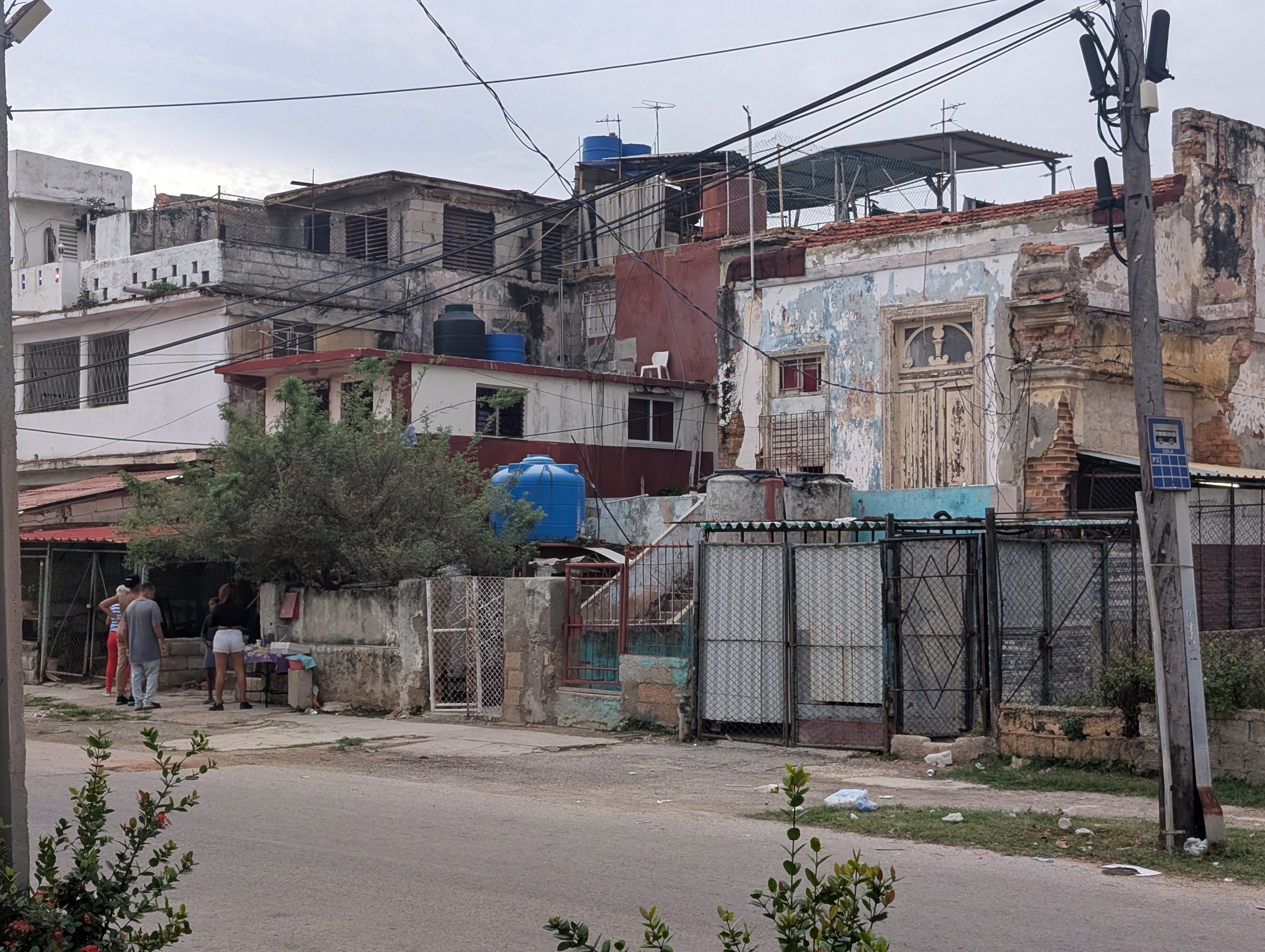
A photo of Havana, Cuba taken in December 2023 / Ernesto Castañeda / Creative Commons License

In the concluding sessions of the National Assembly in December, the Cuban Prime Minister alluded to new economic policy initiatives aimed at “correcting distortions and boosting the economy.” Subsequently, he emphasized that these reforms should not be perceived as mere continuation of previous policies. His discourse encompassed several areas, including pricing and subsidies, the role of the private sector and small and medium-sized enterprises (SMEs), international trade and tariff regulations, investment, and the foreign exchange market, among others. In the first weeks of January, various representatives from the government elaborated on the price increases of essential goods, which has become a focal point of discussions due to the immediate impacts on people’s daily lives. This new wave of measures is being introduced against a unique context:

  • The Cuban economy’s inability to embark on a path to sustainable recovery after the economic downturn triggered by the COVID-19 pandemic is noteworthy. The year 2023 witnessed a contraction in the Gross Domestic Product (GDP), marking this period as the most severe crisis encountered by Cuba since the revolution in 1959, given its widespread economic, social, and political implications.
  • The ineffectiveness of previously implemented economic policies, including the so-called “Monetary Ordering,” is evident. The Cuban authorities persistently attribute these economic adversities to external factors, notably the sanctions imposed by the United States. There is little mention of the government’s obvious mistakes.  
  • The Biden administration’s limited opening towards Cuba has narrowed the window to implement substantial measures to mitigate the island’s economic challenges. 
  • The Cuban government has continued to search for support elsewhere. For example, Russia and China have provided some economic support, and Mexico has provided cheap oil, oxygen after the pandemic, and some food. But not one country can provide all the support that Cuba needs.

The measures announced thus far appear to have limited potential in contributing to the economic recovery. The fiscal strategy focuses more on revenue collection rather than containing expenditures, as indicated by the incomplete budget data for 2024 when the deficit is set to increase. 

  • Notably, the emphasis remains on preserving the extensive public sector, including state-owned enterprises, without introducing substantial structural reforms.
  • The marginalization, or at most, a cursory mention of other structural reforms aimed at stimulating domestic supply, is significant. The criticism of the private sector and the lack of initiatives to address external debt are particularly conspicuous. 
  • The potential impact of the price increase and these newly announced measures on the fiscal deficit remains ambiguous, especially given the scant details regarding their implications for the 2024 budget. Besides, these measures will likely exacerbate inflationary pressures in the short term.

In a rather dramatic turn, Cuban authorities announced the suspension of the price increases on January 31st, citing a cyberattack, and failed to commit to a new date. Furthermore, the government reshuffled the cabinet, including the sacking of the Economy Minister. 

The challenges of runaway inflation and elevated fiscal deficits should be viewed as symptoms rather than the root cause of the economic malaise. Historical evidence from the 1970s and 1980s has demonstrated that attempts to manipulate aggregate demand to counter stagflation are futile. Cuba’s economic stagnation, however, presents a unique case, having persisted for decades and intensified due to a series of adverse external shocks commencing around 2016 with the decline of Venezuela’s economy. Superficial adjustments to economic policies are unlikely to yield significant medium-term benefits. Instead, a concerted effort towards systemic change by both the government and international stakeholders is imperative. The existence of the political will and strategic insight, both within Cuba and internationally, to enact such comprehensive reforms to the ultimate benefit of the embattled Cuban people remains an open question.

Copyright Creative Commons. Reproduction with full attribution is possible by news media and for not-for profit and educational purposes. Minor modifications, such as not including the “About the Study” section, are permitted. 

Ricardo Torres is a Professor and Faculty Fellow in the Department of Economics, Research Fellow at American University’s Center for Latin American & Latino Studies, and Coordinator of the Red de Investigadores Cubanos (RedIC).