Haiti’s Electoral Crisis Finally Concludes, for Now

By Emma Fawcett*

32009767260_e0738041c9_k

Newly inaugurated Haitian President Jovenel Moïse speaks with the Dominican press. / Karla Sepúlveda / Presidencia República Dominicana / Flickr / Creative Commons

Haitian President Jovenel Moïse, inaugurated this week following an 18-month electoral crisis, is likely to have a short honeymoon before the country’s multiple crises hit him hard.  While the transfer of power was long overdue – after a year of transitional rule by interim President Jocelerme Privert – questions remain about Moïse’s ability to govern.  He is a 48-year-old businessman with no political or governing experience.  The election delays suppressed voter turnout to a paltry 21 percent, so the 55 percent of votes that he won amounts to just 9.6 percent of registered voters.  Tensions remain high among the other 53 former presidential candidates.

  • Challenges to Moïse’s term in office have already emerged. While Haitian presidential terms are five years, some constitutional experts believe that Moïse lost a year due to the electoral crisis – that interim President Privert’s year in office counted – and therefore that he has only four years remaining.
  • Moïse already faces allegations of corruption. In a case he claims is politically motivated, he has been under investigation for money laundering since irregularities in his bank transfers were first discovered in 2013.  Four opposition senators last week requested additional information about the investigative judge’s findings, and another former presidential candidate has filed as a plaintiff in the case.  The judge’s order and the prosecutor’s intentions have not been made public, but the investigation has been expanded to include interviews of Moïse’s wife and several other associates.  Several senators boycotted the inauguration in protest.

Haitian economic and social problems remain severe.  The mandate for MINUSTAH, the UN peacekeeping mission that has been in place for the last 12 years, expires in mid-April.  Foreign assistance has continued to decline, although Hurricane Matthew caused $2.8 billion in damage last October and another 30,000 cases of cholera are expected this year.  Thousands of Haitians have fled the island, including about 5,000 currently awaiting entry on the US-Mexico border.  Inflation exceeds 14 percent a year, and growth for 2017 is expected to be -0.6 percent.  Even the budget for Moïse’s inauguration was slashed by 50 percent in light of austerity measures, although several foreign presidents and a U.S. delegation led by Omarosa Manigault, a former reality TV star and assistant to President Trump, attended.

Moïse faces tremendous challenges – without anything resembling a popular mandate.  If he is prosecuted, moreover, Haiti could be rapidly plunged back into political instability.  But  foreign media indicate that many Haitians hope that his business background as a banana exporter and auto parts dealer will help him revive the economy, especially the agricultural and textile sectors.  Moïse has indicated repeatedly that he hopes to preserve and expand Haiti’s preferential trade agreements with the United States: “President Trump and I are entrepreneurs, and all an entrepreneur wants is results, and therefore I hope we’ll put everything in place to make sure we deliver for our peoples.”  With the electoral uncertainty finally over, Moïse is slightly better positioned than his two most recent predecessors – transitional President Privert and embattled President Michel Martelly – to foster political stability, engage the diaspora, and encourage foreign direct investment.  But with so many competing priorities and the distraction of his money laundering case, it will be enormously difficult for the new president to serve “all Haitians” as his inaugural address promised.

February 9, 2017

 Emma Fawcett is an Adjunct Professorial Lecturer at American University.  Her doctoral thesis focused on the political economy of tourism and development in four Caribbean countries: Haiti, Dominican Republic, Cuba, and the Mexican Caribbean.

Michel Temer’s Shrinking Presidency

By Matthew Taylor*

18906523753_b18572805f_k

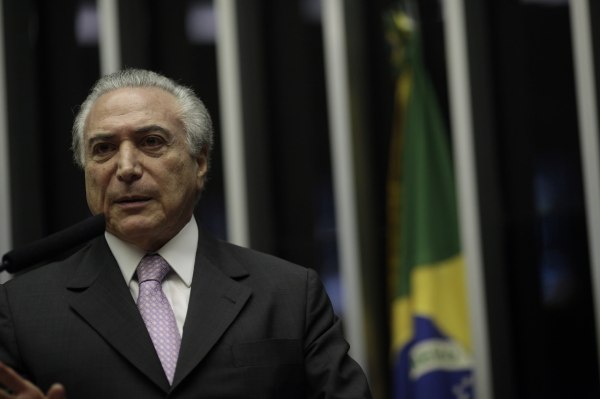
Brazilian President Michel Temer. / PMDB Nacional / Flickr / Creative Commons

Self-inflicted troubles are forcing Brazilian President Michel Temer into difficult choices between his party and an angry public.  When he became president three months ago, his game plan was simple and bold: undertake legislative reforms that would put the government’s accounts back on track, enhance investor confidence, stimulate an economic recovery, and possibly set the stage for a center-right presidential bid (if not by Temer himself, at least by a close ally) in the 2018 elections.  Allies in his Brazilian Democratic Movement Party (PMDB) would ensure that he had the backing of Congress to push through reforms that might not bring immediate returns, but nonetheless might improve investor confidence.  Sotto voce, many politicians also assumed that the PMDB would be well placed to slow the pace of the bloodletting occasioned by the massive Lava Jato investigation and stabilize the political system.

Last week, the public’s worst suspicions of the PMDB-led government were confirmed by a two-bit scandal that claimed Government Secretary Geddel Vieira Lima, who was putting pressure – with Temer’s help – on a historical registry office to authorize construction of a Salvador building in which he had purchased an apartment.  Temer sought to repair the damage by holding an unusual press conference Sunday in which he promised to veto a proposed congressional amnesty of illegal campaign contributions.  But Temer now faces another important ethical fork in the road: how to respond to Chamber of Deputies approval of anti-corruption legislation yesterday that – while originally intended to boost efforts to clean up government – neuters the reforms and prevents judicial “abuses,” a move widely seen as an effort to intimidate judges and prosecutors.  The bill now heads to the Senate, which seems unlikely to repair the damage and indeed, may further distort the bill in an effort to undermine Temer’s ability to resurrect the reforms through selective vetoes.  The reform package had been a poster child for the prosecutors spearheading the Lava Jato investigation, and it was pushed by a petition drive that gathered more than two million signatures.  Prosecutors have threatened to resign if Temer signs the severely mangled measure into law.

Despite Temer’s initial successes, the outlook for the remainder of his term remains grim.  The bad news is going to continue, causing the Congress and Temer even more sleepless nights.  A deal expected soon reportedly will require the Odebrecht construction firm to pay a record-breaking penalty for its corrupt practices (perhaps surpassing even the US$1.6 billion Siemens paid to U.S. and European authorities in 2008), and plea bargains by nearly 80 company executives might implicate as many as 200 federal politicians.  It threatens to paralyze legislators and further weaken the PMDB’s already decimated crew, undermining Temer’s ability to coordinate with Congress.  Economic forecasts now show economic growth of less than 1 percent in 2017 and, with 26 state governments facing budget crises, politically influential governors are begging for federal help.  A much-needed pension reform promised by Temer has not yet been made public, much less begun the tortuous amendment process in Congress.  Temer increasingly is being forced to choose between helping his allies and achieving reform, or satisfying a public fed up with politics as usual and baying for accountability and a political cleanup.  It will take all of Temer’s considerable political skills and knowledge of backroom Brasília to revise his game plan for these challenging times.

December 1, 2016

* Matthew Taylor is Associate Professor at the School of International Service at American University and Adjunct Senior Fellow for Latin America Studies at the Council on Foreign Relations.  This is adapted from this CFR blogpost.

Guatemala: Cheers for Trump?

By Ricardo Barrientos*
22441078334_df0b0beceb_k

Iván Velásquez, head of the UN International Commission Against Impunity in Guatemala (CICIG). Velásquez and his team face a difficult task of bolstering Guatemalan anti-corruption efforts. / US Embassy Guatemala / Flickr / Creative Commons

Anti-corruption efforts in Guatemala have suffered serious setbacks in recent months, and the election of Donald Trump as U.S. president appears likely to hurt them further.  A number of media reports have already documented that efforts by right-wing Army veterans accused of crimes against humanity during the civil war, politicians, and campaign financiers are seriously threatening anti-corruption efforts started in 2015, which swept former President Pérez Molina from office.  President Jimmy Morales, who campaigned that he was “neither corrupt, nor a thief,” has failed to fulfill voters’ mandate to fight corruption, and instead has allowed Army friends to dominate his administration.  Called la juntita, Morales’s closest advisors are former military officers who operate in the shadows, are widely suspected of crimes against humanity during the war, and are alleged to be using their influence for personal enrichment.

  • The Supreme Court and Congress are also under pressure. Numerous media reports point to members of the Supreme Court, including its President, being tainted.  One magistrate, whose son has already been convicted of illicit use of public funds, is widely suspected as well.  In the legislature, the election of a new Directive Board increased the power of members long suspected of links with the mafias.  (Some local observers speculate that the internal voting was conducted on the U.S. Election Day because U.S. Ambassador Todd Robinson, an advocate of anti-corruption initiatives, and his staff would be too busy to care about what was going on in the Guatemalan Congress.)

With the Central Square in Guatemala City empty and only memories remaining of the citizen mass demonstrations of 2015, the last line of defense against the “re-capture” of the Guatemalan State are Iván Velásquez, head of the UN International Commission Against Impunity in Guatemala (CICIG), and Guatemalan Attorney General Thelma Aldana.  They have already started investigations and are prosecuting corrupt members of Congress, including members of the new Directive Board.  U.S. government support has been crucial.  Ambassador Robinson may have crossed the thin line between active diplomacy and intervention at times, but many observers note that – quite unusual in Latin America for a U.S. ambassador – he enjoys strong support and sympathy from Guatemalans, and he is disliked by the Army veterans and others who are part of what in Guatemala is known as the “old politics.”

Corrupt Guatemalans appear to believe that their first hope – to neutralize the U.S. Embassy – moved one step closer to reality with the election of Donald Trump last week.  Politicians and commentators opposed to U.S. support for CICIG celebrated.  One proclaimed that “Democrats shriek; Republicans vote,” while another interpreted the message of Trump’s victory for Ambassador Robinson: “You’re fired!”  The mafias would not expect a Trump Administration to support them, but rather – interpreting the President-elect’s campaign statements – simply adopt a policy of indifference toward Guatemala and its internal affairs.  The corruption networks of the “old politics” in Guatemala hope that Trump will stay focused on nothing in Latin America except stopping migration.  Analysts who say that everyone in Latin America is regretting Trump’s victory are wrong.  Trump’s election may help the corrupt win a battle or two, but the war against corruption in Guatemala is far from over.

November 18, 2016

*Ricardo Barrientos is a senior economist at the Central American Institute for Fiscal Studies (Icefi).

Brazilian Prosecutors: Crossing the Line?

By Fabio Kerche*

option3

PSB Nacional 40 / Flickr / Creative Commons

Brazil’s Federal Prosecutors – treated as heroes by parts of Brazilian society and the mainstream press – have become so powerful and aggressive that they face growing allegations of violating some civil and political rights. The Lava Jato (Car Wash) investigation that helped bring down President Dilma Rousseff is not the first time that prosecutors have been in the spotlight; they are often easier to find in newspapers political section than among crime news. For instance, during the 1990s State Prosecutors sued hundreds of mayors and became protagonists in the Mensalão, a campaign finance scandal during the administration of President Lula da Silva. But their activities have never been as intense as recently, leading to the unprecedented “judicialization” of politics, a term that political scientists use to refer to over-reliance on the judicial system to mediate policy debates and political disputes.

The roots of prosecutors’ extraordinary power are in the 1988 Constitution, which assured their autonomy and gave them extensive civil and criminal tools with which to act. At the same time, lawmakers created few processes to ensure prosecutor accountability, making them autonomous even in relation to the Procurador-Geral da República, who is supposed to be the chief Federal Prosecutor but cannot provide effective oversight under current law. After passing the pre-employment examination, prosecutors cannot be fired or demoted. They are an army of 10,000 who are entirely independent of politicians and society. Unlike in the United States, where the President can dismiss a U.S. Attorney and electors can vote out a District Attorney, Brazil lacks analogous mechanisms for ensuring prosecutors’ professionalism.

Two innovations during the Partido dos Trabalhadores (PT) governments of Presidents Lula and Dilma fed the powers that now try to devour them.

  • While nominating Chief Prosecutors for their two-year terms, they essentially waived their right to choose by going with the candidates with the most support from their own agency colleagues, at times based on institutional interests (such as wages) rather than professional integrity and vision. Not only did this weaken the influence of the incumbent President; it opened the way for leading prosecutors friendly with past administrations to become relentless pursuers of PT leaders. Dilma also approved legislation expanding prosecutors’ authority to offer plea bargains, reducing suspects’ sentences in exchange for information about accomplices and their bosses. Prosecutors and the judge responsible for Lava Jato have been constantly ordering arrests of officials, whose only ticket out of prison is to turn over information. Yet, since potential snitches cannot receive credit for reporting cases and names that have already been provided by others, this process has created a voracious accusation market and a deluge of new “facts” and new names, particularly including PT leaders. Suspects are condemned by public opinion, creating a true cycle that feeds on itself.

A survey released last week by Vox Populi and Brazil’s largest trade union federation, the Central Única dos Trabalhadores (CUT), shows that 43 percent of Brazilians think prosecutors are “fair” and treat all politicians equally. But an almost equal number – 41 percent – claim prosecutors persecute politicians from the PT and do not act against politicians from its principal adversary, the PSDB. With Brazilian society split over the Brazilian Prosecutors Office’s integrity, the lack of any instrument for punishing or rewarding prosecutors is particularly problematic. Brazilian citizens have few political and legal tools to wield against prosecutors whom they believe abuse power. When institutions fail and do not shape behavior, personal and political agendas become paramount. This is not a good democratic model, even when prosecutors are supposedly fighting against corruption. It opens the door to political witch hunts and erodes popular confidence in democracy and its institutions.

October 27, 2016


* Fabio Kerche is a CLALS Research Fellow and Researcher at Casa de Rui Barbosa Foundation, Rio de Janeiro.

Nicaragua: A New Family Dynasty Taking Root

By Aaron T. Bell*

nicaragua-0919l

Left: Photo of Daniel Ortega celebrating his latest presidential triumph (July 20, 2012) / Fundación ONG de Nicaragua / Wikimedia / Creative Commons; Right: Anastasio Somoza DeBayle / DemonSabre / Wikimedia / Creative Commons

Events in Nicaragua this summer have demonstrated that President Ortega and his family have a vision for the future that erodes a key element of political democracy – the replacement of the executive through free and fair elections – and risks establishing a dynasty of corruption and authoritarian rule.  In May 2016, President Daniel Ortega of the Frente Sandinista de Liberación Nacional (FSLN) announced his candidacy for a fourth presidential term – his third consecutive.  Since then the government has taken several steps to ensure that Ortega and his family remain in power in November’s elections for President and National Assembly, and beyond:

  • Voting irregularities, a lack of transparency, and accusations of fraud have marred several successive elections since Ortega’s return to power in 2007. In June of this year, Ortega announced that he would not permit international election observers to monitor this fall’s elections.
  • Weeks later, the Supreme Court stripped opposition leader Eduardo Montealgre of his position as head of the Partido Liberal Independiente (PLI) and replaced him with Pedro Reyes, considered by observers to be an Ortega ally. In July, Nicaragua’s electoral council removed 16 sitting members of the National Assembly and 12 alternates after they refused to recognize Reyes.
  • In August, Ortega announced that Rosario Murillo, his long-time partner and wife since 2005, would serve as his vice presidential candidate in the November election. Murillo has been a prominent figure in the Ortega government while serving as both first lady and chief spokeswoman.  Her political ascension is complemented by the rise to prominence in recent years of her and Ortega’s children as operators of business and media interests, including the couple’s eldest son and presidential adviser on investments, Laureano Facundo, who helped sell the stalled interoceanic canal project to Chinese businessman Wang Jing.

Nicaragua’s opposition parties have thus far been unable to mount an effective response and have shown the lack of cohesion and focus that have plagued them for decades. Montealgre announced that the coalition led by the PLI would boycott the election and called on others to do the same.  But rather than present a united front, opposition leaders are fighting amongst themselves to seize the mantle of leadership and challenge Ortega through several competing parties and coalitions.  This will be no easy task: polling conducted by M&R Consultores this summer shows that over 60 percent of voters are likely to vote for Ortega, with the leading opposition parties drawing low single digits.  Over a quarter of potential voters said they were unsure whom they would vote for.  With the opposition beset by division and lacking much legitimacy – tainted as they are by a history of corruption, self-interest, and financial support from the United States – it is unsurprising that protests and civil unrest have been largely absent.  The ouster of the PLI delegates has also stirred the FSLN’s old opponents outside the government, who have been largely quiescent in recent years but condemned the decision: the Bishops of the Episcopal Council, the Nicaraguan-American Chamber of Commerce, and the Consejo Superior de la Empresa Privada (COSEP), the largest business chamber that has enjoyed a working relationship with the Ortega government.

The FSLN’s authoritarian turn, Ortega’s long reign, and the rise to prominence of both Murillo and the couple’s children invite comparisons between Ortega and Somoza family dynasties.  It may be from COSEP and the business sector, rather than among the weak and divided political opposition, that a serious challenge to Ortega could eventually emerge. It was after all the defection of non-Somoza family interests in the private sector, combined with a popular insurrection led by a guerrilla insurgency, that did away with Nicaragua’s previous family dynasty.  But that combination only emerged following the shock of the 1972 earthquake and resulting massive corruption, the assassination of a national figure like Pedro Chamorro in 1978, and the particularly bloodthirsty turn that the Somoza regime had taken. With similarly game-changing circumstances absent at this juncture, the sort of cross-sector revolutionary movement that ultimately toppled the Somozas appears unlikely.  For the moment at least, an Ortega family will be well on its way to firmly preserving its dynastic power come November.

 September 19, 2016

* Aaron Bell is an Adjunct Professorial Lecturer in History and American Studies at American University.

Mexico: Repressing Organized Dissent

By Marcie Neil*

Mexico teacher protest

A photo from the protest on June 19. Credit: LibreRed / Google / Creative Commons

The Mexican government’s latest reaction to the country’s largest teachers union’s challenge to education reform is triggering accusations of gross human rights violations at a time that President Enrique Peña Nieto is already under severe pressure over the case of the missing 43 students from Ayotzinapa, even if the union’s reputation – and the government’s historical demonization of it – may undercut the teachers’ cause.  Protesters associated with the Coordinadora Nacional de Trabajadores de la Educación (CNTE) clashed with state and federal police in Nochixtlán, Oaxaca, on June 19, leaving eight dead, more than 100 wounded, and at least 25 detained.  The clashes culminated a series of CNTE-led protests over a 2013 reform that puts the onus on teachers for student success through government-mandated tests and teacher evaluations – akin to the U.S. “No Child Left Behind Act.”  CNTE members consider the reform disconnected from the realities of teaching in Mexico’s underprivileged, indigenous, and rural environments, and view it as a threat to their collective decision-making authority and hard-won benefits from the 1980s and 1990s.

  • The CNTE denounced Nochixtlán as another example of excessive police force, and press reports and citizen testimony have refuted the President’s claim that police met protesters unarmed. The administration subsequently offered to meet with union leaders to discuss the reform, but it was seen as offering too little too late.

The CNTE is not the country’s most respected institution, but its complaints about the brutal police reactions to its protests have merit and have stimulated a national debate on Mexico’s commitment to human rights.  The union’s reputation has been tarnished by repeated disruption of school schedules, internecine strife, recent arrests of leaders on corruption charges, and a recently eliminated, but oft-cited, benefit that allowed union members’ children to inherit their jobs regardless of merit.  But the state’s implicit culpability in the disappearance of the 43 students in Ayotzinapa and the death toll on June 19 seems to have tipped the perceptions of its dispute with the state momentarily in favor of CNTE.  That dispute and others with popular organizations have deep roots – going back to mobilizations in the 1960s, including the Tlateloco Massacre in 1968, and the brutal repression of a 2006 teachers strike in Oaxaca.  The historical pattern is one of state abuse against mostly harmless citizens who feel denied democratic participation.

The Peña Nieto administration’s reactions thus far do not suggest a desire to break with that pattern, even in the face of public outrage over this month’s killings.  The Mexico representative of the United Nations High Commissioner for Human Rights and others have called for an independent investigation into the Nochixtlán violence, but the government’s stonewalling of the Ayotzinapa investigation suggests these attempts at overcoming impunity face dim prospects.  Education Minister Aurelio Nuño’s statement the day after the confrontation confirming the government’s commitment to uphold the education reforms further fueled public anger.  Absent an independent evaluation, the bloody events of June 19 could remain as evidence that the Mexican government is simply unwilling to overcome its historical tendency to attack those it considers subversive. 

July 1, 2016

* Marcie Neil received her Masters in Latin American Studies at American University in 2015 and served as a Graduate Assistant at the Center for Latin American and Latino Studies.

Almagro’s Freshman Year: Bold Actions or Unnecessary Risk?

By Maria Carrasquillo*

Luisito

Photo Credit: Juan Manuel Herrera (OAS)/Flickr/Creative Commons

Secretary General Luis Almagro’s quest to revitalize the Organization of American States (OAS) seems premised on being an “activist” Secretary General in what could be a make-or-break gambit to assert the organization’s hemispheric leadership.  Only 13 months in office, Almagro has taken an approach that is a clear departure from the low-key, consensus-building ways of former Secretary General José Miguel Insulza.  In his 2015 inaugural address, Almagro laid out his plans for the rejuvenation of the OAS, including internal changes to “adapt it to the realities of the 21st century” and “insert [it] into a world different from the one in which it was developed and has grown and operated.”  Almagro underscored the need for the OAS to promote transparent and inclusive elections throughout Latin America and, in regard to democratic governance, “lend a hand to countries that are going through moments of tension and conflict.”

Almagro has taken a number of positions that confirm his desire to redefine the OAS’s role in the region.

  • In 2015, Almagro took the lead in developing a plan to fight corruption in Honduras, resulting in the formation of the Support Mission Against Corruption and Impunity (MACCIH) – a watered-down version of the successful UN-backed CICIG in Guatemala. The jury is still out on whether MACCIH will have a serious impact, but Almagro has staked his reputation on its credibility.
  • He has claimed that the impeachment of Brazilian President Dilma Rousseff lacked sufficient justification and that accusations against her were politically driven. Almagro also called for anticorruption investigations under Operação Lava Jato to continue as essential for the rule of law.
  • Prior to the Peruvian elections, Almagro warned that the disqualification of two candidates reflected unequal application of the law and raised concerns that the contests would be “semi-democratic.” Following a meeting with disqualified frontrunner Julio Gómez, Almagro called for the reinstatement of both candidates’ right to participate in the elections.
  • Perhaps Almagro’s most controversial action has been his attempt to invoke the OAS Democratic Charter against the government of Venezuela, without a finding by the Permanent Council, as required under Article 20 of the Charter, that the situation there amounts to “an unconstitutional alteration of a constitutional regime.” The Permanent Council implicitly rejected his appeal by urging more dialogue between the OAS and Venezuela.  Almagro then sent a strongly worded letter to Venezuelan President Nicolas Maduro accusing him of lying and “betraying his people,” and calling for the release of political prisoners, restoration of legitimate powers to the National Assembly, and a referendum to recall Maduro in 2016. (The Permanent Council is set to discuss the situation in Venezuela again on June 21.)

Almagro has taken on some very difficult issues, and explanations for his motivations are varied but not mutually exclusive.  Some observers perceive a personal embrace of OAS principles, others detect a desire to avoid the sort of U.S. criticism that plagued Insulza and constrained U.S. support and funding, and still others speculate about his future political ambitions as a reformist on the non-radical left of Latin America.  The democratic principles he is defending are clearly enshrined in OAS documents, but his activism has so far not reversed adverse situations: Rousseff was impeached, the Peruvian candidates were forced to sit out the election, and Maduro has yet to soften.  Being an “activist” Secretary General in the case of Venezuela entails great risks; his predecessors were criticized both for getting too directly involved in the country’s internal affairs and for remaining passive in the face of growing authoritarianism in Caracas.  It seems, moreover, as though Almagro has often acted alone, and the tone of his letter to Maduro was uniquely strident.  A great deal is on the line for the OAS.  If Almagro’s activism works, it will enhance the organization’s leadership on a range of issues confronting the hemisphere, but it may also put the OAS in the middle of future conflicts in which failure would bring a loss of institutional credibility. 

June 16, 2016

* Maria Carrasquillo is a recent graduate of the M.A. Program in American University’s School of International Service and a research assistant at the Center for Latin American and Latino Studies.

Political Upheaval in South America

By Eric Hershberg

MarchaVenezuela

Thousands of protesters in Maracaibo, Venezuela. Photo Credit: Google Images / Creative Commons

2016 is proving to be this century’s most complicated year to date for South American political systems, and the coming months will be critical to assessing how well the region’s democracies can govern amid declining economic conditions and spiraling corruption scandals.  Brazil and Venezuela – two very different systems with very different problems – are suffering the most visible crises.

  • In Venezuela, where the Bolivarian project has descended into an incompetent Putinism in the tropics, is collapsing under the weight of monumental mismanagement of the economy. Many of the ills of the Venezuelan petrostate predate Chavismo, but during a collapse in oil prices President Maduro has doubled-down on profligate economic policies introduced by Hugo Chávez, bringing the country to catastrophe made worse by increasingly draconian repression of loyal and disloyal opposition alike.
  • President Dilma Rousseff’s mismanagement of coalitions in a presidential system predicated on coalition-building has opened the way to political and economic implosion in Brazil.  Contrary to the fervent assertions of important segments of the Workers Party (PT), her impeachment does not precisely constitute a coup, but it may indeed amount to an ill-advised bending of institutional mechanisms by cynical legislators and aggressive judges, egged on by rightist sectors whose commitment to democracy is in fact dubious.  Dilma didn’t invent the corruption and footloose budgetary practices that have been her undoing, but her fall does respond to overwhelming popular rejection of her performance.  Interim President Temer’s appointment of an entirely white male cabinet that includes representatives of some of the country’s most retrograde interests suggests abandonment of many of the most laudable achievements of more than a decade under PT rule – and more backlash as well.

Other institutional crises may be on the horizon.  Ecuadoran President Rafael Correa pursued a high-risk strategy of debt-driven expansion of the state, which is not sustainable amid economic contraction.  Argentine President Mauricio Macri’s honeymoon may prove short-lived.  Much-needed economic reforms are likely to provoke even greater inflation and have already stoked resistance from the Peronist opposition.  Macri enjoys some unprecedented assets – for the first time non-Peronists also control the city and province of Buenos Aires– but Argentine public opinion overwhelmingly favors statist economic policies that he aims to dismantle, and no non-Peronist elected president has completed his term in office since the rise of Peronism as a political force.  Chilean President Michelle Bachelet, wounded by a drop in mineral export revenues and comparatively minor corruption allegations involving her daughter-in-law, reshuffled her cabinet earlier this month but continues to tank in the polls.  Latinobarómetro reports that 70 percent of Chileans believe their political system doesn’t work.

It’s not hard to envision other relatively stable South American democracies facing hard times ahead.  The June 5 presidential runoff in Peru could leave the country deeply polarized, especially if Keiko Fujimori, heiress to the country’s darkest episode in recent history, wins.  It is not a foregone conclusion that Colombian President Juan Manuel Santos, who has staked his second term on a long-awaited and much-needed peace accord, will secure its ratification, risking lameduck status for the remainder of his administration.  If the presidents elsewhere appear to be weathering the storm, democratic governance nonetheless faces important challenges.  It would be rash to predict that democracy will fail the test – and that such failure will give rise to a new era of authoritarian rule – but it’s clear that the region will witness widespread instability during the coming years.

May 26, 2016

Haiti: Crisis Upon Crisis

By Fulton Armstrong

Haiti OAS

OAS Secretary General Almagro visits Haiti. Photo Credit: OAS / Flickr / Creative Commons

Haiti is stumbling, again, from one crisis into another, but the timing of this ongoing mess puts the United States and other international partners in a particularly bad position.  The country’s political institutions are dysfunctional, without an elected executive nor fully legitimate legislature, and efforts to rebuild them continue to be haphazard.  Under Interim President Jocelerme Privert (formerly leader of the Senate), the government has missed another deadline for resolving disputes over the first round of presidential elections held last October and re-running them or scheduling the second round.  Instead, Privert, who assumed the Presidency in February, on 28 April formed a five-member “verification panel” to take yet another look at allegations of first-round fraud and determine which candidates should participate in the runoff, with a 30-day deadline.  The deadline for Privert to step down passed on 14 May.

  • The move coincides with growing perceptions that Privert is enjoying the perquisites of the job and may be dragging things out on purpose. Both sides to the contested elections – supporters of Jovenel Moïse, former President Martelly’s hand-picked successor, and the opposition party’s Jude Célestin – are mobilizing crowds, some numbering thousands, for almost-daily protests.  Calls for Privert to resign are growing intense as suspicions of his own ambitions and imputed bias for or against one of the candidates surge.  Several dozen gunmen, allegedly directed by an enemy of Privert, shot up a police station in the southern city of Les Cayes earlier this week, resulting in six dead.
  • International reactions to Privert’s delays have been mixed but predictably of frustration.  The former leader of an official OAS mission to Haiti in early April supported the verification process, and OAS Secretary General Almagro said recently that elections “shouldn’t be rushed.”  But U.S. Secretary of State John Kerry last month condemned “this process of delay” and urged Haiti’s “so-called leaders” to act.  His Special Coordinator for Haiti Affairs, veteran diplomat Kenneth Merten, called the new verification process a “black box” and said it was “opaque and non-democratic.”

The political mess coincides with other serious challenges.

  • The World Food Program (WFP) is increasingly concerned about hunger caused by a three-year drought, aggravated by El Niño, and the country’s economic situation. Some 3.6 million Haitians (one third of the population) face “food insecurity,” including 1.5 million who are “severely food insecure.”  A U.S. program to send Haiti surplus peanuts, which is one of Haitian farmers’ most successful crops, has deflated prices and further hurt local food production.
  • Shortages of medical supplies, worsened by corruption, have prompted doctors to conduct strikes. High-profile cases, including the death of a bleeding pregnant woman at the entrance of the Port-au-Prince General Hospital, have led to dramatic demonstrations, on at least one occasion parading around a victim’s corpse.
  • Fear of spread of the Zika virus is rampant. The University of Florida recently confirmed that Zika was present in Haiti before the outbreak in Brazil last year.  (Carried by the same mosquito, Aedes aegypti, it was mistakenly identified as chikungunya, which has almost identical symptoms except microencephaly.)  Haiti’s cholera epidemic, which has killed 9,200 people since 2010, continues to claim about 50 lives a month, according to some estimates.

The usual threats by the United States and Haiti’s other international partners to suspend aid if the government doesn’t resolve the political impasse have been muted presumably because they’re unlikely to be credible while such major threats to Haitian citizens’ wellbeing loom large.  Haiti’s political and economic elites assume that the outsiders will care for the Haitian people and continue bailing the country out while they pursue their internecine struggles.  Former President Martelly, who is not free from blame for the elections impasse, has been in Miami these days to promote his autobiography ($50 a copy) and reestablish himself as a naughty boy Kompa musician.  The international community is, once again, in a lose-lose situation.  A previous caretaker government, headed by Gérard Latortue, lasted two years (2004-2006).  The United States and others can ill afford a deeper humanitarian disaster, so while Haitian elites fiddle, outsiders will try to put out the fires.

May 19, 2016

Mexico: Deepening Credibility Crisis

By Fulton Armstrong

Buitrago GIEI

Expert Angela Buitrago during the presentation of the initial GIEI report last October. Photo Credit: Comisión Interamericana de Derechos Humanos / Flickr / Creative Commons

Last week’s report on the disappearance of 43 Mexican students from the tiny village of Ayotzinapa left many questions unanswered about events on the bloody night of September 26-27, 2014, but it left no doubts about the depth of the corruption at the local and national level swirling around the youths’ tragic deaths.  The Mexican government – recipient of more than $2 billion in U.S. security assistance in the last eight years – not only produced a bogus report last year, based on tortured and otherwise impugnable sources, to divert attention from the tragedy; it also actively impeded the work of the Interdisciplinary Group of Independent Experts (GIEI), operating under the aegis of the Inter-American Commission on Human Rights, that produced the new report.  GIEI members documented the witness-tampering, obstructionism, and overall lack of cooperation of the administration of President Enrique Peña Nieto.  As the public presentation of the report wrapped up, the massacre victims’ families and supporters – some holding signs demanding to know ¿Dónde están?” – made clear their fear that the government will again sweep the case under the carpet and chanted to the experts, ¡No se vayan!”

Many details of the kidnapping, torture, and execution of the 43 youths, who were studying to be teachers, probably will never be known because much of the evidence has been tainted or destroyed.  The GIEI, however, pieced together a largely verifiable explanation of events in which local police, Federal Police, and the Army went on a bloody rampage after the students commandeered buses, as they had on other occasions with the tolerance of their owners, to transport classmates to a protest the following day.  The authorities tracked the students’ movements, set up roadblocks, systematically terrorized them, and summarily executed those who escaped and tried to tell of the atrocities.  The cover-up started immediately, culminating four months later in a report by the Office of the Attorney General (PGR) – one of Washington’s closest partners in curbing narcotics-related crime and violence – falsely claiming the students were mixed up in struggles among narcotraffickers.  The GIEI demonstrates that there is no way a serious PGR investigation did not know otherwise.

  • International and domestic reaction to the report has been strong, but Peña Nieto’s reaction has been low-key. (He also made headlines last week in proposing the decriminalization of marijuana.)  In several Tweets, the President thanked the GIEI; promised that the PGR will “analyze the complete report to improve its investigation of the tragic events”; and pledged that the PGR “will continue working so that there is justice.”  The U.S. Department of State issued a statement saying that “we trust the Mexican authorities will carefully consider the report’s recommendations.”

Peña Nieto cannot escape personal responsibility for the scandalous cover-up and obstructionism – he promised a full accounting long ago – but the GIEI report indicts much more than the presidency.  From the rural police and Army officers on the scene to the highest levels of law enforcement and the military command in Mexico City, the violence against the students has been neither admitted, condemned, nor punished, reinforcing Mexico’s longstanding culture of impunity.  The PGR’s report was tainted by deliberate falsehoods as well as the vicious forms of torture employed to exact false testimony from “witnesses.”  (Other torture stories, including an incident in which the Minister of Defense apologized for Army and Police torture of a woman in prison, are increasing in frequency.)  The U.S. Department of State’s human rights report, released two weeks ago, criticizes Mexico for its “impunity for human rights abuses,” but Washington also needs to ask whether the $2.1 billion of “Mérida Initiative” assistance it has provided to “help Mexico train and equip its law enforcement agencies, promote a culture of lawfulness, [and] implement key justice reforms” has been a good investment.  The U.S. Senate has finally confirmed the new U.S. Ambassador to Mexico, one of the architects of State Department’s implementation of the Mérida Initiative, and it stands to reason that she will demand some accountability.

May 2, 2016