Panamanian President Martinelli Examined

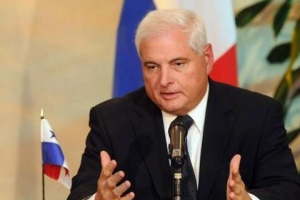
Photo by: Congreso de la Republic del Perú via http://www.flickr.com/photos/congresoperu/4923731107/


Wall Street Journal columnist Mary Anastasia O’Grady on June 20 published a commentary about right-leaning Panamanian President Ricardo Martinelli that had a tone and edge that she usually reserves for leaders she suspects of being communists, populists or nationalists.  Entitled Panama’s Democracy Goes South, Ms. O’Grady documented “the warnings from a growing chorus of Panamanians that [he] is moving the country toward authoritarianism.”

Martinelli – blessed by the Obama Administration last year with a Free Trade Agreement in part based on an evaluation of Panama’s democratic institutions – is “tearing down institutions,” stacking the Supreme Court, and apparently steering government lucre to build a parliamentary coalition that made the national assembly into a rubberstamp of his agenda.  O’Grady points out that this amounts to “the erosion of Panamanian pluralism” and compares him with Venezuelan President Chávez.

This portrayal of Martinelli’s leadership is not unique – it is well documented – but official Washington’s embrace of it would be.  The authoritarian tendencies of some ALBA presidents have been well publicized and, at times, exaggerated, but rightwingers with similar tendencies often get a pass.  In this context, such comments in the Wall Street Journal are significant.  For now, no regional institution and no major democracy, including the United States, has threatened sanctions against Martinelli.  Last week, the State Department announced that some assistance to Nicaragua will be suspended because of poor progress toward achieving transparency in government budgets – precisely one of the areas where Panama has experienced egregious backsliding.  Sanctions against Martinelli, however, seem remote.  Latin American leaders at times have bridled at the double-standards of external criticism more than at the sanctions themselves.  O’Grady’s commentary challenges the State Department to send a message to the region that its “democracy promotion” agenda applies to conservatives as well as those it often categorizes as on the Left.
Washington Politics: Fast and Very Furious

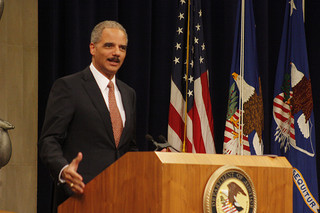
Photo by Ryan J. Reilly via Flickr, using a Creative Commons license

The operation codenamed “Fast and Furious” remains a hot topic in Washington two years after it went awry.  Conducted by the Bureau of Alcohol, Tobacco and Firearms and Explosives (ATF), the operation was intended to monitor the flow of weapons – through a “controlled delivery” – from Arizona gun dealers into the illegal channels by which tens of thousands of arms clandestinely enter Mexico each year.  Tracking the arms would allow the U.S. Government to disrupt the network.  However, ATF lost track of the weapons – and they reached their intended buyers.  The failure was made worse when traces showed that two of the weapons were used to kill a U.S. Border Patrol agent near the Mexican border in December 2010.

While both political parties in Washington have expressed disappointment, the Republicans have made the failed operation the centerpiece of efforts to weaken Attorney General Eric Holder (ATF is an agency of the Department of Justice, over which the Attorney General presides) and to discredit President Obama, according to numerous press reports.  The vote in the House of Representatives last week [[June 28]]to find Holder “in contempt” – for not handing over all of ATF’s internal documents on Fast and Furious that the Republicans demanded – was a party-line vote.  Many Democrats walked out of the chamber.

The political maneuvering around Fast and Furious has nothing to do with foreign policy, but the weakening of ATF undermines what modest efforts were under way to stanch the flow of illicit arms into Mexico and Central America.  “Controlled deliveries” are a standard operation for intelligence and law-enforcement agencies, and every agency involved in border issues has suffered similar mistakes.  ATF is the smallest such agency (2,500 special agents compared to FBI’s 13,400 and DEA’s 5,500) and is therefore more vulnerable to the internecine backstabbing.  In addition, ATF’s enforcement of laws relating to the use, manufacture, and possession of firearms often puts it at odds with American politicians who feel the agency threatens their interpretation of the gun rights under the Second Amendment of the U.S. Constitution.  The attacks on the ATF appear intended to weaken enforcement of U.S. law and embarrass the Attorney General and the President.  The obstacles to a sound policy of limiting the flow of weapons into Latin America are evidenced by the virulence of the debate over Fast and Furious.

Mexico Elections: Change Ahead in Cooperation with the U.S.?

Photo by: World Economic Forum via Flickr, using a Creative Commons license.

News media are generally predicting a relatively comfortable margin of victory for PRI candidate Enrique Peña Nieto over PRD candidate Andrés Manuel López Obrador and the ruling party PAN’s candidate Josefina Vázquez Mota in Presidential elections next Sunday.  Polls give the PRI candidate (44 percent) a big lead over the PRD (28 percent) and the PAN (25 percent.)

Compared to the weight of Mexico’s problems, the campaign has been light on issues.  Both the PAN and PRI have made vague pledges of continued cooperation with the United States in efforts against the drug cartels.  While current President Calderón’s approach to drug-related violence has resulted in no discernible improvement in security – indeed, some 60,000 people have died since he launched his military-intensive strategy – both Peña Nieto and Vázquez Mota have pledged to triple the Federal police (Vázquez) and create a paramilitary gendarmerie of 40,000 (Peña).  López Obrador has focused on jobs, services, and social issues.

Whoever wins the election, Mexico-U.S. relations do not appear likely to return to the mutual suspicion and tension of years past.  Neither of the three main parties seems overly dependent on nationalism – and anti-gringoism – for political support.  But the bloom is certainly off the much-vaunted U.S.-Mexico “co-responsibility” in the struggle against the cartels, and the next Mexican president almost surely is going to press for an end to the bad deal Mexico gets in the relationship  – the U.S. provides guns and intelligence, and tens of thousands of Mexicans die as drugs flow to eager American consumers.  Calderón’s successor probably will press Washington to prosecute the “war on drugs” in the United States, where the cartels’ footprint is huge, their operations are audacious, and they freely buy thousands of weapons smuggled southbound to kill Mexicans.  Whichever candidate is elected to the U.S. Presidency in November, next year will be a watershed during which the U.S. can either demonstrate a consequential commitment to co-responsibility – by pursuing the cartels in the United States and stanching the flow of guns and bulk cash into Mexico – or Calderon’s successor will unilaterally curtail cooperation.

Paraguay Coup: Setback to Democracy Even if Technically Constitutional


Photo by: Juan Alberto Pérez Doldán, via http://www.flickr.com/photos/38384810@N02/3531158719/

President Fernando Lugo, struggling to consolidate power since taking office in 2008 in Paraguay’s first meaningful transfer of power in 60 years, was removed from office on Friday by the same elites who had resisted him all along.  In a series of lightning actions, the Senate convened an impeachment process – giving him only two hours to prepare a defense – and voted him out of office.  Opposition leaders cited the government’s mishandling of a squatter protest earlier this month, resulting in 17 dead, but they had been undermining him from day one of his administration.  By Friday afternoon, Lugo accepted his removal and left the Presidential residence.  His vice president, Federico Franco, was sworn in and subsequently declared, “The country is calm. … Activity is normal and there is no protest.”

International reaction was slow at first, as the region focused on an environmental summit in Brazil.  But Brazil, Argentina and the ALBA nations condemned Lugo’s ouster and threatened sanctions.  President Dilma Rousseff urged immediate suspension of Paraguay in Mercosur and UNASUR, and Brasilia and others have withdrawn their ambassadors.  The U.S. State Department expressed “concern” at first and then urged “all Paraguayans to act peacefully, with calm and responsibility, in the spirit of Paraguay’s democratic principles.”  The OAS held an extraordinary session of the Permanent Council and sent a fact-finding mission to Asunción.

As President Lugo said, the action was as much against “Paraguay’s history, its democracy” as it was against him.  Like the coup that removed President Mel Zelaya in Honduras three years ago, the action was intended to stop a popular president and influence elections scheduled in coming months, but Zelaya was removed and exiled by the military, and the Congressional documents sanctioning it were fabricated after the fact.  The events in Paraguay pose an important challenge to the democracy clauses of the various regional charters (Mercosur, UNASUR, OAS) as well as the leadership of the region’s biggest democracies, including Brazil and United States.  At this early point, the Paraguayan elites probably judge that they can weather the storm because the U.S. and Brazil – with the diplomatic tensions about the Honduran coup, elections and reaccession to the OAS still fresh – have few options for restoring Lugo to presidency.  Insofar as entrenched elites sense that Washington will react mildly to the removal of democratically elected presidents they can cast as “leftist,” coups like those that have taken place in Honduras and Paraguay will continue.

Brazil: A Permanent Seat Litmus Test?

Minister Patriota and Secretary Clinton Photo by: Ministério das Relações Exteriores via http://www.flickr.com/photos/mrebrasil/6162800484/

The U.S. State Department is expressing increasing frustration with Brazil for staying on the sidelines of debate on Syria.  Mike Hammer, Assistant Secretary for Public Affairs, said recently that “a country of Brazil’s stature can have influence, and we want them to be part of this effort – pressing Assad and his military to put an end to this horrible campaign.”  Other critics have linked Brazil’s reluctance to press other countries in South America to condemn the al-Assad government – notably Venezuela, which supports it – with its quest for a permanent seat on the Security Council.  (Brazil kept Syria off at least the public agenda during a recent meeting with Venezuela.)  Jorge Castañeda, former foreign minister of regional rival Mexico, said Brazil is “not ready for prime time.”

Brazil supports the peace plan laid out by Kofi Annan, and has said it would back sanctions or an arms embargo if it were part of that plan.  Brazil also proposed further international delegations to investigate Syrian atrocities, though previous visits have failed.  Itamaraty stresses the risks of confronting the massive Syrian army, and it continues to demand that the Security Council be the sole forum for international action.  Foreign Minister Antonio Patriota announced opposition to sanctions imposed without U.N. authorization.

Brasilia’s position is in keeping with its traditional skepticism about international intervention and the doctrine of “responsibility to protect.”  The notion of using Syria as a litmus test for Brazilian readiness to join the Security Council seems premature as no serious initiatives are before the UNSC and the Annan plan, which Brazil supports, is in play.  If anything, Brazil has demonstrated a commitment to keeping the UNSC at the center of the international diplomacy.  State Department pressure on Brazil to expend political capital to rein in the ALBA countries on a distant issue like Syria is unlikely to bear fruit until clearer international diplomatic strategies emerge.

Nicaragua: Government-Private Sector Tactical Cooperation

Leaders of Nicaragua’s private sector and political opposition have teamed up with the government to press Washington not to go overboard with sanctions in response to flawed elections last November.  Their traditional allies in Congress, including the Cuban-Americans who dominate the Obama Administration policy toward Latin America, are pressing for suspension of two waivers to U.S. laws that suspend bilateral and multilateral aid to Nicaragua.  One waiver depends on progress on fiscal “transparency,” and the other on the resolution of property disputes from the 1980s.  The former, which would affect several million US dollars in bilateral aid (apparently for an AIDS program), is doomed, according to insiders.  But a decision on the property waiver – suspension of which would require the United States to oppose Nicaraguan loans from the Inter-American Development Bank, World Bank and IMF worth more than $200 million in 2011 – has not yet been made.

In public and private appearances, leaders of the Nicaraguan business community and political opposition, including Nicaraguan Liberal Alliance standard-bearer and Presidential Candidate Eduardo Montealegre, have forcefully stated their differences with the government of President Daniel Ortega, particularly regarding the conduct of elections and the lack of “institutionality” – i.e., the politicization of government institutions.  But the business community has pleaded for U.S. flexibility.  They estimate that suspension of the property waiver would threaten $1.4 billion in development assistance, deal a serious blow to their own prospects, and thrust Nicaragua into deep crisis.  Montealagre said he would lobby “neither for nor against” the waiver, but his participation in the delegation signaled a clear preference for Washington to be cautious.  Ortega’s personal emissary for foreign investment, Alvaro Baltodano, has emphasized the growing commercial links between the two countries and the benefit it provides directly to the Nicaraguan people.

The private sector and opposition are in the odd position of trying to persuade their own friends in Washington to be practical – not to be more anti-Sandinista than they.  Suspension of the property waiver would not only hurt them in the pocketbook; it would give a propaganda boost to President Daniel Ortega and make the population even more dependent on his social programs, heavily subsidized by Venezuela.  All of the U.S. aid and most of the multilateral aid provides direct benefit to the Nicaraguan people.  Ortega’s opponents do not want U.S. sanctions to close the business and political operating space they have enjoyed in recent years, despite Ortega’s excesses.

The Demise of Partnership?

Graphic: Summit of the Americas organization; public domain.

The real news at the Summit of the Americas in Cartagena, Colombia, in April was the dissonance between the Obama administration – with its sincere but content-free rhetoric of partnership – and Latin American leaders across the political spectrum, even among the friendliest.  This was in sharp contrast to the Summit in 2009, when the region was palpably excited about the new American President.  This year, press reports portrayed President Obama as unaware that the hemisphere is changing, and noted that he oddly said that criticism of U.S. policy was reminiscent of the Cold War, while he put himself out on the fragile limb of defending a Cuba policy rooted in, precisely, the Cold War.

Most observers in the region judge that the main takeaway from Cartagena is that while Washington offers little and listens less, Latin America is moving away.  Over the past decade South America has sustained rates of economic growth higher than any since before the oil shock of 1973, and the U.S. is hardly an unchallenged source of trade and investment.  (Chinese and EU trade with South America has surpassed that with the United States.)  Chavez’s aid to Cuba and Nicaragua far exceeds Washington’s meager offerings to even best friends like El Salvador.  The Brazilian National Development Bank, BNDES, provides more loans in the region than the World Bank and Inter-American Bank combined.

Americans’ fascination with the Cartagena prostitutes dwarfs interest in the lessons of the serious regional dynamics that played out in the Summit.  Whether U.S. political leaders and pundits acknowledge it or not, failure to dialogue seriously with neighbors about the 50-year effort to change the Cuban regime or the failure of the 40-year “War on Drugs” will have consequences for the United States.  Washington rejects the region’s efforts to re-think issues, such as the wisdom of the current approach to narcotics, at its peril.  Central America was an unhappy front-page story in the 1980s and now threatens to reemerge as a major headache because of domestic crime (fueled by U.S. deportations) and the drug trade – while Washington fiddles with time-worn formulas and programs.  The Obama Administration still has time to make good on its pledge of “partnership” and get serious about listening to and working with our neighbors.

Whither the OAS?


Photo by: Photo by: Jose Miguel Insulza via http://www.flickr.com/photos/insulza/2561669250/

The OAS General Assembly in Bolivia this week underscored, yet again,the Organization of American States’s struggle for relevance in the hemisphere.  Only Presidents Correa and host President Morales showed up.  Secretary Clinton skipped the summit, and U.S. Assistant Secretary Jacobson didn’t even stay to deliver her own speech.  The ALBA countries, led by Venezuela, attacked two of the OAS’s defining initiatives, while the other members stood by.  Alleging the Inter-American Commission on Human Rights was biased in favor of the U.S. agenda, ALBA won a vote to discuss reform in the future.  Venezuela, Bolivia, Ecuador and Nicaragua also announced their withdrawal from the Inter-American Treaty of Reciprocal Assistance.  Known as the Rio Treaty, the pact has enshrined the principle of mutual defense in hemispheric relations since 1947.

ALBA’s complaints about the OAS are not new, and neither are Washington’s.  The House Committee on Foreign Affairs voted to zero out U.S. funding for the OAS in July 2011, when several Congressman called the OAS “an enemy of the U.S. and an enemy to the interests of freedom and security” and claimed it was “bent on destroying democracy in Latin America.”  The Obama Administration did not come to the organization’s defense, and, as in the past, the OAS appeared passive, apparently calculating that the storms would blow over.

The South Americans will be happy to fill the void with their counter to the OAS – the Community of Latin American and Caribbean States (CELAC), which explicitly excludes the United States and Canada.  But CELAC lacks infrastructure and funding and, so far, has mostly been a forum for speeches.  Brazil’s position will be key.  Although probably bemused by the decline in U.S. and OAS influence in the region, Brazil may nonetheless see advantage in reviving – and reforming – the OAS as a buffer for working out north-south and even south-south differences.

Click here for additional information from CLALS’s “Hemisphere in Flux” initiative, an ongoing research program on the future of Inter-American affairs, conducted in partnership with Brazil’s Institute Nacional de Estudos dos Estados Unidos (INEU) and the Coordinadora Regional de Investigaciones Economicas y Sociales (CRIES) .


FARC Activity

A French journalist has become the latest victim of Colombia’s internal conflict.  The French Foreign Ministry announced that journalist Romeo Langlois was kidnapped by leftist rebels last Saturday following an armed raid on Colombian troops who were attempting to dismantle cocaine laboratories.  Colombian Defense Minister Juan Carlos Pinzón told reporters that Langlois had been wounded in the arm during the attack, which left a police officer and three soldiers dead.  Langlois had been traveling with the army to film a documentary about illegal mining and Colombia’s notorious drug trade.  This attack indicates that the FARC, though severely weakened after decades of armed conflict, are still very much a powerful force to be reckoned with.  Analysts suspect that this latest action, coming after a declaration to end kidnappings in February, is a message to President Juan Manuel Santos, who has refused to negotiate with guerrilla leaders.

Chilean Student Protests and Inequality

Photo by Davidlohr Bueso, Santiago, Chile via http://www.flickr.com

Following a year of student demonstrations, Chilean students have renewed their demands for education reform with a massive street protest in Santiago. According to a report from the BBC News, 25,000-50,000 students participated in a march for free education on Wednesday. The protest came despite President Sebastián Piñera’s announcement that a state agency would be created to finance university-level education and that private banks would no longer be permitted to provide loans to university students. Piñera also announced that interest rates on student loans would be reduced from 6 to 2 percent. The student protests are just one of several political issues confronting Piñera, such as the construction of dams in Patagonia and government handling of political protests in the southern region of Aysén. The students’ cause has reverberated throughout Latin America and indicates widespread discontent with high levels of socioeconomic inequality in Chile.