South America: Mounting Tensions, Few Solutions

By Christopher Kambhu*

Protest in Colombia/ Oxi.Ap/ Flickr/ Creative Commons License (modified)

Across South America, calls for structural change have re-emerged on the streets and at the ballot box, but governments face many obstacles to constructively address them. These calls are a continuation of region-wide protests in 2019, when citizens demanded reforms or rewrites of the existing social contract to address various political, economic, and social inequities. While government pandemic measures pushed protestors off the streets throughout 2020, the pandemic has highlighted and exacerbated the inequities that prompted protests.

  • Inequities in Colombia have sparked nationwide social conflict. Protests against a proposed tax reform have broadened into demands for a basic income and accountability for security forces accused of killing dozens of protesters. Most protests have been peaceful, but radical groups have created “autonomous zones” free of police presence and established roadblocks, causing goods shortages in major cities. Negotiations between the government and protest leaders have yet to gain traction. President Ivan Duque’s approval rating has plummeted to historic lows as he appears unable to meet the moment. Backlash against demonstrators is emerging, with some wealthier residents violently repelling protestors from their neighborhoods.
  • In Ecuador and Peru, citizens have used the ballot box to voice their frustrations, leading to surprising electoral outcomes. Guillermo Lasso, Ecuador’s new center-right president, has formed a governing coalition with indigenous and social-democratic parties that are the second and third largest in the national legislature (Lasso’s party is the fifth largest). In Peru, provincial teacher and union leader Pedro Castillo has narrowly won June’s presidential runoff over Keiko Fujimori, the daughter of a controversial former president convicted of corruption and human rights abuses. Castillo’s far-left party, which began contesting national elections only last year, is now the largest in Peru’s legislature, but needs to forge complex alliances to govern effectively.
  • Chile took a different path. Under intense pressure, the government acceded to popular demands for a constitutional rewrite. A national plebiscite last October assented to the rewrite by a wide margin, and elections for the Constituent Assembly in May demonstrated widespread rejection of the current elites. Most members are political independents or newcomers; a sizable number rose to prominence during the initial wave of protests in late 2019. The membership has gender parity, a first for such a body, with 11 percent of seats reserved for representatives of indigenous groups.

Efforts to forge new social contracts are difficult at best and each path faces obstacles to success. Colombia’s current political leadership appears unable to calm tensions, and voters must wait until national elections next year to elect new leaders. While demands for change in Ecuador and Peru have elevated some candidates and parties to unprecedented success, sharp ideological divisions and partisan fragmentation in both legislatures appear likely to limit potential reforms. Castillo’s mandate is tenuous and weakened by Fujimori’s rather Trumpian allegations of fraud and attempts to throw out ballots. In Chile, the ideological diversity of the Constituent Assembly could very well preclude it from reaching the required two-thirds majority needed for any proposal to enter the new Constitution, which will be put to a national referendum in 2022.

  • The inequities exacerbated by COVID-19 and a busy electoral schedule will keep reform issues at the forefront of political discourse; these debates will likely intensify with 11 countries across Latin America holding national elections over the next 18 months. While upcoming elections offer a timely opportunity for citizens to push their countries in new directions, governments will face political, fiscal, and social challenges which threaten implementation of any proposed reforms. At this early stage in the region’s electoral supercycle, political leaders have yet to capably address their citizens’ demands.

July 7, 2021

* Christopher Kambhu is a Program Coordinator at CLALS.
U.S.-Southern Cone: Looking at Relations Through a Different Optic

By Noah Rosen*

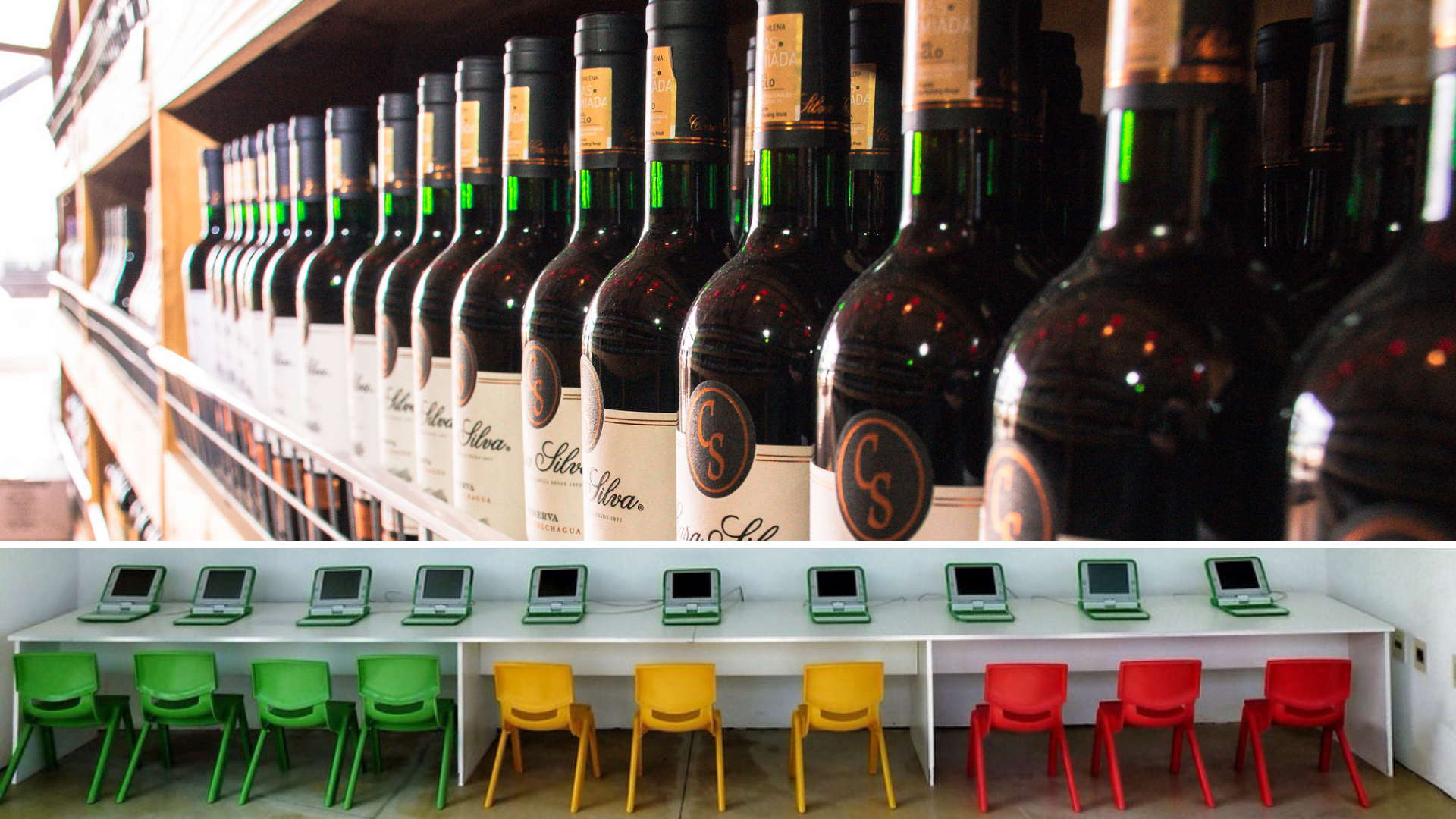
Top: Display of bottles of Chilean wine/ David Almeida/ Flickr/ Creative Commons License
Bottom: Notebooks from the Plan Ceibal/ Jorge Gobbi/ Flickr/ Creative Commons License

While headlines track the highs and the lows in the United States’ relations with Latin America, a closer look at the broad range of interaction shows that, at least in some sectors in some countries, long-term economic relationships and knowledge exchanges have encouraged mutual benefits that rarely get mentioned in public discourse.

Chile’s wine industry, for example, is a powerhouse that has benefited from U.S. investment, open markets, and research and development work. Chilean wine underwent a sea change beginning in the late 1980s and early 1990s, as liberalization and democratization in the country opened opportunities for massive upgrades in quality and opportunities for export to new markets. Global recognition of the quality of Chilean wine grew throughout the 2000s and 2010s, and today bottled wine is Chile’s third most valuable export after copper and salmon. Exports to the United States in 2019 totaled $238 million, reflecting the vital importance of wine to Chile’s economy.

  • Though Chilean exporters were eventually able to diversify their export markets to include Europe and Asia, the exploding U.S. market in the 1990s and 2000s was key to the industry’s upgrading and expansion. Wines of Chile, a public-private partnership that markets Chilean wines, maintains a permanent U.S. office, runs events throughout the country, and organizes visits by U.S. sommeliers to provide feedback to Chilean producers. Knowledge exchange and technology transfer between experts in California, including the University of California at Davis, and Chilean counterparts has helped Chile’s wine industry stay on the cutting edge of production technologies, spurring advances in genetic identification and sequencing of key Chilean varietals.
  • U.S. foreign direct investment and joint ventures have also promoted innovation, technological advances, and access to international markets. For example, an early partnership allowed Concha y Toro to gain a foothold in the U.S. market and opened the door for other Chilean exporters. California winemakers Robert Mondavi, Kendall Jackson, and Canandaigua have established operations in Chile, bringing with them advanced trellis systems, drip irrigation, and other technology that have led to a marked increase in quality across the sector.

The remarkable success of Uruguay’s technology sector has also been aided by U.S. markets and tech exchanges. Visionary domestic programs such as “Plan Ceibal” in 2007, which promoted nationwide digital literacy and provided a laptop to every public-school student in the country, and investments in some of the fastest internet in the Americas, have helped Uruguay become the largest software exporter per capita in the region and third largest per-capita exporter in the world. However, the importance of the U.S. model and the depth of relationships between the U.S. and Uruguayan sectors have earned it the nickname “Silicon Valley of South America.”

  • The United States accounts for 65 percent of Uruguay’s tech revenue (as of 2019) – the result in part of the marketing and relationship-building by Uruguay XXI, the country’s investment, export, and country brand promotion agency. The agency annually sets up a country pavilion at TechCrunch Disrupt, one of Silicon Valley’s most important tech conferences. U.S. ventures in Uruguay have also played an important role in building the local tech market and providing capital and opportunities for local software developers. Major U.S. software and IT companies, including IBM, Microsoft, Cognizant, New Context, NetSuite, and VeriFone, have established bases in Uruguay and hire Uruguayan developers. In 2017, the Agencia Nacional de Innovación e Investigación (ANII) arranged for the highly recognized U.S. tech incubator 500 Startups to run a six-week accelerator program to build skills for 20 Uruguayan startups focusing on growth, product design, fundraising, and building connections.
  • The opening in 2019 of a Uruguayan Consulate in San Francisco reflects the importance of the relationship with Silicon Valley. The incoming Consul emphasized his mission as “opening doors for Uruguayan businesspeople” and pledged to facilitate connections and provide “softlanding support.” The office will also facilitate two-way knowledge and skills exchanges between Californian and Uruguayan universities and institutions. Last month, Amazon announced that Uruguayan vendors would be eligible to sell products on their platform, thanks to the efforts of the Uruguayan Embassy in the U.S.

These positive relationships — facilitated by governments but driven by private-sector partners — don’t erase all adverse twists and turns in U.S. relations with the region. But relatively quiet successes like U.S. cooperation with Chile’s wine industry and Uruguay’s technology sector provide important ballast. They are lucrative for both sides and provide valued jobs: wine in Chile employs over 100,000 people in direct work and represents 0.5 percent of GDP; the tech sector in Uruguay employs 17,000 people, representing 2 percent of the country’s GDP.

June 25, 2021

* Noah Rosen is a PhD candidate in the School of International Service, specializing in grassroots peace movements in Colombia. This article is adapted from CLALS research on the impacts of U.S. engagement in Chile and Uruguay, supported by the Institute for War & Peace Reporting with funding from the U.S. Department of State

Peru: Approaching Ungovernability?

Voting in Peru during the presidential election/ Presidencia Perú/ Flickr/ Creative Commons License

Disputes over the final vote count in Peru’s June 6 presidential runoff are likely to drag on, but those promoting fear and mistrust in the political system already appear to be the clear winners, with grave consequences for the future of the country’s democracy. The two leading candidates – leftist Pedro Castillo and rightist Keiko Fujimori – both represent significant threats to liberal democracy, and the country’s elites and media are complicitous in moving the country closer to ungovernability.

  • Castillo and his Perú Libre party ran on an unapologetically non-democratic platform, promising a Leninist government and suggesting an end to the democratic alternation of power. Fujimori defended the corrupt dictatorship of her father, Alberto Fujimori (1990-2000), and as leader of Fuerza Popular has fought a constant battle against the rule of law.
  • First-round voting in April showed that neither of them won many hearts and minds – 18.9 percent voted for Castillo and 13.4 percent for Fujimori – but they advanced because the other 17 candidates were even worse, deeply divided, and weak. Preparing for the second round, rather than reach out to the 70 percent of voters who rejected them, they showed the arrogance of immoderation and left citizens wondering which would be less likely to tyrannize them.

Other political leaders and the country’s elites, instead of demanding that the two candidates commit to democracy, made things worse. Unlike the elites in other countries, Peru’s do not seek to take over the levers of political power; rather, they are most comfortable maintaining a mediocre status quo. The left showed unconditional enthusiasm for Castillo, and conservatives like author Mario Vargas Llosa embraced Fujimori – while the two candidates proceeded to tear the country apart with fear-mongering, scare tactics, and empty promises.

  • Fujimorismo based its campaign on causing panic by feeding people’s fear of communism and terrorism, and linking Castillo to them. By mid-May, politicians who had said they’d hold their nose while voting for Keiko began casting her as a national savior. Her allies filled the streets with posters warning of the “Communist invasion.” Business leaders said they would fire employees if Castillo won. Castillo resorted to similar tactics to stir panic about a return of a Fujimori to the Palacio de Gobierno.
  • The media shed all pretense of independence and hyped these warnings as if truth, exhuming stories of terror from the past to drive home the point. Polls and vote results show, however, that the media’s gross bias prompted many voters who had intended to cast empty or unmarked ballots to vote for Castillo.

Peru may well be entering a period of ungovernability. Five years of political turmoil, corruption scandals, and institutional decay, under four different Presidents, had already wounded the country before this election, but fear – which, as Martha Nussbaum said, is the feeling that controls people, not liberate them – now runs even deeper and stronger. Well-founded questions about both Fujimori and Castillo’s commitment to democracy will keep tensions high, and the political, business, and media elites have created a climate in which allegations of fraud will persist despite international observers’ conclusions that the elections were clean. The forceful rejection of Fujimori by half of the population, and the Castillo’s utter lack of even basic governing skills are real risks. Arbitrary manipulations of the Constitution will be attempted to strengthen or weaken whichever government takes office. Calls for military intervention are certain. Political opposition will radicalize. The historic split between mestizo-dominated Lima and the rest of the country, vulgarly called la Indiada, is worsening.

  • But this is not Peru’s inescapable fate. Its democracy still gives the people the weapons with which to impede an authoritarian project. They do not have to believe that Fujimori’s backers are all corrupt anti-patriots, nor that all of Castillo’s are anti-Peruvian Communists. It’s true that the country has been wracked by the pandemic like no other, and that it is hindered by debt and other challenges. While neither of the candidates and their forces have demonstrated the greatness and humility needed to lead through these crises, rescuing Peruvian democracy requires accepting that the one with the most votes will be President, even if purely by chance, and deserves an opportunity to govern without calls for a coup to remove them. A country decimated by the pandemic needs the hope of being able to move into the future together.

June 18, 2021

*  This article is a synthesis and translation of commentaries and interviews by Alberto Vergara, who teaches at la Universidad del Pacífico in Lima and was co-editor of Politics after Violence: Legacies of the Shining Path Conflict in Peru.

Haiti: Déjà Vu All Over Again

By Fulton Armstrong

Police get in position as the protesters escalate their chants/ Ben Piven/ Flickr/ Creative Commons License

Despite the Haitian government’s postponement of a referendum on a Constitution drafted by a committee hand-picked by President Jovenel Moïse, the President’s power grab looks likely to persist, almost certainly prolonging and deepening the country’s current crisis. Moïse has ruled by decree since January 2020 because – in part owing to his own obstructionism – legislative elections in 2019 were postponed and a new legislature could not be seated. He has also insisted that delays in his inauguration in 2017 entitle him to a one-year extension of his term, until February 2022. Political tensions have triggered large, violent protests and catalyzed a surge in murders, kidnappings (up 200 percent over 2020), and other crimes – a deterioration that the Catholic Church calls “a descent into hell.” Gangs, often acting as surrogates for political factions, have been terrorizing neighborhoods and have attacked nine police stations in the past week, according to the Miami Herald.

  • Most controversial among Moïse’s actions has been a new Constitution drafted by a closed group of his allies and a referendum on it originally planned for June 27. The new Constitution would give him significantly greater powers by, for example, eliminating the post of Prime Minister and making the Legislature a unicameral body easier for the President to control. Many observers view it as mostly a tool to consolidate his one-man rule and increase impunity. Although Moïse has denied he intends to seek a second turn, his Constitution would allow him one.
  • Criticism of the Constitution and referendum has been widespread. The entire political opposition has condemned it, as has the Catholic Church. Even the head of Moïse’s Parti Tèt Kale has publicly opposed it. Thousands of demonstrators have spontaneously taken to the streets in generally peaceful protests, while massacres by pro-government forces have escalated in slums generally supportive of the opposition.  

The international community, which has been permissive of Moïse as he’s pursued most of his plans over the past year-plus, criticized his efforts to ram through the Constitution – lamenting the lack of transparency and the narrow participation in its drafting – and finally pressed him to suspend the referendum. But it is also quietly facilitating some of the steps required to lead up to such a vote.

  • OAS Secretary General Luis Almagro in February criticized Moïse’s human rights record, but the OAS has embraced his claim to an extended term and, while expressing concern about process issues, was not forceful against the Constitution gambit. Indeed, an OAS mission visiting Port-au-Prince this week will focus on the surge in violence and preparations for future elections, not stopping his Constitution.
  • The Biden Administration has been slow to take a stance on Moïse’s machinations – not announcing opposition to the referendum until this week. It has criticized his inability to quell the violence without linking it to his policies or agenda. Announcing last week that the United States was extending Temporary Protective Status for 100,000 Haitians, Homeland Security Secretary Alejandro Mayorkas noted that Haiti is “currently experiencing serious security concerns, social unrest, an increase in human rights abuses, crippling poverty, and lack of basic resources, which are exacerbated by the COVID-19 pandemic.”  

Haitian crises have been so deep and long in recent decades that this one is difficult to distinguish from others, but it is a perfect storm of a sustained political power grab amid the COVID-19 pandemic and its massive economic hit. Moïse is almost certain to push for his new Constitution as a condition for holding elections. Haitian elites have never heeded lofty appeals for them to build democracy and make compromises. They expertly exploit the international community’s reluctance to punish them because of the harm it will cause the Haitian people. (UNICEF reports that severe acute malnutrition among young children has doubled over the past year.) Cooperation between government opponents in Haiti and the Diaspora has introduced an element of protest and resistance not seen since the mid-1980, but the international community still heeds primarily local political and economic elites.

  • Washington’s hesitance to become more forceful probably reflects the view that it has no better alternative than tolerating Moïse. If so, it would suggest the Biden Administration has not learned the lessons – such as that the elites are unreliable partners – of the failed U.S. pledge during Barack Obama’s presidency to help Haiti “Build Back Better” after the 2010 earthquake and the Trump Administration’s coddling of Moïse in return for his opposition to Venezuela at the OAS. The State Department’s belated opposition to Moïse’s referendum, however, may be a sign that it is listening to the U.S. House of Representatives Foreign Affairs Committee and Haiti Caucus’s urging that the Administration get out of its “source bubble” and reach out to constructive opposition voices.

June 10, 2021

Venezuela: Lessons Learned from Failed Negotiations

By Nancy Haugh*

Protest in Venezuela/ MARQUINAM/ Flickr/ Creative Commons License

As both sides to the Venezuela crisis express willingness to return to the negotiating table, a review of the shortcomings in previous talks – particularly their overly ambitious agenda and excessively narrow participation – should improve the odds of success in future rounds. Four dialogues between Chavistas and the opposition preceded the collapsed 2019 talks. In each case, both sides were willing to negotiate with the presence of a neutral, trusted third-party mediator and met several times, but other requisite conditions outlined in negotiation literature, such as including potential spoilers at the table, were missing.

  • The Norwegian Center for Conflict Resolution worked hard to create a negotiating structure that did not aggravate the fears of both sides by, for example, not inviting the United States or the Venezuelan military to participate. It also declined a request from the International Contact Group (ICG), a coalition of Latin American and European countries, to a merge its negotiation process with one the ICG had already launched over concerns that the ICG’s goal was regime change through electoral reform, not a negotiated agreement.
  • Talks stumbled, however, because of a tactic used by self-declared President Juan Guaidó that negotiation specialists call “Type C coercive diplomacy” – his penchant for making maximalist demands and threats while borrowing power from the U.S. and other external sources – and because of problems with his “boundary role.” He was trying to represent constituencies that were not at the table, particularly his U.S. benefactors and Venezuela’s moderate opposition, to gain leverage over the government. But he could not credibly offer relief from Washington’s sanctions, which combined with the threat of military intervention were intended to effect the immediate removal of President Nicolás Maduro and hold new Presidential elections. Talks broke down in August 2019 when the U.S. imposed new sanctions, including freezing all Venezuelan government assets under U.S. jurisdiction, without consulting with Guaidó.

The government took advantage of the opposition’s “boundary roles” problem. Maduro’s team had no incentive to negotiate with a person who could not alter the U.S. sanctions. Government negotiators had previously said they were open to modifying the electoral calendar and engaging in legislative and electoral power-sharing if U.S. sanctions were lifted at least one year before the polling day. That offer fell off the table, but another – “inviting the opposition to seek a recall referendum against Maduro in two to three years’ time” – apparently still stands.

  • September 16, 2019, the day after a weakened opposition declared that negotiations had been “exhausted,” Maduro reached an agreement with an offshoot of the opposition movement, the moderate National Dialogue, and the opposition split was formalized. Under this deal, Maduro would neither need to resign nor be barred from running in future elections. Ultimately, the agreement was only partially implemented, with 29 of 58 promised political prisoners actually released from prison. Additionally, instead of fulfilling its commitment to “dialogue and reconciliation,” the government formed a commission to investigate alleged corruption on the part of Guaidó and his team.

Despite the efforts of the Norwegian team, the 2019 talks neither fully addressed the needs and fears of both sides nor defused the influence of external stakeholders. In March, Norwegian mediators began to quietly explore re-initiating talks between representatives of Guaidó and Maduro. Though previous rounds failed to meet their main objective, they demonstrated that progress is indeed possible with a modified strategy.

  • The literature on international negotiations suggests that increasing the number of parties at the table makes cooperation more difficult, increases information costs, and makes defection more likely, but the previous talks suffered from having too few at the table. By not including a wide array of opposition voices, a secondary channel opened for the government to reach an agreement and walk away from the process when the United States announced sanctions.
  • Negotiating partial agreements, instead of a comprehensive one, appears more promising as a means of solving problems and creating momentum. The country’s historic economic and humanitarian crises offer the best chance of finding agreement and building trust between the parties and, even if not resolving the parties’ biggest needs, will benefit the people they claim to care about.
  • Involving a balanced mix of regional actors as guarantors would comfort each side while pressuring them to be accountable. The members of the anti-Maduro “Lima Group” could help, as could Cuba, which has supported Maduro and has a strong record of supporting successful negotiations.

Four months into the Biden Administration, the position of the most important external actor has yet to go beyond broad statements about continuing “to work with international partners to increase pressure in a multilateral fashion toward [the] goal of free and fair elections.” In mid-May, Guaidó proposed a progressive lifting of U.S. sanctions in return for steps by Maduro toward free and fair elections overseen by a third party – suggesting a shift away from his maximalist stance – but Washington has remained publicly silent.

June 4, 2021

* Nancy Haugh completed their Master’s in International Peace and Conflict Resolution at American University, with a focus on dialogue, human rights, and foreign policy in Latin America.

Brazil: Case Study of How NOT to Handle a Pandemic

By Ingrid Fontes*

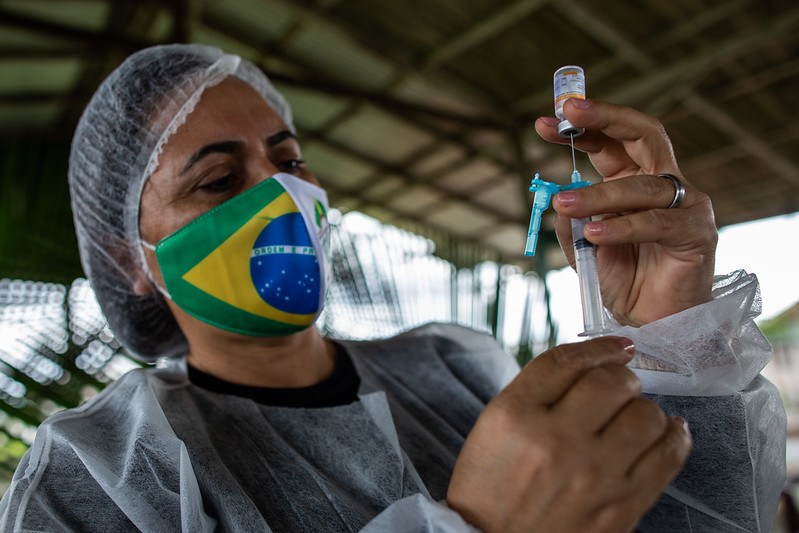
A health professional from the Special Indigenous Health District (DSEI) prepares a dose of the CoronaVac vaccine/ International Monetary Fund/ Flickr/ Creative Commons License

Most of the blame for Brazil’s inept response to the COVID‑19 pandemic – including the highest per capita death rate in the world (214 per 100,000) – falls squarely on the shoulders of President Jair Bolsonaro. Some of the severe criticism of the President – including some in an ongoing Senate investigation – is surely politically driven, but government foot-dragging and bad decisions, compounding the country’s political economy of corruption, have worsened the 15-month crisis.

  • The country has recorded 16.2 million cases and 452,000 deaths, according to Johns Hopkins University’s COVID‑19 Dashboard. Since early May, Brazil has had a moving average of more than 2,000 deaths per day.
  • Vaccinations have lagged even though Brazil has a competent infrastructure for administering conventional flu shots. As of this week, Brazil has administered a total of 63.7 million doses, with nearly 14.74 percent of the population receiving at least one dose, and 7.15 percent receiving both doses (13.2 million) – out of a population of more than 212 million. That’s below Chile (41 percent fully vaccinated) and Uruguay (28 percent); more than Mexico (9 percent); and well ahead of Peru (3 percent) and Ecuador (3 percent), according to a tracking website.

Government efforts ran into some longstanding obstacles, but many problems directly resulted from Bolsonaro policies that, according to many observers and experts, were minimalist if not obstructionist.

  • The country’s health system has long been underfunded, but the chaos has been the result of government actions. Four ministers of health have cycled through the job during the pandemic. The President and his administration have willfully disseminated information about the pandemic and vaccines, including that some shots will “turn you into a crocodile,” that have been roundly debunked. Bolsonaro has hosted large events without masks and social distancing.
  • Initially calling COVID a “little flu,” the government failed to begin arranging the purchase of vaccines in mid-2020 and later refused several offers by Pfizer that would have guaranteed it millions of vaccines. It rejected a liability waiver that the United States, EU, UK, Japan, and other Latin American countries had accepted.
  • The government also refused public calls to develop an immunization plan and delayed training healthcare professionals to administer the vaccine. When Brazil received its first batch of Pfizer/BioNTech vaccines last month, the government stated it would distribute them to its 27 capitals in a “proportional and equal” division, but the lack of a detailed plan has led to wasted doses, shortages, and the suspension of vaccinations.

Corruption has also hampered efforts. Congress authorized US$50.8 billion in April 2020 and allowed all levels of government to purchase ventilators, intensive care beds, masks, and other supplies without bids and the usual bureaucratic review. By August, auditors were already warning that less than 8 percent of funds expended had gone directly to fight the disease. Of seven field hospitals the ex-governor of Rio de Janeiro ordered, five never opened. State and public prosecutors have already developed various cases of companies bilking more than US$70 million in each of various schemes. A lot of key equipment, such as respirators, and protective gear, never reached patients.

  • The government was slow to crack down on scams, such as the sale of bogus cures, that stole citizens’ money and undermined their confidence. The resident of a luxury building in Belo Horizonte, for example, told police that both the nurse and vaccine he paid US$100 for turned out to be false.

Other Latin American countries have struggled with the pandemic, of course, but Brazil’s performance falls far short of what it could have achieved with effective leadership and transparency. The harm has been magnified by the country’s interconnected and problematic political economy, specifically corruption. which has created a perfect storm of government ineffectiveness.

  • The President’s personal role is not to be underestimated, both in his deeds, such as undermining state and local governments’ efforts to contain the disease, and his inaction. Ironically, even communities that oppose Bolsonaro, or at least have no reason to heed him, have been heavily influenced by his example. Indigenous leaders report, for instance, that his refusal to accept the Chinese vaccine has contributed to vaccine hesitation among the 410,000 adults in indigenous villages. His rhetoric has made thousands of supporters refuse taking the vaccine.

* Ingrid Fontes is a student in the School of Public Affairs and School of International Service, with a particular focus on Brazil.

Lula Is Back, But What About Brazilian Democracy?

By Fábio Kerche and Marjorie Marona*

Rally in Support of Lula/ Ricardo Cifuentes/ Wikimedia Commons/ Creative Commons License

Former Brazilian President Lula da Silva recovered his political rights last month when the Supreme Court overturned his convictions on corruption charges, but Brazil will need more than a simple court decision to restore the country’s confidence in its democracy and institutions after years of political turmoil.

  • The court ruled that the conduct and decisions of then-Judge Sergio Moro and the Operação Lava Jato (Carwash) investigators that landed Lula in prison were not impartial and, therefore, the justices invalidated the conviction of the former president (2003-2011). The case began to unravel in 2019 when a Brazil-based U.S. journalist, Glenn Greenwald, published leaked private conversations between Moro and the prosecutors showing a highly politicized agenda. The ruling reinforced the public perception that Lula was innocent and that Lava Jato was used as a political weapon against him and his Workers’ Party (PT).
  • The action opened the door for Lula to be a presidential candidate in 2022. It also demands restarting the trial from ground zero, but the consensus among legal experts is that a re-trial cannot be mounted before the election.

Lula’s return coincides with a period in which President Jair Bolsonaro faces enormous difficulties. The Senate is currently investigating his government’s alleged negligence in the 400,000 deaths caused by its COVID policies. Furthermore, the Brazilian economy is not recovering, as the Bolsonaro team asserts. Unemployment is over 14 percent, and hunger has reemerged as a perverse reality for millions of Brazilians. According to a Datafolha poll, only 24 percent of Brazilians consider the government to be good. Bolsonaro suffers from the lowest polls among presidents in the democratic period, except for Fernando Collor as he resigned in the face of impeachment.

  • The same poll shows that Lula would handily beat Bolsonaro in a presidential election – 41 percent to 23 percent among intending voters. In a second round, Lula would beat Bolsonaro 55 percent to 32 percent. Moreover, the public narratives pushed by Bolsonaro supporters trying to identify Lula as a radical left-winger are being put aside. The press, despite repeated attacks by the current government, portrays Lula as a much more reasonable alternative than Bolsonaro. Lula is emerging as a conciliator and a moderate center-left politician.
  • Attempts to build a center-right candidacy, a so-called terceira via (third way), seem to be getting little traction so far. The growth of center-right parties in the 2020 municipal elections is not being reflected at the national level, and the TV pop stars cited as potential 2022 Presidential candidates are not gaining momentum.  

Far from radicalizing him, Lula’s 580 days in prison seem to have softened his sharp edges, and his immediate full-time focus on looking for solutions to the COVID crisis fits his strategy of reminding the public that Brazil was a better country under his government. He is not in a rush to officially launch his candidacy, but he’s talking to several parties and leaders – even those in favor of Dilma Rousseff’s controversial impeachment and of Lava Jato, which portrayed the Workers’ Party as a criminal enterprise. He is also looking into possible alliances in state elections in exchange for broad support for his candidacy. There are indications that his vice-presidential running mate will be someone closer to the center-right, signaling that his government will be of reconstruction and not of polarization. But the path ahead isn’t necessarily easy for Lula. Bolsonaro has a group of loyal supporters and, even with a slow pace of vaccinations, there is a chance that all Brazilians will be protected from COVID by the end of this year, bringing hope for better times. Bolsonaro is also providing financial aid to the poor, which will help him recover voter share.

  • The 2022 election is perhaps the most critical test for Brazil’s fragile democracy since redemocratization. The Bolsonaro government, whose handling of national challenges has been highly problematic, continues to flirt with authoritarian measures. Civil and human rights are being weakened. Whether Bolsonaro ultimately succeeds in consolidating a regime of his own design or becomes merely a stumbling block in Brazil’s democratic history now looks likely to depend on a 75-year-old former president and former union leader who’s returned from prison to provide, yet again, an alternative to the status quo.

May 19, 2021

* Fábio Kerche is a professor at the Federal University of the State of Rio de Janeiro (UNIRIO) and former CLALS Research Fellow. Marjorie Marona is a professor at the Federal University of Minas Gerais (UFMG).

Chile: Will the Constitutional Assembly Move Democracy Forward?

By Patricio Navia*

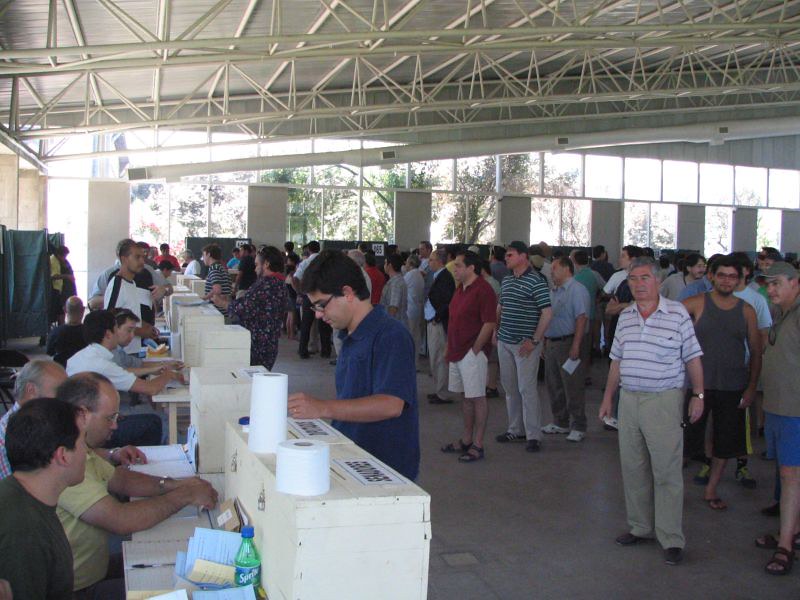
Polling place in Chile/ Atina Chile Elecciones 2005/ Flickr/ Creative Commons License

Chileans go to the polls this weekend to elect members of a constitutional assembly – empowered to write a new Constitution by a plebiscite last October – but unrealistic popular expectations in a highly political year appear likely to complicate its work and could result in a flawed document.

  • Almost 80 percent of the Chileans who voted last October (i.e., 80 percent of half of the country’s eligible voters) supported a rewrite of the Pinochet-era Constitution, promulgated in 1980. Voters also chose to elect a new 155-member assembly for the task, rather than form one from among prominent political and social leaders. The assembly will have nine months to draft the document (with an option for one three-month extension), which will be voted on in mid-2022.
  • Chile’s busy election calendar is likely to complicate the assembly’s work. Saturday and Sunday’s voting will also choose governors, mayors, and city councilors, and there are elections in November for Congress and a new President – threatening to create tensions and a perfect political storm that undermine the quality of the new magna carta. Some parties have already held internal primaries for their presidential candidates, and coalition primaries are scheduled for July 18. If no candidate receives at least 50 percent plus one of the votes in the first round of voting on November 21, the two leading candidates will compete in a runoff on December 19.

The flaws of the constitutional process itself are clear. One is that the guaranteed gender-parity condition (50 percent representation for men and 50 percent for women) risks a situation in which higher vote-getters are not seated. The assembly’s mandate also includes guaranteed representation for the indigenous – a noble goal that nonetheless could lead to distracting recriminations in a convention that, per the plebiscite, will require approval by two-thirds of delegates for every element of the new Constitution. The objective is to achieve what Chilean authorities have called “a high degree of consensus” but could actually put agreement out of reach.

  • In addition, the assembly will begin deliberations in late June, when the Presidential and Legislative campaigns will be underway. The new government will take office in March 2022, but the new Constitution will not be ready until the second half of 2022 – and ratified by an exit plebiscite even later. The new government will have to wait for over six months after its inauguration for the new Constitution to be finalized before it can begin to govern, and, even worse, the offices of those elected might not exist.
  • Another major challenge is disunity and, in some cases, a lack of vision in the traditional political parties. Parties of the right, which finally got out from under the shadows of the Pinochet dictatorship and problematic market reforms, now appear ill-prepared to lead as Chile enters a transition period. Despite two terms in office (2010‑14 and 2018‑22), President Piñera has not constructed a new model for the right in Chile and now, having lost much momentum, is unable to lead rightist parties sorely lacking leadership.
  • Polls indicate, however, that Chileans do not embrace the more state-oriented options espoused by the left. Citizens want robust social rights and a reliable social safety net – which the assembly will find easy to give them without having to identify funding sources – but studies show they strongly prefer a society based on competitive markets with the protections they get as consumers, preventing abuses and guaranteeing individual rights. The right has been unable to capitalize on these views and, ironically, has never been in such a position of weakness as it is now. When Chileans realize that the many promises of the Constitution cannot be materialized, they will feel cheated.

The plebiscite creating the constitutional assembly increasingly appears to have been an effort to exorcise the Pinochet government that wrote the 1980 Constitution – rather than a mandate for a new left-leaning model of governance. Neither will the new magna carta be a magic pill that will solve all of Chile’s problems, including inequality and deficient public health and private pension systems, as many voters undoubtedly wish. These unfulfillable expectations will weigh heavily on the assembly throughout this political year.

  • Failure of the assembly is not a foregone conclusion, of course. Even after we analyze the results of this weekend’s votes, we cannot rule out that the political parties and civil society might rise to the occasion of making the debate and drafting into a healing process. If President Piñera commits all his energy to leading his government and party until he steps down 10 months from now – a historic but difficult task for a lame duck with a checkered legacy – one challenge will be the balancing act between promoting his base’s agenda and reassuring others that their interests will be respected and included. For now, however, it’s hard not to conclude that Chileans underestimated the complexities that writing a new Constitution would entail, especially producing one that meets the high expectations of a people hungry for solutions.

May 14, 2021

* Patricio Navia is a sociologist and political scientist at New York University and professor of political science at Universidad Diego Portales in Santiago.

El Salvador: Eastern Region’s Weak Democratic Political Culture

By Rodolfo Mejía-Dietrich and Adán Mendoza*

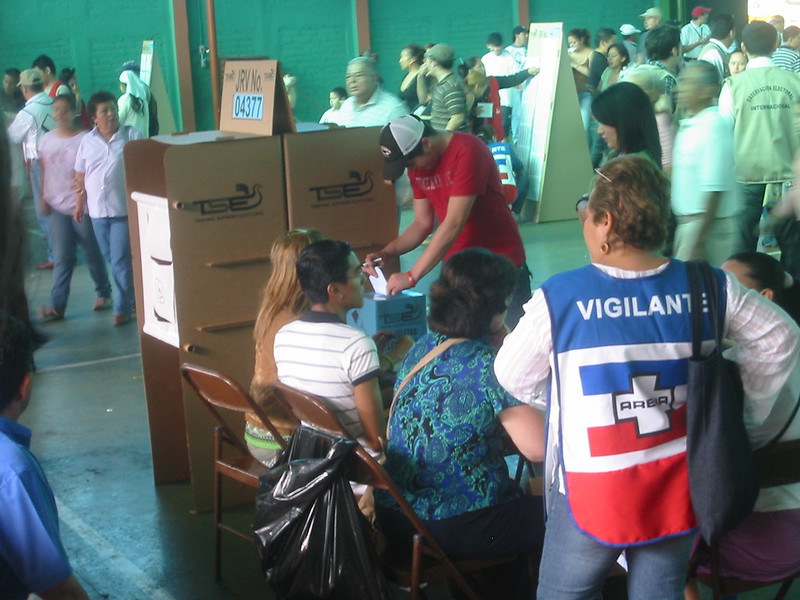
Polling place in El Salvador/ Amber/ Flickr/ Creative Commons License

El Salvador has made important democratic progress since the peace accord ending its bloody civil war in 1992, but the country still suffers from a profound deficit in citizens’ exercise of their rights and fulfillment of their democratic obligations – creating a serious risk of authoritarian practices and impunity by groups in power.

  • While President Nayib Bukele’s actions have catalyzed debate in the capital about democratic stability, surveys and research in the four departments of El Salvador’s eastern region show that low levels of interest in essential elements of democratic culture – community organizing; oversight of government operations; requests for public information; demands for public accountability; and efforts to root out corruption – are limiting direct and institutional democracy. This is among the key findings of surveys of 1,073 persons of diverse demographic groups by our center, the Centro de Investigación para la Democracia (CIDEMO) at the Universidad de Oriente.

Salvadorans have not lost faith in democracy as a system that, despite imperfections, would best serve their and the nation’s interests. But our surveys, conducted in September 2019, confirm that citizens are deeply frustrated with the country’s failure to achieve it. The country has at times shown the trimmings of democracy, but its political culture remains largely unchanged.

  • Confidence in democracy has been battered by citizens’ belief that the government is unable or unwilling to grapple with their daily challenges. Crime and personal insecurity, at 42.5 percent, are the problems at the top of citizens’ concerns. Poverty and unemployment are also major problems, respectively ranking 13.7 percent and 11.5 percent in the survey.
  • Despite the scourge of crime, the government institutions charged with combating criminal groups enjoy significant popular legitimacy; our polls show the military enjoys 81.2 percent popular confidence and the National Civilian Police, 72.2 percent. But those responsible for building and ensuring democratic practice do not. The Asamblea Legislativa polled at the time as the institution with the lowest level of confidence, and the Tribunal Supremo Electoral, upon which the credibility of elections depends, scored 56 percent.
  • At a little less than 5 percent, corruption ranked significantly lower as people’s greatest immediate concern, but other research indicates that it causes broad citizen apathy toward civic participation. There are widespread perceptions that opportunities to reduce corruption have been repeatedly blocked by those who most benefit from it. These conclusions coincide with those of Transparency International, which in 2019 ranked El Salvador 113 out of 180 countries (with 34 of 100 possible points). Among relatively stable countries, it is among the most corrupt in the world. Slightly more than 90.6 percent of citizens CIDEMO polled support the creation of an international commission against impunity (CICIES), which President Bukele promised during his campaign.

Nearly 30 years after the country started its juridical-institutional transformation, the same hindrances to effective democracy – high levels of poverty, precariousness (vulnerability), and inequality – remain colossal challenges to building a system of social participation, civic education, and inclusion. The country’s relative stability over the past two decades, certainly compared to the war years, disguise the underlying popular sense that the system has failed to serve them. The Oriente of El Salvador is far from the capital, San Salvador, and thus does not benefit from much of the country’s economic activity, and it has lost a great number of migrants seeking a dignified life elsewhere. But other research around the country shows its citizens’ frustration is not unique, as further documented by the World Bank and others that have found that about half of all households countrywide lack the conditions of dignified wellbeing.

  • The fundamental challenge for CIDEMO is to promote dialogue between citizens and emerging leaders to encourage citizen participation and to build capacities in civic education aimed at favoring the goal of expanding the exercise of citizens’ rights and duties. Our wager is that equality and freedom are critical wellsprings of advancing toward optimal levels of democratic governability.

* Rodolfo Mejía-Dietrich and Adán Mendoza are, respectively, the director and fulltime researcher at the Centro de Investigación para la Democracia at the Universidad de Oriente in San Miguel, El Salvador. This article is adapted from their recent study, Democracia, gobernabilidad y corrupción: Estudio de la cultura política en la región oriental de El Salvador. CLALS is providing technical assistance to CIDEMO under a USAID subaward that has made this UNIVO initiative possible.

Will U.S. Aid Address the “Root Causes” of the Crisis in the Northern Triangle?

By Fulton Armstrong*

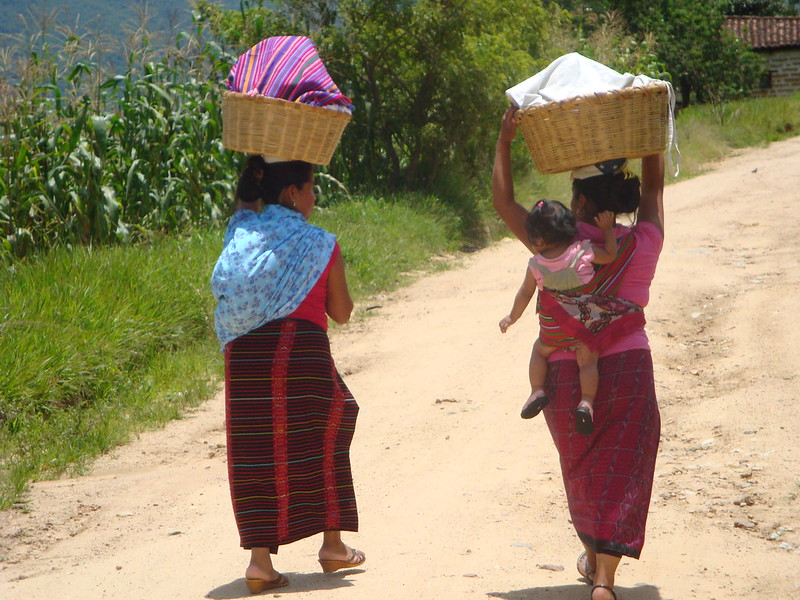
Women carry home their monthly food aid rations through a USAID-funded program in Guatemala/ USAID/ Flickr/ Creative Commons License

U.S. Vice President Kamala Harris’s statements this month on the need to address the “root causes” – including government corruption – of the ongoing surge of migrants fleeing the Northern Triangle of Central America reflects the strong agreement among analysts that lasting solutions will require deep reform within the region, but the Administration’s kid-gloves treatment of those governments risks repeating the errors of the past. Harris and Ricardo Zúñiga, the U.S. envoy coordinating policy toward the area, have emphasized the difficult task of real reform while also addressing the immediate challenge of the humanitarian crises contributing to migrants’ desperation.

  • While recommitting to a campaign promise to spend $4 billion in the Northern Triangle, the Administration last week announced an additional $310 million in emergency assistance to mitigate suffering from recurrent droughts, food shortages, COVID‑19, and back-to-back hurricanes last November. Even before those calamities, 60 percent of Hondurans lived in extreme poverty, and malnourishment stunted the growth of 23 percent of children nationwide. The World Food Program in June 2020 reported that 2.3 million Guatemalans (14 percent) were suffering from food insecurity, and another 800,000 would soon follow. Malnutrition among Guatemalan children under five has skyrocketed.

Addressing “root causes” will be much tougher than sending aid. Zúñiga argues that success will depend on drastically reducing the corruption that robs citizens of state resources and fuels other crime and violence, particularly senior political and military officials’ cooperation with narcotraffickers. Harris has supposedly mentioned this in several virtual meetings with Guatemalan President Alejandro Giammattei and will stress it during a visit to the region in June. The Administration is also creating an “anti-corruption task force” to enforce the policy, and Zúñiga offered $2 million to El Salvador if it pursues a hybrid anti-corruption effort called CICIES. Corruption is an endemic problem in all three countries, but the Harris initiative seems most sorely tested in Honduras, where President Juan Orlando Hernández has emerged as the poster child of what a U.S. District Judge last month called “state-sponsored” trafficking.

  • The U.S. drug convictions of Hernández’s brother, Tony, in 2019 and of trafficker Geovanny Fuentes Ramírez last month both featured apparently credible testimony about the President’s personal role in protecting the flow of narcotics through Honduras to the United States. These allegations come on the heels of waves of evidence of other corruption, human rights violations, and electoral fraud he has engaged in.
  • Nonetheless, the White House has publicly stated that “we are going to work with [Hernández’s] government and … seek areas of common interest.” While U.S. officials have severely criticized Salvadoran President Nayib Bukele – whose migrant flow is a fraction of Honduras’s – for anti-democratic digressions, they have been relatively silent on Hernández. His efforts to portray himself as an indispensable ally appear to have earned him that latitude. Last year, after U.S. concern about trafficking rose, he won brownie points for supporting legislation deterring private jets from entering the country. Recently, he has mobilized the military several times to stop migrant caravans from leaving the country.

This is not the first U.S. Administration to try to cajole corrupt Central American incumbents to become allies in eliminating their own corruption. The humanitarian crisis requires the Harris team to send aid quickly and to collaborate with the same governments that have aggravated, and sometimes caused, people’s suffering. But the Biden Administration hasn’t given an indication yet that it can avoid being taken to the cleaners as previous administrations have, including President Obama and Vice President Biden when they teamed up with the Inter-American Development Bank for the Alianza para la Prosperidad. That initiative cost hundreds of millions but, as the current migration surge indicates, the “push” factors behind it continue to grow. Obama/Biden also made significant efforts – for example, helping CICIG in Guatemala and MACCIH in Honduras begin important processes – but local officials and their elite allies managed to get out from under both.

  • It’s a long shot that, without threats of sanctions similar to those levied against leaders who are not U.S. “allies,” Washington can get these governments to undertake major reforms that would threaten leaders’ wealth and power. But if the United States and others can break the vicious cycle of corruption, bad governance, poverty, and flight in the Northern Triangle, they will be laying the groundwork for breakthroughs far beyond the migration crisis on the U.S. border.

April 30, 2021