MS13: Criminal Patterns Defy Traditional Solutions

By Steven Dudley and Héctor Silva*
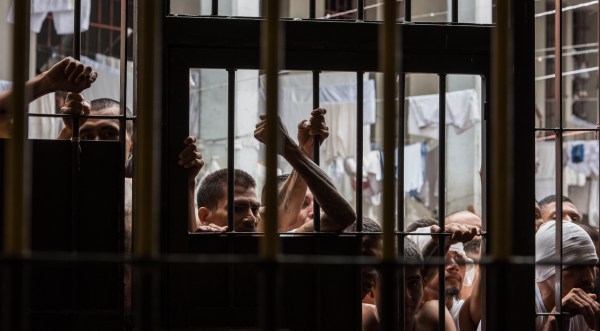
Gang members gather behind bars

Incarcerated members of the MS13 in Sonsonate, El Salvador. / FBI / Creative Commons

The Mara Salvatrucha (MS13) is one of the world’s largest and most violent street gangs and – despite decades of law enforcement action in two hemispheres – it remains a persistent threat.  In a report based on three years of research released this week by CLALS and InSight Crime (click here for full report), we estimate that the MS13 has between 50,000 and 70,000 members concentrated in mostly urban areas in Central America or other countries with a large Central American diaspora.  In the United States, its strongest base is in the Los Angeles and Washington, DC metropolitan areas, but it is expanding beyond urban areas in California and along the Eastern seaboard from Boston to North Carolina.  The failure to understand the gang’s roots, organizational contours, and everyday dynamics have long hindered efforts to combat it.

  • The MS13 is a social organization first, and a criminal organization second. It creates a collective identity that is constructed and reinforced by shared experiences, often involving acts of violence and expressions of social control.  The MS13 draws on a mythic notion of community, with an ideology based on its bloody fight with its chief rival, the Barrio 18 (18th Street) gang.  In Los Angeles and El Salvador, gang “cliques” have developed some degree of social legitimacy by prohibiting predatory activities (such as domestic violence) in areas of influence where the state provides no protection.
  • The MS13 is a diffuse, networked phenomenon with no single leader or leadership structure that directs the entire gang. It’s a federation with layers of leaders who interact, obey, and react to each other differently depending on circumstances.
  • Internal discipline is often ruthless, but the gang has guidelines more than fixed or static rules. Haphazard enforcement leads to constant internal and external conflicts and feeds violence wherever the gang operates.  Gang-related murders (of which MS13 represents a fraction) are thought to represent around 13 percent of all homicides in the United States, and upwards of 40 percent of the homicides in El Salvador, Honduras, and Guatemala.  The violence at the heart of the MS13 builds cohesion and camaraderie among the dispossessed men and boys who comprise it and it has enhanced the gang’s brand name, allowing it to expand in size and geographic reach.  However, that extraordinary violence has also undermined its ability to enter more sophisticated, money-making criminal economies because partners see it as an unreliable and highly visible target.
  • The MS13 is a transnational gang, but it is not a transnational criminal organization (TCO), as it only plays a part-time role in drug-trafficking, human smuggling, and international criminal schemes. Its growing involvement in petty drug dealing, prostitution, car theft, human smuggling, and, particularly in Central America, extortion schemes nearly always depends on its ability to control local territories rather than to command trafficking networks that span jurisdictions.  Significantly, we’ve found no evidence that it is involved in encouraging or managing the flow of migrants from Central America through Mexico and into the United States.

The U.S. government has placed MS13 at the center of several policies that do not give sufficient weight to these key characteristics.  The gang’s violent activities have also become the focus of special gang units and inter-agency task forces across the United States, including the Department of Homeland Security (DHS), the Drug Enforcement Administration (DEA), and other agencies involved with federal, state, and local law enforcement.

Policymakers in the United States and Central America have devoted many millions of dollars to law enforcement programs aimed in part at eliminating MS13, but they have generally been reluctant to address the underlying causes of the group’s growth – exclusion and the lack of opportunity – that push youths into its arms.  Gang recruitment will continue to flourish until societies create a space in which young people find community, potentially created by NGOs, schools, churches, parents, and other members of the community.  In the United States, moreover, lumping all members with the most violent offenders, casting immigrants as criminals, and isolating gang-riddled communities inspires fear and reduces cooperation with local authorities.  The U.S. and Central American governments also empower MS13 by making it a political actor, either by negotiating truces with it (as San Salvador has) or by making it a center-point of immigration policies that have little to do with its fortunes (as Washington does).  The gang will prosper until governments base policies and programs on a realistic evaluation of its strengths, origins, and internal dynamics.

February 13, 2018

* Steven Dudley is co-director of InSight Crime and a CLALS Fellow, and Héctor Silva is a CLALS Fellow.  Their three-year research project was supported by the National Institute of Justice of the U.S. Department of Justice, but the report’s conclusions are their own.  The report will be the subject of a discussion entitled Inside MS13: Separating Fact from Fiction at the Inter-American Dialogue (Washington, DC) on Friday, February 16.  Click here for details.

El Salvador: End of TPS Will Challenge Government and Society

By Jayesh Rathod and Dennis Stinchcomb

People wade through knee-deep water

Flooding in Jiquilisco, El Salvador / Global Water Partnership / Flickr / Creative Commons

The Trump Administration’s end of Temporary Protected Status for Salvadorans in the United States next year potentially will drop some 200,000 people into an environment in which basic needs, including personal security, cannot be met.  TPS for Salvadorans was first granted in 2001 after earthquakes caused “environmental disaster and substantial disruption of living conditions,” but subsequent 18-month extensions have been based on a broad range of factors.  On 11 occasions over the past 16 years, Washington has cited the lack of infrastructure, food, housing, and health care and slow economic growth as reasons for continuing TPS for Salvadorans.  Violence, corruption, and impunity as well as limited state capacity to combat them were also key reasons.  Statements by the Department of Homeland Security (DHS) announcing the policy change this week make limited mention of these factors, but numerous experts, including those contributing to a recent joint report by CLALS, The Washington College of Law, and the Instituto Centroamericano de Estudios Fiscales (ICEFI), concluded that El Salvador remains unable to adequately handle the return of its nationals.

  • Despite a decline in its national homicide rate, El Salvador remains the most violent country in the hemisphere. While the government espouses a narrative of progress, other indicators make clear that improvement on the security front has been limited, if not altogether absent.  Extraordinary security measures have coincided with increased allegations of extrajudicial killings perpetrated by both security officers and civilian self-defense groups.  Citizens’ pursuit of safety has made El Salvador the second-ranking country in the world of new displacements relative to population size.  Widespread corruption and weak rule of law contribute to impunity and abuse.
  • El Salvador remains extremely vulnerable to natural disasters – experiencing three major earthquakes since July 2016 and deadly torrential rains throughout 2017. El Salvador consistently remains Central America’s slowest growing economy, and under-employment affects more than one quarter of the labor force.  (That percentage will increase to roughly a third if TPS beneficiaries return to their homeland.)  The country has the highest deficit in adequate drinking water in the region.  Six out of 10 families who live there lack adequate housing.

The Salvadoran government is trying to put the best possible face on decision to terminate TPS, which it had previously lobbied against forcefully.  On January 8, the Foreign Ministry expressed “thanks to the government of the United States” for “postponing” the end of TPS for 18 months because it acknowledged the contribution of Salvadorans to the U.S. economy, culture, and society.  The government also thanked various non-governmental actors for supporting the “renewal” of TPS.  In closing, however, the government reiterated its commitment to push “alternatives” in the U.S. Congress that would promote Salvadorans’ “migratory stability” in the United States.

  • Think tanks and humanitarian organizations in Washington have condemned the Trump measure. The Washington Office on Latin America (WOLA) said ending TPS is a “senseless and inhumane policy.”  The Inter-American Dialogue notes that the Salvadoran MS-13 gang – one of President Trump’s most-stated enemies – will be a “primary beneficiary.”  Some fear that returnees, because of their perceived wealth, will be targets for extortion and other criminal activity at the hands of gangs.  A number of observers say that the resulting increase in instability in El Salvador will trigger more illegal migration into the United States.

Ending TPS for Salvadorans casts a shadow of uncertainty over the lives of 200,000 law-abiding, tax-paying migrants – half of whom have lived in the United States for more than 20 years and a third of whom have homes with mortgages, according to estimates.  That same uncertainty extends to TPS beneficiaries’ families, which include 192,000 U.S. citizen children. The Salvadoran government’s statement dodges the key issues of whether it can accommodate the influx of returnees and the loss of a significant portion of the roughly $4.5 billion (equivalent to 17 percent of El Salvador’s GDP) they send home each year.  There is no evidence that it can provide even basic protection for the returnees.  The Foreign Ministry’s unctuous thanks for Washington’s “extension” of TPS until the Salvadorans lose their status in 18 months suggests a mysterious confidence that the U.S. Congress will carve out exceptions for its compatriots in the United States.  However desirable that scenario might be, there’s precious little evidence that the U.S. legislature’s current leaders, who have shown support for most of Trump’s anti-migrant agenda, will help avoid the train wreck that Trump has now set in motion.

Click here for an in-depth review published by CLALS, The Washington College of Law, and ICEFI on the rationale behind TPS since 2001 and continuing need for protection.

January 10, 2018

Canada and Mexico Face Uncertainty of NAFTA Renegotiation

By Daniela Stevens*

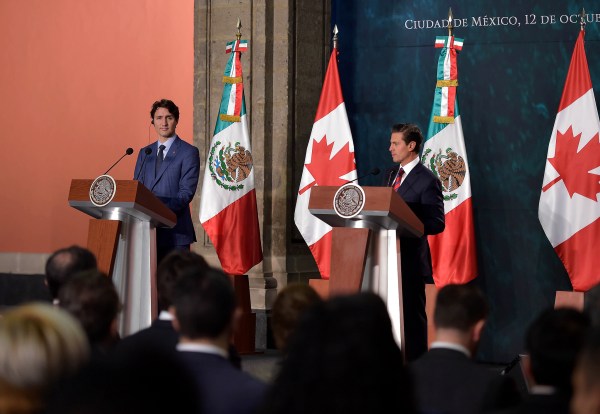
Two men stand at podiums with Mexican and Canadian flags behind them

Canadian Prime Minister Justin Trudeau gives a presentation with Mexican President Enrique Peña Nieto during an official visit to Mexico in October 2017. / Presidencia de la República Mexicana / Flickr / Creative Commons

Facing the growing possibility that the Trump Administration is walking away from the North America Free Trade Agreement (NAFTA), Mexico and Canada are beginning to look for trading partners beyond the United States.  The interdependencies binding the three are strong.  Both Mexico and Canada have deep commercial ties with the United States, which imports about 80 percent of Mexico’s exports and about 70 percent of Canada’s.  Both have significant leverage vis-à-vis the United States as well.  U.S. auto and agriculture industries have a major stake in free trade with Mexico, which also provides important cooperation on security issues and controlling Central American migration.  Liberalization measures within the energy sector by the current Mexican administration make Mexico a strategic partner in terms of energy security.  Canada buys about 19 percent of U.S. exports.

But these ties are fraying as conversations drag on.  Trump Administration proposals are hurting the talks; especially contentious are changes in the “rules of origin” (since the United States proposed increasing the U.S. content of autos to 85 percent from the current 62.5 percent) as well as the inclusion of a “sunset clause” that would make NAFTA expire unless it is renegotiated every five years.  NAFTA’s Article 2205 lets either of the three member countries announce its withdrawal from the accord with six months’ notice.  Canadian and Mexican trade officials have not given such notice yet, but they show signs of heading in that direction.  Both have held high-level meetings with counterparts from South America and Europe, according to official and non-government sources.

  • Mexican President Peña Nieto’s administration has expressed a preference for leaving the negotiations over accepting “a free trade agreement that ceases to promote free trade.” President Trump has said that his administration would be willing to negotiate a free trade agreement with Canada alone if the NAFTA talks fail.  However, Canadian Prime Minister Trudeau’s government has stated a preference for keeping the trilateral alive rather than resorting to bilateral agreement, since the terms of the U.S.-Canada deal were more outdated than the NAFTA’s.  The two presidents have been reluctant to take these actions because they apparently believe, as do many experts, that dismantling NAFTA would inevitably create uncertainty and inefficiencies for the three economies.  For example, the auto sector relies on three-way product flows that move several times across borders to be assembled into finished products.  Canadian and Mexican auto parts makers have a direct stake in each other’s dealings with the United States.  Even small duties would add up.
  • Nonetheless, some increased trade and a bilateral free trade agreement between just Mexico and Canada is possible. The two countries originally joined NAFTA to protect their access to the U.S. market, not to obtain access to each other’s.  Canadian public opinion and media reflect continued disinterest in Mexico, which is viewed as unstable due to drug-related criminality and corruption.  However, as the completion of a satisfactory NAFTA renegotiation is unlikely, Canadians are exploring deepening the bilateral link.  Mexican interest in Canada is also growing, according to some specialists.  Beyond North America, moreover, Canadians and Mexicans are exploring trade and investment diversification.  Canada is looking for increased cooperation with Latin America, in particular within the Pacific Alliance, a free trade partnership that includes Mexico, Chile, Peru and Colombia, and of which Canada is already Associate Member.  Mexico started a renegotiation last January of its free trade agreement with the European Union, which parties hope to finalize in the next few days.  It has begun warming up neglected ties with the Southern Cone and has already pledged to deepen ties with China.

Trade experts convened recently within the framework of American University’s Robert A. Pastor North America Research Initiative (NARI) were unanimous that that a trilateral agreement that protects the interests of all three partners would be the optimal outcome, but few observers of the NAFTA talks are confident that the Trump Administration will soften its position.  Canada’s commitment to a trilateral renegotiation should exert more pressure on the U.S. to compromise while strengthening both Canada and Mexico’s negotiating positions.  In the event of U.S. withdrawal from NAFTA, however, the two can expand their trade and investment relationship by lowering barriers further through modernization and e-commerce.  In addition, trade can potentially expand between the two since they have similar approaches to achieving various commitments of the Paris Accord involving energy projects and greenhouse gas emissions reductions.  Pastor Scholars concluded that both countries will have to carry out public campaigns to explain to their constituencies the benefits of continued cooperation, either trilateral or bilateral, if the United States significantly alters or abandons NAFTA.  Mexico and Canada have options outside North America in the quest for trade and investment diversification – even though their preferred scenario is a stronger NAFTA.  China, South America, and the European Union arise as the most readily available partners.

December 21, 2017

*Daniela Stevens is a Ph.D. Candidate in the American University School of Public Affairs and a Pastor Scholar.  Her research focuses on national and subnational policies that put a price on carbon emissions.

Cuba: Trump Actions Strengthening Hardliners

By Fulton Armstrong and William M. LeoGrande

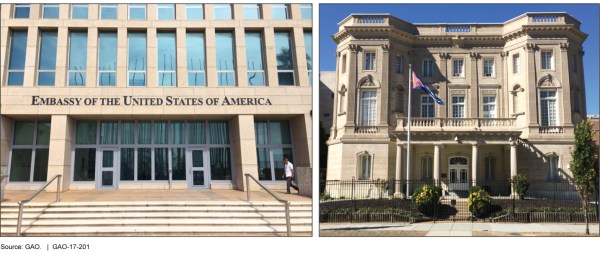
Two buildings in a composite photo

On the left, the U.S. Embassy in Havana; on the right, the Cuban Embassy in D.C. / U.S. Government Accountability Office / Flickr / Creative Commons

As the end of Raúl Castro’s presidency approaches, Trump Administration actions halting, if not reversing, the process of normalizing relations with Cuba have tilted debate in Havana in favor of hardliners trying to keep the brakes on economic reform and on constructive relations with Washington.

  • In retaliation for alleged “sonic attacks” against U.S. diplomats in Havana, Secretary of State Rex Tillerson’s ordered departure of staff from the U.S. Embassy in Havana, the closure of the U.S. consulate, and the expulsion of Cuban consular and commercial staff in Washington –has put a chill on bilateral relations that ratifies Havana hardliners’ contention that Washington cannot be trusted. By halting the issuance of visas to Cubans in Havana, the Trump Administration will almost certainly violate the 1994 migration accord committing the United States to issue at least 20,000 immigrant visas to Cubans annually.  That would rupture the longstanding bipartisan consensus in Washington that bilateral cooperation on migration serves an important U.S. interest in safe and orderly migration.
  • The State Department’s unwillingness to share meaningful information on the U.S. diplomats’ mysterious symptoms – underscored by the Embassy’s refusal to use a hotline established for Cuba to investigate alleged attacks real-time – has frustrated pro-normalization Cubans, who face conservatives’ claims that Washington is cynically exploiting the incident to embarrass Cuba and return to a policy of hostility and regime change.
  • Other Trump measures reinforce Cuban conservatives’ efforts to limit the growth of the country’s nascent private sector, particularly entrepreneurs who profit from U.S. visitors and need easy travel to import inputs from the United States. A travel warning issued in conjunction with the withdrawal of U.S. diplomats is causing a sharp drop in U.S. travelers, and new regulations abolishing individual people-to-people educational travel are channeling people into large hotels, away from private bed and breakfast rentals.  A prohibition on doing business with companies and hotels allegedly linked to the Cuban military is not pushing new clients to cuentapropistas’ businesses but instead is discouraging travel and commerce in general.  Cuban reformers are further dispirited by the perception that Washington is shifting back to the erroneous view that it can promote regime collapse by tightening the economic screws on the government, thereby reinforcing a siege mentality among senior leaders and discouraging needed economic reforms as too risky in the current environment.
  • Trump’s actions have so closely dovetailed with the agenda of Cuban hardliners that some people speculate it was opponents of reform inside the Cuban government who perpetrated the mysterious “sonic attacks” to provoke a confrontation with Washington. But there is no evidence whatsoever in support of that theory, and for anyone to sabotage Raúl Castro’s opening to Washington – one of the signal achievements of his presidency – would be to commit political (if not literal) suicide.

Implementation of Raúl Castro’s road map for economic change, embodied in the 311 lineamientos approved in 2011 and the Conceptualización of Cuba’s socialist model approved by the Communist Party congress last year, had already slowed before Trump’s sanctions due to Cuban concerns about growing income inequality during a period of poor economic performance, uncertainty about energy imports, and perhaps the 86-year-old president’s own level of energy and state of mind after the passing of his two brothers (Ramón and Fidel both died in 2016).  Widely discussed political reforms, such as the Electoral Law and the Law on Associations, that were expected months ago have yet to be unveiled.  The Trump Administration’s efforts to expedite regime change by curtailing financial flows to the government and by promoting private sector growth at the expense of state enterprises make it easy for Cuban hardliners to rally support for slowing reforms.  Ever since he launched the reform process in 2011, Castro has insisted it would move ahead, “Without haste, but without pause.”  Lately, in part because of the Trump Administration’s actions, there’s a lot more “pause” than “haste.”

The election of First Vice President Miguel Díaz-Canel to succeed Raúl as president seems to be a foregone conclusion of the ongoing multi-tiered election process that culminates in February, but no one outside the two men’s inner circle seems to know how or when next steps on reforms will be sequenced.  Raúl’s focus has been on creating processes and institutions for governing after he steps down, rather than achieving particular results between now and the formalities confirming Díaz-Canel.  One thing that is near-certain, however, is that the successor’s legitimacy will be determined by performance, not his surname or soaring oratory.  Tackling the really big reforms that loom ahead, such as currency and exchange rate unification, will require political will from a relatively unified leadership.  Cuba has long been adept at dealing with U.S. sanctions and pressure, so Trump’s policies are more an irritant than a threat, but the effect they have in Havana is to slow the implementation of changes that would improve the standard of living of ordinary citizens and to reduce the willingness of Cuba’s leaders to engage with Washington in ways that would serve the interests of both countries.

 December 18, 2017

Trump’s Wall Funding Proposal Violates Conservative Principles

By Ezra Rosser*

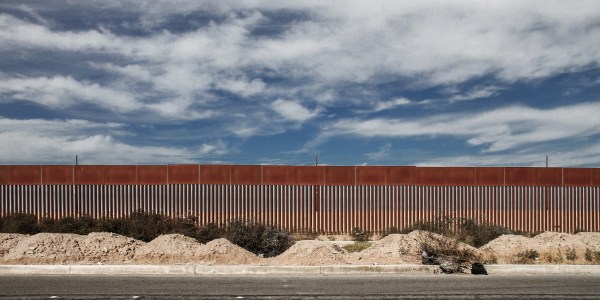
A large border fence and the blue sky as seen from a street in California

A portion of the existing border fence between Mexico and the United States in California. / Rey Perezoso / Flickr / Creative Commons

More than two years after U.S. presidential candidate Donald Trump first boasted that he would “build a great, great wall on our southern border and … make Mexico pay for that wall,” his main proposal to fund it appears to remain blocking transnational remittances  – in contradiction of neoliberal capitalist principles he embraces.  In a letter that now-President Trump sent last month to U.S. House and Senate Leaders he said the border wall was necessary to protect “our national security and public safety” because the “porous southern border … is exploited by drug traffickers and criminal cartels.”  He was ambiguous, however, about who was going to pay for the wall, simply arguing that the country must “ensure funding for the southern border wall and associated infrastructure.”  Trump offered to make a deal to protect the Deferred Action for Childhood Arrivals (DACA) program – the “Dreamers” – only if Congress passed harsh immigration policies and funded the wall.

  • Under pressure during the campaign to explain how he would make Mexico pay for the wall, Trump claimed he could hold remittances sent by Mexican immigrants to family members in Mexico hostage until Mexico agreed to pay. President Obama noted at the time that the implications of ending immigrant remittances would be “enormous,” difficult to implement, and likely push more people to leave Mexico for the United States.  Senders would likely resort to informal channels, and Trump’s proposed selective taxation of money sent to Mexico would raise legal issues because of the discriminatory nature of such a program.
  • Trump has been quietly backing away from his repeated campaign promise to make Mexico pay. When Mexican President Peña Nieto told him in a phone call last January that “my position has been and will continue to be very firm saying that Mexico cannot pay for that wall,” Trump responded with much less bluster.  He noted simply that “you cannot say that to the press.  The press is going to go with that and I cannot live with that.”  This acknowledgement that the issue was largely about political optics suggested that Trump knew that, in the memorable words of former Mexican President Vicente Fox, Mexico was “not going to pay for that f***ing wall.”

Trump has not withdrawn, however, his threat to block remittances.  Such a policy would cause hardship for millions; most remittances are spent on basic necessities such as food.  But by undermining the free flow of capital, a core feature of our modern globalized world, Trump is also attacking a central component of neoliberal capitalism.  Trump also takes positions that reflect anti-globalization and protectionism – such as his characterization of NAFTA as the “the worst trade deal ever signed in the history of our country” and his claim that globalization “left millions of our workers with nothing but poverty and heartache” – but tying capital flows with labor flows would arguably turn the values of the global order on their head.

  • The notion that there is an imbalance in the treatment of workers and capital is ordinarily associated with the radical left. Harvard Law Professor Roberto Mangabeira Unger, for example, highlighted this imbalance in his 1998 book, Democracy Realized: The Progressive Alternative, in which he wrote, “The architects of the new world economic order have built a system in which capital and goods can roam the world while labor remains imprisoned in the nation-state or in blocs of relatively homogeneous nation-states.”  For Trump and other Republicans, linking remittances and immigration would normally be anathema.  If the U.S. Congress decides not to fund the wall, we may discover that taxing cash transfers may be an autocratic strategy that crosses ideological lines.

 November 27, 2017

* Ezra Rosser is Professor of Law at the Washington College of Law, where he has taught Property, Federal Indian Law, Poverty Law, Land Use, and Housing Law.

And the Winner is… Trump in Latin America

By Nicolás Comini*

Donald_Trump_and_Mauricio_Macri_in_the_Oval_Office,_April_27,_2017

U.S. President Trump and Argentine President Macri meet in the Oval Office. / Official White House Photo by Shealah Craighead / Wikimedia / Creative Commons

Criticism of U.S. President Donald Trump’s policies toward Latin America ranges from mild to furious in the region and among many U.S. Latin America watchers, but that anger is not likely to drive greater regional unity and demands for a more balanced relationship.  Trump’s rhetoric – emphasizing sovereignty, nationalism, and protectionism – have long been popular concepts in many countries of the region.  During Latin America’s recent “turn to the left,” for example, political leaders embraced a developmentalist emphasis on using tariffs and non-tariff trade barriers to give domestic industries an advantage in national economic expansion strategies.  But the U.S. President’s statements have generally infuriated not only the left as reflecting bias on an array of issues, such as immigration, but also the right.

  • Trump’s policies contradict the prescriptions that Washington has been advocating – and most conservative politicians have embraced – for Latin America for many years. Those prescriptions have emphasized free trade but touched on other issues as well, such as the shift (symbolic and material) of resources from traditional national defense to the “war on drugs.”  Trump’s “America First” approach undercuts his natural allies in Argentina, Brazil, Mexico, and elsewhere.  It has also given their leftist opponents a sense of legitimization of their anti-Americanism speeches, something that is surging also because of Washington’s new policies toward Cuba.
  • The U.S. summary abandonment of the Trans-Pacific Partnership (TPP), conservatives’ last great hope for deeper trade integration with the United States, left them angry. According to the ECLAC, 73 percent of all FDI in Latin America in 2016 came from the United States (20 percent) and the European Union (53 percent).  Individuals with strong anti-Communist credentials in Colombia, Chile, and Peru are all flirting with joining China’s Regional Comprehensive Economic Partnership (RCEP).

Regional organizations show no sign of providing leadership in how to respond to U.S. policy.  UNASUR is fading rapidly, in part, because it was labeled by the new conservative governments as too Bolivarian and anti-American.  Something similar is happening with the CELAC.  MERCOSUR is struggling, in part, because of the political tumult in Brazil.  Indeed, most governments are trying to remain friends with Washington, prioritizing bilateral agendas in detriment of regional (multilateral) institutions and mechanisms.

The surge in resentment toward Washington – within and among Latin American countries – is unlikely to lead to increased regional unity.  Internally, the left and right may agree that Trump is harming their interests, but their reasons are different and prescriptions for dealing with it are far apart.  On a regional basis as well, the current context accelerates the atomization of the region – and threatens to expand the bargaining power of the great powers of the United States, China, Germany, or Israel.  Although China is making inroads, in the end the United States has, and will retain, the greatest influence in Latin America – and the lack of efficient regional decision-making will prolong that situation.  Latin American fragmentation will create an image of acquiescence – and President Trump will think he is not doing so badly in the region.

October 18, 2017

* Nicolás Comini is Director of the Bachelor and Master Programs in International Relations at the Universidad del Salvador (Buenos Aires) and Professor at the New York University-Buenos Aires.  He was Research Fellow at CLALS.

U.S.-Cuba: New Challenge to Normalization

By Fulton Armstrong

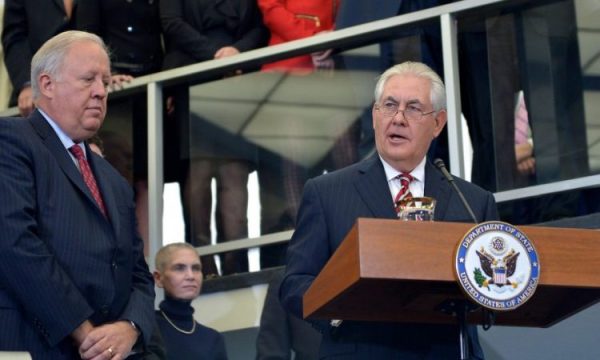
Tillerson US embassy in Cuba

U.S. Secretary of State Rex Tillerson addresses State Department employees. / U.S. Embassy in Cuba / Creative Commons

The Trump Administration’s decision to sharply reduce staff at the U.S. embassy in Havana and to warn U.S. travelers to avoid travel to Cuba is a major blow to U.S.-Cuba normalization – and a sign that Washington’s policy is once again dictated by politics rather than reality.  Announcing the measures, Secretary of State Rex Tillerson last Friday admitted that “investigators have been unable to determine who is responsible or what is causing these attacks,” but he still said that more than half of U.S. diplomats will be withdrawn “until the Government of Cuba can ensure [their] safety.”  Washington is also suspending the processing of tens of thousands of visas for Cubans seeking to visit or migrate to the United States.  Most travel to the island by U.S. officials will also cease; bilateral meetings will continue only in U.S. territory.

  • As the State Department itself has admitted, the “sonic attacks” – which have not been proven to be either sonic or attacks – remain a total mystery. No agency of the U.S. or Cuban governments is aware of a technology that fits the victims’ description of what they experienced, and non-government scientists have been equally puzzled.  Doctors analyzing the victims’ symptoms (headaches, hearing loss, memory loss, confusion) do not see a common cause.  Moreover, no one has been able to ascertain that the incidents amount to deliberate, premeditated attacks.  No one has produced any evidence to support speculation that “rogue” elements of the Cuban government or a third country even possess, let alone have used these unknown technologies.  President Trump said on Friday, “Some very bad things happened in Cuba.  They did some bad things” – without saying who “they” are.
  • Leaks over the weekend that the diplomats suffering the worst symptoms have been U.S. intelligence officers seem intended to rationalize allegations of targeted attacks. But the Associated Press, which reported the leaks and other key aspects of the story, noted with irony: “Almost nothing about what has transpired in Havana is perfectly clear.  But this is Cuba.”

Even though none of the more than 600,000 U.S. travelers to the island each year has reported any of the symptoms experienced by the U.S. diplomats, Washington also issued a statement that “warns U.S. citizens not to travel to Cuba.”  The State Department has provided no evidence that visitors are in danger.  Travel warnings are a powerful political signal of low confidence in host governments and can have a huge impact on local businesses – including many thousands in Cuba’s nascent private sector.

The Administration deserves credit for resisting the temptation to blame the Cubans for the attacks, but it fell prey to its own mindset about “sonic attacks” and – under political pressure –got stuck reacting to an incredible scenario with a counterproductive set of measures.  While the State Department was right to admit its ignorance, a handful of legislators in Washington – a small group that had forcefully opposed normalization all along – filled the information void and corralled Tillerson into a policy prescription that undoes mainstays of the bilateral relationship, including visas, reciprocal meetings in each capital, and other cooperation that requires a robust presence in Havana.  By trying to scare away travelers, moreover, Tillerson threatens to take crucial business away from private entrepreneurs.

  •  The scope of the Administration’s measures – including discouraging non-governmental travel – contradict the leaks suggesting that the incidents are part of a spy war between the two countries. A full epidemiological study about everything the victims had in common – food, drink, habits, and workspaces within the embassy building itself – conducted months ago, when evidence and memories were fresh, would have helped inform these decisions.  To accuse Cuba now, almost a year after the first incident, of failing to meet Vienna Convention obligations to protect diplomats rings hollow since the United States has accepted the sincerity of Havana’s efforts – from President Raúl Castro down to the working-level experts – to resolve the mystery and address its causes.  Having achieved the practical shutdown of the U.S. Embassy in Havana, opponents of normalization are now demanding total closure of Cuba’s embassy in Washington.  Politics is once again in danger of becoming the main driver of U.S.-Cuba bilateral relations.

October 2, 2017

Venezuela: Can Trump’s Coercive Diplomacy Help?

By Michael McCarthy*

A large auditorium-style room filled with people watching a speaker at the front

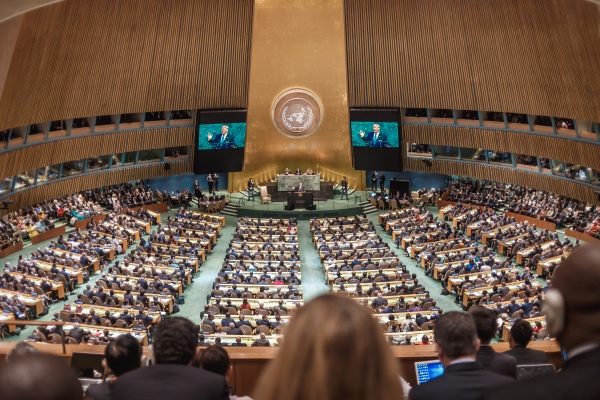
U.S. President Trump addresses the United Nations General Assembly on September 19, 2017. / John Gillespie / Flickr / Creative Commons

U.S. President Trump’s new rhetorical attacks and financial sanctions against the Venezuelan government suggest a shift toward coercive diplomacy aimed at achieving regime change, but U.S. power faces significant limits in the conflict-ridden country.  At the UN General Assembly on Tuesday, Trump called President Maduro an authoritarian and said “this situation is completely unacceptable and we cannot stand by and watch.”  Washington’s approach emphasizes sticks – sanctions against President Maduro, senior advisors, and threatened action against the oil sector – over carrots, while also voicing support for the opening of new mediated face-to-face talks between Maduro and the opposition.  A contact group of six Latin American and four European countries is promoting the talks, with the backing of UN Secretary General and the Vatican, to help avoid the worst-case scenario of open conflict.  Previous efforts to coordinate a multilateral coalition that simultaneously keeps the pressure on the government while opening negotiation avenues have failed – and agreeing on a roadmap is even more complex in view of the installation of the Constituent Assembly that stripped the elected, opposition-controlled National Assembly of its powers.

  • Trump’s new Executive Order directs financial sanctions that come close to directly threatening Maduro’s vital supports. It bans Caracas from issuing new debt in the United States and prohibits U.S.-based CITGO – a wholly owned subsidiary of the Venezuelan state oil company – from repatriating dividends to Caracas.  These measures will impose austerity on Maduro (who claims he will still make upcoming debt payments) and future actions are likely to try and undermine the government’s economic foundations.
  • In addition to installing the Constituent Assembly, Maduro seems to be pursuing a new regime-survival strategy in which he plays the role of a non-vengeful victim. Maduro criticized Trump’s sanctions and called him “the new Hitler” after the UN speech on Tuesday, but he’s also offered donations to aid post-Harvey recovery efforts in Houston and invoked John Lennon in a call for “giving peace a chance” in a New York Times ad earlier this month.  To regain a degree of credibility, Maduro will probably consider making elections for Governors slated for October 15 look competitive, but whether he has the political capital with his base to make bigger political or economic moves is unclear.  He may look to establish a new institutional equilibrium of dual legislatures, though it would hinge on removing the threat of retaliation against the opposition via the Constituent Assembly’s so-called “Truth Commission.”  He may also try to address massive fiscal imbalances by reforming the multi-tiered exchange rate, though this would be difficult as the system’s subsidized dollars help underwrite regime loyalty.

While the United States, Europeans, and Latin Americans are operating in loose formation – with Washington ratcheting up pressure while everyone else scrambles for negotiations – China and Russia are sticking to their strategic game.  As Maduro’s main financial backers, they are betting talks can stabilize the situation bit by bit.  They may kick in some more financial assistance if and when Maduro restores some stability by holding peaceful regional elections, delivering on the dialogue, and making large upcoming debt payments.  But while there is some basis for the geopolitical schadenfreude of Beijing and Moscow making it harder for Washington in Caracas, there are also signs that both have buyer’s remorse.  While they prefer Maduro stay afloat, they seem unlikely to extend loans that help stabilize the economy unconditionally.

None of the piecemeal actions that Maduro is apparently contemplating can defuse the political and social crisis, but a combination of steps may be enough to convince China and Russia to stay in the game.  Despite Trump’s statement that he was “not going to rule out a military option” in Venezuela, the Administration apparently is open to a policy of coercive diplomacy that includes genuine support for talks.  Trump attacked his predecessor for “leading from behind,” but figuring out how to sequence sticks and carrots in coordination with Latin American and European countries may require just that.  The bottom line is that the chance of a breakthrough on the biggest issues – the Constitutional road map and conditions for electoral participation – remain low, although some movement by both parties toward the middle seems realistic.  Despite the actions of outside actors, the situation is likely to remain poised over a knife-edge – without the catharsis of either peace or regime change.

September 21, 2017

* Michael McCarthy is a Research Fellow with the Center for Latin American & Latino Studies.  He publishes Caracas Wire, a newsletter on Venezuela and South America.

U.S.-Cuba: Orwell Redux

By Philip Brenner*

Political cartoon depicting U.S. Cuba relations in 1903

A political cartoon showing U.S. President William McKinley literally branding Cuba as a U.S. possession as a result of the Platt Amendment. / Wikimedia / Creative Commons

The Trump Administration’s removal of important historical documents on U.S.-Cuba relations from the public record bolsters commentators’ description of the President’s behavior as Orwellian and undermines understanding of key events in the past.  Double-checking the accuracy of citations for a forthcoming book on the history of Cuba, I discovered that the State Department “retired” its website entitled “Milestones in the History of U.S. Foreign Relations.”  The Department claimed that the cost would be too great “to revise and expand this publication to meet the Office’s standards for accuracy and comprehensiveness,” but it assured readers that the “text remains online for reference purposes, but it is no longer being maintained or expanded.”  Not true.

  • Until May 9, 2017, the Milestones series provided an accurate account of the 1901 Platt Amendment, under which the United States gave itself the right to intervene in Cuban internal affairs when it saw fit. That account is no longer available.  The only mention of the Platt Amendment occurs in a brief summary about President Franklin Roosevelt’s 1933 Good Neighbor Policy:  “In 1934 at Roosevelt’s direction the 1903 treaty with Cuba (based on the Platt Amendment) that gave the United States the right to intervene to preserve internal stability or independence was abrogated.”  Milestones provides no further insights.

Suspension of Milestones hinders an understanding of this important chapter in U.S.-Cuba relations – beginning with the U.S. occupation (1898-1902), during which the military dictated a series of laws intended to prepare Cuba for economic domination by U.S. companies.  It removes from the official U.S. government record the fact that, by 1905, U.S. individuals and companies owned 60 percent of Cuba’s rural land (Cubans owned 25 percent), and iron mines in Oriente Province were almost all U.S.-owned.  Loss of Milestones also erases from the public record U.S. acknowledgment that the administration of President William McKinley (1897-1901) sought control by designating a list of acceptable candidates who could be elected to a Cuban constituent assembly in 1900.  When Cuban voters instead chose an independent slate to draft the new constitution, U.S. officials asserted the election proved that Cubans were irresponsible and unfit for self-government.  General Leonard Wood, the U.S. military governor, described those elected as among the “worst agitators and political radicals in Cuba.”  This helped lay the groundwork for Senator Orville Platt, a Republican from Connecticut, to include an amendment to an Army appropriation bill in 1901 written by Secretary of War Elihu Root.

  • While the United States at the time claimed the Amendment’s intent was to preserve Cuba’s independence and stability, the State Department candidly acknowledged one hundred years later in its Milestones series that it was really “to shape Cuban affairs without violating the Teller Amendment,” which in 1898 stipulated that the United States had no intention to remain in Cuba after the war and occupation. In addition to allowing U.S. intervention whenever Washington saw fit, it directed that Cuba would lease territory to the United States for up to three naval coaling stations; that Cuba could not enter into a treaty that offered a military base to any other country; and that Cuba could make no laws contravening prior U.S. military decisions.

U.S. cynicism and insincerity outraged Cubans when they were forced to write the Platt Amendment into their own Constitution in 1901 as a condition for the end of U.S. occupation.  U.S. observers who know about it share that outrage, but – without accurate accounts of history – understanding what happened is much more difficult.  It is like flying through a fog without instruments, and crashes are bound to ensue.  Perhaps even more important, as Orwell hoped his readers would see, when history is based on lies, people learn to live only in the present, and have no hope for the future.

 August 28, 2017

* Philip Brenner is a Professor of International Relations at American University’s School of International Service and co-author with Peter Eisner of Cuba Libre: A 500-Year Quest for Independence (Rowman and Littlefield, forthcoming 2017).

Cuba: Attacks Against U.S. Diplomats?

By William M. LeoGrande*

19734869263_7c3351e2bd_b

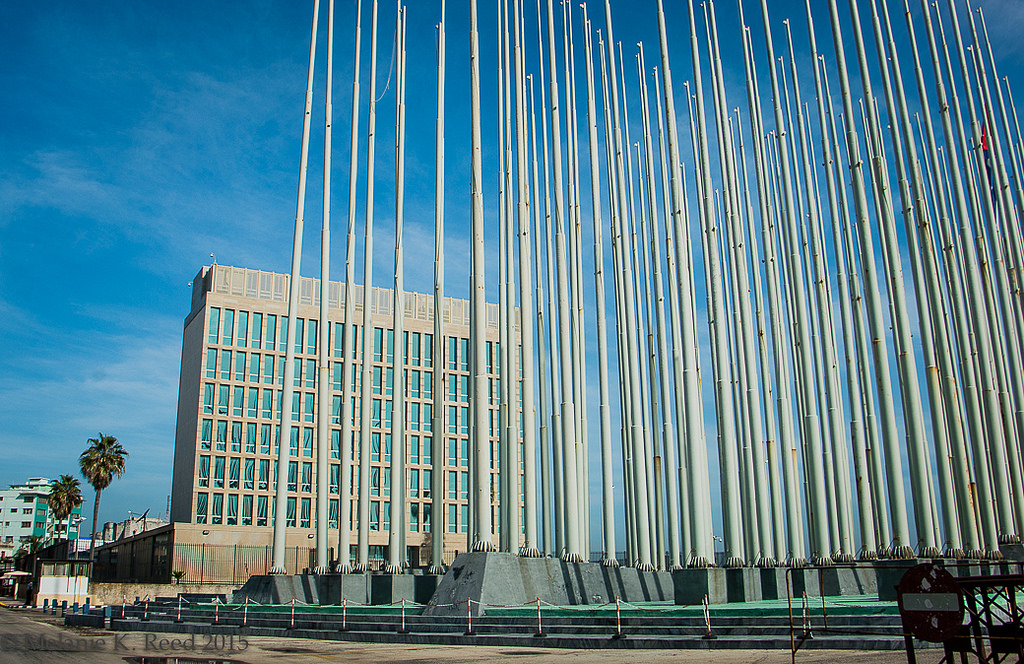
The U.S. Embassy in Havana. / Melanie K. Reed / Flickr / Creative Commons

The details about alleged sonic attacks against U.S. and Canadian diplomats in Havana in fall 2016 remain shrouded in secrecy and uncertainty, but the incidents – whatever they were – could cause further disruptions in U.S.-Cuban relations, already on shaky ground after President Trump’s June 16 declaration that he was “canceling” President Obama’s policy of normalization.  The State Department has admitted that after more than eight months of investigation, it “can’t blame any one individual or country” for the reported impairment of U.S. diplomats’ health.  Although press reports indicate the victims suffered hearing loss and headaches from exposure to something in or near their residences, the State Department has provided few details about their symptoms, the number of officers involved, their positions, or their prognoses.  The department’s spokesperson said last week that “we still are trying to … determine the actual cause of their situation … The investigation is ongoing.”  Nonetheless, in May the Trump Administration expelled two diplomats working at the Cuban Embassy in Washington because, according to the spokesperson, Havana is “responsible for the safety and security of our diplomats,” – a responsibility it failed to meet.

  • Speculation about what happened is rampant, but lacks evidence. The State Department’s reference to “any one individual or country” and the Cuban Foreign Ministry’s unequivocal statement that it “has never, nor would it ever, allow that the Cuban territory be used for any action against accredited diplomatic agents or their families, without exception” have fueled speculation that a third country may have staged the attacks.  Russia is a favorite suspect, with China a distant second, but conspiracy theorists cannot explain how a third country could conduct such sensitive operations in an environment like Havana where foreign diplomats – especially U.S. diplomats – are under constant surveillance.
  • Speculation that this was a Cuban “attack” intended to injure the diplomats does not make sense, either. U.S. diplomats in Havana have faced petty harassment over the years, but even when relations were at their worst, there was never an attempt to inflict physical harm.  Moreover, the incidents happened at a time when U.S.-Cuban relations were improving and most people expected normalization to continue under President Hillary Clinton.  Neither is it clear why Canadians would be a target.  The U.S. and other militaries have developed low- and high-frequency weapons that cause hearing loss, headaches, and even incapacitation on the battlefield and in crowd-control situations.  But if such a weapon was the cause of the symptoms U.S. diplomats experienced, presumably it would be immediately recognizable.

A popular explanation is that the injuries were an unintended side-effect of a surveillance operation gone wrong.  Without information about symptoms and operating conditions, however, the technology is difficult to fathom.  Lasers, microwaves, and sound waves have long been used for stand-off eavesdropping operations, but primarily against targets in locations to which the attacker has no access, which is not the case with diplomatic residences in Havana.  Moreover, U.S. Embassy regulations strictly forbid having sensitive conversations outside the chancery, so Cuban security services would have little motivation to invest in the expensive equipment and real-time monitoring necessary to target residences.  In short, none of the extant explanations fit very well with the few facts known at this point.

The impact of the alleged attacks and U.S. retaliation on the bilateral relationship has been minimal so far.  Senior diplomats on both sides seem reluctant to allow the incidents to put a brake on improvements in areas of mutual interest.  The fact that both countries agreed to keep the alleged attacks and the expulsion of Cuban diplomats quiet suggests neither wanted the issue to get out of hand.  President Trump’s June 16 announcement tightening regulations on U.S. trade and travel to the island gave no hint of a crisis over an issue as fundamental as diplomats’ safety, and left the door open to continuing dialogue on issues of mutual interest.  President Raúl Castro has criticized Trump’s new policies but, as recently as mid-July, repeated his willingness to work with Washington on a host of issues within the context of respect and mutual benefit.  However, until all the facts are known and responsibility for the incidents is definitively established, the Cuban-American right will continue to stoke speculation about Cuban villainy in hopes of derailing the bilateral cooperation still underway.

August 14, 2017

*William M. LeoGrande is Professor of Government at American University in Washington, DC, and co-author with Peter Kornbluh of Back Channel to Cuba: The Hidden History of Negotiations between Washington and Havana (University of North Carolina Press, 2015).