U.S.-Cuba: Orwell Redux

By Philip Brenner*

Political cartoon depicting U.S. Cuba relations in 1903

A political cartoon showing U.S. President William McKinley literally branding Cuba as a U.S. possession as a result of the Platt Amendment. / Wikimedia / Creative Commons

The Trump Administration’s removal of important historical documents on U.S.-Cuba relations from the public record bolsters commentators’ description of the President’s behavior as Orwellian and undermines understanding of key events in the past.  Double-checking the accuracy of citations for a forthcoming book on the history of Cuba, I discovered that the State Department “retired” its website entitled “Milestones in the History of U.S. Foreign Relations.”  The Department claimed that the cost would be too great “to revise and expand this publication to meet the Office’s standards for accuracy and comprehensiveness,” but it assured readers that the “text remains online for reference purposes, but it is no longer being maintained or expanded.”  Not true.

  • Until May 9, 2017, the Milestones series provided an accurate account of the 1901 Platt Amendment, under which the United States gave itself the right to intervene in Cuban internal affairs when it saw fit. That account is no longer available.  The only mention of the Platt Amendment occurs in a brief summary about President Franklin Roosevelt’s 1933 Good Neighbor Policy:  “In 1934 at Roosevelt’s direction the 1903 treaty with Cuba (based on the Platt Amendment) that gave the United States the right to intervene to preserve internal stability or independence was abrogated.”  Milestones provides no further insights.

Suspension of Milestones hinders an understanding of this important chapter in U.S.-Cuba relations – beginning with the U.S. occupation (1898-1902), during which the military dictated a series of laws intended to prepare Cuba for economic domination by U.S. companies.  It removes from the official U.S. government record the fact that, by 1905, U.S. individuals and companies owned 60 percent of Cuba’s rural land (Cubans owned 25 percent), and iron mines in Oriente Province were almost all U.S.-owned.  Loss of Milestones also erases from the public record U.S. acknowledgment that the administration of President William McKinley (1897-1901) sought control by designating a list of acceptable candidates who could be elected to a Cuban constituent assembly in 1900.  When Cuban voters instead chose an independent slate to draft the new constitution, U.S. officials asserted the election proved that Cubans were irresponsible and unfit for self-government.  General Leonard Wood, the U.S. military governor, described those elected as among the “worst agitators and political radicals in Cuba.”  This helped lay the groundwork for Senator Orville Platt, a Republican from Connecticut, to include an amendment to an Army appropriation bill in 1901 written by Secretary of War Elihu Root.

  • While the United States at the time claimed the Amendment’s intent was to preserve Cuba’s independence and stability, the State Department candidly acknowledged one hundred years later in its Milestones series that it was really “to shape Cuban affairs without violating the Teller Amendment,” which in 1898 stipulated that the United States had no intention to remain in Cuba after the war and occupation. In addition to allowing U.S. intervention whenever Washington saw fit, it directed that Cuba would lease territory to the United States for up to three naval coaling stations; that Cuba could not enter into a treaty that offered a military base to any other country; and that Cuba could make no laws contravening prior U.S. military decisions.

U.S. cynicism and insincerity outraged Cubans when they were forced to write the Platt Amendment into their own Constitution in 1901 as a condition for the end of U.S. occupation.  U.S. observers who know about it share that outrage, but – without accurate accounts of history – understanding what happened is much more difficult.  It is like flying through a fog without instruments, and crashes are bound to ensue.  Perhaps even more important, as Orwell hoped his readers would see, when history is based on lies, people learn to live only in the present, and have no hope for the future.

 August 28, 2017

* Philip Brenner is a Professor of International Relations at American University’s School of International Service and co-author with Peter Eisner of Cuba Libre: A 500-Year Quest for Independence (Rowman and Littlefield, forthcoming 2017).

Cuba: Attacks Against U.S. Diplomats?

By William M. LeoGrande*

19734869263_7c3351e2bd_b

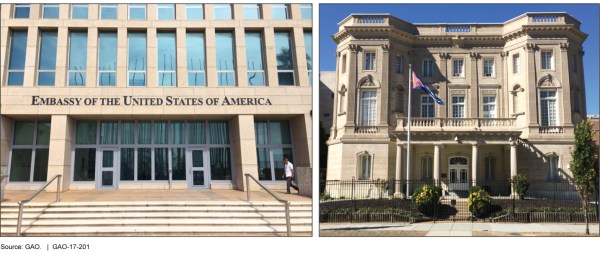
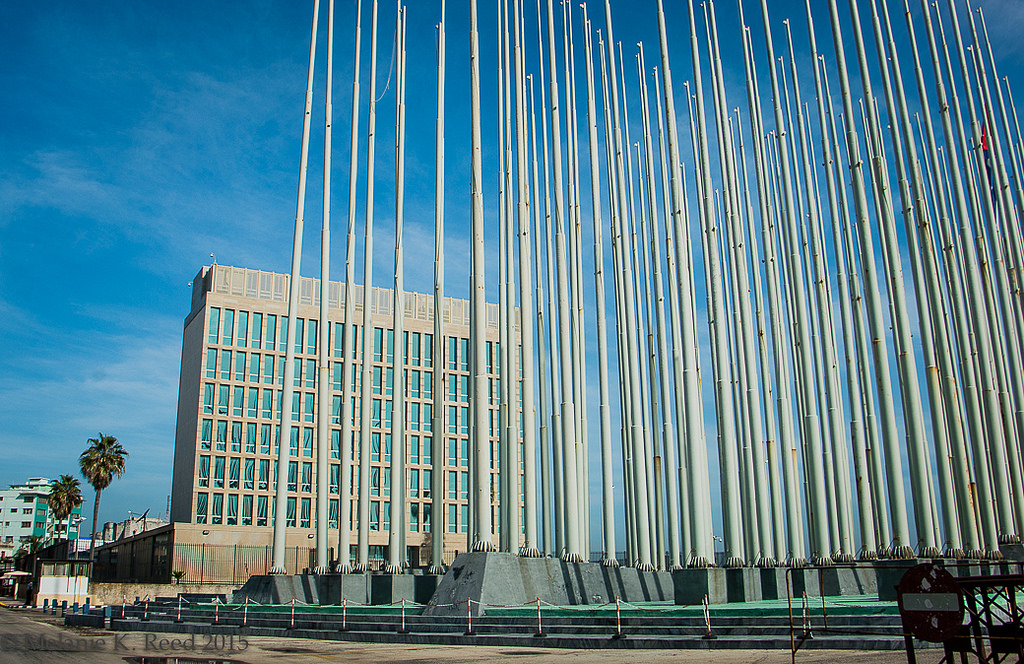
The U.S. Embassy in Havana. / Melanie K. Reed / Flickr / Creative Commons

The details about alleged sonic attacks against U.S. and Canadian diplomats in Havana in fall 2016 remain shrouded in secrecy and uncertainty, but the incidents – whatever they were – could cause further disruptions in U.S.-Cuban relations, already on shaky ground after President Trump’s June 16 declaration that he was “canceling” President Obama’s policy of normalization.  The State Department has admitted that after more than eight months of investigation, it “can’t blame any one individual or country” for the reported impairment of U.S. diplomats’ health.  Although press reports indicate the victims suffered hearing loss and headaches from exposure to something in or near their residences, the State Department has provided few details about their symptoms, the number of officers involved, their positions, or their prognoses.  The department’s spokesperson said last week that “we still are trying to … determine the actual cause of their situation … The investigation is ongoing.”  Nonetheless, in May the Trump Administration expelled two diplomats working at the Cuban Embassy in Washington because, according to the spokesperson, Havana is “responsible for the safety and security of our diplomats,” – a responsibility it failed to meet.

  • Speculation about what happened is rampant, but lacks evidence. The State Department’s reference to “any one individual or country” and the Cuban Foreign Ministry’s unequivocal statement that it “has never, nor would it ever, allow that the Cuban territory be used for any action against accredited diplomatic agents or their families, without exception” have fueled speculation that a third country may have staged the attacks.  Russia is a favorite suspect, with China a distant second, but conspiracy theorists cannot explain how a third country could conduct such sensitive operations in an environment like Havana where foreign diplomats – especially U.S. diplomats – are under constant surveillance.
  • Speculation that this was a Cuban “attack” intended to injure the diplomats does not make sense, either. U.S. diplomats in Havana have faced petty harassment over the years, but even when relations were at their worst, there was never an attempt to inflict physical harm.  Moreover, the incidents happened at a time when U.S.-Cuban relations were improving and most people expected normalization to continue under President Hillary Clinton.  Neither is it clear why Canadians would be a target.  The U.S. and other militaries have developed low- and high-frequency weapons that cause hearing loss, headaches, and even incapacitation on the battlefield and in crowd-control situations.  But if such a weapon was the cause of the symptoms U.S. diplomats experienced, presumably it would be immediately recognizable.

A popular explanation is that the injuries were an unintended side-effect of a surveillance operation gone wrong.  Without information about symptoms and operating conditions, however, the technology is difficult to fathom.  Lasers, microwaves, and sound waves have long been used for stand-off eavesdropping operations, but primarily against targets in locations to which the attacker has no access, which is not the case with diplomatic residences in Havana.  Moreover, U.S. Embassy regulations strictly forbid having sensitive conversations outside the chancery, so Cuban security services would have little motivation to invest in the expensive equipment and real-time monitoring necessary to target residences.  In short, none of the extant explanations fit very well with the few facts known at this point.

The impact of the alleged attacks and U.S. retaliation on the bilateral relationship has been minimal so far.  Senior diplomats on both sides seem reluctant to allow the incidents to put a brake on improvements in areas of mutual interest.  The fact that both countries agreed to keep the alleged attacks and the expulsion of Cuban diplomats quiet suggests neither wanted the issue to get out of hand.  President Trump’s June 16 announcement tightening regulations on U.S. trade and travel to the island gave no hint of a crisis over an issue as fundamental as diplomats’ safety, and left the door open to continuing dialogue on issues of mutual interest.  President Raúl Castro has criticized Trump’s new policies but, as recently as mid-July, repeated his willingness to work with Washington on a host of issues within the context of respect and mutual benefit.  However, until all the facts are known and responsibility for the incidents is definitively established, the Cuban-American right will continue to stoke speculation about Cuban villainy in hopes of derailing the bilateral cooperation still underway.

August 14, 2017

*William M. LeoGrande is Professor of Government at American University in Washington, DC, and co-author with Peter Kornbluh of Back Channel to Cuba: The Hidden History of Negotiations between Washington and Havana (University of North Carolina Press, 2015).

Perspectives on U.S.-Cuba Relations Under Trump

Trump and Cuban Americans

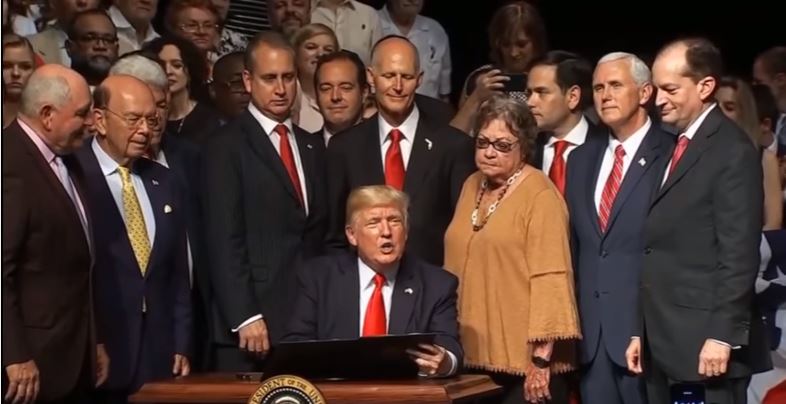
President Trump announces his administration’s policy toward Cuba. / YouTube / Livestream TV News / Creative Commons

Reversing Obama’s Cuba Policy?

By William M. LeoGrande*

In the two years after President Barack Obama and Cuban President Raúl Castro agreed to normalize relations, Obama tried to make his policy of engagement “irreversible” by opening up travel and trade that would create constituencies with a self-interest in defending engagement. He half-way succeeded. Despite the incendiary rhetoric in which Donald Trump cloaked his new policy when he rolled it out at a rally of Cuban-American hardliners in Miami, the sanctions he announced were limited.

Obama granted general licenses for all 12 categories of legal travel and relaxed other restrictions on who could visit Cuba. Trump rolled back only individualized people-to-people educational travel, so people-to-people visitors must once again travel on organized tours. But they can still go, and bring back rum and cigars.

Obama opened the Cuban market to U.S. businesses by licensing contracts with state enterprises in the travel, telecommunications, pharmaceuticals, construction, agriculture, and consumer goods sectors. Trump prohibited only contracts with Cuban enterprises managed by the military, and even then he exempted all existing contracts, and future contracts involving ports, airports, and telecomm – the sectors in which all but a handful of current U.S. businesses operate.

Trump did not impose any restrictions on Cuban–American family travel and remittances. He did not break diplomatic relations or put Cuba back on the State Department’s terrorism list. He did not restore the wet foot/dry foot policy that gave Cuban immigrants preferential treatment after reaching the United States. He did not abrogate the bilateral agreements on issues of mutual interest negotiated by the Obama administration.

Why such a flaccid set of sanctions from a president who stood on the stage in Little Havana and demonized the Cuban regime as brutal, criminal, depraved, oppressive, murderous, and guilty of “supporting human trafficking, forced labor, and exploitation all around the globe”?

Because Obama’s strategy of creating constituencies in favor of engagement worked. In the weeks leading up to Trump’s announcement, he was deluged with appeals not to retreat from engagement. The U.S. Chamber of Commerce argued in favor of expanding business opportunities, not constricting them. Farmers argued for expanding agricultural sales. Travel providers argued for expanding travel. Fifty-five U.S. Senators cosponsored a bill to lift all travel restrictions. Seven Republican members of Congress and 16 retired senior military officers argued that disengagement would damage national security by boosting Russian and Chinese influence on the island. Polling data showed that large majorities of the public, of Republicans, and even of Cuban Americans support engagement.

Even the executive bureaucracy was won over by the successes scored by the policy of engagement. During the last two years of Obama’s presidency, Cuba and the United States signed 23 bilateral agreements. When Trump ordered an inter-agency review of Cuba policy, the consensus of the agencies involved was that engagement was working and ought to be continued. Trump rejected that conclusion because it did not fit with his political strategy of currying favor with the Cuban-American right, but the agencies fought back successfully against more extreme proposals to roll back Obama’s policies entirely.

Trump’s vicious rhetoric and his open embrace of the goal of regime change – through sanctions, support for dissidents, and “democracy promotion” – risks destroying the atmosphere of mutual respect and good faith that made the gains of Obama’s policy possible. Already, hardliners in Havana who saw engagement as a Trojan Horse for subversion are saying, “We told you so!” Cuba’s private entrepreneurs, who Trump’s policy purportedly aims to help, will be hurt the most by the prohibition on individual people-to-people travel. However, the overall economic impact of his sanctions will be limited, both on U.S. businesses and in Cuba.

Cuba’s official response has been pragmatic but firm. A statement released shortly after Trump’s Miami speech declared, “The Government of Cuba reiterates its willingness to continue respectful dialogue and cooperation on issues of mutual interest, as well as the negotiation of pending bilateral issues with the United States Government…. But it should not be expected that Cuba will make concessions inherent to its sovereignty and independence, nor will it accept any kind of conditionality.”

In all likelihood, political pressures from the constituencies Obama’s policy created will continue to constrain Trump’s impulse to beat up on Cuba, but his loyalty to the exile right and his penchant for bullying will make it impossible to realize further progress toward normalizing relations. That will have to wait until the White House has a new occupant motivated by the national interest rather than by a political IOU given to Miami’s most recalcitrant Cuban-American minority.

*William M. LeoGrande is Professor of Government at American University in Washington, DC, and co-author with Peter Kornbluh of Back Channel to Cuba: The Hidden History of Negotiations between Washington and Havana (University of North Carolina Press, 2015).

Cuba: Trump’s “New Policy”


By Ricardo Torres*

The “new policy” toward Cuba that President Trump announced to great fanfare in Miami last Friday features little that is new while seeking to restore oxygen to a failed approach advocated by extreme sectors of the Cuban-American community. While adopting language reflecting the worst traditions of American foreign policy, Trump’s declaration implicitly blessed much of the rapprochement between the two countries introduced by President Obama – diplomatic relations will remain intact, for example. But the new measures he announced have symbolic and practical implications. His Cuban-American backers expended great political capital to change the policy in hope of accelerating regime change on the island, but the Trump approach will instead retard change – while increasing the pain of the Cuban people. Moreover, it will undermine the activities of legitimate U.S. citizens, companies, and groups interested in contact with the island and compromise U.S. citizens’ freedom to travel. They have acted against Trump’s campaign promise to create jobs (threatening thousands of workers who depend on U.S.-Cuba interaction) and increase national security (putting U.S.-Cuba cooperation in counternarcotics, counterterrorism, and illegal migration at risk). The new approach also runs counter to Secretary of State Tillerson’s repeated assertion that U.S. policy is not to impose its values and standards on others.

U.S. national interests seem to have taken a back seat to internal U.S. political factors, particularly the opposition to Obama’s policies among certain groups of the Cuban Americans that had seen their political influence decline over the past decade.

In addition to its symbolic weight, the Trump approach is likely to be felt most strongly in several principal areas. Despite continuing differences between the two countries, both governments had decided to move ahead together. It is difficult to overstate the sense of hope created during the Obama era, with immediate and tangible benefits for both.

Cuba’s internal situation has been changing recently, due to a gradual opening internally and to other nations. A steady increase in visits by foreign businessmen and Cuban travel overseas are evidence of this change. Trump’s rhetoric and actions will only strengthen those sectors inside Cuba that exaggerate the external threat and want to reduce the space for debate in the country.

The economic impact that Trump and his backers want – to hurt the Cuban government – cannot be separated from the harm it will cause the Cuban people. The new measures will probably reduce tourism, which provides a significant flow of revenue to vast sectors of the Cuban population that, in formal or informal jobs, benefit from that industry. Indeed, the much bandied-about private sector has been one of the principal beneficiaries of tourism development.

The Cuban government will assess its options in relations with the United States as well as in domestic policies. It will naturally have to let the U.S. government know that cooperation has yielded mutual benefits to both countries and that this step backward will not be limited to areas that Washington prefers. Havana might look for more ambitious ties with alternative partners, including both allies and competitors of the United States. Internally, rather than slow down, Cuba’s transformation should accelerate. The legitimate needs of the Cuban people should not be postponed in the face of this new adversity. The pace of Cuban reform should never be tied to external threats. As for the Cuban people, they will once again tell all who will listen that they themselves – not those on the other side of the Florida Strait – represent their interests. President Trump has empowered a small group of Cuban Americans to speak for people in Cuba whom they do not know, at the cost of sacrificing U.S. prestige and an array of its national interests. The absurd has become the accepted norm in American politics.

*Ricardo Torres is a Professor at the Centro de Estudios de la Economía Cubana at the University of Havana and a former CLALS Research Fellow.

Mexico: Racing Against Trump’s Immigration Crackdown

By Carlos Díaz Barriga*

Border crossing Mex-US

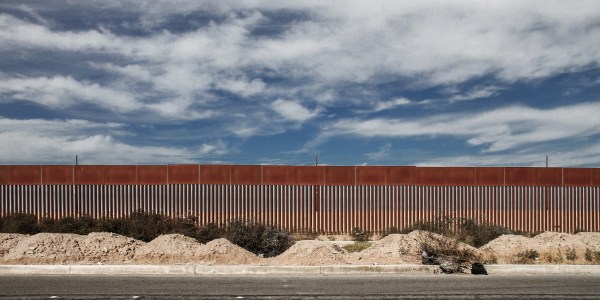
Southwest border crossing. / U.S. Customs and Border Protection / Flickr / Creative Commons

U.S. President Donald Trump’s failure in his first 100 days to fulfill his most aggressive campaign promises affecting bilateral relations may have calmed nerves in Mexico, but the Peña Nieto Administration is moving ahead with efforts to mitigate the impact of thousands of returning immigrants.  Trump apparently has given up on making Mexico pay for his proposed border wall, and the U.S. Congress doesn’t want to foot the bill either.  He has also toned down his threats to pull out of NAFTA – “the worst trade deal ever” – and seems to be edging toward a more modest renegotiation.  But one pledge the Administration seems eager to meet is ramping up deportations of undocumented immigrants from Mexico.  Trump is not immediately deporting the millions of “bad hombres,” as he initially promised, but he is steadily deporting thousands, including many who do not have criminal records in the U.S.  There are even stories of Trump supporters shocked at the deportation of law-abiding and tax-paying business owners.  Moreover, while he assured Dreamers – youths brought to the United States as children – to “rest easy,” there are reports of U.S. immigration detaining some of these working and tax-paying youth.

The threat of mass deportations involving millions still looms large, and Trump’s unpredictability to settle on a course of action is increasing pressure on Mexican officials to act fast to mitigate the impact of the returning immigrants.

  • At its consulates in the United States, the government is actively helping those at risk of being deported, providing legal services to ensure due process in locales as far-ranging as Indianapolis and New Orleans. Foreign Minister Luis Videgaray continues to confidently declare that Mexico will fight for immigrants and stand up to U.S. immigration authorities.  (He has also cast it as a human rights issue, spurring accusations of hypocrisy from critics concerned about Mexico’s treatment of Central American migrants.)
  • President Peña Nieto has enacted a reform to the General Law of Public Education facilitating Dreamers’ entry into Mexico’s education system, accrediting their U.S. education and helping those without proper Mexican documentation. Critics have called his public appearance with deportees opportunistic, a ploy to get much-needed positive media coverage, but the measures like those in education have real benefit for returnees.
  • Specific industries in Mexico are looking for specialized workers in the returning immigrants. The Mexican Association of Armored Vehicles (AMBA) estimated the availability of 50,000 thousand jobs for deportees in the areas of private security, armored car manufacturing, and transportation of valuables.  As violent crimes have risen again in Mexico, this industry is in need of workers.  Call centers are also actively recruiting.  Their only requisite is fluency in English; no other experience is necessary.

Many Mexicans’ perception of Trump as unpredictable and erratic tempers any optimism about bilateral relations even though Foreign Minister Videgaray seems to have established a viable dialogue with Trump’s son-in-law, Jared Kushner.  The return of the deported immigrants is an area in which the government is being given a second opportunity to show compassion for citizens.  The migrants left Mexico for concrete reasons, however, and some are questioning whether Peña Nieto’s administration will be able to address them.  Providing legal assistance to those at risk of deportation and facilitating education for Dreamers are important gestures, but they do not offer a viable long-term strategy.  The bigger picture is still suddenly having millions of Mexicans back in the country with no job prospects.  Trump’s delays on the border wall and mass deportations give the Mexican government time to come up with effective solutions, but such a massive disruption, especially coupled with the uncertainty over the future of NAFTA and the Mexican economy, is probably too much for any government to handle.

May 12, 2017

* Carlos Díaz Barriga is a CLALS Graduate Fellow.

U.S. Immigration Policy Propels an Invigorated Sanctuary Movement

By Alexandra Délano Alonso*

SANCTUARY_SYMBOL+SSS_BLACK

A new logo for the sanctuary movement. / Public Domain

The Trump administration’s expansion of an already enlarged deportation apparatus and its attempt to establish a ban against immigrants from targeted countries has intensified the Sanctuary Movement and driven it to explore new ways of protecting undocumented migrants and other groups that are under attack.  The new policies have generated a wave of protests and institutional responses from activists, lawyers, and immigrant-serving organizations as well as in higher education across the country.  Just days after the November election, hundreds of thousands of students, faculty, and staff at over 190 schools, colleges, and universities supported petitions calling on their respective administrations to declare their campuses sanctuaries.  The campaigns want schools to commit to withhold information from immigration enforcement authorities and disallow the presence of those authorities on campus without a court order or warrant, as well as establish institutional support to ensure that students with precarious migration status have access to the resources they need.  At the same time, there are almost three hundred sanctuary cities, counties, and states, which are at the center of Trump’s promises to cut federal funding to any local or state government that adopts this stance of defiance.  Republican Members of Congress in January introduced a bill (HR 483) to cut funding to universities that declare sanctuary.

  • The Sanctuary Movement has historical roots. In the 1980s, 400 religious congregations around the United States helped refugees from Central American wars enter the country.  In addition to challenging discriminatory U.S. immigration practices, the movement condemned U.S. support for the governments prosecuting those wars.  Years of effort led to legislation granting Temporary Protected Status (TPS) to Central American refugees.
  • More recently, a New Sanctuary Movement emerged in 2007 in response to mass deportations of undocumented immigrants. It emphasized raising public awareness about the individual lives at stake and pressing for legislative reform.  Today’s resistance is an outgrowth of the George W.  Bush and Barack Obama Administrations’ raids, deporting almost 3 million individuals, and the massive immigrant detention system that they expanded.

Many cities, universities, and NGOs have backed away from the concept of sanctuary in response to Trump’s threats, arguing that the risk of losing federal funding or of putting themselves in the spotlight is too high, or that the sanctuary concept promises more than it can really offer.  As Lewis and Clark College Professor Elliot Young has written, “Sanctuary is an aspiration, a statement of values rather than a statement of fact.”  Indeed, one of the arguments against the proclamation of sanctuary by universities is the misunderstanding of the term:  The undocumented community and its defenders have varied interpretations of what it means in practice, whereas the legal limitations on what can be done in the face of a court order are very clear.  Yet, the ambiguity of the term leaves a space for creative interpretation and should be seen as an opportunity rather than a limitation.

  • Most universities, including my own, The New School, have issued a standard statement that they will not share information or cooperate with immigration authorities without a court order, but they have shied away from using the term sanctuary – even though the term is a significant form of resistance to unjust policies, a moral stance, and a message of solidarity to the larger university community.

Reviving the concept of sanctuary in this political context provides an opportunity to open a debate about the rights and protections that marginalized groups need, and how universities and other institutions that have joined the sanctuary movement in the last months (restaurants, art spaces, among others) can support and extend it.  The time we are living in requires us to reexamine existing frameworks and concepts and mobilize them in effective ways when the principles and values we stand for are under attack.  Declarations of sanctuary campus send a clear message of support to vulnerable individuals within the community.  They also nurture transnational networks of solidarity – not just through churches, shelters, and civil society groups – but also including universities in Mexico, Central America, and other countries, to help individuals returning to their origin countries (deported or voluntarily) live better lives, including overcoming significant barriers to continuing their education. Migrants’ need and right to protection and education does not end when they cross the border, and universities’ ability to help them begins by taking a stance and making our campuses accessible, safe and open; in other words, making them sanctuary.

April 18, 2017

* Alexandra Délano Alonso is an Assistant Professor of Global Studies at The New School.  She is the author of Mexico and Its Diaspora in the United States: Policies of Emigration since 1848 (Cambridge University Press, 2011) and co-editor of Borders and the Politics of Mourning (Social Research, 2016) with Benjamin Nienass. She is also a participant in the Robert A. Pastor North America Research Initiative.

Mexico: Nationalism Alone is Not the Answer to Trump

By Gema Santamaría*

32281848542_397a45bc77_k

In Mexico City, citizens mobilized against President Trump on his Inauguration Day with signs against U.S. imperialism (“Fuera Yankees”) and effigies of the U.S. President. / Adrián Martínez / Flickr / Creative Commons

The Mexican government hasn’t yet figured out how to react to U.S. President Donald Trump’s proposed policies toward Mexico, which have already eroded trust and potential cooperation, but one thing is clear: Mexican nationalism alone will not help.  In terms of security cooperation, Trump has proposed a “great wall” and increased police and military presence to keep “bad hombres” outside U.S. territory without the consent or cooperation of his southern neighbor.  The notion of shared responsibility, which shaped the Mérida Initiative and informed most cooperation under past administrations, has been virtually abandoned.  Instead, Mexico has been presented to the U.S. public only as the source of security challenges – illegal migration, drugs, and common crime – and not part of the solution.

The Mexican government’s response has been, so far, equivocal at best.  President Peña Nieto and his administration have proven incapable of articulating a coherent message towards Trump’s provocations.  Responding to an erratic, Twitter-driven foreign policy poses challenges for any country accustomed to traditional diplomatic interaction, but Peña Nieto has an additional force to manage:  surging nationalism from the left, center, and right.  This revival includes disjointed appeals on social media for citizens to boycott “gringo” companies – notably Starbucks – and to consume “only national” products.  Many campaigns express solidarity with the Mexican government as well as repudiation of Trump.  The cover of Letras Libres, for example, carries an image that emulates Mexico’s national coat of arms – an eagle attacking a snake – but the snake being devoured by the Mexican eagle wears a blond Trump-style hairdo.

Nationalism, however, is not the answer.  Beyond its potentially chauvinistic nature, it can too easily translate into a call for political loyalty and suppress necessary criticism of the current government.  In moments of crisis, Mexican elites have long used anti-American sentiment to create consensus, overcome divisions, and even conceal a government’s lack of legitimacy – unhelpful in a moment that, like now, citizens need to hold their government accountable for its impunity, corruption, and human rights abuses.

  • Instead of making themselves feel good with nationalist slogans, Mexicans should assert their commitment to multilateralism and international cooperation, not only in trade (which at times seems to be the only issue on the agenda) but also on matters of security, human rights, and the rule of law. A critique of Trump’s militaristic understanding of immigration should include a critique of Mexico’s own failure to adopt a more integral migration policy south of its border – one protecting Central American migrants from the rampage of organized crime and capable of addressing the institutional and structural challenges behind the surge of Central American migration.  Mexican citizens should call into question their government’s resort to militarized border control on the southern border, a strategy that in many ways mirrors the U.S.’ short-sighted and unilateral response to migration.  By the same token, criticism of Trump’s reactive and militarized vision of security should also involve a close look at Mexico’s own militarized, short-term, and repressive response to insecurity and violence.
  • Some Mexican intellectuals have insinuated that an effective critique of Trump and his policies calls for a revival of national pride and honor. Letras Libres director Enrique Krauze, for example, tweeted that not attending protests to denounce Trump’s actions is a sign of “passivity, indifference, and even cowardice.”  Yet if Mexico proves incapable of articulating a sound critique and resistance vis-à-vis Trump the real cause will not be a lack of nationalist ardor, but rather citizens’ incapacity to move beyond nationalism and uncritical support for their government.  Mexico does not need nationalistic and “brave” citizens as much as it needs a citizenry committed to international cooperation, transparency, and critical engagement and that can call into question another government’s erroneous policies – like Trump’s – while demanding better of its own.

April 13, 2017

* Gema Santamaría Balmaceda is the Director of Undergraduate Studies in the Department of International Studies at the Instituto Tecnológico Autónomo de México (ITAM), and a participant in the Robert A. Pastor North America Research Initiative.

U.S. Immigration Policy: Not Just Getting Rid of “Bad Hombres”

By Eric Hershberg, Dennis Stinchcomb, and Fulton Armstrong

ice-xcheckii-artsyarrestshot

An agent from U.S. Immigration and Customs Enforcement (ICE)./ Department of Homeland Security / Wikimedia / Creative Commons

The immigrant deportation policy that the Trump Administration announced last week is among the most aggressive in U.S. history and promises to create tensions between Washington and Latin America and disrupt communities across the United States.  Homeland Security (DHS) Secretary John Kelly has told agencies under his aegis to “use all authorities to the greatest extent practicable” to remove undocumented immigrants from the country.  President Trump called his new initiative a “military operation” – which an embarrassed Kelly denied during meetings in Mexico City intended to control damage from other Trump statements.  The White House said the measures will “take the shackles off” the enforcers, and U.S. media reported enforcement officers’ celebratory comments that they “can finally do their job.”  The Administration will also ask Congress to authorize a large expansion – another 15,000 – of enforcement positions.

  • The rationale repeatedly refers to deporting “criminals” – whom Trump calls “bad hombres” and “bad dudes” – but the new policy will exempt no classes or categories of “removal aliens,” including non-criminals. U.S. press already report roundups of individuals with no criminal records who are being expelled from the country within 72 hours.  Fear among immigrants is pervasive, and there are many reports (such as here and here) of families hunkering down in their homes, withdrawing children from school, and setting up contingency plans for protecting U.S. citizen kids should their undocumented parents be grabbed by the authorities and sent abroad.
  • The policy weakens protections from “expedited removal” that the Obama Administration put in place, which allowed immigrants caught after they had been in the country for 14 days or more to be released pending proceedings to determine their eligibility to remain in the United States. (Details remain murky but supposedly will be announced soon.)  Individuals facing expedited removal are not entitled to appear before a judge.
  • It increases efforts to press local police to help federal agencies find and deport undocumented immigrants, blurring the line between local and federal forces. Legal experts say this commingling of forces violates the Constitution, and many local police chiefs lament that it reduces the willingness of immigrant communities to help them fight crime.
  • It removes privacy protections for people who are not U.S. citizens or permanent residents, putting their personal information in the hands of vigilantes, blackmailers, and others who have no need to know it. Trump previously threatened to withhold federal assistance from “sanctuary cities” in the United States, which he accuses of causing “immeasurable harm to the American people and to the very fabric of our republic” because they are reluctant to implement his deportation policies.

Two new measures suggest a long political campaign against undocumented immigrants.  DHS will create an office – with the acronym VOICE – to collect information from victims of alleged crimes.  It will be funded with “any and all resources that are currently used to advocate on behalf of illegal aliens” (most of whom have never committed a crime).  The Administration will also “identify and quantify all sources of direct and indirect” assistance to Mexico, obviously to evaluate U.S. leverage against the Mexican Government if the Administration is not pleased with compliance with Washington’s wishes.

Deporting all 11 million undocumented immigrants estimated to be in the United States will be impossible, but the new measures will push unprecedented numbers of Mexicans and Central Americans back into societies that have no jobs and no security for them.  That burden and the loss of immigrants’ remittances will cause those countries incalculable harm.  The Administration’s rhetoric hammering on “criminal immigrants” is deceptive:  DHS admitted in 2014 that most of the “criminals” it deported were guilty only of their undocumented presence (31.3 percent) and traffic violations (15 percent), and it would be foolish to expect that the Trump government will be more judicious.  The insinuation that immigrants commit more crimes than do native-born citizens, moreover, has been debunked; they are incarcerated at a rate half that of native-born.  These polices may enjoy the support of Trump’s political base, but the attacks on the defenseless; subversion of traditional values such as the right to legal counsel and the right to privacy; coercion of local police and civilian authorities; and the deportation of countless friends and neighbors whose everyday contributions enrich community life in the United States will have a profound impact extending far beyond its immediate victims.

 February 27, 2017

U.S.-Mexico Trade: The Numbers and the Real Issues

By Robert A. Blecker*

30986371735_f660fc42e9_k

Two maquiladoras in Tijuana, Mexico. The low percentage of Mexican value-added in Mexico’s exports is a key reason why the country has not gotten nearly as much employment growth as it hoped for when it joined NAFTA. / Anthony Albright / Flickr / Creative Commons

Officials in the Trump administration are proposing a new way of measuring the U.S.-Mexican trade deficit that, by making the deficit look larger than it currently appears, will likely be spun to support efforts to impose high tariffs or dismantle NAFTA.  According to press reports, the President’s senior advisors, including the head of his new trade council, Peter Navarro, are proposing to include only “domestic exports” (exports of U.S.-produced goods) in calculating bilateral trade balances with Mexico and other countries.  This would exclude “re-exports” – goods that are imported into the United States from other countries (such as Canada or China) and transshipped into Mexico – which are currently counted in total U.S. exports.

  • In spite of its political motivation, the proposed new accounting would render a more accurate measure of U.S. exports. In fact, it would make the U.S. deficit with Mexico look closer to what Mexico reports as its surplus with the U.S.  For 2016, the U.S. reports a deficit of $63.2 billion with Mexico, while Mexico reports almost twice as big a surplus of $123.1 billion with the U.S.  If the U.S. excluded re-exports, its trade deficit with Mexico for 2016 would be $115.4 billion, which is much closer to the Mexican number.

Nonetheless, this recalculation fails to correct for another bias, which makes the U.S. deficit with Mexico look artificially large.  Imports are measured by the total value of the goods when they enter the country, from the immediate country of origin.  But in today’s global supply chains only part of the value-added in imported goods comes from any one country.  A television, for example, can be assembled in Mexico with components imported from Korea and other East Asian nations.  As a result, the reported U.S. imports from Mexico (especially of manufactured goods) greatly exaggerate the Mexican content of those goods.  Although data limitations do not permit an exact calculation of the Mexican content of U.S. imports from Mexico, it is likely relatively low.  (My own estimates suggest it is on the order of about 30-40 percent for manufactured goods).  Indeed, the low percentage of Mexican value-added in Mexico’s exports is a key reason why the country has not gotten nearly as much employment growth as it hoped for when it joined NAFTA.

The Trump Administration’s aggressive rhetoric and action on other issues related to Mexico, including immigration and the wall, suggest a political motivation for the proposal to adopt a new measure of exports, regardless of its merits.  But the real problem is not the “correct” number for the U.S.-Mexican trade deficit; it is why NAFTA has not lived up to its promise of supporting high-value added exports and high-wage job creation in both countries.  This promise was based on the idea that the United States would export capital and intermediate goods to Mexico for assembly into consumer goods, which would then be exported back to the United States.  But especially since China joined the WTO in 2001, Mexico has increasingly become a platform for assembling mostly Asian inputs into goods for export to the United States (and secondarily Canada).  Even if “re-exports” are excluded, Mexico remains the second largest export market for the United States (after Canada) – and U.S. exports to Mexico are 65 percent greater than U.S. exports to China.  Focusing too much on measuring the U.S.-Mexico trade imbalance only distracts attention from the need to reform NAFTA so as to encourage more of the “links” in global supply chains to be produced in North America generally.  If the Trump administration is serious about making the U.S. more competitive vis-à-vis China, it should think about viewing Mexico as a partner instead of as an enemy.  In the larger context of Trump’s many objectionable policies on migration and in other areas, a long-overdue correction of U.S. export statistics is not worth getting upset over.  The real issue is whether Trump’s trade policies – with Mexico and beyond – will bring the promised gains to U.S. workers, or will further enrich corporate billionaires and Wall Street tycoons.

February 23, 2017

* Robert A. Blecker is a Professor of Economics at American University.

Mexico: Changing the Narrative on Immigrants

By Carlos Díaz Barriga*

epn-welcoming-deportees

Mexican President Enrique Peña Nieto welcomed deported citizens at Mexico City’s airport two weeks ago, a first for the president. / Gobierno de México / Creative Commons

President Donald Trump’s decision to put Mexican immigrants at the top of his enemies list has prompted Mexico to become more active – and more creative – in reaching out to compatriots in the United States to help them remain there or to cushion the shock of deportation.  Largely because unauthorized Mexican immigration had been in decline for many years, it rarely made front-page news in Mexico, but since Trump’s rhetoric during last year’s campaign and since winning the presidency there has been no topic more popular in Mexico.  The 5.8 million unauthorized Mexican immigrants living in the United States, according to Pew Research Center estimates, have their home country worried about the economic impact their deportation could cause.  As Washington’s threat to deport millions looms ever larger, the Mexican government and other institutions are preparing for such a scenario.  Their game plan includes both helping Mexicans fight deportation and easing their transition if deported.

  • Mexican consulates in the United States are actively offering legal advice to any migrant facing deportation. President Enrique Peña Nieto announced the country would send $50 million to hire lawyers and set up outreach programs.  The consulates also set up a 24-hour hotline for immediate help and are actively sharing infographics on social media indicating how undocumented immigrants should react if they are detained.
  • Two weeks ago, President Peña Nieto personally received 135 deported Mexicans at Mexico City’s airport – the first time ever. Throughout the encounter he shared an upbeat and welcoming message.  He described Mexico as a “land of opportunities” and said, “The doors are always open.”  Dressed casually in a shirt without a tie, it was an image reminiscent of Canadian Prime Minister Justin Trudeau’s warm welcome of refugees.
  • Mexican political leaders have launched Operación Monarca, a multi-party movement to form alliances that benefit deported immigrants. A group of Mexican senators involved in the initiative participated in a forum last week in Phoenix, Arizona, entitled “Agenda Migrante,”at which dozens of undocumented immigrants shared anecdotes of their current situation, expressed their worries, and demanded Mexican officials and advocacy groups fight U.S. policy harder.
  • Universities in the country are also embracing the returning Mexicans. Universidad Iberoamericana, a private institution with various campuses around the country, offered 1,500 full-ride scholarships to incoming deported youths.  The public Universidad Nacional Autónoma de México, one of the country’s most prestigious institutions, also announced it’s starting to work with some U.S. colleges to assure that their students who are deported can continue their studies in Mexico.
  • Since Trump threatened to overhaul the tech-favored H1B visa work program, cities like Guadalajara have declared interest in becoming a technology hub. Mexicans hold a little more than one percent of the approximately 300,000 H1B visas (India has more than half), but the number of returning workers with technical qualifications could be significant.

President Trump’s border wall and its cost remain major irritants in the relationship, and there is great uncertainty over how the “renegotiation” of NAFTA will proceed, but Foreign Minister Luis Videgaray and President Peña Nieto continue to say Mexico is willing to cooperate with the United States wherever they can.  They are hopeful to keep a strong relationship, while staying firm in their conviction that Mexico will not pay for the wall.  Their shift on the undocumented in the United States reflects that commitment.  No longer are unauthorized immigrants considered a long-term and one-sided issue in U.S.-Mexico relations, but rather an immediate and mutual problem.  Mexico’s welcoming and warm message is probably small comfort to those being deported, and it is unclear if any of these actions could mitigate the economic and social impact for them, but the Peña Nieto government appears to be giving priority to avoiding a major train wreck with Trump over immigrants for now, and leaving the details for the future.

February 20, 2017

* Carlos Diaz Barriga is a CLALS Graduate Fellow.

Return of the Monroe Doctrine: Making Latin America Irate Again

By Max Paul Friedman*

monroe_doctrine

Uncle Sam stakes his claim in the Western Hemisphere in a political cartoon outlining the basic tenants of the Monroe Doctrine (1912). / Wikimedia / Creative Commons

A vigorous resuscitation of the Monroe Doctrine may well be at hand under U.S. President Donald Trump, even though history shows us that it will contradict another favored policy – “America First” – which signals a desire to return to the most notorious isolationist organization in U.S. history.  The Monroe Doctrine, first articulated in 1823 as a means of blocking external interference in the Western Hemisphere, was the central pillar of U.S. policy toward Latin America until Barack Obama’s Secretary of State, John Kerry, told a roomful of Latin American diplomats in 2013 that “the era of the Monroe Doctrine is over.”  The statement was part of an effort to rehabilitate the U.S. image in a region long accustomed to seeing the United States as seeking to control it through persuasion when possible, and force when necessary.  In a policy paper published last December, Craig Deare, a dean at the U.S. National Defense University and now Trump’s top Latin America advisor on the National Security Council staff, denounced Kerry’s statement “as a clear invitation to those extra-regional actors looking for opportunities to increase their influence.”  He specifically mentioned China.

A revitalized Monroe Doctrine, however, contradicts the Administration’s other strong impulse, present in its statements far beyond Latin America, toward isolationism.  Trump is promising to build a literal wall between Latin America and the United States, but the Monroe Doctrine was decisively unilateral and interventionist.  It stated that the United States would not intervene in European affairs if European powers did not intervene in the Americas, but Monroe carefully did not state that the United States would not intervene in the region.  Indeed, Presidents James Monroe (1817-1825) and John Quincy Adams (1825-1829) and other U.S. leaders desired and expected the future annexation of parts of what was then Spanish or Latin American territory in Cuba, northern Mexico (later Texas), and beyond.  Later, even in the “isolationist” early decades of the 20th century, the United States was vigorously engaged in military intervention and outright occupation of several countries in Latin America.  The Marines were in Nicaragua (1912-33), Haiti (1915-34), and the Dominican Republic (1916-24).

  • Latin American resistance prompted Franklin Roosevelt’s “Good Neighbor Policy,” which supplanted the Monroe Doctrine’s unilateralism with respect for national sovereignty, but during World War II, FDR threatened Latin American governments with economic embargoes and other measures if they didn’t round up and intern thousands of Germans, Italians, and Japanese. After the tide in the war turned in 1943, the Latin American deportation and internment program was continued by U.S. officials seeking to turn the program to economic advantage by crushing commercial rivals.

Even Obama had difficulty reversing the United States’ longstanding desire to guide political and economic developments in Latin America – continuing, for example, Washington’s “democracy promotion” efforts in Cuba and elsewhere – but steps toward normalization of relations with Cuba and other initiatives made important strides toward assuaging Latin American irritation with U.S. imperiousness.  Obama went further than any president since FDR in restoring good relations, and ended the Cold War in Latin America.  Donald Trump’s competing impulses – the interventionism of Monroe and the isolationism of “America First” – will keep U.S.-Latin America relations on edge.  His unilateralist style has already hit its first victim, Mexico’s President Enrique Peña Nieto, and is likely to claim more soon.  If Trump revives the Monroe Doctrine’s unilateralism more broadly in response to a perceived threat from China throughout the region, he is likely to succeed only in making Latin America irate again.

February 2, 2017

* Max Paul Friedman is a Professor in the History Department at American University and author of Rethinking Anti-Americanism: The History of an Exceptional Concept in American Foreign Relations.