Latin America Skeptical of U.S. Immigration Debate

By Aaron Bell

Photo Courtesy of Larry Engel

Photo Courtesy of Larry Engel

Latin America’s subdued response to the immigration reform debate in the United States reflects a region-wide skepticism buttressed by the recent history of unfulfilled expectations.  Mexican media and a handful of Central American counterparts across the board have identified the Republican Party as the primary impediment to progress.  Conservative editorialists in the region, many of whom denounce President Obama and the Democrats as political opportunists rather than legitimate advocates for immigration reform, have also expressed frustration with the Republicans for not coming up with a better approach.  In particular, they think the party’s digging its own political grave by failing to rein in members and supporters who smear Hispanic immigrants as a threat to the ethnic identity of the United States.  Some have fond memories of Ronald Reagan’s 1986 Immigration Reform and Control Act, which balanced security and enforcement with compassion and amnesty for undocumented migrants.

Mexico’s El Universal has been one of the most frequent contributors to the discussion of immigration reform, particularly with editorials giving greater attention to the human rights aspect of the debate.  They’ve called for reforms so that undocumented workers can “come out of the shadows,” so that families can stay together without fear of deportation, and so that harsh punishment meted out to undocumented workers caught crossing the border can come to an end.  The Mexican government has been relatively quiet on the issue of immigration reform in the previous decade, with the exception of a complaint lodged against Alabama’s HB 56, which requires police to take certain actions if they have “reasonable suspicion” that an immigrant is in the United States unlawfully.  But last summer Foreign Minister José Antonio Meade took to the pages of El Universal to complain that proposed enhanced border security measures were a detriment to regional development – and not a solution to immigration problems.

Public opinion data on Latin American views of the reform debate is limited, though circumstantial evidence suggests a connection between reforms and overall views of the United States.  Pew Research found that public opinion of the United States among Mexicans dipped sharply following the passage of Arizona SB 1070 in 2010, which laid the groundwork for HB 56.  Those numbers have since rebounded, with 66 percent of those polled holding favorable views of the United States in 2013, when many perceived that the Obama administration would achieve a positive outcome in the reform debate.  Although critical of Republican approaches, commentators who support reforms are not inherently in favor of the Democratic Party.  Only half of those Mexicans polled held a favorable view of the Obama administration, and some commentators have noted the high number of deportations on Obama’s watch.  For Latin American observers, humane and fair treatment for migrant workers and immigrants is the primary concern – and neither party appears poised to deliver.  The region’s skepticism that this round of debate over immigration reform will produce anything new appears at the moment to be warranted. 

Little Promise of Progress on LA Issues in the U.S. Congress

U.S. Capitol Building / Photo credit: Architect of the Capitol / public domain

U.S. Capitol Building / Photo credit: Architect of the Capitol / public domain

Members of the U.S. House of Representatives and Senate appear likely to continue having diverse positions on elements of Latin America policy, but the parties are divided and the proposals – as has been said of the Obama Administration’s – appear piecemeal.  Neither the Democratic nor Republican Party is monolithic; both have diverse voices on the region – with strident internal differences registered on Cuba, Venezuela, the alleged role of Iran, and other contentious issues.  Congressional interest in Latin America tends to swirl around three interwoven areas:

  • On human rights, both parties have expressed concerns, but in very different contexts.  Conservatives continue to press the Administration to be tougher on Cuba, Venezuela, Ecuador and others.  Centrist and liberal-leaning members have urged reassessment of Washington’s position on human rights-related developments in Honduras and Mexico.
  • On security issues, there appears to be vague agreement to give priority to stemming transnational crime and promoting “citizen security” – and to programs that are spinoffs of Plan Colombia and the Iniciativa Mérida – but the Administration’s penchant for militaristic approaches and the concomitant need to cooperate with existing (and often corrupt) forces also draw considerable criticism.  Some members of Congress continue to insist that Iran is laying the groundwork for radical Islam and terrorism in Latin America, but the Administration, while remaining vigilant, has been reluctant to make that concern central to its programs.  Predictably, Congressmen close to former Colombian President Uribe oppose President Santos’s peace talks with the FARC.
  • The trade agenda is also contentious.  Both parties have advocates obsessed with securing trade accords as well as others who are skeptical or even hostile toward them.  With the “Free Trade Area of the Americas” vision of Presidents Bush (father) and Clinton long gone, some members continue to push for bilateral deals, but a three-region approach – linking Latin America, Asia, and the United States – seems to be gaining momentum.  Special deals under the Generalized System of Preferences (GSP) and the Andean Trade Promotion and Drug Enforcement Act (ATPDEA) – already battered by ups and downs in U.S. bilateral relationships – have faded.

Issues like relations with Cuba and Venezuela perennially threaten the broader agenda on Latin America, and the intensity of rightwingers on those issues – including Cuban-American Senators Menendez (D‑NJ) and Rubio (R‑FL) and Representatives Ros-Lehtinen (R‑FL) and Albio Sires (D‑NJ) – tends to intimidate other members of the House and Senate.  Sen. Jeff Flake (R‑AZ) and Reps. Farr (D‑CA) and McGovern (D‑MA) have denounced the embargo, but the Committee chairs in both houses of Congress can block their legislation.  But other aspects of Latin America policy, especially on trade, may advance if the Administration pushes hard – or will wither if it does not.  The result will be a continued reliance on diverse security programs without a broader vision for Washington’s supposed partnership with the region.


Turning the Tide on Deportations?

By Dennis Stinchcomb

Photo courtesy of ICE

Photo courtesy of ICE

U.S. Customs and Immigration Enforcement (ICE) recently released statistics showing that deportations in fiscal year 2013 hit an all-time low since Obama took office in 2009, but the drop is apparently not yet a harbinger of a policy shift.  Removals fell slightly from a record high of 410,000 in 2012 to just under 370,000.  News of the first decline during Obama’s tenure comes as he has been under growing pressure from immigration advocates and some members of Congress to use his executive powers to bring removals to a halt.  But the slight decline can be attributed to several factors:

  • First, the administration has encouraged the use of “prosecutorial discretion,” which is the agency’s authority to enforce the law against a particular individual as it wishes, and has prioritized the deportation of violent criminal offenders and others deemed to be “national security threats.”  The removal of convicted criminals – a category that conflates those convicted of aggravated felonies and misdemeanor crimes – is more time- and resource-intensive, thus reducing the overall total of deportees.
  • A demographic shift in recent border crossers has contributed to the decline.  In fiscal year 2012, 71,527 of the recent border crossers removed by ICE were from countries other than Mexico (i.e., Central America).  In fiscal year 2013, this number rose by 27 percent to 90,461.  According to ICE, this triggered an increase in the use of ICE’s detention and removal resources because the U.S. Customs and Border Patrol, responsible for many deportations, is only able to return individuals to Mexico.  (In 2010, Guatemalans represented 9 percent (or 29,378) of deportees; in 2013, they made up 13 percent (or 47,769) of all removals. Much the same can be said for Honduras and El Salvador.)
  • The president’s Deferred Action for Childhood Arrivals (DACA) policy has also reduced deportation figures by granting reprieves to more than 450,000 of the “Dreamers.”

Though positive, the relatively small decrease does little to offset the Obama administration’s staggering deportation totals – 1.8 million since February 2009.  Nor does it signal an attempt to reverse course in light of the rapidly approaching 2 million mark.  The Obama administration is undoubtedly walking a political tightrope on the issue.  It is pressured by the right not to appear lax on enforcement, while many on the left want the president to sidestep a deadlocked Congress and loosen up on removals – a move Obama himself has characterized as executive overreach.  As the deportation rate remains steady, Obama risks eroding the support of Latinos, an increasingly powerful segment of the electorate.  So pervasive is the fear of deportation that, in a recent survey conducted by the Pew Research Center, a majority of Latinos said protection from deportation was more important than a pathway to citizenship.  This would suggest that lawmakers might eventually be open to allowing undocumented immigrants to attain legal status even without a chance to naturalize.  Some 205,000 U.S. citizen children lost a parent because of deportations between July 2010 and September 2012 alone, and a growing number of them face the prospect of having to accompany a deported parent back to Central America, potentially increasing the political urgency for a fix to the country’s broken immigration system.

Iran in Latin America: An Exaggerated Threat

By Aaron Bell

Former Presidents Hugo Chavez and Mahmud Ahmadinejad / Photo credit: chavezcandanga / Foter.com / CC BY-NC-SA

Former Presidents Hugo Chavez and Mahmud Ahmadinejad / Photo credit: chavezcandanga / Foter.com / CC BY-NC-SA

During his campaign for the U.S. presidency, Republican Mitt Romney referred to Russia as the United States’ number one geopolitical foe, but in the Latin American context he and his fellow conservatives have focused much more on another perceived competitor – Iran. Alongside China and the EU, Russia has indeed taken greater interest in Latin America in the past decade, investing in energy, selling military hardware, and even offering an alternative to Washington’s counternarcotics programs. But Romney and major elements of his party have given more attention to the newer, more enigmatic go-to threat of Iran and its former president, Mahmoud Ahmadinejad. The 2012 Republican Party Platform warned that Venezuela had become “an Iranian outpost in the Western Hemisphere,” issuing visas to “thousands of Middle East terrorists” and providing a safe haven to “Hezbollah trainers, operatives, recruiters, and fundraisers.” This past spring, former Assistant Secretary of State Roger Noriega told a Congressional committee that Hezbollah was working alongside the Sinaloa Cartel to fund and organize terrorist activities. He claimed the organization had infiltrated the Venezuelan government so the Iranian government could launder money through Venezuelan banks to avoid international sanctions.

Relations between Iran and some members of ALBA expanded during Ahmadinejad’s presidency, during which he spent more time in Latin America than either Presidents Bush or Obama. He shared the stage with Hugo Chávez and Daniel Ortega in denouncing the United States and its policies toward both Iran and the ALBA nations, and he pledged to invest in Venezuela, Bolivia, and other countries. The warmth of that contact gave credibility to rumors that Iran has used elite Quds soldiers and Hezbollah agents to create a web of Latin American agents available for terrorist strikes in the United States.  As required by the Republican-sponsored “Countering Iran in the Western Hemisphere Act,” the State Department released a report this summer analyzing Iran’s regional activities. While it expressed concern over Iran’s political and economic links, it concluded that Tehran’s regional commitments had largely gone unfulfilled. Nonetheless, a handful of U.S. Congressmen and the media continue to warn of the looming Iranian threat along what conservative commentators call the “‘soft belly’ of the southern border.”

The Obama Administration has not dismissed entirely the negative impact that a country like Iran can have in Latin America, if nothing else by encouraging political leaders to sustain their anti-U.S. rhetoric campaigns. But the Administration has not subscribed to the right wing’s exaggerations about Iranian activity and indeed is seeking pragmatic agreements with Iran to resolve a series of concerns about its activities, particularly its nuclear program. A handful of members of Congress led by Rep. Ileana Ros-Lehtinen (R-FL), former Chairman of the House Foreign Affairs Committee, have accused the Obama administration of putting politics over national security by failing to challenge Venezuela and other Iranian allies, though the political advantage the president supposedly achieves with such a policy is unclear. Some xenophobic nationalists on cable TV believe the Iranian activities are part of Islamic imperialism, which poses a threat to Western civilization. Others see the threat as being embodied by Barack Hussein Obama, accusing the administration of hyping the Iranian issue as a pretext to justify the expansion of a U.S. military presence in South America. Today’s paranoia about Latin America is different from during the Cold War years, but only in the identity of the villain. Latin America’s role in the new narrative remains unchanged: it exists primarily as a base of operations for foreign enemies of the United States that must be monitored and pressured to ensure U.S. national security. While the rhetoric of ALBA leaders and their efforts to establish friendly relations with regimes like Iran fuel such paranoia, Washington would be wise to respond to actions rather than empty rhetoric. Fortunately, the Obama administration appears to be doing just that.

Replicating the U.S. Shale Gas Revolution in Latin America

By Thomas Andrew O’Keefe*

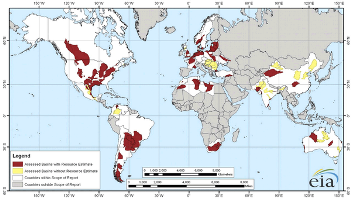
Photo credit: Energy Information Administration / Foter.com / Public domain

World Shale Gas Map / Photo credit: Energy Information Administration / Foter.com / Public domain

The shale gas revolution in the United States promises not only to soon make the country energy self- sufficient but also serve as the catalyst for a major revival of manufacturing.  Similar high hopes have been raised for Latin America, where some of the planet’s largest reserves of shale gas are found.  According to U.S. Energy Information Administration estimates, Argentina is said to have the world’s second largest reserves of technically recoverable shale gas (China is first).  The United States is currently in fourth place, followed by Canada and Mexico.  Brazil is in tenth place, with Chile and Paraguay not far behind.  The possibility that Latin America can pursue a successful shale gas strategy, however, is tempered by a number of important legal and/or geological differences that can serve as important bottlenecks.  In addition, the region’s tumultuous politics often get in the way of implementing policies that boost investment and encourage a highly productive energy sector.

The most important legal difference is that subsoil rights belong to the above ground property owner in the United States, while everywhere else in the Western Hemisphere the government (national, state or provincial) is the owner.  Developers have had an easier time purchasing access to shale gas deposits from individual landowners throughout the United States.  This explains, in great measure, why Canada’s significant shale gas reserves have not been as extensively exploited as in the United States, despite a hydrocarbons regime receptive to private-sector investment.  In addition, environmental protection legislation that impacts the shale gas industry is fractured among Federal, state, and local government authorities in the U.S.  That has facilitated developers extracting waivers and more lenient treatment in the United States that would be harder to obtain in most Latin American nations, where environmental protection is the exclusive or predominant prerogative of the central government.  Furthermore, current technology for extracting natural gas from shale reserves demands huge amounts of water, a resource that is scarce in those regions of Mexico, for example, where most of its extensive shale gas reserves are located.

Political realities are the most crucial (and often overlooked) factor that can easily undermine any effort to develop Latin America’s extensive shale gas reserves.  On paper, Argentina should be a regional energy powerhouse, supplying not only its own energy needs but those of its neighbors. However, the country has for years pursued policies that have scared off private-sector investment, heightened Argentine dependence on foreign energy imports, and led to a steady hemorrhaging of hard currency reserves.  To outsiders these policies appear illogical, but they make perfect sense to Argentine political leaders trying to consolidate their power base.  Mexico is an example of a country constrained by its Constitution from developing its extensive off-shore hydrocarbon resources.  Any political party that tries to make major amendments to those constitutional provisions, however, risks annihilation at the polls.  Brazil’s recent adoption of nationalistic legislation to encourage the domestic manufacturing of hydrocarbon-related technology could well impede exploiting its shale gas reserves if similar mandates are created for the highly specialized and capital-intensive hydrofracking equipment the industry utilizes.  In fact the only Latin American country where the stars seem aligned to repeat the U.S. shale gas success story is investor-friendly, politically-stable, energy-starved, and free-market oriented Chile, whose shale gas reserves are concentrated in the remote, under populated (and very wet) far south of the country that desperately seeks new opportunities to promote local economic development.  

*Thomas Andrew O’Keefe is the President of San Francisco based Mercosur Consulting Group, Ltd. and teaches at Stanford University.

Revitalization of the OAS: More Than an Act of Congress

By Carlos Portales*

OAS logoU.S. Congressional passage in late September of the “Organization of American States Revitalization and Reform Act of 2013” could either help revitalize the troubled body or contribute to its irrelevance. By directing the U.S. Secretary of State to develop and drive OAS reform options, the bill seeks to give much higher priority in the OAS and Summit of the Americas to promoting and consolidating democracy in the hemisphere – “with due respect for the principle of nonintervention” – while recognizing that “key OAS strengths” are also in strengthening peace and security, assisting and monitoring elections, and fostering economic growth. Reducing “mandates” – ongoing programs that tend to get institutionalized – is another priority. The new law also requires Secretary Kerry to devise a strategy for a new fee structure in which no member state would pay more than 50 percent of OAS’s assessed yearly fees. (The U.S. Library of Congress reports that the United States, the organization’s largest donor, contributed an estimated $67.5 million in fiscal year 2012 – nearly 43 percent of the total 2012 budget.)

The reforms parallel ideas presented by OAS Secretary General Insulza in his “Strategic Vision of the OAS” on December 2011 (updated in March 2013) striving for concentration on four main pillars: democracy and conflict resolution; human rights; development (in association with the Inter-American Development Bank); and security (mainly against drugs and organized crime). He also advocated limiting a single state contribution to 49 percent without reducing the OAS’s total budget. The Secretary General embraced similar reforms when the legislation was first introduced by then-Senator Kerry in the previous Congress.

Agreement that the OAS needs reform is nearly universal, but any strategic transformation will have to take into account important developments among the Latin American international organizations. The OAS handily accommodated the creation of subregional organizations such as SICA and CARICOM in the past.  But new bodies – such as UNASUR, CELAC and ALBA – have posed new challenges to the organization’s relevance and effectiveness. Differences among the organizations have emerged over trade, democracy (different value attributed to the independence of powers and to press freedom, as well as of handling of crises in Venezuela, Honduras, and Paraguay), security (withdrawal of five countries from the Inter-American Treaty of Reciprocal Assistance), the strategy against drugs, and relations with the United States.  The organizations have also created new arenas for leaders to meet, at times taxing governments’ ability to keep up. From 1990 to 2012 there have been 272 Latin American regional and subregional summits, including eight Summits of the Americas.  When Secretary Kerry delivers his plan, it will be difficult for him to strike a balance between bringing the OAS more in line with Washington priorities, as laid out in the legislation, and seeking a bigger tent that addresses some of the concerns that gave rise to the plethora of competing organizations.

*Carlos Portales is the Director of the Program on International Organizations, Law and Diplomacy at WCL, American University. He was Ambassador of Chile to the OAS between 1997 to 2000.”

Prospects for U.S.-Latin American Educational Exchange

By Aaron Bell

Picture3Regional educational exchange has become an important talking point for U.S. administrations in recent years, but data is still lacking to judge it a success or failure.  In 2011, the Obama administration announced the 100,000 Strong in the Americas initiative, intended to promote a north-south multilateral exchange of 100,000 students by 2020.  The State Department casts it as a means for students in the hemisphere to develop the relationships and skills necessary to meet four contemporary challenges: citizen security, economic opportunity, social inclusion, and environmental sustainability.  The organizations tasked with fulfilling the program’s goals include the National Association for Foreign Student Affairs, whose 60-plus years of advocacy on behalf of international education is based on the belief that “international education leads to a more peaceful world.” Whether such lofty aspirations are possible is subject to some debate, but the more-easily measured effect of 100,000 Strong will become clearer when the Institute of International Education releases its report later this year on international study to and from the United States during the past academic year.

Latin American countries as diverse as Brazil, Ecuador, Mexico and El Salvador have student exchange programs of their own, with the U.S. a leading destination.  Mexico sent the most students to the U.S. of any Latin American nation in 2011-12, but its 13,000 students were only the ninth largest source of international students in the U.S.  The most commonly touted example of U.S.-Latin American exchange is cooperation with the Brazil Scientific Mobility Program, part of the Brazilian government’s plan to send 100,000 students abroad by 2015 to study in key science, technology, engineering and math (STEM) fields.  Responding to the weakness of these fields in many Brazilian universities and to the growing demand for highly qualified graduates in high-tech industries, so far over 7,000 Brazilian students have studied at over 200 U.S. universities and interned at 300 companies, with another estimated 3,900 now in such programs.  Cooperation in education exchange is not limited to high-tech fields.  In Washington, for example, Georgetown University administers leadership training to “disadvantaged communities” and “historically underserved populations” from Latin America through the State Department’s Central America Youth Ambassadors Program and the USAID’s Scholarships for Economic Education and Development (SEED) Program.

While governments like Brazil’s have financed their international study programs, the U.S. has asked the private sector to take the lead in expanding pre-existing programs like Fulbright.  Two years ago, 64,000 Latin American students studied in the U.S., compared to 40,000 U.S. students in Latin America, of which one third stayed only for a summer.  If part of the purpose of 100,000 Strong is to improve regional relations through personal contact and exposure to the region’s sociocultural diversity, educational exchanges will need to flow north-south on a more equal footing.  It remains to be seen if the U.S. private sector is willing to meet such a commitment.  There is also the perennial question of whether educational exchange programs enhance economic development and mobility in Latin America or instead contribute to “brain drain.”  The development of high tech industries in places like Brazil offers a more promising future for returning students, but their absence in poorer regions like Central America is a source of concern.  Finally, 100,000 Strong and similar programs should be judged on how they respond to the largest challenges facing universities throughout the Americas: affordability, providing quality education for students of diverse socioeconomic backgrounds, and in Latin America specifically, making local universities appealing settings for internationally-trained intellectuals and experts.

Brazil-U.S.: Implications of Postponed State Visit

By Luciano Melo

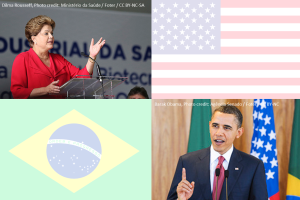
Picture2The postponement of Brazilian President Dilma Rousseff’s state visit to Washington was officially cast as the consequence of the lack of a good explanation for the National Security Agency’s cyber-espionage targeting her, the cabinet, Petrobras (the national oil company), and others.  Although the Brazilian Foreign Ministry issued a letter stating that both countries agreed to the postponement, Dilma’s remarks at the UN General Assembly on September 25 about NSA’s activities were so harsh that it was clear that frustration with the Americans’ widespread spying on Brazilians remains extremely high in Brasilia.

Experts agree that economically the postponement and bilateral tensions hurt the United States more than Brazil.  Contracts worth billions of dollars between Boeing and the Brazilian air force (FAB) are at stake, as are agreements that would favor cooperation in oil exploration and development of biofuels and others that would facilitate the transfer of “sensitive technologies.”  For Brazil, on the other hand, the postponement jeopardizes progress in talks to allow Brazilian citizens to enter the United States without visas – a project long-desired by Brazilians that was on the agenda for the state visit. Some observers in Brazil also speculate that, with the overall Brazilian economic slowdown, Dilma may actually prefer to have Brazilians spending their reais at home, not in the United States.

In a tactical sense, Dilma may have feared that Edward Snowden will leak more damaging information during her visit to the U.S., causing her even greater embarrassment at home and abroad.  In this way, fear and self-protection certainly played a role in her decision. On the other hand, the Brazilian president almost certainly saw domestic political advantages in a good old fight between the Brazilian David and the American Goliath.  She is desperately in need of boosting her popularity after the demonstrations against corruption in the country.  In fact, opinion polls show that public approval of her leadership increased from 45 to 54 percent just since the NSA dustup.

In strategic terms, the postponement fits Brazil’s strategy for claiming its position as a global player – and expressing unhappiness when it feels frustrated.  Dilma already had told President Obama in 2011 that Brazilians would seek a “more balanced relationship” with the United States. The postponement, like the speech at the UN, clearly reflects Brazilians’ desire to be treated better by the United States.  Obama’s speech at the General Assembly the same day, on the other hand, was interpreted by many Brazilians as emphasizing the United States’ traditional role as world policeman – not as the respectful neighbor in a new, multi-polar world order.  In this battle of self-images, Brazil sees itself as one of the global leaders, while the United States sees itself as the mighty one, considering only the European powers as full equals.  The broad base of Brazilians that Dilma is reaching out to is not “anti-American” in sentiment, and indeed wants a robust and respectful U.S.-Brazil relationship.  That is in the interest of both countries, but for this shared objective to be achieved, Washington will need to recalibrate its responses to Brazilian concerns.

Luciano Melo is a PhD candidate in the Department of Government at American University.

The 50 States and U.S.-Latin America Relations

By Aaron Bell

48outlineObservers seeking to fully understand U.S. relations with Latin America often focus on the federal level, but much is occurring in the majority of U.S. states as well.  Over 40 state governments have engaged with issues related to Latin America, most commonly confronting the legal aspects of immigration (particularly rights for undocumented workers who are overwhelmingly Latin American in origin), and organizing trade missions for local businesses.  Arizona, frustrated with federal policies to counter illegal immigration, enacted its own package of restrictive measures under SB 1070 in 2010, which was followed by similar legislative efforts in Alabama, Georgia, Mississippi, and South Carolina.  On the trade front, after abandoning pursuit of a hemisphere-wide free trade area and then focusing on bilateral trade deals, the federal government has shifted focus toward development of a Pacific Alliance. States meanwhile have pursued commercial opportunities themselves, sending at least 17 trade delegations to Latin America over the past three years, primarily to Brazil, Mexico, and Chile.  Trade initiatives have infrequently clashed with federal policy, but a 2012 law in Florida — blocking the state government from contracting with companies with direct or subsidiary business ties to Cuba and Syria – was a rebuke of what some Floridians perceive as a weak approach by Washington. The Brazilian company Odebrecht, which has projects in Cuba that do not violate the U.S. Embargo, successfully sued the state for overstepping federal jurisdiction.  The bill’s sponsors say they intend to pursue new legal means and rally local political opposition to discourage state contracts with “sponsors of terrorism.”

Coordination initiatives by Arizona and Colorado stand out as unique models for other U.S. states.  The Arizona-Mexico Commission and its counterpart, La Comisión Sonora-Arizona, were founded in 1959 by the governors of Arizona and Sonora to coordinate local support for improvements to infrastructure, education, and security in order to benefit economic development in both states. In Colorado, the Biennial of the Americas was first organized in 2010 to highlight Denver’s role as a site of Pan-American cultural exchange.  The second Biennial, held this summer, hosted art exhibitions and roundtable discussions of social issues facing the region.

The trade and immigration focus of most of the state-level initiatives usually does not clash with Washington’s priorities and indeed are complementary of them.  When the states’ initiatives do challenge the federal government, however, the courts usually come down on the side of the latter.  Yet when states have ultimately lost out to federal power, their actions have at times brought U.S.-Latin American relations to the forefront of national debate, such as when Arizona passed tough immigration laws in 2010.  Bold initiatives from the states are rare, but there are alternatives to the standard trade-and-immigration fare.  The binational approaches of Arizona and Colorado aren’t perfect – critics of the Biennial of the Americas note that corporations use it as a platform for their own interests —but the connections they build are valuable and promote progress by connecting actors with shared interests and developing economic and cultural organizations around those ties.


Aaron Bell is a PhD candidate in the Department of History at American University.


Egypt Policy – Latin America Style

By Fulton Armstrong

U.S. Department of State Headquarters | Wikimedia Commons

U.S. Department of State Headquarters | Wikimedia Commons

We who follow U.S. policy in Latin America shouldn’t be surprised to see Washington’s policy toward Egypt drift from support for democracy to support for the status quo ante.  President Obama’s 2009 speech in Cairo reaching out to Muslims – calling for an end to the “cycle of suspicion and discord” – came just six weeks after he told the Summit of the Americas that he wanted “an equal partnership” with the hemisphere and sought “a new beginning with Cuba.”  When 30-year President Hosni Mubarak stepped down in 2011, the Administration eagerly linked Egypt to the “Arab Spring” and, despite concerns about the Muslim Brotherhood roots of Egypt’s first democratically elected president, tried to make the relationship with Mohamad Morsi work.  Over time, however, Morsi – successor to an undemocratic regime in an undemocratic country with no democratic traditions and no democratic institutions – was accused of being undemocratic.  The estrangement grew so deep that the Obama Administration still cannot bring itself to call the July 3 coup against Morsi a coup, and Secretary of State Kerry saw fit to refer to the military takeover as “restoring democracy” even as the Army was firing on unarmed crowds.

To Latin America watchers, this chronology is reminiscent of U.S. policy in our own hemisphere.  The case of Honduran President Mel Zelaya is clearest.  The Honduran military removed Zelaya– in his pajamas – from his home and country in June 2009 for proposing a referendum that, the putschists claimed, violated the Honduran constitution.  The Obama Administration’s nominee to be Assistant Secretary of State at the time, Arturo Valenzuela, testified that the action was, in his opinion, a coup, but the State Department never categorized it as such and, despite rhetoric committing to restore Zelaya, the Administration let the interim regime consolidate power.  Amidst a state of emergency, media closures, and other irregularities, the State Department also gave its blessing to elections held several months later.  Zelaya’s rhetoric before the coup was caustic, and he squandered political capital in needless confrontations, but he never threatened Honduran “democracy” or violated human rights as the interim regime did.  Nor did he preside over a steady deterioration of security, civil rights, and the economy as the current government has.  Yet, ironically, the Obama Administration has never set the history of the coup straight – just as the Bush Administration never rectified its disastrous support for the 2002 coup against Chávez in Venezuela.

The excesses of some leaders, like Zelaya and Chávez, make supporting or turning a blind eye to a coup very tempting.  But Washington has also shelved its moral outrage when much less provocative presidents – democratically elected but progressive-leaning – have been removed from power, if not with a gun at their head.  The “constitutional coup” against President Lugo in Paraguay last year is the most recent example.  The gap between U.S. rhetoric about democracy, rule of law, and due process on the one hand and its tangible actions on the other has a number of causes. 

  • American “exceptionalism” – the sense that U.S. success gives it a right to judge others and intervene even when national interests are not at stake – sometimes leads Washington to over-extend and make rash decisions.
  • Eagerness to act quickly – to appear decisive – often makes policymakers confuse the symptoms of problems, which seem amenable to quick solutions, and the essence of the problems themselves.  Policies address the short-term while neglecting the strategic.
  • Washington lobbies – the pro-Israel lobby in the case of any matter in the Middle East and the Cuban-American lobby in Latin America – are able to dominate U.S. perceptions of events, pushing administrations into a corner. 
  • Administrations embarrass themselves when they throw around words like “Arab Spring” and “democracy.”  When the inevitable bumps in the road occur, they act betrayed rather than admit they got carried away by wishful thinking. 
  • Double-standards –the expectation that progressives succeeding authoritarians will be perfectly democratic and flawlessly inclusive – make it difficult for Washington to avoid prematurely throwing a potential ally overboard. 
  • Another factor, and potentially the most important, is that the U.S. government builds deeper relationships with elites and the security services that do their bidding than with any other forces.  During the Bush Administration’s “War on Terror,” the U.S. Government entrusted Egypt with extremely sensitive operations, including the interrogation (and alleged torture) of suspected terrorists, and Washington relies on Latin American security services to prosecute the “war on drugs.” 

When U.S. interagency committees discuss how to respond to crises, the departments and agencies with the deepest ties in the country under discussion claim more influence over events there than anyone else – and win most policy debates.  The problem is that their ties are mostly to political and economic elites – or the military and intelligence services that back them – which are rarely agents of change.  Washington winds up allied with forces that suppress the new voices essential for the “springs” and “democracies” that it says it wants.