Sanctions on Venezuela: Why?

By Eric Hershberg and Fulton Armstrong

Photo credit: NCinDC / Flickr / Creative Commons Attribution-NonCommercial-ShareAlike 2.0 Generic (CC BY-NC-SA 2.0)

Photo credit: NCinDC / Flickr / Creative Commons Attribution-NonCommercial-ShareAlike 2.0 Generic (CC BY-NC-SA 2.0)


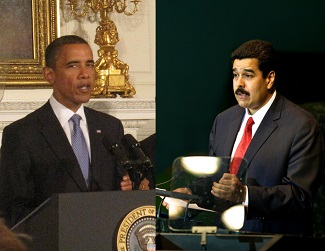
The sanctions against Venezuela that the Obama Administration announced last week respond to political pressure to punish alleged human rights violators in Caracas, but they have no immediately apparent policy objective.  The State Department announced that it has suspended the U.S. visas of “a number of Venezuelan government officials who have been responsible for or complicit in … human rights abuses” during protests earlier this year, which resulted in the deaths of at least 40 people, injury of hundreds more, and jailing of dozens of activists.  The Department did not release a list of sanctioned individuals nor divulge the information used to compile the list, but press reports indicate that 24 officials have been targeted and include cabinet members, presidential advisers, police, and military officials.  The sanctions do not affect bilateral trade or Venezuela’s place as the United States’ fourth biggest foreign supplier of oil.

U.S. condemnation of the Venezuelan government and the blacklisted officials has been strident, but there has been no public explanation of what Washington expects the sanctions to achieve.  The statements of U.S. Principal Deputy Assistant Secretary of State John Feeley, made to a Colombian radio station and reported by El Universal in Caracas, strongly suggest the sanctions are intended to show solidarity with the Venezuelan opposition and U.S. disapproval of the government of President Nicolás Maduro.  “Social protests have been a genuine war cry from people oppressed by the lack of democracy,” Feeley is reported as saying.  “The [sanctions] were intended to note that the U.S. cannot allow, for the sake of its values, that a supposedly democratic government represses the legitimate expression of the people’s voice.”  The State Department has not demanded, however, any particular action by Caracas to lift the sanctions, such as an investigation into the abuses, re-launching a national dialogue, or compensating victims.  Feeley suggested that the governments of Colombia and Brazil – with which he said the U.S. government had “meditated” about the issue – supported the sanctions, but regional support for them has been muted at best.  Indeed, the Administration had responded to last May’s House of Representatives vote in favor of sanctions by indicating that these would be counterproductive and could undermine efforts at mediation by these same countries.  The one dissenting voice in the House, Congressman Greg Meeks (D-NY), explained his vote as opposing unilateralism, adding that its passage was a message to Latin American governments that we don’t care what they think.

The Venezuelan government has repeatedly and credibly asserted that a significant portion of the violence has been perpetrated by protestors rather than the state or government supporters, and a number of officials have been charged.  Nonetheless, no U.S. sanctions have been brought against opposition members who planned or participated in violent actions.

Some observers have attributed the U.S. action to pique that Aruban and Dutch officials several days earlier rejected its request that they extradite to the U.S. Venezuela’s new consul in Aruba, a former chief of intelligence whom Washington suspects of trafficking in drugs with the Colombian FARC – despite Vienna Convention provisions regarding diplomatic immunity.  More likely, the sanctions are a reaction to a realization that the quixotic “salida” campaign, which many in Washington somehow imagined could bring down the Maduro government only months after it had won an election, had all but petered out, leaving the opposition in disarray and the government in a renewed position of strength.  Sanctions also are a bow to congressional pressure on the Obama Administration to act against Caracas, which has continued to grow even after the salida campaign has run out of gas.  Just hours after the sanctions were announced, Senator Marco Rubio issued a press release taking credit for them, and other conservatives – led by the Cuban-American congressional delegation – called for even tougher measures.  Without clear objectives, however, the sanctions seem to be mostly a moral and political statement – pushing relations into yet another dead end from which neither government is disposed to find a way out.  Indeed, Venezuelan officials, calling the sanctions “a desperate cry from a nation that realizes the world is changing,” are turning the diplomatic adversity to domestic political advantage, just as administration officials had wisely predicted in pushing back against the Congressional saber rattling last spring.

Mexico and NAFTA: Lessons Learned?

By Robert A. Blecker*

Photo credit: Alex Rubystone / Foter / Creative Commons Attribution-NonCommercial-ShareAlike 2.0 Generic (CC BY-NC-SA 2.0)

Photo credit: Alex Rubystone / Foter / Creative Commons Attribution-NonCommercial-ShareAlike 2.0 Generic (CC BY-NC-SA 2.0)

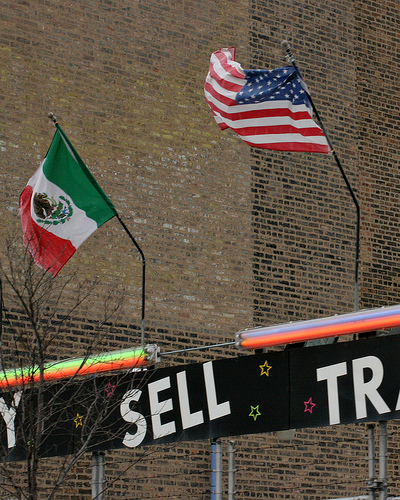
Twenty years after the North American Free Trade Agreement (NAFTA) went into effect, it is clear that the promises made by Mexican President Carlos Salinas and U.S. President Bill Clinton – that the accord would make Mexico “a first-world country” and halt the migration of Mexican workers to the United States – have not been fulfilled.  In Salinas’s famous words, Mexico would “export goods, not people.”  But the number of undocumented Mexican immigrants in the United States rose by a conservatively estimated 3 to 4 million during the first two decades of NAFTA, and millions more were apprehended at the border and deported.  The reasons why immigration flows accelerated post-NAFTA are not hard to discern.

  • NAFTA fostered integration of Mexican industries into global supply chains targeted at the U.S. market, accelerating Mexico’s transformation into a major exporter of manufactured goods.  Nearly one million manufacturing jobs were created there in the first seven years of NAFTA (1994-2000).  But this job growth was offset by similar job losses in agriculture, and manufacturing employment has fallen by about a half million since 2001.  The net increase in manufacturing employment from 1993 to 2013 was only about 400,000, less than half of the annual growth in the Mexican labor force.
  • Real hourly earnings in Mexican manufacturing were no higher in 2013 than in 1994, and Mexico’s per capita income has stagnated relative to that of the United States.  In 2012, typical Mexican manufacturing workers received only 16 percent as much per hour as their U.S. counterparts, down from 18 percent in 1994.  Even adjusted for the lower cost of living, workers without a college degree in Mexico still earn only about one-quarter to one-third of what they can earn by moving to the United States.

The benefits of NAFTA for Mexico have been attenuated by several factors.  First, Mexican export industries still largely follow the maquiladora model of doing assembly work using imported inputs, so their value-added is only a fraction of the gross value of their exports and they have few “backward linkages” to the domestic economy.  Second, the Mexican government has frequently allowed the peso to become overvalued, making Mexico less competitive and driving multinational firms to locate in other countries.  Third, the tremendous penetration of Chinese imports into all of North America (Canada, Mexico and U.S.), especially since China joined the World Trade Organization in 2001, has displaced significant amounts of actual or potential Mexican exports.  A revaluation of China’s currency, rising Chinese wages and increasing global transportation costs have recently led to some “reshoring” of manufacturing to Mexico, but employment in Mexican export industries has grown only modestly as a result.

The increased integration of North American industries through NAFTA has proved to be a mixed blessing for Mexico.  U.S. booms have helped Mexico grow, but only for temporary periods, and being dependent on the U.S. market has held Mexico back since the U.S. financial crisis of 2008-2009 and the ensuing “Great Recession” and sluggish recovery.  Of course, NAFTA is but one of Mexico’s constraints.  The country’s restrictive monetary and fiscal policies, frequent currency overvaluation, monopolization of key domestic markets and inadequate investments in physical and human capital have also held it back.  The Mexican economy still suffers from a profound dualism, in which only about one-fifth of all non-agricultural, private-sector workers are employed in large, highly productive firms, while the vast majority are employed in small- or medium-sized enterprises with low, stagnant or even falling productivity.  Mexico’s experience under NAFTA certainly argues against portrayals of international trade agreements, such as the proposed Trans-Pacific Partnership, as panaceas for the economic ills of Mexico or any other country.  Whatever one thinks of the “reform” agenda of President Enrique Peña Nieto – which is focused on areas such as energy, education, and telecommunications – these reforms are unlikely to help Mexico break out of its slow growth trap if the foundations of the country’s trade and macroeconomic policies remain untouched.

*Dr. Blecker is a professor of economics at American University.

Child Migrants: Deepening Challenges

By CLALS Staff

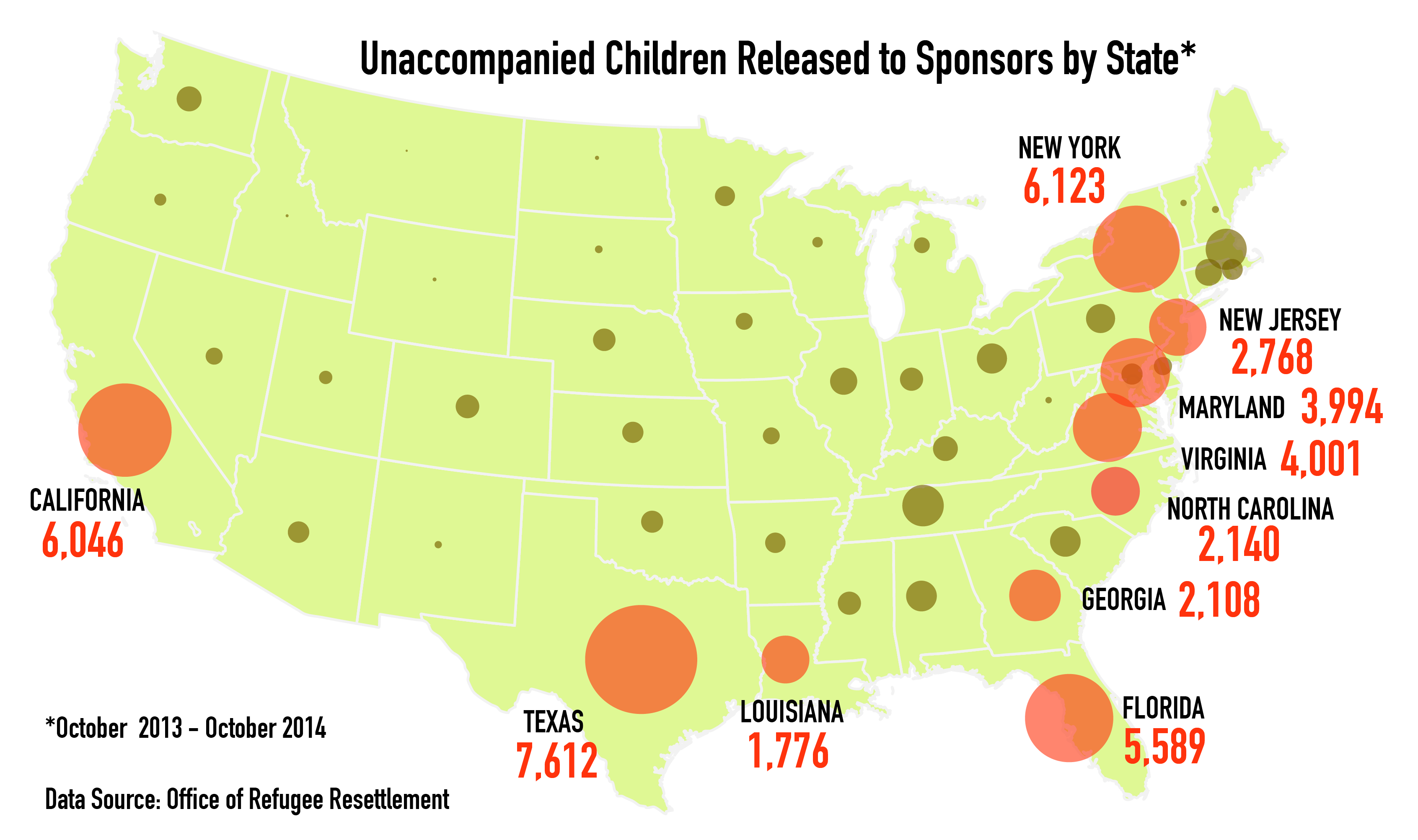
A surge in the number of unaccompanied children fleeing criminality, family problems, and violence in Honduras, Guatemala, El Salvador and Mexico underscores the personal tragedy of undocumented immigrants – they escape old threats only to face new ones – but the issue so far has sparked only the usual partisan acrimony in Washington.  According to U.S. government sources, the number of child migrants reaching the United States has increased 92 percent over the past year.  Some 47,000 have arrived since last October, and a draft document by the Department of Homeland Security speculated the figure could reach 90,000 by the end of the fiscal year.  (Only 5,800 children arrived alone each year 10 years ago.)  Mexican children still outnumber others, but the current surge is coming from the northern-tier countries of Central America.  Polls conducted by the UN High Commission for Refugees indicate that about half of these children are driven by criminal insecurity; 21 percent by abuse and other problems in the home; and the rest by other forms of violence.  The influx of these refugee migrants is not a strictly U.S. phenomenon: Mexico, Nicaragua, Costa Rica and Panama have seen a 435 percent increase in child arrivals from the northern tier since 2012 as well.  The UNHCR has made an urgent plea for assistance.

President Obama last Monday declared the problem was an “urgent humanitarian crisis,” and he directed the delivery of aid to house and provide care to the children, who remain in government custody while relatives in the United States are located or other solutions are planned.  The White House also announced an initiative to assign legal advisors to those under 16 who are facing deportation but are not in government custody.  Republican critics reacted forcefully.  Texas Senator Ted Cruz said the crisis was a “direct consequence of the President’s illegal actions,” including allegedly lax enforcement of immigration law.  The Chairman of the Judiciary Committee in the House of Representatives called it an “administration-made disaster.”

Shifts in immigration numbers traditionally have been a function of “push” factors (poverty, violence and other problems) in sending countries and of “pull” factors in the United States – particularly the perception that safely entering the country and finding work is easy.  The Obama Administration’s aggressive deportation policies – physically removing about two million undocumented migrants – arguably have reduced the “pull” over the past six years, and it seems premature to conclude that the Administration’s recent rhetorical shift has shined a bright green light as far as Honduran hamlets.  That the influx is occurring in countries other than the U.S. provides further evidence that local push factors (as the UNHRC posits), and not Obama Administration policies, are the most credible cause of the surge, in spite of the fact that criminality and violence in Central America’s northern triangle have not shown a commensurate increase during this period.  Regardless, predictable demagoguery around this growing crisis probably will further complicate the Administration’s efforts to carry out those few progressive steps it has launched by Presidential order, including programs to normalize the status of “Dreamers” – undocumented migrants’ children eager to overcome the stigma and obstacles to citizenship.  The approach of mid-term elections in the United States promises that this humanitarian crisis will sustain more name-calling and political paralysis in Washington.

El Salvador’s Former Guerrilla – and New Commander in Chief

By Héctor Silva Ávalos

14169581511_3b3b43cb13_z

Salvadoran President Salvador Sanchez Ceren with Secretary of State John Kerry during his visit to Washington, D.C. [State Department photo/ Public Domain]

Twenty-two years after participating in the signing ceremony of the UN-brokered peace accord that ended El Salvador’s civil war, Salvador Sánchez Cerén, one of the FMLN’s top guerrilla commanders, was sworn-in as president last Sunday.  The political reforms mandated by the Chapultapec agreement launched the country onto a sometimes tumultuous path toward a new democratic landscape that, at least on paper, included the alternation of power: for 20 years the ARENA party, representing the hard-right, ruled the country; in 2009, moderate Mauricio Funes, a popular TV journalist, and the FMLN established an alliance that took them to the Presidential Palace.  Through the prism of Sánchez Cerén’s recent victory, Funes’s was a transitional government.  El Salvador now begins its first period under the rule of the former guerrilla party that fought an insurrectional war against the allies of Ronald Reagan´s Washington during the last years of the Cold War.

Sánchez Cerén and the FMLN’s challenges are many – a stagnant economy; a private sector not used to a political system that doesn’t respond resolutely to its economic interests; a dysfunctional fiscal system; and one of the worst security situations in the world – with 14 homicides a day, growing gangs, and a reign of impunity inherited from the war years and perpetuated by organized crime’s success infiltrating state and political institutions.

The new leadership will also have to deal with the interests of El Salvador’s most powerful neighbor and ally, the United States.  The Obama administration sent a third-level delegation to Sánchez Cerén’s inauguration, and Secretary of State John Kerry did receive him in Washington before that.  Among the first items on the bilateral agenda is El Salvador’s access to funds in a second compact with the Millennium Challenge Corporation (MCC), a $400 million program aimed at bringing fresh money to the underdeveloped and poor coastal areas.  The program is on hold because MCC is not satisfied with the country’s Anti-Money Laundering and Asset Law and because San Salvador has not yet caved to pressure from the U.S. Trade Representative to buy agricultural products – mainly seeds – within the CAFTA region, which would favor U.S. producers.  Washington’s reluctance to work with FMLN officers in law enforcement and security issues is another obstacle.

So far, Sánchez Cerén and his cabinet have tried to play the U.S. relationship smart.  But managing ties is not going to be a walk in the park.  Despite public winks and carefully worded statements, neither side really trusts the other.  But the bilateral connection is important to both.  Roughly one third of all Salvadorans live in the United States, and, in the last several decades, Washington has appreciated El Salvador’s importance in a region where it is losing influence.  The new government has sent a number of signals to Washington by visiting the State Department, engaging in most of the Treasury’s and USTR’s conditions on the MCC compact and launching an early dialogue with the international financial institutions.  But Sánchez Cerén has made it clear that he will also heed El Salvador’s natural allies, albeit for practical rather than ideological reasons.  Just this week, El Salvador requested formal acceptance to Petrocaribe, the Venezuelan economic and financial aid program.  Dealing with violence, insecurity and financial problems will require fresh resources that the government will welcome wherever their origin.  But it also seems possible that the new commander in chief´s patience with Washington’s style of diplomacy – such as pressure tactics to buy American agricultural goods – could be much shorter than that of his predecessors.  

Venezuela: Vicious Cycle Continues

By CLALS Staff

Photo Credit: Cancillería Ecuador / Flickr / Creative Commons Attribution 2.0 Generic (CC BY 2.0)

Photo Credit: Cancillería Ecuador / Flickr / Creative Commons Attribution 2.0 Generic (CC BY 2.0)

UNASUR has shown energy and flexibility as a facilitator during the Venezuela crisis, but neither the government, nor its opponents, nor the opposition’s allies in Washington have matched it – prolonging the vicious cycle that’s been plaguing the country for years.  Speaking as UNASUR, the foreign ministers of Colombia, Brazil and Ecuador reflected the continent’s frustration when they threw up their hands this week and left Caracas after another failed attempt to get a national dialogue on track.  Their statements represented a balance between the UNASUR members that are generally perceived as tolerant of the Venezuelan government’s “Bolivarian” revolution and those perceived as opposing it.  They reiterated calls, issued officially in Suriname on 16 May, for both sides to “achieve a broad dialogue that permits Venezuelans, without interference, to reach an accord that guarantees peaceful coexistence and stability in the country.”

The government, opposition and Washington have not heeded the appeal by UNASUR and the Vatican’s nuncio to be constructive and patient.  The government’s attack on opposition and student camps in early May and subsequent arrest of more than 200 protestors highlighted the authoritarian tendencies that have given momentum to the demonstrations.  The Mesa de Unidad Democrática (MUD), representing important sectors of the opposition, gave the foreign ministers yet another list of demands – including a Truth Commission investigating rights violations (and not headed by the pro-government president of the National Assembly, Diosdado Cabello) and the selection of an entirely new National Elections Council.  The MUD’s executive secretary declared that he has no interest in participating in a peña or chit-chat session, and said, “The ball is in the government’s court.”  Although U.S. Assistant Secretary Roberta Jacobson said during a hearing that sanctions were premature (a statement that she attributed to “confusion”), the foreign affairs committees in both house of the U.S. Congress – without objection from the Obama Administration – have passed bills authorizing an array of punitive measures against Venezuelan officials.  The legislation also authorizes an additional $15 million dollars in aid to the government’s opponents.

The less overtly political agenda that first sparked the protests in February – soaring crime rates, rocketing inflation, and shortages of basic goods and services – has been overshadowed by the shouts of opposition leaders eager to force President Maduro from office and by Maduro’s defenses from the plotting against him.  Demands that Maduro negotiate with a foreign-funded opposition that has as its clear goal his removal as constitutionally legitimate president – something no head of state in the hemisphere would accept – naturally keep his bases on edge.  Political leaders on both sides manipulate popular opinion and claim el pueblo as supporting them.  Another of each side’s real strengths is its ability to portray itself as a victim of the unfairness of the other – because their victimhood rationalizes whatever actions they wish to take.  In that regard, the U.S. sanctions against the government and subsidies to the opposition play into Maduro’s hand.  Washington’s extra $15 million is a drop in the bucket for the well-funded opposition, but the U.S. support is as clear a signal as any of its desired outcome.  With both the United States and important segments of the opposition appearing to aim for nothing short of regime change, UNASUR is wise to step aside and see if anyone decides to get serious about ending the crisis.  Should the situation on the ground deteriorate further, however, UNASUR will probably ramp up its engagement and press both sides to make concessions in exchange for regional support.

Trans-Pacific Partnership: A Framework for U.S.-Latin America Relations?

By Eric Hershberg
Embed from Getty Images
President Obama’s desire to move forward with the Trans-Pacific Partnership (TPP) appears likely to founder amidst Congressional resistance to granting him “fast-track” authority, but it does signal a noteworthy initiative by an administration eager to grow trade relations with some Latin American countries.  Originally formed by Chile, New Zealand, Brunei and Singapore in 2006, TPP is currently negotiating the accession of five new members, including the United States and Peru.  Mexico, Colombia, Costa Rica, Panama, Canada, and Japan are also considering joining.  U.S. Undersecretary for International Trade Francisco Sanchez said last year that agreement on a framework for the United States to join TPP represents “a landmark accomplishment because it contains all of the elements of a modern trade accord.”  It eliminates all tariff and non-tariff trade barriers; takes a regional approach to promote development of production and supply chains; and eases regulatory red tape.  The White House’s senior official responsible for Latin America has also emphasized the importance of the Partnership.

The Administration for the most part has tried to sell the pact as a domestic economic issue – the argument being that more trade and harmonized regulations translate into more jobs – or as integral to a strategic focus on strengthening economic ties to the dynamic economies of Asia, rather than as a policy that has the potential to redefine economic relations with Latin America.  But lobbying on Capitol Hill has so far been ineffective, and Obama’s own Democratic Party has denied him the “fast-track authority” needed for an effective negotiation.  The Administration’s diplomatic strategy has not progressed smoothly either.  During Obama’s recent four-nation swing through Asia, he and Japanese Prime Minister Abe failed to sign an agreement widely seen as crucial for moving ahead with TPP.  Negotiators from all 12 TPP countries met in Vietnam last week, and – despite claims of progress – press reports generally suggest a gloomy prognosis for progress soon.

President Obama has made much of his “pivot” to Asia, and the push for TPP situates Latin America relations in Washington’s wider foreign policy agenda.  The emphasis on the TPP signals that liberalizing trade remains the core principle guiding U.S. thinking about economic relations in the hemisphere, in effect continuing a paradigm that has reigned for decades and that is embodied by proposals such as the now-abandoned Free Trade Area of the Americas.  Unable to secure broad South American buy-in for that U.S.-minted vision for economic cooperation, the administration seems to have settled on trying to work with a “coalition of the willing” comprised of Chile, Colombia, Mexico and Peru.  For governments elsewhere in the region, however, the not-so-particularly-new approach has elicited scant enthusiasm.  One could imagine ambitious proposals from Washington for hemispheric cooperation around energy, climate, infrastructure, technological innovation or even, eventually, labor market integration. But that would require visionary leadership, a commodity that is in strikingly short supply nowadays in the U.S. capital.  Rather than leading the articulation of a novel, shared agenda for a 21st century economic transformation of the Americas, Washington has chosen for now to repackage the last century’s prioritization of trade.

Is Affirmative Action in the U.S. Dead?

By Lázaro Lima*

Photo credit: commonwealth.club / Foter / Creative Commons Attribution 2.0 Generic (CC BY 2.0)

Photo credit: commonwealth.club / Foter / Creative Commons Attribution 2.0 Generic (CC BY 2.0)

The U.S. Supreme Court’s decision two weeks ago to uphold a law that prohibits colleges from considering applicants’ race in the admissions process underscored U.S. conservatives’ power on the issue – but also the forceful vision of Justice Sonia Sotomayor.  In the decision of “Schuette v. Coalition to Defend Affirmative Action,” six out of the nine Justices supported Michigan’s “Proposal 2”; Sotomayor and one other opposed it, and Justice Kagan, who had worked on the case as President Obama’s Solicitor General, recused herself.  Ironically named “Michigan Civil Rights Initiative,” MCRI was passed in a state referendum with the support of 58 percent of Michigan’s voters in 2006.  It outlawed the use of all race considerations in public college admissions, resulting in a decline of 25-30 percent of the minority population at universities and colleges in the state.  The majority argued that “there is no authority in the Constitution of the United States or in this court’s precedents for the judiciary to set aside Michigan laws that commit this policy determination to the voters.”  They cited it as a case of respecting states’ rights and claimed that “it is demeaning to the democratic process to presume that the voters are not capable of deciding an issue of this sensitivity on decent and rational grounds.”

In a 58-page dissent, Justice Sonia Sotomayor made the case against the law, arguing that Michigan schools were within their rights and responsibilities to society to take reasonable steps to encourage minority presence on state university and college campuses.  She plaintively stated the obvious: “The way to stop discrimination on the basis of race is to speak openly and candidly on the subject of race and to apply the Constitution with eyes open to the unfortunate effects of racial discrimination.”  She wrote: “Yet to know the history of our Nation is to understand its long and lamentable record of stymieing the right of racial minorities to participate in the political process. […] And race matters for reasons that really are only skin deep, that cannot be discussed any other way, and that cannot be wished away.”

The U.S. debate on affirmative action has deep roots and will surely continue.  The Supreme Court decision – and Sotomayor’s candid and necessary assessment of race relations – came over 35 years after the Court in 1978 ordered a University of California medical school to admit a white man who claimed that affirmative action unfairly led to the rejection of his application.  The “Bakke Decision” outlawed racial and gender quotas and delimited “race” to the managerial interests of academic institutions and employers.  Historical accounts of affirmative action policies often trace back to President John F.  Kennedy’s Executive Order 10925 of 1961, which required government contractors to “take affirmative action to ensure that applicants are employed and that employees are treated during employment without regard to their race, creed, color, or national origin.”  President Lyndon Johnson extended these mandates through the Civil Rights Act and with his own executive order.  But it was Sotomayor, decades later, who shined in her statement last month.  When she read her dissent from the bench, for the first time in her five years, her colleagues – who already had made up their minds – were not her intended audience.  Her audience was the democratic commons.

*Lázaro Lima is a professor of Latin American literature and Latino Studies at the University of Richmond, and a CLALS research fellow.

Obama’s Deportation Debacle: Time for Executive Action?

By Eric Hershberg and Dennis Stinchcomb

Embed from Getty Images

Amid fierce debate over the Obama administration’s record on the deportation of undocumented immigrants residing in the U.S. without serious criminal records, insiders confirmed to the Associated Press on Monday that the White House is seriously considering unilateral action to reduce deportations.  Preliminary reports suggest that a review of the policy by Homeland Security Secretary Jeh Johnson may result in executive action curbing deportations.  Rumors of White House movement on the issue surfaced last week, when members of the Congressional Hispanic Caucus presented Johnson with a memo outlining their demands.  Most notably, they recommended an expansion of the president’s Deferred Action for Childhood Arrivals (DACA) program and the elimination of “Secure Communities,” a program initiated during the Bush era that mandates that local law enforcement agencies enforce federal immigration laws and which has led to reported abuses.

The increased pressure on the president to further limit forced removals comes at a moment when deportations are on the decline and interior enforcement is at a five-year low.  New statistics released by the Department of Homeland Security (via FOIA requests from The New York Times) and the Department of Justice provide the most comprehensive view to date of an enforcement policy fraught with political miscalculations.  DOJ reports, for example, a 43 percent drop in the number of new deportation cases filed in federal immigration courts in the last five years.  In hopes of gaining credibility and leverage for Democrats in a potential immigration deal, the administration in 2011 reallocated massive enforcement resources to the U.S.-Mexico border.  The plan was to ease interior enforcement that disrupted established families and communities – and ran up deportation numbers in the past – while deporting higher numbers of recent border crossers, who under previous administrations would have been sent home without formal charges.  In the interior, workplace raids all but disappeared, but state and local police, under the Secure Communities program, continued to identify “high-priority offenders.”

The Obama administration’s five-year attempt to placate Republican lawmakers through record-setting deportations has backfired politically, and the collateral damage is high, with nearly 2 million deportations to date and an outraged electoral base.  Though current and former administration officials argue that concerns over public safety and border security have guided immigration enforcement since day one, the evidence suggests that political expedience has driven Obama’s deportation policy and – with midterm elections just around the corner and maneuvering toward the 2016 presidential elections already underway – is likely to continue to do so.  Obama’s eagerness to impress Republicans with his toughness, without any guarantee the maneuver would work, has alienated Hispanic and Asian communities who feel betrayed and whose turnout at the polls is crucial for a Democratic victory.  The leaks of executive action indicate a White House focused on damage control with those important constituencies, while essentially signaling the definitive end of any chance of bipartisan Congressional immigration reform.  Despite some handwringing among American conservatives that the Republicans’ position will lock out Hispanic voters for years to come, most of the party’s leaders appear to give priority to their nativist base.  Obama ultimately may be calculating that, with chances of passage of immigration reform nil anyway, his energy is best spent on rebuilding ties with constituents whose communities have been torn apart by policies pursued during his first five years in office.

U.S. Southern Command: Diminished Resources Affect Mission

By CLALS Staff 

General John F. Kelly Photo credit: Secretary of Defense / Foter / CC BY

General John F. Kelly
Photo credit: Secretary of Defense / Foter / CC BY

In an annual posture statement to Congress and a press conference, SouthCom Commander John Kelly played up the successes of his command’s counternarcotics mission – particularly its “engagements” throughout Latin America – but emphasized that his effectiveness is threatened by budget cuts.  The General said that cooperation with Honduras, El Salvador, Guatemala, and others was “very, very valuable,” and he boasted that the United States has trained over 5,000 Mexican soldiers over the past year.  But he warned that “severe budget constraints” are limiting the Command’s ability to build on the progress.  On Capitol Hill, he said, “Let me be frank: reduced engagement risks the deterioration of U.S. leadership and influence in Central America, South America, and the Caribbean.”

Kelly had lots of praise for individual counternarcotics operations – specifically Colombia’s “unbelievable heroic efforts” with crop eradication and attacks on processing labs – and cited the effectiveness of his Command’s drug interdiction programs (capturing about 132 tons of cocaine in 2013) despite funding cutbacks.  But the General reported that his Command failed to intercept 80 percent of the drugs flowing out of Colombia and about 74 percent of all maritime flows.  Despite his praise for Colombia, his statements confirmed that it is still a major producer (reportedly third, after Peru and Bolivia) and the major exporter of cocaine to the United States.  SouthCom estimates that the cocaine industry is still worth $85 billion a year and has “franchises” in 1,200 U.S. cities.  Kelly also reported that heroin consumption in the United States is up 65 to 80 percent in the last several years – “and it all comes up through Latin America.”  He said that SouthCom has been directed to reduce the amount of drugs reaching the United States from Latin America by at least 40 percent – a goal he said he cannot achieve because of cutbacks.

Policymakers and program-managers always face a balancing act when speaking in Washington.  They understandably tout their successes; cite resource constraints as the reason for failure to attain mission objectives; and make a pitch for resources.  SouthCom, having a budget that dwarfs that of any other agency, traditionally has been primus inter pares in Latin America, but Kelly portrayed his Command as merely one of many in the U.S. interagency.  His praise of Colombia as a “regional security exporter” also hints at the unwillingness or inability of the Command to continue its investment in such operations.  When the best-funded U.S. agency operating in Latin America projects itself in this fashion, admitting that the vast majority of illegal narcotics still reach U.S. territory, it’s natural for U.S. taxpayers to wonder what they are getting for their many millions of dollars.  If the Obama administration cannot make a better case, U.S. counternarcotics policy would appear to lack direction and, absent a systematic review, will continue essentially on autopilot.

The U.S. Immigration Debate: Legalization or Citizenship?

By Dennis Stinchcomb

U.S. House of Representatives Speaker Boehner has again hit the brakes on immigration reform, claiming widespread doubt among House Republicans that President Obama “can be trusted to enforce our laws.”  The dramatic about-face came only a week after Boehner and other House leaders released a one-page declaration of “Standards for Immigration Reform,” renewing hope that a legislative compromise could be reached this year.  According to press reports, reasons for the reversal included fear among a majority of House Republicans that party infighting over the legalization of the country’s 11 million unauthorized immigrants would disrupt the Republican base and imperil their perceived advantage in the upcoming midterm elections.  Despite rhetoric that places the blame on the president’s alleged unwillingness to implement certain unspecified laws, the immediate concern for House Republicans is not one of substance but of timing, according to Republican members.

The Republicans’ “Standards” document endorsed a vaguely defined program that would grant legal status to certain categories of unauthorized immigrants, but stopped short of a special pathway to citizenship like the one outlined in the Senate bill currently at the center of discussion.  What they mean by “legal status” remains uncertain.  Some Republicans have suggested that newly legalized immigrants would be permanently barred from naturalization; others insist that undocumented immigrants, once legalized, would be able to access normal avenues to citizenship (i.e., work visas, marriage to a citizen spouse, etc.) if available to them.  The White House and House Democrats have expressed willingness to listen to any emerging proposal that would offer limited legal status.  Many Senate Democrats and immigration advocates argue, however, that legalization without eligibility for naturalization is too great a concession and would create a permanent underclass of millions of legalized immigrants unable to access the rights and privileges of citizenship.

House Republican leaders appear to judge that – at least for now – they cannot sell legalization to their own caucus and seal the deal for immigration reform.  Even if they were to reach a consensus that some form of legalization is good, a majority of House Republicans either openly reject any sort of “amnesty” or consider addressing such a controversial issue too risky in an election year, especially before Congressional primaries.  If and when the Republican Party is ready to deal, willingness on the part of Democrats to reach a compromise will depend largely on the type of legalization Republicans are prepared to support.  If legalization without an explicit pathway to citizenship is the only way to halt record deportations, most Democrats appear willing to make the concession.  One thing is clear: clogged immigration courts, nearly 2 million deportations, and $17.9 billion spent annually on immigration enforcement have not translated into the bargaining chip the Obama administration had hoped for – nor have such actions given the lie to Republican accusations that he cannot be trusted to enforce the law.  And with no specific proposals on the table, Democrats, the American people, and millions of undocumented immigrants are left guessing what House Republicans mean by legalization.