Vicissitudes of Global Inequality

By Dr. Susana Nudelsman

Global map of high inequality countries, 2022 (Source: Wikimedia Commons)

Global inequality is composed of two components: between-country inequality and within-country inequality. The between-country component assesses disparities in per capita gross domestic product between countries, either as an unweighted measure where each country counts equally, or as a weighted measure in which each country is weighted by its population, the latter being the methodology applied by most empirical studies. The within-country component adds up to the calculation of the disparities within countries (Neckerman and Torche, 2007).

Today, global inequality is greater than it was 200 years ago, but at the same time, it has stopped increasing for the first time since the Industrial Revolution. This downward trend has been driven by a reduction in inequality between countries—the main driving force of global income disparities—and should not be surprising, as growth rates in low-income Asian countries, especially China, significantly outpaced the global average. However, within countries, inequality has tended to increase. The pandemic led to a rise in global inequality, while for the following years, the data show a return to the downward trend, albeit at a slow pace and with differences across countries (Milanovic, 2019; World Inequality Report, 2022).

In particular, global inequality in the final quarter of the 20th century shows substantial changes. A rising global middle class in Asian countries — mainly China—, the establishment of a real plutocratic elite, and the steady income levels of the lower middle classes in wealthier countries are changing global economic, social, and political dynamics. In relative terms, the emerging global middle class has emerged as the primary “winner” of globalization; however, in absolute terms, the wealthiest and ultra-wealthy individuals have reaped the biggest rewards, while the poorest groups have received only a minimal share of the global wealth.

Regarding within-country inequality, three primary factors have influenced its development: technology, globalization, and politics. As a result, inequality in the most advanced Western economies, particularly the United States, includes the growing share of capital in the national pie, the high concentration of capital ownership, the higher return on assets of the richest, the rising correlation of high capital and labor incomes in the same people,  the rising mating among people of similar incomes, the greater intergenerational transmission of disparities and the strong control of the political process by those at the top who wield increasing power in a move towards plutocracy (Milanovic, 2019).

In this framework, the traditional political economy inquiry regarding the division between capital and labor in global income reveals a decline for the latter (Piketty, 2014), which has also been influenced by the race between technology and education (Goldin and Katz, 2008).

In China, the share of private capital earnings has increased in the context of a growing privatization process led by capitalist-business sectors and the professionals of the new middle class, who also, through their savings, significantly enhanced their status. The political structure in terms of bureaucratic effectiveness, absence of the rule of law, and state autonomy has, in contrast with Western experience, overshadowed the influence of the emerging capitalist class pandemic (Milanovic, 2019).

Regarding between-country inequality, the population-weighted measure indicates a decline since the late 1970s. Given that this measure represents the bulk of global inequality, changes in between-country inequality allow us to capture changes in the total quite accurately. Nevertheless, income gaps between countries persist today (World Inequality Lab, 2024).

China’s growth performance, and to a lesser degree India’s, has been a crucial equalizing element in driving this decline. Curiously, the swift economic expansion of this country is related to its idiosyncratic policymaking that clearly reveals a rejection of the principles of neoliberalism in its domestic policies, combined with its acceptance in its international economic interactions. And that sets China apart from numerous other developed and developing countries that adopted both the domestic and international aspects of globalization with great seriousness (Maddison, 2006; Hung and Kucinskas, 2011).

While the pandemic caused the most significant rise in global income inequality in over thirty years, the trajectory of global inequality largely depends on the growth of incomes in different regions worldwide. If the trends of the past thirty years persist, inequality could rise as the growth in those countries that helped reduce inequality now leads to greater inequality, as they occupy the higher tiers of the global income distribution. However, if less affluent countries today expand more rapidly than their wealthier counterparts, worldwide inequality might keep declining (García Rojas et al., 2025).

  • Summing up, global inequality is higher than at the dawn of capitalism, but it stopped increasing and even started a downward trend in recent decades.
  • Since 1800, within-country inequality has decreased its share in global inequality, thus narrowing class divisions in societies, but has recently shown an upward trend.
  • Since 1800, between-country inequality has increased its share in the total, and while it has registered a downward trend since the late 1970s, it still accounts for the majority of global inequality, so the location where we are born undoubtedly influences our future. Furthermore, existing disparities between countries still reflect inequality of income and opportunity.

References

Garcia Rojas Diana C., Nishant Yonzan and Christoph Lakner, 2025, Global Inequality and Economic Growth The Three Decades before Covid-19 and Three Decades After, Policy Research Working Paper 11093, World Bank Group.  

Goldin Claudia and Lawrence F. Katz, 2008, The Race between Education and Technology. The Belknap Press of Harvard University Press.

Hung, Ho-F. and Jaime Kucinskas, 2011, Globalization and Global Inequality: Assessing the Impact of the Rise of China and India, 1980-2005, American Journal of Sociology, 116 (5).

Milanovic Branko 2019, Capitalism Alone, The Belknap Press of Harvard University.

Neckerman, Kathryn M. and Florencia Torche, 2007, Inequality: Causes and Consequences, Annual Review of Sociology, 33.

Piketty Thomas, 2014, Capital in the Twenty First Century, The Belknap Press of Harvard University Press.

World Inequality Lab Activity Report, 2024, World Inequality Lab, available at https://wid.world/www-site/uploads/2025/03/WIL-Activity-Report-2024.pdf


Susana Nudelsman is a Doctor in Economics focused on international political economy. Counselor at the Argentine Council for International Relations and visiting fellow at CLALS.

Migrants’ Mental Health Matters Too

By Maria De Jesus and Ernesto Castañeda, Center for Latin American and Latino Studies and Immigration Lab, American University

Image of holding hands. Retrieved from Public Domain Pictures.

Every 10th of October, we celebrate World Mental Health Day. The overall objective of this day is to raise awareness of mental health issues around the world and to mobilize efforts in support of mental health. It reminds us that mental well-being is a universal human right. Yet for millions of migrants across the globe, this right remains elusive. Migration often involves trauma, uncertainty, and systemic exclusion, which can erode mental health while simultaneously making care harder to access. If we are serious about “mental health for all,” we must recognize that migrants’ mental health matters too.

Our research at the Center for Latin American and Latino Studies (CLALS) and the Immigration Lab at American University in Washington, D.C., focuses on migration and health. In our recently published edited volume, “Migration and Migration Status: Key Determinants of Health and Well-Being”, we underscore the double bind migrants face. For example, research by Andrews et al. on Latinx communities in the U.S. Midwest shows that immigration-related stress and discrimination increase symptoms of depression and Post-Traumatic Stress Disorder (PTSD). These symptoms should, in principle, push people to seek help. But the same stressors also fuel avoidance of care out of fear of deportation, mistrust of institutions, or experiences of bias in healthcare settings. In other words, the very forces that intensify the need for care also erect barriers to accessing it. Migrants are left caught in what scholars call a “double-edged sword” of immigration-related stress and health access challenges.

Complementary research in California and Connecticut by Espinoza-Kulick and Cerdeña sheds light on the structural barriers behind these struggles. Latinx (im)migrants, especially women, often endure migration-related trauma, family separation, and gender-based violence. Once in the United States, they encounter linguistic barriers, a lack of insurance, restrictive policies, and discrimination in healthcare. These overlapping vulnerabilities produce high rates of anxiety and depression, yet leave communities underserved. The main takeaway from this research: we need a comprehensive model of care that expands insurance access, ensures Indigenous and non-English language services, trains providers in structural competency, and empowers community health workers.

The COVID-19 pandemic further exposed and deepened these inequities. De Jesus’ study of migrants in France found that asylum seekers and undocumented individuals endured what researchers called a “compounded crisis”: a health crisis, a protection crisis, and a socio-economic crisis all at once. Lockdowns disrupted mental health services, worsened already precarious living conditions, and stripped migrants of informal work opportunities. Migrants described feeling “stopped in time,” trapped by overlapping vulnerabilities with no clear path forward. Their experiences are not anomalies but emblematic of how crises magnify pre-existing inequities in migrant health.

Taken together, these studies deliver a clear message: migrant mental health is not an afterthought but central to public health and social justice. It reveals how systems of exclusion—from immigration enforcement to healthcare discrimination—translate directly into suffering, anxiety, and trauma. Ignoring this reality undermines not only individual well-being but also the broader goal of resilient, healthy societies.

On World Mental Health Day, we must resist the temptation to celebrate progress without confronting gaps. Yes, awareness has grown, but awareness alone cannot heal wounds inflicted by deportation fears, language exclusion, or confinement policies. If mental health is truly for all, migrants cannot be left outside the circle of care. Protecting and promoting their mental health is not charity, it is recognition of shared humanity and mutual flourishing.

World Mental Health Day asks us to imagine a future where no one is denied care because of who they are or where they come from. For migrants navigating borders and barriers, that future remains distant. But it is within reach—if we commit to policies and practices that affirm that their mental health matters too.


Maria de Jesus is the Senior Associate Director of Community-Based Research and Engagement of the Center for Latin American & Latino Studies at American University.

Ernesto Castañeda is the Director of the Center for Latin American & Latino Studies at American University.

“Se me ha hecho misión imposible”

“Se me ha hecho misión imposible”: How U.S. Immigration Policy Dehumanizes Migrants of Color

By Iran Pacheco Martinez

Image of a stethoscope and paperwork. Retrieved from Cutler Integrative Medicine.

“(a) In General.–Subject to subsection (b), an individual may be entitled to, or enrolled for, benefits under this title only if the individual is–

“(1) a citizen or national of the United States;

“(2) an alien who is lawfully admitted for permanent residence under the Immigration and Nationality Act;


This segment, part of Sec. 112103 of the Trump administration’s Big Beautiful Bill, restricts Medicaid benefits for U.S. citizens and lawful permanent residents. Policies like these, that value legal status over human need, convey the message that undocumented individuals are less deserving of safety, dignity, and support—reducing complex human lives to a legal category that erases their struggles and humanity.

Divisive immigration policies are often written in rooms that exclude individuals with experience or knowledge about immigration. As a result, these laws further criminalize immigrants and enable the mistreatment of immigrants, including in detention facilities, where conditions are often life-threatening, marked by freezing temperatures, inadequate nutrition, and a profound lack of regard for immigrants’ humanity.

Twenty-six interviews with migrants from Venezuela and El Salvador provided valuable insights into their journeys to the United States and their experiences with integration. The findings indicate that many migrate to the United States in pursuit of safety and stability due to limited academic and employment opportunities, gang violence, government corruption, poverty, and hyperinflation in their home countries.

Throughout the interviews, participants shared their experiences accessing medical care, seeking employment, and navigating the U.S. systems—experiences that revealed a broader unwillingness to accommodate their unique circumstances.

Neglecting migrants’ basic needs often begins early in their journey, particularly as they’re taken to and held at detention facilities in the United States. Venezuelan and Salvadoran migrants recall conditions in detention facilities so extreme that the detention experience alone might have dissuaded their journey to the U.S. One migrant shares their experience in detention:

“…si yo hubiera sabido de que cuando me entregaran me iban a poner a pasar tanto frío y esas cosas créeme que no fuera viajado para acá, ¿me entiendes? Porque allí se sobrepasan, como te he dicho, se sobrepasan con el frío, me entiende, con alimentación, cómo te van a dar galletas y papitas, y jugo, comida de mala calidad, sabe, que por lo menos te den comida que te tengan fuerte…


“…if I knew that when they handed me over, they were going to make me go through all that cold and those things, believe me, that I wouldn’t have traveled here, you know? Because there they go overboard, like I told you, they go overboard with the cold, you know, with food, how are they going to give you cookies and chips, and juice, poor quality food, you know, at least they should give you food that keeps you strong…”

—Ruben, Venezuelan Man, 26 years old

One participant expressed concern for the impact that extreme facility conditions may have on young children:

…lo único, como digamos, incómodo, eh, en el caso de que uno tiene niños es que, eh, la migración de aquí, bueno le dicen la hielera, ellos le dicen haci, entonces es como un sitio bastante como extremo para los niños no, que son tan chiquitos, y hace frío allí.”


“…the only thing, let’s say, uncomfortable, eh, in the case that someone has children is that, eh, immigration [officers] from here, well they call it the icebox, they call it that, so it’s like- like a pretty extreme place for children, they’re so little, and it’s cold there.”

—Andrea, Venezuelan Woman, 26 years old

Reducing people to negligible subjects–held in freezing, inhumane detention facilities– simply for pursuing better living conditions.

The challenges faced by migrants do not end upon their entry into the United States. Limited access to resources for migrants is a looming and prevailing barrier to their financial stability and success.

Many migrants reported that language barriers make obtaining employment in the United States especially difficult. In instances where employment opportunities are available, workers encounter exploitative conditions or discriminatory treatment. As one Venezuelan migrant recalled:

…aquí trabajé, fue construcción… Entonces tampoco me gustó porque esa me pagan demasiado poquito, trabajaba en el sol y por lo que yo estaba haciendo sentía que no me pagaban bien…


…I worked here, it was construction… So I didn’t like it either because they paid me too little. I worked in the sun, and because of what I was doing, I felt like they weren’t paying me well…”

—Mauricio, Venezuelan Man, 23 years old

Another Venezuelan migrant recalls an encounter in which an English-speaking desk worker yelled at him as he delivered a mobile app order:

“…te voy a decir algo; me sentí humillado, a veces cuando voy, conserje o gente de seguridad a un edificio que no sé, si algún número en inglés y me maltratan, y siento que… porque me gritan, y yo por respeto me quedo callado…


“ …I’m going to tell you something, I felt humiliated, sometimes when I go, a janitor or security personnel to a building that I don’t know, if a number in English, and they mistreat me, and I feel that… because they yell at me, and out of respect I stay quiet…”

—Ruben, Venezuelan Man, 26 years old

While many claim that, as “guests” in this country, migrants have a responsibility to learn English, the resources to do so are not always widely available or even accessible.

These interviews reveal the many forms of dehumanization that many migrants endure. They are met with detention in harsh conditions, are denied access to language resources essential for employment, and are subjected to mistreatment in the workplace. Rather than being welcomed with dignity, they are met with indifference, exploitation, and disrespect.

Additionally, access to medical care poses another urgent challenge, especially for recently arrived migrants. This has become increasingly concerning, particularly in light of the recent passage of the “Big Beautiful Bill.” One mother from El Salvador explains that she has struggled greatly to obtain medical attention because she lacks a Social Security Number:

…no he podido obtener un seguro de salud porque no tengo el social… se me ha hecho misión imposible, he buscado en unos lugares, eh, me mandaron a un lugar después no hay cita, después me mandaron a otro lugar ‘tiene social, no? No hay cita,’ después otro lugar ‘¿tiene social, no? No hay cita,’ entonces así he estado durante como dos meses aproximadamente, y entonces se me ha hecho imposible, sí.


“…I have not been able to get health insurance because I don’t have a social [security number]… It’s become an impossible mission. I’ve looked in some places, they sent me to one place, then there was no appointment, then they sent me to another place, ‘Do you have a social [security number]? No? There’s no appointment,’ then another place, ‘Do you have a social [security number]? No? There’s no appointment,’ so I’ve been like that for about two months, and so it’s become impossible for me, yes.”

—Andrea, Venezuelan Woman, 26 years old

Using legal status as a measure for determining access to essential support reinforces harmful hierarchies. This perpetuates narratives of “illegal” or “criminal,” which dehumanize immigrants and may limit efforts to create viable pathways to citizenship.

Many people in influential positions are themselves descendants of immigrants who once sought a better life or fled catastrophic conditions in search of safety. Yet some of these same individuals now work to deny others that very opportunity, advancing policies to exclude others. They may have “forgotten” the immigrant experience—the fear and uncertainty, the exclusion, and the forced assimilation. Instead, they write immigration laws driven by biases and the desire to preserve power.

Some lawmakers want a white, English-speaking, and wealthy America, even if achieving it comes at the expense of others. Meanwhile, these same lawmakers refuse to create attainable pathways to citizenship for migrant workers who pay billions in taxes every year. Instead, they dismantle existing authorization processes and shift their focus toward excluding people of color, casting them as dangerous, undeserving, and less than human.

Migration to the United States in pursuit of safety and stability should not be criminalized, nor should it be used to strip people of their dignity and humanity. Can we not imagine their desires and actions as our own if we were in a similar situation? Would we not also relocate to safety if our livelihoods were threatened? And, would we not want others to approach us with respect and empathy?


Iran Pacheco Martinez is a Research Assistant at The Immigration Lab and a Government and Legal Studies double major with Latin American, Caribbean, and Latinx Studies at Bowdoin College.

Edited by Ernesto Castañeda, Director, Katheryn Olmos, Lab Coordinator, and Nadia Issah, Research Intern at the Center for Latin American and Latino Studies and the Immigration Lab.

Latin America’s Challenges and Opportunities

By Dr. Susana Nudelsman

Image of wind mills and solar panels. Retrieved from Wikimedia Commons.

Latin America is a region of great contrasts that currently faces serious challenges and also great opportunities. At the global level, the current outlook is uncertain. Forecasts for 2025 suggest that the world economy will experience moderate growth. In particular, the pace of growth shows signs of slowing in both the United States and China, and a slight increase in Europe (International Monetary Fund, 2025).

Emerging economies are likely to continue contributing to global growth, but they are also vulnerable to a slowdown in capital inflows and increased financial selectivity (Economic Commission for Latin America and the Caribbean, 2025). Escalating trade tensions, uncertainty surrounding global interest rates, and the increasing frequency and severity of climate-related incidents increase long-term risks. Moreover, persistent geopolitical tensions and protectionist policies are making supply chains highly volatile (Inter-American Development Bank, 2025).

At the domestic level, Latin American countries face a mixed panorama. While the dramatic changes in socioeconomic conditions have significantly impacted the post-pandemic recovery, it has also presented opportunities for resource mobilization. However, current regional records indicate that the balance of payments will continue to be impacted by external vulnerability. Domestic demand is expected to remain weak, and employment growth is anticipated to be lower than in previous years, although informality and unemployment are expected to show slight improvements (Economic Commission for Latin America and the Caribbean, 2025).

Inflation is expected to remain stable in 2025 and 2026 and close to target levels, but an upward trend cannot be ruled out. Although monetary policy does not necessarily have to be restrictive, ambiguous capital inflows, exchange rate volatility, and global uncertainty are impacting central banks’ policies, which must preserve stability without decelerating economic activity.

Economic growth, interest and exchange rates, as well as commodity prices, all affect fiscal sustainability. Therefore, fiscal space will remain limited, as many countries face upward pressure on spending and high borrowing costs. Similarly, in this case, one of the biggest issues facing the region’s governments is the need to take into account various restrictions without compromising economic growth.

Productivity growth remains sluggish, hindering advancements in poverty alleviation and impeding significant enhancements in living conditions. Despite a recent decrease, inequality in Latin America is higher not only in comparison with advanced countries but also with other countries of a similar level of development (Inter-American Development Bank, 2025).

Additionally, growth models in the region have struggled to foster technical advancement, which has contributed to low per capita research rates. A marginal position in global innovation, insufficient investment in innovation ecosystems, and persistent problems related to infrastructure and digital skills have prevented the region from achieving a competitive technological position.

Overall, persistent structural challenges continue to hinder long-term economic growth. Although the future is clearly complicated, the region’s ability to seize new opportunities will depend on the policy decisions taken now. Increased regional integration, pro-growth structural reforms, and stronger institutional frameworks are necessary to transition from just stable to inclusive and sustainable growth.

In particular, the global economy is experiencing sluggish growth but also abrupt changes. This scenario creates tensions and new imbalances, while also presenting significant opportunities for Latin American economies. Certainly, they have the potential to increase their integration into global markets, which in turn would lead to greater economic growth, thereby enhancing regional prosperity and diversification.

Although changing economic relationships and supply chains are not precisely good for everyone, Latin America may benefit from them in the current global environment. Thus, exploring the development of renewable energies presents a significant opportunity for the region in the context of an increasingly divided world, which is seeking greener and more sustainable growth strategies (O’Neil, 2024).

Latin America has extensive sustainable energy resources, with one-third coming from clean sources, which exceeds the global average of 20%. Additionally, 60% of its electricity already derives from renewable energy. The region is backed by abundant solar, wind, and geothermal resources, helping businesses meet climate goals and explore green hydrogen, which results in very low or zero carbon emissions. It also produces a third of global lithium and possesses significant reserves of cobalt, manganese, nickel, and rare earth elements crucial for electric vehicles, solar energy, and wind turbines.

Image of renewable energy examples. Retrieved from Science Notes.

In this respect, factors related to political economy might represent obstacles despite strict environmental policies, suggesting that to advance towards a greener economy, countries need to integrate environmental policy with an overall enhancement of institutional quality, take into account the government’s political stance on environmental policies, and assess the impact of large energy-intensive sectors within the economy.

Furthermore, the shift to “friend-shoring” and “near-shoring” benefits Latin America since many nations in the region maintain enduring diplomatic, commercial, and cultural connections with the United States. Although some Latin American governments face challenges due to democratic erosion, the region continues to offer the best platform for balancing democratic governance and economic growth, as it has been the most peaceful region in terms of wars (Latinometrics, 2025).

Transitioning to clean energy poses difficulties but offers significant opportunities to generate employment, stimulate economic development, and improve energy security by decreasing dependence on fossil fuels and encouraging innovation in sustainable technologies. All in all, Latin America’s energy potential is enormous, and its leadership must act swiftly to attract stable trade and investment flows in response to evolving geopolitical and economic policies for future success.

References

Economic Commission for Latin America and the Caribbean, 2025, Resource mobilization to finance development, Economic Survey of Latin America and the Caribbean, United Nations, ECLAC, Santiago de Chile.

Inter-American Development Bank, 2025, Regional Opportunities amid Global Shifts, 2025 Latin American and the Caribbean Economic Report, IDB, Washington DC.

International Monetary Fund, 2025, Latin America in the Current Global Environment, Regional Economic Outlook, IMF, Washington, DC.

Latinometrics, 2025, Sabías que América Latina no ha vivido una guerra territorial en más de 30 años? Latinometrics, available at https://www.linkedin.com/posts/latinometrics_sab%C3%ADas-que-am%C3%A9rica-latina-no-ha-vivido-activity-7338249978001207298-KNtw/?originalSubdomain=es

O’Neil Shannon K., 2024, Latin America’s Big Opportunity, Project Syndicate, June 10, available at https://www.project-syndicate.org/columnist/shannon-k-oneil

Susana Nudelsman is a Doctor in Economics focused on international political economy. Counselor at the Argentine Council for International Relations and visiting fellow at CLALS.

A Mexican Indigenous Entrepreneur in New York

By Ernesto Castañeda

[see Spanish version below]

Book review and excerpt from. “Un nahual en el imperio: La lucha de un migrante por los derechos políticos de la diáspora [A nahual in the empire: The fight of a migrant for the political rights of the diaspora]” by Maurizio Guerrero. Ciudad de México: Grano de Sal. 2025.

This book, published by Grano de Sal Press, narrates the experience of migration to the United States through the biography of one migrant in particular, as well as his friends and colleagues. This group of Mixtecos was relatively among the first to arrive in New York to work hard and start businesses. The book combines life narratives with an analysis of the public policies and economic contexts of both countries. It demonstrates how the ingenuity and perseverance of migrants always overcome the agendas and plans of governments, which come and go. Meanwhile, immigrants continue in the struggle for survival, success, and rights. The numerous contributions by migrants continue to enrich both countries. Immigrant volunteers and organizations often do more than any politician to help immigrants in need raise their collective voice as civic and political actors. This book narrates the stories of Jaime Lucero, Casa Puebla, and Fuerza Migrante as a window into the experience of Mexican migration to New York. Through the interviews with Mr. Lucero, the book describes his wish to create a foundation for Mexican migrants to walk together in defending their rights in both the United States and Mexico.

Ernesto Castañeda, Director of the Center of Latin American and Latino Studies, American University, Washington, DC

Portions of the book are displayed here with permission. Translated by Ernesto Castañeda and Diana Rojas Hernandez.

“Jaime Lucero says that he emigrated from the town of Independencia, Puebla, at night, ‘so that no one would see me cry.’ That detail encapsulates the drama of the separation that migrant families go through, although it conceals the true tragedy of this exile” (p.83).

“At 9 years old, a goat herder in a family headed by a widow with seven children, he was sent to work in the capital so that he could send money home. At 18 years old, he shared that he crossed el [Rio Grande] even though he did not know how to swim. In the stormy waters of that migrant-devouring river, he had received “a sign”: someone helped him cross, preventing him from drowning, and since then, he understood that those people, Mexicans, Central Americans, and Caribbeans, were his people: the migrants.

Like the millions before and after him, Lucero arrived in New York to work in kitchens, washing dishes. He had worked at a restaurant for six years when the owners decided to discontinue using the truck they used to transport provisions because it broke down too often. Jaime took this as a message: he had to buy the truck, quit the restaurant, and work for himself.

Lucero founded a business that eventually generated millions of dollars in revenue and then became a community leader. In 1978, he established the first-ever organization for Mexican migrants in New York, Club Azteca, which would later become Casa Puebla, the foundation upon which he built his assistance services … [Fueza Migrante years later].

In large part due to the work of Fuerza Migrante, the Mexican Congress already had deputies and a senator representing the Mexican diaspora around the world. He devoted many things to the cause: money and the time to help people who, like him, had arrived in the empire without resources, defenseless. He expressed: “It is what I would have wanted to give to young Jaime Lucero.”

Community aid from the hands of one migrant to another, aspired to improve lives: those of people who crossed the border without papers and never escaped from the worst paid jobs, remaining merely helpers. His intentions were to change the concrete reality from which the vast majority of Mexican migrants never even dream of liberating themselves from: that, “We are not what you believe we are… We are not poor migrants,” he emphasized.

He mentioned the alcoholism that plagued those forced out by their circumstances: “All of the young people searching for their path are our children,” he said. “Those who sometimes fall into alcoholism, into drugs, they are our children too.” I understood it as his way of alluding to his brother Julio and cousin Ricardo, who managed, with great effort, to recover from their addiction to alcohol. It was also in reference to his cousins, El Chivo and Román, and other paisanos who were deported multiple times and continued to drink beer in the Mixteca Poblana because there was nothing much more to do in that impoverished area.

He referred to the migrants dragged from their childhood to face discrimination, exploitation, loneliness, and longing, who found solace in alcohol. To all those who had been left behind. Lucero stressed that “We have to put a price on that suffering.” All of that sacrifice, all those lives swallowed up by the insides of these two countries, should be converted into power to alter this cycle.

The Mexican state was not interested, he noted, in stopping migration because each person who emigrated increases remittance flows; And to the United States, those people were simply “illegal.”

[In a recent speech at Harvard University,] Lucero told the anecdote of the old broken-down truck, that clunker that was constantly breaking down. This version, however, was different from the one I had heard. In the version I had heard, various people had managed to pull the truck to the curb, another truck had been sent to deliver the fabric that Lucero had to ship, and a tow truck had taken the piece of junk to a mechanic. Lucero’s story is yearning, an illusion, a dream. In this dream, Jaime does not have to walk on that snowy highway to find a payphone to inform the warehouse that he will not be able to deliver the fabric. The people helping push the truck made it possible for him to shift into second gear and get the truck started. The same truck that others had discarded because they thought it was junk. In his dream, the truck finally roars to life and, despite everything, advances through the snow. “That truck is the community,” Lucero said (p. 281-3).

Maurizio Guerrero is a journalist and PhD student in the Sociology doctoral program at the CUNY Graduate Center.


Un nahual en el imperio: La lucha de un migrante por los derechos políticos de la diáspora

Maurizio Guerrero

Este libro publicado por Grano de Sal narra la experiencia de la migración a EE.UU. desde la biografía de un migrante en especial, así como sus amigos y colegas. Este grupo de Mixtecos fue relativamente de entre los primeros en llegar a Nueva York a trabajar duro y comenzar negocios. El libro combina narrativas de vida con análisis de las políticas públicas y contextos económicos en ambos países. Demuestra cómo la ingenuidad y perseverancia de los migrantes siempre sobrepasan las agendas y planes de los gobiernos, que van y vienen, mientras que las contribuciones de los migrantes siguen enriqueciendo ambos países, haciendo más que ningún político para ayudar a inmigrantes en situación de necesidad a alzar su voz colectiva como actores cívicos y políticos. Este libro narra las historias de Jaime Lucero, Casa Puebla y Fuerza Migrante como ventana a la experiencia de la migración mexicana a la zona de Nueva York. A través de la entrevistas con el Señor Lucero también se describe su deseo por crear las bases para que los migrantes mexicanos puedan caminar juntos para defender sus derechos en México y Estados Unidos.

Ernesto Castañeda, Director del Centro de Estudios Latinoamericanos y Latinos, American University, Washington, DC

Reproducimos aquí porciones del libro con permiso,

“Jaime Lucero cuenta que emigró del pueblo Independencia, Puebla de noche, ‘para que nadie me viera llorar.’ Ese detalle encapsula el drama de la separación de las familias migrantes, aunque oculta en buena medida la verdadera tragedia de ese exilio” (p.83).

“Pastor de cabras en una familia encabezada por una viuda con siete hijos, a los 9 años había sido mandado a trabajar a la capital a fin de que enviara dinero. A los 18 años, contó, había cruzado el Bravo aunque no sabía nadar. En las aguas procelosas de ese río devorador de migrantes, había tenido “una señal”: alguien lo ayudó a cruzar, impidiendo que se ahogara, y desde entonces comprendió que esas personas, mexicanos, centroamericanos y caribeños, eran su grupo: los migrantes.

Como millones de migrantes antes y después que él, Lucero arribó a Nueva York a trabajar en cocinas, lavando platos. Seis años había laborado en un restaurante cuando sus dueños decidieron deshacerse del camión en el que transportaban provisiones porque ya fallaba mucho. Jaime lo tomó como mensaje: debía comprar el camión, renunciar al restaurante y trabajar por su cuenta.

Lucero fundó una empresa que llegó a facturar millones de dólares y se convirtió en líder comunitario. En 1978 había fundado la primera organización para los migrantes mexicanos en Nueva York: el Club Azteca, que se convertiría en Casa Puebla, la base sobre la que había construido sus servicios de asistencia … [Fuerza Migrante años después].

En buena medida debido a las gestiones de Fuerza Migrante, el Congreso mexicano ya tenía diputados y una senadora que representaban a la diáspora mexicana en el mundo. Dedica muchas cosas a esa causa, dinero, el tiempo invertido para ayudar a las personas que, como él, habían llegado sin recursos, desvalidos, al imperio. Expresó: “Es lo que yo hubiera querido darle al joven Jaime Lucero.”

Esa ayuda comunitaria, de la mano de un migrante a otro migrante, aspiraba a mejorar destinos: los de aquellos que cruzan la frontera sin papeles y no escapan nunca de los empleos peor pagados, de ser simplemente ayudantes. Su intención era contribuir a cambiar una realidad concreta, de la que la vasta mayoría de los migrantes mexicanos jamás sueñan liberarse. “No somos lo que ustedes creen que somos”, destacó: “No somos pobres migrantes.”

Mencionó el alcoholismo que plagaba a aquellos expulsados por su entorno: “Todos los jóvenes que están buscando el camino son nuestros hijos —dijo—. Los que a veces caen por el alcoholismo, por las drogas, son nuestros hijos también.” Fue su modo, entendí, de aludir a su hermano Julio y a su primo Ricardo, que lograron con esfuerzo recuperarse de su adicción al alcohol, pero también a sus primos, el Chivo y Román, y a los otros paisanos varias veces deportados que seguían tomando cerveza en la Mixteca poblana porque no había nada más que hacer en esa zona empobrecida.

Se refería a los migrantes arrancados de su infancia para enfrentar discriminación, explotación, soledad, añoranza, que encuentran un consuelo en el alcohol. A todos los que se habían quedado atrás. “Tenemos que ponerle precio a ese sufrimiento”, expresó Lucero. Todo ese sacrificio, esas vidas deglutidas en las entrañas de los dos países, debía convertirse en poder para alterar ese ciclo.

Al Estado mexicano no le interesaba, señaló, detener la migración porque cada persona que emigra acrecentaba las remesas. Y para Estados Unidos, esas personas eran simplemente “ilegales”.

[En un discurso en un evento en una universidad americana] Lucero relató la anécdota del viejo camión descompuesto, ese armatoste que a cada rato fallaba. Su narración, sin embargo, fue diferente a la que yo había escuchado sobre cómo, entre varias personas, habían logrado orillar el vehículo a la cuneta, cómo otro camión había sido enviado para repartir las telas que debía entregar Lucero y cómo una grúa había remolcado el cacharro a un taller mecánico. Este desenlace es un anhelo, una ilusión, un sueño, y que en ese sueño Jaime no tiene que caminar en esa autopista nevada a fin de encontrar un teléfono público para informar a la bodega que no podrá entregar las telas. En su sueño, las personas que lo ayudan empujan para que él, metiendo segunda, logre prender el camión del que otros se habían deshecho porque creían que era una chatarra. En su sueño, el camión logra ponerse en marcha y, pese a todo, avanza bajo la nieve. “Ese camión es la comunidad,” dijo Lucero (pp. 381-383).

Maurizio Guerrero es periodista y estudiante de doctorado en el programa de sociología del CUNY Graduate Center.

Invisible Hierarchies

Invisible Hierarchies: How Co-ethnic and Generational Dynamics Affect Latinx Students in the Classroom

By Allison Finn Yemez

In their book, Reunited, about youth migrating to the US to reunite with parents in the Washington, DC area, Ernesto Castañeda and Daniel Jenks find that “youth tend to do better when they are around students with whom they can identify” (2024, p.181). This is absolutely true, and it is important for classroom teachers to note that finding “relatable others” for some students is more nuanced than we think. Externally sharing an ethnicity or even nationality is not enough. Dynamics in classrooms can be subtle, especially for monolingual teachers who can’t access the conversations happening in other languages. Social hierarchies rooted in cultures we don’t understand can undermine even our best efforts to create a safe space for learning, and that can lead to adverse effects we can’t control. In middle and high school classrooms, for example, students who struggle to learn English feel less respected and more discriminated against, which leads to them struggling more in school (Castañeda and Jenks, 2024, p. 175). This includes rejection from students with roots in the same country or region, but who were born in the U.S. or have been living in the U.S. for a longer time and have a better command of the English language.

I see this play out in my own classroom, especially at the beginning of the year, when students are hesitant to engage in conversation with one another. One of my Latinx students reflected that over the course of the year, she developed the ability to speak more loudly and clearly. She noted that at the start of the year, she would speak in a low, quiet voice, so that no one could hear her. This student does not clarify what exactly made her feel that she couldn’t speak, but the idea that “some second-generation students could bully new migrants in school” (Castañeda and Jenks, 2024, p. 174) makes me wonder if that was what was going on.

I was first introduced to these invisible identities when I taught in a Turkish public high school in İstanbul, Türkiye. When I arrived, I couldn’t “see” any differences in students: to me, they were all Turkish. And that is exactly what the founder of modern Türkiye, Mustafa Kamal Ataturk, intended when he made the law that “we are all Turks” and that there should be no language or culture other than Turkish. For a long time, it was actually illegal in Türkiye to be anything but a secular Turk: my husband, who is ethnically and linguistically Zaza, was forced to hide his background when in the public sphere. My Kurdish and Zaza students, among others, were compelled to hide themselves among their peers in class. But this “hiding” is also relative: the invisibility of their ethnicity only extends to people who cannot see it because they are cultural outsiders (people like me). The markers of ethnic difference in Türkiye —naming, language and dialect, accented Turkish, skin tone, and facial features— things I knew nothing about. My students and Turkish colleagues were aware, and some distinctions were prevalent around them. They had been developing biases about these types of differences throughout their lives. Kurd, Alevi, Zaza, Uighur —there are over fifty ethnic minority groups integrated into the Turkish education system, and these students do their best to “hide” their identity by staying silent.

A similar phenomenon is occurring in U.S. classrooms. Co-ethnic and intergenerational tensions are high, and because the majority of teachers are white Americans, they are not part of the culture that would allow them to see. This is where my reading of Sin Padres, Ni Papeles, by Dr. Stephanie L. Canizales (2024), Reunited, by Ernesto Castañeda and Daniel Jenks (2024), The Latino Education Crisis, by Patricia Gandara and Frances Contreras (2009), The Chicana/o/x Dream by Gilberto Conchas and Nancy Acevedo (2020) and “They called me chanchi and it made me feel bad” by Eric Macias et al. converge and provided a strong starting point to better understand of my own current classroom contexts and provide foundations to begin building opportunities to also learn from my students in the classroom. More learning is necessary regarding the hierarchical dynamics at play within groups of Latin American students, which will impact how we create collaborations, design our space as a safe one, and how we might intervene when bullying occurs in our classroom.

Indigenous groups in Latin America, for example, have “historically been categorized ‘as dangerous, lazy, childlike, or mulish.’ Once Indigenous immigrants are in the United States, this illicit and stigmatizing generalization affects everyday social interactions within the Latin American immigrant community” (Canizales, 2024, p. 19). A paper from Macias et al. reports that “racialized discourses and slurs (i.e. chanchi)” used by some Central American students against others were used enough among high school students to make some students leave school (2025, p. 5). This intentional stigmatizing of peers —who are Indigenous, whose English proficiency is not as high as others, who struggle to learn English quickly, and who come from certain countries— creates tensions in classrooms that are difficult to alleviate for a teacher who is unaware of them. This is also exacerbated when bullying happens in a language that a teacher is unable to understand.

This past year, my co-teacher and I perceived a very supportive climate in one of our co-taught classes. In fact, we had several observers come in to see the students engaged in a Socratic discussion, and when they left, they both commented on how supportive the students were of each other. They even cited a few different interactions that they perceived to be caring ones. However, at the end of the year, the students were tasked with writing arguments that they would present to the class. One student was agonizing over whether he would share a few details of his migration story. In a conversation with him, I shared how powerful his story was and that using it or not was entirely his decision. I shared with him my perception of support in the class, and he just looked me in the eye and shook his head back and forth. I asked him if he didn’t feel supported by his peers, and he shook his head again. It was a surprise to me because of my own perceptions and because I was unaware of the hierarchical dynamics that existed between him and the Latinx students who had been in the US for longer, or who were second- or third-generation Americans.

In addition to all of this, it is imperative that teachers stop imposing their common assumption that all students should be motivated to excel in school and base their worth on individual achievements and accolades. Canizales’s book Sin Padres, Ni Papeles, which focuses on unaccompanied Central American migrant youth, many of whom came to the United States with dreams of going to school (or of completing school they were unable to complete in their home countries) allowed me to see that the forces at play in their lives, and the focus of their priorities, does not align with the Western capitalist narrative of individual success that pervades our classrooms and drives much of the motivation work we do in U.S. schools. For many of the youth in her study, “remembering one’s family and making sacrifices for them serve as currency in a moral economy” (Canizales, 2025, p. 227) and it is important for teachers to understand that the “moral economy” in which many of their Latinx students are living is as important —if not more— than the capitalist economy that we were indoctrinated into.

Teachers need to educate themselves about the changing classroom dynamics so that they can effectively create safe spaces for students to speak, write, and engage with one another. Teachers need to educate themselves also about the metas (goals) of students who exist outside our cultural norms, as for students who live outside the norms, “it is not enough to set goals and work hard to achieve them. Systems of power and opportunity structures must be aligned in one’s favor” (Canizales, 2025, p. 235). If we are to motivate all students to achieve their goals, we must first understand what those goals are, how the education we provide helps achieve those goals, and how we might align the structures of our classrooms to favor all students instead of just some.

Some exhortations for teachers:

  1. Get informed about the social dynamics at play in your classrooms and communities. A great place to start is with the books Reunited; and Sin Padres, Ni Papeles. The book The Latino Education Crisis is an older study, but it is great for building foundational knowledge.
  2. Get vulnerable with your students; share your awareness of your positionality through your own experience.
  3. Make learning symbiotic: commit to learning from your students as you hope they will learn from you. Also, teach them how they can learn from one another and how their differences contribute to deeper learning for the whole class.
  4. Examine your own motivations and the assumptions on which they rest; get curious and open up to accepting new knowledge lacunae; learn about other cultural frameworks, points of view, and social positions that might be driving your students’ motivations, behaviors, goals, and present priorities.

I truly believe that accepting these four invitations will make classroom relationship-building easier, and that subsequently it will make teaching more enjoyable and effective. That doesn’t mean it will be easy, though, especially for white teachers like me. We will first need to learn to see through other people’s eyes while simultaneously acknowledging our own presence in classroom spaces (and society) as a racial one.

My journey to seeing the need for this kind of learning has taken multiple years and multiple country contexts, and I hope that by sharing my learning with other teachers and administrators, it will come easier for them. As I continue to learn and build relationships with my students, I will share some more readings, strategies, and reflections about how it is going for me and my students as we move through this school year. I also invite any comments my colleagues might have as we embark on this journey together.

Allison Finn Yemez is a National Board Certified teacher currently serving as Head of the English department in a local public Middle School. While her background and past 25 years of experience have been teaching and leading in high schools in three different countries, she is enjoying the new challenge and the joy of bringing academic rigor to and working with middle-grade students. Allison is currently an Ed.D. student in the School of Education at American University.

Works Cited

Canizales, S. L. (2024). Sin Padres, Ni Papeles: Unaccompanied Migrant Youth Coming of Age in the United States. University of California Press.

Castaneda, E., & Jenks, D. (2024). Reunited: Family Separation and Central American Youth Migration. Russell Sage Foundation.

Conchas, Gilberto Q. & Acevedo, Nancy. (2020). The Chicana/o/x Dream: Hope, Resistance, and Educational Success. Harvard University Press.

Gandara, P., & Contreras, F. (2009). The Latino Education Crisis: The Consequences of Failed Social Policies. Harvard University Press.

Macias, E., Barrera Trivino, M., Dreyfus, R., & Pasion, D. (n.d.). “They called me chanchi and it made me feel bad”: Undocumented Youths’ Perception of Relational Racial Projects in School Settings.

What Does It Mean to Belong?

By S. Shrestha

Belonging refers to the feeling of being accepted and emotionally connected to a group. It involves feeling included, valued, and recognized for one’s identity, culture, background, and contributions.

The need to belong is deeply human. For migrants and refugees, a sense of belonging can take many forms—legal recognition, cultural connection, and feeling seen and accepted in a new place. But belonging looks different for everyone and is shaped by a mix of personal identity, emotional attachment, and broader social and political realities.

Image of new citizen holding an American flag during a Naturalization ceremony. Retrieved from Getty Images.

From Fall 2022 to 2024, the Immigration Lab at American University conducted interviews with 39 Afghan immigrants and refugees in the United States. These interviews highlighted the emotional, legal, and political liminality many were experiencing as they navigated unfamiliar environments, language barriers, cultural dissonance, and labor market exclusion.

For many, the question of whether they truly belonged remained unanswered. Their testimonies revealed that belonging is often shaped by, and sometimes denied through, seemingly small but powerful experiences: a comment on one’s accent, a name questioned, struggles in finding jobs, or the lack of recognition for past professional experience.

Understanding what shapes belonging is so important—because it directly impacts how immigrants adjust and feel supported. One powerful influence is social location: a person’s layered identities, like race, gender, class, religion, and language, and how those identities are treated by a society. These factors play a huge role in how people are perceived, welcomed, or integrated into their host countries.

Social Location also shapes the practical, everyday decisions migrants make, mainly around where to live and how to build support systems in unfamiliar places. Approximately 19,000 Afghan immigrants reside in the Washington D.C., Maryland, and Virginia (DMV) metro area, and many of those interviewed echoed this sentiment—citing pre-existing social networks, including family members, as key reasons for settling in the region.

Even in areas where they had a social support network, Afghan immigrants encountered a range of emotional and structural challenges as they navigated life in the U.S. While many expressed a strong desire to adapt to new cultural norms and expectations, they faced obstacles that affected both their personal lives and their careers. For many, starting over professionally proved to be one of the hardest adjustments. They spoke about the struggle to find work, the need for personal referrals to secure a job, and the challenge of seeing their education or experience devalued in the U.S. job market.

The biggest challenge not only for me, but for all Afghans––almost for everyone––is referrals. If you have a referral, you can easily find a job. If you have experience but no one has referred you, no one will select you.”

––Abdul, Afghan Man, 44 years old

“When I came to the U.S. and learned that my education was not valid, especially in media or journalism, it was devastating. It’s such a high-level profession here. But with my limited English, I can’t find a job…”

––Saabir, Afghan Man, 45 years old

Others described how bias and assumptions about their race, religion, or accent shaped how they were treated and limited their opportunities. They reflected on moments when their identity was questioned before their abilities were even considered.

“I am being discriminated [against] because of my accent…. I’m getting assigned some projects because of my background. Like, ‘Oh, you’re Afghan, so you’ll talk to Afghan clients.’”

––Amina, Afghan Woman, 32 years old

“I think it’s a little bit negative because I have a Muslim name. I am Muslim, but I don’t practice Islam, but I think some people, when they don’t meet me, they just see my name and think, “Oh she’s very restrictive, I don’t know if she’s going to be a team player or not,” so l think it plays like a… preventive… or not really positive for the job market.”

––Zahra, Afghan Woman, 39 years old

Acculturation & Belonging

Belonging isn’t just social; it is also extremely personal, influenced by emotional attachment and one’s individual identity. In this case, migration involves more than the physical journey from one place to another. It involves the loss of familiar social structures, language, cultural values, and a sense of community. Many migrants experience this as a disconnection from their cultural roots.

Language, in particular, becomes a powerful tool for preserving identity and transmitting culture to the next generation, even while living far from one’s place of birth. For many Afghan families, speaking Dari or Pashto at home is more than just a way to communicate; it’s a deliberate effort to preserve cultural identity. Parents often worry that their children, surrounded by English at school and in public life, may lose touch with their native language and, in turn, their heritage. Several interviewees emphasized this concern, sharing how they actively maintain multilingual households to keep that connection alive. As one parent explained:

I am speaking three languages with my children. My first language, Pashto. Pashto is my first language, as it used to be my dad’s language. Farsi, we are talking at home, and also English.”

––Darya, Afghan Woman, 40 years old

Similarly, food and festivals also remain a resilient and deeply symbolic aspect of identity. When asked whether they still eat Afghan food, most participants said they cook traditional meals two or three times a week, preserving their cultural connection through taste, routine, and memory. However, maintaining other cultural traditions in a new country can be more complicated. One participant shared:

A number of our close relatives is not here, so and even if we have some relatives [here], they are all busy working, so we do not have the time to celebrate, and for example if we have Eid, then during Eid the American government, unlike the government in Afghanistan will not give a holiday so….

––Sayyid, Afghan Man, 27 years old

Political Exclusion

The political climate and policies of a host country also play a critical role in shaping an immigrant’s sense of belonging. Citizenship and permanent residency function not only as legal statuses but as forms of membership, paving a path to societal recognition and stability. For many immigrants, gaining these statuses marks a turning point in feeling fully included.

These policies do more than determine who can enter the country; they influence how immigrants integrate, participate, and whether they feel accepted in their host country. When one Afghan interviewee was asked whether he felt like he belonged in the U.S., he responded:

“I like it now…. I trust that people are kind…”

––Amir, Afghan Man, 38 years old

While answering the question, he paused several times—searching for the right words or grappling with what “belonging” truly means. These pauses reveal an internal struggle: he wants to build a life and trust in a new community, but the uncertainty of his legal status keeps him from fully embracing that sense of home. It’s not a lack of desire to belong, but a fear that this “new home” could be taken away at any moment. His unfinished sentence reveals a common thread among many Afghan refugees: a hope tempered by legal uncertainty and the fragility of temporary status. Indeed, in recent months, many have lost their Temporary Protective Status (TPS)  and may face deportation.

Uncertainty is also influenced by experiences of exclusion. As another Afghan interviewee noted:


We can face the racism… while you know we are immigrants: they don’t give us homes or the rent, not only because of credit scores. But because they don’t want to give homes to the immigrants.

––Darya, Afghan Woman, 40 years old

In 2021, following the withdrawal of US and allied troops from Afghanistan, the Biden administration launched Operation Allies Welcome (OAW), granting temporary humanitarian parole to over 76,000 Afghans. While parole allowed them to enter and remain in the U.S., it offered no pathway to permanent residency or citizenship, leaving thousands in legal uncertainty. In response to the ongoing armed conflict and humanitarian crisis in Afghanistan, Temporary Protected Status (TPS) was granted on May 20, 2022. However, that protection expired on May 20, 2025, and terminations began as early as July 14—deepening the fear and instability for so many who are seeking safety and a chance to rebuild their lives.

The Afghan Adjustment Act, introduced in August 2022, aimed to address legal gaps and offer a pathway to permanent status for Afghans paroled in the U.S. Despite bipartisan support, the bill failed to pass. Opponents expressed concerns about the rigor of vetting procedures and the cost of implementation. However, advocates argue that the bill’s failure has more to do with the absence of a strong lobbying effort to push it through. Further compounding the uncertainty, earlier this year, President Trump ordered a pause on the US Refugee Admission Program, suspending aspects of the Afghan resettlement program, leaving thousands of eligible refugees in limbo even before the U.S. withdrawal.

“Some people were evacuated from Afghanistan, but they couldn’t find a job, or they were just on parole. Their situation is not clear—what will happen? Parole is for two years, I think. After that, I don’t know…”

––Abdul, Afghan Man, 44 years old

Key Takeaways

Belonging is an evolving process shaped by emotional ties, cultural identity, social reception, and political structures. For Afghan immigrants and refugees in the US, the journey of acculturation is not only about learning a new language, cooking familiar food, and celebrating their traditions. It is also about navigating legal precarity, confronting exclusion while holding onto hope.

“I’m not generalizing, but for most Americans here, I will still be an immigrant that wouldn’t fit into this community because of my skin, maybe because of my race, or maybe because of where I came from

––Iman, Afghan Man, 34 years old

These testimonies remind us that belonging isn’t just about arriving, but about being accepted, able to build a life, contribute, and thrive. The personal assessments shared are those of individuals who had arrived recently and lived in the U.S. for less than a couple of years. Indicators of integration and feelings of belonging vary with time; feeling at home takes years. Full integration is measured in generations, so it is too early to tell how these Afghans and especially their children will fare in the United States. They will likely find a way to keep what they most important to their identity while finding ways to contribute to the United States. These early assessments show the importance of legal certainty regarding the ability to remain in the United States and the key roles that work plays in the integration of adults and schools in the case of minors. Afghans were able to enroll their children in school and find jobs, often with long hours, low pay, and below their educational credentials and skills —but these entry-level positions can serve as a first step as they navigate U.S. society, culture, and labor markets.

S. Shrestha is a Research Assistant at the Immigration Lab.

Edited by Ernesto Castañeda, Director of the Immigration Lab and the Center for Latin American and Latino Studies (CLALS), Katheryn Olmos, Research & Data Coordinator, Noah Green, Research Intern at CLALS and the Immigration Lab.

The First Freedom

The First Freedom: How We Lost Sight of Our Oldest Right—The Freedom of Movement

By Bashir Mobasher  

Image: David Peinado Romero / shutterstock.com

Today, when we speak of migration, we no longer picture the awe-inspiring journeys of Herodotus, Xuanzang, Marco Polo, Ibn Battuta, or James Cook, men who ventured across oceans and deserts, through empires and unknown lands without needing a permit to enter and sometimes even received an audience with curious royalties.[1] We forget that their stories represent countless others, unnamed, unrecorded. We overlook the migration of the earliest human, homo erectus and homo sapiens, those bold crossings over mountains and plains, rivers and seas, islands and continents, by people who knew no boundaries, only the pull of necessity, survival, and discovery. They exercised the most ancient human freedom: the freedom to migrate.

Now, when we hear the word migration, our minds leap not to the journey, but to borders, passports, patrols, visas. We ask whether someone’s movement is legal or illegal, allowed or forbidden. We debate thresholds and quotas, risks and threats. Rarely do we ask the more human question: Does a person have the right to move freely? Doesn’t a person have the right to seek safety, pursue happiness, or simply adventure elsewhere?

What once seemed instinctive is now seen as impermissible, unnatural, even immoral. But this distorted view of movement is astonishingly new. It is newer than carriages and clocks, than spectacles and telescopes. For most of human history, the idea that one needed permission to move would have been absurd. Questioning human migration was questioning human nature—it still is. For over 90% of our existence as hunter-gatherers, humans were entirely dependent on movement.

Even with the rise of agriculture and the building of cities, migration between spaces remained natural to individual and social life. Entire communities shifted with the seasons. Trade and travel routes like the Silk Road, the trans-Saharan highways were arteries of constant movement. Nomadic peoples endured. Even the settled recognized migration as a response to drought, war, or opportunity. One needed no reason, or any reason would suffice.

This right to move is older than nearly all others. It predates the right to property, that most revered right in American political mythology. Property only became relevant when humans began to fence off land. Even the American settlers who enshrined property rights had to first migrate across oceans and continents to claim the land often by force. The right to the ‘pursuit of happiness’, enshrined in the US Declaration of Independence (1776), presupposes freedom of movement. Before there was freedom of speech, freedom of religion, the right to vote, or the right to due process, there was the right to migrate. Kings and empires might silence your tongue, outlaw your prayers, chain your thoughts, but they rarely questioned your decision to migrate. To migrate was beyond question. Often, it was the only freedom you could use to protect other personal rights by going to a new place. As the most respected freedom, it was the guardian of all other rights and freedoms.

Ancient thinkers, and traditions revered it as a sacred endeavour. Herodotus wrote, “Human prosperity never abides long in one place.” Aristotle saw migration as part of the natural order, while Socrates found it preceded new polities and civilizations. Religious traditions elevated migration into a moral duty: Abraham’s journey across deserts, the Exodus of the Israelites, the disciples’ missions across lands and cultures, and the Prophet Muhammad’s Hijra from Mecca to Medina were not mere detours or escapes. They were profound tales of faith, survival, and liberation in these traditions. Similarly, the Buddha’s Great Renunciation, the exiles in the Ramayana and Mahabharata, and the Anishinaabe migration were considered sacred journeys in these traditions shaping both the self and the world.

And yet today, that great engine of human history has been stalled. The rise of modern nation-states, colonial cartographies, and rigid immigration regimes has replaced this freedom with control. The invention of passports, visa systems, and surveillance bureaucracies has shackled what was once humanity’s most basic instinct. A species that roamed the earth for millennia now finds itself trapped inside boxes, walled by citizenship papers, embassies, fences, and checkpoints.

Ironically, it was the very colonial powers who once championed expeditions, economic and political adventurism, and settlement expansion that later rebranded rather more peaceful and kinder versions as a threat. The same empires that moved freely across oceans and continents in search of resources and dominion turned around to criminalize movement when it came from the margins. They eagerly promoted a pantheon of liberal rights, including free speech, religion, property, and even humanitarian intervention, but withheld the most ancient and universal of them all: the freedom of movement.

When the Universal Declaration of Human Rights was adopted, freedom of movement was included but subtly severed from the act of migration. A quiet sleight of hand. The right to leave was affirmed; the right to enter was not. It was a masterstroke of legal illusion, a political magic trick from the Western sleeve that has since cast a spell over global consciousness. A disillusion so complete, we forgot that the right to move was indeed the right to migrate; and it was never theirs to define, give or take. It was ours all along.

They even manufactured some baseless rights like preemptive self-defence, preemptive strikes, trade liberalization, and economic embargo, but somehow framed the right to migrate as too unrealistic, too disruptive, too dangerous to recognize. Denying the right to free movement has never been merely a matter of security or order; it reflects much deeper structural concerns. Facilitating and even coercing the flow of capital and resources from the Global South while restricting the movement of people ensures that global inequality remains entrenched, locking entire populations into structural disadvantage. These deeply embedded, often racialized, immigration systems have historically privileged certain regions and populations over others.

This redefinition has traveled far beyond its Western origins. For example, it is not only the United States or Germany that now deport Afghans, the very people they once claimed to protect. So too does Pakistan, Iran, and Tajikistan, who call Afghans their ‘Muslim brethren’, their ‘cultural kin’, their ‘linguistic neighbours’. Yet all these words evaporate at the border. Solidarity collapses at the gate.
Today, we no longer speak of migration as a right. We speak of it as a problem. A crime, a disruption to be managed. The image of the migrant has shifted from that of a seeker or survivor to that of an invader. We no longer greet them with wonder. We do not ask about their journeys, their struggles, their dreams. We fear them. Our attention has shifted from people to policies, from humanity to geography. We have created a world where those most in need of movement are the most forbidden to move. People are trapped in war zones, failing economies, and ecological disasters, not because they cannot escape, but because they are not allowed to. The powerful still glide across borders with ease; the vulnerable are held hostage by the coordinates of their birth. Worse still, this system has seeded hatred and xenophobia, nationalism, and exploitation. It has enabled trafficking where safe passage is denied. It has weaponized difference and built moral hierarchies out of geography. Borders are no longer lines; they are Great Walls of China, dividing people, excluding them.

To forget this freedom is not only to forget our past; it is to endanger our future. In boxing humanity into artificial lines, we have betrayed the very idea of freedom. We have turned a natural preservation instinct, a birthright, into a crime. We have silenced the journey. And in doing so, we have not only lost sight of our first freedom; we have lost a piece of what it means to be human.
 

[1] The empires were, however, hesitant to let Ibn Battuta and Marco Polo leave because they needed their services, not because they had some random law about migrations.

Dr. Bashir Mobasher teaches at the American University (DC) Department of Sociology, New York University DC, and the American University of Afghanistan Departments of Political Science. Dr. Bashir is the current President of Afghanistan Law and Political Science Association (in Exile). He is an expert in comparative constitutional law, identity politics, and human rights. He has authored, reviewed, and supervised numerous research projects on constitutional law, electoral systems, and identity politics. His recent research projects are centered around decentralization, social justice, and orientalism. Bashir obtained his B.A. (2007) from the School of Law and Political Science at Kabul University and his LLM (2010) and PhD (2017) from the University of Washington School of Law.

Faustian Bargain

Giving up democracy for the promise of security

By Ernesto Castañeda

September 1, 2025

Last year, my wife and I traveled to Santiago de Chile. On our last day in town, we went to a museum dedicated to maintaining the historical memory of the human rights violations and violence against citizens perpetrated by the Dictatorship of Augusto Pinochet and his government (1973-1990). This is an important museum to visit, but one that is difficult to digest, as it clearly illustrates the extent to which state violence can go in targeting political enemies. The materials, stories, and evidence showcased — just a fraction of the many cases and events — were clear and abundant; the listing and witnessing of documented abuses were nauseating. One can spend a whole day learning about how the regime came to power, what it did to dissidents, why many had to go into exile, and how the regime came to an end. We were able to take only a few hours at a time because we had to head to the airport a bit later. After gathering our luggage, we got into a taxi and asked the taxi driver to avoid the highway and instead use local routes. We got into talking a bit.

Museum exhibit honoring some of the victims of the Pinochet regime. Museo de la Memoria  y los Derechos Humanos, Santiago de Chile. Photo by Ernesto Castañeda
Title reads “From Censorship to Cultural Disobedience.” Museo de la Memoria  y los Derechos Humanos, Santiago de Chile. Photo by Ernesto Castañeda

After driving through downtown, we passed a few large tower buildings in the corner of a large roundabout. The driver, a man a few decades older than us, pointed to them and said that the area was dangerous because many immigrants lived there. He was referring to immigrants from other South American countries. To me, the neighborhood did not look any different from the ones next to it. But he used a derogatory name to refer to the immigrants and wished they would leave because they were “criminals.” When I prompted him for data on this, he said he had never been a victim of crime at the hands of an immigrant, nor knew anyone personally who had, but referred to the news stating so.

              He then moved to blame the so-called leftist government of President Gabriel Boric. And without any prompt, he started to reminisce about the times of Pinochet. He said that in those years he was able to buy a car and a house. He said things were better back then.

We briefly mentioned that we had just come from the historical memory museum, but he dismissed it, saying that rabble-rousers were dealt with, crime was low during the dictatorship, and there was almost no immigration. My wife and I looked at each other, but as professionals, we were in listening- and not in debate- mode.

              Only a few minutes later, without any sense of contradiction, he said how much he liked Chile and how he would not live anywhere else. He then stated that due to the challenging economic conditions during some years of the Pinochet dictatorship, he had to migrate to Argentina to find work. He went without a work permit and worked in painting and construction, saving money for years and eventually returning to Chile. The car he bought and the initial capital to get a house came from the work he did as a clandestine, low-skilled immigrant in the neighboring country. Yet, he showed no empathy for contemporary immigrants from Venezuela, Bolivia, Peru, and credited his ability to buy a taxi and work it now not to his years working abroad but to the Dictator Pinochet.

              We arrived at the airport, paid, thanked him, and went inside. He was very nice and not xenophobic with us. My wife and I discussed his level of mental gymnastics needed to avoid cognitive dissonance.

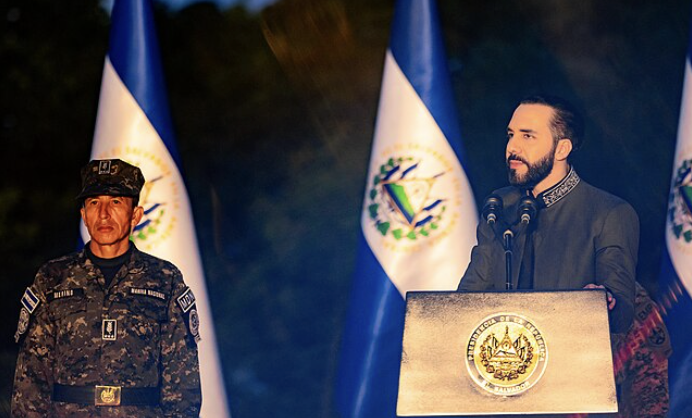
              Just a few days after Chile, I traveled to El Salvador for work. It was much safer to walk in the streets and go out at night than just a year prior when I visited. People walked with a sense of relief and talked about it. Parks and areas that were once quiet because they were under the control of gangs are now places where families can spend their evenings and engage in leisure activities. President Nayib Bukele was proactive during the pandemic, providing healthcare, vaccines, and financial subsidies to help people navigate the pandemic as well as possible.

              People locally known to be part of gangs, as well as people suspected of being part of gangs, because of where they were, with whom, or how they looked, had been getting locked up in large numbers without any due process or access to lawyers or even family members. I asked many taxi drivers and people I talked to about this. The great majority were supportive of the aggressive crackdown on gangs, felt the difference, and celebrated. When pushed further, most accepted knowing of people, sometimes even close family members, who were not gang members or criminals but were incarcerated because they were “in the wrong place, at the wrong time.” Sometimes, non-gang members would just be talking socially to gang members who were neighbors, or who were interrogating or extorting them, but if they were physically next to them when the Salvadoran army arrived, they would be taken along as potential gang members: guilty by association.

Few felt a sense of urgency or ability to do something about it. Cousins, close friends, even young fathers were afraid to go to the authorities and advocate for the innocent individuals imprisoned because they were afraid, they told me they could also be associated with the gangs just for advocating and asking questions, and could also be locked in. Early on during the “State of Exception” declared in March 2022, with zero-tolerance policies towards organized crime and the suspension of certain constitutional rights, many people were supportive of the measures. People were afraid of publicly opposing them. People pointed fingers at those gang members who created fear and extorted them for years, and asked for no mercy, and were supportive of those detained not coming back. There was shame and stigma cast on families who had family members arrested, as those taken away were immediately assumed guilty, and the government, and many in civil society, saw friends and family of those detained as having “harbored terrorists for years.” Thus, the pressure and strategic need to stay silent even if they had taken an innocent person. The detention center they were taken to, the CECOT, was a large, impressive building with the words terrorism and confinement in its name.

              Some said that if the government took people who were not guilty, it was because they were keeping ‘bad company.’ Many others justified the situation by resorting to religious sayings, such as “God knows why things happen,” “God will say,” and “The innocent will be set free, God willing.” 

              Some people started to comment on the growing inflation in El Salvador following the pandemic. This was a global phenomenon. But many taxi drivers saw inflation as the “price” to pay for increased security. They were willing to pay it in the short term, but noted that if inflation became too high and persisted for too long, the President’s popularity would decrease. As one person told me, people would forget about their previous insecurity, but would be very conscious of having a hard time buying groceries, and would go back to trying to migrate north.

              Indeed, a few months prior, I had traveled to Cuba for academic reasons. The country was facing blackouts, hunger, and mass emigration. Besides attributing some blame to the U.S.-based embargo, few members of the public failed to attribute some portion of the blame to the government for the weak state of the Cuban economy.

Exhibition at the museum’s plaza of an airplane staircase without an airplane, reminiscent of political exile and seeking asylum abroad without a dated return ticket. Photo by Ernesto Castañeda @2024.

Many in El Salvador saw the benefits of being able to walk the streets without fear of being targeted by the gangs as worth the few innocent people that were wrongly detained for life with no due process, even with the chance that the army could take other people like them in the future. In past years, when I asked about the threats to democracy that the president’s ambition revealed about staying in power, most people shrugged or showed resignation. Bukele’s local approval and among the diaspora have been large. Thus, consent was created for someone who made everything to be re-elected and who has now called for no limits on reelection, proudly calling himself the “coolest dictator” and now a “Philosopher King” on the bio of his X/Twitter account.

              Given his actual success in reducing homicide rates, many spoke with envy about a “Bukele Model” in other parts of Latin America and even the United States. Indeed, Rubio, Vance, and Trump spoke publicly about imitating this approach. They did so in 2025 by naming gangs as terrorist groups, by skipping due process protections, and indefinitely detaining people. Their emphasis was always on immigrants, so they added a new dimension to this: deportations. To countries of origin, when possible, and when not to third countries, starting with El Salvador, and holding them in CECOT by force. A coming together of extreme-right authoritarian and securitarian fantasies, but this model could not be sustainable given the immigration laws and constitutional provisions still applicable in the United States. Thus, the men the U.S. sent to CECOT have been freed or sent to Venezuela (see story about Julio Zambrano Perez here). The case of Kilmar Abrego Garcia, who was born in El Salvador and had legal protection from deportation to El Salvador, attracted a lot of media and public attention to the terrible conditions in the CECOT and the fact that innocent people and those who were never declared guilty are held under inhumane conditions. Those guilty of homicide and other major crimes are held under the same conditions and serving the same de facto life sentences as people who never committed any violence. The support from El Salvador endeared MAGA to Bukele, but it also further diminished his credibility internationally and among some Salvadoran immigrants abroad.

              Some still call for “the Bukele Model” in Mexico to get rid of the cartel violence. But the cartels are wealthier, and more organized and powerful than the Salvadoran gangs. Furthermore, using the army to confront them is what President Felipe Calderon did in 2006, ever since increasing the levels of violence and deaths.

Furthermore, it is not the case that there is no petty crime or drug trafficking in authoritarian regimes, just that the top authorities are more likely to be involved.  Thus, the Faustian bargain of surrendering democracy in exchange for security is a false pretense and an excuse to gain and concentrate power.

              On August 26, 2025, Trump said in his Oval Office chats, “So the line is that I’m a dictator, but I stop crime. So, a lot of people say, ‘If that’s the case, I’d rather have a dictator.’ Not clear who he is, hypothetically talking about beyond the MAGA base.               Some citizens in many places prefer to ignore the abuses of totalitarian regimes rather than allow a democracy to prosper where politicians more to the left can be elected and actually try to help workers and the middle class. Others prefer to live in what Kant called intellectual immaturity and let a parental figure make all decisions about public affairs. Likewise, many MAGA believers put their faith in Trump and do not want to carry any mental load for politics or governing. Nevertheless, there may be a high cost in the long term for this complete delegation of decision-making and responsibility because, despite promises to help the nation or members of a particular race, ethnicity, religion, or class, authoritarians only care about themselves.

Many historians of the Weimar era in Germany disagree that economic crisis or crime led to the popularity of Hitler and the National Socialist Party. He made an emotional appeal to ethno-nationalism, even though Hitler, who was born in Austria, became a German citizen only in 1932, a year before being named Chancellor by President Hindenburg in 1933. According to the work of Frank McDonough and others, Hitler claimed he alone could Make Germany Great Again. He also framed women as important because they would be the mothers of “racially appropriate children” to grow the German population. Once in power, his violent persecution was not limited to Jewish people, despite early antisemitism and conspiracy theories using them as scapegoats. He started going after communists, who included his most active and organized political opponents, and then included any political opponents and members of groups seen as deviant or inferior.

              Rural residents, small business owners, and middle-class members voted for the Nazi party, hoping their economic fortune might improve along the way as the international respect for Germany returned from the humiliations of losing World War I. Once in power, the industrialists supported the Hitler regime, but after a boost from the rearmament campaign, many people lost their shirts and their lives in the Nazi Imperial experiment. The rebuilding of postwar Germany was largely due to the Marshall Plan and subsequently the European Union.

Dictatorships, Empires, and totalitarian regimes overreach, crush opposition, and create political violence. They eventually fall from within or without. However, many lose their lives and liberties along the way if not stopped early on. A functioning social democracy is generally more peaceful and delivers most material goods to the majority of people most of the time.

Democracy is the best political system, not because it is perfect, but because it puts an expiration date on a specific regime. No government can stay popular, effective, or altruistic for long. It is healthy for a new administration to come in and so on.

It Cannot Be about Immigration

Despite the majority of U.S. public opinion being in favor of immigration for decades, we have been made to believe by extreme right-wing immigration restrictionist groups, and the media repeating their claims, taking them in good faith, and then sometimes believing them through repetition, that immigration is unpopular and dangerous. Some even believe, without any systematic evidence beyond that circular narrative, that immigration is a threat to democracy. To the contrary, immigrant scapegoating is most dangerous and a possible threat to democracy when accompanied by a state framing the issue as one of national security and survival, pairing it with aggressive policies targeting minorities and political opponents. Securitization against immigrants can be used to legitimize the adoption of “emergency” or exceptional measures that lead to increasing authoritarianism and concentration of power on the executive and military.

Source: Gallup 2025

In other words, misinformation and securitization discourses from politicians and state actors, especially those with anti-democratic tendencies, construct immigration as a threat. Some parties and citizens may buy into this rhetoric for political, self-serving reasons, out of fear, or due to a lack of information. MAGA’s misleading statements distort immigration realities and result in increased immigrant precarity and heightened state violence. They create a circular logic based on lies and promises that are impossible to fulfill. So, the bubbles they create eventually burst for most followers, enablers, and observers.

Immigration, including undocumented immigration as well as receiving refugees and asylum seekers, is not incompatible with democracy. To the contrary, newcomers are one of the reasons why wealthy plural democracies can remain so. It takes a totalitarian regime to fully control borders, enforce population registries, and remove unwanted people from spaces such as street encampments and cities. While some may find it alluring initially, the offer is not worth a soul.

Ernesto Castañeda, PhD is the Director of the Immigration Lab, and the Center for Latin American and Latino Studies, and Professor at American University. Opinions his own.

Land, Lives, and Liberation

Land, Lives, and Liberation: Resisting Alligator Alcatraz in the Everglades 

By Blanca Martinez 

The controversial immigrant detention camp in the Everglades, Alligator Alcatraz, has been holding immigrant detainees for over a month. Since the camp’s inception, it has faced widespread opposition from various groups, including environmental advocates, immigrants’ rights activists, and the local Miccosukee Tribe. 

Image of a crocodile in a swamp. Retrieved from Pexels

Environmentalists 

The Everglades, a vast ecosystem of wetlands referred to as the “river of grass,” is the only location in the world where crocodiles and alligators live alongside each other. For the Trump administration, the presence of large predators is one of the benefits of building an immigrant detention center in the Everglades, as the administration claims that immigrants will be deterred from escaping detention in such harsh conditions. However, for environmental advocates, the detention center represents a severe threat to the local wildlife and ecosystem.  

The new detention center is situated within the Cypress National Park Reserve in Ochopee, Florida, adjacent to the Everglades National Park. Environmentalists have fought for the protection of the Everglades for decades, as there have been several attempts to disturb the ecosystem. The new detention center currently sits on a failed government project called the Everglades Jetport, which was once expected to be the largest airport in the world. In the late 60s, Boeing was in the process of developing the Boeing 2707, a supersonic commercial aircraft. In support of the project, Congress considered the funding of the Everglades Jetport, which would provide a vast and remote area for the Boeing 2707 to break the sound barrier without disturbing civilians. The airport was expected to be five times the size of JFK airport, with six runways and connections to high-speed rail.  

However, the plans to build the airport were interrupted after environmental conservationists wrote a report that outlined how the airport would destroy the ecosystem. Together, conservationists, activists, and hunters deterred Congress from funding the construction of the major airport in the Everglades. The unfinished Everglades Jetport was instead turned into the Dade-Collier Transition and Training Airport, which has a single runway occasionally used to train new pilots.  

Now, environmentalists are fighting an old battle to protect the Everglades from the environmental impacts of “Alligator Alcatraz,” another controversial government project. Along with protesting and expressing their opposition through the media, environmental advocates have taken legal action. On June 27th, 2025, two prominent non-profit conservationist organizations, Friends of the Everglades, Inc., and the Center for Biological Diversity, filed a lawsuit against the head of the Department of Homeland Security, Kristi Noem, on the grounds that the government did not conduct a proper assessment of the environmental impacts as required by the National Environmental Policy Act (NEPA), 42 U.S.C. In their brief, the plaintiff emphasizes the vulnerability of the Everglades ecosystem, highlighting several endangered species in the area, including the Florida panther, Florida bonneted bat, Everglade Snail kite, and wood stork. 

Immigrants’ Rights Movement  

Immigrants’ Rights advocates have been active in opposing the over-criminalization and unjust treatment of undocumented people in the United States. The new detention camp has particularly raised alarms for civil rights and immigrant rights organizations as detainees have reported inhumane conditions inside the camp, including worms in the food, mosquito infestations, and dysfunctional plumbing resulting in flooding and the spread of fecal matter. Furthermore, detainees are not receiving adequate medical treatment in the face of unsanitary living conditions.  

As Immigration lawyers are fighting to win freedom for their clients inside the detention center, they report a severe lack of due process offered to those inside the detention center. For example, an attorney from Dubrule & Nowel told Forbes that when her client was transferred there, she was unable to schedule contact or track her client’s condition. Many immigration attorneys have reported similar instances of injustice, resulting in a class-action lawsuit against the detention center. In their complaint, Attorneys from the American Civil Liberties Union and Americans for Immigrant Justice claim that “no protocols exist at this facility for providing standard means of confidential attorney-client communication, such as in-person attorney visitation and phone or video calls that are available at any other detention facility, jail, or prison.” 

Miccosukee Tribe 

Before the time of Columbus, the Miccosukee Tribe primarily lived in Northern Florida, Georgia, and Alabama, among the Appalachian Mountains extending south to the Florida Keys. However, European colonization pushed the Miccosukee Tribe to the southernmost tribal land known as the Everglades. The Tribe was forced to adapt to the swampland by living in small groups called “hammock style” camps across the Everglades. In 1962, the United States government recognized the Miccosukee Tribe of Indians of Florida as a sovereign nation with the right to self-governance. Today, the Miccosukee Tribe is a thriving community that owns and operates various businesses and public services, including the Miccosukee Casino and Resort and an independent police department.  

Having based their livelihood in the Everglades, the Miccosukee tribe claims that the recent construction and operation of Florida’s new Alligator Alcatraz infringe on the cherished land and culture of the Miccosukee Tribe. The detention center is located 900 feet from the Miccosukee “Panther Camp” village, where youth are brought to participate in traditional activities. In total, there are ten tribal villages within a three-mile radius of the camp. In an interview with ABC News, William Osceola says that Alligator Alcatraz is a reminder that, “We are not done trying to secure our future like we thought we were.”   

Since July 1, the members of the Miccosukee Tribe have joined environmentalists and immigration activists in demonstrations at the entrance of Alligator Alcatraz to express ecological, ethical, and economic concerns about the facility. On July 14, the Miccosukee Tribe asked to join as a plaintiff in the Friends of the Everglades, Inc. v. Noem lawsuit, stating that “it is our constitutional duty to conserve the Everglades, and ensure the health, welfare, and rights of our people.” 

The Miccosukee Tribe remains hopeful in the fight against Alligator Alcatraz and is calling for peace and open-mindedness during an interfaith prayer service outside the detention center. 

Beyond these three local groups’ active opposition, groups outside of Florida have also shown their opposition to the difficult conditions under which immigrants, who often have not been found guilty of any crime or even immigration violation, are held for long periods without access to legal counsel. 

__ 

Blanca Martinez is a Research Assistant at The Immigration Lab and Center for Latin American and Latino Studies at American University, and a rising senior in American University’s Politics, Policy, and Law program. 

Edited by Ernesto Castañeda, Director, and Katheryn Olmos, Research & Data Coordinator at the Center for Latin American and Latino Studies and the Immigration Lab.