Biden’s executive order to protect immigrant spouses of citizens from deportation will benefit their families and communities

by Jane Lilly López, Kristina Fullerton Rico*

President Joe Biden prepares to board Air Force One in California on June 16, 2024. Mandel Ngan/AFP via Getty Images/ Creative Commons License

Rodrigo Salazar is a man who entered the U.S. without a visa and has been living in the country without legal status ever since. Because of this, Rodrigo, who asked that we not use his or his wife’s real names in order to protect their identity, cannot advance from low-paying jobs at restaurants and car washes. 

His wife, Carmela, is a U.S. citizen, but she is also facing career limitations. Carmela doesn’t feel safe moving to a place where she could get a higher-paying job. She worries that Rodrigo’s lack of legal status would be more obvious in a city with a smaller Latino population, which would put him at risk for arrest and deportation.

The entire Salazar family, including their two children, live with the constant fear of family separation if Rodrigo is deported.

Immigrants like Rodrigo, who are living in the U.S. without legal status but are married to U.S. citizens, will now have protectionfrom deportation, President Joe Biden announced on June 18, 2024. In order to qualify, they must have arrived 10 or more years ago and be married to a U.S. citizen. Those who meet these criteria will be able to get work permits and can get on the pathway to citizenship while working and living in the U.S. legally. 

The Biden administration estimates that about 500,000 immigrant spouses of citizens will be protected from deportation with this policy change. The policy will also apply to approximately 50,000 U.S. citizens’ stepchildren who are living in the U.S. without legal immigration status.

We are migration scholars who study mixed-citizenship marriages – meaning some family members are citizens or have the legal right to stay in the U.S., while others do not – and the consequences of being undocumented. Our research shows that when one family member lacks legal immigration status in the U.S., the family as a whole assumes an undocumented status. 

When one family member cannot safely travel, work or access health careall family members suffer. The opposite is also true. When a family member is able to shift from living without legal status in the U.S. to getting legal status, the lives of the entire family improve.

A shift in immigration policy in the 1990s

Generally, having an immediate family member who is a U.S. citizen gives a foreign citizen the chance to live legally in the U.S. with permanent residency and a pathway to citizenship. 

For most of the 20th century, all spouses of U.S. citizens who met the legal standards for qualified marital relationships were able to become citizens through a relatively straightforward process, but that changed in 1996

A 1996 law called the Illegal Immigration Reform and Immigrant Responsibility Act imposed harsh penalties for people living in the U.S. without legal immigration status. One of the penalties is a 10-year “bar to re-entry” for anyone who has lived without a visa in the U.S. for one year or more. This ban goes into effect as soon as that individual leaves U.S. territory.

Technicalities create a divide

A consequence of this 1996 law was that getting a green card, which is an identity document that gives someone legal permanent residency in the country, became dependent on whether an immigrant entered – and remained in – the U.S. with or without a visa. 

This change in the law produced a stark inequality in U.S. citizens’ ability to legally sponsor their immigrant spouses for permanent residency.

If an immigrant spouse of a U.S. citizen has overstayed a visa, this person can apply for legal immigration status – through their spouse – from within the U.S. In these cases, the spouse does not have to leave U.S. territory and is not subject to the 10-year ban. 

In contrast, if a U.S. citizen’s spouse entered the U.S. without a visa or other legal permission, they must leave the country for the final step in their legal immigration application process. But when they leave the country, their 10-year ban automatically goes into effect. 

This means that although every U.S. citizen’s spouse, including those lacking legal immigration status, technically qualifies for legal permanent residency, some of them will have to spend a decade or more outside the country before they can actually get a green card.

As a result, over the past few decades, millions of immigrants who were living in the U.S. without legal permission but were married to U.S. citizens have not gotten legal immigration status

While the 10-year bar applies only to immigrants without legal status, in practice it also profoundly affects their citizen spouses, too

In these cases, citizens married to immigrants without legal permission to be in the U.S. have two difficult options. They can resign themselves to a life of fear and limitations in the U.S., including the ever-present threat of their spouse’s deportation, or they can give up living in the U.S. altogether for a decade or more.

A new U.S. citizen, originally from Mexico, poses with his family after a naturalization ceremony in November 2023 in Long Beach, Calif. Biden’s new policy will make it easier for undocumented immigrants with citizen spouses to become citizens. Mario Tama/Getty Images

The impacts of Biden’s immigration policy changes

The Biden administration has connected this new executive action on families to its recent announcement that it will heighten restrictions for seeking asylum, which scholars have called a ban on asylum.

The administration said in a press release that it both wants to “secure the border” and expand “lawful pathways to keep families together.” 

Under this new policy, immigrant spouses who entered the country without a visa before June 17, 2014, will be allowed to “parole in place,” which is similar to a policy that benefitsmilitary veterans’ immigrant spouses who lack legal immigration status in the U.S. Parole in place means that these immigrants will have authorization to work and increased protection from deportation. 

Parole in place will also allow immigrant spouses of U.S. citizens to have their immigration applications processed within the U.S., whether they arrived with or without a visa. This means they will no longer need to leave the country for 10 years or more if they entered the U.S. without a visa.

Having the legal right to work in the U.S. will allow these immigrant spouses to find jobs that better match their education and skills. Some estimates suggest that this could increase an immigrant’s wages anywhere from 14% to 40% more than what they currently earn

The executive action will also yield economic benefits for the communities where mixed-citizenship families live.

Economic analyses measuring the impact of expanding work authorization and access to citizenship predict that this will create new jobs, boost incomes across communities, increase local and federal tax revenues and encourage ongoing economic growth.

As scholars of migration, we believe that this executive action is an important step toward guaranteeing that U.S. citizens who marry immigrants do not end up experiencing negative consequences because their spouses cannot legally live, work or vote in the U.S. It will also prevent the de facto deportation of U.S. citizens alongside their noncitizen spouses.

In essence, this policy change benefits American families and protects the rights of U.S. citizens to marry the person they love, keep their families together and even live in their own country. Beyond helping families, this change will have far-reaching economic benefits for the communities – and country – where they live.

Copyleft Creative Commons. Reproduction with full attribution is possible by news media and for not-for profit and educational purposes. Minor modifications, such as not including the “About the Study” section, are permitted. 

*Jane Lilly López is an Assistant Professor of Sociology, Brigham Young University. Jane Lilly López’s research on mixed-citizenship couples has received funding from the National Science Foundation, UC MEXUS, and the Center for US-Mexican Studies.

*Kristina Fullerton Rico is a Research Fellow, Center for Racial Justice, Ford School of Public Policy, University of Michigan. Kristina Fullerton Rico’s research on the impact of long-term undocumented immigration status has received funding from the Russell Sage Foundation and Sociologists for Women in Society. 

This is reproduced from The Conversation with the authors’ permission.

https://theconversation.com/how-bidens-executive-order-to-protect-immigrant-spouses-of-citizens-from-deportation-will-benefit-their-families-and-communities-231651

We Must Ensure Access to Health Care for Immigrants

by Rodrigo Stein, MSc.*

This graph summarizes the Census Bureau’s American Community Survey data, capturing the percentage of uninsured adult Latinos in the Washington, D.C. Metropolitan Area. By Rodrigo Stein / Creative Commons License

Gaps in access to public health insurance like Medicaid and other subsidized programs, coupled with restrictions in private job-based health coverage, create significant barriers for immigrants in obtaining essential healthcare services. The disparate treatment of immigration statuses leads to a fragmented health coverage system, resulting in many immigrants, including those lawfully present, foregoing necessary medical care. This contributes to poorer health outcomes, reduced life expectancy, and increased morbidity rates among immigrant populations in the Washington, D.C. metropolitan area.1

Immigration Status Impacts Health

The Washington, D.C. metropolitan area is home to over 900,000 Latinos, 53% of whom are foreign-born.A significant portion of this immigrant population hails from Central American countries such as El Salvador, Honduras, and Guatemala. Numerous studies highlight how immigration and immigration status impact health outcomes through various material and psychological mechanisms.3,4  These include heightened fear and stress, unequal access to resources, experiences of prejudice and violence, and disparities in accessing safe employment and quality housing.2,3 Despite the implementation of the Affordable Care Act (ACA), individuals with Central American heritage are still less likely to have health insurance compared to non-Latino Whites.4

Over 32,000 Temporary Protected Status (TPS) holders who have sought protection in the United States due to conflict or natural disasters in their home countries reside primarily in the Washington, D.C. metropolitan area.5 TPS holders (the majority, Salvadoran nationals) qualify for ACA subsidies and plans but not Medicaid.6 Medicaid, the primary public health program for low-income working-age adults, is limited to citizens and “qualified non-citizens,” a category that requires both legal status and (in most cases) completion of a five-year waiting period to be eligible for public assistance programs.7

These provisions combine to make thousands of immigrants ineligible for public health services and financial assistance for purchasing insurance, forcing them to choose between purchasing expensive private market insurance at cost, going without health insurance, or relying on the emergency room as their main source of care. (See Table 1).

 Table 1 Eligibility for Federally Funded Health Care Coverage Based on Immigration Status

Eligibility for Federally Funded Coverage Based on Immigration Status
Immigration StatusMarketplace EligibleMedicaid/CHIP Eligible
Lawfully Present and Eligible for Federally Funded Coverage
Valid non-immigrant visa holders (e.g. students, worker visas)X
Humanitarian statuses or circumstances (including Temporary Protected Status, Special Juvenile Status, asylum applicants, Convention Against Torture, victims of trafficking)X
Legal status conferred by other laws (temporary resident status, Legal Immigration Family Equity Act, Family Unity individuals)X
Qualified non-citizens • Lawful Permanent Residents [(LPR)/Green Card Holder)]*
• Paroled into the U.S. for at least one year* 
• Battered non-citizens, spouses, children, or parents* • People fleeing persecution (e.g., asylees, refugees) 
• Granted withholding of deportation 
• Cuban/Haitian entrants • Certain Amerasian immigrants 
• Members of a federally recognized Indian tribe or American Indian born in Canada 
• Veterans or active duty military and their family members 
• Victims of trafficking and their family members 
• Citizens of the Marshall Islands, Micronesia, and Palau who are living in one of the U.S. states or territories [“Compact of Free Association (COFA) migrants”]
• Granted Iraqi or Afghan special immigrant status 
• Children receiving foster care or adoption assistance 
• Conditional entry granted before 1980
Ineligible for Federally Funded Coverage
Undocumented immigrants:Individuals who entered the country without authorizationIndividuals who entered the country lawfully and stayed after their visa or status expiredXX
DACA: Temporary status allowing individuals who came to the country as children to remain in the U.S.XX
Deferred Action for Parents of Americans and Lawful PermanentResidents (DAPA): Temporary status allowing parents of citizens or LPRs to remain in the countryXX
*Subject to the five-year bar (i.e. requirement to reside in the U.S. for five years or more before becoming eligible for Medicaid/CHIP). Note that there is no five-year bar for accessing subsidized Marketplace coverage.

Health Risks & Social Determinants of Health 

In addition to access barriers, immigrants experience a lack of social support and the absence of culturally and linguistically competent services. This means that many Latino immigrants, even those with access to quality care, forego seeking medical care until they face an emergency. Language barriers contribute to increased rates of misdiagnoses, weaker health literacy skills, and reduced access to acute and preventive care.8

This issue is compounded by the fact that many Latino immigrants are employed in occupations that offer limited access to employer-sponsored health coverage and often have comparatively lower incomes.9 As a result, these individuals face barriers to accessing care when trying to afford employer-sponsored coverage, when available, or when navigating the individual health insurance market. Given these barriers, what policy alternatives exist to ensure thousands of Latino immigrant residents in our region are not excluded from health care? 

Current Options: Federally Qualified Health Centers

Because of their limited access to health care, Latino immigrants often seek services at community health centers (CHCs) where they can access care without insurance (over 35% of CHC patients in the U.S. are Latino).10 Federally Qualified Health Centers (FQHCs) are CHCs that meet stringent federal requirements and receive funding via the Health Resources and Services Administration (HRSA) to provide primary health care services to all people regardless of their ability to pay or documentation status through a sliding fee scale.11

FQHC’s like La Clínica Del Pueblo (La Clínica), play a significant role in reducing racial and ethnic health disparities. The success of these centers in narrowing these gaps is attributed to the wide range of services they offer, culturally competent care, and strong relationships built with underserved communities.12  Since all direct service staff are bilingual, and most are first-generation Latino immigrants, La Clínica provides much-needed culturally and linguistically appropriate health care to a large yet excluded population in the Washington, D.C. metro area.

However, despite their effectiveness in producing high-quality healthcare outcomes, FQHCs are limited in size, scope, and resources. Because these centers vary in size, depth, and jurisdiction, addressing the cost of care for those who are ineligible for federally funded health programs is paramount—without them, FQHCs bear the burden of uncompensated care for a population with significant health needs.

Potential Policy Solutions

As of March 2024, the District of Columbia and six states—California, Colorado, Illinois, New York, Oregon, and Washington—have expanded fully state-funded coverage to some income-eligible adults regardless of immigration status.13 These legislative or administrative actions rely on establishing state Medicaid/CHIP equivalent or comparable programs, and creating state premium or cost-sharing subsidies to enable individuals to purchase marketplace coverage.9 In addition to these six states, Maryland will allow income-eligible individuals to purchase marketplace coverage regardless of immigration status through a Section 1332 waiver.

Maryland’s Access to Care Act

On May 16, Maryland Governor Wes Moore signed the Access to Care Act into law. Sponsored by Delegate Bonnie Cullison and Senator Antonio Hayes, the law removes immigration status as an eligibility requirement for purchasing a health plan through the Maryland Health Benefit Exchange (MHBE). In doing so, Maryland allows the remaining 6% of uninsured Maryland residents to purchase insurance. Immigrants make up a substantial number of that uninsured population; they are 15% of Maryland’s population overall, and the state’s Montgomery and Prince George’s counties have the highest concentrations of the Latino population in Maryland, with 21% in each jurisdiction. Soon, they will not only have the choice to buy a healthcare plan in the state but also receive care in a culturally and linguistically competent manner.  

Stepping Toward Equity

By expanding eligibility for public health programs and supporting community health centers, we can ensure that all residents, regardless of immigration status, have access to essential healthcare services. Legislative actions like the Maryland Access to Care Act represent significant steps towards achieving health equity for immigrant populations.

[1] Martinez O, Wu E, Sandfort T, Dodge B, Carballo-Dieguez A, Pinto R, Rhodes SD, Moya E, Chavez-Baray S. Evaluating the impact of immigration policies on health status among undocumented immigrants: a systematic review. J Immigr Minor Health. 2015 Jun;17(3):947-70. doi: 10.1007/s10903-013-9968-4. Erratum in: J Immigr Minor Health. 2016 Feb;18(1):288. Rhodes SD [corrected to Rhodes SD]. PMID: 24375382; PMCID: PMC4074451.

[2] Migration Policy Institute. Central American Immigrants in the United States. Migrationpolicy.org. Published May 2023. Accessed February 18, 2024. https://www.migrationpolicy.org/article/central-american-immigrants-united-states

[3] Yamanis T, Morrissey T, Bochey L, Cañas N, Sol C. “Hay que seguir en la lucha”: An FQHC’s Community Health Action Approach to Promoting Latinx Immigrants’ Individual and Community Resilience. Behavioral Medicine. 2020;46(3-4):303-316. doi:10.1080/08964289.2020.1738320

[4] Bucay-Harari L, Page KR, Krawczyk N, Robles YP, Castillo-Salgado C. Mental Health Needs of an Emerging Latino Community. The journal of behavioral health services & research. 2020;47(3):388-398. doi:10.1007/s11414-020-09688-3 

[5] National Immigration Forum. Temporary Protected Status (TPS): Overview and Current Issues. Accessed February, 2, 2024. Available from: https://immigrationforum.org/article/fact-sheet-temporary-protected-status/#:~:text=The%20largest%20populations%20of%20TPS,York%20(23%2C168)%20metropolitan%20areas

[6] HealthCare.gov. Immigration status & the Marketplace. Accessed May 16, 2024. Available at: https://www.healthcare.gov/immigrants/immigration-status/

[7] Supporting Health Equity and Affordable Health Coverage for Immigrant Populations: State-Funded Affordable Coverage Programs for Immigrants. Shvs.org. https://www.shvs.org/wp-content/uploads/2021/10/State-Funded-Affordable-Coverage-Programs-for-Immigrants.pdf. Published 2021. Accessed April 3, 2024.

[8] Nelson B, Tu L and Sanford F. To Advance Health Equity For Patients With Limited English Proficiency, Go Beyond Interpreter Services. Health Affairs (Millwood). October 23, 2023. https://www.healthaffairs.org/content/forefront/advance-health-equity-patients-limited-english-proficiency-go-beyond-interpreter

[9] American Immigration Council. District of Columbia Immigration Data. American Immigration Council. https://map.americanimmigrationcouncil.org/locations/district-of-columbia/. Published 2023. Accessed February 8, 2024.

[10] Ortega AN, Rodriguez HP, Vargas Bustamante A. Policy dilemmas in Latino health care and implementation of the Affordable Care Act. Annu Rev Public Health. 2015;36:525-544. doi:10.1146/annurev-publhealth-031914-122421

[11] Federally Qualified Health Centers. Official web site of the U.S. Health Resources & Services Administration. https://www.hrsa.gov/opa/eligibility-and-registration/health-centers/fqhc/index.html. Published 2022. Accessed April 10, 2022.

[12] Yamanis T, Morrissey T, Bochey L, Cañas N, Sol C. “Hay que seguir en la lucha”: An FQHC’s Community Health Action Approach to Promoting Latinx Immigrants’ Individual and Community Resilience. Behavioral Medicine. 2020;46(3-4):303-316. doi:10.1080/08964289.2020.1738320

[13] Kaiser Family Foundation. State Health Coverage for Immigrants and Implications for Health Coverage and Care. Kaiser Family Foundation website. Published October 1, 2021. Accessed May 16, 2024. Available at: https://www.kff.org/racial-equity-and-health-policy/issue-brief/state-health-coverage-for-immigrants-and-implications-for-health-coverage-and-care/

Copyleft Creative Commons. Reproduction with full attribution is possible by news media and for not-for profit and educational purposes. Minor modifications, such as not including the “About the Study” section, are permitted. 

*Rodrigo Stein is a resourceful public health professional with experience in program management, design and evaluation, advocacy, and strategic planning.

The Legacy of U.S. Immigration Policy Towards Cuba

by William M. LeoGrande*

Cuban Privilege by Susan Eckstein / Creative Commons License

Susan Eckstein’s recent book, Cuban Privilege: The Making of Immigrant Inequality in America, is a deep dive into how the U.S. government structured its immigration policy to the advantage of Cuban migrants as part of its Cold War policy to destabilize Fidel Castro’s revolutionary government. The book caused quite a stir among some Cuban Americans, who were insulted that someone pointed out policies that helped make the Cuban American community a success story.  

Cuban Privilege was not Eckstein’s first book on Cuban diaspora. She has written extensively on the threads that connect Cubans abroad with their family still on the island. Her book The Immigrant Divide: How Cuban Americans Changed the U.S. and Their Homeland was one of the first in-depth studies of how the Cuban American community began reconnecting to the island in the 1980s and 1990s, building bridges based mainly on family ties.

In the 1960s and 1970s, both the Cuban and U.S. governments erected a “sugar cane curtain” that made it almost impossible for families to stay connected across the Florida Strait. Travel was prohibited, direct mail service was unavailable, and connecting by phone was nearly impossible and prohibitively expensive. 

But in the 1980s, travel opened up, and remittances began to flow. Ever since the Special Period, Cuba’s economic crisis in the 1990s, Cuban American remittances have made an essential contribution to the livelihood of millions of Cuban families—a stark reality demonstrated by the humanitarian crisis on the island that resulted when Donald Trump and the COVID-19 pandemic cut remittance flows by some two-thirds. 

Cuban Privilege reverses the lens to look not at Cuban immigrants but at the U.S. immigration policies that brought them here. It is the definitive account of how Washington, motivated by the Cold War, gave Cuban immigrants privileged access to the United States and unprecedented support once they got here. Key elements of that privilege remain in place today, exacerbating the current migration crisis—foremost among them the Cuban Adjustment Act, which allows Cubans living in the United States for a year to apply for permanent residence, regardless of their form of entry.  

Most of the time, academics toil in relative obscurity, writing for one another in hopes of contributing new knowledge to their chosen field. On occasion, they write for a broader audience, hoping that their expertise might have some positive impact on public policy. And most of the time, when they speak truth to power, power isn’t listening. Rarely do academic contributions to the public debate attract much attention or make much difference.

Susan Eckstein’s Cuban Privilege is a cautionary tale of what can happen when the public does take notice. Presenting her book in Miami, Eckstein endured 30 minutes of hate, denounced as an agent of Castroism, because she had the nerve to state the obvious — Cuban immigrants to the United States have enjoyed enormous privileges that no other immigrant group has enjoyed. To say that is not an attack on Cuban Americans; it’s a simple truth. 

Ironically, the policy of privileged immigration for Cubans, which was intended to weaken and embarrass the Cuban government, has instead weakened and embarrassed the U.S. government producing a series of migration “crises” or more correctly punctuated increases (Camarioca in 1965, Mariel in 1980, the rafters crisis in 1994, and the post-Covid increase in emigration that is ongoing today), and distorting U.S. domestic politics by creating one of the most powerful domestic foreign policy lobbies in history—Cuban Americans in south Florida.

For 30 years, successive presidents —with the sole exception of Barack Obama— have been afraid to stand up to the Miami lobby on U.S. policy toward Cuba. As President George H. W. Bush’s National Security Adviser Brent Scowcroft put it, “Cuba is not a foreign policy question. Cuba is a domestic issue.” The result is a policy of regime change that, in 65 years, has done nothing to advance the cause of democracy or human rights in Cuba, but has lowered the living standard of the Cuban people and alienated Washington from allies in Latin America.

Before the Trump administration, Cuban American attitudes were gradually evolving toward moderation and support of engagement. President Obama won more Cuban American votes in Florida than any Democrat before him. And a majority—albeit a narrow one—supported his normalization policy.

But Trump’s return to a policy aimed at overthrowing the Cuban government re-energized the most recalcitrant Cuban American right. Recently both attitudes and voting behavior in the community seem to have swung sharply to the right, the result of a new wave of immigrants, a toxic social media environment, and disinformation spread by some of Miami’s Spanish language media.

As a result, Democrats have gone back to being afraid of Cuba—not the island, but the issue. Despite his campaign promise to return, for the most part, to Obama’s policy of engagement, President Biden has kept in place most of Donald Trump’s draconian economic sanctions aimed at strangling the Cuban economy.

            The final irony is that Florida does not actually matter very often in presidential elections. Conventional political wisdom casts it as a critical swing state. But in the sixteen presidential elections since 1960, Florida has determined the outcome in Electoral College only twice: in 2000, when Cuban Americans gave George W. Bush a 537-vote margin over Al Gore because the Clinton administration returned six-year-old Elián González to his father in Cuba; and in 2004 when Bush narrowly beat John Kerry.

            Kerry lost Florida by such a wide margin that he would have lost the state even if he had won the Cuban vote. So Cuban Americans in Florida have only cost the Democrats the White House once: in the unforgettable election of 2000. Ever since, Democrats have suffered from electoral post-traumatic stress disorder over the issue of Cuba, and it appears that 2024 will be no different. That is the legacy of the immigration policies that Susan Eckstein so expertly chronicles in Cuban Privilege.

Copyleft Creative Commons. Reproduction with full attribution is possible by news media and for not-for profit and educational purposes. Minor modifications, such as not including the “About the Study” section, are permitted. 

*William M LeoGrande is a CLALS faculty affiliate and Professor of Government at American University in Washington, DC, and co-author with Peter Kornbluh of Back Channel to Cuba: The Hidden History of Negotiations between Washington and Havana(University of North Carolina Press, 2015).

Surviving the Criminalization of Migration

by Ernesto Castañeda, Makenna Lindsay, and Natalie Turkington*

Survivor of Ciudad Juarez Migrant Detention Center Fire / Creative Commons License

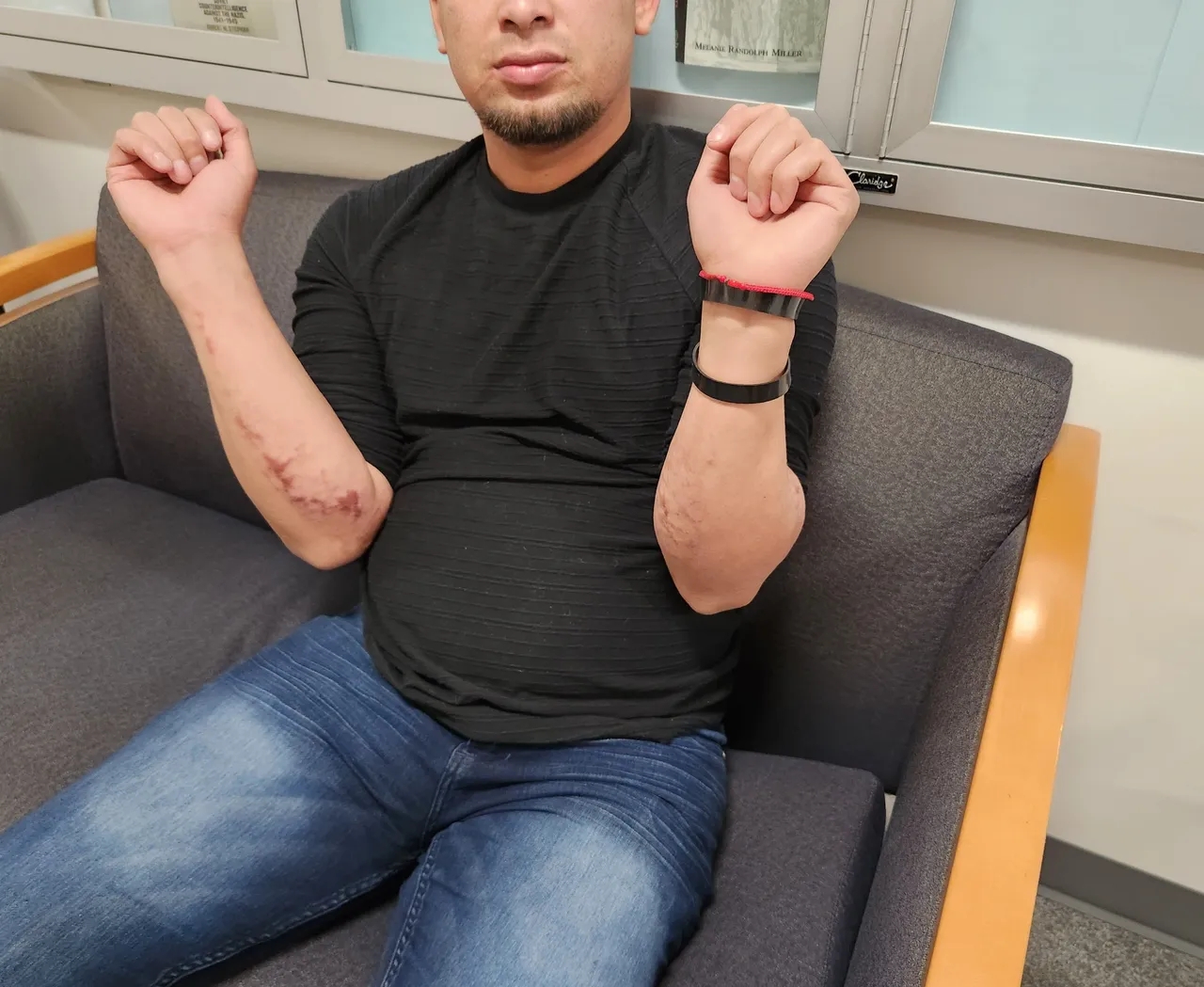
On March 27, 2023, a fire at a migrant detention center in Ciudad Juarez, Mexico killed 40 migrants and injured 29 more. One of those injured was Justen (pseudonym), a man in his late 20s from El Salvador who lost six of his friends in the fire. Dr. Ernesto Castañeda, Director of the Immigration Lab and the Center for Latin American and Latino Studies (CLALS) sat down with Justen last year to discuss the horrors experienced inside of the center and what happened after. The following testimony reveals the cruelty inside the Ciudad Juarez detention center fire as well as the treatment victims encountered by both U.S. and Mexican officials after the fact. 

Justen mentioned how difficult it was to transit through Mexico. He crossed into Chiapas in a pickup truck under a tarp. Later in Northern Mexico, he was stopped and questioned. He claimed he was from Chihuahua, Mexico but the authorities decided that given his answers, he was not Mexican, and he was taken to an immigration detention center. At the center, people had different rights and access to necessities such as mattresses and water bottles—only if they had money to pay for them. After some of the immigrants complained that they had no water to drink, the officials would reply that it was not up to them to support them and that it was their fault “por andar migrando” for migrating. Some of the people detained got angry, put the mattresses together, and said “if you do not open the doors or give us water, we will burn them.” An agent said, “Que les vaya bien”— “farewell,” as he saw them light the place on fire and left without opening the door.  

When the fire broke out, Justen felt his skin getting too hot, the smoke made it hard to breathe. He ran to the bathrooms to try to get away from the flames and found dozens of people, all crammed together–there was no running water. He and others screamed “Please let us out! “We do not want to die!” However, migration officials did not open the door. Justen recalls that, “the immigration officials did not at any moment try to open the door or call other authorities or ambulances.” Trapped in the bathroom, Justen lost consciousness, thinking he would die being burnt alive.

He later heard people crediting a passing firefighter who saw the smoke, called the fire department, and ran towards the building. Firefighters stopped the fire before everyone died inside. Justen’s burnt but breathing body was brought to Mexico City where he underwent treatment and a hospital stay of over two weeks and was incubated for much of that time. Immediately following his discharge, he had multiple interactions with agents of the Mexican government to arrange lodging for the remainder of his recovery. “When I saw migración [migrant agents] there, I said, ‘Why, why are our aggressors looking out for us?’’ Even in his injured state, Justen recognized the paradox that although migration officials played a major role in his near-fatal condition, they also “helped” him to recover. Ironically, they also helped bring his mother from El Salvador for humanitarian reasons.  

This is not the only striking paradox illuminated by the fire. The fire, namely smoke inhalation and dehydration caused immense damage to Justen’s lungs and kidneys. The doctor told him that 90% organ function would be considered great given the extent of the organ damage; he would likely never recover full function and health. “…I have to keep living and be more cautious of my lungs, airways, and kidneys… if I ever get too dehydrated because this could jeopardize my life.” Indeed, he would often cough while we spoke. 

The sequelae are not only related to his physical health but also to his mental health. In the interview Justen shared that to this day he still hears the cries of people trapped screaming, ‘We don’t want to die! We don’t want to die!’, and his own screams: ‘I don’t want to die! I don’t want to die!’ Six of his travel companions died in the fire. He also expressed the mistreatment and further neglect he endured from the Executive Commission of Attention for Victims (CEAV), and the chronic health problems he must deal with because of the tragedy. 

Following the fire, Justen was allowed to apply for asylum in the United States. Given his condition, Justen was asked about his health care and public services access in the United States. He specifically notes the conditional nature of his asylee status he understood that “…it was a condition of the government that we were in good health and all that and not to be a public charge.” He will not apply to receive disability income and will depend on remittances from his wife in DC and a job the mom can find in Texas.

The acute irony of the situation is that the United States government played a pivotal role in the development of his condition by asking Mexico to more forcefully enforce its immigration policies and to dissuade Central American and other immigrants from reaching the U.S./Mexico border, and yet it granted him asylum as a survivor of a tragedy abroad. Nonetheless, in establishing such a condition, the U.S. evades its responsibility to not only protect migrants but to protect and honor the rights of asylees.  

As discussed in the book “Reunited: Family Separation and Central American Youth Migration,” Justen was on his way to the U.S. in part to reunite with his wife and family who are living in the Washington, DC area. Justen’s wife escaped violence from El Salvador and moved to Nicaragua, but then the situation got unstable in Nicaragua and she came to DC. Justen and his mother were relocated by non-profits to a city in Texas under humanitarian parole and applied asylum, but his wife is undocumented and cannot apply for asylum simultaneously because she was not traveling with him and she was not at the fire. Justen is not in condition to work yet, though his wife has a job in DC and therefore, they still live apart despite both being in the United States. Such family separations show how immigration laws tend to work at the individual level, putting family unity and well-being in a secondary place.  

Violence against immigrants, like that in the Ciudad Juarez fire is a direct result of immigrant restrictionism and the externalization of borders that we see in North America and Europe. There is a need for the public to pay closer attention to the realities experienced by migrants, asylees, and refugees. Unjust treatment which goes unnoticed points to the lack of care taken to uphold the human rights of those on the move.   

For more see: 

Délano Alonso, Alexandra. “Before and After the Juárez Fire.” CLALS Working Paper, no. 45 (2023). https://www.american.edu/centers/latin-american-latino-studies/upload/ssrn-id4655183.pdf 

Brashear, Madeline and Diaz, Sarah and American University, CLALS, No Right to Life: Lives Lost and the Legalized Violence That Shaped a Humanitarian Crisis in the Arizona Borderlands (November 15, 2023). Available at SSRN: https://ssrn.com/abstract=4634297 

Book Review: Migration and Mortality: Social Death, Dispossession, and Survival in the Americas https://www.academia.edu/108876335/Book_Review_Migration_and_Mortality_Social_Death_Dispossession_and_Survival_in_the_Americas 

Guerra, Sofia. Invisible Deaths. https://aulablog.net/2024/03/07/invisible-deaths/  

Copyleft Creative Commons. Reproduction with full attribution is possible by news media and for not-for profit and educational purposes. Minor modifications, such as not including the “About the Study” section, are permitted. 

*Ernesto Castaneda is the Director of the Center for Latin American and Latino Studies, and the Immigration Lab. He conducted the interviews and helped write the blog. Makenna Lindsay, Coordinator of the Immigration Lab, and Natalie Turkington, a Research Assistant with the Center for Latin American and Latino Studies at American University, transcribed and translated the interview, and drafted and edited this blog. 

Ecuador: The Formation of Gangs in Prison Systems

By Erica Criollo

January 17, 2024

Solidarity rally in Queens, New York by members of the Ecuadorian diaspora. Photo by Erica Criollo 

On January 7th, 2024, José Adolfo Macías Villamar, alias“Fito,” the leader of one of Ecuador’s most prominent gangs, was found missing from his luxury prison cell the day he was meant to be transferred to a maximum-security prison to be held in isolation.

While Macías began his 34-year sentence in 2011, he remained the leader of the criminal gang, Los Choneros, due to their longstanding influence over government officials and extensive illicit drug networks. Following his escape, the country descended into chaos resulting in President Daniel Noboa declaring that the country was under “armed internal conflict” to mitigate gang wars and the killings of police officers.

This presidential declaration has prompted questions as to how Ecuador could have experienced such a sudden upsurge in gang violence. Along with government corruption, the escalation can be traced to the gradual formation of gangs dominating prison systems over several years. 

 In 2003, Los Choneros, who are associated with Mexican and Colombian cartels, took control of the drug trafficking route in the province of Manabí, Ecuador, from where drug shipments were sent to Mexico, the United States, and several European countries. Transnational networks and external groups engaged in the illicit drug trade utilized Ecuador’s coasts, leveraging its access to major shipping routes and ports to transport illicit drugs across international borders. 

Furthermore, Ecuador’s adoption of the U.S. dollar, coupled with inadequate enforcement and prevalent corruption, has facilitated money laundering by drug traffickers through industries such as real estate, illegal mining, and the illicit timber trade. This impacted the way corruption played a role in the country’s efforts to combat such illicit activities. 

When Former President Rafael Correa took office in 2007, he gained public favor through his initiative to remove the United States from the Manta military base from which the U.S. has been controlling anti-drug efforts with targets against the Colombian illicit drug trade since 1999.

However, following the U.S. withdrawal from the Manta military base, the country witnessed a worsening of drug trafficking. Former President Correa failed to stop the activities of groups like Los Choneros and other Mexican cartels, allowing the unhindered transportation of drugs to and from Ecuador.

Before Macías, Los Choneros was led by Jorge Luis Zambrano, alias “Rasquiña,” who, while incarcerated, directed orders alongside arrested gang members. By 2010, the group had transitioned to operating within prison systems and communicating with members on the outside. This operational shift steered the group away from international drug trafficking, focusing instead on micro-trafficking, contract killings, extortion, and contraband activities.

Emerging factional gangs, including Los Choneros, Gorras, Lagartos, Latin Kings, and the Cubanos, have become more extensive and aggressive, leading to deadly conflicts in prisons. In 2019, a brutal fight claimed the lives of several inmate gang members at Penitenciaria del Litoral, and in 2021, a prison riot resulted in the deaths of 119 inmates in the same facility. These deviations of gangs were also a result of government initiative in dismantling gang groups through the transfer of leaders between prisons, but it only multiplied the presence of gang wars.

Following Zambrano’s death in 2020, Macías obtained leadership, triggering an uproar of chaos and gang violence across the country as gang leaders fought to dominate. Despite being in prison, Macías remained in control. For him, communication with members was not an obstacle, as several reports indicate Macías’ prison cell had plugs to charge his cell phone and an internet router. Macías was also open to sharing his lavish living space on social media, regularly throwing parties, and having access to weapons, appliances, liquor, jewelry, and ceramics.

Ecuador has experienced a long trajectory of government corruption which has led to an escalation in gang formation and violence in prison systems. With Macías’ most recent escape, the country has been submitted to crazed gang members responsible for several car bombings, kidnappings, and slayings of prison guards and innocent civilians. In response to President Daniel Noboa’s crackdown on gang members in prisons, gang leaders on the outside have resorted to hostage-taking, capturing military and prison guards. These captives are coerced into recording messages, pleading with President Noboa to halt military operations in prisons and cease the killing of gang members. The objective behind these threats is to secure the gangs’ dominance within prisons and ensure the unrestricted proliferation of gang members. 

In one such video shared on Facebook, a gang member asserts, “Just as you safeguard the right to life of Ecuadorian citizens, we too have the right to live…we are not afraid of your tactics.” In essence, Ecuador is confronted with a formidable coalition of gangs wielding enough power to subvert the law and pursue their objectives, fueled by their substantial numbers and collective readiness to act in unison to carry out attacks. 

Currently, President Noboa’s plan to overpower gang violence is to enforce stricter regulations in prisons. However, this raises concerns for Ecuadorian citizens alarmed by several online videos featuring hostages pleading with the government for compliance to spare their lives. As events unfold, President Noboa’s actions will require careful consideration to ensure that no more civilian lives are endangered and to respect the human rights of all people. 

*Erica Criollo is a Graduate Research Assistant of the Immigration Lab at American University. 

Creative Commons license. Free to republish without changing content for news and not-for-profit purposes. 

Blinken and Mayorkas visited Mexico to Discuss Migration

By Ernesto Castañeda

January 11, 2024

Republicans in Congress are denying funding to Ukraine and Israel over migration and border security, but the premises and assumptions used to discuss the issue fail to take the following elements into account.

It is hard to determine if numbers are really without precedent. There has been a change in that immigrants come and turn themselves in to try to come in with a legal immigration status, such as through asylum or the regularization programs available to Ukrainians, Afghans, Cubans, Haitians, Venezuelans, Nicaraguans, and other groups. In previous decades, many low-skilled workers knew there were no avenues to enter legally and would try to pass undetected and live undocumented in the United States. That is less common today for so-called low-skilled, recently arrived immigrants. So, an imaginary example would be to count people who once would mainly drive to New York City for the holidays and then compare them to a time when most people would arrive via plane. It would be easier to count the people arriving on planes, but that would not necessarily mean that there are more people arriving now by plane than the ones who arrived driving in the past. 

Historically, numbers are not comparable because, before Title 42, apprehensions were counted versus encounters afterward. Previously, most apprehensions would happen inside the U.S., while today, most people present themselves in groups and in a visible manner at ports of entry, along the physical border, or in front of the border wall. Another important difference is that in the past, undocumented workers relied on established family members and networks to get provisional housing and food and find a job. Many recent arrivals may not have close people in the United States and are actively asking for temporary housing and food from city governments. The U.S. does this for refugees and has done it in the past for Cubans and others escaping repressive regimes. Research and history show that these short-term expenses have been good investments, given that refugees and immigrants are more likely than U.S.-born individuals to work, start businesses, and be innovative leaders. Republicans in Congress have denied requests from the White House to provide funding to cities to cover some of these costs.

Some propose detention as deterrence, but prolonged detention in the United States is very expensive and mainly benefits the companies or workers providing and managing detention centers.

A misconception repeated in the media is that most people are immigrating illegally. That is technically incorrect because people are presenting themselves to immigration authorities. Many migrants are applying to legal programs, asking for asylum, or being placed in deportation proceedings.

The situation that we are seeing at the border and some of the solutions proposed indicate some important points that have been rarely discussed,

1) Border walls do not work. Smugglers can cut them, and people can walk around them or come in front of them on U.S. territory. 

2) People are turning themselves in, so contrary to what Trump said recently, authorities know where people are from and where they are going. They have notices to appear in immigration court, and they register an address in order to receive notices and updates if they want to continue with their asylum process and regularize their status. In the past, a great majority of people go to their migration court hearings.

3) CBP One appointments are too cumbersome to make, and there are not enough slots available, so people are showing themselves at ports of entry and between them.

4) The parole program for Haitians, Cubans, Venezuelans, and Nicaraguans is working to create a more rational and orderly process. Taking the program away —as Republicans in the Senate want—would make things worse. 

5) Putting more pressure on Mexico to deport more people and stop them from getting to the border is unsustainable. Mexico cannot manage the issue by itself unless it gets pressure and funding from the U.S. and international organizations, like Colombia does, to establish immigrant integration programs for immigrants who want to stay in Mexico, and it provides paths to citizenship for them. 

Thus, Blinken, Mayorkas, and their companions and team’s visit to Mexico is important. Mexico has been a willing partner, agreeing to take people from third countries under the Remain in Mexico and Title 42 programs, but those programs could only work temporarily. Mexico has also increased the number of deportations. However, deportation only works if people are unwilling to try multiple times. Increasing immigration surveillance, deterrence, and deportation does make arriving in the U.S. harder. It also makes it more expensive and thus attractive for organized crime to get involved in it as a business, thus getting more people to the border once they figure out the business model and logistics even with new policies in place. 

Mexican President Andrés Manuel López Obrador has asked for a regularization of U.S. relations with Cuba and Venezuela. There have been positive steps with Venezuela already. This could be a good opportunity to remove Cuba from the list of states sponsoring terrorism, which would reduce some of the emigration pressure in Cuba. 

Mexican authorities have disbanded many caravans and slowed the trek of thousands of migrants. Nevertheless, people who are escaping violence and persecution or have sold everything will try to get to the United States. 

Long-term ways to address the root causes of migration are to continue providing international aid and supporting democratic institutions. One has to keep in mind human rights. The Mexican Supreme Court of Justice has found that profiling people suspected to be migrants in buses to be unconstitutional. To engage the Mexican Army is not the solution either.

The silver lining is that despite the images we see in the news and seasonal peaks, it is not as if all the world is on the way to the U.S.-Mexico border. Most people want to stay home.

Congresswoman Delia C. Ramirez (IL-03)

Congresswoman Delia C. Ramirez (IL-03) presenting immigration policies the Congress could be working on instead.

In the January 10 hearing towards impeaching DHS Secretary Alejandro Mayorkas, Republicans repeated many myths, cliches, and anti-immigrant talking points but did not propose any sensible solutions. It was remarkable that Democrats in the committee saw the political nature of the exercise, and many offered actual solutions to improve the situation at the border and inside the United States in a way that makes the immigration and asylum processes more humane and above ground.

Ernesto Castañeda is the Director of the Center for Latino American and Latino Studies and the Immigration Lab at American University.

Creative Commons license. Free to republish without changing content for news and not-for-profit purposes.