Brazil’s Counternarcotics Policy Challenges

By Tom Long

Minister Alexandre Padilha meeting to discuss policies against crack | Photo by: Ministério da Saúde | Flickr | Creative Commons

Long a significant market for cocaine – the second or third largest in the world according to estimates – Brazil is suffering a major increase in crack cocaine use.  Visible in the centers of major cities, drug abuse has become a more serious national concern as Brazil prepares to mount the world stage as host of the 2014 World Cup and the 2016 Rio Olympics.  Brazil was slow to recognize the problem as it grew to epidemic levels, surpassing the United States as the largest consumer of crack cocaine, according to a recent report from the Federal University of São Paulo.  While national and local authorities have emphasized their recent approach to drugs as focused on public health – in contrast with the U.S.-led, supply-oriented policies – Brazil also has increased control and interdiction efforts.  According to the UN, cocaine seizures by Brazilian security tripled between 2004 and 2010.

The effort to control the flow of cocaine into and through Brazil will test both the country’s diplomacy and state capacity.  Its long, undefended and sparsely populated borders touch every major narcotics-producing and ­transiting country in South America, and cooperation in addressing the problem varies widely for political reasons and disparities in capabilities.  For example, the government of President Evo Morales in Bolivia has declined Brazilian requests for crossborder eradication, InSight Crime reported.  Other countries’ counternarcotics focus is almost completely internal, such as in Colombia and Peru.  As a result, Brazil is increasing action on its own.  President Dilma Rousseff supports plans to spend some $400 million on an expanded fleet of unmanned aerial vehicles, or drones, to provide surveillance of its borders.  Military patrols have increased, albeit in necessarily limited areas.

Experts have long warned that the “balloon effect” of counter-narcotics policies – when successful drug operations push the trade into less-defended countries and regions – was going to worsen the flow and use of narcotics in Brazil, and Brazil has long sought ways, within its resources, to collaborate.  When U.S.-Bolivia cooperation deteriorated in 2009-2010, for example, Brasilia tried to fill some of the void.  Brazilian diplomats have usually tried to lead quietly, build consensus, and avoid obvious pressure on neighbors.  However, as concerns grow, domestic politics could push Brazilian leaders to be more assertive, with the potential benefits and risks that would entail.  The challenge will be for them to find ways to collaborate on a common drug strategy with often skeptical neighbors while making gains to reduce internal demand.  Four decades of U.S. experience provide a cautionary tale.

Salvadoran Gang Truce: Opportunities and Risks

By Héctor Silva, CLALS Research Fellow

President Funes of El Salvador | Photo by: Blog do Planalto | Flickr | Creative Commons

President Funes of El Salvador | Photo by: Blog do Planalto | Flickr | Creative Commons

Despite the general agreement that the truce between El Salvador’s two main gangs, MS-13 and Barrio 18, has lowered the homicide rate dramatically – from 14 killings a day in 2011 to some 5-6 in 2012 – many serious challenges persist. The truce was brokered by a former guerrilla commander and a Catholic bishop and, after two months of denying a government role, Security Minister General David Munguía Payés acknowledged that his office was the mastermind.  It is now entering a second stage in which six municipalities, ruled by both the governing FMLN and the rightist opposition party ARENA, have pledged to join the initiative. This new stage involves local ad hoc prevention plans aimed at gang members’ families and youth at risk. The truces have become the principal security policy of the Funes administration.

The lack of transparency around the planning and implementation – above all the origin of the initial pact –has fueled skepticism among journalists, politicians and the general public, and polling has not shown wide support for the truce.  The United States has become one of the fiercest critics of the initiative, with its first official reaction a few days after Salvadoran electronic news outlet El Faro revealed details in March 2012 of secret negotiations between the gangs and the Salvadoran intelligence service. U.S. Under Secretary of State María Otero, visiting San Salvador, declared that the gangs must disappear, suggesting disapproval of the appeasement implicit in secret talks, and U.S. law enforcement officials have always been privately skeptical.  The Treasury Department is helping local American police departments attack MS13’s financial networks, which some in San Salvador interpret as a political signal of Washington distancing itself from the truce – an ironic twist given that Munguía Payés was installed largely because of U.S. pressure.  The stakes were raised last week when the State Department issued a warning to travelers to El Salvador, expressing for the first time in writing doubts about the truce.

The Salvadoran state and society face a complex road ahead.  The reduction in the homicide rate is, of course, welcome, and opposition to the second stage of the plan, the municipal sanctuaries, will be muted in a preelectoral year.  (The ARENA candidate for President, Norman Quijano, has remained skeptical but seems likely to jump on the bandwagon.) But with its ambiguous public stance on the truce despite its Security Minister’s political commitment, the Funes administration has not pledged to fund the second stage of the truce, and it seems very unlikely that the United States will be stepping in.  Another factor is that while El Salvador´s security operations are constrained by the truce, other important problems – such as extortion, drug trafficking, impunity and corruption – remain untouched. Furthermore, evidence is slowly emerging that the organized crime rings are using the circumstances to expand their influence and take advantage of their relationship with some of the gangs’ most violent cliques to enhance trafficking routes. Washington’s skepticism about the truce is valid and should be followed up with an emphasis on the underlying causes of El Salvador’s ills.

Secretary-designate Kerry Hews to Old Line on Latin America

Photo by: cliff1066™ | Flickr | Creative Commons

Photo by: cliff1066™ | Flickr | Creative Commons

Senator John Kerry’s confirmation hearing to be Secretary of State focused overwhelmingly on Syria, Iran, and Libya, but there were glimpses of the nominee’s approach – at least for now – to Latin America.  His almost-certain successor as Chairman of the Senate Foreign Relations Committee (SFRC), Democrat Bob Menendez of New Jersey, sees Latin America through a distinctly Cuban-American optic and asked Kerry predictably leading questions about the region.  Menendez asked Kerry how he would respond to change in the Western Hemisphere, highlighting “changing political tides,” potential transition in Venezuela, public security in Mexico and Colombia’s talks with the FARC.

Kerry’s responses did not challenge the premises of Menendez’s questions and stuck closely to recent U.S. policies.  He offered neither details nor hints of change.  Reflecting the State Department’s emphasis on a programmatic approach to the region, he highlighted security cooperation with Mexico and Central America, unspecified energy and climate initiatives with Brazil, and development assistance to Honduras and Guatemala.  Kerry praised former president Álvaro Uribe, under whose aegis most of the $8 billion in Plan Colombia funds were spent, for helping make Colombia “one of the great stories in Latin America.”  He termed Venezuela and its allies as “outlier states” and said U.S. policy should “induce people to make a better set of choices.”  When Arizona Republican Jeff Flake expressed support for a broader opening on Cuba travel, arguing that unleashing hordes of American students on spring break would pose a greater challenge to the Castro brothers than continued restrictions, Kerry smiled but remained quiet. Later, Menendez lashed back and turned the focus to Cuba’s human rights record.

As expected, Kerry did not advocate any major shifts or offer new ideas on U.S. policy toward Latin America – obviously preferring to avoid confrontation with Menendez and Republican Cuban-American Marco Rubio.  Kerry’s strategy was to ruffle no feathers.  His remarks about President Uribe, for example, appeared intended to assuage right-wingers unhappy with his focus as Chairman on the Colombian President’s dismal human rights record and lack of accountability for a host of abuses of power.  Likewise, agreeing with Menendez that President Chávez was a problem was thin gruel; eagerly awaiting the Venezuelan’s demise does little to address the shortcomings of U.S. leadership in the hemisphere.  

Latin America-watchers know well that Kerry and President Obama will be more focused on other regions, leaving space for the SFRC conservatives to weigh more heavily on Latin American policy than they already do.  Despite the Cuban-American community’s obvious shifts away from most elements of the right wing’s Cuba policy, Menendez and Rubio have already declared they will block any efforts toward better relations with Cuba even on a people-to-people level.  By extension, they will oppose any outreach to Venezuela before they believe regime change has occurred.  Nor did Kerry offer any departures from the U.S. war on drugs.  Stagnation on these two policies puts the United States on a collision course with even close friends in the region, who have said they will not participate in hemispheric conferences that continue to exclude Cuba and that advocate a more candid conversation about the failure of the “war on drugs.”  This approach risks continuing to undermine U.S. relevance and influence in the region.

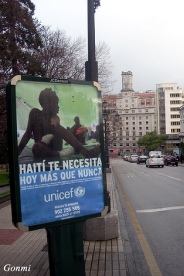
Haiti: Not Back, Not Better

Photo by: Gonmi | Flickr | Creative Commons License

Photo by: Gonmi | Flickr | Creative Commons License

The third anniversary of the devastating earthquake in Haiti has passed with no sign of either serious reconstruction or progress toward improving democratic institutions.About three-quarters of the earthquake rubble has been removed, and several hundred thousand individuals have been moved to temporary shelters and some back into permanent housing. A light-industrial park in northern Haiti is providing jobs to some 1,300 workers. The U.S. Government alone has committed over $3.6 billion toward relief, recovery, and reconstruction, of which $2.5 billion has been disbursed as of September 30, 2012. Despite these billions, the infrastructure remains a shambles; the economy is weak; unemployment is around 40 percent; and the World Food Program estimates that 6.7 million people (out of a population of 10 million) are “food insecure.”

Progress in political affairs has also been slow, and incumbent leaders remain reluctant to commit to elections. The head of MINUSTAH, Chilean diplomat Mariano Fernández, last week reiterated calls for the Haitian government to hold legislative and local elections that were supposed to have been held a year ago. He said an agreement reached last month by President Michel Martelly and members of parliament to form a semi-permanent electoral council to stage elections for one-third of the 30-seat senate and local mayors was “an important first step.” The U.S. Assistant Secretary of State for Democracy, Human Rights and Labor, Michael Posner, also tried to emphasize the positive during a recent visit to Port-au-Prince, but noted “there is a lack of faith in the system, the sense that the rule of law is not respected, that institutions like the judiciary and the police and the prisons and the prosecutors are not doing the job adequately, and that the government isn’t living up to expectations.”

The Obama Administration’s pledge to “build back better” may have been slightly bold from the start, but one of the objectives – to use the crisis to drive some reforms in both the Haitian government and how international programs are implemented – was indeed within reach. The business-as-usual approach since the earthquake has led to the loss of a historic opportunity to move the country forward. While the Haitian political class continues to focus on its internecine struggles, the international community has funneled its vast funds to its own NGOs, most of which operate outside a master strategy and far from the political and bureaucratic authorities nominally in charge of overseeing and coordinating their programs. Real progress is unlikely until both local and outside players develop a shared vision for the future – hopefully before another natural disaster pushes the reset button again.

Central American Elites Are Evolving But Cling to Power

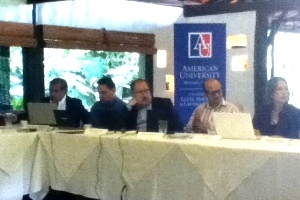
From left to right: Manuel Torres, Ricardo Barrientos, Hugo Noé Pino, Aaron Schneider and Elizabeth Oglesby participating in the project seminar in Costa Rica

From left to right: Manuel Torres, Ricardo Barrientos, Hugo Noé Pino, Aaron Schneider and Elizabeth Oglesby participating in the project seminar in Costa Rica

The sources of Central American elites’ wealth are evolving, as are their fundamental interests and the ways they wield political power.  Land‑intensive production – the focus of decades of insightful scholarship – continues to prevail in Guatemala and Honduras, but the economically powerful now maintain their position through a growing array of service-sector activities and by capturing rents from public coffers.  Changes in their economic foundations are but one of several transformative processes that swept the region beginning during the 1980s, making the past three decades a period of fundamental rupture with the past.

  • Civil wars in El Salvador, Guatemala and Nicaragua during the 1980s transformed the economies in all three countries and had spillover effects in Costa Rica and Honduras.  Most striking is the case of El Salvador, where elites abandoned the countryside upon which they had depended from time immemorial, never to return.
  • Structural adjustment programs, implemented throughout the region during the 1990s, changed the role of the state in Central American economies and thus the ways in which the public sector intersected with the elites’ wealth-accumulation strategies.  Hasty and corruption-ridden privatizations, in particular of energy and telecommunications and of an array of public services, created a reformist façade but gave private-sector groups a piñata that helped to ensure uninterrupted enrichment.
  • During that same decade, transitions to electoral democracy contributed to elite reliance – albeit with some important exceptions – on political parties, campaign strategies and legislative lobbying to protect their interests.  Ties to military and death squad enforcers are no longer the principal vehicles for the enforcement of elite imperatives, though Honduras today is increasingly reminiscent of the worst times in Guatemala and El Salvador.

Central America’s elites have yet to offer the region a vision of reform that will enable the isthmus to overcome misery, exploitation and predatory rule.  While dominant groups have embarked on aggressive state-building strategies, experts question whether these are producing the virtuous dynamics that advance the general welfare of the population and ensure effective governance. 

Scholars from across Central America have reached these conclusions through research and seminars under a multi-year AU program on Central American elites and power.  To foster better understanding of the shifting landscape in the region, and thus to illuminate plausible paths toward more equitable distribution of power and resources, the Ford Foundation is supporting this effort, undertaken in partnership with more than two dozen researchers from institutions throughout the isthmus and the United States.  The project was the focus of a recent workshop at FLACSO Costa Rica, and several publications will result over the course of 2013 and 2014.  Click here for more information.

Political Participation in Latin America Expanding

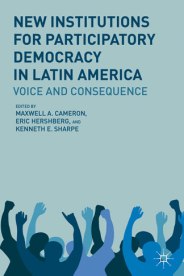
participatory democracy coverFrom local citizen initiatives to national referenda, mechanisms of direct political participation have been spreading with astonishing vigor throughout Latin America in recent years. Some of these mechanisms are new and unprecedented in the way they involve citizens in politics, such as frequently touted participatory budgeting systems at the municipal level in numerous countries.  Other initiatives, such as the National Policy Conferences that consult the citizenry regarding an array of issues in Brazil, are less widely known. In most Andean countries and to some extent elsewhere, these forms of participation often emerge where established representative institutions, such as party systems, have collapsed, or where legislatures have fallen into disrepute.  Yet they also proliferate alongside strong parties, legislatures, and interest associations, as we see in Brazil and Uruguay.

A recent CLALS-sponsored book* examines these new forms of participation and analyzes when they promote, and when not, the consolidation and deepening of representative institutions. The participatory innovations vary along a number of key dimensions, including how they interact with political parties and established institutions, their focus on collective versus individual rights and, perhaps most importantly, their autonomy from political and economic elites.  These differences and their implications are analyzed in detail in case studies on seven Latin American countries: Bolivia, Brazil, El Salvador, Mexico, Nicaragua, Uruguay and Venezuela.

When new forms of political participation emerge spontaneously and independently – as a natural reaction to an unfulfilled need at a local or national level – their voices are authentic and tend to enhance democratic rule.  Brazil’s National Policy Conferences and Uruguay’s referenda to enhance accountability are examples of the incorporation of new voices in policy formulation – to the benefit of the constituencies driving them and the nation as a whole.  We also find instances where participation has exacerbated and reinforced longstanding patterns of clientelism (including in Mexico and Brazil), and autocratic leaders have sought to create or capture such voices to bypass representative institutions (including in Nicaragua and Venezuela).  A valuable lesson of this research, however, is that, once in place, these spaces may become increasingly autonomous. Venezuela’s community councils are an important case to watch: created to reinforce the Chavista project as defined by the Casa Rosada, they may take on a life of their own when the politicians who sponsored them relinquish their positions of power or pass away.

New Institutions of Participatory Democracy: Voice and Consequence, published by Palgrave Macmillan 2012, resulted from a multi-year project co-organized by CLALS and the University of British Columbia’s Andean Democracy Research Network.  More information on the project can be found here .  (The volume has also been published in Spanish by FLACSO-Mexico, Nuevas instituciones de democracia participativa en América Latina: la voz y sus consecuencias)

Impasse in U.S.-Cuba Relations Enters 54th Year

Three American University professors recently traveled to Cuba for research and discussions on Cuba’s reform process – called “Updating Socialism” – and the island’s relations with the United States.  Today’s entry looks at the bilateral relationship.

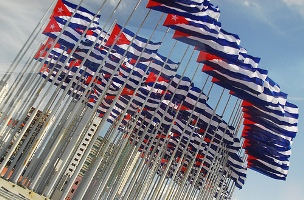
Flags in front of U.S. Interests in Malecón.  By: Luiza Leite "Luiza" | Flickr | Creative Commons

Flags in front of U.S. Interests in Malecón. By: Luiza Leite “Luiza” | Flickr | Creative Commons

U.S. and Cuban experts at a conference in Havana in December observed that, despite important areas of mutual interest, the Obama Administration has so far shown little inclination to accept a dialogue.  Some experts opined that the imprisonment of USAID contractor Alan Gross has become a convenient excuse for Obama to avoid any serious engagement.

Other key points:

  • There is no effective political channel for resolving bilateral problems – indeed, no contacts at all at political levels.  The Interests Sections in each other’s capitals handle routine matters, but Washington has rejected Cuban requests to continue semi-annual migration talks.  Cuba gave the United States a proposal for resolving the Gross situation, which the State Department has not even acknowledged receiving.
  • In addition to reiterating longstanding frustration that U.S. policy is stuck in the regime-change mode forged by President George W. Bush, Cuban experts lamented that many Americans latch onto every challenge Cuba faces – such as whether the passing of Venezuelan President Chávez will lead to reductions in oil supplies – as evidence that the Cuban government will “collapse” and therefore that dialogue with it would be foolish.
  • Cuban rhetoric espousing the swap of the “Cuban Five” for USAID contractor Alan Gross has fueled powerful political expectations in Cuba, but Havana’s bottom line on the elements of a humanitarian release is far from clear.  Experts from both countries are perplexed that Washington will not have a dialogue at any level to discuss whether a deal is possible.
  • Many Cuban and American experts believe that one incentive for the United States to improve relations is to rebuild its image in Latin America.  But they note – ruefully – that Latin American does not seem to be a priority for the Obama Administration anyway.

The Gross situation is merely the most recent of a long string of issues blamed for the dysfunctional relationship.  The real causes of the impasse at this point are whether Washington can shift away from policies and well-funded programs fashioned to achieve regime change in Cuba, and whether the two governments can manage the influence that both have given ultra-conservatives unprepared to broach compromise – be it Cubans opposed to releasing Alan Gross while four of the “Cuban Five” remain in U.S. jail, or Cuban-Americans benefiting from the sort of regime-change operations that Gross was conducting.  The lack of a reliable channel for political leaders above both bureaucracies to talk creates the risk of manageable problems spinning out of control, to the detriment of both countries’ interests.

Cuba: Change in the Wind

Three American University professors recently traveled to Cuba for research and discussions on Cuba’s reform process – called “Updating Socialism” – and the island’s relations with the United States.  Today’s entry looks at the economic changes.

Photo by: Globovisión | Flickr | Creative Commons

Photo by: Globovisión | Flickr | Creative Commons

In offices, shops and on the street in Havana, “change” seems to be one of the most commonly used words.  Billboards proclaim “The changes in Cuba are for more socialism” and “Updating socialism is the answer.”  But the words “reform” and – in some conversations – “privatization” pop up with significant frequency.  Party members previously reluctant to talk about change now speak of introducing “elements of capitalism” to make Cuba a “mixed economy” patterned closely after the “Vietnam model,” with its economic loosening but one-party rule.  Previous reforms have brought better, if sometimes expensive, food to many Cuban dinner tables, but the strong consensus in and outside the party is that a lot more needs to be done.

  • The law-decree on “non-agricultural cooperatives” provides a politically correct way ahead for the formation of small and medium private enterprises.  Cuentapropistas were given a prominent place in the May Day parade, and some are being nominated for office on the Communist Party slate.
  • The government is making another run at tearing down the barriers between hard-currency and peso purchases, with an eye to unifying the currency in the future.  Price tags at at least one major Havana store list prices in both convertible and national currency, at a 23-to-one conversion rate.
  • The law already allows Cubans to hire workers – a right previously given only to the state – and a draft labor law will further legalize private workers’ activities and integrate them into the economy.
  • Some 200-plus state enterprises are being put on a sink-or-swim program in which new management selected by the workers will be given a year to transform the firms into businesses closely resembling private cooperatives.
  • In January, the National Assembly will take up amendments to foreign investment laws.  Under consideration are direct foreign sales to non-state cooperatives and the direct hiring, firing, and paying of Cuban workers by foreign companies.
  • The travel reform law that goes into effect on January 14, ending the necessity for an exit visa and removing restraints on most Cubans from obtaining a passport, will also stimulate interaction with foreign countries.

The macro situation is still a mess, and the reforms have a long way to go to attain even the level of Vietnam’s prosperity.  Cuban stores sell Vietnamese cookies, not vice versa.  As the rhetoric indicates, the government – long expert at managing popular expectations – continues to emphasize continuity as the changes proceed.  But while no one is expecting a fast shift to capitalism, many middle-aged and elderly Cubans have a renewed sense of hope that life ahead will be better, which has political benefits and risks for the government.  One thing for sure is that the socialism that is being “updated” is a far cry from the communism that Cuba attempted in the 60s, 70s and 80s.

Gay Rights Amidst Uneven Cultural Change

The lower chamber of Uruguay’s legislature passed a bill legalizing gay marriage on December 12 that is expected to sail through the Senate. The law, which polls show is supported by a majority of Uruguayans, comes just two months after the country legalized abortion.  Even for Uruguay, long seen as among Latin America’s most progressive and democratic countries, these measures represent a major shift in social attitudes.

MUMS Movimiento de la Diversidad Sexual | Flickr | Creative Commons

MUMS Movimiento de la Diversidad Sexual | Flickr | Creative Commons

Writing in the Journal of Democracy, Bard College political scientist Omar Encarnación argues that the 2005 legalization of gay marriage by Spain’s socialist government was a model for activists and legislators across Latin America. Transnational networks with ties in these cities have led the charge, using human rights language and gaining support from human rights organizations. Evidence in support of his argument is growing:  the city of Buenos Aires and later all of Argentina legalized gay marriage in 2002 and 2010 respectively, as did Mexico City, in 2012.  Where legislatures have not acted because of opposition from religious or other groups, activists have appealed to courts, earning recognition of important civil rights for gay couples in Brazil and Colombia. Progress in the ALBA countries, Chile, and Central America has been more limited still.  Honduras banned gay marriage in 2005. Discrimination, both legal and de facto, remains an issue.

The changes in Uruguay and elsewhere indicate the need for an updated map of Latin America that reflects widely differing approaches to social issues.  Secularism is an emergent force in global metropolises such as Mexico City, Buenos Aires, and São Paulo, and the Catholic Church’s dominant role in the region’s social policy and politics has diminished considerably.  But the decline in the Catholic Church’s power to block gay rights does not mean a continued shift in social norms is inevitable.  Evangelical faiths have exploded in parts of the continent, many of them even more conservative than the Catholic Church in opposing gay rights. Moreover, in countries that lack the strong transnational human rights networks of Argentina and Colombia, activists have fewer tools at their disposal.

Top Five Events of 2012

A poll of contributors to AULABLOG identified the following five events (listed below in no particular order) as the most important in Latin America in 2012.  We welcome you to post your own list using the Leave a Comment link below.

By: Matt Westgate "Mettamatt" | Flickr | Creative Commons

By: Matt Westgate “Mettamatt” | Flickr | Creative Commons

Venezuelan President Hugo Chavez’s third major cancer surgery signaled that change – probably profound – will come to Venezuela much faster than his presidential campaign let on.  We expect growing tensions among his aides, none of whom has his charisma or base, as they jockey in a succession scenario.  We’ll be watching whether the PSUV can become an institutionalized mechanism for channeling Chavismo’s support into a governing project in the post-Chavez era.

The election and inauguration of Mexican President Enrique Peña Nieto signals a natural swing back to PRI leadership after 12 years of PAN governments.  Differences over the approach to counternarcotics might flare up in an overall smooth relationship with the United States, but the new president’s biggest challenge is going to be overcoming the persistent economic backwardness that has kept Mexico from achieving the economic growth of others since the turn of the century.

The ouster of Paraguayan President Fernando Lugo last June – as well as the United States and Latin America’s ambivalent reaction to it – was a dramatic illustration that democracy in the region rests on a tenuous foundation of sometimes contradictory constitutions and weak institutions.  The continuing struggle of Honduran President Pepe Lobo, three-plus years after the coup that removed President Mel Zelaya, shows that failure to bring those whose power grabs violate laws and the spirit of law to account sows the seeds of long-term instability and even greater threats to democracy.

The Colombian peace talks, the first serious attempt in 10 years at resolving the decades-old conflict, could lead to a watershed in that country’s development.  President Juan Manuel Santos has shown strong leadership, despite incessant carping from his predecessor, Alvaro Uribe, and has smartly acknowledged that success in the talks is far from certain.  If the talks are successful, 2013 could be a defining moment for a country already experiencing strong economic growth and an important degree of social progress.

Washington continued to sit on the sidelines on most regional issues.  President Obama got a spanking at the Summit of Americas from even perennially friendly governments for Washington’s approach to counternarcotics (overly militarized) and Cuba (stuck in the Cold War).  He was silent on Latin America during the campaign, and his rhetoric of “partnership” and “neighborhood” remained unfulfilled.  Although the President won kudos for implementing elements of the Dream Act by Presidential Directive, the Administration boasted of deporting more than 400,000 illegal immigrants in 2012, the most of any year in the nation’s history.  The region is likely to remain eager for U.S. leadership on issues of mutual interest in 2013, but most countries’ blossoming dealings with Europe, Asia and even Africa suggest they’re not going to sit around waiting for the U.S. to take up the challenge.