Brazil’s Prison Violence Reflects Deeper Social Problem

By Andrew Johnson*

pinheiros_iii_05

An interim detention center in São Paulo, Brazil. / Rovena Rosa / Agência Brasil / Wikimedia / Creative Commons

It has been a horrific start to 2017 in the Brazilian prison system, and reversing the trend will take much more than increased public funding.  A wave of violence began on New Year’s Day when 56 inmates were killed during a riot inside of a penitentiary in Manaus.  A series of deadly inmate uprisings followed that massacre, bringing the number of inmates killed this month to 120.  Macabre images of inmates’ decapitated corpses strewn about prison yards captured on cellphone cameras and posted to the internet reminded Brazilians that overcrowding, a weak state presence, and institutionalized gang power have combined to make Brazilian prisons – with over 600,000 inmates – tinderboxes ready to ignite at almost any time.

  • During a year I spent conducting fieldwork inside jails and prisons in Rio de Janeiro for a book and documentary film in 2011, I saw inmates crammed into cells at three and four times their intended capacity. On the worst nights, men unable to find space on the floor or a concrete bunk tied their torsos to the steel gates with t-shirts and attempted to sleep while standing.
  • The Comando Vermelho and other gangs controlled entire cellblocks and used smuggled cell phones and strategic visitors to maintain regular contact with leadership. This communications capability and weapons caches inside the cellblocks enabled them to act as the de facto government. Prison guards knew that they were outgunned and outnumbered, and they knew their off-duty lives could be easily extinguished by an order initiated inside the prison.  January’s riots revealed how thin the veneer of state control really is inside.

Impassioned pleas, prompted by the riots, to reduce overcrowding and provide more resources to Brazil’s prison system are being launched in a time of austerity.  The Brazilian Senate recently approved legislation that could freeze public spending for the next 20 years.  Public investment would certainly reduce the likelihood of future riots, but the crisis in Brazil’s jails and penitentiaries is not caused simply by underfunding.  It is the result of decades of the state treating inmates, and the residents of the neighborhoods where most of them were born, as less than full citizens.  Pastor Antonio Carlos Costa, leader of the human rights organization Rio de Paz, told me the state and public’s reactions to the many thousands killed by the police and hundreds murdered in prisons each year were limited because “they are poor people, people with dark skin, people considered killable.  These are deaths that don’t shock us, they don’t make the Brazilian cry.”

There is no excuse or justifiable defense for the inmates involved in the 120 murders that occurred inside Brazilian prisons this month.  It was an inhumane slaughter propelled by gangs, greed, and a power grab.  But the solution to Brazil’s profoundly troubled prison system lies much deeper than increasing public spending or reducing overcrowding.  Refusing to treat people as killable, gang-affiliated or not, is a goal that may take decades and will require a commitment that is much costlier than any public spending intervention or new legislation.  Laws protecting human rights would have to be enforced for all Brazilians, including prisoners.  Law abiding middle and upper-class citizens would have to push back and no longer tolerate some of the world’s highest murder rates and jails where 80 men squeeze into a cell built for 20.  Transformation this profound would be a difficult message to sell on the campaign trail, but anything less than that sort of social and cultural change from the government and the public will fall short of fixing the deeply rooted problems with Brazil’s prison system.

January 27, 2017

*Andrew Johnson is a Research Associate with the Center for Religion and Civic Culture’s Religious Competition and Creative Innovation (RCCI) initiative at the University of Southern California.

Prospects Dim for Better U.S.-Venezuela Relations under Trump

By Timothy M. Gill*

maduro-tillerson-face-off

Venezuelan President Nicolás Maduro and U.S. President Trump’s nominee for Secretary of State, Rex Tillerson. Tillerson’s past dealings with Venezuela may lead to increased tensions between the two countries. / President of Russia website / Creative Commons / William Muñoz / Flickr / Creative Commons / Modified

U.S. President Donald Trump and his foreign policy team have expressed similar criticisms of the Venezuelan government and, while giving off contradictory policy signals, appear headed toward a policy focused on sanctions rather than continuing the dialogue that the Obama administration recently opened with its counterpart in Caracas.  As the U.S. Senate continues its confirmation hearings of Trump nominees, Latin America has featured very little in the discussion thus far, but passing mentions of the region suggest greater consensus among the Trump team than on other issues such as the threat of Russia and the Iran nuclear agreement.

  • In September, Trump expressed support for the Venezuelan opposition. He asserted that he will “stand in solidarity with all people oppressed in our hemisphere … [and] with the oppressed people of Venezuela yearning to be free.”  He blamed “the socialists” for running Venezuela “into the ground.”  He has also recently shown interest in the cases of Antonio Ledezma and Leopoldo López, two opposition leaders that respectively remain under house arrest and in a Venezuelan prison.
  • Several of Trump’s cabinet selections also seemingly harbor animosity toward the Venezuelan government. ExxonMobil CEO Rex Tillerson, nominated to be Secretary of State, concluded a case against the Venezuelan government in an international court in 2014 involving the expropriation of his company’s facilities.  Venezuelan President Maduro accused ExxonMobil of inciting conflict between Venezuela and Guyana when it announced that it would work with the Guyanese government to drill oil in an area that both countries claim.  General Michael Flynn, Trump’s pick for national security adviser, has included Venezuela (and Cuba) in the “enemy alliance” that the United States faces “in a global war.”  General John Kelly, Secretary of Homeland Security, has condemned the Venezuelan government for its alleged involvement in drug trafficking.

While the Trump team is obviously unhappy with Caracas, their statements so far shed little light on what they’ll concretely do differently from the Obama Administration.  Obama designated the Venezuelan government “an unusual and extraordinary threat” to the national security of the U.S. in 2015 and sanctioned a handful of state security leaders.  But there has also been renewed interest in recent months on the part of both governments to dialogue.  In late 2016, Maduro met with former U.S. Secretary of State John Kerry and Under Secretary Tom Shannon.  Despite disparaging Trump during the campaign season, Maduro extended his congratulations to him on November 9, and publicly reiterated his hope for better relations.  On January 16, Maduro stated that he was “surprised at the brutal hate campaign against Donald Trump,” and he welcomed the Trump administration, saying that Trump “won’t be worse than Obama.”

Aggressive rhetoric from Trump is a given, but his true position on Venezuela – as well as many other countries – is not entirely clear.  Businessman Trump undoubtedly grasps that strategic relations are founded on Venezuela’s role among the United States top five international suppliers of crude.  He has at times been dismissive of the concept of “democracy promotion,” which drives much of Washington’s advocacy in places like Venezuela.  He shows a penchant, however, for the sort of double-standard that most irks Latin America – criticizing Cuba and Venezuela’s political systems but praising Kazakhstan and Russia.  Moreover, he may be tempted to throw a sop to U.S. politicians who have led the effort to impose sanctions on the Venezuelan government.  During Tillerson’s confirmation hearing in the U.S. Senate, Senator Marco Rubio – with whom Trump had bitter exchanges during their party’s primaries last year – made criticisms suggesting continuing tensions, but Venezuela would be an easy issue for Trump to throw Rubio’s way as a peace offering to the lawmaker from Miami.  Indeed, while it’s far too early to make concrete predictions, it seems safe to say that Obama’s late-game efforts to reset the relationship with Venezuela will not continue under the new Administration – and we might expect Trump to more intensively target the Venezuelan government in the coming years.

January 23, 2017

*Timothy M. Gill is a post-doctoral fellow at the Center for Inter-American Policy Research at Tulane University.

Deciding Asylum: Challenges Remain As Claims Soar

By Dennis Stinchcomb and Eric Hershberg

asylum-blog-graph

Graphic credit: Nadwa Mossaad / Figure 3, “Refugees and Asylees 2015” / Annual Flow Report, November 2016 / Office of Immigration Statistics, Department of Homeland Security

The exodus of children and women from the three countries of Central America’s Northern Triangle – El Salvador, Honduras, and Guatemala – is accelerating, but information gaps and institutional flaws are obstructing asylees’ access to legal protections and hindering equitable decision-making on their claims in the United States.  The United Nations has recorded a nearly five-fold increase in Northern Triangle citizens seeking asylum in the United States since 2008, a trend driven largely but not exclusively by a spike in child applicants.

  • Legal scholars agree that high-quality, verifiable data on forms of persecution experienced by migrants in their home countries better equip attorneys to establish legitimate asylum claims and inform the life-transforming decisions by U.S. immigration judges and asylum officers.  Accumulating evidence also indicates that deeper systemic challenges to transparent, unbiased processing and adjudication of asylum claims remain, with grave consequences for the wellbeing of Central American migrants with just claims for protection under international and U.S. law.

In a December hearing before the Inter-American Commission for Human Rights (IACHR), advocates presented immigration court data from U.S. jurisdictions dubbed “asylum-free zones” – large swaths of the map where low asylum approval rates prevail.  In Atlanta, Georgia, for example, U.S. government data show that 98 percent of asylum claims were denied in Fiscal Year 2015; in Charlotte, North Carolina, 87 percent were rejected – far above the national average of 48 percent.  The month before, the highly respected U.S. Government Accountability Office (GAO) issued a scathing report, citing variations in application outcomes across immigration courts and judges.  (See full report for details.)  Attorneys and advocates refer to this phenomenon as “refugee roulette,” an arbitrary adjudication process further complicated by the fact that many asylees’ fate is determined by Customs and Border Protection (CBP) officers who function as gatekeepers to the asylum system.  Border Patrol is an increasingly militarized cadre of frontline security officers whose members took the remarkable and unprecedented decision to publicly endorse the presidential candidacy of Donald Trump.

Accurate information on the conditions asylees face in their native countries is fundamental to getting fair treatment in the United States.  The barriers to due process and disparities in asylum outcomes have long been sources of concern, and the systemic flaws – and politicization of CBP processes – raise troubling questions about screener objectivity and the degree to which prevailing U.S. screening procedures conform to international norms.  That asylum claims made by many Central Americans are first considered by officers of institutions whose primary responsibility is to deport undocumented persons, rather than to protect refugees, signals a glaring misallocation of responsibilities.  The U.S. failure to accurately and efficiently adjudicate claims at all levels of the discretionary chain – from frontline officers to immigration judges – also undermines efforts to promote fair treatment of intending migrants elsewhere in the hemisphere.  Mexico’s overburdened refugee agency COMAR, for example, continues to struggle to provide requisite protections, even while reporting a 9 percent increase in applications each month since the beginning of 2015.  Meanwhile, the UN reports steady increases in applications in Belize, Nicaragua, Costa Rica, and Panama.  Citizens of the Northern Triangle states who have legitimate grounds for seeking protection as refugees stand the most to lose, but the consequences of institutional failure in the U.S. and neighboring countries’ asylum systems reverberate beyond individuals and families.  With virtually no government programs to reintegrate deported migrants, growing numbers of displaced refugees returned to Northern Triangle countries ill-equipped to receive and protect them will further complicate efforts to address root causes of migration throughout the region.

January 19, 2017

A workshop on Country Conditions in Central America & Asylum Decision-Making, hosted by CLALS and the Washington College of Law, with support from the National Science Foundation, examined how social science research on conditions in El Salvador, Guatemala, and Honduras can assist in bridging the gap between complex forms of persecution in the region and the strict requirements of refugee law.

This material is based upon work supported by the National Science Foundation under Grant No. 1642539. Any opinions, findings, and conclusions or recommendations expressed in this material are those of the authors and do not necessarily reflect the views of the National Science Foundation.

Intense Electoral Year in Latin America

By Carlos Malamud*

16792672892_a08a2fbd6d_k

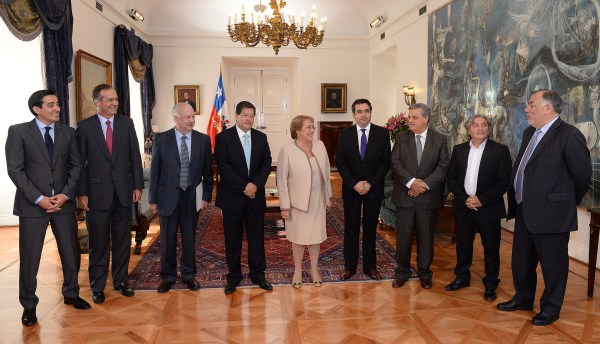
Chilean President Michelle Bachelet with the leaders of her coalition, Nueva Mayoría. The Chilean presidential election of 2017 will determine the legacy of the Nueva Mayoría. / Gobierno de Chile / Flickr / Creative Commons

The new year will be an intense one for Latin American elections.  Although perhaps not as important as those taking place in 2018, this year’s elections will have a significant impact on the countries holding them and, in some cases, the region as a whole.

  • In Ecuador’s presidential and legislative elections on February 19, the PAIS Alliance will run a slate of nominees for the first time without Rafael Correa heading its slate. The President said he’s stepping down for family reasons, but Ecuador’s economic problems, aggravated by the decline in oil prices, apparently convinced him to seal his legacy on a high note now rather than end his time in office in defeat.  The party’s presidential candidate, former Vice President Lenin Moreno, has a 10-point lead in polls over his closest competitor and has the advantage of facing an opposition divided among seven candidates, but his leadership remains uncertain.
  • In Mexico, the state governors of México, Nayarit, and Coahuila and mayor of Veracruz are up for election on June 4. The race in México state will measure the popular backing of the four parties in contention – PRI, PAN, PRD, and López Obrador’s new Movimiento Regeneración Nacional (Morena) – in the 2018 presidential election.  The older parties will begin to weed out the weaker pre-candidates.
  • Elections for half of the Argentine Congress and a third of its Senate in October will define the second half of President Mauricio Macri’s presidency. The government is confident that economic recovery will strengthen its election prospects.  A weak showing will strengthen the Peronista opposition and complicate Macri’s agenda.  The Peronistas are currently divided into three big factions – that of Sergio Massa; the “orthodox” wing headed by some provincial governors, and corruption-plagued Kircherismo grouping headed by former President Cristina Fernández.  Open, simultaneous, and obligatory primaries (known by the Spanish acronym PASO) in August will be an important test for all.
  • Chile will elect a successor to President Michelle Bachelet on November 19. Primaries in July will reveal whether the country’s two big coalitions – the center-left (including the President’s Nueva Mayoría) and the center-right – are holding, as well as the presidential candidates’ identity.  The names of former Presidents Sebastián Piñera and Ricardo Lagos are in the air, but it’s too early to know how things will play out in the environment of growing popular disaffection with politics and politicians.
  • Honduras will hold elections on November 26. Due to a Supreme Court decision permitting reelection, incumbent President Juan Orlando Hernández could face a challenge from ex-President Manuel “Mel” Zelaya, who was removed from office by the Army in June 2009, running as head of the Libertad y Refundación (Libre) Party.
  • Also in November, Bolivia will elect members of various high courts, including the Constitutional, Supreme, and Agro-Environmental Tribunals and the Magistracy Council. These elections will reveal the support President Evo Morales will have as he tries to reform the Constitution to allow himself to run for yet another term in office.

These elections in 2017 have a heavy national component but will shed light on the region’s future direction.  The success or failure of the populist projects in Ecuador and Honduras, or of President Bachelet’s Nueva Mayoría in Chile, will tell us where we are and, above all, help us discern where we’re headed.

January 17, 2017

*Carlos Malamud is Senior Analyst for Latin America at the Elcano Royal Institute, and Professor of Latin American History at the Universidad Nacional de Educación a Distancia (UNED), Madrid.  This article was originally published in Infolatam.

What Will Trump Do About NAFTA?

By Malcolm Fairbrother*

trump-nafta

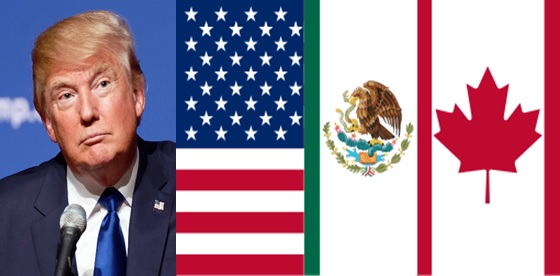
U.S. President-elect Donald Trump and the flag of the North American Free Trade Agreement (NAFTA). / Flickr and Wikimedia / Creative Commons / Modified

Despite his campaign rhetoric repeatedly attacking the North American Free Trade Agreement, U.S. President-elect Donald Trump probably won’t touch it, except in superficial ways.  He has called NAFTA the “worst trade deal ever,” and promised to pull the U.S. out unless Mexico and Canada agree to renegotiate it.  Last week, he suggested renegotiation of NAFTA will include provisions for Mexico to repay the U.S. government for the wall he wants to build along the border.

Dismantling or even significantly rewriting the accord is unlikely for a couple reasons:

  • First, the billionaires, chief executives, and friends he is choosing for his cabinet are hardly people inclined to dismantle an agreement whose contents largely reflect what American business wanted from the U.S.-Mexico relationship when NAFTA was being negotiated in the early 1990s. Corporate preferences weighed heavily against any big deviation from the status quo after the last political transition in Washington, in 2008.  Barack Obama too said that “NAFTA was a mistake,” though his criticisms were a little different.  He railed against lobbyists’ disproportionate influence over trade policy, and promised big changes to international trade agreements, including better protections for workers and the environment.  Even so, he didn’t touch NAFTA, and the Transatlantic Trade and Investment Partnership (TTIP) and the Trans-Pacific Partnership (TPP) he negotiated included – like NAFTA – shady provisions for investor-state dispute settlement.
  • It would be near-impossible, or least massively expensive, to get what Trump seems to want most: a big drop in imports from Mexico. In his eyes this would make NAFTA a better deal for America, though of course serious economists disagree.  Realistically, reopening the agreement would be very messy, and if he tried to throw up massive new trade barriers business leaders would strongly object.  NAFTA could include some additional measures to make it easier for goods and/or people to get around among the NAFTA countries, but that’s not what Trump has promised.

His economic nationalism makes the Republican Party establishment squirm, but it’s clear it also helped Trump win several Midwestern states, tipping the electoral college in his favor.  Insofar as agreements like NAFTA entrench rules friendly to business, and generate market efficiencies and economies whose benefits accumulate in the hands of the few, voter hostility is no mystery.  But economics is only part of the reason.  The bigger issue is what the backlash against globalization – embodied also by Brexit and the rise of neo-nationalist parties in Europe – means more broadly.  The average Democratic voter has a lower income than the average Republican voter, but Democrats are more supportive of trade agreements because they are more internationalist, more open to other cultures, younger, more educated, and more urban.  Throughout his presidency, Trump will therefore be squeezed between his working class rhetoric – appealing to the distrustful – and his business class milieu.  He is an extreme case of the politicians’ mercantilist thinking on trade, wherein exports are good and imports are bad, and “trade deals” like NAFTA are somehow like deals in the business world, where it’s possible to out-negotiate someone.  The reality is that this thinking – which flies in the face of basic economics – doesn’t point to any clear course of action.  This is why Trump won’t actually do much about NAFTA.

January 10, 2017

* Malcolm Fairbrother is social science researcher and teacher/mentor in the School of Geographical Sciences at the University of Bristol (UK).  This article is adapted from a recent blog post for the American Sociological Association.

2017: Happy New Year in Latin America?

By Eric Hershberg and Fulton Armstrong

posse_de_michel_temer_3

Brazilian President Michel Temer surrounded by members of his party in mid-2016. His government will continue to face questions of legitimacy in 2017. / Valter Campanato / Agência Brasil / Wikimedia / Creative Commons

The year 2016 laid down a series of challenges for Latin America in the new year – not the least of which will be adapting to a radically different administration in Washington.  Last year saw some important achievements, including an elusive peace agreement in Colombia ending the region’s oldest insurgency.  Several countries shifted politically, eroding the “pink tide” that affected much of the region over the past decade or so, but the durability and legitimacy of the ensuing administrations will hinge on their capacity to achieve policy successes that improve the well-being of the citizenry.  The legitimacy of Brazil’s change of government remains highly contested.  Except in Venezuela, where President Maduro clung to power by an ever-fraying thread, the left-leaning ALBA countries remained largely stable, but the hollowing out of democratic institutions in those settings is a cause for legitimate concern.  Across Latin America and the Caribbean, internal challenges, uncertainties in the world economy, and potentially large shifts in U.S. policy make straight-line predictions for 2017 risky.

  • Latin America’s two largest countries are in a tailspin. The full impact of Brazil’s political and economic crises has yet to be fully felt in and outside the country.  President Dilma’s impeachment and continuing revelations of corruption among the new ruling party and its allies have left the continent’s biggest country badly damaged, with profound implications that extend well beyond its borders.  Mexican President Peña Nieto saw his authority steadily diminish throughout the course of the past year, unable to deal with (and by some accounts complicit in) the most fundamental issues of violence, such as the disappearance of 43 students in 2014.  The reform agenda he promised has fizzled, and looking ahead he faces a long period as a lame duck – elections are not scheduled until mid-2018.
  • The “Northern Triangle” of Central America lurches from crisis to crisis. As violence and crime tears his country apart, Honduran President Hernández has devoted his energies to legalizing his efforts to gain a second term as president.  Guatemala’s successful experiment channeling international expertise into strengthening its judicial system’s ability to investigate and prosecute corrupt officials is threatened by a weakening of political resolve to make it work, as elites push back while civil society has lost the momentum that enabled it to bring down the government of President Pérez Molina in 2015.  El Salvador, which has witnessed modest strides forward in dealing with its profound corruption problems, remains wracked with violence, plagued by economic stagnation, and bereft of decisive leadership.
  • Venezuela stands alone in the depth of its regime-threatening crisis, from which the path back to stability and prosperity is neither apparent nor likely. The election of right-leaning governments in Argentina (in late 2015) and Peru (in mid-2016) – with Presidents Macri and Kuczynski – has given rise to expectations of reforms and prosperity, but it’s unclear whether their policies will deliver the sort of change people sought.  Bolivian President Morales, Ecuadoran President Correa, and Nicaraguan President Ortega have satisfied some important popular needs, but they have arrayed the levers of power to thwart opposition challenges and weakened democratic institutional mechanisms.
  • As Cuban President Raúl Castro begins his final year in office next month, the credibility of his government and his successors – who still remain largely in the shadows – will depend in part on whether the party’s hesitant, partial economic reforms manage to overcome persistent stagnation and dissuade the country’s most promising professionals from leaving the island. Haiti’s President-elect Jovenel Moise will take office on February 7 after winning a convincing 55 percent of the vote, but there’s no indication he will be any different from his ineffective predecessors.

However voluble the region’s internal challenges – and how uncertain external demand for Latin American commodities and the interest rates applied to Latin American debt – the policies of incoming U.S. President Donald Trump introduce the greatest unknown variables into any scenarios for 2017.  In the last couple years, President Obama began fulfilling his promise at the 2009 Summit of the Americas in Trinidad and Tobago to “be there as a friend and partner” and seek “engagement … that is based on mutual respect and equality.”  His opening to Cuba was an eloquent expression of the U.S. disposition to update its policies toward the whole region, even while it was not always reflected in its approach to political dynamics in specific Latin American countries.

 Trump’s rhetoric, in contrast, has already undermined efforts to rebuild the image of the United States and convince Latin Americans of the sincerity of Washington’s desire for partnership.  His rejection of the Trans-Pacific Partnership – more categorical than losing candidate Hillary Clinton’s cautious words of skepticism about the accord – has already closed one possible path toward deepened ties with some of the region’s leading, market-oriented economies.  His threat to deport millions of undocumented migrants back to Mexico and Central America, where there is undoubtedly no capacity to handle a large number of returnees, has struck fear in the hearts of vulnerable communities and governments.  The region has survived previous periods of U.S. neglect and aggression in the past, and its strengthened ties with Asia and Europe will help cushion any impacts of shifts in U.S. engagement.  But the now-threatened vision of cooperation has arguably helped drive change of benefit to all.  Insofar as Washington changes gears and Latin Americans throw up their hands in dismay, the region will be thrust into the dilemma of trying to adjust yet again or to set off on its own course as ALBA and others have long espoused.

 January 4, 2017

Local Ownership in Peacebuilding, Colombian style

By Angelika Rettberg*

30182229095_5b894a1d05_k

“Colombian peace is our American peace.” / urban_lenny / Flickr / Creative Commons

Amid the increased political juggling in Colombia as the government’s peace deal with the Fuerzas Armadas Revolucionarias de Colombia (FARC) has advanced, one key lesson is that the nature of “local ownership” will have an impact on its success or failure. After the razor-thin victory of the agreement’s opponents in the referendum on October 2 propelled the country into uncertainty, its proponents – buttressed by the informal deadline created by the Nobel Peace Prize being awarded to President Juan Manuel Santos on December 10 – tried a different track. Instead of calling for a new referendum, as many expected, the government appears to have learned its lesson about the perils of direct democracy and sent the new agreement to Congress, where it was approved by an undisputed majority in both houses. A Constitutional Court ruling on December 13 gave Congress fast-track authority to approve required changes in the law, paving the way for implementation. Meanwhile, FARC fighters have begun moving toward the more than 20 camps in which complete disarmament is expected to conclude by June 2017.

The country’s shifting approach to the accord has been caused by uneven local ownership. As scholars and practitioners alike underscore, broad participation in transitional countries must be involved in order to achieve sustainable peace. To avoid difficulties such as those experienced by Guatemala, where many felt the agreement was imposed by international actors, societies need to feel that agreements and the resulting commitments have been developed bottom-up, or at least with domestic actors. The Colombian process was touted as one “by Colombians for Colombians.” International participation was intentionally kept to a low profile and key players in the negotiations were all Colombians. But when the results of the October referendum temporarily pushed the country back to square one – “Nada está acordado” – it became clear that local ownership in this case had a broader meaning: Paradoxically, submitting the agreement to the popular will did not cause collective responsibility behind it to surge but rather gave a boost to people’s sense that they had the democratic right to reject the deal altogether. Similarly, despite the actions of Congress and the Constitutional Court, debate on how the agreement will be translated into action is taking place within and among the domestic institutions, including the Presidency, Congress, the courts, and several control organisms.

Colombia’s peace deal has powerfully posed the question not of whether to include popular opinion in peace deals, but how to do so in the most constructive way. The result will be very much a reflection of the Colombian people’s and their institutions’ capabilities to negotiate and establish priorities and to design policy accordingly. After all, peace is a public policy. The Colombian case thus holds many lessons for peacebuilding in general, and for the potential tensions and dilemmas needed to balance peace, majoritarian democracy, public opinion, and justice. The agreement itself may turn into a moving target as different sectors on all sides of the debate seek to steer implementation toward their interests. Regardless of what happens, the quality of “local ownership” will be central to determining the shapes and contents – and the durability – of Colombian peace.

December 22, 2016

* Angelika Rettberg is a Professor of Political Science at La Universidad de los Andes in Bogotá.

Cuba: Preparing for President Trump

By Fulton Armstrong

15859186069_103bf8055c_b

Photo credit: Day Donaldson / Flickr / Creative Commons

Cubans are already calibrating their expectations for relations with the United States under President Trump – hoping the normalization process does not unravel but preparing for a return to a sanctions-based policy from Washington.  Conversations in Havana reveal deep concern that the President-elect’s tweets and statements about Cuba, Mexico, and Latinos in the United States will translate into efforts to slow, stop, or reverse normalization.  The past two years of dialogue have focused on mutual interests, without ignoring remaining differences between capitals but not allowing them to blot out hopes of mutually beneficial cooperation.  Cuba will interpret a return to bombastic rhetoric, exaggerated conditions to reach a “deal,” and the pressure tactics of the pre-Obama era as a sign of U.S. willingness to put bullying a small neighbor eager for improved ties ahead of its own national interests.

Cubans present the stiff upper lip in conversations and, not surprisingly, defiantly note that they’ve already survived decades of U.S. pressure, but their disappointment is palpable.

  • Most concerned are entrepreneurs in Cuba’s small but growing private sector, who depend on investment from U.S.-based relatives and friends. More than 100 Cuban private businessmen wrote a letter to Trump last week urging restraint.
  • Nationalism has precluded Cubans from saying that normalization would be a major driver of their long-promised economic reforms, but few deny that improving ties with the United States would eventually present Havana important opportunities. U.S. retrenchment will remove important incentives for the government to move ahead with its reform strategy.
  • Rumors about tensions between Cuban proponents of normalization and conservative opponents may have some merit, but Cubans across the spectrum will close ranks if Trump gets aggressive.

Cuba’s reactions to Trump’s election, including President Raúl Castro’s congratulatory message to him, so far suggest that it will hold its tongue and resist being provoked.  A U.S. return to full-bore Cold War tactics would not pose an existential threat to Cuba, even considering the country’s difficulties dealing with unrelated problems such as the crisis in Venezuela.  Popular reactions to the passing of Fidel Castro last month are being construed as evidence of residual political legitimacy for the government and support for it to deliver on promised improvements.  Moreover, Cuba’s progress in normalization; its effective contribution to the Colombia peace accord; its new political dialogue and cooperation agreement with the European Union; and the recent Havana visit of Japanese Prime Minister Abe have boosted the country’s international image – and blame for collapse of normalization will surely fall solely upon the United States.  However difficult it will be for the proud people of Cuba to resist rising to whatever bait the Trump Administration throws its way, showing forbearance in the bilateral relationship and moving “without hurry but without pause,” as Raúl Castro said, with its national reform plan would protect the investment that Cuba has already made in normalization.

December 19, 2016

China, Latin America, and the New Globalization

By Andrés Serbin*

31128355276_da6ad8d3a0_k

Chinese President Xi Jinping received a medal of honor from the Peruvian Congress during his tour of South America last month, which included the Asian-Pacific Economic Cooperation summit in Lima. / Ministerio de Relaciones Exteriores, Peru / Flickr / Creative Commons

In Latin America and elsewhere, the world is undergoing tectonic movements that indicate the birth of a new world order with new rules of play.  For much of the past decade, dynamism in world commerce and finance has been shifting from the Atlantic basin to the Pacific.  While the international economy has shown fragility and the developed economies – particularly the European Union and the United States – have shown slow growth since the crisis of 2008, China and the emerging economies of the Asian-Pacific region have experienced sustained growth.  China, now the second biggest economy in the world, has been the driver of that growth and, according to most projections, is poised to overtake the United States as the biggest.  After several centuries in which power has been concentrated in the West, the emergence of new powers in a multi-polar world will naturally bring about changes in the norms and rules governing the international agenda.

In Latin America and other regions, there is growing awareness of this process – with China and its own version of globalization at its center.  The region has witnessed the paralysis of the Transatlantic Trade and Investment Partnership (TTIP) between the EU and the United States as well as U.S. President-elect Donald Trump’s declaration that he will withdraw the United States from the Trans-Pacific Partnership (TPP) as part of a broader anti-globalization policy.  Trump’s announcement drew two different reactions from participants from TPP country leaders at the Asian-Pacific Economic Cooperation summit in Lima late last month.  One was the express decision to proceed with TPP even without the United States, and the other was a clear receptivity to Chinese President Xi Jinping’s invitation that they join regional economic groups that he is pushing – the Regional Comprehensive Economic Partnership (RCEP) and the Free Trade Area of the Asia-Pacific (FTAAP).

  • Both agreements explicitly exclude the United States and abandon norms customarily pushed in free trade by the West. They emphasize reducing tariffs and give no consideration to labor and environmental regulations and non-tariff measures.
  • They complement China’s “one belt, one road” initiative, a modern-day revitalization of the Silk Road creating trade links between China’s western regions with Russia, Central Asia, and eventually to Europe, developing land and maritime routes along the way. The Shanghai Cooperation Organization (SCO) – an economic and security pact linking China, Russia, four Central Asian nations, and now welcoming India and Pakistan – is explicitly linked to RCEP.

Washington’s pending rejection of TPP eliminates a central part of President Obama’s “pivot” strategy to counter China’s rapidly expanding influence in Southeast Asia and the South China Sea, but it also has implications for Latin America and the Caribbean as China moves in rapidly to fill the void left by U.S. withdrawal.  While President-elect Trump has pledged to “renegotiate” NAFTA – which he called “probably the worst trade deal ever agreed to in the history of the world” – China last month presented to Latin America a detailed document proposing a new era in relations with “comprehensive cooperation” in all areas and reaffirming a “strategic association” with the region.  In sharp contrast with the new U.S. President’s views of Latin America, Beijing calls Latin America and the Caribbean “a land full of vitality and hope,” praises the region’s “major role in safeguarding world peace and development,” and calls it “a rising force in the global landscape.”  While some analysts suggest that globalization is slowing if not ending, these developments more strongly indicate that it is rather taking on a new form within a new world order that clashes with the visions and values of the West.  We appear to be transitioning into a world that is genuinely multi-polar with globalization under new rules.

December 13, 2016

* Andrés Serbin is the president of the Coordinadora Regional de Investigaciones Económicas y Sociales (CRIES), a Latin American think tank.  This article is adapted from an essay in Perfil, based in Buenos Aires.

Success of the Implementation of the Peace Accord Depends on Real Participation

By Christian Wlaschütz*

30457706561_c969365b8c_k

A march for peace in Colombia after the failure of the October 2016 plebiscite. / Leon Hernandez / Flickr / Creative Commons

The same thing that caused the Colombian government to fail to win the plebiscite on its peace agreement with the FARC in October – a deficient understanding of participation – could complicate implementation of the version of the agreement approved by the Congress last week.  Congressional approval on November 30 is occasion for joy and expectation, but it is also a moment for reflection.  That failure was caused not only by disagreements about political participation and justice issues, but also by the government’s consistently deficient understanding of the meaning of participation in its broader sense, beyond politics, and an over-reliance on the desirability of “peace” in the absence of tangible benefits.  Since negotiations began in 2012, several partial accords on issues such as land reform, political participation, and victims were achieved and publicized.  Unlike the negotiations between the government of former President Uribe and the paramilitary groups a decade ago, there was clarity about the process, the results of the specific negotiations, and the way forward.  President Santos’s decision to submit the final accord to a plebiscite, however, changed the public dynamic significantly and revealed several shortcomings in the government’s strategy regarding communication and participation.

  • Participation has been inadequately understood as a space for the public to be informed and to listen – rather than for the government to listen. Massive public events gave the political elite the opportunity to speak about the process, with only a few moments for the listeners to ask questions.  While many written proposals were submitted to the negotiation process, no comment or feedback was ever given.  This one-way communication did not help the public balance the benefits and costs of the peace process, and there was an enormous gap between the informed, mostly urban circles of academics, organized civil society, and other political and economic actors and the people in the urban and rural peripheries of the country.
  • The distance between elites who negotiated “peace” and the very poor living conditions of many people on the ground transformed peace into an abstract term void of tangible significance. Talk of peace dividends lacked a real connection to people’s everyday experience of corruption, deficient state services, and increasing insecurity.  The high abstention rate in the plebiscite – 63 percent –is clear evidence of the disconnect.
  • Indeed, “peace” has remained a distant objective claimed by many generations of Colombians. Since almost nobody has real experience with what peace is like, how it feels and changes life, the motivation to make deals on things such as justice in exchange was limited.  In contrast, terms such as impunity or privileges for criminals have an authentic meaning based on experience, helping the NO campaign discredit the peace accord.

Despite the Congressional approval, enthusiasm for the peace process has waned in comparison to two months ago, when the first version was solemnly signed in Cartagena.  Even though no plebiscite was legally required on either version, the lack of a second plebiscite has left a bitter taste behind – as if the accord were pushed through despite popular rejection.  Also troubling is a wave of assassinations and threats against civil society leaders.  According to the Jesuit Research Center CINEP, 31 leaders have been killed in the last three months; the UN High Commissioner for Human Rights counts 57 assassinations in the course of this year.

The legitimacy and success of implementation of the accord will depend on more authentic participatory methods to plan and implement the politically controversial issues of reintegration, land reform, justice, and the creation of a political party by the FARC.  Real participation – with space for exchange, debate, and the certainty of having a stake in the process – would foster shared responsibility for the successful implementation of the accords.  It would also help the people to grasp the benefits of peace and, therefore, the need to make compromises.  The contents of the accord are sufficiently comprehensive to end the armed conflict; whether or not it also helps to transform a structurally unequal society will depend to a great extent on the way participation is defined.  Only with broad participation will the communities protect and support the peace process.

December 6, 2016

Christian Wlaschütz is an independent mediator and international consultant who has lived and worked in Colombia, in particular in conflict zones in the fields of disarmament; demobilization and reintegration; and reconciliation and communitarian peace-building.