
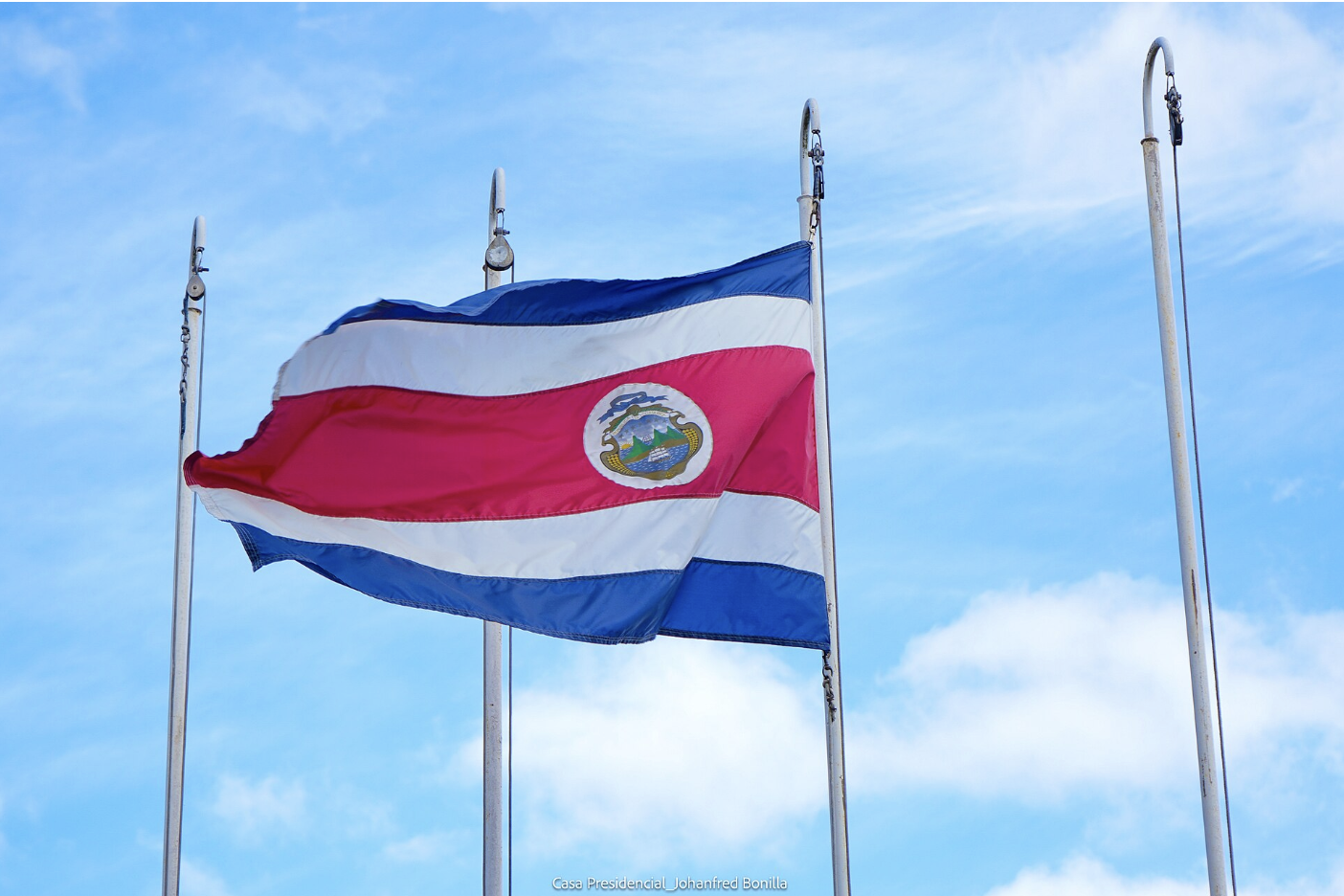
Costa Rica 2026: Political Continuity and Signs of Democratic Erosion

Source: Wikimedia Commons

By Ilka Treminio-Sánchez, Political Scientist of the University of Costa Rica.  

The national elections held in Costa Rica on February 1, 2026, marked a turning point in the country’s recent political trajectory. Contrary to expectations of a runoff—common in a highly fragmented party system—the ruling party candidate, Laura Fernández, won in the first round with 48.3 percent of votes counted. This result not only ensured the continuity of the political project championed by President Rodrigo Chaves but also consolidated a deeper transformation of the Costa Rican political system. 

The election saw a 69 percent voter turnout, the highest since 2010. This increase can be interpreted as a sign of civic revitalization, but also as a consequence of growing polarization. During the campaign, two distinct blocs emerged: on one side, the ruling party, organized around Chaves’s personalistic leadership; on the other, a fragmented opposition that, despite its ideological differences, shared concerns about the country’s institutional direction, and which ultimately consolidated most of its votes around the National Liberation Party. In the run up to the election, supporters of traditional and emerging parties came together. Concerned about the country’s democracy, they spontaneously organized various forms of collective action outside event venues. These activities culminated in the so-called “multicolored caravans,” named for the diversity of party flags displayed under the unifying slogan: “Out with Chaves!” But, despite such mobilizations, and in line with poll results, the opposition did not advance to a runoff. 

From an organizational standpoint, the process was impeccable. The Supreme Electoral Tribunal once again demonstrated high standards of transparency and efficiency, reaffirming the technical soundness of the Costa Rican electoral system. However, this procedural strength contrasts sharply with the political tensions that accumulated during Chaves’s presidency, characterized by a confrontational discourse toward oversight bodies and the judiciary. 

The Ruling Party and the Construction of Continuity 

Fernández’s victory cannot be understood without considering the central role of the outgoing president. Although constitutionally barred from immediate reelection, Chaves devised a succession strategy based on personal loyalty and the symbolic transfer of his leadership. The official campaign revolved around the slogan “continuity of change,” presenting Fernández as the custodian of the president’s political mandate and as its guarantor of continued power. 

The electoral vehicle was the Sovereign People’s Party (PPSO), created after Chaves fell out with the leadership of the Social Democratic Progress Party, with which he rose to power in 2022. The reorganization allowed it to concentrate the vote and achieve not only the presidency, but also 31 of the 57 legislative seats, an absolute majority unprecedented in recent decades. 

This result substantially alters the conditions for governance. While previous administrations had to govern with small and fragmented factions, the new government will have a robust parliamentary group, although of late some friction has emerged among its leaders. Nevertheless, only the National Liberation Party – historically the most dominant political force in Costa Rica – had achieved a similar number of representatives in 1982, during an exceptional economic crisis. 

This legislative majority opens the door to the possibility of far-reaching political reforms. During his presidency, Chaves repeatedly expressed interest in expanding the executive branch’s powers, limiting oversight bodies’ authority, and promoting a transformation of the state that his supporters call the “Third Republic,” a successive step in the destruction of the Second Republic inherited after the 1948 Civil War, whose foundations were laid by the liberationist José Figueres Ferrer. Without a supermajority, such reforms were not feasible. Today, the balance of power looks different. 

During the transition period, two unprecedented decisions were announced. First, the president-elect expressed her intention to appoint Rodrigo Chaves as Minister of the Presidency, the sole responsible for coordinating actions between the executive and legislative branches. Second, the outgoing president appointed Laura Fernández as Minister of the Presidency for the remaining months of the administration. Chaves also stated that, in his future role, he would seek to bring on board members of the National Liberation Party to form the supermajority necessary to approve constitutional reforms.

Populism, Leadership, and Institutional Tensions 

Rodrigo Chaves’s governing style represented a break with traditional Costa Rican political patterns. His confrontational rhetoric, directed against media outlets, public universities, judges, and opposition members of parliament, reinforced an anti-establishment narrative that resonated with sectors disillusioned with the status quo.  His rhetoric fits into the political model followed by other populist presidents on the continent. 

Surveys conducted by the Center for Political Research and Studies (CIEP) at the University of Costa Rica showed that his supporters primarily valued his ability to “impose order” and “produce results.” These attributes reflect a social demand for strong leadership and swift decisions, even if such an approach creates tension with the deliberative procedures inherent in liberal democracy. 

In this sense, the Costa Rican case fits into a broader regional trend. The political and inspirational affinity with Salvadorian President Nayib Bukele’s influence was evident throughout the campaign, particularly regarding public safety and proposals to toughen the prison system. Likewise, the first congratulatory messages to Fernández came from far-right figures such as Chilean president-elect Antonio Kast, and Mexican media figure Eduardo Verástegui, suggesting the integration of Costa Rica’s new leadership into transnational conservative-right networks. This realignment does not necessarily imply a break with traditional partners, but it does signal an ideological shift that redefines the country’s international standing. 

Security, Social Cohesion, and a Democratic Future 

The new government’s main challenge will be public security. The sustained increase in homicides and expansion of organized crime have eroded Costa Rica’s reputation as a peaceful exception in Central America. Policies implemented so far have been lax and ineffective, to the point that candidates labeled them permissive during the campaign debates. 

Added to this are structural problems: the deterioration of the education system, the strain on the healthcare system, and the weakening of environmental policies that historically formed part of a national consensus. These issues not only affect social well-being but also undermine the legitimacy of a democratic system seemingly unable to improve the situation. 

The 2026 elections do not simply represent a change or continuity of political parties. They reflect a reconfiguration of the political system around a personalistic leadership that combines right-wing populism, social conservatism, an evangelical agenda, and challenges to institutional checks and balances. The electoral strength of the ruling party is undeniable; so too is the broad-based support it received. 

The underlying concern is undoubtedly that the new continuity government could further the trajectory of democratic erosion. When anti-institutional rhetoric is legitimized by those in power and the political concentration of that power is presented as a condition for effective governance, the risk is not an abrupt collapse but rather an incremental erosion. 

For a society with a long tradition of stability and the rule of law, the central challenge will be to rebuild a minimal consensus around respect for horizontal checks and balances and pluralistic deliberation. The continuity of Chaves’s political project opens a new cycle. Its outcome will depend not only on the Executive and its legislative majority, but also on the capacity of the citizenry and institutions to maintain the balances that have historically defined Costa Rican democracy. 
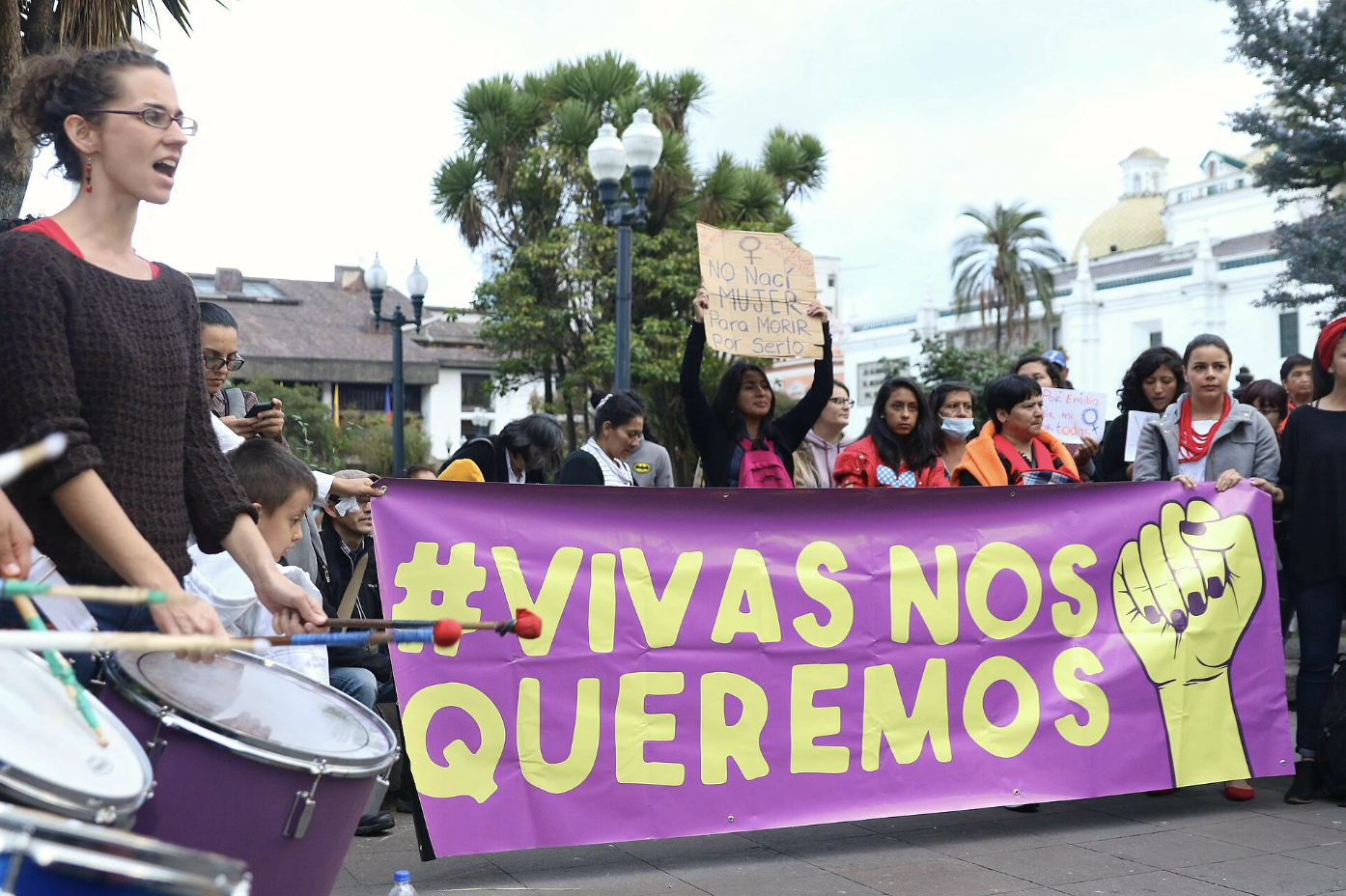
The Illusion of Progress? The Rise of Women in Ecuadorian Politics Despite Ongoing Gender Violence in Its Indigenous Communities

(Source: Wikimedia Commons)

By Isabella Serra & S. Shrestha  

On January 24, 2006, Estuardo Remache was criminally charged with domestic violence and removed from his position as head of Ecuador’s Human Rights Commission. The case was brought forward by his wife, Maria Lucrecia Nono, who had spent years seeking justice for the repeated abuse she endured. On numerous occasions Maria’s attempts to report the violence were dismissed, her credibility questioned, and her intentions painted as vindictive.

When Maria first turned to local authorities and Comisarías, state-run women’s centers meant to support survivors of gender-based violence (GBV), she was told her case was a personal matter to be resolved at home. Officials cited Article 191 of the Ecuadorian Constitution, which separates the federal and Indigenous legal systems, and told her she must seek justice within her own Kichwa community. 

Gender-based violence, which includes emotional, physical, and sexual harm rooted in gender inequality, is a widespread and deeply structural form of oppression. Maria’s abuse didn’t stop at home; it was reinforced by the very institutions intended to protect her. Each time she sought help, she was met with indifference, disbelief, or outright rejection, despite returning with visible bruises and ongoing emotional trauma. Her story points to a more systemic issue: the absence of female political power in Ecuador to challenge and transform these injustices. 

Maria’s ordeal highlights a troubling paradox: the greater presence of women – particularly Indigenous Kichwa women – in Ecuador’s political sphere, alongside the continued high rates of GBV in their communities. Why, despite growing political representation for women, does gender-based violence remain so entrenched, especially among Indigenous communities?

 Legal and Structural Context 

Ecuador’s 2008 Constitution marked a turning point, officially recognizing the country as plurinational and intercultural, thus legitimizing Indigenous governance structures alongside the national legal system. Yet this dual system has limitations. While intended to acknowledge indigenous sovereignty, in practice it often creates conditions of legal marginality, particularly for Indigenous women. In Maria’s case, the national judiciary abdicated responsibility, claiming the Kichwa system to be the appropriate jurisdiction, while Kichwa authorities sought to silence her to avoid casting their communities in a negative light. 

This tension reflects a broader legal failure: the promotion of state-sponsored multiculturalism but the failure to protect vulnerable populations within specific communities. The burden of representation falls heavily on Indigenous women like Mirian Masaquiza Jerez, a Kichwa woman staffing the UN Permanent Forum on Indigenous Issues. In an interview, she explained that any missteps are seen not as individual failings, but as reflections on her entire community. Despite these pressures, her greater visibility, along with that of many others, marks a notable shift in the gendered landscape of Ecuadorian politics 

 Gender-Based Violence in Context 

Ecuador has made substantial progress toward increasing women’s political representation, thanks in part to gender quotas implemented since the early 2000s. These measures mandate a minimum number of female candidates in national and local elections, enabling more women to ascend to political leadership. Despite recent infighting and a diminished presence in the national legislature, Ecuador’s Indigenous-led Pachakutik party has played a pivotal role in this shift over the past three decades, advocating for environmental justice and Indigenous rights, including those of women. 

Yet political representation does not always translate to structural change. The existence of women in positions of power can obscure the continued suffering of those on the margins. Indigenous women in rural areas still live under deeply patriarchal norms, face high rates of GBV, and often lack access to justice, health care, or safe housing. Nearly 6 in 10 women in Ecuador report having experienced GBV. The rate rises to 68 percent among Indigenous women, 10 percentage points higher than among their non-indigenous counterparts. These figures expose the intersectional nature of GBV: it disproportionately affects women who are poor, Indigenous, or otherwise marginalized. GBV is not just a personal issue; it is a societal failure sustained by socioeconomic inequality, cultural norms, and weak legal protections. 

In many Indigenous communities, patriarchal expectations remain strong. Divorce and contraceptives are taboo, and women who speak out like Maria risk being ostracized by their families and communities. Maria’s relatives warned her that if she pursued legal action, she might lose custody of her children. And she nearly did: Estuardo Remache was awarded custody of four of their five children before he was convicted. 

Eco-Politics, Exploitation, and Gendered Harm 

The entanglement of environmental exploitation and gender inequality has further exacerbated the issue. Since the 1960s, Ecuador’s adoption of a free-market model encouraged the expansion of oil extraction in the Amazon. While economically beneficial in the short term, these projects have devastated Indigenous lands and polluted vital resources. The resulting health effects, such as increased miscarriages and birth defects, are disproportionately born by women. 

Historically oil companies, empowered by deregulation, offered large financial incentives to communities in exchange for land. Communities that resisted remained poor and resource scarce. Those who accommodated faced social stigma, displacement, and environmental degradation. Both paths potentially deepened indigenous poverty. 

These developments have reshaped gender roles. As men leave to work for the very oil companies that displaced their communities, women are left to manage households, often under increased financial and social stress. This dynamic has continued to entrench patriarchal authority and contributes to higher rates of domestic violence. Workers exposed to exploitative labor, drugs, and alcohol often bring that trauma home. Women, already made vulnerable by poverty and legal liminality, often suffer the consequences. 

While the 2008 Constitution granted new rights, Ecuador’s laws have failed to notably improve conditions for indigenous women, and in some cases, have exacerbated hardships. The continued expansion of extractive industries under new hydrocarbons and related environmental laws, has led to further environmental contamination, social disruption, and increased gendered violence. 

Reassessing “Progress” 

After years of litigation, Ecuador’s Constitutional Court issued a judgment in 2014 finding that María Lucrecia Nono’s constitutional rights had been violated. Yet the ruling did not bring closure: the prolonged process left her struggle for justice fundamentally unresolved.

Maria’s story is often held up as an example of progress, offered as proof that Indigenous women can now access justice. But this interpretation is dangerously reductive. Maria’s case dragged on for years. She endured physical and emotional abuse, not only from her husband but from a system that refused to believe her. Even after winning she paid a steep price: continued violence, loss of custody, and pressure from Indigenous political leaders urging her to remain silent to protect their image. 

Her case exposes the limits of symbolic victory. Representation alone is not enough to dismantle cultures of impunity and deeply rooted systems of oppression. Real justice requires the transformation of legal systems, political norms, and economic structures that continue to marginalize Indigenous women. 

Conclusions  

Ecuador presents a complex landscape: a country lauded for increasing female political representation, yet plagued by high levels of GBV, especially within Indigenous communities. Maria Lucrecia Nono’s case is not a victory; it is a warning. It illustrates how cultural recognition, extractive capitalism, and patriarchal power can conspire to silence women, even when they appear to be gaining political stature

The emergence of Indigenous women in Ecuador’s political sphere is long overdue. But without corresponding reforms in legal protections, community norms, and economic structures, political power will remain largely symbolic. True liberation for Indigenous women in Ecuador will require dismantling the intersecting systems that perpetuate gender-based violence, which requires listening to women like Maria not only when they win, but when they are silenced. 

Isabella Serra & S. Shrestha  are Research Assistants at The Immigration Lab

*This post continues an ongoing series, as part of CLALS’s Ecuador Initiative, examining the country’s economic, governance, security, and societal challenges, made possible with generous support from Dr. Maria Donoso Clark, CAS/PhD ’91.