Performing the Pope

By Brenda Werth

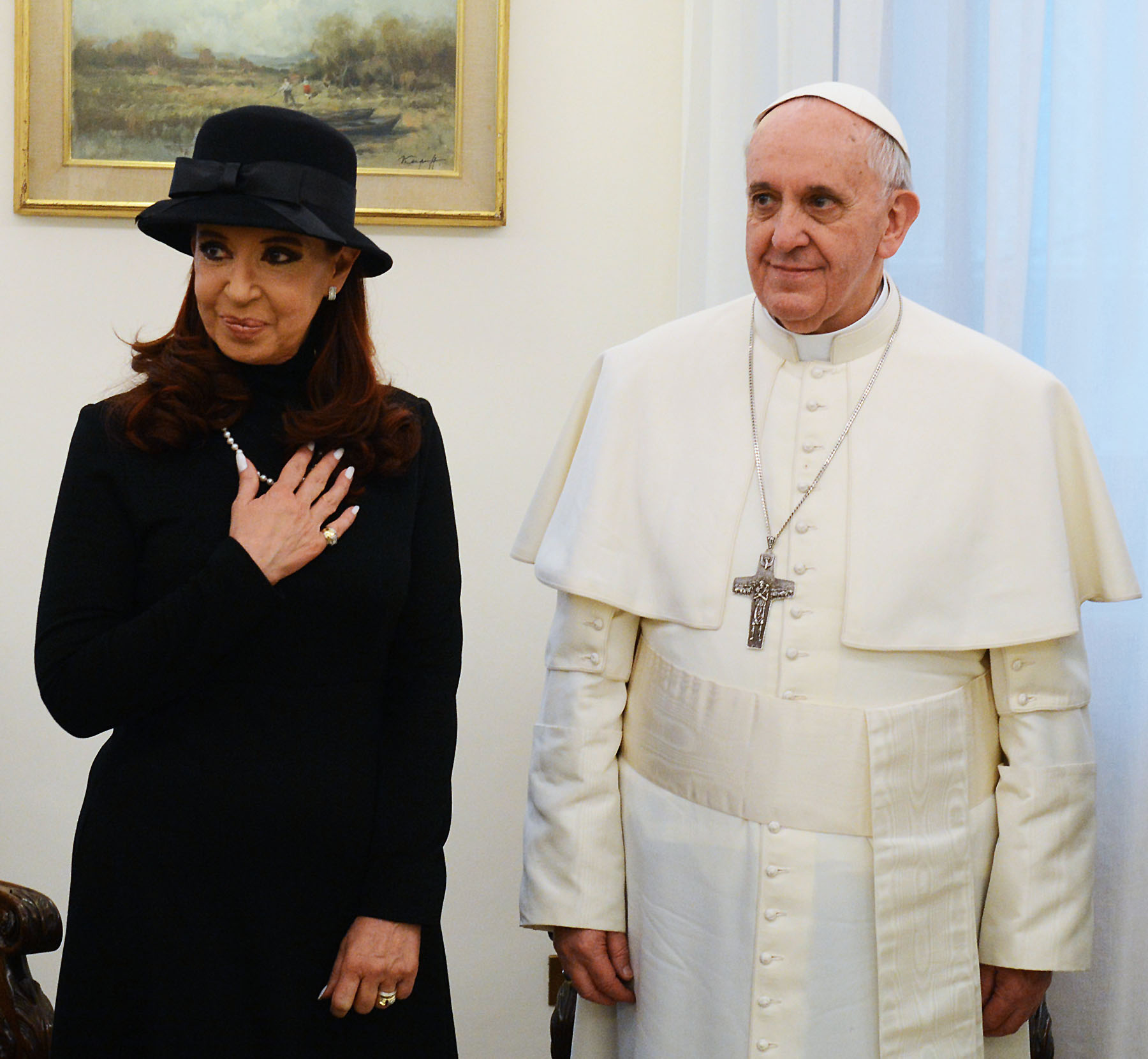
Photo credit: presidencia.gov.ar | Creative Commons

Photo credit: presidencia.gov.ar | Creative Commons

The pope is a populist par excellence – Pope Francis has proven to be no exception – and Argentine President Cristina Fernández de Kirchner (CFK) is trying to harness some of his unprecedented approval for her own ends.  Since his election in March 2013, supporters of Pope Francis have credited him with changing the tone of the Catholic Church, renewing its relevance, detracting attention away from intractable issues (abortion, gay marriage), decrying capitalism and refocusing efforts on fighting inequality and poverty.  “Who am I to judge?” he famously responded when asked to comment on gay priests.  And yet, in his previous life as Archbishop Jorge Bergoglio of Buenos Aires, his judgments with regard to gay rights, specifically his strong condemnation of gay marriage, are what then caused the substantial rift between him and CFK’s government.  The Argentine government has passed some of the most progressive gay rights legislation in the world, making same-sex marriage legal and awarding full adoption rights to same-sex couples in July 2010.  CFK called Bergoglio’s stark opposition medieval.  What is surprising, then, is the conciliation that has taken place between the President and Bergoglio as pope.  It has taken place over the last year in the form of public rituals and urban iconography, bringing the Pope and CFK together in a symbiotic performance of national identity and Peronist imagery.

Given their past differences, their newly fashioned bond conjures a kinship not based solely on shared political views.  CFK has drawn public attention to certain rituals and events that link the two through the construction of familial intimacy.  Perhaps the most stunning example of her attempts to incorporate the Pope into the big happy Kirchner family is in her party’s use of a photographic collage juxtaposing Juan Perón, Néstor Kirchner, CFK, and Pope with the caption, “Mirá pibe a dónde llegamos” (Look, kid, how far we’ve come).  In May 2013 the collage appeared on a gigantic banner covering the façade of the Central Market in plain view of motorists on the heavily transited Riccheri highway.  In June, she broke protocol when she discarded the recommended template and wrote an informal letter to the Pope in honor of the Day of the Pontiff.  Discussed at length in the press, the missive was personal and colloquial in tone and closed mysteriously with Fernández urging the Pope to “take care” and “drink mate.”  When the President’s first grandchild was born a month later, images of the President accepting the Pope’s gift of baby shoes circulated widely in the press, together with her exclamations of “Look what the Pope got me for Néstor Iván.”  And in August, the Perón-Kirchner-Pope collage appeared blazoned on the side of a van deemed the Argentine version of the “Pope mobile,” unveiled by the Kirchner party in support of Frente por la Victoria candidates.

The collage captures perfectly CFK’s campaign to include the Pope in the big happy Kirchner family, but more importantly, it positions CFK herself as a key member of this influential family as she seeks to consolidate not only her own legacy, but also her political future.  With Juan Perón positioned top left and Néstor Kirchner top right, the collage resembles a family tree, in which CFK and the Pope are both direct descendents of a conflated Peronist/Kirchner genealogy.  Recast as founding fathers in this familial image, Juan Perón and Néstor Kirchner look down at CFK and the Pope from an atemporal, mythological realm, their solemn gaze directed at the newfound alliance between CFK and the Pope, solidified through the handshake between two of the world’s savviest of populists.  Dictatorial and democratic regimes alike have manipulated family discourse in Argentina to achieve political means.  The almost imperceptible image of the National Congress Building that constitutes the background of this collage is a reminder of what this performative family portrait ultimately seeks to achieve.  The Pope’s enthusiasm to play the familial role is unclear; a sign of wariness might be detected in his decision to postpone his first official trip to Argentina until 2016.  This date, ostensibly chosen in order for the Pope to participate in the bicentennial of the Declaration of Independence, perhaps more conveniently allows him to avoid the intense campaign period preceding general elections in 2015. 
Peru: Will Humala pursue deeper reforms?

By Marcela Torres

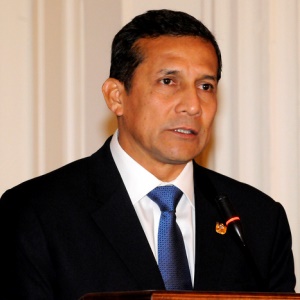
President Humala / Photo credit: OEA - OAS / Foter.com / CC BY-NC-ND

President Humala / Photo credit: OEA – OAS / Foter.com / CC BY-NC-ND

Facing growing public discontent, President Humala is attempting to navigate through yet another cabinet shuffle while struggling to advance reforms of the police, education, and health care.  The President’s approval rating has dropped from 65 percent soon after his inauguration in 2011 to an all-time low of 27 percent.  He swore in his fourth prime minister, César Villanueva, last week, after telling Prime Minister Juan Jiménez – in office for just 15 months – that it was time to “refresh” the cabinet.  Jiménez said he had been contemplating resigning for months, but recent polls suggest that growing crime and corruption, the two main issues citizens perceive to be afflicting the nation, forced him out.

Protests against Humala’s government have been growing.  In July, 8,000 demonstrators in Lima expressed their rejection not only of Humala’s government, but of the entire ruling political class.  Although still small compared with protests in other parts of Latin American, they were of a magnitude not been seen in the capital city since 2000, when protestors took the streets demanding President Fujimori´s resignation.  Unlike the rural indigenous protests over extractive industries, which have become commonplace under the administration, the participation of the middle class was evident and crucial in the July protests.  Social anger was sparked by a video showing members of the main political parties secretly negotiating highly controversial appointments involving individuals implicated in corruption.  Persons who had allegedly violated human rights were selected as the human rights ombudsman and as judges of the Constitutional Tribunal.  The uproar motivated Congress to immediately annul the secretly negotiated appointments, known as the repartija, which for many Peruvians resembled one of the traditional means by which the authoritarian government of Alberto Fujimori had avoided institutional checks and balances by placing regime-friendly officers in power.

The recent Peruvian protests are similar to social mobilizations taking place in Brazil, Chile and Colombia – other countries in which economic growth has not translated into broad public satisfaction.  While many protests in these countries have focused on the quality of social services, the recent Peruvian demonstrations have offered a critique of the country’s widespread corruption and backroom politics.  Peruvian demonstrators came from diverse sectors of society, including labor union members, students, artists, TV actors, gay rights activists, without clear leadership or coordinated demands.  This amorphous type of protest appears particular in Peru because civil society largely avoids political activism as a consequence of the stigmatization of collective social action after the defeat of Shining Path in the ‘90s.

Humala’s most recent cabinet reshuffle and his earnest but ineffective reform efforts suggest he appreciates the depth of the social discontent – now with middleclass support and the participation of youth.  Peruvians are not willing to tolerate the traditional corruption associated with the country’s politicians.  The lack of coordination among social movements that can connect rural and urban discontent, as well as the absence of political parties within the Peruvian landscape that can effectively mediate between citizens and the government, might limit the scope of social protests to isolated outcomes. If protestors come up with a clear agenda through legitimate leadership, however, President Humala will have to deepen his reforms or risk irrelevance through the remainder of his presidency.  Superficial changes appear unlikely to appease the middle class and civil society.

Argentina’s Mid-term Elections: The Beginning of the End for Cristina?

By Santiago Anria and Federico Fuchs *

Cristina Fernández mural Photo credit: CateIncBA / Foter / CC BY-NC-ND

Cristina Fernández mural Photo credit: CateIncBA / Foter / CC BY-NC-ND

Rising inflation, loss of confidence by the private sector, and lack of access to international credit markets make victory in Argentina’s mid-term elections on October 27 especially important for President Cristina Fernández – or else she will face the prospect of two years as a lame duck.  Her governing Front for Victory (FPV) faction of the Justicialist Party (PJ) seeks to protect its legislative majority.  (Half the seats of the lower chamber and a third of those in the upper chamber are at stake.)  Based on the results of the Open, Simultaneous and Obligatory Primaries (PASO) held on August 11, the FPV appears likely to lose some seats but still maintain a slight majority, considering that a number of the seats in dispute in the lower chamber correspond to districts in which it fared poorly in the 2009 elections.  Before her unexpected surgery last week, Fernández had been central to the electoral campaign, hand-picking and endorsing Lomas de Zamora Mayor Martín Insaurralde as the first deputy on the FPV’s list.  According to some surveys, previous adjustments to her communications strategy increased her approval ratings, and with her recovery from surgery expected to take a month, there is speculation that the FPV may win some additional “sympathy” votes.

The PASO primaries showed that the FPV lost in key electoral districts, including the city of Buenos Aires, and the provinces of Buenos Aires, Córdoba and Mendoza, but that it continues to be the only political force with national reach.  The opposition remains fragmented, but Sergio Massa, a former government ally and current mayor of Tigre (elected on the FPV ticket), has emerged as the key opponent in Buenos Aires province and as a likely presidential candidate for the 2015 elections.  He may challenge Daniel Scioli, who is the current governor of Buenos Aires and is, at least until now, backed by Fernández as her potential successor despite resistance from some factions within the FPV).  Massa’s Frente Renovador still has limited territorial reach, but he enjoys the support of the mainstream media, a branch of the General Confederation of Labor (CGT), the Church and, perhaps most importantly, a prominent group of mayors in Buenos Aires province.  He is trying to capture a more centrist vote, promising the “end of confrontational politics” and focusing on what he claims are the “real issues” affecting Argentines – corruption, citizen security and crime prevention, and inflation.

The results of the upcoming elections will define the options for the Fernández administration.  If the FPV fails to keep a solid majority in Congress, the issue of constitutional reform that would allow for reelection will be off the table, and Fernández will not be able to run for a third term.  In policy terms, negative results will increase pressure for economic adjustment and pro-business policies. Fernández and her predecessor, deceased husband Néstor Kirchner, have both proven their capacity to revamp their administrations after electoral defeat by defying such pressures and raising the stakes. But with defeat in the polls, and with a diminished force in Congress, it will be harder for her to maintain party discipline as the prospects for 2015 grow bleaker.  A lot also depends on how the opposition fares: a clear winner among them (most likely Massa) will become a clear challenger for 2015 and probably put even greater limits on any government strategy, whereas a still atomized opposition may give Fernández more leeway. The task ahead for the FPV will be to define and support a presidential candidate that can continue the Kirchnerista project. Performing well in the congressional elections will give Fernández more room to define this, or to at least block non-desired candidates.  We may be witnessing the beginning of the end for Cristina, but it is not clear whether any of the opposition candidates can force her to steer the Kirchnerista project in a new direction.  Not even the most plausible contender in the opposition (Massa) or the most likely successor in the FPV (Scioli) seems to have any meaningful change to offer. If both of them represent anything, it is Peronism’s ability to adapt in adverse times to stay in power. But that is nothing new in the history of Peronism.

* Santiago Anria and Federico Fuchs are graduate students in the Department of Political Science at the University of North Carolina at Chapel Hill.

Colombia’s Uribe Out of Office, But Not Out of Mind

By Tom Long

Alvaro Uribe receiving the Medal of Freedom | Photo credit: White House photo by Chris Greenberg / Foter.com / Public domain

Alvaro Uribe receiving the Medal of Freedom | Photo credit: White House photo by Chris Greenberg / Foter.com / Public domain

Former Presidents George W. Bush and Álvaro Uribe of Colombia were close allies in the “war on terror,” but they are taking very different approaches to their post-presidency.  While the former has taken up painting and appears at few public events, since leaving office in 2010 Uribe has consistently tried to upstage his hand-picked successor, Juan Manuel Santos.  He has frequently taken to Twitter with biting criticisms, and in recent months – as provincial and municipal elections near – Uribe’s public condemnations have grown both more vociferous and more damaging.  Even ardent supporters of Uribe’s presidency are questioning his post-presidential politicking, according to press reports.

In particular, the former president’s attacks on the ongoing peace talks with the FARC and Colombia’s more conciliatory approach to Venezuela have contributed to a drop in Santos’ support, according to polls, and made the two endeavors more difficult and politically costly.  On the former, Uribe has repeatedly accused Santos of offering “impunity” to FARC fighters.  He’s also accused Santos of “turning his back on democracy” for joining (albeit reluctantly) the UNASUR consensus to recognize Nicolás Maduro’s narrow victory in the Venezuelan presidential elections.  And Uribe has slammed Santos’s efforts to hold Uribe-era officials responsible for violence and corruption.  Though Uribe’s attacks have complicated Santos’ position with his own party on these issues, the reaction has been quite different in the United States.  Though Uribe’s criticism has found an audience with the far right in the United States, Santos retains considerable U.S. backing.  Uribe’s role as the main U.S. ally in South America in the past was warmly rewarded and he was held up as Colombia’s savior – President Bush gave him the Medal of Freedom – but his hectoring of Santos and his failure to atone for violations during his government appear to have undermined his credibility.

Uribe’s post-presidential antics should spark a re-evaluation of his presidency, even among those who downplayed human rights problems and suspected links to paramilitaries among Uribe’s party and family.  His accomplishments in rebuilding the Colombian military and imposing tactical defeats on the FARC cannot be denied, but in doing so, he ran roughshod over civilian institutions, used a secret intelligence unit to harass opponents in and out of government, and, with the deaths of potentially thousands of “false positives,” appears to have been complicit in serious violations of human rights. Out of office, he continues to show a similar lack of respect for democratic processes and decorum – even as he levels that same accusation against Venezuelan leaders – and he still seems profoundly resentful that he failed to amend the Constitution to allow himself a third term.  In a democracy, there can only be one president at a time.  Former presidents have the right to speak out, but it’s fair to ask if their goal is constructive and contributes to the integrity of democratic institutions.


Changing of the Guard, Cuban-Style

By William M. LeoGrande

Cuba Coat of Arms | Wikipedia Commons

Cuban Coat of Arms | Wikipedia Commons

In his speech to the closing session of Cuba’s National Assembly on February 24, Raúl Castro formally announced that he would retire at the end of his current presidential term in 2018. Even now, only a handful of “los históricios” – the founders of the revolutionary regime – remain in office, though they still dominate the Communist Party’s Political Bureau. Raúl also announced the immediate retirement of several elderly comrades-in-arms, including First Vice-President José Machado Ventura. In his place, the Assembly elected 52-year-old, Miguel Díaz-Canel, putting a leader born after the triumph of the revolution in the direct line of political succession for the first time.

But Díaz-Canel is not the first presumptive heir to appear on the Cuban political scene. He is preceded by several others, all of whom came to a bad end, falling into disgrace and obscurity as quickly as they rose. The first was “Landy” – Luis Orlando Domínguez, a rising star in his forties whose power derived from his leadership of the Grupo de Apoyo, Fidel’s personal staff. He was arrested in 1987 for embezzlement and sentenced to 20 years in prison. The next was Roberto Robaina, the charismatic pony-tailed head of the Young Communist League. In 1993, Fidel appointed “Robertico” foreign minister at the age of 36, then sacked him six years later for disloyalty. Robaina, it turned out, was a little too friendly with foreign businessmen and officials.  Next came Felipe Pérez-Roque and Carlos Lage. Pérez-Roque served as Fidel’s personal assistant for a decade before being appointed, at age 34, to succeed Robaina at the Foreign Ministry. Announcing his appointment, Granma explained that he was qualified for the job despite his age because, “He is familiar, as very few others are, with Fidel’s ideas and thoughts.” Lage served as Fidel’s economic adviser during the Special Period, becoming one of the vice-presidents of the Council of State and executive secretary to the Council of Ministers – the closest thing Cuba had to a prime minister. Pérez-Roque and Lage were both removed by Raúl in 2009 for criticizing los históricos behind their backs and being too eager to push the older generation off stage. They were, as Fidel wrote, “seduced by the honey of power.”

All these early heirs owed their ascent to their personal relationships with Fidel.  Before his illness, the elder Castro was, as we social scientists say, a “minimum winning coalition” all by himself. If Fidel decided on a policy, the rest of the leadership dutifully fell into line. Political power, then, was directly correlated with proximity to Fidel. It was no accident that the principal path to power for an aspiring young politician led through Castro’s personal staff. But the meteoric rise of Domínguez et al., denied them the political savvy only experience can provide, and imbued them with the hubris of Icarus.

Díaz-Canel appears to be an heir of a different order. An electrical engineer by training, he has spent his career rising through the ranks of the Communist Party, building a reputation for competent, pragmatic management. He served as Party first secretary in Villa Clara and Holguín provinces before moving to the national stage, becoming Minister of Higher Education and a vice-president of the Council of State. In public, his austere demeanor suggests the archetypical apparatchik, but in person he is said to be warm, personable, and modest – disdaining the prerogatives of office. While serving as first secretary in Villa Clara, he visited far-flung towns and villages by bicycle.

Díaz-Canel seems to be as different from the earlier heirs as Raúl is from Fidel. Fidel was always suspicious of institutions that might constrain his freedom of action, and never hesitated to circumvent them when it suited his purposes. Raúl, on the other hand, has been the quintessential organization man, valuing careful management, sound administrative processes, and institution-building. His proposal for term limits for all senior government and party officials represents the final institutionalization of the revolution, elevating the system over the pretensions of individuals. In 1973, Granma ran a headline, “Men Die, but the Party is Immortal.” Now, as los históricos are dying, the future of the revolution is finally being vested in the institutions they built and the successors those institutions have produced.

Mexico: A Hard Road for Reforms

By Tom Long

Enrique Peña Nieto by Edgar Alberto Domínguez Cataño | Flickr | Creative Commons

Enrique Peña Nieto by Edgar Alberto Domínguez Cataño | Flickr | Creative Commons

During the campaign, Mexican President Enrique Peña Nieto proclaimed in thousands of advertisements, “Me comprometo y cumplo” – I make a promise and I keep it.  Offering a list of potentially transformative reforms – regulations, security, telecommunications, energy, and more – he began with one of the most intractable:  the struggling public education system.  In December, at his instigation, the Mexican congress passed a constitutional reform to create stricter standards for teachers and move hiring authority from the teachers’ union to the government.  Enough states had ratified the amendment by the end of February to make it law.  After years of stagnation and interest-group politics, education reform suddenly became politically expedient, passing with support from the PRI, PAN, and PRD.  Last week, the government put an exclamation point on the reform by arresting the teachers’ union boss, Elba Esther Gordillo, on charges of using her post for illicit gains surpassing $100 million.  A PRI apostate whose opposing alliance was credited with helping former President Felipe Calderón win his razor-thin victory in 2006, she was not just expendable, but an obstacle.

According to OECD education data, just 45 percent of Mexican students complete their secondary education, though the rate has improved over the last decade.  Mexico spends 3.7 percent of GDP on primary and secondary learning, — less than Chile, Argentina, and Brazil but in line with the OECD average.  Experts believe that Mexico’s educational  problems are largely political, not budgetary.  A full 97 percent of spending goes to salaries, feeding a teachers’ union that has a history of patronage and graft.  The problem has deep roots in the clientelistic structure through which the old PRI governed during its 70 years in power before losing in 2000 – and with which the PAN governments coexisted for 12 years.

The storyline shares certain similarities with PRI President Carlos Salinas’ sacking of the head of oil workers’ union in the 1990s, presaging limited reforms in that sector.  Peña Nieto probably intends the removal of the most visible representative of old-style patronage politics as a clear signal that the PRI will not bring back the bad old ways – despite the possible appearance of the firing and arrest being driven by revenge – but the reform legislation is widely seen as a positive step forward.  Rhetorically at least, the major parties have agreed to a multi-pronged effort for more reforms in the “Pact of Mexico.”  However, forging consensus on further reforms will be more difficult, as entrenched PRI politicians at the local level are already resisting many of the president’s proposals.  The PAN and PRD are already criticizing Peña Nieto for being too cozy with media barons and for handling telecommunications reform behind closed doors.  Security policies and proposed energy reforms are more contentious still.  Reforming other sectors will require going after harder targets than Gordillo and will pose greater tests of Peña Nieto’s ability to win votes in the Mexican Congress.

After Chávez?

Photo by:     UKBERRI.NET Uribe Kosta eta Erandioko agerkari digitala | Flickr | Creative Commons

Photo by: UKBERRI.NET Uribe Kosta eta Erandioko agerkari digitala | Flickr | Creative Commons

Venezuelan President Hugo Chávez’s solemn appearance on national television on December 8 may have marked more than his departure for a fourth round of cancer treatment in Cuba.  His designation of Vice President and former Foreign Minister Nicolás Maduro as his successor in the event he could not continue his duties indicated an initial farewell from politics as well – with wide-ranging implications in- and outside Venezuela.  Chávez asked “with all my heart” that his supporters elect Maduro to continue the Bolivarian revolution in the event of his death or inability to continue his mandate, with a clear eye to the constitutional requirement for emergency elections to be held within just 30 days should the president die or become incapacitated within the first four years of the term.  On Tuesday, Maduro announced that the president was recuperating after a six-hour procedure in Havana.  He did not declare a sure and speedy recovery but rather asked for Venezuelans’ prayers.

Speculation about the domestic scenario, including struggles within the ruling party, is intense.  Maduro’s most frequently mentioned rival to succeed Chávez is Diosdado Cabello, who was also alongside Chávez as he made the announcement last week.  While Maduro and Cabello both have had years of government experience and demonstrated political loyalty, questions remain about whether they – or anyone else – could replicate Chávez’s connection with poor voters and keep their weak political party together.  Informed speculation about the long-term impact on the region, if the succession stumbles, ranges from predictions of a cutoff of subsidies and subsidized oil, that would destabilize Cuba, Nicaragua and others to, among those who never saw Chávez as effective regionally, shrugged shoulders.

An even greater unknown is how well the opposition would do in the event of a snap election.  It is far from certain that these forces would re-unite around former candidate Henrique Capriles so shortly after he lost the October 2012 election.  The new system of primary elections that produced the single candidate last year would be difficult to replicate so quickly.  With both the ruling and opposition parties vulnerable to tensions and splits, a scenario of instability could easily result.  If Chávez’s health permits, he could conceivably resign the presidency and oversee elections that, although probably skewed, will help maintain the institutional order. If Venezuela is indeed on the brink of a succession process, the fortunes of both Chavismo and the opposition, and indeed of the Venezuelan population, will depend in large part on the capacity of both sides to maintain unity around alternative candidates for the Presidency.

Peru: Humala’s Difficult Balancing Act

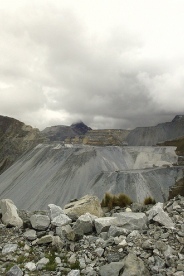
Photo: Peruvian mine | Mihai (clandestino_20) | Flickr | Creative Commons

Peru’s new cabinet installed in July – President Ollanta Humala’s third since his inauguration a year earlier – faces the daunting task of sustaining national development while increasing social enfranchisement.  The reshuffle came amid loud criticism of a crackdown, which killed five people, on protests against the proposed $5 billion Conga mining project in Cajamarca.  The incident underscored the difficulty for Humala as he endeavors to implement a dual strategy of capitalizing on the growth potential of Peru’s mining industry – primarily gold and copper (60 percent of exports) – while respecting community concerns about the environmental consequences of extraction.  Mining wealth is needed to improve the lives of ordinary people –28 percent of Peruvians live in poverty – but unlike preceding governments this administration has committed itself to consultation with residents of localities that will be affected directly.    The new prime minister has announced suspension of the Conga project until the U.S. mining company involved provides better environmental guarantees.

Humala’s popularity has plummeted.  Despite new laws increasing Peru’s mining revenue, the creation of a new Ministry of Social Inclusion, and a new Prior Consultation Law, indigenous protesters feel betrayed by Humala.  They accuse him of continuing the aggressive extractive policies of his predecessor, Alán García, and insist his administration has not given adequate attention to concerns of local communities on issues such as the integrity of the water supply in zones affected by the mining ventures.  Recent signs of a resurgence in violence by the Sendero Luminoso (Shining Path) guerrillas and of setbacks in efforts to curtail the influence of the narcotics trade are also eroding Humala’s support.

Humala narrowly won the presidency as a center-left candidate, committed to creating a framework for the more equitable distribution of the wealth generated by Peru’s natural resources.  Now, some of his political allies say he has courted foreign investment for the mining sector without adequate consultation, and further protests seem likely.  Humala’s challenge is not unlike that of other countries, including Bolivia and Ecuador, trying to balance between these competing interests.  His success or failure will have an impact beyond Peru’s borders, as South American countries dependent on commodity exports struggle to walk the tightrope between satisfying foreign investors and domestic electorates.

El Salvador’s “Constitutional Crisis”

Photo by: rosaamarilla via Flickr http://www.flickr.com/photos/amccy/3395160591/

A months-long political feud over the Supreme Court in El Salvador has blossomed into what observers are calling a constitutional crisis.  The first shot was fired in April when legislators from the FMLN engineered a “legislative decree” to replace five court Magistrates, the outgoing Assembly’s second shot at choosing justices during its three-year term.  The court’s Constitutional Chamber in June declared the decree unconstitutional – because each Legislature gets to vote only once for Magistrates.  At the same time, the Chamber invalidated a similar move by the opposition ARENA party affecting Magistrates chosen in 2006.

The theater came to a head this month when two feuding Supreme Courts met in different wings of the same building and claimed legitimacy – one with five members elected in 2009 and the other with the 10 invalidated members.  The rightwing ARENA party and its allies in Washington are claiming the crisis represents a shift against democracy by the FMLN.  Two Cuban-American members of the U.S. Senate have called on the Obama Administration to impose sanctions – principally suspending negotiations on a second Millennium Challenge Corporation compact potentially worth hundreds of millions of dollars – if the crisis is not ended quickly and in the manner they wish.  The Inter-American Commission on Human Rights (IACHR) has called for prompt resolution, and the U.S. Ambassador in San Salvador and the State Department have expressed “concern.”  A Washington Post editorial this week lambasted the FMLN for shifting toward Chávez-style authoritarianism and President Funes for failing to stop it.

This episode reflects maneuvering within the FMLN – fueled by frustration that President Funes’s soft line toward ARENA has only weakened the party’s influence – and poor judgment among activists on where and how to pick the fight.  The legislators rushed the decree because they anticipated correctly that they were about to lose control of the Assembly in elections several weeks later.  The crisis falls into a much more ominous pattern, however, in that – like the coups in Honduras (2009) and Paraguay (2012) – the right wing and its coreligionists in Washington exploit events to challenge the democratic credentials of a democratically elected reformist government to rationalize weakening it, while the Obama Administration responds timidly.  ARENA is again demonstrating its superior lobbying skills in Washington, which have already severely disadvantaged President Funes on issues such as relations between his security cabinet and its U.S. counterparts – resulting in a serious erosion of his own influence over security issues.  If the current political impasse is not resolved to the satisfaction of U.S. conservatives, Washington’s threats – ironically directed against the Administration’s “best friend” in Central America – will likely continue and relations will be strained, further persuading hardliners around Funes that moderation pays no dividends.

Washington Politics: Fast and Very Furious

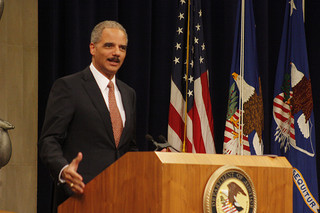
Photo by Ryan J. Reilly via Flickr, using a Creative Commons license

The operation codenamed “Fast and Furious” remains a hot topic in Washington two years after it went awry.  Conducted by the Bureau of Alcohol, Tobacco and Firearms and Explosives (ATF), the operation was intended to monitor the flow of weapons – through a “controlled delivery” – from Arizona gun dealers into the illegal channels by which tens of thousands of arms clandestinely enter Mexico each year.  Tracking the arms would allow the U.S. Government to disrupt the network.  However, ATF lost track of the weapons – and they reached their intended buyers.  The failure was made worse when traces showed that two of the weapons were used to kill a U.S. Border Patrol agent near the Mexican border in December 2010.

While both political parties in Washington have expressed disappointment, the Republicans have made the failed operation the centerpiece of efforts to weaken Attorney General Eric Holder (ATF is an agency of the Department of Justice, over which the Attorney General presides) and to discredit President Obama, according to numerous press reports.  The vote in the House of Representatives last week [[June 28]]to find Holder “in contempt” – for not handing over all of ATF’s internal documents on Fast and Furious that the Republicans demanded – was a party-line vote.  Many Democrats walked out of the chamber.

The political maneuvering around Fast and Furious has nothing to do with foreign policy, but the weakening of ATF undermines what modest efforts were under way to stanch the flow of illicit arms into Mexico and Central America.  “Controlled deliveries” are a standard operation for intelligence and law-enforcement agencies, and every agency involved in border issues has suffered similar mistakes.  ATF is the smallest such agency (2,500 special agents compared to FBI’s 13,400 and DEA’s 5,500) and is therefore more vulnerable to the internecine backstabbing.  In addition, ATF’s enforcement of laws relating to the use, manufacture, and possession of firearms often puts it at odds with American politicians who feel the agency threatens their interpretation of the gun rights under the Second Amendment of the U.S. Constitution.  The attacks on the ATF appear intended to weaken enforcement of U.S. law and embarrass the Attorney General and the President.  The obstacles to a sound policy of limiting the flow of weapons into Latin America are evidenced by the virulence of the debate over Fast and Furious.