Central American Governments Face Tough Challenges

by Benedicte Bull*

CLALS last week convened a panel in San Salvador to discuss the findings of its multi-year project on “Elites, States and Reconfigurations of Power in Central America.”  Attended by over 120 people, the event analyzed how the evolving role of elites will affect the new administrations in El Salvador, Costa Rica, and Honduras.  The following day featured a daylong event to launch the Instituto Centroamericano de Investigación sobre el Desarrollo e Inclusión Social (INCIDE), a new think tank that aims to foster fresh thinking about the difficult challenges facing the region.  Here are some key conclusions:

The leftist FMLN in El Salvador and the centrist Partido Acción Ciudadana (PAC) in Costa Rica have won crucial elections, but their ideological labels don’t fully capture how they will relate to three decisive actors: legal capital (the private sector), illicit capital (organized crime) and the United States.  The elections of Salvador Sánchez Cerén and Luis Guillermo Solís do not signal a strong turn to the left in Central America, but rather show that the population in both countries increasingly questions the political elites and institutions.  Solís capitalized on the corrupt image of Costa Rica’s two traditional parties, and what tipped the elections in El Salvador were all those who feared the return of a corrupt and elitist right, whose dirty laundry was made public in feuding between ARENA and the breakaway party GANA.

The new governments’ ability to restore confidence will depend firstly on how they relate to business and private capital.  All the countries of Central America are included in the free trade agreement with the United States (CAFTA-DR) and have been generally pursuing market-oriented development strategies since the late 1980s, but economic elites are still dependent on the state for survival.  Many build their business primarily on contracts with the state; all depend on the state involvement in infrastructure and services; but few are willing to pay sufficient taxes to allow their governments to face important challenges.  Honduras, which has accommodated elites the most, may establish a free zone fully exempt not only from taxes but all government regulations.  Nicaragua’s approach, under Daniel Ortega, is to build an alliance between the presidency and business, facilitated by Venezuelan assistance and growing integration into ALBA trade networks.

Institutional weaknesses throughout the region make it difficult to bring organized criminal groups under control.  In Guatemala, where congressmen frequently jump between political parties, organized crime easily buys political control and influence.  Weak parties, weakened ideologies, and leaders’ unwillingness and inability to build a state capable of implementing policies for the common good also allow organized crime a strong grip over politics.  In both Honduras and Guatemala, criminalization of politics has blurred distinctions between legal and illegal elites.

Central America’s relations with the United States also tend to hold it back.  While South America has come a long way towards independence from the United States, many Central Americans believe the old hegemon does not intend to let go of their region.  U.S. policy has in many ways become more sophisticated, but former members of governments speak freely of various methods the U.S. uses – often with the support of Washington lobbyists representing Central American rightwing elites – to restrict Central America’s room for maneuver.  This overshadows debate in Central America over China’s influence and Brazil’s growing leadership.

Taken together, these factors contribute to the conclusion that, even with winds blowing slightly to the left in Central America, the new presidents will have little space to make new policies.  For former guerrilla Sánchez Cerén and former history professor Solís, their experience and wisdom may be their best assets to move forward their agendas.

*Dr. Bull is Associate Professor at the Center for Development and the Environment (SUM) at the University of Oslo.
Mexico: Policy on “Auto-defensas” Makes Things Worse

By Steven Dudley*

Photo credit: Pedro Fanega / Flickr / CC BY

Photo credit: Pedro Fanega / Flickr / CC BY

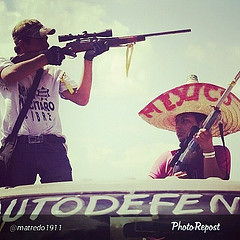
In a few short months, Michoacán’s “self-defense” groups have gone from being the Mexican government’s drunk uncle to being its strategic partner – underscoring what is wrong with the current government’s counterdrug strategy.  The vigilante groups are a multi-headed beast, born from sentiments that range from despair and frustration to opportunity.  Desperate small farmers and shopkeepers created some of the units because they’d been victimized by the “Knights Templar,” a splinter group with deep roots in the drug trade that has literally raped and pillaged their villages.  Frustrated agricultural and mining interests have funded their own “self-defense” groups.  And opportunistic rival criminal groups also seek to kill the Knights to take new, or reclaim old, territory.   Mexico’s federal and local governments are to blame for this chaos.  Drug-fueled corruption, ineptitude and lack of political will on the federal level have left the locals to fend for themselves, often leaving local politicians and security forces to align with the criminal interests, including the Knights Templar.

The federal government’s feeble and disjointed attempt to address the vigilantism is leading only to more confusion, chaos and most likely bloodshed.  In late January, it created a framework that legalized the organizations, placed then under one moniker – Rural Defense Units – and asked members to register themselves and their weapons.  But the framework makes no mention of their purview, jurisdiction, proposed length of service, nor does it clarify controls on their automatic and other sophisticated weaponry, which, under current Mexican law, requires military authorization.  Some of the groups accepted the government offer, including those that rode into the Michoacán city of Apatzingán last weekend to “take back” the city from the Knights.  More importantly, other vigilante groups have flat out refused the government.  Further fueling chaos, the federal government is applying a far harsher, more statist approach in the neighboring state of Guerrero, dispatching troops to stop the spread of “self-defense” groups that may have a longer history and more justifiable constitutional mandate than those in Michoacán.

Vigilante violence will undoubtedly continue to grow, as it becomes clearer that the federal government has no idea how to deal with it.  It is failing to address one of the root causes of the problem: illegal drugs have led to spectacular earnings that have made corrupting local and national officials easier; given criminal groups access to better training and weaponry to challenge the state and rivals; and created local, powerful criminal economies where perhaps they did not exist in the past.  In fact, no government official, vigilante group or other party in this conflict has even mentioned illegal drugs.  One vigilante told InSight Crime’s Mexico correspondent flat out: “We’re not against drug trafficking; we’re against organized crime.”  The causes of the violence are complex, but one cannot be addressed without addressing the others, and the Mexican government’s disjointed response is not pushing the country any closer to a solution.

* Steven Dudley directs InSight Crime and is a Senior Fellow at the Center for Latin American and Latino Studies.

Mexico’s Situation after Peña Nieto’s First Year at the Helm

By Manuel Suárez-Mier

President Enrique Peña Nieto / Photo credit: World Economic Forum / Foter / CC BY-NC-SA

President Enrique Peña Nieto / Photo credit: World Economic Forum / Foter / CC BY-NC-SA

After Enrique Peña Nieto’s first full year in office, the situation and prospects for his country are mixed. On the positive side, his structural reforms encompassing labor, education, taxation, finance, telecommunications, anti-monopoly and energy – the crown jewel – are unexpected and sweeping successes. Three previous administrations had failed to get such reforms through Congress in the preceding 18 years. The reforms, the success of which will depend on the implementing legislation, have attracted worldwide attention, generating a “Mexican moment,” and increasing substantially the flows of foreign direct investment.

On the dark side, however, Peña Nieto’s performance has been less than stellar regarding the pacification of the country from the violent onslaught over the last decade at the hands of bands of narcotraffickers. He changed the emphasis of the war on drugs from the stubborn fixation that it had in the Calderón administration (2006-2012), and he altered the terms of cooperation with the United States on this issue.  But he has been unable to stem the violence, which in some cases has worsened.  In the southwestern state of Michoacán, a new actor has emerged besides the narco and government forces: self-appointed groups of armed citizens that are battling the criminals while denouncing the government’s ineffectiveness.  Simply declaring victory in the war on drugs and moving on to other issues has not stemmed the violence.  Many observers believe that Peña Nieto’s security team is not up to par and that tolerating, and more recently collaborating, with the paramilitary groups is not the solution to the problem – and indeed will only worsen it down the road.  Also the terms of cooperation with the United States on the war on drug trafficking organizations are not clear yet.

It is too soon, of course, to declare victory on the reform front since the way these changes are implemented will determine their success or failure. We have had “Mexican moments” in the past, especially after NAFTA was approved in 1994, just to see them wiped out by government mismanagement and crises. But it is also too early to declare the final failure of the campaign to pacify the country since there have been some bright spots – notably in Ciudad Juárez. Coordination among security agencies has improved and the gendarmerie, a special rural federal police force that would replace the army in restoring the peace where violence rages, is being trained and will begin operations with 5,000 men in July.  But the appearance of paramilitary “self-defense” groups and the apparent alliance that they are forging with the federal government are deeply troubling considering what we have seen in other latitudes – especially Colombia – when such groups thrived. These contradictory trends explain why many people are enthusiastic about Mexico’s economic future while Peña Nieto’s approval ratings remain soft after a year of slow growth, tax increases, and unabated violence.

*  Manuel Suárez-Mier is Economist-in-Residence and Director of the Center for North American Studies in American University’s School of International Service.

Narcoliteratura: Another Way to Look at the Problem

By Héctor Silva

Élmer Mendoza

Élmer Mendoza

Latin America has suffered through almost three decades of the so-called war on drugs.  U.S. President George H.W. Bush formally declared the war in the late 1980s, but from the Andes to the Rio Grande it started when the Colombian cartels and their Mexican partners (then exclusively involved in distribution) created a multi-billion-dollar business to satisfy the growing U.S. market.  The druglords’ strategy of “plata o plomo” brought Mesoamerica and Mexico to their knees through violence and institutional corruption.  Hundreds of thousands have died, but the “war” has failed to tackle the economic basis of the industry: markets shift and supplies remain steady.  The cartels are smaller and more ruthless, and nation states are weakened by corruption.  Reams of reports have been written by official agencies, international organizations and think tanks – the latest a creative study by the OAS – but solutions remain elusive.

The drug trade has left an indelible mark on the very fabric of Latin American culture and society.  “Narcoliteratura,” one of whose main creators is Mexican writer Élmer Mendoza, is one of the most curious manifestations of this.  (Mendoza spoke at American University and was interviewed by this writer in February.)  His main character is Edgar “El Zurdo” Mendieta, a troubled police officer in Culiacán, Sinaloa, a city emblematic of the Mexican drug cartels.  El Zurdo’s stories capture the dual representation that Latin American culture has given to both the trade and its capos – romantic and profitable, yet evil.  Mendoza’s books give a naked and honest portrait of a society that has adapted, for its own survival, to most of the values associated with the narco business.  As Mendoza says, “El Zurdo” tries to keep a distance from the narco, but he can’t avoid him because the narco is there and is very strong and, almost without wanting to be, is always in contact.”

Compared to the many reports that fail to lead to policies that would help attack the core problems that give rise to the narco industry, Mendoza’s work provides a fresh and sincere portrait of the devastating impact the drug trade and the “drug war” have had on Latin America.  In books like El Amante de Janis Joplin and Nombre de Perro, his message is powerful, coming from a writer that has been there, in Culiacán, since it all started.  He writes with no restraints, through the voice of his characters, to tell some simple truths.  In an interview with this writer, he offered a sampling of his wisdom.  “If the US came up all of a sudden with a program to deal with its addicts, it would mean the end for the narco business,” later adding that “the war on drugs is useless and has only caused death.”  He poignantly stated:  “The war on drugs also allowed us to relax our emotions and lose the last chance for justice.”


Belize: An Outlier in the Middle of the Mess

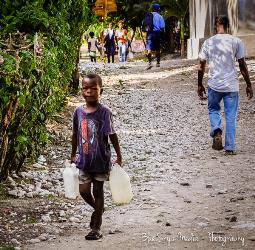
Belize - Boy carrying water. Photo credit: Blue Skyz Media / Foter.com / CC BY-NC-ND

Belize – Boy carrying water. Photo credit: Blue Skyz Media / Foter.com / CC BY-NC-ND

Though off the radar of most analysts, Belize appears to be the latest casualty of the drug trade and criminal violence.  It debuted on the Obama Administration’s annual blacklist of major drug-transit and -producing countries back in September 2011, alongside El Salvador, filling out the roster of Central American countries.  That U.S. government spotlight, however, has done little to halt the Mexican drug cartels’ expansion into Belize.  The U.S. State Department now estimates that about 10 metric tons of cocaine are smuggled each year along Belize’s Caribbean coast – partly the work of local contacts established by the Zetas and the Sinaloa cartel.

Like its neighbors’ security challenges, Belize’s problems are not limited to drug trafficking.  Urban gangs and the rivalries among them are the main driver of the escalating violence, which is rooted in the same causes as in neighboring countries – institutional weakness, rampant corruption, impunity, and unemployment.  The government-sponsored gang truce negotiated in 2011, which featured “salary” payments to members who ceased violent activities, collapsed last December when funds dried up.  (Click here for details documented by our colleagues at InSight Crime.)  Belizean authorities tallied a record number of homicides last year, edging out neighboring Guatemala for the sixth place slot in global per capita homicide rankings.  Porous borders make Belize attractive to transnational gangs, particularly El Salvador’s MS-13 and Barrio 18, both of which have established a significant presence in the capital city, Belmopan, and elsewhere.  About one-fifth of the country’s 325,000 people are Salvadoran citizens, making it difficult to track criminal elements.

The deteriorating conditions in Belize raise questions about the effectiveness of U.S. counternarcotics and “citizen security” programs in the region.  The patchwork of U.S. initiatives under the umbrella of the Central American Regional Security Initiative (CARSI) has not reversed regional trends even in tiny Belize.  While the country’s law enforcement agencies welcomed the heavy equipment, training, and technical assistance that make up the bulk of CARSI funding, the tactical gains have been obscured by a worsening strategic outlook.  The U.S. Government Accountability Office has voiced its concern that the State Department is confusing efforts with results.  Moreover, neither the Belizean nor U.S. government has mapped out a preventative strategy.  The most recent data show that less than half of the funds allocated to Belize from CARSI’s Economic Support Fund, used for programs to help at-risk youth, has been spent, and after handing out 1 million Belizean taxpayer dollars to gang members during the truce, for example, there is little to show for it.  In the run-up to President Obama’s summit with Central American presidents next week, Belizean Prime Minister Dean Barrow’s statement that “Obama hasn’t done anything for Belize” was subsequently qualified, but the fact remains that U.S. partnership with Belize, like with its neighbors, has not begun to work yet.

**An earlier version of this post inadvertently omitted the word “Belizean” before “taxpayer dollars” in the concluding paragraph, giving the false impression that State Department funds had been used to subsidize Belize’s gang truce.

Honduras: Simmering Crisis

Porfirio Lobo and Hillary Clinton
US Embassy Guatemala
/ Foter.com / CC BY-NC-ND

Little good and lots of bad has transpired in Honduras since the night in June 2009 that an Army-backed coup d’état, orchestrated by the economic elites, ousted President Mel Zelaya and installed Roberto Micheletti as the de facto ruler.  Almost four years later, Honduras remains one of the places in the Americas where democracy is at permanent risk – where drug trafficking, corruption, impunity, private armies and feudal caudillos thrive in a climate of spiraling violence.  Honduras today is the most violent country in the Americas and last year was among the top three in the numbers of assassinated journalists.  Honduras also remains one of the poorest countries in the hemisphere.

President Porfirio “Pepe” Lobo lacked credibility from the moment he donned the presidential sash in January 2010 – the candidate who, by almost all accounts, would have lost the election had not the coup reversed that fate, clamped down on opposition media, and suspended many civil rights.  While Washington worked hard to gain OAS recognition of his government, Lobo offered no guarantees – to either Hondurans or foreigners – that he would reverse the ongoing activities of the Army and rapacious economic elites to undermine democratic institutions.

  • Timid attempts to show independence, such as a projected police reform, languished due to lack of political will and financial support.
  • Honduras’s doors opened ever wider to organized crime and corruption.  According to U.S. agencies, roughly 60 percent of the cocaine passing through Central America on its way to U.S. markets in 2011 went through Honduras.  (The Obama Administration funded a militarized drug interdiction program that sputtered after Honduran civilians were killed.)
  • Politically motivated murders by sicarios – reminiscent of 1980s death squads – skyrocketed.  Investigations were few, and prosecutions were nonexistent.
  • By the end of last year, Lobo was pointing fingers at his old allies in the Army, the elites, and even his own party, accusing them of trying to destabilize his government. He failed to pass constitutional reforms that he claimed would protect democracy.  General Romeo Vásquez Velásquez, the military commander during the coup, announced that he was running for president.
  • Honduras is facing one of the worst fiscal crises of its history – a significant landmark for the perennially mismanaged country.

In Washington none of this seems to raise red flags.  On the contrary, the ideological bent of statements from both the executive and legislative branches suggests satisfaction with the state of affairs in Honduras – and willingness to keep the crisis there unsolved.  Hillary Clinton´s State Department was, to say the least, shy when addressing the deteriorating situation of the Central American country.  In January, at Senator John Kerry’s confirmation hearing, Republican Senator Marco Rubio’s assertion that what happened in Honduras in 2009 wasn’t a coup went unchallenged – despite the overwhelming consensus otherwise throughout our hemisphere.  The first sign offered by Kerry as Secretary of State, however, gives room to expect at least a modest change in the narrative: on March 4th, the State Department gave one of eight International Women of Courage Awards to Julieta Castellanos, a respected human rights advocate and critic of corruption and impunity in Honduras.  This hint of a less ideological and a more strategic and humanistic approach to the unsolved Honduran question is welcome.

Salvadoran Gang Truce: Opportunities and Risks

By Héctor Silva, CLALS Research Fellow

President Funes of El Salvador | Photo by: Blog do Planalto | Flickr | Creative Commons

President Funes of El Salvador | Photo by: Blog do Planalto | Flickr | Creative Commons

Despite the general agreement that the truce between El Salvador’s two main gangs, MS-13 and Barrio 18, has lowered the homicide rate dramatically – from 14 killings a day in 2011 to some 5-6 in 2012 – many serious challenges persist. The truce was brokered by a former guerrilla commander and a Catholic bishop and, after two months of denying a government role, Security Minister General David Munguía Payés acknowledged that his office was the mastermind.  It is now entering a second stage in which six municipalities, ruled by both the governing FMLN and the rightist opposition party ARENA, have pledged to join the initiative. This new stage involves local ad hoc prevention plans aimed at gang members’ families and youth at risk. The truces have become the principal security policy of the Funes administration.

The lack of transparency around the planning and implementation – above all the origin of the initial pact –has fueled skepticism among journalists, politicians and the general public, and polling has not shown wide support for the truce.  The United States has become one of the fiercest critics of the initiative, with its first official reaction a few days after Salvadoran electronic news outlet El Faro revealed details in March 2012 of secret negotiations between the gangs and the Salvadoran intelligence service. U.S. Under Secretary of State María Otero, visiting San Salvador, declared that the gangs must disappear, suggesting disapproval of the appeasement implicit in secret talks, and U.S. law enforcement officials have always been privately skeptical.  The Treasury Department is helping local American police departments attack MS13’s financial networks, which some in San Salvador interpret as a political signal of Washington distancing itself from the truce – an ironic twist given that Munguía Payés was installed largely because of U.S. pressure.  The stakes were raised last week when the State Department issued a warning to travelers to El Salvador, expressing for the first time in writing doubts about the truce.

The Salvadoran state and society face a complex road ahead.  The reduction in the homicide rate is, of course, welcome, and opposition to the second stage of the plan, the municipal sanctuaries, will be muted in a preelectoral year.  (The ARENA candidate for President, Norman Quijano, has remained skeptical but seems likely to jump on the bandwagon.) But with its ambiguous public stance on the truce despite its Security Minister’s political commitment, the Funes administration has not pledged to fund the second stage of the truce, and it seems very unlikely that the United States will be stepping in.  Another factor is that while El Salvador´s security operations are constrained by the truce, other important problems – such as extortion, drug trafficking, impunity and corruption – remain untouched. Furthermore, evidence is slowly emerging that the organized crime rings are using the circumstances to expand their influence and take advantage of their relationship with some of the gangs’ most violent cliques to enhance trafficking routes. Washington’s skepticism about the truce is valid and should be followed up with an emphasis on the underlying causes of El Salvador’s ills.

Mexico Elections: Change Ahead in Cooperation with the U.S.?

Photo by: World Economic Forum via Flickr, using a Creative Commons license.

News media are generally predicting a relatively comfortable margin of victory for PRI candidate Enrique Peña Nieto over PRD candidate Andrés Manuel López Obrador and the ruling party PAN’s candidate Josefina Vázquez Mota in Presidential elections next Sunday.  Polls give the PRI candidate (44 percent) a big lead over the PRD (28 percent) and the PAN (25 percent.)

Compared to the weight of Mexico’s problems, the campaign has been light on issues.  Both the PAN and PRI have made vague pledges of continued cooperation with the United States in efforts against the drug cartels.  While current President Calderón’s approach to drug-related violence has resulted in no discernible improvement in security – indeed, some 60,000 people have died since he launched his military-intensive strategy – both Peña Nieto and Vázquez Mota have pledged to triple the Federal police (Vázquez) and create a paramilitary gendarmerie of 40,000 (Peña).  López Obrador has focused on jobs, services, and social issues.

Whoever wins the election, Mexico-U.S. relations do not appear likely to return to the mutual suspicion and tension of years past.  Neither of the three main parties seems overly dependent on nationalism – and anti-gringoism – for political support.  But the bloom is certainly off the much-vaunted U.S.-Mexico “co-responsibility” in the struggle against the cartels, and the next Mexican president almost surely is going to press for an end to the bad deal Mexico gets in the relationship  – the U.S. provides guns and intelligence, and tens of thousands of Mexicans die as drugs flow to eager American consumers.  Calderón’s successor probably will press Washington to prosecute the “war on drugs” in the United States, where the cartels’ footprint is huge, their operations are audacious, and they freely buy thousands of weapons smuggled southbound to kill Mexicans.  Whichever candidate is elected to the U.S. Presidency in November, next year will be a watershed during which the U.S. can either demonstrate a consequential commitment to co-responsibility – by pursuing the cartels in the United States and stanching the flow of guns and bulk cash into Mexico – or Calderon’s successor will unilaterally curtail cooperation.