Brazil’s Prison Violence Reflects Deeper Social Problem

By Andrew Johnson*

pinheiros_iii_05

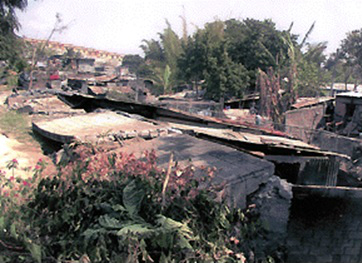
An interim detention center in São Paulo, Brazil. / Rovena Rosa / Agência Brasil / Wikimedia / Creative Commons

It has been a horrific start to 2017 in the Brazilian prison system, and reversing the trend will take much more than increased public funding.  A wave of violence began on New Year’s Day when 56 inmates were killed during a riot inside of a penitentiary in Manaus.  A series of deadly inmate uprisings followed that massacre, bringing the number of inmates killed this month to 120.  Macabre images of inmates’ decapitated corpses strewn about prison yards captured on cellphone cameras and posted to the internet reminded Brazilians that overcrowding, a weak state presence, and institutionalized gang power have combined to make Brazilian prisons – with over 600,000 inmates – tinderboxes ready to ignite at almost any time.

  • During a year I spent conducting fieldwork inside jails and prisons in Rio de Janeiro for a book and documentary film in 2011, I saw inmates crammed into cells at three and four times their intended capacity. On the worst nights, men unable to find space on the floor or a concrete bunk tied their torsos to the steel gates with t-shirts and attempted to sleep while standing.
  • The Comando Vermelho and other gangs controlled entire cellblocks and used smuggled cell phones and strategic visitors to maintain regular contact with leadership. This communications capability and weapons caches inside the cellblocks enabled them to act as the de facto government. Prison guards knew that they were outgunned and outnumbered, and they knew their off-duty lives could be easily extinguished by an order initiated inside the prison.  January’s riots revealed how thin the veneer of state control really is inside.

Impassioned pleas, prompted by the riots, to reduce overcrowding and provide more resources to Brazil’s prison system are being launched in a time of austerity.  The Brazilian Senate recently approved legislation that could freeze public spending for the next 20 years.  Public investment would certainly reduce the likelihood of future riots, but the crisis in Brazil’s jails and penitentiaries is not caused simply by underfunding.  It is the result of decades of the state treating inmates, and the residents of the neighborhoods where most of them were born, as less than full citizens.  Pastor Antonio Carlos Costa, leader of the human rights organization Rio de Paz, told me the state and public’s reactions to the many thousands killed by the police and hundreds murdered in prisons each year were limited because “they are poor people, people with dark skin, people considered killable.  These are deaths that don’t shock us, they don’t make the Brazilian cry.”

There is no excuse or justifiable defense for the inmates involved in the 120 murders that occurred inside Brazilian prisons this month.  It was an inhumane slaughter propelled by gangs, greed, and a power grab.  But the solution to Brazil’s profoundly troubled prison system lies much deeper than increasing public spending or reducing overcrowding.  Refusing to treat people as killable, gang-affiliated or not, is a goal that may take decades and will require a commitment that is much costlier than any public spending intervention or new legislation.  Laws protecting human rights would have to be enforced for all Brazilians, including prisoners.  Law abiding middle and upper-class citizens would have to push back and no longer tolerate some of the world’s highest murder rates and jails where 80 men squeeze into a cell built for 20.  Transformation this profound would be a difficult message to sell on the campaign trail, but anything less than that sort of social and cultural change from the government and the public will fall short of fixing the deeply rooted problems with Brazil’s prison system.

January 27, 2017

*Andrew Johnson is a Research Associate with the Center for Religion and Civic Culture’s Religious Competition and Creative Innovation (RCCI) initiative at the University of Southern California.

El Salvador: Dual Crackdowns Raise Questions

By Fulton Armstrong

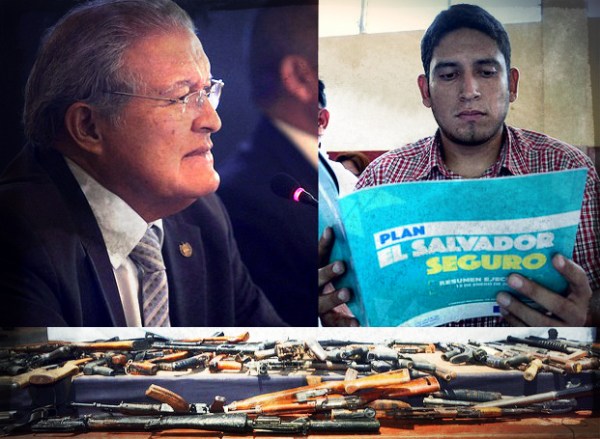
El Salvador Seguro

Photo Credits: Presidencia El Salvador and Departamento de Seguridad Pública OEA (modified) / Flickr / Creative Commons

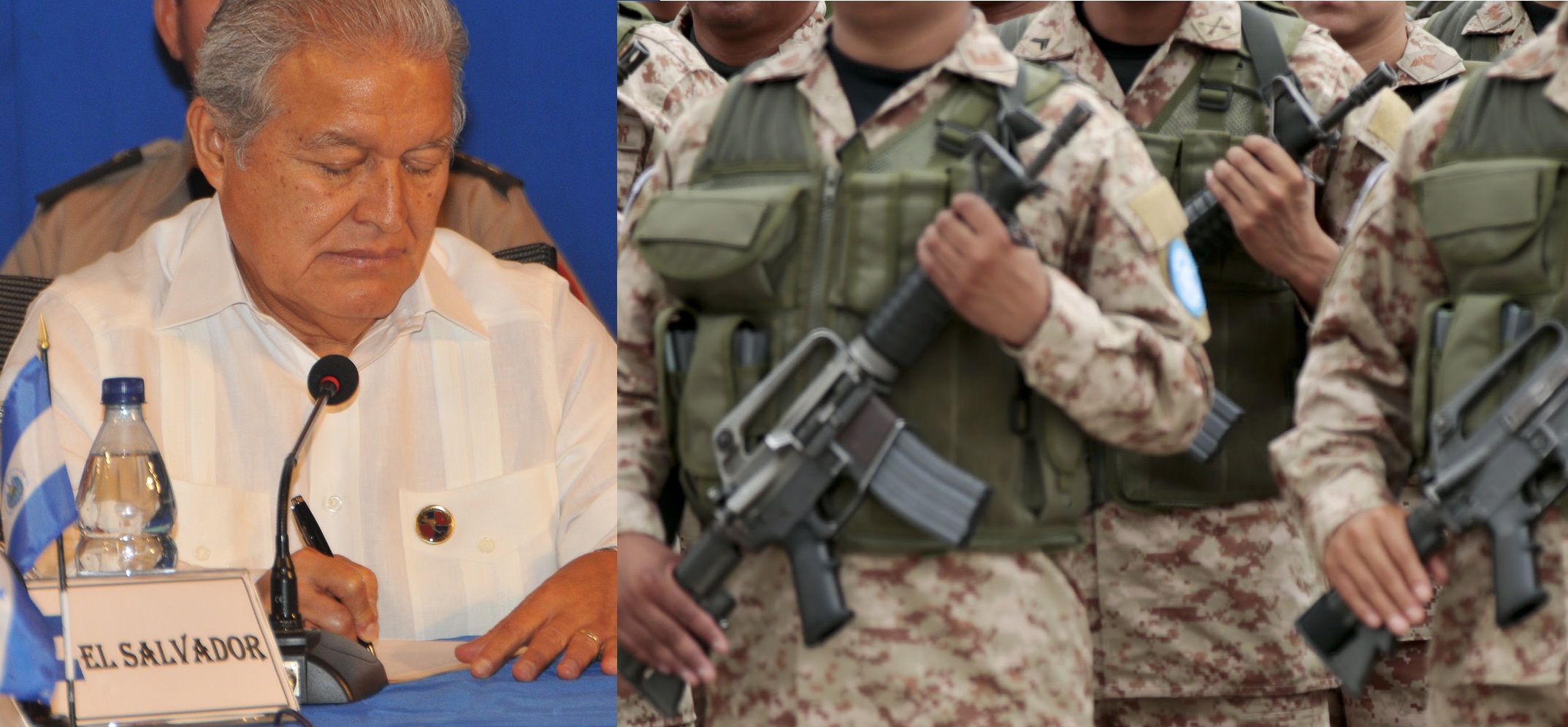
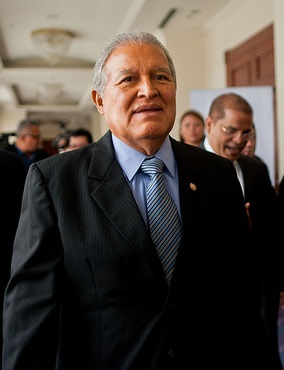
Salvadoran President Sánchez Cerén’s months-long crackdown on gangs has broadened into a crackdown on proponents of negotiations with them.  Upon orders of Attorney General Meléndez, 18 former officials involved in the past truce (covering two periods in 2012-2014) have been arrested, among them a principal mediator, former FMLN Congressman Raúl Mijango.  Three others, including the former head of prisons, are on the run.  Meléndez claims that the recent passage of legislation outlawing negotiations with gangs was not a factor, and that the detainees are not being held for their role negotiating the previous truce, but rather for violations of laws in place during the truce.  They are accused of “dereliction of duty,” “illicit association,” smuggling mobile phones into prisons, and possible misuse of US$2 million for truce implementation.  Meléndez said the government-gang pact “was not illegal” and he noted that it did help reduce reported murders, but he has asserted that it gave rise to disappearances and other violence, and allowed the gangs to re-arm and consolidate their control in some sectors.

The campaign against pro-dialogue voices has left several prominent players untouched.  The government has distanced itself from the activities of current Interior Minister Arístides Valencia, whose taped conversations with gangs have been revealed by the media, but he has been neither fired nor arrested.  Former Security Minister (and current Defense Minister) David Munguía is widely seen as the principal architect of the previous truce (securing essential cover from the Church for it), but he too remains in place.  Munguía’s name is prominent in Meléndez’s report, according to press accounts, but the Attorney General said that he lacks evidence of his involvement in wrongdoing.  Paolo Luers of El Diario de Hoy (himself a secret negotiator in 2012) and others are severely criticizing the lack of charges against Munguía while others, whom they call “political prisoners,” are detained.

  • Meanwhile, the government is deploying elite joint Army-Police units to hunt down alleged gang members in the countryside, amid growing unconfirmed reports of human rights violations.  The Office of the Human Rights Ombudsman has identified 13 cases of extrajudicial killings in two operations last year.

The recent arrests have caused debate to flare over the costs and benefits of the past truce and any future agreements with the gangs – as well as the efficacy of the mano dura approach. The crackdown on advocates of negotiations and the simultaneous emerging signs of death squad operations could threaten the credibility of the Sánchez Cerén government’s El Salvador Seguro strategy, which entails an array of efforts requiring political agreement on how to address the violence crisis.  Amidst mounting concern about the implications of the police and army crackdown on gangs, Washington has kept a low profile on these developments.  If current trends continue, however, the dual crackdowns could potentially raise doubts about the Administration’s ability to meet the human rights and other conditions that the U.S. Congress has put on the Alliance for Prosperity under which El Salvador, Guatemala, and Honduras have agreed to form and execute a common strategy against violence and other problems in Central America’s northern triangle.

May 16, 2016

For previous AULABLOG items on the impact of the Salvadoran truce, click here (January 2013), here (November 2014), and here (April 2015).

*This version of the blog was updated May 16, 2016 at 10:25 a.m.

El Chapo’s Recapture: A Fictionalized Reality Show

By Núria Vilanova*

Chapo Kate Penn Film

Photo Credit: Abd allah Foteih, Fanpage.- & Sachyn Mital – (modified) / Flickr & Wikipedia / CC BY-SA 3.0

A recent interview granted by Mexican drug kingpin El Chapo and his subsequent re-arrest validate yet again the observation of Mexican writer Carlos Fuentes that no matter how hard fiction strives to emulate reality, reality always surpasses it.  Narco-lives and deeds have attracted myriad fiction writers, filmmakers, and musicians giving way to a successful narco-literature and narco-cinema that has fascinated the general public, journalists, and scholars alike.  A recent example is the popular Netflix series Narcos, based on one of the most notorious drug traffickers, Pablo Escobar.  Well known also are the corridos in Northern Mexico that sing the adventures and prowess of powerful drug lords (often in exchange for large payments).  The narco-corridos are today the epical portrayal of criminal lords whose lives straddle glory and vileness.

In the interstices between reality and fiction rest the publicity-mongering and recapture this month of Joaquín “El Chapo” Guzmán, the subject of an intense six-month manhunt following his escape last July from a high-security prison.  No film would have been sufficiently credible and convincing had it attempted to stage El Chapo’s flight, but the reality is that the most prominent narco-lord since Escobar was able to vanish through a highly sophisticated tunnel whose construction required great engineering expertise.  The final seconds of his stay in his cell before entering his path to freedom were recorded by a security camera.  Megalomania – his eagerness to have his life and deeds taken to the big screen – apparently led to his undoing.  He reached out through intermediaries to soap-opera and film actress Kate del Castillo, whose role as narcotress in the popular show La reina del sur apparently captivated his heart, to set up a meeting with Hollywood star Sean Penn to present his version of his reality to the world.  Playing the role of an adventurous and intrepid journalist, Penn produced a 10,000-word report-interview for Rolling Stone magazine.  Thus, the three main characters of this story – El Chapo, Kate del Castillo, and Sean Penn – traveled from reality to fiction and back in a fictional-yet-real encounter.  The three characters straddled between two dangerous dimensions in complicity – reality and fiction – unaware that their secret meeting would somehow provide the clue that enabled Mexican security to shut El Chapo down again.

The reality-fiction play brings a much higher toll than just El Chapo’s return to prison.  Dozens of the corrido singers who extol the narcos’ lifestyle have been kidnapped, tortured, and killed in Mexico since the late 1990s.  Mexico is also at the international forefront on the number of journalists assassinated since 2006, when former President Calderón launched a bloody (and failed) war on drugs.  While the Mexican actress has not made any substantial comments on her apparent role in El Chapo’s return to prison, Penn has blustered his innocence as a courageous journalist-star whose mission was to make his countrymen reflect and make a self-critique of the bloodthirsty, futile war on drugs.  We, the audience, would probably wish this reality show would have brought about a less trivial outcome, but the last episode is not yet written.

January 25, 2016

* Núria Vilanova is Assistant Professor and Associate Chair of World Languages and Cultures.

Honduras: The Need to Differentiate among the Gangs

By Steven Dudley

Photo Credit: InSight Crime

Photo Credit: InSight Crime

Honduras street gangs – often inaccurately lumped into a single category – are a complex, deep-rooted social and criminal phenomenon that is driving violence and migration in record numbers. InSight Crime, after investigating them for most of 2015, found that the catch-all term “maras” is at once ominous and ill-defined. The two largest gangs – the Mara Salvatrucha (MS13) and Barrio 18 – have similar criminal revenue streams, but different approaches to obtaining those proceeds. Recognizing these differences is an important part of undermining their power and influence.

  • Extortion is a critical source of funding for both groups. This includes the public transportation system and taxi cooperatives in the largest urban areas, which account for a huge percentage of the gangs’ earnings. InSight Crime talked to one member of a bus cooperative that was paying four gangs extortion fees and was being pestered by a fifth.
  • The groups’ approach to local extortion targets – small businesses, shops, or local delivery services – is different. The MS13 does not extort where they operate; the Barrio 18 does, with huge implications for the gangs’ relations with the neighborhood’s residents and local police. The Barrio 18 is seen as predatory; the MS13 is often seen as a protector.
  • The MS13 is more focused on local drug sales, which allows it to forgo the easy extortion proceeds. Because it meddles less with residents, the MS13 has better relations with the local police, who, in turn, target the Barrio 18 with more resources and vigor. This also positions MS13 for better relations with community leaders and politicians, and it reportedly can, in some cases, act as the unofficial social services operator in cases of child or spousal abuse. In one area InSight Crime visited, the MS13 gives accused abusers a warning after the first report, a beating after the second, and banishment (or worse) after the third.
  • While they may operate under a single umbrella, the MS13 and the Barrio 18 also vary widely in sophistication and reach, wherewithal, and infrastructure. They are semi-autonomous and prone to violent spasms that have wide-reaching implications for the communities in which they operate. The Barrio 18 appears to be less disciplined and less focused on bigger goals than the elements of the MS13 InSight Crime studied. Barrio 18 members give the impression that their struggle is more about human survival than expansion in the underworld. They live by “codes,” such as “respect the barrio,” that are evoked as a pretext for nearly any action, violent or otherwise, against outsiders and fellow gang members alike.
  • The violent ethos that guides the Barrio 18 and the MS13 is shared by their rivals, who include offshoots of the two main gangs, vigilantes, and soccer hooligans. Almost all live from the same income sources – extortion and local drug peddling. Some days they are allies; other days they are enemies.

The repercussions of oversimplifying the situation – treating all gangs as the same – are not trivial. Honduras continues to struggle with record levels of violence, and the United States is grappling with record levels of asylum applicants from gang-riddled countries like Honduras. There are times for a hammer, with criminal groups that only seem to understand force. But there are also moments when negotiation, accommodation, and social programs are more persuasive, and long-lasting, than simply sending in more troops and arresting more youths with tattoos. The trick is to know the difference, but we can only do that if we start to see these groups as complex and dynamic organizations with different criminal economies, social relations, and political ambitions.

December 14, 2015

*Steven Dudley is co-Director of InSightCrime, which is co-sponsored by CLALS. The full report “Gangs in Honduras” is available in English here and in Spanish here.

CICIG: Model for Northern Triangle

By Fulton Armstrong and Héctor Silva

Photo Credit: Mike Gifford and Nicolas Raymond / Flickr / Creative Commons

Photo Credit: Mike Gifford and Nicolas Raymond / Flickr / Creative Commons

Guatemalan President Pérez Molina’s announcement two weeks ago that he would seek another two-year renewal of the Comisión Internacional Contra la Impunidad en Guatemala (CICIG) has been well received everywhere except in neighboring countries, which would benefit greatly from similar outside assistance.  A broad array of leading Guatemalans have welcomed the move, as have the UN and the United States.  U.S. Secretary of State Kerry said it “is a major step forward in the fight against organized crime … and will advance the goals of Guatemala and the United States as articulated in the Plan of the Alliance for Prosperity in the Northern Triangle.”  First created in 2007 to support prosecutions of cases involving corruption and impunity and to strengthen the country’s judicial sector through legal reforms and training, CICIG has been renewed every two years since.  Its commissioner, Colombian jurist Iván Velásquez, said CICIG “commits to the government and society to make every effort in support of Guatemala’s aspirations to consolidate institutions, to offer more analyses, to formulate proposals to strengthen institutions, to continue criminal investigations that we carry out shoulder to shoulder with the Public Ministry, and to continue building the capacity of judicial institutions.”

CICIG’s record shows that, on balance, it has made unique, positive progress to meeting Guatemala’s need for prosecution of impunity and for reform.  The Washington Office on Latin America and other key observers have given CICIG high grades because, as WOLA said in a recent report, it has provided “important investigative tools for the prosecution of organized crime … [and] helped to resolve emblematic cases of corruption and it has dismantled powerful criminal networks deeply embedded in the state.”  Daniel Wilkinson, managing director of the Americas division at Human Rights Watch, told the Guatemalan El Periódico that CICIG has “almost been a miracle.”  While it’s made some mistakes, he said, “The surprising thing is everything that CICIG has achieved in these years” in high-profile cases.  InSight Crime notes that the recent case against extortionist Byron Lima, who had suborned the head of the prison system, was impressive.  InSight Crime and others also say, however, that CICIG “has proved unable to sufficiently reform the country’s judicial system.”  InSight Crime reported that, despite its $12 million a year budget, the body is still struggling to train and foster an independent judiciary – that is, encouraging Guatemalan justice to work on its own.

Velásquez and his team will face tough challenges in the new mandate.  There are rumors that President Pérez Molina – who previously said he wouldn’t extend CICIG under the “threat of blackmail” – intends to rein the body in, and the retrial of former dictator Ríos Montt, currently projected to be in 2017, looms on the horizon as a further test of Guatemalan resolve to deal with impunity.  Nonetheless, CICIG is nearly universally seen as providing assistance that all three countries of the “Northern Triangle” of Central America need – to foment rule of law, build confidence in justice, and clean up state institutions – and it has achieved reforms when the political will was sustained.  CICIG’s status as an advisory body in support of the government has enabled it to finesse the legal and political need to fully respect sovereignty.  Honduran and Salvadoran leaders have made statements suggesting openness to the idea but, apparently for different reasons, don’t want independent investigators upsetting the applecart.  Salvadoran President Sánchez Cerén has less to fear from examination of his administration and his predecessor’s record on impunity and organized crime, but he may be concerned that a CICIG-style unit would dangerously aggravate his opponents, who retain intimidating power through many sectors.  The failure to push for CICIG to realize its full potential in Guatemala and for similar mechanisms in El Salvador and Honduras will only slow the sort of reforms the Northern Triangle needs to overcome its political, social, and economic challenges crises.

May 4, 2015

Violence and Risky Responses in El Salvador

By Héctor Silva

PresidenciaRD and US Embassy San Salvador / Flickr / Creative Commons

PresidenciaRD and US Embassy San Salvador / Flickr / Creative Commons

Salvadoran President Sánchez Cerén, facing a surge in gang-related violence, is grasping at risky solutions.  The 481 murders last month – about 16 per day – broke a 10-year record and represented a 52 percent increase over the same month in 2014.  The soaring murder rate has deep roots going back to well before Sánchez Cerén and his FMLN predecessor, President Funes, came to power in 2009, but its immediate cause is the end last year of the three-way truce between the country’s two biggest gangs – the MS13 and Barrio 18 – and the government.  Negotiated by the Funes administration in 2012, the truce provided a respite that, according to many observers, was doomed to fail because it split gang leaders, with those outside prison expanding their power, and allowed both gangs to expand their territorial control largely unfettered.  Another factor is weak leadership and low morale among public security forces, especially the National Police, which has gutted confidence among the rank and file and prompted some frustrated commanders to take matters into their own hands.  Extrajudicial executions of gang members in retaliation for the loss of police comrades have further driven up the death toll.  Observers increasingly refer to El Salvador’s current situation as a “low-intensity conflict.”

Sánchez Cerén has tried an array of sometimes contradictory tactics in response to the gang problem and the violence, creating an appearance of incoherence and ineffectiveness.  Without disputing estimates of the spiraling death toll, he has blamed the right wing and the media for creating a crisis atmosphere.  Over the past 10 months, he has attempted – and failed – to implement “community policing” strategies, which languish due to inadequate funding and planning, and he recently led several hundred thousand people in a march for “life, peace, and justice.”  With mounting pressure on the President to adopt hardline approaches, he has pledged greater resources to arm and deploy special anti-gang units, and last week he announced intent to supplement the 7,000 military troops already dedicated to law-enforcement duty with the creation of three new “Gang Cleanup Battalions.”  The government says that these 1,200 elite Army troops, strikingly reminiscent of the “Immediate Reaction Infantry Battalions” (BIRIs) that committed grave human rights abuses when deployed during the civil war, will be under civilian police control.

The President’s moves are fraught with danger.  His zigzags signal weakness to his ambitious political opponents and the gangs alike, and his political liabilities will only mount if, as almost all observers expect, the new battalions escalate the war in a manner that fuels extrajudicial killings and other human rights violations.  Criticism from advocates of dialogue with the gangs, including negotiators involved in the previous truce, further weaken him.  The fact is that the gangs, taking advantage of decades of state neglect of key sectors of society, have established strong bases of support in areas where the state’s presence and credibility are already nil or worse.  The shift toward a militarized strategy, moreover, runs counter to the tragic lessons learned in Honduras and Guatemala.  Going after the maras will entail battle in marginalized urban and rural areas that should be Sánchez Cerén’s and his FMLN party’s natural constituencies.  In a lose-lose situation, Sánchez Cerén may be opting for the surer loss.

April 23, 2015

El Salvador Security Challenges: Shaky Response So Far

By Héctor Silva Ávalos

Globovisión / Flickr / CC BY-NC 2.0

Globovisión / Flickr / CC BY-NC 2.0

After five and a half months in office, Salvadoran President Sánchez Cerén is still groping for ways to address the country’s pressing security concerns.  According to official figures, the homicide rate has rebounded to 11 per day – compared to five or six per day for four months last year during a gang truce sponsored by President Funes and his Security Minister, General  Munguía.  Highly unpopular among Salvadorans and despised by the United States – the key partner in security issues – the truce turned out to be the most effective homicide reduction policy since the end of the Civil War.  For Sánchez Cerén, however, the failure to renew the truce has proven to be politically toxic as violence has once again surged.  Inside sources say that the new government has engaged in a quiet dialogue with gang leaders but refuses to publicly embrace it as a mainstay of its approach to security.  Instead, Public Security Minister Benito Lara is pushing a model of community policing that has yet to prove effective and will be difficult to implement nationally.  Low morale within police ranks, the unwillingness of citizens to cooperate with police in gang-plagued territories and, as always, the lack of meaningful resources to address social investment in poor and violent communities are undermining the policy.

Two main elements of a successful approach – funding and political courage – are lacking.  Truce implementation was supposed to be followed by a comprehensive social investment program called Comunidades libres de violencia (Communities Free of Violence), but it never got funded.  Sánchez Cerén, moreover, has shown reluctance to take on the security issue.  The United States, for its part, has provided millions of dollars in assistance under its Central American Regional Security Initiative (CARSI) for vetted units of special investigators, transnational law enforcement initiatives to combat gangs, police equipment and training, and prison management, but institutional weaknesses remain acute and violence has continued to climb.  Moreover, many critics say the programs are flawed by a failure to condition aid on concrete government steps to end security forces’ impunity, corruption, and secret cooperation with organized crime.

The days in which iron-fist approaches and fanfare-hyping law enforcement activity represented a credible security strategy have passed.  Salvadoran politicians can no longer talk their way out of the security chaos by selling mano dura fantasies.  The truce under President Funes helped gang leaders consolidate their influence and hone their political skills to the point that a solution to reduce homicides without gang leaders’ imprimatur is plainly not possible.  As President, Sánchez Cerén has the opportunity to provide strong leadership, while addressing the public’s concerns, to pursue talks under clear conditions and with credible consequences for gang violations.  In return for a gang promise to reduce homicides, stop recruitment in vulnerable areas, and end gang rapes, the President could credibly offer to allow them greater sway in prisons and to support social programs in affected communities.  He can also commit to find the necessary resources.  The elites will resist paying, but a mini-summit of the three Presidents of Central America’s northern tier and U.S. Vice President Biden hosted by the Inter-American Development Bank this week affords Sánchez Cerén a chance to make a bilateral pitch for help to Biden and a multilateral pitch to the IDB.  He will have to steel himself for the political hits that will ensue, but without strong leadership, security in El Salvador will only continue to deteriorate.   The former guerrilla leader must know that there is no easy solution at hand, but as President – validated by a democratic election – he has the responsibility and holds the power to act.

November 11, 2014

Mexico: Is Peña Nieto Missing the Point?

By Fulton Armstrong

Rodrigo Barquera / Flickr / CC BY

Rodrigo Barquera / Flickr / CC BY

The disappearance and apparent massacre of 43 students from a city in Mexico’s Guerrero state is a rude reminder to President Peña Nieto that economic reform and increased foreign investment aren’t enough to help the country overcome the scourge of narcotics-fueled violence.  Federal and State prosecutors agree that the police in Iguala – who, along with the city’s mayor, have strong ties to the Guerreros Unidos cartel – handed the students over to the narcos after a confrontation during a student protest turned violent, already leaving six students dead.  Residents on a nearby ridge noted an increase in police and truck traffic soon after the showdown, but the dozens of bodies uncovered by searchers at mass graves in the area so far have not been the students’.  The mayor and police chief are in hiding, but Federal authorities say three dozen police and accomplices have been arrested and many have confessed.  None apparently has identified where the bodies were dumped.

As the scope of the crime, which occurred three weeks ago, has become clearer, the President’s rhetoric has been increasingly forceful, committing to investigate and bring the perpetrators to justice.  The Federal police have been directed to take control of security in the area and nearby municipalities.  The government announced last Friday, that the “supreme leader” of the Guerreros Unidos has been arrested, while another committed suicide after a standoff with police.  But critics point out the federal authorities’ own problems with corruption, and criticism of Peña Nieto’s efforts to stem the violence has been growing, especially in the wake of his administration’s many self-congratulatory statements about progress in the security area.  A new 5,000-strong national civilian gendarmerie he rolled out in August was ridiculed as too little, too late.  His continuation of his predecessor’s emphasis on arresting drug kingpins – resulting this year in the spectacular arrests of Joaquín “El Chapo” Guzmán Loera (of the Sinaloa cartel), Héctor Beltrán-Leyva (of the Beltrán-Leyva Organization), Fernando Sánchez Arellano (of the Arellano Félix cartel), and others – has failed to eliminate the underlying systems of the drug trade.

During the presidential campaign in 2012, Peña Nieto promised to reduce violence, and his decision not to obsess over the problem – as his predecessor, President Calderón, had – may have given him a respite.  But his administration apparently ignored clear signals of trouble – such as indications that in Guerrero state and elsewhere the cartels’ were expanding and consolidating their influence over government – and the problem seems to be roaring back with a vengeance.  The President’s focus on reforming the economy and attracting foreign investment makes strategic sense, but its long timeline doesn’t help him fight the fires of violence that envelop parts of the country.  There’s also merit in creating something like the gendarmerie and other institutional tools, but that approach seems to ignore that the rot of corruption has deep roots at all levels – federal, state, and local – that must be dealt with and that an elite unit tied to a federal capital hundreds of kilometers away can do little in places like Guerrero.  Calderón had shown the challenge wouldn’t be easy, but Peña Nieto has not yet shown that he – and Mexican society – are up to it either.

October 21, 2014

El Salvador: The Maras, Community Action, and Social Exclusion

By Mario Zetino Duarte, Larissa Brioso, and Margarita Montoya

Photo Courtesy of FLACSO-El Salvador

Photo Courtesy of FLACSO-El Salvador

Maras and gangs in El Salvador have become social actors with great power in communities suffering from a high level of social exclusion. They have been linked to violence and organized crime, and they have been blamed for the highest number of homicides, organized criminal actions, and the generalized insecurity in which the country lives. They have brought a sense of isolation to the communities in which they live, as well as a reputation that increases the communities’ exclusion. According to a study being conducted in crime-ridden communities of Santa Tecla (near San Salvador) and Sonsonate (64 km. west of the capital), the maras’ power derives from their ability to cause fear and terror among inhabitants as a result of their effective and organized criminal actions. Their influence has a strong psychological impact and broad influence over people’s lives. The criminal activities of the gangs in the community are generally rejected by inhabitants because they put families at risk, make neighborhoods the target of police operations, and taint both the community and its residents socially – making it hard for people to get or keep jobs.

Nonetheless, many citizens in these communities have a positive assessment of the maras when it comes to providing important neighborhood security, due to a lack of national or local authority. In Santa Tecla and Sonsonate, the Salvadoran government, the municipality, international organizations, and other institutions have invested heavily in programs to stem the tide of mara violence, with mixed results. These communities suffer from low levels of employment, education, and social security, particularly among women. Afraid of retribution, citizens in these communities do not turn to state institutions to report crimes or to request protection, and they instead approach the maras to take actions regarding conflicts with neighbors and situations related to domestic violence. The void in institutional services, which has been permanent in some communities, is being filled by the maras and their members, making them the primary support for the local Asociaciones de Desarrollo and implementers of development plans.

Changes in the community philosophy of the National Civilian Police (PNC) in one of the communities of the study offers a useful example of how new approaches can help improve citizens’ lives. The PNC’s new approach to the community and its underlying social and security problems has also led to the evolution of the maras’ role as community actors and their legitimacy in the people’s eyes, primarily based on the fear they instill. This has benefited some communities.  Likewise, international cooperation – which has played an essential role – and the recent implementation of community policing practices as a model within the national security strategy to reduce gang criminality have driven debate on how communities can confront violence and crime in a sustained manner. The problems are far from resolved, but the gangs, the police, and the state each appear to be redefining strategies and roles. It remains to be seen whether these actions are sustainable and applicable in other territories – and whether the maras’ involvement in development programs can help create conditions for citizens to cope with the violence and social exclusion that plague their communities.

* Mario Zetino Duarte, Larissa Brioso, and Margarita Montoya are researchers at FLACSO-El Salvador.  Their study is funded by the International Development Research Centre.

Guatemala: The War of Paz y Paz

By Steven Dudley*

CLALS Paz y Paz

Law professor and human rights attorney Claudia Paz y Paz’s selection as Guatemala’s first woman attorney general was a surprise, but strident opposition to her reappointment from the dark interstices of the political spectrum is not.  More hippy professor than government bureaucrat, she’s a woman who defied the odds when she took office in 2010.  Paz y Paz speaks with a soft, gentle tone to the point where she almost needs a microphone to run a staff meeting.  Yet, from nearly the moment she walked into the attorney general’s office, she made a difference.  She and her team arrested previously untouchable figures such Juan López Ortiz, alias Chamale, and dozens of members of the feared Mexican criminal group, the Zetas.  The country’s murder and impunity rates fell.  Paz y Paz also prosecuted former military officers, including former military dictator Ríos Montt and others allegedly involved in atrocities in the 1980s, and helped set up special offices to deal with violence against women.

Paz y Paz also demonstrated how, employing best practices, Guatemalan judicial institutions can excel.  Her office’s reliance on forensic evidence, telephone intercepts and video analysis made for stronger cases.  This took the onus off of eyewitness testimony, a notoriously unreliable means of fighting powerful criminal groups, especially those who have deeply penetrated the state.  Paz y Paz also widened the investigative net, looking at entire criminal structures, rather than focusing on single criminal acts.  She won praise from a broad array of international partners and pro-democracy forces inside Guatemala.  She was a 2013 Nobel Peace Prize nominee.

In spite of – or because of – these accomplishments, Paz y Paz is struggling to keep her job for another four-year term.  She has to be approved by a “postulation commission” made up of 14 lawyers who select the final six candidates, from which the president picks one.  Special interest groups, using shady brokers (some with ties to organized crime), are maneuvering to make sure that her attempt to reform Guatemala’s Attorney General’s Office ends sooner rather than later.  She has opened up many wounds and frightened Guatemala’s traditional elite, some of whose members worked with the Army during the civil war and believe they could be next on Paz y Paz’s list.  Efforts to block Paz y Paz’s second term underscore that Guatemala is a country that is still struggling to deal with its past civil war and its forever lopsided power structure.  Despite ending a nearly four-decade-old conflict in 1996, Guatemala is still at war –though the battles now take place in the courts – and the elites don’t want a formidable player like Paz y Paz to be in the game.

*Steven Dudley is co-Director of InSightCrime, which is co-sponsored by CLALS.  Click here for the full investigation of “The War of Paz y Paz.”