Drug Dealing in Costa Rica: A Perverse Path toward Social Inclusion

By Rodolfo Calderón Umaña*

Antonio / Flickr / Creative Commons Attribution-NonCommercial-ShareAlike 2.0 Generic (CC BY-NC-SA 2.0)

Antonio / Flickr / Creative Commons Attribution-NonCommercial-ShareAlike 2.0 Generic (CC BY-NC-SA 2.0)

Central America’s emergence as a principal transit route for illicit drugs from South America to the U.S. has given rise to local retail markets supplying users within the region.  A study of three Costa Rican communities – one in greater San José and two along the Caribbean coast – highlights several factors that determine the scale and consequences of these local markets.  Among the most important are the high levels of social exclusion experienced by households in these localities and residents’ motivation to become involved in the business because it offers resources (money, power and prestige) that cannot be achieved through the legitimate channels of education or quality employment.  Other factors include the proximity of the communities to drug trafficking routes and the extent of previously existing demand from local consumers.

One of the most significant characteristics of local drug markets in these communities, as elsewhere, is that they are socially and territorially bounded because trust is the key factor shaping relationships between suppliers, sellers and consumers.  Some local suppliers maintain direct ties to cartels, but they operate their businesses independently.  Youth are assigned the most vulnerable tasks and are thus disproportionately represented among those arrested and convicted of crimes.  Violence serves as the principal instrument for controlling and regulating the drug trade, and the result is that for youth in these settings violence becomes normalized as a routine form of behavior.  This spawns a generalized climate of fear and insecurity, and the typical response of community residents is to retreat from public space and to isolate themselves inside their homes.

These findings support calls for new responses to the drug trade at the community level.  Central American governments, encouraged to a significant degree by U.S. programs, have tended to emphasize repressing and “combatting” the scourge of drug trafficking, yet where this approach has been implemented – particularly in Central America’s Northern Triangle — social problems have only gotten worse.  In Costa Rica, it’s not too late to undertake a comprehensive strategic review of policies in this domain and to bolster programs to stabilize affected areas.  Particularly if designed and implemented from the bottom up, programs can identify and reach out to vulnerable residents before they are drawn into drug micro-markets as vendors, consumers, or both.  Vocational training programs matched to real employment opportunities are absolutely fundamental – to reduce residents’ social exclusion.  Our research findings indicate that enhancement of public spaces where community residents can congregate and initiatives focused on building trust between communities at risk and representatives of the state can also be highly productive.  Costa Rica is at a critical juncture: it can either sustain and expand the participatory policy frameworks that buttress community cohesion and resilience or run the risk of falling into the devastating spiral of delinquency and violence that has plagued its neighbors in the Northern Triangle.

*Dr. Calderón Umaña is a researcher at FLACSO-Costa Rica.  The study is being conducted by FLACSO-Costa Rica with funding from the International Development Research Centre.

U.S. Southern Command: Diminished Resources Affect Mission

By CLALS Staff 

General John F. Kelly Photo credit: Secretary of Defense / Foter / CC BY

General John F. Kelly
Photo credit: Secretary of Defense / Foter / CC BY

In an annual posture statement to Congress and a press conference, SouthCom Commander John Kelly played up the successes of his command’s counternarcotics mission – particularly its “engagements” throughout Latin America – but emphasized that his effectiveness is threatened by budget cuts.  The General said that cooperation with Honduras, El Salvador, Guatemala, and others was “very, very valuable,” and he boasted that the United States has trained over 5,000 Mexican soldiers over the past year.  But he warned that “severe budget constraints” are limiting the Command’s ability to build on the progress.  On Capitol Hill, he said, “Let me be frank: reduced engagement risks the deterioration of U.S. leadership and influence in Central America, South America, and the Caribbean.”

Kelly had lots of praise for individual counternarcotics operations – specifically Colombia’s “unbelievable heroic efforts” with crop eradication and attacks on processing labs – and cited the effectiveness of his Command’s drug interdiction programs (capturing about 132 tons of cocaine in 2013) despite funding cutbacks.  But the General reported that his Command failed to intercept 80 percent of the drugs flowing out of Colombia and about 74 percent of all maritime flows.  Despite his praise for Colombia, his statements confirmed that it is still a major producer (reportedly third, after Peru and Bolivia) and the major exporter of cocaine to the United States.  SouthCom estimates that the cocaine industry is still worth $85 billion a year and has “franchises” in 1,200 U.S. cities.  Kelly also reported that heroin consumption in the United States is up 65 to 80 percent in the last several years – “and it all comes up through Latin America.”  He said that SouthCom has been directed to reduce the amount of drugs reaching the United States from Latin America by at least 40 percent – a goal he said he cannot achieve because of cutbacks.

Policymakers and program-managers always face a balancing act when speaking in Washington.  They understandably tout their successes; cite resource constraints as the reason for failure to attain mission objectives; and make a pitch for resources.  SouthCom, having a budget that dwarfs that of any other agency, traditionally has been primus inter pares in Latin America, but Kelly portrayed his Command as merely one of many in the U.S. interagency.  His praise of Colombia as a “regional security exporter” also hints at the unwillingness or inability of the Command to continue its investment in such operations.  When the best-funded U.S. agency operating in Latin America projects itself in this fashion, admitting that the vast majority of illegal narcotics still reach U.S. territory, it’s natural for U.S. taxpayers to wonder what they are getting for their many millions of dollars.  If the Obama administration cannot make a better case, U.S. counternarcotics policy would appear to lack direction and, absent a systematic review, will continue essentially on autopilot.

Mexico: Policy on “Auto-defensas” Makes Things Worse

By Steven Dudley*

Photo credit: Pedro Fanega / Flickr / CC BY

Photo credit: Pedro Fanega / Flickr / CC BY

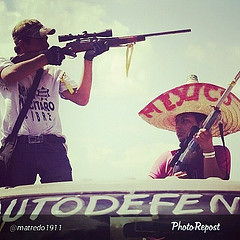
In a few short months, Michoacán’s “self-defense” groups have gone from being the Mexican government’s drunk uncle to being its strategic partner – underscoring what is wrong with the current government’s counterdrug strategy.  The vigilante groups are a multi-headed beast, born from sentiments that range from despair and frustration to opportunity.  Desperate small farmers and shopkeepers created some of the units because they’d been victimized by the “Knights Templar,” a splinter group with deep roots in the drug trade that has literally raped and pillaged their villages.  Frustrated agricultural and mining interests have funded their own “self-defense” groups.  And opportunistic rival criminal groups also seek to kill the Knights to take new, or reclaim old, territory.   Mexico’s federal and local governments are to blame for this chaos.  Drug-fueled corruption, ineptitude and lack of political will on the federal level have left the locals to fend for themselves, often leaving local politicians and security forces to align with the criminal interests, including the Knights Templar.

The federal government’s feeble and disjointed attempt to address the vigilantism is leading only to more confusion, chaos and most likely bloodshed.  In late January, it created a framework that legalized the organizations, placed then under one moniker – Rural Defense Units – and asked members to register themselves and their weapons.  But the framework makes no mention of their purview, jurisdiction, proposed length of service, nor does it clarify controls on their automatic and other sophisticated weaponry, which, under current Mexican law, requires military authorization.  Some of the groups accepted the government offer, including those that rode into the Michoacán city of Apatzingán last weekend to “take back” the city from the Knights.  More importantly, other vigilante groups have flat out refused the government.  Further fueling chaos, the federal government is applying a far harsher, more statist approach in the neighboring state of Guerrero, dispatching troops to stop the spread of “self-defense” groups that may have a longer history and more justifiable constitutional mandate than those in Michoacán.

Vigilante violence will undoubtedly continue to grow, as it becomes clearer that the federal government has no idea how to deal with it.  It is failing to address one of the root causes of the problem: illegal drugs have led to spectacular earnings that have made corrupting local and national officials easier; given criminal groups access to better training and weaponry to challenge the state and rivals; and created local, powerful criminal economies where perhaps they did not exist in the past.  In fact, no government official, vigilante group or other party in this conflict has even mentioned illegal drugs.  One vigilante told InSight Crime’s Mexico correspondent flat out: “We’re not against drug trafficking; we’re against organized crime.”  The causes of the violence are complex, but one cannot be addressed without addressing the others, and the Mexican government’s disjointed response is not pushing the country any closer to a solution.

* Steven Dudley directs InSight Crime and is a Senior Fellow at the Center for Latin American and Latino Studies.

What does the New Year hold for Latin America?

We’ve invited AULABLOG’s contributors to share with us a prediction or two for the new year in their areas of expertise.  Here are their predictions.

Photo credit: titoalfredo / Foter.com / CC BY-NC-SA

Photo credit: titoalfredo / Foter.com / CC BY-NC-SA

U.S.-Latin America relations will deteriorate further as there will be little movement in Washington on immigration reform, the pace of deportations, narcotics policy, weapons flows, or relations with Cuba.  Steady progress toward consolidating the Trans-Pacific Partnership (TPP), however, will catalyze a shared economic agenda with market-oriented governments in Chile, Mexico, Peru and possibly Colombia, depending on how election-year politics affects that country’s trade stance.

– Eric Hershberg

The energy sector will be at the core of the economic and political crises many countries in the Americas will confront in 2014.  Argentina kicked off the New Year with massive blackouts and riots.  Bolivia, the PetroCaribe nations, and potentially even poster child Chile are next.

– Thomas Andrew O’Keefe

Unprecedented success of Mexico’s Peña Nieto passing structural reforms requiring constitutional amendments that eluded three previous administrations spanning 18 years, are encouraging for the country’s prospects of faster growth.  Key for 2014: quality and expediency of secondary implementing legislation and effectiveness in execution of the reforms.

– Manuel Suarez-Mier

Mexico may be leading the way, at least in the short term, with exciting energy sector reforms, which if fully executed, could help bring Mexico’s oil industry into the 21st Century, even if this means discarding, at least partly, some of the rhetorical nationalism which made Mexico’s inefficient and romanticized parastatal oil company – Petróleos Mexicanos (PEMEX) – a symbol of Mexican national pride.  Let’s see if some of the proceeds from the reforms and resulting production boosts can fortify ideals of the Mexican Revolution by generating more social programs to diminish inequality, and getting rid of the bloat and corruption at PEMEX.

– Todd Eisenstadt

Brazil is without a doubt “the country of soccer,” as Brazilians like to say.  If Brazil wins the world cup in June, Dilma will also have an easy win in the presidential elections.  But if it loses, Dilma will have to deal with new protests and accusations of big spending to build soccer fields rather than improving education and health.

– Luciano Melo

Brazilian foreign policy is unlikely to undergo deep changes, although emphasis could shift in some areas.  Brazil will insist on multilateral solutions – accepting, for example, the invitation to participate at a “five-plus-one” meeting on Syria.  The WTO Doha Round will remain a priority.  Foreign policy does not appear likely to be a core issue in the October general elections.  If economic difficulties do not grow, Brazil will continue to upgrade its international role.

– Tullo Vigevani

In U.S.-Cuba relations, expect agreements on Coast Guard search and rescue, direct postal service, oil spill prevention, and – maybe – counternarcotics.  Warming relations could set the stage for releasing Alan Gross (and others?) in exchange for the remaining Cuban Five (soon to be three).  But normalizing relations is not in the cards until Washington exchanges its regime change policy for one of real coexistence.  A handshake does not make for a détente.

– William M. LeoGrande

A decline in the flow of Venezuelan resources to Cuba will impact the island’s economy, but the blow will be cushioned by continued expansion of Brazilian investment and trade and deepened economic ties with countries outside the Americas.

– Eric Hershberg

In a non-election year in Venezuela, President Maduro will begin to incrementally increase the cost of gasoline at the pump, currently the world’s lowest, and devalue the currency – but neither will solve deep economic troubles.  Dialogue with the opposition, a new trend, will endure but experience fits and starts.  The country will not experience a social explosion, and new faces will join Capriles to round out a more diverse opposition leadership.  Barring a crisis requiring cooperation, tensions with the United States will remain high but commerce will be unaffected.

– Michael McCarthy

Colombia’s negotiations with the FARC won’t be resolved by the May 2014 elections, which President Santos will win easily – most likely in the first round.  There will be more interesting things going on in the legislative races.  Former President Uribe will win a seat in the Senate.  Other candidates in his party will win as well – probably not as many as he would like but enough for him to continue being a big headache for the Santos administration.  Colombia’s economy will continue to improve, and the national football team will put up a good fight in the World Cup.

– Elyssa Pachico

Awareness of violence against women will keep increasing.  Unfortunately, the criminalization of abortion or, in other words, forcing pregnancy on women, will still be treated by many policy makers and judges as an issue unrelated to gender violence.

– Macarena Saez

In the North American partnership, NAFTA’s anniversary offers a chance to reflect on the trilateral relationship – leaving behind the campaign rhetoric and looking forward. The leaders will hold a long-delayed summit and offer some small, but positive, measures on education and infrastructure. North America will be at the center of global trade negotiations.

– Tom Long

The debate over immigration reform in Washington will take on the component parts of the Senate’s comprehensive bill. Both parties could pat themselves on the back heading into the mid-term elections by working out a deal, most likely trading enhanced security measures for a more reasonable but still-imposing pathway to citizenship.

– Aaron Bell

The new government in Honduras will try to deepen neoliberal policies, but new political parties, such as LIBRE and PAC, will make the new Congress more deliberative. Low economic growth and deterioration in social conditions will present challenges to governability.

– Hugo Noé Pino

In the northern tier of Central America, despite new incoming presidents in El Salvador and Honduras, impunity and corruption will remain unaddressed.  Guatemala’s timid reform will be the tiny window of hope in the region.  The United States will still appear clueless about the region’s growing governance crisis.

– Héctor Silva

Increased tension will continue in the Dominican Republic in the aftermath of the Constitutional Tribunal’s decision to retroactively strip Dominicans of Haitian descent of citizenship.  The implementation of the ruling in 2014 through repatriation will be met with international pressure for the Dominican government to reverse the ruling.

— Maribel Vásquez

In counternarcotics policy, eyes will turn to Uruguay to see how the experiment with marijuana plays out. Unfortunately, it is too small an experiment to tell us anything. Instead, the focus will become the growing problem of drug consumption in the region.

– Steven Dudley

Eyeing a late-year general election and possible third term, Bolivian President Evo Morales will be in campaign mode throughout 2014.  With no real challengers, Morales will win, but not in a landslide, as he fights with dissenting indigenous groups and trade unionists, a more divisive congress, the U.S., and Brazil.

– Robert Albro

In Ecuador, with stable economic numbers throughout 2014, President Rafael Correa will be on the offensive with his “citizen revolution,” looking to solidify his political movement in local elections, continuing his war on the press, while promoting big new investments in hydroelectric power.

– Robert Albro

Determined to expand Peru’s investment in extractive industries and maintain strong economic growth, President Ollanta Humalla will apply new pressure on opponents of proposed concessions, leading to fits and starts of violent conflict throughout 2014, with the president mostly getting his way.

– Robert Albro

Will the U.S. Support Controls on Security Contractors in Latin America?

Photo by: Charles Atkeison / flickr / Creative Commons

Photo by: Charles Atkeison / flickr / Creative Commons

An upcoming conference in Switzerland will test U.S. willingness to make good on its rhetorical support for greater control over private contractors involved in wars or similar circumstances.  The “Montreux plus five” conference in December will discuss implementation of the Montreux Document, which lays out legal obligations and “best practices” for countries that hire “Private Military and Security Companies” (PMSCs) during armed conflict.  The process emerged in 2008 to reiterate state responsibilities after contractors were found to be deeply involved in incidents in Iraq – including the torture of detainees at Abu Ghraib prison and a confrontation at Nissour Square in which 17 civilians were killed.  The United States, which participated in discussions of the Document and endorsed it, has been developing its own “standards” based on it.

Although the PMSCs in Iraq and Afghanistan – and their alleged involvement in human rights abuses – are most widely known, security contractors are deeply engaged in U.S. efforts in Latin America related to the “war on drugs.”  In the 2005-2009 period, DynCorp, Lockheed Martin, Raytheon, ITT, and ARINC collectively received counternarcotics contracts in Latin America worth a total of $1.8 billion.  The contracts include provision of intelligence, surveillance, reconnaissance, information technology, and communications equipment.  Lockheed Martin received contracts for training, equipment, and other services in Colombia and Mexico. Yet the majority (Democratic) staff of the subcommittee on contracting oversight of the U.S. Senate Committee on Homeland Security and Governmental Affairs concluded in 2010 that neither the State Department nor the Department of Defense had adequate systems to track the implementation of counternarcotics contracts.  Referring to contract and accounting errors, the Bureau of International Narcotics and Law Enforcement Affairs told the subcommittee chairman that it “does not … maintain discrete records of such occurrences since these challenges routinely occur at the embassies.”

The subcommittee’s focus was on contracting anomalies, but publicly acknowledged incidents – such as DynCorp’s violation of guidelines governing coca eradication in Colombia – suggest oversight over operations is also lacking.  In Colombia, for example, two cases of rape of a minor involving U.S. contractors were reported yet remain uninvestigated, and in Mexico a contractor appears to have been involved in torture training.

PMSCs often carry out their work within the dark interstices of sensitive operations – beyond the government’s immediate operational control but functioning with its imprimatur and expecting its protection when things go wrong.  The U.S. Senate’s acknowledgement of the need for better management and oversight over them has not driven significant reforms yet.  If the Iraq and Afghanistan experiences are any guide, problems with the monitoring of expenditures are the tip of the iceberg.  Security contractors tend to run rough over human rights, and they are often a source of tensions with both governments and the population in host countries.  The use of security contractors without effective monitoring is a source of diplomatic tension within the region as well.  DynCorp’s aerial eradication operations, for example, provoked Ecuador to file suit against Colombia in the International Court of Justice, arguing that Colombia dispersed toxic herbicides into Ecuadoran territory, damaging human health, property and the environment.  The two countries recently resolved the dispute, but the case illustrates the risk of outsourcing sensitive operations to contractors without careful monitoring.

U.S.-Mexico: Border Liaison Groups—the Bread and Butter of Cooperation

By Carolyn Gallaher and David Shirk

"Little Road, Big Intersection" Photo credit: “Caveman Chuck” Coker / Foter / CC BY-ND

“Little Road, Big Intersection” Photo credit: “Caveman Chuck” Coker / Foter / CC BY-ND

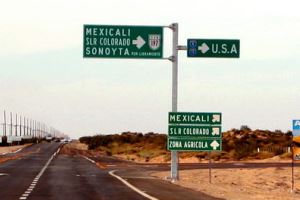
Drug traffickers often find ingenious ways to get their product across the U.S.-Mexico border, but cooperation among Border Liaison Officers can often stop them.  In Mexicali, one trafficker used a pneumatic cannon attached to his truck bed to shoot packages of marijuana across the border for pickup.  After some surveillance, Border Patrol caught the truck in action.  Agents took down the license plate number and called an officer in the Mexicali police department, who looked up the number, tracked down the truck’s owner, and made an arrest.  Border Patrol agents knew who to call in Mexicali because they belong to the same border liaison group.  Although they receive little public attention, border liaison groups are a crucial part of the cooperative infrastructure between the two nations.  They allow cooperation to continue during, and in spite of, political transitions, diplomatic imbroglios, and other shifts in bilateral relations.

Border liaison groups are semi-formal organizations in which officers cooperate on policing cross-border crimes such as auto theft, low-level drug crimes, and smuggling.  They are usually organized and maintained by law enforcement officials.  The San Diego Police Department, for example, used to have a full team of officers whose full-time job was to liaison with officers in Mexico.  Membership in border liaison groups is not compulsory, however, and there are no restrictions on which agencies for which a member must work.  Groups usually include a mix of local, state, and federal officials. And meetings are typically held in informal places like restaurants, barbeques at members’ homes, or at organized events, such as boxing matches and softball games.

Border liaison groups facilitate cooperation in a number of ways.  In a structural sense, they help individuals navigate the other side’s bureaucracy – i.e. identifying which agency is in charge of a particular issue, and who in the agency you should call.  They are also fundamental for establishing trust.  In a context where corruption is an ever-present concern, border liaison groups give members a chance to get to know one another, and to discern potential partners’ trustworthiness.  A member of the Baja state’s preventive police force (known by its Spanish acronym PEP) told us, for example, that officers often use the “gut test.”  You only work with someone your gut says is “ok.”  (A California law enforcement officer told us it was similar to the “gut check” he used when meeting his teenage daughters’ suitors.)  Officers also use more tangible tests.  It is not uncommon to share a piece of information and track what happens with it.  If the information is used appropriately, the agent initiating the test may decide to share more substantial information.

One of the biggest threats facing border liaison groups is funding.  Budget cuts in California, for example, have led several law enforcement agencies to reduce liaison positions, or they have grafted liaison duties onto established jobs.  Another problem is replicating these groups in non-border areas.  The Cook County Special Investigations Unit in Chicago, for example, told us “we are the border,” noting that perpetrators and victims of crime in the city are often Mexican.  Without contacts on the other side, however, the unit can only communicate through official conduits in Washington (e.g., the FBI or Immigration and Customs Enforcement, ICE) – a cumbersome process that most officers avoid.  Indeed, the sorts of information border liaison group members share – drivers’ license numbers, last known addresses, known associates – are too time-sensitive for formal channels to be of use.  The recent arrests of high-level kingpins in the Zetas and Gulf cartel tend to get widespread media attention, but the daily work by law enforcement officers is often just as important. 

Carolyn Gallaher is a professor in the School and International Service at American University.  David Shirk is a professor in the Political Science Department at the University of San Diego.

This project was supported by Award No. 2011-IJ-CX-0001, awarded by the National Institute of Justice, Office of Justice Programs, U.S. Department of Justice. The opinions, findings, and conclusions or recommendations expressed in this publication/program/exhibition are those of the author(s) and do not necessarily reflect those of the Department of Justice.

Is Obama Declaring “Mission Accomplished” on Drugs?

By Kevin Gatter

Photo Credit: Ministerio de Seguridad Argentina / Foter / CC BY-NC-ND

Photo Credit: Ministerio de Seguridad Argentina / Foter / CC BY-NC-ND

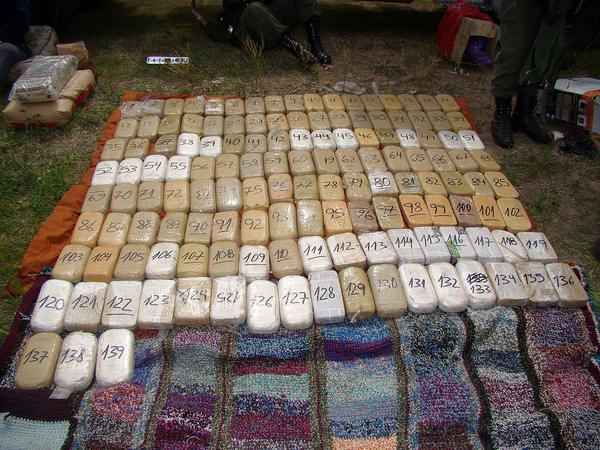
The Obama Administration is claiming major progress in the war on drugs, but the evidence is subject to challenge – and the good news surely hasn’t reached Latin America yet.  On July 9, the Office of National Drug Control Policy (ONDCP) released an annual report that asserted a significant decline in the U.S. cocaine market, with sizable decreases in both the number of deaths caused by cocaine overdose and the rate of people testing positive for cocaine in the workplace.  It also suggests that potential pure cocaine production capacity in the Andes has fallen by approximately 41 percent since 2001, including 10 percent last year alone.  The report credits this decrease to numerous factors, including U.S.-Colombia partnership, “strengthened democratic institutions,” an increased commitment to counternarcotics cooperation and citizen security in Peru, alternative development, enhanced law enforcement efforts, and focused and persistent education about drug abuse.

Other experts say the picture may not be as rosy.  The UNODC has yet to find what it considers accurate data on coca cultivation since 2011 and, importantly, asserts that declines in past years were offset by an increase in efficiency in the manufacturing chain from coca bush to cocaine hydrochloride.  Additionally, the UNODC estimates that while the estimated total area of coca cultivation in 2011 was only three-quarters of the level in 1990, the quantity of cocaine manufactured in 2011 was at least as high as in 1990.  In any event, it is important to recognize that even if the U.S. is consuming less cocaine, demand for other drugs remains high.  Some analysts speculate that the U.S. market is moving away from Andean cocaine and toward marijuana and methamphetamines from Mexico.  Furthermore, some experts say that growing cocaine demand in Europe and elsewhere is driving prices up and reducing U.S. consumption.

ONDCP’s report has a self-congratulatory tone that – combined with Obama’s clear de-emphasis of counternarcotics at his Central American Summit in San José in May – suggests eagerness to declare victory in a 40-year war against a scourge that continues to have dire implications for every country touched by the drug trade, especially those in Central America and Mexico.  The data are extremely difficult to corroborate.  Cultivation estimates, based on satellite studies of a sampling of possible growing areas, have been notoriously suspect, and the UNODC’s concerns about ignorance of leaf-to-cocaine yield are valid.  Many of the flow estimates are based on interdictions, but U.S. agencies have openly acknowledged that interdiction operations have been significantly reduced for budgetary reasons.  A drug flow that Washington doesn’t detect is not a drug flow that has disappeared.  Moreover, the National Survey on Drug Use and Health is based on self-reporting in interviews and omits significant populations, including the homeless and incarcerated. Policy makers around the hemisphere surely hope that ONDCP’s triumphalism is warranted, but the key indicators of success will be a decline in drug-related violence, a weakening of transnational criminal groups, an end to the southbound flow of arms from the United States, the flourishing of alternative economic options for coca farmers, and reversal a pervasive popular suspicion that governments and security agencies have been corrupted by the billions of drug dollars flowing through the region.

OAS Drug Report: Let’s Get Serious

The OAS Preparing their Report on the Drug Problem in the Americas | Photo credit: OEA - OAS | Foter.com | CC BY-NC-ND

The OAS Preparing their Report on the Drug Problem in the Americas | Photo credit: OEA – OAS | Foter.com | CC BY-NC-ND

The Organization of American States’ most recent report on the drug problem in the Americas – released last week in Bogotá – takes a fresh, analytical look at the issue and, by advocating discussion of new approaches, subtly signals the “war on drugs” so far has failed.  The report was mandated by hemispheric leaders last year at the Summit of the Americas in Cartagena, who “agreed on the need to analyze the results of the current policy in the Americas and to explore new approaches to strengthen this struggle and to become more effective.”  It takes an analytical approach toward drug-related problems in the hemisphere and includes a discussion of both the supply and demand factors of the drug trade.  (Click here to view the OAS documents.)

The report does not make bold policy recommendations.  It calls for greater attention to the public-health implications of the drug problem, but generally avoids advocating particular strategic solutions to the production, transportation and consumption of illegal narcotics, instead providing different scenarios for the evolution of the drug problem in the Americas.  It envisions the legalization of certain drugs, such as marijuana, in various countries, but makes clear that the OAS is not advocating legalization or decriminalization.  Instead, the report emphasizes the need for countries in the Western Hemisphere to work together to combat the drug problem and discuss new approaches.

The OAS’s unique status in the hemisphere – demands on its performance are high but support for its efforts  from key governments in the region is inconsistent – may not make it the best organization to take the lead on an issue as thorny as the “war on drugs.”  The increasingly clear consensus south of the Rio Grande is that the past couple decades of effort have been not been worth the cost in dollars and lost lives, and many Central Americans, in particular, believe the militarized approach has been disastrous.  Often criticized by U.S. politicians and bureaucrats, Secretary General Insulza was probably wise not to use the report to formalize the hemisphere’s rejection of Washington’s policies.  But moving the discussion to the analytical level – rather than parroting support for another Plan Colombia or Mérida Initiative – is a significant accomplishment in itself.  Rolling out the report in Bogotá, where talk of “new approaches” is also growing, probably helped strike the right balance between old and new.  In addition to platitudinous calls for regional cooperation, the OAS can demonstrate its leadership and relevance by channeling the criticism, the lessons learned, frustration with U.S. consumption, and regional governments’ prescriptions on the way ahead into a serious, constructive strategy for the hemisphere.  With this report, the OAS has indicated that it’s time to get serious about viable alternative solutions to this multi-faceted issue – and that clinging to old models and rejecting new ideas is no longer an acceptable response to calls for rethinking the “war on drugs.”

Narcoliteratura: Another Way to Look at the Problem

By Héctor Silva

Élmer Mendoza

Élmer Mendoza

Latin America has suffered through almost three decades of the so-called war on drugs.  U.S. President George H.W. Bush formally declared the war in the late 1980s, but from the Andes to the Rio Grande it started when the Colombian cartels and their Mexican partners (then exclusively involved in distribution) created a multi-billion-dollar business to satisfy the growing U.S. market.  The druglords’ strategy of “plata o plomo” brought Mesoamerica and Mexico to their knees through violence and institutional corruption.  Hundreds of thousands have died, but the “war” has failed to tackle the economic basis of the industry: markets shift and supplies remain steady.  The cartels are smaller and more ruthless, and nation states are weakened by corruption.  Reams of reports have been written by official agencies, international organizations and think tanks – the latest a creative study by the OAS – but solutions remain elusive.

The drug trade has left an indelible mark on the very fabric of Latin American culture and society.  “Narcoliteratura,” one of whose main creators is Mexican writer Élmer Mendoza, is one of the most curious manifestations of this.  (Mendoza spoke at American University and was interviewed by this writer in February.)  His main character is Edgar “El Zurdo” Mendieta, a troubled police officer in Culiacán, Sinaloa, a city emblematic of the Mexican drug cartels.  El Zurdo’s stories capture the dual representation that Latin American culture has given to both the trade and its capos – romantic and profitable, yet evil.  Mendoza’s books give a naked and honest portrait of a society that has adapted, for its own survival, to most of the values associated with the narco business.  As Mendoza says, “El Zurdo” tries to keep a distance from the narco, but he can’t avoid him because the narco is there and is very strong and, almost without wanting to be, is always in contact.”

Compared to the many reports that fail to lead to policies that would help attack the core problems that give rise to the narco industry, Mendoza’s work provides a fresh and sincere portrait of the devastating impact the drug trade and the “drug war” have had on Latin America.  In books like El Amante de Janis Joplin and Nombre de Perro, his message is powerful, coming from a writer that has been there, in Culiacán, since it all started.  He writes with no restraints, through the voice of his characters, to tell some simple truths.  In an interview with this writer, he offered a sampling of his wisdom.  “If the US came up all of a sudden with a program to deal with its addicts, it would mean the end for the narco business,” later adding that “the war on drugs is useless and has only caused death.”  He poignantly stated:  “The war on drugs also allowed us to relax our emotions and lose the last chance for justice.”


Belize: An Outlier in the Middle of the Mess

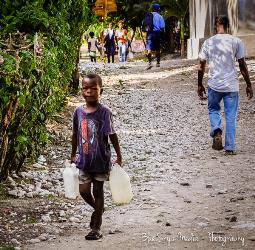
Belize - Boy carrying water. Photo credit: Blue Skyz Media / Foter.com / CC BY-NC-ND

Belize – Boy carrying water. Photo credit: Blue Skyz Media / Foter.com / CC BY-NC-ND

Though off the radar of most analysts, Belize appears to be the latest casualty of the drug trade and criminal violence.  It debuted on the Obama Administration’s annual blacklist of major drug-transit and -producing countries back in September 2011, alongside El Salvador, filling out the roster of Central American countries.  That U.S. government spotlight, however, has done little to halt the Mexican drug cartels’ expansion into Belize.  The U.S. State Department now estimates that about 10 metric tons of cocaine are smuggled each year along Belize’s Caribbean coast – partly the work of local contacts established by the Zetas and the Sinaloa cartel.

Like its neighbors’ security challenges, Belize’s problems are not limited to drug trafficking.  Urban gangs and the rivalries among them are the main driver of the escalating violence, which is rooted in the same causes as in neighboring countries – institutional weakness, rampant corruption, impunity, and unemployment.  The government-sponsored gang truce negotiated in 2011, which featured “salary” payments to members who ceased violent activities, collapsed last December when funds dried up.  (Click here for details documented by our colleagues at InSight Crime.)  Belizean authorities tallied a record number of homicides last year, edging out neighboring Guatemala for the sixth place slot in global per capita homicide rankings.  Porous borders make Belize attractive to transnational gangs, particularly El Salvador’s MS-13 and Barrio 18, both of which have established a significant presence in the capital city, Belmopan, and elsewhere.  About one-fifth of the country’s 325,000 people are Salvadoran citizens, making it difficult to track criminal elements.

The deteriorating conditions in Belize raise questions about the effectiveness of U.S. counternarcotics and “citizen security” programs in the region.  The patchwork of U.S. initiatives under the umbrella of the Central American Regional Security Initiative (CARSI) has not reversed regional trends even in tiny Belize.  While the country’s law enforcement agencies welcomed the heavy equipment, training, and technical assistance that make up the bulk of CARSI funding, the tactical gains have been obscured by a worsening strategic outlook.  The U.S. Government Accountability Office has voiced its concern that the State Department is confusing efforts with results.  Moreover, neither the Belizean nor U.S. government has mapped out a preventative strategy.  The most recent data show that less than half of the funds allocated to Belize from CARSI’s Economic Support Fund, used for programs to help at-risk youth, has been spent, and after handing out 1 million Belizean taxpayer dollars to gang members during the truce, for example, there is little to show for it.  In the run-up to President Obama’s summit with Central American presidents next week, Belizean Prime Minister Dean Barrow’s statement that “Obama hasn’t done anything for Belize” was subsequently qualified, but the fact remains that U.S. partnership with Belize, like with its neighbors, has not begun to work yet.

**An earlier version of this post inadvertently omitted the word “Belizean” before “taxpayer dollars” in the concluding paragraph, giving the false impression that State Department funds had been used to subsidize Belize’s gang truce.