Gender Violence in Argentina and the Education of Mauricio Macri

By Brenda Werth*

Macri Ni Una Menos

Photo Credit: Mauricio Macri Facebook page. Public Domain.

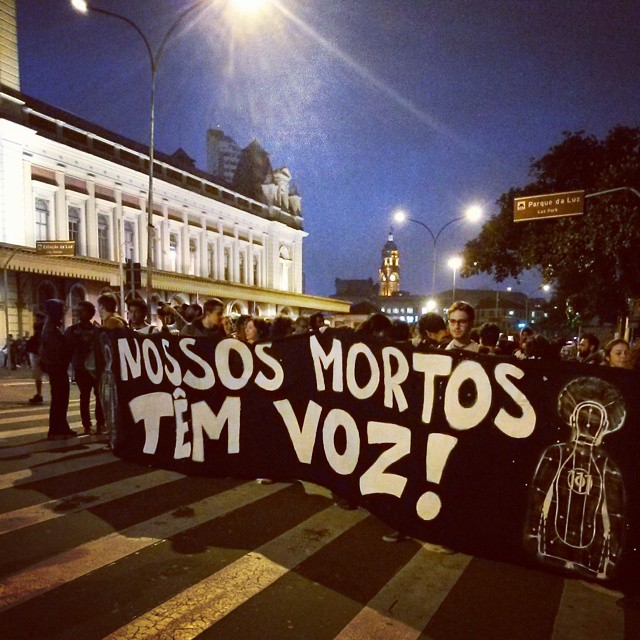
Argentina’s new President, Mauricio Macri, has an historic opportunity to address the country’s longstanding crisis of gender violence.  In a radio interview in 2014, he notoriously stated that “All women like to be catcalled,” and asserted, “I don’t believe the ones who say they don’t.”  Little did he know at the time that the most intense period of his presidential campaign in 2015 would coincide with a revolution in public awareness of gender violence in Argentina.  #NiUnaMenos – a movement launched in response to a rash of femicides and their graphic coverage by the news media – organized  marches in cities across Argentina, Uruguay, and Chile, drawing an estimated 300,000 protesters in Buenos Aires alone last June.  Journalists, artists, and activists, in collective denunciation of machismo and violence against women, demanded that the government develop a plan of action to implement the Comprehensive Law on the Prevention, Punishment and Elimination of Violence against Women (Law 26.485), approved in 2009.  The law was a significant milestone in addressing violence against women at the national level, yet without government support, its effectiveness has been limited.  Current data indicate that a femicide takes place every 30 hours in Argentina, and statistics suggest that the total number of femicides occurring in 2015 will meet or surpass numbers in 2014.  The NiUnaMenos movement has captured the public’s attention.

The presidential candidates (Macri included) took note of the impact of NiUnaMenos and pledged support to prevent violence against women as outlined in the five major points it published.  Macri posted a picture of himself holding a handmade #NiUnaMenos sign on Facebook and Twitter.  Yet activists remain concerned about Macri’s sincerity, not just because of his 2014 remarks.  As mayor of Buenos Aires (2007-15), he undermined initiatives to prevent violence against women and provide assistance to victims.  Specifically, in 2014 he closed an outreach center for victims of sexual violence that had operated under the Subsecretary of Human Rights in Buenos Aires, and he reduced the budget of the National Agency for Women from 0.1 percent in 2007 to 0.06 percent in 2015.

Macri has his work cut out for him if he wants to be perceived as a leader confronting Argentina’s gender violence.  Although his promises to slash government spending suggest social programs will suffer, there are some promising signs.  Macri’s Minister of Social Development, Carolina Stanley, has offered the post of President of the National Council for Women to Fabiana Tuñez, the founder of the Casa del Encuentro, a leading NGO on gender rights and eliminating sexual violence – and key in the #NiUnaMenos movement.  In a broader human rights framework, Macri’s agenda still remains relatively undefined.  Although his vision will depart significantly from former President Cristina Fernández de Kirchner’s, he has reiterated his commitment to continuing trials against former military accused of human rights abuses during dictatorship, rejecting claims that such efforts reflect “politics of revenge.”  In interviews, moreover, he has emphasized a forward-looking conception of human rights, rooted in the 21st century, focusing on issues related to pubic health, education, and freedom of expression.  While some observers view this as a regression to a “culture of amnesia” associated with the Menemist era, Macri has an opportunity to move the country forward by heeding activists’ demands for leadership addressing gender violence in Argentina. 

January 7, 2016

* Brenda Werth is Associate Professor of World Languages and Cultures at American Unviersity.

U.S. Government Abuse of Apprehended Migrants

By Michael S. Danielson*

Photo Credits: Larry Hanelin, Kino  Border Initiative, 2015.  All Rights Reserved.

Photo Credits: Larry Hanelin, Kino Border Initiative, 2015. All Rights Reserved.

The U.S. Customs and Border Protection (CBP) is not fulfilling its obligation to protect the civil and human rights of migrants apprehended, detained and deported back to Mexico.  A study released this week entitled “Our Values on the Line: Migrant Abuse and Family Separation at the Border” (full text) found that more than one-third of deported migrants experienced some type of abuse or mistreatment at the hands of U.S. immigration authorities.  The abuses included theft, physical abuse, verbal abuse, and inhumane detention conditions.  In violation of U.S. Department of Homeland Security (DHS) policy, these conditions include but are not limited to being held for over 12 hours in facilities without beds, overcrowding, excessively low temperatures, lack of adequate food, and denial of medical treatment.  Commissioned by the Jesuit Conference of Canada and the United States and the Kino Border Initiative (KBI), the report details the results of an in-depth survey of 358 Mexican migrants deported from the United States to the border city of Nogales, Mexico, from July 2014 to March 2015 – and corroborated by short-form surveys of 7,507 other migrants in the same area.

  • Since 2005 CBP has sought to deter Mexican migrants from attempting to enter the U.S. through a policy of “enforcement with consequences.” Formally launched in 2011 as the “Consequence Delivery System,” this package consists of measures against individual migrants that are so harsh as to be obviously intended to cause hardship and suffering.  In so doing, Border Patrol has abrogated its previous commitment, undertaken in 2004, to use its authorities to preserve family unity and ensure humane treatment of apprehended migrants.  Making things worse, Border Patrol agents often incorrectly enter names into computer databases, deny access to phone calls, and deny access to the individual’s consulate.
  • Two out of three migrants surveyed who crossed into the U.S. with immediate family members and apprehended together by the Border Patrol were separated from each other and deported to different ports of entry days, weeks, or months apart.
  • Twenty-eight percent of migrants surveyed were deported at night – to Nogales and other destinations with high levels of violence – making them particularly vulnerable to abuse by criminals and corrupt police and other public officials. One of every seven women was placed in this vulnerable position.
  • Migrants alleging abuse were unlikely to file a formal complaint. Less than one out of every 12 deported migrants in the survey claiming some type of abuse filed a complaint with U.S. immigration authorities.  Reasons for not filing a complaint include being unaware of the right to do so, fear of retaliation, and a belief that it would not make any difference.
  • The abuses were not carried out by “a few bad apples,” but rather reflected policies across Border Patrol and poor oversight of their implementation. The patterns of abuses are too extensive to argue otherwise.

Punitive border enforcement punishes people whose suffering in their home countries had already grown unbearable, and there is no evidence that these policies deter unauthorized immigration.  In fact, a recent report of the DHS Inspector General found that the CBP has failed to accurately measure the deterrent effect and the cost-effectiveness of the core policies of the Consequence Delivery System.  Evidence is much stronger of the negative and unintended consequences of these policies, both for migrants and border security.  In personal communication presented in the report, CBP’s former Assistant Commissioner of Internal Affairs James Tomsheck attests that an attempt to enhance the enforcement capacity of the agency through a hiring surge of some 12,000 new agents in just over two years was marred by a predictable deterioration of the vetting process and a sharp and consistent decline in “the quality and suitability of the Border Patrol applicant pool.”  This new report points to several key areas for reform to help limit abuse by Border Patrol agents, including stronger independent and internal oversight mechanisms to tackle misconduct and abuse; an accessible and accountable complaint process; an overhaul of CBP training; equipping CBP agents with body-worn cameras; and improving CBP short-term detention conditions.  The study also recommends that deportations to Mexican border towns occur only during daylight hours and that DHS, responsible for CBP, put in place a process to identify family relationships and preserve family unity upon deportation.  Such measures would begin to address the most pressing problems faced by migrants and their families – without triggering a spike in migrant traffic.

September 17, 2015

*Michael S. Danielson, a CLALS Research Fellow, was the principal researcher and drafter of the report.

Maduro Cites Security to Suspend Rights on the Border

By Michael M. McCarthy*

Photo Credit: Globovisión / Flickr / Creative Commons

Photo Credit: Globovisión / Flickr / Creative Commons

The Maduro government’s closure of a key border crossing into Colombia and declaration of a state of emergency in nearby towns mark not only a low in relations with Colombia but also in efforts to manipulate the playing field ahead of legislative elections slated for December 6.  President Maduro blamed Colombian “paramilitaries” for an August 19 firefight in which three Venezuelan soldiers were wounded.  He announced the deployment in the area of the “Operations for the Liberation and Protection of the People” (OLP), which are heavily armed military and police units specially created to force out alleged paramilitaries, and security forces swept through the area forcibly deporting more than a thousand undocumented Colombians.  Last week, the pro-government coalition of the Venezuelan National Assembly called for expanding the emergency measures to two other important border states.  The two countries’ foreign ministers met on August 26 for what Colombian Minister Holguin called a “positive, frank and realistic” exchange, but there was no agreement to reopen the border.

Maduro’s objectives seem to go far beyond stemming border violence.  Two reputable polls put his popularity in the lower 20s and project the opposition as likely to win a Congressional majority in the December 6 legislative elections.  His Chavista political movement is bleeding supporters amid a mounting economic crisis. Skyrocketing inflation and acute shortages of basic goods and services have created daily hardships for the popular sectors that once served as Chavismo’s base.  The opposition coalition Mesa de Unidad Democrática called the state of emergency a diversionary tactic – “to cause a situation of intense conflict and internal confusion” – and claimed that the maneuvering shows Maduro fears the election and may suspend it.  The state of emergency in Táchira, which is a renewable in 60 days, restricts the right to public assembly and gives Maduro powers to seize assets and limit the sale of basic goods and services.  The value of the annual illegal border trade is estimated to have grown to roughly $5 billion.  The order may become a mechanism for intensifying government controls over industry, which Maduro regularly accuses of waging war against the government.

Maduro’s political objectives in declaring the state of exception are obvious to reset the political agenda in line with a government narrative of external threats.  This security rationale appears greatly exaggerated, suggesting he’s more interested in scapegoating Colombia for the sorry state of affairs in Táchira than in sparking a diversionary armed conflict.  He also recently escalated an historic border dispute on his eastern flank with Guyana after Exxon discovered oil in Guyanese territory claimed by Venezuela.  So far, Maduros actions have not seemed to threaten the soft truce between Washington and Caracas, which has led to a toning down of mutual recriminations.  Over the weekend, the U.S. State Department issued a mild statement that noted “continuing concern about the situation along the border between Venezuela and Colombia,” although Washington did take him to task for the deportations.  The real implications of the emergency decree are internal to Venezuela. Maduro’s state of emergency not only raises human rights concerns in the affected territories; it suggests the specter that the government will resort to increasingly desperate measures to maintain control as its credibility, like the economy, collapses.

August 31, 2015

* Michael McCarthy is a Research Fellow with the Center for Latin American and Latino Studies.

The Untold Story of Manuel Contreras and the CIA

By John Dinges*

The man who designed and executed the massive human rights crimes of Chile’s military regime died last week.  Manuel Contreras remained a general in Chile’s Army even during the last 20 years in prison, with accumulated sentences of more than 500 years imposed by Chilean courts.  In the United States, his murky relationship with the CIA and masterminding of a shocking terrorist attack in Washington, dominate perceptions of his record.  Contreras, a nondescript, somewhat pudgy man who never tired of boasting about the effectiveness of his anti-subversive campaign, created a security police apparatus, DINA, independent of Chile’s military hierarchy.  He reported only to General Augusto Pinochet, with whom he met early each morning.  DINA was responsible for about half of the 3,200 killed by the Chilean military, and virtually all of the cases of desaparecidos – people detained, tortured and killed in secret interrogation centers, whose bodies were then disposed of in secret graves or dumped into the sea.

Chile was not the most brutal military dictatorship – more than 10,000 Argentines and 200,000 Guatemalans died during that era – but Contreras and Pinochet became the international face of Latin American state terrorism of the 1970s, for various reasons, including their intimate relationship with the United States and in particular with the U.S. Central Intelligence Agency.  It is not quite true that the CIA organized the military overthrow in 1973 of socialist president Salvador Allende, but the U.S. embrace of the violent coup was enough to create the widely accepted narrative that the United States brought Pinochet to power and made him a creature of its anti-communist foreign policy, whose global architect was Henry Kissinger.  In addition to ruthlessly persecuting political opponents in Chile, DINA carried out a spectacular act of international terrorism in the heart of Washington, D.C. – the 1976 car bomb assassination of Allende’s former foreign minister Orlando Letelier, in a blast that also killed an American woman, Ronni Moffitt, and wounded her husband Michael.

Some were quick to see the hand of the CIA in that horrendous crime, a charge that is repeated even today among some writers in Latin America.  But these writers may not be aware that Contreras actually promoted the idea of CIA involvement in Chile as a way to mask DINA’s crimes.  Here, briefly, is what Contreras did to point the finger at the CIA:

  • Contreras was the first to reveal, in an interview, that the CIA had sent intelligence trainers to Chile to help in the formation of DINA, a fact belatedly confirmed by the CIA to a Congressional investigation.
  • As his chief international assassin, Contreras hired Michael Townley, a U.S. citizen who had tried to join the CIA as a clandestine agent – a fact unquestionably known to Contreras and now well established in U.S. declassified documents.
  • Contreras developed a close operational relationship with the CIA, agreeing to provide intelligence in exchange for payment.  He is known to have traveled to the United States to consult with top CIA officials at least five times, including with CIA deputy director Vernon Walters in August 1975 – after which he went on to Caracas to lay out his plans for an international assassination alliance, Operation Condor.  Whether Contreras briefed Walters on the assassination plans is buried in CIA secrecy.
  • Contreras used Operation Condor to obtain false documents for Townley and another DINA agent to use in the first phase of the Letelier assassination.  With the plot under way, in July 1976, he visited Walters again.  Whatever the nature of those conversations (the declassified record is vague), Contreras was again associating himself with the CIA in relation to the impending murder.

When charged with killing Letelier, Contreras pulled out this defense: that the CIA had infiltrated DINA to commit crimes for its own purposes, that Michael Townley was really taking his orders from the CIA, and that the CIA, not DINA, killed Letelier in Washington. That version of events is false, according to my investigations.  Nonetheless, the charge of CIA involvement in Operation Condor and Letelier’s murder has become a kind of dogma, both on the right and the left.  It can be found in the writings of some U.S. academics and is extremely common in narratives of the period in Latin America.  Although there is no direct evidence for the charge, the history of CIA intervention, complicity in human rights violations and defense of military dictatorships is enough to convince many people that it must be true.  Few of those who believe it are aware they are making common cause with General Contreras, perhaps the most emblematic human rights criminal in Latin America.

August 12, 2015

*John Dinges teaches journalism at Columbia University.  He sorts out the documented, fact-based truth about the U.S. role in “The Condor Years: How Pinochet and his Allies Brought Terrorism to Three Continents” (The New Press 2004).

Brazil: Jailing the Youth

By Paula Orlando*

Brazilian Penitentiary System.  Photo Credit: Marcelo Freixo / Flickr / Creative Commons

Brazilian Penitentiary System. Photo Credit: Marcelo Freixo / Flickr / Creative Commons

A push for legislation to lower the age of criminal responsibility to 16 years could worsen court backlogs and overcrowding in Brazil’s notorious prisons.  According to the International Center for Prison Studies (ICPS), the country’s jails now hold the fourth largest prison population in the world, behind the United States, China, and Russia.  The Brazilian inmate population has doubled in the past ten years – from 296,919 people in 2005 to over 615,000 now – boosted by arrests of young and black people.  The Map of Incarceration, a study released this month by researchers at the Federal University of Sao Carlos (UFSCAR), shows that prisoners are increasingly between the ages of 18 and 29 (54.8 percent) and black (60.85 percent), with a growing presence of females (from 4.35 percent in 2005 to 6.17 percent in 2012).  The study also notes that the main reasons for arrest are crimes against property and “involvement in drug trafficking.”  Further, on average 38 percent – or four in every ten inmates – are awaiting trial.  According to a report by the OAS’s Inter-American Commission on Human Rights, the wait times may vary from months to years – sometimes longer than the actual sentence for the crime committed.  Of the total jail population, over 18 percent would be eligible for alternative sentences, but they either haven’t gone to trial yet or the judges have opted for heavier sentences.

A group of hardline conservative legislators – the “bullet caucus” – is pushing aggressively for a law that would lower the age of criminal responsibility from 18 to 16 and consequently place more youth in the already overcrowded adult jails.  Currently, the Child and Adolescent Statute (ECA) establishes that those between 12 and 17 years of age who committed a crime should be sent to juvenile centers, and for a maximum of three years.  The proposal to lower the age has received overwhelming popular support. This support is generally based on the perception that minors commit more violent crimes because they are not currently accountable as adults – and that harsher sentences would deter them.  However, official data shows that, among those in the juvenile system, only 9 percent committed violent crimes.  On the other hand, homicide is the leading cause of death of young people between the ages of 15 and 29.  Out of the 56,000 yearly homicides, 30,000 victims are young.  By crossing data from the Ministry of Justice and the 2014 Map of Violence, the report also debunks the popular perception that more arrests lead to safer cities.  On the contrary, just as incarceration grows, homicide rates have also steadily risen in the country.  According to press reports and other observers, there’s a good chance the legislation will move forward in the next few weeks.

Since the bill amends the Brazilian Constitution, it must pass both the Chamber of Deputies and the Senate with at least two-thirds of the votes.  In addition to increasing youth incarcerations, if passed, the initiative will undermine the 1990 Child and Adolescent Statute, considered a landmark by children’s rights advocates.  It will further remove the state from its responsibility for the protection and education of the youth, essentially eliminating any chance of youths’ rehabilitation while broadening the “school-to-prison pipeline” that envelopes many.   Moreover, passage of this reform, under the banner of law and order, will strengthen the ultra-conservative sectors – including some religious leaders and representatives of agribusiness – who already dominate the Brazilian Congress in an open crusade against social welfare policies and minority rights. 

 June 29, 2015

*Paula Orlando is a CLALS fellow and a PhD candidate at the School of Communication at American University.

While Mexican Government Resists Scrutiny on Rights, Citizens Welcome It

By David Crow*

"Do you how many migrants have died this year in Mexico? The government doesn't either." Photo Credit: Grupo Cinco Amnistía Internacional México / Flickr / Creative Commons

“Do you how many migrants have died this year in Mexico? The government doesn’t either.” Photo Credit: Grupo Cinco Amnistía Internacional México / Flickr / Creative Commons

The Mexican government is rejecting recent criticism of its human rights record, but its citizens welcome it as necessary to hold the government to account on its international rights commitments.  Juan Méndez, the UN Special Rapporteur on Torture (and Professor of Human Rights Law at American University) released a scathing report on Mexico last month, revealing that torture continues to be “widespread” and occurs at every level of government and in every security agency.  Mexico’s Foreign Ministry vociferously challenged the report and indulged in ad hominem attacks against Méndez, branding him “unprofessional and unethical.”  According to Méndez, the Mexican government had pressured him to tone down the report’s findings, but he refused because it proffered no evidence that the report was wrong.  Mexico’s strategy of denying the obvious – the ubiquity of torture is well documented – has been a public relations disaster, according to human rights and international relations experts.  It is rooted in a deep-seated historical aversion to outside prying.  The cornerstone of Mexican foreign policy, the 1930 “Estrada Doctrine,” has meant abstaining from passing judgment on other governments – and Mexico expects the same in return.  Though Mexico is signatory to a number of international rights protocols (including the Convention on Torture), the Méndez kerfuffle seems to betray an atavistic revulsion to external scrutiny.

Ordinary Mexicans, however, do not toe the government line on sovereignty.  They reject the notion that rights are conduits for foreign interests, view international organizations favorably, and welcome international oversight – particularly if it’s not from the United States.   The Centro de Investigación y Docencia Económicas (CIDE) in Mexico (in The Americas and the World and the University of Minnesota  (Human Rights Perceptions Polls) teamed up last year to probe Mexicans’ views on human rights.

  • Asked “[h]ow much does promoting U.S. interests have to do with what you understand human rights to be?” Mexicans averaged just 3.0 on a 1-7 scale (anything under 4 indicates disagreement and anything over, agreement).
  • Mexicans also reject the notion that human rights “spread foreign values” (3.2).
  • In contrast, they strongly support the idea that rights “protect against torture and murder” (5.5).
  • Mexicans view international organizations favorably, awarding the United Nations and Amnesty International scores of 65 and 60 (out of 100), respectively – the two highest ratings of all organizations evaluated.
  • And 50% of the public said UN supervision would “help the human rights situation” (36% felt it wouldn’t), while 48% viewed monitoring by the Inter-American Court of Human Rights favorably (35%, unfavorably). Mexicans split over U.S. supervision: just 43% said it would help, compared to 46% who said it wouldn’t.  Nonetheless, that 43% are willing to accept U.S. oversight is perhaps a measure of just how bad things have gotten.

While a “multilateral turn” is occurring among its citizens, the Mexican government can’t seem to break free from the old isolationism, with serious implications for the country.  The horrifying rights situation dominates international perceptions of Mexico and, along with persistent high-level corruption, threatens to derail President Peña Nieto’s reform agenda, scaring off risk-averse potential foreign investors and weakening his hand domestically with Congress and the public at large.  To reverse these trends, Mexico must make strides, quickly, to improve observance of rights.  International pressure – “naming and shaming” of rights violators – is a key ingredient.  As its citizens have done, the Mexican government must embrace, not shun, international involvement.

April 27, 2015

*David Crow is an Assistant Professor in the International Studies Division of the Centro de Investigación y Docencia Económicas (CIDE, Mexico City).

Brazilian Truth Commission Looks at Police Violence

By Paula Orlando

March in commemoration of the 22nd anniversary of the Carandiru massacre in 2014. Photo credit: veredaestreita / Flickr / CC BY-NC-SA

March in commemoration of the 22nd anniversary of the Carandiru massacre in 2014. Photo credit: veredaestreita / Flickr / CC BY-NC-SA

A new truth commission is about to investigate Brazil’s legendary police brutality and, for the first time, attempt to bring some public accountability for the crimes committed by the state. Police kill an estimated six people per day. Civil society organizations persuaded the Sao Paulo Legislative Assembly (ALESP) to establish the commission, the first to focus on human rights violations in the post-dictatorship period. It will hear testimony from witnesses and survivors of police brutality, and examine documents and other evidence related to major cases of police violence in the city and state in the last decades. The initiative follows the recent release of reports by the National and Sao Paulo State Truth Commissions on human rights violations during the military dictatorship (1964-1985). In fact, the reports suggested that present-day violence should be understood as a legacy of the lack of accountability for past violations.

The “Truth Commission of Democracy Maes de Maio” – named after a prominent movement of family members of victims of police violence that fights for justice and changes in security policies – held its first hearing on March 21. Parents of some of those killed in May 2006, when at least 493 civilians were killed in a period of 10 days, testified. (The National Truth Commission had accounted for 434 people killed during the 21 years of military rule.) The violence in May 2006 took place in the context of a conflict between the police forces and the “First Command of the Capital” (PCC) – a criminal organization formed within the detention system, and was justified as part of a “war on crime.” A study conducted by the International Human Rights Clinic of the Harvard Law School and the Brazilian Human Rights Organization Justiça Global contends that at least 122 deaths were directly linked to the police, and many of these bodies showed signs of execution. Four other civilians remain missing after nine years, and nearly all the cases have been archived without a resolution. With the participation of representatives designated by the National Secretariat of Human Rights, legislators, and members of social movements, the new commission will also examine other massacres, such as one at the Carandiru penitentiary in 1992 and the nighttime slaughter – also linked to police officers – of several people who were sleeping near the Sé Cathedral, in downtown Sao Paulo, in August of 2004.

The truth commission is more than a symbolic step towards recognizing and bringing some degree of state accountability in human rights violations; it shows the growing pressure of the movement against anti-police violence and in favor of justice and reparations for victims. Deputy Adriano Diogo, a major proponent of the panel, has warned that the way ahead “will be difficult; this is a discussion that the Brazilian government does not accept to have.” Insofar as the truth commission succeeds, it will not only create an institutional space linked to the state to clarify cases of police violence; it will stimulate an important discussion of the legitimization of police brutality in the context of “fighting crime.” In addition, it could contribute to the understanding that unlawful police violence is a form of political violence that no democratic society should endure.

April 6, 2015

Ecuador: Stacking the Deck Against Democracy

Enlace Cuidadano

Ecuadorian President Rafael Correa during one of his weekly broadcasts Enlace Ciudadano / Mauricio Muñoz / Flickr / Creative Commons

By Catherine M. Conaghan*

Taking a page from Hugo Chávez’s playbook, Ecuadorian President Rafael Correa is intimidating and steadily increasing controls on his opponents.  He regularly uses his Saturday morning broadcasts to name and shame them.  Actors from all walks of Ecuador’s civil society – journalists, lawyers, activists, academics, bloggers, union and social movement leaders – have been the target of his insults and thinly veiled threats on the weekly program, Enlace Ciudadano.  In February, Correa’s show was skewered by HBO comedian John Oliver – and, to Oliver’s delight, Correa fired back by tweeting insults (click here and here).  Journalists and civil society leaders applauded Oliver for drawing attention to the continuing deterioration of civil liberties in Ecuador.  Correa’s virulent rhetoric and intimidating use of media is part of a larger matrix of policies endangering freedom of expression and association in Ecuador.  Over the last two years, the Correa administration has worked methodically to mount a legal framework allowing for greater government control over the media and civil society organizations.

  • The 2013 Law of Communication and a new oversight agency, the Superintendence of Information and Communication, are intended to ensure that all print and broadcast media provide “truthful information” that is “verified, contrasted, precise, and contextualized.”  Superintendent Carlos Ochoa was selected from a short-list of nominees provided by Correa.  Among alleged violations recently singled out for sanctions are items in the leading newspaper El Universo and its accomplished political cartoonist, Xavier ‘Bonil’ Bonilla.
  • Issued in 2013, Executive Decree 16 also has civil society – from neighborhood associations to think tanks, business chambers, unions, and advocacy groups – under pressure. In addition to elaborate regulations for the legal registration of organizations, the decree stipulates conditions allowing the government to “dissolve” them.  These include group involvement in “partisan activity” and “interfering in public policies.”  To date, only one organization – the Fundación Pachamama involved in environmental activism – has been dissolved, but civic leaders fear that the decree will induce ”self-censorship” and stifle participation.

The new laws amount to a project – unprecedented for Ecuador – of surveillance and regulation.  They provide the government with a tempting arsenal of weapons to use, if necessary, in upcoming battles on other important legal matters, especially on the issue of presidential re-election.  After years of pledging that he would not seek a third term in office, Correa reversed course and has tasked his legislative super-majority with finding a swift route to amending the constitution.  Most public opinion polls show, however, that a majority of Ecuadorians would prefer a referendum to decide whether or not yet another consecutive re-election should be allowed.  The road to re-election may be more difficult than Correa and his advisors imagine, but they enter the fray with the weight of the law on their side.  With powers to control the media and limit the activity of civil society, the Correa administration enjoys the upper hand as 2017 approaches.

March 12, 2015

*Catherine Conaghan is the Sir Edward Peacock Professor of Latin American Politics at Queen’s University in Kingston, Ontario.  She specializes in Andean politics.  She is the author of an article, “Surveil and Sanction: The Return of the State and Societal Regulation in Ecuador,” in the April issue of the European Review of Latin American and Caribbean Studies.

Invisibility and Violence in Brazil

By Paula Orlando

Anistia Internacional Brasil / Flickr / CC BY-NC 2.0

Anistia Internacional Brasil / Flickr / CC BY-NC 2.0

Staggering statistics of violence in Brazil continue to make headlines in the country and abroad, but the invisibility of the victims and indifference toward them blunt the impact of the numbers.  According to the 2014 Map of Violence published by FLACSO-Brazil sociologist Julio Jacobo Waiselfisz, 30,000 people between the ages of 15 and 29 – 77 percent of whom are black – are murdered in Brazil every year.  Additionally, the annual report of the widely respected Brazilian Public Security Forum indicates that in 2008-2013 the police killed at a rate of six people per day, while a research group at the Federal University of Sao Carlos (UFSCAR) found recently that 61 percent of those killed by the police in Sao Paolo State are black.  The absence of popular outrage over these facts is being addressed by a range of initiatives, and social media – of which Brazilians are avid users – are an important tool to this end.

  • Amnesty International’s newly launched campaign, Jovem Negro Vivo, uses social media to raise consciousness about the rates of violence and societal responses to it. One of the main parts of the campaign is a video showing a black teen traveling through his neighborhood and city, successively encountering other invisible people.  At the end, the teen faces a similar fate – death and invisibility.  The campaign questions the trivialization of violent deaths and society’s silence about it.  The campaign asks: “84 homicides per day.  Do you care?” And adds: “More shocking than this reality, just indifference.”
  • Rede Jovem, an internationally acclaimed NGO created in 2000, is conducting Projeto Wikimapa with collaborative technologies to identify neighborhoods, streets and services in communities that are invisible – that is, not shown on official maps – even though many are heavily populated. A number of local projects are redrawing the maps of various cities, including Belo Horizonte, Rio de Janeiro, and Sao Paulo.  The resulting maps, which can be accessed on the Web and handheld devices, expose communities’ rich social structures to the world.  Some of this work is presented in a new released documentary, Todo mapa tem um discurso – “Every map has a discourse.”

In a society in which significant numbers of communities and individuals are still invisible to the state and fellow citizens, violence is not surprising.  During the recent and run-off campaigns Dilma Rousseff met with grassroots leaders who demanded urgent action to end systematic violence against poor youth and police abuse.  She promised them that she would push further implementation of specific youth programs such as Juventude Viva, while also recognizing the need to continue confronting racism and start taking serious measures against police abuse.  Human rights organizations and community activists have pledged to hold her to her word.  Communication and technology tools – which activists used during protests last year to gather evidence of police abuse through crowdsourcing – can provide a boost to citizens and activists in reclaiming public spaces and demanding better social services. Creating inclusive and participatory maps, for example, facilitates postal service, the allocation of resources, and the implementation of programs such as cultural and after-school activities that help protect vulnerable youth.  Further, the use of collaborative media technologies has the potential – over time – to reduce invisibility and bring society closer to dealing with the tragedy of the violent deaths of thousands of people every year.

November 25, 2014

Argentina’s Stolen Children and National Narratives of Recovery

By Brenda Werth

Bruno Piatti / Flickr / CC BY-NC 2.0

Bruno Piatti / Flickr / CC BY-NC 2.0

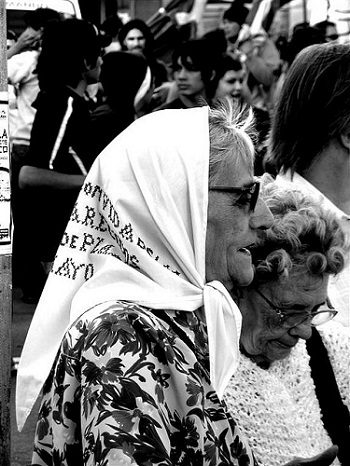
Argentina’s National Day of the Right to Identity (October 22) had special meaning this year because of the recovery in August of Guido Montoya Carlotto, the 114th grandchild to be found, but hundreds of cases remain unsolved.  The day honors the tireless efforts of the Grandmothers of the Plaza de Mayo to recover the identity of the approximately 500 grandchildren who were stolen as babies during the dictatorship and raised in most cases by collaborators of the military regime.  Guido is the grandson of the group’s longstanding president, Estela de Carlotto.  In June, 36-year-old Guido, who grew up in the province of Buenos Aires as Ignacio Hurban, voluntarily submitted a blood sample for DNA testing that confirmed that he is the son of Laura Estela Carlotto and Walmir Oscar Montoya, Montonero militants who were kidnapped and disappeared during Argentina’s last military dictatorship (1976-1983).  Guido subsequently learned he had been born in captivity on June 26, 1978.  He was allowed to stay with his mother for only five hours before being handed over to the couple (whose involvement in his kidnapping is still unclear) who would raise him.  His mother was executed two months later.

The heavy media coverage of the recovery of Guido – who prefers to be called Ignacio Guido – has revived discussions in Argentina about identity narratives  surrounding the stolen children in the wake of dictatorship.  The most prominent human rights organizations to emerge since the mid-1970s are structured along familial lines:  the Mothers of Plaza de Mayo, the Grandmothers of Plaza de Mayo, and the H.I.J.O.S.  (Children for Identity and Justice, Against Forgetting and Silence).  As a result, the recovery of each and every grandchild is inextricably and symbolically linked to national recovery.  Moreover, due to a leak to the press, Ignacio Guido’s reunification with his biological family did not take place in an intimate, private setting but instead unfolded publicly in the national spotlight through a series of highly publicized press conferences and interviews, culminating in a meeting with President Cristina Fernández de Kirchner.  His recovery has generated an outpouring of support and an unprecedented sense of national unity among Argentines.  Politicians, celebrities, and sports figures alike have hailed his identity restitution as both a personal and national triumph.  Due to Estela de Carlotto’s stature as a world-renowned human rights activist and her close ties to the Kirchner government, this case, perhaps more than any other, illustrates how the personal, familial story of recovery can acquire a public dimension and give a push to the national commitment to resolve remaining cases of the stolen children.

Yet it is often during these moments of perceived national consensus when underlying tensions reassert themselves as well, and these tensions have manifested themselves institutionally, specifically in the areas of science, the law, and the Catholic Church.  At the height of the media storm surrounding Guido’s recovery, representatives of the National Genetic Data Bank held a press conference to restate their disapproval of the official decision to transfer the laboratory, including over 20,000 DNA samples, to the Ministry of Science and Technology.  Another tension emerged in the judicial sphere after the judge presiding over the case, María Servini de Cubría, was accused of leaking Ignacio Guido’s identity to the press before he could be reunited with his biological family – creating a rift with the Grandmothers.  In a meeting with Pope Francis on November 5, Carlotto and her grandson presented him with the iconic white handkerchief, which is a symbol of the Grandmothers’ mission, and a sculpture representing the fight for truth, justice, and memory.  Carlotto also took the opportunity to acknowledge that she had committed an error in linking him to the dictatorship in public statements soon after he became Pope in March 2013.  Their gifts were intended to enlist the Church’s support for full disclosure of evidence relating to the stolen children’s identity.  It was also a gesture of reconciliation between human rights organizations in Argentina and the Church, which failed to defend human rights during the dictatorship.  The meeting also strengthened the tight allegiances that President Kirchner has cultivated between her government, human rights organizations, and the charismatic figure of the Pope.  However halting, such moves could ultimately help resolve the cases of the hundreds of stolen children.

November 17, 2014