Brazil: Sustained Attention to Sustainable Development?

By Evan Berry*

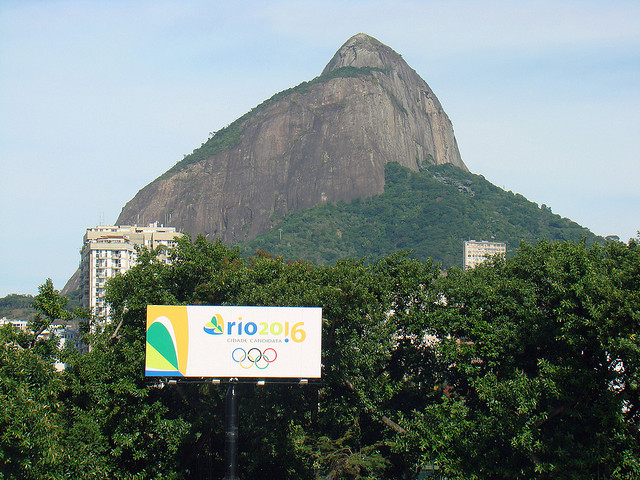
Photo Credit: Rodrigo Soldon / Flickr / Creative Commons Attribution 2.0 Generic (CC BY 2.0)

Photo Credit: Rodrigo Soldon / Flickr / Creative Commons Attribution 2.0 Generic (CC BY 2.0)

Media coverage of the approaching World Cup in Brazil has touched on the country’s contemporary ecological challenges, but they have glossed over their underlying causes.  Because of Brazil’s association with international sustainability accords, large international events – such as the “Rio+20” sustainable development conference two years ago and the 2016 Olympics – provide vehicles for global news media to focus on Brazil’s performance on environmental issues.  Among this flurry of journalistic coverage, two distinct narratives emerge.  In one, journalists look at sustainability with reference to economic modernization, suggesting that environmental problems are the outcomes of policy failures and ineffective governance.  Commentary in this vein calls for greater technocratic competency and a commitment to the development pathways of the global north.  In the other narrative, sustainability is set in the context of social justice and economic inequality.

These views lead to different responses.  The international bodies overseeing the upcoming sporting events – such as FIFA and the International Olympic Committee – demand that the Brazilian government do more to clean up beaches, improve transportation infrastructures, and purchase carbon offsets to compensate for the impact of new construction.  These prescriptions ignore, however, that environmentalism in the developed northern economies emerged from a distinctly middle- and upper-class preoccupation with aesthetically pleasing environments, such as wilderness, scenic landscapes, and exotic game.  Frustration with the pollution in southeastern Brazil’s Guanabara Bay, for instance, echoes the North American desire for well-managed spaces for outdoor recreation.  So too does the narrow focus on the plight of Brazilian armadillos, the vulnerable species chosen as the World Cup mascot.  This emphasis corresponds with a narrative that many Brazilian leaders would want to put forward – that the natural splendor of Rio de Janeiro in particular, and Brazil in general, can be secured by the kind of straightforward cleanup efforts that attended economic prosperity.  However, Brazil’s ecological woes cannot be solved by garbage scows, and endangered armadillos and the lack of clean recreational spaces are hardly Brazil’s most pressing obstacles to environmental sustainability.  Guanabara Bay is fetid because so many Cariocas, or Rio residents, lack access to basic sanitation.  Armadillos are threatened by deforestation that is as much a byproduct of global economic demand.

As elsewhere, environmental problems in Brazil are caused by myriad social, economic, and political factors.  Ameliorating the most visible impacts of these factors – protecting a charming creature or purifying noxious waters – addresses only symptoms.  International attention to sustainability issues in Brazil should be more mindful of social justice.  Brazil’s current political unrest centers on deeply shared public concerns about injustice, and addressing the problems giving rise to contemporary social movements will offer an important corrective to mainstream public discourse about sustainability.  International attention to the negative environmental impact of international sporting events, and accompanying investments in infrastructure, risks overlooking the unjust structural processes that complicate solutions to environmental problems.  Rather, the global popularity of sport provides an opportunity to deepen and expand international discourse about the human dimensions of ecology.

 *Evan Berry is an Assistant Professor in American University’s Department of Philosophy and Religion.
Replicating the U.S. Shale Gas Revolution in Latin America

By Thomas Andrew O’Keefe*

Photo credit: Energy Information Administration / Foter.com / Public domain

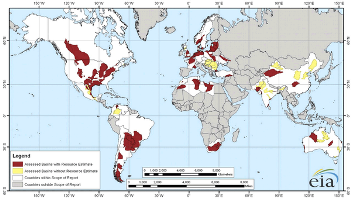
World Shale Gas Map / Photo credit: Energy Information Administration / Foter.com / Public domain

The shale gas revolution in the United States promises not only to soon make the country energy self- sufficient but also serve as the catalyst for a major revival of manufacturing.  Similar high hopes have been raised for Latin America, where some of the planet’s largest reserves of shale gas are found.  According to U.S. Energy Information Administration estimates, Argentina is said to have the world’s second largest reserves of technically recoverable shale gas (China is first).  The United States is currently in fourth place, followed by Canada and Mexico.  Brazil is in tenth place, with Chile and Paraguay not far behind.  The possibility that Latin America can pursue a successful shale gas strategy, however, is tempered by a number of important legal and/or geological differences that can serve as important bottlenecks.  In addition, the region’s tumultuous politics often get in the way of implementing policies that boost investment and encourage a highly productive energy sector.

The most important legal difference is that subsoil rights belong to the above ground property owner in the United States, while everywhere else in the Western Hemisphere the government (national, state or provincial) is the owner.  Developers have had an easier time purchasing access to shale gas deposits from individual landowners throughout the United States.  This explains, in great measure, why Canada’s significant shale gas reserves have not been as extensively exploited as in the United States, despite a hydrocarbons regime receptive to private-sector investment.  In addition, environmental protection legislation that impacts the shale gas industry is fractured among Federal, state, and local government authorities in the U.S.  That has facilitated developers extracting waivers and more lenient treatment in the United States that would be harder to obtain in most Latin American nations, where environmental protection is the exclusive or predominant prerogative of the central government.  Furthermore, current technology for extracting natural gas from shale reserves demands huge amounts of water, a resource that is scarce in those regions of Mexico, for example, where most of its extensive shale gas reserves are located.

Political realities are the most crucial (and often overlooked) factor that can easily undermine any effort to develop Latin America’s extensive shale gas reserves.  On paper, Argentina should be a regional energy powerhouse, supplying not only its own energy needs but those of its neighbors. However, the country has for years pursued policies that have scared off private-sector investment, heightened Argentine dependence on foreign energy imports, and led to a steady hemorrhaging of hard currency reserves.  To outsiders these policies appear illogical, but they make perfect sense to Argentine political leaders trying to consolidate their power base.  Mexico is an example of a country constrained by its Constitution from developing its extensive off-shore hydrocarbon resources.  Any political party that tries to make major amendments to those constitutional provisions, however, risks annihilation at the polls.  Brazil’s recent adoption of nationalistic legislation to encourage the domestic manufacturing of hydrocarbon-related technology could well impede exploiting its shale gas reserves if similar mandates are created for the highly specialized and capital-intensive hydrofracking equipment the industry utilizes.  In fact the only Latin American country where the stars seem aligned to repeat the U.S. shale gas success story is investor-friendly, politically-stable, energy-starved, and free-market oriented Chile, whose shale gas reserves are concentrated in the remote, under populated (and very wet) far south of the country that desperately seeks new opportunities to promote local economic development.  

*Thomas Andrew O’Keefe is the President of San Francisco based Mercosur Consulting Group, Ltd. and teaches at Stanford University.

Confusion over “Responsible Mining”

By Robin Broad

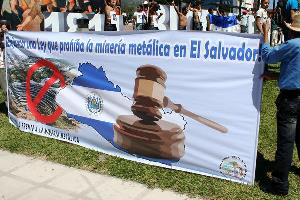
Anti-minng campaign, El Salvador / Photo credit: laurizza / Foter / CC BY

Anti-minng campaign, El Salvador / Photo credit: laurizza / Foter / CC BY

One of today’s buzzwords – “responsible mining” – is like most others, so vague that it means whatever its user wants.

  • For most corporate executives and many government officials, mining is responsible if it aims to maximize economic growth and economic profits, because mainstream economic theory tells us that that will make everyone better off in the most efficient way.  In this view, the benefits multiply and trickle down to the poor.  In terms of environmental impact, some proponents of this view argue that as a country grows in economic terms, certain environmental pollutants decrease.  The governments of Guatemala and Honduras, which have increased the number of licenses granted to global mining corporations, seem to embrace this definition.
  • Some corporations cast the definition of “responsible mining” within their concept of “corporate responsibility.”  Typically, such companies do not change the production process itself, but rather commit to using some profits to do something “good.”  In the Philippines, for instance, Australian-headquartered OceanaGold plants trees near its mine and contributes to medical missions and community programs.
  • Yet another definition of “responsible mining” focuses on increasing the portion of the economic and financial benefits of mining that accrue to the Southern “host” country versus to the foreign mining entity.  This typically centers on increasing the taxes levied on the mining companies.  A more “progressive” version of this approach emphasizes how much of the funds stay on a local versus national level within the host country.
  • The ideal – and probably least common – definition of “responsible mining” involves a comprehensive assessment of long-term economic, social, and environmental costs and benefits.  This requires the free, prior, and informed consent of local communities before corporations influence communities or officials with social “contributions.”  Environmentally, it involves careful assessment – based on full information by an objective party – of the impact of the mining, including all chemicals used in the mining process, all toxins released, and the broader environmental impacts and risks.

The ideal definition may sound like pie in the sky, but it is not.  Case in point: The government of El Salvador has not issued new mining licenses since 2008, primarily because a growing citizens’ movement has rallied around protecting the affected watershed, which supplies the majority of the country and is already severely polluted.  So too did the Salvadoran government demand a Strategic Environmental Review, overseen by both the Ministry of the Environment and the Ministry of the Economy, to try to weigh  the economic benefits (wages, taxes, etc.) during a mine’s limited life against social and environmental impacts.  Indeed, in El Salvador, as in the Philippines, grassroots communities and some key elected officials are trying to give deeper meaning to the definition of “responsible mining,” so that it is no longer merely a buzzword.

Dr. Broad is a professor in American University’s School of International Service.

Resource Extraction and Ecuador’s Fragile Ecological Sustainability

By Peter Redvers-Lee

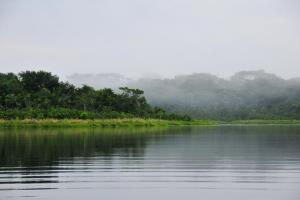
Yasuní National Park /Photo credit: joshbousel / Foter / CC BY-NC-SA

Yasuní National Park /Photo credit: joshbousel / Foter / CC BY-NC-SA

The world has failed Ecuador again.  That, at least, is the sentiment of Ecuador’s president, Rafael Correa, explaining his decision to discontinue an innovative environmental plan to save sections of the Yasuní National Park, a UNESCO Biosphere Reserve on the border with Peru.  The 2010 plan was for Ecuador to refrain from granting oil concessions in the park if it could raise $3.6 billion from other countries and international organizations.  To date, only $13 million has been raised.  Correa’s about-face comes a few months after another environmental U-turn.  In June, Ecuador’s legislature passed a new mining law that, while not garnering new friends among large mining companies, rolls back taxes and other regulations to favor smaller and medium-size mining ventures.

Both developments heighten the likelihood of further environmental degradation in Ecuador.  Increased mining and drilling is likely to have an immediate and negative impact on the sustainability of local ecosystems upon which communities depend.  The rivers that make up the Mataje-Cayapas watershed have been an important means of livelihood for the local indigenous and African-descendent communities that dot the river banks from the mangroves on the coast to the foothills of the Andes.  Environmental degradation accelerated in the 1990s, when the first major roads reached the area and mining, logging, shrimp farming and other industries moved in.  Mercury, used in mining, is already present at unacceptable levels in populations of blue crabs in the lower reaches of the watershed, where the crab forms a staple in local diets.  The destruction of the mangrove forests to make way for shrimp ponds has increased.  The roads allowed for more efficient logging, and increasing numbers of internal migrants flooded the area.  Once the Chocó forest was cleared, palm plantations took root, further displacing African-descendent communities that made up the bulk of the local inhabitants.  The African palm, used for biofuels and other purposes, often entails liberal use of toxic chemicals.

The failure of the Yasuní proposal and Ecuador’s new mining laws have ominous implications for Ecuador and, perhaps, beyond.  Toxins in the Mataje-Cayapas watershed have contaminated the water supply on which thousands of mainly African-descendent communities rely for their livelihoods.  The recent setbacks will also accelerate commercial exploitation of the watershed for gold, exposing it to even more toxic chemicals, and the ever-increasing palm plantations will add to the existing brew of fertilizers, pesticides, and fungicides sprayed liberally on the crop.  It’s unclear whether the world “failed” Ecuador or that President Correa’s proposal – protecting preserves in return for cash – is not viable.  Skepticism that the $3.6 billion would be put to good use, rather than for politically gratifying short-term programs, is also reasonable.  Either way, the country’s long-running pattern of resource extraction and environmental destruction continues in one of the most diverse ecological spots on earth.  And now Yasuní faces a similar fate.

Peter Redvers-Lee is CLALS Faculty Affiliate and Professorial Lecturer in American University’s School of International Service.  He has worked in the Mataje-Cayapas watershed since 2004.

Peru: Humala’s Difficult Balancing Act

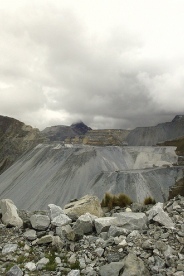
Photo: Peruvian mine | Mihai (clandestino_20) | Flickr | Creative Commons

Peru’s new cabinet installed in July – President Ollanta Humala’s third since his inauguration a year earlier – faces the daunting task of sustaining national development while increasing social enfranchisement.  The reshuffle came amid loud criticism of a crackdown, which killed five people, on protests against the proposed $5 billion Conga mining project in Cajamarca.  The incident underscored the difficulty for Humala as he endeavors to implement a dual strategy of capitalizing on the growth potential of Peru’s mining industry – primarily gold and copper (60 percent of exports) – while respecting community concerns about the environmental consequences of extraction.  Mining wealth is needed to improve the lives of ordinary people –28 percent of Peruvians live in poverty – but unlike preceding governments this administration has committed itself to consultation with residents of localities that will be affected directly.    The new prime minister has announced suspension of the Conga project until the U.S. mining company involved provides better environmental guarantees.

Humala’s popularity has plummeted.  Despite new laws increasing Peru’s mining revenue, the creation of a new Ministry of Social Inclusion, and a new Prior Consultation Law, indigenous protesters feel betrayed by Humala.  They accuse him of continuing the aggressive extractive policies of his predecessor, Alán García, and insist his administration has not given adequate attention to concerns of local communities on issues such as the integrity of the water supply in zones affected by the mining ventures.  Recent signs of a resurgence in violence by the Sendero Luminoso (Shining Path) guerrillas and of setbacks in efforts to curtail the influence of the narcotics trade are also eroding Humala’s support.

Humala narrowly won the presidency as a center-left candidate, committed to creating a framework for the more equitable distribution of the wealth generated by Peru’s natural resources.  Now, some of his political allies say he has courted foreign investment for the mining sector without adequate consultation, and further protests seem likely.  Humala’s challenge is not unlike that of other countries, including Bolivia and Ecuador, trying to balance between these competing interests.  His success or failure will have an impact beyond Peru’s borders, as South American countries dependent on commodity exports struggle to walk the tightrope between satisfying foreign investors and domestic electorates.