Brazil: The WhatsApp President

By Barbara dos Santos*

Bolsonaro social medis

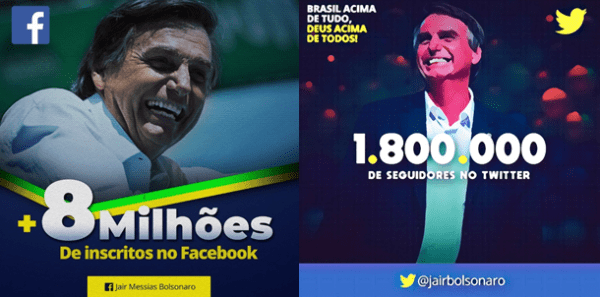
Graphics from Brazilian presidential candidate Jair Bolsonaro’s social media detailing his followers on Facebook (left) and Twitter (right). / Twitter: @jairbolsonaro / Creative Commons

If polls predicting a landslide victory for Jair Bolsonaro in Sunday’s runoff election are correct, Brazil on January 1 will inaugurate its first president to win by virtue of his superior social media prowess rather than the strong party bases that propelled his predecessors.  He gained strong support from different sectors of Brazilian society by delivering – legally and potentially illegally – the message his supporters wanted to hear directly to their personal electronic devices, without the validation and transparency of traditional media.  The receptivity of his young supporter base compensated for the low amount of TV time allotted to him under Brazilian law.

  • WhatsApp has around 120 million users in Brazil, around 60 percent of the population, for a wide array of personal and commercial communication needs. The polling firm Datafolha found that two-thirds of Brazilian voters use WhatsApp, and that of them a majority (61 percent) are Bolsonaro supporters likely to follow political news on the service – compared to 38 percent of the backers of his opponent, Fernando Haddad.
  • The platform is perfect for manipulation of information. Messages are encrypted and are therefore beyond the domain of electoral authorities, independent fact-checkers, or even WhatsApp managers.  Real and fake news spread like wildfire.  Agência Lupa, a fact-checker service, has found that only 50 of the most shared pictures in 347 WhatsApp groups were factually correct.  During the weekend of October 6-7, the company found that 12 of the fake news items it evaluated were shared 1.2 million times.  The Federal Electoral Court (TSE), which created a consultative council earlier this year to tackle online misinformation, has been slow to respond to the threat – perhaps out of fear it would be accused of limiting free speech.

Bolsonaro’s campaign also used Facebook effectively even after it twice shut down pages carrying content of his deemed to be fake – 197 pages and 87 accounts in July, and 68 pages and 43 accounts two weeks ago.  Many of the pages portrayed Haddad as a Communist whose Workers Party would turn Brazil into another Cuba and convert children to homosexuality.  One attack – alleging that Haddad would distribute “gay kits” to expose schoolchildren to homosexuality – was so blatant that the TSE ordered Bolsonaro’s campaign to stop it.

  • Haddad’s presence on Facebook (1.5 million followers) is minuscule compared to Bolsonaro’s (7.8 million). Some of Haddad’s followers used social media to spread rumors that Bolsonaro staged his near-fatal stabbing at a rally last month; social media have not shut down any of Haddad’s pages or accounts.

Bolsonaro’s social media campaign has also allegedly been tainted by illegal funding.  Folha de São Paulo, one of Brazil’s biggest newspapers, last week reported that wealthy businesspersons spent US$3.2 million on a WhatsApp fake news operation.  If true, they broke electoral laws barring undeclared corporate campaign donations and the purchase of contact lists from a third party.  Speaking on Facebook Live, Bolsonaro said Folha had no evidence, adding in an interview later that he has no control over the businesspersons anyway.

Fake news in elections – in the traditional or social media – is not a new phenomenon, but its wildfire impact has caught many in Brazil by surprise.  The mere speed that disinformation travels makes it nearly impossible for Brazilian authorities to curb its spread, and self-policing by social media platforms also seems an implausible solution given their benefit from the high traffic fake news drives.  Bolsonaro and his campaign team realized this earlier and embraced it more aggressively than Haddad, who did not enter the race until September 11, ever did.  Haddad was busy trying to simultaneously convince Lula’s supporters to vote for him and others that he was not Lula’s puppet, while Bolsonaro’s message was reaching tens of millions of Brazilians with smartphones.  The likely president’s expertise in using social media (legally or not) has clearly boosted his campaign, but governing by WhatsApp, Facebook, or Twitter remains an untested proposition.  It seems that Bolsonaro may also follow U.S. President Donald Trump’s playbook into government.  Crushing his opposition under a barrage of half-truths and lies does not bode well for democratic governance.

October 26, 2018

*Barbara dos Santos is a Ph.D. Candidate in Political Science at the School of Public Affairs at American University.

Brazil: A Moment of Truth

By Barbara dos Santos*

Brazil elections 2018

A group of demonstrators gathered in São Paulo last week to protest Brazilian presidential candidate Jair Bolsonaro and show their support for other candidates like Ciro Gomes. / Mark Hillary / Flickr / Creative Commons

Campaigning for Sunday’s election has brought out deep divisions in Brazilian society and set the stage for an even more divisive runoff later this month.  This week’s polls underscore that, although most voters arguably occupy the center, the right and the left have the strongest candidates.  Populist conservative Jair Bolsonaro (31 percent) has a 10-point lead over Workers Party (PT) latecomer Fernando Haddad (21 percent), who started campaigning only after party standard-bearer “Lula” da Silva definitively pulled out of the race three weeks ago.  But both candidates have high negatives, and the polls suggest that they would be tied in a second round (42 percent each).  Ciro Gomes, of the Democratic Labor Party (PDT), is still hovering around 11 percent, but polls also show that he would beat Bolsonaro (39 to 45 percent) if they face off on October 28.  Everyone else is polling in the single digits.

  • Hate politics has spiked during this campaign, powered by polarization, culture wars, and fake news on social media. Uncivil discourse and even physical violence have increased.  Although Federal Police have concluded that the man who stabbed Bolsonaro last month acted alone, the candidate and allied social media are hyping the incident as a political attack.  Other rumors circulating online are that Haddad’s running mate, Manuela d’Ávila of the Partido Comunista do Brasil, ordered the stabbing (which prompted threats against her.)  A review by the national daily O Estado de São Paulo found that several of Bolsonaro’s campaign themes – defending the death penalty and vigilantism, the use of torture, and past racial cleansing – have fueled aggressive attacks by both opponents and supporters.  One of the leaders of the Facebook group Mulheres Unidas Contra Bolsonaro was assaulted by three men outside her home on September 24; their political views are clear, although their affiliation remains unconfirmed.
  • The emergence of Bolsonaro – who has publicly called women unequal, stupid, and even “too ugly to rape” – shows the stridency of the culture wars now occurring in Brazil. His campaign has also revealed greater tolerance among some sectors for misogyny going far beyond traditional machismo.  It reflects a rejection of the younger generation’s progressive and liberal values of equality and inclusion.  Bolsonaro’s proud refusal to apologize for his remarks suggests confidence that his base sympathizes with his views.

In terms of political institutions, the election is crucial to the future of the PT and the left in Brazil and beyond.  Over its 14 years in power, the party led the country on a path of decreasing inequality, a booming economy, and international prestige as a “global player.”  It all came tumbling down for external and internal reasons:  commodity prices crashed, economic recession set in, and massive corruption scandals led to deep, sustained political crises.  The PT’s opponents have cast the party as the embodiment of all that is wrong with Brazilian society and institutions, and Bolsonaro and others on the right are hoping to deal it a deathblow.  Haddad is running hard, but local observers believe he needs to distance himself more from his party’s past – such as by trying harder to avoid criticizing the judicial processes that landed Lula in jail, advocating a responsible government budget, and more aggressively criticizing Presidents Maduro in Venezuela and Ortega in Nicaragua.

This round of elections is the most important since the re-democratization of Brazil in 1988.  While some democracies around the world are known for tumult and strident campaigning – and may even be able to weather periods of authoritarianism – those that are of more recent vintage and less institutionalized, including Brazil, can break.  A Bolsonaro victory would not necessarily lead the country to military dictatorship, but the acceptance of his authoritarian vision, including his praise for military rule in the past, poses a potentially serious threat to the continuing strengthening of Brazilian democratic institutions.  In an interview last week, he even implied that if he were not elected, he would reject the vote count and claim that PT committed fraud.  Similarly, Haddad would also pose a threat to democratic institutionalization if he does not allow the justice system to handle Lula according to the law.

 October 4, 2018

*Barbara dos Santos is a Ph.D. Candidate in Political Science at the School of Public Affairs at American University.

Brazil: Diving into Uncertainty

By Marcus Rocha*

Brazilian presidential candidates 2018

Brazilian presidential candidates, from left to right: Lula da Silva, Jair Bolsonaro, Geraldo Alckmin, Marina Silva, and Ciro Gomes. / Wikimedia, edited

With voting just a little under four weeks off, Brazil faces the most confusing, unpredictable, and consequential election since democratization in the 1980s.  The two leading contenders – former President “Lula” da Silva and firebrand conservative Jair Bolsonaro – are in jail and the hospital recovering from a stabbing, respectively, but the former is being left behind, and the latter is likely to try to use his victimhood to overcome other weaknesses.  At a point that Brazil needs stability and leadership, it is lurching toward an election that appears unlikely to produce either.

  • Lula’s Workers Party (PT) hierarchy continues to push his candidacy, but yet another rejection last week of his appeal of his conviction on corruption charges is increasingly opening the way for Fernando Haddad, former mayor of São Paulo, to assume the party mantle. Haddad has polled poorly, only 6 percent as recently last week, but a serious PT mobilization will be a big asset.  (Announcement of his candidacy is expected today.)
  • Prior to Bolsonaro’s stabbing, his weaknesses seemed likely to hold him back despite a good 22 percent in recent polls. His popularity may rise as he seeks sympathy for his injury, but his strong negatives – 44 percent of people polled say they will never vote for him – will be hard to erase.  His Social Liberal Party (PSL) has a very narrow base in Congress, and the former Army captain and lawmaker’s main tactic – divisive rhetoric attacking human rights advocates and praising the military dictatorship of 1964-85 – does not conceal his lack of a serious political agenda, according to many observers.

The proliferation of other parties is also deepening confusion.  Brazil has 35 parties, and for the first time faces the possibility that neither of the two Brazilian parties with a virtual monopoly on presidential succession – the PT and Brazilian Social Democracy Party (PSDB) – will make it into the runoff in Brazil’s two-round system.  The PSDB’s Geraldo Alckmin has a strong Congressional base (which under the law determines his access to media time) but continues to poll poorly (9 percent).  Marina Silva, of the Rede Sustentabilidade, and Ciro Gomes, of the Democratic Labor Party (PDT) – both of whom currently have 12 percent – have a shot at a place in the second round.  Another eight candidates show much less promise.

The political chaos has not brought protesters out into the streets or threatened a broader social crisis in the closing weeks of the campaign, but it has thrust Brazil into uncharted territory.  Bolsonaro’s stabbing and his certain efforts to play the victim will almost certainly continue push his rhetoric beyond that traditionally acceptable in Brazil.  The political parties, however flawed, were sources of predictability and stability, but no longer are.  Investigations into corruption, also previously thought to strengthen the political system, have contributed to uncertainty.  The courts are accused of political bias.  As the PT and PSDB slip, none of the smaller parties appears poised to gain broad enough confidence to lead the country through its numerous challenges.  In the first- and second-round votes on October 7 and 28, Brazilians will choose between trying to revive the old – clinging to PT or PSDB – or continuing the search for something that is not yet visible on the horizon.

September 11, 2018

*Marcus Rocha is a Ph.D. candidate in Public Policy at the Federal University of Rio Grande do Sul in Porto Alegre, and a former CLALS Research Fellow.

Venezuela: Maduro’s Ploy Backfires

By Michael McCarthy*

Maduro and the Venezuelan flag

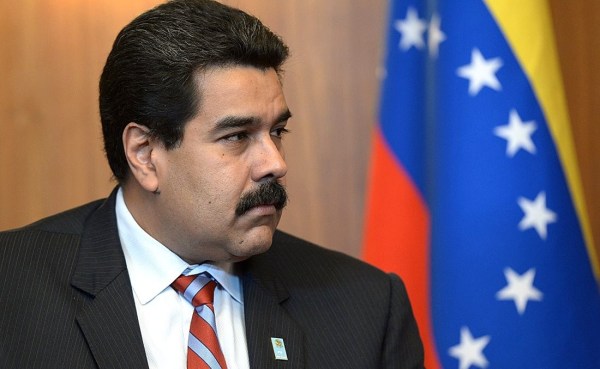
Venezuelan President Nicolás Maduro. / President of Russia / Flickr / Creative Commons

Almost a month after Nicolás Maduro held a snap presidential vote to strengthen his political power, the ploy appears to have largely backfired and left him weaker.  The dynamics underlying the years-long crisis have not fundamentally shifted, but the deepening impact of the economic implosion on the oil industry poses a threat to vital state interests and regime stability.  Maduro’s crisis management will face another major stress test.

  • Even the government’s own dubious figures on voter turnout – 46 percent – were too low to give the election credibility, limiting Maduro’s ability to claim a strong mandate. Criticism of the government’s efforts to sway voters by distributing food, medications, and other necessities at polling places was intense.  All but a few loyal friends in the international community have been reluctant to congratulate Maduro.  China and Russia accepted the vote count, but Beijing appeared particularly cooler than in the past, while Ecuador and Uruguay issued statements aimed at depolarizing the situation.  The OAS General Assembly lacked the 24-vote threshold necessary to invoke the Inter-American Democratic Charter to suspend Venezuela’s participation in the regional body, but the Dominican Republic’s shift away from its previous support for Maduro must have been a blow.
  • Maduro’s victory is further overshadowed by the fact that as much as 85 percent of the pro-government vote went to the party of Diosdado Cabello, who leads a competing faction under the flag of the Partido Socialista Unido (PSUV), while Maduro’s Movimiento Somos Venezuela got only 5 percent. Longtime observers argue that a battle between Maduro and Cabello, an original member of the Chávez 4F movement that staged a failed coup in 1992, is heating up.  The PSUV will hold a party congress on July 28 – Chávez’s birthday – that promises to serve as venue for Cabello to pursue his leadership ambitions.

Maduro’s weakness appears to have motivated several actions he’s taken since the election.  Most observers believe that he directed a raft of prisoner releases to improve his sagging image, pacify the situation, and set the stage for dialogue.  He reportedly wanted to reshuffle his cabinet to shore up unity, but internal political difficulties apparently have delayed it temporarily.

  • He also released a U.S. national, Joshua Holt, who had been under arrest since 2016 on trumped up charges of espionage and conspiracy to undermine the constitution. Maduro’s goal may have been to disarm U.S. criticism and open a line of communication, but the day after the election he also expelled the U.S. Chargé d’Affaires and his deputy.  The U.S. State Department wasted no time in reciprocating by expelling two Venezuelan diplomats, and later, in the wake of the Holt release, it underlined that policy toward Venezuela “remains unchanged.”

More U.S. sanctions may be imposed, but Maduro’s self-destructive rule is doing his government even more harm.  A combination of increasing hyperinflation and a potential record drop in month-to-month oil production from May-June suggest a rapidly worsening economy.  Press reports suggest state oil company PDVSA will soon announce that it cannot honor its monthly production obligations with a number of key partners – a major blow for a government dependent on oil for 95 percent of its income.  After calling for a boycott of the May 20 vote, the traditional opposition breathed a collective sigh of relief that a majority of voters stayed home, but this does not give them the win they need to regain public trust.  Continually bleak prognoses once again stir speculation that the military will step in.  Yet it is not so simple.  The military seems to operate more according to informal networks and personality-driven hierarchies, creating divisions that make it hard for groups to credibly act in the name of the armed forces.  So far, senior officials seem to have determined that loyalties to a dysfunctional regime do not yet sufficiently threaten business and institutional interests for them to take action.

 June 14, 2018

* Michael McCarthy is a Research Fellow with the Center for Latin American & Latino Studies.  He publishes Caracas Wire, a newsletter on Venezuela and South America.

Colombia: Winners and Losers in First Round of Elections

By Julián Silva*

Iván Duque

Iván Duque addresses a crowd of supporters after winning the most votes in the first round of the presidential election on May 27, 2018. / @IvanDuque / Twitter / Creative Commons

Colombia’s first round of presidential elections on May 27 produced two contrasting candidates for the June 17 runoff – neoconservative Iván Duque and leftist Gustavo Petro – but also highlighted other winners and losers who will shape a new, but still undetermined, political landscape.

Winner:  Iván Duque, of Centro Democrático, won the most votes (39.14 percent).  A total stranger just a couple of months ago, the 42-year-old candidate focused on ensuring benefits for big companies and landowners; criminalization of drug use; restricting LGBTQ rights and blocking gay marriage; and “adjusting” the peace agreement with the FARC to include jail time for former guerrilla leaders.  Buoyed by the endorsement of popular former President Álvaro Uribe, Duque represents some of the most conservative interests on the political scene in Colombia, including those who preached against the peace process.  Considered an Uribe puppet by detractors, he will probably try to lure some moderate voters to consolidate his victory in the next two weeks.  Some of them may think that, just as President Santos was supported by Uribe but moved away from him after being elected, Duque may take an independent path as president too.  In the last few days he has been trying to reassure voters he will take care of the poorest of Colombians and will not extend retirement age.

Loser:  The Liberal and Conservative Parties.  Heads of Colombian bipartisanism throughout most of the 20th century, these parties now seem to be empty shells with no trace of their former glory days.  The Conservative Party didn’t present a candidate and couldn’t even agree on one to support in the first round.  The Liberals ran with Humberto de la Calle – former Minister, Vice President, and head negotiator of the Government with the FARC – who polled fifth (with only 2.06 percent).  They’ve entered an alliance with Duque in hopes of ensuring their relevance for the next four years.

Winner: Left-centered candidates.  Despite the 14-point spread between Duque and his runoff opponent, Gustavo Petro (25.08 percent), the left-leaning parties did very well in view of Sergio Fajardo’s 23.73 percent support – giving them combined almost half of all votes cast.  At least half of Colombian voters sent a clear message that they’re tired of traditional politics.  Fajardo has already announced he will not vote for Petro, ending speculation of an alliance, but support for both candidates’ strong anti-establishment messages and criticism of “politics as usual” will force a Duque government to listen to them.

Loser: Germán Vargas Lleras, former Vice President who has coordinated infrastructure projects for the last three years term and has been ubiquitous at inaugurations, construction projects, and charities – opening him to the accusation of paving his road to the presidency with public funds.  He won less than 1.5 million votes (7.28 percent).  He has forged an alliance with Duque, but his leverage will be considerably lower than he’d projected.

Winner: Juan Manuel Santos.  Not even his appalling poll figures will take one signature accomplishment from him:  Former FARC guerrillas participated in the election as voters –  not as saboteurs – and the image of Rodrigo Londoño (“Timochenko”) casting his vote for the first time will be one for the ages, even with the challenges the peace process has experienced in the last few months.  National and international media have called these “the most peaceful elections in the recent history of Colombia,” and not even Uribe and Duque have been able to tarnish this aspect of Santos’s legacy nor the relevance of the accords, changing their promise from “shredding” the document to “modifying” it once in the presidency.  Santos says he will leave politics when his term ends in two months, leaving his party and supporters free to ally themselves with whomever they want – even Duque, one of his most consistent critics.

If – as at this point appears likely – Duque wins the runoff, his various coalition-building efforts with the Liberal and the Conservative Parties, Cambio Radical (Germán Vargas’s party) and Partido de la U (President Santos’s party) suggest that basic governability won’t be an issue for Duque.  He will face new political challenges, however, as votes seem to be shifting from the stable traditional parties and the conservative side of the spectrum to less durable alliances and bureaucratic pacts.  Candidates focused on social issues, such as education and redistribution, are opposing these traditional structures.  Colombian elites, for their part, will face new challenges and be forced either to accept four years of progressive policies and efforts to reduce corruption and inequality, or keep sinking and pushing the voters away.

June 7, 2018

* Julián Silva is a CLALS Research Fellow, a Ph.D. Candidate in History at Universidad de los Andes, and Professor of International Relations at several Colombian universities.

Mexico: Tough Congressional-Executive Relations Ahead

By Daniela Stevens*

Piñata with the Mexican flag in the background

Bandera mexicana en el Zócalo de la Ciudad de México / Wikimedia/ Creative Commons

Whoever wins Mexico’s presidential election on July 1 probably will face a divided and cantankerous Congress – especially if, as appears likely, Andrés Manuel López Obrador of the Morena Party is the victor.  López Obrador has been ridiculed by the Mexican political class, some of whose leaders have called him the next Hugo Chávez, but most polls give the polemical candidate at least a 10-point lead over Ricardo Anaya of the coalition Por México al Frente.  In Congressional races, polls also give the advantage to López Obrador’s party and its coalition partners, including Partido del Trabajo (PT) and Partido Encuentro Social (PES), under the joint banner of Juntos Haremos Historia.  According to the Parametría poll, 32 percent of respondents intend to vote for Morena, five percent for PT, and two percent for PES.  Other polls give them higher numbers.

  • The formerly hegemonic Partido Revolucionario Institucional (PRI) appears likely to fall to third place due to President Peña Nieto’s poor performance and the party’s association with corruption, while the Partido de la Revolución Democrática (PRD), traditionally the largest leftist party, would be the fourth.
  • Under the most likely post-election scenarios, López Obrador’s coalition would constitute the largest minority in the Chamber but still fall short of the 51 percent absolute majority, except perhaps by the thinnest of margins. Under Mexico’s mixed electoral system – with both majority and “proportional representation” determining the allocation of Congressional seats – the larger parties lure the smaller ones into coalitions, but unity is often seriously challenged during legislative and other battles.

The traditional categories of left and right are growing obsolete in Mexico, as parties and candidates increasingly resort to opportunism rather than act based on loyalty to any particular ideology or party.  Personal and political grudges also often trump political agendas.

  • As a result, an alternative scenario may emerge in which alliances shift after election day in a way that enhances López Obrador’s power. Tensions between the left-leaning PRD and López Obrador, who was its leader for many years, were so deep that the candidate split with it and created Morena as a party in 2014, but opportunists in the party could well jump ship and join him if he wins by a comfortable margin.  In the PRI also, frustration with party leadership could also prompt defections, and López Obrador – a prominent Priista in the 1970s and 1980s – could also harness their backing.
  • Party switching from one election to another has long been a common practice of politicians in Mexico, but only recently have representatives switched parties in the midst of legislative periods. In particular the PRD’s ranks significantly dwindled as legislators elected under its rubric defected to join Morena. Were this to be replicated later this year or next, López Obrador’s congressional majority could be larger than polls suggest.
  • Party discipline in Mexico has been comparatively higher than in other multi-partisan presidential systems such as Brazil, because of the constitutional prohibition of consecutive reelection. In the past, incumbents did not have incentives to serve their constituencies because their careers depended strictly on party leaders, who centralized nominations to elective positions.  From 2018 on, representatives in both Chambers may run for reelection.  The promise of a Morena candidacy can fuel even more defections into its ranks if the party keeps growing its electoral base.
  • If Morena achieves such dominance, the Congress’s commissions, the equivalent of U.S. Congressional committees, could be important partners of López Obrador because the executive delivers proposals directly to them, and they, in turn, issue the final dictamen that the plenary votes on. Juntos’ influence in the commissions would translate into a fairly unexamined prioritization of the presidential agenda.

Even a comfortable victory on July 1 will not assure López Obrador a readily compliant Congress.  Most legislators in the Por México al Frente coalition, which includes PAN, PRD, and Movimiento Ciudadano stalwarts, will certainly constitute an obstructionist opposition.  How successfully they can sabotage the president’s agenda will obviously depend on their numbers, but unity in opposition to Constitutional amendments required by some of his campaign promises appears certain.  Constitutional amendments require a two-thirds majority in both chambers of Congress and in a majority of state legislatures – unachievable in any likely political configuration during a López Obrador administration.  His proposals for revocation of presidential tenure, lowering high-ranking officials’ salaries, and reversing education reforms– which would require Constitutional amendments – thus appear dead on arrival.  Absent reliable Congressional support, López Obrador would also have difficulty passing essential budget and revenue bills and gaining confirmation of important appointees such as the attorney general and key prosecutors.  No candidate would have an easy Congress, but the Mexican parties’ willingness to set aside petty divisions and coalesce behind pressing issues, at least early in the presidential term, appears lower than ever before.  Thus, López Obrador would have a lot riding on the willingness of some sectors of the opposition to defect.

May 24, 2018

* Daniela Stevens is a Ph.D. candidate in Political Science in the School of Public Affairs at American University.

Colombia: Is the Peace Process Failing?

By Christian Wlaschütz*

A man stands on the right side of the frame with a large rifle

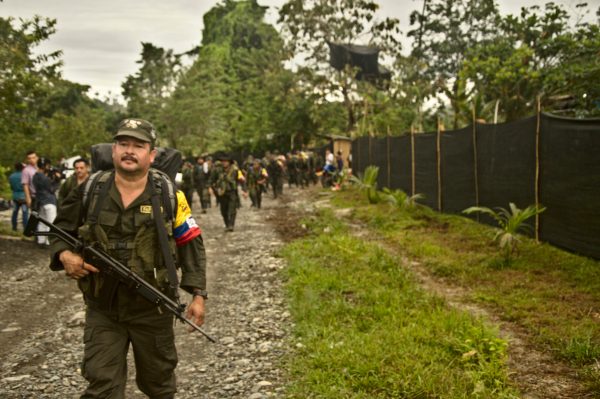
Members of the FARC in Tumaco, Colombia waiting to be disarmed last January. / Andrés Gómez Tarazona / Flickr / Creative Commons

As Colombia prepares for its presidential elections, the peace process with the FARC is already seriously jeopardized by shortcomings in its implementation —and it stands to worsen considerably.

  • The strong showing in polls of Iván Duque – nominee of Alvaro Uribe’s Centro Democrático (CD), which has consistently opposed the peace agreement – bodes poorly for implementation in the future. Former Vice President Germán Vargas Lleras is polling poorly, but his Cambio Radical’s antagonism toward the peace agreement enjoys support.  Leftist candidate and former Bogotá mayor Gustavo Petro, second in the polls, supports the accord, but he faces a steep uphill battle.  Centrist candidates Sergio Fajardo, former mayor of Medellín and governor of Antioquia, and Humberto de la Calle, chief negotiator with the FARC, have not been able to gain ground.  The polls do not enjoy much credibility but are influencing public perceptions on the peace process and other key policies.
  • The peace talks between the government and the country’s other main guerrilla group, the Ejército de Liberación Nacional (ELN), have been in a limbo since Ecuador withdrew as host and guarantor of the negotiations two weeks ago. Ecuadoran President Lenín Moreno made the announcement apparently in anger over the assassination of two Ecuadoran journalists by FARC “dissidents” (those rejecting the accords) and over the increasing criticism among locals of the worsening security situation in the border region with Colombia.  It was a big blow to Colombian President Santos’s hopes to conclude an agreement with the ELN during his mandate.  The peace talks have been suspended several times in the past due to bombings and kidnappings, but most observers believe it will be very difficult for talks to resume without Ecuador’s facilitation.

A serious challenge to political consensus to push ahead with the peace process is the dramatic decline in security in several Colombian regions, most notably Catatumbo (near the Venezuelan border) and Tumaco (on the Pacific Coast).  As experts had foreseen, the vacuum left by the FARC’s demobilization was quickly filled by the ELN and criminal organizations linked to the drug trade.  In Catatumbo, a hitherto irrelevant force, the “dissidents” of the Ejército Popular de Liberación (that is, those who did not demobilize with EPL in 1991), have taken advantage of the opportunity to conduct a deadly war against the ELN.  According to the weekly Semana, the dissidents may be supported by the Mexican Clan del Golfo cartel that wants control of strategic corridors for the drug trade.  Armed actors are sowing fear by declaring and suspending curfews at random; the state seems completely absent.  In Tumaco, bloody battles between FARC dissidents, other criminal groups, and state security forces are terrorizing the civilian population.  In these and other regions, threats against community leaders and assassinations are increasing.

  • Deficient implementation of reintegration programs for former FARC combatants is a major concern. Most former combatants are in a limbo regarding their judicial, economic, and social situation.  Lessons learned from the demobilization of paramilitary fighters some 14 years ago have not been applied, and lagging reintegration is tempting fighters to join other illegal actors.  The possible extradition of FARC leader Jesús Santrich to the United States on drug-related charges is also undermining demobilized combatants’ confidence that they’ll get a fair deal.  Santrich has started a hunger strike and claims to prefer dying than being extradited.

Most worrying in the long run is the polarization demonstrated by the inappropriate behavior of most of the presidential candidates.  Instead of offering programs to lead the country into a different future, personal attacks and the settling of accounts are at the core of the campaigns so far.  Colombian society’s contract to integrate into national life an unarmed FARC, free to pursue change through peaceful, democratic means, has never been strong.  But a surge in opposition to the peace process and the former guerrillas – led by politicians without a viable alternative policy – could easily translate into irreversible blows for peace and democratic inclusion.  Colombia is at a risky and decisive crossroad.  The possibility to relapse into former times is real.

May 4, 2018

* Christian Wlaschütz is a political scientist, independent mediator, and international consultant who has lived and worked in Colombia, in particular in conflict zones in the fields of transitional justice, reconciliation, and communitarian peace-building.

Colombia’s Elections: With New Comes Old

By Julián Silva*

Two men sit in white chairs during an interview

Iván Duque (left), appears to be the frontrunner in Colombia’s May 27 presidential election. / Casa de América / Flickr / Creative Commons

The first round of Colombia’s presidential election on May 27 has raised the profile of independent voices but does not appear likely to bring significant changes.  Most of the nine candidates represent new political forces, but the strongest are allied with the traditional elites that ruled under Liberal and Conservative banners during most of the 20th century.

  • Since the 1991 Constitution opened space for new competition to the Liberal and Conservative Parties, “independent” groups have shown increasing willingness to take the presidency for themselves. The old clientelistic machines, associated with the land-owning elites and those parties, have lost popularity in the urban-dominated country, and the rejection of the more traditional families seems to have prompted a certain “rebranding” by their heirs.  This year, only the Liberal Party presented a candidate – former minister, vice president, and peace negotiator Humberto De la Calle – but current polls indicate that he is unlikely to reach one of the two spots heading into the second round.  The youngest of the candidates seem to hold the lead: Iván Duque (42 years old) is pulling 38 percent; Gustavo Petro (58) has 29 percent support; Sergio Fajardo (61) has 12.8 percent; German Vargas Lleras (56) has 8.2 percent; and De la Calle (71) has 3.2 percent.

Several ostensibly independent candidates actually have close ties to well-established local and national elites.  Iván Duque, a fairly new figure in the Colombian political landscape, is aggressively supported by former President and current Senator Álvaro Uribe Vélez, who had deep roots in the Liberal Party and Antioquia Department elite before founding Centro Democrático in 2013.  The party is closely tied to land-owning oligarchs, big corporations, and the military, which gives Duque prospects for victory no truly independent candidate could have.  German Vargas Lleras, grandson of former President Alberto Lleras, is running on a new ticket called “Coalición Mejor Vargas Lleras,” which receives support from his old party, Cambio Radical, as well as stalwarts of the Conservative party and his family’s Liberal allies.

  • Several independents deserve the label. Gustavo Petro, a former guerrilla and mayor of Bogotá, occupies a more leftist space on the political spectrum that was usually excluded by the traditional parties during most of the 20th century.  Former Mayor of Medellín and Governor of Antioquia Sergio Fajardo promises to bring an “academic” perspective to the presidency if elected.
  • In addition to airing complaints about the candidates, social media users have been extremely critical of links that most candidates have to the traditional Colombian political class. Provocateurs mix truthful information with fake news to mislead the electorate and, protected by anonymity and authorities’ loose control over the virtual space, even issue threats of violence.  An unidentified projectile shattered a window of the car in which Gustavo Petro was heading to a rally in the city of Cúcuta.  The Matador, a political cartoonist working for El Tiempo, received death threats after he depicted Ivan Duque as a pig in one of his drawings.

With a little more than three weeks until the first round, the table seems to be set for Colombians to choose between leaders with significantly different political bases.  Current polls suggest they will stick with the neoconservative elite that has improved security and driven economic growth during the last few decades but has been tolerant of corruption, inequity, and even violence in some parts of the country.  But support for a different formula that promises to address some of these chronic problems is not inconsequential, even if the new leaders’ effectiveness is still unproven on a national level.  Colombians will also have a chance to decide if social media will be a vehicle for amplifying the old politics of threats and violence – or perhaps channel legitimate popular voices to demand accountability that exposes “fake news” and hate-mongering for what they are.  On that, too, the old practices and characters seem to have the advantage as they pursue a strategy that creates an image of change to ensure that everything remains the same.  The appearance of change in Colombia probably portends more of the same.

May 2, 2018

* Julián Silva is a CLALS Research Fellow, a Ph.D. Candidate in History at Universidad de los Andes, and Professor of International Relations at several Colombian universities.

Brazil: Is Democracy Under Threat?

By Marcio Cunha Filho*

A large group of Brazilians wave the Brazilian flag

A rally supporting former president Luiz Inácio Lula da Silva in October 2017. / Eduardo Figueiredo / Midia NINJA / Flickr / Creative Commons

Brazil’s ongoing political turmoil hit a new peak last weekend – resulting in former President Luiz Inácio Lula da Silva’s decision to turn himself in to be imprisoned – and strongly suggests that the country’s democracy is in deeper trouble than previously thought.  Lula said he was a victim of political persecution by both prosecutors and the courts, including the six Supreme Court justices who ruled that he not be allowed the courtesy of remaining free during his appeals to Brazil’s higher courts on his conviction on corruption charges.

  • Lula’s Worker’s Party (PT) claims that the decision is part of a campaign against leftwing forces that has intensified since Dilma Rousseff’s impeachment in August 2016. Supporters say that Lula’s imprisonment at a time that he is leading in presidential polls is the culmination of a strategy aimed at making sure that the PT – the only party to have won the presidency in elections since 2002 – remains out of power.  Most mainstream media and some rightwing lawyers have argued that Lula’s arrest obeyed all legal procedures, but PT supporters are not alone in their allegation of impropriety.  José Afonso da Silva, one of the most prominent non-partisan constitutional law professors in Brazil, has written a legal opinion against Lula’s imprisonment.  Other experts claim that Lula’s imprisonment order was strangely rushed (jurist Celso Antônio Bandeira de Mello), while others have expressly criticized the Supreme Court for denying Lula Habeas Corpus (Prof. José Geraldo da Silva Júnior).
  • While proof remains elusive, strong circumstantial evidence of conspiracy persists. The lawsuit against Lula was tried much more rapidly by Judge Sérgio Moro than most cases, and the guilty verdict was reaffirmed by the regional court just in time to keep Lula out of the presidential election scheduled for October 7.  Moreover, the accusations against Lula are fragile:  Moro argues that the former president received a $1 million remodeled beach apartment as a bribe from a construction company in exchange for political favors, but there is no evidence that the apartment was Lula’s or that he used it in any way.  Neither is there evidence that the construction firm received any favors.

Other indications that Brazil is experiencing an “open season” against the left are emerging.  Civil society leaders have reported repressive practices against them, including violent protests at their public events.

  • The assassination of a Rio de Janeiro municipal legislator is widely thought to have been carried out by rightwing elements. At a recent political rally, unidentified gunmen shot at Lula’s vehicle.  A wealthy São Paulo night club owner is offering a reward for anyone willing to murder Lula in prison.  Radical and angry political movements such as Movimento Brasil Livre are gaining strength by angrily advocating and celebrating through social media the imprisonment of political opponents.  Congressman Jair Bolsonaro, a former military officer who praises the military dictatorship, has become the new frontrunner in the presidential race.
  • Another troubling sign was a tweet from the Armed Forces – issued the day before the Supreme Court’s judgment against Lula – that it will not tolerate impunity. It has been widely interpreted as the most direct threat to the Court since the end of military dictatorship.
  • Freedom of expression and academic freedom are under pressure as well, according to many observers. Local, state, and federal legislators are trying to ban the teaching of gender issues in public schools, claiming gender issues are a leftwing ideology should not be taught to young children.  At the university level, in Rio Grande do Sul a local congressman filed a complaint to the Public Prosecutor’s Office asking that a course entitled “The 2016 Coup d’état” – referring to the removal of Dilma Rousseff and inauguration of President Michel Temer – be disallowed.

Democracies rarely die as a result of the acts by one or even a small group of political leaders, but rather as the outcome of repressive actors’ manipulation of popular confusion and anxiety about the country’s direction.  Lula may not have been perfect – he was not – but he deserved fair treatment by the government and fair enforcement of the law.  Democracies cannot endure when one group or another uses government institutions, even with significant popular support, to impose its views on others, often violently.  We should not forget that, in its early stages, the military coup in Brazil was supported by the media (at least by the biggest TV network in the country, Rede Globo), by civil society institutions (such as the Ordem dos Advogados do Brasil), as well as by much of the political leadership.  Radicalization, inability to dialogue, and unwillingness to make political compromises are the factors that made Brazil descend in 1964 into two decades of repression.  We might now be slipping down this same path, and witnessing the rebirth of institutionalized and popularly-supported repression and intolerance.

April 10, 2018

* Marcio Cunha Filho is a Ph.D. candidate at the University of Brasília; federal auditor in Brazil’s Office of the Comptroller General; and former CLALS Research Fellow.

Presidential Elections in Mexico: Tough Campaign, Tougher Challenges Ahead

By Daniela Stevens*

Andrés Manuel López Obrador stands at a microphone

Frontrunner candidate in Mexico’s 2018 presidential elections, Andrés Manuel López Obrador, speaks to the press. / ANDES / Micaela Ayala V / Flickr / Creative Commons

Campaigning for Mexico’s July 1 presidential election officially begins next week, and no candidate appears to have an insurmountable advantage over the others.  Polls vary, but Andrés Manuel López Obrador (MORENA) appears to be the frontrunner, with 35 to 44 percent of support.  He is followed by PAN-PRD coalition candidate Ricardo Anaya, who has between 24 and 31 percent of the vote.  The PRI candidate, José Antonio Meade, seems a third option, at about 20 to 26 percent, and Margarita Zavala, the only independent candidate who officially obtained registry, lags far behind.  It is too early to see if voters will base their decisions on party loyalty or on perceptions of the candidates.

  • López Obrador (widely known by his initials, “AMLO”) has broad name recognition – 84 percent of Mexicans are familiar with him for better or for worse – but Anaya, Meade, and Zavala have an important opportunity to build new images and attract voters. Indeed, AMLO sometimes seems to be in a race against himself; his rhetoric is often harsh, and his disregard for international free trade alienates a large sector of the business world and the media.  His mixed signals regarding a “review” of the contracts made in conjunction with energy reforms have fostered distrust and uncertainty.
  • Ricardo Anaya’s strategy appears likely to be open confrontation with PRI candidate Meade, aiming to attract PRI voters who see him as the candidate best positioned to prevent an AMLO victory. Anaya’s focus has been on winning the endorsement of key figures in states that constitute large electoral strongholds, such as Jalisco.  However, Anaya’s alleged involvement in a money laundering scandal stands to undermine his support.   PRI Secretary General Claudia Ruiz Massieu tried to tar him in an international context last week by giving the OAS a file with evidence she claimed substantiates the charges against him.  Anaya has cried foul.
  • José Antonio Meade, a highly skilled and seasoned technocrat associated with both PRI and PAN presidencies, is being held back by his association with the very unpopular incumbent President Enrique Peña Nieto. He is trying to cast himself as a PRI “sympathizer,” rather than as a party “militant” responsible for recent years’ weak performance.  To distance himself from his party’s image of electoral fraud, corruption, and crony capitalism, he has emphasized his commitment to transform the PRI.  The party is cooperating, framing him as a “citizen candidate.”

While candidates are immersed in the customary personal attacks against each other, violence appears to be playing into electoral politics with renewed intensity.  The Second Report of Political Violence in Mexico, prepared by the risk assessment firm Etellekt, documents 141 attacks against politicians and public servants since the start of the pre-campaign period last September.  Over 50 of these attacks have been assassinations of officials, incumbents, and candidates at all levels of government.  Violence is worst in Guerrero, Veracruz, the State of México, and Puebla, all states with significant organized crime.

Public insecurity is certain to join organized crime, corruption, inequality, and redistribution of income as central in the Mexican landscape as elections approach, and each candidate will pledge to make those issues his or her top priority.  As in other Latin American countries, the election also appears likely to signal the deepening discredit and low representation of the traditional party system.  Voters could very well select a candidate who, while not an outsider, presents him- or herself as committed to attacking the corruption of the major parties.  While running on a law-and-order slate, the candidates will also likely promise new approaches on the “war on drugs” that, led by both PAN and PRI, has devastated the country – with little or no prospect of avoiding the same pitfalls as predecessors.  Winning the election on July 1 will not be easy for any of the declared candidates; governing once in office will be even harder.

March 23, 2018

* Daniela Stevens is a Ph.D. candidate in Political Science in the School of Public Affairs at American University.