A Preliminary Portrait of the Educational Attainment of Recently Arrived Afghan Refugees in the Washington Metropolitan Area

by Austin Kocher, Bashir Mobasher, Sofía Guerra, Makenna Lindsay, Diana Garay Flores, and Ernesto Castañeda*

A graph depicting the inter-generational educational achievement of Afghan interviewees and their parents / Creative Commons License

Although tens of thousands of Afghans were brought to the United States before and after the U.S. military withdrawal from Afghanistan, many remain in legal limbo, and some are still struggling to resettle in this country. We still know little about the lives of Afghans in the United States, even two years after the military final withdrawal.  

Washington, D.C. is an area with one of the largest Afghan communities in the country. In order to fill in the gap in knowledge about recently arrived Afghans in the United States, researchers at the Immigration Lab and the Center for Latin American and Latino Studies at American University interviewed Afghan immigrants through the D.C.-Maryland-Virginia (DMV) region and beyond about their experiences. We use pseudonyms rather than names to keep confidentiality.  

This first report from the project presents the preliminary results of interviews with 21 Afghans to discuss their educational and work experiences in Afghanistan and after arriving in the United States. Most Afghan migrants in our study had a high educational attainment. Most of our interviewees—87% of the total—had at least a bachelor’s degree, while nearly half (10) also had a master’s degree.  

Our interviewees often situated their own educational attainment relative to their parents’ educational attainment as a way to demonstrate the value of intergenerational progress and social mobility. One 32-year-old male refugee, Abdul, who, like his father, had completed a master’s degree, described the impacts of years of war on Afghanistan and child-rearing duties as placing limits on his mother’s education. His mother completed the equivalent of high school but could not pursue additional education “because Afghanistan has struggled with four wars,” and she had to “take care of five to six children.” At the time of the interview, Abdul was working in the food service industry, which he reported enjoying, although he also aspired to join the army and pursue further education once his immigration status is resolved.  

Most participants reported higher educational attainment than their parents, either by studying abroad or in Afghanistan. The above image shows the educational attainment of interviewees and their parents. Only the 12 participants where full data was available are shown in the graph; the remaining nine included only partial data. 

Despite high educational attainment, many of our research participants worked jobs that did not appear to capture their full employment potential. Three participants were unemployed. Two worked in the gig economy as Uber or DoorDash drivers, while others worked part-time or in customer service shifts. Nearly all expressed an interest in pursuing higher education and more competitive careers in government service, journalism, or business. Others reported more stable professional positions, including security guards, senior project coordinators, customer service specialists, and human resources.  

Even if they aspired to have more competitive jobs later in life, many of the Afghans we spoke with described their determination to work jobs that were available to them as a function of their ongoing responsibility to their families both in the United States and in Afghanistan. As with many other immigrants, the Afghans we spoke with felt a responsibility to provide for their family as they settled into the DMV and often reported sending money to support family members who could not leave as they had been able to.  

A 35-year-old male refugee, Sayed, described the responsibility he and many other Afghans felt towards their families still in Afghanistan. Sayed had only been in the United States since 2021 and, like many of the people we interviewed, had received his education abroad rather than in Afghanistan. He completed his master’s degree in India and hoped to pursue a Ph.D. However, his current situation demanded more practical considerations. When asked about his work schedule, he described “working hard” with lots of “overtime that only left him just one day free each week. When asked if he felt he was working hard enough, he replied, “No, it is not enough. But we are in a tough position right now. We have problems. You know, the situation in Afghanistan is not normal. We have to be hard working; we have to help our families in Afghanistan. I am working here to support my family, my friends, and my colleagues in Afghanistan.” 

Similarly, Ahmad arrived in the United States in 2021 and settled immediately in the D.C. area. When asked if he sent remittances to Afghanistan, he said, “Yeah, sure. Why not? The situation is still terrible. No jobs, no work, no money. So, I have to support my family, my mom, even my brothers. They need healthcare, they need food, they need a lot of things. But there is none. So, I have to support my family.” Ahmad went on to describe the responsibility he felt for family members in the United States as well as abroad. “And I have to provide financial support right here in America, as well as to my sons, my daughter, my wife, and my mom.” Ahmad works as a customer support specialist and as an interpreter for a furniture company. 

Although educational attainment is typically thought of as a resource for immigrants who are joining the U.S. labor market, educational and work-related background may also be in the list of factors that forced immigrants to leave their country in the first place. A 32-year-old Afghan woman, Zahra, represented an important segment of our interviewees who had parents with relatively high education.Zahra’s mother possessed a master’s degree in criminology, and her father possessed a bachelor’s degree, while Zahra had completed a master’s degree in the United States. Under the Taliban regime, highly-educated women are seen with distrust and may be targeted.  

Although from Afghanistan, Zahra reported spending much of her early childhood in Pakistan. Interestingly, the U.S. military operation in Afghanistan prompted her family to return to the country. “After the U.S. captured Kabul,” she said, “we thought it was our time to go back to Kabul.” Her family’s education and careers shaped how they experienced Afghanistan before and after the withdrawal.  

“My mom was a governmental official, and I used to work with the U.S. embassy, and my brother was also working with the U.S. embassy. So when the Taliban captured the city, the first thing that came to my mind was that they would harm my family… During the evacuation, the U.S. government was trying to evacuate all of those people who were working with the U.S. government and their allies.” 

She went on to describe how their jobs working with the United States government exacerbated their risks once the U.S. military left. 

“We have been threatened. The night before coming to the Kabul airport, the Taliban came to our house. They were asking for my mother, and that was very scary. My mother has like the governmental vehicle and some laptops and stuff, but they actually came just to see if my mother was still in Kabul. But they just made an excuse that they were here to ask for the car, documents, and stuff. Then they also asked about us, about me and my brother.” 

Zahra’s story illustrates the ways in which the educational attainment and careers of Afghan individuals create cycles of opportunity and precarity. In Zahra’s case, her family’s education created opportunities for work with the U.S. government, which then contributed to their vulnerability after the military withdrawal and may now help her resettle in the United States and join the labor market here. In a future report we will explore further whether their education fits the jobs they obtain in the U.S. 

About the Study 

This report is part of a larger research project titled Immigration to the DMV. The project relies on a mixed-methods research project conducted by faculty and students from the Immigration Lab and the Center for Latin American and Latino Studies (CLALS) at American University. Researchers solicited information about migrants’ identities and experiences using a survey form that collected quantitative data and asked open-ended follow-up questions to collect narrative-rich qualitative data. This project was supported by the Mellon Foundation through the College of Arts and Sciences and the Faculty-Student Scholarly Collaboration Grant from the Office of the Deputy Provost and Dean of Faculty at American University. The larger team includes Tazreena Sajjad, Mubbashir Rizvi, Lauren Carruth, Daniel Jenks, Joseph Fournier, Montse Hernandez, and over 30 students working at the Immigration Lab. We aim to interview more Afghans and compare them to other immigrant and asylum-seeking groups. 

Austin Kocher, Bashir Mobasher, Sofía Guerra, Makenna Lindsay, Diana Garay Flores, and Ernesto Castañeda are part of the team at American University’s Immigration Lab, housed in the Center for Latin American & Latino Studies.

Reproduction with full attribution is possible with modifications such as not including the “About the Study” section are permitted for non-for profit purposes by newsmedia and education purposes.

Inequality as a Threat to Democracy: Comments on the Report, “(Co)Building a Strategic Agenda for the Americas”

by Claudia Heiss*

The cover of the report, “(Co)Building a Strategic Agenda for the Americas / El Colegio de México / Creative Commons License

This joint effort by El Colegio de México in Mexico City, Universidad de Los Andes in Bogotá, and Universidad Torcuato Di Tella in Buenos Aires, supported by the Ford Foundation, deserves to be celebrated. The report is the result of a series of meetings and scholarly works meant to contribute to the agenda coming from the Summit of the Americas by including the perspective of academia and civil society. Its main message is the need to strengthen multilateralism and Inter-American cooperation. 

The weakening of intergovernmental dialogue, coordination, and action that we witness today goes hand in hand with the weakening of democracies at home. Democratic backsliding and the increase in authoritarianism in the world signal bad times for deliberative and participatory democracies at the national and international levels.  

The report pays attention to the needs not just of intergovernmental politics, but also stresses the role of academia and civil society by incorporating experts from different backgrounds. It proposes an Inter-American strategic agenda: a roadmap for collective international action around three priority areas of inequality, migration, and climate change. I would like to focus on the first. 

According to the World Inequality Report 2022, the richest 10% of the region’s population owns 75% of wealth, whereas the poorest 50% barely owns 2%. Inequality worsened with the pandemic. The share of the wealth captured by Latin American multimillionaires increased by 14% between 2019 and 2021. 

Inequality in Latin America and the Caribbean is rooted in a historical legacy and economic models based on the extraction and export of commodities, and an institutional structure that perpetuates it. This is what Roberto Gargarella (2010) calls “the legal foundations of inequality.” Political struggles between radicals, liberals, and conservatives in the early days of the new republics, he argues, ended up constitutionalizing an exclusionary political structure. 

Unlike poverty, inequality is a disputed topic in public policy. This report makes the case for addressing it as a specific challenge to building cohesive societies capable of dealing with their needs and protecting political pluralism. The study shows that the economic and social gap increased after the COVID-19 pandemic, creating a worrisome social regression that feeds political discontent. “Regionally, the social agenda is a top priority,”—states the report—”Policies agreed at an inter-State and transnational level are needed to reduce entrenched socioeconomic inequalities, eradicate poverty, expand rights for everyone, and provide universal access to basic services.” The discussion of this topic ends with concrete recommendations: 

  • Empowering sectors of the population that have been left behind. This includes narrowing the gap between formal and substantive equality and building more democratic and participatory institutions. 
  • Promoting fiscal reform which is necessary for building an inclusive welfare state and improving wealth redistribution.  
  • Reducing gaps between more dynamic and poorer regions. 
  • Establishing a minimum basic income and more universally accessible public assets, including innovative connections between public, private, social, and community associations. 
  • Gender equality policies, including caregiving, political representation (electoral gender parity), and measures to eradicate violence against women. 
  • Improve multilateral cooperation programs. 

Interdependence: Democracy and Equality 

This work is based on decades of social research analyzing the tension between inequality and democracy. Inequality is inseparable from the current crisis of political representation and the failure of political parties to effectively channel social diversity. In Latin America, economic development built on inequality has been coupled with a constitutional structure that preserves the power of economic minorities (Gargarella 2021). Understanding and addressing inequality requires considering the conditions for both economic and political exclusion. Democracy, which is a promise of political equality, becomes meaningless in the face of wealth inequality and the absence of mechanisms to alleviate the material struggles of citizens.  

Exclusion in the social and political spheres have recently triggered massive protests, as seen in Brazil (2015), Venezuela (2017), Nicaragua (2018), Ecuador and Chile (2019), Colombia, Paraguay, and Cuba (2021), Bolivia (2019, 2020), and Peru (2020 and 2022). In a recent work, Roberto Gargarella (2022) advocates for what he calls a “conversation among equals,” which leads to broadening popular participation and creating more inclusive deliberation to overcome this distrust in politics. In a similar vein, María Victoria Murillo (2021) argues that citizens with unsatisfied demands look for a democracy that listens, pays attention, and seats them at the table where decisions are made. For Murillo, this demand for democratic legitimacy is more important than the limits on public policy inherited from the previous military, which made scholars of transitions to democracy fearful of military regression (see also Garretón 2023). 

While this diagnostic seems correct, I believe the legacies of dictatorship are deep and permeate current politics in ways that need further attention. The increased worldwide tolerance of and even support for authoritarianism should not be studied without reference to Latin America’s recent political history. To make the return to democracy possible, elites often negotiated impunity for state crimes, accepted military-imposed limitations over the political process, and suffered significant constraints on the authority of the incoming governments (Loveman and Davies 1997). After transitions, many democracies were weakened by severe restrictions on political participation and inclusion as well as on public contestation of political decisions. Restrictions on mass media, political opposition, the right to organize, labor unions, and the exercise of civil rights and liberties remained. 

Institutional Barriers to Change 

It is true that deep institutional change took place in most countries (notable exceptions are Panama and Chile). The constitution-making in Latin America after transitions to democracy shows a tendency towards the expansion of social and political rights, but as Gargarella (2013) argues, the concentration of power in the executive remained. In recent years, political crises in Latin America have often been constitutional crises: ones that combine redistributive struggles with disagreement about which the basic political rules should be. 

An important legacy of military dictatorships was the supposedly “apolitical” nature of their institutional arrangements: ones that, while claiming to be above party and ideological disputes, severely restricted the political scope of action of new democracies (Loveman and Davies 1997). This fed into the institutional crisis of highly unequal societies unable to build effective and legitimate mediating capacities. Attempts to overcome these difficulties have included new constitutions guaranteeing social rights, granting new group rights to indigenous peoples, and creating participatory and deliberative mechanisms. Unfortunately, the latter have often increased the capacity for unilateral decision-making by power holders rather than empowering citizens or civil society (Heiss 2022). 

Victoria Murillo (2021) argues that this difficult coexistence between democracy and inequality has been exacerbated by the recent explosion of discontent in the context of economic and health crises, creating unstable political equilibria. Legitimacy is necessary to sustain democracy, but it must be associated with a hope for greater social well-being—a combination of inclusion and responsiveness. 

The Chilean Example 

This September 11 of 2023, was the 50th anniversary of the military coup that ultimately ended the life of Salvador Allende, a democratic leftist that sought to reduce inequality and include the people as a political subject in an unprecedented way. The anniversary finds the country more divided than a decade ago. Chile has a prosperous economy when compared to other countries in the region, but at the same time, the country is among the most unequal. Its economic model of a “subsidiary state” that gives primacy to the private provision of public needs has been protected from change by institutional authoritarian legacies. A dysfunctional political system, described as “uprooted but stable” (Luna and Altman 2011), has resulted in the inability to adequately channel social demands.  

The rejection of institutions and political parties led to a search for “independents” in 2022 and for “experts” in 2023 to try to recompose political legitimacy. However, as Cristina Lafont (2020) has argued, there are no shortcuts to participatory deliberative democracy. Inequality is a fertile ground for left and right populists to capitalize on this discontent. It is sad that on the 50th anniversary of the coup in Chile, we see the appeal of right-wing authoritarianism threatening to come back. 

International cooperation reflects the will of governments, dominated by their local priorities. Thus, we should not expect miracles from a forum like the Summit of the Americas. However, the recommendations for “(Co)building a strategic agenda for the Americas” contained in this report are an important contribution to building an international public discourse that works for increased democratization and against the pernicious trend created by economic and political inequality. 

Claudia Heiss is Head of Political Science at Universidad de Chile and Research Fellow at American University’s Center for Latin American & Latino Studies.

References 

El Colegio de México (2023). (Co)Building a Strategic Agenda for the Americas. URL: https://americas-tiempos-adversos.colmex.mx/wp-content/uploads/2023/06/co-building-a-strategic-agenda-for-the-americas.pdf (accessed 12 Sep 2023) 

Gargarella, Roberto (2010). The Legal Foundations of Inequality. Cambridge University Press. 

Gargarella, Roberto (2013). Latin American Constitutionalism, 1810–2010: The Engine Room of the Constitution. Oxford University Press. 

Gargarella, Roberto (2022). The Law as a Conversation Among Equals. Cambridge University Press. 

Garretón, Manuel Antonio. (2003). Incomplete Democracy. University of North Carolina Press. 

Heiss, Claudia (2022). “What Can a Constitution Do? Seeking to Deepen Democracy through Constitution-Making in Latin America“. LASA Forum 53:3, 10-15 

Loveman, Brian, and Thomas M. Davies Jr., eds. (1997). The Politics of Antipolitics: The Military in Latin America. Wilmington, DE: Scholarly Resources. 

Lafont, Cristina (2020). Democracy without Shortcuts. A Participatory Conception of Deliberative Democracy. Oxford University Press. 

Luna, Juna Pablo and David Altman (2011). “Uprooted but Stable: Chilean Parties and the Concept of Party System Institutionalization”. Latin American Politics and Society, 53(2), 1-28. 

Murillo, Ma. Victoria (2021). “Protestas, descontento y democracia en América Latina”. Nueva Sociedad 294, 4-13. 

Asylum Seekers Encounter a New Digital Border: Their Smartphones

by Austin Kocher*

Two U.S. Border Patrol agents using equipment to take a photo of a person near Sasabe, Arizona on March 22, 2020 / Jerry Glaser / Picryl / Creative Commons License

Migrants around the world who are seeking asylum in North America and Europe are finding pathways to safety increasingly blocked—not only by physical borders but also by digital borders. The most recent example of this technological obstruction in the U.S. context is the introduction of a smartphone app known as CBP One, which the government has been using since January to manage the flow of asylum seekers at or near the U.S.-Mexico border.

Beginning in January 2023, asylum seekers faced new harsher consequences for seeking asylum directly at ports of entry or crossing unlawfully between ports of entry. CBP required migrants to download the CBP One app onto their smartphones, register their information, and schedule an appointment at a port of entry. 

CBP representatives claimed that this would streamline border processing, and for many migrants it did. But for others, the app introduced new digital barriers that reflected old ones: migrants with darker skin reported trouble with the facial liveness test, many migrants did not own newer (and more expensive) smartphones that could run the app well, or access to electricity and the Internet connection. The app disadvantaged migrants who were living at community shelters and camps on the outskirts of border towns in which the Internet was inaccessible.

My recent article on CBP One titled “Glitches in the Digitization of Asylum: How CBP One Turns Migrants’ Smartphones into Mobile Borders,” unpacks the various types of technological hurdles that migrants have faced when trying to use the app, and further attempts to analyze how this app fits within the broader landscape of borders, migration, and technology. But in this blog, I want to expand on those aspects of the digitization of asylum that represent a real concern for the right to ask for asylum going forward.

Specifically, we must think about the larger and longer-term consequences of CBP One for the asylum system writ large. Although CBP One and the current policies surrounding it may be an improvement for many migrants seeking asylum now, the question we should ask ourselves is, how might this app be used in restrictive, dangerous, or capricious ways that could undermine, rather than expand, the United States’ commitment to human rights? 

A recent example of this provides some early clues about the fragility of CBP One as a tool.

In June 2023, Customs and Border Protection suspended access to CBP One appointments at the Laredo port of entry in South Texas, effectively (though indirectly) suspending access to asylum itself in that spot. CBP’s rationale appeared to be tied to concerns about migrant safety in Nuevo Laredo, the city on the Mexican side of the border that is among the more dangerous border cities. Immigrant rights advocates reported at the time that migrants who were coming to Nuevo Laredo to seek asylum were being targeted for extortion and kidnapping. That is those presumed to try to present themselves to the appointments they had secured through CBPOne were being asked for money along the route in order to make it to the U.S. border. As a result of CBP’s decision to halt CBP One appointments, migrants would have to travel many miles on perilous roads to the nearest ports of entry that did accept CBP One appointments, such as those in Eagle Pass and Hidalgo, Texas. 

A closer look at CBP’s website reveals that Laredo was removed as an official CBP One location late in the day on June 8, although CBP’s website did not make any public announcements related to their decision to suspend access. The lack of public announcement or justification for this decision raises some questions and concerns. While the intentions may have been good ones, could canceling asylum appointments at precisely the moment that migrants were facing increased targeting put them at greater risk for violence? Is it lawful or ethical to essentially switch asylum off and on through an app in this manner? 

Immigrant rights advocates appear to share these concerns. Human Rights First published a scathing report that called the Biden administration’s new asylum policy a “travesty,” and pointed out the various additional hurdles that asylum seekers face including challenges to using the CBP One app and the additional risk that migrants face while waiting in Mexico. Amnesty International claims that as part of the new, broader asylum policy, CBP One likely violates migrants’ right to seek asylum. Additionally, a new lawsuit by a number of immigrant rights groups, including the ACLU, allege in their complaint that the challenges migrants face when using CBP One frustrate their attempts to lawfully seek asylum. And yet another lawsuit filed by the immigrant rights group Al Otro Lado at the end of July specifically alleges that CBP One created a “turnback” policy that violates the United States’ asylum obligations.

Indeed, the suspension of CBP One appointments in Laredo in June were an important red flag that reinforce immigrant rights groups’ concerns and presents us with a real-time example of these concerns. Thankfully, CBP reopened access to asylum by the end of June—although, once again, no announcement of justification was provided, leaving the public in the dark about what criteria the agency is using to make these decisions. It is entirely possible that CBP had good reason to suspend the use of CBP One. The app may well present the agency with novel security risks. However, without providing justification for this move or another pathway for migrants to seek asylum, this specific example may foreshadow a new era of on-again/off-again access to asylum that is likely to generate ongoing criticism and possibly even more lawsuits. 

None of this should be construed to suggest that the U.S. has been unwavering in its commitment to migrants’ rights prior to CBP One. Rather, the mandatory use of an asylum smartphone app has the potential to both accelerate and further invisibilize the life-and-death authority to decide who gets access to migrant protection (and when and where).

It is not all bad news for CBP One. At the end of June, CBP expanded the number of daily CBP One appointments to 1,450, up from 1,000 in early May, a significant increase. The agency also improved how the app functions, both by issuing a series of software updates and by reconfiguring the way that migrants schedule appointments. Instead of a first-come, first-serve basis, migrants have a full day to enter their information into the system, then the backend system slots migrants into available appointments overnight. These improvements are not trivial and the responsiveness within the agency stands out in a positive way. However, as I say in my article on CBP One, when the question of who has access to the fundamental human right of seeking asylum is answered with successive rounds of glitches and software updates, we have, to quote Alison Mountz, “lost the moral compass of what is at stake.”

* Austin Kocher is a Research Assistant Professor with the Transactional Records Access Clearinghouse (TRAC) at Syracuse University and a Research Fellow at the Immigration Lab and the Center for Latin American and Latino Studies at American University.
Chile: New Constitution Gives Conservative Right a Chance to Lead

by Jaime Baeza Freer*

La Moneda (Presidential Palace), Constitution Plaza in Santiago, Chile / Dennis Jarvis / Flickr / Creative Commons License

Chilean voters on May 7 handed right-wing parties a massive victory in the elections for the second Constitutional Convention– reaffirming popular rejection of the first draft and showing frustration with the sagging economy and soaring crime rates – but the extreme-right Republicans will have to deliver a balanced Constitution that reflects the country’s democratic values or get the boot in the referendum on it in December.

  • The Republicans and several more moderate right-wing parties won three-fifths of the seats in the country’s second Constitutional Convention – in stark contrast with the previous convention’s wide range of socialists, leftists, indigenous leaders, environmentalists, and former social activists. The election outcome was in tune with last year’s referendum, when 62 percent of the electorate rejected the previous convention’s draft Constitution.

The electorate’s sharp U-turn suggests a rejection of the former convention and current administration of President Gabriel Boric more than an embrace of the Republicans, some of whom are conspiracy theorists, far right extremists, and loners. Conservative Luis Silva, the most-voted candidate in the country, has caused outrage by stating his “admiration” for dictator Augusto Pinochet (whom he called “a statesman”), and he has adamantly proclaimed that issues like abortion, gay marriage, and migration are simply off the table and should be expressly banned in the draft Constitutional. Mr. Silva is a numerary of the Opus Dei. Press reports also allege that many candidates were nominated to fill vacated lists with no hope of winning. Some newly elected Republicans are unfit for office; one resigned his seat due to an indictment (still in trial) for domestic violence.

  • Most voters who cast their ballot for the Republicans, however, are not extremists. Indeed, party leader José Antonio Kast – who placed second in the 2021 presidential election (with 44 percent of the second-round vote) – is not an extreme right-wing supremacist or anything closely related as some of his opponents have alleged. Indeed, polls show a correlation of voters’ discontent with the Boric administration and support for Kast. According to Decide Chile pollster Cristóbal Huneeus, 16 out of the 35 percent of the votes the Republicans received were “circumstantial” and from persons who usually vote for the left.
  • The outcome has created the appearance that voters have swung to the other extreme of the political spectrum, but people are not against liberal values like marriage equality, women’s rights, or LGBTQIA+ rights. According to Bicentennial Polls by the Pontifical Catholic University, less than half of Chileans regard themselves as Catholics.

The main lesson of the election is that voters are annoyed with the patronizing attitudes from some quarters of the liberal elites, who went too far and too quickly to the left in the first draft of the new Constitution while the economy could not recover its pre-2019 levels. Most of the population is still trying to fulfill basic needs like housing, jobs, lowering crime rates, and dealing with an impoverished economy after the pandemic and uncontrolled immigration.

  • On the new Constitution, the message of the population is a wish for one that stands on the idea of order and economic freedom as the most precious assets without rejecting individual freedoms – a position that some Republicans are unable to accept, as they want to go all the way to extreme conservative positions. Kast gained enormous credit from this election, and he’s hoping to take power in two years in the general election. As poised as the Republicans appear, however, reality can change anytime. A lack of moderation, including expressions of admiration for Pinochet, can lead to their defeat when the new draft is put to a referendum in December.
  • The defeat of the leftist coalition is a major setback for President Boric. His coalition, in power for over a year, had hoped to use the previous draft Constitution to enact several progressive reforms. Now they are stuck in a process that does not belong to them anymore. Even if the new draft is more conservative than middle Chile wants and is rejected December – near the halfway mark of term – Boric will have difficulty regaining the momentum to get his presidency off the launchpad.

* Jaime Baeza Freer is a Research Fellow at the Center for Latin American and Latino Studies at American University and Assistant Professor of Political Science at the University of Chile.

Brazil: Lula Trying to Exert Civilian Control over Security Forces

By Luiza Duarte*

Property damage in the National Congress Building in Brasilia caused by pro-Bolsonaro insurrectionists on January 8, 2023 / Agência Senado / Wikimedia Commons / Creative Commons License

The attack on the Three Powers Plaza in Brasilia on January 8 exposed a civil-military crisis that threatens to hinder President “Lula” da Silva’s efforts to put Brazilian democracy back on track and pursue the agenda for which he was elected. The direct participation of current and former members of the military, the military police, and their family members in the invasion of the country’s Congress, Presidential Palace, and Supreme Court is evidence that the relationship of the new government with the security forces is at the center of its struggle to protect Latin America’s largest democracy.

  • The security forces not only failed to block a coup attempt about which threats were made repeatedly; they protected pro-coup demonstrators for weeks in front of military installations in different states. They also chose not to publicly condemn the unprecedented anti-democratic riots, nor to dismiss baseless claims of electoral fraud. Videos show military police dismantling a barrier in Congress, facilitating the invasion. Evidence suggests that some had been collaborating with the attackers. A recent survey shows that four in 10 public security agents see the January 8 rioters’ demands as “legitimate.”
  • The politicization of the security forces deepened under former President Jair Bolsonaro, when the number of military personnel in civilian leadership positions in the Federal Administration more than doubled – reaching the highest figure since re-democratization in the late 1980s. A retired captain himself, Bolsonaro had a general as his vice president and had 10 state ministers from the uniformed armed forces. His reelection bid in October mobilized support in the defense sector.
  • Before the second round of elections, retired General Maynard Santa Rosa, Bolsonaro’s Secretary for Strategic Affairs for nine months, told the press that police forces may be insufficient to contain possible conflicts in the event of a Bolsonaro defeat. Rather than discourage protests, he suggested that the armed forces could establish order through a Law and Order Guarantee (GLO) decree.

Security threats and signs of security forces’ dissatisfaction with the election results mounted during the transition period to the point that Lula moved to change the military command even before his inauguration. Radical Bolsonaro supporters burned eight vehicles in the capital one day after Lula’s victory was confirmed by the Electoral Court in mid-December. One week before his swearing-in on New Year’s Day, police arrested a suspect in a failed bomb attack – a man who had camped out with other radicals in front of the Brazilian Army’s general headquarters and planned to force a declaration of “state of siege” that would pave the way for a coup.

  • The need to reduce the number of non-civilians in the government was recognized by the new administration before January 8, but the coup attempt made it urgent to move quickly. In the aftermath of the attacks, Lula sacked the country’s Army chief, Júlio Cesar de Arruda (in the position for less than one month); changed the command of Federal Police in 18 states; and dismissed 26 commanders of the Federal Highway Police. The latter was involved in widespread allegations of illegal roadblocks on election day, raising fears of voter suppression in pro-Lula regions.
  • The day after the January 8 attack, the Federal District governor was suspended for 90 days. One week after, Brazilian police searched the residence of Anderson Torres, Bolsonaro’s Justice Minister and in charge of Brasilia’s public security at the time, and found a draft decree to overturn the election results. Torres was arrested on suspicion of “omission” and “connivance.” In all, Lula so far has removed more than 140 troops assigned to different bodies linked to the Presidency, including some in charge of his security, for which the Federal Police is now responsible.

The political capital garnered by the new government after January 8 opens a window of opportunity for long-needed reform to address the military’s institutional hold on power. Less than two months into his presidency, Lula has announced changes in the Brazilian public security structure, including the restructuring of the Institutional Security Office (GSI) to remove the Brazilian Intelligence Agency (BIN) from military control. At the same time, the new administration is defending the creation of a permanent National Guard to replace the federal district military police in the protection of federal institutions in the capital. The new force would also act in indigenous lands and border areas and support state security, as the National Force currently does.

  • The security forces grew once again into a non-legitimate political actor, reversing progress made over the past 37 years. Brazil now has a fragile combination of political will and conditions to press for accountability and civilian control over the armed services.

*Luiza Duarte is a Research Fellow at the Center for Latin American and Latino Studies (CLALS) and at the Wilson Center, Brazil Institute. Duarte holds a PhD in Political Science from Sorbonne Nouvelle University’s Institute of Latin American Studies.

Chile: Dim Prospects for New Constitutional Assembly Soon

By Carlos Cruz Infante and Miguel Zlosilo*

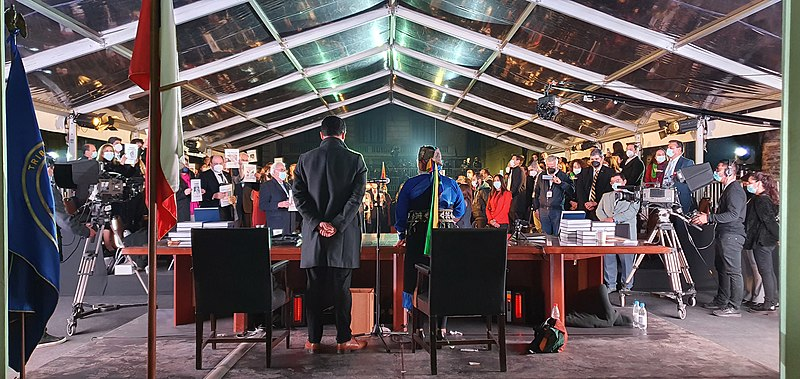
The Constitutional Convention, shown here during a moment of silence at its inauguration, started amid optimism that a new Constitution would help heal the country’s deep splits / Wikimedia Commons / Creative Commons License

Chile does not appear likely to restart efforts to write a new Constitution soon. The failure of the first draft – rejected by 62 percent of Chilean voters – has significantly weakened political leaders’ ability and resolve to try a second draft. Pollsters predicted that Rechazo (rejection) would win on September 4, and the result would fit within the left-right pendular swings of Chilean votes, but the devastating 16‑point advantage surprised all major observers.

Popular support for Constitutional reform has dissipated, even though many of the underlying issues that sparked the upheavals in 2019 and drove 78 percent of Chileans to vote for the Constituyente process remain formidable. Popular frustration with the political class and unhappiness with the first draft has bred apathy and probably disgust. 

  • The warning signs were clear before the referendum on September 4 rejected the draft. Its architects squandered their opportunity to craft a magna carta that transcended political agendas and instead they loaded the draft up with agenda items that would have best been resolved through normal political processes. Constituyente leaders’ efforts to expand people’s rights without a broader national debate turned out to be counterproductive – alienating even some crucial center-left players – and the lack of fiscal responsibility for some proposals gave right-leaning forces an issue with which to rally opposition. On top of that, investors feared that several regulatory changes would impact economic growth and unemployment.

Since the rejection, the nation’s political leaders have remained too wrapped up in their political agendas to develop a vision that could unify them and win popular support.

  • The center-left argues that a second (and successful attempt) is necessary to institutionalize Chile’s legacy since the end of the dictatorship in the 1990. Its narrative, however, is plagued with unrealistic expectations for them to provide leadership because they missed important opportunities to do so in the early 2000s.
  • President Gabriel Boric’s Frente Amplio and the left-leaning factions aligned with his government have so far failed to develop a political project. They admitted that a new Constitution is essential to their planned policies but did not inspire support. Boric has reached out to the center-left and, after the referendum failure, made a leader of the Partido por la Democracia (PPD), Carolina Tohá Morales, Minister of the Interior. But polls, including Plaza Pública by Cadem and Activa Research, indicate that Boric’s approval rating is steadily diminishing, and his disapproval is rising. Critics say that he has been overly focused on Chile’s international image, not the political crisis caused by the Constituyente’s failure, but his recent moves on pension reform may help on that.
  • The center-right, which led the Rechazo efforts against the draft, has not yet shown a compelling need for a new Constitution and simply does not see the citizens’ urgency to push for one. Indeed, center-right leaders are enjoying the failures of the left and center-left during and since the Constituyente. The hard right has never wanted to abandon the Pinochet-era Constitution that was to be replaced.

A centrist coalition comprising some elements of the center-left and center-right has expressed conditional interest in getting a second try off the ground, but fear of “convention disaster 2.0” has stymied any progress. The centrists have separately indicated that they would support another convention if the two hard factions (left and right) accepted conditions that, they say, would pave the way forward. Regarding the substance of a new assembly, they want it built on social issues that already enjoy support – not a long wish list of one political sector or other. They also want constitutional and policy experts to be incorporated into the process as referees and observers empowered to rein in ideologues and partisans on both sides.  Neither the left nor right has so far accepted the conditions.

No clear way to get the constitutional redraft back on track has emerged yet, but the problems that led to popular demands for one have not gone away and could put a fire under the political class. The Amarillos por Chile, a broad-based group of moderates with experience and expertise (at first non-partisan but now its own party), have offered ideas for breaking the impasse – even though, like the political centrists, they so far have not figured out how to hold a successful second convention will help. Moreover, they do not have any elected congress member for political influence. They are former politicians and current business leaders who first emerged during the Constituyente, calling for moderation and rejection of sweeping changes that they called “refoundational.” Their backgrounds and relative lack of political agendas may give them the steady hand Chile needs to launch a second try. Until popular demands for change force the political parties to get serious, however, the Amarillos and other supporters of a new, better modulated Constituyente are in a waiting game.

*Carlos Cruz Infante is a sociologist and has served in several senior strategic planning positions in the Chilean government. Miguel Zlosilo is a sociologist and former chief of research of the Secretary of Communications in the second Sebastián Piñera government (2018-21).

Colombia: Will New Drug Policies Damage U.S. Ties?

By Pedro Arenas*

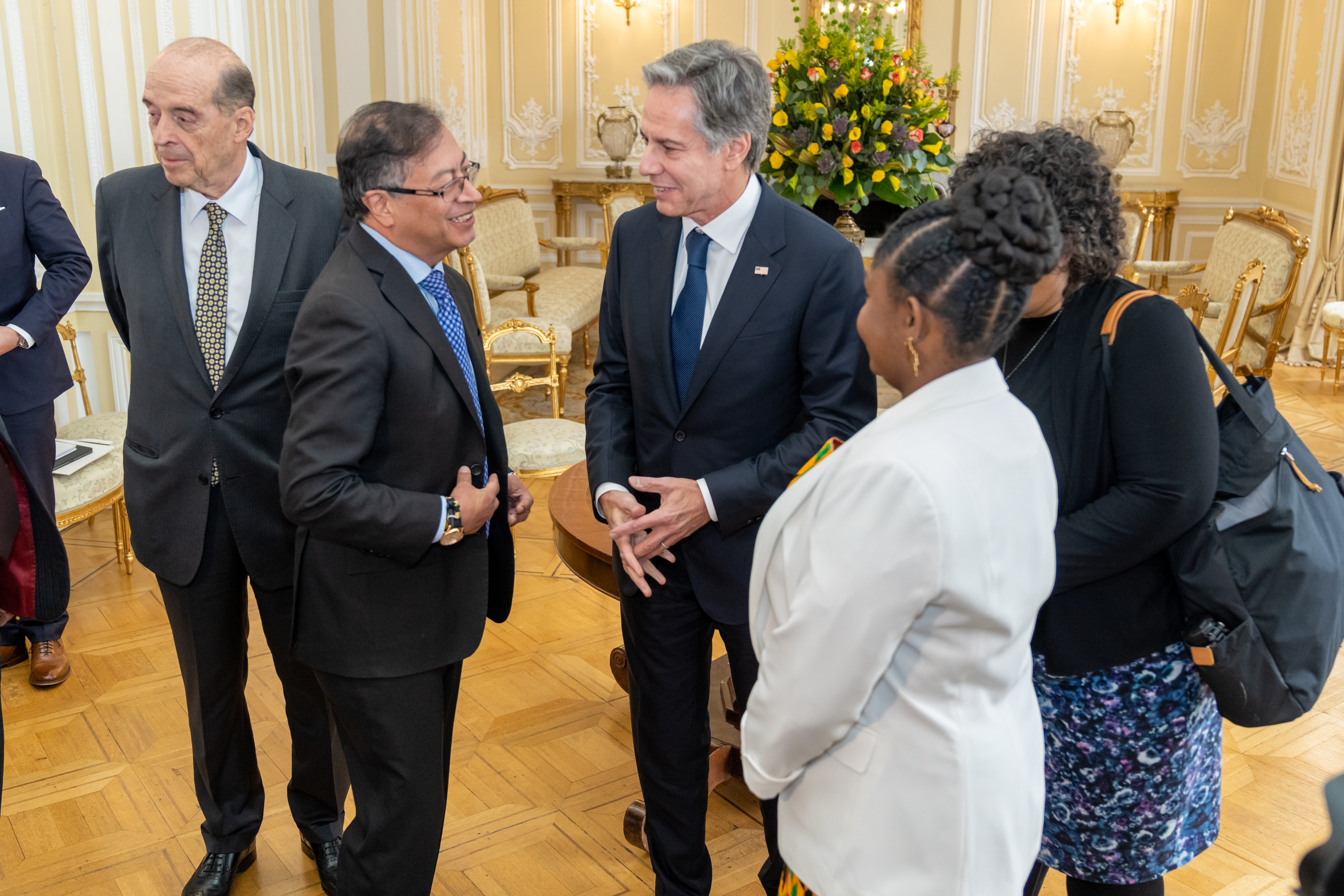
Colombian President Gustavo Petro and Vice President Francia Márquez meeting with United States Secretary of State Antony Blinken / U.S. Department of State / Flickr / Creative Commons License

Colombian President Gustavo Petro’s push for a major overhaul of the “war on drugs” is likely to cause tensions with Washington, but both sides appear to be proceeding with caution. Like its predecessors, the Biden Administration is reluctant to acknowledge the failure of the old tactics, but the burden will be on Petro to make the case that new approaches will work better.

  • Colombia has agreed with the United States on drug policies since the 1970s, with a focus on the Colombian Police and, later, the National Army. In 1996, the U.S. State Department said that the Fuerzas Armadas Revolucionarias de Colombia (FARC) were directly engaged in narco-trafficking, which opened the door for deeper cooperation. With “Plan Colombia” in the 2000s, Bogotá made the war on drugs a central element of its counterinsurgency – and Washington became deeply involved despite the implications for human rights in affected regions.
  • The two countries put aerial eradication of coca crops and extradition of traffickers at the center of the relationship, even though the initiatives did not significantly reduce the production or flows of the narcotic into the United States. The cartels fragmented and grew more violent as they fought for control of the trade.

President Petro’s proposed reform is not the first challenge to the decades-old approach. A peace agreement between President Juan Manuel Santos and the FARC in 2016 challenged the nature and depth of cooperation. The accord included commitments in four areas: incentivizing coca growers to change crops (through agrarian reform and secure access to markets); stopping the traffic (through interdiction); eliminating money-laundering; and getting transit and consumer countries to do more to reduce demand. The goal was to reduce the trade and demand more than to criminalize the production of raw material.

  • Little progress was made before President Iván Duque (2018-2022) put the emphasis back onto classic supply reduction. (The Constitutional Court would not allow the resumption of aerial spraying for environmental and health reasons, but ground-based operations increased.) The United States continued to demand increased eradication of coca, while continuing to reinforce police and military bases and cooperating in narco arrests.
  • Petro argues that peace in Colombia should start with the reform of these policies. (Colombia has suffered a conflict with 9 million victims.) He has proposed a permanent end to aerial spraying and an emphasis on crop substitution in coca-producing communities; expanded interdiction in the air, at sea, and on rivers; and greater efforts to bring all illegal armed groups, including narco-traffickers, into the national judicial system with assurances that they will not be extradited if they cooperate, compensate victims, and do not repeat their crimes.

Six Colombian think tanks (including the one I cofounded) have given the President recommendations on how to implement his priorities. The recommendations stress the need for internal Colombian reforms, most of which can be made without the permission of the United States. Important ones include ending the excessive use of criminal law in non-violent drug cases; suspending the use of force against communities in coca-producing areas; implementing the Peace Accord (including promised investments to fund alternative crops); permitting a regulated cannabis market; and opening markets of food products, with appropriate protection for users, derived from coca leaf.

Despite his progressive international discourse on the need to end the war on drugs, Petro’s opponents say that his proposals would make Colombia a narco-state, and peasant organizations are concerned that land eradication by the military and police forces will continue. The State Department’s top drug official initially said publicly that he saw “a problem” in Petro’s proposals, but Secretary of State Blinken at a press conference with Petro on Monday said he “strongly supports the holistic approach that President Petro’s administration is taking,” and that the two administrations are “largely in sync” on drugs policy. They did not publicly address the thorny issue of extradition.

  • Washington will probably have difficulty making deep changes to policy, particularly as U.S. mid-term elections approach. In addition to competing perspectives on how to deal with crime, there are political sectors, bureaucracies, and powerful business interests that have benefited greatly from the past policy emphasis on criminalizing peasant production of coca leaf – even if the results have been questionable. Their justification is that the drug problem “would be worse if we didn’t do it.”
  • Petro surely knows he will have to be creative and patient with Washington. For instance, recently the Colombian Police chief received two U.S. helicopters, the first of 12, for protecting the forests in Colombia, suggesting the new President will seek common ground with the United States. He wants to avoid provoking Washington to use its anachronistic “decertification” process to punish him for showing insufficient commitment.

The six think tanks believe that Petro can thread the needle in the U.S. relationship and that, if implemented correctly, the reforms of drug policies will bring Colombia in line with international norms, including the protection of human rights, and win broad international support. A frank conversation among Latin America, Africa, Oceania, and Europe within the OAS or UN would benefit all.

* Pedro Arenas is cofounder of Corporación Viso Mutop, a Bogotá-based organization that facilities dialogue on sensitive issues among diverse social, political, and institutional actors.

Ecuador: Weak Government Faces Growing Challenges

By Pablo Andrade Andrade*

Ecuadorians rallying during the paro nacional / Wikimedia Commons / Creative Commons License

Ecuadorian President Guillermo Lasso has tried to overcome the economic mess and political divisions he inherited from predecessors with neoliberal policies that, along with other missteps, have fueled growing opposition to him and undermined his agenda during the final two years of his term. Even if, unlike most of his predecessors in the past 30 years, he serves out his term, his record will be marred by policies that had failed when first attempted in the 1980s. According to Perfiles de Opinión, a respected poll, 66 percent of the population say that Lasso’s performance is either “bad” or “very bad,” and only 2.06 percent evaluate his government as “very good.” 

  • Lasso’s immediate predecessors – Rafael Correa and Lenín Moreno – left a country shaken by corruption, debt, a bungled strategy for dealing with COVID, and paralyzed public health and education services. He did not have a working majority in the National Assembly, and his CREO Movement failed to win control of key municipal and provincial governments. 
  • From the beginning, Lasso’s approach to the economic crisis was orthodox, borrowing heavily from the neoliberal fixes attempted in Ecuador in the 1980-90s. Although his administration managed to tap into the relative openness of the IMF and other IFIs, and successfully negotiated its massive debt with China, the Ministry of Economy and Finance adopted a tight budget, cutting state investments. Recovery from the pandemic slowed. Public employment – staple of the middle class – shrank, and inflation rose. 

Opposition to Lasso’s policies started weak but has grown steadily. The Confederación de Nacionalidades Indígenas (CONAIE), which had flexed its muscles during the Moreno government, was slow to mobilize at first, creating a situation that looked very much like the early wave of neoliberal politics in the 1980s, when a center-right government was able to bypass legislative opposition and weak civil society organizations. Last June, however, a new coalition of the three major rural organizations – CONAIE, Federación de Indígenas Evangélicos (FEINE), and Confederación Nacional de Organizaciones Indígenas y Negras (FENOCIN) – held a national strike (paro nacional) that effectively paralyzed the country for 18 days.  

  • The government backpedaled on its decisions to keep domestic fuel prices at international levels; to maintain low state expenditures for health and education; and to deny indigenous organizations a significant role in decision-making. Lasso reshuffled his cabinet, replacing a half dozen ministers. He opened negotiations with the rural organizations on a range of issues – spanning economic matters (i.e., fuel and food staples prices) and political ones (i.e., the designation of a new Secretario de Pueblos y Nacionalidades to replace the founding secretary Luis Pachala, who resigned in the wake of the national strike).  
  • Although the negotiations relieved some of the stress on the government, the core issues remain highly contentious, and so far, no agreement has emerged. Indigenous leaders say they are not happy with the process, and the few things agreed upon remain provisional. The Catholic Church tried to mediate but failed to progress beyond peripheral issues. In what looks like a desperate move, the government initiated a referendum process that most observers believe is intended to wrestle back the initiative on its own terms. 

The road ahead for the Lasso government is a difficult one – having essentially lame-duck status in the face of steadily mounting woes and opposition. His opponents are as strong and angry now as in June. Despite an improved fiscal stance, the government does not have the will or the capacity to expand public expenditures, so economic growth seems likely to continue at a snail’s pace, and employment will stay depressed in both urban and rural areas. The government’s unwillingness to adopt price controls will continue to fuel popular grievances. 

  • The leadership of CONAIE and others have already threatened a new nationwide mobilization and declared their opposition to the referendum initiative. Whatever support the executive was able to extract from the legislature has faded. Additionally, local government elections in 2023 are stimulating the parties to concentrate their efforts on their political fortunes.  
  • The Ecuadorian military, which played a major role in the abrupt departures of several Presidents over the past three decades, has so far avoided joining the partisan factionalism and appears united in the view that Lasso should stay. The President’s health may be as reliable an indicator as any of his fate. He recently traveled to Houston for treatment of melanoma, specifically a lesion in his right eyelid. In Quito’s churning rumor mill, convincing the population that he has been fully cured is nearly impossible. His efforts to assert his credibility as President will continue to be similarly challenged. 

* Pablo Andrade Andrade is the Germánico Salgado Chair on Andean Integration and Professor at the Department of Global and Social Studies, Universidad Andina Simón Bolívar, Sede Ecuador. He works on comparative political economy and Latin American politics. 

OAS Continues to Dodge Accountability for Actions in the 2019 Bolivian Election

By Francisco Rodríguez and Jake Johnston*

A march in favor of Evo Morales / Santiago Sito / Flickr / Creative Commons license

The failure of the Organization of American States (OAS) to explain false claims of fraud it made during the Bolivian elections in 2019 – allegations that played a key role in the military ouster of President Evo Morales – continues to fuel doubts about its ability to monitor elections fairly and objectively.

  • Shortly after Bolivian electoral authorities announced preliminary first-round results showing that Morales had surpassed the 10 percentage point margin of victory necessary to avoid a runoff, an OAS electoral observation mission released a statement expressing “deep concern and surprise at the drastic and hard-to-explain change in trend.” It said the updated vote count “drastically modifies the fate of the election and generates a loss of confidence in the electoral process.” An audit report later published by the OAS claimed to uncover evidence of “a massive and unexplainable surge in the final 5 percent of the vote count” without which Morales would not have crossed the 10 percent margin. 
  • OAS Secretary General Luis Almagro publicly supported the Bolivian Army’s decision, after three weeks of civil protests, to coerce Morales and much of his government into resigning, paving the way for a caretaker government of questionable legitimacy. Almagro stated that “Yes, there was a coup d’état in Bolivia; it occurred on the 20th of October when electoral fraud was committed.” He said, “The Army must act in accordance with its mandate. No one has exceeded their power so far.” 

The OAS has not responded to requests for information about its analysis. Academic and media studies, however, have shown that the OAS analysis was marred by incorrect methods, coding errors, and misrepresentation of results. In a peer-reviewed paper forthcoming in the Journal of Politics, Nicolás Idrobo, Dorothy Kronick, and Francisco Rodríguez (a co-author of this post) show that, rather than “inexplicable” as the OAS alleged, the final results were predictable. They identified mistakes that, if corrected, would have erased the alleged “surge in the final 5 percent of the vote count.”

  • The “change in trend” the OAS claimed to have identified was essentially a matter of votes from certain geographic areas being processed and counted before votes from other areas that were more favorable to Morales. The OAS finding was due to a statistical method that misrepresents data at the “breakpoint” at which fraud is tested for. 
  • When it released its final audit a month after the election, the OAS claimed it confirmed evidence of fraud, but it did not reveal that its calculation excluded the last 4 percent of tallies. These votes were presumably the most likely to be tampered with, but they were among the less pro-Morales. If included, there is no “break in trend” as alleged.
  • Research by David Rosnick of the Center for Economic and Policy Research (CEPR) shows that a coding error caused the OAS to incorrectly sort time stamps by alphabetical instead of chronological order. An earlier CEPR study showed that the OAS audit withheld information from its comparison of physical vote tallies with those in the online database that did not support the allegations of fraud. 

These mistakes would have likely been identified rapidly by experts had the OAS followed basic standards of transparency. The OAS’s lead researcher has acknowledged at least some of these mistakes, but the flawed analysis remains on the OAS website, and the OAS has not issued a retraction nor amended the sections of the report that present the incorrect results. Mexico and Argentina have tried to discuss the issue within the organization, but Almagro’s office has refused to address the rebuttals. 

  • In March, the U.S. Congress, which provides the majority of the OAS’s budget, passed language in an omnibus spending package that requires the State Department to consult with independent experts and produce a report on the “legitimacy and transparency” of the 2019 Bolivian election within 120 days. The report, due last month, is expected to address the role of the OAS in that election.

OAS technical experts and political leaders’ role in what amounted to a military coup against a democratically elected president has raised questions about their competence and commitment to the democratic values the organization espouses. Errors in coding and calculations may have been merely technical, but political interference cannot be ruled out without a proper investigation. The Secretary General’s explicit support for the removal of Morales was clearly a political decision. 

  • With threats against democratic processes intensifying in many countries, the need for truly independent and neutral observer missions has never been greater. The lack of OAS accountability in Bolivia opens the door for others in the region to levy false allegations of electoral fraud in hopes of receiving international support.  

August 18, 2022

*Francisco Rodríguez is a visiting senior economist at the Center for Economic and Policy Research (CEPR) in Washington, DC, and Professor at the Korbel School of International Studies of the University of Denver. Jake Johnston is a Senior Research Associate at CEPR. 

Chile: Constitutional Process Has Settled Little

By Carlos Cruz Infante and Miguel Zlosilo*

Demonstrators in Santiago, Chile call for a new constitution / www.jpereira.net / Creative Commons license

The Chilean Constitutional Convention handed its proposed draft to President Gabriel Boric on July 4 – in preparation for the “exit” referendum on September 4 that will approve or reject country’s new magna carta – but it hasn’t achieved the national unity, social cohesion, or popular support envisioned when 78 percent of Chileans voted for the convention in 2020.

Historical center-left leaders are publicly supporting the nay option, and opinion polls show support is declining.

  • Former President Eduardo Frei Ruiz-Talge (1994-2000), a Christian Democrat who played a key role after the Pinochet dictatorship, has urged rejection because he sees “insurmountable disagreements with contents [of the draft] that compromise peace, democracy and the prosperity of our country.” He said the proposed reduction in presidential power and creation of an omnipotent new Senate could lead to dangerous populism. Former President Ricardo Lagos (2000-06) has not rejected the draft, but he has pulled back from his expected endorsement of it – a blow to the Boric government strategy for approval.
  • Leading opponents of the Pinochet-era Constitution, including former senior government officials, have criticized the proposed replacement, writing that “the electoral system is distorted with reserved seats, which reminds us of the institutional [appointed] senators of Pinochet’s Constitution.” Like Frei, they believe that the proposed system would incite conflict rather than cooperation.
  • The eight most reliable polls in the country show likely yay votes for the draft are dropping – from around 50 percent in February to about 35 percent this month. Nay votes rose from a third to roughly 50 percent in the same period. Activa Research has found that 62 percent reject the draft, while 38 percent approve of it. The 30 percent who were “undecided” last month has dropped to 20 percent, with most now rejecting the draft.

Five major factors – not all of which are the Constitutional Convention’s fault – appear to be driving this shift.

  • The Convention majority rejected pleas for greater fiscal responsibility as it wrote in a series of expensive new entitlements and nationalizations. Sponsors’ reactions to the criticism also alienated voters by saying “you stand with us, or you stand with Pinochet’s dictatorship.”
  • Favoritism and strident ideological positions undermined consensus. Most of almost 80 percent of Chileans who voted for the constitutional process in 2020 believed the new Constitution would be, for good, a “casa de todos” in terms of the social contract. The tense and confrontational debate during the process and its outcomes establishing group rights rather than universal policies let them down. 
  • Economic uncertainty since the social upheaval of 2019 – aggravated by the COVID‑19 pandemic and war in Ukraine – has undermined popular support as well. Inflation has risen steadily, and the Chilean peso has plunged to a historical low.
  • People feel insecure. The government’s performance in managing crime, drug trafficking, and the armed conflict in the south of the country against Mapuche extremist factions has not been satisfactory. Boric’s emphasis on a negotiated settlement has failed and may have worsened the problem.
  • Approval for Boric, sworn in less than five months ago amid great expectations, dropped to 34 percent this month, the lowest of his mandate. Poor communications have pushed the First Lady (who serves as head of Sociocultural Coordination) and Minister of Interior Izkia Sichesto to have the lowest approval ratings of the cabinet. Although Boric has repeatedly denied that his administration backs the yay option, his General Secretary of the Presidency affirmed earlier this year that Boric’s program requires the new Constitution to be approved.

No matter how the plebiscite on September 4 turns out, the Constitutional process now appears far from ending – and threats to political stability seem likely. If Chileans approve the draft, both sides will seek significant changes. If they reject it, changing the 1980 Constitution will still be essential to avoid tumult in the streets like rocked the country in 2019. Boric recently suggested starting a new Constitutional process from scratch, fueling further uncertainty.

  • While frustrations appear likely to grow and the chance of instability is not negligible, the Constitutional Convention process has shown that – so far – Chilean institutions have been able to maintain Rule of Law. Compared to Venezuela (1999), Bolivia (2006), and Ecuador (2007-08), Chile has followed an open and relatively stable track. But if the plebiscite does not deliver a clear, workable verdict in September, the country will again be at a crossroads – either build on what it’s accomplished since 2019 or try to start anew.

July 27, 2022

*Carlos Cruz Infante is a sociologist and has served in several senior strategic planning positions in the Chilean government. Miguel Zlosilo is a sociologist and former chief of research of the Secretary of Communications in the second Sebastián Piñera government (2018-21). This updates their recent AULABLOG articles (here and here) on the topic.