Mass Deportations Could Create a US Recession

By Ernesto Castañeda

Interview by Diana Castrillon with Ernesto Castañeda published in Stornia August 13, 2024. Edited and expanded by Castañeda. Original in Spanish. Translated by Castañeda.

Diana Castrillon: “Irregular immigration is one of the most important issues in the presidential campaigns of the candidates, Republican Donald Trump and Democrat Kamala Harris. On the one hand, the Biden administration, of which Vice President Harris is part, restricted the number of asylum seekers entering the country, and on the other hand, Republicans are promising the “largest mass deportation program in US history” if they win the White House this fall.

Anti-immigrant sentiment in the United States is on the rise, with more than half (55%) of Americans this year saying they would like to see a decrease in immigration, a first since 2001. This is partly due to the belief that immigrants, particularly undocumented immigrants, are a burden on government resources and contribute nothing to the economy.

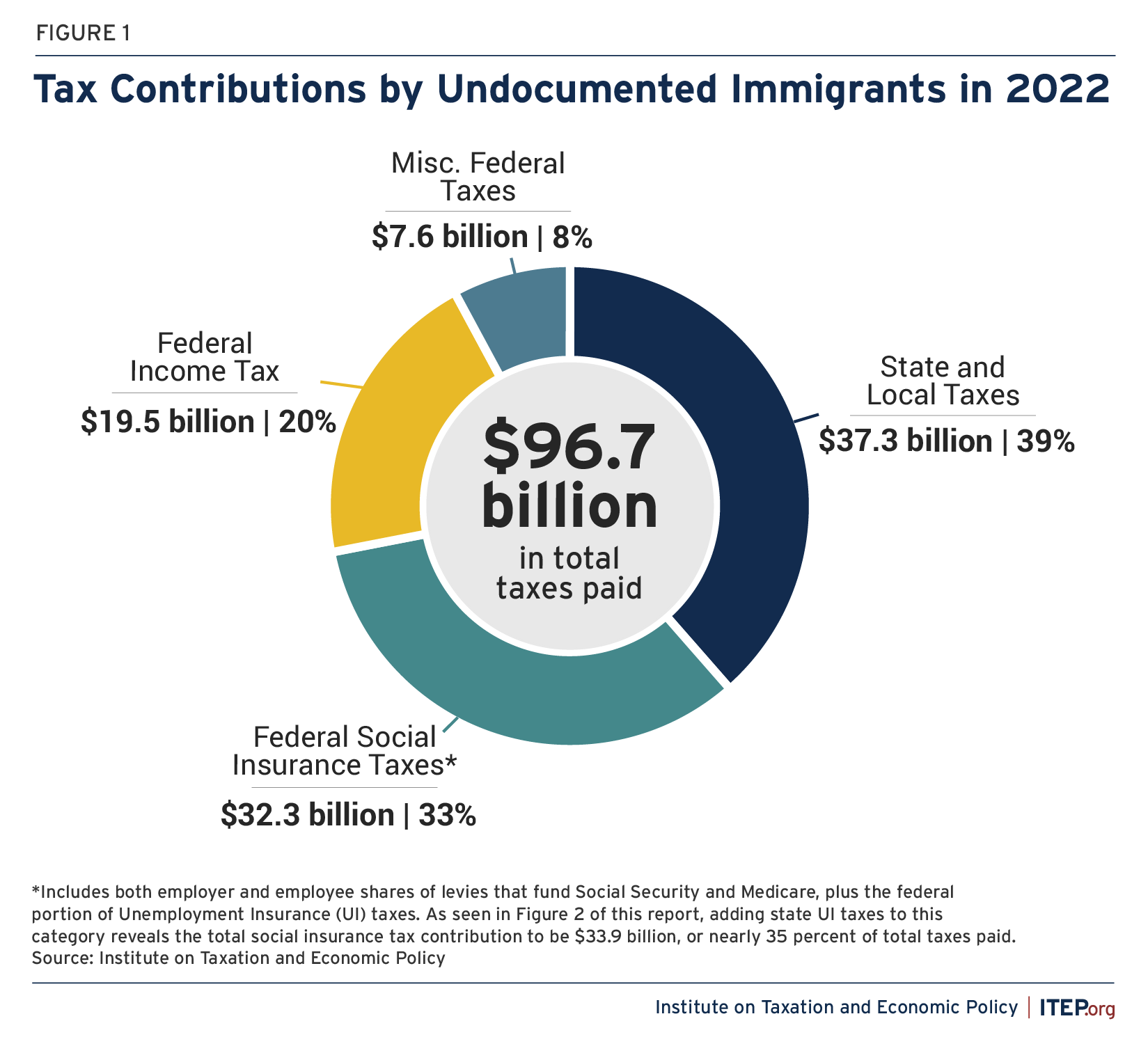
However, a new study from the Institute on Taxation and Economic Policy shows that the opposite is true. According to the report, undocumented immigrants contributed nearly $100 billion in taxes during 2022, while being unable to access many of the programs their tax dollars funded. Of that nearly $100 billion, $60 billion went to the federal government. For every million undocumented immigrants, federal services receive an additional $8.9 billion in tax revenue. More than a third of the taxes paid by these immigrants go to programs they cannot access, such as Social Security ($25.7 billion), Medicare ($6.4 billion), and unemployment insurance ($1.8 billion).

In addition, undocumented immigrants often pay higher tax rates than American citizens: in 40 of the 50 U.S. states, illegal immigrants pay higher state and local tax rates than the 1% of households with the highest incomes. In addition, they cannot receive many tax credits and often do not realize that they can claim refunds or prefer not to. “In total, the federal tax contribution of undocumented immigrants amounted to $59.4 billion in 2022, while the state and local tax contribution stood at $37.3 billion,” the authors of the study wrote. “These figures make it clear that decisions on immigration policy have substantial implications for public revenues at all levels of government,” the report says.

In an interview with Stornia, Ernesto Castañeda PhD, Director of the Immigration Lab and the Center for Latin American and Latino Studies at American University in Washington DC, said that immigrants are necessary and essential for the economic growth of the United States.

Diana Castrillon: How does an undocumented immigrant pay taxes, if as their name suggests, they are irregular migrants?

Ernesto Castañeda: Undocumented immigrants pay taxes every time they buy something; there is a sales tax, and the percentage depends on each locality. If they buy houses, they also pay taxes, or if they rent, there is a percentage that must be paid in taxes to the local and federal governments. Undocumented people who work in formal companies, which are many, can have a temporary identification to pay taxes (ITIN), which works in a similar way to a Social Security number, so they pay payroll taxes like any other person working in the United States. There are some undocumented people who use false or incorrect identification documents, but someone lends them one, and so they pay into the Social Security and retirement and health programs. However, since the number is false or does not belong to them, they do not have access to those benefits when they retire. So, not only do they pay for these services, but many immigrants do not ask for these benefits. Therefore, they have a net or even greater contribution than the citizens who pay, but then they withdraw those benefits such as social security after retirement. It is a gain that the federal government and the Treasury openly accept that happens.

So, are undocumented immigrants paying more taxes than American citizens themselves?

Yes—the rate of many undocumented people who pay taxes is higher than the rates paid by the richest people in the country. Of course, their incomes are different, but the rate is sometimes higher or very similar to that of citizens. Citizens fill out their tax returns and often ask for tax returns and reimbursements, for example, they get a credit for having children, but many undocumented taxpayers do not make these claims because they do not want to be denied citizenship in the future for having asked for aid. Nor do they ask for support programs for their children, who are already citizens and have the right to those services, out of fear. We have documented that, indeed, immigrants use fewer social services than U.S.-born citizens (Castañeda and Cione, 2024).

It seems that undocumented immigrants are between a rock and a hard place now with the electoral campaign on both the Republican and Democratic sides. Is there concern in the community?

Some politicians use undocumented immigrants as scapegoats. On the one hand, Trump makes this threat of mass deportations, but it is unlikely that he will do it. He had promised that before, and when he was president, he did not deport as many people. That doesn’t mean that people aren’t scared now, and if he wins, he’s going to create real terror among the people who already live in fear of themselves or their family members being found. That’s a reality that undocumented immigrants have been living with for many years.

As for asylum, in fact, many people are fleeing Cuba, Venezuela, Nicaragua, and Haiti, many with proof of persecution, and now the government has changed how it processes these asylum cases. The border is closed to many of these asylum requests as it was during the pandemic, so we’re seeing fewer people let in through the wall in between ports of entry. The Biden-Harris administration thinks that this can help them electorally so that Republicans don’t criticize them about the border supposedly being open or about undocumented individuals or those seeking asylum temporarily receiving food and housing in some cities. At some point, they will have to reopen the border to asylum seekers because national and international law calls to receive people who are asking for asylum. Some will be accepted, others will not after processing their applications.

Trump would need a lot of money and policing. He would have to create a totalitarian state to be able to deport all the people who are here. Many of these people have been here for more than 10 years. Their children are citizens. They work, and they contribute. So, deporting in massive numbers or stopping receiving immigrants and asylum seekers is a great attack on the United States and the economy could contract. Massive deportations from the interior could create a recession because, as we indicated, migrants pay billions in taxes. However, taxes are a small percentage of what people earn, and most of what immigrants earn is spent in the cities where they live. With the work they do, they generate economic growth, services, and entertainment.

A few days ago, JD Vance, Donald Trump’s vice-presidential candidate, justified the mass deportation plan and said that undocumented immigrants are stealing jobs from American citizens. Is there a line of Americans waiting for immigrants to be deported to take their jobs?

It doesn’t work like that. Trump and Vance are wrong about immigrants taking jobs from citizens or African Americans. It’s an easy stereotype to sell. Some voters may have had an experience where it seemed that could be the case. However, if we look at the economy in general, immigration generates new jobs. In Florida, the strictest anti-immigrant law in the country is in effect. In fact, many undocumented immigrants have left the state, and today, there is not enough labor for construction, services such as hotels, or even to pick oranges. So, the businesses that needed that labor to generate wealth now do not have their business functioning 100%. Middle-sized farm owners have had to close because they lack the labor, and some small businesses have had to limit their service hours. If there is no construction, there is no housing, and there is more inflation for existing housing. Immigrants arrive and need a place to live, someone to cut their hair, and someone to sell them food, so they generate work and income for merchants. Immigrants start more service businesses, as well as large companies, than those born in the United States. We also know that in general, immigrants employ more people than business owners who are from the country.

It is not like there is an economic pie that is shared by the number of people who are here plus those who arrive. Indeed, the more people arrive, the bigger the pie becomes, so there will be more pie for everyone to share. It is not unfair competition, and that is seen in the unemployment rates. Under the Biden-Harris administration, we have a historically low unemployment rate for African Americans and for Latinos. There are very few citizens of European origin who are unemployed because some immigrants are taking their jobs. They usually do not find work because they do not have enough education to take a job or, on the contrary, because they have too much education and there is no high-income job that they can take. Or because they refuse to move to look for work. Unemployment rates are low and what business owners complain about is that they do not have enough staff in organizations to expand their businesses. This also affects citizens looking for services and having to wait longer in restaurants because there are not enough waiters or cooks.

What is the answer to immigration management, more temporary employment visas, legalizing undocumented immigrants, or building more walls on the border?

The solution to long-term cases of irregular immigration is to increase temporary employment visas so that people can migrate legally. There are programs such as the H2A and H2B visas, which are examples of visas that work very well. People come, work, and return to their country because they have already earned income in dollars and want to be with their families. The problem is that there are limits, there are quotas for these visas, they are for certain types of jobs, and there is more demand for these temporary workers than the law allows. Congress has to pass legislation to increase the number of these visas. Thus, the House of Representatives and the Senate, along with enough members from both parties, have to agree. Many Republicans refuse to reform immigration because they want to use it for electoral purposes rather than solve the issue.

For the people who are already here, the solution is to legalize them. By giving papers or work permits to those who are here, many would earn more money, have more confidence to invest, and pay more taxes. This would be an injection into the American economy, and they could bring their relatives legally and expand the worker base a little more. That is something that neither Trump nor Vance understands, and they would never do it. Unlike President Ronald Reagan, who did sign a law like that, although reluctantly. It is not something that Kamala Harris or Tim Walz have wanted to talk about much in the campaign either because people use it as a very simple attack, but they have a political history of supporting these types of measures.

And with this legalization of undocumented immigrants in the United States, do Latin American countries win or lose?

Remittances represent only 4% of the wealth that immigrants generate in the United States, and a migrant who is more established sends remittances less often. Remittances help support families in economic need, but they represent long family separations until the migrant ends up returning or tries to bring the entire family. So, it is short-term help, but it puts families that are divided in emotional difficulty. In any country that loses migrants, from farmers to scientists, from teachers to doctors —like Cuba which loses a couple of million professional migrants every year for the last couple of years— and increasingly weakens its economy. The same is true of the Venezuelan economy, which, among other things, has been weakened by emigration.

Remittances are short-term aid, but the real economic growth happens where the migrants live, in this case, the United States.

According to the study by the Institute for Fiscal and Economic Policy, work authorization would be beneficial for everyone since granting undocumented immigrants a work authorization would result in an increase in their tax contributions from $40 billion to $137 billion per year since the work authorization would increase salaries.

Ernesto Castañeda PhD, Director of the Immigration Lab and the Center for Latin American and Latino Studies, American University in Washington DC.

This piece can be reproduced completely or partially with proper attribution to its author.
The Spanish version of this text is available at the following link: https://aulablog.net/2024/08/26/deportaciones-masivas-podrian-crear-una-recesion-en-ee-uu/

Venezuela: Authoritarian Election Aftermath

By Michael McCarthy

Photo credit to Matias Delacroix /AP

In the wake of a sham Presidential election event, Venezuela’s complex crisis appears to be deepening. Marked by electoral authorities’ apocryphal claims of a government victory, Maduro’s iron-fisted post-election crackdown against the opposition, and thus far unsuccessful efforts at international mediation from Brazil, Colombia, and Mexico, the ongoing electoral episode has placed the government and opposition in an increasingly bitter conflict.

Stuck in between stands the population, a large portion of which may migrate unless hope for political change can be revitalized. The region should brace itself for a new movement of Venezuelans abroad.   

The opposition coalition continues to press its case. The opposition is led by María Corina Machado, the winner of open primaries who was forced to endorse Edmundo González Urrutia after the government-controlled courts banned her candidacy. Their election witnesses documented a landslide victory — 67% to 31% for González Urrutia. Due to both the total lack of transparency by the electoral authorities (disaggregated precinct-level data has still not been published though that was the norm in previous Maduro-era elections) and the validity of election witness tally sheets consolidated by the González Urrutia campaign, opposition claims have resonated widely. The Biden administration and multiple Latin American governments recognized González Urrutia as the winner of the election, while even historical Left-wing allies of the chavista political movement, such as former President of Argentina Cristina Fernández de Kirchner, cast serious doubts on Maduro´s claim to victory.

Privately, numerous pro-government voices have admitted they cannot attest to the credibility of the official results, which state that Maduro won with 51% of the vote, a telling admission that no independent checks on executive power grabs exist. However, despite Maduro´s most acute crisis of legitimacy yet, no highly influential ruling party official or strategic international ally (Bolivia, China, Cuba, Russia) has publicly aired such concerns. Maduro seems more influenced by the hard line elements in his government and, amid his intransigence toward calls for releasing credible electoral data, his government seems headed for greater international isolation. Meanwhile, the opposition — though strengthened by its impressive organizational effort to retrieve over 80% of the tally sheets from voting centers — is struggling to capitalize on its status as the electoral majority.

The Biden administration is losing patience with the situation. Following a period of pre-election diplomatic engagement with Maduro, Washington is strongly considering the imposition of new individual sanctions against government authorities involved in engineering the fraudulent election results and responsible for recent human rights violations. According to Venezuelan human rights groups, Maduro’s security forces have arbitrarily detained over 1,500 persons since the July 28 vote, including activists and leaders from the different opposition coalition partners, as well as one hundred and thirty adolescents. Over 20 demonstrators died amid state repression against post-election protests held to contest the official results.

As this dark post-election period continues to unfold, Maduro not only has a corrupt and ideologically conditioned army but also time on his side. The regime´s cohesion, while lower than in previous moments of chavismo´s 25 years of rule, appears to be sufficiently strong for Maduro to hold power until the new presidential period begins in January 2025. Maduro holding power does not guarantee Venezuela’s stability. Rather, the electoral crisis is likely to translate into weaker than previously forecast economic growth (4% according to Spring 2024 projections by the IMF), a scenario that could, in turn prompt Maduro to panic and forsake the more pragmatic economic policies he’s been pursuing to contain inflation. Indeed, Maduro has never articulated an overarching vision to unify the movement the way Chávez did. While his ongoing use of coercion and repression has helped him secure loyalties among ruling party power brokers, those tools cannot fix the underlying problem of internal political fragmentations, some of which grew more salient during the multi-billion corruption scandal that resulted in Maduro jailing his oil czar Tareck El-Aissami, among others.

Thus, while the return to democracy in Venezuela still seems far off, it is also true that Maduro´s leadership has never been under as much pressure as it is today. His ability to deliver economic gains from the oil sector is likely to decline, with historical investors such as China likely to take a wait-and-see approach and Maduro´s ambition to join the BRICs+ and obtain New Development Bank financing likely to go unfulfilled. If the economy spirals downward, then Maduro will face tougher questions from his own coalition’s strategic players in the military. In this respect, Maduro’s blatant rigging of the vote count opens a new, highly uncertain chapter in chavismo’s already stressful history of losing popular legitimacy.

Over sixty years ago, a previous Venezuelan dictator, Marco Pérez Jíménez, lost power months after holding a fraudulent plebiscite on his rule. A general uprising catalyzed a coup against Pérez Jiménez, which in turn yielded a caretaker transition government that later paved the way for restoring democratic rule. History may not repeat itself, but if one is searching for reasons to believe Maduro has not consolidated power for good, Venezuela’s past has plenty to offer.

Michael McCarthy is President of Caracas Wire, and Adjunct Professor of International Affairs at George Washington University

Edited by Ernesto Castaneda, Director of the Center for Latin America and Latino Studies

This piece can be reproduced completely or partially with proper attribution to its author.

Failure of Anti-Immigrant U.S. Political Campaigns 2018-2023

by Reilly Phelan, Ernesto Castañeda & Joseph Fournier*

Overview of dataset from 2018, 2020, 2022 election cycles for competitive races / Creative Commons License

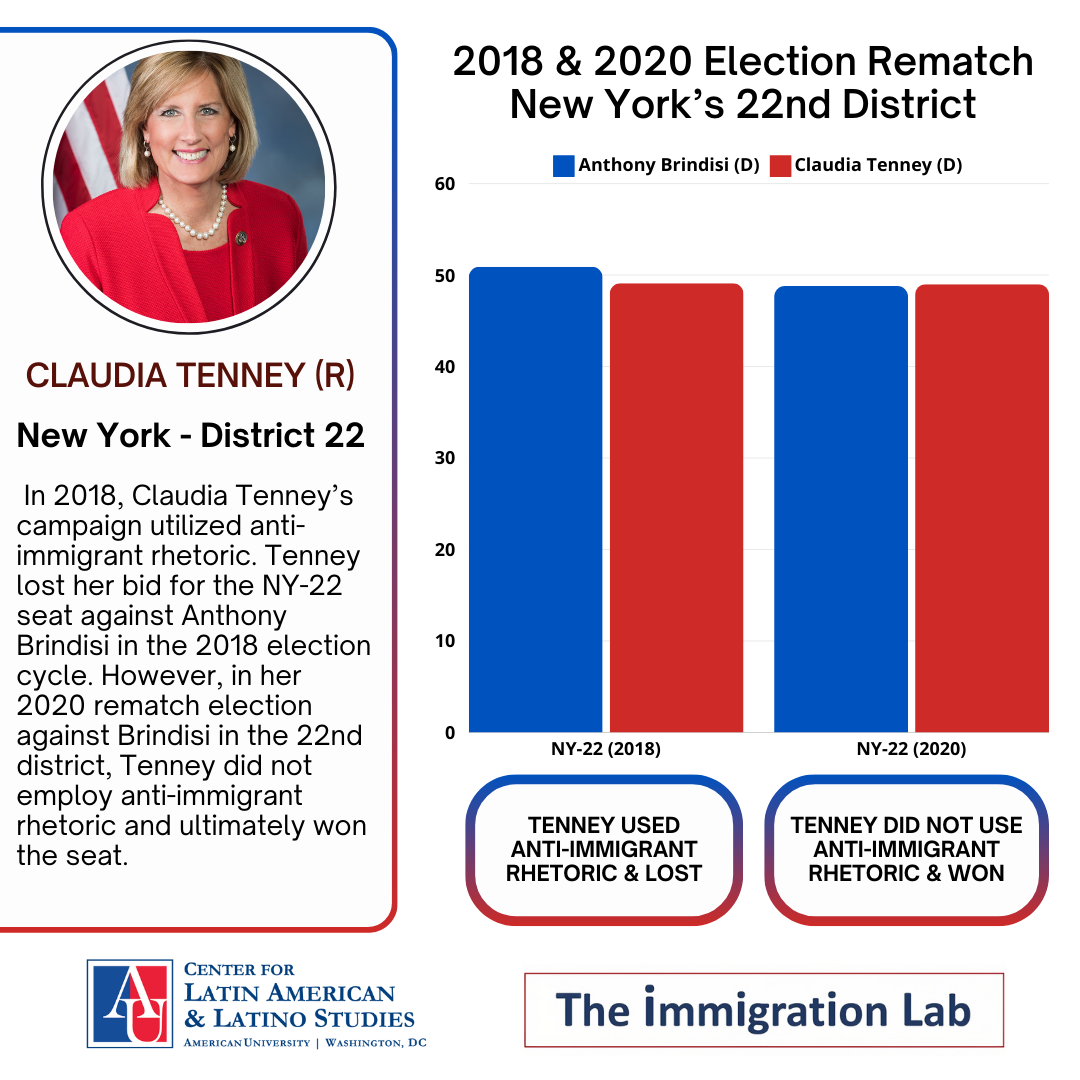
Contrary to the common assumption, anti-immigrant rhetoric does not ensure electoral success. In an upcoming report from the Immigration Lab and the Center for Latin American and Latino Studies, we prove the moral and electoral failure of using anti-immigrant sentiment in campaign platforms. Our data demonstrates the falsity of the notion that being weak on immigration control is an electoral vulnerability.

In an extensive analysis of campaign material and election outcomes from the 2018, 2020, 2022, and 2023 gubernatorial and congressional elections, we found various candidates who employed anti-immigrant rhetoric and lost their elections. We defined anti-immigrant rhetoric as overarching narratives of border securitization and the criminalization of immigrants.

· In the 2018 election cycle, twenty candidates in competitive elections employed anti-immigrant rhetoric—and lost.

· In the 2020 election cycle, the utilization of such rhetoric relaxed broadly, and Republican candidates benefitted. Ten candidates fit our criterion. 

· In the 2022 election cycle, twelve candidates lost in competitive elections after employing anti-immigrant rhetoric throughout their campaign. 

· In the 2023 special elections, the degree to which immigration was mentioned declined. The defeat of Daniel Cameron (R) by incumbent Andy Beshear (D) in the Kentucky gubernatorial race met the criterion of our prior analyses.

While anti-immigrant sentiment is not exclusive to the Republican party, we found that the presence of such rhetoric in campaigns was overwhelmingly among Republican candidates. For the 2020 election cycle, we conducted an analysis of elections where seats flipped from Democrat-held to Republican-held. Ultimately, nearly half of the Democrat-to-Republican flipped seat candidates did not utilize anti-immigrant sentiment in the campaign material of their successful campaigns. 

In assessing the 2018 and 2020 election cycles, anti-immigrant campaign rhetoric relaxed during the 2020 cycle compared to the 2018 cycle (not to say anything about 2016). Kris Kobach’s losing 2018 Kansas Gubernatorial campaign exemplifies the failures of a campaign largely platformed on anti-immigrant sentiment. Kobach’s campaign hinged upon his pointed immigration rhetoric and ultimately failed to bring Kobach election victory. “Anti-immigration hard-liner[s]” like Kris Kobach largely declined in competitive 2020 elections. That is not to say that anti-immigrant campaign rhetoric disappeared; rather, fewer candidates premised their campaigns fully upon such narratives.

Candidates who ran in 2018 with anti-immigrant campaign rhetoric and chose to run again in 2020 had an observable decrease in the use of anti-immigrant sentiment in the candidate’s campaign platforms. For candidates like Matt Rosendale, Claudia Tenney, and Young Kim, this shift in campaign rhetoric led them to success in their rematch attempts during the 2020 election cycle. 

Coupled with our analysis of election outcomes of anti-immigrant candidates, we provide below an assessment of narrative trends: 

Several candidates mainly used anti-immigrant rhetoric to signal support for and connection to former President Trump. Strong stances against immigration, particularly during the 2018 and 2020 election cycles, became a means to show supposed shared values and allegiance with Trump. By applying “Build the Wall” narratives and framing border security as imperative, candidates premised their campaigns on Trumpist values more broadly. For example, in Greg Gianforte’s winning bid for the Montana Governorship in 2020, Gianforte promised to “stand with President Trump to crack down on illegal immigration.” Interestingly, Donald Trump’s 2020 presidential campaign aligns with our findings— his extensive use of anti-immigrant campaign rhetoric during his 2020 bid for reelection was not enough to lead him to electoral success. 

In 2022, however, references to the border wall largely de-emphasized the securitization project’s explicit link to Trump. While calls to “finish the wall” were present in multiple candidates’ campaign platforms, candidates offered a similar amount of attention to the re-establishment of anti-immigrant policies, including the “Remain in Mexico” program. Arizona Gubernatorial candidate Kari Lake regarded the policy as “the best [immigration] policy I’ve seen.” 

Through further assessment of the rhetoric employed by candidates within our 2022 and 2023 set, we see candidates shift their anti-immigrant campaign rhetoric away from targeting migrants themselves and instead targeting Democratic leadership, whom they label as in support of so-called “open borders.” Candidates such as Kari Lake take this concept a step further, arguing that Democrat leadership has a vested interest in the continuation of undocumented immigration as a means of “solidifying a permanent political majority.” These claims on the campaign trail are dangerous and alarmingly similar to the racist theory of “the Great Replacement”— propagating the idea that elites are purposefully encouraging migration to render America more diverse.

The 2022 elections also demonstrated a rise in claims that immigration is no longer confined to states along the U.S.–Mexico border. As efforts spearheaded by Texas Governor Greg Abbott bring “busloads” of immigrants to cities farther north of the border, the framing of immigration as an issue of concern has shifted both on the campaign trail and beyond. For example, a candidate for Pennsylvania Senate Mehmet Oz stated, “Now every state has become a border state.” With the U.S. increasingly externalizing its border by instituting border outposts, historical conceptions of borders and their significance are shifting across the U.S. Thus, the way immigration is discussed during elections is shifting.

As the U.S. gears up for the 2024 election cycle, the moral and electoral failure of anti-immigrant campaign rhetoric must be taken into account. Plain and simple, anti-immigrant rhetoric does not create electoral victories. In assessing both election outcomes and narrative trends, we see how a more humane, measured, and pragmatic view of immigrants can indeed be the morally and politically right thing to do. 

* Reilly Phelan is a research assistant at the Immigration Lab and the Center for Latin American and Latino Studies. She has previously worked with the International Rescue Committee and Arizona Legal Women and Youth Services. She will be graduating May 2024 with a degree in International Relations. 

*Ernesto Castañeda is Director of the Immigration Lab and the Center for Latin American and Latino Studies at American University. 

*Joseph Fournier is a research assistant at the Immigration Lab and the Center for Latin American and Latino Studies at American University.

Reproduction with full attribution is possible by news media and for not-for-profit and educational purposes. Minor modifications, such as not including the “About the Study” section, are permitted.

From Coup Attempt to Inauguration: Guatemala’s Tumultuous Elections

by Edgar Aguilar*

February 21, 2024

“Dia nacional de la bandera de Guatemala.” Gobierno de Guatemala. Gobierno de Guatemala. CC. / Creative Commons License

Edie Cux, director of Acción Ciudadana, local chapter of Transparency International, spoke with CLALS’ researcher Edgar Aguilar about Guatemala’s recent presidential elections. Read a synthesis of the interview below.  

What were the defining issues in Guatemala’s recent elections? 

The main problem in the social imaginary here in Guatemala was the issue of the fight against corruption. This was key after years of exposed corruption in the government by Alejandro Giammattei. The other issue was security. 

How do presidential elections work in Guatemala? 

In Guatemala, there are two electoral rounds. The first round is in June and the second is in August. In the first round, there were 24 candidates. Many of the candidates had previously run for election. In the second round, there were 2 candidates, Sandra Torres and Bernardo Arévalo. 

Why was Mr. Arévalo making it to the final round a surprise?  

Sandra Torres, a perennial politician, was expected to make it to the second round. The surprise was Bernardo Arévalo. During the first round, Arévalo was initially in ninth place but then emerged as a surprise contender.  

How much support did Mr. Arévalo receive in the second round? 

In the second round, Bernardo Arévalo received 58% of the vote while Torres received 42%. That shows that people were really hoping for a change in the country. Arévalo was a new face and a left-wing or progressive candidate. Alternatively, Torres was a former first lady and had previously run for president twice.  

How did the uncertainty surrounding the inauguration of Mr. Arévalo begin? 

It started immediately after the first round when it was known that both Bernardo Arévalo and Sandra Torres were the favorites. From there, the attacks began against Arévalo’s Semilla party and the electoral authorities. Even the Prosecutor’s Office went after the people who participated in the polling stations and municipal, electoral, and departmental boards. This began a strategy of questioning the electoral results: going through a second review of the counts.  

Who started the questioning of the results?  

The Attorney General’s office initiated legal challenges that cast doubt on the election results. Judges joined in, further amplifying the uncertainty. Other groups used social media accounts, like X and TikTok, to spread narratives questioning the outcome. These unsuccessful efforts were part of a broader attempt by identified “coup plotters,” including influential groups such as congressmen. The goal here was to prevent Bernardo Arévalo from assuming power.  

The instrumentalization of both legal and social media channels was key to their strategy. They questioned Arévalo 

 but especially focused on the election results: the transmission of data and the electoral authority. At this point, the authorities of the Supreme Electoral Tribunal were practically in exile. They were stripped of the immunity that the law gives them.  

Were there actual irregularities in the process? 

These were the most observed elections in Guatemala, maybe ever. Actors like the European Union (EU) (with over 100 observers) and civil society organizations had mechanisms (like Mirador Electoral) to watch every step of the elections. After the elections, an Organization of American States (OAS) report confirmed clean results, corroborated by other countries and civil society.  

No international or national observer questioned the elections, except the Attorney General’s office. They illegally dug into things, opened bogus cases, demanded information from the electoral tribunal, and even took ballot boxes! Basically, they stole them, which I believe is illegal. This narrative only came from them. The OAS, with 29 votes, all countries, basically said the Attorney General was trying to mess with the results and backed the results.  

Why was there uncertainty until the day of the inauguration?  

Groups within Congress continued their efforts to obstruct Arévalo’s election until the inauguration day, delaying the swearing-in process by nine hours. 

Can you tell me what the day of the inauguration was like? 

Bernardo’s inauguration victory belongs to the people, especially the indigenous communities. Their 20-day strike, continued resistance, and unwavering presence on inauguration day, with mothers and children even sleeping in the Plaza de la Constitución, were crucial. Their sacrifice overflowed the central park, keeping spirits high even amidst delays. International observers, delegations from the OAS, Spain, the U.S., and key figures like Petro solidified the legitimacy of the process, forcing the “coup groups” to stand down. The transfer of power, thanks to the people’s energy, marked a dramatic shift in Guatemala’s political climate. 

What do Guatemalans expect now that President Arévalo has been inaugurated? 

At this moment, the panorama is changing a lot; there is already an expectation of how the new government is going to develop. There is a lot of hope, and everyone is waiting. Different civil society and especially indigenous peoples, we are all waiting to see what the new government is going to be like.  

What are the key takeaways from this turbulent process? 

Guatemala’s democratic institutions have been under attack since their beginning. The institutions have never been trusted. Indigenous people maintain alternative governance, economy, and justice structures. The state of Guatemala has not enjoyed the legitimacy that has been achieved in other states. Neither has it created the representativeness of a plurinational population. What happened in Guatemala is an example, globally, of what indigenous people have done to protect a democracy that does not even represent them.  

Currently, there are several democratic crises globally. Additionally, there are many examples of the instrumentalization of public institutions, especially the justice system, to attack democracy. Guatemala has brought to light how indigenous peoples propose sustainability not only environmentally but also for democracy and politics.  

Edition: Ernesto Castañeda 

Interview and writing: Edgar Aguilar 

Transcription and translation: Aleli Nava 

Copyright Creative Commons. Reproduction with full attribution is possible by news media and for not-for-profit and educational purposes. Minor modifications, such as not including the “About the Study” section, are permitted. 

Edgar Aguilar is an International Economics Master’s student at American University and a research assistant at the Center for Latin America and Latino Studies (CLALS). With four years of experience as a researcher and analyst, he specializes in migration, human security, energy, finance, and environmental policy. He is passionate about sustainable energy solutions that unlock prosperity in the Western Hemisphere.

X- @EdgarAAguilar

Where Is Cuba’s Economic Policy Going?

by Ricardo Torres*

A photo of Havana, Cuba taken in December 2023 / Ernesto Castañeda / Creative Commons License

In the concluding sessions of the National Assembly in December, the Cuban Prime Minister alluded to new economic policy initiatives aimed at “correcting distortions and boosting the economy.” Subsequently, he emphasized that these reforms should not be perceived as mere continuation of previous policies. His discourse encompassed several areas, including pricing and subsidies, the role of the private sector and small and medium-sized enterprises (SMEs), international trade and tariff regulations, investment, and the foreign exchange market, among others. In the first weeks of January, various representatives from the government elaborated on the price increases of essential goods, which has become a focal point of discussions due to the immediate impacts on people’s daily lives. This new wave of measures is being introduced against a unique context:

  • The Cuban economy’s inability to embark on a path to sustainable recovery after the economic downturn triggered by the COVID-19 pandemic is noteworthy. The year 2023 witnessed a contraction in the Gross Domestic Product (GDP), marking this period as the most severe crisis encountered by Cuba since the revolution in 1959, given its widespread economic, social, and political implications.
  • The ineffectiveness of previously implemented economic policies, including the so-called “Monetary Ordering,” is evident. The Cuban authorities persistently attribute these economic adversities to external factors, notably the sanctions imposed by the United States. There is little mention of the government’s obvious mistakes.  
  • The Biden administration’s limited opening towards Cuba has narrowed the window to implement substantial measures to mitigate the island’s economic challenges. 
  • The Cuban government has continued to search for support elsewhere. For example, Russia and China have provided some economic support, and Mexico has provided cheap oil, oxygen after the pandemic, and some food. But not one country can provide all the support that Cuba needs.

The measures announced thus far appear to have limited potential in contributing to the economic recovery. The fiscal strategy focuses more on revenue collection rather than containing expenditures, as indicated by the incomplete budget data for 2024 when the deficit is set to increase. 

  • Notably, the emphasis remains on preserving the extensive public sector, including state-owned enterprises, without introducing substantial structural reforms.
  • The marginalization, or at most, a cursory mention of other structural reforms aimed at stimulating domestic supply, is significant. The criticism of the private sector and the lack of initiatives to address external debt are particularly conspicuous. 
  • The potential impact of the price increase and these newly announced measures on the fiscal deficit remains ambiguous, especially given the scant details regarding their implications for the 2024 budget. Besides, these measures will likely exacerbate inflationary pressures in the short term.

In a rather dramatic turn, Cuban authorities announced the suspension of the price increases on January 31st, citing a cyberattack, and failed to commit to a new date. Furthermore, the government reshuffled the cabinet, including the sacking of the Economy Minister. 

The challenges of runaway inflation and elevated fiscal deficits should be viewed as symptoms rather than the root cause of the economic malaise. Historical evidence from the 1970s and 1980s has demonstrated that attempts to manipulate aggregate demand to counter stagflation are futile. Cuba’s economic stagnation, however, presents a unique case, having persisted for decades and intensified due to a series of adverse external shocks commencing around 2016 with the decline of Venezuela’s economy. Superficial adjustments to economic policies are unlikely to yield significant medium-term benefits. Instead, a concerted effort towards systemic change by both the government and international stakeholders is imperative. The existence of the political will and strategic insight, both within Cuba and internationally, to enact such comprehensive reforms to the ultimate benefit of the embattled Cuban people remains an open question.

Copyright Creative Commons. Reproduction with full attribution is possible by news media and for not-for profit and educational purposes. Minor modifications, such as not including the “About the Study” section, are permitted. 

Ricardo Torres is a Professor and Faculty Fellow in the Department of Economics, Research Fellow at American University’s Center for Latin American & Latino Studies, and Coordinator of the Red de Investigadores Cubanos (RedIC).

“Driven Out” Panel Synopsis

by Lily Tierney and Ernesto Castañeda* edited by Makenna Lindsay November 29, 2023

Driven Out: Global Response to the Plight of Forcibly Displaced People at Wilson Center . / Creative Commons License

On Wednesday, November 15, 2023, the Refugee and Forced Displacement Initiative (RAFDI) at the Wilson Center in Washington D.C. hosted a roundtable discussion on forced migration. The panel of experts analyzed the effectiveness of the current refugee systems to address the predicaments refugees around the world face, and the underlying causes and drivers of forced displacement. James Hollifield, professor and director of the Tower Center for Public Policy and International Affairs at SMU introduced the program. Rina Agarwala, Professor of Sociology at Johns Hopkins University, moderated the conversation. 

David Scott FitzGerald, co-chair for the Center for Comparative Immigration Studies and Professor of Sociology at UCSD, emphasized the limitations of silos within the academic bodies of knowledge that tend to think separately about migration, refugees, and conflict. FitzGerald recommends a systems approach that would look at all forms of migration and forced displacement within the same system and at the path dependencies and feedback loops that armed interventions and previous migration have on future population moves. 

Pieter Bevelander, director of Studies of Migration, Diversity, and Welfare at Malmö University, offered a European perspective to the discussion. Bevelander spoke of a new migration and asylum pact within the European Union (EU) that will hopefully be finalized next year. This pact will create new asylum and migration management regulations that will streamline procedures, create mandatory solidarity in the relocation process, and increase financial contribution to countries with many refugees. EU member states that do not wish to sign on have the option of paying 20,000 pounds per person due to solidarity reasons, however, this is still being negotiated. Bevelander also noted that the attitude towards Ukrainian refugees is more widely accepted than refugees from the “outside,” implying that refugees from non-western countries are less likely to be embraced by the EU governments.

Gerasimos Tsourapas, professor of International Relations at the University of Glasgow, works on the politics of migrants and refugees in the Middle East and the Global South. Tsourapas claims that an overlooked aspect of these discussions is how labor migration and forced migration flows are much more common in the Global South than in the Global North. Those who are forced to migrate are more likely to go from one part of the Global South to another than migrate from the Global South to the Global North. Tsourpas mentioned that it is critical to understand this point to decolonize the conversation of forced migration. He distinguishes two paradoxes: states that hosts most refugees are in the Global South and are not responsible for creating the refugee crisis because of the unwillingness of wealthy countries in the Global North, who often are the cause of the refugee crisis, Global North to accept refugees. The second paradox lies in the fact that most of the refugee-hosting states in the Global South are struggling financially and open their borders to the detriment of their economy and for the betterment of their diplomacy, most refugees are in the Global South. 

Kamal Sadiq, director at the Center for Global Peace and Conflict Studies at the University of California, Irvine, shared a shocking fact: confirmed that while “a majority of the signatories to the 1951 refugee convention are located in the Global North, the fact remains that the overwhelming majority of the worlds refugees are located in states in the Global South, many of whom are not signatories to the refugee convention.” Sadiq states that the refugee regime is broken for several reasons: the first is policy uncertainty. Funding is limited, and short-term funds provide short-term services. Another flaw that Sadiq pointed out is that the refugee regime does not cooperate with non-state actors. This is highly problematic for internally displaced people living within corrupt domestic law and governance. The final weak spot of the refugee regime is documentation. Displaced persons need documentation to access formal work and services but getting documentation needed can be arduous. As a result, displaced persons have multiple documents and are uncertain as to which are legitimate. It is incredibly difficult to adjudicate between real and fake documentation because of how ubiquitous the identification paperwork has become for displaced persons. In a context where states deny documents, a market for false documents appears. 

The discussion closed out with a Q&A session where all speakers agreed on the issue of working in silos, the necessity for each state to host refugees, and the need for equitable responsibility in financing the cost of welcoming large numbers of newcomers. While some panelists and many in the media often mention that welcoming immigrants, asylum seekers, and refugees entails large expenditures in terms of providing initial housing and food, we argue that this is one of the few ways that states can engage in creating economic development in the middle and long-term.

The panelists discussed the importance of differentiating refugees from economic migrants. Our view is that refugees should continue to have special protections and rights because of persecution from the state for political reasons or for belonging to a targeted social group or category. But analytically speaking, scholars should not reify these legal distinctions as they are not the most useful in terms of subjective integration, feelings of belonging, and public sentiment. Xenophobes in the streets do not care if one is a refugee, a documented, or an undocumented migrant when there is a climate of exclusion or racial profiling by the police.

Considering population growth, we are not necessarily seeing record numbers of either economic migrants, refugees, or asylum seekers. We must normalize international migration and protection. Less than 4% of the world’s population lives in a country different from the one they were born in. The countries with the largest number of foreign-born people are among the wealthiest nations. People may move to rich countries because they have more job opportunities, but in doing so, they also make those countries even richer. Supporting newcomers is a good investment.

You can watch the full panel here: Driven Out: Global Response to the Plight of Forcibly Displaced People 


* Lily Tierney is a student in the School of Communications ’24 at American University.

Ernesto Castañeda is the Director of the Center for Latin American and Latino Studies, Immigration Lab, and the MA in Sociology Research & Practice.

Editing by Makenna Lindsay.

The Winding Down of DACA?

by Andréia Fressatti Cardoso and Ernesto Castañeda*

November 15, 2023

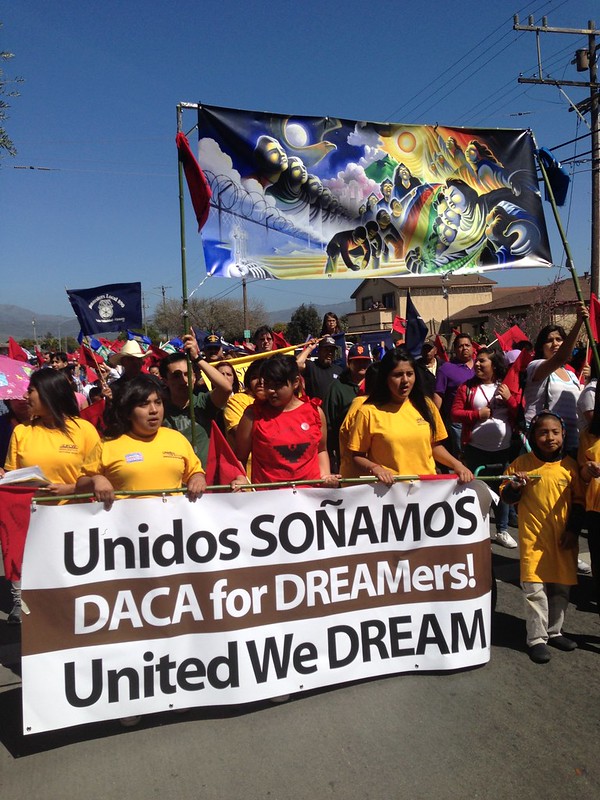
Protestors marching in an event to protect DACA / Steve Rhodes / Flickr / Creative Commons License

Once again, the future of DACA is in question. On September 13, 2023, Judge Andrew Hanen from the Southern District of Texas declared the Deferred Action for Childhood Arrivals (DACA) program to be illegal in the case, Texas v. United States (2021). He addressed two items in his decision, the 2012 DACA Memorandum and the 2022 Final Rule. Andréia Fressatti Cardoso has been conducting interviews with DACA recipients, organizers, and some attorneys as part of an on-going research, and we dive in on their views on the impacts of this and previous court decisions on the program. All names used here are pseudonyms, protecting the anonymity of the interviews in this research. 

Since 2018, the Department of Homeland Security cannot process any new DACA applications. The DACA protection for individuals who applied before then has been kept in a legal and political limbo for quite some time, and as the future of DACA seems more uncertain, the age restrictions and the impossibility of processing new applications has gradually diminished the number of beneficiaries of the policy. It is estimated that around 579,000 people benefit from DACA now – a much smaller number than the 800 thousand people estimated to have benefitted from DACA at its peak, which in turn is less that the people how could have potentially benefited from it but decided not to apply due to fear of future deportation.  

The September 13 decision is part of an effort to end DACA. An attempt to end the program in 2017 by the Trump administration was unsuccessful due to the lack of observance of due procedure to do so according to a Supreme Court’s 2020 decision. The strategy of conservative opponents then shifted towards forcing DACA to gradually die out by not allowing new applications to be accepted. This strategy has created a new group of subjects in the struggle for immigrant rights, which are the DACA-eligible, those who could have DACA if the courts had not continuously forced the program to pause for new applicants. 

Also, the language used when discussing immigration is of paramount importance, as it draws the borders of belonging and membership. It is noteworthy that the September 13 decision insists on calling people who immigrate “illegal aliens,” even sparing a long footnote to defend such terminology. More than being offensive, the “illegal alien” reifies an us and them, an Other (the alien, the foreigner) whose belonging, and membership is not recognized due to the lack of authorization to cross a border, their undocumentedness. Such dehumanizing language has been part of the vocabulary of people who want to keep the U.S. white when referring to undocumented immigrants in the United States. 

DACA was never meant as a permanent solution, but as a temporary fix for people who immigrated to the U.S. when minors. Nonetheless, the lack of legislative action for the many years that the program has been in place turned the DACA into a buoy for many migrants. But, as pointed out in an interview with Maria*, a DACA recipient in her late-twenties, “DACA was a Band-Aid to Obama not being able to pass actual immigration reform.” The on-going legal battle over DACA has reinforced the limbo into which young migrants have been pushed to: a status that is neither of undocumented nor of belonging, an uncertain in-between.  

One of the consequences of such a legal battle is on the impacted people’s mental health, as fear and stigma come back as defining factors in their lives, similarly to what happened when the Trump administration tried to rescind DACA, as pointed by Ana*, a  DACA recipient at her mid-twenties: “and when Trump came and had an opportunity to strike DACA down, it felt very scary. I felt like I was losing hope, and I was like, I was going to lose a lot, like, everything that I’ve done for myself.” And, for those who could not apply for DACA before, Judge Hanen’s decision is even more disheartening, as pointed out by Rosa*, who meets all the criteria for DACA but cannot apply: “it’s horrible because, like, you have this hope, that there’s going to be something good coming out of it, but then it just gets worse and worse. So, honestly, that makes me not even want to hope for it anymore.”  

When talking to people who are beneficiaries of DACA, words such as “tiring,” “stressful,” and “uncertain” are not uncommon, especially from those who are or were activists:  The two-year time frame of the program was already a factor to limit long-term planning, but the limbo to which they have been pushed reactivates a “survival mode” in which much of the undocumented population in the United States lives. 

The uncertainty that people live under is clear. It is hard to fathom for people who are not in this situation; but other situations might convey similar feelings, such as when one remembers the uncertainty felt in the middle of the pandemic when people wondered when vaccines would become available, when schools would open, and when the pandemic would subside. DACA recipients have been living with this uncertainty for 11 years plus the years before the program existed. Jose*, a 28-year-old DACA recipient, explained the feeling: 

“And so, all of these maneuvers are very much like, ‘OK, I have this platform not for long, so what can I get out of it?’ And that to me seems like it’s playing the short game, playing as if there is not going to be longevity for DACA. And there hasn’t. And I think that ever since 2017, right, like, the majority of my existence under DACA has been now under the assumption that DACA is going to end at some point, or that DACA is under danger.” 

DACA still survives but it is unclear for how long. The conservative members of the Supreme Court could unilaterally kill DACA, despite the popularity of the program and how favorably Americans of all political perceptions see Dreamers. It is hard to think of an alternative to such a scenario. Both DACA recipients and organizers have been assessing what other alternatives they have, while keeping up with the news and decisions on the program and hoping for the best. 

*All names used here are pseudonyms, protecting the anonymity of the interviews in this research. 

Andréia Fresssatti Cardoso, Research Fellow at the Center for Latin American and Latino Studies at American University, and PhD candidate in Political Science at the University of São Paulo, Brazil. Her project, “Rights Subjectivity in Immigrant Struggles for Rights in the United States: The Struggle for DACA,” has a grant from the São Paulo State Research Foundation (FAPESP, process n. 2022/04176-5). The opinions, hypotheses, conclusions, and recommendations expressed in this material are the full responsibility of the author and do not represent FAPESP’s views. 

*Ernesto Castañeda, PhD is the Director of the Center for Latin American and Latino Studies, the Immigration Lab, and the MA Program in Sociology, Research, and Practice. He is also a member of the Im/migrant Well-being Scholar Collaborative.  

The Employment Experience of Immigrants in the DMV

by Lily Tierney* November 8, 2023

A picture showing people in the workplace. / Creative Commons License

In 2022 American University’s Immigration Lab began conducting interviews in the DMV (D.C., Maryland, and Virginia) area to better understand the experience of migrants and refugees. All migrants and refugees have vastly different experiences due to their place of origin, economic status, and or racial identity. However, there are common threads within these experiences. 

Many participants found employment outside of their educational training because there were more opportunities to earn a higher income elsewhere. This does not deviate from what many people must do to support themselves, but the reasoning differed. A Colombian woman shared that she went into sales rather than film, her field of study, because she knows that one day she will have to support her mother and siblings. Many noted remittances as the reason why they had to seek a higher-paying job and depart from their original discipline.

On the other hand, some participants were unable to use their degrees to seek employment because they were obtained outside of the United States. This circumstance almost always resulted in that individual having to accept a lower-paying job and having to learn a new set of skills. Participants who have yet to work toward higher education tend to pursue employment in the informal labor market, which is defined as work that is not taxed or recorded by the government. 

Many participants in the study reported that they do not have the opportunity to use their first language in the workplace. When there is opportunity to speak their native language, interviewees disclosed feeling uncomfortable. A Salvadoran woman in her late twenties mentioned that she chose not to work in a regionally specific office where Spanish was spoken due to feeling, “pigeonhole(d) into doing this role.”

Almost all participants who have yet to achieve a higher education plan to return to school at some point. Time and money are the most frequently cited hinderances of achieving this goal. Many migrants feel that they are overqualified for the profession they are in but are stuck until they can obtain a degree from an accredited institution in the United States. However, many find themselves in a catch 22: it is almost impossible to dedicate oneself to work, school and family full time. As an Afghan male in his mid-twenties noted, “Life is all about work.” 

The main earning priorities indicated by participants were rent, bills, and family. This is strikingly different to the financial goals of U.S. citizens recorded from 2020 to 2021, which revealed the main priorities as increasing emergency savings and paying down debt. The primary financial concerns among immigrants and refugees are dealt with day to day. Many immigrants and refugees do not have the luxury to pay off debt or accrue savings when they are worried about whether their income will cover basic living needs, bills, and sending remittances to their family in a country that may be in a state of unrest. 

A Colombian woman in her mid-twenties expressed that discrimination has grown to be an expected part of the workplace experience, and she has had to file complaints with Human Resources to create a paper trail. This should not be part of the workplace environment, and she should not have to keep a paper trail in case of something more severe than verbal discrimination. Attaining a U.S. education and being a member of the workforce is challenging, but those challenges are escalated for immigrants and refugees traveling to the DMV region due to racial, social, and economic divisions. 

* Lily Tierney- student in the School of Communications ’24 at American University.

Creative Commons. Reproduction with full attribution is possible by news media and for not-for profit and educational purposes. 

Growing Numbers of Afghan Migrants Face Deportation in Court

by Austin Kocher*

A graph depicting the total number of new Afghan cases and percent of new Afghan cases out of all nationalities throughout the years. / Creative Commons License

The number of Afghan immigrants facing deportation in immigration court spiked in fiscal year 2023 to a total so far of 5,434 up from just 610 in FY 2022. The growing numbers of Afghans in immigration court mirrors the overall upward trend in new deportation cases which grew from about 820,000 in FY 2022 to 1.27 million in FY 2023 based on data through the end of August that was analyzed and published by the Transactional Records Access Clearinghouse (TRAC) at Syracuse University. However, whereas the number of deportation cases for all nationalities grew 1.5 times over the previous year, the number of Afghan nationals in immigration court grew nearly 9 times the previous year. Afghan nationals still make up only a small percentage of all new deportation cases at less than one percent, but even this small fraction grew from negligible to almost half a percent in 2023. See Figure 1.

This remarkable growth comes at a time when many Afghan refugees living in the United States are uncertain about their future. Many Afghans arrived in the United States in the past few years, both before and after the U.S. military withdraw from Afghanistan. The Biden administration created a humanitarian pathway into the United States for these refugees under Operation Allies Welcome (OAW) and granted many Afghans Temporary Protected Status (TPS) that typically safeguards them from deportation.  Among those Afghan migrants that lack permanent status, immigrants with pending deportation cases represent people who are most vulnerable to deportation. Without permanent legal status, Afghan refugees could remain at higher risk of deportation if they lose temporary status or if they commit certain crimes that make them deportable. Most Afghans remain without permanent immigration status or a clear pathway to citizenship.

Understanding the characteristics of Afghan, and other migrants facing deportation is important for the Immigration Lab and the Center for Latin American and Latino Studies (CLALS) at American University, which has an ongoing research project that examines the demographics, experiences, and challenges of recently-arrived refugees now living in the Washington, D.C. metropolitan area. This report examines the 5,434 Afghan deportation cases filed in court in the first 11 months of FY 2023 to inform the public, policy makers, and researchers about the growth of Afghans facing deportation.

About Deportation Cases in Immigration Court

The U.S. immigration court system is responsible for adjudicating cases brought against migrants by the Department of Homeland Security (DHS). Deportation (aka removal) hearings begin when an immigration enforcement agency files a document known as a Notice to Appear (NTA) with the court, placing an immigrant in removal proceedings. Once an NTA is filed, immigrants are required to attend a series of hearings with an immigration judge, including routine status hearings and individual hearings for immigrants who are requesting asylum. A case typically concludes with an immigration judge issuing a deportation order or granting the immigrant permission to remain in the United States on a temporary or permanent basis. In some cases, the government may also elect to close a case before it reaches a final decision to prioritize limited agency resources. Due to the complexity of U.S. immigration law and variations in judicial disposition, obtaining a positive outcome often depends not only on the quality of an immigrants’ case but also on the ability of the immigrant to obtain legal representation, be assigned to a favorable judge, and access additional social services that enables them to follow through on the various demands that the immigration system places on them. Given the political conditions in Afghanistan, it is expected that many Afghan migrants who are in immigration court would be eligible to apply for asylum as a form of relief. 

Immigration Court Location

Understanding which immigration courts Afghans facing deportation are assigned to helps illuminate where legal services are needed and what kinds of favorable or unfavorable judges these potential asylum seekers may face. The 5,434 new Afghans in court this fiscal year were assigned to a variety of courts, with no one court dominating over another. The Sacramento immigration court saw the largest number, with 601 new Afghan cases filed this year. This was followed in second place by San Francisco with 485 and San Diego (in fourth place) with 299 cases. The immigration court in Arlington, Virginia, came in third with 329, but the California courts combined indicate that the largest numbers of Afghans facing deportation are in California. The table below shows the total number of Afghan migrants facing deportation in courts with at least 100 Afghan cases.

Gender, Language, and Age

Of Afghans facing deportation whose gender was recorded in the immigration court’s data, 69.6 percent are listed as male while 30.4 percent are listed female. Nearly a quarter (25.4 percent or 1,267) of all new Afghan cases in court this year where age was recorded were children under the age of 18. Another 16.6 percent were young adults between the ages of 18 and 24, while the largest group (38.3 percent or 1,911) were between ages 25 and 34. Under 20 percent (19.6 percent) were 35 years old and up.

The largest group of Afghans—38 percent—spoke what the court classifies as “Farsi – Afgani – Dari”, while a sizeable percentage—27 percent—are listed as speaking English with Pushtu coming in third at 21 percent. All other languages were less represented, but included Arabic (283), Farsi-Iranian-Persian (169), Spanish (93), Dargwa (67), Russian (35), and Turkish (25). 

Legal Representation

Representation is a crucial factor for immigrants seeking a favorable outcome allowing them to stay in the United States instead of being deported. Most new Afghan deportation cases filed in 2023 are not represented by an attorney. Just 1,227 of these new cases, or 22.6 percent of the total, have representation while the majority of 4,207, or 77.4 percent of the total, have no attorneys. It is not unusual for more recently filed cases to show lower rates of legal representation, since it requires time to find an immigration attorney, and requires additional time for the attorney to file their attorney paperwork with the court. These rates of representation are in fact higher than the national rates for new cases. Out of all new cases from 2023, just 12.6 percent have attorneys by the end of August 2023 while 87.4 percent do not. In this regard, Afghan nationals are faring better in court (22.6 percent compared to just 12.6 percent).

Asylum

Given the country conditions in Afghanistan, Afghans in court are likely to be eligible for asylum, a humanitarian form of relief that prevents a person from being deported to a country where they are likely to face persecution. Nonetheless, only 137 asylum cases involving Afghan nationals have been decided by judges so far this fiscal year. Of those, just 22 in total (16 percent) were denied while the rest were approved for either asylum or another form of relief. This is much lower than the 51 percent denial rate among all nationalities in FY 2023, which means that asylum could be an option for Afghan immigrant courts. However, barriers to applying for asylum in the first place—such as having access to legal representation and having sufficient time to prepare a strong case—may limit the availability of this option. include finding an attorney, 

Conclusion

While most of the U.S. public is sympathetic to Afghan arrivals, many were warned that their legal status in the U.S. was temporary, liminal, and would lead many to live in limbo. Thus, we are already starting to see Afghans in the U.S. facing deportation. Is the government truly prepared to deport people to Afghanistan under Taliban control? What do we owe the translators, contractors, and soldiers that partnered with the U.S. and ally governments for years? Will the U.S. government’s delays in providing a permanent pathway to legal status and citizenship lead to even more Afghans ending up in immigration court? It is important that the public is not only informed about the policies and programs affecting Afghan refugees but is also informed about the use of limited government resources to deport Afghans to potentially dangerous living conditions. 

Copyleft Creative Commons. Reproduction with full attribution is possible by news media and for not-for profit and educational purposes. Minor modifications, such as not including the “About the Study” section, are permitted. 

Austin Kocher  is a Research Assistant Professor with the Transactional Records Access Clearinghouse (TRAC) at Syracuse University and a Research Fellow at the Immigration Lab and the Center for Latin American and Latino Studies at American University.

Health Outcomes of Afghan Migrants

by Makenna Lindsay*

An Afghan woman filling out a medical form / EU Civil Protection and Humanitarian Aid / Flickr / Creative Commons License

In the Immigration Lab’s project on recently arrived immigrants to the United States and the Washington Metropolitan Area, we find that Afghans have unique medical and healthcare needs.

Operation Allies Welcome (OAW), a program designed by the federal government to support Afghans resettling in the United States, offers medical coverage. Afghan arrivals, who have been accorded humanitarian parole are eligible for health coverage through Medicaid or Refugee Medical Assistance (RMA), a short-term coverage option for refugees who are ineligible for Medicaid.

Among the 22 Afghans in our research study, more than half of the participants (68%) had medical insurance through Medicaid while another 23% had medical insurance through other providers. These findings speak to the effectiveness of Operation Allies Welcome in providing healthcare services to Afghan arrivals.

On access to Medicaid, Noor, a 34-year-old male, shared: “The good thing is that they’re providing Medicaid, or medical assistance to those families that are coming from Afghanistan with a specific legal status, like for special immigrant visa holders there is that medical assistance, and through that, you can access medical services.” 

While Afghan migrants’ access to Medicaid indicates the benefits of OAW, many participants communicated some issues with the efficiency of Medicaid. Rahman, 44 years old, shared his experience with a delay in Medicaid care that ultimately negatively impacted his family:

“The problem was when we came here for the first three months we had no Medicaid, I think…the problem was with the agency. They had lots of clients, so we had to wait for more than three months to receive Medicaid. A couple of times my kids were sick and not feeling well. It was not a good experience. But it was not because of [immigration] status. It was because of the process, it took a longer time, it took about three months, which is not common, I think. But anyhow, we had to wait, and our kids suffered because of that.”

Some participants emphasized that while they had access to Medicaid, their coverage did not support all of their medical expenses. It is possible that people are not being adequately informed about what their insurance will cover in the United States upon arrival, especially because health insurance is less common in Afghanistan:

“The hospital sent me a bill up to $1200. I showed my Medicaid—why should I pay from my pocket, you know? There are these kinds of problems we have…they say Medicaid is not covering this [so] I can’t afford it at this time,” Hamza, male, 34-years-old.

Other participants who did not relay their insurance provider or who have an unknown insurance provider also described difficulty paying for medical services that were not covered. Farjaad, age 25, described unanticipated expenses when visiting an ophthalmologist whose services were not covered by health insurance. Upon finding out that his appointment would not be covered by insurance, he canceled it and opted for eye drops. Farjaad’s experience reflects the issue of unaffordable health care in the United States despite having access to government insurance. 

There is an underwhelming number of responses in the data that speak to the health problems of Afghan migrants and refugees that they are aware of or are receiving treatment for. Most participants reported that they either do not have any health problems or are unaware of any health problems they may have. There was one affirmative response for each of the following health problems: 1) High Cholesterol, depression, anxiety, 2) Asthma, anemia, 3) TB, 4) Diabetes, PTSD, ulcer, 5) Anxiety, PTSD, Thyroid, and 6) High blood pressure, high cholesterol, hypertension. 

However, some participants indicated that they had health problems in Afghanistan. Participants mentioned having conditions such as diabetes, hemorrhoids, heart problems, and kidney stones, to name a few. 

The findings were also limited in identifying disability. Most interviewees reported that they either do not have a disability or are unaware of any disability they may have. Only one participant reported having an undiagnosed disability but did not specify which. Nonetheless, qualitative data from the research reveals that though disabilities may not be diagnosed, participants are aware that they have one. For example, one interviewee noted they have lower back pain and fibromyalgia, which they believe are indications of an undiagnosed disability. 

Only 23% of respondents answered the question, “When was the last time you went to the dentist?”, three individuals in the affirmative responding in 2022 and two in 2023. The survey asks two reproductive health care questions, both of which were only answered by three [male] participants. In the first reproductive health question participants responded that they have never received reproductive health care, and two out of three responded that they have not been adequately informed about reproductive health care services in the United States. The final respondent affirmed that they have been informed about reproductive health care. However, the data indicates that there is a general lack of awareness surrounding reproductive health care and how to access it in the United States.

It is important to note that income level does not appear to have a significant impact on qualifying for Medicaid. Most participants who are insured by Medicaid disclosed their income level, ranging from a yearly salary of $80,000-100,000 to less than $30,000. In comparison to their lives in Afghanistan, where health insurance is not as common, the data demonstrates that Afghan arrivals are able to securely access federally funded medical coverage in the United States.

Overall, health is certainly considered to be a priority for Afghans settling in the United States, though total medical coverage seems to be a rare occasion. Many Afghans do use Medicaid but convey their dissatisfaction with the process of receiving care upon arrival. This data points to discrepancies in the efficacy of the Operation Allies Welcome program. 

Some consistent qualitative patterns in the responses to the health care questions are 1) participants being unaware of the extent to which Medicaid/other insurance providers cover their medical expenses, 2) lack of reproductive health care knowledge, and 3) preliminary health problems in Afghanistan that are rarely being assessed in the U.S.

About the Study

This report is part of a larger research project titled Recent-Arrivals to the DMV from Conflict Affected Areas. The project relies on a mixed-methods research project conducted by faculty and students from the Immigration Lab and the Center for Latin American and Latino Studies (CLALS) at American University. Researchers solicited information about migrants’ identities and experiences using a survey form that collected quantitative data and asked open-ended follow-up questions to collect narrative-rich qualitative data. This project was supported by the Mellon Foundation through the College of Arts and Sciences and the Faculty-Student Scholarly Collaboration Grant from the Office of the Deputy Provost and Dean of Faculty at American University. The larger team includes Ernesto Castañeda, Bashir Mobasher, Tazreena Sajjad, Mubbashir Rizvi, Lauren Carruth, Daniel Jenks, Makenna Lindsay, Diana Flores Garay, Sofia Guerra, Joseph Fournier, Montse Hernandez, and over 30 students working at the Immigration Lab. We aim to interview more Afghans and compare them to other immigrant and asylum-seeking groups.

* Makenna Lindsay is Program Coordinator at American University’s Immigration Lab and Master’s Candidate in American University’s Sociology Research and Practice program. 

Reproduction with full attribution is possible by news media and for not-for-profit and educational purposes. Minor modifications, such as not including the “About the Study” section, are permitted.