Bolivia: Implications of Referendum for Democracy and the MAS

By Santiago Anria*

Evo Referendum

Photo Credit: zak / Flickr / Creative Commons

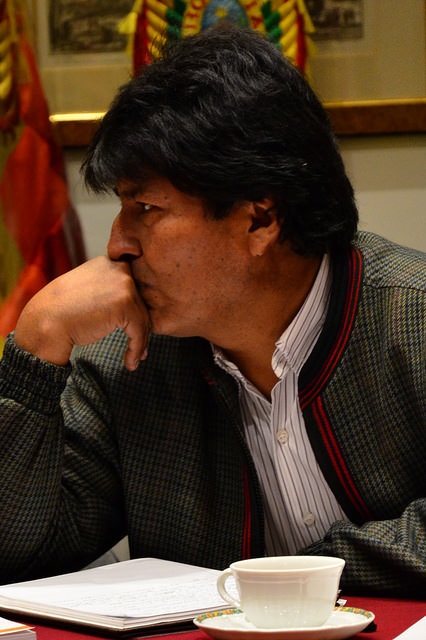
A Bolivian referendum on February 21 – one month after the 10th anniversary of President Morales’s rise to power – threatens a break with the country’s tradition and the democratic principle of power alternation.  A “Yes” vote on the constitutional amendment up for approval would allow Morales and Vice President García Linera to run in 2019 for a fourth consecutive term – a scenario that the fragmented opposition claims would mean not only greater concentration of power in a personalistic leader but also a shift toward authoritarianism, similar to that in Venezuela.  The government claims that a “No” vote would mean the end of an era of unprecedented economic and democratic stability, the end of measures that have empowered subordinate groups in society, and the return of the right and neoliberalism.  Opinion polls so far show the vote will be close.

Morales’s efforts to extend his time in office are consistent with his tendencies to dominate politics and the policy process.  Yet my research shows that increased political incorporation during his government has also given previously marginalized groups enhanced influence over agenda-setting and policy-making and led to important shifts in domestic power relations.  In today’s Bolivia, well-organized interest groups typically belonging to the “informal” labor sector (such as coca growers, cooperative miners, and transportation unions) have greater influence over policy from within the state (in representative institutions and state bureaucracies at all levels) and from without (direct pressure in the streets).  This has resulted in greater regime responsiveness to the groups’ interests and in policies that expand economic and social benefits, as well as improvements in poverty and inequality reduction – even without meeting some of their fundamental needs such as employment and health care reform.  While in some instances newly empowered groups have mobilized and served as a check on state power, their role is founded on a highly particularistic relationship of the MAS and allied groups and, as such, can actually be an obstacle for governing in the interest of broader segments of society.

An intense government campaign in favor of the constitutional amendment is already under way and will likely deepen in the coming weeks.  The Morales government lacks the kind of epic framing it had when it first won the presidential election in 2005.  Citizens today express concerns similar to those voiced during previous governments – concentration of power, widespread corruption, inefficient institutions, weak protection of liberal rights, politicization of courts, and hostility to opponents and the press.  A “Yes” victory on February 21 would not automatically mean a shift to an authoritarian regime as core features of authoritarianism (i.e., power exercised by a small group overriding the will of the citizens) are not currently evident.  In addition, Morales’s tendencies to dominate often meet strong checks from a relatively autonomous civil society.  Comparative evidence suggests, however, that a fourth Morales term might lead to further power concentration and decreased political input from below — which could mean a weakening of the MAS as an organizational actor for the empowerment of subordinate groups independent of its undisputed leader.  A “No” victory, on the other hand, would not necessarily mean the end of the social and political transformations carried out by the MAS.  If nothing else, Bolivia’s “process of change” over the past decade has given rise to a “new normal” of more inclusive institutions and basic social programs that benefit large sectors of the population and will be difficult for any future government to reverse.

January 19, 2016

* Santiago Anria is a postdoctoral fellow at Tulane University’s Center for Inter-American Policy and Research.

Venezuela: Implications of the Opposition’s Landslide Victory

By Michael McCarthy*

Venezuela Elections 2015

Photo Credits: Nicolas Raymond and 2 dvx ve (modified) / Flickr and Wikimedia Commons, respectively / Creative Commons

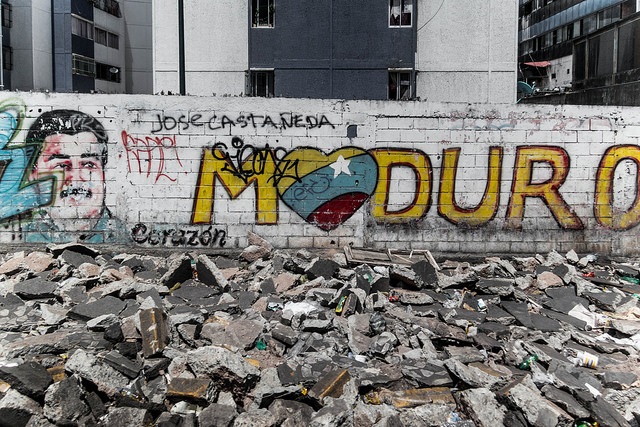
Venezuela is just beginning to feel the shock waves of the opposition’s landslide victory and humbling defeat of President Nicolás Maduro’s PSUV.  Riding a wave of discontent with the Maduro government’s management of the economy and political repression, the opposition Mesa de Unidad (MUD) coalition won at least 112 seats in the 167-seat parliament, giving it a commanding two-thirds majority.  The MUD won the popular vote 56-41.  The political scenarios are wide open.  Some preliminary analytical judgments follow:

  • Maduro has accepted the election results, but serious questions remain whether he and his advisors will engage in the give-and-take necessary to make divided government work. He is restructuring his cabinet and has called on supporters to “relaunch” the Bolivarian Revolution.  He says he will strenuously oppose any amnesty law for imprisoned opposition members – a top MUD priority – and that he will “go to combat” if the opposition tries to remove him from office.
  • Despite its historic achievement, the opposition will face challenges to build sustainable unity. The MUD is a heterogeneous electoral alliance, and the hardline and moderate factions are likely to disagree about strategy – whether the time is ripe for pressing for Maduro’s resignation or for cultivating support from disaffected chavistas.
    • The opposition faces the challenge of demonstrating a commitment to what they have criticized most about chavismo – democratic inclusion.  If they want to put Venezuela back together, for example, the MUD will have to decide how to provide PSUV officials guarantees of political inclusion.
    • Passing an amnesty law for political prisoners and addressing the dire economic situation are high on the MUD’s unified agenda – and probably will remain part of a consensus platform.
    • Less clear is how aggressively the opposition will push its agenda from the National Assembly.  Most in the MUD are more closely aligned with the moderate strategy of former presidential candidate Henrique Capriles, but others will want to push harder.  They may try to remove chavista-appointed Supreme Court judges likely to oppose Constitutional changes that would curtail Maduro’s powers.
    • The forced resignation of Guatemalan President Pérez Molina and the recent opening of an impeachment process against Brazilian President Dilma Rousseff may embolden similar initiatives in Venezuela.
  • The country’s tarnished election system functioned better than many critics had predicted. The 74 percent voter turnout was eight points higher than the last legislative elections.  Reports of violence and irregularities were few.  The Armed Forces provided effective security at the polls, and behaved in a manner that suggests an interest in defending their institutional reputation.  The National Electoral Council (CNE) disappointed many by issuing an unprecedented call for voting centers to remain open even if there were no voters in line, and for delaying reporting the final results, but the voting process was clean enough.
  • Outside Venezuela, chavismo’s loss may be a setback from some leftists – but a relief for most others. Maduro’s defeat is a potential liberation from the albatross that the disastrous Venezuelan regime has become.  For most left-leaning leaders, chavismo had become a deeply flawed project that has, for several years, been toxic.
  • For anti-chavistas outside Venezuela (including some in Washington), the election results indicate that the way to overcome the catastrophe over which Maduro presided was not to threaten the regime with sanctions and encourage extremists in the opposition, but instead to push for the election to take place, with the most safeguards possible. There is precedent for Latin American dictatorships falling in elections that they put on the agenda and then could not stop.
  • Although Maduro’s saber-rattling along the Colombian and Guyanese borders failed to divert attention from his internal mess, his rhetoric of resistance to yielding power suggests the international community should keep an eye on him in case he tries again.
  • The Venezuelan victors should also understand the anxiety of their neighbors over the future of Petrocaribe and other initiatives. Venezuela under Chavez did an enormous service to the region by subsidizing oil in ways that helping governments achieve important social advances.  Long before Chavez, Venezuela used its oil wealth to support allies.  Such assistance is as important now as it has been for decades.

December 9, 2015

* Michael McCarthy is a Research Fellow with the Center for Latin American and Latino Studies.

What Does Macri’s Victory Mean for Latin America’s Left Turns?

By Eric Hershberg and Fulton Armstrong

South America right

Photo Credits: Douglas Fernandes and _Butte_ / Flickr / Creative Commons

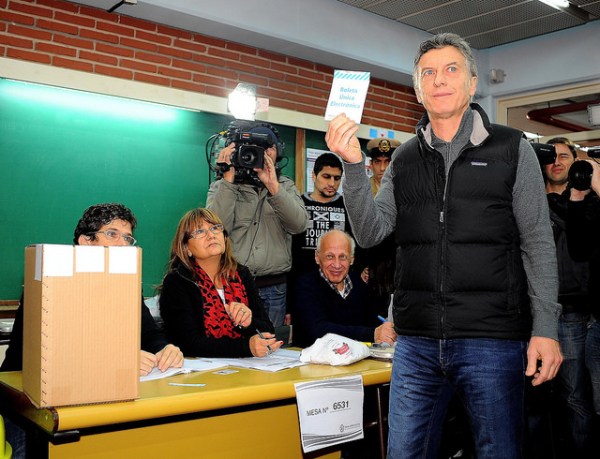
Argentine President-elect Mauricio Macri’s actions since his historic victory last week indicate a rightward shift in domestic and foreign policy that some observers are tempted to proclaim as part of a broader Latin American trend.  He has reiterated promises of broad economic reforms and appointed a cabinet – including former JP Morgan executive and ex-Central Bank chief Alfonso Prat-Gay as his finance minister – to implement them.  He has further pledged to reverse outgoing President Fernández de Kirchner’s protectionist trade policies.  (During the campaign, advocates of unbound capitalism cheered when he named Ayn Rand’s “The Fountainhead” as one of his favorite books.)  Macri has named Susana Malcorra, a senior aide to UN Secretary General Ban Ki-moon with strong diplomatic credentials, to be his foreign minister and, for starters, directed her to reverse policies he judged to coddle Venezuela. The President-elect, who takes office on December 10, is speaking with the confidence of a President elected with more than a 3-point margin over Kirchnerista candidate Daniel Scioli and with control over more than the 91 seats (one third of the total 257 seats) that his Cambiemos coalition won in the lower house of Congress.  (His party is the first, however, to control simultaneously the Province of Buenos Aires, the City of Buenos Aires, and presidency.)

The temptation in some quarters to declare Macri’s victory as the beginning of the end for Latin America’s “Left Turns” is understandable but nonetheless premature.  To be sure, the Argentine electoral results coincide with other major setbacks for various currents of the Latin American left:  The Chavista project in Venezuela is crashing; Brazilian President Rousseff and her party are mired in a corruption morass and economic crisis whose combined effects may cut short her time in office; President Correa, facing a dire economic situation in Ecuador, is increasingly talking about abandoning efforts to run yet again in 2017.  Chilean President Bachelet’s low popularity and declining public support for the Vázquez government in Uruguay may be additional signs that the prospects for the “pink tide” are very much in doubt.

But in Argentina and beyond, the jury is still out.  Through no action of its own, the South American left enjoyed the multiple benefits of the decade-long commodity boom that began in 2003.  Just as its electoral successes did not indicate wholesale shifts to the left in the region – indeed political scientists have long questioned whether the evidence supports claims of a leftward shift in popular preferences – today’s parallel crises may reflect the end of of the boom rather than a rejection of left-leaning governments.  Many of the policies advanced by various currents of the “pink tide” may remain highly popular, even while they are no longer affordable.  Another tempting explanation is that Latin Americans are rejecting leaders who they perceive as corrupt, irrespective of their placement on the left-right spectrum.  In Argentina, notably, Macri hasn’t rejected the Kirchneristas’ redistributive agenda but has instead emphasized the confusing, corrupt way it has been pursued for the past 12 years.  (Never before has an Argentine rightist portrayed eliminating poverty as a core priority.)  It may well be that voters understand economic slowdowns and dysfunction as a product of corruption rather than the fallout from declines in historically high commodity prices.

Regardless of the underlying drivers of electoral change and public disillusion with incumbents, it’s fair to ask if the left’s current travails and the right’s resurgence will open the way toward more accountable political leadership, whatever its ideological proclivities, or just signal an alternation of power.  Like Macri in Argentina, a new cohort of Latin American leaders will have to prove that they are more than outsiders drawing on sentiment to throw out the incumbent rascals.  The question is whether they pursue policies that make democracy more transparent, expand meaningful political participation, and sustain the social gains that have been achieved by the pink tide governments that now appear to be on the ropes.

December 2, 2015

Argentine-U.S. Relations: Things Can Only Get Better

By Federico Merke*

Argentina elections

Argentine presidential candidate Mauricio Macri. Photo Credit: Nico Bovio and Guillermo Viana GCBA / Flickr / Creative Commons

Foreign policy remains largely uncharted territory as Mauricio Macri (Cambiemos) and Daniel Scioli (incumbent Peronist Frente para la Victoria) head into the presidential runoff on November 22, but they both are likely eager to get over Argentina’s rough patch with the United States.  Foreign policy has rarely been a big campaign issue, and this time there are probably reasons behind the silence.  The mainstream Argentine media portray the candidates as representing two different political and economic stances on domestic policies, with only nuanced differences on foreign policy.  Macri is seen as more friendly to the outside world in general and to the U.S. in particular, but he has been reluctant to play up his “anti-Bolivarian” views.  Scioli has the same incentives as Macri to restart a dialogue with Washington, but he has not wanted to highlight this difference between himself and his party’s standard bearer, outgoing President Cristina Fernández de Kirchner (CFK).

Argentina’s relations with the U.S. are at a low point in which nothing really good or really bad takes place.

  • The impasse started early in CFK’s administration. Just two days after her inauguration on December 10, 2007, U.S. federal prosecutors claimed that five foreign nationals in the so-called “suitcase scandal” were attempting to deliver funds to CFK’s presidential campaign.  The President maintained that the United States manufactured the scandal to punish her for maintaining close relations with then-President Hugo Chávez of Venezuela.
  • Washington was clearly irritated again in 2011 when Argentine authorities seized the cargo of a U.S. Air Force plane that was delivering supplies for an authorized police training program. Argentina’s foreign minister accused the United States of smuggling weapons and “drugs” into the country.  In 2013, CFK reached an agreement with Iran to set up a truth commission (which was never established) to investigate the bombings of the AMIA Jewish community center in Buenos Aires in 1994 – alienating Jews in the U.S. and Argentina, but giving her a boost among her domestic constituency.
  • Terrorism, human rights, and nuclear proliferation have brought the two countries together, albeit with little publicity. But Venezuela, Cuba (the U.S. embargo), trade (tough license and import restrictions on both sides), and Iran have been divisive issues.

Because the twists and turns in the bilateral relationship have revolved around scandals, rhetoric, and domestic political maneuvering – not driven by either deep ideological differences or substantive material interests – CFK’s successor will be free to shift gears.  Thus, in a sense, it does not matter who wins on November 22; a new chapter will begin in Argentina-U.S. relations.  Macri no doubt will be more enthusiastic than Scioli in declaring a new beginning, but the latter exhibits a pragmatic tone and intention to attract investment and promote trade, including by resolving the confrontation over “holdout debt” plaguing ties with the U.S. financial community.  Both candidates are aware that the ongoing litigation in New York complicates access to international credit.  Both also understand that the memorandum with Iran represented a major step backwards and thus will probably change course on this matter.  Scioli and Macri exhibit contrasting styles and might look at the world through different lenses, but they both will have the opportunity – and probably the desire – to develop a more constructive relationship with the U.S. 

November 19, 2015

*Federico Merke directs the Political Science and International Relations Programs at the Universidad de San Andrés in Buenos Aires.

Belize: The UDP Wins Again

By Victor Bulmer-Thomas*

Dean Barrow, now elected for his third term as Prime Minister of Belize. Photo Credit: The Commonwealth / Flickr / Creative Commons

Dean Barrow, now elected for his third term as Prime Minister of Belize. Photo Credit: The Commonwealth / Flickr / Creative Commons

Belize’s national elections on November 4 gave the ruling United Democratic Party (UDP) an unprecedented third term in office.  The opposition People’s United Party (PUP) had expected to return to power, for the first time since 2008, in view of the country’s lackluster economic performance (except for a tourist boom), a wave of corruption scandals, and falling prices for Belize’s leading commodity exports.  A new third party, the Belize Progressive Party, also participated, representing a coalition of smaller parties.  The UDP won an increased majority (19 out of 31 seats, the rest going to the PUP).  Dean Barrow has therefore started his third, and last, term as Prime Minister.

Public spending on infrastructure, education, and health funded by borrowing from Petrocaribe was a key factor in the election.

  • The concessional loans from Venezuela had a major impact on the government’s popularity. The possibility that they may be cut in future was one reason why the Prime Minister called the elections 18 months earlier than necessary.  (This privilege, known as the “Westminster convention,” is no longer available in the United Kingdom, where elections are now subject to fixed terms.)
  • Many voters in Belize have also become accustomed to receiving party support in cash or kind in the last 20 years in return for their votes. The PUP, reliant in the past on cash from Michael Ashcroft (a British billionaire with Belizean citizenship), was strapped for cash this time because Ashcroft reached an agreement on most of his outstanding disputes with the government and no longer had much incentive to support the opposition.
  • The PUP also suffered from a weak – albeit honest – leader in Francis Fonseca, who had performed badly in municipal elections earlier in the year and who had failed to impose discipline on the party. He has now resigned, although he will stay as leader until a new one is elected.  The PUP, the dominant force in Belizean politics since its formation in 1950 and the party that took the country to independence in 1981, is now in danger of disintegrating.

The UDP government faces a number of challenges.  The sugar market in the European Union is being opened to unrestricted competition, which could lower prices further.  Concessional funding from Petrocaribe could be reduced or even ended as the economic situation in Venezuela deteriorates.  And Belize continues to face considerable pressure from the U.S. government both with regard to its offshore financial center and as a result of sanctions against various individuals under the “kingpin” anti-drug legislation.  Last but not least, Belize will have to pay compensation to Michael Ashcroft for nationalization of the telecommunications company at a rate to be determined by arbitration over which the government will have no control.  The biggest threat to Belize, however, comes from Guatemala.  The disputed western frontier is porous and Guatemalan poachers have become bolder in recent years, even panning for gold in the mountains.  Both governments had previously agreed to take their territorial dispute to the International Court of Justice, but they must first put it to voters in a referendum – a prospect in which Guatemalan President-elect Jimmy Morales has so far shown no interest.  With a population of only 350,000 (compared with 16 million in Guatemala), the new government of Belize may face an uphill struggle.

November 16, 2015

*Dr. Bulmer-Thomas is a professor at the University College London Institute of the Americas, fellow (and former director) at Chatham House, and author of numerous books, including The Economic History of the Caribbean Since the Napoleonic Wars (2012).

Venezuelan Elections: Economic Crisis Turns Up the Heat on Chavismo

By Michael M. McCarthy*

A faded legacy. Photo Credit: Julio César Mesa / Flickr / Creative Commons

A faded legacy for Chavismo? Photo Credit: Julio César Mesa / Flickr / Creative Commons

Twenty-four long months since their country’s last national election, Venezuelans head back to the polls to elect a new National Assembly on December 6 in a tense political climate – with no promise that the government will respect the opposition’s near-certain victory.  All 167 seats in the unicameral body will be up for grabs in a race polarized between Chavismo’s pro government coalition and the Mesa de Unidad Democrática opposition coalition.  Thanks largely to a rapidly deteriorating economy, the government’s approval rating decreased from 50 percent in 2013 to 20 percent in September, according to the national Venebarómetro poll.  A range of polls in September indicated the MUD is poised to win either a simple or “qualified” (60 percent) majority.  Observers generally agree that the main measure of success for Chavismo is preventing the MUD from obtaining a two-thirds majority, and that blocking a qualified majority would be a major triumph.

For ordinary Venezuelans the campaign is overshadowed by the massive economic crisis.  Skyrocketing inflation, severe shortages of basic goods and services, and reduced social assistance programs are contributing to tensions on the street, where the campaign is not as present as in years past.  Nevertheless, heavy turnout is still expected – 66 percent of eligible voters participated in the last National Assembly elections in 2010, and pollsters report a strong intention to vote.

  • The MUD has shaped its campaign around leveraging the vote as a mechanism for punishing economic mismanagement and restoring some institutional balance to a political system that barely reflects opposition voices at the national level. Skepticism of the National Electoral Board, which rejected the MUD’s request for international electoral observation by the OAS, EU or UN, has increased.  Slashes to budgetary support for opposition governors and mayors, while the government channels funds to unelected parallel state and municipal authorities, make supporters wonder whether a victory will be fully respected.
  • The government refreshed its slate of candidates by promoting generational and gender diversity, but stalwarts, including current National Assembly leader Diosdado Cabello, remain prominent. The party is distributing last-minute pork to mobilize voters, and it’s working the system’s rural bias – each department is automatically allocated three deputies – where strong government presence gives it a strategic advantage.  Strikingly, the Chávez legacy has become a liability for President Maduro because the former President was much more charismatic and economic conditions were considerably better during his tenure.

The Maduro administration seems to have run out of diversionary moves after exaggerated external threats from Colombia and Guyana faded.  It is also on the defensive after the Rousseff administration, Maduro’s most powerful diplomatic partner, expressed unhappiness about Caracas’s opposition to its choice of a Brazilian political heavyweight to lead UNASUR’s “electoral accompaniment mission.”  The President has also been set on back on his heels by intensified international criticism of the trial and conviction of opposition leader Leopoldo López, who, according to a state attorney who worked the case, was sent to jail for 14 years on fraudulent charges.  Regardless of the outcome on December 6, the direction of the country is highly uncertain.  Maduro has said he’ll accept the results “whatever they are,” but he has also said “we have to win, by whatever means possible” (como sea and cualquier manera), and that if the opposition wins “I will not hand over the revolution” but rather “proceed to govern with the people in a civic-military union.”  In the next couple weeks, the government may still try to throw the opposition off course, but the MUD does not seem interested in renewing street protests – more violence is unlikely to advance its objectives. Neither do its leaders seem confident that a renewal of talks on rebuilding democratic institutions will help.

November 9, 2015

* Michael McCarthy is a Research Fellow with the Center for Latin American and Latino Studies.

Peru’s 2016 Elections: Will Old-timers Retain the Lead?

By Cynthia McClintock*

Photo Credit: A.Davey / Flickr / Creative Commons

Photo Credit: A.Davey / Flickr / Creative Commons

The big surprise of Peru’s presidential campaign – for elections about four months from now – is that there have been no surprises.  All three frontrunners in the April 10 first round are old-timers, not newcomers or outsiders.  Although Peru’s political parties are among the weakest in Latin America, two of the three lead institutionalized parties.  Further, in a country where the winners since 2001 have been roughly at the center-left of the ideological spectrum, all three of the current leaders are at the right or center-right.

Two main explanations for this emerge:

  • One is that Peruvian voters are reacting against the administration of incumbent Ollanta Humala. A former military officer, Humala burst into Peru’s electoral arena as a fiery leftist outsider in 2006 and won a plurality in the first round but lost the runoff.  For the 2011 election, he moderated his positions considerably and prevailed.  But his political party has remained inchoate and, in part as a result, Humala is now perceived as opportunistic and weak.  Humala has delivered on promises of social inclusion to a degree, but economic growth has stalled – so Peruvians may now be reasoning that it is time to prioritize growth.
  • Probably more likely, however, is that it is yet early in Peru’s presidential campaign. Even as late as three months before elections, Peru’s opinion polls are often very wrong, almost always exaggerating the support for rightist candidates.  In January 1990, Mario Vargas Llosa was leading with 53 percent, compared to 15 percent for his nearest rival, but lost the runoff in a landslide.  Lourdes Flores was leading in January 2006, and Alejandro Toledo in January 2011, but neither even reached the runoff.

The current three front-runners have strengths, but also liabilities.

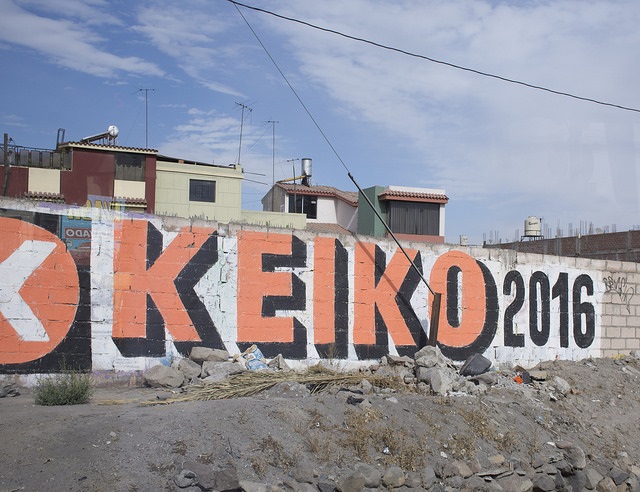
  • The candidate who has topped the opinion polls for more than a year is Keiko Fujimori. She is the daughter of Alberto Fujimori who, despite conviction on charges of human rights violations and corruption, retains support as the president who presided over the decimation of the Shining Path insurgency.  Her “Fujimorista Party” has a fervent base in both urban and rural areas.  Keiko was the runner-up in Peru’s 2011 election, but she struggled to achieve a balance between respect for her father and distance from his abuses.  She is likely to have the same challenge in 2016.
  • Currently second in the polls with roughly 22 percent is Pedro Pablo Kucznyski. He can take credit for excellent economic growth during the Toledo administration (2001-2006), when he was economics minister and prime minister, and there are no corruption charges against him despite many years in government.  In 2011, he ran an excellent campaign and finished third.  But he will be 77 next year, and he has many U.S. business connections (and until now a U.S. passport), which could hurt him.
  • Running third with about 10 percent is Alan García, the long-standing leader of Peru’s most-institutionalized party, APRA (American Popular Revolutionary Alliance). García is a brilliant campaign strategist, and he can cite superb economic growth during his 2006-2011 presidential term.  However, he is also widely perceived as Peru’s most corrupt political leader.

Surprises are inherently impossible to predict – but not impossible to imagine.  Peru’s left is divided and poorly financed, and its heyday has probably passed, but the candidate nominated a few weeks ago by the Broad Front, Verónika Mendoza, a congresswoman from Cusco and psychologist who studied in France, has the potential to appeal to diverse sectors of Peruvians.  As in many Latin American countries, corruption scandals are at the forefront in Peru, and a candidate who has participated in successful anti-corruption efforts – but whose name doesn’t occupy headlines – could emerge and turn the race upside down.

November 5, 2015

* Cynthia McClintock is Professor of Political Science and International Affairs at George Washington University.

Haiti: Elections Better than Expected?

By Emma Fawcett*

Photo Credit: Haiti Innovation / Flickr / Creative Commons

Photo Credit: Haiti Innovation / Flickr / Creative Commons

Security and logistics for Haiti’s October 25 elections went much better than expected, but the results – preliminarily announced this week but likely to face challenges – will probably leave many Haitians disappointed.  With 54 presidential candidates and 6,000 other candidates for legislative and local positions, party monitors outnumbered voters at some polling stations.  The Observatory for Institutionalizing Democracy estimates that turnout was about 30 percent.  Despite sporadic demonstrations leading to the arrests of 234 people, the process was fairly peaceful.  Allegations of ballot stuffing persist but remain unsubstantiated – perhaps because the fraud has been better organized this time, according to some observers.

  • These elections were in sharp contrast to the long-overdue August 9 elections – the first round for legislative seats – which were disastrous. In August, 13 percent of voting centers were forced to close because of shootings, vandalism, and voter intimidation, while the Haitian National Police stood by.  Dozens of police officers failed to report to work or guard candidates (for which they were later suspended).  Voter turnout was a dismal 18 percent, as the chaos discouraged Haitians from voting.  Twenty-five of 119 first-round deputy races had to be repeated on October 25 because too many votes were thrown out due to violence and fraud.  Only eight deputies (out of 119) and only two senators (of 20 open seats) won races outright.

Electoral results are released more slowly in Haiti than practically anywhere else in the world because the ballots must be trucked to Port-au-Prince to be counted, and then the Provisional Electoral Council must process requests for re-tallies from 166 political parties.  Preliminary results won’t be known for several more days, and final results, which will reveal the names of the two candidates in the December 27 runoff, are expected in late November.  But the international community wants to declare the October elections a success, apparently eager to end the country’s stagnation since the parliament was dissolved earlier this year.  The newly arrived U.S. Ambassador to Haiti, Peter Mulrean, said in an interview that Haiti “really can’t afford to have that kind of stalemate” and expressed approval for the electoral process within the first few hours of voting.

Polls going into the October election showed, however, support divided among many candidates, and the results are likely to upset many Haitians.  Tough talk by four main candidates suggests difficult scenarios ahead:

  • If President Michel Martelly’s chosen successor, banana exporter Jovenel Moïse, wins, widespread protests are possible from Haitians angered by the current administration’s corruption. They will continue to claim U.S. interference. 
  • Jude Célestin, former head of the government’s construction ministry who was bumped from the 2010 runoff by an OAS recount, has vowed to ensure he makes it to the final round this time. Mid-October polls showed him with a considerable lead, commanding at least 30% of the vote.
  • Another major contender, former Senator Moïse Jean-Charles, has alleged that ballots with his name on them have been destroyed, and called for “either elections or revolution” at a rally with his supporters.
  • Fanmi Lavalas candidate, Maryse Narcisse, received a boost from former President Aristide in the final days before the vote when he joined her to campaign in downtown Port-au-Prince. Although Narcisse has struggled in the polls, her party was barred from the ballot in the 2010 elections, and so it remains unclear how they will fare this time.

Even assuming the transfer of power is peaceful, Martelly’s successor will face a number of critical challenges in addition to Haiti’s perennial ills, including a deportation crisis with the Dominican Republic, a cholera outbreak, languishing earthquake recovery, and a drought which has increased hunger. 

November 2, 2015

*Emma Fawcett is a PhD candidate in International Relations at American University.   Her doctoral thesis focuses on the political economy of tourism and development in four Caribbean case studies: Haiti, Dominican Republic, Cuba, and the Mexican Caribbean.
Puerto Ricans in Florida: Swing Constituency in a Swing State

By Fulton Armstrong and Eric Hershberg

Embed from Getty Images

A surge in the number of Puerto Ricans moving to Florida suggests a major shift in the impact of Latino issues in next year’s U.S. elections. As the island’s economic crisis deepens and severe austerity looms large, thousands of Puerto Ricans are arriving in Florida monthly, according to estimates, with the single biggest destination being Central Florida. The director of the Puerto Rican Federal Affairs Administration office in Central Florida has estimated a 15 to 20 percent increase in the number of new arrivals in recent months. The director of Hispanic Research at the Pew Research Center has called it “the biggest movement of people out of Puerto Rico since the great migration of the 1950s.” Anecdotal accounts follow trends first identified in the 2010 census and a 2013 Pew Research Center indicating an uptick in island-born Puerto Ricans arriving in the mainland. Puerto Ricans in Florida now number almost one million – only 200,000 short of the number of the state’s Cuban-Americans. The three counties around Orlando – seen by pundits as essential to any statewide or national campaign – were home to about 271,000 Puerto Ricans (representing about 14 percent of the total population of those three counties) in 2013, according to U.S. Census Bureau estimates. Many of the new residents are white-collar workers, in contrast to those in the last major wave of arrivals who came to work at Disney World in the 1980s.

Because Puerto Ricans residing on the island are citizens but do not have the right to vote in presidential elections, an influx of hundreds of thousands onto the mainland introduces a substantial expansion of the 2016 electorate, which could be of particular relevance in the hotly contested election in Florida. Although polls show that Puerto Ricans tend to vote Democratic, their support for the party’s candidate at the presidential level is not a foregone conclusion. The director of the Center for Puerto Rican Studies at Hunter College of the City University of New York has said that among the new arrivals “there is a large number of independents … and party affiliations mean less to them” than among mainland-born Puerto Ricans. Of the six members of the Florida State Legislature of Puerto Rican descent, three are Democrats and three Republican. (Orlando-area State Senator Darren Soto – born in New Jersey but strongly identifying with the island of his father’s birth – is running as a Democrat.) Democratic strategists privately claim confidence that the new diaspora will be in their column. They note deep dissatisfaction among on-island Puerto Ricans and the new arrivals toward the Republicans’ opposition to legislation that would allow the island the right to declare Chapter 9 bankruptcy, as well as polls showing significant support for Hillary Clinton. The Orlando Sentinel reported recently that Democrats had taken the lead in voter registration in Osceola County and won control of the County Commission. A deputy director for strategic initiatives at the Republican National Committee, however, told the Washington Post that she sees the Puerto Rican vote in Florida as “up for grabs.”

A decade and a half after the trauma of the Bush-Gore presidential vote in 2000, neither U.S. party dares to take Florida’s 29 electoral votes for granted. The Pew Research Center estimates that some 800,000 Latinos are turning 18 each year –about 2,200 per day – nationwide, making them the biggest source of new voters in each election cycle. It’s hard to see, however, what the Republican Party is doing to win the hearts and minds of Puerto Rican voters in Florida and elsewhere. As American citizens, Puerto Ricans do not have a direct stake in U.S. immigration reform – an issue that galvanizes other Latino constituencies – but the tone and policy prescriptions of that debate may well influence their perceptions of the two parties. The claims and counterclaims of optimistic partisan operatives aside, some Republican candidates’ rhetoric about immigration, Latin America, and U.S. Hispanics in general – including Donald Trump’s colorful admonition of Jeb Bush for speaking Spanish in public – has got to alienate many Puerto Ricans. Perhaps, as AULABLOG previously stated, one or two of the Republicans are likely strike a moderate-sounding approach to immigration in the coming months. Indeed, former Florida Governor Jeb Bush yesterday endorsed immigration reform, including a path to citizenship for “DREAM Act” children, and said, “We don’t need to build a wall. We don’t need to deport every person that’s in this country.” But particularly if the eventual GOP nominee proves reluctant to call for federal legislative or financial assistance for a bankrupt Puerto Rico, the party may face an uphill struggle trying to appeal to Florida Puerto Ricans – a rapidly growing swing constituency in a crucial swing state.

September 22, 2015

A Post-Correa Ecuador?

By Catherine Conaghan*

Photo Credit: Thierry Ehrmann / Flickr / Creative Commons

Photo Credit: Thierry Ehrmann / Flickr / Creative Commons

What seemed like a certainty less than a year ago – Ecuadorian President Rafael Correa as a shoo-in for reelection in 2017 – now has given way to competing scenarios as the country’s economic crisis deepens.  The game-changer has been the collapse in revenues from Ecuador’s principal export: petroleum.  With prices for Ecuadorian crude hovering 50 percent below their 2014 average, Correa has had little choice but to slash the abundant government spending that has been the hallmark of his presidency.  Ecuador’s use of the U.S. dollar greatly handicaps its capacity to adjust.  Further aggravating the recession is the economic downturn of Ecuador’s principal external lender, China.  Over $2 billion have been cut from the 2015 budget, and plans to shrink the size of the public bureaucracy are now under way.  His decision in April to suspend the central government’s obligatory payments to the national social security system stoked anxiety about the fund’s future, and an announcement in June of plans to hike taxes on inheritance and real estate transactions sparked street demonstrations around the country.  Indigenous and labor organizations mobilized in mid-August to protest these and other aspects of Correa’s style of governing.  An estimated crowd of 100,000 people marched in Quito.  Scores of protestors were detained and face charges related to the August mobilizations.

The months ahead will not be easy for a president accustomed to buoyant budgets and strong polls.  As one of Latin America’s left-turn leaders, he pushed a state-centric economic model under which poverty declined and the middle class grew.  His approval ratings since he took office in 2007 consistently scored among the highest of any Latin American president.  (They dipped below 50 percent – as low as 42 percent – for the first time in 2015.)  While Correa waxes and wanes on whether he really will pursue reelection, his party is pushing to amend the Constitution through legislation – without a referendum supported by over 80 percent of the public – to allow him a third term.  The opposition strenuously opposes the move.  The National Assembly appears headed toward a final vote on the matter in December.

From now until December, the reelection maneuvering and two possible outcomes will dominate conversations.  Under one scenario, Correa and Alianza País will push ahead with the amendment, ignoring negative public reaction and repressing protests if necessary, and Correa will decide on his candidacy depending on his view of the economy and the state of the opposition.  In a second and perhaps less likely scenario, Correa and his party may just abandon the reelection plan, concluding that the political costs are just too high.  This would set off power struggles within Alianza País over who would head the ticket.  Among the prospective frontrunners are former Vice President Lenín Moreno, current Vice President Jorge Glas, Production Minister (and former Ambassador to the United States) Nathalie Cely, and former Industry Minister-turned-critic Ramiro González.  In the process, Correa will be looking to anoint someone loyal and capable of governing the country until he can return as a candidate in 2021.  Under both of these scenarios, Ecuador is bracing for a volatile year ahead.  Natural disasters – a possible volcanic eruption of Mount Cotopaxi and El Niño – could also fuel uncertainty, giving Correa a chance to shine and rally, or to fail and deepen doubts about his leadership.  After eight years of relative political stability and economic good times, Ecuadorians are pondering whether a post-Correa era could be at hand and what it would mean.

September 8, 2015

* Catherine Conaghan is the Sir Edward Peacock Professor of Latin American Politics at Canada’s Queen’s University and a former CLALS Research Fellow.