The Rise, Decline, and Crisis of Ecuador’s Indigenous Movement

By Dr. Pablo Andrade Andrade

October 17 Demonstrations (Manifestaciones del 17 de Octubre)
(Source: Wikimedia Commons)

Just six years ago, in 2019, the three major organizations of the Ecuadorian indigenous movement were on the rise. CONAIE (the Confederación de Nacionalidades Indígenas del Ecuador) led the charge against Lenin Moreno’s government. For eleven days their widespread demonstrations posed a serious threat to the government’s stability. The “Paro Nacional” (Nationwide Strike) not only facilitated CONAIE’s alliances with the other two indigenous organizations (FENOCIN, the Federación Nacional de Organizaciones Campesinas, Indígenas y Negras, and FEINE, the Federación Ecuatoriana de Indígenas Evangélicos) but also broadened its coalition with a diverse range of civil society organizations, marking a significant shift in Ecuadorian politics. The impact of the indigenous movement on Ecuadorian politics was profound, as Moreno´s government was seriously weakened. Two years later, in 2021, CONAIE’s political party, Pachakutik, won substantial representation in the National Assembly and placed third in the Presidential elections.

In 2022 CONAIE’s president, Leonidas Iza, led a successful national strike against Guillermo Lasso’s right-wing government. His leadership, bolstered by unity among indigenous communities and their allies, made it the most powerful leftist organization. Newfound solidarity among indigenous communities and stronger ties with student, feminist, and environmental movements, enhanced Iza’s national and international reputation. Less than a year later, President Lasso had to end his term and called for early general elections. However, at that moment Iza´s radical wing of CONAIE also attempted to impose its agenda over Pachakutik and the Amazonian federation CONFENIAE, which proved to be a high-cost strategy. The internal conflicts that followed led, in 2025, to the most serious electoral defeats that both organizations had suffered in decades.

The 2023 general elections were marred by prison massacres and political assassinations, including that of presidential candidate Fernando Villavicencio and the mayor of Manta, among numerous other government officials. Amid this unprecedented turmoil, a young center-right candidate, Daniel Noboa, emerged victorious as interim president. His win signaled yet another shift in Ecuador’s political landscape, with the country’s fragile democracy once again at the mercy of a personalist, plebiscitarian president.

The first warning sign of the current political turn to populist rule came with the 2025 regular election. The President’s party (Alianza Democrática Nacional, ADN) and the opposition party (Revolución Ciudadana, RC) totalled over 80 percent of National Assembly representatives. Noboa won his first five-year mandate. Pachakutik saw its representation shrink to five members, who the government rapidly coopted. Free from legislative checks, Noboa advanced his economic adjustment program. In addition, amid the ongoing public security crisis, Noboa expanded the military’s role in maintaining domestic order. Although assassinations have risen since 2023, militarization has strengthened Noboa’s control over organized violence, boosting political support for his government.

As part of its economic program, in September 2025, the Noboa administration raised diesel prices, a decision that in 2021 and 2022 sparked the wrath of CONAIE. But the leaders misjudged the lasting strength gained in 2021 and 2022, failing to account for damage from the 2023 and 2025 leadership races. As a result, they  rushed to emulate the apparent successes of the past. This time, however, CONAIE was at its lowest point. Unable to coordinate a nationwide strike, organizations in the northern province of Imbabura were left to their fate. The indigenous peoples of Cotacachi, Ilumán, Peguche, and Otavalo sustained demonstrations for a month. Still, they paid a high price in lost lives, injured people, and detainees due to systematic and brutal repression at the hands of the Armed Forces and the Police. This time, the government did not back down; the solidarity of  allied urban groups was, in this case, mostly symbolic and ineffective.

If CONAIE’s crisis should not be seen as the end of the indigenous movement, its significance cannot be overlooked. While grassroots mobilization once seemed effective, Noboa’s strong appeal and military support present new challenges. The aftermath of the national strike has called into question CONAIE’s representativeness and capacity to organize. An emboldened Noboa is now proposing a national plebiscite, in which he will likely be victorious, while Ecuador’s civil society appears weaker than ever. The challenges ahead are complex. The failed challenge to Noboa´s government could herald a new era of competitive authoritarianism, a scenario made even more likely by renewed international tolerance of hybrid forms of democracy. The lost battle left the indigenous organizations of Imbabura with wounds that could be challenging to heal, and racism lurks underneath the surface of Ecuador’s still young experiment with intercultural co-governance.

Pablo Andrade Andrade is Professor and Chair of the Germánico Salgado Lectures, Universidad Andina Simón Bolívar

*This post continues an ongoing series, as part of CLALS’s Ecuador Initiative, examining the country’s economic, governance, security, and societal challenges, made possible with generous support from Dr. Maria Donoso Clark, CAS/PhD ’91.

Why Have Hundreds of Thousands Fled Ecuador Since 2020?

By Marshall Plane, Erica Criollo

Turning to shield herself from the biting January wind, 40-year-old Yolanda explained to us the tragic set of events that took her from her thriving market stall in Ecuador to the Manhattan street where she now sells hot meals to residents of a nearby migrant shelter.

Yolanda was part of a merchant association in Cuenca, Ecuador. In 2021, local gangs began extorting these vendors, charging a monthly “security fee.” From there, things only got worse. “The next thing they did was try to recruit our children,” she recalled. “I have a 20-year-old son. He’s the only child I have. They ordered me to give them my son so that he could work for them selling drugs.”

After she reported this to the police, Yolanda was beaten and robbed by gang members. Fearing for her life, she decided to leave Ecuador. “I told my son we couldn’t stay [in Ecuador], because these gangs are all over the country,” she said. “They have connections.” Having crossed seven countries to reach the United States, the two are now renting a room from an Ecuadorian woman in Brooklyn. “I’m here by the will of God, trying to get my daily bread,” she told us. 

Yolanda’s journey is part of a sudden exodus from Ecuador. Fueled by economic hardship and a surge in violence, over 244,000 Ecuadorians have requested asylum in the US since 2021, the 8th-highest of all nationalities. Of those, 57% have settled in New York, New Jersey, and Connecticut, states with large Ecuadorian communities where many have contacts. At 52,000, Ecuador is the leading country of origin for asylum seekers in New York City.

Figure 1: Notices to appear in immigration court issued to Ecuadorian nationals by month. Source: Transactional Records Access Clearinghouse

Between December 2024 and January 2025, The Immigration Lab conducted fifty-five interviews with asylum seekers and recent immigrants in New York City. Thirty of the individuals we spoke to were from Ecuador. Two significant patterns emerged: many of them were small-business owners in Ecuador who faced extortion from gangs or parents who fled to protect their children from forced gang recruitment and violence. Their stories highlight the devastating impact of rising gang violence, economic instability, and the government’s failure to protect its citizens, all of which have contributed to a major exodus from the country. 

In 2018, Ecuador was one of the safest countries in Latin America, with a homicide rate around 6 per 100,000—a figure comparable to the United States. By 2023, its homicide rate was the highest in the region at 47 per 100,000. These statistics reflect what many interviewees described as a collapse of public safety in the country of 18 million.

Source: InSight Crime

Ecuador is the latest country to fall victim to the failure of US-led drug policy in the Western Hemisphere. A shift in trafficking routes was the proximate cause of the recent spike in violence. With security tightening in Colombian ports, international traffickers began using ports on Ecuador’s Pacific coast to smuggle cocaine to North America and Europe. Factors such as lax security, a weak judicial system, and official corruption made Ecuador an attractive transit point.

Control over these newly lucrative routes became hotly contested, a process worsened when the nation’s largest gang, Los Choneros, split into several factions in 2020. The policy of dividing inmates by gang affiliation exacerbated the prison violence it was supposed to prevent and made prisons a nexus of recruitment and coordination for major gangs.

Gangs’ increased need for manpower to control contested areas coincided with an economic downturn worsened by the pandemic. From 2019 to 2022, unemployment, underemployment, and poverty all increased. Gang recruiters began frequenting schools and soccer pitches in impoverished areas, recruiting youths with promises of income and status. When this fails, they often use force, threatening the family members of those who refuse to join.

According to InSight Crime, this is especially common in strategically important, contested areas where gangs need manpower to assert control. A prime example is Esmeraldas, a coastal region that has seen severe violence due to its utility as a chokepoint for cocaine entering the country from Colombia. “Ecuador has practically fallen to pieces,” says Miguel, a 40-year-old fishmonger from Esmeraldas. When he didn’t let Los Lobos recruit his stepson, they kidnapped and beat the boy. “He came home all beaten, swollen,” Miguel recalls. “We had to leave everything behind, because otherwise they were going to kill us.”

Twenty percent of our participants said forced recruitment of their children forced them to flee Ecuador. Another 23% were small business owners who said gang extortion made their lives impossible.  Reports of extortion grew nearly 800% from 2021 to 2023. According to InSight Crime, gangs that lose control of cocaine trafficking routes often turn to extortion to finance their operations.

Source: InSight Crime

Anthony, a 43-year-old father of three from Guayaquil, told us extortion ruined his growing business as a self-employed trucker. “When we said that we didn’t have any more to give, they said they were going to bring reprisals. They were going to kidnap my son, kill him,” he recalled. “Unfortunately, the politicians are corrupt up to the police themselves, so we couldn’t make a report.”

According to a November 2022 poll, 75% of Ecuadorians similarly viewed the police as unreliable. Police corruption has exacerbated Ecuador’s crisis, allowing the flow of thousands of weapons to gangs. In many cases, officers who try to challenge gangs’ power have been assassinated. This fate nearly befell Marcelo, 29, a police officer and restaurant owner in the city of Machala. In late 2022 gang hitmen arrived and committed the first murder in what Marcelo says had been a very peaceful city. “We arrested them the next day,” he said. “Because of that arrest, I received multiple death threats. They knew my address, my restaurant, my children.” Marcelo now lives in Ridgewood, Queens, selling bread and delivering for Grubhub to make ends meet.

While increased violence has fueled emigration from Ecuador, many interviewees were also motivated to come by economic advancement, particularly that of their children. As of 2022, 25% of Ecuador’s population lived in poverty and was classified as having “inadequate employment.” When asked why she came to America, Katy, 29, immediately responded, “My son. With my love as a mother, I wanted my son to have more opportunities, learn another language, go to college. I want him to have what I didn’t have.”

Others, especially those who came alone, were focused on improving their family’s situation back in Ecuador. “I come from a poor family, we don’t have many resources, that’s why we came,” says David, 33. “I want to buy a house [in Ecuador] for my daughter, because right now we don’t have a home.”

Some indigenous Ecuadorians felt constrained by both poverty and discrimination. Pedro, 38, from the Shuar people of the Ecuadorian Amazon, said his departure was motivated by a feeling that racism in Ecuador would prevent his daughters from succeeding. “Just for being indigenous, for being Shuar, people assume you’re ignorant,” he said. In addition, the candy vendors on New York City’s subways are largely Quechua women from the Andean highlands, many of whom were also vendors back home.

These women, like many recent arrivals, are currently struggling to find a reliable niche in New York City’s labor market as they seek to rebuild their lives. In our next article, we will highlight notable patterns in the experiences of Ecuadorians working to adjust to their new homes.

Marshall Plane is a Research Assistant at The Immigration Lab at American University

Erica Criollo is the Research Coordinator at The Immigration Lab at American University

The Ongoing Saga of a Chinese Infrastructure Project in Ecuador

By Julie Radomski, American University

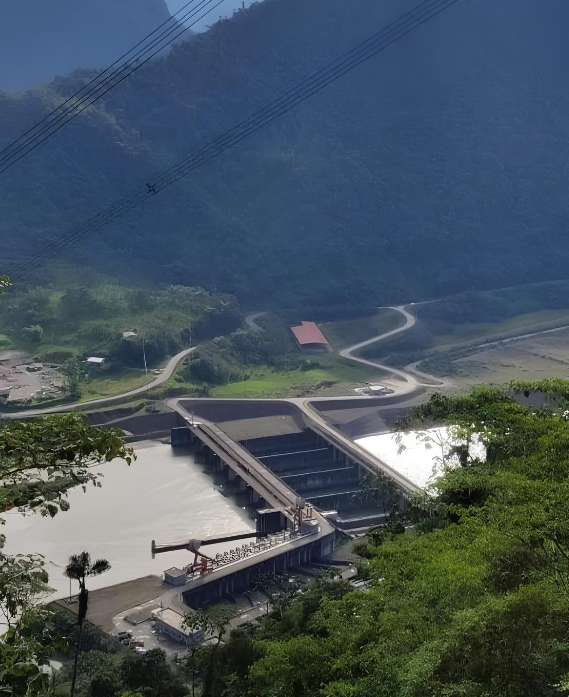
Photo credit to Julie Radomski

Ecuador’s Coca Codo Sinclair (CCS) hydroelectric plant has become an infamous symbol of the controversies associated with Chinese development finance in Latin America. As such, the project’s performance has outsized implications for China-Latin America relations. At the same time, CCS illustrates the inherent complexities of large infrastructure projects, where political, environmental, and technical issues can blur the lines between success and failure.

When it was inaugurated by Presidents Rafael Correa and Xi Jinping in 2016, CCS was celebrated as a triumph of South-South cooperation between Ecuador and China, and a contribution to sustainable green growth in Ecuador. Yet nearly eight years after this inauguration, the project has yet to be formally “received” by the Ecuadorian government from the contractor, Chinese state-owned enterprise Sinohydro. The reason for this prolonged state of limbo comes down primarily to fissures present in the powerhouse distributor pipes: despite repeated welding, they have yet to be fully repaired, and a durable fix may not be possible. In addition, the project’s sediment removal mechanisms have proven dysfunctional, leading to frequent pauses in the project’s operation over the past year. Separately, severe regressive erosion on the Coca River is advancing towards the dam and may trigger its collapse. The erosion advanced 1.2 kilometers upriver over the course of three days last month, and is currently located 6 kilometers from the dam.

For these reasons CCS is frequently cited by U.S. media and politicians as evidence of the threat posed by Chinese development cooperation, namely that it will saddle countries with debt, corruption, low-quality projects, and environmental damage. Meanwhile, the project’s protagonists point out that CCS produces 20-30% of Ecuador’s energy consumption on a daily basis, rendering it indispensable — hardly a white elephant. But closer examination of the details of this behemoth project makes clear that neither pro- nor anti-Chinese discourses on “China in Latin America” ring perfectly true.

Negotiations are reportedly underway between the Ecuadorian government and Sinohydro to conclude a deal in which Ecuador would sign over operation of CCS to Sinohydro in exchange for “liquidity.” Under such a deal, Sinohydro would be responsible for CCS’s repair, operations, and administration and would sell electricity back to the Ecuadorian grid. The concessioning of CCS to Sinohydro is just one of the many loose ends that could once again rewrite the story of this contentious megaproject. Beyond this hypothetical deal, the international arbitration case between the Ecuadorian state and Sinohydro has yet to reach a conclusion. The regressive erosion of the Coca River is anticipated to progress further upriver towards the diversion dam within the next five years. A corruption case initiated by the Attorney General’s office could result in the conviction of four Sinohydro representatives and a former Chinese Ambassador, as well as former Ecuadorian President Lenin Moreno. Some combination of these various developments will continue to make CCS headline news in Ecuador and abroad — and in so doing, they will rely upon prevailing narratives about China-Latin America relations.

CCS provides a vantage point for considering the longer-term effects of development cooperation between China and the region. Looking forward, while the outcomes of CCS are as of yet indeterminate, the project itself has had important implications both for Ecuadorians and for “China’s rise in Latin America” writ large. Chinese economic relations with Latin America have moved away from large state-to-state loans backed by the policy banks. This is due at least in part to the high reputational costs of scandals associated with projects like CCS. While the influence of Chinese actors on Latin American political economies has by no means waned, it now takes the form of Chinese companies’ direct investments or bidding on project contracts instead of by securing market access through granting large loans.

Nevertheless, even with the China-Latin America development relationship moving on from big infrastructure projects like CCS, the project’s politics still hold considerable weight. CCS demonstrates that infrastructure is enduring even as geopolitics can be fickle; its fate will continue to shape China-Latin America relations as a function of the still-ongoing natural and political processes enumerated above. Reductive pro- and anti-China discourses are only one part of the many factors shaping the outcomes of projects like CCS, including continuously evolving local ecologies and domestic political dynamics. In an age of great power competition and the “infrastructure state,” we must pay attention not only to the politics and capital that bring projects into being but also to how they evolve after they are ostensibly completed.

This piece can be reproduced completely or partially with proper attribution to its author.

Ecuador: The Formation of Gangs in Prison Systems

By Erica Criollo

January 17, 2024

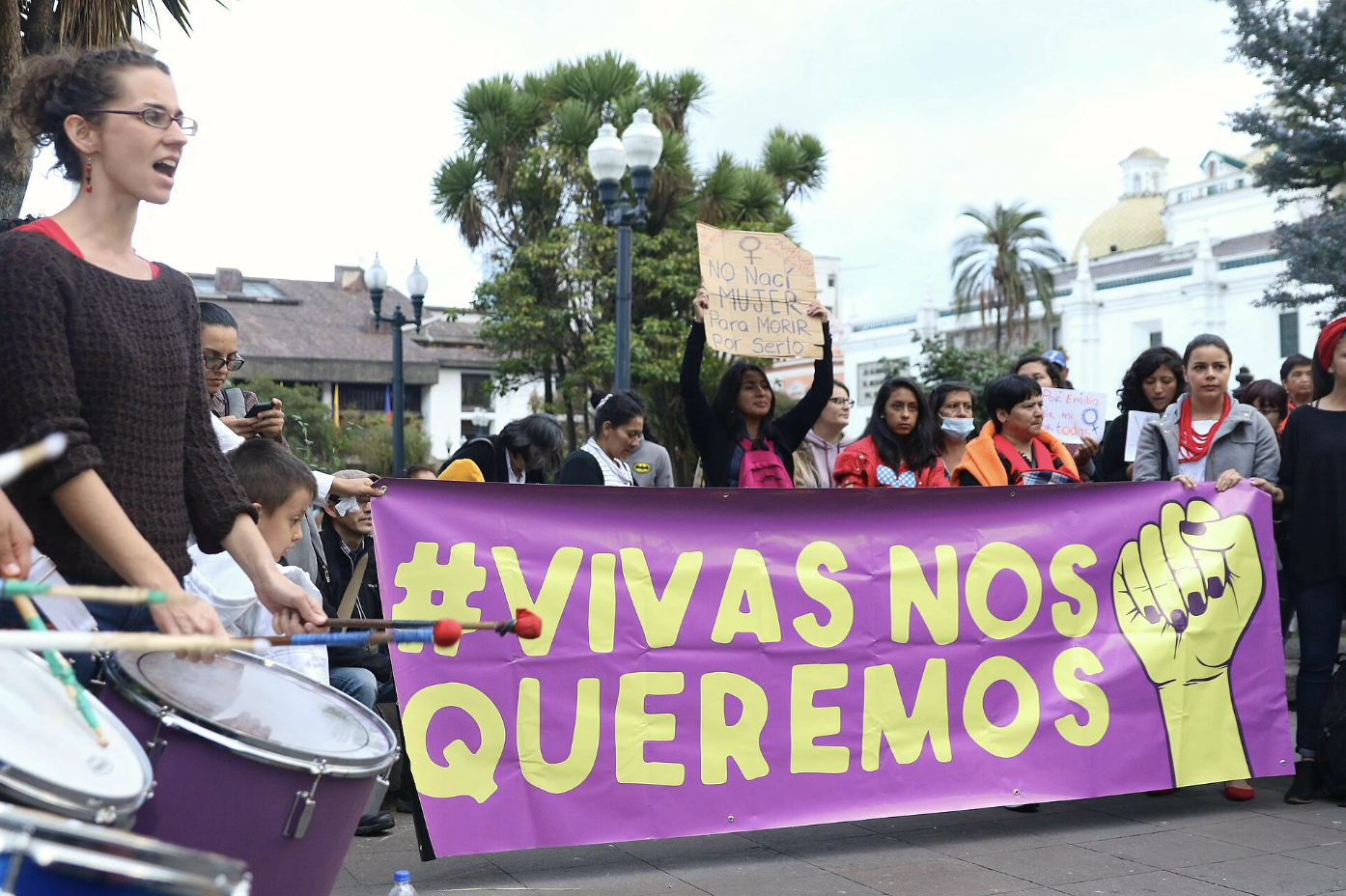
Solidarity rally in Queens, New York by members of the Ecuadorian diaspora. Photo by Erica Criollo 

On January 7th, 2024, José Adolfo Macías Villamar, alias“Fito,” the leader of one of Ecuador’s most prominent gangs, was found missing from his luxury prison cell the day he was meant to be transferred to a maximum-security prison to be held in isolation.

While Macías began his 34-year sentence in 2011, he remained the leader of the criminal gang, Los Choneros, due to their longstanding influence over government officials and extensive illicit drug networks. Following his escape, the country descended into chaos resulting in President Daniel Noboa declaring that the country was under “armed internal conflict” to mitigate gang wars and the killings of police officers.

This presidential declaration has prompted questions as to how Ecuador could have experienced such a sudden upsurge in gang violence. Along with government corruption, the escalation can be traced to the gradual formation of gangs dominating prison systems over several years. 

 In 2003, Los Choneros, who are associated with Mexican and Colombian cartels, took control of the drug trafficking route in the province of Manabí, Ecuador, from where drug shipments were sent to Mexico, the United States, and several European countries. Transnational networks and external groups engaged in the illicit drug trade utilized Ecuador’s coasts, leveraging its access to major shipping routes and ports to transport illicit drugs across international borders. 

Furthermore, Ecuador’s adoption of the U.S. dollar, coupled with inadequate enforcement and prevalent corruption, has facilitated money laundering by drug traffickers through industries such as real estate, illegal mining, and the illicit timber trade. This impacted the way corruption played a role in the country’s efforts to combat such illicit activities. 

When Former President Rafael Correa took office in 2007, he gained public favor through his initiative to remove the United States from the Manta military base from which the U.S. has been controlling anti-drug efforts with targets against the Colombian illicit drug trade since 1999.

However, following the U.S. withdrawal from the Manta military base, the country witnessed a worsening of drug trafficking. Former President Correa failed to stop the activities of groups like Los Choneros and other Mexican cartels, allowing the unhindered transportation of drugs to and from Ecuador.

Before Macías, Los Choneros was led by Jorge Luis Zambrano, alias “Rasquiña,” who, while incarcerated, directed orders alongside arrested gang members. By 2010, the group had transitioned to operating within prison systems and communicating with members on the outside. This operational shift steered the group away from international drug trafficking, focusing instead on micro-trafficking, contract killings, extortion, and contraband activities.

Emerging factional gangs, including Los Choneros, Gorras, Lagartos, Latin Kings, and the Cubanos, have become more extensive and aggressive, leading to deadly conflicts in prisons. In 2019, a brutal fight claimed the lives of several inmate gang members at Penitenciaria del Litoral, and in 2021, a prison riot resulted in the deaths of 119 inmates in the same facility. These deviations of gangs were also a result of government initiative in dismantling gang groups through the transfer of leaders between prisons, but it only multiplied the presence of gang wars.

Following Zambrano’s death in 2020, Macías obtained leadership, triggering an uproar of chaos and gang violence across the country as gang leaders fought to dominate. Despite being in prison, Macías remained in control. For him, communication with members was not an obstacle, as several reports indicate Macías’ prison cell had plugs to charge his cell phone and an internet router. Macías was also open to sharing his lavish living space on social media, regularly throwing parties, and having access to weapons, appliances, liquor, jewelry, and ceramics.

Ecuador has experienced a long trajectory of government corruption which has led to an escalation in gang formation and violence in prison systems. With Macías’ most recent escape, the country has been submitted to crazed gang members responsible for several car bombings, kidnappings, and slayings of prison guards and innocent civilians. In response to President Daniel Noboa’s crackdown on gang members in prisons, gang leaders on the outside have resorted to hostage-taking, capturing military and prison guards. These captives are coerced into recording messages, pleading with President Noboa to halt military operations in prisons and cease the killing of gang members. The objective behind these threats is to secure the gangs’ dominance within prisons and ensure the unrestricted proliferation of gang members. 

In one such video shared on Facebook, a gang member asserts, “Just as you safeguard the right to life of Ecuadorian citizens, we too have the right to live…we are not afraid of your tactics.” In essence, Ecuador is confronted with a formidable coalition of gangs wielding enough power to subvert the law and pursue their objectives, fueled by their substantial numbers and collective readiness to act in unison to carry out attacks. 

Currently, President Noboa’s plan to overpower gang violence is to enforce stricter regulations in prisons. However, this raises concerns for Ecuadorian citizens alarmed by several online videos featuring hostages pleading with the government for compliance to spare their lives. As events unfold, President Noboa’s actions will require careful consideration to ensure that no more civilian lives are endangered and to respect the human rights of all people. 

*Erica Criollo is a Graduate Research Assistant of the Immigration Lab at American University. 

Creative Commons license. Free to republish without changing content for news and not-for-profit purposes. 

Ecuador: Weak Government Faces Growing Challenges

By Pablo Andrade Andrade*

Ecuadorians rallying during the paro nacional / Wikimedia Commons / Creative Commons License

Ecuadorian President Guillermo Lasso has tried to overcome the economic mess and political divisions he inherited from predecessors with neoliberal policies that, along with other missteps, have fueled growing opposition to him and undermined his agenda during the final two years of his term. Even if, unlike most of his predecessors in the past 30 years, he serves out his term, his record will be marred by policies that had failed when first attempted in the 1980s. According to Perfiles de Opinión, a respected poll, 66 percent of the population say that Lasso’s performance is either “bad” or “very bad,” and only 2.06 percent evaluate his government as “very good.” 

  • Lasso’s immediate predecessors – Rafael Correa and Lenín Moreno – left a country shaken by corruption, debt, a bungled strategy for dealing with COVID, and paralyzed public health and education services. He did not have a working majority in the National Assembly, and his CREO Movement failed to win control of key municipal and provincial governments. 
  • From the beginning, Lasso’s approach to the economic crisis was orthodox, borrowing heavily from the neoliberal fixes attempted in Ecuador in the 1980-90s. Although his administration managed to tap into the relative openness of the IMF and other IFIs, and successfully negotiated its massive debt with China, the Ministry of Economy and Finance adopted a tight budget, cutting state investments. Recovery from the pandemic slowed. Public employment – staple of the middle class – shrank, and inflation rose. 

Opposition to Lasso’s policies started weak but has grown steadily. The Confederación de Nacionalidades Indígenas (CONAIE), which had flexed its muscles during the Moreno government, was slow to mobilize at first, creating a situation that looked very much like the early wave of neoliberal politics in the 1980s, when a center-right government was able to bypass legislative opposition and weak civil society organizations. Last June, however, a new coalition of the three major rural organizations – CONAIE, Federación de Indígenas Evangélicos (FEINE), and Confederación Nacional de Organizaciones Indígenas y Negras (FENOCIN) – held a national strike (paro nacional) that effectively paralyzed the country for 18 days.  

  • The government backpedaled on its decisions to keep domestic fuel prices at international levels; to maintain low state expenditures for health and education; and to deny indigenous organizations a significant role in decision-making. Lasso reshuffled his cabinet, replacing a half dozen ministers. He opened negotiations with the rural organizations on a range of issues – spanning economic matters (i.e., fuel and food staples prices) and political ones (i.e., the designation of a new Secretario de Pueblos y Nacionalidades to replace the founding secretary Luis Pachala, who resigned in the wake of the national strike).  
  • Although the negotiations relieved some of the stress on the government, the core issues remain highly contentious, and so far, no agreement has emerged. Indigenous leaders say they are not happy with the process, and the few things agreed upon remain provisional. The Catholic Church tried to mediate but failed to progress beyond peripheral issues. In what looks like a desperate move, the government initiated a referendum process that most observers believe is intended to wrestle back the initiative on its own terms. 

The road ahead for the Lasso government is a difficult one – having essentially lame-duck status in the face of steadily mounting woes and opposition. His opponents are as strong and angry now as in June. Despite an improved fiscal stance, the government does not have the will or the capacity to expand public expenditures, so economic growth seems likely to continue at a snail’s pace, and employment will stay depressed in both urban and rural areas. The government’s unwillingness to adopt price controls will continue to fuel popular grievances. 

  • The leadership of CONAIE and others have already threatened a new nationwide mobilization and declared their opposition to the referendum initiative. Whatever support the executive was able to extract from the legislature has faded. Additionally, local government elections in 2023 are stimulating the parties to concentrate their efforts on their political fortunes.  
  • The Ecuadorian military, which played a major role in the abrupt departures of several Presidents over the past three decades, has so far avoided joining the partisan factionalism and appears united in the view that Lasso should stay. The President’s health may be as reliable an indicator as any of his fate. He recently traveled to Houston for treatment of melanoma, specifically a lesion in his right eyelid. In Quito’s churning rumor mill, convincing the population that he has been fully cured is nearly impossible. His efforts to assert his credibility as President will continue to be similarly challenged. 

* Pablo Andrade Andrade is the Germánico Salgado Chair on Andean Integration and Professor at the Department of Global and Social Studies, Universidad Andina Simón Bolívar, Sede Ecuador. He works on comparative political economy and Latin American politics. 

Ecuador: Growing Political and Economic Repercussions of COVID-19

By John Polga-Hecimovich*

Lenín Moreno speaking at an event

Lenín Moreno, presidente de Ecuador/Flickr/Creative Commons

Despite early aggressive measures against COVID‑19, Ecuador has suffered one of the world’s most devastating outbreaks that, combined with the drop in international oil prices, may be catastrophic for the country’s economy and for President Lenín Moreno. Since March 16, the President declared a national state of emergency and curfew throughout the country; imposed strict social isolation (until May 4) that suspended all face-to-face activities; and established a special security zone in the province of Guayas, epicenter of the pandemic. Even so, Ecuador currently has the second-highest number of documented cases in South America, after Brazil, and the death toll from COVID‑19 may have reached between 7,600 and 11,000 during April.

  • Ecuador’s first case of COVID-19 was detected on February 27 in the port city of Guayaquil. As the virus spread in March and early April, the city experienced an unprecedented humanitarian crisis due to the much-publicized accumulation of hundreds of corpses in homes and on the streets. The local government’s response was erratic, with mayor Cynthia Viteri at one point ordering officials to block the runway at the airport to prevent a flight from Spain from landing, and later comparing the devastation to “the Hiroshima bomb.” Viteri has since estimated that perhaps as many as one-third of guayaquileños have COVID‑19.

Despite the lockdown measures, the national government has also shown a lack of capacity in addressing the public health crisis. Moreno created a task force to deal with the situation in Guayaquil, but even then, the government possessed a limited ability to determine who had the virus, to say nothing of addressing shortages of suits, masks, gloves, and ventilators for hospital personnel. In a national address in early April, the President acknowledged that official coronavirus figures had significantly understated the extent of the country’s health emergency. There have also been worrying accusations of corruption against officials in the Ecuadorian Institute of Social Security (IESS) in outfitting hospitals, and the Attorney General’s office charged the now ex-National Secretary of Risk Management Alexandra Ocles with influence-peddling.

  • The combined impact of the pandemic and oil crisis on the country’s economy may be catastrophic. Petroleum is Ecuador’s largest export commodity and accounts for about a third of its public-sector revenue. The 2020 national budget was planned with an oil price of $51.30 per barrel (currently hovering around $30.00), which will increase the country’s deficit. Ecuador also has little savings to implement a countercyclical fiscal policy and is on the brink of defaulting on its $50 billion debt. Adding to the troubles, due to dollarization, it cannot devalue its currency to reduce its deficit. The collapse of export revenues and massive foreign debt payments have greatly compounded the economic cost of the pandemic, and the country’s GDP may shrink by as much as 7-8 percentage points.
  • The government is just barely muddling through. Private bondholders have accepted the government’s request to defer interest payments on the country’s debt until August 15, freeing up $811 million and buying Moreno some breathing room. However, this could merely postpone a default: a fragmented and intransigent legislature and social sectors have balked at emergency austerity measures. Responding to the country’s social needs and economic well-being is a difficult line to walk. The government has issued a $60 stimulus (bono) that will benefit some 400,000 people, while at the same time it submitted a bill to the National Assembly that proposes an extraordinary tax on both companies and individuals to bring unbudgeted resources into the national treasury.

While the government confronts its public health and economic problems, general elections are nine months away and the National Electoral Council is already debating ways to carry them out. There is too much uncertainty at the moment to determine any potential frontrunner. Moreno is not running for re-election; ex-Guayaquil Mayor Jaime Nebot has suffered due to his city’s lack of preparedness at confronting the pandemic; and the fate of Interior Minister María Paula Romo may rest on the Moreno government’s (so far unconvincing) response. Like leaders around the globe, Moreno is faced with the unpleasant challenge of keeping the country’s economy shuttered longer or risking a resurgence of the virus. The success or failure of his strategy will undoubtedly shape the country’s political and economic future.

May 15, 2020

* John Polga-Hecimovich is an Assistant Professor of Political Science at the U.S. Naval Academy. The views expressed in this article are solely those of the author and do not represent the views of or endorsement by the Naval Academy, the Department of the Navy, the Department of Defense, or the U.S. government.

Ecuador: President Moreno’s Pyrrhic Victory

By John Polga-Hecimovich*

President Lenín Moreno greets an indigenous leader on September 12, 2019.

President Lenín Moreno greets an indigenous leader on September 12, 2019/ Asemblea Nacional del Ecuador/ Flickr/ Creative Commons

Ecuadorean President Lenín Moreno’s agreement with opponents to rescind the austerity measures that sparked the recent crisis has restored calm but leaves his government irreparably weakened. The immediate trigger of the crisis was the president’s announcement on October 1 of a package of austerity measures aimed at reducing the fiscal deficit as part of his government’s $4.2 billion credit agreement with the International Monetary Fund. The key measure was elimination of a $1.3 billion gasoline subsidy expected to result in a 25-75 percent increase in the price of gasoline. Transport unions, student groups, and thousands of members of the country’s largest indigenous organization, the Confederación de Nacionalidades Indígenas del Ecuador (CONAIE), took to the streets, paralyzing roads around the country and demanding Moreno step down.

  • Moreno declared a 60-day state of siege, temporarily suspended the right to freedom of association; and on October 7, flanked by the military high command, said he would not back down against what he called a “destabilization plan” orchestrated by his predecessor, Rafael Correa, and Venezuelan President Nicolás Maduro. Perhaps cognizant that a combination of social pressure and legislative and military action removed all three of Ecuador’s democratically elected presidents from 1996 to 2006, Moreno temporarily moved the seat of government from Quito to Guayaquil and imposed a curfew in Quito.
  • CONAIE President Jaime Vargas and other indigenous leaders, encouraged by the United Nations and the Catholic Church, agreed to direct negotiations on October 12. Two days later, the president signed a decree rescinding the austerity measures and reinstating fuel subsidies, and CONAIE decamped. Moreno removed the head of the military Joint Command and the commander of the army, and on October 15 returned to Quito. (He has so far resisted calls to replace Interior Minister María Paula Romo, a possible 2021 presidential aspirant, and Defense Minister Oswaldo Jarrín.)

The crisis has deeply altered prospects for the Moreno presidency.

  • Moreno survived a degree of social protest and political resistance that toppled previous presidents, but he failed to anticipate the popular reaction to lifting energy subsidies, employed a heavy-handed response to protestors, and ultimately backed away from one of the few significant political decisions his government has made. As a result, Moreno lost an opportunity to make structural economic changes and suffered irreparable damage to his political capital and credibility.
  • Indigenous groups and a resurgent CONAIE – after largely disappearing from national political decision-making under Correa – are once again a key national political actor and informal public policy veto player. They not only forced Moreno and the government to reverse course on energy subsidies, but also literally and figuratively earned a seat at the negotiating table. CONAIE appears more unified than it has been at any moment since the early 2000s and may be emboldened to seek further concessions from the government.
  • Correísmo may well be the biggest political loser. Moreno remains in power despite calls from ex-President Correa and his Revolución Ciudadana party to debate the possibility of impeachment and early elections. Correístas were excluded from discussions over the executive decree that restored the gas subsidies. Moreover, CONAIE tweeted a stinging rebuke of Correa, accusing him of opportunism and holding him responsible for the deaths of three indigenous leaders under his government.

Moreno is a lame duck just a little over halfway through his presidency. It is difficult to imagine any policymaking of consequence in his remaining 18 months in office. The government is severely handicapped politically and economically, and the political space for negotiation until elections is almost nonexistent. Moreno’s government is likely to resemble the interim governments of Fabián Alarcón (1997-1998) or Alfredo Palacio (2005-2007), which essentially served as placeholder administrations without ambitious policy agendas. Against all odds, Moreno – with a legislative minority – neutralized Correa and shifted government policy to the right during his first two-plus years in office, which throws his failure to remove the subsidy into sharper relief.

  • Economically, the picture is not much different. The protests forced Moreno to kick the can down the road on energy subsidies, while making it more difficult for the government to close its fiscal deficit. The weight of these necessary reforms will therefore fall to whoever wins the 2021 elections. The failed implementation of this economic reform and subsequent reversal of policy show the limits of Moreno’s political acumen while laying bare the country’s governability challenges.

October 17, 2019

*John Polga-Hecimovich is an Assistant Professor of Political Science at the U.S. Naval Academy. The views expressed in this article are solely those of the author and do not represent the views of or endorsement by the Naval Academy, the Department of the Navy, the Department of Defense, or the U.S. government.


Ecuador: Moreno Reverses Another Correa Policy

By John Polga-Hecimovich*

29348188783_d2cda3b313_k

President Lenín Moreno / Flickr / Archivo Medios Públicos EP / Creative Commons

Ecuadorian President Lenín Moreno’s announcement last week that he had withdrawn diplomatic immunity for Wikileaks co-founder Julian Assange was long in coming and consistent with his efforts to reverse the excesses of his predecessor, ex-President Rafael Correa. In a three-minute-fifteen-second speech via Twitter, Moreno listed the reasons for his decision: Assange’s disrespectful and aggressive conduct, Wikileaks statements against Ecuador and, above all, Assange’s transgression of “international conventions.” Predictably, Correa, who originally offered the asylum protection, accused Moreno of being “the greatest traitor in Ecuadorian and Latin American history” who had committed a crime “that humanity will never forget.” Wikileaks accused Moreno of trading Assange to the United States for debt relief. Rhetoric and accusations aside, Assange had long been on shaky ground with the Moreno administration, and recent leaks of the president’s personal information made the decision seemingly inevitable.

  • Correa offered Assange asylum in 2012 to thumb his nose at the United States and contest claims that he did not protect freedom of the press. After Wikileaks leaked hundreds of Democratic Party campaign emails in 2016, he restricted Assange’s internet access at the embassy in London but, for ideological consistency, continued to support his infamous houseguest. Moreno possessed no such ties when he took office in May 2017 and called Assange “an inherited problem.” Assange’s asylum impeded Moreno’s ability to seek greater security and commercial cooperation with the United States.
  • The Wikileaks founder did not seem to understand the significance of this change. Not only was he messy, demanding, and abusive toward embassy staff; he reportedly violated his asylum conditions and, according to Moreno, tried to use the embassy as a “center for spying” – prompting Ecuador last October to impose a protocol regulating his visits, communications, and other matters. The tipping point for the Ecuadorian government was in February, when an anonymous source sent a trove of emails, phone communications, and expense receipts to Ecuadorian journalists, supposedly linking the president and his family to a series of corrupt and criminal dealings, including money laundering and offshore accounts, leading to a corruption investigation by Ecuador’s attorney general. A website also published leaked personal material unrelated to corruption, including photos of Moreno and his family lifted directly from his phone.

Moreno’s decision is unlikely to significantly affect his political capital. Although polls show his approval rating continues to decline as he pursues fiscal austerity policies, public opinion on this issue is likely to split along existing pro-Correa and anti-Correa lines. Further, given that personal information was already leaked, Moreno does not seem to fear potential reprisals from Wikileaks or others for his action. Nor does he appear to harbor additional political ambitions: he has all but ruled out running in the 2021 elections, and his once-dominant Alianza País (AP) party performed poorly in the March 24 regional elections, managing to win a paltry two of 23 governorships and only 28 of the 221 mayoralties. If anything, Moreno should be more worried about the attorney general’s investigation than the fallout from booting Assange.

Little by little in his two years in office Moreno has neutralized Correa’s political power and reversed his predecessor’s policies – often provoking the ex-president (see previous posts here and here). In the last six weeks alone, Moreno announced he would launch an international anti-corruption commission; hosted and expressed his support for Venezuelan opposition leader Juan Guaidó, saying that Venezuela and Ecuador “are both on the way out of the abyss in which we were placed: this poorly named 21st century socialism”; and signed a $4.2 billion loan from the IMF – all actions that would have been unthinkable from 2007 to 2017. Ultimately, giving Julian Assange asylum was politically costly and brought no benefits to a government that’s too weak to waste political capital on an international troublemaker. Recent events may have triggered his ouster from the embassy, but the writing has been on the wall for some time now.

* John Polga-Hecimovich is an Assistant Professor of Political Science at the U.S. Naval Academy. The views expressed in this article are solely those of the author and do not represent the views of or endorsement by the Naval Academy, the Department of the Navy, the Department of Defense, or the U.S. government.

Ecuador: Lenín Moreno’s Balancing Act

By John Polga-Hecimovich*

Lenín Moreno

Ecuadorian President Lenín Moreno (far right) meets with members of the National Assembly in October 2018. / Diego Cevallos / Asamblea Nacional / Flickr / Creative Commons

As Ecuadorian President Lenín Moreno begins the post-honeymoon phase of his presidency, he appears firmly committed to positioning himself as a judicious voice and centrist in a region where ideological moderation and restrained oratory are the exception rather than the norm.  This might be unexpected given his political background and four years as vice president under leftist firebrand Rafael Correa (2007-17), but it makes sense given the country’s challenging economic situation and political constraints.  As previously noted, Moreno had two choices when taking office: remain loyal to his socialist roots, govern through his Alianza PAIS legislative bloc, and double down on Correa’s (fiscally unsustainable) “Citizens’ Revolution;” or move towards the political center, splinter his legislative majority, and abandon Correa and many of his policies.  He has decisively opted for the latter, attempting to navigate a middle ground between the left and the right.

  • No issue depicts the thin line Moreno walks more than Ecuador’s foreign policy, and no foreign policy issue reflects that tug-of-war better than his handling of Wikileaks founder Julian Assange. Assangeto whom Correa granted asylum in 2012 at the Ecuadorian Embassy in Londonis now a costly and increasingly undesirable houseguest.  He is a liability in Moreno’s quest for technical assistance, international loans, and greater security and commercial cooperation with the United States, which is still seeking justice for Wikileaks’s publication of U.S. classified material.  Although Moreno has called Assange “more than a nuisance” and “an inherited problem,” the president has been reluctant to push him out over concern for his human rights.  In July, Moreno suggested Ecuador was seeking guarantees that Assange would not face the death penalty.  Maintaining its delicate dance, however, in October, the government broke from its longstanding dialogue with British authorities over Assange’s situation and announced that it will no longer pay for his food and medical care.
  • Ecuador is also seeking closer relations with its right-of-center neighbors, beginning to distance itself from the region’s leftist governments, and attempting to rebuild ties with the United States. Since June, Moreno has attended the inauguration of Colombian President Iván Duque, met with Peruvian President Martín Vizcarra, welcomed U.S. Vice President Mike Pence to Quito, and launched a security agreement with Washington.  Moreno has also changed his tone with regards to Venezuela.  Speaking to the United Nations General Assembly on September 25, he spoke of the burden caused by arrival of more than 6,000 Venezuelan migrants a day and called for a national dialogue in that country, provoking an acrimonious back-and-forth between the two capitals that culminated in the Ecuadorian government tweeting that “corrupt, murderous, and lying socialism of the 21st century is still alive in Venezuela and producing the most massive migration in the country’s history.”

Moreno’s strategy to confront the country’s fiscal deficit, which was 5.5 percent of GDP in 2017, is an even greater departure from his predecessor’s approach.  Whereas Correa pursued financing primarily through oil-for-loan deals from China after Ecuador’s selective default in 2008, Moreno has turned to other global lenders such as the World Bank and Japan.  He has also pursued new commercial relationships and market-friendly policies, including a free trade agreement with the European Free Trade Association, beginning accession talks with the pro-market Pacific Alliance, and continuing to encourage foreign investment in Ecuador’s hydrocarbon industry.  However, Moreno has not fully committed to Washington consensus-style reforms: the government announced measures in August to reduce its $60 billion debt, but it also authorized over $1.2 billion in loans to the housing sector, agriculture, and small and medium-sized business to reactivate the domestic economy.

Although not an ideological rightist like Chilean President Sebastián Piñera or Colombian President Iván Duque, Lenín Moreno has reoriented many of Rafael Correa’s domestic and foreign policies out of necessity as he confronts Ecuador’s difficult economic situation.  Given that the country’s fiscal deficit and outstanding debt are strategic challenges, it seems likely that he will continue to judiciously tread this middle path.  Although fiscal austerity measures have lowered Moreno’s approval rating and provoked protests from the Correista left, it would be a mistake to bet against him.  Moreno has not only upended expectations but also proven far more resourceful and politically sophisticated than his critics—and probably even his admirers—expected.  He may also send Julian Assange at some point an eviction notice.

November 6, 2018

*John Polga-Hecimovich is an Assistant Professor of Political Science at the U.S. Naval Academy.  The views expressed here are solely those of the author and do not represent the views of or endorsement by the Naval Academy, the Department of the Navy, the Department of Defense, or the U.S. government.

Ecuador: Referendum Marks Critical Juncture for Moreno and Correa

By John Polga-Hecimovich*

Two men sit at a table with a yellow background

Current President of Ecuador Lenín Moreno (left) and ex-President Rafael Correa (right) during the presidential transition last spring. / Micaela Ayala V / ANDES / Flickr / Creative Commons

A national referendum in Ecuador this Sunday appears likely to give a boost to President Lenín Moreno in his political struggle against his predecessor, Rafael Correa (2007-2017).  The central item on the seven-question ballot will be whether or not presidential term limits should be reinstated into the Constitution – an initiative that Correa, who would like to run for a fourth term in 2021, is campaigning against.  The country appears poised to move on from the thrice-elected yet polarizing Correa to the more conciliatory Moreno; at the time of writing, citizens resoundingly endorse all seven referendum questions, with no question polling lower than 66 percent approval.  A “yes” vote on term limits would end Correa’s future presidential aspirations and position Moreno – Correa’s hand-picked successor – as the standard bearer of the political left in Ecuador.

  • The feud between Moreno and Correa – and within their ruling Alianza PAIS (AP) party – has been building for nearly a year and a half. Last November, one of Moreno’s closest advisors, Eduardo Mangas, alleged in a leaked recording that Correa hoped Moreno would lose the election.  Correa purportedly provided no logistical or financial support for his chosen successor while saddling him with the deeply unpopular Jorge Glas as running mate.  According to Mangas, Correa preferred that AP lose the presidential election and instead govern through its control of the vast state bureaucracy and National Assembly – with Correa returning to the presidency in 2021.  Eking out a narrow victory (51.6 percent against Guillermo Lasso’s 48.8 percent), Moreno upended this plan.
  • The morenista and correista factions have divided the AP since Moreno took office in May 2017. Vice President Glas, a Correa ally accused of taking $13.5 million in bribes from the Brazilian construction firm Odebrecht, was sentenced to six years in prison and impeached as part of Moreno’s campaign against corruption.  The AP Secretary, a correista assemblywoman, tried to remove Moreno as party head after he alleged the party put a hidden camera in his office.  Correa and 28 legislative deputies have left the party and formed what they are calling the “Citizen’s Revolution Party.”

Moreno took office facing a polarized political environment and daunting fiscal deficit and weak GDP, but his sound policies and astute political strategy have given him the highest approval ratings in Latin America.  His focus on the popular valence issues of corruption and re-election – about which citizens will usually share a common preference regardless of ideology – has also helped distract voters from the tepid economy.  The referendum is a particularly smart gambit.  It proposes seven different changes that would reverse actions taken during Correa’s rule – and that happen to enjoy broad popular support.  Instead of trying to push them through established institutional channels staffed with correistas, like the National Assembly or the courts, the President is turning directly to the public to give the measures legality.

Absent any bombshell announcements or drastic changes in public opinion, Moreno looks set to coast to victory in the referendum, quite remarkably establishing him as the country’s most powerful politician.  However, he faces a number of challenges to governance over the remainder of his four-year term.  The defection of Correa and his faction from Alianza PAIS left him with only 46 seats in the 137-member National Assembly.  This means Moreno’s bloc will continue to depend on ephemeral voting alliances with the center-right to govern – exactly like much of the 1979-2006 period when no popularly elected president finished his term.  Moreover, after 2.7 percent GDP growth in 2017, the IMF predicts that Ecuador’s economy – vulnerable because of its dependence on oil exports – will grow by only 2.2 percent in 2018 and 1.7 percent in 2019.  Moreno should enjoy his victory on Sunday, but he will soon face challenges greater than Rafael Correa: long-term governance in a country that has long proven averse it.  Whether he is up to the challenge remains to be seen, although he has so far proven resourceful.

February 2, 2018

*John Polga-Hecimovich is an Assistant Professor of Political Science at the US Naval Academy.  The views expressed in this article are solely those of the author and do not represent the views of or endorsement by the Naval Academy, the Department of the Navy, the Department of Defense, or the US government.