What does the New Year hold for Latin America?

We’ve invited AULABLOG’s contributors to share with us a prediction or two for the new year in their areas of expertise.  Here are their predictions.

Photo credit: titoalfredo / Foter.com / CC BY-NC-SA

Photo credit: titoalfredo / Foter.com / CC BY-NC-SA

U.S.-Latin America relations will deteriorate further as there will be little movement in Washington on immigration reform, the pace of deportations, narcotics policy, weapons flows, or relations with Cuba.  Steady progress toward consolidating the Trans-Pacific Partnership (TPP), however, will catalyze a shared economic agenda with market-oriented governments in Chile, Mexico, Peru and possibly Colombia, depending on how election-year politics affects that country’s trade stance.

– Eric Hershberg

The energy sector will be at the core of the economic and political crises many countries in the Americas will confront in 2014.  Argentina kicked off the New Year with massive blackouts and riots.  Bolivia, the PetroCaribe nations, and potentially even poster child Chile are next.

– Thomas Andrew O’Keefe

Unprecedented success of Mexico’s Peña Nieto passing structural reforms requiring constitutional amendments that eluded three previous administrations spanning 18 years, are encouraging for the country’s prospects of faster growth.  Key for 2014: quality and expediency of secondary implementing legislation and effectiveness in execution of the reforms.

– Manuel Suarez-Mier

Mexico may be leading the way, at least in the short term, with exciting energy sector reforms, which if fully executed, could help bring Mexico’s oil industry into the 21st Century, even if this means discarding, at least partly, some of the rhetorical nationalism which made Mexico’s inefficient and romanticized parastatal oil company – Petróleos Mexicanos (PEMEX) – a symbol of Mexican national pride.  Let’s see if some of the proceeds from the reforms and resulting production boosts can fortify ideals of the Mexican Revolution by generating more social programs to diminish inequality, and getting rid of the bloat and corruption at PEMEX.

– Todd Eisenstadt

Brazil is without a doubt “the country of soccer,” as Brazilians like to say.  If Brazil wins the world cup in June, Dilma will also have an easy win in the presidential elections.  But if it loses, Dilma will have to deal with new protests and accusations of big spending to build soccer fields rather than improving education and health.

– Luciano Melo

Brazilian foreign policy is unlikely to undergo deep changes, although emphasis could shift in some areas.  Brazil will insist on multilateral solutions – accepting, for example, the invitation to participate at a “five-plus-one” meeting on Syria.  The WTO Doha Round will remain a priority.  Foreign policy does not appear likely to be a core issue in the October general elections.  If economic difficulties do not grow, Brazil will continue to upgrade its international role.

– Tullo Vigevani

In U.S.-Cuba relations, expect agreements on Coast Guard search and rescue, direct postal service, oil spill prevention, and – maybe – counternarcotics.  Warming relations could set the stage for releasing Alan Gross (and others?) in exchange for the remaining Cuban Five (soon to be three).  But normalizing relations is not in the cards until Washington exchanges its regime change policy for one of real coexistence.  A handshake does not make for a détente.

– William M. LeoGrande

A decline in the flow of Venezuelan resources to Cuba will impact the island’s economy, but the blow will be cushioned by continued expansion of Brazilian investment and trade and deepened economic ties with countries outside the Americas.

– Eric Hershberg

In a non-election year in Venezuela, President Maduro will begin to incrementally increase the cost of gasoline at the pump, currently the world’s lowest, and devalue the currency – but neither will solve deep economic troubles.  Dialogue with the opposition, a new trend, will endure but experience fits and starts.  The country will not experience a social explosion, and new faces will join Capriles to round out a more diverse opposition leadership.  Barring a crisis requiring cooperation, tensions with the United States will remain high but commerce will be unaffected.

– Michael McCarthy

Colombia’s negotiations with the FARC won’t be resolved by the May 2014 elections, which President Santos will win easily – most likely in the first round.  There will be more interesting things going on in the legislative races.  Former President Uribe will win a seat in the Senate.  Other candidates in his party will win as well – probably not as many as he would like but enough for him to continue being a big headache for the Santos administration.  Colombia’s economy will continue to improve, and the national football team will put up a good fight in the World Cup.

– Elyssa Pachico

Awareness of violence against women will keep increasing.  Unfortunately, the criminalization of abortion or, in other words, forcing pregnancy on women, will still be treated by many policy makers and judges as an issue unrelated to gender violence.

– Macarena Saez

In the North American partnership, NAFTA’s anniversary offers a chance to reflect on the trilateral relationship – leaving behind the campaign rhetoric and looking forward. The leaders will hold a long-delayed summit and offer some small, but positive, measures on education and infrastructure. North America will be at the center of global trade negotiations.

– Tom Long

The debate over immigration reform in Washington will take on the component parts of the Senate’s comprehensive bill. Both parties could pat themselves on the back heading into the mid-term elections by working out a deal, most likely trading enhanced security measures for a more reasonable but still-imposing pathway to citizenship.

– Aaron Bell

The new government in Honduras will try to deepen neoliberal policies, but new political parties, such as LIBRE and PAC, will make the new Congress more deliberative. Low economic growth and deterioration in social conditions will present challenges to governability.

– Hugo Noé Pino

In the northern tier of Central America, despite new incoming presidents in El Salvador and Honduras, impunity and corruption will remain unaddressed.  Guatemala’s timid reform will be the tiny window of hope in the region.  The United States will still appear clueless about the region’s growing governance crisis.

– Héctor Silva

Increased tension will continue in the Dominican Republic in the aftermath of the Constitutional Tribunal’s decision to retroactively strip Dominicans of Haitian descent of citizenship.  The implementation of the ruling in 2014 through repatriation will be met with international pressure for the Dominican government to reverse the ruling.

— Maribel Vásquez

In counternarcotics policy, eyes will turn to Uruguay to see how the experiment with marijuana plays out. Unfortunately, it is too small an experiment to tell us anything. Instead, the focus will become the growing problem of drug consumption in the region.

– Steven Dudley

Eyeing a late-year general election and possible third term, Bolivian President Evo Morales will be in campaign mode throughout 2014.  With no real challengers, Morales will win, but not in a landslide, as he fights with dissenting indigenous groups and trade unionists, a more divisive congress, the U.S., and Brazil.

– Robert Albro

In Ecuador, with stable economic numbers throughout 2014, President Rafael Correa will be on the offensive with his “citizen revolution,” looking to solidify his political movement in local elections, continuing his war on the press, while promoting big new investments in hydroelectric power.

– Robert Albro

Determined to expand Peru’s investment in extractive industries and maintain strong economic growth, President Ollanta Humalla will apply new pressure on opponents of proposed concessions, leading to fits and starts of violent conflict throughout 2014, with the president mostly getting his way.

– Robert Albro
Haiti: Crisis as Usual

By CLALS Staff

World Bank Group President Jim Yong Kim and Haitian President Michel Martelly / Photo credit: World Bank Photo Collection / Foter / CC-BY-NC-ND

World Bank Group President Jim Yong Kim and Haitian President Michel Martelly / Photo credit: World Bank Photo Collection / Foter / CC-BY-NC-ND

Half way through his term, President Martelly and his opponents have shown the same weak leadership and shallow commitment to democracy and transparency that has long plagued Haitian politics.  The IMF recently reported preliminary data indicating that Haiti’s GDP grew around 4 percent in FY2013; that inflation dropped from almost 8 percent to 4.5 percent; and that, although the fiscal deficit was larger than planned, domestic revenues were in line with projections.  On the streets, however, popular suffering shows no sign of abating.  Some 170,000 remain homeless since the earthquake almost four years ago; hundreds of thousands still have no prospect of employment, and poverty rates remain sky-high.  Suspicions about the whereabouts of more than a billion dollars in foreign aid are growing.  The World Bank last week criticized the lack of government transparency regarding funds from Venezuela’s “Petrocaribe” program, worth about $300 million a year to Haiti, and repeated its call for an end to the government’s use of “non-compete” contracts.  Corruption, a perennial concern, was a main theme of several large protests last month, involving thousands of citizens demanding Martelly’s resignation.

United Nations officials have repeatedly called on Haiti to hold parliamentary elections originally scheduled for two years ago.  The lower house of parliament in November passed a bill protecting the tenure of certain members of the senate – which the UN Secretary General’s senior representative in Haiti praised as “an important step for the organization of inclusive, transparent, and democratic elections” – but myriad other preparations remain undone.  The UN last August found that failure to hold elections by next month “runs the risk of [the Parliament] becoming inoperative,” but the Security Council went ahead and renewed the MINUSTAH mission for yet another year, albeit with fewer troops and police.

Donor fatigue – when the international community tires of lending a hand – seems to have been overtaken by donor disinterest, and the Haitian political elite appears much obliged.  Martelly, whose stage name was Sweet Micky during his singing career, has failed to use his fame and charm to promote serious reform among Haitians, as he promised, nor has he weaned his government and its supporters off the lucre of corruption.  His detractors, like those organized against Presidents Préval and Aristide before him, are better at mobilizing opposition than they are at mustering support for any political alternatives.  The Obama Administration’s commitment after the earthquake to help Haiti “build back better” has faded.  A central element of its vision was construction of an industrial park in northern Haiti, which more than a year after its inauguration has created fewer than 2,000 of the 65,000 jobs it promised.  As long as Haitians and their international supporters are satisfied with bandaid solutions to systemic problems, the country will wallow in its misery until the next crisis makes things yet worse again.

Replicating the U.S. Shale Gas Revolution in Latin America

By Thomas Andrew O’Keefe*

Photo credit: Energy Information Administration / Foter.com / Public domain

World Shale Gas Map / Photo credit: Energy Information Administration / Foter.com / Public domain

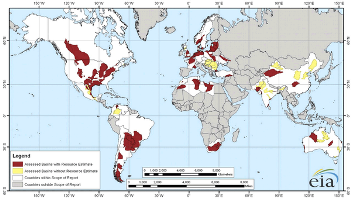
The shale gas revolution in the United States promises not only to soon make the country energy self- sufficient but also serve as the catalyst for a major revival of manufacturing.  Similar high hopes have been raised for Latin America, where some of the planet’s largest reserves of shale gas are found.  According to U.S. Energy Information Administration estimates, Argentina is said to have the world’s second largest reserves of technically recoverable shale gas (China is first).  The United States is currently in fourth place, followed by Canada and Mexico.  Brazil is in tenth place, with Chile and Paraguay not far behind.  The possibility that Latin America can pursue a successful shale gas strategy, however, is tempered by a number of important legal and/or geological differences that can serve as important bottlenecks.  In addition, the region’s tumultuous politics often get in the way of implementing policies that boost investment and encourage a highly productive energy sector.

The most important legal difference is that subsoil rights belong to the above ground property owner in the United States, while everywhere else in the Western Hemisphere the government (national, state or provincial) is the owner.  Developers have had an easier time purchasing access to shale gas deposits from individual landowners throughout the United States.  This explains, in great measure, why Canada’s significant shale gas reserves have not been as extensively exploited as in the United States, despite a hydrocarbons regime receptive to private-sector investment.  In addition, environmental protection legislation that impacts the shale gas industry is fractured among Federal, state, and local government authorities in the U.S.  That has facilitated developers extracting waivers and more lenient treatment in the United States that would be harder to obtain in most Latin American nations, where environmental protection is the exclusive or predominant prerogative of the central government.  Furthermore, current technology for extracting natural gas from shale reserves demands huge amounts of water, a resource that is scarce in those regions of Mexico, for example, where most of its extensive shale gas reserves are located.

Political realities are the most crucial (and often overlooked) factor that can easily undermine any effort to develop Latin America’s extensive shale gas reserves.  On paper, Argentina should be a regional energy powerhouse, supplying not only its own energy needs but those of its neighbors. However, the country has for years pursued policies that have scared off private-sector investment, heightened Argentine dependence on foreign energy imports, and led to a steady hemorrhaging of hard currency reserves.  To outsiders these policies appear illogical, but they make perfect sense to Argentine political leaders trying to consolidate their power base.  Mexico is an example of a country constrained by its Constitution from developing its extensive off-shore hydrocarbon resources.  Any political party that tries to make major amendments to those constitutional provisions, however, risks annihilation at the polls.  Brazil’s recent adoption of nationalistic legislation to encourage the domestic manufacturing of hydrocarbon-related technology could well impede exploiting its shale gas reserves if similar mandates are created for the highly specialized and capital-intensive hydrofracking equipment the industry utilizes.  In fact the only Latin American country where the stars seem aligned to repeat the U.S. shale gas success story is investor-friendly, politically-stable, energy-starved, and free-market oriented Chile, whose shale gas reserves are concentrated in the remote, under populated (and very wet) far south of the country that desperately seeks new opportunities to promote local economic development.  

*Thomas Andrew O’Keefe is the President of San Francisco based Mercosur Consulting Group, Ltd. and teaches at Stanford University.

Venezuela: The True Scope of Chávez’s Legacy

By Andrés Serbin and Andrei Serbin Pont*

Hugo Chávez / Photo credit: ¡Que comunismo! / Foter / CC BY-NC-SA

Hugo Chávez / Photo credit: ¡Que comunismo! / Foter / CC BY-NC-SA

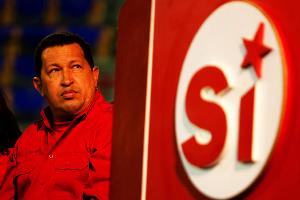
Chávez’s legacy for Venezuela goes well beyond the Bolivarian government he left in Nicolás Maduro’s hands.  Three conflicts overshadow the country’s future and contribute to many uncertainties:

  • The first, and most urgent, is the standoff between the two main factions of the ruling PSUV over how to overcome the current economic crisis, characterized by the IMF as “difficult and probably unsustainable.”  The pragmatists focus on making currency controls more flexible, and the ideologues are oriented toward increasing state control over the economy.
  • The internal party conflict between President Maduro and his supporters, committed to building the “socialismo del siglo XXI,” on the one hand, and the pragmatic sector of the governmental party (pragmatic in the sense of ensuring their businesses operate without interruption) led by the President of the General Assembly, former army officer Diosdado Cabello, with the support of high ranking military and businessmen who benefited from the “revolutionary” process through legal and illegal business.
  • The conflict between the PSUV, wielding the power of the government, and the opposition, which it accuses of being an “enemy of the revolution” linked to the “external enemies” (basically the United States) who want to derail the revolutionary process.

The dire state of the economy is aggravating each of these conflicts.  By the end of September, according to government data, inflation rates hit 4.4 percent per month, and rose to 38.7 percent in 2013 so far.  The opposition estimates an annual inflation rate of 49.4 percent—the highest since 1997.  According to the 2012 UN Economic Commission for Latin America and the Caribbean (ECLAC) report, an increasing number of Venezuelans are living under the poverty line – with a 29.9 percent increase in the poverty rate last year – with income no longer enough to fulfill basic needs.  Shortages of food and other necessities are severe; the depreciation of the Bolívar has accelerated in the currency black market, and the Central Bank is printing paper currency in an attempt to cope with the financial deficit.  Within this context, the struggle between the pragmatic and the ideological fronts of the PSUV only contributes to the chaos.

Caracas’s international relations are also a factor in the internal tensions and are fueling concerns within the armed forces, according to NGOs and others with good contacts in the military.  The economic crisis has affected the government’s ability to continue its “petro diplomacy” – diminishing its influence – and the opposition has continued persistent accusations of inadequate management of the relationship with Guyana and the claim over the Essequibo, contested territory along their common border.  In addition, a recent incident involving a maritime exploration ship of Panamanian flag with a U.S. crew detained by the Venezuelan Navy in waters under dispute with Guyana aggravated the current national and international political scenario.  The government usually resorts to nationalist appeals, but criticism of its handling of these problems is likely to grow.

The core issue in all of these situations continues to be the potential scenario of a social outbreak driven by the shortages, rising inflation, the broad sense of insecurity, and perceptions of blatant corruption in government.  These frustrations appear to cut across all sectors of Venezuelan society regardless of ideological identity.  Given the historical reluctance of the armed forces to intervene (particularly since the experience of the “Caracazo” of 1989), most observers still wonder when and if a social explosion will move them to action.  The economic and social crises, the internal tensions in the government, and the polarization with the opposition, along with the possibilities of an international incident, may add up to enough to move the military, perhaps with the support of several state governors, to act, but determining that breaking point – the Venezuela analyst’s greatest challenge – remains elusive.

* Andrés Serbin and Andrei Serbin Pontare members of the analysis team of the Coordinadora Regional de Investigaciones Económicas y Sociales (CRIES), a Latin-American think tank.

Confusion over “Responsible Mining”

By Robin Broad

Anti-minng campaign, El Salvador / Photo credit: laurizza / Foter / CC BY

Anti-minng campaign, El Salvador / Photo credit: laurizza / Foter / CC BY

One of today’s buzzwords – “responsible mining” – is like most others, so vague that it means whatever its user wants.

  • For most corporate executives and many government officials, mining is responsible if it aims to maximize economic growth and economic profits, because mainstream economic theory tells us that that will make everyone better off in the most efficient way.  In this view, the benefits multiply and trickle down to the poor.  In terms of environmental impact, some proponents of this view argue that as a country grows in economic terms, certain environmental pollutants decrease.  The governments of Guatemala and Honduras, which have increased the number of licenses granted to global mining corporations, seem to embrace this definition.
  • Some corporations cast the definition of “responsible mining” within their concept of “corporate responsibility.”  Typically, such companies do not change the production process itself, but rather commit to using some profits to do something “good.”  In the Philippines, for instance, Australian-headquartered OceanaGold plants trees near its mine and contributes to medical missions and community programs.
  • Yet another definition of “responsible mining” focuses on increasing the portion of the economic and financial benefits of mining that accrue to the Southern “host” country versus to the foreign mining entity.  This typically centers on increasing the taxes levied on the mining companies.  A more “progressive” version of this approach emphasizes how much of the funds stay on a local versus national level within the host country.
  • The ideal – and probably least common – definition of “responsible mining” involves a comprehensive assessment of long-term economic, social, and environmental costs and benefits.  This requires the free, prior, and informed consent of local communities before corporations influence communities or officials with social “contributions.”  Environmentally, it involves careful assessment – based on full information by an objective party – of the impact of the mining, including all chemicals used in the mining process, all toxins released, and the broader environmental impacts and risks.

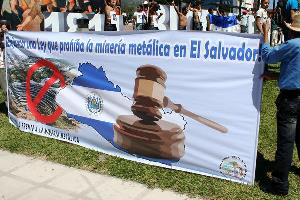
The ideal definition may sound like pie in the sky, but it is not.  Case in point: The government of El Salvador has not issued new mining licenses since 2008, primarily because a growing citizens’ movement has rallied around protecting the affected watershed, which supplies the majority of the country and is already severely polluted.  So too did the Salvadoran government demand a Strategic Environmental Review, overseen by both the Ministry of the Environment and the Ministry of the Economy, to try to weigh  the economic benefits (wages, taxes, etc.) during a mine’s limited life against social and environmental impacts.  Indeed, in El Salvador, as in the Philippines, grassroots communities and some key elected officials are trying to give deeper meaning to the definition of “responsible mining,” so that it is no longer merely a buzzword.

Dr. Broad is a professor in American University’s School of International Service.

Mexico: Peña Nieto’s Big Push

By CLALS Staff

President Enrique Peña Nieto / Photo credit: Eneas / Foter / CC BY

President Enrique Peña Nieto / Photo credit: Eneas / Foter / CC BY

President Peña Nieto’s reformist agenda wins kudos from the business and financial class, but both a recalcitrant leftist opposition and mass organizations previously aligned with his party are taking to the streets in protest – raising serious doubts about its prospects.  In his first state of the nation speech, delivered last week, Peña Nieto pledged to plow ahead with “transformational” reforms, giving flesh to the PRI’s slogan that it is Transformando a México. In education, he’s proposed a more rigorous system for hiring, evaluating, promoting and firing teachers who have resisted change despite evidence that the current system is not equipping Mexican youth for employment.  In the energy sector, he wants to open up the oil and gas industry to foreign investment, an idea that was strictly off-limits in the past even though lagging investment has caused production in Mexico’s leading export industry to decline steadily.  He is also pursuing tax reforms that, although watered down when announced on Sunday, entail political risk and, tellingly, raise marginal rates by 2 percent for higher earners and impose a levy on capital gains.  In June, he picked a fight with powerful business leaders over control of the country’s telecommunications industry, an oligopolistic structure that imposes excess costs on consumers and producers alike, diminishing Mexico’s economic competitiveness.

The teachers unions, whose symbiosis with the PRI in the past ensured cooperation, mobilized huge protests in Mexico City, forcing Peña Nieto to delay his speech by a day and then causing monstrous traffic jams during it.  The President cloaked his announcement of the energy reform in nationalistic rhetoric, and PEMEX, the oil company, followed it up with predictions of positive results – huge increases in oil investment and production that purportedly would help to create 500,000 new oil-sector jobs by 2018 and 2.5 million by 2025. But opposition to the reform has been strident, and tens of thousands filled the Zócalo on Sunday to protest it as a “covert privatization.”  Opposition leaders are already pledging demonstrations to oppose taxes, though the likelihood of this may be diminished because the long rumored reform unexpectedly left untouched the value-added tax exemption for food and medicines, which would have been a major rallying point for the Left.

Some Mexican commentators say Peña Nieto’s leadership is already losing its shine and that his Pacto por México, the loose coalition he engineered in Congress, is at risk of falling apart.  He prevailed in his congressional showdown over the long overdue education reforms, but success in transforming the underperforming education sector appears uncertain, as the teachers are threatening more protests.  The arrest of narco bosses from the Gulf Cartel and the Zetas have not given him a bounce on the security front; indeed, Mexican press reports indicate that kidnapping, extortion and other crimes that more directly affect citizens’ lives continue to rise. Further complicating Peña Nieto’s life is news last month that the economy is slowing down.  The first contraction in four years has forced the government to cut its 2013 GDP growth forecast in half, to 1.8 percent.  The administration will undoubtedly point to data showing that PEMEX production has fallen by about a quarter in the past decade because of low investment, and will emphasize that this makes modernization of the oil sector all the more imperative.  But Mexicans have heard promises before, during NAFTA debates and since, that economic reforms and greater openness to trade and investment will massively improve their lives.  Whether there is any fuel left in that rhetorical tank remains to be seen.

Emerging Engines for Latin American Economies? The Potential of Cultural and Creative Industries

By Robert Albro
Associate Research Professor, CLALS

Filming in Chile / Photo credit: Patt V / Foter / CC BY-NC-SA

Filming in Chile / Photo credit: Patt V / Foter / CC BY-NC-SA

In global terms Latin America’s economy is expected to grow at a relatively brisk 4% in 2013. In the medium-term, however, the picture is not as rosy, since this growth is largely sustained by the export of natural resources and raw materials, the demand for which is expected to slow. If Latin America hopes to continue to enjoy economic growth and stability, other sectors will need to emerge. One strong candidate is cultural and creative industries, a sector that includes all copyrightable entertainment, education, information, and other cultural goods and services, like film, T.V., music, or video games, but also tourism and local heritage products. One of the world’s fastest growing sectors, it has quadrupled its share of world trade since 1995. In 2012 it represented an estimated $2.2 trillion, or 11% of the global total. Cultural and creative industries are also seen as largely immune to the ups and downs of the business cycle. At the height of the recession in 2008, global trade declined by 12%, while trade in creative goods increased by 14%.

Signs that the creative industries are taking off in Latin America are widespread. As the 2010 Creative Economy Report noted, regional governments are now actively promoting policies for this sector, including to incentivize tourism, create new cultural infrastructure, and increase intellectual property protection. South America’s MERCOSUR Cultural, a regional network of over 400 institutions, is centralizing country-based cultural data. Latin America’s film industry is resurgent, with more than 600 million gate receipts last year, and in 2011 Mexico’s television content distribution business alone topped an estimated $251 billion. As a burgeoning tech start-up hotspot, Chile has also become an important video game incubator. Buenos Aires’s design industry is a global player with double digit growth that accounts for 3% of Argentina’s total economy. Designated a UNESCO “creative city” in 2012, Bogotá is now the focus of major government investment as a center of music innovation. Meanwhile, in Brazil the new Creative Rio Program has been launched to enhance that city’s creative economy.

If there is cause for optimism, significant barriers remain. Cities rather than countries are the critical units of scale, as cultural platforms and global nodes in an emerging information economy. But the persistent lack of citizen security across Latin America’s cities is likely to undermine the sustainable development of this sector. The creative industries are also highly unevenly distributed throughout Latin America. Audiovisual production, for example, is limited to Argentina, Mexico, Brazil, Colombia, and Venezuela. Cultural goods and services, too, can become vehicles for regional concerns about the threats posed by globalization, leading to trade frictions. Most importantly, a thorough assessment of the organization and diversity of the region’s cultural and creative industries has yet to be done, debilitating future strategic decision-making. Assessment of this sector is undermined by inadequate or incomplete metrics. But even with metrics in hand, how to make best sense of these in ways that account for the exceptional status of cultural goods as key sources of collective identity, community well-being and quality of life remains a real challenge, one which CLALS is currently partnering with the Inter-American Development Bank to address.

What Can Be Learned from the Humala Government?

By Rob Albro

President Humala inaugurating electric power in the rural district of Moro - Ancash Photo credit: Presidencia Perú / Foter.com / CC BY-NC-SA

President Humala inaugurating electric power in the rural district of Moro – Ancash Photo credit: Presidencia Perú / Foter.com / CC BY-NC-SA

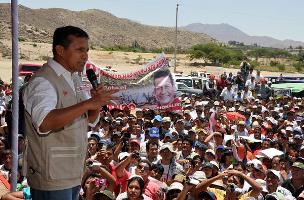
As a candidate in Peru’s 2006 presidential election, one-time military coup plotter and current president Ollanta Humala presented himself as an anti-business socialist and nationalist happy to be a member of the “family” of left-leaning Latin American governments led by Venezuela’s Hugo Chávez.  In his second successful bid for office in 2011, Humala sharply changed direction and embraced a combination of pro-business and anti-poverty measures reminiscent of Brazil’s center-left Lula.  Humala’s shifts are a sign of the times in the Andean region:  a non-ideological search for how best to build democracies and grow national economies, while effectively redistributing wealth.

Driven by its mining sector and a commodity export boom, Peru’s economy has tripled in size over the past decade and is currently one of the best performing in the world.  Foreign investment is flooding in, particularly to mining, hydrocarbons, and big infrastructure projects – and Humala is now considered an “investor darling.”  While backing off electoral promises to nationalize water, electricity, mining and other sectors, Humala has created a new Ministry of Development and Social Inclusion and increased the budget for social redistribution and welfare measures to Peru’s poorest by 50 percent.  So far Humala has channeled the budget surplus of Peru’s export boom, including successful negotiation of a $1.1 billion increase in mining royalties in 2011, toward reducing the nation’s poverty rate by 29 percent.  And yet, at present there are more than 250 ongoing social conflicts in Peru, and Humala’s government has been accused of failures of “consultation,” often by grassroots and indigenous protestors opposed to Peru’s mining policies.  In response Humala has reshuffled his cabinet multiple times.  Skeptics suggest that his approval rating – currently 60% – will last only as long as the boom enables his top-down social spending.

Humala’s presidency suggests the limits of viewing current regional leaders through a comparative Chávez-or-Lula lens.  Arguments over the best conditions for “foreign direct investment” in the region often miss the different conditions under which it occurs or purposes to which it might be put.  Humala’s pragmatism demonstrates how distinct parts of government need not reflect a single unifying ideological or normative idée fixe.  Liberal democratic institutions and market freedoms increasingly coexist alongside alternative policies of social redistribution as a part of democratic enfranchisement in the Andes.  When conflict has broken out, however, Humala’s government has been willing to forego consultation with local communities to insure the economic resources it needs to continue its redistributive policies.  The challenge for him to achieve the best balance between competing democratic priorities will continue.  Humala’s government is an opportunity to explore new democratic institutions in Latin America, as with a recent CLALS research project on participatory democracy

The Danger of Dependence: Cuba’s Foreign Policy After Chávez

By William M. LeoGrande, World Politics Review

Photo credit: ¡Que comunismo! / Foter.com / CC BY-NC-SA

Photo credit: ¡Que comunismo! / Foter.com / CC BY-NC-SA

On March 8 in Caracas, Raúl Castro, looking somber, stood in a place of honor beside Hugo Chávez’s casket during the late Venezuelan president’s state funeral. Castro was no doubt pondering what Chávez’s death means for Cuba’s ambitious economic reform program — or “updating” of the economic model, as Cubans prefer to call it. Not long after Chávez’s first election victory in 1998, he and Fidel Castro signed the first of what would become more than 100 bilateral cooperation agreements. By the time Chávez died, Venezuela was providing Cuba with some 110,000 barrels of oil daily at subsidized prices, worth $4 billion annually and representing two-thirds of Cuba’s domestic oil consumption. In exchange, Cuba provided some 40,000 skilled professionals, working mostly in health, enabling Chávez to extend health care into the poor barrios of Venezuela, thereby solidifying his political base.

With the Venezuelan economy foundering under a huge fiscal deficit, will Chávez’s successor continue this barter arrangement on the same preferential terms? If not, will the resulting oil shock derail Raúl Castro’s plan to move Cuba from a hyper-centralized planned economy, which even its architect Fidel Castro admitted no longer works, to a socialist market economy modeled on Vietnam and China?

Full article available on the World Politics Review site.

Mexico-Brazil: Competing Economic Models?

The divergent economic performances of Mexico and Brazil over the past few years have again thrust upon analysts the difficult task of estimating which factors – public policies, market trends, geographic location, financial market managers’ perceptions, or something else – are responsible for the different results.  Brazil was everyone’s favorite two years ago, but Mexico is now being hailed as the hot performer – and praise is being heaped on Mexico City for making things happen.

Former Chilean Finance Minister Andrés Velasco, writing for Project Syndicate (click here for text), explores why the Brazilian economy today is “stagnating” while Mexico, written off as a “lost cause” just two years ago, is “expanding at a steady clip.”   Among Velasco’s key points:

  • Financial markets’ behavior says more about investor perceptions than about the countries in question.  Analysts focus on short-term figures rather than on structural trends.
  • Mexico’s economy is much more open than Brazil’s because of NAFTA and other agreements with Europe and Asia, while Brazil’s is limited by the “strictures of Mercosur.”  (Velasco was a strong advocate of free-trade policies while serving on President Bachelet’s cabinet.)  Mexico’s “export basket” has expanded dramatically – to include car parts, electronics, telecommunications equipment – while Brazil’s exports are increasingly commodity-based.
  • After both implemented anti-crisis fiscal packages in 2009, Velasco praises Mexico for having reduced its stimulus sooner – enabling it to keep interest rates much lower, controlling inflation better, and thereby contributing to a more robust private-sector role.

At the same time, Velasco urges wariness “about jumping to definitive conclusions” and notes that Mexican exports have been slowing in recent months, while domestic consumption is picking up as a source of demand.  He also cautions that Brazil’s potential to sell its products around the world “should not be underestimated.”

However thoughtful, analyses like Velasco’s may neglect the impact of another long-term factor:  the steady rise in wages in Brazil and their stagnation in Mexico.  At a seminar in Washington hosted by CLALS last week, Mexican economist Luis Felipe López Calva (click here for news article) noted that the strength of the middle class continues to be a vulnerability in Latin America, and he said that the ability of the middle class to be a “lever of growth” argued for policies that emphasized economic mobility.  A thriving middle class and increased domestic consumption can be a more reliable engine for growth (and for the consolidation of democratic institutions necessary for growth) than short-term market trends.  The increasing wellbeing of the bottom two thirds of the income distribution pyramid in Brazil argues for tempering optimism that Mexico alone has found the holy grail of economic policies. 

What do you think?  Click on “leave a comment” below to contribute.