Mexico: Peña Nieto’s Big Push

By CLALS Staff

President Enrique Peña Nieto / Photo credit: Eneas / Foter / CC BY

President Enrique Peña Nieto / Photo credit: Eneas / Foter / CC BY

President Peña Nieto’s reformist agenda wins kudos from the business and financial class, but both a recalcitrant leftist opposition and mass organizations previously aligned with his party are taking to the streets in protest – raising serious doubts about its prospects.  In his first state of the nation speech, delivered last week, Peña Nieto pledged to plow ahead with “transformational” reforms, giving flesh to the PRI’s slogan that it is Transformando a México. In education, he’s proposed a more rigorous system for hiring, evaluating, promoting and firing teachers who have resisted change despite evidence that the current system is not equipping Mexican youth for employment.  In the energy sector, he wants to open up the oil and gas industry to foreign investment, an idea that was strictly off-limits in the past even though lagging investment has caused production in Mexico’s leading export industry to decline steadily.  He is also pursuing tax reforms that, although watered down when announced on Sunday, entail political risk and, tellingly, raise marginal rates by 2 percent for higher earners and impose a levy on capital gains.  In June, he picked a fight with powerful business leaders over control of the country’s telecommunications industry, an oligopolistic structure that imposes excess costs on consumers and producers alike, diminishing Mexico’s economic competitiveness.

The teachers unions, whose symbiosis with the PRI in the past ensured cooperation, mobilized huge protests in Mexico City, forcing Peña Nieto to delay his speech by a day and then causing monstrous traffic jams during it.  The President cloaked his announcement of the energy reform in nationalistic rhetoric, and PEMEX, the oil company, followed it up with predictions of positive results – huge increases in oil investment and production that purportedly would help to create 500,000 new oil-sector jobs by 2018 and 2.5 million by 2025. But opposition to the reform has been strident, and tens of thousands filled the Zócalo on Sunday to protest it as a “covert privatization.”  Opposition leaders are already pledging demonstrations to oppose taxes, though the likelihood of this may be diminished because the long rumored reform unexpectedly left untouched the value-added tax exemption for food and medicines, which would have been a major rallying point for the Left.

Some Mexican commentators say Peña Nieto’s leadership is already losing its shine and that his Pacto por México, the loose coalition he engineered in Congress, is at risk of falling apart.  He prevailed in his congressional showdown over the long overdue education reforms, but success in transforming the underperforming education sector appears uncertain, as the teachers are threatening more protests.  The arrest of narco bosses from the Gulf Cartel and the Zetas have not given him a bounce on the security front; indeed, Mexican press reports indicate that kidnapping, extortion and other crimes that more directly affect citizens’ lives continue to rise. Further complicating Peña Nieto’s life is news last month that the economy is slowing down.  The first contraction in four years has forced the government to cut its 2013 GDP growth forecast in half, to 1.8 percent.  The administration will undoubtedly point to data showing that PEMEX production has fallen by about a quarter in the past decade because of low investment, and will emphasize that this makes modernization of the oil sector all the more imperative.  But Mexicans have heard promises before, during NAFTA debates and since, that economic reforms and greater openness to trade and investment will massively improve their lives.  Whether there is any fuel left in that rhetorical tank remains to be seen.

Emerging Engines for Latin American Economies? The Potential of Cultural and Creative Industries

By Robert Albro
Associate Research Professor, CLALS

Filming in Chile / Photo credit: Patt V / Foter / CC BY-NC-SA

Filming in Chile / Photo credit: Patt V / Foter / CC BY-NC-SA

In global terms Latin America’s economy is expected to grow at a relatively brisk 4% in 2013. In the medium-term, however, the picture is not as rosy, since this growth is largely sustained by the export of natural resources and raw materials, the demand for which is expected to slow. If Latin America hopes to continue to enjoy economic growth and stability, other sectors will need to emerge. One strong candidate is cultural and creative industries, a sector that includes all copyrightable entertainment, education, information, and other cultural goods and services, like film, T.V., music, or video games, but also tourism and local heritage products. One of the world’s fastest growing sectors, it has quadrupled its share of world trade since 1995. In 2012 it represented an estimated $2.2 trillion, or 11% of the global total. Cultural and creative industries are also seen as largely immune to the ups and downs of the business cycle. At the height of the recession in 2008, global trade declined by 12%, while trade in creative goods increased by 14%.

Signs that the creative industries are taking off in Latin America are widespread. As the 2010 Creative Economy Report noted, regional governments are now actively promoting policies for this sector, including to incentivize tourism, create new cultural infrastructure, and increase intellectual property protection. South America’s MERCOSUR Cultural, a regional network of over 400 institutions, is centralizing country-based cultural data. Latin America’s film industry is resurgent, with more than 600 million gate receipts last year, and in 2011 Mexico’s television content distribution business alone topped an estimated $251 billion. As a burgeoning tech start-up hotspot, Chile has also become an important video game incubator. Buenos Aires’s design industry is a global player with double digit growth that accounts for 3% of Argentina’s total economy. Designated a UNESCO “creative city” in 2012, Bogotá is now the focus of major government investment as a center of music innovation. Meanwhile, in Brazil the new Creative Rio Program has been launched to enhance that city’s creative economy.

If there is cause for optimism, significant barriers remain. Cities rather than countries are the critical units of scale, as cultural platforms and global nodes in an emerging information economy. But the persistent lack of citizen security across Latin America’s cities is likely to undermine the sustainable development of this sector. The creative industries are also highly unevenly distributed throughout Latin America. Audiovisual production, for example, is limited to Argentina, Mexico, Brazil, Colombia, and Venezuela. Cultural goods and services, too, can become vehicles for regional concerns about the threats posed by globalization, leading to trade frictions. Most importantly, a thorough assessment of the organization and diversity of the region’s cultural and creative industries has yet to be done, debilitating future strategic decision-making. Assessment of this sector is undermined by inadequate or incomplete metrics. But even with metrics in hand, how to make best sense of these in ways that account for the exceptional status of cultural goods as key sources of collective identity, community well-being and quality of life remains a real challenge, one which CLALS is currently partnering with the Inter-American Development Bank to address.

What Can Be Learned from the Humala Government?

By Rob Albro

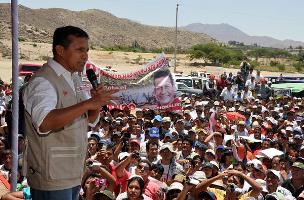
President Humala inaugurating electric power in the rural district of Moro - Ancash Photo credit: Presidencia Perú / Foter.com / CC BY-NC-SA

President Humala inaugurating electric power in the rural district of Moro – Ancash Photo credit: Presidencia Perú / Foter.com / CC BY-NC-SA

As a candidate in Peru’s 2006 presidential election, one-time military coup plotter and current president Ollanta Humala presented himself as an anti-business socialist and nationalist happy to be a member of the “family” of left-leaning Latin American governments led by Venezuela’s Hugo Chávez.  In his second successful bid for office in 2011, Humala sharply changed direction and embraced a combination of pro-business and anti-poverty measures reminiscent of Brazil’s center-left Lula.  Humala’s shifts are a sign of the times in the Andean region:  a non-ideological search for how best to build democracies and grow national economies, while effectively redistributing wealth.

Driven by its mining sector and a commodity export boom, Peru’s economy has tripled in size over the past decade and is currently one of the best performing in the world.  Foreign investment is flooding in, particularly to mining, hydrocarbons, and big infrastructure projects – and Humala is now considered an “investor darling.”  While backing off electoral promises to nationalize water, electricity, mining and other sectors, Humala has created a new Ministry of Development and Social Inclusion and increased the budget for social redistribution and welfare measures to Peru’s poorest by 50 percent.  So far Humala has channeled the budget surplus of Peru’s export boom, including successful negotiation of a $1.1 billion increase in mining royalties in 2011, toward reducing the nation’s poverty rate by 29 percent.  And yet, at present there are more than 250 ongoing social conflicts in Peru, and Humala’s government has been accused of failures of “consultation,” often by grassroots and indigenous protestors opposed to Peru’s mining policies.  In response Humala has reshuffled his cabinet multiple times.  Skeptics suggest that his approval rating – currently 60% – will last only as long as the boom enables his top-down social spending.

Humala’s presidency suggests the limits of viewing current regional leaders through a comparative Chávez-or-Lula lens.  Arguments over the best conditions for “foreign direct investment” in the region often miss the different conditions under which it occurs or purposes to which it might be put.  Humala’s pragmatism demonstrates how distinct parts of government need not reflect a single unifying ideological or normative idée fixe.  Liberal democratic institutions and market freedoms increasingly coexist alongside alternative policies of social redistribution as a part of democratic enfranchisement in the Andes.  When conflict has broken out, however, Humala’s government has been willing to forego consultation with local communities to insure the economic resources it needs to continue its redistributive policies.  The challenge for him to achieve the best balance between competing democratic priorities will continue.  Humala’s government is an opportunity to explore new democratic institutions in Latin America, as with a recent CLALS research project on participatory democracy

The Danger of Dependence: Cuba’s Foreign Policy After Chávez

By William M. LeoGrande, World Politics Review

Photo credit: ¡Que comunismo! / Foter.com / CC BY-NC-SA

Photo credit: ¡Que comunismo! / Foter.com / CC BY-NC-SA

On March 8 in Caracas, Raúl Castro, looking somber, stood in a place of honor beside Hugo Chávez’s casket during the late Venezuelan president’s state funeral. Castro was no doubt pondering what Chávez’s death means for Cuba’s ambitious economic reform program — or “updating” of the economic model, as Cubans prefer to call it. Not long after Chávez’s first election victory in 1998, he and Fidel Castro signed the first of what would become more than 100 bilateral cooperation agreements. By the time Chávez died, Venezuela was providing Cuba with some 110,000 barrels of oil daily at subsidized prices, worth $4 billion annually and representing two-thirds of Cuba’s domestic oil consumption. In exchange, Cuba provided some 40,000 skilled professionals, working mostly in health, enabling Chávez to extend health care into the poor barrios of Venezuela, thereby solidifying his political base.

With the Venezuelan economy foundering under a huge fiscal deficit, will Chávez’s successor continue this barter arrangement on the same preferential terms? If not, will the resulting oil shock derail Raúl Castro’s plan to move Cuba from a hyper-centralized planned economy, which even its architect Fidel Castro admitted no longer works, to a socialist market economy modeled on Vietnam and China?

Full article available on the World Politics Review site.

Mexico-Brazil: Competing Economic Models?

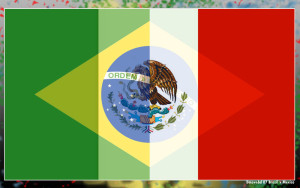
The divergent economic performances of Mexico and Brazil over the past few years have again thrust upon analysts the difficult task of estimating which factors – public policies, market trends, geographic location, financial market managers’ perceptions, or something else – are responsible for the different results.  Brazil was everyone’s favorite two years ago, but Mexico is now being hailed as the hot performer – and praise is being heaped on Mexico City for making things happen.

Former Chilean Finance Minister Andrés Velasco, writing for Project Syndicate (click here for text), explores why the Brazilian economy today is “stagnating” while Mexico, written off as a “lost cause” just two years ago, is “expanding at a steady clip.”   Among Velasco’s key points:

  • Financial markets’ behavior says more about investor perceptions than about the countries in question.  Analysts focus on short-term figures rather than on structural trends.
  • Mexico’s economy is much more open than Brazil’s because of NAFTA and other agreements with Europe and Asia, while Brazil’s is limited by the “strictures of Mercosur.”  (Velasco was a strong advocate of free-trade policies while serving on President Bachelet’s cabinet.)  Mexico’s “export basket” has expanded dramatically – to include car parts, electronics, telecommunications equipment – while Brazil’s exports are increasingly commodity-based.
  • After both implemented anti-crisis fiscal packages in 2009, Velasco praises Mexico for having reduced its stimulus sooner – enabling it to keep interest rates much lower, controlling inflation better, and thereby contributing to a more robust private-sector role.

At the same time, Velasco urges wariness “about jumping to definitive conclusions” and notes that Mexican exports have been slowing in recent months, while domestic consumption is picking up as a source of demand.  He also cautions that Brazil’s potential to sell its products around the world “should not be underestimated.”

However thoughtful, analyses like Velasco’s may neglect the impact of another long-term factor:  the steady rise in wages in Brazil and their stagnation in Mexico.  At a seminar in Washington hosted by CLALS last week, Mexican economist Luis Felipe López Calva (click here for news article) noted that the strength of the middle class continues to be a vulnerability in Latin America, and he said that the ability of the middle class to be a “lever of growth” argued for policies that emphasized economic mobility.  A thriving middle class and increased domestic consumption can be a more reliable engine for growth (and for the consolidation of democratic institutions necessary for growth) than short-term market trends.  The increasing wellbeing of the bottom two thirds of the income distribution pyramid in Brazil argues for tempering optimism that Mexico alone has found the holy grail of economic policies. 

What do you think?  Click on “leave a comment” below to contribute.

The TecnoLatinas: A Start-Up Revolution

Foro de Ahorro de Energía Eléctrica, México | Photo credit: Alejandro Castro | Foter.com | CC BY-NC-SA

Foro de Ahorro de Energía Eléctrica, México | Photo credit: Alejandro Castro | Foter.com | CC BY-NC-SA

Latin America is experiencing a full-fledged start-up movement amid rapid growth of an innovation and information economy.  Over the last several years the region’s online population has grown faster than in any other part of the world – with approximately 255 million internet users as of last year.  Half of the top 10 markets worldwide, ranked by time spent on Facebook and other social media, are in Latin America.  Clusters of innovation start-ups, such as those around Monterrey, Mexico, are springing up with astonishing speed.  In 2012 Mexico was among the largest exporters of information technology services in the world.  Google is currently building a data center in Chile, while Amazon Web Services opened a data center in Sao Paolo last December.  But these are not information-era maquiladoras. Instead, Latin American entrepreneurs are combining the availability of open-source innovation tools and the emergence of cloud computing with effective bridge building in Silicon Valley to bring collaboration, expertise, and capital to their home markets.

  • Latin America offers multiple advantages for tech start-ups: a low cost of development, an educated and growing talent pool with the necessary technical and entrepreneurial skills, and increasingly available and affordable broadband and internet access.
  • In particular, Mexico, Chile, Brazil, Argentina, and Colombia, along with metropolitan areas across the region, are incentivizing the development of a competitive start-up ecosystem – an advantage attracting a growing number of “angel investors.”
  • Start-Up Chile, a national program begun in 2010 with 22 start-ups from 14 countries, offers seed capital, grants, tax protection, space, mentoring, and networking to “accelerate” promising ventures.  Its most recent competition drew 1421 applicants from 60 countries, including from Singapore, London, and San Francisco.

The lack of tech innovation and incentives for start-ups has been an Achilles’ heel of Latin American economies for decades.  If the start-up trend continues, the region could make significant, lasting progress toward narrowing the sizable gap between itself and the most dynamic developing countries, mostly in Asia.  Latin America’s start-up movement is both top-down and bottom-up, with a tech-savvy generation of entrepreneurs not afraid to take risks and to leverage government support, as part of a collaborative business model built on multiple ties to Silicon Valley.  A core challenge will be whether these initiatives are scalable, and whether governments can move away from stale policy debates rooted in antiquated paradigms to move their economies toward the frontiers of innovation of the information age.  Old elites with a lock on traditional industries are poorly positioned to obstruct the phenomenon, but if these emerging innovation hubs are to succeed, at some point they are likely to confront  the entrenched and oligopolistic business practices still prevalent in the region’s energy, telecom, and other sectors.

Venezuela: A New Start?

By Fulton Armstrong and Eric Hershberg

Memorial for Hugo Chavez | by Steve Rhodes | Flickr | Creative Commons

Memorial for Hugo Chavez | by Steve Rhodes | Flickr | Creative Commons

The death of President Hugo Chávez yesterday, as has been duly noted, marks the beginning of a new era – new opportunities and new challenges – for Venezuela.  In view of the country’s history and institutional weaknesses through the 1990s, some of the convulsions of his 13 years in power may have been inevitable, but the need is now compelling, across the political spectrum, to take a sober look at the future, set aside some of the stalemated grudge matches, and get serious about becoming something better.

It’s easy to predict at least some short-term instability, bombastic rhetoric, and jejune nationalism, such as some fringe Chavistas’ allegation that the United States was responsible for Chávez’s death.  It’s harder for Venezuelans and outsiders alike to figure out how this country, hindered by the original sins that plague all rentier economies, learns how to do politics in a transparent, inclusive manner.  For analysts like us, the key thing is to set aside wishful thinking and keep our eye on the fundamental drivers of change.  Some thoughts:

  • For better or worse, Chávez had an impact that – if not as transcendental as he wished – dismantled the key institutional pillars of the sclerotic Venezuelan political system.  Beyond that, his legacy includes the profound and intentional division of Venezuelan society and politics into two camps – a tense split that did not exist (or was sublimated) 20 years ago and will take a long time to heal, as has the cleavage around Peronism in Argentina.  Like Peronism, over time chavismo need not necessarily have a standard left-right quality, and it is likely to retain a cult around Chávez’s persona, larger in death than in life.  Evita a la venezolana.
  • Chávez wasn’t the regional or global threat that the Bush Administration made him out to be, but he did open space for a particular species of Latin American populism – call it radical, “socialist,” or clientelist – that coincided with a broader U.S. withdrawal from Latin America.  Few observers could have imagined that this former military colonel – a failed putschist – could capitalize on the region’s crisis of representation and development to bring about the emergence and prosperity of the ALBA coalition and the identities it fostered.  The lifeline of petro-dollars that Chavez opened, a tool that, it is often forgotten, had been deployed by previous Venezuelan governments to gain outsize presence on the international stage, explains some of his influence, but his forceful personality and the siren song of his peculiar Bolivarian ideology multiplied his impact.  His model was not replicated elsewhere, but his fervent regional pride was.
  • Chavez’s successors, of any political stripe, will test Washington’s capacity to keep its hands off.  Venezuela – even the opposition – has changed, and United States policymakers will hear rhetoric and see things, such as a relationship with Cuba that’s likely both to shape and to survive both countries’ transitions, that will test their self-discipline.  Chávez is gone, and chavismo, though certain to endure, will inevitably change.  But Venezuela’s need for space – space granted by its neighbors and the United States – to grow and even make mistakes remains a constant.  Over the 15 years in which Chávez dominated the scene, from his first election in 1998, Washington sometimes resisted the temptation to play into the game, but more than occasionally took the bait.  Washington has often misread Latin America and, by endorsing the 2002 coup against Chávez and other actions, actually strengthened the Venezuelan president domestically and regionally.  Chávez’s passing presents an opportunity for a fresh start for the United States, too.

Correa’s Second Term

By Rob Albro, CLALS Faculty Affiliate

President Rafael Correa, Ecuador | by: "el quinto infierno" | Flickr | Creative Commons

President Rafael Correa, Ecuador | by: “el quinto infierno” | Flickr | Creative Commons

Little drama accompanied results of the February 17 election in Ecuador, where center-left incumbent Rafael Correa retained the presidency by a wide margin. Correa enjoys the highest approval rating – nearly 80% late last year – of any Latin American head of state. He will be the first Ecuadoran president to complete his term since 1996, and his resounding victory at the polls will in principle keep him in office until 2017. Most pre-election polls had projected Correa to win decisively, and he did just that with 56.7% of the popular vote. The opposition is fractured, with seven different candidates running against him. His nearest rival, banker Guillermo Lasso, garnered only 23.3% of the vote. A testament to Correa’s dominance is that the right-leaning Lasso offered a vision little different from the president’s own policies and even adopted key elements of Correa’s discourse. The title of Lasso’s recent book, Another Ecuador is Possible, references the World Social Forum.

Correa’s political base was consolidated during the anti-neoliberal protests of 2005, and his “citizen’s revolution” represents an unorthodox combination of nationalist populism, robust social welfare spending and rhetorical flourishes in defense of Ecuador’s national sovereignty. Correa’s social spending – increasing the health budget, minimum wage, pensions, and access to medical care; offering micro-credit and free school lunches; providing new housing and anti-poverty subsidies –is highly popular, especially with the urban poor. These programs, dependent upon a commodity-led export strategy, have enabled Correa to marginalize once important political actors of the left and right. Organized labor and indigenous movements on the left, like economic and media elites on the right, have picked fights with Correa, objecting to his authoritarian style, attacks on the press, petroleum policies in the Amazon, poor record on crime, and outbursts directed toward foreign investors. But this has made little dent in his popularity.

If Correa is certain to face resistance to his agenda in his new term, the political fragmentation and lack of dramatic choices evident during the campaign suggest that it will not necessarily be effective.  Despite potential fiscal headwinds, redistributive social welfare policies are likely to continue to expand. Questions do remain: regular social investment has been enabled by ramping up an extraction-based economy dependent on oil, which has also generated some social conflict.  But there is mounting evidence that aside from being popular these policies are also measurably successful. Ecuador’s election comes on the heels of Venezuela’s, where opposition candidates also found it necessary to tout redistributive policies. If the economy turns south, a splintered opposition might find common cause. But as in a number of other South American countries, the redistributive politics of an incipient social welfare state will inform the agenda of Correa’s eventual successor. The long-term management of these policies, and whether the President will seek to alter the Constitution to permit indefinite re-election, are matters that could prove vexing during the coming years.

Central American Elites Are Evolving But Cling to Power

From left to right: Manuel Torres, Ricardo Barrientos, Hugo Noé Pino, Aaron Schneider and Elizabeth Oglesby participating in the project seminar in Costa Rica

From left to right: Manuel Torres, Ricardo Barrientos, Hugo Noé Pino, Aaron Schneider and Elizabeth Oglesby participating in the project seminar in Costa Rica

The sources of Central American elites’ wealth are evolving, as are their fundamental interests and the ways they wield political power.  Land‑intensive production – the focus of decades of insightful scholarship – continues to prevail in Guatemala and Honduras, but the economically powerful now maintain their position through a growing array of service-sector activities and by capturing rents from public coffers.  Changes in their economic foundations are but one of several transformative processes that swept the region beginning during the 1980s, making the past three decades a period of fundamental rupture with the past.

  • Civil wars in El Salvador, Guatemala and Nicaragua during the 1980s transformed the economies in all three countries and had spillover effects in Costa Rica and Honduras.  Most striking is the case of El Salvador, where elites abandoned the countryside upon which they had depended from time immemorial, never to return.
  • Structural adjustment programs, implemented throughout the region during the 1990s, changed the role of the state in Central American economies and thus the ways in which the public sector intersected with the elites’ wealth-accumulation strategies.  Hasty and corruption-ridden privatizations, in particular of energy and telecommunications and of an array of public services, created a reformist façade but gave private-sector groups a piñata that helped to ensure uninterrupted enrichment.
  • During that same decade, transitions to electoral democracy contributed to elite reliance – albeit with some important exceptions – on political parties, campaign strategies and legislative lobbying to protect their interests.  Ties to military and death squad enforcers are no longer the principal vehicles for the enforcement of elite imperatives, though Honduras today is increasingly reminiscent of the worst times in Guatemala and El Salvador.

Central America’s elites have yet to offer the region a vision of reform that will enable the isthmus to overcome misery, exploitation and predatory rule.  While dominant groups have embarked on aggressive state-building strategies, experts question whether these are producing the virtuous dynamics that advance the general welfare of the population and ensure effective governance. 

Scholars from across Central America have reached these conclusions through research and seminars under a multi-year AU program on Central American elites and power.  To foster better understanding of the shifting landscape in the region, and thus to illuminate plausible paths toward more equitable distribution of power and resources, the Ford Foundation is supporting this effort, undertaken in partnership with more than two dozen researchers from institutions throughout the isthmus and the United States.  The project was the focus of a recent workshop at FLACSO Costa Rica, and several publications will result over the course of 2013 and 2014.  Click here for more information.

Cuba: Change in the Wind

Three American University professors recently traveled to Cuba for research and discussions on Cuba’s reform process – called “Updating Socialism” – and the island’s relations with the United States.  Today’s entry looks at the economic changes.

Photo by: Globovisión | Flickr | Creative Commons

Photo by: Globovisión | Flickr | Creative Commons

In offices, shops and on the street in Havana, “change” seems to be one of the most commonly used words.  Billboards proclaim “The changes in Cuba are for more socialism” and “Updating socialism is the answer.”  But the words “reform” and – in some conversations – “privatization” pop up with significant frequency.  Party members previously reluctant to talk about change now speak of introducing “elements of capitalism” to make Cuba a “mixed economy” patterned closely after the “Vietnam model,” with its economic loosening but one-party rule.  Previous reforms have brought better, if sometimes expensive, food to many Cuban dinner tables, but the strong consensus in and outside the party is that a lot more needs to be done.

  • The law-decree on “non-agricultural cooperatives” provides a politically correct way ahead for the formation of small and medium private enterprises.  Cuentapropistas were given a prominent place in the May Day parade, and some are being nominated for office on the Communist Party slate.
  • The government is making another run at tearing down the barriers between hard-currency and peso purchases, with an eye to unifying the currency in the future.  Price tags at at least one major Havana store list prices in both convertible and national currency, at a 23-to-one conversion rate.
  • The law already allows Cubans to hire workers – a right previously given only to the state – and a draft labor law will further legalize private workers’ activities and integrate them into the economy.
  • Some 200-plus state enterprises are being put on a sink-or-swim program in which new management selected by the workers will be given a year to transform the firms into businesses closely resembling private cooperatives.
  • In January, the National Assembly will take up amendments to foreign investment laws.  Under consideration are direct foreign sales to non-state cooperatives and the direct hiring, firing, and paying of Cuban workers by foreign companies.
  • The travel reform law that goes into effect on January 14, ending the necessity for an exit visa and removing restraints on most Cubans from obtaining a passport, will also stimulate interaction with foreign countries.

The macro situation is still a mess, and the reforms have a long way to go to attain even the level of Vietnam’s prosperity.  Cuban stores sell Vietnamese cookies, not vice versa.  As the rhetoric indicates, the government – long expert at managing popular expectations – continues to emphasize continuity as the changes proceed.  But while no one is expecting a fast shift to capitalism, many middle-aged and elderly Cubans have a renewed sense of hope that life ahead will be better, which has political benefits and risks for the government.  One thing for sure is that the socialism that is being “updated” is a far cry from the communism that Cuba attempted in the 60s, 70s and 80s.