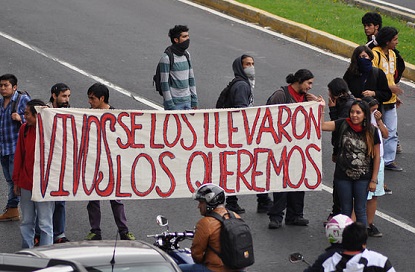
Bolivia: Lessons from the MAS

By Santiago Anria*

Joaquín Eguren / Flickr / Creative Commons Attribution-NonCommercial 2.0 Generic (CC BY-NC 2.0)

Joaquín Eguren / Flickr / Creative Commons Attribution-NonCommercial 2.0 Generic (CC BY-NC 2.0)

As Bolivian President Evo Morales’s Movimiento al Socialismo (MAS) prepares for the October 12 general election – which opinion polls indicate it will win by wide margins – the MAS appears to be a remarkably diverse organization capable of adapting operations to different regions of the country.  It fits neither the typical journalistic portrayal of Latin American social and political movements as clashing with political parties and elected governments, nor political scientists’ characterization of parties as unitary actors under the control of a unified leadership.  Founded by coca growers in the mid-1990s as their “political instrument” to contest power, the MAS has become the collective political expression of grassroots organizations now in power – to this day having diffuse boundaries and multiple faces, combining features of a grassroots movement and a party, and being a remarkably successful instrument for exercising rule.

The MAS’s regional diversity is one of its greatest strengths.  As an organizational actor, it looks and operates differently in different contexts depending on how the political space is structured.  In the Bolivian central region of the Chapare, where strong peasant unions are aligned with the MAS and control the territory, civil society and party are fused.  Grassroots organizations monopolize the political space, and local decision-making structures are embedded in the union structure.  Their success is rooted in “agrarian union democracy,” which emphasizes that “bases” exert control on the leadership – that the rank and file should lead and leaders should follow.  In the eastern city of Santa Cruz, on the other hand, the MAS has made inroads in traditionally hostile territory by developing an unusually strong local party organization with remarkable mobilization capacity, and that capacity gives it a central role in local governance.  As in other cities with large informal economies, the local structure draws support from two powerful urban sectors – transportation workers and street venders – and is organized territorially in districts that operate both during and between elections.  Rather than having the features of a movement, in Santa Cruz the MAS looks and works more like a conventional political party.  In the Chapare, Santa Cruz and elsewhere, the MAS organization has considerable latitude to operate locally within alliances and policies usually defined at the national level.  As a result, the MAS and its governmental counterparts are not often, or by necessity, in tension.

Latin American history offers many examples of political movements becoming personalistic vehicles for charismatic leaders.  More than 10 years since it became a credible electoral vehicle, the MAS may offer a more promising organizational alternative.  Morales is certainly a charismatic leader, with significant popular legitimacy and authority within the MAS.  His leadership cannot be overstated, and he is the dominant figure binding a wide array of grassroots movements and organizations.  Yet, the MAS has remained permeable to popular input in areas where civil society is strong and has mechanisms to arrive at collective decisions.  In the last general elections in 2009, grassroots influence was consequential: it led to the massive entrance of individuals and members of allied grassroots organizations into the highest level of political representation.  Their participation in Congress (the Plurinational Legislative Assembly) has pushed to diversify the legislative agenda still largely subordinated to the executive.  New MAS leaders willing or able to challenge Morales’s leadership have not emerged but, as the candidacies for the upcoming elections are defined, the strong regional dynamics could alter the composition of the new parliamentary group.  Whether the MAS will remain open, and whether it will manage to outgrow its dominant leader figure, will depend on the continuing strength of allied groups in civil society.

*Santiago Anria is a Ph.D candidate in political science at the University of North Carolina at Chapel Hill.

Social Exclusion and Societal Violence: The Household Dimension

By Juan Pablo Pérez Sáinz*

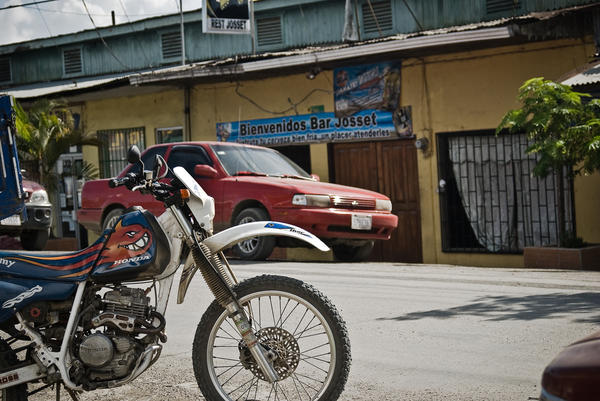
A street in Pacuare, Costa Rica—one of the FLACSO project's research sites  Photo credit: d.kele | Foter | CC BY-NC-SA

A street in Pacuare, Costa Rica—one of the FLACSO project’s research sites
Photo credit: d.kele | Foter | CC BY-NC-SA

Ongoing research in Central America increasingly points to citizens’ exclusion from basic markets, especially the workforce that receives certain social guarantees, as the cause of societal violence in the region.  Their lack of access to the labor, capital, land and other markets, in which almost all income is generated, leads to an extreme disempowerment – a primary exclusion – that reverberates through citizens’ lives.  Analysts of Latin American societies often focus on poverty and income inequality as important elements in violence, but a study by FLACSO-Costa Rica and FLACSO-El Salvador indicates that social exclusion is the underlying cause of these problems and, therefore, is the more reliable indicator of a country’s vulnerability to societal violence.  The processes of social exclusion may be responsible for the epidemic of violence that plagues urban spaces across the isthmus and elsewhere in Latin America.

In Central America, labor markets are increasingly important drivers of primary exclusion.  These are societies riven by endemic unemployment and generalized job precariousness, and much of the population is relegated to the kinds of self-employment that offer no prospects of ever moving beyond satisfying the survival imperatives of households.  Numerous South American governments in recent years have helped neutralize citizens’ exclusion through carefully designed social programs, but when the state lacks the capacity or will to supply access to such “citizenship,” as has been the case in much of Central America, exclusion only deepens.  A least two basic narratives establish clear linkages between social exclusion and violence, especially among youth.

  • First, when the state abandons marginal urban territories, these fall under the control of youth gangs that establish themselves as new authorities and obtain a monopoly on the instruments of violence.
  • Second, precarious employment – the inability of citizens to generate incomes sufficient to satisfy minimal aspirations of consumption – leads to lifestyles in which the line between legal and illegal becomes murky.

FLACSO’s study of several urban communities in Costa Rica and El Salvador has identified a possible third link between social exclusion and violence – in the household.  The domestic sphere, typically glorified as the sole space of security amidst the external insecurity that these communities find in public spaces, can also become a source of exclusion-driven violence.  Male unemployment, especially that of heads of household, is expressed not only in violence among adults but also violence by adults against children.  That violence in turn is projected outward, toward other members of the community, as victims of violence within households become perpetrators of violence outside them.  The complex chain of different types of violence, beginning with the structural violence that society generates through social exclusion, passing through the household unit, and then rebounds outward toward the community.  If this is in fact what is occurring, it suggests that efforts to overcome primary exclusion are imperative to reduce all levels of violence.

*Juan Pablo Pérez Sáinz is a senior researcher for the Latin American Social Science Faculty in San José (FLACSO-Costa Rica) and lead researcher in this project supported by the IDRC.  For a description of the project please click here.

Venezuela: Racing to the Bottom

By CLALS Staff

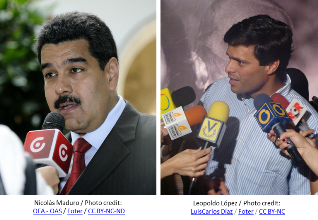
VenezuelaThe casualty figures from last Wednesday’s confrontation between government and opposition groups in the streets of Caracas – three dead, several dozen injured and many thousands angry – are clearer than the solutions to Venezuela’s current crisis.  The airwaves immediately flooded with the usual accusations of who provoked whom.  The protest leaders – who have shoved aside the opposition’s more moderate standard-bearer, Henrique Capriles – blamed toughs within the pro-government “colectivos.”  President Maduro blamed “small fascist groups” for the violence.  He has accused protest leader Leopoldo López of trying to orchestrate a coup, and a court is charging him with murder and “terrorism.”  López denies the coup-plotting, but he does state forcefully that, under the campaign slogan of “La Salida,” he wants to put millions in the streets to force Maduro to step down.  Failing that, he’s building a base from which to launch a referendum to remove Maduro when the Constitution allows in 2016.

As always, both sides in the dispute claim to have the support of “el pueblo” and to seek only to promote the people’s interests.  The people did speak, albeit by a small margin, in favor of Maduro in last April’s presidential election, but the opposition – especially the boisterous faction that’s orchestrating the current protests – has never officially acknowledged his legitimacy as president.  Maduro’s ad hoc reactions to Venezuela’s increasingly dire economic situation, including policies that he boasts are going to make the “bourgeoisie squeal,” appear desperate and counterproductive.  Confusing audacity for leadership, Maduro has signaled that if López and his followers want to take to the streets, he’s ready to accept the challenge.

Venezuelan politics has long been characterized by a vicious cycle in which each side strives to provoke the other into making mistakes that injure itself – and each side can’t resist rising to the provocation, fueling a downward spiral.  Maduro and the opposition hotheads have found soul mates in one another – feeding on each other’s extremism – and it’s happening just as Capriles and other opposition moderates were making progress in a decade-long effort to redefine political dynamics in the country.  Maduro’s tough talk and López’s battle calls for massive protests, for salida, and for recall referendums are reminiscent of 2002‑04, when Chávez grew steadily stronger as he survived a coup, a national strike, mysterious bombings and other clandestine operations by foes, a recall referendum and more.  For a young (42 years old) Harvard-educated man from the wealthy end of town to think that he can best Maduro in the streets shows the sort of questionable judgment that gives a little credibility to government allegations that his provocations are part of a bigger, externally directed plan.  The U.S. State Department spokesman insisted on Thursday that it “is absolutely not true” that Washington is interested in “influencing the domestic political situation in Venezuela.”  Whatever the merit of the allegations and denials,  Venezuelan elites on both sides of the deep divide seem ill-prepared to find a better way of doing politics.

Peru: Will Humala pursue deeper reforms?

By Marcela Torres

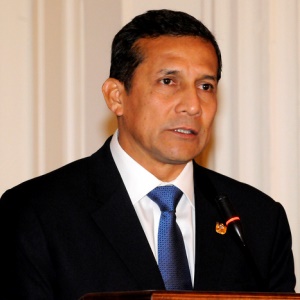
President Humala / Photo credit: OEA - OAS / Foter.com / CC BY-NC-ND

President Humala / Photo credit: OEA – OAS / Foter.com / CC BY-NC-ND

Facing growing public discontent, President Humala is attempting to navigate through yet another cabinet shuffle while struggling to advance reforms of the police, education, and health care.  The President’s approval rating has dropped from 65 percent soon after his inauguration in 2011 to an all-time low of 27 percent.  He swore in his fourth prime minister, César Villanueva, last week, after telling Prime Minister Juan Jiménez – in office for just 15 months – that it was time to “refresh” the cabinet.  Jiménez said he had been contemplating resigning for months, but recent polls suggest that growing crime and corruption, the two main issues citizens perceive to be afflicting the nation, forced him out.

Protests against Humala’s government have been growing.  In July, 8,000 demonstrators in Lima expressed their rejection not only of Humala’s government, but of the entire ruling political class.  Although still small compared with protests in other parts of Latin American, they were of a magnitude not been seen in the capital city since 2000, when protestors took the streets demanding President Fujimori´s resignation.  Unlike the rural indigenous protests over extractive industries, which have become commonplace under the administration, the participation of the middle class was evident and crucial in the July protests.  Social anger was sparked by a video showing members of the main political parties secretly negotiating highly controversial appointments involving individuals implicated in corruption.  Persons who had allegedly violated human rights were selected as the human rights ombudsman and as judges of the Constitutional Tribunal.  The uproar motivated Congress to immediately annul the secretly negotiated appointments, known as the repartija, which for many Peruvians resembled one of the traditional means by which the authoritarian government of Alberto Fujimori had avoided institutional checks and balances by placing regime-friendly officers in power.

The recent Peruvian protests are similar to social mobilizations taking place in Brazil, Chile and Colombia – other countries in which economic growth has not translated into broad public satisfaction.  While many protests in these countries have focused on the quality of social services, the recent Peruvian demonstrations have offered a critique of the country’s widespread corruption and backroom politics.  Peruvian demonstrators came from diverse sectors of society, including labor union members, students, artists, TV actors, gay rights activists, without clear leadership or coordinated demands.  This amorphous type of protest appears particular in Peru because civil society largely avoids political activism as a consequence of the stigmatization of collective social action after the defeat of Shining Path in the ‘90s.

Humala’s most recent cabinet reshuffle and his earnest but ineffective reform efforts suggest he appreciates the depth of the social discontent – now with middleclass support and the participation of youth.  Peruvians are not willing to tolerate the traditional corruption associated with the country’s politicians.  The lack of coordination among social movements that can connect rural and urban discontent, as well as the absence of political parties within the Peruvian landscape that can effectively mediate between citizens and the government, might limit the scope of social protests to isolated outcomes. If protestors come up with a clear agenda through legitimate leadership, however, President Humala will have to deepen his reforms or risk irrelevance through the remainder of his presidency.  Superficial changes appear unlikely to appease the middle class and civil society.

Brazilian Evangelicals: Stepping out into the Streets?

By Andrew Johnson

Kneeling in prayer. Photo by: Philip Anema

Kneeling in prayer. Photo by: Philip Anema

There is growing evidence of a potential shift in how Evangelicals engage in social issues in Brazil.  I witnessed their traditional approach recently inside a prison in one of Rio de Janeiro’s gritty peripheral suburbs.  Twelve men stood with their eyes closed and their arms draped around each other’s shoulders while an Evangelical pastor led the group in prayer.  After the final “amèm,” an inmate leader embraced the pastor and thanked him for his visit, to which the pastor responded, “I know that if I am ever in here in the future, you would come to visit me too.”  The pastor’s presence in the cellblock and his subtle pledge of solidarity with the inmates is typical of how Evangelicals have confronted pressing social problems through direct intervention and meeting the immediate needs of individuals in distress. They have been more likely to try to change the prison system by visiting inmates than by voting for a particular candidate or pushing for prison-specific legislation.  Theirs is a politics of presence.  But recently there have been signs that Brazilian Evangelicals’ intentional proximity to the needy is pushing some towards a different and more public strategy: street protest.

Even without an explicit political agenda, Brazilian Evangelicals have proven their ability to mobilize.  In early July, an estimated 2 million Evangelicals participated in the “March for Jesus” in the streets of São Paulo.  They sang hymns and prayed for the future of their country, but they did not use their collective voice to make demands of the government.  In contrast, just two weeks earlier, 65,000 people captured the global media’s attention by marching through the same avenues in São Paulo to protest increased public transportation fares, government corruption, and the fortune being spent on soccer stadiums for the 2014 World Cup.  The street protests gained momentum over the summer, but many Evangelical pastors and leaders were hesitant to offer public support, preferring to continue a strategy that relies on their direct service to the poor, the oppressed, and the imprisoned in their communities.

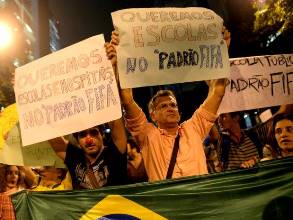
Antonio Carlos Costa and volunteers from Rio de Paz protesting in the streets of Rio de Janeiro asking the government for “FIFA Quality” Hospitals and Schools.  Photo by: Gabriel Telles

Antonio Carlos Costa and volunteers from Rio de Paz protesting in the streets of Rio de Janeiro asking the government for “FIFA Quality” Hospitals and Schools. Photo by: Gabriel Telles

Evangelical support of the street protests in Brazil has been minimal, but not completely absent. Some Evangelicals appear eager to move beyond a “politics of presence” approach and address the social structures and institutions they blame for many of Brazil’s social problems.  In Rio de Janeiro, the human rights NGO Rio de Paz – one of the most visible and vocal groups in the recent protests – is led by an Evangelical pastor, and the bulk of the volunteers are Evangelicals.  One such volunteer, a son of a Pentecostal pastor, joined the masses demanding governmental reform and, to encourage  others from his church to follow his lead,  posted Proverbs 29:4 to his Facebook page: “By justice a king gives a country stability, but those who are greedy for bribes tear it down.” He closed his appeal by writing that “in 30 years I want to tell my children that they live in a more dignified country because their parents didn’t sit at home waiting for a change.”  If that message resonates widely among Brazil’s 40 million Evangelicals, the Brazilian government will confront ever greater pressure from the streets to carry out long overdue reforms of corrupt institutions and practices.

Andrew Johnson is a Research Associate at the Center for Religion and Civic Culture at the University of Southern California and a contributor to a two-year project on Religious Responses to Violence in Latin America carried out by the AU Center for Latin American & Latino Studies with support from the Henry R. Luce Initiative on Religion and International Affairs.


Mexico: Peña Nieto’s Big Push

By CLALS Staff

President Enrique Peña Nieto / Photo credit: Eneas / Foter / CC BY

President Enrique Peña Nieto / Photo credit: Eneas / Foter / CC BY

President Peña Nieto’s reformist agenda wins kudos from the business and financial class, but both a recalcitrant leftist opposition and mass organizations previously aligned with his party are taking to the streets in protest – raising serious doubts about its prospects.  In his first state of the nation speech, delivered last week, Peña Nieto pledged to plow ahead with “transformational” reforms, giving flesh to the PRI’s slogan that it is Transformando a México. In education, he’s proposed a more rigorous system for hiring, evaluating, promoting and firing teachers who have resisted change despite evidence that the current system is not equipping Mexican youth for employment.  In the energy sector, he wants to open up the oil and gas industry to foreign investment, an idea that was strictly off-limits in the past even though lagging investment has caused production in Mexico’s leading export industry to decline steadily.  He is also pursuing tax reforms that, although watered down when announced on Sunday, entail political risk and, tellingly, raise marginal rates by 2 percent for higher earners and impose a levy on capital gains.  In June, he picked a fight with powerful business leaders over control of the country’s telecommunications industry, an oligopolistic structure that imposes excess costs on consumers and producers alike, diminishing Mexico’s economic competitiveness.

The teachers unions, whose symbiosis with the PRI in the past ensured cooperation, mobilized huge protests in Mexico City, forcing Peña Nieto to delay his speech by a day and then causing monstrous traffic jams during it.  The President cloaked his announcement of the energy reform in nationalistic rhetoric, and PEMEX, the oil company, followed it up with predictions of positive results – huge increases in oil investment and production that purportedly would help to create 500,000 new oil-sector jobs by 2018 and 2.5 million by 2025. But opposition to the reform has been strident, and tens of thousands filled the Zócalo on Sunday to protest it as a “covert privatization.”  Opposition leaders are already pledging demonstrations to oppose taxes, though the likelihood of this may be diminished because the long rumored reform unexpectedly left untouched the value-added tax exemption for food and medicines, which would have been a major rallying point for the Left.

Some Mexican commentators say Peña Nieto’s leadership is already losing its shine and that his Pacto por México, the loose coalition he engineered in Congress, is at risk of falling apart.  He prevailed in his congressional showdown over the long overdue education reforms, but success in transforming the underperforming education sector appears uncertain, as the teachers are threatening more protests.  The arrest of narco bosses from the Gulf Cartel and the Zetas have not given him a bounce on the security front; indeed, Mexican press reports indicate that kidnapping, extortion and other crimes that more directly affect citizens’ lives continue to rise. Further complicating Peña Nieto’s life is news last month that the economy is slowing down.  The first contraction in four years has forced the government to cut its 2013 GDP growth forecast in half, to 1.8 percent.  The administration will undoubtedly point to data showing that PEMEX production has fallen by about a quarter in the past decade because of low investment, and will emphasize that this makes modernization of the oil sector all the more imperative.  But Mexicans have heard promises before, during NAFTA debates and since, that economic reforms and greater openness to trade and investment will massively improve their lives.  Whether there is any fuel left in that rhetorical tank remains to be seen.

Ben Kohl: The Loss of a Scholar-Activist who Taught About Bolivia

By Eric Hershberg

This AULA blog post does not follow our standard format, but it is one that I hope will motivate readers to seek out some singularly insightful analyses of contemporary Bolivia.

Los marchistas del TIPNIS llegan a La Paz (19/10/2011) Photo credit: Szymon Kochanski / Foter / CC BY-NC-ND

Los marchistas del TIPNIS llegan a La Paz (19/10/2011) Photo credit: Szymon Kochanski / Foter / CC BY-NC-ND

I was terribly distressed to learn that Temple University Professor Ben Kohl, a noted expert on Bolivia, passed away suddenly in late July, at the age of 59. I had the privilege of meeting Ben briefly on two occasions, on both of which he struck me as charming and intellectually lively. But I already knew of Kohl through his writings, which had taught me, and many of my students, a great deal about how and why Bolivian politics and society have evolved in such remarkable ways in recent years.  Faculty, students and non-academic audiences in Washington and beyond would be well served by surveying his writings, in part because of how effectively they make sense of a country with which the U.S. government has often related unproductively.

Most of Kohl’s work was co-authored with his journalist wife, Linda Farthing (he also collaborated with my CLALS colleague Rob Albro on a fine collection of articles on Bolivia that was published by Latin American Perspectives). Among their prolific writings on Bolivia, two books stand out as especially significant. Impasse in Bolivia and From the Mines to the Streets: an Activist’s Life in Bolivia established Kohl and Farthing as pivotal voices in shaping understanding of that Andean country’s politics and society.  Their work is unusual in the effectiveness with which it speaks simultaneously to advanced scholarly readers and to students and people in advocacy and policy circles who are engaged sympathetically with that country’s remarkable social movements and transformations.

What stands out for me about Impasse, aside from its deep and nuanced understanding of the fault lines dividing Bolivian society, is that it successfully blends attention to social dynamics and political mobilization at the micro-level with an appreciation for how those phenomena interact and reflect larger scale, deeply embedded social structures.  Written on the eve of Evo Morales’ rise to the Presidency, in the wake of several years of social and political “impasse,” the study combines ethnographic insight with sophisticated interpretation of macro-level historical and sociological processes.  Impasse in particular highlights how and why Bolivia took a decisively “indigenous turn” in its national politics beginning around 2000, and ably portrays the resistance that this elicited from long dominant elites. The book was an especially novel and eloquent contribution to the literature on Bolivia at a crucial juncture in the country’s history, a juncture that ushered in fundamental changes in the political system.

Mines, like Impasse, was written for more than a strictly scholarly audience, but it is a very different sort of monograph.  The autobiographical story told to Kohl and Farthing by labor activist Félix Muruchi Poma, and very intelligently framed for a foreign audience, brings to life aspects of contemporary Bolivia (and other parts of Latin America) that are rarely presented in such a compelling and readable form.  As noted in the brief bibliographic note at the conclusion of the book, several previous books provide historical accounts of issues and events covered in Muruchi’s story, but none of the English language literature does so in this “testimonial” genre.  That genre is difficult to pull off well, as Kohl acknowledged in an insightful article for the Journal of Latin American and Caribbean Anthropology, but this work is up to the task, and points to the activist side of Kohl and Farthing’s scholarship.  One is reminded, inevitably, of the classic I, Rigoberta Menchu, which focused on the life and politicization of an indigenous Guatemalan woman during a period that overlaps in part with that covered by Muruchi’s chronicle.  The many university faculty who assign the Menchu book for introductory Latin American Studies courses would do well to consider assigning this one alongside of it.

A number of Kohl’s recent articles and book chapters were aimed more strictly at scholarly audiences than were either Impasse or Mines. A 2012 essay published in Political Geography is the most insightful analysis I have encountered of the contradictions between what Kohl and Farthing label “resource nationalist imaginaries,” articulated in practice by strong social movements in Bolivia and more disparate actors in neighboring countries, and the circumstances of economies that remain as dependent as ever on revenues derived from natural resources. The study’s use of the theoretical concepts of “imaginaries” and “framing” strikes me as an especially valuable lens through which to understand the roots of social movement resistance to an economic model that has persisted despite the rise to power of Bolivia’s first indigenous President. Re-reading that piece as I was drafting this blog post, I am reminded of how Kohl’s passing is a great loss to those of us for whom innovative scholarship motivated by concerns about fairness and justice in Latin America is to be treasured, not unlike tin or gas or water for many Bolivians, as a precious commodity.

Brazil Protests: Amorphous Causes, Unpredictable Consequences

By Matthew M. Taylor

Protestors in Brazil / Photo credit: Izaias Buson / Foter.com / CC BY-NC

Protestors in Brazil / Photo credit: Izaias Buson / Foter.com / CC BY-NC

Hundreds of thousands of Brazilians hit the streets of a dozen state capitals this past week.  The initial trigger was a proposed hike in São Paulo bus fares, already among the world’s most expensive, but news media soon reported that the protests reflected anger with the rising cost of living, crime, corruption, impunity, and the high costs of hosting the World Cup. Lackluster public services haven’t helped, and widely televised police violence last week provided another rallying cry.  Polling by Datafolha shows that the protest is a middle class phenomenon, with 77 percent of the marchers in São Paulo claiming a university degree.  This growing demographic group is turning against President Dilma Roussef’s Worker’s Party (PT) but it is also weary of the opposition PSDB, especially in São Paulo state.

So far, the protests have been difficult for political parties to harness for their own ends.  Partisans who showed up at the marches on Monday waving party flags were reportedly forced to pull them down by indignant protestors.  Dilma’s popularity has been falling – she was recently booed at the opening match of the Confederations Cup – but the marchers don’t seem collectively exercised about her policies or those of any single party or politician.  Aecio Neves, Marina Silva and Eduardo Paes, her potential opponents in elections scheduled for late 2014, have yet to capitalize on her vulnerabilities, as the protestors seem to be casting “a pox on all their houses.”  An outside candidacy is a rising possibility, but Brazilians have been wary of supposed political saviors after the rapid rise and fall of Fernando Collor in 1990‑92.  Anger is directed at the political class as a whole because it is incapable of responding to public disgust with Brazil’s unsatisfactory public services.

It is quite possible that the protests may peter out on their own, especially if the renewed violence seen in São Paulo on Tuesday night alienates supporters.  If the protests continue and remain peaceful, they may result in increased social solidarity and a shared sense of patriotism in the face of an unsatisfactory political system.  Something similar happened during other mass protests in the past, especially the Diretas Já marches of 1985.  A renewed consensus in favor of a more robust and effective democracy would be salutary, but the concrete results arising from the protestors’ demands are difficult to predict.  One thing to be sure of: withdrawing the proposed bus fare increase proposal is too little, too late.

Violence in Mexico: Forging a Civic Compact for Urban Resilience

By Daniel Esser

Ciudad Juarez | Photo by Daniel Esser

Ciudad Juarez | Photo by Daniel Esser

The media’s regular chronicling of human resilience in the aftermath of natural disasters and large-scale violent conflicts cover only part of story.  As inspiring as tales of individual heroism, resistance and resilience can be, they provide little guidance for public policy aiming to strengthen social ties within damaged communities, in which safety nets need to be created to work both preventatively and post-victimization.  Supported by a field research grant from the Social Science Research Council’s Drugs, Security and Democracy Program (DSD) and working jointly with a team of researchers based at the Universidad Autónoma de Ciudad Juárez, this writer recently spent four months on the U.S.-Mexico border to answer this question.  Members of 320 randomly sampled households in Ciudad Juárez were interviewed about their knowledge of non-violent collective action during the past five years.  Overall, the findings provide hope that Juárez’s social fabric has not suffered as badly as is widely claimed, but both Mexican and international policy-makers need to understand the nature of collective resilience before they can effectively support it.  Juárez no longer tops the world’s ranking of most violent cities per capita, as it did in 2010 and 2011, although organized violence continues to wreak havoc, exemplified by 30-60 murders per month.  Analysts agree that the downward trend is less the result of concerted government action and more a reflection of a reshuffling – likely temporary – of power structures within the transnational drug business.  Strikingly, most survey respondents argued that neighborly help had not decreased during the violent times.  Roughly a quarter even argued that residents’ willingness to help each other had in fact increased, mainly because people felt more united amid the terror.  Many people reported knowledge of collective street monitoring, peaceful marches, protests and public vigils, with between 5 and 8 percent saying they have actively participated in them.  For those residents, violence was not an abstract phenomenon; more than 30 percent reported personally knowing someone who had been murdered, and just under 20 percent had themselves been victims of violent crimes.  Surprisingly, almost two-thirds said they had not lost trust in local politicians and that they would vote for candidates promising to combat violence.

These findings serve as reminders of the political dimension of resilience in the context of chronic violence, implying that there are important local collective dynamics that can be leveraged through responsive and accountable political representation.  They also suggest that policymakers at all levels need to be mindful of the existence and potential of collective agency under extremely adverse conditions.  The violence in border cities created an opportunity for forging a civic compact between entities of the state on the one hand and neighborhood residents on the other, to mend frail ties between the electorate and its representatives.  This kind of deliberate state-building at the local level is precisely what Mexico needs in the aftermath of former President Calderón’s heavy-handed and, as many have claimed, detrimental strategy emphasizing federal-level and military-led programs and operations.  President Peña Nieto and his cabinet appear likely to embrace a local approach to increasing security as it complements his commitment to improving social services especially in secondary cities.  However, the most critical building block for effectively executing such a civic compact is a politically unbiased, data-driven selection of beneficiary communities and their needs.  Akin to approaches to civic reconstruction in war-torn countries such as Afghanistan and Iraq, communities should be in the driver’s seat in both project selection and monitoring.  After all, state-building is as much about procedural inclusion and justice as it is about tangible outcomes.

Dr. Esser teaches international development at American University’s School of International Service.  Click here for more information about this project.

Political Participation in Latin America Expanding

participatory democracy coverFrom local citizen initiatives to national referenda, mechanisms of direct political participation have been spreading with astonishing vigor throughout Latin America in recent years. Some of these mechanisms are new and unprecedented in the way they involve citizens in politics, such as frequently touted participatory budgeting systems at the municipal level in numerous countries.  Other initiatives, such as the National Policy Conferences that consult the citizenry regarding an array of issues in Brazil, are less widely known. In most Andean countries and to some extent elsewhere, these forms of participation often emerge where established representative institutions, such as party systems, have collapsed, or where legislatures have fallen into disrepute.  Yet they also proliferate alongside strong parties, legislatures, and interest associations, as we see in Brazil and Uruguay.

A recent CLALS-sponsored book* examines these new forms of participation and analyzes when they promote, and when not, the consolidation and deepening of representative institutions. The participatory innovations vary along a number of key dimensions, including how they interact with political parties and established institutions, their focus on collective versus individual rights and, perhaps most importantly, their autonomy from political and economic elites.  These differences and their implications are analyzed in detail in case studies on seven Latin American countries: Bolivia, Brazil, El Salvador, Mexico, Nicaragua, Uruguay and Venezuela.

When new forms of political participation emerge spontaneously and independently – as a natural reaction to an unfulfilled need at a local or national level – their voices are authentic and tend to enhance democratic rule.  Brazil’s National Policy Conferences and Uruguay’s referenda to enhance accountability are examples of the incorporation of new voices in policy formulation – to the benefit of the constituencies driving them and the nation as a whole.  We also find instances where participation has exacerbated and reinforced longstanding patterns of clientelism (including in Mexico and Brazil), and autocratic leaders have sought to create or capture such voices to bypass representative institutions (including in Nicaragua and Venezuela).  A valuable lesson of this research, however, is that, once in place, these spaces may become increasingly autonomous. Venezuela’s community councils are an important case to watch: created to reinforce the Chavista project as defined by the Casa Rosada, they may take on a life of their own when the politicians who sponsored them relinquish their positions of power or pass away.

New Institutions of Participatory Democracy: Voice and Consequence, published by Palgrave Macmillan 2012, resulted from a multi-year project co-organized by CLALS and the University of British Columbia’s Andean Democracy Research Network.  More information on the project can be found here .  (The volume has also been published in Spanish by FLACSO-Mexico, Nuevas instituciones de democracia participativa en América Latina: la voz y sus consecuencias)