Colombia’s Last Day of War?

By Aaron T. Bell and Fulton Armstrong

Peace Signing Colombia

Photo Credit: Presidencia de la República Mexicana / Flickr / Creative Commons

Colombia’s half-century-old war entered its final stages yesterday as President Juan Manuel Santos and leaders of the Fuerzas Armadas Revolucionarias de Colombia (FARC) signed a ceasefire agreement in Havana, but the successful implementation of a comprehensive peace accord still faces several uphill battles.  The five key agenda items of peace talks that began in 2012 have now been agreed upon, and the final details are expected to be hashed out by the time Colombia celebrates its independence day on July 20.  The FARC has pledged that its 7,000 soldiers will enter “Temporary Hamlet Zones of Normalization” once a final accord is signed and finish turning over their weapons to a United Nations mission within 180 days.  After signing the ceasefire, a teary-eyed “Timochenko” – the FARC’s top commander – proclaimed, “May this be the last day of war,” while President Santos celebrated that “We worked for peace in Colombia, a dream that is now becoming reality.”

One major hurdle that remains to a final peace accord is the fulfillment of President Santos’s pledge to subject it to a plebiscite.  In an interview last week, the president cautioned against any notion that a “no” vote will produce a better deal and instead warned that such an outcome would mean a return to war.  Recent polls show that 60 percent of the population says that they’ll vote yes in support of a peace accord, but the Centro Nacional de Consultoría reports that Colombians’ worst fear, which could sink approval, is that one or both sides will fail to meet its commitments.  Another poll suggests that 77 percent of Colombians do not want the FARC to participate in politics, a suggestion that Timochenko has rejected.  Former President Álvaro Uribe and his Centro Democrático party have led the charge against peace talks under the slogan “Yes to peace but not like this,” and they are unlikely to stop now despite Uribe’s pledge yesterday “not to react to the impulse of first impressions.”  Uribe and his supporters have accused Santos in the past of “handing over the country to the FARC,” and 37 percent of Colombians have reported feeling that the government is conceding too much.  They are not entirely alone in this estimate, as even generally neutral observers like Human Rights Watch have suggested that the transitional justice provisions – which will provide reduced sentences to those guerrillas who confess their crimes – let the FARC off the hook.

The signing of a peace agreement between the two sides is indeed historic, but Santos and Timochencko affixing their signatures to the document is just the beginning of another arduous process.  Winning the referendum will require Santos to show vigorous political leadership and enforce greater discipline on his own cabinet team, some of whom have been less than enthusiastic in support of an accord.  Even approval in the plebiscite will of course not immediately resolve the many security challenges facing Colombia.  Zeid Ra’ad Al Hussein, the UN High Commission for Human Rights in Colombia, has noted that the FARC’s demobilization and disarmament could create a power vacuum in rural areas.  Turf wars over coca cultivation, cocaine processing, and the drug trade in which the FARC has been deeply involved since the 1990s are likely to continue, while neo-paramilitaries will likely to fight for a bigger piece of the pie.  In addition, government negotiations with the smaller Ejército de Liberación Nacional (ELN) have been slow to start.  The international community can help with some of these issues, as it has in supporting the years-long peace process, but the real work will need to be done by Santos and his supporters.  Santos’s presidency and the long-term success of any accords rest on his ability to ensure public support, not only now but in the future, as he enters the final years in office.

June 24, 2016

Haiti: Crisis Upon Crisis

By Fulton Armstrong

Haiti OAS

OAS Secretary General Almagro visits Haiti. Photo Credit: OAS / Flickr / Creative Commons

Haiti is stumbling, again, from one crisis into another, but the timing of this ongoing mess puts the United States and other international partners in a particularly bad position.  The country’s political institutions are dysfunctional, without an elected executive nor fully legitimate legislature, and efforts to rebuild them continue to be haphazard.  Under Interim President Jocelerme Privert (formerly leader of the Senate), the government has missed another deadline for resolving disputes over the first round of presidential elections held last October and re-running them or scheduling the second round.  Instead, Privert, who assumed the Presidency in February, on 28 April formed a five-member “verification panel” to take yet another look at allegations of first-round fraud and determine which candidates should participate in the runoff, with a 30-day deadline.  The deadline for Privert to step down passed on 14 May.

  • The move coincides with growing perceptions that Privert is enjoying the perquisites of the job and may be dragging things out on purpose. Both sides to the contested elections – supporters of Jovenel Moïse, former President Martelly’s hand-picked successor, and the opposition party’s Jude Célestin – are mobilizing crowds, some numbering thousands, for almost-daily protests.  Calls for Privert to resign are growing intense as suspicions of his own ambitions and imputed bias for or against one of the candidates surge.  Several dozen gunmen, allegedly directed by an enemy of Privert, shot up a police station in the southern city of Les Cayes earlier this week, resulting in six dead.
  • International reactions to Privert’s delays have been mixed but predictably of frustration.  The former leader of an official OAS mission to Haiti in early April supported the verification process, and OAS Secretary General Almagro said recently that elections “shouldn’t be rushed.”  But U.S. Secretary of State John Kerry last month condemned “this process of delay” and urged Haiti’s “so-called leaders” to act.  His Special Coordinator for Haiti Affairs, veteran diplomat Kenneth Merten, called the new verification process a “black box” and said it was “opaque and non-democratic.”

The political mess coincides with other serious challenges.

  • The World Food Program (WFP) is increasingly concerned about hunger caused by a three-year drought, aggravated by El Niño, and the country’s economic situation. Some 3.6 million Haitians (one third of the population) face “food insecurity,” including 1.5 million who are “severely food insecure.”  A U.S. program to send Haiti surplus peanuts, which is one of Haitian farmers’ most successful crops, has deflated prices and further hurt local food production.
  • Shortages of medical supplies, worsened by corruption, have prompted doctors to conduct strikes. High-profile cases, including the death of a bleeding pregnant woman at the entrance of the Port-au-Prince General Hospital, have led to dramatic demonstrations, on at least one occasion parading around a victim’s corpse.
  • Fear of spread of the Zika virus is rampant. The University of Florida recently confirmed that Zika was present in Haiti before the outbreak in Brazil last year.  (Carried by the same mosquito, Aedes aegypti, it was mistakenly identified as chikungunya, which has almost identical symptoms except microencephaly.)  Haiti’s cholera epidemic, which has killed 9,200 people since 2010, continues to claim about 50 lives a month, according to some estimates.

The usual threats by the United States and Haiti’s other international partners to suspend aid if the government doesn’t resolve the political impasse have been muted presumably because they’re unlikely to be credible while such major threats to Haitian citizens’ wellbeing loom large.  Haiti’s political and economic elites assume that the outsiders will care for the Haitian people and continue bailing the country out while they pursue their internecine struggles.  Former President Martelly, who is not free from blame for the elections impasse, has been in Miami these days to promote his autobiography ($50 a copy) and reestablish himself as a naughty boy Kompa musician.  The international community is, once again, in a lose-lose situation.  A previous caretaker government, headed by Gérard Latortue, lasted two years (2004-2006).  The United States and others can ill afford a deeper humanitarian disaster, so while Haitian elites fiddle, outsiders will try to put out the fires.

May 19, 2016

Nicaragua: Where’s the Canal?

By Fulton Armstrong

Canal Nicaragua

Coming soon to Nicaragua? Photo Credit: tryangulation / Flickr / Creative Commons

The Nicaraguan government and Chinese investment group leading the Nicaragua Grand Canal project continue to claim enthusiasm for their dream, but enough fundamental problems remain unresolved to suggest that prospects for its eventual construction are dimming – and the principals are maneuvering to avoid picking up the tab for the expenditures made so far.  In a year-end statement last December, President Ortega’s office said the canal project would be one of his government’s top 25 priorities this year and emphasized its benefits to the Nicaraguan people.  Hong Kong-based HKND Group had announced in November that it was “fine-tuning” the canal design to address problems raised in an environmental impact study, which would delay the beginning of major excavations and lock-building until the end of 2016.  Company officials have since said, however, that construction of a fuel terminal and wharf on the Pacific coast –necessary to bring in the massive equipment the project requires – could start as early as this August.  The company still claims that it will complete the canal in 2020 – a prediction that few, if any, outside experts see as feasible.

The project faces massive obstacles, with no solutions in sight.

  • The estimated US$50 billion in financing is nowhere to be seen. Chinese investor Wang Jing, who has already spent US$500 million of his own money on the project, lost some 85 percent of his US$10 billion personal fortune in last year’s Chinese stock market correction.  (Bloomberg named him the worst performing billionaire of 2015.)  Observers believe his losses as well as the problematic environmental impact study have cooled his and other private investors’ support.  An initial public offering of shares has been postponed indefinitely.
  • Project managers have yet to demonstrate the need for the canal and propose solutions to significant engineering challenges, such the need for construction able to withstand earthquakes made likely because of seismic faults along the route. HKND says the canal will handle 3,500 cargo ships a year, including ones bigger than those transiting the Panama Canal, but industry experts say there’s no demand for more than will be accommodated by the expansion of the existing canal – and that the United States has no ports capable of receiving the larger vessels.  Global warming, moreover, could soon open a faster and cheaper route north of Canada.
  • Public protests have diminished during the hiatus in canal-related news and activities, but opponents remain strident and are gaining international support. Detractors’ resolve to fight has been strengthened by the environmental report, by a credible UK firm, determining that the project will “have significant environmental and social impacts,” including dislocation of at least 30,000 Nicaraguans.  Indigenous and Afro-Nicaraguan groups on the Atlantic Coast are upset about disruptions to traditional territories, including cemeteries and holy places.  Amnesty International has condemned the treatment of affected persons as “outrageous” and “reckless.”

The “biggest earth-moving project in history” is still looking like one of the biggest boondoggles in history – yet another in a long series of chimera canals in Nicaragua since early last century.  The government says that popular support for the project remains about 81 percent, but a survey by Cid Gallup, published in the Nicaraguan newspaper Confidencial in January, showed that 34 percent of 1,000-plus respondents consider the canal to be “pure propaganda.”  One quarter believe technical studies have been inadequate and that funding will not materialize.  Those sentiments could be reversed somewhat by the appearance of massive excavation equipment and creation of related construction jobs, but support will still be tempered by concerns about persons whose lives are disrupted by the project – and by perennial and profound suspicions that corruption will take the lion’s share of benefits.  Some opposition leaders believe HKND’s big push to appear optimistic is to build a case for collapse of the project to be Nicaragua’s fault, so that the company can demand that Managua repay the $500 million that Wang has reportedly spent.  The lack of transparency surrounding the project only fuels such speculation. 

April 4, 2016

Brazil: Daring to Look at Succession Scenarios

By Silvio Levcovitz*

Lava Jato

Photo Credits: Instituto Liberal (Brasil) and Brasil 247 / Google Images / Labeled for noncommercial reuse

Brazil’s snowballing scandals are generating a high level of uncertainty regarding the country’s political future.  “Operation Car Wash”—a two-year investigation by a task force of the Federal Police and the Federal Prosecutors—has already led to the conviction and 20-year imprisonment of several senior officials from Petrobras and prominent construction companies, and others are likely to follow.  In Brazil, congressmen, cabinet ministers, and the President can be criminally charged only by the Supreme Court, through a long, difficult process called “privileged forum.”  On March 17, former President Lula, under investigation for allegedly receiving two properties as a bribe from construction companies, was designated a Minister of State in President Dilma Rousseff’s administration, an appointment that would have afforded him that protection.  The judge pursuing him released a recording of a call from Dilma offering him immunity as well as Lula’s calls on family and other private matters.  Many in the Brazilian legal community have disapproved of the judge’s disclosure of the calls as disrespecting the rule of law and the right to privacy, but the damage to Dilma and Lula was done.

Calls for the President’s impeachment are surging—and she repeatedly rejects the pressure to resign.  On Sunday, March 13, a half-million people protested in São Paulo, and the press estimates that another 1-2 million demonstrated elsewhere around the country.  (Demonstrations supporting Dilma have attracted 100,000 citizens in São Paulo.)  The PMDB, party of Vice-President Michel Temer and President of the House Eduardo Cunha, is officially quitting the government this week, and other minor parties appear likely to do the same, definitely cracking the presidential support.  The impeachment process in Brazil has two steps.  In the House, two-thirds of its 513 members (342 votes) are required for “admission” or approval, in which case the Senate can decide by majority vote to take up the charges, resulting in the President being suspended for up to 180 days.  Conviction requires the votes of two thirds of the 81 senators.  Although press reports indicate the mood is for the impeachment, the government is offering positions and funds individually to Congressmen and in hopes of achieving a low turnout to stop the process in the House.

Predicting the outcome of such a volatile situation is inherently risky, but discussion of post-Dilma scenarios is growing increasingly common.  Should she step down or be removed from office, Vice-President Michel Temer would be her constitutional successor.  Like Dilma, however, Temer is being charged by the Superior Electoral Court on suspicion of illegal campaign financing and, if convicted, would not be allowed to take office.  The next two in line to succeed her—President of the House Eduardo Cunha and President of the Senate Renan Calheiros—have been snagged by Operation Car Wash and face charges by the Supreme Court, suggesting that they too could be disqualified.  (The Federal Attorney General has already asked the Supreme Court to issue a preventive order to remove Cunha because of evidence that he has received US$5 million in secret Swiss bank accounts, without any justification.)  That leaves Supreme Court President Ricardo Lewandowski as a possible successor for a maximum period of 90 days, at which point elections would be called.  As Brazil faces crisis after crisis, the press have taken to commenting that the country’s fast-paced, dramatic events make the American series House of Cards look slow and boring. 

March 30, 2016

* Silvio Levcovitz is a CLALS Fellow and political science PhD candidate at the Universidade Estadual de Campinas, São Paulo.  He has been a public lawyer in Brazil and is researching criminal cases of corruption and civil claims of administrative misconduct from 1991 to 2014.

Hope Fading for Guatemalan Spring

By Ricardo Barrientos*

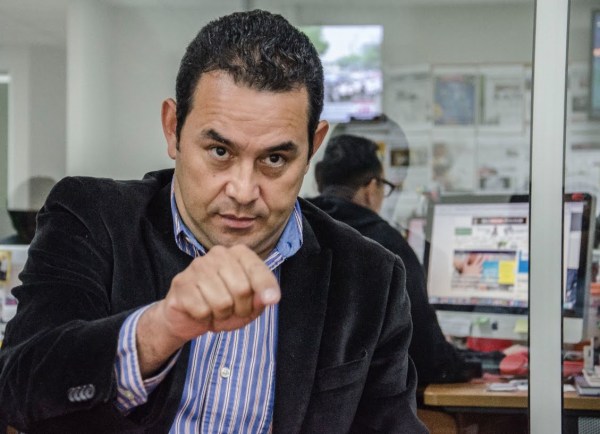
Jimmy Morales

Photo Credit: Publinews Guatemala / YouTube / Creative Commons

The high hopes created by Guatemala’s peaceful, democratic change of government last year are hitting the shoals of reality.  Guatemalans managed a major political crisis in 2015 in an exemplary way: massive citizen demonstrations against authorities accused of corruption lasted four months without a single incident of violence.  Acceptably free and fair elections took place just three days after disgraced President Pérez Molina resigned, and a transition government was formed as mandated by the Constitution to govern until Jimmy Morales, the new Guatemalan President, was sworn in on January 14.  Although lacking experience, a cabinet, and a plan, Morales inspired confidence with a very good slogan (that he was “neither corrupt, nor a thief”) and good communication skills honed as a former TV comedian.  Voters had rejected and punished the “old politics” and felt hope that honesty would prevail.

Since Morales took office, however, serious mistakes have caused confidence to dim.

  • His reluctance or inability to answer questions from journalists and to refrain from underestimating audiences by telling silly jokes and childhood stories are raising concerns among observers of an emerging authoritarian personality.
  • Secrecy surrounding his cabinet selection process has led to missteps. His Minister of Communications, Infrastructure, and Housing was forced to resign after just 11 days in office – in the face of evidence of tax fraud and a serious conflict of interest.
  • His first approach to Congress was only to reverse the position on 2016 public debt cuts that his representatives advocated last November. Asking Congress to reduce debt proved popular back then, but now transfers to the Public Prosecutor Office or to the public university can be made only if the original debt amount is restored by Congress.  That condition is not only unpopular; it risks hampering the effort to prosecute corruption.
  • Instead of asking Congress for an urgently needed budget increase to solve ongoing shortages of medicines and equipment in public hospitals and clinics – almost a humanitarian tragedy, he accepted pharmaceutical company donations of expired medications – in a deal redolent of past corruption.
  • Morales’s political party, Frente de Convergencia Nacional (FCN), has grown substantially in Congress by receiving “turncoat” congressmen, directly contradicting an important campaign promise. “Turncoating,” jumping from party to party in Congress (always for a “price”), is one of the practices condemned in 2015 as part of the “old politics” and was strongly rejected by voters who trusted Morales.  The Public Prosecutor Office has received complaints denouncing bribes, government jobs, and contracts offered to “turncoats” now affiliating with the FCN.

Events in Guatemala over the past year present a huge contrast with what the country was a couple of decades ago – triumph for a society deeply marked by civil war, poverty, and brutal inequality, with the fresh hope of a new democratic spring.  Jimmy Morales appears to be squandering a historic opportunity to harness this democratic momentum.  Voters who set aside concerns about his links to right-wing Army veterans accused of crimes against humanity during the civil war could soon feel deceived because the “old politics” is still in place.  Guatemala’s democratic spring may fade before it blooms, sowing the seeds of crisis and instability in the future.

February 22, 2016

*Ricardo Barrientos is a senior economist at the Central American Institute for Fiscal Studies (Icefi).

Gender Violence in Argentina and the Education of Mauricio Macri

By Brenda Werth*

Macri Ni Una Menos

Photo Credit: Mauricio Macri Facebook page. Public Domain.

Argentina’s new President, Mauricio Macri, has an historic opportunity to address the country’s longstanding crisis of gender violence.  In a radio interview in 2014, he notoriously stated that “All women like to be catcalled,” and asserted, “I don’t believe the ones who say they don’t.”  Little did he know at the time that the most intense period of his presidential campaign in 2015 would coincide with a revolution in public awareness of gender violence in Argentina.  #NiUnaMenos – a movement launched in response to a rash of femicides and their graphic coverage by the news media – organized  marches in cities across Argentina, Uruguay, and Chile, drawing an estimated 300,000 protesters in Buenos Aires alone last June.  Journalists, artists, and activists, in collective denunciation of machismo and violence against women, demanded that the government develop a plan of action to implement the Comprehensive Law on the Prevention, Punishment and Elimination of Violence against Women (Law 26.485), approved in 2009.  The law was a significant milestone in addressing violence against women at the national level, yet without government support, its effectiveness has been limited.  Current data indicate that a femicide takes place every 30 hours in Argentina, and statistics suggest that the total number of femicides occurring in 2015 will meet or surpass numbers in 2014.  The NiUnaMenos movement has captured the public’s attention.

The presidential candidates (Macri included) took note of the impact of NiUnaMenos and pledged support to prevent violence against women as outlined in the five major points it published.  Macri posted a picture of himself holding a handmade #NiUnaMenos sign on Facebook and Twitter.  Yet activists remain concerned about Macri’s sincerity, not just because of his 2014 remarks.  As mayor of Buenos Aires (2007-15), he undermined initiatives to prevent violence against women and provide assistance to victims.  Specifically, in 2014 he closed an outreach center for victims of sexual violence that had operated under the Subsecretary of Human Rights in Buenos Aires, and he reduced the budget of the National Agency for Women from 0.1 percent in 2007 to 0.06 percent in 2015.

Macri has his work cut out for him if he wants to be perceived as a leader confronting Argentina’s gender violence.  Although his promises to slash government spending suggest social programs will suffer, there are some promising signs.  Macri’s Minister of Social Development, Carolina Stanley, has offered the post of President of the National Council for Women to Fabiana Tuñez, the founder of the Casa del Encuentro, a leading NGO on gender rights and eliminating sexual violence – and key in the #NiUnaMenos movement.  In a broader human rights framework, Macri’s agenda still remains relatively undefined.  Although his vision will depart significantly from former President Cristina Fernández de Kirchner’s, he has reiterated his commitment to continuing trials against former military accused of human rights abuses during dictatorship, rejecting claims that such efforts reflect “politics of revenge.”  In interviews, moreover, he has emphasized a forward-looking conception of human rights, rooted in the 21st century, focusing on issues related to pubic health, education, and freedom of expression.  While some observers view this as a regression to a “culture of amnesia” associated with the Menemist era, Macri has an opportunity to move the country forward by heeding activists’ demands for leadership addressing gender violence in Argentina. 

January 7, 2016

* Brenda Werth is Associate Professor of World Languages and Cultures at American Unviersity.

Honduras: No Solution in Sight

Photo Credit: OAS / Flickr / Creative Commons

Photo Credit: OAS / Flickr / Creative Commons

CLALS and the Inter-American Dialogue this week hosted a conversation on the crisis in Honduras with experts Hugo Noé Pino, of the Instituto Centroamericano de Estudios Fiscales, and Carlos Ponce, of Freedom House, and about a dozen of some 80 participants spoke up.  The following are key analytical points that were broadly accepted during the 90-minute session.

Honduras is experiencing a multi-faceted crisis – economic, political, judicial, and security– that has grown steadily worse since the 2009 coup and shows no sign of abating.

  • Economic growth (1.5 percent per capita) is too low to alleviate the country’s severe employment problem (affecting half of the working-age population) and poverty (62 percent). Recent polls indicate that some 63 percent of all Hondurans would leave the country if they could.

Violence, corruption scandals, and the steady weakening of institutions dim prospects for a turnaround.

  • The over-concentration of power in the Executive, the remilitarization of law-enforcement and other security services, and the politicization of the judiciary have undermined what democratic foundation Honduras had built since the last military government stepped down in 1980. The economic and political elites, as well as the media they control, have further stifled political discourse.
  • The Sala Constitucional of the Supreme Court and the National Electoral Tribunal have been stacked to tightly control preparations for elections scheduled for November 2017, apparently with the intention of ensuring the reelection of President Juan Orlando Hernández.

The Honduran political class lacks the will to root out corruption, and is united in resisting developing the capacity and programs to do so.

  • The embezzlement of more than $300 million from the Social Security Institute – funneling part of these funds to the ruling National Party and a variety of fronts – led to the flight of the investigating fiscal (who left the country because of death threats to himself and his family) but little else. Indeed, the most significant law-enforcement actions, such as the indictment of members of the Rosenthal family on money-laundering charges, have come from the United States. Some 80 percent of crimes in Honduras go uninvestigated and unpunished; some reports put the figure as high as 96-98 percent.
  • A Comisión Internacional Contra la Impunidad en Honduras (CICIH), adapted from the successful CICIG model in Guatemala, would be a healthy way of addressing ongoing impunity while building investigative and prosecutorial institutions. The economic and political elites solidly oppose it.  Even if Honduras accepted a CICIH, alone it probably would not be a silver bullet.
  • The OAS’s planned “Mission to Support the Fight Against Corruption and Impunity in Honduras” (MACCIH) – announced in late September jointly with Honduran President Juan Orlando Hernandez – shows little promise of success. Its mandate will be to diagnose problems and write reports, not take action or facilitate a serious, inclusive national dialogue.

Opposition to the current Honduran government is strong and growing, but it has not yet institutionalized.

  • Peaceful marches organized by the Indignados and other organizations have mobilized tens of thousands of citizens outraged by government corruption and its inability to provide even basic citizen security. Among the masses have been an unprecedented number of middle-class and upper-middle-class persons – not seen during previous crises.
  • Opposition groups are still struggling, however, to coalesce into a viable, institutionalized political force. Sustaining effective leadership and overcoming pressure from the government and Honduras’s two traditional parties are difficult challenges for them.

There are no magic or quick solutions to the crisis.

  • Any solution would have many moving parts, including recognition by elites that their own assets are threatened by the deepening chaos. The government will have to be held accountable for corruption.  The judiciary will have to be strengthened and made independent.  The military will have to return to the barracks.  The media will have to be professionalized.  Civil society will have to be empowered.
  • The U.S.-sponsored “Alliance for Prosperity” is unlikely to help Honduras – and could make things worse if it doesn’t challenge the status quo. Honduran observers believe that the $250-plus million dollars from the program should focus on deep change – the product of a broad national dialogue – and should be conditioned on deep reforms, rather than working with just the sitting government, which has shown no willingness to reform.
  • U.S. cooperation in counternarcotics and other security operations might in some cases expose partnered services to U.S. respect for human rights and democratic institutions, but the resources transferred in the process also serve to strengthen them and make them more independent of civilian authority.

October 15, 2015

* Correction: The first sentence of the article originally stated “CLALS and the Inter-American Dialogue this week hosted a conversation on the crisis in Honduras with experts Hugo Noé Pino, of the Instituto Centroamericano de Estudios Fiscales, and Carlos Ponce, of Freedom House, and a dozen speakers from among over 80 participants.” It was edited to clarify that “about a dozen of some 80 participants spoke up.”

Is a “CICIH” the answer to Honduras’ Crisis?

By Fulton Armstrong and Eric Hershberg

Photo Credit: US Embassy Guatemala / Flickr / Creative Commons

Photo Credit: US Embassy Guatemala / Flickr / Creative Commons

The success of the Comisión Internacional Contra la Impunidad en Guatemala (CICIG) in driving anti-corruption efforts there – culminating in the resignation of President Pérez Molina – has stoked debate in neighboring Honduras on the wisdom of creating a “CICIH” with the same mission to root out the rot that permeates state institutions and perpetuates the misery of the citizenry.  President Juan Orlando Hernandez has stated categorically that no such entity is needed in Honduras given advances in the country’s own institutions and his own putative commitment to good governance.  Some civil society organizations are at least implicitly concurring by taking part in accountability initiatives involving collaboration with the government.  Other voices from civil society are objecting vociferously, however.  Most notable among them are the indignados, a largely youth-based movement that insists that the President himself and virtually the entire institutional system in Honduras is so rotten that only an international body can be trusted to root out endemic corruption.  The argument rages on, with the indignados staging regular demonstrations and the government – occupied simultaneously with promoting its credibility at home and abroad and maneuvering to secure authorization for presidential re-election – holding fast to its opposition to any such international role.  The debate will continue for the foreseeable future.  We sketch below our understanding of the competing arguments.

Arguments in favor of a CICIH:

By nearly all accounts, corruption has rendered the public and private sectors chronically ineffective – from the President (who admitted that millions from Social Security made it into his campaign coffers and who engaged in nepotism), through the government ministries and even the judicial bureaucracies (where political pressure, intimidation, and bribery are rampant), and companies large and small (for whom payoffs are merely an added budget item).  The country has topped the charts in non-war homicides, including targeted killings, and other violence for several years, further discouraging investigations and prosecutions.  The flood of narcotics and cash through Honduras has thrown fuel onto the flames.  Only an independent, UN-endorsed entity like a CICIH – with its unique ability to train, protect, and motivate judicial personnel, issue indictments, and put powerful people in jail, and shame local government into taking action – can help the country climb out of this deep hole, this argument goes.

Arguments against:

Steven Dudley of InSight Crime notes that the call for a CICIH comes at a time that the Attorney General’s office is showing some signs of life.  Its anti-corruption efforts have led to the indictment and arrest of the former head of the Social Security Institute on charges of embezzlement and illegally financing political parties (although some charges were dropped).  Combating crime, cheaper homemade solutions are showing results in Honduras in terms of training and cases resolved.  Organizations like the Asociación para una Sociedad más Justa (ASJ) are doing groundbreaking work to keep homicide levels down in some of the worst neighborhoods at a fraction of the cost of a CICIH.  Expense is another important factor.  In Guatemala the CICIG costs between $12 million and $15 million annually, which even that country, far wealthier than Honduras, cannot afford.  CICIG has provided valuable assistance and training to Guatemala’s Attorney General’s Office, but its foreign investigators, who move around in armored vehicles with armed bodyguards, leech massive resources that might otherwise go to fortify local prosecutors’ offices.  Moreover, according to this argument, the investigators don’t need foreign prosecutors to tell them what they’re doing wrong.

Skeptics further contend that international donors and pro-reform Hondurans arguably will not get the quick fix and public relations victory they want from a CICIH.  It took over a decade for CICIG to set up in Guatemala and nearly eight years to get the right mix of cases.  Its greatest strategic goal – fortifying Guatemala’s justice system – remains a work in progress.  The Guatemalan Attorney General’s Office has not yet executed a complicated, forensic investigation leading to a high-level prosecution.  Honduras’s greater reliance on foreign assistance, according to this argument, suggests a CICIH would actually enable its dependency, rather than break it.

The weakness and rot within Honduran institutions and the venality of national leadership strongly suggest that neither approach – a foreign-backed entity like CICIH or a home-grown solution – could quickly reverse the tsunami of corruption and violence that the isthmus’s poorest country has been experiencing since the 2009 coup.  Ideally, the best of Honduras’s own efforts could be buttressed by a Honduran version of the CICIG model, but the knack of the country’s leaders for overwhelming even the best of intentions, as they did the “Truth Commission” charged with determining accountability for the coup and rights abuses carried out in its aftermath, argues for extreme caution in forming expectations.  The debate therefore may boil down to the moral argument of whether the international community, witnessing Honduras’s descent into utter lawlessness and destitution, can stand idly by or should at least offer its help in what form it can, such as a CICIH.  Even if a CICIH is not a panacea, it at least would send a powerful message to Honduran elites that the world is watching.

September 15, 2015

A Post-Correa Ecuador?

By Catherine Conaghan*

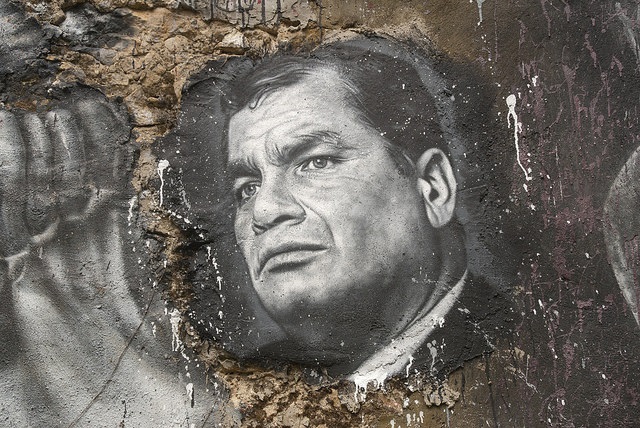
Photo Credit: Thierry Ehrmann / Flickr / Creative Commons

Photo Credit: Thierry Ehrmann / Flickr / Creative Commons

What seemed like a certainty less than a year ago – Ecuadorian President Rafael Correa as a shoo-in for reelection in 2017 – now has given way to competing scenarios as the country’s economic crisis deepens.  The game-changer has been the collapse in revenues from Ecuador’s principal export: petroleum.  With prices for Ecuadorian crude hovering 50 percent below their 2014 average, Correa has had little choice but to slash the abundant government spending that has been the hallmark of his presidency.  Ecuador’s use of the U.S. dollar greatly handicaps its capacity to adjust.  Further aggravating the recession is the economic downturn of Ecuador’s principal external lender, China.  Over $2 billion have been cut from the 2015 budget, and plans to shrink the size of the public bureaucracy are now under way.  His decision in April to suspend the central government’s obligatory payments to the national social security system stoked anxiety about the fund’s future, and an announcement in June of plans to hike taxes on inheritance and real estate transactions sparked street demonstrations around the country.  Indigenous and labor organizations mobilized in mid-August to protest these and other aspects of Correa’s style of governing.  An estimated crowd of 100,000 people marched in Quito.  Scores of protestors were detained and face charges related to the August mobilizations.

The months ahead will not be easy for a president accustomed to buoyant budgets and strong polls.  As one of Latin America’s left-turn leaders, he pushed a state-centric economic model under which poverty declined and the middle class grew.  His approval ratings since he took office in 2007 consistently scored among the highest of any Latin American president.  (They dipped below 50 percent – as low as 42 percent – for the first time in 2015.)  While Correa waxes and wanes on whether he really will pursue reelection, his party is pushing to amend the Constitution through legislation – without a referendum supported by over 80 percent of the public – to allow him a third term.  The opposition strenuously opposes the move.  The National Assembly appears headed toward a final vote on the matter in December.

From now until December, the reelection maneuvering and two possible outcomes will dominate conversations.  Under one scenario, Correa and Alianza País will push ahead with the amendment, ignoring negative public reaction and repressing protests if necessary, and Correa will decide on his candidacy depending on his view of the economy and the state of the opposition.  In a second and perhaps less likely scenario, Correa and his party may just abandon the reelection plan, concluding that the political costs are just too high.  This would set off power struggles within Alianza País over who would head the ticket.  Among the prospective frontrunners are former Vice President Lenín Moreno, current Vice President Jorge Glas, Production Minister (and former Ambassador to the United States) Nathalie Cely, and former Industry Minister-turned-critic Ramiro González.  In the process, Correa will be looking to anoint someone loyal and capable of governing the country until he can return as a candidate in 2021.  Under both of these scenarios, Ecuador is bracing for a volatile year ahead.  Natural disasters – a possible volcanic eruption of Mount Cotopaxi and El Niño – could also fuel uncertainty, giving Correa a chance to shine and rally, or to fail and deepen doubts about his leadership.  After eight years of relative political stability and economic good times, Ecuadorians are pondering whether a post-Correa era could be at hand and what it would mean.

September 8, 2015

* Catherine Conaghan is the Sir Edward Peacock Professor of Latin American Politics at Canada’s Queen’s University and a former CLALS Research Fellow.

Guatemala’s Crisis is Not Over

By Eric Hershberg*

Guatemala City, August 2015. Photo Courtesy of Eric Hershberg.

Guatemala City, August 2015. Photo Courtesy of Eric Hershberg.

With President Otto Pérez Molina’s resignation early this morning, Guatemala lurches into a new phase in its long-running political crisis, with little prospect that this weekend’s elections will resolve much.  The investigations into the Pérez Molina administration’s corruption, the national assembly’s unanimous vote to suspend his immunity, and the peaceful surge in popular protests demanding that he step down all suggest progress in the country’s efforts to build a functioning democracy.  The UN-sponsored Comisión Internacional Contra la Impunidad en Guatemala (CICIG) fulfilled its mandate, and its example and training were arguably important factors in the ability of judicial officials in Pérez Molina’s own government to support the processes that led to his downfall.  (Click here for an AULABLOG assessment of CICIG in May.)  The Congressional vote to strip him of immunity was unanimous, including even his most loyal supporters, who until then had rejected popular clamoring for the president’s ouster.  By the end of last week societal disgust with the political elite had reached the point that even the most recalcitrant of incumbents realized that their own survival required ditching the president.  The comptroller’s office called on him to resign “to avoid greater social unrest that could have unpredictable consequences” – a sentiment echoed by powerful business groups and the Catholic Bishops Council.

The Guatemalan Constitution and laws lay out the next steps.  The Congress has accepted the resignation, clearing the way for Vice President Alejandro Maldonado – who replaced Vice President Roxana Baldetti after she was jailed in connection with the same corruption scandal – to take office.  The first round of Presidential elections, with 15 candidates in the running, will proceed as scheduled this Sunday, despite calls from some civil society organizations to delay the balloting on grounds that the campaign regulations reflect the influence and interests of criminal elements.  In all likelihood, a runoff round will be necessary six weeks later (October 25).  The convulsions of recent months and deep distrust in government suggest that tensions will be high between now and then, but there’s no indication yet that civil unrest could threaten the electoral process, and military intervention appears to be a thing of the past.  There is every reason to expect that a new President will be inaugurated on January 14.

The elections are unlikely, however, to lead Guatemala into an era of less corruption and greater accountability, or to install leadership willing or able to spearhead economic and social policies to enable the majority of the population to live with dignity.  The slogans on the banners of the tens of thousands of protestors in Guatemala City’s central square lacked any message beyond a rejection of the status quo.  “Throw them all out” and “I have no president”are potent rallying cries but do not address the core challenges of a country where the elite pay no taxes, half of all children are malnourished and tens of thousands of young people desperately seek better lives anywhere other than Guatemala.  

The reputations of the leading candidates and their failure to articulate coherent governing platforms give little room for optimism.  Leading in the polls is a wealthy businessman, Manuel Baldizón, whose running mate is already being investigated for corruption and whose own closet is widely understood to contain plenty of skeletons.  Protestors have already singled out Baldizón as unacceptable, taunting him with chants of “it’s your turn next.”  In second place is a comedian named Jimmy Morales, who enjoys the support of the economic elites and media but has advanced no policy platform whatsoever.  Former first lady Sandra Torres appears to be running third.  She divorced President Álvaro Colom in 2011 to circumvent a court ruling that, as First Lady, she couldn’t run for office.  (The Constitutional Court put a final stop to her campaign a month before elections that year.) 

Electoral victory by any of these candidates would leave Guatemala with weak leadership at a time that most government institutions desperately need revitalization.  Corruption is too deep-rooted for CICIG and its few allies in government to face down alone, and these candidates won’t use the presidency to carry out the needed purge.  The organized criminal groups that traffic drugs and persons through the country and permeate governing institutions stand to grow only stronger, and the misery that plagues a population deprived of education, health care and jobs will continue unabated.  U.S. Vice President Joe Biden’s billion-dollar aid package for Guatemala, Honduras and El Salvador, already in trouble in Washington, may have nowhere good to go.

September 3, 2015

*Eric Hershberg, director of the Center for Latin American & Latino Studies at American University, witnessed the protests in Guatemala City last week.