Forced Back to Danger: Why Ending TPS for Honduras Is a Humanitarian Failure

By Josse Martinez and Danjha León Martinez
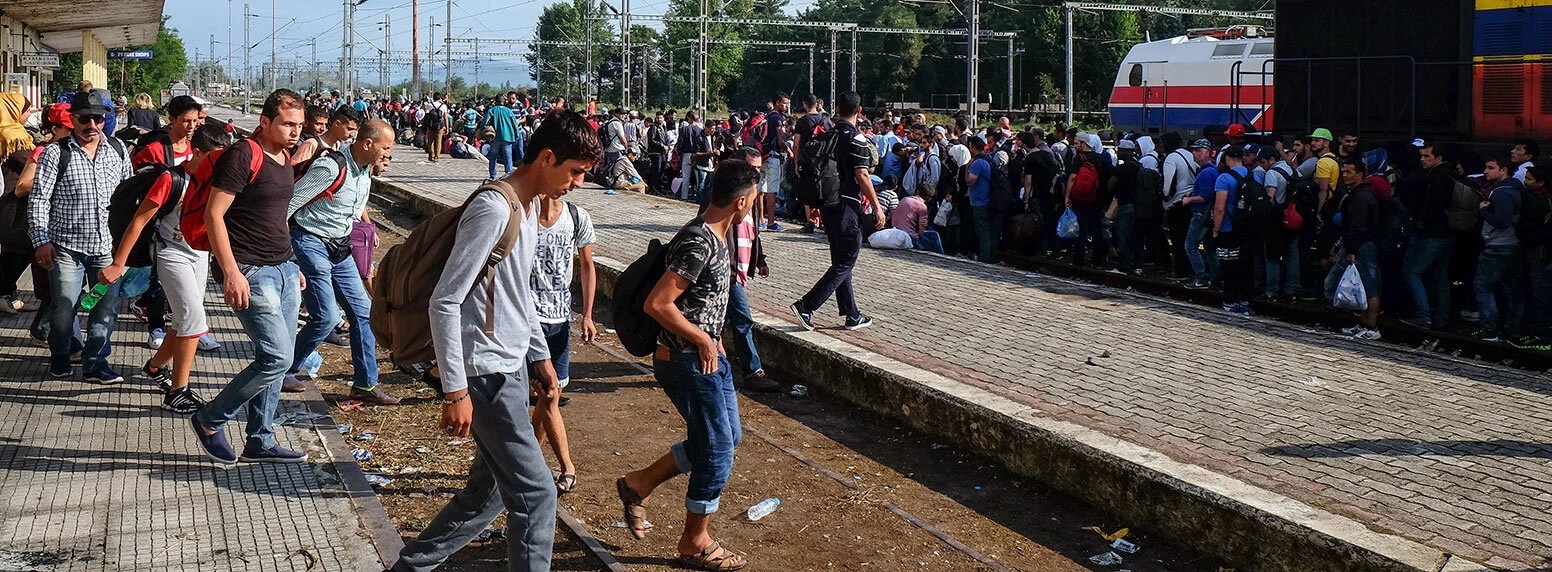
Image Source: https://www.thecaravelgu.com/blog/2021/3/3/central-american-countries-prepare-for-an-increase-in-migrants

When the United States ended Temporary Protected Status (TPS) for more than 57,000 Hondurans in July 2025 (effective September 8), the U.S. government framed it as a routine administrative update. But in humanitarian terms, it was something else entirely: the deliberate withdrawal of a critical protection mechanism in the middle of an ongoing emergency. The U.S. Committee for Refugees and Immigrants warned that the decision “withdraws stability, security, and dignity” from families who have depended on TPS for over two decades. 

TPS is often discussed as an immigration category, but it functions more accurately as an emergency humanitarian protection tool deployed when a state cannot safeguard the lives of its own citizens. The TPS termination for Honduras nationals therefore does not simply change legal status; it actively produces a new humanitarian crisis. The move comes as Honduras faces extreme violence, institutional fragility, climate-driven displacement, and femicides. Sending tens of thousands back now is dangerous and morally indefensible. 

A protection mechanism withdrawn at the worst possible moment 

TPS provides temporary legal status and work authorization to people whose home countries face extraordinary and unsafe conditions. The humanitarian purpose is straightforward: people cannot be returned to danger. Yet the United States now argues that “conditions have improved.” Evidence shows the opposite. Honduras continues to be one of the most violent countries in the hemisphere, combining: 

  • widespread gang control and territorial governance 
  • an overburdened and under-resourced justice system 
  • climate-driven food insecurity 
  • and staggering levels of violence against women and girls 

According to the UN Sustainable Development Group, Honduras has long faced another “pandemic” of gender-based violence, registering femicide rates of 6.2 per 100,000 women. Terminating TPS while these conditions persist is a humanitarian miscalculation that potentially places civilians directly in harm’s way. 

A humanitarian crisis manufactured by policy 

Humanitarian frameworks define crisis as a situation in which civilians cannot survive without external protection. Honduras clearly meets this definition: 1.6 million people require humanitarian aid, the state cannot guarantee basic safety, and threats such as gang violence and femicide operate with near-total impunity. Under international norms, especially the principle of non-refoulement, governments must not return people to countries where their lives or freedom are threatened. 

The U.S. Committee for Refugees and Immigrants warns that ending TPS will “force people deeper into uncertainty and fear,” including individuals who originally fled death threats, extortion, or gender-based violence. In response to the decision, Honduran TPS holders and national advocacy groups have pushed back. The National TPS Alliance, along with the ACLU and other immigrant-rights organizations, filed a federal complaint challenging the termination of TPS for Honduras. The lawsuit argues that the decision was “arbitrary and capricious,” ignored unmistakable evidence of ongoing danger, and violated the government’s humanitarian obligations. This legal action shows that the crisis caused by ending TPS is so severe that civil society had to mobilize in court simply to protect Hondurans from being returned to life-threatening conditions. 

Femicide: The central context of forced return 

Femicide is not peripheral to TPS; it is one of the main reasons Hondurans fled. In 2023, Honduras reached a femicide rate of 7.2 per 100,000 women, one of the highest in Latin America. Organizations like Cattrachas document how gender-based killings intersect with policing failures, institutional corruption, and gang control. 

Many Honduran women losing TPS originally fled because they were being hunted by abusive partners, traffickers, or armed criminal groups. Ending TPS is therefore not simply deportation. It will force women to return to an environment where they are deliberately targeted and where the state fails to protect them. As the Women’s Refugee Commission notes, gender-based violence is a leading driver of forced migration. Repatriation under these conditions directly increases the risk of femicide. 

Community resilience: Art as resistance 

Even as institutions fail, communities in Honduras have built their own forms of protection. One of the most powerful is art-activism (“artivism”). Public art challenges the normalization of violence and preserves memory in ways formal systems often fail to do. The UN Spotlight Initiative has supported art-based gender-violence prevention in 17 Honduran municipalities, using murals, sculptures, and theater to create community dialogue and challenge harmful norms. 

The feminist graffiti duo Dolls Clan (Mayki Graff Ortega and Suam Fonseca) creates public murals honoring victims of femicide and amplifying feminist resistance. Their work turns public walls into spaces of collective mourning and political demand. Public art is a form of humanitarian response: it educates, resists, and keeps victims’ stories alive when formal justice systems fail. But art cannot replace systemic protection. 

The immediate human cost of ending TPS 

Ending TPS triggers four immediate humanitarian harms: 

  1. Family separation: Thousands of U.S.-born children have Honduran parents with TPS. Families now face the devastating choice between separation or relocating to a country many children have never known. 
  2. Economic instability and re-poverty: TPS holders have spent decades building careers, homes, and businesses in the U.S. Forced return pushes them into an already unstable Honduran economy. 
  3. A rise in irregular migration: History shows that ending legal pathways does not reduce migration; it increases undocumented migration as people seek safety through more dangerous routes. 
  4. Exposure to direct violence: Returnees become immediate targets of gangs, extortion networks, police corruption, and gender-based violence. TPS termination does not fix migration. It makes it deadlier. 

A crisis created by political choice 

Ending TPS for Honduras is not a neutral administrative action, it is a political decision with profound humanitarian consequences. It forces thousands back into a country facing intersecting emergencies: femicide, gang rule, climate disaster, and institutional collapse. While communities fight to maintain dignity and memory, the U.S. is withdrawing one of the only forms of international protection Hondurans have left. It abandons a protection promise the United States upheld for more than two decades. If the United States seeks to honor its humanitarian commitments, it must extend TPS or redesign it as a pathway to long-term stability, not dismantle it. Protection should never depend on political cycles. Lives depend on it. 

Josse Martinez is a Global Governance, Politics, and Security (GGPS) graduate student at American University. He is of Honduran and Guatemalan descent.

Danjha Leon Martinez is a Research Assistant for the Immigration Lab at the Center for Latin American & Latino Studies. She is a Development Management graduate student at American University with a focus on humanitarian aid and global migration
Testimonies of Sexual Violence while Migrating from Latin America

Image Source: https://www.flickr.com/photos/rentman1225/26864902068/

By Maggie McMahon   

Sexual violence during migration journeys is rarely addressed in the current political climate. Yet this issue is rampant for many migrants, especially those making the journey from Latin America to the United States. The personal experiences and testimonies from those who completed this journey provide valuable insight into the dangers that migrants face in this region. This problem demands more attention, as it is one of the many dangers that migrants face while attempting to reach the U.S. 

In her late 20’s and from Ecuador, Verónica details her lengthy and dangerous journey to the United States, where she walked many miles to the US-Mexico border and experienced rough traveling conditions, including falling off a train.

Ay me están esperando llorar. Bueno, sufrí mucho, pasé mucha hambre, dormí en parque—muchas cosas feas…Bueno, después de eso, yo cambié de tren y me subí a otro tren que ese sí era el que me traía, pero ese tren se quedó 3 días en el desierto. Ahí entonces yo como que le daba gracias a Dios de no haberme subido a ese tren porque yo me pude subir, pero me dio miedo y no me subí, pero mucha gente se subió y algunos se cayeron, incluidos niños. Bueno, ese tren me avanzó hasta la frontera, de ahí yo me bajé y camine bastante. Yo llegué a este país con los pies podridos ensangrentados porque yo caminé artístico.[1]

Oh, this is making me want to cry. Well, I suffered a lot. I went very hungry, slept in a park—many ugly things… Well, after that, I changed trains and got on another one, the one that was supposed to bring me here. But that train stayed stranded in the desert for three days. At that point, I felt like thanking God for not getting on the earlier train. I could have boarded it, but I was scared and didn’t. Many people did get on, and some fell off, including children. Well, that train took me to the border, from there I got off and walked a lot. I arrived in this country with rotten feet, bloodied because I walked a tremendous amount. 

When asked if she felt in danger during her trip, Verónica shared her experience in Guatemala:

Uh no yo siempre diré que Guatemala es el peor país que yo pude conocer ahí, así que no te digo. A mi en bus me tocaron los senos, las partes íntimas. Me sacaron todo el dinero.

Oh no, I will always say that Guatemala is the worst country I could have known there, so I tell you. They touched my breasts and private parts on the bus. They took all my money.

After arriving in the United States, Verónica’s friend provided her a place to stay and food for a few weeks. She now works as a delivery driver.

Another woman, Mariana, also shared her experience with sexual violence during her journey. In her fifties and from El Salvador, she has been in the US for over two decades. During her journey from El Salvador, she recalls that:

Fíjese que yo fui víctima de eso. No llegar al acto sexual porque gracias a Dios no me llegaron a violar, pero en el camino para acá si fui tocada por los hombres. Puedo recordar de que no sé si todas percibirán eso, pero yo sí lo viví. Sí. Sería porque yo cuando venía ya venía …, pero yo parecía… yo era bien delgadita, parecía una niña de 14 años. No sé si por eso es que abusaron de mí de esa manera. Pero sí pudeir tocada por más de 2 hombres en el camino. 

I remember that I was a victim of that. Not in a sexual act, thanks to God, they did not rape me, but on the way here I was touched by men. I can remember that I didn’t know if anyone else sees that, but I did experience that…it must have been because when I came…I seemed to be very thin, I looked like a 14-year-old girl. I don’t know if that’s why they abused me in that way. But I was touched by more than 2 men on the way.

Mariana’s story demonstrates how persistent the dangers of migration have been for women over the years. 

These instances of sexual assault are not isolated. Samuel, born in Colombia in the late 1990s, migrated to Venezuela as a child due to political violence and the unfavorable economic situation. He moved to Brazil as a young teen to work in the mines after his parents separated and migrated to the US in 2024. 

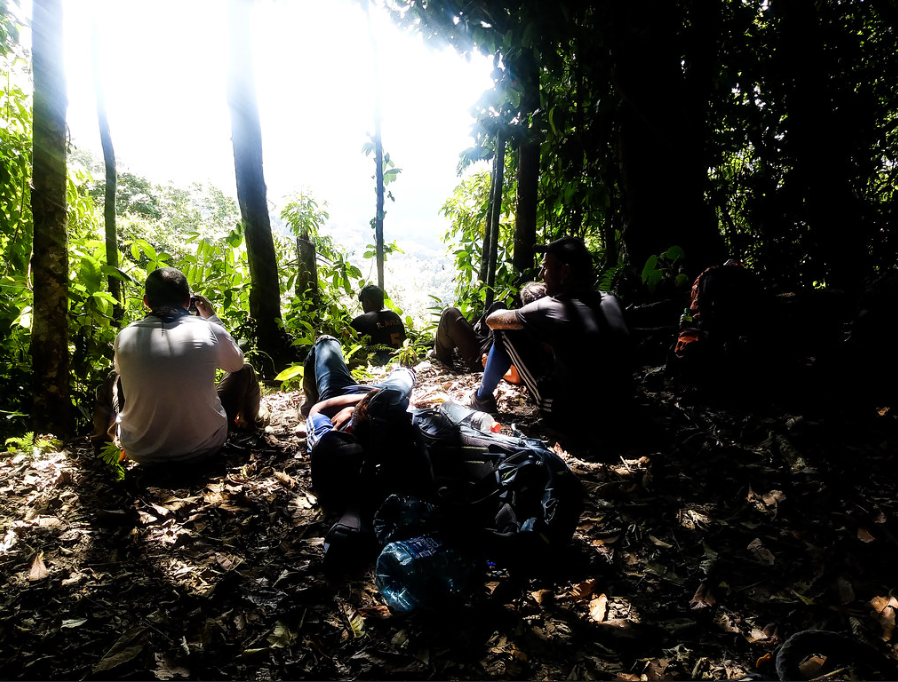
While traversing the Darién Gap, a remote thick jungle crossing between Colombia and Panama, David witnessed many violent situations. The Darien Gap is known for its dangerous and difficult conditions, with many people experiencing gang violence, crime, sexual violence, disease, and death. 

David reported that while on the Panamanian side of the Darien Gap, he witnessed a group of Indigenous men rape a woman traversing the crossing. He also saw this group of men shoot the woman’s husband. 

Hay indios que agarraron a una mujer y se la violaron. Y al esposo… viendo que están pasando eso, el esposo se le baten o se levanta, le pegan un tiro. El indio agarró con una escopeta y le pegó el tiro. Puso, se lo pegó aquí… Así, puff, le pegó el tiro aquí …. Ahí quedaron los dos y salieron los indios. Antes habían robado y todo, pero después estaban violando a la mujer ahí ante el grupo. 

There are Indians who grabbed a woman and they raped her. And the husband … seeing that they are going through that, the husband fights him or gets up, they shoot him. The Indian grabbed a shotgun and shot him. He put it, he stuck it here… So, poof, he shot him here…. The two of them laid there and the Indians left…Before, they had robbed and everything, but after they were raping the woman there in front of the group.

Sexual violence is unfortunately a common experience in the Darién Gap. Other migrants we interviewed also reported witnessing instances of it, as with the case of Mauricio. Born in Venezuela, Mauricio migrated to the US four years ago to find better opportunities for his three young children. He traveled to Caracas, Venezuela and then on to Colombia and Peru. During his migration, Mauricio faced many dangerous situations, such as sleeping on the streets and crossing the jungle. As he recounts: 

En Panama fui testigo una violencia que pasó pero eso fue ya entrando en la selva. Violaron una niña y alguna mujer. Entonces yo estuve ahí, o sea, fui vi todo con mis ojos y fui testigo de eso.

In Panama I witnessed violence that happened, but that was already deep in the jungle. They raped a girl and a woman. So, I was there, that is, I saw everything with my eyes and witnessed that. 

Instances of sexual violence were then increasing in the Darién Gap since Panamanian authorities were not monitoring the crossing. Additionally, many instances of sexual violence go unreported due to stigma and shame. With the absence of policing in these remote largely uninhabited areas, armed criminal groups are able to take advantage of vulnerable people traversing the crossing.  Though lately, the Panamanian government has mobilized the army to patrol those areas, as movement north has decreased and now many people are heading south.

Sexual violence have long-term psychological and physical impacts for those who experience and witness it. Victims of rape can suffer sexually transmitted infections, unwanted pregnancies, and physical trauma. Sexual violence can also cause feelings of depression, anxiety, PTSD, and social isolation, as well as heighten an individual’s risk of substance abuse.

Given the ongoing instability faced by many Latin American countries, migration through the Darién Gap is likely to increase. Panamanian authorities must take further action to closely monitor the dangerous conditions in the crossing and provide support for the vulnerable populations crossing it. Greater support for the physical, psychological, and financial needs of migrants should also be implemented in the United States. 

Maggie McMahon is a research intern at the Immigration Lab. She is a senior majoring in international studies. 

Edited by Elizabeth Angione and Vincent Iannuzzi-Sucich


[1] This and the following accounts have been taken from interviews conducted with recent arrivals to the Washington DC-metro region and New York City as part of an ongoing research project of the Immigration Lab in American University’s Center for Latin American and Latino Studies. This project received IRB approval. Given the vulnerability of this population, we have taken steps to ensure the human subjects involved are protected, including eliciting the consent of all research subjects, the use of pseudonyms, and elimination of any individually identifying information.

Europe, an Alternative to the United States for Central American Immigrants

by Jonathan Valenzuela

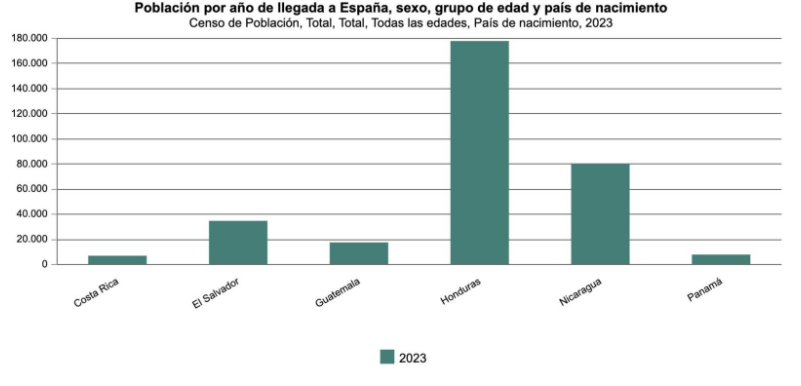
During President Trump’s first term (2017-2021), a variety of immigration policy changes were implemented, which contributed to a shift in migration from Central America away from the United States and towards Europe. Now, in his second term more extreme anti-immigration policies alongside the rollback of Biden-era practices, such as the ending of the CBP One app, similar shifts of destination countries for Central American immigrants may continue. In 2023, it is estimated that there are about 4.3 million Central American immigrants in the United States, and 323,000 Central American immigrants in Spain.  

Source: Instituto Nacional de Estadística (https://www.ine.es/jaxiT3/Tabla.htm?t=70341)

Migration of Central Americans to the United States and Europe began during the armed conflicts of the 80s and 90s. It marked the start of a migration pattern which has only continued to grow. The most recent wave of Central American migrants to Europe began with Nicaraguan women in the mid-2000s to the early 2010s. 

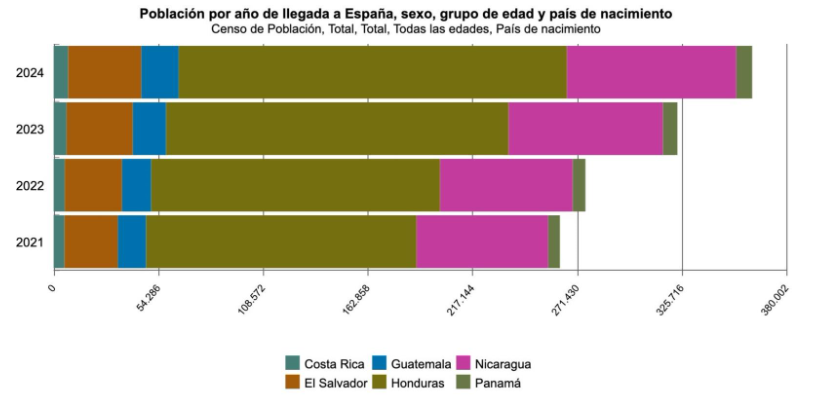
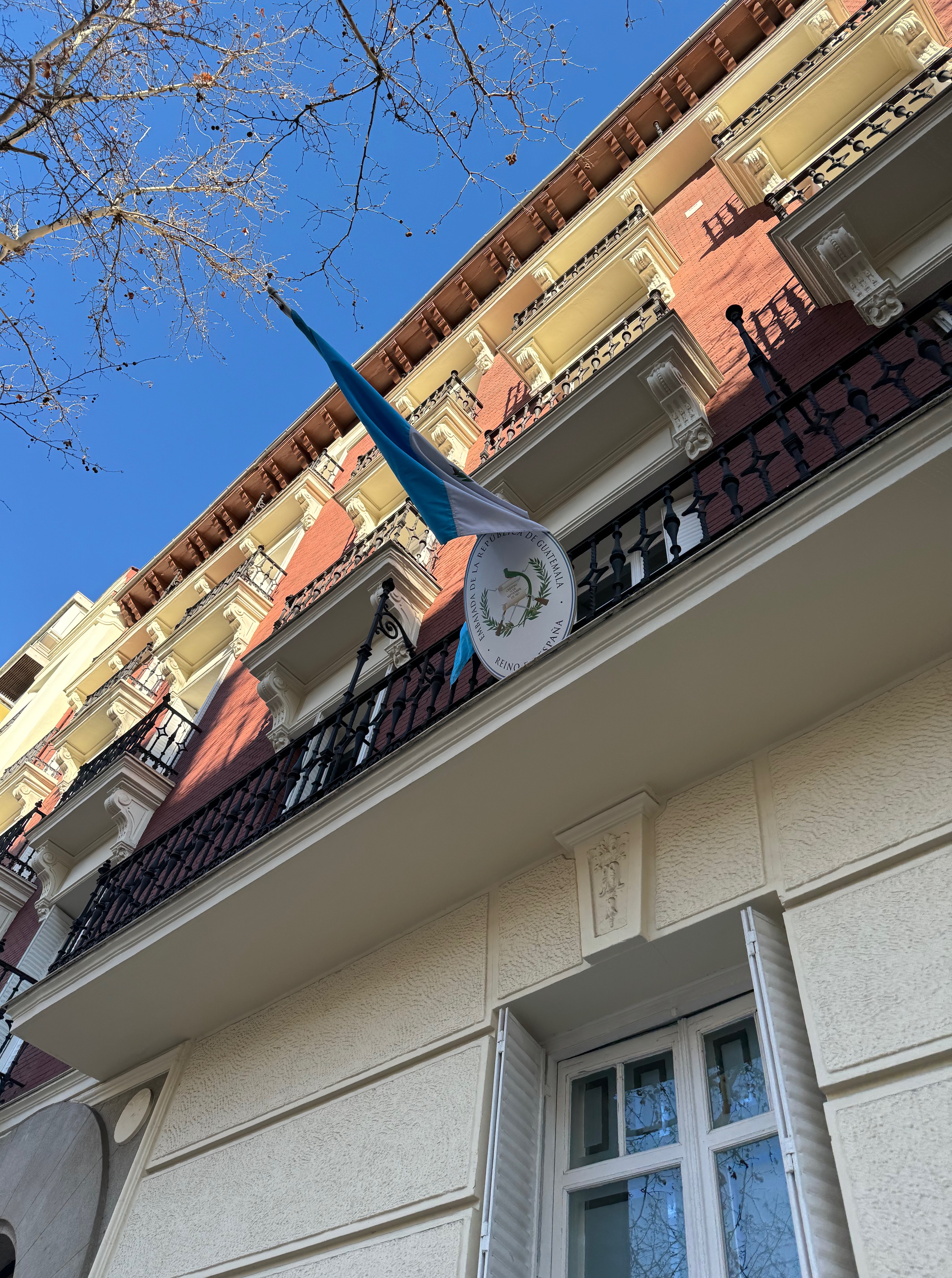
The largest Central American population is in Spain, with Hondurans most prevalent in Catalonia, Nicaraguans in the Basque Country, and Salvadorans in Madrid and increasingly in Seville. These populations have concentrated in these regions primarily because of established immigrant communities, strong labor markets, and an unmet need for labor in sectors such as elder or childcare. Notably, the population of Central Americans in Europe is composed primarily of Hondurans, Salvadorans, Guatemalans, and Nicaraguans. Costa Rican and Panamanian immigrants remain at a smaller number than those from the other four countries.

The outlook of Central American immigrants in Spain is both different and like those in the United States. On one hand, many female members of both communities work in domestic jobs such as childcare or housekeeping, but a main difference is that the Central American home in Europe is headed by the women of the household, who struggle less to find jobs than men do.  

The acceleration of Central American immigration to Europe has notably grown because of the increased militarization of the United States’ southern border and policy changes since the first Trump administration. The increased difficulty of migrating to arrive to the United States made Central Americans seek other destinations. Spain is a solid option because of the ease of entering the country due to a lack of visa requirements, a perceived welcoming environment, an easier immigration process, a shared language, and similar cultural elements. From 2021 to 2024, the number of Central American immigrants in Spain grew by some 60,000. 

Source: Instituto Nacional de Estadística (https://www.ine.es/jaxiT3/Tabla.htm?t=70340)

The United States is the preferential destination for most Central American as it is the home of the largest diasporas. Experts agree that increased hostility on the Mexico-U.S. border, especially during the first Trump administration, is tied to the increase of Central American immigration to Europe. Through increased collaboration with Spain, the United States seeks to reduce the flows of immigration from the region towards itself, but not necessarily to stop it altogether. 

Now, it is only a matter of time until this pattern further evolves with the second Trump administration, which has signaled its desire to further deter immigrants from entering the country. Regardless of the paid ads or policy changes the administration pushes, people will continue to immigrate.  

Spain has continued to receive immigrants from Latin America and is considered to have “solved” immigration and it has the fastest growth of any European economy thanks to immigration. However, with anti-immigration protests in the country and throughout the world, the question remains whether these deterrent efforts will successfully push Central American immigrants to other destinations? And how long will these destinations such as Spain remain open to Central Americans before they decide to implement stricter migration policies as well? Or whether we are starting to see an equilibrium between the people needing to leave Central America, the people settling in other countries in the region, Mexico, the United States, and Spain, and the decrease in gang violence and economic opportunities in Central America.   

Jonathan Valenzuela Mejia is a Guatemalan-American legal professional based in New York City. He completed a B.A. in Global Studies and a B.A. in Public Affairs with a minor in Central American Studies from UCLA. 

Edited by Ernesto Castañeda, Director of the Immigration Lab and the Center for Latin American and Latino Studies.