Brazil: Corruption of Anti-Corruption

By Fábio Kerche*

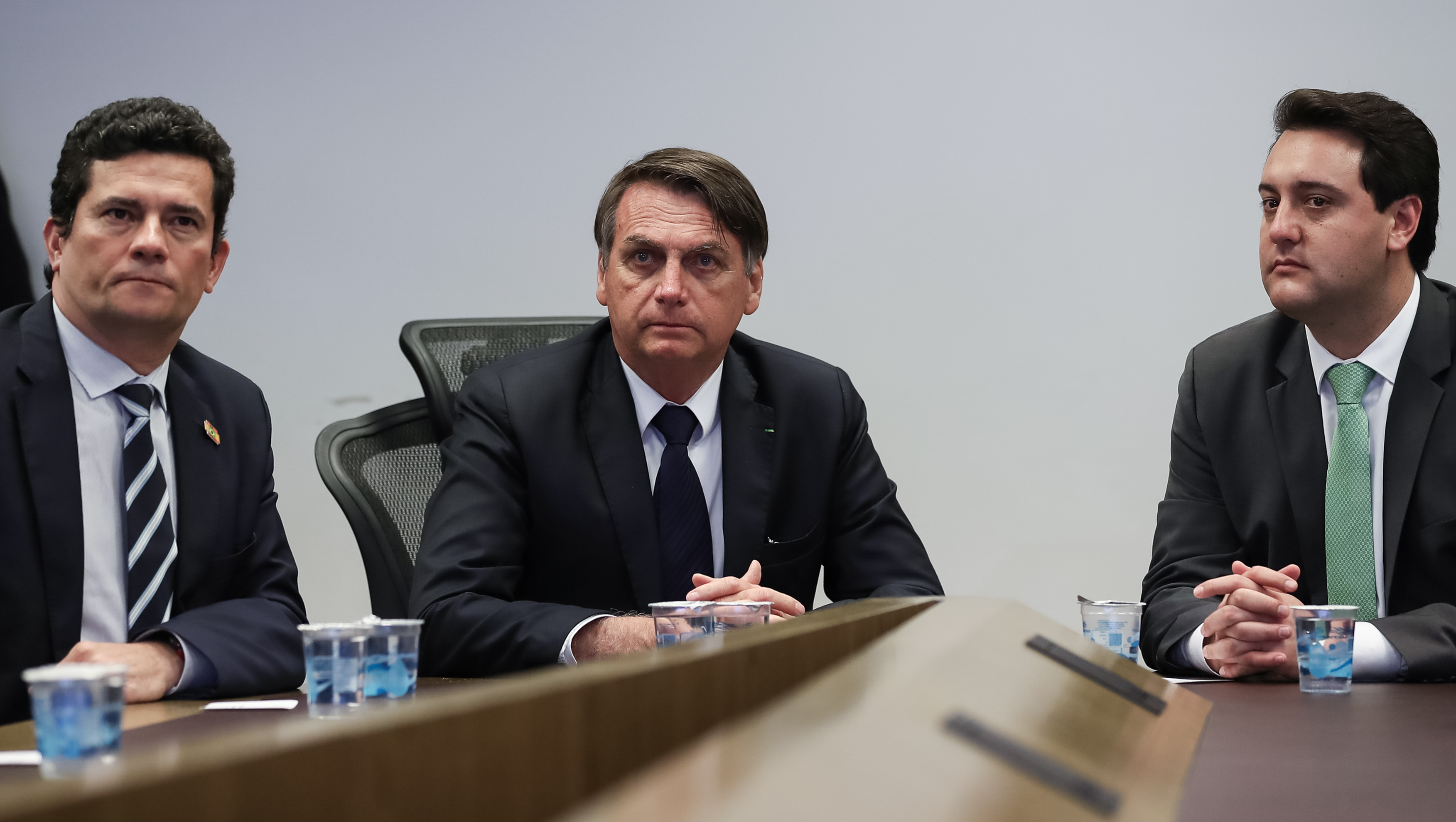
Moro, Bolsonaro, and Paraná governor Ratinho Júnior seated during a visit to the Integrated Center of Intelligence and Public Security of the Southern Region in May 2019.

Moro, Bolsonaro, and Paraná governor Ratinho Júnior during a visit to the Integrated Center of Intelligence and Public Security of the Southern Region in May 2019/ Marcus Correa/ Wikimedia Commons

New revelations about the political objectives and operational decisions of Brazil’s Lava Jato anti-corruption investigators have dealt a blow to their credibility and to the legitimacy of President Jair Bolsonaro’s election. The “Car Wash” Operation began in 2014, with prosecutors and Judge Sérgio Moro leading what was seen as a crusade against corruption and in the process becoming heroes for significant portions of society. It started with an investigation into Petrobras, the biggest state-owned company, and spread across several sectors of the economy. Although the activities of several political parties came under scrutiny, the left-wing Workers’ Party (Partido dos Trabalhadores – PT) suffered the most. President Dilma Rousseff was impeached and removed from office, and President Lula da Silva was arrested – opening the path for Bolsonaro, a far-right politician with an undistinguished political biography, to win the 2018 election.

  • Bolsonaro appointed Lava Jato judge Moro as his Minister of Justice – a move cited by some observers as evidence of the new President’s commitment to fight corruption. Others, however, were concerned that Moro’s acceptance of the job confirmed long-held suspicions, based on his own statements against Lula, that the lawsuit against the former president was a political farce to get him out of the race. Critics said the new job was Moro’s reward for putting Lula, who was leading in all polls during the campaign, behind bars. Some political analysts and journalists even speculated that Moro would run for President in 2022.

The Intercept, a news website co-founded by Pulitzer-winning U.S. journalist Glenn Greenwald, has published internal messages between Moro and Lava Jato prosecutors that confirm they had a political agenda. The communications confirm several violations of the law and ethics.

  • According to Brazilian law, prosecutors and judges cannot exchange information about cases outside of court, particularly in a secret way. Judges, according to the legislation, should listen to the prosecution and the defendant’s attorney in an equitable way. A judge exchanging messages by Telegram with a prosecutor about a lawsuit is illegal.
  • Moro took a firm hand in directing the prosecution team – another violation of LOMAN (Organic Law of the Judiciary). The Intercept has so far released only 1 percent of the conversations, but the information already shows that Moro criticized members of the team, gave others tips on how to proceed, asked for new police operations, recommended press strategies, steered investigators away from looking at possible wrongdoing by former President Cardoso, and undertook other initiatives. Lula’s defense did not have the same “opportunity”: the judicial balance weighed heavily on the prosecution side.

Moro has not been dismissed in the wake of these revelations, and the charges against Lula have not been cancelled – as would have happened in a less turbulent political environment. But there are clear signs that Moro has been losing support in Brazilian society. Even the news media who transformed him into a hero now criticize how he handled Lula’s case, and persons who supported Lula’s arrest now affirm that the former president should be released. The Brazilian Bar Association and some Judges Associations are openly criticizing Moro. Talk of Moro getting a seat in the Supreme Court or running for president in 2022 has evaporated.

Moro and his cohorts’ crusade against the alleged corruption of PT leaders whose politics or style they didn’t like amounts to use of the Judicial System to interfere in politics – if not criminalize what, in many ways, are normal political activities. The apparently illegal alliance between Moro and prosecutors seems to leave little doubt that Lula was convicted in an unfair trial based more on biased opinions rather than objective evidence. His supporters’ claim that he is a political prisoner increasingly makes sense. The Brazilian judicial system is supposed to give every citizen a fair and balanced trial. Although annulling Bolsonaro’s election seems impossible, the fact has been established that Moro was able to interfere in the electoral process by removing the leading candidate from the presidential race. The judicial fraud that marred the 2018 election has dealt yet another blow to Brazilian democracy.

June 28, 2019

* Fábio Kerche is a Researcher at Casa de Rui Barbosa Foundation and Professor at UNIRIO and IESP/UERJ in Rio de Janeiro. He was a CLALS Research Fellow in 2016-2017.

Central America: Hybrid Anti-Corruption Commissions Can Work

By Chuck Call*

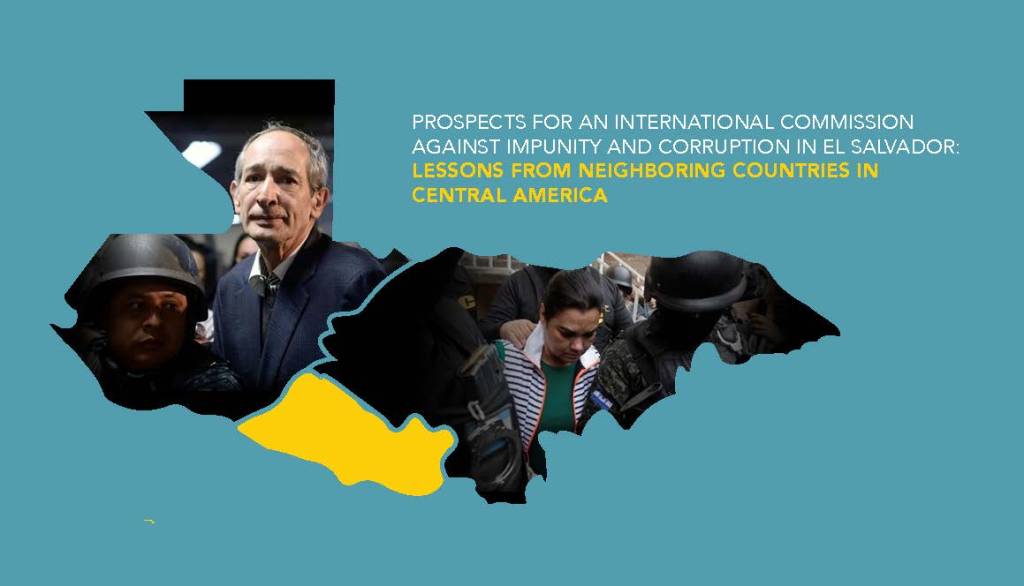
Map of Guatemala, Honduras and El Salvador, with Guatemala and Honduras territory being covered by photos of well-known politicians being arrested.

Prospects for an International Commission against Impunity and Corruption in El Salvador: Lessons from Neighboring Countries in Central America logo / CLALS / https://www.american.edu/centers/latin-american-latino-studies/Prospects-for-an-International-Commission-against-Impunity-and-Corruption-in-El-Salvador-Lessons-from-Neighboring-Countries-in-Central-America.cfm

If newly inaugurated Salvadoran President Nayib Bukele pursues his campaign calls for the creation of a hybrid international commission to fight corruption and strengthen judicial institutions, he will face tough challenges from entrenched interests. However, the experiences of Guatemala’s CICIG and Honduras’s MACCIH show that a strong investigative mandate, close partnership with vetted national prosecutors, strong international backing, and transparent accountability will increase the chances of success of any such mission. (Full text of the study is here and aquí.) CICIG and MACCIH were born of political crises, but they were given different authorities, faced different expectations, and delivered different results.

  • Both missions have had historic investigative and prosecutorial achievements – bringing former and current senior officials to account as never before and putting powerful elites on notice that impunity will not be tolerated. CICIG has dismantled corrupt networks, exposing their reach into the Congress and the Cabinet, indicting hundreds. MACCIH has helped indict dozens of legislators and a former First Lady. Working with special units of prosecutors, they have also contributed to local institutional capacity to root out corruption.

Both CICIG and MACCIH have struggled against the pressure tactics of the many corrupt officials, legislators, and economic interests who most feel threatened by them. In contrast to Guatemala, where CICIG was key to the adoption of several laws that served as a foundation for effective investigation of organized crime, the Honduran Congress has refused to pass such laws. Legislatures in both countries have changed laws specifically to vitiate prosecutions (including of themselves) advanced by the missions. Corruption among judges, especially in Honduras, has made winning convictions extremely difficult. After CICIG shifted its sights beyond politicians to powerful businessmen a few years ago, Guatemalan elites launched a campaign to smear CICIG as an incursion on sovereignty and a socialist plot. Both missions have confronted constitutional challenges.

Key lessons from CICIG and MACCIH’s experience include:

  • Realistic expectations are important. The legal and diplomatic negotiations and logistics necessary to set up “hybrid” units combining domestic and international investigators slowed both entities’ starts. It took over two years for CICIG to secure its first convictions, and MACCIH’s investigations have led to only 12 cases, although these are major corrupt networks. The focus of many Hondurans on ousting President Juan Orlando Hernández has obscured some of the important cases advanced by the mission and its Honduran partners.
  • Anti-impunity missions can threaten systems of political and economic power in ways that go beyond judicial processes. Despite the technical and juridical character of both the missions, they have exposed in detail how criminal enterprises interact with political parties, elected, and appointed officials, and current and former security officials. The missions have also detailed how legislators receive illicit campaign funds and how they fraudulently spend public monies, forcing changes to these decades-old corrupt practices. In Guatemala, the prosecutions have dismantled corrupt networks involving cabinet ministers, generals, top business leaders and the former president and vice president, altering the political profile of parties and undermining the ability of prominent and corrupt elite structures of power to operate.
  • Strong partnerships with national prosecutorial units and with civil society are crucial for success and sustainability. CICIG and MACCIH could not have achieved what they did without close cooperation with carefully selected and vetted prosecutorial units. Those units, especially the UFECIC in Honduras, carried out much of the investigation and led the prosecution in both countries. The legacy of the hybrid missions rests in the future of these empowered professionals and society’s raised expectations of clean behavior from their public officials. Both missions have generated a greater sense that high-level politicians, officials and elites can be imprisoned for corruption and organized crime. Yet these missions have not heeded or informed civil society as much as they might have. Moreover, these experiences and the likely end to both missions in the coming months show that civil society is vital to educating society on the importance and possibility of accountable governance, and for demanding it from politicians and the justice system.
  • International sponsorship brings both advantages and challenges. The association with the UN (for CICIG) and the OAS (for MACCIH) has brought valuable political legitimacy, professional capacity, and needed resources. But it has also brought complications. In the case of MACCIH, slow and politicized appointments, questionable allocation of resources, and excessive day-to-day oversight from Washington, not to mention personal spats and undue interference by specific member states, have undermined performance and credibility. CICIG’s status as a non-UN body gave its commissioner the independence needed to take on tough cases and ignore political considerations. However, that lack of accountability is seen as having contributed to the alienation of many sectors in ways that left it politically vulnerable. Wavering U.S. support for CICIG since 2017 has emboldened the missions’ critics.

The experiences of CICIG and MACCIH show that, despite ups and downs, hybrid international-national missions can help a society fight corruption. In Guatemala and Honduras, these commissions achieved more than most observers originally predicted by dint of the vision and discipline of their leaders and sponsors as well as the work of courageous national officials and civil society groups often risking their livelihoods and lives. Their performance also shows that getting the mission right and sustainable takes time, communication, and strong partnership with national prosecutors. The main challenge now is that corrupt officials and businesses have become proficient at blocking investigations, prosecutions, and convictions.

  • Creating an International Commission against Impunity in El Salvador (CICIES) may be harder now than before CICIG and MACCIH scored their victories. However, President Bukele may have a historic opportunity to press the country’s two main (but weakened) parties, ARENA and the FMLN, to approve a strong mandate that fits the country’s particular needs. Experts advising then-President Mauricio Funes (himself ironically now on the lam for alleged corruption) concluded in 2010 that the country’s Constitution provides the basis for an international mission with a sufficiently strong investigative powers to have impact. The Guatemalan and Honduran missions show that a strong mandate and significant national and international backing could improve help El Salvador’s justice system reduce corruption and impunity. Such efforts may also have comparable impact in exposing in dirty detail, and perhaps reforming, unaccountable and exclusionary systems of political representation.

* Chuck Call teaches International Peace and Conflict Resolution at American University, where he directs a Center for Latin American & Latino Studies project analyzing MACCIH and anti-corruption efforts in Honduras.

Haiti: Building Democratic Institutions?

By Fulton Armstrong

A bus burning with thick clouds of black smoke billowing above it, and two men on a motorcycle riding by.

Riots in Haiti, February 2019 / AP/ Wiki Images / Creative Commons

Haitian President Jovenel Moïse is trying to end a months-long political crisis by dumping his Prime Minister, but he doesn’t seem to be addressing the underlying causes of last month’s violent protests, and scandal continues to swirl around his apparent role in a bizarre operation involving heavily armed U.S. “security specialists.” Protesters who took the streets in early February accused Moïse and close allies, including former President Michel Martelly, of diverting billions of dollars gained from the sale of fuel under Venezuela’s Petrocaribe program – money that should have gone to development programs – before he took office in 2017. They also complained about the continued economic decline under Moïse. Roadblocks around Port-au-Prince and elsewhere brought the country to a halt. Some 41 deaths were reported. The U.S. Embassy evacuated non-emergency personnel and warned persons “not travel to Haiti due to crime and civil unrest.”

  • Moïse made no public statements until after eight days of rioting, when he said, “I hear you.” Reiterating his pledge to resist opponents calling for him to step down, he said, “I will not leave the country in the hands of armed gangs and drug traffickers.” He mobilized supporters in Congress to pass a no-confidence resolution removing Prime Minister Jean-Henry Céant, with whom he had been publicly feuding, just days after the six-month anniversary of his appointment, at which point he could legally be removed from office. But Moïse has not addressed the corruption charges, nor announced any plans to revitalize the economy except by negotiating a new loan from the IMF.

The appearance and disappearance of U.S. operations specialists, who were armed with assault weapons, drones, satellite phones, and other equipment, remain a mystery. Members of the team have offered different versions of the purpose of their mission, perhaps reflecting different cover stories they’d been given, but several scenarios involve moving something sensitive – money, people, or computer technology – out of or into the Central Bank, with Moïse seemingly at the heart of the mission. The team was arrested before the operation could be completed, and Moïse and his Justice Minister got them released. The U.S. Embassy helped spring them from police custody and helped them depart the country even before they could be arraigned. U.S. authorities, after meeting them planeside in Miami, released them without charge. (The Embassy reportedly told the Minister of Justice that the U.S. Government would bring arms trafficking charges against them.)

  • Moïse’s opponents claim that Washington aided the exfiltration in return for his increasingly close alignment with President Trump and U.S. Senator Marco Rubio’s priorities, including Haiti’s first-ever vote in January on a resolution rejecting the legitimacy of Venezuelan President Maduro’s second term. Perhaps related: U.S. support was important in the IMF decision earlier this month to extend loans for $229 million at 0 percent interest. The deal will move ahead after Moïse gets a new Prime Minister confirmed. Rubio visited Moïse in Haiti last week, and Trump met the Haitian President, along with other Caribbean leaders who voted with the United States on Venezuela, last Friday at Mar-a-Lago.

If precedent is any guide, Prime Minister Céant almost certainly had a hand in stimulating the February riots, and his accusation that the U.S. security team members were “terrorists” seems far-fetched and politically motivated. But he may have correctly sensed that the armed operations team’s purpose involved an effort by Moïse or his powerful mentor, former President Michel Martelly, to shut down any additional snooping into their activities and the whereabouts of the Petrocaribe profits. Moïse appears likely to continue looking for ways to curry favor with Washington as a means of gaining U.S. support and forbearance. Indeed, U.S. willingness to hustle the security team out of the country before they could face a judge would suggest that Moïse knows how to poke holes in the United States’ stated commitment to the rule of law and democratic institutions.

Peru: President Vizcarra Surprisingly Paves the Way for Liberal Project

By Carlos Monge*

actualidad-salvador-solar-y-su-nuevo-gabinete-juran-al-cargo-esta-tarde-n362718-603x339-558655

Prime Minister Salvador del Solar and President Martin Vizcarra / canaln.pe / Creative Commons

One year in office, Peruvian President Martín Vizcarra has made significant strides toward strengthening neoliberal economic policies and opening the way for a liberal project in Peru – while maintaining 50 percent popular support.  Prime Minister César Villanueva took the hit for a fall in the polls last week, setting the stage for Vizcarra to name a new cabinet this week to give a push to his agenda.  The new Prime Minister – lawyer, actor, and film director Salvador del Solar – espouses a market economy with strong state regulations against corruption, tax evasion, and monopolies, while defending human, women’s, and LGTIBQ+ rights.

  • His opponents have been weakened. Former President Alberto Fujimori is back in jail, his presidential pardon revoked.  His older daughter, Keiko, is in prison, while awaiting trial on corruption charges, and his younger son, Kenji, is under investigation for links to drug trafficking.  Fujimori family long-time confidant Jaime Yoshiyama returned from the United States directly to prison for violations of campaign finance laws.

None of this seemed remotely possible only a year ago when Vizcarra, a Vice President, returned to Peru from his posting as Ambassador to Canada and, on March 23, was sworn in as President, after President Kuczynski resigned amid serious corruption charges.  Indeed, Vizcarra appeared destined to be a weak president facing a strong and ruthless parliamentary opposition.  The question then was if he would last or, rather, when he would fall.  Vizcarra initially seemed to follow his predecessor’s appeasement policies, attempting to govern without the permanent obstruction of a Congress dominated by Keiko Fujimori’s Fuerza Popular and its close ally, APRA.  He even consulted with Keiko about potential cabinet members and important policy matters.  Keiko, on the other hand, remained convinced that she should have won the 2016 elections and sought to govern the country through her control of the Congress, even hoping to generate a political crisis leading to new national elections that she was sure she would win.

  • Vizcarra soon grasped Keiko’s intentions and sided with citizens’ widespread indignation caused by the leak of audio recordings that confirmed enormous levels of corruption in the judiciary and its connections to political parties such as Keiko’s Fuerza Popular and APRA. Despite desperate efforts by these parties and their allies in both the judiciary and the General Attorney’s office to block ongoing investigations, both Keiko and Alán García, the APRA leader and former national president, were in serious trouble.  Vizcarra embraced the anti-corruption platform and confronted head-on the same leaders and parties he had initially tried to appease.
  • Bypassing the Fuerza Popular and APRA’s domination in Congress, Vizcarra succeeded in organizing a referendum last December that approved a package of reforms he proposed to reduce corruption. (He even convinced citizens to vote NO on one of his four reform proposals – the return to a two-chamber parliament – after Fuerza Popular and APRA introduced a provision that would open the way for parliamentary re-election in 2021, which another reform prohibited.)  With an average of 80 percent of voters supporting his position on all four measures, Vizcarra scored a huge victory– clearing the way for him to move forthrightly on his political and economic agenda.

Early posturing for the 2021 elections shows that Vizcarra may have opened a previously nonexistent space for liberal politics in the country.  In fact, his new Prime Minister has presidential aspirations and Julio Guzmán and his Partido Morado have recently registered, and they are –as Vizcarra is – – a “liberal” or “sort of liberal” politician.  The traditional right, including Fuerza Popular, APRA, the CONFIEP business guild, and others, have strongly criticized the values and economic views of the new Prime Minister, but the days that the only face of the right was a mix of state capture by large economic groups and conservative values and policies – a mix Alán García and Keiko Fujimori represent so well– seem to be over.  The emergence of a liberal project also represents a challenge for the left, traditional champion of liberal values.  If those liberal values now find liberal champions, the left will have to remain true to them while – at the same time – displaying its total opposition to the continuity of neoliberal economic policies and pushing for a set of distinctly leftist policies in the social, environmental and cultural realms.

March 15, 2019

* Carlos Monge is Latin America Director at the Natural Resource Governance Institute in Lima.

Honduras: MACCIH Still Trying

By Aída Romero Jiménez

MACCIH Feb.22.2019

Luiz Antonio Marrey, Special Representative of the Secretary General, Spokesperson of the MACCIH / Flickr / Creative Commons

MACCIH, the OAS-sponsored mission to support the fight against corruption and impunity in Honduras, continues to investigate cases but with a lower profile than one year ago– and under growing political pressure.

  • Without MACCIH, most observers believe, cases like La Caja Chica de la Dama – for which ex‑First Lady Lobo is awaiting trial in prison – would not have developed. MACCIH is also credited with shutting down the Red de Diputados, a network of Congressmen accused of misappropriating government funds; the Pacto de Impunidad o Fe de Erratas, legislation that effectively shielded Congressmen involved in the Red; the Pandora case, which accused 38 lawmakers of stealing funds from the Ministry of Agriculture; and serious charges against former President Lobo’s brother.
  • Although MACCIH provides important leads and analytical capacity to UFECIC, the special prosecutor unit created to investigate corruption cases, its most valuable support comes from the political cover it provides as an internationally sponsored entity. It is often the public face of anti-corruption efforts in the country, even though Luiz Antônio Guimarães Marrey, the spokesman since last June, and his deputy have significantly scaled back their use of social media since the previous spokesman, Juan Jiménez Mayor, irritated the government with his public profile.

MACCIH’s successes have provoked resistance and, at times, a strong backlash from powerful sectors that feel threatened by its work, not unlike what has occurred with the International Commission against Impunity in Guatemala (CICIG).  When Guatemalan President Jimmy Morales banned the head of CICIG, Iván Velásquez, from returning to the country, several Honduran Congressmen were quick to state that the MACCIH mandate similarly had to be revised, and that its involvement in investigations had to be reigned in to ensure it was not overstepping its limits.  Echoing CICIG’s critics in Guatemala, they also alleged that MACCIH was violating the country’s sovereignty.

  • The Honduran Constitutional Court was already gunning for MACCIH when it ruled in May that UFECIC was unconstitutional. (UFECIC has continued its investigations without further interference, but local observers believe this could change at any moment.)  Congress has also redoubled efforts to reform Article 115 of the General Law of Public Administration to effectively shield itself from Public Ministry investigations into their handling of public funds.  Legislators want to transfer authority for such inquiries solely to the Supreme Auditing Tribunal, which civil society actors claim is sympathetic to the Congressional leadership.
  • The lack of judicial independence has remained a serious obstacle. In a high percentage of cases that go to trial, the charges have been reversed or downgraded, signaling just how fragile and corrupt the Honduran justice system is.

MACCIH’s progress in fulfilling its mission makes it vulnerable to attack and, possibly, non-renewal when its mandate expires in January 2020.  MACCIH spokesman Guimarães Marrey said in December that 11 new cases will soon be announced.  Many Hondurans hope that President Juan Orlando Hernández will be among the targets, on the assumption that he was aware of or involved in drug trafficking operations for which his brother, Tony, is under arrest in the United States.  Whether that happens or not, pressure on MACCIH is unlikely to abate.  Guimarães Marrey earlier this month re-released a draft “Effective Collaboration Law” – MACCIH’s main legislative priority – allowing plea-bargaining in return for accurate information leading to prosecutions.  Legislative opposition to the proposed legislation is strong, and its prospects – like MACCIH’s – remain uncertain.

February 22, 2019

*Aída Romero Jiménez is a team member of the CLALS project Monitoring MACCIH and Anti-Impunity Efforts in Honduras.

Colombia: Slow to Deal with Conflicts of Interest

By María Paula Ángel*

Image of Nestor Martínez

Nestor-fiscal.jpg / Wikimedia Commons / Creative Commons

Revelations about Colombian Attorney General Nestor Humberto Martínez’s knowledge of serious cases of corruption prior to his election is raising questions about his ability to do his job with impartiality and independence – and about the efficacy of Colombia’s anti-corruption measures.  Martínez was a legal advisor for Grupo Aval – a partner with the Brazilian firm Odebrecht on a major infrastructure project – with whom a project auditor shared his deep concerns about corruption.  In 2015, Martínez confirmed to the auditor the range of the crimes, including “bribery, money-laundering, use of false documents, improper management, abuse of confidence, fraud, aggravated theft, misappropriation,” according to recordings of unchallenged authenticity.  Martínez failed to report this knowledge to the Supreme Court when he was being considered as a potential Attorney General.  Critics point out that this case makes clear Martínez’s multiple conflicts of interest during the campaign and now as fiscal general tasked with investigating the massive Odebrecht corruption case and the death of the auditor and his son, who were poisoned to death last November.

The Colombian Constitution requires public servants to declare, under oath, their assets and income and the private interests they may have due to their private past before assuming public office, when leaving office, or when the competent authority requests it.  This Income and Asset Disclosure System (IAD), formally implemented in 1995 and managed by the Administrative Department of the Public Function (DAFP), is supposed to provide a means for monitoring inconsistencies or irregularities in officials’ declared income and assets, and for detecting and avoiding potential conflicts of interest before they occur.  Information on the Attorney General’s previous clients, for example, should have identified potential and actual conflicts of interest.  However, the system has major flaws, and it is very difficult for the state or citizens to take advantage of the information:

  • A combination of a badly designed legal framework, political resistance to implementation, resource and capacity constraints, and lack of public awareness of its usefulness hamper DAFP’s work. There are no penalties for failure to submit information.
  • The DAFP only verifies the receipt of the submitted forms; the review of the completeness and accuracy of the information is only carried out, if at all, on a random basis. Similarly, when citizens have asked for a copy of a public servant’s submission, DAFP and the official in question have – unlawfully – denied access, arguing the latter’s right to privacy.  In the rare cases that access is approved, processing and analysis are highly unlikely because documents are often handwritten.

The case of Attorney General Martínez underscores the need for Colombia to move beyond rhetoric and get serious about disclosure and accountability.  Martínez has been through the revolving door in and out of government on at least eight occasions – common for public servants.  The World Bank Group and the United Nations Office on Drugs and Crime (UNODC) offer a range of “good practices,” elements of which are being implemented in the region – albeit also imperfectly.  Argentina has electronic data management procedures that have automated submissions and allow targeted verification of completeness and accuracy of the information more feasible for about 33,000 declarations annually.  Despite its myriad corruption scandals, Guatemala is among the countries that make disclosure compliance statistics publicly available, thus allowing citizens to hold accountable public servants that do not comply.  In Paraguay, the Criminal Appeals Court ordered the government to grant a journalist’s request for IAD submitted by public servants who occupied the highest public positions between 1998 and 2017.  Not one of these countries has adopted a comprehensive, effective approach to anti-corruption, but there is no reason that Colombia shouldn’t lead the way.

January 25, 2019

* María Paula Ángel is a researcher at the Centro de Estudios de Derecho, Justicia y Sociedad (Dejusticia), in Bogotá.

Colombia’s Duque: The End of the Road for Empty Politics?

By a Colombia Watcher*

Iván Duque

Colombian President Iván Duque. / Casa de América / Flickr / Creative Commons

Colombian President Iván Duque’s first 100 days in office have left three important baskets empty: the basket of public policy, the basket of new ideas, and the basket of trust in government.  His problem is not so much that he is a puppet of his mentor, former President Álvaro Uribe; it is that they have failed to jettison their recent past and articulate a credible vision for Duque’s four-year term.

  • Duque’s economic development plan was hurriedly prepared with little policy guidance from the president’s office. It consists of a long list of sector-by-sector aspirations that bear no connection with either the current budget or realistic medium-term fiscal planning.  The underlying assumption appears to be that the government will somehow – on its own – abandon a longstanding tendency toward clientelism based upon contractual power for a results-driven technocracy.
  • Duque’s financial strategy appears to be stumbling. Congressional opponents say his nominee to be Finance Minister, Alberto Carrasquilla, is guilty of corruption in a previous job.  Instability in global prices torpedoed Duque’s plan to rely primarily on proceeds from a new oil boom, so the government has wagered on a highly unpopular and inequitable tax reform.  Reducing federal expenditures is out of the question — key constituencies depend on the government’s purchasing power – and a serious review of fiscal decentralization also appears beyond Duque’s political will and expertise.  Going back to debt financing would face legal, fiscal, and political challenges.
  • Achieving his promises to reduce corruption also appears difficult. The lack of accountability in the Odebrecht corruption case, in which supporters of Uribe (as well as former President Santos) reportedly were involved, has fueled cynicism.  Unlike in other Latin American countries, no high-level economic or political Colombian is in jail on Odebrecht corruption charges.  Moreover, leaks of irrefutable recordings and documents demonstrate efforts by the country’s attorney general, Néstor Humberto Martínez, to cover up irregularities.  (The auditor who leaked the evidence was subsequently killed, as was his son when he returned from Spain to attend the funeral.)

The new administration faces other challenges.  Polls taken immediately after the economic plan was announced showed that public support for the government continued its free fall after reaching the lowest level recorded during a president’s first 100 days in office.  The government appears to be looking for legal ways to abandon the already fragile peace process with the former FARC guerrillas – already undermined by the fact that killings and disappearances of local civic leaders continue unabated.  Dissident FARC members are returning to the jungle or joining the growing number of criminal bands that operate in both the cities and the countryside.  Protests joining students and workers from various sectors, including healthcare and transportation, continue to affect essential services in a way not seen in Colombia in recent years.

Restoring public trust in Colombian institutions will be a monumental task for which Duque does not appear to have a credible path forward.  He will probably struggle to distance himself from some of his scandal-plagued financial and political backers, but they will demand unconditional support and loyalty amid public outcry and pressure.  The coalition that ensured Duque’s second-round victory in June was temporary – united only to stop his leftist opponent – and is already showing signs of abandoning him.

  •  Duque may try to make international support a pillar of his presidency, as Uribe and Santos did, but even that is not going to be easy. He cannot expect the same enthusiastic endorsement Santos received from the European Union, Canada, or UN agencies, who applauded his focus on the peace process and building democracy from the bottom up.  There are already voices in the Duque government opposing efforts begun under Santos to meet the conditions for Colombia’s admission into the OECD club.  Duque may be optimistic of gaining U.S. support – heartened by the Trump administration’s reduced emphasis on human rights and democracy in the bilateral relationship – but the most Duque has gotten so far is some continuation of support for anti-drug efforts.  His desperate efforts to develop a strong direct relationship with President Trump have not yet borne fruit.

Duque appears burdened by the bonds that brought him to power – with members of his coalition, with former president Uribe, and with political and financial backers – that have either weakened or are now embroiled in scandal.  Delivering results and inspiring public trust and support may be beyond his skills, raising the prospect – still unlikely – that he might someday be tempted to resort to repressive tools.

November 29, 2018

* The author is a long-time Latin America specialist with particularly deep expertise on Colombia.

Guatemala: Is CICIG Dead?

By Ricardo Barrientos*

Iván Velásquez and Jimmy Morales

CICIG Commissioner Iván Velásquez (left) and Guatemalan President Jimmy Morales (right). / República / Creative Commons

Guatemalan President Jimmy Morales and his political allies – the group of government officials, congressmen, judges, mayors, and entrepreneurs whom opponents call the Pacto de Corruptos that support his efforts to shut down corruption investigations by the Comisión Internacional Contra la Impunidad en Guatemala (CICIG) – may be winning the current battle, but the war is not yet over.  Undoubtedly, the government has achieved some hits, trumpeted by Morales in speeches and in the victory celebrations of the newly elected Congress Directive Board that supports him.  CICIG’s opponents have:

  • Prevented CICIG Commissioner, Iván Velásquez, from entering the country, even after the Constitutional Court and Attorney General, Consuelo Porras, explicitly stated that he is free to enter whenever he wants.
  • Lobbied in Washington to gain U.S. support for Morales, exploiting access and friendships with U.S. Vice President Pence and other officials close to President Trump such as UN Ambassador Nikki Haley and U.S. Senator Marco Rubio. They have used the “Bidkov affair” – involving a prosecution instigated by CICIG and the Attorney General’s investigation into the purchase of false Guatemalan identity documents by a Russian family opposed to President Putin – to feed opposition to CICIG.  (Rubio accused CICIG of doing the Russian president’s dirty work.)  Morales and his backers have also used the decision to move the Guatemalan embassy from Tel Aviv to Jerusalem and other unrelated actions to punch important buttons within the Trump administration.
  • Achieved some progress in swaying Guatemalan public opinion through an anti-CICIG social media campaign aimed at stimulating nationalistic feelings and fueling the view that CICIG Commissioner Velásquez, a foreigner, went too far. They have even raised old Cold War flags, saying that Velásquez is a Communist and that the fight against corruption is a question of “red ideology.”
  • Consolidated their control over the Guatemalan Congress, securing enough votes to reject initiatives that would remove Morales’s immunity and allow investigations against him to proceed.
  • Further strengthened opposition to CICIG among factions of the private sector.

A more careful analysis, however, reveals cracks in Morales’s victory chariot.  He and some of his ministers are not only in grave danger of being charged with disobeying the Constitutional Court ruling; the Attorney General and CICIG have continued their work, albeit with a much lower media profile, and are producing results.  U.S. support for Morales’s efforts to destroy CICIG may diminish after Democrats take over the U.S. House of Representatives and begin scrutinizing his “impressive” claims about deporting ISIS terrorists from Guatemala and seizing drug shipments.  The U.S. Congress may now uncover an ugly truth: drug trafficking and migrant flows are increasing.

  • More importantly, Morales and his Pacto do not yet appear ready for elections scheduled for June-August 2019. (The new government will take office in January 2020.)  They are floating proposals for a constitutional amendment to allow for a presidential reelection, which would ensure them continued immunity, and to dissolve the Constitutional Court, or to make it a crime to criticize members of Congress.  Measures like these take a lot of time and energy.

The ferocity of Morales’s attacks against CICIG may not be fueled by confidence of victory but rather by a deep and desperate fear of justice after January 2020 – a basic survival instinct of people who know they have crossed a line.  The final outcome of all this will be, as it should, in the hand of voters.  The real issue for Guatemala might not be the fight between Jimmy Morales and CICIG, but rather between the Pacto and the huge number of voters beyond their grasp who are sick and tired of the corruption and impunity.  U.S. policy toward Guatemala has shifted from supporting CICIG and its efforts to investigate corruption and build Guatemalan institutions committed to the rule of law, to turning a blind eye in thanks for an apparently compliant ally and for completely unrelated reasons, such as the location of the embassy in Israel.  While Washington applauds the government’s (still unfulfilled) promises to stanch the northbound flow of migrants, it allows one of the biggest causes of migration – corruption and impunity at all levels of society – to continue unabated.

November 21, 2018

*Ricardo Barrientos is a senior economist at the Central American Institute for Fiscal Studies (ICEFI).

U.S.-Guatemala: Are Donald Trump and Jimmy Morales Brothers in Arms?

By Anthony W. Fontes*

Jimmy Morales and Donald Trump

Guatemalan President Jimmy Morales meets with U.S. President Donald Trump in February 2018. / Executive Office of the President of the United States / Wikimedia

Guatemalan President Jimmy Morales’ announcement last month that he would not reauthorize the joint Guatemala-United Nations anti-corruption commission to remain in the country apparently was made with confidence that President Trump would approve, or at least turn a blind eye.  Morales’ gambit followed months of public threats against the International Commission against Impunity in Guatemala (CICIG), which has been investigating and prosecuting high-profile organized crime and corruption cases for over a decade.

  • His attempt to revoke CICIG’s authority and refusal to allow CICIG’s highly respected lead prosecutor, Iván Velásquez, to re-enter Guatemala after a trip to the United States are widely understood as intended to halt investigations into Morales’ own alleged illegal campaign financing during the 2015 presidential election. Even after Guatemala’s Constitutional Court – the nation’s highest judicial authority – ordered Morales to allow Velásquez entry, the president refused to budge.
  • Some U.S. politicians have joined in the international condemnation of Morales’ efforts – 23 members of the U.S. Senate and House wrote a letter to Secretary of State Pompeo asserting that he “must counter” the maneuver. But the Trump administration has remained largely silent; Pompeo in early September reiterated U.S. “support for Guatemalan sovereignty” – code for a hands-off policy – and, using words similar to those Morales has used in advocating dilution of CICIG’s mandate, announced his backing for a “reformed CICIG.”

Several explanations for Washington’s soft approach to Morales’ action have emerged.  Some pundits muse that the administration is repaying him for relocating the Guatemalan embassy in Israel to Jerusalem when the United States did.  Others opine that Trump fears pushing Guatemala into China’s arms amid reports that it will follow El Salvador’s recent decision to break relations with Taiwan.  Yet another, less strategic and more personal explanation might illuminate the equivocation – that Trump simply empathizes with Morales because they have a lot in common.

  • Both first emerged in the public eye as TV personalities. While Trump was building his brand on “reality TV,” Morales hosted a popular daytime talk show, where he became known for lowbrow comedic antics that included blackface.  In their campaigns, they fed on simmering discontent about the corruption of the political establishment, and trumpeted their lack of political experience as a prime reason to vote for them.  They both defeated the former first ladies of left-leaning presidents considered by large swaths of their electorates as corrupt.
  • More importantly, both presidents face far-reaching criminal investigations that have cast long shadows over their first years in office. Despite Trump’s vociferous denials to the contrary, the Special Counsel investigation into his campaign’s possible collusion with Russian efforts to influence the 2016 election has been a constant thorn in his side.  CICIG, whose investigations into former President Pérez Molina were pivotal to his arrest and impeachment, has represented an existential threat to the Morales administration since the day he took office in 2015.  CICIG’s work put his son and brother behind bars for fraud.  (Trump’s son and son-in-law are reportedly under investigation too.)  CICIG has doggedly pursued investigations against Morales and his supporters in Congress for illegal campaign financing, among numerous other charges.

The two presidents’ efforts to resist and deride the investigations into their activities expose perhaps the most striking (and disturbing) of their shared affinities.  To protect themselves, they appear willing to tarnish and undermine public institutions integral to democracy and law and order.  Trump attacks the free press and the FBI as “deep state” conspirators.  Morales has aligned with members of the Guatemalan Congress to give immunity from prosecution to politicians in office accused of a laundry list of crimes, contravening a fight against powerful criminal organizations embedded in government.  By violating decrees by Guatemala’s Constitutional Court, Morales has placed his administration on a collision course with the nation’s constitutional order.

  •  The potential long-term damage to democratic institutions suggests that the “democratic wave” that swept across the Americas in the second half of the 20th century has crested. Under the Trump administration, the United States now risks becoming a beacon for anti-democratic politicians like Morales across the hemisphere, giving political cover and guidance to those who would hasten democracy’s demise for the sake of power.  The rule of law in liberal democracies is predicated on transparency and accountability – and is threatened by executive intimidation of institutional checks and balances.

October 2, 2018

*Anthony W. Fontes is an Assistant Professor in the School of International Service at American University.

Paraguay: Stormy First Month for New President

By Barbara dos Santos*

Mario Abdo Benítez

Paraguayan President Mario Abdo Benítez. / Marcos Corrêa / Flickr / Creative Commons

A little over a month into his five-year term, Paraguayan President Mario Abdo Benítez is already being challenged by corruption scandals – including allegations against himself – and internal party squabbling, but he is continuing efforts to build his image as an ambitious reformer.  While emphasizing continuity with the previous administration’s economic policies – focusing on export-fueled growth, low taxes, and domestic investment – Abdo Benítez’s push for certain reforms is ruffling feathers.

  • In the wake of protests against highly publicized corruption and influence-trafficking cases involving national legislators and top judges, Abdo Benítez based his campaign on a pledge to fight government and judicial corruption though deep reforms. In his inauguration speech, he called for immediate priority to be given to comprehensive reform of the national judicial system.  Three days after taking office, he called on all political parties – including those without representation in the National Congress – to join a national debate on constitutional reform.

The president, however, faces a number of challenges to his image and leadership.

  • During the campaign, he distanced himself from the legacy of his father, who was a top aide to Paraguayan dictator Alfredo Stroessner (1954-89), but a visit he made to his father’s grave after voting on election day and his use of Stroessner’s white Chevrolet on inauguration day fueled apprehensions about his commitment to democracy.
  • He is being buffeted by allegations that he has ties with drug traffickers. Social media have publicized a picture of the president in his home with his arm around drug kingpin Reinaldo Javier “Cucho” Cabaña, who was arrested earlier this month.  He has denied receiving money from Cabaña and said that he did not recognize the man – that he had taken “millions of photos” with sympathizers who came to his house to express support during the campaign.
  • One of his closest allies in the congress, Ulises Quintana, was also indicted this month for alleged involvement in “Cucho’s” international drug trafficking network. Another close ally facing corruption charges is Miguel Cuevas, the president of the Chamber of Deputies, who stands accused of illicit enrichment while in office and who has become the new main target of the anti-corruption protest groups.
  • A faction within his party, the Cartistas —allies of former President Horacio Cartes – has been holding back on support Abdo Benítez’s reforms. They claim his call for inclusive debate, rather than negotiating directly with them before opening to other parties, was a sign of bad faith, and they have not agreed to join the talks.
  • The president also faces challenges from the opposition Partido Liberal Radical Auténtico (PLRA), whose leader says he supports reforming the constitution, even drafting a new one, but that it should be based on a “national agenda” – not only Abdo Benítez’s priorities. PLRA and other parties are concerned that a key purpose of the reforms is open the way to presidential reelection, which has long been a goal of the Cartistas.  They also claim the president is appointing cronies to positions that require technical expertise, such as management posts at the Itaipú power plant on the Brazil-Argentina border.

Abdo Benítez’s commitment to reforms may be mostly rhetorical – his bottom line seems mostly about continuity – but the political threats that they entail could get out of control and spark protests.  Six weeks into his presidency, he seems unlikely to rally the domestic support necessary to enact deep reforms to make the electoral, political, and judicial processes more open and transparent.  He may find some comfort in the fact that neighboring presidents – Michel Temer in Brazil, Mauricio Macri in Argentina, and Evo Morales in Bolivia – all have their hands full too, and that, if anything, the region’s turn to the right during elections since 2015 means that he is not likely to be isolated politically.  As a new president, however, Abdo Benítez has to be wondering what the next five years hold.

September 27, 2018

*Barbara dos Santos is a Ph.D. Candidate in Political Science at the School of Public Affairs at American University.