Indigenous Prospects in Mexico

American University professor Todd Eisenstadt has turned the conventional story about indigenous peoples in Mexico upside-down.  In Politics, Identity and Mexico’s Indigenous Rights Movement,* Eisenstadt presents evidence that Mexico’s indigenous peoples are at present not best characterized exclusively by the pursuit of communitarian ethnic goals and the defense of their collective rights and autonomy.  Rather, he shows that indigenous people are often preoccupied with their socio-economic conditions and struggles over land tenure and ownership, more than with ethnicity, and in ways largely comparable to non-indigenous Mexicans.

For at least a decade after the Zapatista revolt exploded onto the world stage in 1994, indigenous concerns and critiques of the state helped shape national Mexican politics and public debate.  The 1996 San Andrés Accords underscored the Zapatistas’ analysis of the limits of liberal citizenship and of the negative consequences of neoliberal state policies.  Now, in late 2012, indigenous political possibilities in Mexico appear very different.  The government has still not ratified the Accords; Mexico’s center-left has failed to capture the presidency; and the neoliberal policies of the Calderón administration promise to continue with the PRI’s return to power.  Indigenous social mobilization has been fragmented since the early 2000s.  Localized conflicts have flared up over government efforts to privatize land for outside investment and development, but these have not led to larger-scale indigenous mobilization.  The Zapatistas’ “Other Campaign” has had little impact, and they did not participate in the recent presidential elections.  As regular teacher strikes and the attention generated by the spectacle of the “#YoSoy132” anti-electoral fraud student movement have made clear, the national center of gravity of social protest no longer turns on an indigenous axis.

Eisenstadt’s book sounds a skeptical note about the possibilities for ethnically-based indigenous mobilization in Mexico.  His research underscores that Mexico’s development model does not adequately address the needs of ordinary Mexicans – including of indigenous peoples – at a moment when we should expect more of the same from the Peña Nieto (PRI) administration that takes office on 1 December.  He documents the shift away from primordialist accounts of indigenous identity to friction over control of economic resources – a shift from ethnicity to class – that is seen in some other Latin American countries. While countries such as Bolivia have actively incorporated indigenous nationalisms into state policy and law, Mexico appears headed in the other direction.  This divergence illustrates the elusiveness of the ongoing search for the best balance between collective and individual rights in Latin American countries with large indigenous populations.

* Politics, Identity, and Mexico’s Indigenous Rights Movement
by Todd A. Eisenstadt
Cambridge University Press
ISBN-10: 110700120X
ISBN-13: 978-1107001206
Honduras: What is U.S. policy?

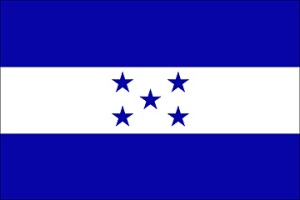
The sustained surge in crime and violence in Honduras – including more than 60 politically motivated murders in the past year – is raising doubts about the viability of the government and its institutions.  The term “failed state” is often abused, but there’s no doubt that Honduras falls short of the rhetoric about its stability and democracy that the Obama Administration recited when arguing for the country’s readmission to the OAS after the 2009 coup that removed President Mel Zelaya.  Indeed, the coup set the country on a downward spiral from being a weak democracy to one struggling for basic credibility.  The U.N. Office on Drugs and Crime says Honduras has the world’s highest murder rate – 91.6 murders per 100,000 inhabitants in 2011.

Undersecretary of State María Otero has spent time and energy trying to establish a policy toward Honduras.  During a visit to Tegucigalpa last month, she signed an agreement with Foreign Minister Corrales that “sets the stage for results-oriented action towards our shared objective of a safe Honduras that respects the rule of law and human rights,” and she announced that the United States would provide an additional $1.8 million in aid to help counter gang activity in Honduras.  Despite her efforts, the State Department and the U.S. Embassy in Tegucigalpa have failed to go beyond ready-made programs and put in place a framework for a comprehensive policy.  Programs are not policy.  The Administration appears reluctant to admit that its Honduras policy, which has failed, needs an overhaul.

Multimillion-dollar programs will not succeed until they take into account that the Honduran “partners” upon which they depend are themselves at the core of the problem.  Three years after the coup, the Obama Administration still fails to see that its allies in the struggle against transnational and local gangs, as well as its efforts to build judicial institutions, are the same people who mocked the rule of law, overthrew the previous president, and re-politicized the military and police to serve their own purposes.  (The reasons for Washington’s unwillingness to help fund a “Commission for Security Reform” approved by the Honduran Congress are unclear, but this may be a factor.)  There are strong suspicions in many sectors of Honduran society that members of the country’s political-economic elite are the sponsors of the sicarios (hired gunmen) who have killed dozens of citizens whose offense was to demand an end to government impunity.  Given the challenge that the growing popularity of the country’s new political party, LIBRE, poses to traditional powerbrokers, informed observers expect violence to increase in the run-up to elections next year.  Absent public explanation of U.S. policy, it is fair to ask why Washington hasn’t seen these patterns – obvious to Hondurans – and why it hasn’t offered sustained support from the FBI and other U.S. law enforcement to investigate the assassinations and trace them back to the power bosses.  It is also fair to ask Assistant Secretary of State Brownfield and others who espouse the militarized approach to dealing with organized crime how this strategy, which has failed elsewhere, will succeed in Honduras.  Why hasn’t the Obama Administration supported the sort of U.N.-sanctioned investigative capacity that has proven effective with the International Commission Against Impunity in Guatemala?  Why has Washington not even pushed for meaningful implementation of the recommendations of the Truth and Reconciliation Commission released last year?  If Washington wants to make its rhetoric about Honduras into reality, it needs to do more than just to funnel funds into programs run by questionable partners.

ALBA’s Low Expectations for U.S. Election

Discussion of the U.S. election in  the countries roughly aligned under the banner of the “Bolivarian Alliance” (ALBA) – Venezuela, Bolivia, Ecuador and Argentina – generally reflects their own polarized domestic politics.  In Venezuela, comparisons between the two countries electoral campaigns were common.  Washington-based commentator Moisés Naím suggested that Romney could learn from Venezuelan Presidential candidate Capriles’s empathy and inclusiveness in order to unseat Obama.  Andrés Correa ripped President Obama, saying he needs to take Chávez more seriously and needs “an atlas and a compass so he can figure out where he is and come to understand that the United States has more connections with Latin America than with any other part of the world.”  In a column that appeared in several countries, Argentine Ricardo Trotti praised the civic spirit of the first U.S. Presidential debate, and took Chávez, Bolivia’s Evo Morales, Nicaragua’s Daniel Ortega, Ecuador’s Rafael Correa, and Argentina’s Cristina Fernández to task for not engaging in debates.  “The fear of debating implies a fear of democracy,” he wrote.  In Nicaragua, former education minister Humberto Belli Pereira made a similar point in La Prensa, as did a commentator in Bolivia’s El Deber.

Mitt Romney’s criticism of Obama as being naïve about the pernicious influence of the “failed ideology” of Venezuelan President Hugo Chávez and Cuba’s Castro brothers attracted wide coverage throughout the region – with predictable reactions from each side.  In ALBA countries, opposition media evinced skepticism of Obama and appreciation for Romney’s promises to take a hard line against Chávez, and pro-government outlets portrayed the Republican as a loose cannon who trumpets Manifest Destiny and military options.  Chávez’s reference to Romney as “crazy” during the primaries set the tone for some media.  On Aporrea, a popular pro-Chávez online forum, one commentator said he preferred Clinton Eastwood’s empty chair to either Romney or Obama.  In Argentina, Martin Kanenguiser wrote in La Nación that his country could only “tie or lose” in the U.S. election, particularly in regard to the Argentine relationship with international financial institutions.  The 2011 elections in Argentina, followed by the U.S. 2012 contest, have contributed to a sour atmosphere for bilateral relations, noted Leandro Morgenfeld in Marcha.

That the U.S. election has become polarizing illustrates the challenges the new U.S. administration will face in 2013.  If Romney wins and follows through on his rhetoric, he might please hardliners in the U.S. and opposition groups in ALBA-aligned countries, but relations will become even more bitter.  If Obama is re-elected, those opposition groups will continue seeking support for their own agendas and pressure from Washington on ALBA governments. However, the dearth of high level attention would likely continue in a second Obama administration, leaving bilateral relationships to stagnate.  More likely, the real choice in U.S.-ALBA relations will be between empty rhetoric and deafening silence – while further exposing the limits of U.S. influence in the region.

Brazil’s Protest: If You Get QE3, We Get Tariffs

Photo by “SqueakyMarmot” | Flickr | Creative Commons

For two years Brazilian voices have complained that U.S. policies of near-zero interest rates and “quantitative easing” have been damaging its economy.  Lax monetary policies in the U.S. and Japan are blamed for the high valuation of the Brazilian real, which further suppresses Brazil’s  languishing manufacturing sector.  Tensions escalated following the September 2012 announcement of the U.S. Federal Reserve’s third round of quantitative easing.  Now the debate has spilled over into discussions about Brazilian restrictions on trade.  As Finance Minister Guido Mantega warns of a “currency exchange war,” Brazil is increasing tariffs on U.S. goods and foresees the imposition of taxes on inflows of foreign capital, which further inflate the Real.  Writing in Folha de São Paulo, Luiz Carlos Bresser-Pereira argues that Brazil is acting in self-defense.  The tariffs Brazil is contemplating are by his account not protectionist but simply an effort to compensate for the unfair advantage that the U.S. seeks to achieve through its monetary policy.

The tension is spreading beyond Brazil, as currency appreciation is portrayed as a drag on manufacturing in much of South America.   In an interview with CNN, Chilean President Sebastián Piñera criticized “QE3,” asserting that “printing money” would not solve U.S. economic woes.  So far, Andean countries are responding by purchasing dollars and cautiously reducing interest rates, but the Brazilians, in particular, present protectionist measures as counter-cyclical tools of their own, necessitated by American attempts to “drive down” the dollar.

The Brazilian and South American claims may be overdrawn somewhat; many experts believe that overvaluation is primarily a consequence of Chinese demand for South American commodities and the decision by most Latin American countries to maintain high interest rates in order to forestall inflation.  But U.S. policies meant to boost job growth are indeed having unintended consequences in the hemisphere.  There has been little thought in the United States of the external implications of Fed policy—beyond a belief that a reinvigorated U.S. economy would be good news for everyone.  Brazil has been the first, and most vocal, challenger of a stance that always frowns on tariffs while presenting monetary policy as a purely domestic matter.  It is a bit much for Brazilians to expect that U.S. monetary policy should be crafted with an eye to its impact on the region, particularly when conventional fiscal policy measures are thwarted by Congressional dysfunction, but Washington should not be surprised when efforts to tamp down its currency – not unlike Chinese policies that Washington condemns  – are seen abroad as aggressive threats to competition.

Venezuelan Elections: Chávez Wins, but Confirms Country’s Divide

Henrique Capriles Radonski and Hugo Chávez | Venezuela’s Globovision | Flickr | Creative Commons license

Following a tense day of voting on Sunday, incumbent Hugo Chávez has won the Venezuelan presidential elections.  With 90 percent of the ballots counted, Chávez had approximately 7.4 million votes (about 54.4%) while opposition candidate Henrique Capriles won 6.15 million votes (44.9%).  The president won every state in Venezuela except Táchira and Mérida, and secured a majority of votes in Zulia State, traditionally a bastion of support for the opposition.  Turnout was nearly 81 percent, a very high figure, and thousands of Venezuelans cast their ballots at consulates and voting centers abroad.  As of yet, there have been no allegations of voter fraud or post-electoral violence and both candidates appear to have accepted the result.  A delegation from UNASUR “accompanied” the vote and has affirmed that the electoral process was legitimate.

Chávez will embark on his third consecutive presidential term in January 2013 and, health permitting, will remain in power until at least 2019.  The ruling PSUV has a sufficient majority in parliament to ensure that Chávez will be able to legislate comfortably.  However, should Chávez’s health prevent his completing the term, the PSUV lacks an obvious successor who could carry forward with the Bolivarian Revolution.  Regardless, the Chávez agenda faces huge challenges, particularly with an economy rife with distortions and a security situation spiraling out of control.

While Capriles and the opposition were defeated at the polls, his candidacy galvanized an opposition that is far better organized and more united than at any point since Chávez’s  rise to the Presidency 14 years ago.  The 6.15 million votes Capriles received was the greatest number ever for a losing candidate in a presidential Venezuelan election, and kept Chávez’s margin of victory within single-digits.  Clearly, a large segment of the population opposes further expansion of the Bolivarian Revolution.  It remains to be seen whether a united opposition can complicate Chávez’s efforts to move Venezuela further down the road to his brand of socialism.   

South America: Low Expectations for U.S. Election

Photo is in the public domain

Media in Colombia, Chile, and Peru are paying close attention to the U.S. presidential election, but only in Colombia do commentators seem to sense that November’s vote could have a direct impact on their country.  Colombian opinion-makers have not articulated specific concerns; their attention appears premised merely on the immensity of the relationship.  In Peru, commentators have noted concern about the positions advocated in the Republican primaries on a host of issues, such as immigration and the Cold War optic the GOP candidates espoused.  Chileans are following the horse race with curiosity but little mention of its potential implications.  In these countries, which are generally open to working with Washington, there is dissatisfaction with Obama but greater trepidation about a return to the foreign policies that characterized the Bush-Cheney era.  “Obama losing would not matter much,” wrote Antonio Caballero in Colombia’s Semana.  “But what would matter, a lot, is his Republican rival Mitt Romney winning.”  The columnist said it would be like re-electing Hoover after four years of Roosevelt.

Commentators fret that Romney’s swing right during the primaries proves he is unable to stand up to what they describe as conservative, white Tea Partiers on issues including gun control and taxes, but especially on immigration.  In Diario Correo, Peruvian Isaac Bigio wrote that Romney and Ryan would “launch an offensive against immigrants.”  On foreign policy, commentators see Obama’s record as mediocre.  In Colombia, the president gains points for passing the free trade agreement, but loses them for an overall lack of focus on the hemisphere.  But Romney’s rhetoric, punctuated by swipes at Russia and what he labeled a Chávez-Castro axis in the hemisphere, has created uneasy feelings.  “Romney advocates an aggressive discourse and hard hand in international relations,”writes Sergio Muñoz Bata of Bogota’s El Tiempo.  “If this sounds like a repetition of Bush’s policies, that is because those who dictate the foreign policy of the Republican candidate today are the same people who dictated Bush’s policies yesterday.”  Peruvian Santiago Pérez writes in Los Andes that Romney might “harden the U.S. position against ALBA…and try to intimidate (probably unsuccessfully) his unthreatening Bolivarian enemies.”  A return of the GOP could pose problems for the ongoing talks with the FARC and ELN, moderate Colombians fear.  Writing in Portafolio, Ricardo Ávila Pinto noted that Bogotá should be wary of “the U.S. reaction to any eventual success in the peace process with the FARC.”  Likewise, Chile’s Ernesto Ottone writes that Romney’s “uncultured simple-mindedness in foreign affairs responds to identity-based fanaticism with a warlike tone.”

A consistent theme is that the 2012 election lacks the hope of four years prior – hope for more effective U.S. partnership with the region, which Obama promised at the Summit of the Americas soon after his inauguration but has failed to deliver.  Many outlets reported former President Jimmy Carter’s comment that neither candidate was likely to pay much attention to the region.   While Colombian and Peruvian media reflect public concerns about immigration, the most prevalent fear is that a return to strident rhetoric would only heighten tensions between the U.S. and ALBA-aligned countries.  Colombia, Peru, and Chile don’t want to be stuck in the middle. There are no great expectations for improvement, but there is considerable worry about further decline.

U.S.-Honduras Counternarcotics Cooperation Stumbles

DEA Helicopter | by Andrew W. Sieber (Drewski2112) | Flickr | Creative Commons

Four months after the launch of Operación Anvil, a joint U.S.-Honduran counternarcotics effort, cooperation has stumbled.  Early in September, the United States suspended the sharing of intelligence – publicly characterized as mostly based on radar tracks – after the Honduran Air Force in July shot down two civilian aircraft suspected of trafficking drugs.  Citing the incident as a breach of a bilateral agreement that prohibits firing on civilian aircraft, State Department officials said they are reviewing procedures regarding cooperation.

The shootdowns were not the first controversial incident to raise doubts about the cooperation.  In May, a U.S.-Honduras counternarcotics operation in northeastern Honduras, during which at least one small boat was strafed, left four people dead and at least five injured.  While the raid targeted suspected drug traffickers in the vicinity, various reports have suggested that the victims were innocent locals or, at most, were spotters for traffickers.  Rather than undertake its own investigation, the U.S. Embassy in Honduras reportedly has deferred to a preliminary investigation by the Honduran authorities that showed no wrongdoing in the incident.  American and Honduran officials insist no American fired a weapon during the raid, but details of how the Honduran forces they were advising carried out the operation remain elusive.

The U.S. approach to counternarcotics in Honduras – like that in Colombia and Mexico – emphasizes military-style operations driven by U.S. intelligence tips.  In addition to sharing intelligence, the U.S. Drug Enforcement Administration and other U.S. entities provide training, equipment and on-site operational guidance to Honduran security units.  While the jury is out on whether this strategy has been worth the cost in human lives (60,000 in Mexico) and dollars (more than $7 billion in U.S. aid alone in Colombia), the case has not been made that it will work in a country plagued by weak institutions and corruption like Honduras.  Holding Honduran officials accountable and creating the vetted units upon which these military-style operations depend will be difficult in a small, desperately poor country in which the narco-dollar buys much more than U.S. aid channeled through officials in whom few have any confidence.  Efforts to create vetted units capable of operating securely (and without abuses of authority) have failed in the past because of unseen and unsolved links between the state officials and the narcos.  The Honduran people – still suffering from political violence born of the coup of June 2009 – have legitimate fear of a massive surge in drug violence.   The U.S. government, ever optimistic about the renewal of cooperation, has asked that Honduras put in place remedial measures to prevent future incidents.  President Lobo of Honduras has since replaced his Air Force commander, but the question remains whether Tegucigalpa can – and should – become a cornerstone of U.S. antidrug strategies.

Brazil: A Curious, but Very Distant Observer

This is the second of a series of entries examining how the U.S. presidential campaign is being viewed in different Latin American countries.

Photo: São Paulo by Cleber Quadros | Flickr | Creative Commons

The twists, turns, and daily gaffes of the U.S. presidential campaign elicit muted interest from Brazil’s opinion makers and usually land near the back of the newspaper.  A review of the Brazilian media indicates curiosity about the race but little fretting about its consequences.  As Republican candidate Mitt Romney has struggled, Brazilian commentators have started handicapping the U.S. election in President Obama’s favor.  The magazine Veja said Romney had nearly issued himself a “political death certificate” via recent mistakes, while O Globo judged the Republican to be down, but not completely out.

Romney’s struggles have not generated great joy, even though a recent poll showed that nine of 10 Brazilians, given the chance, would vote for Obama. Many Brazilians are frustrated about the Obama administration’s attacks on Brazilian trade policy, which they attribute to the coming election.  Public exchanges between U.S. and Brazilian trade officials have grown terse. Personal relations between Dilma and Obama appear chilly, with no conference planned on the sidelines of the UN General Assembly this week.  Romney’s foreign policy positions, on the other hand, draw criticism.  Mocking Romney’s rightward drift, Professor Demetro Magnoli wrote in Estado do São Paulo that the former governor is “the most dangerous man in the world” for his threats to unleash a trade war with China and a real war with Iran.  Nonetheless, Magnoli and others in the Brazilian press seem skeptical that campaign rhetoric will be reflected in foreign policy.

While the U.S. campaign gives Brazilians little reason for either excitement or concern, one implication they may see is that Brazil’s regional stature will continue to ascend regardless of who wins.  Romney’s campaign platform for Latin America plays up threats from “Bolivarians,” criminals and drug cartels, and Hezbollah.  Moreover, his promised solution – a “Reagan Economic Zone” – seems incongruous with the late president’s image in Brazil and much of Latin America.  Obama, on the other hand, has a personal background and restrained tone in foreign affairs that makes him more popular with the Brazilian public, but he has not taken advantage of that to improve relations or to address irritants like trade or onerous visa requirements, nor to improve Washington’s image in Latin America.  Whichever administration begins in 2013 will find a Brazil that is curious, but hardly waiting on Washington for answers.

Uncertainty in Runup to Venezuela Elections

Photo: Venezuela elections 2012 | by World Development Movement | Flickr | Creative Commons

Polls in anticipation of Venezuela’s presidential election on October 7 yield, not surprisingly, wildly different results.  A survey by Datanálisis puts President Chávez ahead of opposition candidate Henrique Capriles by nearly 15 points, and Consultores 21 predicts a much tighter race and places Capriles on top with just a narrow margin.  Both Chávez and Capriles have declared that they have the support of the majority of Venezuelans.  Chávez insists that he needs to complete his “Bolivarian Revolution.”  Capriles has vowed to tackle everyday issues, such as rising crime and violence, and has pledged to liberalize currency controls and promote investment in agriculture.  Both predict dire consequences if they lose.  Chávez contends that “civil war” will break out, and Capriles insists that a Chávez victory would take Venezuela one step closer to becoming “another Cuba.”

Polling data are notoriously unreliable wherever elections are not strictly about choosing a government but, to some citizens, are perceived as involving a change in the underlying regime.  For many Venezuelans, both pro- and anti-Chavista, the balloting in October is precisely about regime continuity or change.  The surveys undoubtedly reflect that this may indeed be a transcendent election in Venezuela.  This unreliability further complicates analysis of what happens after the election: how both sides would respond to a razor-thin margin of victory or to a decisive verdict.  In the latter circumstance, the losing parties would seem to have no option but to relent, but the challenge would be no less daunting if Capriles wins and has to effect a smooth transition.

The Obama Administration, for its part, has tried to keep its distance from the Chávez government – except for the occasional counternarcotics cooperation – and overall has avoided interference in the electoral process.  But persistent tensions in the relationship make it hard for Washington to assert neutrality in the elections.  Capriles, in an interview with the Miami Herald, criticized the Obama administration for caring little about Latin America, saying “I think the bureaucracy ate him up.”  Capriles urged the U.S. to establish a “relationship of equals” with Latin American nations.  Such criticism most likely reflects a desire by Capriles to appear independent of Washington, but should he find himself in the Presidency, it may take on a life of its own – and he may join most of the region’s leaders in regretting U.S. aloofness toward the region. 


Mexico: Expecting More of the Same

This is the first of a series of entries examining how the U.S. presidential campaign is being viewed in different Latin American countries.

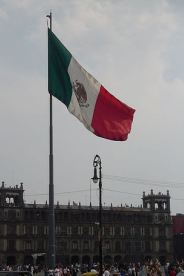
Photo: Zocalo, Mexico City | Luis Lobo Borobia (“Cromo”) | Flickr | Creative Commons

A survey of Mexican media indicates that, despite the considerable attention the U.S. presidential campaign is getting, few Mexicans expect the November election to result in significant shifts in bilateral relations.  Unlike in U.S. coverage of Mexico’s recent presidential contest, the Mexican press has not focused on bilateral drug cooperation.  Some commentators have stated general preferences.  “For the economy, demography, and proximity, a second term for Barack Obama would be good for Mexico,” wrote Enriqueta Cabrera in El Universal.  But most opinionmakers appear focused on particular issues.

There is a broad recognition in Mexico that the campaign is primarily about the U.S. economy, and the potential impact of continued stagnation has driven wide coverage.  The Mexican media are also tracking the candidates’ immigration policies.  President Obama’s executive order to halt deportation of young people who would be eligible for legal status under the long-stalled DREAM Act helped his image in the Mexican press.  The coverage of Republicans has been harsher, with El Universal saying that immigration has been “the taboo topic” for the GOP and that Governor Romney had “forgotten” about Hispanics.  The role of Latinos in the campaigns has drawn attention, mostly positively for the Democrats.

The Mexican media’s treatment of the campaign – and assumption that relations will not change much – reflects the fact that neither American candidate has brought new ideas to the table in one of the United States’ most important bilateral relationships.  On drug policy, bloody continuity seems far likelier than change, regardless of who wins in November.  Although Romney has tipped his hat – as Obama has – to the need to reduce U.S. consumption of narcotics, his main message is “to help Mexico as we did Colombia, with intelligence and surveillance.”  The greater variable is on the Mexican side, where new President Enrique Peña Nieto’s promise to refocus the drug fight on citizen security – instead of cartel interdiction – has drawn criticism from some in the United States.  Allegations that the “old PRI,” tolerant of the drug trade, is back are not far behind and could poison the relationship.