The Newtown Massacre: Another Lost Opportunity

Guns for sale at Dick's Sporting Goods store | by: Svadilfari | Flickr | Creative Commons

Guns for sale at Dick’s Sporting Goods store | by: Svadilfari | Flickr | Creative Commons

Latin Americans clearly are not holding their breath waiting for the United States to translate shock into action in the wake of the killing of 20 first-graders and six teachers at a school in Newtown, Connecticut, two months ago. In December and January, media such as El Espectador (Uruguay), La República (Peru), and El Universal (Mexico) reported that the easy access to firearms and lax gun controls were factors in the massacre.  While making note of President Obama’s pledge to reduce gun violence, including proposals he is sending to the U.S. Congress, few if any commentators in the region expressed confidence that the legislature, many of whose members are beholden to the National Rifle Association, will do anything.

Instead, Latin American media – presumably reflecting the values of their societies – point out the irony that, while the United States mourned the senseless loss of its children and politicians made emotional speeches, gun killings continue unabated.  They gave prominent coverage last week to an analysis by the on-line U.S. magazine Slate, documenting that 1,774 Americans – including 31 children, 101 adolescents, and 283 women – have been killed in the two months after Newtown.  The Excelsior of Mexico quoted U.S. political commentator Mark Shields as saying that since Senator and presidential candidate Robert Kennedy was assassinated in 1968 “more Americans have died from gunfire than died in all the wars of [U.S.] history.”

As the largest source of illegal weapons to Mexico, Central America and perhaps the rest of Latin America, the United States’ inability to control its own violence has a direct bearing on the region.  Rather than clamor for action as they would in the past, Latin American opinion-makers appear resigned to U.S. inaction – and puzzled at how a single lobby can prevail on an issue as sensitive as the safety of schoolchildren.  The dismay will only be fueled by reports by The Christian Science Monitor and other prestigious U.S. media this week that the “assault weapons ban” under consideration in Washington would exempt more than 2,200 specific firearms, including a semi-automatic rifle that is nearly identical to one of the guns used in the bloodiest shootout in FBI history. A retired FBI agent called the proposal “a joke,” and so will many Latin Americans.  As recently as 2010, Latin American governments called on Washington to ratify the Inter-American Convention against the Illicit Manufacturing of and Trafficking in Firearms, Ammunition, Explosives, and Other Related Materials (called CIFTA) – signed by the Clinton Administration in 1997 – but it is clearly a bridge too far now.

Correa’s Second Term

By Rob Albro, CLALS Faculty Affiliate

President Rafael Correa, Ecuador | by: "el quinto infierno" | Flickr | Creative Commons

President Rafael Correa, Ecuador | by: “el quinto infierno” | Flickr | Creative Commons

Little drama accompanied results of the February 17 election in Ecuador, where center-left incumbent Rafael Correa retained the presidency by a wide margin. Correa enjoys the highest approval rating – nearly 80% late last year – of any Latin American head of state. He will be the first Ecuadoran president to complete his term since 1996, and his resounding victory at the polls will in principle keep him in office until 2017. Most pre-election polls had projected Correa to win decisively, and he did just that with 56.7% of the popular vote. The opposition is fractured, with seven different candidates running against him. His nearest rival, banker Guillermo Lasso, garnered only 23.3% of the vote. A testament to Correa’s dominance is that the right-leaning Lasso offered a vision little different from the president’s own policies and even adopted key elements of Correa’s discourse. The title of Lasso’s recent book, Another Ecuador is Possible, references the World Social Forum.

Correa’s political base was consolidated during the anti-neoliberal protests of 2005, and his “citizen’s revolution” represents an unorthodox combination of nationalist populism, robust social welfare spending and rhetorical flourishes in defense of Ecuador’s national sovereignty. Correa’s social spending – increasing the health budget, minimum wage, pensions, and access to medical care; offering micro-credit and free school lunches; providing new housing and anti-poverty subsidies –is highly popular, especially with the urban poor. These programs, dependent upon a commodity-led export strategy, have enabled Correa to marginalize once important political actors of the left and right. Organized labor and indigenous movements on the left, like economic and media elites on the right, have picked fights with Correa, objecting to his authoritarian style, attacks on the press, petroleum policies in the Amazon, poor record on crime, and outbursts directed toward foreign investors. But this has made little dent in his popularity.

If Correa is certain to face resistance to his agenda in his new term, the political fragmentation and lack of dramatic choices evident during the campaign suggest that it will not necessarily be effective.  Despite potential fiscal headwinds, redistributive social welfare policies are likely to continue to expand. Questions do remain: regular social investment has been enabled by ramping up an extraction-based economy dependent on oil, which has also generated some social conflict.  But there is mounting evidence that aside from being popular these policies are also measurably successful. Ecuador’s election comes on the heels of Venezuela’s, where opposition candidates also found it necessary to tout redistributive policies. If the economy turns south, a splintered opposition might find common cause. But as in a number of other South American countries, the redistributive politics of an incipient social welfare state will inform the agenda of Correa’s eventual successor. The long-term management of these policies, and whether the President will seek to alter the Constitution to permit indefinite re-election, are matters that could prove vexing during the coming years.

Is Chairman Menendez the Right U.S. Signal for Latin America?

By Eric Hershberg and William M. LeoGrande, Professors of Government, American University School of Public Affairs

U.S. Senator Bob Menendez | by Talk Radio News Service | Flickr | Creative Commons

U.S. Senator Bob Menendez | by Talk Radio News Service | Flickr | Creative Commons

Fresh and credible allegations about U.S. Senator Bob Menendez’s bullying of Latin American governments and influence-peddling for political cronies raise further doubts about what Washington is signaling to the region – and the implications for U.S. relevance in the second Obama Administration.  Secretary of State Kerry’s successor as chairman of the Senate Foreign Relations Committee, Menendez is now a major architect of U.S. policy, and his activities and policies are an indication of U.S. intentions around the world, especially in Latin America, which has been the focus of much of the Senator’s attention.

Media reports have documented well how Menendez persistently intervened on behalf of a wealthy campaign donor to pressure the government of the Dominican Republic to institute port security programs over legitimate objections of local authorities.  When Dominican officials appropriately exercised their duties and pointed out that the donor lacked expertise for the exorbitantly priced contract, Menendez only turned up the heat.  This was consistent with an ongoing pattern of behavior.  In 2011, according to reliable sources, Menendez demanded a U.S. policy of forcing the government of El Salvador to fire a cabinet minister he did not like, clearing the way for the military to capture the position.  Earlier, when the OAS opened discussions on whether to lay out conditions for Cuba’s readmission to the hemispheric body, he threatened to cut all of its U.S. funding.  A self-proclaimed champion of “democracy promotion” and “accountability” in Latin America, the New Jersey Democrat never missed a chance to criticize centrist or left-leaning governments.  Governments in the region are not the sole targets of his interventions:  Menendez has used his influence to intimidate bureaucrats throughout the U.S. foreign policy community into either supporting his initiatives or, at least, turning a blind eye to them.

Latin American opinion-makers grew accustomed to Menendez’s ways during his tenure (2010‑12) as Chairman of the Senate’s subcommittee on the western hemisphere, but his ascension to the chair of the full committee from within Obama’s own party makes his voice – and style – much more important.  His influence-peddling for his buddies’ business interests – at the expense of other U.S. government and foreign partners’ priorities – can only fuel greater cynicism about U.S. preachiness on anticorruption and “democracy promotion.”  It also further risks U.S. relevance at a time that many in the region remain hopeful of a revival of President Obama’s short-lived emphasis on “partnership” in the “neighborhood.”  The investigations into Menendez’s activities may run into serious obstacles – many bureaucrats fear his ire, and will be reluctant to talk – but it’s already clear that his bullying and influence-peddling make him the wrong person for a leadership role in U.S. policy toward Latin America. 

Religious Responses to Violence in Latin America

By Alexander Wilde, CLALS Research Fellow

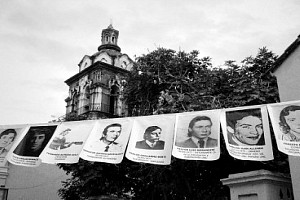
Commemoration of those killed in the 1980's at a church in Cordoba, Argentina | By: Pablo Flores "pablodf" | Flickr | Creative Commons

Commemoration of those killed in the 1980’s at a church in Cordoba, Argentina | By: Pablo Flores “pablodf” | Flickr | Creative Commons

Latin America today is one of the world’s most violent regions. It has been so for 50 years, although the character and agents of violence have changed considerably over time. The “old violence” of the 20th century was largely political, associated with revolutionary insurgencies and repressive regimes that systematically violated fundamental human rights. The “new violence” is largely criminal – illegal drug traffickers and urban gangs are among the leading perpetrators – but its consequences in many societies have been comparably lethal. Countries such as Honduras, El Salvador, Guatemala, Venezuela and Colombia have among the highest murder rates in the world.  “Citizen security” is a leading issue in politics throughout the region.

Religion played a significant part in confronting the old violence.  Human rights became a new cause for the Catholic Church, which in some cases helped legitimate peace settlements and democratic transitions. In the generation since then, Latin American Christianity has been transformed.  Evangelical and Pentecostal churches have achieved unprecedented growth. Catholicism has been reined in by Rome to curb the influence of Liberation Theology. More pietistic and spiritually-oriented theologies have flourished within both traditions. The result has been a tendency to turn away from the “political” ministries of the past – defending human rights and promoting social justice. The Christian churches, it is widely believed, have failed to address the widespread violence of today.

Fresh research, however, is revealing ways in which – although less visible at the national level – they remain a vital force in violence-plagued societies. A two-year project at American University has produced studies of religiously based shelters for Central American migrants in Mexico, a 15-year Jesuit program of peace building and development in Colombia, and an Evangelical prison ministry in Rio de Janeiro, among a dozen pieces of new research. They identify particularly the significance of an active church presence among poor and marginalized populations, who suffer disproportionately from violence. This “accompaniment” appears to be motivated by Biblically-based beliefs about Christian love, the redemptive power of God and the direct experience of living with these populations in perilous, threatening conditions. Another emerging theme in project research is the potential significance of supportive national and international allies – who clearly contributed to the defense of human rights in the past and remain important in our changed, globalized world.

Violence in Latin America today reflects the wrenching changes these societies have undergone in the last half-century, and religion has been a dynamic dimension of those changes. In the region’s civil societies and the lives of its citizens, Catholic and Evangelical Christianity remains a potent and creative presence. Where it is willing to work and live in situations of conflict and violence, it could find a new role in bringing about more stable, peaceful and just societies.

High Time for a U.S.-Bolivia Reset

By Rob Albro, CLALS Faculty Affiliate

President Evo Morales in a climate meeting at the University of Oslo | by Utenriksdept | Flickr | Creative Commons

President Evo Morales in a climate meeting at the University of Oslo | by Utenriksdept | Flickr | Creative Commons

Little has changed in the U.S-Bolivia relationship since each expelled the other’s ambassador and suspended full diplomatic ties in 2008.  Last month a Bolivian official accused the United States of trying to sabotage the administration of President Evo Morales, and Morales has not dropped his pugnacious anti-U.S. rhetoric.  Washington, for its part, has persistently criticized Bolivian anti-drug policies, while not acknowledging the failures of its own decades-long “war on drugs.”  As discussions surrounding Secretary of State Kerry’s January 24 confirmation hearing suggested, U.S. policy toward several Latin American countries – including Bolivia – is still on Cold War autopilot, continuing to use code-words like “socialism,” implicitly and incorrectly viewing the recent and historic changes in that country largely through the prisms of Venezuela and Cuba.

Along with many observers outside of Washington, the Bolivian government understands itself to be addressing long-standing demands to correct a historical lack of social inclusion, to institute a more participatory (and “plurinational”) democratic process, and to pursue economic sovereignty.  In notable contrast to Venezuela, with which Bolivia is often lumped together, the country’s long-marginalized indigenous majority is in the national political driver’s seat for the first time.  Despite Morales’s rhetoric to the contrary, Bolivia is far from rejecting the free market. It recently applied for full participation in MERCOSUR, and has welcomed foreign investment in its sizable petroleum and lithium deposits. Along with Peru and Ecuador, Bolivia has also sought ways to maintain economic growth while protecting the environment and avoiding unsustainable extractivist policies.  Bolivia’s is a hybrid approach: mixing an alternative democratic tradition domestically with the promotion of Bolivia Inc. globally.

It is past time for Washington to move on from its one-size-fits-all approach toward Andean countries, and to take more seriously the perspectives and priorities of their peoples and governments.  And Bolivia’s recent history provides ample opportunity for the U.S. to identify common – if not identical – ground.  Morales’s frequent statement that Bolivia is looking for “partners, not bosses” echoes President Obama’s own 2009 speech about “partnership” in our hemispheric “neighborhood.” Obama’s recent inaugural call for more effective “collective action” resonates with the spirit of Bolivia’s ongoing plurinational democratic experiment.  And if climate change is back on the U.S. political agenda, Bolivia continues to be a global catalyst for this important multilateral discussion. Emphasizing these shared problems, experiences, and aspirations, can provide a foundation for closer relations.

Brazil’s Counternarcotics Policy Challenges

By Tom Long

Minister Alexandre Padilha meeting to discuss policies against crack | Photo by: Ministério da Saúde | Flickr | Creative Commons

Long a significant market for cocaine – the second or third largest in the world according to estimates – Brazil is suffering a major increase in crack cocaine use.  Visible in the centers of major cities, drug abuse has become a more serious national concern as Brazil prepares to mount the world stage as host of the 2014 World Cup and the 2016 Rio Olympics.  Brazil was slow to recognize the problem as it grew to epidemic levels, surpassing the United States as the largest consumer of crack cocaine, according to a recent report from the Federal University of São Paulo.  While national and local authorities have emphasized their recent approach to drugs as focused on public health – in contrast with the U.S.-led, supply-oriented policies – Brazil also has increased control and interdiction efforts.  According to the UN, cocaine seizures by Brazilian security tripled between 2004 and 2010.

The effort to control the flow of cocaine into and through Brazil will test both the country’s diplomacy and state capacity.  Its long, undefended and sparsely populated borders touch every major narcotics-producing and ­transiting country in South America, and cooperation in addressing the problem varies widely for political reasons and disparities in capabilities.  For example, the government of President Evo Morales in Bolivia has declined Brazilian requests for crossborder eradication, InSight Crime reported.  Other countries’ counternarcotics focus is almost completely internal, such as in Colombia and Peru.  As a result, Brazil is increasing action on its own.  President Dilma Rousseff supports plans to spend some $400 million on an expanded fleet of unmanned aerial vehicles, or drones, to provide surveillance of its borders.  Military patrols have increased, albeit in necessarily limited areas.

Experts have long warned that the “balloon effect” of counter-narcotics policies – when successful drug operations push the trade into less-defended countries and regions – was going to worsen the flow and use of narcotics in Brazil, and Brazil has long sought ways, within its resources, to collaborate.  When U.S.-Bolivia cooperation deteriorated in 2009-2010, for example, Brasilia tried to fill some of the void.  Brazilian diplomats have usually tried to lead quietly, build consensus, and avoid obvious pressure on neighbors.  However, as concerns grow, domestic politics could push Brazilian leaders to be more assertive, with the potential benefits and risks that would entail.  The challenge will be for them to find ways to collaborate on a common drug strategy with often skeptical neighbors while making gains to reduce internal demand.  Four decades of U.S. experience provide a cautionary tale.

Salvadoran Gang Truce: Opportunities and Risks

By Héctor Silva, CLALS Research Fellow

President Funes of El Salvador | Photo by: Blog do Planalto | Flickr | Creative Commons

President Funes of El Salvador | Photo by: Blog do Planalto | Flickr | Creative Commons

Despite the general agreement that the truce between El Salvador’s two main gangs, MS-13 and Barrio 18, has lowered the homicide rate dramatically – from 14 killings a day in 2011 to some 5-6 in 2012 – many serious challenges persist. The truce was brokered by a former guerrilla commander and a Catholic bishop and, after two months of denying a government role, Security Minister General David Munguía Payés acknowledged that his office was the mastermind.  It is now entering a second stage in which six municipalities, ruled by both the governing FMLN and the rightist opposition party ARENA, have pledged to join the initiative. This new stage involves local ad hoc prevention plans aimed at gang members’ families and youth at risk. The truces have become the principal security policy of the Funes administration.

The lack of transparency around the planning and implementation – above all the origin of the initial pact –has fueled skepticism among journalists, politicians and the general public, and polling has not shown wide support for the truce.  The United States has become one of the fiercest critics of the initiative, with its first official reaction a few days after Salvadoran electronic news outlet El Faro revealed details in March 2012 of secret negotiations between the gangs and the Salvadoran intelligence service. U.S. Under Secretary of State María Otero, visiting San Salvador, declared that the gangs must disappear, suggesting disapproval of the appeasement implicit in secret talks, and U.S. law enforcement officials have always been privately skeptical.  The Treasury Department is helping local American police departments attack MS13’s financial networks, which some in San Salvador interpret as a political signal of Washington distancing itself from the truce – an ironic twist given that Munguía Payés was installed largely because of U.S. pressure.  The stakes were raised last week when the State Department issued a warning to travelers to El Salvador, expressing for the first time in writing doubts about the truce.

The Salvadoran state and society face a complex road ahead.  The reduction in the homicide rate is, of course, welcome, and opposition to the second stage of the plan, the municipal sanctuaries, will be muted in a preelectoral year.  (The ARENA candidate for President, Norman Quijano, has remained skeptical but seems likely to jump on the bandwagon.) But with its ambiguous public stance on the truce despite its Security Minister’s political commitment, the Funes administration has not pledged to fund the second stage of the truce, and it seems very unlikely that the United States will be stepping in.  Another factor is that while El Salvador´s security operations are constrained by the truce, other important problems – such as extortion, drug trafficking, impunity and corruption – remain untouched. Furthermore, evidence is slowly emerging that the organized crime rings are using the circumstances to expand their influence and take advantage of their relationship with some of the gangs’ most violent cliques to enhance trafficking routes. Washington’s skepticism about the truce is valid and should be followed up with an emphasis on the underlying causes of El Salvador’s ills.

Secretary-designate Kerry Hews to Old Line on Latin America

Photo by: cliff1066™ | Flickr | Creative Commons

Photo by: cliff1066™ | Flickr | Creative Commons

Senator John Kerry’s confirmation hearing to be Secretary of State focused overwhelmingly on Syria, Iran, and Libya, but there were glimpses of the nominee’s approach – at least for now – to Latin America.  His almost-certain successor as Chairman of the Senate Foreign Relations Committee (SFRC), Democrat Bob Menendez of New Jersey, sees Latin America through a distinctly Cuban-American optic and asked Kerry predictably leading questions about the region.  Menendez asked Kerry how he would respond to change in the Western Hemisphere, highlighting “changing political tides,” potential transition in Venezuela, public security in Mexico and Colombia’s talks with the FARC.

Kerry’s responses did not challenge the premises of Menendez’s questions and stuck closely to recent U.S. policies.  He offered neither details nor hints of change.  Reflecting the State Department’s emphasis on a programmatic approach to the region, he highlighted security cooperation with Mexico and Central America, unspecified energy and climate initiatives with Brazil, and development assistance to Honduras and Guatemala.  Kerry praised former president Álvaro Uribe, under whose aegis most of the $8 billion in Plan Colombia funds were spent, for helping make Colombia “one of the great stories in Latin America.”  He termed Venezuela and its allies as “outlier states” and said U.S. policy should “induce people to make a better set of choices.”  When Arizona Republican Jeff Flake expressed support for a broader opening on Cuba travel, arguing that unleashing hordes of American students on spring break would pose a greater challenge to the Castro brothers than continued restrictions, Kerry smiled but remained quiet. Later, Menendez lashed back and turned the focus to Cuba’s human rights record.

As expected, Kerry did not advocate any major shifts or offer new ideas on U.S. policy toward Latin America – obviously preferring to avoid confrontation with Menendez and Republican Cuban-American Marco Rubio.  Kerry’s strategy was to ruffle no feathers.  His remarks about President Uribe, for example, appeared intended to assuage right-wingers unhappy with his focus as Chairman on the Colombian President’s dismal human rights record and lack of accountability for a host of abuses of power.  Likewise, agreeing with Menendez that President Chávez was a problem was thin gruel; eagerly awaiting the Venezuelan’s demise does little to address the shortcomings of U.S. leadership in the hemisphere.  

Latin America-watchers know well that Kerry and President Obama will be more focused on other regions, leaving space for the SFRC conservatives to weigh more heavily on Latin American policy than they already do.  Despite the Cuban-American community’s obvious shifts away from most elements of the right wing’s Cuba policy, Menendez and Rubio have already declared they will block any efforts toward better relations with Cuba even on a people-to-people level.  By extension, they will oppose any outreach to Venezuela before they believe regime change has occurred.  Nor did Kerry offer any departures from the U.S. war on drugs.  Stagnation on these two policies puts the United States on a collision course with even close friends in the region, who have said they will not participate in hemispheric conferences that continue to exclude Cuba and that advocate a more candid conversation about the failure of the “war on drugs.”  This approach risks continuing to undermine U.S. relevance and influence in the region.

Haiti: Not Back, Not Better

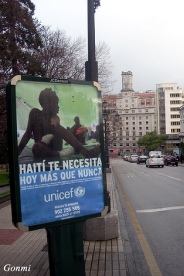
Photo by: Gonmi | Flickr | Creative Commons License

Photo by: Gonmi | Flickr | Creative Commons License

The third anniversary of the devastating earthquake in Haiti has passed with no sign of either serious reconstruction or progress toward improving democratic institutions.About three-quarters of the earthquake rubble has been removed, and several hundred thousand individuals have been moved to temporary shelters and some back into permanent housing. A light-industrial park in northern Haiti is providing jobs to some 1,300 workers. The U.S. Government alone has committed over $3.6 billion toward relief, recovery, and reconstruction, of which $2.5 billion has been disbursed as of September 30, 2012. Despite these billions, the infrastructure remains a shambles; the economy is weak; unemployment is around 40 percent; and the World Food Program estimates that 6.7 million people (out of a population of 10 million) are “food insecure.”

Progress in political affairs has also been slow, and incumbent leaders remain reluctant to commit to elections. The head of MINUSTAH, Chilean diplomat Mariano Fernández, last week reiterated calls for the Haitian government to hold legislative and local elections that were supposed to have been held a year ago. He said an agreement reached last month by President Michel Martelly and members of parliament to form a semi-permanent electoral council to stage elections for one-third of the 30-seat senate and local mayors was “an important first step.” The U.S. Assistant Secretary of State for Democracy, Human Rights and Labor, Michael Posner, also tried to emphasize the positive during a recent visit to Port-au-Prince, but noted “there is a lack of faith in the system, the sense that the rule of law is not respected, that institutions like the judiciary and the police and the prisons and the prosecutors are not doing the job adequately, and that the government isn’t living up to expectations.”

The Obama Administration’s pledge to “build back better” may have been slightly bold from the start, but one of the objectives – to use the crisis to drive some reforms in both the Haitian government and how international programs are implemented – was indeed within reach. The business-as-usual approach since the earthquake has led to the loss of a historic opportunity to move the country forward. While the Haitian political class continues to focus on its internecine struggles, the international community has funneled its vast funds to its own NGOs, most of which operate outside a master strategy and far from the political and bureaucratic authorities nominally in charge of overseeing and coordinating their programs. Real progress is unlikely until both local and outside players develop a shared vision for the future – hopefully before another natural disaster pushes the reset button again.

Central American Elites Are Evolving But Cling to Power

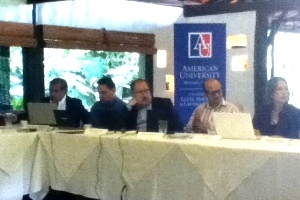
From left to right: Manuel Torres, Ricardo Barrientos, Hugo Noé Pino, Aaron Schneider and Elizabeth Oglesby participating in the project seminar in Costa Rica

From left to right: Manuel Torres, Ricardo Barrientos, Hugo Noé Pino, Aaron Schneider and Elizabeth Oglesby participating in the project seminar in Costa Rica

The sources of Central American elites’ wealth are evolving, as are their fundamental interests and the ways they wield political power.  Land‑intensive production – the focus of decades of insightful scholarship – continues to prevail in Guatemala and Honduras, but the economically powerful now maintain their position through a growing array of service-sector activities and by capturing rents from public coffers.  Changes in their economic foundations are but one of several transformative processes that swept the region beginning during the 1980s, making the past three decades a period of fundamental rupture with the past.

  • Civil wars in El Salvador, Guatemala and Nicaragua during the 1980s transformed the economies in all three countries and had spillover effects in Costa Rica and Honduras.  Most striking is the case of El Salvador, where elites abandoned the countryside upon which they had depended from time immemorial, never to return.
  • Structural adjustment programs, implemented throughout the region during the 1990s, changed the role of the state in Central American economies and thus the ways in which the public sector intersected with the elites’ wealth-accumulation strategies.  Hasty and corruption-ridden privatizations, in particular of energy and telecommunications and of an array of public services, created a reformist façade but gave private-sector groups a piñata that helped to ensure uninterrupted enrichment.
  • During that same decade, transitions to electoral democracy contributed to elite reliance – albeit with some important exceptions – on political parties, campaign strategies and legislative lobbying to protect their interests.  Ties to military and death squad enforcers are no longer the principal vehicles for the enforcement of elite imperatives, though Honduras today is increasingly reminiscent of the worst times in Guatemala and El Salvador.

Central America’s elites have yet to offer the region a vision of reform that will enable the isthmus to overcome misery, exploitation and predatory rule.  While dominant groups have embarked on aggressive state-building strategies, experts question whether these are producing the virtuous dynamics that advance the general welfare of the population and ensure effective governance. 

Scholars from across Central America have reached these conclusions through research and seminars under a multi-year AU program on Central American elites and power.  To foster better understanding of the shifting landscape in the region, and thus to illuminate plausible paths toward more equitable distribution of power and resources, the Ford Foundation is supporting this effort, undertaken in partnership with more than two dozen researchers from institutions throughout the isthmus and the United States.  The project was the focus of a recent workshop at FLACSO Costa Rica, and several publications will result over the course of 2013 and 2014.  Click here for more information.