Colombia’s Uribe Out of Office, But Not Out of Mind

By Tom Long

Alvaro Uribe receiving the Medal of Freedom | Photo credit: White House photo by Chris Greenberg / Foter.com / Public domain

Alvaro Uribe receiving the Medal of Freedom | Photo credit: White House photo by Chris Greenberg / Foter.com / Public domain

Former Presidents George W. Bush and Álvaro Uribe of Colombia were close allies in the “war on terror,” but they are taking very different approaches to their post-presidency.  While the former has taken up painting and appears at few public events, since leaving office in 2010 Uribe has consistently tried to upstage his hand-picked successor, Juan Manuel Santos.  He has frequently taken to Twitter with biting criticisms, and in recent months – as provincial and municipal elections near – Uribe’s public condemnations have grown both more vociferous and more damaging.  Even ardent supporters of Uribe’s presidency are questioning his post-presidential politicking, according to press reports.

In particular, the former president’s attacks on the ongoing peace talks with the FARC and Colombia’s more conciliatory approach to Venezuela have contributed to a drop in Santos’ support, according to polls, and made the two endeavors more difficult and politically costly.  On the former, Uribe has repeatedly accused Santos of offering “impunity” to FARC fighters.  He’s also accused Santos of “turning his back on democracy” for joining (albeit reluctantly) the UNASUR consensus to recognize Nicolás Maduro’s narrow victory in the Venezuelan presidential elections.  And Uribe has slammed Santos’s efforts to hold Uribe-era officials responsible for violence and corruption.  Though Uribe’s attacks have complicated Santos’ position with his own party on these issues, the reaction has been quite different in the United States.  Though Uribe’s criticism has found an audience with the far right in the United States, Santos retains considerable U.S. backing.  Uribe’s role as the main U.S. ally in South America in the past was warmly rewarded and he was held up as Colombia’s savior – President Bush gave him the Medal of Freedom – but his hectoring of Santos and his failure to atone for violations during his government appear to have undermined his credibility.

Uribe’s post-presidential antics should spark a re-evaluation of his presidency, even among those who downplayed human rights problems and suspected links to paramilitaries among Uribe’s party and family.  His accomplishments in rebuilding the Colombian military and imposing tactical defeats on the FARC cannot be denied, but in doing so, he ran roughshod over civilian institutions, used a secret intelligence unit to harass opponents in and out of government, and, with the deaths of potentially thousands of “false positives,” appears to have been complicit in serious violations of human rights. Out of office, he continues to show a similar lack of respect for democratic processes and decorum – even as he levels that same accusation against Venezuelan leaders – and he still seems profoundly resentful that he failed to amend the Constitution to allow himself a third term.  In a democracy, there can only be one president at a time.  Former presidents have the right to speak out, but it’s fair to ask if their goal is constructive and contributes to the integrity of democratic institutions.
 

Belize: An Outlier in the Middle of the Mess

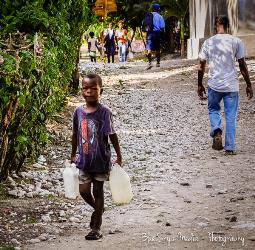
Belize - Boy carrying water. Photo credit: Blue Skyz Media / Foter.com / CC BY-NC-ND

Belize – Boy carrying water. Photo credit: Blue Skyz Media / Foter.com / CC BY-NC-ND

Though off the radar of most analysts, Belize appears to be the latest casualty of the drug trade and criminal violence.  It debuted on the Obama Administration’s annual blacklist of major drug-transit and -producing countries back in September 2011, alongside El Salvador, filling out the roster of Central American countries.  That U.S. government spotlight, however, has done little to halt the Mexican drug cartels’ expansion into Belize.  The U.S. State Department now estimates that about 10 metric tons of cocaine are smuggled each year along Belize’s Caribbean coast – partly the work of local contacts established by the Zetas and the Sinaloa cartel.

Like its neighbors’ security challenges, Belize’s problems are not limited to drug trafficking.  Urban gangs and the rivalries among them are the main driver of the escalating violence, which is rooted in the same causes as in neighboring countries – institutional weakness, rampant corruption, impunity, and unemployment.  The government-sponsored gang truce negotiated in 2011, which featured “salary” payments to members who ceased violent activities, collapsed last December when funds dried up.  (Click here for details documented by our colleagues at InSight Crime.)  Belizean authorities tallied a record number of homicides last year, edging out neighboring Guatemala for the sixth place slot in global per capita homicide rankings.  Porous borders make Belize attractive to transnational gangs, particularly El Salvador’s MS-13 and Barrio 18, both of which have established a significant presence in the capital city, Belmopan, and elsewhere.  About one-fifth of the country’s 325,000 people are Salvadoran citizens, making it difficult to track criminal elements.

The deteriorating conditions in Belize raise questions about the effectiveness of U.S. counternarcotics and “citizen security” programs in the region.  The patchwork of U.S. initiatives under the umbrella of the Central American Regional Security Initiative (CARSI) has not reversed regional trends even in tiny Belize.  While the country’s law enforcement agencies welcomed the heavy equipment, training, and technical assistance that make up the bulk of CARSI funding, the tactical gains have been obscured by a worsening strategic outlook.  The U.S. Government Accountability Office has voiced its concern that the State Department is confusing efforts with results.  Moreover, neither the Belizean nor U.S. government has mapped out a preventative strategy.  The most recent data show that less than half of the funds allocated to Belize from CARSI’s Economic Support Fund, used for programs to help at-risk youth, has been spent, and after handing out 1 million Belizean taxpayer dollars to gang members during the truce, for example, there is little to show for it.  In the run-up to President Obama’s summit with Central American presidents next week, Belizean Prime Minister Dean Barrow’s statement that “Obama hasn’t done anything for Belize” was subsequently qualified, but the fact remains that U.S. partnership with Belize, like with its neighbors, has not begun to work yet.

**An earlier version of this post inadvertently omitted the word “Belizean” before “taxpayer dollars” in the concluding paragraph, giving the false impression that State Department funds had been used to subsidize Belize’s gang truce.

Chavismo Wins a Battle But the Tide May Have Turned

By Eric Hershberg

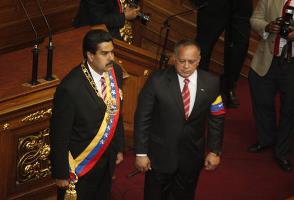
Inauguration of Nicolás Maduro | Photo credit: Presidencia de la República del Ecuador / Foter.com / CC BY-NC-SA

Inauguration of Nicolás Maduro | Photo credit: Presidencia de la República del Ecuador / Foter.com / CC BY-NC-SA

President Nicolás Maduro’s inauguration last Friday marked a new stage in the contest between chavistas and the Venezuelan opposition.  Maduro’s surprisingly weak showing at the polls – winning by a meager 1.8 percent margin despite the huge (and abused) advantages of incumbency – plus tensions within his party and his own rhetorical excesses, suggest that chavismo without Chávez confronts challenging odds.  Chávez attracted more votes alive than he could in death, as his hand-picked successor could not match his patron’s appeal at the ballot box.  Looking forward, Maduro and the Partido Unido Socialista de Venezuela (PSUV) will be judged on the basis of their performance.  The road ahead will not be easy for Maduro, as the government  confronts growing economic and security problems, and his ineffective campaign may energize potential competitors from within Chavismo.

Henrique Capriles’s strong showing in the election bodes well for the opposition.  However, athough Maduro’s blanket reference to them as “fascists” is absurd, their apparent eagerness to use the vote recount – reluctantly agreed to by the electoral council hours before Maduro’s inauguration – to remove him from office could breathe life into his allegation that the opposition consists of  golpistas obsessed with taking power.  Overreaching could be their undoing, as it has been in the past.

Latin American presidents, through a UNASUR statement of support and participation in the inauguration, have endorsed Maduro’s ascendance to the Presidency.  Their strong interest, for a variety of reasons, is in a balance between continuity and change in Venezuela. Although there are signs that both Chile and Colombia wavered momentarily, South American governments overall were united in their preference for a chavista government, as this would favor both  internal and regional stability.The United States, on the other hand, has appeared timid.  Maduro’s accusations of U.S. attacks on him and the presence of Iranian leader Ahmadinejad at the inauguration made it impossible for Washington to send a senior emissary to the swearing-in.  Yet the evident absence of the United States, even after the UNASUR endorsement, was petty.  Through statements calling for a recount of 100 percent of the votes both the State Department and the U.S. Ambassador to the United Nations came across as unable to outgrow a grudge match with Chávez or to grasp that the American position would isolate Washington once again from prevailing sentiment in South America.

There were two winners in the Venezuelan election:  Maduro, who is now the elected President, and Capriles, who managed to secure nearly half the votes in the face of overwhelming odds.  The latter comes out ahead in the long run, but only if he manages his cards wisely.  Washington, meanwhile, seems still not to understand two things:  First, after Bush v. Gore, it will be at least another generation until Americans can say anything about how to count votes.  It was legitimate and appropriate for the OAS to demand a recount, as its record in election monitoring is impeccable.  Secretary General Insulza achieved the core objective of the Organization and should be recognized for having done so.  For the American government to have taken the position that it did suggests an inability to understand the consequences of the 2000 election in Florida for its credibility in election-related issues in the region.  Second, democratic change in Latin America is typically an evolutionary process.  This may be less satisfying to some policymakers who would prefer to see a foe’s outright defeat, but it may be better, for Chavismo’s enemies in both Washington and Caracas, than having their favorite step in at this particular time of high tensions.  If Capriles and his coalition can brand themselves as democratic reformists rather than golpistas, they have a good chance of coming to power when Maduro’s six-year term is exhausted, or even before, and if they convey a message of responsible opposition, key South American governments might well approve of an alternation in power the next time around.

What Can Be Learned from the Humala Government?

By Rob Albro

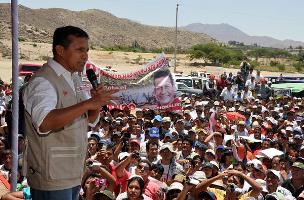
President Humala inaugurating electric power in the rural district of Moro - Ancash Photo credit: Presidencia Perú / Foter.com / CC BY-NC-SA

President Humala inaugurating electric power in the rural district of Moro – Ancash Photo credit: Presidencia Perú / Foter.com / CC BY-NC-SA

As a candidate in Peru’s 2006 presidential election, one-time military coup plotter and current president Ollanta Humala presented himself as an anti-business socialist and nationalist happy to be a member of the “family” of left-leaning Latin American governments led by Venezuela’s Hugo Chávez.  In his second successful bid for office in 2011, Humala sharply changed direction and embraced a combination of pro-business and anti-poverty measures reminiscent of Brazil’s center-left Lula.  Humala’s shifts are a sign of the times in the Andean region:  a non-ideological search for how best to build democracies and grow national economies, while effectively redistributing wealth.

Driven by its mining sector and a commodity export boom, Peru’s economy has tripled in size over the past decade and is currently one of the best performing in the world.  Foreign investment is flooding in, particularly to mining, hydrocarbons, and big infrastructure projects – and Humala is now considered an “investor darling.”  While backing off electoral promises to nationalize water, electricity, mining and other sectors, Humala has created a new Ministry of Development and Social Inclusion and increased the budget for social redistribution and welfare measures to Peru’s poorest by 50 percent.  So far Humala has channeled the budget surplus of Peru’s export boom, including successful negotiation of a $1.1 billion increase in mining royalties in 2011, toward reducing the nation’s poverty rate by 29 percent.  And yet, at present there are more than 250 ongoing social conflicts in Peru, and Humala’s government has been accused of failures of “consultation,” often by grassroots and indigenous protestors opposed to Peru’s mining policies.  In response Humala has reshuffled his cabinet multiple times.  Skeptics suggest that his approval rating – currently 60% – will last only as long as the boom enables his top-down social spending.

Humala’s presidency suggests the limits of viewing current regional leaders through a comparative Chávez-or-Lula lens.  Arguments over the best conditions for “foreign direct investment” in the region often miss the different conditions under which it occurs or purposes to which it might be put.  Humala’s pragmatism demonstrates how distinct parts of government need not reflect a single unifying ideological or normative idée fixe.  Liberal democratic institutions and market freedoms increasingly coexist alongside alternative policies of social redistribution as a part of democratic enfranchisement in the Andes.  When conflict has broken out, however, Humala’s government has been willing to forego consultation with local communities to insure the economic resources it needs to continue its redistributive policies.  The challenge for him to achieve the best balance between competing democratic priorities will continue.  Humala’s government is an opportunity to explore new democratic institutions in Latin America, as with a recent CLALS research project on participatory democracy

Will Tensions Over Security Spoil the Obama-Peña Nieto Summit?

By Tom Long

Military in D.F. Photo credit: ·júbilo·haku· / Foter.com / CC BY-NC-ND

Military in D.F. Photo credit: ·júbilo·haku· / Foter.com / CC BY-NC-ND

The meeting in December between recently re-elected President Barack Obama and President-elect Enrique Peña Nieto was marked by cordiality and a desire to talk about anything but the often grisly drug-related violence in Mexico during the previous six years.  Since then, Peña Nieto has continued the changed emphasis, aided by headlines pivoting to positive stories.  Mexico has been recently hailed for its economic growth, particularly in export-oriented manufacturing, and for a series of political compromises that The Washington Post favorably compared with the U.S. Congressional stalemate.  Despite optimistic claims from the government, Mexican media reports indicate that drug-related violence continues at nearly the same pace as last year.  (Click here for a summary and analysis by our colleagues at InSight Crime.)  Moreover, pressure is growing on questions of human rights violations committed in the name of the war on drugs.  When Presidents Peña Nieto and Obama meet again in early May, holding back a renewed focus on security is likely to be a challenge.

Peña Nieto’s political incentives do not point to the same, high-profile cooperation with the United States that occurred under President Felipe Calderón, who had already begun shifting priorities last year.  Despite the major turnaround signified by the PRI’s signing NAFTA almost 20 years ago, Peña Nieto’s PRI still contains elements more skeptical of U.S. “intervention” than Calderón’s PAN.  Materially, moreover, most of the U.S. aid planned under the Mérida Initiative has been disbursed, and Congress exhibits little appetite for major new appropriations.  (Even at its height, U.S. spending was a fraction of Mexico’s contribution to the drug war.)  That reduction, coupled with growing awareness that the Calderón strategy actually fueled violence, diminishes the enthusiasm in and outside of government for continuing his policies.   Frustration from the left in both countries regarding persisting human rights violations and the slow pace of judicial reform could also grow more serious.

While these problems may be causing tensions between U.S. and Mexican police and military at the operational level, they seem to be manageable so far – and both Presidents are likely to emphasize intelligence-sharing and similar bilateral cooperation that does not require resources.  Upper echelons of the Obama administration seem to understand that Peña Nieto’s push to de-emphasize security and promise to focus on violence reduction over drug interdiction is politically necessary.  But the moral argument has not changed:  Mexicans suffer the violent consequences spawned by U.S. drug use and counterdrug policies.  Weapons sold on the U.S. side of the border continue to flow into Mexico, an issue now atop the U.S. political agenda for entirely domestic reasons.  If the two countries can manage to keep security problems at a lower decibel, they will better cooperate on issues that are just as vital but could pay larger dividends — immigration, transboundary energy, educational exchange, and infrastructure.

The Danger of Dependence: Cuba’s Foreign Policy After Chávez

By William M. LeoGrande, World Politics Review

Photo credit: ¡Que comunismo! / Foter.com / CC BY-NC-SA

Photo credit: ¡Que comunismo! / Foter.com / CC BY-NC-SA

On March 8 in Caracas, Raúl Castro, looking somber, stood in a place of honor beside Hugo Chávez’s casket during the late Venezuelan president’s state funeral. Castro was no doubt pondering what Chávez’s death means for Cuba’s ambitious economic reform program — or “updating” of the economic model, as Cubans prefer to call it. Not long after Chávez’s first election victory in 1998, he and Fidel Castro signed the first of what would become more than 100 bilateral cooperation agreements. By the time Chávez died, Venezuela was providing Cuba with some 110,000 barrels of oil daily at subsidized prices, worth $4 billion annually and representing two-thirds of Cuba’s domestic oil consumption. In exchange, Cuba provided some 40,000 skilled professionals, working mostly in health, enabling Chávez to extend health care into the poor barrios of Venezuela, thereby solidifying his political base.

With the Venezuelan economy foundering under a huge fiscal deficit, will Chávez’s successor continue this barter arrangement on the same preferential terms? If not, will the resulting oil shock derail Raúl Castro’s plan to move Cuba from a hyper-centralized planned economy, which even its architect Fidel Castro admitted no longer works, to a socialist market economy modeled on Vietnam and China?

Full article available on the World Politics Review site.

Obama’s Second Trip to Central America

SICA logo | Wikimedia Commons | GNU Free Documentation License

SICA logo | Wikimedia Commons | GNU Free Documentation License

The White House has cast President Obama’s trip to Mexico and Central America on May 2-4 as “an opportunity for the President to demonstrate his leadership in the international community in a really important way.”  The spokesman emphasized the “important people-to-people ties” between the United States and Central America because “there are a lot of immigrants” from the region.  The Administration’s press releases stress that the summit in San José, with the presidents of the Central American countries and the Dominican Republic under the rubric of the Central American Integration System (SICA), will focus on collective efforts to promote economic growth and development in the region and on “our ongoing collaboration on citizen security.”

Regional reaction to the visit and summit has been positive – Obama’s interest is clearly welcome – but leaders are already managing expectations.  Costa Rican Foreign Minister Castillo last weekend cautioned that the United States is not able to provide significant new assistance for either economic or security programs.  Commentators note that the visit has not been preceded by the sort of diplomatic activity that would indicate the rollout of significant new policies or programs.

At a summit in Guatemala with Vice President Biden one year ago, Costa Rican President Chinchilla crystalized regional criticism of the U.S. counternarcotics strategy when she said that Central America “is sacrificing the lives, making its enormous sacrifice” and, in a clear reference to Washington, called on the “international community [to] take greater co-responsibility in this struggle.”  Hosting the SICA summit with Obama suggests she is prepared to put such criticism aside, perhaps in hopes that talks focus on the economic and immigration issues.  The White House spokesman’s reference to immigrants – at a time that Obama is pushing ahead with related legislation – may indicate that immigration will be a primary concern for him also.  The last time Obama went to Latin America, for the Summit of the Americas in Cartagena in April 2012, he seemed ill-prepared for criticism of U.S. policies, including its counternarcotics strategy, even from Washington’s closest friends.  With perhaps the exception of Nicaraguan President Ortega, the participants in this Central American get-together seem less likely to deliver a similar grilling, making what diplomats call a “successful meeting” very likely.

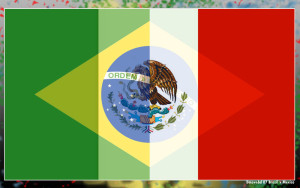
Mexico-Brazil: Competing Economic Models?

The divergent economic performances of Mexico and Brazil over the past few years have again thrust upon analysts the difficult task of estimating which factors – public policies, market trends, geographic location, financial market managers’ perceptions, or something else – are responsible for the different results.  Brazil was everyone’s favorite two years ago, but Mexico is now being hailed as the hot performer – and praise is being heaped on Mexico City for making things happen.

Former Chilean Finance Minister Andrés Velasco, writing for Project Syndicate (click here for text), explores why the Brazilian economy today is “stagnating” while Mexico, written off as a “lost cause” just two years ago, is “expanding at a steady clip.”   Among Velasco’s key points:

  • Financial markets’ behavior says more about investor perceptions than about the countries in question.  Analysts focus on short-term figures rather than on structural trends.
  • Mexico’s economy is much more open than Brazil’s because of NAFTA and other agreements with Europe and Asia, while Brazil’s is limited by the “strictures of Mercosur.”  (Velasco was a strong advocate of free-trade policies while serving on President Bachelet’s cabinet.)  Mexico’s “export basket” has expanded dramatically – to include car parts, electronics, telecommunications equipment – while Brazil’s exports are increasingly commodity-based.
  • After both implemented anti-crisis fiscal packages in 2009, Velasco praises Mexico for having reduced its stimulus sooner – enabling it to keep interest rates much lower, controlling inflation better, and thereby contributing to a more robust private-sector role.

At the same time, Velasco urges wariness “about jumping to definitive conclusions” and notes that Mexican exports have been slowing in recent months, while domestic consumption is picking up as a source of demand.  He also cautions that Brazil’s potential to sell its products around the world “should not be underestimated.”

However thoughtful, analyses like Velasco’s may neglect the impact of another long-term factor:  the steady rise in wages in Brazil and their stagnation in Mexico.  At a seminar in Washington hosted by CLALS last week, Mexican economist Luis Felipe López Calva (click here for news article) noted that the strength of the middle class continues to be a vulnerability in Latin America, and he said that the ability of the middle class to be a “lever of growth” argued for policies that emphasized economic mobility.  A thriving middle class and increased domestic consumption can be a more reliable engine for growth (and for the consolidation of democratic institutions necessary for growth) than short-term market trends.  The increasing wellbeing of the bottom two thirds of the income distribution pyramid in Brazil argues for tempering optimism that Mexico alone has found the holy grail of economic policies. 

What do you think?  Click on “leave a comment” below to contribute.

Is the Truth Finally Arriving in El Salvador?

By Héctor Silva Ávalos

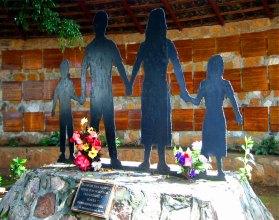
Memorial of massacre site at El Mozote, Morazan, El Salvador | By Efrojas | Wikimedia Commons | public domain

Memorial of massacre site at El Mozote, Morazan, El Salvador | By Efrojas | Wikimedia Commons | public domain

A U.S. court is on the verge of making a major contribution to El Salvador’s struggle to end impunity.  A former Salvadoran military commander six weeks ago admitted in a Miami immigration court that his troops had engaged in human rights violations and extrajudicial killings in the 1980s.  More significantly, he confirmed that the U.S.-trained and -funded Atlacatl Battalion was responsible for the horrendous massacre at El Mozote, a hamlet in which the elite Marine-style battalion killed an estimated one thousand peasants, mostly women and children, over three days in December 1981.  Until recently, current and former military commanders claimed that reports of the bloodbath were communist propaganda.  In his defense, General José Guillermo García, who was defense minister, said he was unaware of the soldiers’ actions at the time.  The judge responded skeptically, saying García “didn’t do what a military officer respectful of the law should have done in order to fully serve his country and his people.”

The General’s confession is no small matter.  An Amnesty Law passed in 1993, pushed by allies of the war-era government, put the lid on many investigations.  Its passage kept two mid-ranking officers convicted of involvement in the 1989 Jesuit massacre from serving their prison sentences, and it paved the way for other military and civilian leaders to cover up that atrocity. The air of impunity has endured for 20 years.  General García’s testimony provides the first real open window for Salvadorans to start learning about what happened despite strong efforts to keep the truth under wraps.  The political and economic elites’ defense of the Amnesty Law has focused on the argument that El Salvador should not be confronting its past if it really wants reconciliation and peace.  But two decades after the peace accord brought the end of the war, that kind of thinking is beginning to fade, and will continue to wane as Salvadoran society is confronted with the naked truth, the naked horrors.

The Obama Administration deserves some credit for advancing the legal case against García and a former colonel facing similar immigration charges in Boston, Inocente Orlando Montano.  Both processes have been encouraged by a U.S. policy of locating and ousting foreigners on U.S. soil who have been credibly accused of human rights violations abroad.  However ironic it is that some of the violations were committed by units receiving U.S. assistance, Washington is promoting an important lesson:  generals who once held in their hands power over citizens’ lives and deaths become common defendants – criminals – when the truth is known.  The impunity enjoyed by the colonels and generals – and their civilian sponsors – has grown roots in Salvadoran institutions and still feeds today a culture of obscurity, injustice and inequity that prevents the country’s progress towards development and modernity.  This vicious cycle will not will not end until they are held accountable.

Read the full text of this essay.

Malvinas-Falklands: Just More Demagoguery

Photo credit: blmurch / Foter.com / CC BY

Photo credit: blmurch / Foter.com / CC BY

The UK’s recent referendum in the Malvinas-Falklands suggests that neither side in the dispute is serious about finding a lasting solution.  Few observers were surprised that the overwhelming majority of the islands’ residents – all but three of the 1,517 persons casting ballots – would vote to “retain their current political status as an Overseas Territory of the United Kingdom.”  Since the war in 1982, London’s decision to station 8,000 troops (more than four times the local population) and decentralization of control over fisheries have enabled islanders to enjoy one of the hemisphere’s highest standards of living.  The UK government has encouraged a blossoming of British identity on the islands.

British and Argentine political leaders couldn’t resist the opportunity to demagogue the results of the referendum.  Prime Minister David Cameron said the islanders are “British through and through and that is how they want to stay,” and he warned that Argentina should take “careful note” because “we will always be there to defend them.”  In a series of 27 tweets in two hours, President Cristina Fernández de Kirchner ridiculed the referendum.  “An English territory more than 12,000 kilometers away?” she asked.  “The question is not even worthy of a kindergarten of three-year-olds.”  She called the residents of the islands a “transplanted population.”  Foreign Minister Hector Timmerman threatened legal action against firms helping explore for oil around the islands, and both houses of the Argentine Congress voted unanimously to condemn the referendum.  Washington has stayed on the sidelines despite its strategic alliance with London and tensions with Buenos Aires.

Both countries have changed greatly since 1982, and the chance that the rhetoric will escalate into greater tensions seems remote.  But nationalism, symbolism and opportunism continue to dominate the Malvinas-Falklands issue 30 years after a war and in the second decade of a new century.  With their economies in bad shape, the current governments in both London and Buenos Aires may welcome the international distraction.  The prospect of rich offshore oil deposits around the islands has raised the stakes, with both countries accusing the other of wanting the islands merely for their natural resources.  Argentina, moreover, seems intent on pushing its neighbors into supporting its stance on the islands, exposing them to the contradiction between the two important principles at play – a historical claim of sovereignty versus a current referendum of clear popular will rejecting it.  Of the two corners that the UK and Argentina have painted themselves into, Argentina’s is more complex and will require a more patient, long-term approach involving, perhaps, United Nations mediation.  Kirchner has expressed hope that the new Pope could act as a mediator in the Falklands-Malvinas dispute, yet his Argentine nationality and past comments that the islands belong to Argentina make that implausible.  It is clear that putting the issue on the front burner and trying to drag the rest of the continent into the debate has not served Buenos Aires’ interests well.  The UK’s referendum is unhelpful, but President Kirchner still has room to tone down the rhetoric and threats, and avoid letting a tactical setback lead to a strategic blunder.  Chances of that happening are better under her successor, and the next election isn’t until 2015.