Constitutions: End-State or National Dialogue?

By Todd Eisenstadt

Protestor holding the Constitution of Honduras. Photo credit: giggey / Foter.com / CC BY-NC

Protestor holding the Constitution of Honduras. Photo credit: giggey / Foter.com / CC BY-NC

The role of constitutions is evolving as deeply as the countries in which they are being written.  At least since 1787, constitutions have been pacts around which societal expectations converge – the written record of elite agreements on how things should be.  During the “Third Wave” of democratic transitions (since the 1970s), they were viewed as precursor “contracts” to founding elections.  But increasingly, constitutions are way stations rather than destinations.  The content and implementation of constitutions is of course important, but the politics surrounding them can, in some cases, be more important than the clauses and amendments contained therein.

In Bolivia, Ecuador, Venezuela, and perhaps, in the near future in Paraguay, constitutional moments seem to be taking on different meanings.  Optimism about constitutions as core elements of Third Wave democratization pacts is giving way to the 21st century reality of democratic backsliding, semi-authoritarianism, and hybrid regimes – making it all the more important to reconsider how to read constitutions and evaluate governments’ adherence to them.  These are not stale parchments, but living narratives which represent iterations in decades-long intra-elite bargaining efforts to stall Arab Spring-like social movements (regardless of whether they actually seek to create spaces for new political actors).  They represent societal gains – both real and symbolic, even with ephemeral institutional advances.  This may be especially true in new and developing democracies, which need government services, constitutions that improve fairness and equity, and implementation of those commitments.  Developed democracies fall short too, but in developing countries new to the art of promulgating democratic constitutions, these shortcomings are more transparent as they are less proficiently hidden from view.

We need an intellectual space where Madison’s Dilemma – how to empower citizens without overpowering political institutions with the tyranny that unruly majorities can bring – meets Hugo Chávez’ shadow.  Chávez, who was obsessed with linking the Boliviarian Union of nations via new trade agreements and political arrangements, sought to empower himself and his political allies in the guise of solomonic constitutional reform to consolidate democracy.  Observers have long criticized “window dressing institutions” in the electoral arena, as evident in studies of “electoral engineering” and “sham elections.” While “sham constitutions” – a phrase that may ring too loudly – require more subtlety and political craftsmanship, we do need to question the longstanding stylization of constitutions as the “last word” (literally) on a nation’s quality of democracy.  There is much to learn, and a conference held last week at American University by CLALS Affiliate Rob Albro, SIS Researcher Carl LeVan, and I, and sponsored by the Latin American Studies Association and the Mellon Foundation, made some headway in finding new ways to conceive of constitutions not as the “final word,” but only as the most recent one.

U.S.-Cuba: Time to End the Visa Charade

By Eric Hershberg

Slide1Bad habits die hard, especially when they involve Cuba and American bureaucrats eager to appease the right wing.  For more than 50 years, Washington has been at loggerheads with a revolutionary regime eager to reciprocate incessant aggression and stick its finger in the eye of the Colossus to the North.  Although nothing as absurd as a confrontation at the brink of nuclear war has occurred since 1962, during the ensuing decades both governments have repeatedly provoked one another to exacerbate a conflict that even in 2013 bizarrely perpetuates the Cold War.  To this day, the U.S. proclaims “regime change” as its bottom line condition for normalizing relations with a sovereign country for which such imperial proclamations are justly anathema.  Havana, in turn, is not beyond demonizing American citizens – people who have no connections to the U.S. government or its misguided regime-change programs – who seek to engage their Cuban counterparts.  Last month I spent two hours in the Havana airport answering hostile questions from government goons for whom my assurances that my visit was academic in nature were mysteriously insufficient to get me smoothly admitted through immigration.  An American University colleague reports that she suffered similar harassment at the Havana airport in March.

One manifestation of the anachronistic dispute between the two governments is the infantile tit for tat that both parties play with permitting travel across the Florida Straits even for purposes both claim to support. The dynamic is pernicious, and reflects a combination of ideological extremism and petty bureaucratic behavior on both sides.  Organizers of scholarly meetings in Cuba are increasingly being told that the participation of one person or another would not be acceptable to unspecified authorities in Havana, and the result has been that they have been “disinvited” from workshops in which their participation would have been appropriate.  More troubling, from my perspective as an American citizen, is that since the Center for Latin American and Latino Studies was established three years ago, on three separate occasions the State Department delayed the visas of Cuban academics who I had invited to the University and refused to say why.  Last week, when the Latin American Studies Association convened its annual meeting in Washington, assembling 5,000 scholars from around the world, Cuban researchers who have long traveled to and from the U.S. were denied visas, again for no stated reason. They included three individuals with whom the Center has time-tested, ongoing working relationships:  Rafael Hernández, who edits one of Cuba’s principal journal of society and culture and has taught as a Visiting Professor at Harvard and Columbia; Milagros Martínez, who directs international academic affairs at the University of Havana; and Juan Luís Martín, arguably Cuba’s most innovative sociologist.

That the Cuban government interferes with academic life should be no surprise.  That the practice continues on the U.S. side is another matter.  One would think that Washington would by now have gotten beyond this shameful charade, five years into an administration that knows better.  Somewhere in the system and its mysterious processes –the opacity contradicts our democratic principles – bureaucrats are denying visas arbitrarily and with no accountability.  What threat do these academics, whose work has at times catalyzed important debates in Havana, conceivably pose to the United States?  What is the U.S. national interest in slamming the door on people eager to hear what we have to say in our universities and academic conferences?  The State Department’s visa denials undermine the professional activities of American citizens and contradict the Administration’s own policy of “people-to-people” relations.  It may be too much to expect President Obama to risk incurring the wrath of a shrinking minority in the Cuban-American community and in the Congress to put forth a rational Cuba policy.  But one would have thought that Secretary of State Kerry has the wherewithal and influence required to put an end to the use of visa requests as a means of restaging scenes from a cold war era that ought to have been left behind twenty years ago. The State Department’s actions over the past month evidence its disregard for academic freedom and the hollowness of its assurances to the scholarly community that it does not intend to interfere with our work.  I say: Enough is enough.


Violence in Mexico: Forging a Civic Compact for Urban Resilience

By Daniel Esser

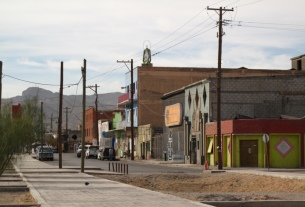
Ciudad Juarez | Photo by Daniel Esser

Ciudad Juarez | Photo by Daniel Esser

The media’s regular chronicling of human resilience in the aftermath of natural disasters and large-scale violent conflicts cover only part of story.  As inspiring as tales of individual heroism, resistance and resilience can be, they provide little guidance for public policy aiming to strengthen social ties within damaged communities, in which safety nets need to be created to work both preventatively and post-victimization.  Supported by a field research grant from the Social Science Research Council’s Drugs, Security and Democracy Program (DSD) and working jointly with a team of researchers based at the Universidad Autónoma de Ciudad Juárez, this writer recently spent four months on the U.S.-Mexico border to answer this question.  Members of 320 randomly sampled households in Ciudad Juárez were interviewed about their knowledge of non-violent collective action during the past five years.  Overall, the findings provide hope that Juárez’s social fabric has not suffered as badly as is widely claimed, but both Mexican and international policy-makers need to understand the nature of collective resilience before they can effectively support it.  Juárez no longer tops the world’s ranking of most violent cities per capita, as it did in 2010 and 2011, although organized violence continues to wreak havoc, exemplified by 30-60 murders per month.  Analysts agree that the downward trend is less the result of concerted government action and more a reflection of a reshuffling – likely temporary – of power structures within the transnational drug business.  Strikingly, most survey respondents argued that neighborly help had not decreased during the violent times.  Roughly a quarter even argued that residents’ willingness to help each other had in fact increased, mainly because people felt more united amid the terror.  Many people reported knowledge of collective street monitoring, peaceful marches, protests and public vigils, with between 5 and 8 percent saying they have actively participated in them.  For those residents, violence was not an abstract phenomenon; more than 30 percent reported personally knowing someone who had been murdered, and just under 20 percent had themselves been victims of violent crimes.  Surprisingly, almost two-thirds said they had not lost trust in local politicians and that they would vote for candidates promising to combat violence.

These findings serve as reminders of the political dimension of resilience in the context of chronic violence, implying that there are important local collective dynamics that can be leveraged through responsive and accountable political representation.  They also suggest that policymakers at all levels need to be mindful of the existence and potential of collective agency under extremely adverse conditions.  The violence in border cities created an opportunity for forging a civic compact between entities of the state on the one hand and neighborhood residents on the other, to mend frail ties between the electorate and its representatives.  This kind of deliberate state-building at the local level is precisely what Mexico needs in the aftermath of former President Calderón’s heavy-handed and, as many have claimed, detrimental strategy emphasizing federal-level and military-led programs and operations.  President Peña Nieto and his cabinet appear likely to embrace a local approach to increasing security as it complements his commitment to improving social services especially in secondary cities.  However, the most critical building block for effectively executing such a civic compact is a politically unbiased, data-driven selection of beneficiary communities and their needs.  Akin to approaches to civic reconstruction in war-torn countries such as Afghanistan and Iraq, communities should be in the driver’s seat in both project selection and monitoring.  After all, state-building is as much about procedural inclusion and justice as it is about tangible outcomes.

Dr. Esser teaches international development at American University’s School of International Service.  Click here for more information about this project.

OAS Drug Report: Let’s Get Serious

The OAS Preparing their Report on the Drug Problem in the Americas | Photo credit: OEA - OAS | Foter.com | CC BY-NC-ND

The OAS Preparing their Report on the Drug Problem in the Americas | Photo credit: OEA – OAS | Foter.com | CC BY-NC-ND

The Organization of American States’ most recent report on the drug problem in the Americas – released last week in Bogotá – takes a fresh, analytical look at the issue and, by advocating discussion of new approaches, subtly signals the “war on drugs” so far has failed.  The report was mandated by hemispheric leaders last year at the Summit of the Americas in Cartagena, who “agreed on the need to analyze the results of the current policy in the Americas and to explore new approaches to strengthen this struggle and to become more effective.”  It takes an analytical approach toward drug-related problems in the hemisphere and includes a discussion of both the supply and demand factors of the drug trade.  (Click here to view the OAS documents.)

The report does not make bold policy recommendations.  It calls for greater attention to the public-health implications of the drug problem, but generally avoids advocating particular strategic solutions to the production, transportation and consumption of illegal narcotics, instead providing different scenarios for the evolution of the drug problem in the Americas.  It envisions the legalization of certain drugs, such as marijuana, in various countries, but makes clear that the OAS is not advocating legalization or decriminalization.  Instead, the report emphasizes the need for countries in the Western Hemisphere to work together to combat the drug problem and discuss new approaches.

The OAS’s unique status in the hemisphere – demands on its performance are high but support for its efforts  from key governments in the region is inconsistent – may not make it the best organization to take the lead on an issue as thorny as the “war on drugs.”  The increasingly clear consensus south of the Rio Grande is that the past couple decades of effort have been not been worth the cost in dollars and lost lives, and many Central Americans, in particular, believe the militarized approach has been disastrous.  Often criticized by U.S. politicians and bureaucrats, Secretary General Insulza was probably wise not to use the report to formalize the hemisphere’s rejection of Washington’s policies.  But moving the discussion to the analytical level – rather than parroting support for another Plan Colombia or Mérida Initiative – is a significant accomplishment in itself.  Rolling out the report in Bogotá, where talk of “new approaches” is also growing, probably helped strike the right balance between old and new.  In addition to platitudinous calls for regional cooperation, the OAS can demonstrate its leadership and relevance by channeling the criticism, the lessons learned, frustration with U.S. consumption, and regional governments’ prescriptions on the way ahead into a serious, constructive strategy for the hemisphere.  With this report, the OAS has indicated that it’s time to get serious about viable alternative solutions to this multi-faceted issue – and that clinging to old models and rejecting new ideas is no longer an acceptable response to calls for rethinking the “war on drugs.”

Guatemala: One Step Forward, Two Steps Backward?

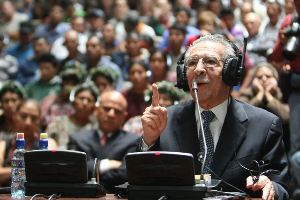
Efrain Rios Montt testifying at his genocide trial | Photo by the Guatemalan government | public domain

Efraín Ríos Montt testifying at his genocide trial | Photo by the Guatemalan government | public domain

The decision of Guatemala’s highest court to overturn the guilty verdict in the trial of former dictator Efraín Ríos Montt – found guilty of genocide and crimes against humanity – has raised serious questions about whether, as many had hoped, the country’s elites will ever allow justice, national reconciliation, and democracy to move forward.  What was a clear victory for many in and outside of Guatemala has evolved into a massive setback, at least for now.  For the victims and survivors of the atrocities, the trial was the first time that their tragic stories got an open and respectful hearing.  For the noble prosecutors and judges who pursued the case despite personal risk and beat back repeated maneuvers by Ríos Montt’s defense team to derail proceedings, it was a solid validation of their commitment to build rule of law.  For Guatemalan society, it meant unprecedented public discussion of the past – and the symbolism of the condemned dictator being taken away by bailiffs promoted closure.  For the international community, it proved that persistence could help a country with chronically weak and politicized institutions become the first in the world to put a former head of state on trial for genocide.  But now the outcome is cloudy.

From the beginning, the long-term impact of the trial would depend on the followup.  Immediately after the verdict was issued, President Pérez Molina, a former military commander, set aside his vehement denials that genocide occurred and said he respected the court’s verdict.  But he conditioned issuance of an official government apology, as ordered by the court, on the exhaustion of all defense appeals – which could take years – and was noncommittal in responding to the court’s call for more investigations of people involved in the atrocities.  While he personally has immunity from prosecution, allegations of his own activities during the Ríos Montt period would obviously be problematic for him.  The powerful business organization CACIF, long aligned with the military, rejected the verdict and began mobilizing resistance to further investigations.  Even moderate politicians, such as former Vice President Eduardo Stein, criticized the genocide ruling and calls for more investigations, apparently fearing that more ethnic groups will stake claims.  Like other dictators facing justice, Ríos Montt has already suffered a supposed health problem requiring that he be moved out of prison and into a military hospital – leaving observers wondering how much of his 80-year sentence he would serve.

The U.S. Government supported the trial process and proclaimed it a victory for Guatemalan judicial institutions.  But it appeared cautious on next steps even before the upper court overturned the verdict (on which U.S. comment is lacking).  Ambassador at Large for War Crimes Issues Stephen J. Rapp who visited Guatemala last month and gave the trial a push, and U.S. Ambassador to Guatemala, Arnold Chacon, attended some proceedings.  The U.S. Embassy pledged its continued support to “credible, independent, transparent, and impartial judicial processes,” but its statement also suggested a lack of enthusiasm for more.  “In these moments it is significant to remember that Guatemala, as a country, was not on trial, but rather two individuals, one of whom was absolved and the other convicted,” it said.  It added that “now is the opportunity to advance to real reconciliation” – a prospect that appeared premature even before the upper court action.  Neither the prosecution nor defense spoke much during the trial of Washington’s direct or indirect role in the 1980s violence – a situation that U.S. policymakers may prefer to continue.  If so, it’s a far cry from the position taken by President Bill Clinton, who during a visit to Guatemala in 1999 apologized for American support for security forces that committed “violent and widespread repression.

Narcoliteratura: Another Way to Look at the Problem

By Héctor Silva

Élmer Mendoza

Élmer Mendoza

Latin America has suffered through almost three decades of the so-called war on drugs.  U.S. President George H.W. Bush formally declared the war in the late 1980s, but from the Andes to the Rio Grande it started when the Colombian cartels and their Mexican partners (then exclusively involved in distribution) created a multi-billion-dollar business to satisfy the growing U.S. market.  The druglords’ strategy of “plata o plomo” brought Mesoamerica and Mexico to their knees through violence and institutional corruption.  Hundreds of thousands have died, but the “war” has failed to tackle the economic basis of the industry: markets shift and supplies remain steady.  The cartels are smaller and more ruthless, and nation states are weakened by corruption.  Reams of reports have been written by official agencies, international organizations and think tanks – the latest a creative study by the OAS – but solutions remain elusive.

The drug trade has left an indelible mark on the very fabric of Latin American culture and society.  “Narcoliteratura,” one of whose main creators is Mexican writer Élmer Mendoza, is one of the most curious manifestations of this.  (Mendoza spoke at American University and was interviewed by this writer in February.)  His main character is Edgar “El Zurdo” Mendieta, a troubled police officer in Culiacán, Sinaloa, a city emblematic of the Mexican drug cartels.  El Zurdo’s stories capture the dual representation that Latin American culture has given to both the trade and its capos – romantic and profitable, yet evil.  Mendoza’s books give a naked and honest portrait of a society that has adapted, for its own survival, to most of the values associated with the narco business.  As Mendoza says, “El Zurdo” tries to keep a distance from the narco, but he can’t avoid him because the narco is there and is very strong and, almost without wanting to be, is always in contact.”

Compared to the many reports that fail to lead to policies that would help attack the core problems that give rise to the narco industry, Mendoza’s work provides a fresh and sincere portrait of the devastating impact the drug trade and the “drug war” have had on Latin America.  In books like El Amante de Janis Joplin and Nombre de Perro, his message is powerful, coming from a writer that has been there, in Culiacán, since it all started.  He writes with no restraints, through the voice of his characters, to tell some simple truths.  In an interview with this writer, he offered a sampling of his wisdom.  “If the US came up all of a sudden with a program to deal with its addicts, it would mean the end for the narco business,” later adding that “the war on drugs is useless and has only caused death.”  He poignantly stated:  “The war on drugs also allowed us to relax our emotions and lose the last chance for justice.”


Finding New Approaches to Media-Government Tensions in Latin America

By John Dinges

Press Conference in Lima, Peru Photo credit: World Economic Forum / Foter.com / CC BY-NC-SA

Press Conference in Lima, Peru Photo credit: World Economic Forum / Foter.com / CC BY-NC-SA

Establishment news media and government are on a collision course in a number of Latin American countries.  At the heart of the conflict is government rejection of the classic role of an ideologically diverse press as a check on government power and as a forum of citizen deliberation.  The media, in response, charge that government actions constitute violations of international free press guarantees.  But that defense has been ineffective and has not resonated at the popular level.  All of the governments involved are democratically elected, and most espouse left-of-center programs of progressive reform aimed to benefit the poorest sectors and address other forms of inequality.

The most severe conflicts are in Venezuela and Ecuador, where aggressive government use of laws and lawsuits has dramatically diminished the influence of independent television and newspaper organizations.  The once strident news media, not unfairly characterized as the de-facto opposition, have been cowed, and are cowering.  At the same time, governments are embarking on the redistribution of the broadcast spectrum to favor community and state-owned (“public”) channels.  The Morales government in Bolivia has achieved the upper hand over the media as it builds its own media network.  The Kirchner government of Argentina is fighting a legal battle –with mixed success – to cripple the media empire of Grupo Clarín, the owner of the largest newspaper in Latin America and the largest cable network.  The conservative governments of Honduras and Panama are also on the freedom of expression watch list, indicating that the phenomenon is not purely a matter of ideology.

The polarization and growing government dominance represents a serious problem for democracy in these countries.  For all the harsh rhetoric on both sides, however, the overall threat to freedom of expression (measured in censorship, direct control of media and imprisonment of journalists) is far less than was the case during the rightist military governments of previous decades.  Still, it would be a mistake to limit our promotion of healthy democracy to the defense of the traditional “legacy” media institutions in these countries.  Government leaders, especially Presidents Correa of Ecuador and Kirchner of Argentina, have used (some would say misused) democratic arguments in criticizing the traditional media.  They charge that the concentration of media in the hands of the private sector (with ownership participation of banks in the case of Ecuador) is itself a violation of democracy, and that they are trying to “democratize” the media by delivering increased access to citizens in the form of public and community media.  Not surprisingly, these new media creations are beholden to the government and lack political independence.  But they are not going away.  In an effort to defuse the tension, institutions such as the Carter Center and others have developed an alternative conflict resolution approach that is quietly garnering support.  The idea is to promote an honest dialogue between governments and wide sectors of the media.  It would create a process to explore the substance of government positions as well as investigate alleged abuses. To this end, the Carter Center organized meetings earlier this year in Ecuador and Bolivia, and a conference was held at Columbia University’s School of Journalism this month bringing together leaders of government, media institutions and international organizations to debate media regulation and press standards as a platform to reconstitute consensus about media in democratic societies.

Immigration Reform Legislation: Better than Nothing, But Still Flawed

Immigration reform rally / Photo credit: quixoticlife / Foter.com / CC BY-NC-SA

Immigration reform rally / Photo credit: quixoticlife / Foter.com / CC BY-NC-SA

The comprehensive immigration reform proposal that the bipartisan group of U.S. Senators dubbed the “Gang of Eight” released on April 17 is an important step forward but probably dooms us to repeat history.  The plan includes mechanisms for documenting the roughly 11 million inhabitants of the U.S. who are now living in the shadows and opening a path to citizenship for undocumented immigrants who have been in the country since December 2011.  The process to gain citizenship would be long – taking typically 13 years – arduous, and expensive, requiring payment of substantial fees and fines.  The Senate Judiciary Committee began its review of the bill on May 9, covering 30 of 300 proposed amendments.  Prospects for the legislation remain uncertain, as the fragile alliance among these eight senators may not be sufficient to sway skeptics on both the left and right of the political spectrum.  If passed, the measures would take effect after the U.S. government certified that heightened border security measures have been implemented.

Supporters of comprehensive immigration reform from both sides of the aisle have long called for a “once-and-for-all” solution to the country’s broken immigration system.  Nevertheless, the original 867-page proposal – like the Immigration Reform and Control Act of 1986 that regulated the status of just under three million undocumented immigrants – is by no means a permanent fix.  In an important sense it cannot be: it reflects a static conception of immigration, whereas historical analysis of migration patterns shows that they are inevitably dynamic processes, responding to unpredictable fluctuations in labor supply and demand in sending and receiving economies alike.

However imperfect it may be, the Senate bill represents the most promising step yet to address this ongoing challenge.  Proposed amendments introduced thus far have not addressed the dynamic nature of the problem, focusing instead on the digression of border security, as if fences or bloodhounds were capable of controlling cross-border population flows.  Institutional frameworks that acknowledge the dynamic factors that shape human migration and offer avenues for managing the movement of peoples intelligently are on the back burner.  As AU history Professor Alan Kraut has suggested, one way that legislators could achieve this would be through establishment of a commission on foreign and domestic economies and labor markets that would conduct periodic reviews of the conditions associated with optimum migration flows.  Absent the deeper understanding of migration that such reviews would provide, the U.S. legislation – albeit better than nothing – will probably yet again repeat the error of proclaiming an unattainable once-and-for-all resolution of immigration policy.

Brazil: The STF, Congress, and Checks and Balances

By Matthew M. Taylor

Supreme Federal Tribunal (STF), Brasilia / Photo credit: R. Motti / Foter.com / CC BY-NC-SA

Supreme Federal Tribunal, Brasilia / Photo credit: R. Motti / Foter.com / CC BY-NC-SA

Brazil’s last resort for political minorities and opposition parties – the Supreme Federal Tribunal (STF) – is facing growing pressures on its independence.  In Brazil’s famously hyper-presidential system, the executive branch dominates Congress through an elaborate system of presidential decrees, budgetary pork, and cabinet appointments.  Since 1990, no president’s party has ever held more than one-fifth of the seats in Congress, yet presidents – using a diverse array of carrots and sticks – have routinely been able to rely on support from coalitions that surpass three-quarters of the Chamber and Senate.  As Brazil’s high court, the STF has been the only channel through which majoritarian decision-making has been contested.

In recent weeks, Congress has bluffed its way onto the scene: the constitutional committee in the lower house voted to curb the courts via a proposed – but ultimately shelved – constitutional amendment that would restrict the STF’s powers of constitutional review, subjecting decisions that Congress finds objectionable to public consultation.  The reaction has been deafening.  The press has drawn parallels to similar moves in neighboring Argentina and Venezuela.  Eminent political analyst Sérgio Abranches claimed that this was further evidence that an “oligarchic civil coup” was under way.

Some judicial actions have indeed been provocative, such as decisions on contentious issues such as political party formation and the distribution of oil royalties. But the Congress’ effort to curb the court has left a bitter taste – because it points both to the increasing politicization of judicial decision-making and its potentially destabilizing effects on the political system.  The fact that the amendment proposal had support even from some members of the opposition underscores the depth of congressional resentment of the STF’s proactive role.  The Court appears likely to face continued pushback from Congress, with overwhelmingly political objectives.  But some elements of the proposed reform may be worth thinking about, such as restrictions on the issuance of injunctions by single members of the Court.  Too often these injunctions have been seen as high-handed and lacking in the legitimacy that decisions by the full Court carry.

Venezuela Update: Confusion in Caracas…and Washington

Photo credit: INTERNATIONAL REALTOR / Foter.com / CC BY

Photo credit: INTERNATIONAL REALTOR | Foter.com | CC-BY

Three weeks after elections to choose Hugo Chávez’s successor, confusion still reigns in both Caracas and Washington.  The Venezuelan opposition has rejected the results of the election, which the electoral tribunal says Chávez’s handpicked man – Nicolás Maduro – won by only 1.8 percent.  Opposition candidate Henrique Capriles originally asked only for a vote recount – considered reasonable by many because of the narrow margin – but his lawyers upped the ante on 2 May when they officially demanded that the vote be invalidated and new elections be held.  Isolated incidents of political violence turned up the heat in Caracas, although the Götterdämmerung scenarios in the streets that some analysts predicted have not yet materialized.

Every major country of the hemisphere has recognized Maduro as President – except the United States.  (Canada wavered at first but seems to have moved on.)  Washington has invested millions of dollars in “democracy promotion” programs over the years and has provided Capriles and the opposition enduring political support in their efforts to beat Chávez at the polls and later to beat Maduro as his hand-picked successor.  Since the April election, the U.S. government has endorsed the opposition’s call for a vote recount.  So has the OAS, which offered experts to assist in the process.  But only Washington has said that while it is “working with” the Maduro Government, it doesn’t recognize its legitimacy.  The State Department spokesman dodged the issue repeatedly last week, and in an interview with Univisión broadcast at the conclusion of his visit to Mexico last Friday, President Obama himself refused to say whether his Administration officially recognized Maduro as President.  He left little doubt as to his real position, however, when he said that basic principles of human rights, democracy, press freedom and freedom of assembly were not observed in Venezuela following the election.

As AULABLOG pointed out on 23 April, the irony of the United States demanding a hand-count of the ballots is not lost on millions of Latin Americans who remember Washington’s performance in the 2000 Bush-Gore vote – and that it was a politically divided Supreme Court that made the final decision.  The tightness of the vote, Venezuelan electoral realities (past and present), and President Maduro’s over-the-top rhetoric – last week he again accused Washington of backing “neo-Nazis” allegedly trying to overthrow his government and accused a filmmaker of being a spy – make it hard for observers to argue that the elections are legitimate.  President Obama’s statements, including his remark that the spying charge was “ridiculous,” have been measured and continue a noteworthy shift since the near-hysteria about Venezuela during the Bush Administration.  But the fact remains that the U.S. Government’s posture on Venezuela – perhaps unique in its bilateral relations with Latin America since the Cold War – has made it once again the outrider and, among people who remember the Bush-Gore decision, the butt of many jokes.  Importantly, Capriles may be reading Washington’s stance as an endorsement of his own increasingly puzzling demands.  As our 23 April post suggested, Capriles ought to see himself as having a historic chance to lead, poised to challenge Chavismo easily at the polls the next time around.  Yet, like Mexico’s Andrés Manuel López Obrador in 2006, he may be squandering an opportunity to present himself to the Venezuelan electorate as the responsible grownup in the room.