The Snowden Case: Provocations and Intimidation

By Fulton T. Armstrong
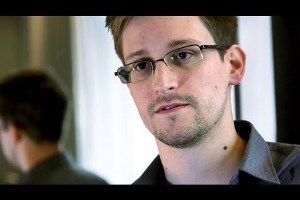
Edward Snowden / Photo credit: zennie62 / Foter / CC BY-ND

Edward Snowden / Photo credit: zennie62 / Foter / CC BY-ND

The rhetoric and diplomatic jostling surrounding the flight of American whistleblower (or, depending on perspective, criminal leaker) Edward Snowden have once again thrust to the fore Latin America and U.S. policy toward the region.  Some Latin American presidents have seemed to go out of their way to prick U.S. sensitivities, and Washington seems to have gone out of its way to stomp on Latin American sensitivities.  Both sides have been happy to live up to the caricatures of themselves held by the other, but both sides’ interests have been harmed in the process.

The drama started, of course, while Snowden was in hiding in Hong Kong, and it has dragged on as he’s resided in a transit lounge of the Moscow airport.  U.S. media, which in the past have published stories casting Cuba, Venezuela, Ecuador, and others as eager to poke the U.S. in the eye, ran pieces – shifting attention to Latin America – and away from China and Russia’s even bigger slap in Washington’s face in refusing to hand the leaker over.  Reporters believed their own rumors and piled into an Aeroflot plane bound for Cuba.  Washington rolled out the big guns, including Vice President Biden, to discourage the Latin Americans from offering Snowden any help – and seemed to have success.  Ecuador, which has protected Wikileaks boss Julian Assange from British, Swedish and U.S. pursuit, initially welcomed Snowden but, after a phone call from Washington, pointed out that an asylum petition could not be considered until he arrived in country.  The crisis between the U.S. and Latin America deepened, however, when several European countries – presumably responding to U.S. pressure and bad U.S. intelligence – closed their airspace to Bolivian President Morales, who someone, somewhere, suspected of flying Snowden out of Moscow on the president’s return home.  Latin American condemnation exploded.

Venezuelan President Maduro, stating that that he wanted “to protect this young man from the persecution unleashed by the world’s most powerful empire,” publicly offered Snowden asylum on Friday.  That move ended the slight progress Caracas and Washington had made toward rapprochement– evident since the OAS General Assembly in June – and bilateral relations will surely worsen.  But the Obama Administration’s relations with Latin America writ large don’t appear likely to fare much better.  Some leaders’ rhetoric may be over the top, but Washington’s language has been threatening, and its actions speak louder than its words.  An unidentified senior U.S. official told the New York Times that “there is not a country in the hemisphere whose government does not understand our position at this point,” adding that any aid for Mr. Snowden “would put relations in a very bad place for a long time to come.” Such statements leave one wondering whether we are approaching the point where this administration will cease proclaiming its commitment to a new era of US-Latin America relations characterized by partnership and respect among equals.  Transcripts of Mr. Biden’s calls will not be released, but rarely do countries reverse their positions publicly in the absence of either serious threats or generous inducements – and few clear-thinking Ecuadorans, tracking the Administration’s attitudes toward President Correa, see the latter as in the cards.  In pressuring its European allies to establish a no-fly zone to keep a head of state from returning home, Washington took an action that many Latin Americans – not without a grain of truth – believe it would never take against a region that it respected.  Repairing the damage of el asunto Snowden will be hard for both sides, but Washington has the bigger task ahead.
 

Chilean Watershed?


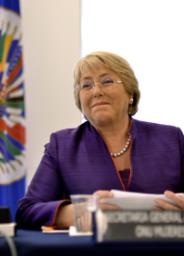
Michelle Bachelet / Photo credit: OEA - OAS / Foter.com / CC BY-NC-ND

Michelle Bachelet / Photo credit: OEA – OAS / Foter.com / CC BY-NC-ND

Sunday’s presidential primaries in Chile – the country’s first ever –reaffirmed former President Michelle Bachelet’s leadership of Concertación and cleared the way for a faceoff in November between herself and the Conservative candidate, Economy Minister Pablo Longueira.  Bachelet trounced challengers within her center-left coalition, winning 74 percent of the primary vote, and seems poised to build on the astounding 81 percent approval rating she had in 2010 when her first term ended.  (Current President Sebastián Piñera’s approval rating now hovers around 40 percent, a two-year high for him.)  Conservative Longueira will have the advantage of Piñera’s incumbency, but his party’s somewhat weaker performance on Sunday – with about 27 percent of all votes cast – and his slim 3 percent margin within the coalition suggest a tough campaign ahead for him.  Most observers deem Longueira’s performance in Piñera’s cabinet to have been competent but unexciting, and they predict an easy Bachelet victory in November.

Whichever candidate wins, Chile faces an evolving set of challenges.  Its commodities-driven economy is slowing down, and a stubborn gap between rich and poor is fueling demands for tax and education reforms.  Chile is ranked the most unequal country of the 34-member Organization for Economic Cooperation and Development (OECD).  Widespread demonstrations by students, teachers and professors have been demanding free tuition from preschool through university, and key labor unions are increasingly joining these mobilizations for reform.  Accepting her primary victory on Sunday night, Bachelet said voters were motivated by a desire for tax and education reform as well as a new constitution to replace the one created under dictator Pinochet in 1980.  She has also said that if elected she will halt the controversial HydroAysén project, which would build five mega-dams on two of Chilean Patagonia’s rivers.  Despite this rhetorical shift leftward and her role as the leader of the Socialist Party, such statements are not expected to lead to significant policy shifts; Chilean observers say she will continue to hew closely to the market-friendly policies that helped make Chile one of the region’s most stable countries during her first term.

Bachelet’s and Longueira’s competition may fail to excite the electorate in November, when voting will not be obligatory for the first time, and low turnout could deprive the victor of the mandate needed to lead thorough change, an arguable requisite  to increase the credibility of democratic institutions.  Empowered by two years of protests, student leaders are not leaving things entirely up to political elites.  Many are also running for office and aspire to bring a new perspective and direction to reforms in Chile.  International attention has focused in recent weeks on popular mobilizations in Brazil, but as recently as last week, tens of thousands of Chileans marched through the streets of Santiago and other major cities, challenging the credibility of the existing political order.  Bachelet has made deals with some of the protest leaders – agreeing, for example, not to run a Concertación candidate against one of them in a congressional race – but their demands are unremitting and strategic, and the winner of the upcoming election faces  a real challenge in trying to satisfy them. 

Nicaragua: Model for Citizen Security?

Police in Managua, Nicaragua / Photo credit: jorgemejia / Foter.com / CC BY

Police in Managua, Nicaragua / Photo credit: jorgemejia / Foter.com / CC BY

Nicaragua – often accused of keeping bad company on political and economic matters – finds itself in a special group of countries that are doing quite well combatting crime.  Along with Chile, Costa Rica, and Uruguay, it has one of the lowest crime and violence rates in Latin America.  At a discussion* at the Wilson Center in Washington this week (click here for video), experts identified factors explaining why these countries stand out, including the democratic traditions, relatively strong institutional frameworks, and economic stability in Chile, Costa Rica, and Uruguay.  Nicaragua, on the other hand, has witnessed dictatorships, coups, chronically weak institutions, and the sort of grinding poverty that fuels chronic security challenges.  Gross generalizations are risky, but analysts probed why Nicaraguans generally trust their police force and commit fewer violent crimes.

Among the key factors is that Nicaragua, like the other three top performers, separated the police from the armed forces and increased civilian control over it.  Unlike in the rest of Central America, where revolutionary movements did not triumph, the Sandinistas abolished the hated National Guard in 1979 and created a force under the Interior Ministry.  Over the course of the Esquipulas peace accords, the elections in 1990, and the passage of a Ley Orgánica de la Policía Nacional in 1996, civilian oversight was institutionalized and respect for human rights and judicial process grew.  The Sandinistas’ promotion of mechanisms for community vigilance – a negative when used to root out suspected “counterrevolutionaries” in the 1980s – later helped communities develop cohesive approaches to citizen security and contributed to respect of institutions.  Another factor is that, like the other three countries under discussion, Nicaragua has a relatively low gun ownership rate.

Chile, Uruguay, Costa Rica and Nicaragua have another thing in common:  none has resorted to the sort of militarized strategies toward transnational or homegrown crime that Colombia, Mexico and the United States have espoused.  The Nicaraguan National Police have generally maintained closer ties with their Scandinavian counterparts, who emphasize addressing the root causes of crime and violence – a philosophy that Nicaraguans of most political stripes embrace more readily than the emphasis on military-style operations.  The steadily worsening situation in Honduras, where Washington has pursued collaboration with the military, has convinced many in Central America that the militarized approach doesn’t work.  The mix of limited training and operational cooperation that the United States provides Costa Rica would probably work well in Nicaragua, but Washington – prodded by legislators who still see Nicaragua through a 1980s optic and condition cooperation on electoral performance – appears cool to fashioning a flexible package of joint initiatives.  Rather than applying the Colombian-Mexican security model to Central America, perhaps the successful elements of the Nicaraguan model can be expanded in the troubled region.

*CLALS Research Fellow and InSight Crime Senior Fellow Javier Meléndez delivered the lead presentation on Nicaragua.

Transgender Rights: Signs of Progress in Latin America

By Emily McGranachan

Marcha de Orgullo, Buenos Aires, Argentina / Photo credit: blmurch / Foter.com / CC BY

Marcha de Orgullo, Buenos Aires, Argentina / Photo credit: blmurch / Foter.com / CC BY

Social and structural discrimination limit the economic, health, and social prospects of transgender individuals, often leading to precarious lives fraught with human rights violations.  According to Argentine psychologist Graciela Balestra, transgender people around the world have an average life expectancy of only 30 years.  In Latin America, they have the highest rate of HIV infection (35 percent) and frequently face violence and insecurity.  According to the 2012 Trans Murder Monitoring Project report, of the total reported murders of transgender people in the world between 2008 and 2011, 79 percent took place in Latin America.  International HIV/AIDS Alliance and Red Latinoamericano y del Caribe de Personas Trans (REDLACTRANS) published similarly startling statistics in a 2012 report titled “The Night is Another Country.”  While the report focused on the experiences of transgender women, it also reveals that transgender men also experience high rates of discrimination and violence throughout Latin America.  Of the transgender women interviewed in the study, about 80 percent reported experiencing violence or threats by police and other officials.  Throughout Latin America the prevalence of transphobia – defined as the fear or hatred of transgender people – has led to impunity for violence and discrimination against transgender people, and these crimes, including murder, are seldom prosecuted.  The transgender community also faces challenges of social discrimination and the lack of access to health care and jobs, marginalizing transgendered people in society.

While the current situation is stark, some societies have shown greater openness to transgender people.  Whereas Brazil and Colombia allow identity card changes only after surgery and board evaluation, Argentina in 2012 became the first country in Latin America to pass a progressive law easing the rules with regard to gender identity and identification.  Now a person in Argentina can change the name and sex on their identity card without having to go through the long and discriminatory process of sex reassignment surgery or going before a judicial review board.  In 2009, Uruguay slightly loosened its controls when it began requiring only board approval for identity card changes.  Government initiatives, like that of Argentina, have direct impacts on the lives of transgender people, who are able to access jobs and other securities, according to Balestra.  Greater inclusion in society and stronger legal protections by the government can signify or signal a change in social values within the broader society.

The Obama Administration has been a vocal supporter of LGBT (Lesbian, Gay, Bisexual and Transgender) rights as part of a broader human rights agenda in international diplomacy.  Among its initiatives are the Global Equality Fund to support local LGBT organizations and advocates, a greater recognition of refugee rights for LGBT people, and a general promotion of rights abroad through working with NGOs and states.  Recognizing the situation in Latin America, the State Department highlights its work trying to establish a special rapporteur for LGBT human rights within the Inter-American Commission for Human Rights.  As some aspects of LGBT rights progress in the United States (the U.S. still has a high rate of violence against transgender people as well), it is expanding its understanding and definition of human rights.  While the right to security, health care, employment and dignity have long been international human rights, only recently has the discrimination and violence transgender people face become an important part of the human rights platform.  The incorporation of LGBT human rights into U.S. foreign policy, backed by a strong U.S. example of justice and security for transgender citizens, will encourage other countries to follow suit. 

Brazil Protests: Amorphous Causes, Unpredictable Consequences

By Matthew M. Taylor

Protestors in Brazil / Photo credit: Izaias Buson / Foter.com / CC BY-NC

Protestors in Brazil / Photo credit: Izaias Buson / Foter.com / CC BY-NC

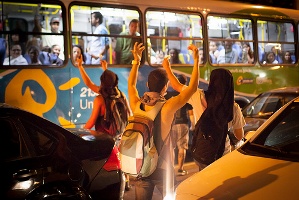
Hundreds of thousands of Brazilians hit the streets of a dozen state capitals this past week.  The initial trigger was a proposed hike in São Paulo bus fares, already among the world’s most expensive, but news media soon reported that the protests reflected anger with the rising cost of living, crime, corruption, impunity, and the high costs of hosting the World Cup. Lackluster public services haven’t helped, and widely televised police violence last week provided another rallying cry.  Polling by Datafolha shows that the protest is a middle class phenomenon, with 77 percent of the marchers in São Paulo claiming a university degree.  This growing demographic group is turning against President Dilma Roussef’s Worker’s Party (PT) but it is also weary of the opposition PSDB, especially in São Paulo state.

So far, the protests have been difficult for political parties to harness for their own ends.  Partisans who showed up at the marches on Monday waving party flags were reportedly forced to pull them down by indignant protestors.  Dilma’s popularity has been falling – she was recently booed at the opening match of the Confederations Cup – but the marchers don’t seem collectively exercised about her policies or those of any single party or politician.  Aecio Neves, Marina Silva and Eduardo Paes, her potential opponents in elections scheduled for late 2014, have yet to capitalize on her vulnerabilities, as the protestors seem to be casting “a pox on all their houses.”  An outside candidacy is a rising possibility, but Brazilians have been wary of supposed political saviors after the rapid rise and fall of Fernando Collor in 1990‑92.  Anger is directed at the political class as a whole because it is incapable of responding to public disgust with Brazil’s unsatisfactory public services.

It is quite possible that the protests may peter out on their own, especially if the renewed violence seen in São Paulo on Tuesday night alienates supporters.  If the protests continue and remain peaceful, they may result in increased social solidarity and a shared sense of patriotism in the face of an unsatisfactory political system.  Something similar happened during other mass protests in the past, especially the Diretas Já marches of 1985.  A renewed consensus in favor of a more robust and effective democracy would be salutary, but the concrete results arising from the protestors’ demands are difficult to predict.  One thing to be sure of: withdrawing the proposed bus fare increase proposal is too little, too late.

U.S. Credibility Takes Another Hit

By Fulton T. Armstrong

Photo credit: Chairman of the Joint Chiefs of Staff / Foter.com / CC BY

Photo credit: Chairman of the Joint Chiefs of Staff / Foter.com / CC BY

The domestic spying programs under the Bush and Obama Administrations further erode U.S. moral leadership in the hemisphere and probably beyond.  At crucial junctures since President Jimmy Carter made human rights a pillar of policy in Latin America, U.S. moral authority has been decisive in persuading regimes on the right and the left to open the way for pluralism and democracy.  Lecturing governments and militaries on the need to eschew torture, domestic spying, and other abuses, U.S. diplomats and politicians could have been charged with arrogance, but on these specific aspects of the U.S. government’s treatment of its own people, not serious hypocrisy. The U. S. had its racial and economic injustices, but trends were positive, and the country stood for the rule of law, skepticism of State Security officials’ penchant to use information for power, and a pretty solid respect for due process. Even before Carter, the Watergate scandal – and resulting resignation of the President and overhaul of the intelligence agencies – was a clarion signal that agencies created to monitor foreign affairs must keep their focus far off U.S. shores.

Latin American media have carried primarily factual stories revealing the “PRISM” program, which collects data from hundreds of millions of e-mails and other electronic communications each day and stores it for exploitation by targeters (now called “analysts”) on the lookout for alleged potential terrorists, based on secret profiling.  Some papers have reported that Director for National Intelligence Clapper lied to the U.S. Congress without batting an eyelash when asked directly if such activities were ongoing.  Coming after reports in recent years of the use of torture (and the impunity granted to the perpetrators), the so-called “extraordinary renditions” (and the cases in which kidnap victims were innocent), the use of “black prisons” (in which security services in new democracies were encouraged to circumvent their elected officials),drone attacks (even against U.S. citizens), and the continued detention of prisoners without trial at Guantanamo (giving human rights violations in Cuba a new meaning) have all been noted throughout Latin America.  PRISM may no longer be considered newsworthy.

The fact that British and American newspapers eventually brought the domestic spying programs to light may hearten some in Latin America, as evidence that an essential element of democracy – a probing press –shows signs of life despite reports of Justice Department harassment of the Associated Press and other media.  But sentient Latin Americans know the implications of PRISM – and what enterprising State Security “analysts” can do with years of data about even the most mundane aspects of potential targets’ lives.  The Obama Administration’s defense of PRISM as necessary to defend against supposed terrorists doesn’t sell well in a region that knows how information never sits unused.  The Bush Administration gave the Medal of Freedom to Colombian President Uribe, who deployed his secret intelligence agency to harass opponents and allowed his military to disappear thousands of youths.  The Obama Administration’s lectures to Venezuela, Nicaragua, Bolivia and Ecuador on the need to give more space to opponents – however warranted – ring sort of hollow when, in Latin Americans’ minds, it has nurtured its own Frankenstein state-security apparatus that lacks credible checks and balances.  Washington can argue that U.S. moral authority doesn’t matter, and that the “terrorist threat” it faces calls for extraordinary measures, but it will be a long time before an American statesman can wag his finger at a Latin American counterpart for doing the same thing.

Righting a Wrong: Family Reunification and Immigration Reform

Photo credit: mdfriendofhillary / Foter.com / CC BY-SA

Photo credit: mdfriendofhillary / Foter.com / CC BY-SA

As debate around the immigration reform bill is expected to heat up on the Senate floor, a contested provision allowing for some non-criminal deportees to return to the United States remains intact. For how long, no one is quite sure. The controversial measure, outlined in Section 2101 of the current bill, would permit deported immigrants with children, parents, or spouses who are currently U.S. citizens or legal permanent residents to petition for a waiver to return to the U.S. and apply for Registered Provisional Immigrant (RPI) status. While reprieves have been granted to undocumented immigrants residing in the U.S. in the past—under the Immigration Reform and Control Act of 1986 and President Obama’s DACA memorandum last July—never before has a Congressional or Executive effort to overhaul immigration policy contemplated the return of deportees.

The “right to return” provision survives even as the rate of deportations continues to soar. Since 2009, the Obama administration has removed 1.5 million unauthorized immigrants and is on track to surpass 2 million by the end of fiscal year 2013. According to recent federal data unearthed through a Freedom of Information Act (FOIA) request, 205,000 undocumented immigrants with at least one U.S. citizen child were deported between July 2010 and September 2012, representing an average of 90,000 per year. The contentious deportee measure stems from acknowledgement on the part of the bill’s authors of the destructive effects that these enforcement policies have had on American families, particularly U.S. citizen children. A spokesman for Senator Marco Rubio, one of the bill’s most conservative drafters, noted that the Senator had “personally concluded that giving parents a chance to reunite with their children was the right thing to do.” The toll that family separation takes on the mental and physical health of children has only recently attracted serious attention, with studies suggesting links between parental deportation and depression, separation anxiety disorder, post-traumatic stress disorder, and poor cardiovascular health.

Central to the compromise reached by the bill’s sponsors – known as the Gang of Eight – is the question of how to prioritize family reunification without shattering the bill’s prospects. The argument from the right has been that in promoting family-based immigration, the 1986 reform prompted the larger waves of immigration seen since then. In response to these concerns over “chain migration,” however exaggerated they may be, the proposed legislation calls for a gradual move away from the family-based immigration model, eliminating some 90,000 annual visas given to the siblings and married adult children of legal immigrants and granting up to 110,000 visas to immigrants skilled in science and math. Democrats have viewed this shift toward a more comprehensive “merit-based” system as a necessary compromise, but have built into the bill measures such as the “right to return” as well as an expedited path to citizenship for DREAMers (the children of unauthorized immigrants) and a clearing of family-based immigration backlogs – all of which vindicate the importance of the nuclear family. It is time for Senators from the right to follow the lead of Republican drafters and make some concessions of their own, including the Gang of Eight’s compromise to allow for the reunification of families torn apart by a decade of immigration enforcement policies run amok. Immigration reform must have as its foundation a concern for family unity and a respect for what families contribute to our society. It should also take into account the welfare of 4.5 million U.S. citizen children in mixed-status homes who will be better equipped to contribute to our society if they have the opportunity to grow up in the presence of their parents.

U.S.-China: Competing over Central America and the Caribbean?

President Obama and President Chinchilla in Costa Rica | Photo by: The White House | Public domain

President Obama and President Chinchilla in Costa Rica | Photo by: The White House | Public domain

The recent visits to Central America, Mexico, and the Caribbean by Chinese President Xi Jinping and U.S. President Obama (and Vice President Biden to Trinidad and Tobago) suggest a handoff from Washington to Beijing of the role as the region’s sugar-daddy, but not a strategic shift in influence.  The presidents’ visits were similar in their innocuous itineraries.  Both got pompous welcomes; met with “real” citizens (Xi ate empanaditas de chiverre with a coffee farmer); and praised the bilateral relationships.  Both held sub-regional summits – Obama in San José and Xi in Port of Spain.  Both repackaged ongoing or recently negotiated projects as new “accords.”  Obama pledged another $150 million a year for funding the Central America Regional Security Initiative (CARSI), part of the strategy started under President Bush to counter the drug trade and related threats.  Xi got headlines in Costa Rica for providing more than $1.5 billion for refinery and road projects and to purchase replacement taxis and buses from Chinese manufacturers.  Significantly, China is also building Costa Rica’s new National Police Academy – the sort of project Washington used to thrive on.

President Chinchilla and President Xi Jinping | Photo credit: Presidencia de la República de Costa Rica / Foter.com / CC BY-NC-SA

President Chinchilla and President Xi Jinping | Photo credit: Presidencia de la República de Costa Rica / Foter.com / CC BY-NC-SA

Despite the similarities, the visits had different orientations and feel.  Xi’s principal task appeared to be to open his checkbook, while Obama’s main deliverable was a policy shift – the welcome word that Washington was pulling back from making its top regional priority the interdiction of narcotics produced in South America and transiting the isthmus on their way to consumers in the United States.  According to press reports, despite the continued CARSI funding, Obama had absorbed Costa Rican President Chinchilla’s complaint last year at a summit with Biden that it was unfair that Central Americans were dying in efforts to stop narcotics that Americans use.  The media tried to give the two presidents equal coverage, but the disparity became obvious.  The Chinese distributed copies of the China Daily (in English) even into the San José suburbs, whereas Obama didn’t need to do his own publicity.  Despite whiffs of resentment about airport and street closures, the papers covered all of Obama’s events with affectionate quotes from government and common folk alike – and showed people, including a kid dressed as Spider-Man, waving to his motorcade.  La Nación, on the other hand, reported that school children cheering a Chinese speaker couldn’t understand a word he was saying.

The goodies each president brought created little excitement – and no small amount of skepticism.  Important details about China’s offer to help repair the Costa Rican gasoline refinery remain unknown, and Chinese cars already have a bad reputation.  China’s handouts aren’t going to be turned down, of course, and Xi’s pledge to buy more Costa Rican coffee (now about 5 percent of what Japan buys) and to encourage Chinese tourists to travel to the country (now a micro-percentage of visitors) are welcome.  Obama’s CARSI funding looks like bureaucracy on autopilot.  Few Central Americans can cite concrete benefits from the seven-year-old Central American Free Trade Agreement (CAFTA) with the United States either, and the general impression – reinforced by Secretary Kerry’s recent reference to the region as the U.S. “backyard” – is that Washington is yielding the playing field to China.  But the natural ties and strategic mutual interests between Central America and the United States remain strong and give the United States, should it wish to fill it, ample space to play a positive role in the region’s future beyond programs on autopilot.

Constitutions: End-State or National Dialogue?

By Todd Eisenstadt

Protestor holding the Constitution of Honduras. Photo credit: giggey / Foter.com / CC BY-NC

Protestor holding the Constitution of Honduras. Photo credit: giggey / Foter.com / CC BY-NC

The role of constitutions is evolving as deeply as the countries in which they are being written.  At least since 1787, constitutions have been pacts around which societal expectations converge – the written record of elite agreements on how things should be.  During the “Third Wave” of democratic transitions (since the 1970s), they were viewed as precursor “contracts” to founding elections.  But increasingly, constitutions are way stations rather than destinations.  The content and implementation of constitutions is of course important, but the politics surrounding them can, in some cases, be more important than the clauses and amendments contained therein.

In Bolivia, Ecuador, Venezuela, and perhaps, in the near future in Paraguay, constitutional moments seem to be taking on different meanings.  Optimism about constitutions as core elements of Third Wave democratization pacts is giving way to the 21st century reality of democratic backsliding, semi-authoritarianism, and hybrid regimes – making it all the more important to reconsider how to read constitutions and evaluate governments’ adherence to them.  These are not stale parchments, but living narratives which represent iterations in decades-long intra-elite bargaining efforts to stall Arab Spring-like social movements (regardless of whether they actually seek to create spaces for new political actors).  They represent societal gains – both real and symbolic, even with ephemeral institutional advances.  This may be especially true in new and developing democracies, which need government services, constitutions that improve fairness and equity, and implementation of those commitments.  Developed democracies fall short too, but in developing countries new to the art of promulgating democratic constitutions, these shortcomings are more transparent as they are less proficiently hidden from view.

We need an intellectual space where Madison’s Dilemma – how to empower citizens without overpowering political institutions with the tyranny that unruly majorities can bring – meets Hugo Chávez’ shadow.  Chávez, who was obsessed with linking the Boliviarian Union of nations via new trade agreements and political arrangements, sought to empower himself and his political allies in the guise of solomonic constitutional reform to consolidate democracy.  Observers have long criticized “window dressing institutions” in the electoral arena, as evident in studies of “electoral engineering” and “sham elections.” While “sham constitutions” – a phrase that may ring too loudly – require more subtlety and political craftsmanship, we do need to question the longstanding stylization of constitutions as the “last word” (literally) on a nation’s quality of democracy.  There is much to learn, and a conference held last week at American University by CLALS Affiliate Rob Albro, SIS Researcher Carl LeVan, and I, and sponsored by the Latin American Studies Association and the Mellon Foundation, made some headway in finding new ways to conceive of constitutions not as the “final word,” but only as the most recent one.

U.S.-Cuba: Time to End the Visa Charade

By Eric Hershberg

Slide1Bad habits die hard, especially when they involve Cuba and American bureaucrats eager to appease the right wing.  For more than 50 years, Washington has been at loggerheads with a revolutionary regime eager to reciprocate incessant aggression and stick its finger in the eye of the Colossus to the North.  Although nothing as absurd as a confrontation at the brink of nuclear war has occurred since 1962, during the ensuing decades both governments have repeatedly provoked one another to exacerbate a conflict that even in 2013 bizarrely perpetuates the Cold War.  To this day, the U.S. proclaims “regime change” as its bottom line condition for normalizing relations with a sovereign country for which such imperial proclamations are justly anathema.  Havana, in turn, is not beyond demonizing American citizens – people who have no connections to the U.S. government or its misguided regime-change programs – who seek to engage their Cuban counterparts.  Last month I spent two hours in the Havana airport answering hostile questions from government goons for whom my assurances that my visit was academic in nature were mysteriously insufficient to get me smoothly admitted through immigration.  An American University colleague reports that she suffered similar harassment at the Havana airport in March.

One manifestation of the anachronistic dispute between the two governments is the infantile tit for tat that both parties play with permitting travel across the Florida Straits even for purposes both claim to support. The dynamic is pernicious, and reflects a combination of ideological extremism and petty bureaucratic behavior on both sides.  Organizers of scholarly meetings in Cuba are increasingly being told that the participation of one person or another would not be acceptable to unspecified authorities in Havana, and the result has been that they have been “disinvited” from workshops in which their participation would have been appropriate.  More troubling, from my perspective as an American citizen, is that since the Center for Latin American and Latino Studies was established three years ago, on three separate occasions the State Department delayed the visas of Cuban academics who I had invited to the University and refused to say why.  Last week, when the Latin American Studies Association convened its annual meeting in Washington, assembling 5,000 scholars from around the world, Cuban researchers who have long traveled to and from the U.S. were denied visas, again for no stated reason. They included three individuals with whom the Center has time-tested, ongoing working relationships:  Rafael Hernández, who edits one of Cuba’s principal journal of society and culture and has taught as a Visiting Professor at Harvard and Columbia; Milagros Martínez, who directs international academic affairs at the University of Havana; and Juan Luís Martín, arguably Cuba’s most innovative sociologist.

That the Cuban government interferes with academic life should be no surprise.  That the practice continues on the U.S. side is another matter.  One would think that Washington would by now have gotten beyond this shameful charade, five years into an administration that knows better.  Somewhere in the system and its mysterious processes –the opacity contradicts our democratic principles – bureaucrats are denying visas arbitrarily and with no accountability.  What threat do these academics, whose work has at times catalyzed important debates in Havana, conceivably pose to the United States?  What is the U.S. national interest in slamming the door on people eager to hear what we have to say in our universities and academic conferences?  The State Department’s visa denials undermine the professional activities of American citizens and contradict the Administration’s own policy of “people-to-people” relations.  It may be too much to expect President Obama to risk incurring the wrath of a shrinking minority in the Cuban-American community and in the Congress to put forth a rational Cuba policy.  But one would have thought that Secretary of State Kerry has the wherewithal and influence required to put an end to the use of visa requests as a means of restaging scenes from a cold war era that ought to have been left behind twenty years ago. The State Department’s actions over the past month evidence its disregard for academic freedom and the hollowness of its assurances to the scholarly community that it does not intend to interfere with our work.  I say: Enough is enough.