Argentina’s Mid-term Elections: The Beginning of the End for Cristina?

By Santiago Anria and Federico Fuchs *

Cristina Fernández mural Photo credit: CateIncBA / Foter / CC BY-NC-ND

Cristina Fernández mural Photo credit: CateIncBA / Foter / CC BY-NC-ND

Rising inflation, loss of confidence by the private sector, and lack of access to international credit markets make victory in Argentina’s mid-term elections on October 27 especially important for President Cristina Fernández – or else she will face the prospect of two years as a lame duck.  Her governing Front for Victory (FPV) faction of the Justicialist Party (PJ) seeks to protect its legislative majority.  (Half the seats of the lower chamber and a third of those in the upper chamber are at stake.)  Based on the results of the Open, Simultaneous and Obligatory Primaries (PASO) held on August 11, the FPV appears likely to lose some seats but still maintain a slight majority, considering that a number of the seats in dispute in the lower chamber correspond to districts in which it fared poorly in the 2009 elections.  Before her unexpected surgery last week, Fernández had been central to the electoral campaign, hand-picking and endorsing Lomas de Zamora Mayor Martín Insaurralde as the first deputy on the FPV’s list.  According to some surveys, previous adjustments to her communications strategy increased her approval ratings, and with her recovery from surgery expected to take a month, there is speculation that the FPV may win some additional “sympathy” votes.

The PASO primaries showed that the FPV lost in key electoral districts, including the city of Buenos Aires, and the provinces of Buenos Aires, Córdoba and Mendoza, but that it continues to be the only political force with national reach.  The opposition remains fragmented, but Sergio Massa, a former government ally and current mayor of Tigre (elected on the FPV ticket), has emerged as the key opponent in Buenos Aires province and as a likely presidential candidate for the 2015 elections.  He may challenge Daniel Scioli, who is the current governor of Buenos Aires and is, at least until now, backed by Fernández as her potential successor despite resistance from some factions within the FPV).  Massa’s Frente Renovador still has limited territorial reach, but he enjoys the support of the mainstream media, a branch of the General Confederation of Labor (CGT), the Church and, perhaps most importantly, a prominent group of mayors in Buenos Aires province.  He is trying to capture a more centrist vote, promising the “end of confrontational politics” and focusing on what he claims are the “real issues” affecting Argentines – corruption, citizen security and crime prevention, and inflation.

The results of the upcoming elections will define the options for the Fernández administration.  If the FPV fails to keep a solid majority in Congress, the issue of constitutional reform that would allow for reelection will be off the table, and Fernández will not be able to run for a third term.  In policy terms, negative results will increase pressure for economic adjustment and pro-business policies. Fernández and her predecessor, deceased husband Néstor Kirchner, have both proven their capacity to revamp their administrations after electoral defeat by defying such pressures and raising the stakes. But with defeat in the polls, and with a diminished force in Congress, it will be harder for her to maintain party discipline as the prospects for 2015 grow bleaker.  A lot also depends on how the opposition fares: a clear winner among them (most likely Massa) will become a clear challenger for 2015 and probably put even greater limits on any government strategy, whereas a still atomized opposition may give Fernández more leeway. The task ahead for the FPV will be to define and support a presidential candidate that can continue the Kirchnerista project. Performing well in the congressional elections will give Fernández more room to define this, or to at least block non-desired candidates.  We may be witnessing the beginning of the end for Cristina, but it is not clear whether any of the opposition candidates can force her to steer the Kirchnerista project in a new direction.  Not even the most plausible contender in the opposition (Massa) or the most likely successor in the FPV (Scioli) seems to have any meaningful change to offer. If both of them represent anything, it is Peronism’s ability to adapt in adverse times to stay in power. But that is nothing new in the history of Peronism.

* Santiago Anria and Federico Fuchs are graduate students in the Department of Political Science at the University of North Carolina at Chapel Hill.

ALBA’s Future: Continuity or Break Down?

By Marcela Torres

ALBA Emblem | public domain

ALBA Emblem | public domain

The death of Hugo Chávez last March and the increasingly severe economic dislocations inside Venezuela have raised serious questions about the sustainability of the Bolivarian Alliance for the Peoples of the Americas (or ALBA).  Born out of an agreement between the Venezuelan and Cuban governments in 2004, the alliance was intended as a response to the U.S. goal of a Free Trade Area of the Americas (FTAA), as well as a vehicle for Chávez to project his Bolivarian vision for Latin American solidarity around a socialist project.  The regional bloc won its first symbolic battle at the Fourth Summit of the Americas in 2005, where Argentina, Brazil, Uruguay, and Paraguay definitively halted negotiations led by U.S. allies to create a single hemispheric free trade area (excluding Cuba, of course).  Over time, ALBA and its oil-based extension, Petrocaribe, have had a significant impact on economies in the region, providing crucial underpinning for presidents who signed on to Chávez’s vision for ideological or pragmatic reasons.  Among the greatest beneficiaries have been the Castro government in Cuba and the Ortega government in Nicaragua, which have received petroleum in exchange for food, in the case of Nicaragua, and doctors and teachers, in the case of Cuba. Ecuador and Bolivia, along with several states in the greater Caribbean, have also become key players in the ALBA network.

Venezuela’s leadership of ALBA, frequently described as “petro diplomacy,” has repeatedly come under fire from the country’s political opposition and from government critics in other ALBA-friendly nations.  The critiques in Venezuela rarely acknowledge the degree to which petro diplomacy has been a recurring feature of that country’s foreign policy, most notably during the governments of Carlos Andrés Pérez in the 1970s and 1980s.  Critics inside Venezuela and beyond frequently accused Chávez of building dependent clientelistic networks with countries desperate for energy resources. However, ALBA activities have transcended ideological divides, a fact demonstrated by Misión Milagro in Colombia, where Cuban doctors indirectly supported by Venezuela provide medical services in conflict zones.  If Chavez’s oil and charisma initially defined ALBA’s possibilities, the alliance has also fostered economic ties and investments among member countries, independent from Venezuela.

Though the election of Nicolás Maduro as Chávez’s successor might appear to guarantee political continuity, lacking Chávez’s charisma, Maduro might not be able to continue Chávez’s level of oil-fueled investment in ALBA.  Public spending in Venezuela continues to increase dramatically, with the fiscal deficit at 9-12 percent, inflation exceeding 40 percent, and the scarcity of dollars contributing to shortages of basic consumer goods.  To sustain its financial backing for ALBA, Maduro will have to stabilize the economy at home lest he lose the  popular legitimacy — no simple challenge.  Following the Twelfth Presidential Summit of ALBA in July, the presidents of Ecuador, Bolivia and Nicaragua joined Maduro in reaffirming their shared commitment to a socialist project in the region and a desire to maintain the international exchanges initiated by Chávez, suggesting that the alliance will not disappear at least in rhetoric in the medium term.  It is possible, however, that Maduro’s leadership will be challenged.  After the airplane in which Bolivian President Evo Morales was traveling was not allowed to land in France and Portugal this summer,  he proposed creating an ALBA army and convening another anti-imperialist summit.  Recently re-elected Rafael Correa of Ecuador has also hinted he might want to lead ALBA.  Without Venezuelan oil and sweeteners like Petrocaribe, it’s hard to see how ALBA will amount to more than a platform for personalistic agendas.


Prospects for U.S.-Latin American Educational Exchange

By Aaron Bell

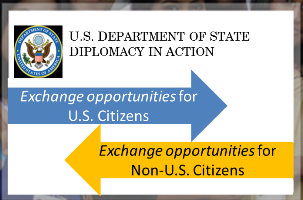
Picture3Regional educational exchange has become an important talking point for U.S. administrations in recent years, but data is still lacking to judge it a success or failure.  In 2011, the Obama administration announced the 100,000 Strong in the Americas initiative, intended to promote a north-south multilateral exchange of 100,000 students by 2020.  The State Department casts it as a means for students in the hemisphere to develop the relationships and skills necessary to meet four contemporary challenges: citizen security, economic opportunity, social inclusion, and environmental sustainability.  The organizations tasked with fulfilling the program’s goals include the National Association for Foreign Student Affairs, whose 60-plus years of advocacy on behalf of international education is based on the belief that “international education leads to a more peaceful world.” Whether such lofty aspirations are possible is subject to some debate, but the more-easily measured effect of 100,000 Strong will become clearer when the Institute of International Education releases its report later this year on international study to and from the United States during the past academic year.

Latin American countries as diverse as Brazil, Ecuador, Mexico and El Salvador have student exchange programs of their own, with the U.S. a leading destination.  Mexico sent the most students to the U.S. of any Latin American nation in 2011-12, but its 13,000 students were only the ninth largest source of international students in the U.S.  The most commonly touted example of U.S.-Latin American exchange is cooperation with the Brazil Scientific Mobility Program, part of the Brazilian government’s plan to send 100,000 students abroad by 2015 to study in key science, technology, engineering and math (STEM) fields.  Responding to the weakness of these fields in many Brazilian universities and to the growing demand for highly qualified graduates in high-tech industries, so far over 7,000 Brazilian students have studied at over 200 U.S. universities and interned at 300 companies, with another estimated 3,900 now in such programs.  Cooperation in education exchange is not limited to high-tech fields.  In Washington, for example, Georgetown University administers leadership training to “disadvantaged communities” and “historically underserved populations” from Latin America through the State Department’s Central America Youth Ambassadors Program and the USAID’s Scholarships for Economic Education and Development (SEED) Program.

While governments like Brazil’s have financed their international study programs, the U.S. has asked the private sector to take the lead in expanding pre-existing programs like Fulbright.  Two years ago, 64,000 Latin American students studied in the U.S., compared to 40,000 U.S. students in Latin America, of which one third stayed only for a summer.  If part of the purpose of 100,000 Strong is to improve regional relations through personal contact and exposure to the region’s sociocultural diversity, educational exchanges will need to flow north-south on a more equal footing.  It remains to be seen if the U.S. private sector is willing to meet such a commitment.  There is also the perennial question of whether educational exchange programs enhance economic development and mobility in Latin America or instead contribute to “brain drain.”  The development of high tech industries in places like Brazil offers a more promising future for returning students, but their absence in poorer regions like Central America is a source of concern.  Finally, 100,000 Strong and similar programs should be judged on how they respond to the largest challenges facing universities throughout the Americas: affordability, providing quality education for students of diverse socioeconomic backgrounds, and in Latin America specifically, making local universities appealing settings for internationally-trained intellectuals and experts.

Brazil-U.S.: Implications of Postponed State Visit

By Luciano Melo

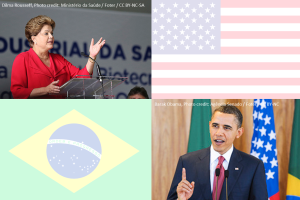
Picture2The postponement of Brazilian President Dilma Rousseff’s state visit to Washington was officially cast as the consequence of the lack of a good explanation for the National Security Agency’s cyber-espionage targeting her, the cabinet, Petrobras (the national oil company), and others.  Although the Brazilian Foreign Ministry issued a letter stating that both countries agreed to the postponement, Dilma’s remarks at the UN General Assembly on September 25 about NSA’s activities were so harsh that it was clear that frustration with the Americans’ widespread spying on Brazilians remains extremely high in Brasilia.

Experts agree that economically the postponement and bilateral tensions hurt the United States more than Brazil.  Contracts worth billions of dollars between Boeing and the Brazilian air force (FAB) are at stake, as are agreements that would favor cooperation in oil exploration and development of biofuels and others that would facilitate the transfer of “sensitive technologies.”  For Brazil, on the other hand, the postponement jeopardizes progress in talks to allow Brazilian citizens to enter the United States without visas – a project long-desired by Brazilians that was on the agenda for the state visit. Some observers in Brazil also speculate that, with the overall Brazilian economic slowdown, Dilma may actually prefer to have Brazilians spending their reais at home, not in the United States.

In a tactical sense, Dilma may have feared that Edward Snowden will leak more damaging information during her visit to the U.S., causing her even greater embarrassment at home and abroad.  In this way, fear and self-protection certainly played a role in her decision. On the other hand, the Brazilian president almost certainly saw domestic political advantages in a good old fight between the Brazilian David and the American Goliath.  She is desperately in need of boosting her popularity after the demonstrations against corruption in the country.  In fact, opinion polls show that public approval of her leadership increased from 45 to 54 percent just since the NSA dustup.

In strategic terms, the postponement fits Brazil’s strategy for claiming its position as a global player – and expressing unhappiness when it feels frustrated.  Dilma already had told President Obama in 2011 that Brazilians would seek a “more balanced relationship” with the United States. The postponement, like the speech at the UN, clearly reflects Brazilians’ desire to be treated better by the United States.  Obama’s speech at the General Assembly the same day, on the other hand, was interpreted by many Brazilians as emphasizing the United States’ traditional role as world policeman – not as the respectful neighbor in a new, multi-polar world order.  In this battle of self-images, Brazil sees itself as one of the global leaders, while the United States sees itself as the mighty one, considering only the European powers as full equals.  The broad base of Brazilians that Dilma is reaching out to is not “anti-American” in sentiment, and indeed wants a robust and respectful U.S.-Brazil relationship.  That is in the interest of both countries, but for this shared objective to be achieved, Washington will need to recalibrate its responses to Brazilian concerns.

Luciano Melo is a PhD candidate in the Department of Government at American University.

Brazilian Evangelicals: Stepping out into the Streets?

By Andrew Johnson

Kneeling in prayer. Photo by: Philip Anema

Kneeling in prayer. Photo by: Philip Anema

There is growing evidence of a potential shift in how Evangelicals engage in social issues in Brazil.  I witnessed their traditional approach recently inside a prison in one of Rio de Janeiro’s gritty peripheral suburbs.  Twelve men stood with their eyes closed and their arms draped around each other’s shoulders while an Evangelical pastor led the group in prayer.  After the final “amèm,” an inmate leader embraced the pastor and thanked him for his visit, to which the pastor responded, “I know that if I am ever in here in the future, you would come to visit me too.”  The pastor’s presence in the cellblock and his subtle pledge of solidarity with the inmates is typical of how Evangelicals have confronted pressing social problems through direct intervention and meeting the immediate needs of individuals in distress. They have been more likely to try to change the prison system by visiting inmates than by voting for a particular candidate or pushing for prison-specific legislation.  Theirs is a politics of presence.  But recently there have been signs that Brazilian Evangelicals’ intentional proximity to the needy is pushing some towards a different and more public strategy: street protest.

Even without an explicit political agenda, Brazilian Evangelicals have proven their ability to mobilize.  In early July, an estimated 2 million Evangelicals participated in the “March for Jesus” in the streets of São Paulo.  They sang hymns and prayed for the future of their country, but they did not use their collective voice to make demands of the government.  In contrast, just two weeks earlier, 65,000 people captured the global media’s attention by marching through the same avenues in São Paulo to protest increased public transportation fares, government corruption, and the fortune being spent on soccer stadiums for the 2014 World Cup.  The street protests gained momentum over the summer, but many Evangelical pastors and leaders were hesitant to offer public support, preferring to continue a strategy that relies on their direct service to the poor, the oppressed, and the imprisoned in their communities.

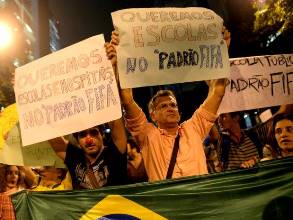
Antonio Carlos Costa and volunteers from Rio de Paz protesting in the streets of Rio de Janeiro asking the government for “FIFA Quality” Hospitals and Schools.  Photo by: Gabriel Telles

Antonio Carlos Costa and volunteers from Rio de Paz protesting in the streets of Rio de Janeiro asking the government for “FIFA Quality” Hospitals and Schools. Photo by: Gabriel Telles

Evangelical support of the street protests in Brazil has been minimal, but not completely absent. Some Evangelicals appear eager to move beyond a “politics of presence” approach and address the social structures and institutions they blame for many of Brazil’s social problems.  In Rio de Janeiro, the human rights NGO Rio de Paz – one of the most visible and vocal groups in the recent protests – is led by an Evangelical pastor, and the bulk of the volunteers are Evangelicals.  One such volunteer, a son of a Pentecostal pastor, joined the masses demanding governmental reform and, to encourage  others from his church to follow his lead,  posted Proverbs 29:4 to his Facebook page: “By justice a king gives a country stability, but those who are greedy for bribes tear it down.” He closed his appeal by writing that “in 30 years I want to tell my children that they live in a more dignified country because their parents didn’t sit at home waiting for a change.”  If that message resonates widely among Brazil’s 40 million Evangelicals, the Brazilian government will confront ever greater pressure from the streets to carry out long overdue reforms of corrupt institutions and practices.

Andrew Johnson is a Research Associate at the Center for Religion and Civic Culture at the University of Southern California and a contributor to a two-year project on Religious Responses to Violence in Latin America carried out by the AU Center for Latin American & Latino Studies with support from the Henry R. Luce Initiative on Religion and International Affairs.


The 50 States and U.S.-Latin America Relations

By Aaron Bell

48outlineObservers seeking to fully understand U.S. relations with Latin America often focus on the federal level, but much is occurring in the majority of U.S. states as well.  Over 40 state governments have engaged with issues related to Latin America, most commonly confronting the legal aspects of immigration (particularly rights for undocumented workers who are overwhelmingly Latin American in origin), and organizing trade missions for local businesses.  Arizona, frustrated with federal policies to counter illegal immigration, enacted its own package of restrictive measures under SB 1070 in 2010, which was followed by similar legislative efforts in Alabama, Georgia, Mississippi, and South Carolina.  On the trade front, after abandoning pursuit of a hemisphere-wide free trade area and then focusing on bilateral trade deals, the federal government has shifted focus toward development of a Pacific Alliance. States meanwhile have pursued commercial opportunities themselves, sending at least 17 trade delegations to Latin America over the past three years, primarily to Brazil, Mexico, and Chile.  Trade initiatives have infrequently clashed with federal policy, but a 2012 law in Florida — blocking the state government from contracting with companies with direct or subsidiary business ties to Cuba and Syria – was a rebuke of what some Floridians perceive as a weak approach by Washington. The Brazilian company Odebrecht, which has projects in Cuba that do not violate the U.S. Embargo, successfully sued the state for overstepping federal jurisdiction.  The bill’s sponsors say they intend to pursue new legal means and rally local political opposition to discourage state contracts with “sponsors of terrorism.”

Coordination initiatives by Arizona and Colorado stand out as unique models for other U.S. states.  The Arizona-Mexico Commission and its counterpart, La Comisión Sonora-Arizona, were founded in 1959 by the governors of Arizona and Sonora to coordinate local support for improvements to infrastructure, education, and security in order to benefit economic development in both states. In Colorado, the Biennial of the Americas was first organized in 2010 to highlight Denver’s role as a site of Pan-American cultural exchange.  The second Biennial, held this summer, hosted art exhibitions and roundtable discussions of social issues facing the region.

The trade and immigration focus of most of the state-level initiatives usually does not clash with Washington’s priorities and indeed are complementary of them.  When the states’ initiatives do challenge the federal government, however, the courts usually come down on the side of the latter.  Yet when states have ultimately lost out to federal power, their actions have at times brought U.S.-Latin American relations to the forefront of national debate, such as when Arizona passed tough immigration laws in 2010.  Bold initiatives from the states are rare, but there are alternatives to the standard trade-and-immigration fare.  The binational approaches of Arizona and Colorado aren’t perfect – critics of the Biennial of the Americas note that corporations use it as a platform for their own interests —but the connections they build are valuable and promote progress by connecting actors with shared interests and developing economic and cultural organizations around those ties.


Aaron Bell is a PhD candidate in the Department of History at American University.


The Catholic Church as a Field Hospital after Battle

By Alexander Wilde

Pope Francis / Photo credit: Catholic Church (England and Wales) / Foter / CC BY-NC-SA

Pope Francis / Photo credit: Catholic Church (England and Wales) / Foter / CC BY-NC-SA

Pope Francis is presenting a fresh and personal vision of the Catholic church and Christian faith that seems likely to breathe new life into the church in Latin America.  In a long interview released last week, he couched his message in terms appropriate to his global responsibilities, but it reflects how this first Pontiff from Latin America reads the recent history of his native region and its church. “I see the church,” he said, “as a field hospital after battle.” Having lived through several generations of often bitter conflict and traumatic violence, he clearly believes that the church must, in his words, “heal the wounds, heal the wounds…. And you have to start from the ground up.” This dramatic, arresting metaphor of the church’s role in ministering to the human condition as he sees it today suggests that he aims to chart a fresh course – in the church and in society – after the divisions that marked the papacies of his two immediate predecessors. “The image of the Church I like,” he said in language that echoes the Second Vatican Council (1962-65) and Latin America’s Liberation Theology, “is that of the holy, faithful people of God…on the journey through history, with joys and sorrows.”

This vision seems firmly rooted in his own experience as Jesuit Provincial and Archbishop in Argentina, where despite controversies over his actions or inactions during the 1976-1983 dictatorship, he is universally admired for his dedication to pastoral ministry. With this fundamental focus on those wounded by life, Francis will build on a foundation that already exists in Latin America today. Despite the notorious purges of liberationist tendencies in church structures that began in the 1970s, priests, nuns and lay people can be found throughout the continent living out pastoral vocations amidst new (and old) forms of violence at the grassroots. Francis will almost certainly, like his predecessors, affirm most doctrinal orthodoxies, such as the intrinsic value of even unborn human life (“I am a son of the Church”). But already his pastoral emphasis is a clear break: “The people of God want pastors, not clergy acting like bureaucrats or government officials. The bishops, particularly, must … be able to accompany the flock that has a flair for finding new paths.”

Francis thinking is permeated by concepts and practices that come from the Council, Liberation Theology and the pastoral experience of the Latin American church. He clearly hopes to move beyond old divisions and draw from what that church has learned to meet the regions challenges today. Those include a challenge to convey the churchs deepest truths of salvation in ways that Evangelical Protestants have done so successfully in the region. And it is not coincidental that he urges, We need to proclaim the Gospel on every street corner. He will, undoubtedly, be opposed by conservatives that dominate the church’s ecclesiastical structures (resisting, for example, new paths of policy advocacy by the faithful on issues of poverty and inequality). His new appointments to gatekeeper roles such as nuncios and bishops will be closely watched. He has also inherited an institution shamed by sexual and financial scandals that will demand much of his time and energy. But in just a few months Pope Francis has changed perceptions among Christians and non-believers alike of how the Catholic church may again become a vital force in our world today. In Latin America a new emphasis on face-to-face pastoral ministries among the poor could well move its moral voice for social justice behind already visible popular pressures against growing economic inequality.

Alexander Wilde directs the Center’s two-year project on Religious Responses to Violence in Latin America with support from the Henry R. Luce Initiative on Religion and International Affairs.

Honduras Elections: Serious Challenges Ahead

Honduras coat of arms / public domain

Honduras coat of arms / public domain

Honduras faces an enormous challenge in the next two months:  ensuring that elections in November – when Hondurans go to the polls to elect their next president, 128 National Assembly deputies, and municipal authorities – are clean and transparent.  The elections are especially important because they are the first conducted outside the framework of the coup of 2009.  The elections that year, held five months after the coup, were conducted under the black cloud of the break in constitutional order and gave rise to the transition government headed by President Porfirio Lobo.  This year, nine parties are participating – a clear signal that the country’s traditional two-party system is ending.  The Freedom and Refoundation Party (LIBRE), with a base among supporters of ousted President Mel Zelaya, has nominated his wife, Xiomara Castro, as its Presidential candidate, and the Anticorruption Party, led by sports journalist Salvador Nasrala, represent a true challenge to the traditional political elite.

All of the polls give the edge to Xiomara Castro, with a lead ranging anywhere from two to eight percentage points, over the candidate of the National Party, Juan Orlando Hernández, who is President of the Congress.  The polls also show that a majority of the population, having witnessed multiple accusations of fraud during the primaries held by the two traditional parties (including Hernández’s), expect the elections to be marred by fraud.  Casting further doubt on the credibility of the outcome is the narrow representation of the parties and lack of professionalism of the Supreme Electoral Tribunal (TSE), which is charged with organizing and supervising the elections.  Only the three traditional parties have representatives serving on the TSE and, unlike in other countries, they are distinguished as militants of their parties rather than independents or experts in electoral processes.

Should the results of the election not be seen as legitimate, the potential for conflict is worrisome, and there are ample grounds for concern that the security forces that have proliferated under the Lobo government could be deployed to suppress protest.  Only strong international pressure and strong citizen pressure can guarantee that the elections will be clean and open the possibility for Honduras to overcome the political crisis that has now been damaging the country for several years. 

A number of events – including the firing of Supreme Court justices last December and the National Congress’s intervention in matters far outside its jurisdiction – underscore the continuing tendency toward authoritarian and illegal actions to suit ambitious politicians’ pursuit of power, with potentially dire consequences for the elections. An ongoing economic crisis, including a nearly 50 percent unemployment rate, and a serious deterioration of government finances, also contributes to political fragility. Against this backdrop, the United States and the rest of the international community can play a positive role in promoting elections that are fair and impartial and taking proactive measures to ensure that security forces ill-suited to managing social unrest not be deployed to suppress political dissent.  Failing to do so would waste an opportunity to help effect a truly democratic outcome in Honduras, and invite a further deterioration of a political, economic and social climate that is the most worrisome in Central America.

September 11 Coup in Chile: Global Ramifications

By Eric Hershberg

Chilean Grape export photo by Dick Howe Jr CC-BY-NC Flickr / Indictment of Pinochet, Photo by a-birdie CC-BY-NC Flickr

Chilean Grape export photo by Dick Howe Jr CC-BY-NC Flickr / Indictment of Pinochet, Photo by a-birdie CC-BY-NC Flickr

In Washington last week many events recalled the bloody coup of September 11, 1973, which overthrew the Popular Unity government of Chilean Socialist President Salvador Allende and ushered in a dictatorship that, even by South American standards of the time, stood out for its brutality.  Discussion about “the other September 11” highlighted the human cost of the coup, the role of U.S. government agencies in undermining Chilean democracy and encouraging the military’s actions, and the memories of the coup and dictatorship that remain deeply embedded in Chile today.  These and similar gatherings around the world and in Chile featured demands for the full truth about the dictatorship’s crimes – the fate of some thousand of the disappeared remains unknown today, according to the Human Rights Observatory of the Diego Portales University – and to hold those who committed them fully accountable.

The coup led by General Augusto Pinochet destroyed Latin America’s longest standing democratic regime and ended a unique experiment testing the proposition that electoral democracy could catalyze a transition to socialism.  In Chile, the coup initiated 17 years of military rule grounded in state-sponsored violence, but it also resonated far beyond that country’s borders, marking a watershed in global affairs.  To this day how people around the world conceive fundamental issues of political change, economic development and human rights is affected by September 11, 1973.  These broader legacies were the focus of a panel discussion at American University, co-sponsored by the Center for Latin American Studies and the Washington College of Law, this week.  (Click here for details.)

We can now see three large sets of consequences that the Chilean coup had far beyond its borders. 

Political:  Across Southern Europe, it reverberated powerfully, undermining the confidence of sectors of the Left that believed fervently a socialist transition could be effected through victory at the ballot box.  After the coup, Eurocommunists in Italy and Spain came to believe that victory would require an alliance with Christian Democrats or other centrists, lest a coup coalition akin to that in Chile bring down democracy altogether. For much of the Latin American left, the Chilean experience would over time prove a wake-up call, alerting those aspiring to turn the world upside down that democracy was not a mere bourgeois luxury and suggesting that “second-best” options – more gradual change –were preferable to maximalist goals that would likely jeopardize democracy.

Economic: The coup paved the way for “neoliberal” policies that would shake the foundations of conventional thinking about development for nearly three decades.  They were prescribed across Latin America.  It would not be until the emergence of ALBA in the mid-2000’s that the region would again witness a faith (however misguided), in the capacity of import-substitution and inward-oriented redistribution to achieve lasting economic advance in the region. 

U.S. policy:  Finally, the coup set in train levels of violence and human rights abuses so abhorrent that they drove major changes in U.S. human rights policy and international jurisprudence.  In the United States, advocacy organizations, progressive majorities in Congress, and the Carter Administration introduced unprecedented legislation aimed at preserving democracy and curbing human rights abuses.  Well beyond Washington, numerous international regimes put in place to combat impunity were motivated and influenced by what had taken place in Chile and the imperative of ensuring that it not happen again.  

Just as the cataclysmic event that took place in the U.S. on 9/11/01 opened the door to extreme and ongoing changes felt around the world, so too did the Chilean tragedy that began on 9/11/73.

Confusion over “Responsible Mining”

By Robin Broad

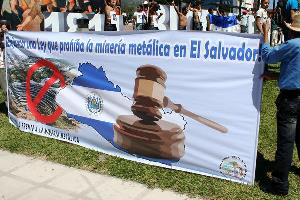
Anti-minng campaign, El Salvador / Photo credit: laurizza / Foter / CC BY

Anti-minng campaign, El Salvador / Photo credit: laurizza / Foter / CC BY

One of today’s buzzwords – “responsible mining” – is like most others, so vague that it means whatever its user wants.

  • For most corporate executives and many government officials, mining is responsible if it aims to maximize economic growth and economic profits, because mainstream economic theory tells us that that will make everyone better off in the most efficient way.  In this view, the benefits multiply and trickle down to the poor.  In terms of environmental impact, some proponents of this view argue that as a country grows in economic terms, certain environmental pollutants decrease.  The governments of Guatemala and Honduras, which have increased the number of licenses granted to global mining corporations, seem to embrace this definition.
  • Some corporations cast the definition of “responsible mining” within their concept of “corporate responsibility.”  Typically, such companies do not change the production process itself, but rather commit to using some profits to do something “good.”  In the Philippines, for instance, Australian-headquartered OceanaGold plants trees near its mine and contributes to medical missions and community programs.
  • Yet another definition of “responsible mining” focuses on increasing the portion of the economic and financial benefits of mining that accrue to the Southern “host” country versus to the foreign mining entity.  This typically centers on increasing the taxes levied on the mining companies.  A more “progressive” version of this approach emphasizes how much of the funds stay on a local versus national level within the host country.
  • The ideal – and probably least common – definition of “responsible mining” involves a comprehensive assessment of long-term economic, social, and environmental costs and benefits.  This requires the free, prior, and informed consent of local communities before corporations influence communities or officials with social “contributions.”  Environmentally, it involves careful assessment – based on full information by an objective party – of the impact of the mining, including all chemicals used in the mining process, all toxins released, and the broader environmental impacts and risks.

The ideal definition may sound like pie in the sky, but it is not.  Case in point: The government of El Salvador has not issued new mining licenses since 2008, primarily because a growing citizens’ movement has rallied around protecting the affected watershed, which supplies the majority of the country and is already severely polluted.  So too did the Salvadoran government demand a Strategic Environmental Review, overseen by both the Ministry of the Environment and the Ministry of the Economy, to try to weigh  the economic benefits (wages, taxes, etc.) during a mine’s limited life against social and environmental impacts.  Indeed, in El Salvador, as in the Philippines, grassroots communities and some key elected officials are trying to give deeper meaning to the definition of “responsible mining,” so that it is no longer merely a buzzword.

Dr. Broad is a professor in American University’s School of International Service.