Inter-American Educational Exchange: A Drop in the Bucket

By Aaron T. Bell

Photo Credit: Public Domain

Photo Credit: Public Domain

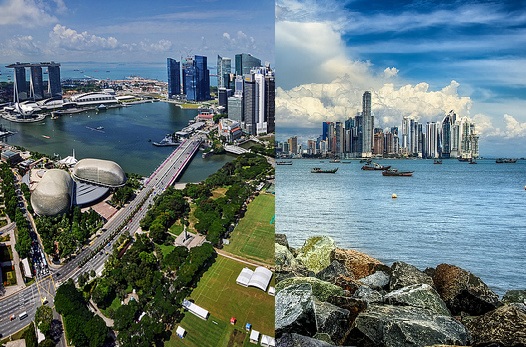
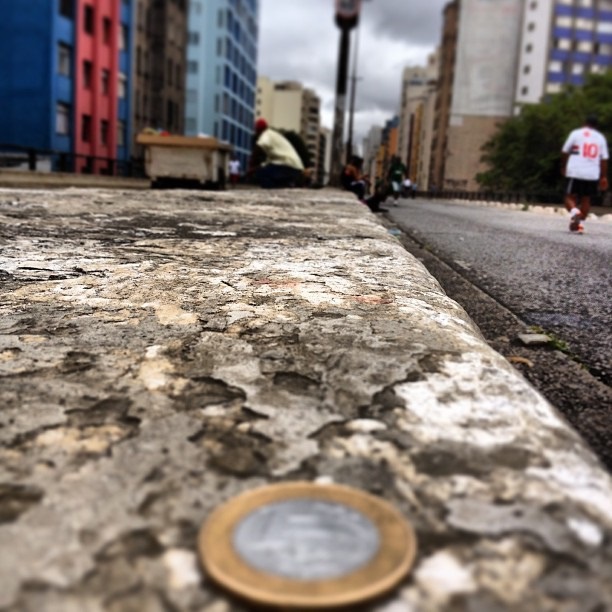
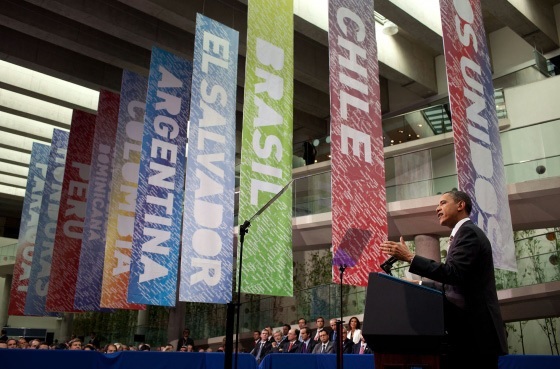
The Obama administration’s program for strengthening inter-American ties through cooperative education – “100,000 Strong in the Americas” – is now several years old and making incremental progress toward its stated goal of a multilateral exchange of 100,000 students between the United States and Latin America.

  • The latest Open Doors report from the Institute of International Education shows that the number of Latin American students studying in the United States during the 2013-14 academic year (AY) rose 8.2 percent from the previous AY to 72,318 – the largest number to date and the largest annual percentage increase in at least 15 years. Mexico and Brazil now rank ninth and tenth respectively as places of origin for foreign students in the United States.
  • The most recent data on U.S. students studying in Latin America is less promising. In the 2012-13 AY, 45,473 U.S. students studied in Latin America, the highest number to date but a smaller annual percentage increase (1.8 percent) compared to the late 2000s.

Countries’ investments in such exchanges vary widely.  Under “100,000 Strong,” figures for U.S. spending are elusive.  In early 2014 the State Department announced the creation of the Innovation Fund, partnership grants that will be awarded over the next several years to strengthen collaboration between higher education institutions – including 38 grants totaling over one million dollars last year.   Mexican President Peña Nieto has introduced Proyecta 100 Mil, which in addition to sending 100,000 students to the United States by 2018, hopes to entice 50,000 U.S. students to study at its own universities.  (U.S. students in Mexico dropped from 10,000 in 2005-06 to less than 4,000 in 2012-13 because of security concerns.)  Both countries’ financial commitment to international education pales next to that of Brazil.  President Rousseff announced last summer the renewal of its Science Without Borders program, the first phase of which cost US$1.36 billion.

These programs, universally seen as laudable, have thus far let certain countries fall through the cracks.  Vice President Joe Biden recognized in his recent New York Times editorial that “inadequate education” is one of the barriers holding back Guatemala, Honduras, and El Salvador, from which thousands of children have fled in recent years.  The development assistance portion of President Obama’s proposed $1 billion budget for Central American assistance is in part slated for strengthening literacy and vocational education.  Bringing Central America into the Innovation Fund program is a logical addition to the President’s efforts, yet Central American partners were notably absent in 2014.  Only one of the five grant rounds was open to Central American countries – where it arguably could have a greater national-level impact – and of the 109 recipient institutions of Innovation Fund grants, only two were from the region – and none from the Northern Triangle (Honduras, Guatemala, and El Salvador).  That disparity suggests that, in spite of the rhetoric, education exchange is considered a supplementary tool rather than a leading means of bolstering development in Latin America.  While the 100,000 Strong in the Americas program deserves applause as a cooperative, multilateral program, it remains an underutilized tool of U.S. engagement in much of the hemisphere.

February 16, 2015

U.S.-Cuba: What Now?

Diego Cambiaso and Y. Becart / Flickr / Creative Commons

Diego Cambiaso and Y. Becart / Flickr / Creative Commons

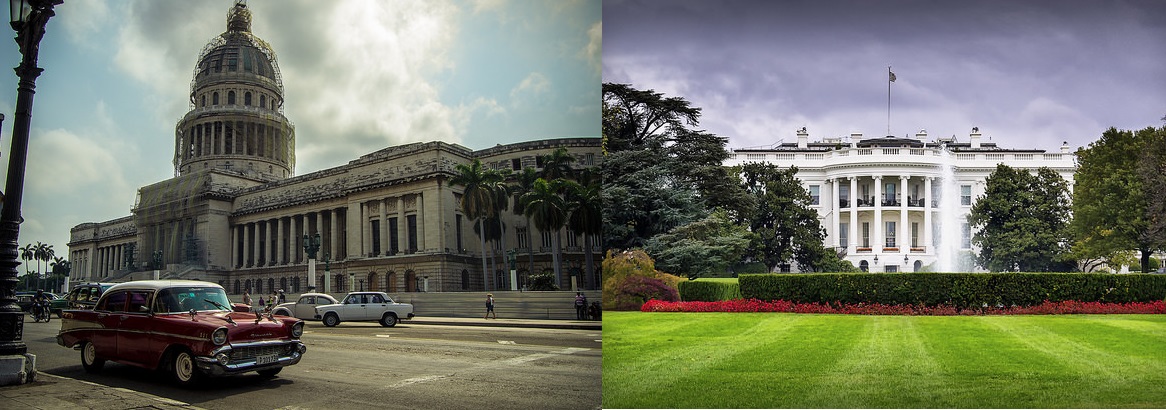
CLALS and the Washington Office on Latin America (WOLA) convened a small group of Cuba experts to discuss the course that U.S.-Cuba relations could take now that Presidents Obama and Castro have decided to reestablish diplomatic relations.  A two-page summary of conclusions – not coordinated with workshop participants – and “wildcards” that would alter events can be found here.  Here are highlights:

  • The two presidents are committed to using their remaining time in office – Obama until January 2017 and Castro until February 2018 – to burnish their legacies as leaders who solved an historic impasse.
  • The timelines for full normalization of ties between the two countries – including political, economic and social relations – certainly will go beyond their terms in office, and the process will take time and energy beyond their offices and governments.
  • The Summit of the Americas in April can be a crowning jewel to both Presidents’ efforts if issues such as civil society representation at the event can be resolved. The timing of the Summit will hold the White House’s attention for this period.
  • Greater emphasis by the Obama administration on the tangible benefits to the U.S. made possible by steps toward normalization would serve it well, including formalization and expansion of bilateral cooperation in counternarcotics, counterterrorism, and environmental and health issues. The criteria for policy success should consist of benefits to the American people, rather than “helping” Cubans or facilitating “regime change” in Cuba, as the Castro government will (as any government would) remain firm that its political system is not negotiable.
  • The potential for trade will be strong enough to persuade U.S. business to press for the broadest possible implementation of the new measures and, if the Cubans can articulate a clear strategy to attract (and protect) investments, for embargo-loosening legislation in Congress.
  • Potential obstacles require attention, but none appears insurmountable. Provocateurs in both countries could undertake actions intended to torpedo the normalization process.  In addition, the Washington’s “democracy promotion” programs for Cuba – which are unlike any others around the world – will certainly strengthen hardliners in Havana arguing for a go-slow engagement with the U.S.  With the stroke of a pen, President Obama could suspend the Bush-era program to persuade Cuban doctors to defect to the United States, a policy that hinders bilateral medical cooperation and threatens to sour talks.
  • Hardliners in the U.S. Congress will continue to be rhetorically opposed to improved relations – because they oppose Cuba or Obama – but the Obama policy has plenty of running room before needing legislation to advance.
  • Cuba may have limited capacity to effectively manage the various processes of change in the bilateral relationship. This may slow down the process and dictate the need to proceed sequentially rather than along many fronts at once.
  • Several “wildcards” – including leadership changes – could impact the normalization process.

February 11, 2015

Argentina: Who killed Alberto Nisman?

By Fulton Armstrong

March for Nisman on January 19, 2015, Buenos Aires, Argentain. Photo Credit: jmalievi / flickr / Creative Commons

March for Nisman on January 19, 2015, Buenos Aires, Argentain. Photo Credit: jmalievi / flickr / Creative Commons

Conspiracy theories, accusations, and counteraccusations – usually driven by personal prejudices and political agendas – are not uncommon in Argentina, but the death of special prosecutor Alberto Nisman on January 18 has brought them to a crescendo.  Each theory probably contains a grain or more of truth, but none adequately explains how this respected man, who had spent 10 years investigating the bombing of a Jewish community center in Buenos Aires 20 years ago that killed 85 and injured hundreds, wound up dead on his bathroom floor with a bullet in his head just hours before he was to testify before Congress.  Three main scenarios have emerged.

Scenario A:  Nisman was a national hero whose assiduous investigation of the AMIA attack, aided by Argentina’s intelligence agency (SIDE), had conclusively demonstrated an Iranian role in planning and funding Hezbollah’s execution of the bombing.  He was about to request the arrest of President Cristina Fernández de Kirchner (CFK) and Foreign Minister Héctor Timerman on charges of colluding with Tehran to cover up Iran’s role – and they or unidentified loyalists ordered his murder to stop him.  Under this scenario, a stealth team working on behalf of the President suborned or sneaked by the 10 body guards placed around Nisman’s apartment to enter and – using a 22-caliber pistol that he’d borrowed from an aide – killed him.

Scenario B:  Nisman was a zealot manipulated by disgruntled SIDE officials and got in over his head in a plot to bring down the President and her government.  Nisman had charged Presidents with coverups before – accusing President Carlos Menem in 2006 of taking a $10 million bribe from Iran to keep investigations from leading to its operatives – and his distaste for CFK was well known.  In December, she fired long-time SIDE chief, Antonio Stiusso, who (according to this theory) sought revenge by helping Nisman make his case.  (Officials close to President made the unsubstantiated and dubious claim that the man who lent Nisman the gun, Diego Lagomarsino, was also an intelligence agent.)  Under this scenario, accepted by very few Argentines, Nisman took his own life.

Scenario C:  In the house of mirrors that is Argentine intelligence, power plays are shrouded in intrigue and hard to divine.  Under this scenario, persistent rumors suggest a struggle between pro- and anti-Stiusso factions in which Prosecutor Nisman was collateral damage, perhaps because of his eagerness to do the dismissed SIDE director’s bidding.  Precious little information is available to label the factions – pro- or anti-CFK, or pro- or anti-Israel, or even pro- or anti-Iran – but there’s a consensus that something was rotten in SIDE.  Eight days after Nisman’s death, CFK announced an effort to dissolve it and set up a replacement agency, and the Congress has already begun to take action.

However much partisans of one perspective or another want to believe these scenarios and their variants, information is too weak or contradictory to give much credibility to any.  CFK and Timerman’s advocacy of trade with Iran – primarily swapping Argentine grain for Iranian oil – and their negotiation on a joint investigation of the bombing weren’t secret.  The exchanges were the subject of numerous public statements since 2013, and a number of Argentine officials, including Stiusso and other senior SIDE officers, were involved in both initiatives.  Interpol officials, moreover, deny that either CFK or Timerman had ever requested suspension of arrest warrants for any of the Iranian suspects.  But the President’s attacks on Nisman before and after his death have been strident and personal – clearly crossing the line for a chief executive talking about a prosecutor – and her public statements, including flip-flopping on whether the death was a suicide, do have a certain odor that create the impression that, as Shakespeare’s Queen Gertrude in Hamlet might say, “the lady doth protest too much, methinks.”  The poisonous political climate in Buenos Aires over el caso Nisman appears likely to drag on – yet another crisis the country can ill afford.

February 9, 2015

Elite Power and State Strength: A Timely Focus of Academic Studies

By Eric Hershberg

lapidim / Flickr / Creative Commons

lapidim / Flickr / Creative Commons

Insufficient state revenues are one fundamental reason that many Latin American governments fail to provide their citizens with adequate education, health care, public transportation, environmental protection and the physical and technological infrastructure needed to move their countries toward high-income country status.  As a whole, the region’s governments were able to spend only 14.8 and 15.25 percent of GDP in 2013 and 2014, according to the UN Economic Commission for Latin America and the Caribbean (ECLAC).  Rationalization of expenditures is a goal that can only be pursued in practice if there are adequate funds to begin with, and few Latin American states have that luxury.  (To be sure, even where states are well financed, as in Brazil and Argentina, governments typically fail to spend resources efficiently.)  Historically primitive and regressive tax systems have not evolved in a manner consistent with the development needs of the region.  During the second decade of the 21st century this remains a major obstacle for those who strive to build more effective and democratic states across Latin America.

Several ambitious new books in comparative political economy offer insightful and complementary analyses of the political conditions that perpetuate state weakness as well as the dynamics that offer hope of overcoming it.

  • Aaron Schneider’s 2012 Cambridge University Press volume on State-Building and Tax Regimes in Central America was an initial contribution to this emerging literature, linking that sub-region’s changing relationship to the world economy to aggressive efforts by different factions of the elite to fashion tax systems that reflect their narrow interests rather than a broader agenda of societal development.
  • A book that will be launched later this month in Guatemala City builds on this work by underscoring the importance of political contestation regarding the fiscal arena more broadly – encompassing state expenditure as well as revenue. That study, prepared under the auspices of CLALS and the Instituto Centroamericano de Estudios Fiscales (ICEFI), illustrates the ways in which Central American elites have exercised disproportionate influence to render states ineffective and regressive: they contribute little to state coffers and extract much from them, with consequences that diminish the life chances of a majority of that region’s population.
  • Tasha Fairfield’s conceptually ambitious and empirically rich comparative study of South American cases, to be published later this year by Cambridge University Press, is a landmark contribution to literature on elites and Latin American political economy. It consists of a thorough comparative analysis of Argentina, Bolivia and Chile, revealing that strong business associations tied closely to the state augment elite capacity to block progressive tax reforms.  Conversely, she finds that social movement influence over the state can undermine elite capacity to resist the sorts of taxation needed to redistribute wealth.
  • Evelyne Huber and John Stephens demonstrated previously, in their 2012 University of Chicago Press book on democracy and the left, that there is a clear link between the capabilities of the political left in democratic regimes and the prospects for more equitable social policies in Latin America. Such policies, as this recent wave of publications make clear, will only come about if societies develop systems of taxation compatible with the emergence of effective states.

Scholarship on Latin American economic development has until recently devoted little attention to political power imbalances as drivers of state weakness and the consequent failure of societies across the region to forge pathways toward developed-country levels of income and opportunity.  These studies highlight the centrality of elite collective organization and behavior, as well as the political strength of countervailing forces in society, for determining levels of taxation across the region.  Taken as a whole, this welcome wave of social science research restores Latin American political economy to its rightful place as a domain of scholarship that speaks to the concrete challenges facing the region today and in the future.  Policymakers throughout the hemisphere who speak of democracy and economic growth need the clear analysis to progress that scholarly works such as these provide.

February 5, 2015

CELAC: Losing Relevance?

By Michael M. McCarthy

Presidencia de la República del Ecuador / Flickr / Creative Commons

Presidencia de la República del Ecuador / Flickr / Creative Commons

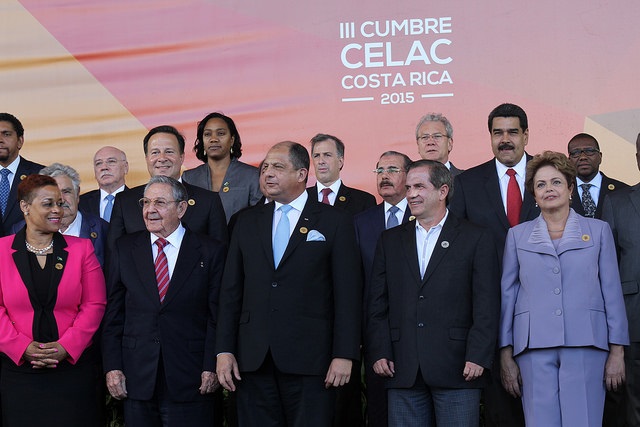
The announcement by Presidents Obama and Castro of their intention to normalize diplomatic relations could leave a big hole in the agenda of the Community of Latin American and Caribbean States (CELAC), which met January 28-29 for its third heads of state Summit in San José, Costa Rica.  Raúl Castro kicked off last year’s summit, in Havana, with a speech decrying the United States NSA spying scandal.  In San José, he moderated his tone, noting that “our America has entered a new era” since CELAC was founded (2010) while also calling on the U.S. to end the trade embargo – a point other member states echoed – and to return the naval station at Guantanamo Bay.  In concrete terms, the results of last week’s CELAC summit were modest.  The technocratic goals of quantifying progress on poverty and technology development announced by Ecuador, the group’s 2015-2016 President Pro-Tempore, suggest no major changes are imminent.

Since President Chávez’s death March 5, 2013, the former leader’s Bolivarian vision of Latin American and Caribbean integration and unity has shown signs of weakening.  CELAC now faces even tougher challenges defining and defending its identity and mission beyond the creation of a common political space for regional decision making insulated from the U.S. and Canada.  With Chávez’s successor, President Nicolás Maduro, losing support amid economic crisis, the Alianza Bolivariana para los Pueblos de Nuestra América (ALBA) can no longer throw its weight around on the international scene.  Cuba’s inclusion in the Summit of the Americas – increasing the likelihood of its participation in the OAS – is a major achievement but represents the loss of a major rallying point. 

Going forward, three issues will determine the groups trajectory.  The Cuba issue wont go away suddenly, but rapid change in U.S.-Cuba ties could reset hemispheric relations and leave CELACs mission muddled and potentially irrelevant.  Disagreement among CELAC members over issues such as Puerto Ricos status may create tensions, as they did when Nicaraguan President Daniel Ortega gave the island a high profile during the presidential plenary underlining the risks inherent in the unity within diversity principle embraced by CELAC.  (Ecuadoran President Correa, another ALBA supporter, chided Ortega.)  But perhaps the biggest determinant of the groups future relevance lies in its emerging relationship with ChinaA CELAC-China foreign ministers forum met in Beijing last month, formalizing the Asian nations relationship with CELAC.  The forum announced the 2015-2019 China-CELAC cooperation plan calling for the doubling of two-way trade and the increasing of Chinese investment in the region to $250 billion.  Exclusion of the U.S. and Canada may remain a tenet of CELACs platform, but the groups leaders may judge that its long-term relevance can be rescued by reaching out to China instead.

February 2, 2015

*Michael McCarthy is a Research Fellow with the Center for Latin American and Latino Studies.

Haiti: Another Crisis on the Anniversary of a Crisis

By Emma Fawcett*

Cinco anos depois do terremoto que devastou o Haiti / Agência Brasil Fotografias / Flickr / CC BY-NC 2.0

Cinco anos depois do terremoto que devastou o Haiti / Agência Brasil Fotografias / Flickr / CC BY-NC 2.0

Haiti recently marked the five-year anniversary of the devastating 2010 earthquake and missed yet another deadline for reaching an agreement on the country’s long-overdue elections.  On January 12, the parliament was effectively dissolved as the terms of all but 10 senators expired.  Without quorum or a new electoral law, President Martelly now rules by decree.  Many in the opposition, whose protests in the last several months forced the resignation of Prime Minister Lamothe, now also seek Martelly’s resignation.  Martelly has asked protesters to be patient, but some claim the electoral impasse is part of the president’s larger strategy for consolidating his power.  The U.S. Embassy in Haiti has expressed commitment to continue working with him and “whatever legitimate Haitian government institutions remain,” and hopes that Martelly will use his “powers responsibly to organize inclusive, credible and transparent elections.”  U.S. Vice President Joe Biden spoke with Martelly by phone, reiterating support for his administration and acknowledging his “efforts to work with the Haitian parliament and political parties to resolve outstanding issues.”  On Sunday, the UN Security Council concluded its three-day visit by urging politicians to work together to ensure elections can proceed, and refrained from commenting on whether the planned cuts to UN peacekeeping forces would take place in June.

Although there is continued handwringing over how $13.5 billion pledged in earthquake relief has been spent, there are some signs of economic growth.  Capacity in the apparel and hospitality sectors has increased dramatically, priming the pump for further private-sector development, but the results to date are weak.  Caracol Industrial Park (in the northeast) and the Lafito Industrial Free Zone (outside Port-au-Prince) are moving forward, though Caracol has thus far generated just 5,000 of the 65,000 jobs it was expected to create.  Minister of Tourism Stephanie Villedrouin has pushed tourism hard to attract foreign direct investment (FDI).  Tourism was a natural outgrowth of earthquake recovery: hotels rooms were urgently needed first for relief workers, now for engineers and businesspeople, and eventually (Haitians hope) for tourists.  Pétionville, located in the hills above Port-au-Prince and home to much of the country’s elite, has received a remarkable facelift.  It now boasts several renovated or newly-constructed international class hotels, though guests remain elusive.  Some of the tent cities have been cleared.  In Jalousie, one of the slums above Pétionville, concrete homes were painted in bright tropical shades, designed to evoke the work of Haitian artist Préfète Duffau.  (Critics of the project pointed out the neighborhood has more pressing needs than cans of paint, and wryly noted that while Port-au-Prince’s hillsides are covered in slums, only those overlooking Pétionville’s wealthiest residents received cosmetic treatment.)

Despite the political uncertainties and stalled reconstruction efforts, there is a sense among Haitian and international private-sector actors that moving forward is “now or never.”  Many point to Martelly’s unprecedented focus on attracting FDI and willingness to create incentive frameworks.  In field interviews, investors in Haiti and neighboring countries speak of hope that the country’s natural, cultural, and historical resources will make it a viable destination – as well as hope that U.S. and other foreign backing continues to expand the apparel and tourism sectors.  There are enormous challenges ahead, to be sure, compounded by the political crisis and potential for instability.  The government-led strategic planning process has been described as “opaque” and “accelerated” without much room for consultation with either the private sector or local communities.  Carnival Cruise Lines’ plans to build a new port on Ǐle de la Tortue have become mired in land tenure issues.  And inclusive growth – strategically targeted and yet expansive enough to lift Haitians out of poverty – will be hard to come by without improved institutional capacity, made all the more difficult by the events of the last three weeks. 

January 29, 2015

* Emma Fawcett is a doctoral candidate in International Relations at American University.

Cuba Welcomes “Normalization,” But Only on its Own Terms

By Eric Hershberg

Photo Courtesy of Philip Brenner

Photo Courtesy of Philip Brenner

Cuban President Raúl Castro is undoubtedly as serious about normalizing diplomatic ties as President Barack Obama is, but the island’s government arguably faces more pressing challenges than working out the details of a rapprochement with Washington.  Commentators have observed that after the initial euphoria following the December 17 announcement, officials now speak of a long road ahead.  Full normalization, while welcome, is not the foremost concern of Cuban policymakers.  The paramount objective of Cuban authorities is the survival of the revolution and the one-party state that it engendered.  Top diplomats reiterated on January 23, after the first round of talks in Havana, that there will be no concessions to continued American insistence on changes in Cuba’s domestic political arrangements.

Economic revitalization is imperative.  Despite the reforms introduced by Castro, the Cuban economy remains woefully unproductive, incapable of meeting the needs of its citizenry or generating the foreign exchange that any small island developing state requires to import goods that it cannot produce domestically.  Growth rates are anemic, reaching only 1.3 percent in 2014, and independent projections call into question last month’s official announcements predicting 4 percent expansion during 2015.  Agriculture remains stagnant despite reforms aimed at putting fallow lands to productive use, so imports of food account for $2 billion in the extremely tight state budget put forth for 2015.  The severe shortage of cash, moreover, impedes public investment in Cuba’s crumbling infrastructure, which hinders autonomous producers from securing vital inputs for their businesses or distributing what they produce.  Ideally, foreign investment would supply resources where domestic sources cannot, but for the most part this is not happening either.  A 2013 foreign investment law has to date yielded little fresh capital:  European and other investors with experience on the island explain privately that the conditions for conducting business are such that they are reluctant to commit good money after bad.  The new changes in U.S. regulations may produce some increase in investment flows – primarily in the form of remittances from Cuban Americans to families and friends – and thus continue to provide some economic oxygen, but the likely scale of these flows should not be overestimated.  Washington’s new regulations seem likely to continue blocking investments that could increase the Cuban state’s ability to develop the infrastructure necessary to promote economic growth.

Because the intertwined goals of state security and economic revitalization are paramount, Havana’s engagement with the United States will be conditioned on its compatibility with those objectives.  Critics of the American opening who lambast Barack Obama for acceding to a deal with minimal Cuban concessions are right that Havana did not abandon its position that its political system is non-negotiable.  If by joining the rest of the western hemisphere in acknowledging the Cuban state Washington embarks on a path that will fuel economic activity in Cuba, the two countries will proceed, however gradually, away from confrontation.  The trajectory of U.S. relations with China and Vietnam in recent decades offers an instructive precedent for how this can be achieved and be mutually beneficial.  But if the Americans perceive greater engagement with Cuba as a tool for regime change, or strive to limit financial flows exclusively to private actors, their Cuban counterparts naturally will limit the scope of interaction.  A new round of State Department solicitations for bids to conduct democracy promotion activities in Cuba, like the U.S. negotiators’ insistence last week on getting a photo-op with dissidents before heading back to Washington, suggest that this message has yet to be absorbed by American officials.

January 26, 2015

Oil Scandal Besets Brazilian Politics … Drip-by-Drip

By Matthew Taylor and Luciano Melo*

Nestor Galina  / Flickr / CC BY-NC 2.0

Nestor Galina / Flickr / CC BY-NC 2.0

Brazil’s oil scandal – the largest corruption scheme in Brazil’s history – probably won’t bring down the government of President Dilma Rousseff but will keep it in constant peril.  Since March 2014 the Brazilian Federal Police have been investigating the disappearance of tens of billions of dollars allegedly siphoned from the national oil company, Petrobras.  The company is a national symbol, founded by legendary President Getúlio Vargas in 1953, and a powerful economic force, especially in light of the discovery of massive deepwater oil off Brazil’s coast and the massive investments that have been undertaken to develop those fields.  No image captured Brazil’s triumphant resurgence over the past decade than a famous 2006 shot of President Lula holding up his hand covered in oil at a ceremony celebrating Brazil’s oil self-sufficiency.  (The picture itself was a takeoff on an iconic photo of Vargas.)

President Dilma Rousseff – who had close ties to the company as chairwoman of its board (2003-2010) and Minister of Mines and Energy (2003-2005) – is now confronting the dark underside of Brazil’s oil dream.  She is respected for her personal probity; nobody has suggested that she gained personally from the brazen corruption within Petrobras.  But critics point out that she was either cognizant of corruption or woefully incompetent.  As a result, the scandal weakens her considerably, just as she faces a revitalized opposition, a restive group of political allies, an economy grinding to a near halt, and a very real possibility that Brazilian debt will be downgraded to junk status.  Indeed, the scandal increases the chances of each of those four outcomes considerably.

The good and bad news from Dilma’s perspective is that the courts are very slow in Brazil.  If this case moves as quickly as the vote-buying mensalão scandal of 2005 – which was actually relatively efficient and effective by the standards of the Brazilian court system – final legal resolution of the case is unlikely before 2021.  Furthermore, for now there seems to be little appetite among the opposition for impeachment, possibly in part because some opposition members are rumored to be implicated as well.  So Dilma seems likely to survive politically, even as the scandal threatens to remain part of the political geography for the remainder of her second term.  This will be excruciating, as each week brings further revelations.  Indictments against a host of politicians are expected as soon as next month.  Perhaps most damaging in the long-term, though, will be the realization that nearly a decade after the mensalão scandal, legislative coalitions continue to be held together by the glue of pervasive corruption, and campaign finance appears deeply rooted in the misappropriation of public resources.

*Matthew Taylor is an associate professor at American University’s School of International Service and currently a fellow at the Woodrow Wilson Center for International Scholars.  Luciano Melo is a Ph.D. student in the School of Public Affairs.

January 22, 2014

Colombia’s Peace Talks: The End of the Beginning

By Aaron T. Bell

Americas Quarterly / Flickr / CC BY-NC 2.0

Americas Quarterly / Flickr / CC BY-NC 2.0

Recent events suggest that, as peace talks between the Colombian government and the FARC guerrillas resume in Cuba later this month, substantial progress toward an agreement is at hand.  Talks were suspended in November when a Colombian general and two lawyers were kidnapped under circumstances that remain unclear, but cooler heads prevailed and the three were quickly released.  The FARC announced an indefinite unilateral cease-fire in late December and, in the first such act taken by either side, acknowledged their responsibility for a 2002 civilian massacre in the town of Bojayá and asked for forgiveness from victims.  President Juan Manuel Santos has been reluctant to ease military pressure on the guerrillas, but the FARC’s show of good faith led him to call on government negotiators last week to prioritize the arrangement of a bilateral cease-fire.  Santos has encouraged negotiators to accelerate talks so that a public referendum on the peace accords can be held concurrent with October’s local elections.

A final agreement may still be several months off as negotiators work through the complexities of victim compensation and a transitional justice system, but the effects of negotiations are already being felt in Colombia.  Observers from the Centro de Recursos para el Análisis de Conflictos reported the lowest level of violence related to the armed conflict in 30 years during the first three weeks of the FARC’s cease-fire. This news was complemented by reports that Colombia’s murder rate hit a 30-year low in 2014, thanks in part to truces brokered among the country’s largest criminal gangs.  The success of the government’s negotiations with the FARC appears to be spilling over into the armed conflict with the ELN guerrillas as well.  At the beginning of 2015 the ELN announced willingness to enter into peace talks like those with the FARC, and they strongly implied that such talks would lead them to lay down their arms.  A six-point agenda for negotiations was publicly announced this past weekend, and a cease-fire may not be far behind.  In economic terms, an end to insurgent violence may spell much-needed relief for Colombia’s oil industry, a frequent target for guerrilla sabotage over the years, which is now reeling from falling oil prices.  Negotiations have also procured European political and financial support for Colombia.  Beginning this month, the European Union will begin funding a five-year, $86 million program to bolster small-scale producers and reduce rural inequality, and other potential funding may result from a European tour by Santos last fall.  Germany pledged $95 million in loans to follow peace agreements, and the EU and several member nations pledged funding for post-conflict reconstruction projects.

While the Santos government and the FARC appear to be entering the endgame of peace negotiations, the process of resolving the underlying conditions that have fueled decades of conflict in Colombia will be long and difficult.  The FARC was unhappy with the government’s unilateral decision to implement a peace referendum, preferring instead a constituent assembly that would give greater representation to traditionally marginalized groups in Colombian society.  Political inclusion is a substantial concern given both Colombia’s history and the attitude of right-wing opponents of negotiations.  Among the groups gearing up for a substantial run in the October elections is the Centro Democrático, the party of former president Álvaro Uribe, which took Santos to a second round of voting in last summer’s presidential elections.  Uribe claimed recently that the FARC – with Santos’s support – is using the threat of terrorism and the allure of peace to take power through elections in 2018 and even eventually establish a “totalitarian government.”  Land reform is another major concern.  Skewed land distribution has traditionally been a major source of social unrest and has worsened over the last 50 years of fighting.  Amnesty International and Oxfam have identified serious obstacles to resolving the problem and it will be difficult to ensure that large multinationals won’t benefit disproportionately from redistribution schemes.  The government and the guerrillas both deserve praise for their progress, but winning a lasting peace will require continued cooperation in reforming an ingrained system of inequality and exclusion.

January 20, 2015

The Impact of Falling Oil Prices on the Western Hemisphere

By Thomas Andrew O’Keefe*

L.C. Nøttaasen / Flickr / CC BY-NC 2.0

L.C. Nøttaasen / Flickr / CC BY-NC 2.0

The sharp drop in the benchmark Brent crude price of oil from just under US$115 per barrel in June 2014 to its current perch around US$50 has important ramifications for the Western Hemisphere.  For Venezuela, which earns some 95 percent of its foreign exchange from petroleum exports, it is a potential disaster.  Underlying political tensions will be exacerbated if there is no money to continue funding social welfare programs or heavily subsidizing gasoline.  It probably also spells the end of PetroCaribe’s generous repayment holidays and what are in essence below-market interest loans for Caribbean and Central American nations.  Sharply lower oil prices also put at risk major energy projects such as the development of Brazil’s pre-salt reserves, which require a minimum price of $50 to $55 to be economically viable.  Equally tenuous are Argentine efforts to regain energy self-sufficiency by exploiting its vast shale oil and gas reserves and Mexican plans to attract foreign investors to participate in deep-water oil exploration and drilling.  The minimum price for a barrel of oil below which new investment projects in Canada’s oil sands are no longer attractive is around $65.  Shale oil producers in the United States are also being squeezed by low petroleum prices.

On the other hand, net energy importers such as Chile, Paraguay and Uruguay benefit from sharply lower oil prices.  Although being weaned off  PetroCaribe will be painful for the Caribbean and Central America in the short term, they will be able to seek oil at the lower prices elsewhere.  The pressure on the Obama administration to lift the ban on U.S. crude oil exports, in response to a glut of domestic shale oil production, could also redound in favor of the Caribbean and Central America by lowering international oil prices further through increased global supply.  Already, 2015 began with U.S. companies authorized to export an ultralight crude called condensate.

In hopes of rallying OPEC to stabilize oil prices, Venezuelan President Maduro last weekend rushed off to lobby Saudi Arabia, which just two months ago refused to decrease production in order to raise prices, but oil industry sources say there’s little chance of a policy change.  Meanwhile, the environment may turn out to be among the biggest beneficiaries of lower oil prices.  Less investment in shale oil production reduces the risk of leaks of methane, a potent greenhouse gas, as well as decreases flaring.  Similarly, slowing down oil sands production in Alberta and Saskatchewan means that the very high levels of greenhouse gas emissions associated with extracting crude oil from bitumen (not to mention the negative impact on water resources) is diminished.  Although lower fossil fuel prices traditionally have undermined incentives to move to greater reliance on renewable and non-traditional energy resources, this may no longer be true.  For one thing many governments around the world are now embarked on ambitious efforts to reduce carbon emissions by, among other things, raising the costs associated with petroleum usage through cap and trade regimes that force companies to buy government-issued pollution permits.  Still others have enacted outright carbon taxes on utilities and large factories per metric ton of carbon dioxide emissions.  In addition, the heavy initial capital investment that was previously associated with things like wind, solar and geothermal power are falling.  For example, a combination of technological advances and Chinese overproduction have resulted in much lower prices for solar panels so that the cost of generation from a large photovoltaic solar plant is now almost 80 percent less than five years ago.  Geothermal energy may be the renewable that most benefits as drilling rigs idled by lower oil prices are now available at a lower cost for geothermal projects.  

*Thomas Andrew O’Keefe is President of San Francisco-based Mercosur Consulting Group, Ltd. and teaches at the Villanova University School of Law.

January 13, 2015