U.S. Immigration: In Need of Procedural Reform Too

By Maya Barak*

Photo Credit: Victoria Pickering / Flickr / Creative Commons

Photo Credit: Victoria Pickering / Flickr / Creative Commons

Migrants appear unlikely to get relief soon from President Obama’s appeal to the Supreme Court to overturn the November decision of the 5th Circuit Court of Appeals in New Orleans to continue blocking his 2014 executive actions on immigration.  With the injunction still in place, the President cannot go ahead with expansion of the President’s programs for Deferred Action for Childhood Arrivals (DACA) and the creation of Deferred Action for Parents of Americans and Lawful Permanent Residents (DAPA).  Assuming that the court will grant the case a writ of certiorari (which is not certain), it is unlikely to hear it before June 2016 – at the height of the U.S. presidential campaign.  Furthermore, as AULABLOG has reported, even if the Supreme Court upholds the President’s authorities on DACA and DAPA, it would also be confirming his successor’s power to reverse them.  The next President could easily terminate these actions, leaving many DACA and DAPA recipients in a precarious legal state.  Immigrants, activists, and scholars alike are following the Democratic and Republican primaries with baited breath.

While the uncertainty demoralizes immigrants and their attorneys, so too do the many procedural problems they face.  In 45 in-depth interviews I have conducted over the past two years with Central American immigrants and their lawyers, the need for procedural reform ranked high among the concerns of attorneys.

  • The processes of the Executive Office for Immigration Review, or “immigration court,” are the subject of strident complaints. Good and affordable legal representation and guidance are lacking.  Cultural and linguistic barriers preclude adequate communication between immigrants and judges in the courtroom, as well as between immigrants and asylum officers.  Videoteleconferences during removal (deportation) hearings, wherein the immigrant – and in some cases the judge – appear in a “virtual” courtroom via a two-way video, are often characterized by poor sound quality and shoddy images.
  • Detention during removal proceedings pose particularly serious difficulties for migrants and their attorneys. Accessing legal representation, case information, and necessary documents such as passports or birth certificates is extremely difficult.  Detention centers are often in distant rural areas, far from attorneys.
  • Immigration court backlogs have skyrocketed in recent years, with many courts scheduling hearings as far out as 2020 – forcing immigrants to put their lives “on hold,” unable to obtain a driver’s license or permission to work.

Despite these problems, immigrants say they feel listened to and respected by interpreters, judges, and government attorneys, which increases their belief in the legitimacy of the immigration system.  As problematic as the procedural issues are, immigrants’ greatest concern is that U.S. law as it currently stands does not afford the vast majority pathways to legalization.  Immigrants who truly want to be law-abiding – attracted to the U.S. because it is a country where the “rule of law” exists – regret that they must violate the law to escape the violent and unstable countries from which they come.  Immigration reform and procedural reform are complementary objectives and should go hand-in-hand.  While attorneys’ fixation with due process is understandable, so are immigrants’ desires for a chance to fully (and legally) participate in American society.  Just as U.S. political infighting has prevented comprehensive immigration reform and delayed – and could kill – implementation of DAPA and DACA, so too do the prospects for procedural reforms look bleak as the country enters an extremely political year.

January 14, 2016

* Maya Barak is a PhD candidate at American University’s School of Public Affairs specializing in Justice, Law and Criminology.

Colombia Peace: The War System Yields to Peace

By Nazih Richani*

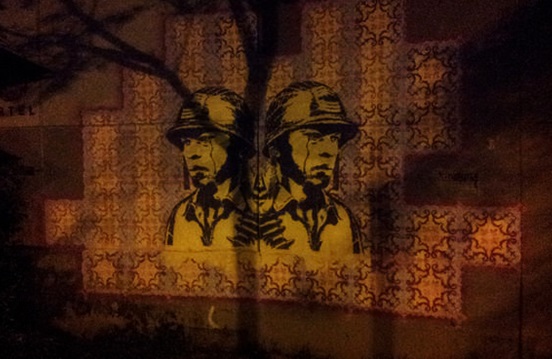
Colombia Peace Mural

Mural “Nostalgia” painted by the creative collective Deúniti at La Presidenta Park in Medellín, Colombia. Photo Credit: Deúniti, colectivo creativo / Flickr / Creative Commons

Amidst growing optimism at the prospects of achieving a peace agreement in Colombia after more than a half century of irregular warfare, predictions about whether the parties can reach an accord, and sustain it over the long term, should be informed by understanding the underlying logic that fueled the conflict and may now be bringing it to a close. Civil wars are complex social systems with peculiar properties, dynamics, and political economy.  Similar to other social systems, a war system—a set of violent interacting units—rests on a point of equilibrium, which can shift depending on the system’s inner dynamics and external stimuli.  The exponential growth in the 1990s of Colombia’s two main Marxist rebel groups—the Armed Revolutionary Forces of Colombia (FARC) and the National Liberation Army (ELN)—prompted the emergence of right-wing paramilitaries, an instrument of the state’s counterinsurgency strategy.  An expansion of the radius of the war and surge in combat-related fatalities, massacres, land dispossession, and displacements followed.  The failure of peace talks between the FARC and the government of President Andrés Pastrana (1998-2002) indicated that the war system was largely unchanged despite the escalation.

The intervention of a new actor—the United States—disrupted the equilibrium of the war system.  Under “Plan Colombia,” Washington (committing about $10 billion) and Bogotá ($80-100 billion) modernized and restructured the Colombian armed forces.  This new phase in the war system marked a departure from the “comfortable stalemate” that characterized the conflict between 1964 and 2000.  New weapons, air power, tactical flexibility, and expanding mobile commando brigades with U.S. military and technical support, enabled the Colombian armed forces to put the FARC on the defensive.  It took the FARC leadership more than eight years to adjust, losing territory and, more importantly, three of its main leaders: Raul Reyes (2008), Mono Jojoy (2010), and Alfonso Cano (2011).  But the FARC’s “Plan Rebirth”—reverting from “mobile war of positions” to guerrilla warfare, creating more interdependent commando units, and using more snipers and mines—changed the balance anew.

The new equilibrium in the war system, in which the law of the diminishing returns of the war’s investment started kicking in, drove both sides to conclude that the time for peace was arriving.  Colombia’s ruling elites concluded that prosecuting the war would be too costly at a time that U.S. attention was shifting to other theaters and threats.  FARC commander Alfonso Cano, months before his targeted killing, communicated the intention of his movement to seek a negotiated settlement as well.  The cost of continued war had become too great for both sides, and external factors—the death of President Hugo Chávez in Venezuela and the changing Andean regional political environment—were also factors.  FARC became convinced that trading bullets for ballots could help in achieving the remaining objectives of its armed rebellion.  As the two sides continue to make progress in peace talks in Havana, outsiders who want the accords to succeed would do well to remember that disruptions to the war system equilibrium could easily threaten both sides’ commitment to signing and implementing a final deal.

January 11, 2016

Nazih Richani is an Associate Professor of Political Science and Director of Latin American Studies at Kean University.  In 2014 the State University of New York Press  published a revised and updated version of his 2002 study entitled Systems of Violence: The Political Economy of War and Peace in Colombia.

Gender Violence in Argentina and the Education of Mauricio Macri

By Brenda Werth*

Macri Ni Una Menos

Photo Credit: Mauricio Macri Facebook page. Public Domain.

Argentina’s new President, Mauricio Macri, has an historic opportunity to address the country’s longstanding crisis of gender violence.  In a radio interview in 2014, he notoriously stated that “All women like to be catcalled,” and asserted, “I don’t believe the ones who say they don’t.”  Little did he know at the time that the most intense period of his presidential campaign in 2015 would coincide with a revolution in public awareness of gender violence in Argentina.  #NiUnaMenos – a movement launched in response to a rash of femicides and their graphic coverage by the news media – organized  marches in cities across Argentina, Uruguay, and Chile, drawing an estimated 300,000 protesters in Buenos Aires alone last June.  Journalists, artists, and activists, in collective denunciation of machismo and violence against women, demanded that the government develop a plan of action to implement the Comprehensive Law on the Prevention, Punishment and Elimination of Violence against Women (Law 26.485), approved in 2009.  The law was a significant milestone in addressing violence against women at the national level, yet without government support, its effectiveness has been limited.  Current data indicate that a femicide takes place every 30 hours in Argentina, and statistics suggest that the total number of femicides occurring in 2015 will meet or surpass numbers in 2014.  The NiUnaMenos movement has captured the public’s attention.

The presidential candidates (Macri included) took note of the impact of NiUnaMenos and pledged support to prevent violence against women as outlined in the five major points it published.  Macri posted a picture of himself holding a handmade #NiUnaMenos sign on Facebook and Twitter.  Yet activists remain concerned about Macri’s sincerity, not just because of his 2014 remarks.  As mayor of Buenos Aires (2007-15), he undermined initiatives to prevent violence against women and provide assistance to victims.  Specifically, in 2014 he closed an outreach center for victims of sexual violence that had operated under the Subsecretary of Human Rights in Buenos Aires, and he reduced the budget of the National Agency for Women from 0.1 percent in 2007 to 0.06 percent in 2015.

Macri has his work cut out for him if he wants to be perceived as a leader confronting Argentina’s gender violence.  Although his promises to slash government spending suggest social programs will suffer, there are some promising signs.  Macri’s Minister of Social Development, Carolina Stanley, has offered the post of President of the National Council for Women to Fabiana Tuñez, the founder of the Casa del Encuentro, a leading NGO on gender rights and eliminating sexual violence – and key in the #NiUnaMenos movement.  In a broader human rights framework, Macri’s agenda still remains relatively undefined.  Although his vision will depart significantly from former President Cristina Fernández de Kirchner’s, he has reiterated his commitment to continuing trials against former military accused of human rights abuses during dictatorship, rejecting claims that such efforts reflect “politics of revenge.”  In interviews, moreover, he has emphasized a forward-looking conception of human rights, rooted in the 21st century, focusing on issues related to pubic health, education, and freedom of expression.  While some observers view this as a regression to a “culture of amnesia” associated with the Menemist era, Macri has an opportunity to move the country forward by heeding activists’ demands for leadership addressing gender violence in Argentina. 

January 7, 2016

* Brenda Werth is Associate Professor of World Languages and Cultures at American Unviersity.

The Politics of the Refugee Crisis in Latin America

By Luciano Melo*

Syrian refugees Uruguay

Syrian refugees arriving in Uruguay. Photo Credit: International Organization for Migration / Flickr / Creative Commons

Several Latin American governments have pledged to accept Syrian refugees – part of one of the largest refugee movements in history – but support for robust resettlement programs appears likely to fall short.  According to the United Nations Refugee Agency (UNHCR), some 6 million Syrians have been displaced within their country and 4 million more have fled abroad, mostly to Turkey, Lebanon, Jordan, Iraq, and Egypt.  One million have entered Europe, putting a heavy burden on the EU, and the United States has agreed to settle 10 thousand (although the refusal by 31 U.S. governors to accept them raises questions about follow-up).  Public support for receiving migrants dropped in the aftermath of the Paris attacks in November, but France has announced that it will admit 30,000 new refugees in the next two years, a measure that President Hollande characterized as the country’s “humanitarian duty.”

Several Latin American governments also have agreed to absorb refugees.

  • Brazil, with ties to Syrian immigrants since the 19th century and one of the largest communities outside Syria, has promised to accept 20,000 refugees from the current conflict. More than 8,000 have already settled in Brazil.
  • Venezuela also set a goal with the UNHCR of receiving 20,000 Syrians, but President Nicolás Maduro’s defense of Syrian President Bashar al-Assad as “the only leader with authority in Syria” suggests low enthusiasm for implementation.
  • Chile and Argentina have had modest programs to settle Syrian refugees since the beginning of the war. Chilean President Bachelet has agreed to settle 100 Syrian families, whereas Argentina’s “Syria Program” agreed to offer permanent residence to 300 Syrians after three years.
  • Uruguay, which resettled Syrian families from Jordanian camps in 2004, recently suffered a setback when refugees in September protested in front of a government building complaining about the cost of living and lack of jobs. Observers estimate that almost 100 Syrians will actually leave the country.

The cost of settling families and individual refugees can be high, and each country will face challenges in meeting their commitments.  Brazil is in a deep crisis – with negative GDP growth expected next year, impeachment processes initiating against President Dilma, and gigantic corruption scandals rocking the political system.  The Venezuelan economy is in shambles, with skyrocketing inflation, and the country appears to be in permanent political crisis.  Chile has experienced an economic slowdown since the price of copper fell, and Argentina has been trying to recover from recession and double-digit inflation rates in the first months of the newly elected President Macri.  Even Uruguay expects lower growth – down to 2 percent from the previously estimated 2.5 percent – and a fiscal deficit of 3.6 percent of GDP.  The good news is that accepting refugees does not necessarily affect the economy negatively.  Turkey and Lebanon, which have resettled 2.2 million and 1.8 million since the war started, are expected to have 4 percent and 3 percent growth in the coming year, confirming that the issue is mostly political rather than economic.  In Latin America, in contrast with the U.S., the crisis has not been used by leaders to polarize public opinion.  In fact, the topic is barely on the radar of common citizens, and the media rarely cover it.  The Syrian war and ISIS terrorism are remote concerns, and more pressing local matters – recessions, corruption scandals, and impeachments – take precedence.

January 4, 2016

* Luciano Melo is a PhD candidate at American University’s School of Public Affairs specializing in comparative politics.

Brazil: Not-so-Happy New Year

By Matthew Taylor*

Brazil Basta

Photo Credit: Antonio Thomás Koenigkam Oliveira / Flickr / Creative Commons

A vicious combination of corruption scandal and economic malaise suggests a troubled new year awaits Brazil.  Economists estimate gross domestic product has contracted 3 percent this year and will decline a similar amount in 2016, while inflation and weak government finances hamper efforts to stimulate growth.  Two of three big rating agencies have cut Brazilian debt from investment grade to junk. Unemployment has risen from under 7 percent a year ago to nearly 10 percent, with forecasts of 12 percent on the horizon.  Efforts to reform fiscal policy are getting nowhere, and the champion of fiscal reform, Finance Minister Joaquim Levy, has just resigned.  The bonanza launched by the 2003-2010 presidency of Lula da Silva – seemingly setting Brazil on a unique path of state capitalist development – is long over.

The country’s interconnected scandals cast shadows on many of the leading players on the national stage, including President Dilma Rousseff.

  • Petrobras, the crown jewel of Brazil’s state capitalist model, is at the center of allegedly massive corruption schemes. Rousseff, who was chair of the Petrobras board at the time of the alleged wrongdoing, has claimed absolute ignorance.  But the charges implicate Brazil’s leading political and business elites, many of whom have been jailed in recent months.
  • A feud between Dilma and the president of the Chamber of Deputies, Eduardo Cunha, reached a new low this month after Cunha’s approval of impeachment proceedings against her. (His own ethics problems continue to fester.)  The charge against Dilma is not of personal corruption but rather that Rousseff flouted budget laws by using public banks to cover up unauthorized debt issuance and off-books spending.  Rousseff supporters have argued that the impeachment charges represent the worst of golpismo, or coup-mongering, and a constitutional overreach that threatens to undermine democracy.

For Brazil, 2016 will be dramatic and unpredictable – as the country weathers the most dangerous political crisis since the impeachment and resignation of President Fernando Collor in 1992.  Dilma’s opponents will have difficulty convincing two-thirds of the Chamber and Senate to oust her, but the crisis is already creating significant fissures in the democratic system.  The parties have been turned upside down.  Even if Dilma survives in office, she faces nearly impossible odds in restoring the credibility of her administration and party, the Partido dos Trabalhadores, or PT.  There are early indications that the PT will face a bloodletting in the 2016 municipal elections, and former President Lula, the party’s once-ironclad standard-bearer, has the highest rejection rate (55 percent) of any potential candidate in the 2018 presidential contest.  The PMDB, Dilma’s coalition partner, is threatening to break with the government, but is internally divided. The opposition PSDB is facing scandals, protests, and troubles of its own in the states it governs.  The newfound proactivity of prosecutors and judges is making democratic checks and balances work as never before – and is largely welcomed by Brazilians – but Brazil’s old party system may not be able to keep pace.  Rumblings for a rethinking of the political system will grow louder in the new year, as the crisis deepens.

December 21, 2015

*Matthew M. Taylor is associate professor at the School of International Service at American University.

Cuba: Limited Opportunity Drives Migration

By Ricardo Torres*

Embed from Getty Images


A generation of young Cubans is eager to leave the island because they feel that recent reforms have opened scant opportunities for them, and they see a much brighter economic future for themselves in the United States or Latin America. Cuba has made vast investments over the years in education, generating a population with high levels of human capital and technological potential, but job opportunities – in the declining state sector, in the 200 or so occupations now authorized for cuentapropismo, and in the slowly opening cooperative sector – hold little promise for Cubans under 30. Although statistics on the socioeconomic background of migrants are lacking, a strong body of anecdotal information indicates that this generation, with aspirations of a career that matches their intellectual and technical capabilities, is concluding that there is little for them in Cuba. For a number of reasons, the conditions necessary to start a new business – such as financing and markets – are simply not there.

Mainstream technologies that are now common in modern societies are lacking in Cuba, hindering it from unleashing the potential of its human capital. Inconsistent and excessively controlled access to computer technology and the internet is also discouraging youths to have hope. Free education, healthcare, and a low crime rate set Cuba apart from most other countries in the region producing large numbers of migrants, but those same factors have created expectations among youths that they should have fulfilling, better-paying jobs – which simply are not abundant. Moreover, people under 35 have fewer emotional or historical attachments to the Revolution. They did not experience the purported “Golden Age” of the 1980s, and the “revolutionary and socialist” Cuba they know is one of only economic hardship.

For migrants elsewhere in the region – driven by endemic poverty, violence, and weak, corrupt institutions – young Cubans’ reasons for leaving the island may appear exaggerated. Cubans’ education, health, and relative security, however, do not discount their profound desire, engendered in part by the Communist Party’s own unfulfilled rhetoric about a better life, to seek better fortunes outside their country. They have been trained for knowledge-based economy, but Cuba’s current development model relegates them to low value-added occupations that cannot generate the rewards to which they aspire (or the prosperity that the society needs and in principle could achieve). U.S.-Cuba normalization, particularly if the two governments allow capital and goods to flow freely, and accelerated reforms in Cuba hold some promise of reducing migration pressures from the island in the future, but persuading Cubans that building a better life on the island rather than emigrating elsewhere will take time and vision.

December 17, 2015

*Ricardo Torres, a CLALS Research Fellow, is Professor of Economics and Cuban economy at the University of Havana, and is affiliated with the UH’s Center for the Study of the Cuban Economy.

Honduras: The Need to Differentiate among the Gangs

By Steven Dudley

Photo Credit: InSight Crime

Photo Credit: InSight Crime

Honduras street gangs – often inaccurately lumped into a single category – are a complex, deep-rooted social and criminal phenomenon that is driving violence and migration in record numbers. InSight Crime, after investigating them for most of 2015, found that the catch-all term “maras” is at once ominous and ill-defined. The two largest gangs – the Mara Salvatrucha (MS13) and Barrio 18 – have similar criminal revenue streams, but different approaches to obtaining those proceeds. Recognizing these differences is an important part of undermining their power and influence.

  • Extortion is a critical source of funding for both groups. This includes the public transportation system and taxi cooperatives in the largest urban areas, which account for a huge percentage of the gangs’ earnings. InSight Crime talked to one member of a bus cooperative that was paying four gangs extortion fees and was being pestered by a fifth.
  • The groups’ approach to local extortion targets – small businesses, shops, or local delivery services – is different. The MS13 does not extort where they operate; the Barrio 18 does, with huge implications for the gangs’ relations with the neighborhood’s residents and local police. The Barrio 18 is seen as predatory; the MS13 is often seen as a protector.
  • The MS13 is more focused on local drug sales, which allows it to forgo the easy extortion proceeds. Because it meddles less with residents, the MS13 has better relations with the local police, who, in turn, target the Barrio 18 with more resources and vigor. This also positions MS13 for better relations with community leaders and politicians, and it reportedly can, in some cases, act as the unofficial social services operator in cases of child or spousal abuse. In one area InSight Crime visited, the MS13 gives accused abusers a warning after the first report, a beating after the second, and banishment (or worse) after the third.
  • While they may operate under a single umbrella, the MS13 and the Barrio 18 also vary widely in sophistication and reach, wherewithal, and infrastructure. They are semi-autonomous and prone to violent spasms that have wide-reaching implications for the communities in which they operate. The Barrio 18 appears to be less disciplined and less focused on bigger goals than the elements of the MS13 InSight Crime studied. Barrio 18 members give the impression that their struggle is more about human survival than expansion in the underworld. They live by “codes,” such as “respect the barrio,” that are evoked as a pretext for nearly any action, violent or otherwise, against outsiders and fellow gang members alike.
  • The violent ethos that guides the Barrio 18 and the MS13 is shared by their rivals, who include offshoots of the two main gangs, vigilantes, and soccer hooligans. Almost all live from the same income sources – extortion and local drug peddling. Some days they are allies; other days they are enemies.

The repercussions of oversimplifying the situation – treating all gangs as the same – are not trivial. Honduras continues to struggle with record levels of violence, and the United States is grappling with record levels of asylum applicants from gang-riddled countries like Honduras. There are times for a hammer, with criminal groups that only seem to understand force. But there are also moments when negotiation, accommodation, and social programs are more persuasive, and long-lasting, than simply sending in more troops and arresting more youths with tattoos. The trick is to know the difference, but we can only do that if we start to see these groups as complex and dynamic organizations with different criminal economies, social relations, and political ambitions.

December 14, 2015

*Steven Dudley is co-Director of InSightCrime, which is co-sponsored by CLALS. The full report “Gangs in Honduras” is available in English here and in Spanish here.

Venezuela: Implications of the Opposition’s Landslide Victory

By Michael McCarthy*

Venezuela Elections 2015

Photo Credits: Nicolas Raymond and 2 dvx ve (modified) / Flickr and Wikimedia Commons, respectively / Creative Commons

Venezuela is just beginning to feel the shock waves of the opposition’s landslide victory and humbling defeat of President Nicolás Maduro’s PSUV.  Riding a wave of discontent with the Maduro government’s management of the economy and political repression, the opposition Mesa de Unidad (MUD) coalition won at least 112 seats in the 167-seat parliament, giving it a commanding two-thirds majority.  The MUD won the popular vote 56-41.  The political scenarios are wide open.  Some preliminary analytical judgments follow:

  • Maduro has accepted the election results, but serious questions remain whether he and his advisors will engage in the give-and-take necessary to make divided government work. He is restructuring his cabinet and has called on supporters to “relaunch” the Bolivarian Revolution.  He says he will strenuously oppose any amnesty law for imprisoned opposition members – a top MUD priority – and that he will “go to combat” if the opposition tries to remove him from office.
  • Despite its historic achievement, the opposition will face challenges to build sustainable unity. The MUD is a heterogeneous electoral alliance, and the hardline and moderate factions are likely to disagree about strategy – whether the time is ripe for pressing for Maduro’s resignation or for cultivating support from disaffected chavistas.
    • The opposition faces the challenge of demonstrating a commitment to what they have criticized most about chavismo – democratic inclusion.  If they want to put Venezuela back together, for example, the MUD will have to decide how to provide PSUV officials guarantees of political inclusion.
    • Passing an amnesty law for political prisoners and addressing the dire economic situation are high on the MUD’s unified agenda – and probably will remain part of a consensus platform.
    • Less clear is how aggressively the opposition will push its agenda from the National Assembly.  Most in the MUD are more closely aligned with the moderate strategy of former presidential candidate Henrique Capriles, but others will want to push harder.  They may try to remove chavista-appointed Supreme Court judges likely to oppose Constitutional changes that would curtail Maduro’s powers.
    • The forced resignation of Guatemalan President Pérez Molina and the recent opening of an impeachment process against Brazilian President Dilma Rousseff may embolden similar initiatives in Venezuela.
  • The country’s tarnished election system functioned better than many critics had predicted. The 74 percent voter turnout was eight points higher than the last legislative elections.  Reports of violence and irregularities were few.  The Armed Forces provided effective security at the polls, and behaved in a manner that suggests an interest in defending their institutional reputation.  The National Electoral Council (CNE) disappointed many by issuing an unprecedented call for voting centers to remain open even if there were no voters in line, and for delaying reporting the final results, but the voting process was clean enough.
  • Outside Venezuela, chavismo’s loss may be a setback from some leftists – but a relief for most others. Maduro’s defeat is a potential liberation from the albatross that the disastrous Venezuelan regime has become.  For most left-leaning leaders, chavismo had become a deeply flawed project that has, for several years, been toxic.
  • For anti-chavistas outside Venezuela (including some in Washington), the election results indicate that the way to overcome the catastrophe over which Maduro presided was not to threaten the regime with sanctions and encourage extremists in the opposition, but instead to push for the election to take place, with the most safeguards possible. There is precedent for Latin American dictatorships falling in elections that they put on the agenda and then could not stop.
  • Although Maduro’s saber-rattling along the Colombian and Guyanese borders failed to divert attention from his internal mess, his rhetoric of resistance to yielding power suggests the international community should keep an eye on him in case he tries again.
  • The Venezuelan victors should also understand the anxiety of their neighbors over the future of Petrocaribe and other initiatives. Venezuela under Chavez did an enormous service to the region by subsidizing oil in ways that helping governments achieve important social advances.  Long before Chavez, Venezuela used its oil wealth to support allies.  Such assistance is as important now as it has been for decades.

December 9, 2015

* Michael McCarthy is a Research Fellow with the Center for Latin American and Latino Studies.

U.S.-Cuba Migration: The Powerful “Pull” Factors

By Fulton Armstrong

Cuban women

Photo Credit: Guillaume Baviere / Flickr / Creative Commons

The Obama Administration’s repeatedly stated commitment to continue implementing the Cuban Adjustment Act of 1966 is driving a surge in Cuban emigrants through dangerous human trafficking routes in Central America and causing tensions in a region already tied in knots over illegal migration.  The flow of Cubans up the isthmus has been increasing steadily – reaching some 45,000 over the past year – but seemed a manageable issue until Costa Rica broke up a smuggling ring last month.  The publicity prompted Nicaragua to close its borders to the underground railroad, which is carrying thousands each month northbound.  The migrants have been starting their journey by air from Havana to Ecuador (which until last month didn’t require a visa) and are escorted by coyotes as they bribe their way across borders headed north.  A summit of Central American foreign ministers two weeks ago failed to reach agreement on a Costa Rican proposal to create a “humanitarian corridor” for the Cubans by issuing them safe passage.  Relations between San José and Managua, already on edge as they await an ICJ decision this month on a territorial dispute, have turned bitter.

The special treatment that Cubans receive upon setting foot in the United States – including automatic access to permanent residency in one year – is the main stimulus of the flow.  The Clinton Administration adjusted how it handled those intercepted at sea, establishing a distinction between intending migrants with “wet feet” and “dry feet,” which reduced the seaborne flow somewhat.  But Cuba’s decision in 2013 (long urged by the U.S. and international community) to stop requiring citizens to get exit permits; the flow of a billion-plus dollars into Cuba through remittances and small businesses (with which to pay coyotes and corrupt officials along the way); and the growing sophistication of smuggling networks in Central America have fueled a shift in the flow overland.  Despite the Administration’s no-change pledge, some intending migrants say the current rush is being driven by fear that U.S.-Cuba normalization will end the preferences granted to Cubans who reach U.S. soil.

The Adjustment Act authorizes – but does not require – the President, through the  attorney general, to grant parole to Cubans arriving into the United States illegally and grant them permanent residency one year later.  In the absence of any change in Washington’s approach, Cubans will certainly try to avail themselves of its generous provisions.  To move the thousands stuck in Central America off the front page there, Washington may issue them expedited visas and help them with transportation to the United States.  Such gestures, however, will have a high political cost throughout Central America, where the U.S. has asked governments to stanch the movement of their own citizens fleeing violence and dire poverty, and where even well-off, law-abiding citizens have to jump through hoops and pay hundreds of dollars for tourist visas.  As the impasse in Central America grew intense last month, the State Department tweeted a reminder that “There exist legal and safe options for Cubans who want to migrate to the United States.”  Reversing policies that encourage illegal and unsafe migration – while proposing that Congress support a doubling or tripling of the current 20,000 Immigrant Visas the Embassy in Havana issues each year – would make a lot of sense.

December 7, 2015

AULABLOG will examine the powerful “push” factors driving migration from Cuba in a subsequent article.

What Does Macri’s Victory Mean for Latin America’s Left Turns?

By Eric Hershberg and Fulton Armstrong

South America right

Photo Credits: Douglas Fernandes and _Butte_ / Flickr / Creative Commons

Argentine President-elect Mauricio Macri’s actions since his historic victory last week indicate a rightward shift in domestic and foreign policy that some observers are tempted to proclaim as part of a broader Latin American trend.  He has reiterated promises of broad economic reforms and appointed a cabinet – including former JP Morgan executive and ex-Central Bank chief Alfonso Prat-Gay as his finance minister – to implement them.  He has further pledged to reverse outgoing President Fernández de Kirchner’s protectionist trade policies.  (During the campaign, advocates of unbound capitalism cheered when he named Ayn Rand’s “The Fountainhead” as one of his favorite books.)  Macri has named Susana Malcorra, a senior aide to UN Secretary General Ban Ki-moon with strong diplomatic credentials, to be his foreign minister and, for starters, directed her to reverse policies he judged to coddle Venezuela. The President-elect, who takes office on December 10, is speaking with the confidence of a President elected with more than a 3-point margin over Kirchnerista candidate Daniel Scioli and with control over more than the 91 seats (one third of the total 257 seats) that his Cambiemos coalition won in the lower house of Congress.  (His party is the first, however, to control simultaneously the Province of Buenos Aires, the City of Buenos Aires, and presidency.)

The temptation in some quarters to declare Macri’s victory as the beginning of the end for Latin America’s “Left Turns” is understandable but nonetheless premature.  To be sure, the Argentine electoral results coincide with other major setbacks for various currents of the Latin American left:  The Chavista project in Venezuela is crashing; Brazilian President Rousseff and her party are mired in a corruption morass and economic crisis whose combined effects may cut short her time in office; President Correa, facing a dire economic situation in Ecuador, is increasingly talking about abandoning efforts to run yet again in 2017.  Chilean President Bachelet’s low popularity and declining public support for the Vázquez government in Uruguay may be additional signs that the prospects for the “pink tide” are very much in doubt.

But in Argentina and beyond, the jury is still out.  Through no action of its own, the South American left enjoyed the multiple benefits of the decade-long commodity boom that began in 2003.  Just as its electoral successes did not indicate wholesale shifts to the left in the region – indeed political scientists have long questioned whether the evidence supports claims of a leftward shift in popular preferences – today’s parallel crises may reflect the end of of the boom rather than a rejection of left-leaning governments.  Many of the policies advanced by various currents of the “pink tide” may remain highly popular, even while they are no longer affordable.  Another tempting explanation is that Latin Americans are rejecting leaders who they perceive as corrupt, irrespective of their placement on the left-right spectrum.  In Argentina, notably, Macri hasn’t rejected the Kirchneristas’ redistributive agenda but has instead emphasized the confusing, corrupt way it has been pursued for the past 12 years.  (Never before has an Argentine rightist portrayed eliminating poverty as a core priority.)  It may well be that voters understand economic slowdowns and dysfunction as a product of corruption rather than the fallout from declines in historically high commodity prices.

Regardless of the underlying drivers of electoral change and public disillusion with incumbents, it’s fair to ask if the left’s current travails and the right’s resurgence will open the way toward more accountable political leadership, whatever its ideological proclivities, or just signal an alternation of power.  Like Macri in Argentina, a new cohort of Latin American leaders will have to prove that they are more than outsiders drawing on sentiment to throw out the incumbent rascals.  The question is whether they pursue policies that make democracy more transparent, expand meaningful political participation, and sustain the social gains that have been achieved by the pink tide governments that now appear to be on the ropes.

December 2, 2015