Latin America: Wait-and-See Reaction to Trump – For Now

By Catie Prechtel and Carlos Díaz Barriga*

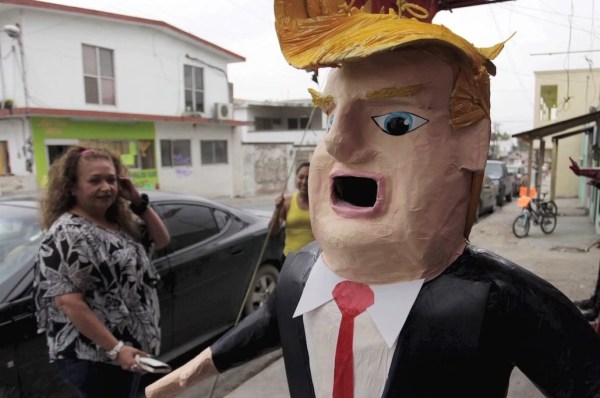
trump-effigy

An effigy of Donald Trump in Mexico City. / Sequence News Media / Daniel Becerril / Wikimedia / Creative Commons

Most Latin American leaders publicly reacted with caution to Republican presidential candidate Donald Trump’s victory in last week’s U.S. elections, but reactions will sharpen quickly if Trump tries to make his campaign rhetoric about the region and Latino immigrants into policy.  Mexico and Central America showed clear anxiety over the implications for their economies and regional migration pressures.  Some South American presidents expressed mild enthusiasm and voiced hope for a positive relationship with the new administration, although Trump’s avowed opposition to the Trans-Pacific Partnership trade accord – under discussion at the APEC summit in Lima this week – has fueled concerns about the future of free trade.  Fear that the new U.S. President, who takes office on January 20, will deport millions of undocumented migrants from Mexico and Central America and force U.S. firms to shut factories in those countries has seized the media there.

  • Mexican newspapers headlines screamed “Be afraid!” and warned of a “Global shakedown.” Reports recited the many promises Trump had made against Mexico, including his proposal to build a border wall (and make Mexico pay for it); revising NAFTA and raising taxes on Mexican imports, putting conditions on remittances, and charging more for visas. The peso suffered three consecutive days of losses before recovering slightly following interviews by Trump and his team suggesting a softer stand on the wall and free trade.  President Peña Nieto phoned Trump with congratulations and agreed to meet soon to discuss bilateral issues, including presumably the wall.
  • Guatemala’s Prensa Libre reported businessmen are worried Trump’s rejection of free trade could have a direct impact on the economy and described the possible mass deportations as a “social bomb” for the country. In Nicaragua, newspapers speculated that Trump’s victory will give a boost to U.S. legislation, the Nicaragua Investment Conditionality Act (NICA), which calls for economic sanctions if President Daniel Ortega doesn’t take “effective steps” to hold free and fair elections.  In El Salvador, the main concern is the deep economic stresses of mass deportations of Salvadorans in the United States.  Honduras shares those concerns but apparently was more wrapped up in President Juan Orlando Hernández’s announcement confirming his intention to make a controversial bid for reelection.
  • Venezuelan President Nicolas Maduro, often given to bombastic rhetoric, has focused on working with Washington in the closing months of the Obama Administration. In a phone conversation with Secretary of State John Kerry, he stressed the need to establish an agenda with the next administration that favors bilateral relationships, but he specifically called on Obama to “leave office with a message of peace for Venezuela” and rescind a determination that Venezuela is a “threat to the United States.” Obama himself last April said the designation was exaggerated.
  • Media in Colombia speculated that Trump will be less committed to aid and support for finalizing and implementing a peace accord with the FARC. Argentina, Brazil, and Chile offered calm reactions to the news.  For Buenos Aires and Santiago, the biggest concern was potentially strained commercial relationships and free trade agreements with the United States, according to press reports.  Brazil offered little reaction to the news, but Trump’s win brought four consecutive days of losses for the real – weakening 7.6 percent since the election.

The political leaders’ cautious reactions conceal a broad and deep rejection for President-elect Trump’s values and intentions as he stated them during the campaign.  Former Mexican President Vicente Fox once again tweeted his disapproval for Trump, while José Mujica, former President of Uruguay, expressed dismay on Twitter, summing up the situation in one word: “Help!”  Press reports and anecdotal information indicate, moreover, that large segments of Latin American society have shown a widespread distaste for Trump’s win.  Their general wait-and-see attitude will end when and if Trump proves himself the unpredictable and reactionary he seemed on the campaign trail.  Latin American leaders have a lot of work ahead as they navigate a new relationship with the United States.

November 15, 2016

* Catie Prechtel and Carlos Díaz Barriga are CLALS Graduate Assistants.

The Cataclysm that the Latino Vote Couldn’t Stop

By Eric Hershberg

ft_16-11-09_exitpolls_race_ethnicity

Presidential candidate preference, by race or ethnicity / Pew Research Center

In unprecedented numbers, Latino voters flexed their muscles in the bitter and destructive U.S. presidential campaign, but that wasn’t enough to elect a competent but mistrusted centrist and block an erratic TV showman espousing policies anathema to their interests.  Former Secretary of State Hillary Clinton lost in the electoral college, which in the American system is what actually matters, but she won the popular vote by a slim margin – little consolation to Latinos.  Donald Trump and the forces that will accompany him into the Executive branch have pledged to begin efforts to deport millions of undocumented immigrants, build walls to keep Latin Americans out of the country, and reverse decades of policies meant to strengthen ties among the Americas.  The election highlighted deep cleavages in U.S. democracy:

  • An inclusive coalition of the well-educated, urban dwellers, youth, and racial and ethnic minorities lost to a bloc of angry white working-class, rural, and small-town voters rallied by a man whose behavior and rhetoric were called repugnant by leaders of even his own party. The outcome testifies to the degree to which vast segments of the American population feel ignored and denigrated by political and cultural elites and alienated by profound social changes that accelerated during the Obama administration, including shifts regarding such issues as gender and sexual identity and, particularly, racial diversity and empowerment.
  • The Trump-led “whitelash” has been largely rhetorical up to this point, but it will soon be manifested in public policies with life-changing consequences for immigrants, minority populations, and impoverished citizens. There’s a possibility that, once charged with running the country, the Trump faction will moderate on some issues, but it’s frightening to recall that no fewer than 37 percent of German voters mobilized behind an analogous cocktail of racial resentment and violent impulses in 1932.  In 2016, nearly half of the American electorate did just that, with profound implications for civil discourse, tolerance, and respect for sometimes marginalized sectors of the country’s population. If Trump’s exclusionary rhetoric becomes translated into concrete policies that diminish the country’s diversity, the U.S. will lose its status as among the most dynamic and creative places in the world.

The Latino vote was expected to be among the decisive factors that would sweep Clinton into the White House and swing the Senate back to Democratic control, albeit by the slimmest of margins.  But while it was influential, diminishing Trump’s margin of victory in reliable Republican strongholds such as Arizona and Texas, and enabling the Democrats to eke out victories in states such as Nevada, New Mexico, and Colorado, the Latino vote was insufficient to rescue Clinton’s fortunes in the pivotal states of Florida and North Carolina.  Whereas in 2012 Obama had an estimated 71-27 percent advantage among Latinos against his opponent, Clinton failed to match that total – exit polls indicate roughly a 65-29 percent split – even against a candidate explicitly targeting Latino interests.  Trump called for mass deportations of the country’s 10 million undocumented Latino residents and a rollback of the Obama administration’s efforts to provide safe haven and legal status for at least half of this vulnerable segment of American communities.  Whatever the reasons for their low participation, these communities now confront existential threats.

  • If Trump follows through on his promises, the impact will be manifested in numerous domains beyond immigration and related human rights that have profound implications for the welfare of U.S. Latinos, including the composition of the Supreme Court and its commitment to voting rights; protection against discrimination in employment, housing, and financial services; access to health care for 20 million people who for the first time gained coverage through the Affordable Care Act (“Obamacare”); opportunities for pre-school and tertiary education; and environmental regulations needed to protect public safety and health.

Political scientists and informed citizens must now revisit their assumptions about the impact that a growing Latino population may have on the outcome of presidential elections.  The gap separating the two parties in terms of Latino preferences is vast and increasingly consolidated, suggesting an enormous and enduring disadvantage for the Republicans.  But whether the Latino vote can become a decisive, rather than merely influential, component of the electorate is much less certain.  The anger among white voters – at least this time around – carried the day.  This “whitelash” may or may not be a transitory phenomenon, but the prospects for efforts to make the United States a force for good in the world, and to make government an agent for social and economic justice for all, will depend in large part on the future mobilization of the Latino community.  Arguably, the future of the United States – and by extension the world’s – hinges on the capacity of Latino voters to make America great again.

November 10, 2016

Does Trade Incentivize Educational Achievement?

By Raymundo Miguel Campos Vázquez, Luis-Felipe López-Calva, and Nora Lustig*

Female student walking by building

A student walks around Preparatoria Vasconcelos Tecate. / Gabriel Flores Romero / Flickr / Creative Commons

Mexico’s experience with free trade has challenged one of the tenets of faith economists know well from reading early in their careers David Ricardo’s Principles of Political Economy and Taxation: that “the pursuit of individual advantage is admirably connected with the universal good of the whole” and that “[trade] distributes labor most effectively and most economically.”  Under this principle, “wine shall be made in France and Portugal; corn shall be grown in America and Poland; and hardware and other goods shall be manufactured in England.”  Mexico reminds us that while these benefits exist in the abstract, there are trade-offs to be faced—that there are, potentially, social and individual costs induced by trade liberalization.

In a recently published paper entitled “Endogenous Skill Acquisition and Export Manufacturing in Mexico,” MIT economics professor David Atkin shows the ways in which individual people experience trade and how it affects their decision-making – sometimes in ways that may not necessarily be socially desirable.  It analyzes a time period (1986-2000) during which Mexico underwent major economic transformations, including a rapid process of trade liberalization after 1989 and the introduction of the North American Free Trade Agreement (NAFTA) in 1994.  Analyzing data for more than 2,300 municipalities in the country, the paper tells us that young Mexicans at the time faced a very basic decision: to stay in school and continue studying or to drop out and look for a job (among the many being created in the export-oriented manufacturing sector), most of which did not require more than a high school education.  Atkin found that, on average, for every 25 new jobs created in the manufacturing sector, one student would drop out after 9th grade.  (The World Development Report 2008 on Agriculture for Development had raised the question about “missing” individuals in this age group, but in relation to migration.)

  • While trade brought positive effects including a higher demand for low skilled workers and an eventual increase in their wages – consistent with David Ricardo’s basic notion – Atkin concluded that in Mexico it had the socially undesirable effect of preventing, or slowing down, the accumulation of human capital. The reduction in human capital investment is a trade-off which can have negative effects on the economy as a whole.
  • Factors other than free trade might explain this effect. First, young students may drop out if the returns to schooling are not high enough to compensate for the additional investment.  Second, a lack of access to credit and insurance for relatively poorer households might make it impossible for aspiring students to finance their investment and obtain higher returns by continuing to tertiary education or to cope with shocks and avoid abandoning school.  Finally, the result could be driven by a lack of availability of information about actual returns to investment in education, which could lead to myopic decision-making.

The movement of capital toward locations with lower labor costs is an expected, and intended, result of an agreement such as NAFTA, pursuing higher export competitiveness at the regional level.  David Ricardo would have said that TVs and automobiles shall be made in Mexico, while software shall be made in Silicon Valley.  What completes the story, however, is that because of distortions like the ones mentioned above – low educational quality, under-developed credit markets, or weak information that skews decision-making – free trade might lead to socially undesirable consequences.  And it did in the case of Mexico, as Atkin convincingly shows in his paper.  It seems that when Ricardo gets to the tropics, the world gets more complex.

November 7, 2016

* Raymundo Miguel Campos Vázquez teaches at the Centro de Estudios Económicos at el Colegio de México, and is currently conducting research at the University of California, Berkeley.  Luis-Felipe López-Calva is Lead Economist and Co-Director of the World Development Report 2017 on Governance and the Law.  Nora Lustig is Professor of Latin American Economics at Tulane University.

Haiti: Hurricane Matthew’s Devastating Impact

By Emma Fawcett*

Group of Haitians unpacking supplies

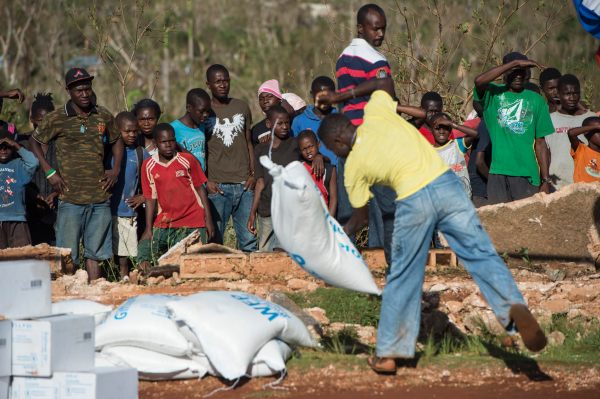
A citizen of Beaumont, Haiti unloads hurricane relief supplies from USAID on October 13, 2016. / U.S. Air Force / Photo by Tech. Sgt. Russ Scalf / Flickr / Creative Commons

Hurricane Matthew, which made landfall on Haiti’s southwestern claw on October 4, devastated citizens’ lives, homes, and businesses – and set back much more across the country.  Some 546 are reported dead, and 128 are still listed as missing.  According to World Bank estimates, the Category 4 hurricane caused nearly $2 billion in damages, including $600 million in the agricultural sector.  The hard-hit southern peninsula provides about one-third of Port-au-Prince’s food supply, and the losses of crops and fishing equipment have long-term implications for food security.  Ninety percent of the homes in the South and Grand’Anse regions were damaged or destroyed, and according to the Environment Ministry, the storm sped up deforestation and has destroyed more recently planted trees.  The relief efforts have been poorly coordinated by Haiti’s interim government, resulting in press reports of looted aid convoys and sporadic protests.

The storm has also set back almost every key initiative underway in Haiti.

  • Just two months after the United Nations finally acknowledged its role in bringing cholera to the country in 2010 (for which it subsequently proposed an aid package that includes restitution to victims), flooding and contaminated water have led to a dramatic increase in the number of cholera cases. An estimated 3,400 new cases have been reported in just the last four weeks.  With help from the World Health Organization, the Haitian Ministry of Health will begin administering 1 million doses of the oral cholera vaccine, but addressing cholera also necessitates serious improvements in access to safe water and sanitation.
  • Haiti’s elections, scheduled for October 9 and already a year overdue, were rescheduled once more due to the hurricane. They are now set for November 20, but foreign observers and candidates alike indicate that major obstacles remain.  More than 770 schools, which are typically used as polling stations, were destroyed by the storm, and roads throughout the south remain impassable.

Once again, it falls to the international community to lend Haiti a hand, but donors have been sluggish.  During a visit in mid-October, UN Secretary General Ban Ki-moon said that he was “disappointed by the response of the international community.”  Less than a third of the UN’s $120 million appeal for immediate hurricane relief has been raised – and the UN was already struggling to raise funds for its separate cholera fund.  Donor fatigue in the United States, where the government contributed several billion in tax dollars and more than half of citizens made private donations following the 2010 earthquake, has been deepened by widespread perceptions that money was wasted.  Poor coordination, wasteful spending by aid agencies, and political stagnation have meant that Haiti has little to show for the $9 billion in earthquake relief.  (The Red Cross, for example, spent $500 million on various projects, but, despite its stated focus on housing, famously built just six permanent homes.)  Canada’s anticipated assumption of leadership of MINUSTAH, the UN peacekeeping mission, from Brazil by the end of the year may help energize aid efforts.  Canada has a large Haitian diaspora population and Prime Minister Trudeau has signaled interest in taking a larger role in Haiti’s recovery, but Canada’s contributions to hurricane relief are still dwarfed by those of the United States.  Once again, Haiti lurches from one crisis to another – and it will continue to until aid and development efforts are better coordinated and the country achieves some measure of political stability.

October 31, 2016

Emma Fawcett recently completed a Ph.D. in International Relations at American University.  Her doctoral thesis focused on the political economy of tourism and development in four Caribbean countries: Haiti, Dominican Republic, Cuba, and the Mexican Caribbean.

Brazilian Prosecutors: Crossing the Line?

By Fabio Kerche*

option3

PSB Nacional 40 / Flickr / Creative Commons

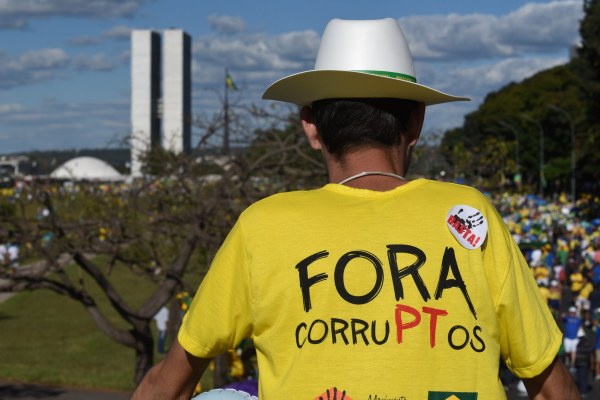
Brazil’s Federal Prosecutors – treated as heroes by parts of Brazilian society and the mainstream press – have become so powerful and aggressive that they face growing allegations of violating some civil and political rights. The Lava Jato (Car Wash) investigation that helped bring down President Dilma Rousseff is not the first time that prosecutors have been in the spotlight; they are often easier to find in newspapers political section than among crime news. For instance, during the 1990s State Prosecutors sued hundreds of mayors and became protagonists in the Mensalão, a campaign finance scandal during the administration of President Lula da Silva. But their activities have never been as intense as recently, leading to the unprecedented “judicialization” of politics, a term that political scientists use to refer to over-reliance on the judicial system to mediate policy debates and political disputes.

The roots of prosecutors’ extraordinary power are in the 1988 Constitution, which assured their autonomy and gave them extensive civil and criminal tools with which to act. At the same time, lawmakers created few processes to ensure prosecutor accountability, making them autonomous even in relation to the Procurador-Geral da República, who is supposed to be the chief Federal Prosecutor but cannot provide effective oversight under current law. After passing the pre-employment examination, prosecutors cannot be fired or demoted. They are an army of 10,000 who are entirely independent of politicians and society. Unlike in the United States, where the President can dismiss a U.S. Attorney and electors can vote out a District Attorney, Brazil lacks analogous mechanisms for ensuring prosecutors’ professionalism.

Two innovations during the Partido dos Trabalhadores (PT) governments of Presidents Lula and Dilma fed the powers that now try to devour them.

  • While nominating Chief Prosecutors for their two-year terms, they essentially waived their right to choose by going with the candidates with the most support from their own agency colleagues, at times based on institutional interests (such as wages) rather than professional integrity and vision. Not only did this weaken the influence of the incumbent President; it opened the way for leading prosecutors friendly with past administrations to become relentless pursuers of PT leaders. Dilma also approved legislation expanding prosecutors’ authority to offer plea bargains, reducing suspects’ sentences in exchange for information about accomplices and their bosses. Prosecutors and the judge responsible for Lava Jato have been constantly ordering arrests of officials, whose only ticket out of prison is to turn over information. Yet, since potential snitches cannot receive credit for reporting cases and names that have already been provided by others, this process has created a voracious accusation market and a deluge of new “facts” and new names, particularly including PT leaders. Suspects are condemned by public opinion, creating a true cycle that feeds on itself.

A survey released last week by Vox Populi and Brazil’s largest trade union federation, the Central Única dos Trabalhadores (CUT), shows that 43 percent of Brazilians think prosecutors are “fair” and treat all politicians equally. But an almost equal number – 41 percent – claim prosecutors persecute politicians from the PT and do not act against politicians from its principal adversary, the PSDB. With Brazilian society split over the Brazilian Prosecutors Office’s integrity, the lack of any instrument for punishing or rewarding prosecutors is particularly problematic. Brazilian citizens have few political and legal tools to wield against prosecutors whom they believe abuse power. When institutions fail and do not shape behavior, personal and political agendas become paramount. This is not a good democratic model, even when prosecutors are supposedly fighting against corruption. It opens the door to political witch hunts and erodes popular confidence in democracy and its institutions.

October 27, 2016


* Fabio Kerche is a CLALS Research Fellow and Researcher at Casa de Rui Barbosa Foundation, Rio de Janeiro.

NiUnaMenos Gains Momentum

By Brenda Werth* and Fulton Armstrong

marcha_ni_una_menos_1

Protesters gather in Buenos Aires, Argentina as part of the NiUnaMenos movement, which has sparked mobilizations across the country and in many other Latin American cities. / Wikimedia / Creative Commons

Protesters have taken to the streets in Argentina and elsewhere in Latin America to raise awareness about violence against women and girls, pushing for an end to machista culture.  News media estimate that a demonstration under the banner of NiUnaMenos – “not one less woman” due to femicide – in Buenos Aires last Wednesday drew tens of thousands of supporters dressed in black, despite freezing rain.  Other banners declared “We want to live” and demanded “No more machista violence.”  The immediate issue driving the protest was the brutal attack earlier this month on a schoolgirl in Mar del Plata – 16-year-old Lucía Pérez – who was drugged, raped, and tortured to the point of suffering cardiac arrest and died from internal injuries.

  • Argentina passed laws between 2008 and 2012 protecting a range of rights relating to human trafficking, violence against women, marriage equality, and gender and sexual identity, creating new space for discussion of the issue. But the Casa del Encuentro, an NGO that helps victims of gender violence, says that data through 2015 indicate that somewhere in Argentina a woman is killed every 30 hours.  The government’s Secretariat of Human Rights says that 19 women and girls were murdered in the first 18 days of October.  Argentine President Macri, challenged since early days of his administration to address the problem, has reiterated pledges to push legislation that would establish a hotline for reporting abuse and create more shelters for abused women as well as better ways of monitoring abusers.

Similar protests were held in Peru, Mexico, Bolivia, Chile, Paraguay, Uruguay, and El Salvador – with thousands of protesters in capital cities demanding an end to the systematic violation of women’s rights.  Chilean President Michelle Bachelet announced last week that she was joining the NiUnaMenos movement.  She condemned the murder of a 10-year-old girl asphyxiated, burned, and buried by her step-father.  Movement organizers cite research showing that violence against women is a serious problem in much of Latin America.  The Mapa da Violencia published by FLACSO Brazil last year shows that seven of the 10 countries with the highest female murder rate are in this region – with El Salvador (8.9 homicides per 100,000 women), Colombia (6.3), Guatemala (6.2), and Brazil (4.8) near the top of the list.

The demonstrations reflect growing global awareness of gender violence as a violation of human rights and that legislation, while helpful, is not enough.  NiUnaMenos and other groups are also rewriting the traditional definition of violence against women as attacks perpetrated by strangers rather than boyfriends, husbands, or family members – just as coverage of femicide in Mexico in the 1990s raised public awareness of gender violence as systematic and deeply structural as opposed to “every-day,” “familial,” and “private.”  NiUnaMenos is challenging “the culture of violence against women” in machista societies and condemning “the men who think that a woman is their property and they have rights over her and can do whatever they want.”  In Argentina, the mainstream media have stimulated much of the backlash, with reporting that exploits private details of victims’ lives and portrays victims in a manner that suggests responsibility for the crimes committed against them.  This recycling of the “algo habrá hecho” logic that circulated freely during the dictatorship coincides with a renewed focus in Argentine society on cases of torture during those years, treating them specifically as acts of sexual violence.  A week or two of protests obviously will not change ingrained culture, but the burgeoning movement highlighted by NiUnaMenos offers hope of continued progress in protecting the fundamental rights of women throughout the hemisphere.

October 24, 2016

* Brenda Werth is Associate Professor of World Languages and Cultures at American University.

U.S. Elections: Latino Voters Lost in the Noise?

By Fulton Armstrong and Eric Hershberg

pew-latinos-for-blog

The U.S. general election on November 8 could give Latino voters their biggest chance yet to flex their political muscles.  The Pew Research Center has released new projections showing that a record 27.3 million Latino voters – 4 million more than in 2012 and 12 percent of the U.S. total – are eligible to vote this year.  Millennials (born since 1981) now make up 44 percent of Latino eligible voters, and Pew Research says that first-time voters represent one-fifth of those who say they are “absolutely certain” to vote.  (Only 9 percent of those over 36 are “absolutely certain.”)  Pew is agnostic, however, on whether their turnout in November will set a record.  Latino non-participation rates are generally high:  their turnout rate was only 48 percent in 2012.  Indeed, analysts at the New York Times cautioned last month that comparisons between Clinton’s support among Latinos now and Obama’s in 2012 – which are similar – indicate that she can’t take them for granted.

Latinos’ political preferences – traditionally Democratic except in the Cuban-American community, which itself is trending towards the Democrats – appear poised for an unprecedented surge in favor of Democratic candidate Hillary Clinton next month.  The “Vote Predict” model of Latino Decisions shows Clinton stands to win 82 percent of the Latino vote, and her Republican counterpart, Donald Trump, 15 percent, with a 5.5 percent margin of error.  This 67-point gap breaks the previous record of a 51 percent split between President Bill Clinton and Senator Bob Dole in 1991, and the 71-to-27 difference between President Obama and Mitt Romney in 2012.  Press reports indicate that, despite unhappiness with aspects of the Obama Administration’s immigration policies which Clinton supported as Secretary of State, Latinos judge that Donald Trump’s policies of walls and expulsions call for active opposition.  Pew’s polls confirm that two-thirds of Millennial Latinos say their support for Clinton is more a vote against Donald Trump than for her.  The Republican Party’s own “autopsy” of its resounding 2012 electoral defeat underscored the importance of attracting Latino voters, who were dismayed by anti-immigrant and xenophobic stances they associated with the GOP.  In nominating Trump, the party fulfilled its strategists’ worst fears.

An overwhelming Latino majority for Clinton seems almost certain.  Political scientists increasingly predict that their rejection of the Republican brand may endure for generations to come, with profound implications for the viability of the Republican Party beyond the Congressional district and state levels.  Latinos may not get credit as the crucial swing vote in the presidential race, but they could be crucial in other contests.  The Latino vote could prove critical to the outcome of key Senate races in states such as Florida, North Carolina, and Arizona.  While the absolute number of Latino voters appears likely to rise, turnout in this unusual – even unsightly – presidential contest is one of the most unpredictable variables confounding polling experts, who see signs that many Americans’ faith in democracy and its processes is dropping, at least temporarily.  A survey reported in the Washington Post, for example, showed that fully 40 percent of 3,000 registered voters say they “have lost faith in American democracy,” while just 52 percent say they have not.  An astounding 28 percent said they probably would not accept the legitimacy of the outcome if their candidate loses.  These trends, along with Trump’s allegations that the election may be rigged, make the timing of the coming-of-age of Latino Millennials truly ironic in this extraordinary election year.  Many Latinos, or their parents or grandparents, left polarized, imperfect democracies and, after earning U.S. citizenship and the right to vote, find themselves in a polarized, imperfect democracy with deep historical roots but an uncertain near-term future.

October 20, 2016

Brexit: Limited Implications for Latin America

By Arturo C. Porzecanski*

brexit-image

Photo Credit: Elionas2 / Pixabay / Creative Commons

The June 23rd British referendum result – a 52-to-48 percent vote to leave the European Union (EU) – has roiled the world’s leading financial markets, but contrary to many opinions issued in the referendum’s wake, the economic and financial implications of Brexit for Latin America have been either mild or favorable.  Hard line Brexit statements made earlier this month by UK Prime Minister Theresa May, and various rebukes from policymakers on the Continent, have had financial-market repercussions for the pound.  Most notably, sterling has fallen sharply, and it is now down more than 15 percent from its high on the day of the fateful vote, plummeting to three-decade lows against the dollar.

  • The market reaction initially led to a mostly regional (UK and Europe) correction in stock prices. Even this was short-lived: for example, the FTSE 250, an index of domestically focused UK firms, at first dropped by 14 percent but recovered fully by early August – and has since been trading above the pre-referendum level.  Moreover, the UK recession many feared did not materialize, at least not during 3Q16.
  • Financial markets priced in fairly quickly the conclusion that the Brexit shock would lead to greater dovishness among the world’s major central banks. Most relevant to Latin America and the emerging markets (EM) generally, the Brexit helped to persuade the U.S. Federal Reserve to delay its tightening until at least the end of 2016.  While Latin America’s trade and investment ties to Europe are not insignificant, the region’s major economies are far more dependent on the health of the U.S. economy and on the mood in the U.S. financial markets, and secondarily on trends in China.
  • If the UK and the Eurozone had stumbled and were headed for a recession, however, one likely casualty of Brexit would have been a noticeable drop in world commodity prices, with strong implications for the major economies of Latin America. While commodity prices have softened somewhat (non-oil commodities have averaged 2¼ percent lower since the Brexit vote, and oil has traded 7½ percent below), confirmed expectations of loose monetary conditions in the U.S. and Europe during 3Q16 have more than compensated.  This is why most EM stocks, bonds and currencies have rallied, with the parade led by the Brazilian Real (BRL), so far the best-performing of 24 EM currencies tracked by Bloomberg (up about 20 percent year-to-date).

The medium-term implications of Brexit for Latin America will depend on how much “noise” emanates from London, Brussels and other European capitals during the negotiation process (likely, 2Q17-2Q19).  Prime Minister May has now made three statements that define her bargaining position: Article 50 (exit) negotiations will begin by next March; the imposition of migration controls on EU citizens coming to the UK is non-negotiable; and the UK will no longer be under the jurisdiction of the European Court of Justice.  The latter two points mean that Britain cannot remain a member of the single market, and is therefore committed to forging a customized free-trade agreement with the EU, which could sow uncertainty and thus depress economic growth in Europe and beyond.

The most probable scenario – slow and halting Brexit negotiations, with progress hard to achieve until close to the end (in 2019) – will encourage uncertainty and speculation among economic agents and thus will be a drag on economic growth especially in the UK, and much less so in the rest of the EU.  However, it need not generate the kinds of waves that will reach, never mind derail, Latin America’s economic trajectory.  It is much more likely that what does or does not happen in Buenos Aires, Brasilia, Caracas or Mexico City, and above all in Washington, DC – courtesy of the Fed, the White House, and the U.S. Congress, in that order – will overshadow just about any headlines generated by the Brexit negotiations in Europe.  There is room for Latin America to clock higher GDP growth numbers in the years ahead when compared to the disappointing regional averages of 1 percent growth in 2014, zero growth in 2015, and a contraction of about -0.6 percent in the current year (as per IMF estimates).  This assumes that the Fed’s tightening is gradual (namely, no more than 0.25 percent increases in the Fed’s target rate per trimester) and that the UK’s divorce proceedings are not overly hostile.  This scenario foresees that creditworthy governments, banks and corporations in Latin America will retain access to the international capital markets on reasonable terms, despite some initial retraction in investor interest ahead of, and right after, the resumption of the Fed tightening cycle.

 October 17, 2016

*Dr. Porzecanski is Distinguished Economist in Residence at American University and Director of the International Economic Relations Program at its School of International Service.

Colombia: University Professors Appeal for Post-Referendum Solution

By Eric Hershberg and Fulton Armstrong

27352274634_50095d1bc9_o

At a march for peace in Bogotá, Colombia, a woman holds a sign that states, “We are the generation of peace.” / Agencia Prensa Rural / Flickr / Creative Commons

A group of Colombian university professors have organized an appeal to their colleagues in and outside the country to sign a petition “requesting an effective solution without delay” to overcome the impasse created by rejection of the peace accord on October 2.  The text of the petition, which currently has more than 1,700 cosigners, is as follows:

[We] university professors, from different disciplines, universities, and regions, join our voices with those underscoring the urgent need to reach, as soon as possible, a final Accord to end the conflict with the FARC.  Delay poses enormous risks.  It is essential to set, with all urgency, an agenda for talks limited to points requiring discussion, with concrete and viable proposals for modifying the existing text.  Reflecting the extremely close results in the October 2 plebiscite, the agenda should address the concerns of the No voters, who won the vote, while respecting the voice of the equally numerous Yes voters, who supported a text that cannot be wholly reevaluated, as well as those who did not speak at the polls.

The result of the plebiscite on Sunday [2 October] provides the unique opportunity to adjust the existing Accord in a way that draws a majority of society.  Capitalizing on that opportunity is the responsibility of all sides:  the FARC, the representatives of No, and those of Yes.  The plebiscite leaves no doubt – and the mobilizations in the streets and social media confirm – that society demands that all be flexible in their positions.  That’s what the youth demand as they convoke marches and other actions to push a quick Agreement, and which we support without hesitation.

The professors are an important voice of society and, as the statement explicitly states, of young people throughout the country who aspire to have a peaceful future.  The statement dodges specifics on what needs to be changed in the accord, but its assumption that sufficient pressure can be brought on all parties, including those who opposed the accord, to find common ground is credible.  Appeals such as this – unprecedented in the sheer number as well as in the wide range of institutions, disciplines, and regions that are represented – will be a good test of the capacity of Colombian civil society, such as the Academy, to push compromise, and for others, such as the economic elites, to achieve compromise.  Agreement may emerge, for example, to move discussion of certain social issues, such as those that riled some religious groups, into another venue so they aren’t an obstacle to agreement on war-and-peace issues.  The professors have their finger on the pulse of the nation and grasp the underlying political, economic, and social drivers of peace – and their optimism that neither side will come to a new negotiating table with dealbreakers is probably more warranted than anyone else’s.

Click here to see the original Spanish version of the petition.

October 14, 2016

Challenging Assumptions about Supercycles in Peru and Latin America

By Claudia Viale and Carlos Monge*

spcc_gp22eco_ilo_-_toquepala

A Southern Copper Corporation train heading towards the Peruvian mines of Toquepala and Cuajone. / David Gubler / Wikimedia Commons / Creative Commons

The commodity-fueled “supercycle” that has propelled Latin American economies for the past decade and a half is ending, but careful analysis of other ongoing cycles will help countries cushion the blow.  ECLAC economist Jean Acquatella has identified four significant global cycles in which Latin America has actively participated as a raw materials exporter through the 20th and 21st centuries: U.S. industrialization; post-war European reconstruction and Japan’s industrialization; the post-1973 OPEC-driven oil boom; and, most recently, urbanization and industrialization in Asia, especially China.  During this fourth cycle – considered a supercycle because of sustained record levels of commodity prices and demand – resource-rich countries in Latin America experienced high growth rates, fiscal abundance, and a decrease in poverty rates as well as an increase in social conflict over the extraction of natural resources.  Slower Chinese growth has since reduced global demand and prices for the region’s minerals and energy, but the impact has been less severe than at the end of previous cycles.

  • José de Echave, of CooperAcción, has emphasized the need to differentiate the recent supercycle from what he terms the “extractive boom,” which started in the early 1990s as a result of the privatization of state mining and hydrocarbons assets and pro-market legislative reforms. His analysis indicates that the extractive boom will outlast the supercycle as long as large-scale projects mature and pro-investment policies continue in place.

The concessions, investments, production and fiscal rent during the past decade and a half in Peru and other countries indeed point to other cycles, some of which have enduring momentum.  Peru has experienced a “concessions cycle” for exploration activities; “investment cycles” as a result of privatization of state assets in the ‘90s and as a result of successful explorations and increased demand and prices starting in 2002; “productive and export cycles” as a result of investments; and a “fiscal cycle” of abundant public revenue.  Several cycles will obviously decline, but the country’s pro-investment policies remain in effect.  The new government of President Pedro Pablo Kuczynski is deepening policies started under former President Humala: reducing corporate income taxes, making environment compliance less onerous, and curtailing the oversight capacities of the Ministry of the Environment.  Investments made in the last five to ten years are, in many cases, only now beginning production.  Thus, as contradictory as it might sound, Peru is poised to double its copper production in the next five years.

The complex differences between “extractive booms” and “supercycles” have deep political implications.  The end of a supercycle could mean a substantial reduction in social conflict between local populations and extractive enterprises and government, but the current “race to the bottom” driven by pro-investment policies could fuel new tensions.  The Las Bambas project in the South Andean region of Apurimac, Peru, illustrates the point.  New legal procedures adopted in 2014 easing approval of environmental impact assessments (EIA) have allowed the Ministry of Energy and Mines to approve substantial changes in the project’s design and EIA without informing the local population and authorities, generating a violent local social reaction.  Available data shows analogous phenomena underway in Bolivia, Colombia, and Ecuador.  The implications will vary for each country, of course, but careful analysis is needed if state policies and civil society activism are to be on solid ground.

October 11, 2016

Claudia Viale and Carlos Monge are Program Associate and Latin America Director at the Natural Resource Governance Institute in Lima.