Venezuela: When Will the Military Flip?

By Fulton Armstrong

venezuelan military marching

A military exercise in Caracas, Venezuela. / Cancilleria del Ecuador / Flickr / Creative Commons

Venezuelan leader Juan Guaidó and his backers, including the Trump administration, are increasingly focused on swaying the country’s security forces to switch allegiance from Nicolás Maduro to the National Assembly President.  Guaidó has appealed to the military to support his efforts to “restore constitutional order” and is pushing through the legislature a law giving amnesty to cooperating officers for certain crimes committed since President Chávez took office in early 1999.  U.S. officials, apparently to shake up the armed forces, continue to say that “all options are on the table”; National Security Advisor John Bolton held a notepad at a press briefing referring to “5,000 troops to Colombia.”  Maduro, for his part, continues to orchestrate loyalty pledges from senior officers and preside over military exercises.

  • Several small units of the military have flipped, and Maduro’s military attaché in Washington – serving there for a number of years to get medical treatment – has declared loyalty to Guaidó. The vast majority of the officer corps, however, still maintain an appearance of commitment to Maduro.

The most common explanation for the military’s apparent loyalty cited by Maduro’s opponents is that the high command has been bought off by opportunities to engage in corruption.  Other factors, however, may better explain why the institution has stuck with him this long.

  • Ideological reasons? Most available information suggests that Madurismo – with its gross, incompetent mismanagement of the economy, corruption, and thuggery – is not attractive to the officer corps.  But they appear to know that Chavismo has deep roots; that the elites, including the more hardline opposition, don’t understand the significance of change since 1999; and that efforts to return to the pre-Chávez era would be destabilizing and bloody.
  • Financial reasons? Although historically and perennially corrupt, senior officers arguably have been able to do more corruption under Maduro than under another regime.  That said, in their heart of hearts, they probably know a lot of their activities will continue under any government.
  • Distrust of the opposition? The military traditionally has communicated better with opposition moderates, such as Henrique Capriles, and in recent years has shown no trust in the faction that Guaidó comes from and its leader, Leopoldo López.  Information is very limited, of course, but many officers may believe that this group’s obsession with overthrowing Maduro and its no-negotiation stance has contributed to the crisis.  Senior officers’ confidence in Maduro’s ability to hold the country together seems to have evaporated, but the opposition have not presented a viable, comprehensive alternative.
  • Concern about the López-Guaidó faction’s ties with Colombia and the U.S.? Good information is elusive, but senior officers’ posture suggests that they see Bogotá’s strategic objective to keep Venezuela weak and Washington’s objective to purge the country of Chavismo and themselves.
  • Concern that the “international community” will not give them a fair deal? Distrust of Washington seems obvious, but – within their logic – senior officers almost certainly are suspicious of OAS Secretary General Luis Almagro, the Lima Group, Brazilian President Jair Bolsonaro, and others as intolerant and biased.
  • Belief that, in the face of total chaos and widespread bloodshed, they can force a last-minute peaceful solution onto Maduro? Senior officers presumably have good enough intelligence to know when and how to intervene – and persuade Maduro to accept a peaceful solution and fly into exile.  The bigger problem at this point is that they do not see a viable alternative to sticking it out.
  • Fear that Maduro’s people have deeply penetrated officer ranks, and their lives will be at stake if they move against him? As the scope of the crisis grows and the credibility of Maduro’s power begins to slip, this would appear now to be less important.  Officers talk among themselves more than outsiders think.

The Venezuelan military’s threshold for intervening against civilian governments of any stripe has always been high, amplified by the embarrassment of the reversed coup against Chávez in 2002.  None of the factors that, on balance, still appear to favor sticking with Maduro is unmovable.  Distrust of the United States, OAS, and the Lima Group – the outside forces that legitimized Guaidó’s claim to power – leave the military with no reliable allies; Cuban, Russian, and Chinese friends can provide no solace.  A credible negotiation proposal from someone like Mexican and Uruguayan Presidents López Obrador and Vázquez, especially if backed by Pope Francis, could conceivably give them a credible direction in which to push Maduro.  But at this moment – subject to rapid change – the balance still argues in favor of the military fearing a new course.

Colombia: Slow to Deal with Conflicts of Interest

By María Paula Ángel*

Image of Nestor Martínez

Nestor-fiscal.jpg / Wikimedia Commons / Creative Commons

Revelations about Colombian Attorney General Nestor Humberto Martínez’s knowledge of serious cases of corruption prior to his election is raising questions about his ability to do his job with impartiality and independence – and about the efficacy of Colombia’s anti-corruption measures.  Martínez was a legal advisor for Grupo Aval – a partner with the Brazilian firm Odebrecht on a major infrastructure project – with whom a project auditor shared his deep concerns about corruption.  In 2015, Martínez confirmed to the auditor the range of the crimes, including “bribery, money-laundering, use of false documents, improper management, abuse of confidence, fraud, aggravated theft, misappropriation,” according to recordings of unchallenged authenticity.  Martínez failed to report this knowledge to the Supreme Court when he was being considered as a potential Attorney General.  Critics point out that this case makes clear Martínez’s multiple conflicts of interest during the campaign and now as fiscal general tasked with investigating the massive Odebrecht corruption case and the death of the auditor and his son, who were poisoned to death last November.

The Colombian Constitution requires public servants to declare, under oath, their assets and income and the private interests they may have due to their private past before assuming public office, when leaving office, or when the competent authority requests it.  This Income and Asset Disclosure System (IAD), formally implemented in 1995 and managed by the Administrative Department of the Public Function (DAFP), is supposed to provide a means for monitoring inconsistencies or irregularities in officials’ declared income and assets, and for detecting and avoiding potential conflicts of interest before they occur.  Information on the Attorney General’s previous clients, for example, should have identified potential and actual conflicts of interest.  However, the system has major flaws, and it is very difficult for the state or citizens to take advantage of the information:

  • A combination of a badly designed legal framework, political resistance to implementation, resource and capacity constraints, and lack of public awareness of its usefulness hamper DAFP’s work. There are no penalties for failure to submit information.
  • The DAFP only verifies the receipt of the submitted forms; the review of the completeness and accuracy of the information is only carried out, if at all, on a random basis. Similarly, when citizens have asked for a copy of a public servant’s submission, DAFP and the official in question have – unlawfully – denied access, arguing the latter’s right to privacy.  In the rare cases that access is approved, processing and analysis are highly unlikely because documents are often handwritten.

The case of Attorney General Martínez underscores the need for Colombia to move beyond rhetoric and get serious about disclosure and accountability.  Martínez has been through the revolving door in and out of government on at least eight occasions – common for public servants.  The World Bank Group and the United Nations Office on Drugs and Crime (UNODC) offer a range of “good practices,” elements of which are being implemented in the region – albeit also imperfectly.  Argentina has electronic data management procedures that have automated submissions and allow targeted verification of completeness and accuracy of the information more feasible for about 33,000 declarations annually.  Despite its myriad corruption scandals, Guatemala is among the countries that make disclosure compliance statistics publicly available, thus allowing citizens to hold accountable public servants that do not comply.  In Paraguay, the Criminal Appeals Court ordered the government to grant a journalist’s request for IAD submitted by public servants who occupied the highest public positions between 1998 and 2017.  Not one of these countries has adopted a comprehensive, effective approach to anti-corruption, but there is no reason that Colombia shouldn’t lead the way.

January 25, 2019

* María Paula Ángel is a researcher at the Centro de Estudios de Derecho, Justicia y Sociedad (Dejusticia), in Bogotá.

Honduras: Will Political Reforms Go Anywhere?

Honduras Highway Sign

Honduras by Nick Youngson CC BY-SA 3.0 Alpha Stock Images / Picserver.org / Creative Commons

By Eugenio Sosa*

Honduras’s long-running political crisis and the realignment of its political parties have given rise to broad discussion of political and electoral reforms, but resistance from the political parties – including the relatively new Libertad y Refundación (LIBRE) Party – appears likely to stymie significant change.  Honduran civil society groups increasingly believe that only through political and electoral reforms will the country move toward democracy.  Holding elections is an important starting point, reform advocates say, but deepening democracy requires reducing the monopoly of the political parties.  The configuration of the parties has changed significantly since the coup d’état in June 2009; the century-old “bipartisanship” of the National and Liberal Parties has been shaken up and become more volatile.  LIBRE has moved to the front line, and smaller players, like the Partido Anticorrupción (PAC), have faded.  Reformers argue that this realignment affords the country an opportunity to undertake reforms that cut across the country’s institutions and processes.

  • Depoliticizing the Supreme Electoral Tribunal (TSE) and making it a truly independent and autonomous body to supervise elections. The current TSE has fallen far short of its legal requirements to ensure, without prejudice, to enfranchise all citizens. 
  • Professionalizing and depoliticizing the National Registry of Persons – removing the partisan activists who dominate it today and directing it to issue identification cards without political influence. Observers agree that 30 percent of voters on the current lists have deceased or left the country.  Other citizens’ names have been mysteriously dropped from voter rolls or been lost while changing domicile.  Similarly, the country needs a complete, honest census.
  • Allowing regular citizens to staff election tables in polling places. They should be chosen based on clear criteria, such as their contributions to society.  In 2013 and 2017, credentials were being bought and sold with party funds, totally undermining observers’ credibility.
  • Establishing second round balloting when no candidate wins an absolute majority. The country’s shift away from a two-party system has significantly increased the chance that a president would be elected with a percentage of votes below the abstention rate.  A runoff between the top two candidates will give the victor greater legitimacy.

Other important reforms are receiving less attention.  Laws on transparency and accountability in campaign finances, such as the Law on Clean Politics implemented in 2017, have not had significant results so far, but discussion of ways to give them teeth has been limited.  Neither is there much talk about how the incumbent candidate benefits from access to public resources, including access to the national networks, or about the biases of privately owned media, which slant coverage and charge different rates for advertising depending on their preferences.  Guarantees of political participation by sectors traditionally excluded from representation and government, such as women, the indigenous, and youth, are also largely off the table.

The urgency for reform, obvious since the coup in June 2009, has surged since the contested elections in November 2017, during which the Constitutional Court decided in favor of the reelection of President Juan Orlando Hernández in the face of evidence of electoral fraud.  Honduras is now living the paradox of a President serving a second term that is still prohibited by the Constitution.  Some issues, such as re-election, demand serious national debate and may have to be resolved by plebiscite or through a National Constituent Assembly.

  • Despite the broad base of the organizations proposing reforms, the success of any initiatives will depend on the views, limitations, and vetoes imposed by the three main parties. Even LIBRE, the newcomer that previously challenged the status quo, sometimes appears to be buying into existing systems and could go soft on reform.  As a result, one possible outcome could be that certain reforms are implemented in form – such as modernization of the National Registry of Persons – but the parties retain their influence over the office’s magistrates and personnel.  In addition, neither of the three main political forces appears interested in allowing authentic citizen control over voting tables on election day. 
  • While the need for reform is arguably deeper than at any time since the current Constitution was approved in 1982, and while the proposals for moving forward are constructive and mature, the prospects for change appear limited. The configuration of the country’s political parties has changed, but their priorities and behavior have not. 

January 22, 2019

*Eugenio Sosa is a sociologist and senior analyst at the Centro de Estudio para la Democracia (CESPAD), in Tegucigalpa.  This article is adapted from his essay on the CESPAD website.

Venezuela: Is Guaidó the Knight in Shining Armor?

By Fulton Armstrong

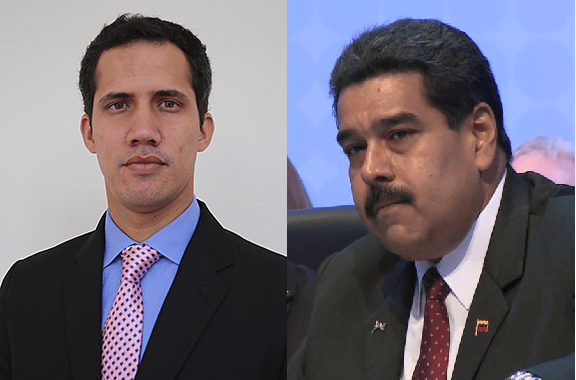
Guaidó and Maduro image

Guaido and Maduro / Wikimedia Commons

The OAS, United States, and a number of Latin American governments are pinning high hopes that newly inaugurated National Assembly President Juan Guaidó will lead Venezuela out of its crisis and “back to democracy,” but the opposition needs much more than foreign support to achieve its goal of ousting President Nicolás Maduro.  The 35-year-old Guaidó, an engineer with eight years of political experience, proclaimed last Friday that “we will oust Maduro and his gang from power” and that he had the right to call new Presidential elections and to serve as Interim President while they are prepared.  He called on the military, which has shown some small fissures but so far appears to remain overwhelmingly loyal to President Nicolás Maduro, to “assume its responsibility … and remove the usurper [Maduro].”  He is organizing a national march on January 23 that, according to observers, he hopes will show the military the strength of his support.  (Maduro’s party, the PSUV, has announced its own demonstration that day.)

  • International reaction came fast and strong. OAS Secretary General Luis Almagro, who calls the Maduro government a “narco-dictadura,” immediately started referring to Guaidó in Tweets and public statements as “interim president” of the republic.  Brazilian President Jair Bolsonaro’s son sent a congratulatory message also recognizing Guaidó in that capacity.  The dozen predominantly conservative governments speaking as the Grupo de Lima have declared Maduro illegitimate and embraced Guaidó’s leadership if not the title.  President Trump’s National Security Advisor, John Bolton, praised the leader’s “courageous decision” to challenge the Maduro government without explicitly recognizing him as Interim President.

Inside Venezuela, reactions to Guaidó’s power play reflected longstanding political alignments.

  • Maduro, who refers to Guaidó as un muchacho, has ridiculed his statements as a “Twitter coup,” and his political machine has followed with the usual attacks. Maduro has reiterated his call for negotiations with leaders of the opposition.  He has distanced himself from the embarrassing arrest of Guaidó last Sunday, claiming that it was made possible by “the corrupt and traitorous cooperation of a group of officials” in his intelligence service, SEBIN.
  • Guaidó’s party, Voluntad Popular (VP), is solidly behind him. Its founder, Leopoldo López, who is under house arrest, has led the charge in his defense, and their key allies – including María Corina Machado (Súmate), former Attorney General Luisa Ortega Díaz, and many leading Venezuelans in the United States – are supporting him too.
  • The party’s splits with opposition moderates remain deep, however. Henrique Capriles (Primero Justicia) issued a scathing critique of Guaidó’s strategy.  He accused VP of sponsoring violence that will use “the people of Venezuela as cannon fodder,” and he has called them “saboteurs” blocking serious talks and feeding the people unrealistic expectations.”  Other moderates have also recoiled from Guaidó’s approach and are reportedly bewildered by the OAS Secretary General and others’ support for direct confrontation.

As the political class engages in yet another cycle of struggles, the military, once again, is seen as the ultimate arbiter that all sides want to influence.  Maduro’s punishment of seemingly disloyal officers recently has probably been a double-edged sword – feeding resentment while instilling discipline – but unhappiness with Maduro does not translate into support for the opposition.  There appears to be no love between the military and the Voluntad Popular leadership, whose confrontational tactics almost certainly concern the military and whose political program and popular base remain unclear.  Despite deep corruption in the officer corps, moreover, most officers probably see themselves as nationalists and might chafe at the idea of the OAS or regional governments trying to be the kingmakers.  Strange things can always happen, but celebration of the Interim President seems premature and even counterproductive.

 January 17, 2019

U.S. Immigration: Call for Wall Ignores Changing Migrant Profile

by Dennis Stinchcomb

Graph of southwest border apprehensions, FY 2012-2019

Southwest border apprehensions, FY 2012-2019 / Note: FY 2019 data is through November 2018. Figures may not total 100% due to rounding. / Data source: U.S. Customs and Border Protection

As a record number of Central American families and unaccompanied children flock to the U.S.-Mexico border, the Trump administration’s demand for a $5.7 billion wall ignores changing migrant demographics and leaves largely unaddressed an asylum system buckling under unprecedented strain.  While undocumented immigration at the U.S.-Mexico border remains at historic lows, over 48,000 individuals comprising family units (parents traveling with children) were apprehended at the U.S. southwest border between October and November 2018 – a 308 percent increase over the same two months in 2017.  Such a staggering rise comes on the heels of what was already a record-setting year.  Between October 2017 and September 2018, border officials tallied the highest level of family crossings on record; the over 107,000 individuals detained by border officials dwarfed the roughly 40,000 apprehensions of unaccompanied children that prompted the Obama administration to declare a “crisis” in summer 2014.

A closer look at recent immigration trends underscores changing realities at the border:

  • Central American families and children represent an ever-growing share of migrants. Because overall undocumented immigration at the border has dropped and families and children have surged, the latter now account for 40 percent of all unauthorized migrants apprehended, up from 10 percent in 2012.  (Prior to 2012, family apprehensions were not publicly reported.)
  • Guatemalans now account for over half of all Central American family and child migrants. Though Guatemala is more populous than neighboring El Salvador and Honduras, proportional disparities in migrant flows from the three Northern Triangle countries have widened in recent years.  Guatemalan families apprehended at the border doubled between 2017 and 2018, and the number of unaccompanied Guatemalan minors increased by over 50 percent.  An increasing share of these migrants are coming from indigenous communities where poverty and malnutrition are rampant, so border officials face compounding challenges including linguistic barriers and health needs – factors that may have contributed to the recent deaths of two Guatemalan children while in Border Patrol custody.
  • Family and child migration from El Salvador has plummeted to its lowest level since 2013. The abrupt decline in Salvadoran migration to the United States has led many experts to point to the chilling effects of the Trump administration’s decision to terminate Temporary Protected Status (TPS) for nearly 200,000 Salvadorans currently residing in the U.S.  The “Trump effect” following his early 2017 executive orders, however, was short-lived, and other events, such as possible controversy over elections next month, could renew migratory pressures and further exacerbate conditions at the border.
  • The dramatic increase in migrant flows from Central America has fueled an historic surge in asylum claims. At the border, credible-fear claims – the preliminary step in soliciting asylum – continue to climb precipitously, up from 9,000 in 2010 to 79,000 in 2017.

The U.S. Government’s proposed solutions to the burgeoning humanitarian crisis do not reflect the evolving profile of migrants at the U.S.-Mexico border.  President Trump’s border wall – a hallmark promise of his 2016 campaign – appears aimed at the familiar Mexican adult migrant of the early 2000s or the mythical “bad hombre” spawned by his own nativist tendencies.  His Administration’s recent attempts to deter migrants or bar their access to asylum, either by separating families or rolling back protections for victims of domestic violence, have not stemmed the flood of arrivals.  A new “caravan” of migrants is set to depart Honduras this week.  Nor will a wall extinguish migrants’ legal right to request asylum.  The President’s most recent budget request for modest funds for hiring immigration judges and providing border infrastructure to support “vulnerable populations” is being held up by the political impasse in Washington over his greatly disproportionate spending on a wall, Border Patrol agents, and detention facilities.  Compromise between the President and Congressional Democrats remains elusive three weeks into a confrontation that has shut down much of the U.S. Government.  While Democrats have expressed willingness to beef up border security in exchange for a significant immigration win, such as legalization of the Dreamers or renewal of TPS, anything short of meaningful reform to the U.S. asylum system will do little to resolve the backup at the border.

Jan 15, 2019

A Right Turn in Latin America?

By Santiago Anria and Kenneth Roberts*

Jair Bolsonaro

Brazilian President Jair Bolsonaro in January 2019. / Marcos Brandão / Agência Senado / Flickr / Creative Commons

After a long winning streak, the left in Latin America has experienced electoral defeats in a number of former strongholds since 2015 – including Argentina, Chile, and Brazil – but the trend is not unidirectional and so far falls short of being a regional “right turn.”

  • Right wing presidents govern today in those three countries as well as Colombia, Guatemala, Paraguay, Honduras, Panama, and Peru – a scenario that is quite different from 2010, when about two-thirds of Latin Americans lived under some form of leftist government. Democratization, financial crises, and market liberalization shaped the 1980s-90s, while mounting social discontent against neoliberal market reforms helped to produce a “left turn” that spread across the region following the election of Hugo Chávez in 1998.  Leftist candidates won 30 presidential elections in 11 different Latin American countries between 1998 and 2014.

The current trend lines are hardly unidirectional across the region.  Mexico, which remained under conservative government when most of the region turned toward the left after 1998, has recently elected long-time leftist leader Andrés Manuel López Obrador to the presidency.  Incumbent leftist parties have been re-elected one or more times in Uruguay, Bolivia, Costa Rica, and El Salvador.  Notably, leftist parties in some countries where they have been historically weak, such as Colombia and Honduras, have strengthened electorally and organizationally, laying the groundwork for further growth.  Leftists’ records elsewhere are mixed.  Rivalries among Ecuadorean leftists make their future uncertain.  Venezuelan President Maduro and Nicaraguan President Ortega have resorted to increasingly repressive and authoritarian measures to maintain their grip on power.

  • With the possible exception of Brazil, the right’s surge is not the result of the sort of social backlash that brought the left to power. In general, the right’s victories appear to be a routine alternation of power rather than a regional wave with common starting points and driving forces.  Argentina and Chile are the two clearest examples of routine electoral alternation of power explained by retrospective, anti-incumbency voting in contexts of economic slow-downs, corruption scandals, and social policy discontent.  In countries like Paraguay and Honduras, on the other hand, the shifts were initiated by non-electoral means – a politically motivated presidential impeachment in the former and a military coup in the latter – and then consolidated through elections after the fact.  In Brazil, the right turn can be traced back to the social protests that broke out against Dilma Rousseff’s leftist PT government in June 2013, but former conservative allies’ opportunistic impeachment of Rousseff, along with their imprisonment of former President and PT founder Lula, seriously weakened her party – paving the way for the election of anti-establishment candidate Jair Bolsonaro.

The left in power is still strong, though probably not unbeatable today, in countries like Bolivia and Uruguay, at least in part because of their roots in and strong connections with social movements.  Unlike the PT, both Bolivia’s MAS and Uruguay’s FA have managed to preserve more of their movement character and to avoid extreme forms of top-down control and professionalization.  The ability of mass popular constituencies and grass-roots activism to hold party leaders accountable and steer public policies in desired directions—a condition largely absent in countries like Brazil, Ecuador, and Venezuela—has helped the left maintain cohesion in Bolivia and Uruguay.  This cohesion, accompanied by significant reductions of inequality, helps to explain the continued vitality of left parties in these countries.  The recent strengthening of leftist alternatives in Mexico and Colombia, moreover, should guard against facile assumptions that a region wide right turn is underway.  Conservative forces’ recent victories are better understood as a reinforcement of the post-neoliberal left-right programmatic structuring of political competition in Latin America than a unidirectional political shift to the right.  That said, Brazil wields significant political and economic influence in the region and, traditionally seen as an “early mover” in the region, may be a bellwether of the future.  The ability of President Bolsonaro and his model of governance to deliver the results that Brazilians want—and to operate within the parameters of democratic institutions—will be key factors in determining the direction and strength of the region’s rightist wave.

January 9, 2019

*Santiago Anria is Assistant Professor of Political Science and Latin American Studies at Dickinson College, and Kenneth Roberts is Professor of Government and Director of Latin American Studies at Cornell University.

Mercosur: Diversifying Partnerships

By Andrés Serbin*

Mercosur Summit

A seminar at the 53rd Mercosur Summit. / Sabrina Pizzinato / UCIM / Creative Commons

Mercosur’s signing of a memorandum to increase economic and commercial cooperation with the Eurasian Economic Commission (EAEU) signals the trading bloc’s interest in diversifying its trade and political relationships beyond the western hemisphere.  The presidents of the Mercosur countries – Brazil, Argentina, Uruguay, and Paraguay –signed the agreement at the 53rd Mercosur Summit, held last month in Montevideo.  At a ceremony at which he accepted the rotating presidency from Uruguay, Argentine President Mauricio Macri emphasized the need for Mercosur to open not just to the Pacific Alliance, but also to Central America, Asia, and Africa.

  • Proposals for closer cooperation with the EAEU have been under study for many years, since Russia first created the Commonwealth of Independent States (CIS) from among the former Soviet republics (except the Baltic countries) after the end of the Soviet Union in 1991. The CIS was intended as a post-Soviet space under Russia’s leadership that would reconnect its members within a “Eurasian” geopolitical region distinct from both Europe and Asia.  The EAEU, formalized in 2015 under the leadership of Russia and Kazakhstan, now also includes Belarus, Kyrgyzstan, and Armenia.  Mercosur ministers agreed to sign the memorandum during meetings immediately before the summit, stating that enhanced cooperation and coordination with the EAEU – with which Mercosur would account for a combined 6.5 percent of world GDP – was consistent with efforts to strike a similar arrangement with the European Union.
  • Mercosur’s decision comes amid international tensions over trade and protectionism, but it cannot be divorced from the ideological, cultural, and geopolitical elements of the vision for “Great Eurasia” of which Russian President Vladimir Putin has spoken (and which Chinese President Xi Jinping has shared). The tensions between Russia and Ukraine, and Western pressures in retaliation, were a key driver of Moscow’s push for formalization of the EAEU as a potential interlocutor with the European Union while at the same time putting a brake on U.S. presence in the region.  Western analysts have debated the power of “neo-Eurasian” identity as a tool of geopolitical projection beyond the creation of a new economic bloc.  China is also a factor in Russia’s calculations.  The “Shanghai Cooperation Organization” (OCS) fostered by both countries and Beijing’s “New Silk Road” project, through Central Asia and to the EU, have also increased the salience of “Great Eurasia.”  Russia and China have increased cooperation in trade, in technology (including military) and against terrorism and extremism.  Through the EAEU and OCS mechanisms, they have extended contacts all the way to India and Pakistan and, potentially in the future, Iran and other countries.

Mercosur’s trade with the EAEU is asymmetrical in favor of the Latin American countries, with the exception of Brazil (with which it is more balanced), according to EAEU officials.  The EAEU has high internal tariffs and limited internal trade – except in bilateral trade between Russia and Belarus – but there are already tariff exemptions for Mercosur members.  Food appears to be the biggest Mercosur export to the region.  Experts believe that trade between the two blocs can be significantly increased, and that a free trade agreement can be signed before the completion of the EU-Mercosur FTA, which has been under negotiation for 20 years.

Although many Western analysts remain doubtful about the success of efforts to form a “Great Eurasia,” Mercosur apparently has determined that engagement with it is low-cost and potentially beneficial.  Beyond the possibility of expanded trade, the memorandum of cooperation signed in Montevideo suggests Mercosur sees a geostrategic interest in signaling openness to such collaboration.  The right-leaning governments of Latin America and the Caribbean are likely to remain generally aligned with the United States, but they have learned the importance of trade diversification over the past two decades.  Setting tradition and ideology aside, most are trying to interact with whomever can bring good deals to their countries in terms of trade, investment, and cooperation.  In the context of Russia and China’s interest in a “Great Eurasia,” Mercosur’s increased outreach to EAEU also reflects an important piece in a strategy to undertake the necessary diversification of its foreign policy in a changing world.

  •  The United States may not appreciate the wisdom of Mercosur’s approach. Eurasia is a blind spot for Washington, which focuses on Russia’s actions in Europe and China’s in Asia – but not in Central Asia itself or as a bridge to India, Pakistan, Iran, Turkey, and the Arab world.

January 7, 2019

* Andrés Serbin is an international analyst and president of the Regional Coordinator of Economic and Social Research (CRIES), a network of more than 70 research centers, think tanks, NGOs, and other organizations focused on Latin America and the Caribbean.  This article is adapted from one published by Perfil.com.

Nicaragua: Ortega’s Pyrrhic Victory

By Kenneth M. Coleman

Daniel Ortega and Rosario Murillo

Nicaraguan President Daniel Ortega and Vice President Rosario Murillo. / Twitter: El Nuevo Diario

The government of Nicaraguan President Daniel Ortega and Vice President (and First Lady) Rosario Murillo has continued to persecute its opposition since crushing massive protests in April, which were stilled only at a cost of somewhere between 325 and 535 lives lost, 600 political prisoners, 1,500 wounded, and 40,000 Nicaraguans seeking refuge in Costa Rica.  Paolo Abrão, Executive Secretary of the Inter-American Commission on Human Rights, has characterized Nicaragua as effectively a “police state,” while Luis Almagro, Secretary General of the OAS, has denounced torture by the Nicaraguan government.  Deploying massive force by the Policia Nacional and by hooded shock troops (often retired military and police), Ortega and Murillo “have won” in the sense that they have ended street protests.  In the past month, they have undertaken a systematic effort to silence the remaining voices of dissent.

  • The Catholic Church has been under duress since its effort to mediate a national dialogue collapsed in June. On December 3, Ortega launched the most recent in a series of verbal attacks on the Church, accusing it of being in league with golpistas (coup plotters).  Two days later, a young Russian woman living in Nicaragua – possibly energized by Ortega’s rhetoric – entered the Cathedral of Managua and threw acid on Monsignor Mario Guevara, while he was receiving confessions.  Guevara remains in grave condition.
  • Independent media are constantly under attack. The government has taken down 100% Noticias, an independent station, from the satellite and other distribution networks; has physically attacked and issued death threats to personnel associated with various media outlets; and, on December 14, raided the offices of prize-winning electronic medium, Confidencial, and associated television programs, Esta Noche and Esta Semana.  The Inter American Press Association and Reporters Without Borders, whose investigators in mid-August issued a condemnation of government harassment of independent media, have denounced the recent media harassment as well.
  • Earlier this month, the National Assembly summarily withdrew the legal registrations of nine non-governmental organizations, including the Nicaraguan Center for Human Rights (CENIDH) and the Institute for Development and Democracy (IPADE). The latter is led by a former Sandinista comandante who was a member of the Front’s original nine-person revolutionary directorate.

Ortega and Murillo’s escalation of pressure on opponents across the board seeks to consolidate their control and create the image of stability that they wish to create.  The business community, which coexisted with them for much of the past 11 years, sided with protesters in April and shows no obvious signs of seeking a rapprochement.  Its leaders are clearly of the view that the national dialogue must be resumed to avoid crippling economic sanctions to an economy that has already contracted four percent this year and promises to contract even more dramatically in 2019 without a change of course.

  • These developments are sure to accelerate a downward spiral in Nicaragua’s relations with the Office of the High Commissioner for Human Rights of the United Nations, the Inter-American Commission on Human Rights, and the U.S. government. Under the Magnitsky Act, Washington has already prohibited six individuals, including Murillo, from holding accounts in or doing transactions with U.S. financial institutions.  More sanctions are coming, as the U.S. House and Senate have approved, and President Trump is expected to sign soon, the Nicaraguan Conditionality Investment Act, which will require U.S. representatives to multilateral institutions to vote against most loans to Nicaragua until the Secretary of State attests that substantial measures have been made to restore democracy, allow free elections, protect freedom of speech and assembly, and address corruption.  The Nicaraguan government’s behavior thus far suggest that such actions and a corresponding attestation are an extremely unlikely, if not impossible, scenario.

December 20, 2018

* Kenneth M. Coleman is a political scientist at the Association of American Universities.  The views expressed herein are his own, not of the Association of American Universities.

Cuba: Opening Pandora’s Box?

By Fulton Armstrong

Cuba constitutional reform

Reading about the constitutional reform project in Cuba. / Twitter: @SoberonGuzman

The constitutional reform process that the Cuban government is undertaking — controlled and cautious — and adjustments to one or two regressive regulations may be setting in motion political dynamics that will fuel pressure for more change.  After months of consulta popular, the constitutional drafting committee is preparing a new draft for consideration by the National Assembly during a two-day session beginning December 21.  Current plans are still for it to be subjected to a referendum vote in February 2019.

  • Skepticism about the real impact of the consulta, which reportedly resulted in hundreds of thousands of written comments, is deep, but most non-governmental observers believe that participation was so strong that the popular input had an impact. Debate about Article 68 — establishing the constitutional right of same-sex marriage — was most obvious.  Evangelical churches, with Catholic support, led the push against it, organized demonstrations, and circulated posters easily visible on Havana streets.  Local observers report that government officials were surprised by the mobilization and, fearing the article will spark abstention from the referendum or votes rejecting the whole constitution, now face the challenge of balancing the forces for and against it.
  • Debates are reportedly also taking place, including among senior officials, about the role of the Communist Party. Observers say that the party has accepted its subordination to the constitution and laws of the country, but — while it will remain the “fuerza dirigente superior de la sociedad y del Estado” — there reportedly is no consensus on its exact role and relationship with the government.  Another controversial provision deals with vague limits on the “concentration of property” versus the “concentration of wealth.”

The government’s handling of opposition to regulations announced last summer (but scheduled to take effect this month) has also left opponents — justifiably skeptical about any government signals of compromise — wondering where process and policy are headed.

  • The day before a regulation tightening controls on private sector businesses was to be implemented on December 7, the government rescinded several harmful provisions. Under the original version, Cubans could hold only one business license, and private restaurants could have no more than 50 chairs, but both measures were overturned as a result of private sector complaints, according to Labor and Social Security Minister Margarita González.  In a speech to law students, President Díaz-Canel reportedly emphasized the importance of cuentapropista input as well.  There were also hints of a softening of a regulation increasing government control on artists — requiring their credentials to hold shows be validated by a government office — when the government delayed implementation and said it was subject to further elaboration.  With both regulations, officials tried to appear to be listening to the strong opposition they faced.
  • The government has left in place, however, new controls on private transportation operators, particularly the ancient private vehicles (almendrones) running on established routes where public buses are lacking. The government claimed drivers were overcharging, not paying taxes, and not maintaining their cars adequately.  The measure itself, as well as many private drivers’ work slowdown and surrender of their special transport licenses in protest, have significantly hindered Havana citizens’ ability to get around the city.  The government has announced that it is importing several hundred microbuses to cover the routes but has given no sign of compromise on the regulation.

The road to reform in Cuba is littered with unfulfilled expectations; the skepticism of common folk affected by the revised constitution and various regulations, as well as government opponents, is not unwarranted.  It is impossible that the National Assembly could give the thousands of proposed changes to the constitution draft serious consideration in a two-day session.  But some aspects of the ongoing processes, such as the government’s recognition of affected sectors’ concerns, appear likely to create new expectations of government attentiveness and even civic participation.  Non-fulfillment of those expectations may not lead to destabilizing protests in the short term, but it would be yet another negative signal about the Party’s willingness to allow the country to evolve toward the new and more stable model it has claimed interest in establishing since 2011.  The public statements of former President Raúl Castro, President Díaz-Canel, and others suggest awareness that, in the post-Castro era, legitimacy will come from economic results and improved living standards – which require broader and deeper public inputs into policymaking.  Everyone will be watching whether the recent, partial consultations were a short-term show, an experiment, or a hint of a shift in approach.

December 18, 2018

Brazil: Far-Right Foreign Policy Ahead?

By Gilberto M. A. Rodrigues*

John Bolton and Jair Bolsonaro

U.S. National Security Advisor John Bolton (left) and Brazilian President-elect Jair Bolsonaro (right). / Prensa Latina / Creative Commons

Brazilian President-elect Jair Bolsonaro appears to be moving ahead with promises to steer the country’s foreign policy in the direction of his own far-right ideology.  He has accused the Workers’ Party (PT) of former President Lula da Silva (2003-10) and Dilma Rousseff (2011-16) of pursuing a foreign policy with a partisan left-wing ideology, and now he wants to “liberate” Itamaraty, the Ministry of Foreign Affairs, from what he considers an inappropriate ideological bias.

  • Bolsonaro says that President Trump is his inspiration, his “model” of leadership, and he has made policy coordination with Washington a priority. After a congratulations call to Bolsonaro, Trump tweeted that he and the president-elect “agreed that Brazil and the United States will work closely together on Trade, Military and everything else!  Excellent call, wished him congrats!”  Bolsonaro met last week with Trump’s National Security Adviser, John Bolton, to discuss joint efforts to achieve regime change in Cuba and Venezuela, among other topics.
  • Even before that, Bolsonaro had ramped up his already strong rhetoric against Venezuelan President Nicolás Maduro and reversed a long-standing policy of cooperation with Cuba, taking aim first at the 8,300 Cuban doctors in Brazil’s Mais Medicos. “We can’t allow Cuban slaves in Brazil,” he said, “And we can’t keep feeding the Cuban dictatorship.”  Havana began withdrawing the doctors before Bolsonaro could expel them.
  • Bolsonaro has barely mentioned UNASUR and is downplaying relations with Argentina, Brazil’s main strategic partner in the region, while emphasizing relations with what he calls “developed nations.” In addition to the United States, he is focused on Italy, Hungary – due to leaders’ far-right political affinities – and Israel.  The evangelical political forces who backed his election are pressing him to move the Brazilian embassy from Tel Aviv to Jerusalem, respecting “a sovereign decision of Israel.”  The Trump administration will warmly welcome the move, but Bolsonaro will face a potentially significant loss of trade among Middle Eastern and Asian partners.  The president-elect has yet to show his hand on China – Brazil’s main trading partner – and the other BRICS countries.  The Trump administration’s increasingly tough criticism of China’s activities in Latin America may temper the new government’s enthusiasm for closer ties with Beijing.

Bolsonaro has taken positions that set him at odds with the rest of the hemisphere.  He has denied the excesses of Brazil’s past dictatorship, advocated the use of torture against criminals whom he classifies as “terrorists,” used aggressive rhetoric against minorities (LGBTI, women, indigenous peoples, Afro-Brazilian Quilombolas, and migrants), and promised to reduce certain social rights.  Brazil’s diplomatic capital as a leader on environment and climate change is also at risk due to his domestic priority to promote agricultural business and the need to preserve “total” sovereignty over the Amazon Basin at the expense of protecting the rainforest.  He has cancelled Brazil’s commitment to host crucial UN climate change talks (COP25) in 2019, a deal negotiated by the government of President Temer just months ago.

Bolsonaro’s choice of his new foreign minister may be emblematic of his approach to international relations.  He met his commitment to choose a career diplomat, but his choice was Ernesto Araújo, an unknown who was recently promoted without ambassadorial experience who is a self-declared anti-globalist, anti-communist, and Trump’s enthusiastic “intellectual disciple.”  This appointment violates the tradition, observed even during the military governments, of selecting senior, skillful, and experienced ambassadors not directly linked to any ideological trend.  Further questions are raised by the military’s influence in the cabinet.  Two retired generals, Vice President Hamilton Mourão and the future head of Institutional Security Cabinet, Augusto Heleno, are expected to be the president’s right-hand men.  They and an empowered Ministry of Defense certainly will exercise huge influence in promoting a military vision of foreign policy in addressing issues such as borders policy and the Venezuela crisis, and could become a “second track” on Brazil’s foreign policy.

December 4, 2018

* Gilberto M.A. Rodrigues is Professor of International Relations at the Federal University of ABC (UFABC) in Brazil, and was a CLALS Research Fellow in 2017.