Peru: President Vizcarra Surprisingly Paves the Way for Liberal Project

By Carlos Monge*

actualidad-salvador-solar-y-su-nuevo-gabinete-juran-al-cargo-esta-tarde-n362718-603x339-558655

Prime Minister Salvador del Solar and President Martin Vizcarra / canaln.pe / Creative Commons

One year in office, Peruvian President Martín Vizcarra has made significant strides toward strengthening neoliberal economic policies and opening the way for a liberal project in Peru – while maintaining 50 percent popular support.  Prime Minister César Villanueva took the hit for a fall in the polls last week, setting the stage for Vizcarra to name a new cabinet this week to give a push to his agenda.  The new Prime Minister – lawyer, actor, and film director Salvador del Solar – espouses a market economy with strong state regulations against corruption, tax evasion, and monopolies, while defending human, women’s, and LGTIBQ+ rights.

  • His opponents have been weakened. Former President Alberto Fujimori is back in jail, his presidential pardon revoked.  His older daughter, Keiko, is in prison, while awaiting trial on corruption charges, and his younger son, Kenji, is under investigation for links to drug trafficking.  Fujimori family long-time confidant Jaime Yoshiyama returned from the United States directly to prison for violations of campaign finance laws.

None of this seemed remotely possible only a year ago when Vizcarra, a Vice President, returned to Peru from his posting as Ambassador to Canada and, on March 23, was sworn in as President, after President Kuczynski resigned amid serious corruption charges.  Indeed, Vizcarra appeared destined to be a weak president facing a strong and ruthless parliamentary opposition.  The question then was if he would last or, rather, when he would fall.  Vizcarra initially seemed to follow his predecessor’s appeasement policies, attempting to govern without the permanent obstruction of a Congress dominated by Keiko Fujimori’s Fuerza Popular and its close ally, APRA.  He even consulted with Keiko about potential cabinet members and important policy matters.  Keiko, on the other hand, remained convinced that she should have won the 2016 elections and sought to govern the country through her control of the Congress, even hoping to generate a political crisis leading to new national elections that she was sure she would win.

  • Vizcarra soon grasped Keiko’s intentions and sided with citizens’ widespread indignation caused by the leak of audio recordings that confirmed enormous levels of corruption in the judiciary and its connections to political parties such as Keiko’s Fuerza Popular and APRA. Despite desperate efforts by these parties and their allies in both the judiciary and the General Attorney’s office to block ongoing investigations, both Keiko and Alán García, the APRA leader and former national president, were in serious trouble.  Vizcarra embraced the anti-corruption platform and confronted head-on the same leaders and parties he had initially tried to appease.
  • Bypassing the Fuerza Popular and APRA’s domination in Congress, Vizcarra succeeded in organizing a referendum last December that approved a package of reforms he proposed to reduce corruption. (He even convinced citizens to vote NO on one of his four reform proposals – the return to a two-chamber parliament – after Fuerza Popular and APRA introduced a provision that would open the way for parliamentary re-election in 2021, which another reform prohibited.)  With an average of 80 percent of voters supporting his position on all four measures, Vizcarra scored a huge victory– clearing the way for him to move forthrightly on his political and economic agenda.

Early posturing for the 2021 elections shows that Vizcarra may have opened a previously nonexistent space for liberal politics in the country.  In fact, his new Prime Minister has presidential aspirations and Julio Guzmán and his Partido Morado have recently registered, and they are –as Vizcarra is – – a “liberal” or “sort of liberal” politician.  The traditional right, including Fuerza Popular, APRA, the CONFIEP business guild, and others, have strongly criticized the values and economic views of the new Prime Minister, but the days that the only face of the right was a mix of state capture by large economic groups and conservative values and policies – a mix Alán García and Keiko Fujimori represent so well– seem to be over.  The emergence of a liberal project also represents a challenge for the left, traditional champion of liberal values.  If those liberal values now find liberal champions, the left will have to remain true to them while – at the same time – displaying its total opposition to the continuity of neoliberal economic policies and pushing for a set of distinctly leftist policies in the social, environmental and cultural realms.

March 15, 2019

* Carlos Monge is Latin America Director at the Natural Resource Governance Institute in Lima.

The Arrival of #MeToo in Latin America

By Brenda Werth

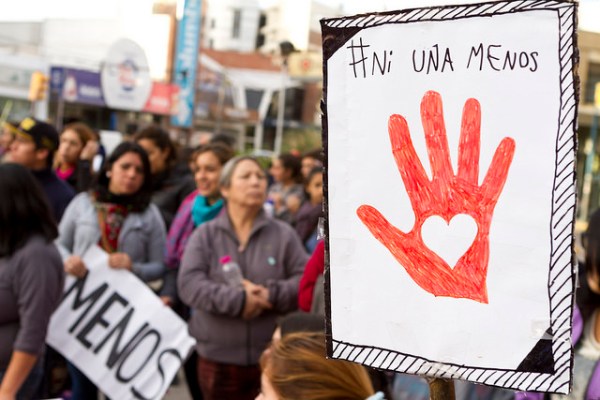
#NiUnaMenos

#NiUnaMenos Protest in Neuquen / Flickr/ Creative Commons

The #MeToo movement – described frequently as a moment of reckoning in the societies it touches– is arriving in Latin America, but the region’s own #NiUnaMenos movement provides a superior model for driving awareness of violence against women.  Latin America has a deep history of activism against gender violence, including decades of organizing against feminicide at the U.S.-Mexico border and most recently the mass mobilizations of #NiUnaMenos in Argentina, Peru, Brazil, and Chile.  Two major cases have breathed life into the framework of #MeToo in the past three months: Argentine actress Thelma Fardín’s open denunciation in December of actor Juan Darthés for raping her on the set of the children’s show “The Ugly Duckling” when she was 16 years old; and most recently, the mounting accusations of sexual assault and misconduct against former Costa Rican President and Nobel Laureate Oscar Árias Sánchez.  In denouncing celebrities and politicians in positions of power, #MeToo in Latin America replicates the pattern of “toppling the powerful, not the ordinary.”

While the significance of bringing down the powerful and those who historically have seemed most immune from prosecution and public scrutiny should not be underestimated, the concern that #MeToo so far has had little effect in changing attitudes of the ordinary or holding the ordinary accountable is a valid one and presents a much bigger and strategically important problem.  New York Times writer Amanda Taub writes that “the movement has had little effect on the broader problem of sexual abuse, harassment and violence by men who are neither famous nor particularly powerful.” While addressing the broader problem of sexual abuse, holding perpetrators accountable, and implementing long term systemic change are central tenets to the original mission of #MeToo as envisioned by founder Tarana Burke, there is a sense that the movement’s adaptation and subsequent viralization have narrowed the movement to focus primarily on cases of sexual abuse with potential for media spectacularity.

  • The #NiUnaMenos movement in Latin America, on the other hand, offers concrete examples of how to address the broader problem of sexual abuse and gender violence at the grassroots level through open popular assemblies, rallies, demonstrations, collective performances, and social media. University of California Professor Alyson Brysk notes the importance of the grassroots organizing against gender violence that preceded #MeToo.  #NiUnaMenos was first introduced in 2015 by Argentine journalists, activists and artists who, outraged by the murder of 14-year old Chiara Páez by her boyfriend, announced a call of action via social media to build solidarity against gender violence and feminicide.  Cecilia Palmeiro, one of the movement’s founding members, says #NiUnaMenos embraces a “feminism from below” that is intersectional, transversal, and horizontal and engages with marginalized communities, with a revolutionary lineage of activism passed down from the Mothers, Grandmothers and other human rights groups.  In joining forces with the International Women’s Strikes, #NiUnaMenos makes the crucial link between gender violence and the forms of economic inequality and exploitation that affect women worldwide.

While #MeToo “jumps to countries across Asia, Europe, and Latin America,” the lessons of movements from Latin America such as #NiUnaMenos are indeed more valuable – and worth being studied by the United States and Europe. A hemispheric exchange of ideas, methods, and practices between movements such as #MeToo and #NiUnaMenos would help establish new networks of solidarity while drawing attention to the diverse challenges and questions that inform both movements and the contexts in which they emerged. Furthermore, mutual acknowledgment of the sophistication and potential international impact of these and other movements would help to dispel the notion that Latin America is “catching up” by finally grappling with #MeToo and would contest the familiar trope of knowledge dissemination from North to South.

March 8, 2019

* Brenda Werth is Associate Professor and Department Chair, World Languages and Cultures, at American University.

Brazil: Will Officers’ Role in Government Taint the Military Institution?

By Christoph Harig*

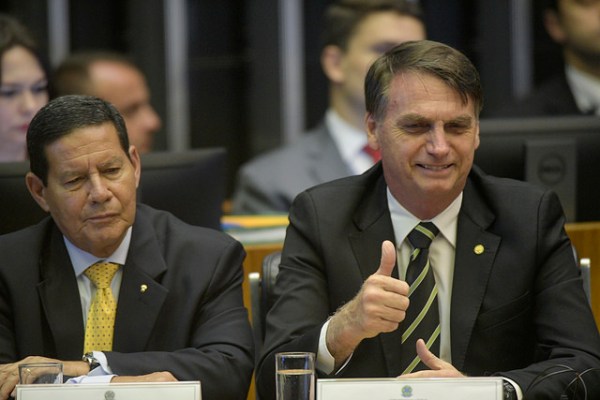
President and Vice President of Brazil

Vice-President General Hamilton Mourão and President Jair Bolsonaro / Pedro França / Agência Senado / Flickr / Creative Commons

More military officers have joined Brazilian President Jair Bolsonaro’s government than during most periods of the country’s last military regime (1964-1985), which raises the question how much the military – as an institution – will avoid compromising its supposed non-partisan nature.  The President, Vice-President, as well as eight government ministers, are retired or reserve military officers.  Bolsonaro furthermore nominated an active-duty army general as the government spokesperson.  In total, more than 100 reserve and active-duty military personnel serve in various ministries and subordinate government agencies.  Some officers have joined out of true allegiance, others, out of a sense of duty or because they want to prevent worse things from happening.  The government is drawing heavily on individual (mostly reserve) military officers, but the military as an institution is not running the government.  This is not a return to the military’s previous political interventionism: instead, a democratically elected government is (re)militarizing politics.

  • The military’s official discourse is keen on maintaining its image as a non-partisan state institution. However, officers are aware that this will be a challenge.  The presence of dozens of reserve officers in government agencies irrevocably connects the armed forces to the administration.  Although many officers do have reservations about Bolsonaro, others have proudly displayed their satisfaction with the victory of the former paratrooper.  Many citizens and international observers will thus perceive the government’s actions as being at least implicitly backed by the military.
  • For the armed forces, this involvement comes with opportunities as well as risks. On the one hand, there is a considerable increase in the military’s veto power.  They can expect privileged treatment and an effective representation of their interests.  The military might for instance be able to draw some red lines when it comes to being included in the government’s planned pension reform.  On the other hand, the prominent role in Bolsonaro’s administration attracts unwanted public scrutiny.  Discontent with an eventual preferential treatment of the armed forces in the pensions reform might grow louder than if the military had stayed below the radar.

So far, military officers’ involvement in government appears to have boosted the military’s standing.  The generals are widely being seen as a moderating force.  They have blocked some controversial foreign policy proposals of Bolsonaro and the radical wing of the government, such as the move of the Brazilian embassy in Israel to Jerusalem or the establishment of a U.S. military base on Brazilian soil.  Some observers even suggest that the generals have established a tutelary role in foreign policy after the Minister of Foreign Affairs ended military cooperation with Venezuela without consulting the armed forces.

  • Particularly Vice-President General Mourão – once known for threatening military intervention in politics and even considered a liability during the election campaign due to several ill-considered statements – excels in his newly found role as “adult in the room.” As President Bolsonaro is stuck in polarizing campaign mode (for instance, he keeps on attacking Brazil’s press and recently lauded late Paraguayan dictator Alfredo Stroessner as great statesman), it is fairly easy for Mourão to present himself as pragmatic and reliable statesman.  In this role, he led Brazil’s delegation to the Lima Group meeting in Bogotá, where he clarified that Brazil would not support a military intervention in Venezuela.

In the long run, the impact of officers’ enhanced policymaking role on the military’s prestige will depend on whether they stay clear of blunders, failures, and scandals.  While the military officers in government might succeed in playing a moderating role for the time being, this development entails considerable risks.  Within and outside of the barracks, there already is a widespread perception of the military as savior that is supposed to rescue Brazil in times of extreme crisis.  This historically grown paternalistic role of high levels of political interventionism – in which allegedly competent armed forces save the nation from incompetent civilian politicians – will only become further entrenched.

March 6, 2019

*Christoph Harig is a Postdoctoral Research Fellow in Political Science at the Helmut Schmidt University/University of the Federal Armed Forces in Hamburg, Germany.

Colombia: Ready to Expand Environmental Policies

By Luis Gilberto Murillo*

Lush view of mountain range in Colombia

Jardín, Colombia by Pedro Szekely / Flickr / Creative Commons

Colombia has provided important leadership in implementing integrated, pro-environment taxes in the country, but there is urgent need for it to do more.  In 2017, Colombia became one of three countries with the greatest advances in implementing fiscal mechanisms to control emissions, one of the principal tasks on its agenda for full membership in the OECD.  But experts believe that the deepening of the global socio-ecological crisis caused by climate change demands broader, accelerated fiscal mechanisms to protect the environment and sustainable development.

  • In 2015, Colombia, as part of its Paris Agreement commitments, set the goal of reducing greenhouse gases by 20 percent by 2030. A recent report by the Comptroller General of the Republic concluded that the Colombian national economy will need to undergo a significant restructuring to meet that goal and make the country resilient in the face of extreme climate events such as floods and droughts.  The Comptroller report opened the door to discussion of fiscal tools for action and environmental protection, with special priority given to controlling deforestation, water conservation, and improving air quality. Environment taxes on carbon, plastic bags, and motorcycles with motors above 200cc have been a starting point, but the Comptroller assesses that they haven’t been effective enough.
  • The government today has much greater resources – more than 700 billion Pesos (about US$227 million) per year – than before. Moreover, the launch of Colombia’s unique voluntary carbon market, bringing important projects and a flow of resources to rural and ethnic minorities (Afro-Colombians and Indigenous communities), has already demonstrated the positive impact of green taxes.  The program to tax plastic bags has reduced their use by 30 percent in just the first year of implementation, 2017.

Debate over how and where to invest the resources created by environmental taxes will certainly be important.  Most observers believe that the central criterion should be how well projects change the attitudes and behavior of those involved.  Projects will be key, but the contribution of each individual to save the planet will be even more important.

  • The recent finance law, introduced by the current government and approved by Congress, missed a valuable opportunity to adjust existing green taxes and create new ones, especially regarding progress in promoting electric vehicles, innovative renewable energy production, and control over the use of plastics other than bags. Upcoming legislation provides ample chances to expand environmental taxes to achieve these goals.  A better balance between various taxes – on capital and labor on one hand, and pollution and environmental degradation on the other – could lay the foundation for progress.

The gains made thus far underscore the importance of having a strategic vision and discipline.  Improvisation will fail; steady work, technical rigor, and political wisdom are required for progress.  An important first step will be the designation of a technical mission to head the National Planning Department, which is charged with leading and coordinating the country’s development agenda in the medium and long term.  Such a technical mission, along with the Comptroller team, can guide public debate and keep it squarely on the national public agenda.

March 1, 2019

* Luis Gilberto Murillo is a CLALS research fellow and former Minister of Environment and Sustainable Development of Colombia, with almost 30 years of experience in the areas of environment, sustainable development, and peace building.

Honduras: MACCIH Still Trying

By Aída Romero Jiménez

MACCIH Feb.22.2019

Luiz Antonio Marrey, Special Representative of the Secretary General, Spokesperson of the MACCIH / Flickr / Creative Commons

MACCIH, the OAS-sponsored mission to support the fight against corruption and impunity in Honduras, continues to investigate cases but with a lower profile than one year ago– and under growing political pressure.

  • Without MACCIH, most observers believe, cases like La Caja Chica de la Dama – for which ex‑First Lady Lobo is awaiting trial in prison – would not have developed. MACCIH is also credited with shutting down the Red de Diputados, a network of Congressmen accused of misappropriating government funds; the Pacto de Impunidad o Fe de Erratas, legislation that effectively shielded Congressmen involved in the Red; the Pandora case, which accused 38 lawmakers of stealing funds from the Ministry of Agriculture; and serious charges against former President Lobo’s brother.
  • Although MACCIH provides important leads and analytical capacity to UFECIC, the special prosecutor unit created to investigate corruption cases, its most valuable support comes from the political cover it provides as an internationally sponsored entity. It is often the public face of anti-corruption efforts in the country, even though Luiz Antônio Guimarães Marrey, the spokesman since last June, and his deputy have significantly scaled back their use of social media since the previous spokesman, Juan Jiménez Mayor, irritated the government with his public profile.

MACCIH’s successes have provoked resistance and, at times, a strong backlash from powerful sectors that feel threatened by its work, not unlike what has occurred with the International Commission against Impunity in Guatemala (CICIG).  When Guatemalan President Jimmy Morales banned the head of CICIG, Iván Velásquez, from returning to the country, several Honduran Congressmen were quick to state that the MACCIH mandate similarly had to be revised, and that its involvement in investigations had to be reigned in to ensure it was not overstepping its limits.  Echoing CICIG’s critics in Guatemala, they also alleged that MACCIH was violating the country’s sovereignty.

  • The Honduran Constitutional Court was already gunning for MACCIH when it ruled in May that UFECIC was unconstitutional. (UFECIC has continued its investigations without further interference, but local observers believe this could change at any moment.)  Congress has also redoubled efforts to reform Article 115 of the General Law of Public Administration to effectively shield itself from Public Ministry investigations into their handling of public funds.  Legislators want to transfer authority for such inquiries solely to the Supreme Auditing Tribunal, which civil society actors claim is sympathetic to the Congressional leadership.
  • The lack of judicial independence has remained a serious obstacle. In a high percentage of cases that go to trial, the charges have been reversed or downgraded, signaling just how fragile and corrupt the Honduran justice system is.

MACCIH’s progress in fulfilling its mission makes it vulnerable to attack and, possibly, non-renewal when its mandate expires in January 2020.  MACCIH spokesman Guimarães Marrey said in December that 11 new cases will soon be announced.  Many Hondurans hope that President Juan Orlando Hernández will be among the targets, on the assumption that he was aware of or involved in drug trafficking operations for which his brother, Tony, is under arrest in the United States.  Whether that happens or not, pressure on MACCIH is unlikely to abate.  Guimarães Marrey earlier this month re-released a draft “Effective Collaboration Law” – MACCIH’s main legislative priority – allowing plea-bargaining in return for accurate information leading to prosecutions.  Legislative opposition to the proposed legislation is strong, and its prospects – like MACCIH’s – remain uncertain.

February 22, 2019

*Aída Romero Jiménez is a team member of the CLALS project Monitoring MACCIH and Anti-Impunity Efforts in Honduras.

Latin America Takes on Big Pharma

By Thomas Andrew O’Keefe*

Colorful pills in capsule form and tablet form

Generic pills / Shutterstock / Creative Commons

For the past decade, Latin America has attempted to reduce the prices of high-cost medications through either joint negotiations, pooled procurement, or both, but so far with limited success.  The incentive for reducing prices is that all Latin American countries have national health care systems, and in some cases (such as Colombia and Uruguay) are legally obligated to provide their citizens with any required medication free of charge and regardless of cost.

  • In the bigger countries, such as Brazil and Mexico, the prices for certain pharmaceutical products and medical devices for public-sector purchase at the federal, state, and even municipal level are negotiated by a single governmental entity. Argentina, Chile, and Mexico also have mechanisms for pooled procurement of public-sector health-related purchases at all levels of government.  Given its huge internal market, Brazil also unilaterally caps prices on medications and threatens to issue compulsory licenses to extract concessions from pharmaceutical multinationals.

Latin American countries have also tried turning to sub-regional mechanisms to protect themselves from excessively high prices, albeit with meager results.

  • The Central American Integration System (SICA) has the most active regional mechanism to negotiate the prices of high-cost drugs and medical devices. The governments of Belize, Costa Rica, the Dominican Republic, El Salvador, Guatemala, Honduras, Nicaragua, and Panama have authorized the Council of Central American Ministers of Health (COMISCA) to negotiate lower prices on their behalf.  Those medications and devices that obtain a reduction are then acquired by the public sector utilizing each government’s procurement procedures.  By negotiating as a bloc, the SICA countries report total savings of about US$60 million on dozens of products since the initiative began in 2010.
  • In late 2015, MERCOSUR launched a mechanism to negotiate prices for both the full and associate member states. Since those 12 countries coincided with UNASUR’s membership, that entity was given a supporting role to create a continental data bank of pharmaceutical prices paid by each member government that would be used to support the MERCOSUR negotiations.  That data bank proved to be ineffective, however, as not all countries submitted the required information and the methodologies for determining prices was inconsistent.  To date, MERCOSUR has only obtained price reductions for one HIV medication, manufactured by an Indian firm eager to establish a market presence in South America, and reportedly for an immunosuppressive drug used after organ transplants to lower the risk of rejection.  Reduction offers by Gilead for its Hepatitis C cure have, so far, been rejected by the MERCOSUR governments as inadequate.

MERCOSUR’s limited achievements appear to have encouraged individual countries to press on alone.  Colombia, while initially supporting the MERCOSUR initiative as an associate member, eventually established its own national mechanism to negotiate prices, and in July 2017 announced that it had obtained cost savings of up to 90 percent for three Hepatitis C treatments.  MERCOSUR’s sparse track record also helps to explain why Chile’s Minister of Health announced in October 2018 that his country, Argentina, Colombia, and Peru would utilize the Strategic Fund of the Pan American Health Organization (PAHO) to purchase 10 state-of-the art cancer treatments.  Because of PAHO’s annual bulk purchases, it is often able to obtain significant price reductions from pre-qualified manufacturers and suppliers that are then passed on to member governments.  Member states facing a public health emergency can also make purchases without cash in hand, as the Strategic Fund will extend a short-term loan at no interest.  In the future, the Latin American countries are likely to pragmatically utilize a range of options in trying to contain the rising costs of new medications that include both national and regional mechanisms as well as PAHO’s Strategic Fund.  The challenge will be to avoid Big Pharma “red lining” the region and excluding it from accessing the most innovative medical cures such as gene therapies that can fetch a million-dollar price tag per treatment.

February 19, 2019

* Thomas Andrew O’Keefe is president of New York City-based Mercosur Consulting Group, Ltd. and a lecturer at Stanford University.  He is the author of Bush II, Obama, and the Decline of U.S. Hegemony in the Western Hemisphere (New York: Routledge, 2018).

Colombia: Flaws in Transitional Justice Threaten Peace Accord Implementation

By Néstor Raúl Correa*

Acuerdo de Paz Colombia Feb.15.2019 Flickr

People gather at Bogota’s Bolivar main square on September 26, 2016, to celebrate the historic peace agreement between the Colombian government and the Revolutionary Armed Forces of Colombia (FARC). / Flickr / Creative Commons

The Special Jurisdiction for Peace (JEP), a central part of the Colombia Peace Accord signed in 2016, continues to stumble and is seriously, if not fatally, undermining the justice component for accountability by combatants of both sides of the conflict.  In essence a scheme of transitional justice, the JEP offered a special legal framework and exceptional judicial treatment to create the necessary conditions for peace after decades of massive, systematic violations of human rights.

  • The Accord would not only produce temporary justice; it would be negotiated justice – and it would build on other positive results such as the guerrillas’ surrender of arms and subordination to the political regime it had sought to destroy. It was centered on a quid pro quo: “You give me your weapons and, in exchange, I’ll give you softer penalties and allow you to participate in politics.”  One of three institutions established to promote reconciliation, the JEP’s mandate was to guarantee the rights of the victims.

The Peace Accord in general and the JEP specifically, however, have stumbled over multiple obstacles, in particular the opposition of segments of the Colombian populace that have not forgotten the crimes of the FARC and are interfering with the implementation of the JEP.  While every political faction has constructed its own narrative surrounding the Accord, the most radical and divisive is that of the political right.  Various factors have distorted the role of the JEP to the point that it is no longer a trustworthy reference for the conflicting parties, the victims, or citizens in general.

  • Critical constitutional and legal reforms necessary for the JEP to function, which were already thought to take at least four years, were further delayed when the Legislature diluted or postponed accountability of combatants while providing them quick relief for their crimes, especially in Amnesty Law 1820 of 2016.
  • Having eight units (three courts, four sections and one prosecutorial office) and 38 judges, the JEP was practically guaranteed to have lengthy and convoluted proceedings – a Kafkaesque labyrinth. When a guerrilla defendant has previously served in the military or as paramilitary, the process plunges into chaos.  Further complicating matters, the right has been concerned about the neutrality of current judges in the JEP, arguing that it was conceived as a FARC justice mechanism.
  • JEP management and decision-making – dominated by a handful of judges since 2018 – have become burdened with inefficiencies long present in Colombia´s justice system. Budget squabbles, bloated staffs, contract disputes, and even controversy over holidays and vacation time have become distractions.

As a result, the hope of victims on both sides of the conflict that light sanctions for those responsible for major crimes would be counterbalanced by integral and sustainable protection for themselves has vanished.  Nearly 7 million Colombians were displaced by the internal conflict (out of a total of 8,794,542 registered victims).  JEP dysfunction has denied them their voice in the processes against those who victimized them.  Victims were barred, for example, from attending the hearing of an Army Reserve general accused of murdering innocent civilians he claimed were guerrilla members killed in combat (falsos positivos), while a senior FARC commander firmly rejected victim participation as inconsistent with the Accord.  Former FARC combatants have not been held rigorously accountable.  They move freely within the country, and some FARC commanders remain in hiding and have never presented themselves.  This has further undermined civil society confidence in the JEP and the Accord.

The flaws in Colombia’s transitional justice provide valuable lessons for future peace processes.  The whole process should remain simple and expeditious, with fewer sentencing judges and proceedings.  A competent management unit, independent from the judges, should take charge of administration, including core information systems.  The role of foreign judges, particularly in cases of internal conflicts that have somehow been tainted or affect a vast number of citizens, should be increased, clarified, and protected because of the credibility, legitimacy, and independence they can bring.  It is also critical to avoid creating false expectations among victims, particularly regarding their role in judicial hearings.  An efficient, transparent judicial process provides the best guarantees of justice and effective remedies to victims and civil society.

February 15, 2019

*Néstor Raúl Correa is former Executive Secretary of JEP, a former magistrate, and currently a professor at Pontificia Universidad Javeriana in Bogotá.

From Washington to Brussels and Montevideo: No Common Plan for Venezuela

By Stefano Palestini Céspedes*

Photograph of the EU High Representative for Foreign Affairs

EU High Representative for Foreign Affairs at the International Contact Group Meeting in Montevideo, Uruguay / EFE / Presidency of Uruguay / Creative Commons

A common feature of international efforts to deal with the years-long political crisis in Venezuela has been an inability to come up with a common approach – which, despite many countries’ agreement that it’s time for Nicolás Maduro to go, continues to hamper effective solutions. Three different and partly contradictory international approaches have emerged.

  • Regime change, supported by the United States, the Secretary General of the OAS, and the 13 Grupo de Lima states (without Mexico). It assumes that there is no exit from the political crisis without the immediate ousting of Maduro and his cronies. All international actions are “on the table,” including coercion through threatened military action, coercion through sanctions (implemented), international recognition of a parallel interim president (implemented), financial support to Maduro’s opposition (implemented), and delivery of humanitarian aid (being attempted).
  • Mediation with conditions, launched in Montevideo last Thursday by the Grupo de Contacto. Backed by member states of the EU, the EU High Representative for Foreign Affairs, Uruguay, Ecuador, and Costa Rica, it proposes that the solution to the political crisis must be through peaceful means, namely national dialogue with international mediation. It imposes, though, a condition for dialogue and mediation to start: immediate presidential elections.
  • Mediation without conditions, sponsored by Mexico, Bolivia, Uruguay, and the Caribbean Community (CARICOM). The so-called Montevideo Mechanism also assumes that the crisis can be overcome only through a national dialogue, with international mediation and monitoring, but it does not impose any conditions on any of the parties before undertaking the dialogue and mediation.

All three strategies entail problems and challenges, although the first sets a precedent that by far is the most problematic. It establishes regime-change, including military intervention by internal or foreign forces, as a legitimate international action to solve political crises. In contrast to what OAS Secretary General Luis Almagro has held in conferences at think-tanks, most experts assess that regime-change violates international law and, in particular, Inter-American Law. From an international perspective, such an action might be justifiable only under the strict observation of the criteria put forward by the UN Responsibility to Protect doctrine, which do not apply to the Venezuelan crisis as severe as it may be. The UN Secretary General has expressed his concern with the regime-change strategy, and some governments at the Lima Group also showed uneasiness with the military option at a summit in Ottawa on February 4. A main criticism is that it endangers civilians’ lives by making them potential targets in a confrontation, and it curtails any other alternative course of diplomatic action.

  • The second and third strategies could be the way forward, but they compete with each other, nullifying their potential leverage over the parties in conflict. The “Montevideo Mechanism” was launched by Mexico and Uruguay less than 24 hours before European representatives landed in Montevideo to discuss the Contact Group’s mission. That timing and Twitter politics suggest a leadership struggle between Mexico and the EU that undermines what should have been a common alternative plan. The apparent split has allowed Maduro to reject the EU-sponsored Contact Group and hold out for the “Montevideo Mechanism”. Guaidó has rejected both and suggested that the states supporting national dialogue and mediation are not “on the right side of history.”

International actors’ inability to agree on a common plan severely hampers diplomatic efforts – and plays into the U.S.-led push for regime change by non-diplomatic means. For the Venezuela crisis to have a resolution that sets positive precedents, international actors will need to abide by common international norms, including Inter-American Law, and set aside political interests and ideological visions that preclude the emergence of a unified, effective front that forces Venezuelans to get serious about ending a crisis.  Failing that, the opposition’s preference for military-style regime change and Maduro’s preference for buying time through unconditional negotiations allow them to suck international actors into their family feud – and only delay an end to the crisis.

February 12, 2019

* Stefano Palestini Céspedes is an Assistant Professor at the Institute of Political Science, Catholic University of Chile.

Seeking Rights from the Left

By Elisabeth Jay Friedman and Constanza Tabbush*

Image of colorful mural with diverse images of women. Text in the mural says: "It is time to act, no more sexual violence. No more impunity"

#TimeToAct Mural in La Paz, Bolivia, by artist Knorke Leaf/ ph: Shawnna Mullenax

The “Pink Tide” of left-leaning governments that came to power in Latin America at the beginning of the 21st century made a significant difference in the lives of women and LGBT people in the region, but its reliance on traditional gendered relations of power and strategic trade-offs among gender and sexual rights reduced its impact.  In a collaborative study we conducted with 12 other scholars from South and North America, we examined the issues of social welfare, political representation, violence against women, women’s bodily autonomy, and LGBT relationship and identity recognition across eight case studies – Argentina, Bolivia, Brazil, Chile, Ecuador, Nicaragua, Uruguay, and Venezuela.

  • We found significant progress under the Pink Tide. Most governments improved the basic economic conditions of poor women and their families, often through providing cash transfers.  In many cases, women’s representation in national legislatures advanced to some of the highest global ranks.  Some countries legalized same-sex relationships and enabled their citizens to claim their own gender identity.  They also opened up opportunities for feminist and queer movements to engage state actors and press forward their demands.

At the same time, many of these governments relied on heteropatriarchal relations of power – ones that privilege heterosexual men – thus ignoring, rejecting, or sidelining the more transformative elements of feminist, women’s, and LGBT advocates’ demands.  They also made strategic trade-offs among gender and sexual rights, such as promoting the rights of LGBT people or women’s political representation while denying reproductive health rights for women.  Moreover, the left’s more general political and economic projects have been profoundly, if at times unintentionally, informed by traditional understandings of gender and sexuality.  As a central example across most cases, not only did poor women’s unpaid care work fuel the much-celebrated social programs that reduced extreme poverty, but their unpaid community work undergirded the left political project as a whole.

  • The possibilities for gender and sexual justice seem to depend on institutional contexts as well as the organization and actions of collective actors seeking rights from the left. The degree of state institutionalization, particularly the effectiveness of checks on executive power, is critical in determining the ultimate impact of the left in power.  Moreover, the largely under-analyzed alliances that progressive political forces struck up with conservative religious ones in order to gain or hold onto power play a central role in determining the fate of policy issues – such as abortion – that touch traditional or cultural norms in Latin America.

As the pendulum swings back towards the right, the relationships among political and religious authorities which undergirded some of the challenges to gender and sexual justice under left governance appear likely to continue strengthening.  Indeed, insofar as right-wing nationalists and populists seek to redefine a national project as a counter to the ideals of the Pink Tide, they are deliberately targeting the ideas and people who seek to transform fundamental inequalities, such as those based on gender, sexuality, class, race, and ethnicity.  However, experiences under both the Pink Tide and the rise of the Right have led to alliances among those who continue to seek more just and equitable societies.  For example, consider the broad-based coalitions that undergirded massive mobilizations for legal abortion in Argentina and against Bolsonaro’s election in Brazil. 

February 4, 2019

*  Elisabeth Jay Friedman is professor of politics and Latin American studies at the University of San Francisco (on leave) and visiting scholar at the Interdisciplinary Center for the Study of Global Change, University of Minnesota.  Constanza Tabbush is research associate at Consejo Nacional de Investigaciones Científicas y Técnicas and the Interdisciplinary Institute of Gender Studies, University of Buenos Aires (on leave) and research specialist at UN Women.  Dr. Friedman edited and co-wrote the introduction of Seeking Rights from the Left: Gender, Sexuality, and the Latin American Pink Tide, published by Duke University Press and available here.  Dr. Tabbush co-wrote the introduction and the chapter on Argentina.

Venezuela: A Test of U.S. Hegemony in Latin America

By Eric Hershberg

Lima Group members standing at a podium

Lima Group members in Torre Tagle in Perú / Flickr / Creative Commons

The showdown in Venezuela reflects an extraordinary attempt by the United States government to resurrect hegemonic power in Latin America.  From the mid-19th century to the dawn of the 21st, it was common for Washington to directly overthrow Latin American governments or to bolster clients seeking transitions to dictatorship or democracy.  But recent years had witnessed a clear decline in U.S. hegemony.  As Latin America appeared to have escaped Washington’s imperial reach, many of us were persuaded of the finality of the Obama administration’s recognition that the era of the Monroe Doctrine had ended.  We were dismissive, perhaps excessively, of the assertion of Trump administration officials and advisors that the infamous Doctrine could somehow be revived.

Yet the dynamics of the Venezuelan confrontation result from an unprecedented, Washington-forged hemispheric coalition – of the genuinely willing – trying to force a regime transition.  Traditionally, Washington conducted such interventions on its own, opposed by most of Latin America.  Yet today not only the 12 members of the Lima Group but also Canada and several EU governments are on board with the administration’s boldly assertive intervention in Venezuela’s political crisis.  Russia’s and China’s support for incumbent President Nicolás Maduro underscores that what is at stake is the enduring relevance of the Monroe Doctrine, which almost two hundred years ago unilaterally established an American veto over extra-regional engagement with nominally sovereign countries “in its own backyard.”

For champions of the Trump administration’s policy, asserting hegemony – after the Obama administration had declared it “dead” – is an end in itself.  Rejecting the Monroe Doctrine did not provoke a crescendo of acceptance from much of the foreign policy establishment in Washington, and abandoning that stance has been a core aspiration of right-wing foreign policy networks that have taken over the Executive Branch.  Countless statements over the years by the presumed architect of the present intervention – de facto Secretary of State for Latin America Senator Marco Rubio – reflect how an enduring hatred for the Cuban Revolution, and movements inspired by it such as Chavismo and the ALBA alliance, fuels antagonism toward intra- or extra-regional engagement that call into question U.S. authority.  Russian and Chinese interest in sustaining Chavismo thus reinforce Washington’s determination to eradicate it.

  • Venezuela today is an ideal target for a US-sponsored intervention to bring about regime change and reassert American hegemony in Latin America. The dictatorship is increasingly vicious, and Maduro’s claim to legitimacy is entirely fraudulent.  Moreover, Maduro’s government has so wrecked the economy that desperate millions are fleeing the country, creating an urgent humanitarian crisis that overwhelms neighboring countries already unable to provide for the basic needs of their own populations, making them more amenable to an interventionist exit.
  • Venezuela’s opposition has been long hindered by incompetence and racked by competing personal ambitions. With its most assertive leaders imprisoned, under house arrest, or in exile, it has proven incapable on its own of bringing about Maduro’s removal, either peacefully through his rigged institutions or through uprisings in the streets.  Absent an internal path toward regime transition, conditions were ripe for Washington to coax regional partners to back a daring strategy of intervention.  To have any prospects for success, the venture required that the domestic opposition finally unify – or at least acquiesce in –the anointment as Interim President of Juan Guaidó, a young political unknown whose ties with right-wing patrons are not as well known.  That unification, presumably, was made possible by recognition that only with external support could internal resistance succeed, and only with a unified or quiescent opposition would the international partners take the aggressive stance that they did.

Just as the opening to Cuba was the signature achievement of the Obama administration with regard to Latin America, the effort to overthrow the Venezuelan government appears destined to be the signature act of the Trump administration.  The support of almost all of Latin America for it will have consequences far beyond the fate of the incompetent dictator clinging to power in Caracas.  If their gambit succeeds, Senator Rubio and National Security Advisor John Bolton could move on next to Nicaragua and then perhaps to the king’s crown in Havana. 

  • Those tempted to attribute this to abhorrence of violators of democratic norms would do well to consider the administration’s supportive stance toward increasingly authoritarian regimes in Honduras and Guatemala. Those cases, and the recognition that much of the opposition leadership wants to restore Venezuela to “what it used to be” (i.e., before Chavez tried with considerable popular support to forever end what Venezuela used to be), underscore the ideological drivers of U.S. policy today.  While Washington may have embarked on a course that can finally extricate Venezuela from Chavista misrule, the history of American influence over the region does not bode well for what a return to U.S. hegemony in Latin America could bring.  Surely that point is not lost on leaders of countries such as Mexico and Uruguay.  If the coming weeks bring a continuing stalemate between the Venezuelan regime and opposition, perhaps their good offices could catalyze a negotiated path to free elections and to a resulting regime that would not be Made in USA.


January 31, 2019