Deportaciones Masivas Podrían Crear una Recesión en EE.UU

Ernesto Castañeda

Entrevista de Diana Castrillón a Ernesto Castañeda publicada por Stornia 13 de agosto de 2024 editada y expandida por Castañeda.

Diana Castrillón: “La inmigración irregular es uno de los temas más importantes de las campañas presidenciales de los candidatos, el republicano Donald Trump y la demócrata Kamala Harris. Por un lado, la administración de Biden-Harris restringió el número de solicitantes de asilo que pueden ingresar al país. Por otro lado, los republicanos están prometiendo el “mayor programa de deportación masiva en la historia de Estados Unidos” si es que ganan la Casa Blanca este otoño.

El sentimiento antiinmigrante en Estados Unidos está en aumento. Este año, el 55% de los estadounidenses dijeron que les gustaría ver una disminución de la inmigración, una novedad desde el 2001. Esto se debe en parte a la creencia que los inmigrantes, en particular los indocumentados, son una carga para los recursos del gobierno y no contribuyen en nada.

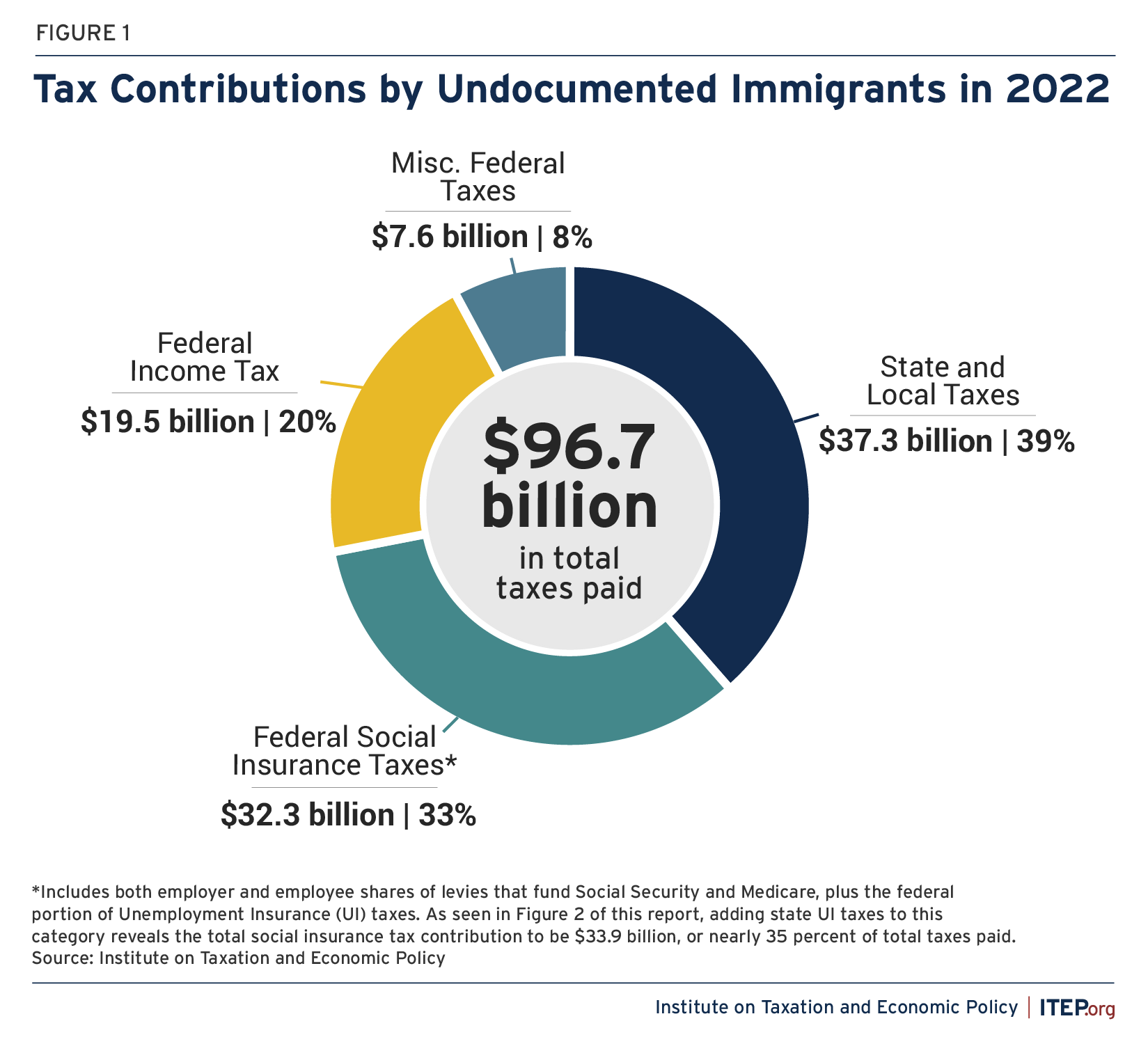
Sin embargo, un nuevo estudio del Instituto de Política Fiscal y Económica muestra que es todo lo contrario. Según el informe, los inmigrantes indocumentados contribuyeron con casi $100 mil millones de dólares en impuestos durante 2022 y a su vez, no pudieron acceder a muchos de los programas que financiaron sus dólares de impuestos.

De esos casi $100 mil millones, $60 mil millones se destinaron al gobierno federal. Por cada millón de inmigrantes indocumentados, los servicios federales reciben $8.900 millones de dólares adicionales en ingresos fiscales. Más de un tercio de los impuestos que pagan estos inmigrantes se destinan a programas a los que no pueden acceder, como la Seguridad Social ($25,700 millones de dólares), salud Medicare ($6,400 millones de dólares) y el seguro de desempleo ($1,800 millones de dólares).

Los indocumentados suelen pagar tasas impositivas más altas que los ciudadanos estadounidenses. En 40 de los 50 estados del país, los inmigrantes irregulares pagan tasas de impuestos estatales y locales más altos que el 1% de los hogares con mayores ingresos. Además, no pueden recibir muchos créditos fiscales. No se dan cuenta que pueden reclamar reembolsos y tampoco tienen acceso a ayuda fiscal.

“En total, la contribución fiscal federal de los inmigrantes indocumentados ascendió a $59,400 millones de dólares en 2022, mientras que la contribución fiscal estatal y local se situó en 37,300 millones de dólares”, escribieron los autores del estudio. “Estas cifras dejan claro que las decisiones sobre política migratoria tienen implicaciones sustanciales para los ingresos públicos en todos los niveles de gobierno”, menciona el informe.”

En entrevista con Stornia, Ernesto Castañeda PhD, Director del Laboratorio de la Inmigración y el Centro de Estudios Latino Americanos y Latinos de American University en Washington DC, aseguró que los inmigrantes son necesarios y esenciales para el crecimiento económico de Estados Unidos.

Diana Castrillón: ¿Cómo paga un inmigrante indocumentado impuestos, si como su nombre lo dice, son migrantes irregulares?

Ernesto Castañeda: Los indocumentados pagan impuestos cada vez que compran algo, está el impuesto a la compra, el porcentaje depende de cada localidad. Si compran casas, que lo pueden hacer, también pagan impuestos, si rentan o pagan renta, también hay un porcentaje que se debe pagar en impuestos al gobierno local y federal. La gente indocumentada que trabaja en compañías formales, que son muchos, pueden tener una identificación temporal para pagar impuestos (ITIN), que funciona de manera similar al número de Seguridad Social, entonces pagan impuestos a la nómina como cualquier otra persona trabajando en Estados Unidos. Hay gente que usa documentos de identidad falsos o que no les corresponden, pero alguien se los presta, y así pagan a las arcas de Seguro Social y programas de retiro y de salud, pero como el número es falso o no es de ellos, no tienen acceso a esos beneficios.

Entonces, no solo pagan a estos servicios, sino que muchos inmigrantes no piden ese apoyo. Por lo tanto, tienen una contribución mayor a los ciudadanos que pagan, pero quien luego si retiran esas ayudas. Es una ganancia que el Gobierno Federal y el Tesoro aceptan abiertamente que sucede.

¿Entonces los inmigrantes indocumentados están pagando más impuestos que los mismos ciudadanos americanos?

Si, la tasa de muchos indocumentados que pagan impuestos es más alta que las tasas que paga la gente más rica del país. Claro, los ingresos son diferentes pero la tasa es a veces mayor o muy similar, a la de los ciudadanos. Los ciudadanos llenan sus declaraciones de impuestos y muchas veces piden reembolsos, por ejemplo, por gastos de negocios o les dan un crédito por tener hijos, pero muchos de los indocumentados no hacen esos reclamos porque no quieren que más adelante se les niegue la ciudadanía por haber pedido ayudas o servicios. Por ese temor, tampoco piden programas de apoyo para sus hijos, que ya son ciudadanos y tienen derecho a esos servicios. Hemos comprobado en nuestras investigaciones en el Laboratorio de Inmigración que los inmigrantes usan menos servicios sociales que los nacionales (Castañeda y Cione, 2024).

Pareciera que los indocumentados están entre la espada y la pared ahora con la campaña electoral tanto por el lado de los republicanos como por el lado de los demócratas, ¿hay preocupación en la comunidad?

Algunos políticos usan a los inmigrantes indocumentados como chivos expiatorios en tiempos electorales. Por un lado, Trump hace esta amenaza de deportaciones masivas, pero es poco probable que lo haga, eso mismo lo había prometido anteriormente y cuando fue presidente no deportó a tanta gente. Eso no significa que la gente no tenga miedo ahora y si gana creará un terror real entre la población que ya de por sí vive con mucho miedo a que los encuentren como indocumentados a ellos o a alguien cercano.

En cuanto situaciones de asilo, en efecto, mucha gente está escapando de situaciones difíciles en Afganistán, Ucrania, Cuba, Venezuela, Haití o Nicaragua.  Muchos con pruebas de persecución, y ahora el gobierno ha cambiado cómo tramita buscar asilo.  La frontera está cerrada a muchas de esas peticiones de asilo como se hizo durante la pandemia. Por ende, estamos viendo menos cruces irregulares en la frontera. La administración Biden-Harris piensa que eso les puedes ayudar electoralmente para que los republicanos no les hagan la crítica de que la frontera está supuestamente abierta y los que indocumentados o quienes piden asilo están recibiendo comida y vivienda en algunas ciudades. Es un momento difícil, y no es sostenible. En algún momento van a tener que reabrir la frontera al asilo humanitario, porque a lo que llaman el derecho nacional e internacional es a recibir a la gente que está pidiendo asilo. Tras procesar sus aplicaciones, a unos los aceptarán a otros no.

Trump necesitaría mucho dinero y mucha policía, casi tendría que crear un estado totalitario para poder deportar a toda la gente que está aquí sin papeles migratorios en regla. Muchas de estas personas tienen más de 10 años aquí, tienen hijos ciudadanos, trabajan, contribuyen, por lo cual, deportar masivamente o dejar de recibir inmigrantes es un gran ataque a Estados Unidos. La economía se podría contraer. Se podría crear una recesión porque como mencionamos anteriormente, los migrantes pagan miles de millones en impuestos, pero los impuestos son un porcentaje pequeño de lo que la gente gana. La mayoría de los inmigrantes ganan, lo gastan en las ciudades donde viven, y con el trabajo que hacen generan crecimiento económico, servicios, entretenimiento y hacen que la economía crezca.

Hace algunos días JD Vance, la fórmula vicepresidencial de Donald Trump justificaba el plan de deportación masiva y decía que los indocumentados le están robando plazas de trabajo a los ciudadanos americanos. ¿Existe esa fila de estadounidenses esperando a que deporten inmigrantes para tomar sus puestos de trabajo?

Esto no funciona así. Trump y Vance están equivocados sobre que los inmigrantes les quitan trabajos a los afroamericanos o a otros ciudadanos. Es un estereotipo fácil de vender, algún votante pudo haber tenido una experiencia donde pareciera que pudo ser el caso, sin embargo, si vemos a la economía en general, la inmigración genera nuevos empleos.

En Florida, está en efecto la ley anti-inmigrante más estricta del país. De hecho, han salido muchos indocumentados del estado, y hoy no hay suficiente mano de obra para la construcción, para servicios como hoteles, para la agricultura en los cultivos de naranjas. Entonces los negocios que necesitaban esa mano de obra para generar riqueza ahora no pueden tener su negocio al 100%. Propietarios de granjas han tenido que cerrar porque les falta mano de obra para trabajar, algunos negocios pequeños han tenido que limitar sus horas de servicios. Si no hay construcción no hay viviendas, seguirá habiendo inflación por las viviendas existentes. Los inmigrantes llegan y necesitan un lugar donde vivir, quien les corte el pelo, quien les venda comida, entonces generan trabajo e ingreso para los comerciantes.

Los migrantes emprenden con más negocios (desde pequeños negocios hasta las grandes empresas) que los nacidos en Estados Unidos. También sabemos que los inmigrantes emplean más gente que los dueños de negocios del país. No es que haya un pastel que esté limitado y se lo reparta el número de gente que llega, entre más personas lleguen, incrementa el tamaño del pastel entonces hay más pastel para todos. No es una competencia desleal y eso se ve en las tasas de desempleo.

Ahora bajo la administración Biden-Harris tenemos una tasa de desempleo para afroamericanos históricamente baja, una tasa de desempleo de latinos muy baja y no hay muchos ciudadanos de origen europeo que están desempleados porque algún migrante esté tomando su trabajo, si noq que usualmente no encuentran trabajo porque no los estudios o capacitación suficiente para tomar un empleo bien pagado, o por el contrario, porque tienen demasiada educación y no hay un empleo con alto ingreso que les convenga tomar. O porque se rehúsan a mudarse dentro del país para buscar trabajo. Las tasas de desempleo son bajas en general y de lo que se quejan los empresarios es que no tienen suficiente personal para expandir sus negocios. Esto también afecta a los ciudadanos buscando servicios, teniendo que esperar más en restaurantes porque no hay suficientes meseros o cocineros.

¿Cuál es la respuesta para el manejo de inmigración, más visas temporales de empleos, legalizar a los indocumentados o hacer más muro en la frontera?

La solución a los casos de inmigración irregular a largo plazo es aumentar las visas temporales de empleo para que la gente venga de manera legal. Existen programas como la Visa H2A, H2B son ejemplos de visas que funciona muy bien, la gente viene, trabaja y se regresa a su país, porque ya ganaron ingresos en dólares pudieron ahorrar suficiente y ahora quieren estar con su familia.

El problema es que hay límites, hay cuotas para esas visas, son para cierto tipo de empleos, y hay más demanda de esa gente trabajadora temporal de lo que la que la ley permite. Para que aumenten los topes, los números de esas visas, el Congreso tiene que actuar. Tiene que actuar la Cámara de Representantes y el Senado, y tienen que estar de acuerdo los demócratas, de que es lo que harían, y un número suficiente de republicanos. Pero ellos se niegan a hacerlo, porque parece que no quieren solucionar el tema, solo lo quieren usar de manera electoral.

Para las personas que ya están aquí, la solución es legalizarlos. Al darle papeles o permisos laborales a quienes están aquí, de esa manera muchos ganarían más dinero, tendrían más confianza de invertir, pagarían más impuestos. Esto sería una inyección a la economía americana, y podrían traer a sus familiares de manera legal y expandir la base trabajadora un poco más.

Y eso es algo que ni Trump ni Vance entienden, nunca lo harán. A diferencia del presidente Ronald Reagan, quien sí firmó una ley como esa, aunque a regañadientes. Tampoco es algo sobre lo que han querido hablar mucho Kamala Harris ni Tim Walz en la campaña porque la gente lo usa como un ataque muy simple con ellos, pero los dos tienen un historial político de apoyar este tipo de medidas.

¿Y con esta legalización de indocumentados en Estados Unidos ganan países de América Latina o pierden?

Las remesas representan solo el 4% de lo que los inmigrantes generan en Estados Unidos. Un migrante que está más establecido o es profesional, manda remesas menos seguido, entonces son ayudas a familias en pobreza. Las remesas representan separaciones familiares por años hasta que el migrante termina regresando o trata de traer a la familia entera. Es una ayuda a corto plazo, pero pone a las familias que se dividen en dificultad emocional y cualquier país que pierde migrantes, desde agricultores hasta científicos, médicos, como en Cuba que ha perdido un par de millones de migrantes profesionales durante el último par de años debilita cada vez más su economía. También pasa en la economía venezolana, que ha sido debilitada entre otras muchas cosas por la emigración. Las remesas son ayudas de corto plazo, pero la verdadera ayuda económica se da en donde llegan los migrantes, en este caso Estados Unidos.

De acuerdo con el estudio de Instituto de Política Fiscal y Económica, la autorización de trabajo sería beneficiosa para todos, pues otorgar a los inmigrantes indocumentados una autorización de trabajo resultaría en un aumento de sus contribuciones fiscales de $40,000 millones de dólares a $137,000 millones de dólares por año, ya que la autorización de trabajo aumentaría los salarios.

Ernesto Castañeda PhD, Director del Laboratorio de Inmigración y el Centro de Estudios Latino Americanos y Latinos, American University en Washington DC.

This piece can be reproduced completely or partially with proper attribution to its author.

The English version of this text is available at the following link: https://aulablog.net/2024/08/26/mass-deportations-could-create-a-us-recession/

Mass Deportations Could Create a US Recession

By Ernesto Castañeda

Interview by Diana Castrillon with Ernesto Castañeda published in Stornia August 13, 2024. Edited and expanded by Castañeda. Original in Spanish. Translated by Castañeda.

Diana Castrillon: “Irregular immigration is one of the most important issues in the presidential campaigns of the candidates, Republican Donald Trump and Democrat Kamala Harris. On the one hand, the Biden administration, of which Vice President Harris is part, restricted the number of asylum seekers entering the country, and on the other hand, Republicans are promising the “largest mass deportation program in US history” if they win the White House this fall.

Anti-immigrant sentiment in the United States is on the rise, with more than half (55%) of Americans this year saying they would like to see a decrease in immigration, a first since 2001. This is partly due to the belief that immigrants, particularly undocumented immigrants, are a burden on government resources and contribute nothing to the economy.

However, a new study from the Institute on Taxation and Economic Policy shows that the opposite is true. According to the report, undocumented immigrants contributed nearly $100 billion in taxes during 2022, while being unable to access many of the programs their tax dollars funded. Of that nearly $100 billion, $60 billion went to the federal government. For every million undocumented immigrants, federal services receive an additional $8.9 billion in tax revenue. More than a third of the taxes paid by these immigrants go to programs they cannot access, such as Social Security ($25.7 billion), Medicare ($6.4 billion), and unemployment insurance ($1.8 billion).

In addition, undocumented immigrants often pay higher tax rates than American citizens: in 40 of the 50 U.S. states, illegal immigrants pay higher state and local tax rates than the 1% of households with the highest incomes. In addition, they cannot receive many tax credits and often do not realize that they can claim refunds or prefer not to. “In total, the federal tax contribution of undocumented immigrants amounted to $59.4 billion in 2022, while the state and local tax contribution stood at $37.3 billion,” the authors of the study wrote. “These figures make it clear that decisions on immigration policy have substantial implications for public revenues at all levels of government,” the report says.

In an interview with Stornia, Ernesto Castañeda PhD, Director of the Immigration Lab and the Center for Latin American and Latino Studies at American University in Washington DC, said that immigrants are necessary and essential for the economic growth of the United States.

Diana Castrillon: How does an undocumented immigrant pay taxes, if as their name suggests, they are irregular migrants?

Ernesto Castañeda: Undocumented immigrants pay taxes every time they buy something; there is a sales tax, and the percentage depends on each locality. If they buy houses, they also pay taxes, or if they rent, there is a percentage that must be paid in taxes to the local and federal governments. Undocumented people who work in formal companies, which are many, can have a temporary identification to pay taxes (ITIN), which works in a similar way to a Social Security number, so they pay payroll taxes like any other person working in the United States. There are some undocumented people who use false or incorrect identification documents, but someone lends them one, and so they pay into the Social Security and retirement and health programs. However, since the number is false or does not belong to them, they do not have access to those benefits when they retire. So, not only do they pay for these services, but many immigrants do not ask for these benefits. Therefore, they have a net or even greater contribution than the citizens who pay, but then they withdraw those benefits such as social security after retirement. It is a gain that the federal government and the Treasury openly accept that happens.

So, are undocumented immigrants paying more taxes than American citizens themselves?

Yes—the rate of many undocumented people who pay taxes is higher than the rates paid by the richest people in the country. Of course, their incomes are different, but the rate is sometimes higher or very similar to that of citizens. Citizens fill out their tax returns and often ask for tax returns and reimbursements, for example, they get a credit for having children, but many undocumented taxpayers do not make these claims because they do not want to be denied citizenship in the future for having asked for aid. Nor do they ask for support programs for their children, who are already citizens and have the right to those services, out of fear. We have documented that, indeed, immigrants use fewer social services than U.S.-born citizens (Castañeda and Cione, 2024).

It seems that undocumented immigrants are between a rock and a hard place now with the electoral campaign on both the Republican and Democratic sides. Is there concern in the community?

Some politicians use undocumented immigrants as scapegoats. On the one hand, Trump makes this threat of mass deportations, but it is unlikely that he will do it. He had promised that before, and when he was president, he did not deport as many people. That doesn’t mean that people aren’t scared now, and if he wins, he’s going to create real terror among the people who already live in fear of themselves or their family members being found. That’s a reality that undocumented immigrants have been living with for many years.

As for asylum, in fact, many people are fleeing Cuba, Venezuela, Nicaragua, and Haiti, many with proof of persecution, and now the government has changed how it processes these asylum cases. The border is closed to many of these asylum requests as it was during the pandemic, so we’re seeing fewer people let in through the wall in between ports of entry. The Biden-Harris administration thinks that this can help them electorally so that Republicans don’t criticize them about the border supposedly being open or about undocumented individuals or those seeking asylum temporarily receiving food and housing in some cities. At some point, they will have to reopen the border to asylum seekers because national and international law calls to receive people who are asking for asylum. Some will be accepted, others will not after processing their applications.

Trump would need a lot of money and policing. He would have to create a totalitarian state to be able to deport all the people who are here. Many of these people have been here for more than 10 years. Their children are citizens. They work, and they contribute. So, deporting in massive numbers or stopping receiving immigrants and asylum seekers is a great attack on the United States and the economy could contract. Massive deportations from the interior could create a recession because, as we indicated, migrants pay billions in taxes. However, taxes are a small percentage of what people earn, and most of what immigrants earn is spent in the cities where they live. With the work they do, they generate economic growth, services, and entertainment.

A few days ago, JD Vance, Donald Trump’s vice-presidential candidate, justified the mass deportation plan and said that undocumented immigrants are stealing jobs from American citizens. Is there a line of Americans waiting for immigrants to be deported to take their jobs?

It doesn’t work like that. Trump and Vance are wrong about immigrants taking jobs from citizens or African Americans. It’s an easy stereotype to sell. Some voters may have had an experience where it seemed that could be the case. However, if we look at the economy in general, immigration generates new jobs. In Florida, the strictest anti-immigrant law in the country is in effect. In fact, many undocumented immigrants have left the state, and today, there is not enough labor for construction, services such as hotels, or even to pick oranges. So, the businesses that needed that labor to generate wealth now do not have their business functioning 100%. Middle-sized farm owners have had to close because they lack the labor, and some small businesses have had to limit their service hours. If there is no construction, there is no housing, and there is more inflation for existing housing. Immigrants arrive and need a place to live, someone to cut their hair, and someone to sell them food, so they generate work and income for merchants. Immigrants start more service businesses, as well as large companies, than those born in the United States. We also know that in general, immigrants employ more people than business owners who are from the country.

It is not like there is an economic pie that is shared by the number of people who are here plus those who arrive. Indeed, the more people arrive, the bigger the pie becomes, so there will be more pie for everyone to share. It is not unfair competition, and that is seen in the unemployment rates. Under the Biden-Harris administration, we have a historically low unemployment rate for African Americans and for Latinos. There are very few citizens of European origin who are unemployed because some immigrants are taking their jobs. They usually do not find work because they do not have enough education to take a job or, on the contrary, because they have too much education and there is no high-income job that they can take. Or because they refuse to move to look for work. Unemployment rates are low and what business owners complain about is that they do not have enough staff in organizations to expand their businesses. This also affects citizens looking for services and having to wait longer in restaurants because there are not enough waiters or cooks.

What is the answer to immigration management, more temporary employment visas, legalizing undocumented immigrants, or building more walls on the border?

The solution to long-term cases of irregular immigration is to increase temporary employment visas so that people can migrate legally. There are programs such as the H2A and H2B visas, which are examples of visas that work very well. People come, work, and return to their country because they have already earned income in dollars and want to be with their families. The problem is that there are limits, there are quotas for these visas, they are for certain types of jobs, and there is more demand for these temporary workers than the law allows. Congress has to pass legislation to increase the number of these visas. Thus, the House of Representatives and the Senate, along with enough members from both parties, have to agree. Many Republicans refuse to reform immigration because they want to use it for electoral purposes rather than solve the issue.

For the people who are already here, the solution is to legalize them. By giving papers or work permits to those who are here, many would earn more money, have more confidence to invest, and pay more taxes. This would be an injection into the American economy, and they could bring their relatives legally and expand the worker base a little more. That is something that neither Trump nor Vance understands, and they would never do it. Unlike President Ronald Reagan, who did sign a law like that, although reluctantly. It is not something that Kamala Harris or Tim Walz have wanted to talk about much in the campaign either because people use it as a very simple attack, but they have a political history of supporting these types of measures.

And with this legalization of undocumented immigrants in the United States, do Latin American countries win or lose?

Remittances represent only 4% of the wealth that immigrants generate in the United States, and a migrant who is more established sends remittances less often. Remittances help support families in economic need, but they represent long family separations until the migrant ends up returning or tries to bring the entire family. So, it is short-term help, but it puts families that are divided in emotional difficulty. In any country that loses migrants, from farmers to scientists, from teachers to doctors —like Cuba which loses a couple of million professional migrants every year for the last couple of years— and increasingly weakens its economy. The same is true of the Venezuelan economy, which, among other things, has been weakened by emigration.

Remittances are short-term aid, but the real economic growth happens where the migrants live, in this case, the United States.

According to the study by the Institute for Fiscal and Economic Policy, work authorization would be beneficial for everyone since granting undocumented immigrants a work authorization would result in an increase in their tax contributions from $40 billion to $137 billion per year since the work authorization would increase salaries.

Ernesto Castañeda PhD, Director of the Immigration Lab and the Center for Latin American and Latino Studies, American University in Washington DC.

This piece can be reproduced completely or partially with proper attribution to its author.

The Spanish version of this text is available at the following link: https://aulablog.net/2024/08/26/deportaciones-masivas-podrian-crear-una-recesion-en-ee-uu/

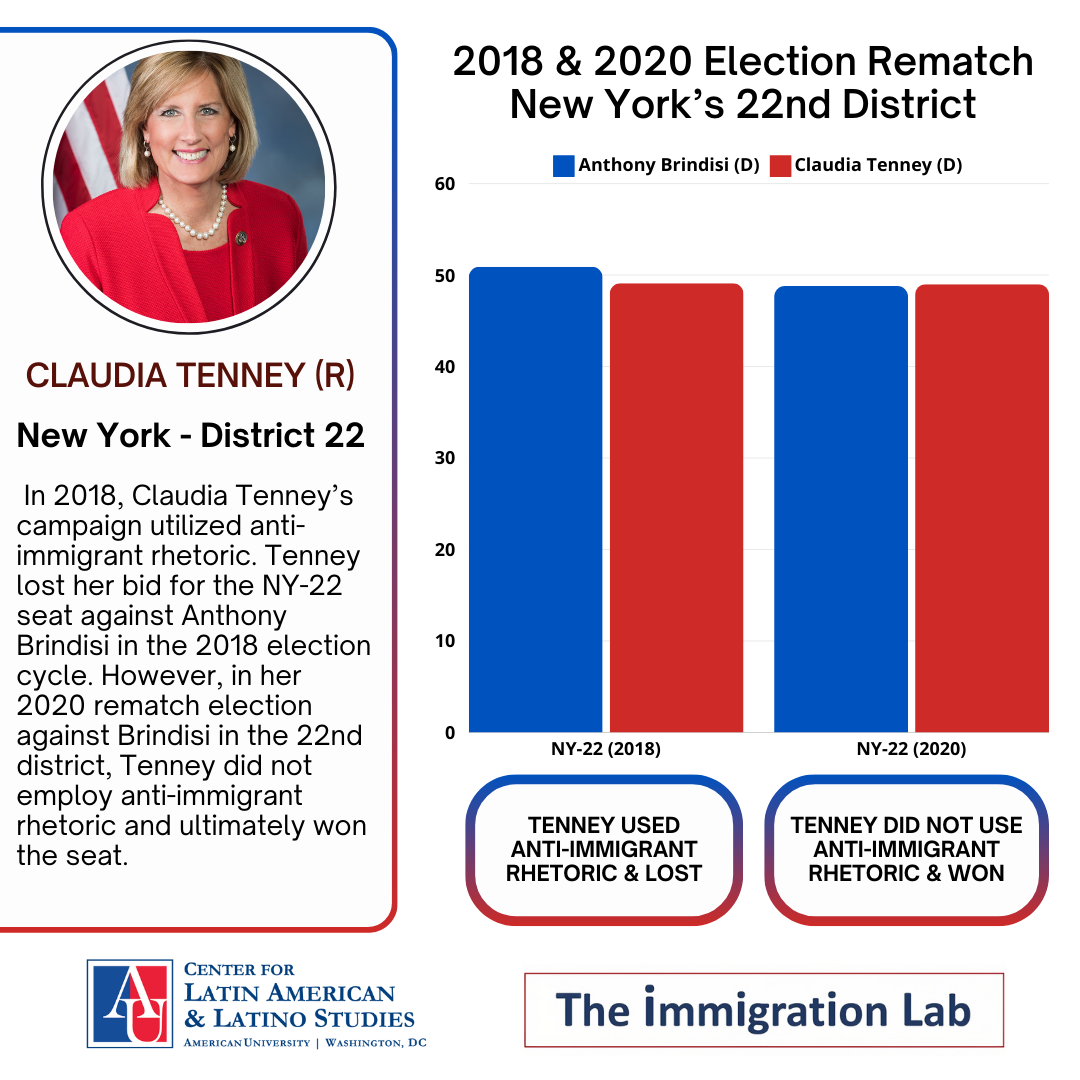
Failure of Anti-Immigrant U.S. Political Campaigns 2018-2023

by Reilly Phelan, Ernesto Castañeda & Joseph Fournier*

Overview of dataset from 2018, 2020, 2022 election cycles for competitive races / Creative Commons License

Contrary to the common assumption, anti-immigrant rhetoric does not ensure electoral success. In an upcoming report from the Immigration Lab and the Center for Latin American and Latino Studies, we prove the moral and electoral failure of using anti-immigrant sentiment in campaign platforms. Our data demonstrates the falsity of the notion that being weak on immigration control is an electoral vulnerability.

In an extensive analysis of campaign material and election outcomes from the 2018, 2020, 2022, and 2023 gubernatorial and congressional elections, we found various candidates who employed anti-immigrant rhetoric and lost their elections. We defined anti-immigrant rhetoric as overarching narratives of border securitization and the criminalization of immigrants.

· In the 2018 election cycle, twenty candidates in competitive elections employed anti-immigrant rhetoric—and lost.

· In the 2020 election cycle, the utilization of such rhetoric relaxed broadly, and Republican candidates benefitted. Ten candidates fit our criterion. 

· In the 2022 election cycle, twelve candidates lost in competitive elections after employing anti-immigrant rhetoric throughout their campaign. 

· In the 2023 special elections, the degree to which immigration was mentioned declined. The defeat of Daniel Cameron (R) by incumbent Andy Beshear (D) in the Kentucky gubernatorial race met the criterion of our prior analyses.

While anti-immigrant sentiment is not exclusive to the Republican party, we found that the presence of such rhetoric in campaigns was overwhelmingly among Republican candidates. For the 2020 election cycle, we conducted an analysis of elections where seats flipped from Democrat-held to Republican-held. Ultimately, nearly half of the Democrat-to-Republican flipped seat candidates did not utilize anti-immigrant sentiment in the campaign material of their successful campaigns. 

In assessing the 2018 and 2020 election cycles, anti-immigrant campaign rhetoric relaxed during the 2020 cycle compared to the 2018 cycle (not to say anything about 2016). Kris Kobach’s losing 2018 Kansas Gubernatorial campaign exemplifies the failures of a campaign largely platformed on anti-immigrant sentiment. Kobach’s campaign hinged upon his pointed immigration rhetoric and ultimately failed to bring Kobach election victory. “Anti-immigration hard-liner[s]” like Kris Kobach largely declined in competitive 2020 elections. That is not to say that anti-immigrant campaign rhetoric disappeared; rather, fewer candidates premised their campaigns fully upon such narratives.

Candidates who ran in 2018 with anti-immigrant campaign rhetoric and chose to run again in 2020 had an observable decrease in the use of anti-immigrant sentiment in the candidate’s campaign platforms. For candidates like Matt Rosendale, Claudia Tenney, and Young Kim, this shift in campaign rhetoric led them to success in their rematch attempts during the 2020 election cycle. 

Coupled with our analysis of election outcomes of anti-immigrant candidates, we provide below an assessment of narrative trends: 

Several candidates mainly used anti-immigrant rhetoric to signal support for and connection to former President Trump. Strong stances against immigration, particularly during the 2018 and 2020 election cycles, became a means to show supposed shared values and allegiance with Trump. By applying “Build the Wall” narratives and framing border security as imperative, candidates premised their campaigns on Trumpist values more broadly. For example, in Greg Gianforte’s winning bid for the Montana Governorship in 2020, Gianforte promised to “stand with President Trump to crack down on illegal immigration.” Interestingly, Donald Trump’s 2020 presidential campaign aligns with our findings— his extensive use of anti-immigrant campaign rhetoric during his 2020 bid for reelection was not enough to lead him to electoral success. 

In 2022, however, references to the border wall largely de-emphasized the securitization project’s explicit link to Trump. While calls to “finish the wall” were present in multiple candidates’ campaign platforms, candidates offered a similar amount of attention to the re-establishment of anti-immigrant policies, including the “Remain in Mexico” program. Arizona Gubernatorial candidate Kari Lake regarded the policy as “the best [immigration] policy I’ve seen.” 

Through further assessment of the rhetoric employed by candidates within our 2022 and 2023 set, we see candidates shift their anti-immigrant campaign rhetoric away from targeting migrants themselves and instead targeting Democratic leadership, whom they label as in support of so-called “open borders.” Candidates such as Kari Lake take this concept a step further, arguing that Democrat leadership has a vested interest in the continuation of undocumented immigration as a means of “solidifying a permanent political majority.” These claims on the campaign trail are dangerous and alarmingly similar to the racist theory of “the Great Replacement”— propagating the idea that elites are purposefully encouraging migration to render America more diverse.

The 2022 elections also demonstrated a rise in claims that immigration is no longer confined to states along the U.S.–Mexico border. As efforts spearheaded by Texas Governor Greg Abbott bring “busloads” of immigrants to cities farther north of the border, the framing of immigration as an issue of concern has shifted both on the campaign trail and beyond. For example, a candidate for Pennsylvania Senate Mehmet Oz stated, “Now every state has become a border state.” With the U.S. increasingly externalizing its border by instituting border outposts, historical conceptions of borders and their significance are shifting across the U.S. Thus, the way immigration is discussed during elections is shifting.

As the U.S. gears up for the 2024 election cycle, the moral and electoral failure of anti-immigrant campaign rhetoric must be taken into account. Plain and simple, anti-immigrant rhetoric does not create electoral victories. In assessing both election outcomes and narrative trends, we see how a more humane, measured, and pragmatic view of immigrants can indeed be the morally and politically right thing to do. 

* Reilly Phelan is a research assistant at the Immigration Lab and the Center for Latin American and Latino Studies. She has previously worked with the International Rescue Committee and Arizona Legal Women and Youth Services. She will be graduating May 2024 with a degree in International Relations. 

*Ernesto Castañeda is Director of the Immigration Lab and the Center for Latin American and Latino Studies at American University. 

*Joseph Fournier is a research assistant at the Immigration Lab and the Center for Latin American and Latino Studies at American University.

Reproduction with full attribution is possible by news media and for not-for-profit and educational purposes. Minor modifications, such as not including the “About the Study” section, are permitted.

Immigration as the Current Main Driver of Economic Growth in the U.S.

By Ernesto Castañeda, Edgar Aguilar, and Natalie Turkington

A new report from CLALS and the Immigration Lab finds that recent immigrants are a key driver of economic growth in the United States.

The report presents an original calculation that finds that only in 2022:

  • Immigrants who sent money home contributed over $2.2 trillion dollars to the U.S. economy.
  • This contribution by migrant labor constitutes about 8% of the U.S. GDP.
  • Remittances represent just 4% of the total output generated by immigrants, even if they add up to $81.6 billion annually, disputing the narrative that immigrants drain the U.S. economy.


Immigrants who remit contribute around $2.2 trillion annually to the U.S. economy. Despite concerns that remittances drain U.S. dollars, they only represent 4% of immigrants’ total contributions. This estimate is based on credible sources indicating that 17.5% of immigrants’ income is sent as remittances and considering a combined yearly salary of approximately $466.5 billion.  Using data from the World Bank, the Association for Central Banks of Latin America, the U.S. Census Bureau, and the Bureau of Labor Statistics, however, this is just a good approximation to quantify some of the benefits of migration. Immigrants’ contributions to the economy are greater as not all send remittances through formal channels. Additionally, it overlooks the economic growth immigrants stimulate by spending their wages in the U.S., creating demand, and generating jobs. Not to say anything about the human, cultural, culinary, and creative contributions. Below are more details about this novel estimation and projections of future contributions by immigrants to the U.S. economy.

The Congressional Budget Office’s Demographic Outlook 2024-2054, which has gotten some deserved media attention, estimates that in 2034 the U.S. economic output will be $7 trillion larger due to new immigration. Tax revenues would also be higher and the deficit lower because of immigration all else equal.

The quote from the CBO Director’s press release is, “in our projections, the deficit is also smaller than it was last year because economic output is greater, partly as a result of more people working. The labor force in 2033 is larger by 5.2 million people, mostly because of higher net immigration. As a result of those changes in the labor force, we estimate that, from 2023 to 2034, GDP will be greater by about $7 trillion and revenues will be greater by about $1 trillion than they would have been otherwise.”

We estimate immigrants’ contribution to the U.S. economy between 2023 and 2034 will be greater. Using the same immigration estimates as the Congressional Budget Office’s (see graph below), we calculate new immigrants have the potential to elevate the U.S. economic output by a staggering $17 trillion just in 2034.

Net population growth is through immigration.

Source: Congressional Budget Office interactive graph here.

However, if the number of new immigrants and asylum seekers continues at the same pace as in estimated for 2024, 3.3 million per year (10,000 per day as happened in December of 2023), we calculate that the U.S. would enjoy an increased economic output of over $37 trillion just in 2034.

As the Economic Policy Institute writes, “The unemployment rate for U.S.-born workers averaged 3.6% in 2023, the lowest rate on record. Obviously, immigration is not causing high unemployment among U.S.-born workers.” They further write, “immigrants that make up 18.6% of the U.S. labor force are playing key roles in numerous industries and are employed in a mix of lower, middle, and higher-wage jobs. And as the Congressional Budget Office recently reported, immigration is contributing to strong economic growth—with future immigration forecasted to boost real gross domestic product by 2% over the next 10 years—as well as increasing government revenue. Immigrants are also complementing U.S.-born workers by contributing to overall population and workforce growth. The U.S. Census Bureau projects that if the U.S. were to have lower-than-expected immigration levels, the population would begin to decline in 20 years, and if there were suddenly zero immigration, the population would begin to decline next year, deeply harming economic growth.”

A Washington Post article states that around 50% of the growth in the labor market in 2023 was due to foreign-born workers. The same was the case in the 1990s.

In 2021, 45 million immigrants lived in the United States, accounting for 14% of the country’s population. Immigrants are integrated into American social, economic, cultural, and political life. The Immigrant Research Initiative calculates that “Immigrants account for 17 percent of the U.S. economic output (GDP), even higher than their share of the population. The United States has a $19.6 trillion economy according to the Bureau of Economic Analysis 2021 statistics, which means immigrants are conservatively responsible for $3.3 trillion of economic output.” This supports our calculation of around 2.2 trillion only from immigrants who send money abroad because many do not send remittances.

Estimates and projections vary, but what is clear is that there would be no economic growth without recent immigrant arrivals. If immigration (of all types) decreases in the following years, economic growth will most likely plummet, and inflation will rise. Furthermore, this does not only apply to the United States but to other countries as well.

You can find coverage of the report in Spanish here:

“Immigracion y Economia en EE.UU.” RTVE 24h.

“Los hispanos y el mercado laboral en EE. UU.” Y Esto No es Todo podcast on YouTube.

“Ernesto Castañeda y el mercado laboral en EE.UU.” RTVE audio.

Ernesto Castañeda is the Director of the Center for Latin American and Latino Studies and the Immigration Lab.

Edgar Aguilar and Natalie Turkington are research assistants at the Center for Latin American and Latino Studies.

Full report here.

Takeaways from the North American Leaders Summit and Biden’s Visit to Canada

Editorial

By Ernesto Castañeda*

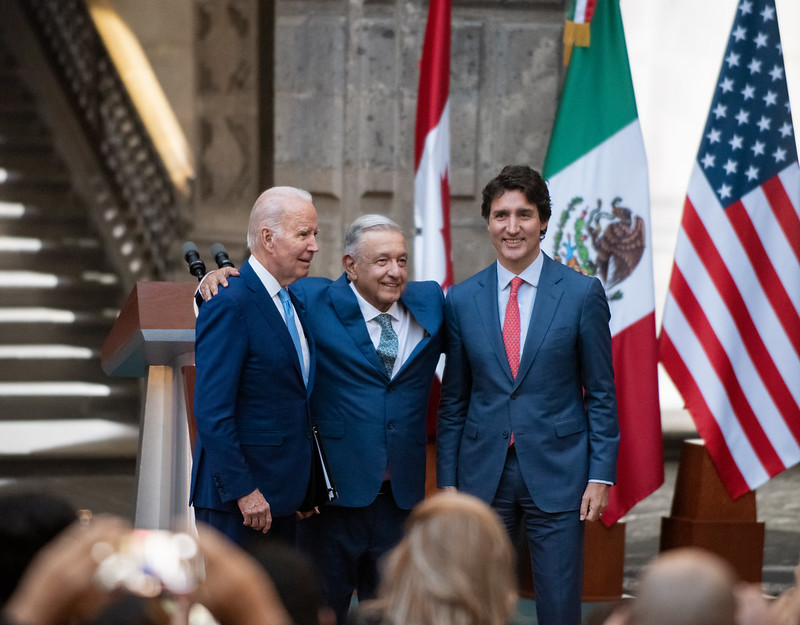
North American leaders, Andrés Manuel López Obrador, Justin Trudeau and Joe Biden, met in Mexico for the 10th North American Leaders’ Summit /Eneas De Troya /Flickr/ Creative Commons License

President Joe Biden conducted his first trip to Mexico in the context of the North American Leaders’ Summit on January 10, 2023. These summits started with George W. Bush in 2005 and did not take place at all while Trump was President. The 2021 and 2023 meetings signal a return to thinking of and valuing the North American region as such. The discussions were best when they decoupled local political considerations, common challenges, and regional opportunities. Three points toward integration are described here.

  1. President Joe Biden, Canadian Prime Minister Justin Trudeau, and Mexican President Andrés Manuel López Obrador (AMLO) discussed the advantages of further integrating supply chains within the region. Labor costs in China have gone up, and the pandemic showed that relying on long-distance shipping can delay things during crises, epidemics, and international disputes. There was a push for nearshoring, meaning having an increasing proportion of essential and high-value products manufactured in Canada, Mexico, and Central America rather than Asia. Concrete efforts were mentioned to increase manufacturing in the region within the context of the regional trade agreement USMCA, which includes regulations, respects local preferences, and supports specific sectors and products. Thus, during the summit, Biden and Trudeau were able to look past Mexican President Andrés Manuel López Obrador’s protection of PEMEX, Mexico’s oil company, and specific controversies about car manufacturing. Furthermore, Biden, Trudeau, and López Obrador discussed the desire for further integration beyond trade. The Mexican President mentioned in his closing speech that Mexico will be represented in planned regional integration meetings by Foreign Minister Marcelo Ebrard, Finance Minister of Mexico Rogelio Ramírez de la O, Secretary of Economy Raquel Buenrostro Sánchez, and independent businessman who represents the business community, Alfonso Romo Garza. During the meetings, Prime Minister Trudeau was accompanied by his wife, Sophie Gregoire Trudeau, Minister of Foreign Affairs Melanie Joly, Minister of International Trade Mary Ng, and the Minister of Public Safety Marco Mendicino. President Biden was accompanied by the First Lady Dr. Jill Biden, Secretary of State Anthony Blinken, National Security Advisor Jake Sullivan, U.S. Ambassador to Mexico Ken Salazar, U.S. Ambassador to Canada David Cohen, Secretary of Homeland Security Alejandro Mayorkas, Special Presidential Advisor for the Americas Chris Dodd, Secretary of Commerce Gina Raimondo, and National Security Council Senior Director for the Western Hemisphere Juan Gonzalez. The size and high profile of the entourage show the seriousness of these talks and the intentions to communicate further and coordinate around shared challenges and regional integration.
  2. The three leaders emphasized that migration is a regional process requiring a regional approach. Biden and Trudeau recognized their history and reality as countries of immigration. Canada emphasized its desire to welcome new people to keep growing its population and economy. Biden recognized the history of the United States as a country built largely by immigrants. The Mexican President missed an opportunity to acknowledge that in the last hundred years, a substantial number of people moved to Mexico from places like Spain, Chile, Argentina, Cuba, Lebanon, Guatemala, and the United States. There were mentions about the need for Mexico to become the place where some of the people from the hemisphere should receive asylum and be allowed to settle legally long-term. The three heads of government also stressed a safe, humane, and legal entry for migrants through more legal pathways and shared responsibility as advocated for in the Los Angeles Declaration. Additionally, Biden announced the monthly legal entry of 30,000 migrants from Cuba, Nicaragua, Haiti, and Venezuela with appropriate sponsors, background checks, and airplane flights. Generally, they recognized that the people who emigrate do it as an option of last resort. They expressed the humanitarian need to help create ways to migrate more safely than is currently possible for many.
  3. Prime Minister Trudeau and Presidents López Obrador and Biden committed to collaborating on climate change and promoting racial equity, diversity, and inclusion, including collaborating with marginalized populations to fight violence against Native women and girls and expand the protection of LGBTQI+ people. Regarding climate change, the three nations promised to reduce methane emissions by 15% by the end of 2030, develop a plan to cut food loss and waste in half by 2030, and create trilateral infrastructure for EV chargers. The three leaders also spoke about their support for democratic practice and condemned the events on January 8 in Brazil. Biden and Trudeau spoke about how a feature and strength of their democracies is their diversity. Overall, most of the meetings were about strengthening ties and facing shared challenges pragmatically and collectively. The demeanor was friendly, forward-looking, and about partnership. As Justin Trudeau said, “We are stronger together.”

Where are we two and a half months later, when Biden visited Canada?

Biden spoke about the interconnectedness of the U.S. and Canadian economies, sports leagues, and people. Saying that “the U.S. and Canada share one heart.” Both spoke about green jobs and more regional manufacturing with unionized jobs.

Nevertheless, the attention was focused on asylum seekers. President Biden referred to the Los Angeles Declaration and the importance of helping migrants as a region. Canada announced the orderly welcoming of 15,000 immigrants from the Western Hemisphere. However, the discussion about the official announcement underlines “irregular migration” while mainly talking about people seeking prompt and secure asylum. Cable media commentary often referred to an agreement to address “illegal arrivals” to Canada by people asking for asylum. Nonetheless, asking for asylum is a right that people have under U.S., Canadian, and international law. The issue is that some have arrived away from official ports of entry and then approached authorities to announce themselves and exercise their right to ask for asylum proactively. Under the new agreement, Canada can send migrants back to the United States if they have not applied for asylum in-country first and vice versa. This agreement further weakens the right to asylum in North America and criminalizes those seeking it. The often-mentioned record numbers are probably inaccurate regarding legal and undocumented migrants as a proportion of the population. Still, an increasing number of asylum seekers from Ukraine, Afghanistan, Haiti, Cuba, and the Americas are arriving at land borders. The announcement of this agreement with so much fanfare constitutes a narrowing of asylum avenues and conceding to the Canadian opposition’s framing of immigrants and asylum seekers as “burdens.” It contradicts the speeches of Biden and Trudeau at the North American Leaders Summit in Mexico City on January 10 and Biden’s speech at the Canadian parliament, which recognized the many contributions immigrants make and have made to both countries.

President Biden noted the continued interest of the U.S. and Canada in supporting democracy in the Western Hemisphere.

In the meantime, the Mexican President did not appreciate messages of alarm from the north about the proposed changes to the independent Mexican electoral agency (INE) and other signs of de-democratization. In turn, AMLO spoke about the possible criminal charges against Trump being politically motivated. He also wrongly stated that Mexico is safer than the U.S. after the killing and disappearances of U.S. citizens and legal permanent residents in Mexico.

Therefore, a few months after the North American Leaders Summit, we see how some leaders are more concerned with national politics, popularity polls, and elections than working with other countries to face common problems. At the same time, working meetings about regional cooperation also serve as a reminder that despite nationalistic and isolationist presidents (like Trump was), civil servants continue working with their counterparts to make sure that regional trade, tourism, migration, consular relations, and educational and cultural exchanges continue.

March 28, 2023

*Ernesto Castañeda is the Director of the Center for Latin American and Latino Studies, Immigration Lab, and the MA in Sociology Research & Practice.

Fact-checking and editing by Karen Perez-Torres. Copy-editing by Mackenzie Cox.

CC BY-ND: This license allows reusers to copy and distribute the material in any medium or format in unadapted form only, and only so long as attribution is given to the creator. The license allows for commercial use by news sites. 

United States: DACA Challenges Continue to Threaten Vulnerable Migrants

By Andréia Fressatti Cardoso*

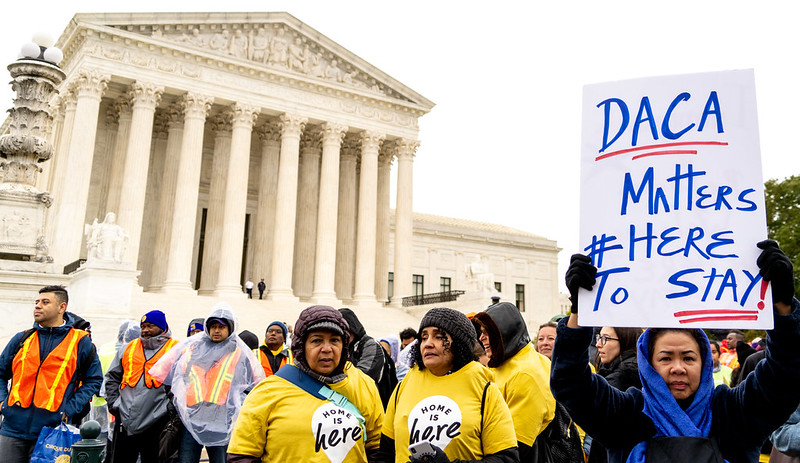
Rally by the Supreme Court as the DACA cases are heard inside on November 12, 2019 / https://www.flickr.com/photos/vpickering/49057840887
Rally by the Supreme Court as the DACA cases are heard inside on November 12, 2019 / Victoria Pickering / Flickr / Creative Commons License

A looming U.S. Supreme Court decision on the Deferred Action for Childhood Arrivals (DACA) program threatens to strip over 830,000 undocumented migrants of protection from arrest and deportation as well as any sense of belonging in the country where they have lived for most of their lives. The court is poised to throw these individuals, who have long lived in legal limbo, into the excruciating dilemma of whether to be forcibly or voluntarily “returned” to countries where they were born but have no roots, few job prospects, and often limited ability to speak the language.

  • The Obama Administration’s executive order establishing DACA in 2012 made undocumented non-citizens who entered the United States as children and met certain criteria eligible for a liminal (or temporary) legalization of their status. The benefits included being able to have a social security number, a work permit, and, depending on the state, even a driver’s license and pay in-state tuition.
  • DACA enabled these youths to come out of the shadows and pursue some of the activities of adult life. It also defined the terms of their social belonging, as access to public education cannot be denied based on immigration status since Plyler v. Doe (1982). As a place of socialization, school is usually where children start understanding the terms of their participation in society, at an age that they do not need documents for many of their pursuits.

The Obama Administration did not intend DACA to be a permanent solution for undocumented youths, but several challenges – including one led by Texas with the support of eight other states – have sought to declare Obama’s action a violation of U.S. law. In response to State of Texas v. United States (2015), the Biden Administration last August issued a final rule that used rulemaking procedures that, in its view, protected DACA from further legal challenges. But Texas objected, and the U.S. Court of Appeals agreed – leaving the Administration no recourse but to ask the Supreme Court to reverse the decision. The legal maneuvering highlights the temporary aspect of DACA for its beneficiaries.

DACA was an administration’s effort to compensate for the lack of congressional action. A decade later, this fix – a resource of paramount importance to many of the undocumented population – remains fragile and limited. DACA opponents’ legal challenges have been relentless, underscoring how easily DACA can be taken away.

  • The unraveling of DACA in the absence of legislation would be devastating for its over 830,000 beneficiaries. The status of liminal legality under DACA provides access to benefits rather than rights; legal presence rather than membership. While they were children, very few know that they do not have documents; they hardly need them for everyday activities, and some parents try to hide their status from them. As they get older and need documents for daily living, such as having a driver’s license, they face a potential shock of having no ties to the only country they have known. They discover that they can’t have the same life as their peers. The feeling of belonging shrinks and disappears.
  • Many DACA recipients would face even greater stress than the other 10 million undocumented migrants in the United States. The federal government has complete data on their identities, whereabouts, schools, and employers, making targeting them for potential detention and deportation easy. Many of their friends and family are likely to be targeted too.

The Supreme Court in 2020 blocked an effort by the Trump Administration to cancel DACA in September 2017, but the legal decision was based on procedural rather than substantive arguments – i.e., that the Trump action was “arbitrary and capricious,” not on determination that the policy behind it was unconstitutional.

  • The current U.S. Congress appears loath to institutionalize DACA. Moreover, the Administration appears reluctant to try again to use executive authority to ensure both the potential and limitations of the policy – much less a solution for membership of a population that has been present and socially and culturally belongs in the United States. If nothing is done, we could see mass detentions, family separation, and deportations – as well as resistance and protests from people who no longer want to live in the shadows and have claims to belonging.

March 9, 2023

* Andréia Fressatti Cardoso is a research fellow at the Center for Latin American and Latino Studies and Ph.D. student in Political Science at the University of São Paulo.

U.S. Immigration Debate Skewed by Bad Statistics

By Ernesto Castañeda*

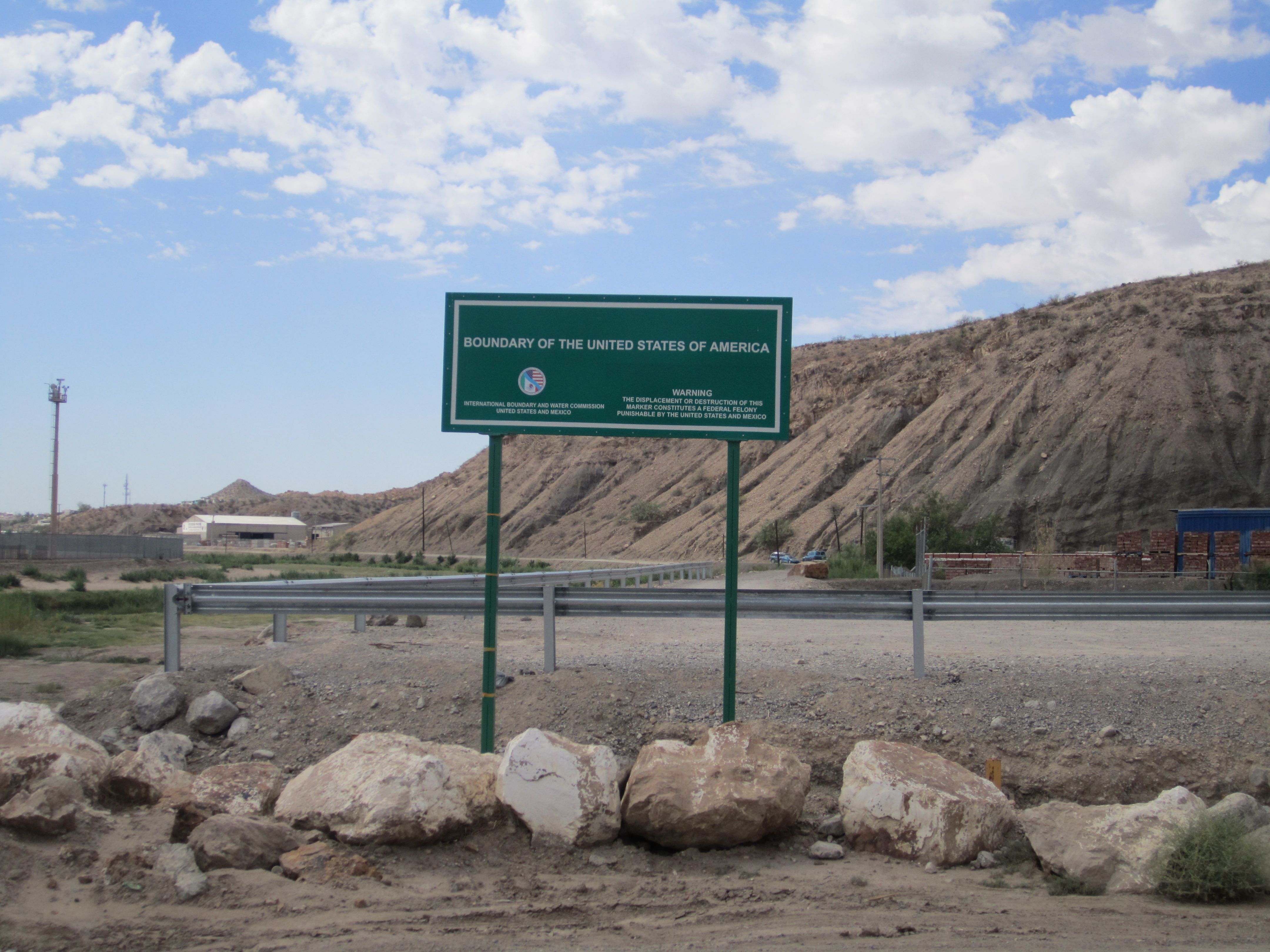
Sign demarcating US and Mexico territory on the southern US border in El Paso, Texas / Ernesto Castañeda / Creative Commons License

Immigration figures have long driven heated political debate in U.S. politics – even worse in recent years – but the data often exaggerate the problem because the responsible government agencies are double-counting and media reports are analyzing the numbers incorrectly. Opponents of President Joe Biden claim that over 2 million undocumented immigrants have entered the United States each year since he became President. The numbers reported by relevant agencies should not drive headlines or be interpreted as stock tickers about whether immigration is up and down, but the data become political footballs serving generally anti-immigration political interests.

Border encounters involving people without immigration papers are just a small subset of all immigrants, emigrants, visitors, and border crossing commercial and tourist activity – almost 300 million over the past 12 months. Analysis of the numbers about border crossers reported by the U.S. Department of Homeland Security requires clarification of what it considers “encounters.”

  • Because many people enter multiple times, the figures also reflect double-counting of many of the same individuals – sometimes more than five times each. Those of certain nationalities can be quickly removed and returned to Mexico for various reasons without adequate recording of their names and other details, making it impossible to know how many people are counted multiple times. Even those repatriated after a judge determines they do not qualify for asylum, humanitarian parole, or other special visa often try again and count as another “encounter.”
  • “Encounters” do not equal unique individuals but rather interactions between asylum-seekers or migrants and DHS personnel anywhere along the border. The U.S. Government reports, for example, that 1 million-1.3 million migrants were removed from the United States under Title 42 provisions intended to protect U.S. health in the context of the COVID pandemic – almost half of the total reported “encounters.” So “encounters” do not equal individuals entering the U.S. either.
  • The numbers include individuals whom the United States normally welcomes, including 140,000 unaccompanied minors looking to reunite with family members in the country, and over 20,000 Ukrainians. Russians and Afghans are in a similar situation. Cubans no longer are fast-tracked for permanent residency under the Cuban Adjustment Act, but the U.S. government cannot deport them because neither Mexico nor Cuba will take them back. Hundreds of thousands of Venezuelans, Haitians, and others are fleeing situations that most U.S. observers consider intolerable.
  • Comparing year-on-year figures is also deceptive. During 2020, the acceptance of asylum-seekers came almost to a halt. The pandemic, Title 42, and the “Remain in Mexico” program (under which individuals who pass a “credible fear” screening are forced to stay in Mexico while awaiting a hearing) created a backlog and bottleneck for the normal mobility that had occurred in previous years. Shifts in DHS accounting between years have also exaggerated the impression of a surge.

Other observers have confirmed migration specialists’ concerns about the over-counting. Syracuse University’s Transactional Records Access Clearinghouse (TRAC), which monitors the staffing, spending, and enforcement activities of the federal government, reported in September that detention data released by Immigration and Customs Enforcement (ICE) “is, once again, riddled with errors.” TRAC found “egregious” mistakes in several data categories that led the agency to seriously misrepresent conditions in its public statements.

While the U.S. government’s bad information makes precise calculations of migrant flows impossible, what is sure is that the total number of distinct individuals entering the United States without documentation is much less than 2 million a year. More credible estimates are that –after accounting for thousands of deportations – probably less than half a million people have been allowed in.

  • Among them, some were granted asylum – a right under U.S. and international law. Many others are welcome refugees and asylum-seekers like those from Ukraine and Afghanistan. Many others are waiting their turn in immigration court. Therefore, most of those included in this estimated half-million are in the United States legally, and the government knows who they are and where they live. By definition, they are not “illegal” or hiding. Allegations by a Texas senator and others that “4.2 million illegal immigrants have streamed across the border” since Biden took office are simply not true.

* Ernesto Castañeda teaches in the Department of Sociology in the College of Arts and Sciences.

Latin America: Is There a Constructive Side to U.S. Policy?

By Fulton Armstrong

President Joe Biden, National Security Adviser Jake Sullivan and NSC Senior Director for the Western Hemisphere Juan Gonzalez gathered at the President's desk in the Oval Office.
President Joe Biden, joined by National Security Adviser Jake Sullivan and NSC Senior Director for the Western Hemisphere Juan Gonzalez, talks on the phone with Jeff Zients on Wednesday, April 21, 2021, in the Oval Office of the White House / Adam Schultz / The White House / Flickr / Creative Commons License.

While many of the Biden Administration’s policies in Latin America – particularly toward Cuba, Venezuela, and China’s activities – remain largely the same as during the Trump era, some of its actions and statements suggest more nuanced approaches on other regional issues. 

  • National Security Council senior director for the Western Hemisphere, Juan Gonzalez, has been the point person for maintaining the hard line on Venezuela and Cuba. In early March, he met in Caracas with President Nicolás Maduro, who later said, “we’ve agreed to work on an agenda going forward,” but the Administration vehemently denied this and has continued to maintain that opposition leader Juan Guaidó is President of Venezuela. In Cuba, according to various sources, Gonzalez last year vetoed a promised plan for reversing a Trump halt to the flow of remittances to the island. He recently stated that new U.S. sanctions against Russia were also intended “by design” to put pressure on Cuba, Venezuela, and Nicaragua.

At Congressional hearings in February and March, other senior officials have laid out various Administration priorities.

  • Commander of the U.S. Southern Command, General Laura Richardson, testified that the hemisphere is “under assault from a host of cross-cutting, transboundary challenges that directly threaten our own homeland.” In addition to helping the region with COVID-19 and the “climate crisis,” she said U.S. policy is to counter China’s “relentless march” to expand its influence in the region and its “challenges [to] U.S. influence.” She also pledged to combat transnational criminal organizations, which “operate nearly uncontested and blaze a trail of corruption and violence that create conditions that allow the PRC and Russia to exploit, threaten citizen security, and undermine public confidence in government institutions.” She said her command is “putting integrated deterrence into action.” 
  • In testimony in February, Assistant Secretary of State for the Western Hemisphere, Brian Nichols, praised President Biden’s recent “Summit for Democracy” and acknowledged that “too many ordinary citizens have seen their governments fail to meet their aspirations for a better future.” He also said the Administration’s “Build Back Better World” initiative, including investments that respond to partners’ infrastructure needs, will counter China’s “Belt and Road Initiative” and “will help demonstrate that democracies can deliver for their people.” His counterpart in the Bureau of International Narcotics and Law Enforcement Affairs, Todd Robinson, stressed rule of law programs under the “Root Causes Strategy,” although he noted that “in some cases,” governments lack the political will to tackle the corruption that is a root cause of their nation’s problems.
  • USAID Assistant Administrator responsible for Latin America, Marcela Escobari, testified that her priority is mitigating the harm caused by COVID-19 and climate change. While criticizing the state of democracy and human rights in “extreme cases” like Venezuela, Cuba, and Nicaragua, she expressed concern about “democratic backsliding” elsewhere, noting that “even in more established democracies, authoritarian tendencies have emerged.” 

The Administration has not articulated how some of its steps diverge from the aggressive and transactional approaches that characterized the Trump Administration’s engagement with the region. The White House pressed the International Monetary Fund (IMF) hard to reach an accommodation with Argentina, whose government Trump kept at arm’s length, and helped it avoid default on its 2018 stand-by loan. Vice President Harris has given strong support to Honduran President Xiomara Castro since her inauguration in January – and probably contributed to Washington’s decision to request the extradition on drug charges of her predecessor, Trump ally Juan Orlando Hernández. In their Congressional testimony, current officials have repeatedly made nuanced remarks about the perceptions and reality of homegrown challenges in Latin America. Their emphasis on corruption and lack of will to address those scourges suggests awareness that not all is well, even in those countries that Washington embraces as democracies. After a slow initial response, the Administration has been generous in providing support for vaccine availability and for the capacity of public health systems to effectively respond to the COVID‑19 pandemic.

  • These factors suggest that while tired regime-change policies on Cuba and Venezuela and “integrated deterrence” against China and drug cartels may remain central to Washington’s approach to hemispheric affairs, there is awareness as well of how deeper cooperation with the region could simultaneously promote both U.S. and Latin American interests. The upcoming Summit of the Americas in Los Angeles may be the Administration’s best chance to seek meaningful common ground around the imperative of strengthening democratic governance, a challenge which Washington’s leadership now perceives as one that it shares with virtually all of its Latin American counterparts. 

March 31, 2022

U.S. Foreign Assistance Portals are Inadequate to Assess Reform on Locally Led Development

By Katerina Parsons*

USAID Administrator Samantha Power / Flickr / Creative Commons License

USAID has committed to increase direct assistance to local partners around the world – rather than directing aid through governments, international NGOs, or for-profit contractors – but civil society groups will have difficulty holding the agency accountable without significant changes to existing transparency portals.

  • In a recent speech, Administrator Samantha Power announced that USAID would increase assistance to local partners to 25 percent of total funding – short of earlier commitments but more than the current 5.8 percent. By the end of the decade, she added, 50 percent of USAID programming would “place local communities in the lead,” allowing them to co-design projects, set priorities, drive implementation, or evaluate programs’ impact. The NGO community has long called for these goals.

The U.S. government’s searchable foreign assistance trackers are still inadequate to assess progress, however.

  • ForeignAssistance.gov was relaunched in October, combining the State Department tracker of the same name with USAID’s Foreign Aid Explorer, which will no longer be updated. Aid organizations applauded the change for streamlining data, but the new site still does not include key data, such as the percentage of foreign assistance that is locally led, or even which implementing partners are based in the countries where they work. Many awards list no supporting documents detailing participants or outcomes; those that do include this information as a PDF file that is not searchable and cannot be easily compared across awards.
  • Some additional information can be found on other U.S. government sites. USASpending.gov, the open data source for all government spending, includes sub-award data for USAID, listing the percentage of the total amount that is sub-awarded and recipient names and sub-award amounts. Because most small, non-U.S. organizations that receive U.S. funds do so indirectly through sub-grants; this information is crucial for transparency.

An example – a Honduran organization for which I worked for several years – illustrates the challenge of tracking aid. According to USASpending.gov, as a USAID sub-grantee on a governance and citizen participation project, it received $787,000 over an eight-year period (FY2011-18) – enough to fund a small office of Honduran auditors, researchers, and legal experts who created a national corruption complaint mechanism, conducted social audits of government agencies, and led consultancies to strengthen the country’s higher courts. While substantial, this funding represented less than 4 percent of the $19.8 million total granted to the U.S. NGO managing the project. The U.S. NGO provided 36 percent of the total grant to Honduran implementing partners. Neither USASpending.gov nor ForeignAssistance.gov account for the remaining 64 percent of award funds.

  • This gap between amount awarded and amount delivered to community-based partners is not atypical. A $34.2 million violence-reduction award (FY2016-23) granted to a major U.S. contractor has given out just 13.1 percent of its funding in sub-contracts – and those only to U.S. and Honduran businesses, not Honduran NGOs. A $4.1 million “civil society and media activity” grant (FY2018-20) awarded just $80,000 to Honduran civil society organizations.
  • USASpending.gov does not code this as “international” or “local” spending; first-hand knowledge or web searches are required to determine the recipients. ForeignAssistance.gov provides even less detail.

USAID’s promises of millions of dollars to empower local organizations so far have not been complemented by a commitment to make public data on localization more transparent. One straightforward fix would be to add a search query to ForeignAssistance.gov for “recipient type” such as “local,” similar to USASpending.gov, where one can filter by contract recipients owned by women, minorities, or veterans.

  • Information on sub-grantees or sub-contractors (local, U.S., international) is also lacking. Additional clarity on the term “local” is also merited; USAID does not distinguish between “local entities” and “locally established partners,” which may be national chapters of international organizations. Particularly in larger multicultural countries, “local” leadership may still not be proximate to communities being served.
  • Fulfillment of Administrator Power’s pledge “to interrogate the traditional power dynamics of donor-driven development and look for ways to amplify the local voices of those who too often have been left out of the conversation” will depend on making public data on localized development transparent enough to make proximate leadership in foreign assistance – or the lack of it – more visible.

December 16, 2021

* Katerina Parsons is a master’s student in Development Management in the School of International Service. This article is based on research done for the Accountability Research Center, where she is a research assistant.

Chile: Astronomy Investments Help but Face Some Criticism

By Noah Rosen*

La Silla Observatory in Chile’s Atacama Desert/ European Southern Observatory/ Flickr/ Creative Commons License

Exceptional atmospheric conditions in northern Chile, an image of political stability, favorable tax policies, and diplomatic credentials for researchers have made the country a leader in international astronomy, but some Chileans want to see more benefits from the cooperation. 

  • Experts estimate that, by the end of this decade, over 70 percent of the world’s astronomical viewing capacity will be concentrated in Chile. The United States – including the National Science Foundation (NSF), universities, and private foundations – and Europe and other global players have invested billions of dollars in observatories, creating significant opportunities for Chilean astronomy as well as its high-tech engineering and computing sectors. 
  • Chilean researchers are guaranteed 10 percent of the observation time on all international telescopes established in Chile, a policy Chilean scientists won in the 1990s. According to Wolfgang Gieren, astronomy professor at Chile’s Universidad de Concepción, “the 10 percent has been the most important factor to boost development of astronomy in Chile.” International observatory projects often include significant funding and scholarship activities, including a multi-million-dollar contribution from the NSF to CONICYT, the Chilean science agency, and an annual scientific scholarship managed by the Agencia Nacional de Investigación y Desarrollo de Chile (ANID). 

The diverse range of support has helped Chile rapidly expand its astronomy capabilities. 

  • Four universities have opened new astronomy departments, bringing the total to eight, and PhD students have increased from five in the early 1990s to 40 by 2005. Joint work and technical exchanges have increased also. The Millimeter Wave Laboratory of the Universidad de Chile works with CalTech to develop advanced millimeter-wave receivers and other high-tech equipment. The Astro-Engineering Center at the Pontificia Universidad Católica works with the multinational Gemini Observatory to develop adaptive optics and vibration mitigation instruments, in partnership with Harvard and other U.S. universities. 
  • Chile’s domestic high-tech engineering and computing sectors are benefiting as well. The government estimates that 15 Chilean companies have provided advanced engineering and technology services to the observatories. A local firm, AXYS Technologies, installed fiber optics at an Atacama-area observatory that, experts say, was groundbreaking in understanding how fiber optics operate at high altitude (5,000 meters). A Dutch-Chilean engineering company conducted geological studies and construction consulting for the Rubin Observatory and for another observatory in Cerro Tolar. 
  • The huge data processing and storage capacities required by the observatories is positioning Chile as a big data player. Microsoft, Google, and Amazon are developing astro-data projects in Chile. The U.S. NSF is funding a data science summer school at Universidad de La Serena to build connections with the future generation of Chilean data scientists. 

Despite these advantages, Chilean scientists and civil society actors continue to question the relative balance of benefits they get for the globally unique natural attributes in their northern deserts, which make cutting-edge astronomy research possible. 

  • Chilean scientists are demanding more guaranteed observation time, in line with what hosts in Hawaii (15 percent) and Spain (20 percent) receive. They argue that current arrangements still make them too dependent on technologies and expertise from the Global North, which largely controls the research agenda. The Chilean government estimates that only 10-20 percent of the international dollars invested in the observatories enter the Chilean economy, the vast majority of which are channeled to goods and services – construction of roads, buildings, electricity, water and gas supply, hospitality, etc. – rather than building Chile’s scientific capabilities. Chilean scientists and engineers argue for new policies that more systematically involve Chileans in telescope construction and maintenance. 
  • Broader questions of justice also persist: in some places, the observatories consume significant amounts of water and electricity while nearby villages go without regular access. Labor strikes at the Atacama observatory some years back raised questions of fair working conditions, especially given that the favorable diplomatic status accorded to observatories limits oversight. 

Noah Rosen is a PhD candidate in the School of International Service, specializing in grassroots peace movements in Colombia. This article is adapted from CLALS research on U.S. engagement in Chile and Uruguay, supported by the Institute for War & Peace Reporting with funding from the U.S. Department of State.