Will the U.S. Support Controls on Security Contractors in Latin America?

Photo by: Charles Atkeison / flickr / Creative Commons

Photo by: Charles Atkeison / flickr / Creative Commons

An upcoming conference in Switzerland will test U.S. willingness to make good on its rhetorical support for greater control over private contractors involved in wars or similar circumstances.  The “Montreux plus five” conference in December will discuss implementation of the Montreux Document, which lays out legal obligations and “best practices” for countries that hire “Private Military and Security Companies” (PMSCs) during armed conflict.  The process emerged in 2008 to reiterate state responsibilities after contractors were found to be deeply involved in incidents in Iraq – including the torture of detainees at Abu Ghraib prison and a confrontation at Nissour Square in which 17 civilians were killed.  The United States, which participated in discussions of the Document and endorsed it, has been developing its own “standards” based on it.

Although the PMSCs in Iraq and Afghanistan – and their alleged involvement in human rights abuses – are most widely known, security contractors are deeply engaged in U.S. efforts in Latin America related to the “war on drugs.”  In the 2005-2009 period, DynCorp, Lockheed Martin, Raytheon, ITT, and ARINC collectively received counternarcotics contracts in Latin America worth a total of $1.8 billion.  The contracts include provision of intelligence, surveillance, reconnaissance, information technology, and communications equipment.  Lockheed Martin received contracts for training, equipment, and other services in Colombia and Mexico. Yet the majority (Democratic) staff of the subcommittee on contracting oversight of the U.S. Senate Committee on Homeland Security and Governmental Affairs concluded in 2010 that neither the State Department nor the Department of Defense had adequate systems to track the implementation of counternarcotics contracts.  Referring to contract and accounting errors, the Bureau of International Narcotics and Law Enforcement Affairs told the subcommittee chairman that it “does not … maintain discrete records of such occurrences since these challenges routinely occur at the embassies.”

The subcommittee’s focus was on contracting anomalies, but publicly acknowledged incidents – such as DynCorp’s violation of guidelines governing coca eradication in Colombia – suggest oversight over operations is also lacking.  In Colombia, for example, two cases of rape of a minor involving U.S. contractors were reported yet remain uninvestigated, and in Mexico a contractor appears to have been involved in torture training.

PMSCs often carry out their work within the dark interstices of sensitive operations – beyond the government’s immediate operational control but functioning with its imprimatur and expecting its protection when things go wrong.  The U.S. Senate’s acknowledgement of the need for better management and oversight over them has not driven significant reforms yet.  If the Iraq and Afghanistan experiences are any guide, problems with the monitoring of expenditures are the tip of the iceberg.  Security contractors tend to run rough over human rights, and they are often a source of tensions with both governments and the population in host countries.  The use of security contractors without effective monitoring is a source of diplomatic tension within the region as well.  DynCorp’s aerial eradication operations, for example, provoked Ecuador to file suit against Colombia in the International Court of Justice, arguing that Colombia dispersed toxic herbicides into Ecuadoran territory, damaging human health, property and the environment.  The two countries recently resolved the dispute, but the case illustrates the risk of outsourcing sensitive operations to contractors without careful monitoring.

What’s Up with Cuba Policy?

By William M. LeoGrande

Photo by Rinaldo W. / Flickr / Creative Commons

Photo by Rinaldo W. / Flickr / Creative Commons

A little over six months into President Obama’s second term, the administration is giving hints that something is afoot in relations with Cuba.  Back in 1994, Fidel Castro told a group of former U.S. ambassadors that he needed a two-term U.S. president to normalize relations with Cuba because no first-term president would have the political courage to do it.  Could Barack Obama be that president?  Efforts to engage with Cuba during his first term were frozen after the 2009 arrest of USAID subcontractor Alan Gross.  Despite evidence that Gross had violated Cuban law, the administration insisted that Gross had done nothing improper and demanded that he be freed immediately.  When he wasn’t, the U.S. position hardened: there would be no improvement in relations with Cuba, not even on issues of mutual interest, until Gross was released.  Gross is still in jail four years later; the non-negotiable demand strategy failed utterly.

The second Obama administration appears to be trying something new.  In May, the Department of Justice dropped its insistence that René González, a member of the “Cuban Five,” serve out his probation in Miami rather than Cuba.  Shortly thereafter, Cuba granted Alan Gross’ request to be examined by his own doctor.  In late May, Josefina Vidal, the Cuban Foreign Ministry official in charge of relations with the United States, met in Washington with Assistant Secretary of State for Western Hemisphere Affairs Roberta Jacobson – the highest-level U.S. official to meet with a Cuban diplomat in several years. After this reportedly constructive encounter, the State Department announced the resumption of bilateral talks on immigration (suspended since January 2011), and on re-establishing direct postal service. Working-level diplomats have resolved most points of disagreement on a postal accord, a Coast Guard search and rescue accord, and an oil spill containment protocol – although the U.S. side is loath to use the word “agreement,” lest it stir up trouble with a small but loud contingent in Congress.

Although U.S. policy is no longer completely paralyzed by the predicament of Alan Gross, it remains tentative, cautious, and incremental – far from the bold stroke that Fidel Castro was hoping for from a second-term president.  In May, the State Department again listed Cuba as a “state sponsor of terrorism” in its annual report, although the rationale read more like a justification for removing Cuba from the list—a move reportedly under discussion by the Obama team.  When the administration sent its FY2014 budget request to Capitol Hill, it again requested $20 million for “democracy promotion” in Cuba, continuing programs like the one that got Alan Gross arrested.  Radio and TV Martí, which cost U.S. taxpayers $28 million a year, continue to beam programs below Voice of America standards to a shrinking radio audience and non-existent TV viewers.  (Cubans call TV Martí “la TV que no se ve” —No-See TV.)  If Obama had the mettle to make the bold stroke, these provocative, ineffectual programs  would be on the chopping block in tough budgetary times.  More positively, the president could take the initiative by appointing a special envoy to talk turkey with Havana, and he could promote a U.S. policy debate on Cuba that’s long overdue.  Incrementalism will only take us so far.  Real change in U.S.-Cuban relations requires vision and courage – qualities Obama displayed on comprehensive health care and immigration reform.  After all, as Lyndon Johnson once said, “What the hell’s the presidency for?”

Dr. LeoGrande is Professor of Government in the School of Public Affairs at American University.

U.S.-Mexico: Border Liaison Groups—the Bread and Butter of Cooperation

By Carolyn Gallaher and David Shirk

"Little Road, Big Intersection" Photo credit: “Caveman Chuck” Coker / Foter / CC BY-ND

“Little Road, Big Intersection” Photo credit: “Caveman Chuck” Coker / Foter / CC BY-ND

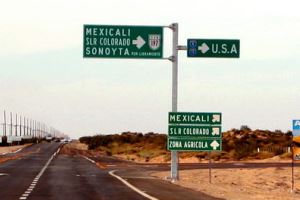
Drug traffickers often find ingenious ways to get their product across the U.S.-Mexico border, but cooperation among Border Liaison Officers can often stop them.  In Mexicali, one trafficker used a pneumatic cannon attached to his truck bed to shoot packages of marijuana across the border for pickup.  After some surveillance, Border Patrol caught the truck in action.  Agents took down the license plate number and called an officer in the Mexicali police department, who looked up the number, tracked down the truck’s owner, and made an arrest.  Border Patrol agents knew who to call in Mexicali because they belong to the same border liaison group.  Although they receive little public attention, border liaison groups are a crucial part of the cooperative infrastructure between the two nations.  They allow cooperation to continue during, and in spite of, political transitions, diplomatic imbroglios, and other shifts in bilateral relations.

Border liaison groups are semi-formal organizations in which officers cooperate on policing cross-border crimes such as auto theft, low-level drug crimes, and smuggling.  They are usually organized and maintained by law enforcement officials.  The San Diego Police Department, for example, used to have a full team of officers whose full-time job was to liaison with officers in Mexico.  Membership in border liaison groups is not compulsory, however, and there are no restrictions on which agencies for which a member must work.  Groups usually include a mix of local, state, and federal officials. And meetings are typically held in informal places like restaurants, barbeques at members’ homes, or at organized events, such as boxing matches and softball games.

Border liaison groups facilitate cooperation in a number of ways.  In a structural sense, they help individuals navigate the other side’s bureaucracy – i.e. identifying which agency is in charge of a particular issue, and who in the agency you should call.  They are also fundamental for establishing trust.  In a context where corruption is an ever-present concern, border liaison groups give members a chance to get to know one another, and to discern potential partners’ trustworthiness.  A member of the Baja state’s preventive police force (known by its Spanish acronym PEP) told us, for example, that officers often use the “gut test.”  You only work with someone your gut says is “ok.”  (A California law enforcement officer told us it was similar to the “gut check” he used when meeting his teenage daughters’ suitors.)  Officers also use more tangible tests.  It is not uncommon to share a piece of information and track what happens with it.  If the information is used appropriately, the agent initiating the test may decide to share more substantial information.

One of the biggest threats facing border liaison groups is funding.  Budget cuts in California, for example, have led several law enforcement agencies to reduce liaison positions, or they have grafted liaison duties onto established jobs.  Another problem is replicating these groups in non-border areas.  The Cook County Special Investigations Unit in Chicago, for example, told us “we are the border,” noting that perpetrators and victims of crime in the city are often Mexican.  Without contacts on the other side, however, the unit can only communicate through official conduits in Washington (e.g., the FBI or Immigration and Customs Enforcement, ICE) – a cumbersome process that most officers avoid.  Indeed, the sorts of information border liaison group members share – drivers’ license numbers, last known addresses, known associates – are too time-sensitive for formal channels to be of use.  The recent arrests of high-level kingpins in the Zetas and Gulf cartel tend to get widespread media attention, but the daily work by law enforcement officers is often just as important. 

Carolyn Gallaher is a professor in the School and International Service at American University.  David Shirk is a professor in the Political Science Department at the University of San Diego.

This project was supported by Award No. 2011-IJ-CX-0001, awarded by the National Institute of Justice, Office of Justice Programs, U.S. Department of Justice. The opinions, findings, and conclusions or recommendations expressed in this publication/program/exhibition are those of the author(s) and do not necessarily reflect those of the Department of Justice.

Is Obama Declaring “Mission Accomplished” on Drugs?

By Kevin Gatter

Photo Credit: Ministerio de Seguridad Argentina / Foter / CC BY-NC-ND

Photo Credit: Ministerio de Seguridad Argentina / Foter / CC BY-NC-ND

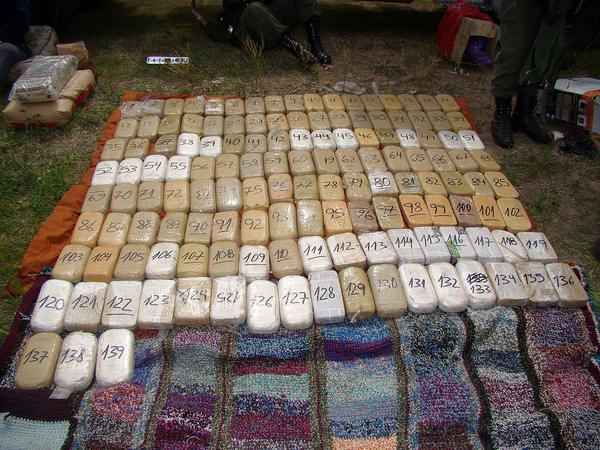
The Obama Administration is claiming major progress in the war on drugs, but the evidence is subject to challenge – and the good news surely hasn’t reached Latin America yet.  On July 9, the Office of National Drug Control Policy (ONDCP) released an annual report that asserted a significant decline in the U.S. cocaine market, with sizable decreases in both the number of deaths caused by cocaine overdose and the rate of people testing positive for cocaine in the workplace.  It also suggests that potential pure cocaine production capacity in the Andes has fallen by approximately 41 percent since 2001, including 10 percent last year alone.  The report credits this decrease to numerous factors, including U.S.-Colombia partnership, “strengthened democratic institutions,” an increased commitment to counternarcotics cooperation and citizen security in Peru, alternative development, enhanced law enforcement efforts, and focused and persistent education about drug abuse.

Other experts say the picture may not be as rosy.  The UNODC has yet to find what it considers accurate data on coca cultivation since 2011 and, importantly, asserts that declines in past years were offset by an increase in efficiency in the manufacturing chain from coca bush to cocaine hydrochloride.  Additionally, the UNODC estimates that while the estimated total area of coca cultivation in 2011 was only three-quarters of the level in 1990, the quantity of cocaine manufactured in 2011 was at least as high as in 1990.  In any event, it is important to recognize that even if the U.S. is consuming less cocaine, demand for other drugs remains high.  Some analysts speculate that the U.S. market is moving away from Andean cocaine and toward marijuana and methamphetamines from Mexico.  Furthermore, some experts say that growing cocaine demand in Europe and elsewhere is driving prices up and reducing U.S. consumption.

ONDCP’s report has a self-congratulatory tone that – combined with Obama’s clear de-emphasis of counternarcotics at his Central American Summit in San José in May – suggests eagerness to declare victory in a 40-year war against a scourge that continues to have dire implications for every country touched by the drug trade, especially those in Central America and Mexico.  The data are extremely difficult to corroborate.  Cultivation estimates, based on satellite studies of a sampling of possible growing areas, have been notoriously suspect, and the UNODC’s concerns about ignorance of leaf-to-cocaine yield are valid.  Many of the flow estimates are based on interdictions, but U.S. agencies have openly acknowledged that interdiction operations have been significantly reduced for budgetary reasons.  A drug flow that Washington doesn’t detect is not a drug flow that has disappeared.  Moreover, the National Survey on Drug Use and Health is based on self-reporting in interviews and omits significant populations, including the homeless and incarcerated. Policy makers around the hemisphere surely hope that ONDCP’s triumphalism is warranted, but the key indicators of success will be a decline in drug-related violence, a weakening of transnational criminal groups, an end to the southbound flow of arms from the United States, the flourishing of alternative economic options for coca farmers, and reversal a pervasive popular suspicion that governments and security agencies have been corrupted by the billions of drug dollars flowing through the region.

Health Reforms in Latin America: Lessons for the U.S.?

Photo credit: World Bank Photo Collection / Foter / CC BY-NC-ND

Photo credit: World Bank Photo Collection / Foter / CC BY-NC-ND

While Washington struggles to implement modest health care reforms, a number of Latin American countries over the past decade have been changing their health systems in ways that may offer encouragement to advocates of progressive change in the United States.  Reforms in Brazil, Chile, Colombia, Mexico and others strive to provide universal care in circumstances that are, in some cases, much tougher than those facing proponents of Obamacare.  Some challenges and accomplishments include:

  • In Chile, after years of investment, about 73 percent of the population now uses the public health care system.  A Family Health Plan in Brazil, which accounts for US$2 billion of the US$3.5 billion of the government’s health budget each year, has contributed to expansion of health care participation to 70 percent of the population.  When Colombia passed a health care law in 1993, only 24 percent of its citizens had coverage; in 2007, it had reached 80 percent.  Mexico has gone from 40 percent in 2004 to about 70 percent.  (In the U.S., about 83 percent had access to health insurance as of 2010.)
  • Latin American elites, like their U.S. counterparts, have long resisted providing the resources needed to cover health care costs, either through workplace insurance or through paying taxes to support state provision of health services.  But Latin American experience shows that this reticence can be overcome.  Substantial taxes have been levied in recent years – such as a 7 percent health care tax in Chile – and, according to various databases, health-related spending has grown to almost 7 percent of GDP in Mexico, about 7 percent in Colombia, about 7.5 percent of GDP in Chile, and around 8 or 9 percent in Brazil.  (Health care spending accounts for about 18 percent of the U.S. GDP – about half from public spending.)

These Latin American governments have demonstrated that, Sí, se puede when it comes to reforming health care and challenging entrenched interests wary of change.  Spending is rising as a percentage of GDP, but expenditures remain a fraction of those in the U.S. – and the gap in quality of care is narrowing.  Latin Americans have expanded coverage at a time that access to good care in the United States remains a challenge for tens of millions of people.  The U.S. economy generates more than sufficient resources to guarantee health care for the entire population, but the Obama administration seems too weak to implement its tepid reforms on schedule – recently postponing an important mandate that large employers provide insurance coverage.  Health care providers in Latin America appear to be adapting to the new playing field, but their U.S. counterparts are lagging.  If Latin American leaders had advice for their U.S. counterparts on how to slay this dragon, it would probably involve taking note that reforms in the region invariably emerged from decisive leadership from the executive branch and, with the exception of Mexico, a willingness to increase tax burdens to expand coverage.  They would also note that, much like is evident in public opinion polling of Latino populations in the U.S., citizens of Latin American countries are overwhelmingly in favor of public guarantees of health services for all.

Snowden’s Revelations Rile Latin America

"Snowden Day in Brasilia, Brazil" Photo credit: midianinja / Foter / CC BY-NC-SA

“Snowden Day in Brasilia, Brazil” Photo credit: midianinja / Foter / CC BY-NC-SA

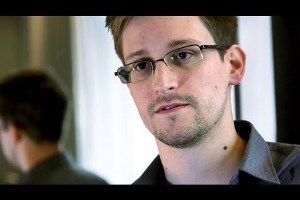
Allegations by former U.S. intelligence officer Edward Snowden about U.S. operations in Latin America have stirred further recriminations toward Washington.  According to press reports, Snowden revealed that U.S. agencies monitored internet traffic, especially in Colombia (with a special focus on the FARC guerrillas), Venezuela, Brazil and Mexico.  The National Security Agency (NSA) allegedly spied on military procurement and the oil industry in Venezuela, as well as the energy sector and political affairs in Mexico.  The Huffington Post reported that almost every Latin American country was targeted to one degree or other.

Regional reaction has been strong:

  • O Globo (Brazil) columnists, claiming that Brazil was the most spied upon country in Latin America, called the surveillance a genuine invasion of privacy that undermines both Brazilian authorities and citizens.  Former President Cardoso said, “If such activities existed, if they were done, as with all espionage, it was outside the law.”  The Senate has already “invited” Cabinet ministers to testify – and they have pledged to investigate.  (It also invited U.S. Ambassador Tom Shannon, but he is under no obligation to appear before the Brazilian Congress.)
  • El Espectador (Colombia) said the U.S. spying was an attack on Colombian sovereignty.  It quoted various senators as saying that “one does not spy on one’s friends and even less when they’ve been political allies in big decisions between states” and demanding that the government limit such activities.  Foreign Minister Holguín sent a delegation to Washington to seek explanations.
  • Mexican President Peña Nieto called the U.S. spying “totally unacceptable,” and the opposition PRD has accused the government of being “too soft” in its response to the alleged espionage.
  • The ALBA countries have been strident.  Venezuelan President Maduro has demanded “answers and explanations, [and] more than explanations, apologies.”  Ecuadoran President Correa said “we will put up with no more abuses, arbitrariness, disrespect for human rights.”

The extent of U.S. intelligence operations will not be known for decades.  It took experts 30 years, for example, to pry loose information about the CIA’s role in the coup that brought Chilean strongman Pinochet to power.  But the tensions such allegations create do not fade rapidly.  Even accounting for hyperbole in political rhetoric, these protestations cannot be helpful to U.S. short-term efforts to win Latin American help in capturing Snowden, nor in long-term efforts to revive the Obama Administration’s stated goal of building “partnership” in the region.  Continued threats – thinly veiled – from unnamed senior U.S. officials also run counter to that goal of building partnership and the related objective of minimizing fallout from accusations of spying.

The Snowden Case: Provocations and Intimidation

By Fulton T. Armstrong

Edward Snowden / Photo credit: zennie62 / Foter / CC BY-ND

Edward Snowden / Photo credit: zennie62 / Foter / CC BY-ND

The rhetoric and diplomatic jostling surrounding the flight of American whistleblower (or, depending on perspective, criminal leaker) Edward Snowden have once again thrust to the fore Latin America and U.S. policy toward the region.  Some Latin American presidents have seemed to go out of their way to prick U.S. sensitivities, and Washington seems to have gone out of its way to stomp on Latin American sensitivities.  Both sides have been happy to live up to the caricatures of themselves held by the other, but both sides’ interests have been harmed in the process.

The drama started, of course, while Snowden was in hiding in Hong Kong, and it has dragged on as he’s resided in a transit lounge of the Moscow airport.  U.S. media, which in the past have published stories casting Cuba, Venezuela, Ecuador, and others as eager to poke the U.S. in the eye, ran pieces – shifting attention to Latin America – and away from China and Russia’s even bigger slap in Washington’s face in refusing to hand the leaker over.  Reporters believed their own rumors and piled into an Aeroflot plane bound for Cuba.  Washington rolled out the big guns, including Vice President Biden, to discourage the Latin Americans from offering Snowden any help – and seemed to have success.  Ecuador, which has protected Wikileaks boss Julian Assange from British, Swedish and U.S. pursuit, initially welcomed Snowden but, after a phone call from Washington, pointed out that an asylum petition could not be considered until he arrived in country.  The crisis between the U.S. and Latin America deepened, however, when several European countries – presumably responding to U.S. pressure and bad U.S. intelligence – closed their airspace to Bolivian President Morales, who someone, somewhere, suspected of flying Snowden out of Moscow on the president’s return home.  Latin American condemnation exploded.

Venezuelan President Maduro, stating that that he wanted “to protect this young man from the persecution unleashed by the world’s most powerful empire,” publicly offered Snowden asylum on Friday.  That move ended the slight progress Caracas and Washington had made toward rapprochement– evident since the OAS General Assembly in June – and bilateral relations will surely worsen.  But the Obama Administration’s relations with Latin America writ large don’t appear likely to fare much better.  Some leaders’ rhetoric may be over the top, but Washington’s language has been threatening, and its actions speak louder than its words.  An unidentified senior U.S. official told the New York Times that “there is not a country in the hemisphere whose government does not understand our position at this point,” adding that any aid for Mr. Snowden “would put relations in a very bad place for a long time to come.” Such statements leave one wondering whether we are approaching the point where this administration will cease proclaiming its commitment to a new era of US-Latin America relations characterized by partnership and respect among equals.  Transcripts of Mr. Biden’s calls will not be released, but rarely do countries reverse their positions publicly in the absence of either serious threats or generous inducements – and few clear-thinking Ecuadorans, tracking the Administration’s attitudes toward President Correa, see the latter as in the cards.  In pressuring its European allies to establish a no-fly zone to keep a head of state from returning home, Washington took an action that many Latin Americans – not without a grain of truth – believe it would never take against a region that it respected.  Repairing the damage of el asunto Snowden will be hard for both sides, but Washington has the bigger task ahead.


U.S. Credibility Takes Another Hit

By Fulton T. Armstrong

Photo credit: Chairman of the Joint Chiefs of Staff / Foter.com / CC BY

Photo credit: Chairman of the Joint Chiefs of Staff / Foter.com / CC BY

The domestic spying programs under the Bush and Obama Administrations further erode U.S. moral leadership in the hemisphere and probably beyond.  At crucial junctures since President Jimmy Carter made human rights a pillar of policy in Latin America, U.S. moral authority has been decisive in persuading regimes on the right and the left to open the way for pluralism and democracy.  Lecturing governments and militaries on the need to eschew torture, domestic spying, and other abuses, U.S. diplomats and politicians could have been charged with arrogance, but on these specific aspects of the U.S. government’s treatment of its own people, not serious hypocrisy. The U. S. had its racial and economic injustices, but trends were positive, and the country stood for the rule of law, skepticism of State Security officials’ penchant to use information for power, and a pretty solid respect for due process. Even before Carter, the Watergate scandal – and resulting resignation of the President and overhaul of the intelligence agencies – was a clarion signal that agencies created to monitor foreign affairs must keep their focus far off U.S. shores.

Latin American media have carried primarily factual stories revealing the “PRISM” program, which collects data from hundreds of millions of e-mails and other electronic communications each day and stores it for exploitation by targeters (now called “analysts”) on the lookout for alleged potential terrorists, based on secret profiling.  Some papers have reported that Director for National Intelligence Clapper lied to the U.S. Congress without batting an eyelash when asked directly if such activities were ongoing.  Coming after reports in recent years of the use of torture (and the impunity granted to the perpetrators), the so-called “extraordinary renditions” (and the cases in which kidnap victims were innocent), the use of “black prisons” (in which security services in new democracies were encouraged to circumvent their elected officials),drone attacks (even against U.S. citizens), and the continued detention of prisoners without trial at Guantanamo (giving human rights violations in Cuba a new meaning) have all been noted throughout Latin America.  PRISM may no longer be considered newsworthy.

The fact that British and American newspapers eventually brought the domestic spying programs to light may hearten some in Latin America, as evidence that an essential element of democracy – a probing press –shows signs of life despite reports of Justice Department harassment of the Associated Press and other media.  But sentient Latin Americans know the implications of PRISM – and what enterprising State Security “analysts” can do with years of data about even the most mundane aspects of potential targets’ lives.  The Obama Administration’s defense of PRISM as necessary to defend against supposed terrorists doesn’t sell well in a region that knows how information never sits unused.  The Bush Administration gave the Medal of Freedom to Colombian President Uribe, who deployed his secret intelligence agency to harass opponents and allowed his military to disappear thousands of youths.  The Obama Administration’s lectures to Venezuela, Nicaragua, Bolivia and Ecuador on the need to give more space to opponents – however warranted – ring sort of hollow when, in Latin Americans’ minds, it has nurtured its own Frankenstein state-security apparatus that lacks credible checks and balances.  Washington can argue that U.S. moral authority doesn’t matter, and that the “terrorist threat” it faces calls for extraordinary measures, but it will be a long time before an American statesman can wag his finger at a Latin American counterpart for doing the same thing.

Righting a Wrong: Family Reunification and Immigration Reform

Photo credit: mdfriendofhillary / Foter.com / CC BY-SA

Photo credit: mdfriendofhillary / Foter.com / CC BY-SA

As debate around the immigration reform bill is expected to heat up on the Senate floor, a contested provision allowing for some non-criminal deportees to return to the United States remains intact. For how long, no one is quite sure. The controversial measure, outlined in Section 2101 of the current bill, would permit deported immigrants with children, parents, or spouses who are currently U.S. citizens or legal permanent residents to petition for a waiver to return to the U.S. and apply for Registered Provisional Immigrant (RPI) status. While reprieves have been granted to undocumented immigrants residing in the U.S. in the past—under the Immigration Reform and Control Act of 1986 and President Obama’s DACA memorandum last July—never before has a Congressional or Executive effort to overhaul immigration policy contemplated the return of deportees.

The “right to return” provision survives even as the rate of deportations continues to soar. Since 2009, the Obama administration has removed 1.5 million unauthorized immigrants and is on track to surpass 2 million by the end of fiscal year 2013. According to recent federal data unearthed through a Freedom of Information Act (FOIA) request, 205,000 undocumented immigrants with at least one U.S. citizen child were deported between July 2010 and September 2012, representing an average of 90,000 per year. The contentious deportee measure stems from acknowledgement on the part of the bill’s authors of the destructive effects that these enforcement policies have had on American families, particularly U.S. citizen children. A spokesman for Senator Marco Rubio, one of the bill’s most conservative drafters, noted that the Senator had “personally concluded that giving parents a chance to reunite with their children was the right thing to do.” The toll that family separation takes on the mental and physical health of children has only recently attracted serious attention, with studies suggesting links between parental deportation and depression, separation anxiety disorder, post-traumatic stress disorder, and poor cardiovascular health.

Central to the compromise reached by the bill’s sponsors – known as the Gang of Eight – is the question of how to prioritize family reunification without shattering the bill’s prospects. The argument from the right has been that in promoting family-based immigration, the 1986 reform prompted the larger waves of immigration seen since then. In response to these concerns over “chain migration,” however exaggerated they may be, the proposed legislation calls for a gradual move away from the family-based immigration model, eliminating some 90,000 annual visas given to the siblings and married adult children of legal immigrants and granting up to 110,000 visas to immigrants skilled in science and math. Democrats have viewed this shift toward a more comprehensive “merit-based” system as a necessary compromise, but have built into the bill measures such as the “right to return” as well as an expedited path to citizenship for DREAMers (the children of unauthorized immigrants) and a clearing of family-based immigration backlogs – all of which vindicate the importance of the nuclear family. It is time for Senators from the right to follow the lead of Republican drafters and make some concessions of their own, including the Gang of Eight’s compromise to allow for the reunification of families torn apart by a decade of immigration enforcement policies run amok. Immigration reform must have as its foundation a concern for family unity and a respect for what families contribute to our society. It should also take into account the welfare of 4.5 million U.S. citizen children in mixed-status homes who will be better equipped to contribute to our society if they have the opportunity to grow up in the presence of their parents.

U.S.-China: Competing over Central America and the Caribbean?

President Obama and President Chinchilla in Costa Rica | Photo by: The White House | Public domain

President Obama and President Chinchilla in Costa Rica | Photo by: The White House | Public domain

The recent visits to Central America, Mexico, and the Caribbean by Chinese President Xi Jinping and U.S. President Obama (and Vice President Biden to Trinidad and Tobago) suggest a handoff from Washington to Beijing of the role as the region’s sugar-daddy, but not a strategic shift in influence.  The presidents’ visits were similar in their innocuous itineraries.  Both got pompous welcomes; met with “real” citizens (Xi ate empanaditas de chiverre with a coffee farmer); and praised the bilateral relationships.  Both held sub-regional summits – Obama in San José and Xi in Port of Spain.  Both repackaged ongoing or recently negotiated projects as new “accords.”  Obama pledged another $150 million a year for funding the Central America Regional Security Initiative (CARSI), part of the strategy started under President Bush to counter the drug trade and related threats.  Xi got headlines in Costa Rica for providing more than $1.5 billion for refinery and road projects and to purchase replacement taxis and buses from Chinese manufacturers.  Significantly, China is also building Costa Rica’s new National Police Academy – the sort of project Washington used to thrive on.

President Chinchilla and President Xi Jinping | Photo credit: Presidencia de la República de Costa Rica / Foter.com / CC BY-NC-SA

President Chinchilla and President Xi Jinping | Photo credit: Presidencia de la República de Costa Rica / Foter.com / CC BY-NC-SA

Despite the similarities, the visits had different orientations and feel.  Xi’s principal task appeared to be to open his checkbook, while Obama’s main deliverable was a policy shift – the welcome word that Washington was pulling back from making its top regional priority the interdiction of narcotics produced in South America and transiting the isthmus on their way to consumers in the United States.  According to press reports, despite the continued CARSI funding, Obama had absorbed Costa Rican President Chinchilla’s complaint last year at a summit with Biden that it was unfair that Central Americans were dying in efforts to stop narcotics that Americans use.  The media tried to give the two presidents equal coverage, but the disparity became obvious.  The Chinese distributed copies of the China Daily (in English) even into the San José suburbs, whereas Obama didn’t need to do his own publicity.  Despite whiffs of resentment about airport and street closures, the papers covered all of Obama’s events with affectionate quotes from government and common folk alike – and showed people, including a kid dressed as Spider-Man, waving to his motorcade.  La Nación, on the other hand, reported that school children cheering a Chinese speaker couldn’t understand a word he was saying.

The goodies each president brought created little excitement – and no small amount of skepticism.  Important details about China’s offer to help repair the Costa Rican gasoline refinery remain unknown, and Chinese cars already have a bad reputation.  China’s handouts aren’t going to be turned down, of course, and Xi’s pledge to buy more Costa Rican coffee (now about 5 percent of what Japan buys) and to encourage Chinese tourists to travel to the country (now a micro-percentage of visitors) are welcome.  Obama’s CARSI funding looks like bureaucracy on autopilot.  Few Central Americans can cite concrete benefits from the seven-year-old Central American Free Trade Agreement (CAFTA) with the United States either, and the general impression – reinforced by Secretary Kerry’s recent reference to the region as the U.S. “backyard” – is that Washington is yielding the playing field to China.  But the natural ties and strategic mutual interests between Central America and the United States remain strong and give the United States, should it wish to fill it, ample space to play a positive role in the region’s future beyond programs on autopilot.