U.S.-Cuba: Migration Policy Growing Tortuous, Dangerous

By Fulton Armstrong

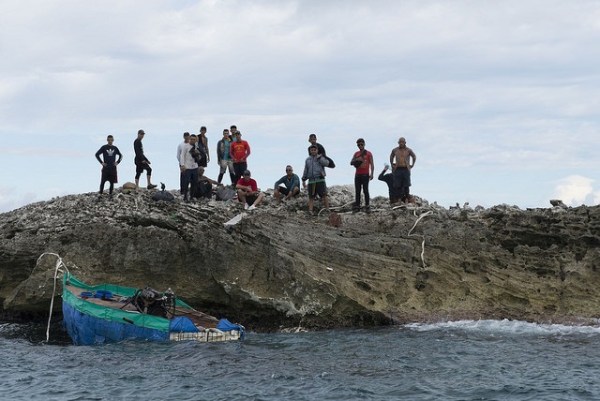
Cuban migrants

Photo Credit: Coast Guard News / Flickr / Creative Commons

The surge in Cuban migration – prolonged at this point by U.S. policy paralysis – may show a dip soon but is growing tortuous and dangerous.  Since January 12, chartered aircraft and buses have been carrying about 360 Cubans a week from Costa Rica to El Salvador, and then through Guatemala and Mexico to the United States, where they are admitted with special status.  The US$550 cost of the trip is being paid by the migrants or unidentified “donors.”  The air bridge has begun relieving pressure on Costa Rica, which has been caring for 8,000 Cubans since Nicaragua in October halted the underground railway transporting them up the Central American isthmus.  (Three thousand more are reportedly stuck in Panama.)  Despite the progress, an estimated 1,500 migrants have left holding facilities and turned to alien-smugglers to take them to Mexico (for $800) or to the United States ($1,500), according to press reports.

  • Cubans’ fear of a change in U.S. migration policy since reestablishment of U.S.-Cuba diplomatic relations is most often cited as causing the surge, estimated at some 40,000 in 2015. It does not explain the estimated 20,000 who crossed into Texas in 2014 and before, when alien-smuggling networks were less developed.
  • Ecuador’s agreement to establish visa requirements for Cubans promises to slow the immediate flow, but the crisis has revealed corruption among migration authorities throughout the region, which will make stopping it difficult.
  • Central American resentment of the welcome Washington gives illegal migrants from Cuba is growing – aggravated in part by the arrival of airplanes from the United States full of deported citizens in the same timeframe. Senior officials from Costa Rica, El Salvador, and Guatemala have blamed the surge in trafficked Cubans on the preferences the United States gives them.

The U.S. Coast Guard reports an increase in the volume and violence of seaborne migration.  Migrants interdicted in Fiscal Year 2015 (ending September 30) grew to almost 3,000 – 900 more than the previous year – and, according to press reports, surged to 1,500 in the last quarter of 2015.  The Coast Guard says the migrants have concluded that Cuba’s economy will not improve even after U.S.-Cuba normalization, and they want to go before U.S. migration policy changes.  The service has reported a spike in violent confrontations with Coast Guard officers, violence against fellow migrants, and even suicide threats..

The U.S. government’s mantra that it will not change policy toward either overland or seaborne migrants is not working – and could even be backfiring by reminding Cubans of the special treatment they receive upon arrival.  The airlift and bussing of thousands of migrants from Costa Rica to the United States helps Costa Rica deal with its crisis, but also signals yet again to Cubans remaining on the island how far the United States will go to bring them in.  Violence among seaborne migrants has traditionally been rare, but the increased aggressiveness suggests that migrants have the impression that they can act with impunity and still be welcomed into the country.  Overland migrants’ preference to use coyotes, known for violence, is another red flag.  The United States has expended political capital by washing its hands of the Cuban migrant mess in Central America, and grumbling among the region’s leaders suggests that options like airlifts will disappear soon.  U.S. law, including the Cuban Adjustment Act, fully empowers the President to turn off the green light to undocumented Cuban migration – and reality could very well nudge him in that direction soon.

February 4, 2016

Lobbying Washington: Does it Work?

By Aaron T. Bell*

LatAm Lobbying

Photo credits: Jack Says Relax & AlexR. L., respectively / Flickr and Wikimedia Commons / Creative Commons

Latin American governments, political parties, and business associations have a long history of turning to U.S.-based lobbying, legal, and public relations firms to advance their interests in the United States – with mixed results.  Both national and multinational groups have been utilizing lobbyists since at least the 1940s, when the U.S. government began registering foreign agents.  Their most consistent goal over the decades has been to influence U.S. policy on foreign trade and investment, but they have also aimed to improve governments’ sagging reputation and protect them from adverse policies.  In the 1970s, a number of military regimes and right-wing political groups in Central and South America hired lobbyists to devise and implement strategies to counter criticism of their human rights record – to preserve trade and military assistance.

  • Some 30 Latin American countries and interests groups in 2010-14 registered foreign agents to influence U.S. policies. The Bahamas Ministry of Tourism spent the most, paying $128.9 million to promote tourism – as well as to monitor and speak with Congressional representatives about U.S. legislation related to transnational financial activities in which they are involved, such as the regulation of offshore tax havens and online casinos.
  • In 2013, Mexico ranked fifth worldwide, at $6.1 million. Both federal and local governments pay firms to burnish the image of their respective constituencies.  From 2010-12, for example, Mexico City worked with a firm to “enhance the image of Mexico City in light of recent negative media reports.”  In 2014, the Consejo de Promoción Turístico de México hired another company to “make Mexico an attractive destination.”
  • Ecuador, which at $1.1 million ranked twenty-second in 2013, spent nearly half a million dollars lobbying in support of the ultimately failed Yasuni rain forest oil drilling initiative.
  • More recently, the government of Honduras – burdened with the image as one of the most violent, corrupt, and crime-ridden countries in the world – hired lobbyists to “provide ongoing strategic counsel, media relations (proactive and reactive outreach), and third-party relations.” The firm, winning an initial one-year contract for $420,000, had just completed a nine-year relationship representing Russia.

A review of the U.S. Foreign Agents Registration Act (FARA) records indicates that foreign lobbyists represent almost exclusively governments, state agencies, and the private business sector, and that more popular civil-society actors – such as labor unions and indigenous organizations – are notably absent.  Even though foreign governments obviously judge the investment worthwhile, the impact of foreign-funded lobbyists is difficult to measure.  The Honduran government’s new push to burnish its image has paid off on Capitol Hill, according to observers, but a new initiative to reduce Honduran corruption doesn’t appear to have gone exactly as Tegucigalpa hoped.  Forced to respond to a protest wave calling for the creation of an independent investigative body similar to the Comisión Internacional contra la Impunidad en Guatemala (CICIG), the Honduran government agreed with the OAS to create the Misión de Apoyo Contra la Corrupción y la Impunidad en Honduras (MACCIH) as a collaborative effort.  MACCIH indeed lacks the independence – and the potential bite – that CICIG had, but it is significantly tougher than the Honduran President Juan Orlando Hernández initially proposed.  In this case at least, lobbyists have helped the government gain access and public relations points in Washington but didn’t get it off the hook entirely.

January 22, 2016

* Aaron Bell is an adjunct professor in History and American Studies at American University.

U.S. Immigration: In Need of Procedural Reform Too

By Maya Barak*

Photo Credit: Victoria Pickering / Flickr / Creative Commons

Photo Credit: Victoria Pickering / Flickr / Creative Commons

Migrants appear unlikely to get relief soon from President Obama’s appeal to the Supreme Court to overturn the November decision of the 5th Circuit Court of Appeals in New Orleans to continue blocking his 2014 executive actions on immigration.  With the injunction still in place, the President cannot go ahead with expansion of the President’s programs for Deferred Action for Childhood Arrivals (DACA) and the creation of Deferred Action for Parents of Americans and Lawful Permanent Residents (DAPA).  Assuming that the court will grant the case a writ of certiorari (which is not certain), it is unlikely to hear it before June 2016 – at the height of the U.S. presidential campaign.  Furthermore, as AULABLOG has reported, even if the Supreme Court upholds the President’s authorities on DACA and DAPA, it would also be confirming his successor’s power to reverse them.  The next President could easily terminate these actions, leaving many DACA and DAPA recipients in a precarious legal state.  Immigrants, activists, and scholars alike are following the Democratic and Republican primaries with baited breath.

While the uncertainty demoralizes immigrants and their attorneys, so too do the many procedural problems they face.  In 45 in-depth interviews I have conducted over the past two years with Central American immigrants and their lawyers, the need for procedural reform ranked high among the concerns of attorneys.

  • The processes of the Executive Office for Immigration Review, or “immigration court,” are the subject of strident complaints. Good and affordable legal representation and guidance are lacking.  Cultural and linguistic barriers preclude adequate communication between immigrants and judges in the courtroom, as well as between immigrants and asylum officers.  Videoteleconferences during removal (deportation) hearings, wherein the immigrant – and in some cases the judge – appear in a “virtual” courtroom via a two-way video, are often characterized by poor sound quality and shoddy images.
  • Detention during removal proceedings pose particularly serious difficulties for migrants and their attorneys. Accessing legal representation, case information, and necessary documents such as passports or birth certificates is extremely difficult.  Detention centers are often in distant rural areas, far from attorneys.
  • Immigration court backlogs have skyrocketed in recent years, with many courts scheduling hearings as far out as 2020 – forcing immigrants to put their lives “on hold,” unable to obtain a driver’s license or permission to work.

Despite these problems, immigrants say they feel listened to and respected by interpreters, judges, and government attorneys, which increases their belief in the legitimacy of the immigration system.  As problematic as the procedural issues are, immigrants’ greatest concern is that U.S. law as it currently stands does not afford the vast majority pathways to legalization.  Immigrants who truly want to be law-abiding – attracted to the U.S. because it is a country where the “rule of law” exists – regret that they must violate the law to escape the violent and unstable countries from which they come.  Immigration reform and procedural reform are complementary objectives and should go hand-in-hand.  While attorneys’ fixation with due process is understandable, so are immigrants’ desires for a chance to fully (and legally) participate in American society.  Just as U.S. political infighting has prevented comprehensive immigration reform and delayed – and could kill – implementation of DAPA and DACA, so too do the prospects for procedural reforms look bleak as the country enters an extremely political year.

January 14, 2016

* Maya Barak is a PhD candidate at American University’s School of Public Affairs specializing in Justice, Law and Criminology.

U.S.-Cuba Migration: The Powerful “Pull” Factors

By Fulton Armstrong

Cuban women

Photo Credit: Guillaume Baviere / Flickr / Creative Commons

The Obama Administration’s repeatedly stated commitment to continue implementing the Cuban Adjustment Act of 1966 is driving a surge in Cuban emigrants through dangerous human trafficking routes in Central America and causing tensions in a region already tied in knots over illegal migration.  The flow of Cubans up the isthmus has been increasing steadily – reaching some 45,000 over the past year – but seemed a manageable issue until Costa Rica broke up a smuggling ring last month.  The publicity prompted Nicaragua to close its borders to the underground railroad, which is carrying thousands each month northbound.  The migrants have been starting their journey by air from Havana to Ecuador (which until last month didn’t require a visa) and are escorted by coyotes as they bribe their way across borders headed north.  A summit of Central American foreign ministers two weeks ago failed to reach agreement on a Costa Rican proposal to create a “humanitarian corridor” for the Cubans by issuing them safe passage.  Relations between San José and Managua, already on edge as they await an ICJ decision this month on a territorial dispute, have turned bitter.

The special treatment that Cubans receive upon setting foot in the United States – including automatic access to permanent residency in one year – is the main stimulus of the flow.  The Clinton Administration adjusted how it handled those intercepted at sea, establishing a distinction between intending migrants with “wet feet” and “dry feet,” which reduced the seaborne flow somewhat.  But Cuba’s decision in 2013 (long urged by the U.S. and international community) to stop requiring citizens to get exit permits; the flow of a billion-plus dollars into Cuba through remittances and small businesses (with which to pay coyotes and corrupt officials along the way); and the growing sophistication of smuggling networks in Central America have fueled a shift in the flow overland.  Despite the Administration’s no-change pledge, some intending migrants say the current rush is being driven by fear that U.S.-Cuba normalization will end the preferences granted to Cubans who reach U.S. soil.

The Adjustment Act authorizes – but does not require – the President, through the  attorney general, to grant parole to Cubans arriving into the United States illegally and grant them permanent residency one year later.  In the absence of any change in Washington’s approach, Cubans will certainly try to avail themselves of its generous provisions.  To move the thousands stuck in Central America off the front page there, Washington may issue them expedited visas and help them with transportation to the United States.  Such gestures, however, will have a high political cost throughout Central America, where the U.S. has asked governments to stanch the movement of their own citizens fleeing violence and dire poverty, and where even well-off, law-abiding citizens have to jump through hoops and pay hundreds of dollars for tourist visas.  As the impasse in Central America grew intense last month, the State Department tweeted a reminder that “There exist legal and safe options for Cubans who want to migrate to the United States.”  Reversing policies that encourage illegal and unsafe migration – while proposing that Congress support a doubling or tripling of the current 20,000 Immigrant Visas the Embassy in Havana issues each year – would make a lot of sense.

December 7, 2015

AULABLOG will examine the powerful “push” factors driving migration from Cuba in a subsequent article.

Argentine-U.S. Relations: Things Can Only Get Better

By Federico Merke*

Argentina elections

Argentine presidential candidate Mauricio Macri. Photo Credit: Nico Bovio and Guillermo Viana GCBA / Flickr / Creative Commons

Foreign policy remains largely uncharted territory as Mauricio Macri (Cambiemos) and Daniel Scioli (incumbent Peronist Frente para la Victoria) head into the presidential runoff on November 22, but they both are likely eager to get over Argentina’s rough patch with the United States.  Foreign policy has rarely been a big campaign issue, and this time there are probably reasons behind the silence.  The mainstream Argentine media portray the candidates as representing two different political and economic stances on domestic policies, with only nuanced differences on foreign policy.  Macri is seen as more friendly to the outside world in general and to the U.S. in particular, but he has been reluctant to play up his “anti-Bolivarian” views.  Scioli has the same incentives as Macri to restart a dialogue with Washington, but he has not wanted to highlight this difference between himself and his party’s standard bearer, outgoing President Cristina Fernández de Kirchner (CFK).

Argentina’s relations with the U.S. are at a low point in which nothing really good or really bad takes place.

  • The impasse started early in CFK’s administration. Just two days after her inauguration on December 10, 2007, U.S. federal prosecutors claimed that five foreign nationals in the so-called “suitcase scandal” were attempting to deliver funds to CFK’s presidential campaign.  The President maintained that the United States manufactured the scandal to punish her for maintaining close relations with then-President Hugo Chávez of Venezuela.
  • Washington was clearly irritated again in 2011 when Argentine authorities seized the cargo of a U.S. Air Force plane that was delivering supplies for an authorized police training program. Argentina’s foreign minister accused the United States of smuggling weapons and “drugs” into the country.  In 2013, CFK reached an agreement with Iran to set up a truth commission (which was never established) to investigate the bombings of the AMIA Jewish community center in Buenos Aires in 1994 – alienating Jews in the U.S. and Argentina, but giving her a boost among her domestic constituency.
  • Terrorism, human rights, and nuclear proliferation have brought the two countries together, albeit with little publicity. But Venezuela, Cuba (the U.S. embargo), trade (tough license and import restrictions on both sides), and Iran have been divisive issues.

Because the twists and turns in the bilateral relationship have revolved around scandals, rhetoric, and domestic political maneuvering – not driven by either deep ideological differences or substantive material interests – CFK’s successor will be free to shift gears.  Thus, in a sense, it does not matter who wins on November 22; a new chapter will begin in Argentina-U.S. relations.  Macri no doubt will be more enthusiastic than Scioli in declaring a new beginning, but the latter exhibits a pragmatic tone and intention to attract investment and promote trade, including by resolving the confrontation over “holdout debt” plaguing ties with the U.S. financial community.  Both candidates are aware that the ongoing litigation in New York complicates access to international credit.  Both also understand that the memorandum with Iran represented a major step backwards and thus will probably change course on this matter.  Scioli and Macri exhibit contrasting styles and might look at the world through different lenses, but they both will have the opportunity – and probably the desire – to develop a more constructive relationship with the U.S. 

November 19, 2015

*Federico Merke directs the Political Science and International Relations Programs at the Universidad de San Andrés in Buenos Aires.

Judicial Activism Prolongs Immigrants’ Angst

By Maya Barak*

Photo Credit: Justin Valas and David Schexnaydre / Flickr / Creative Commons

Photo Credit: Justin Valas and David Schexnaydre / Flickr / Creative Commons

Legal maneuvering to block President Obama’s executive actions on immigration is keeping up to 4 million undocumented immigrants in limbo and, with the U.S. election campaign gaining momentum, dims prospects for them to participate in society more fully and openly anytime soon.  Texas and 25 other states filed suit in February hoping to overturn Obama’s expansion of his 2012 Deferred Action for Childhood Arrivals (DACA) and creation of Deferred Action for Parents of Americans and Lawful Permanent Residents (DAPA).  A panel of three judges for the 5th Circuit Court of Appeals (New Orleans), one of the most conservative courts in the country, heard the case in July, but the case is still pending – and the court’s temporary injunction remains in place.  Observers call their behavior judicial activism because the panel has deliberately eschewed its normal practice of 60-day decisions in order to prevent a rapid appeal by the Obama administration from reaching the Supreme Court during the Court’s current term.  The deadline for appeals to the Supreme Court was October 23.

If the courts – the 5th Circuit Court of Appeals (unlikely) or the Supreme Court (unknown), ultimately decide in favor of the Obama orders, DACA and DAPA would permit undocumented immigrants who entered the U.S. prior to 16 years of age and have lived in the U.S. continuously since 2010, along with eligible parents of U.S. citizens and lawful permanent residents, to apply for temporary relief from removal (deportation) and a work permit for three years.  In any case, the next President, who takes office in January 2017, could terminate the actions, throwing applicants for DACA and DAPA protections back into a precarious legal state – with their identities and whereabouts registered with immigration authorities and lacking relief from deportability.  A Central American asylee told me his immigration process, if all goes well, will have taken him 21 years.  “That’s a lifetime,” he said.  “To really feel like a citizen, like this is my home, that they can’t kick me out … So that’s where the system is failing me, is failing us.”

The delay for President Obama’s executive actions to take effect is just one of many lengthy waits individuals, both with and without legal status, experience while caught up in the U.S. immigration system.  Wait times for visa applicants can extend into the double digits – more than 20 years for family-sponsored visas for Filipinos, for example.  Not only are the U.S. Customs and Immigration Services (USCIS) and the State Department, which are primarily responsible for visa processing, backed up; the Executive Office for Immigration Review (EOIR), the nation’s immigration court system, is experiencing multi-year delays as well.  Fifty-nine immigration courts handle an average of 300,000-400,000 cases per year.  Detained immigrants spend months in detention waiting for hearing continuances and final hearings, while non-detained immigrants spend years awaiting their final case outcomes.  These individuals are forced to put their lives on hold, not sure if they will be allowed to stay or forced to leave, many unable to obtain work permits or driver’s licenses.  The expansion of DACA and creation of DAPA would alleviate some of the tension on America’s overburdened immigration system while individuals around the country and the world await meaningful and comprehensive immigration reform.  In the meantime, agencies managing U.S. immigration have little incentive and too few resources to speed up processing.  Like millions of immigrants, they are simply biding time.

October 29, 2015

* Maya Barak is  PhD candidate at American University’s School of Public Affairs specializing in Justice, Law and Criminology.

A Major Gig for Buena Vista

By Ana Serra* 

Photo Credit: OtherDrK / Flickr / Creative Commons

Photo Credit: OtherDrK / Flickr / Creative Commons

The Buena Vista Social Club Orchestra’s performance at the White House last week was a celebration of the ongoing normalization process between the United States and Cuba and of the musical collaboration – considered illegal at the time – that made this group possible.  Playing in commemoration of Hispanic Heritage month and the Educational Excellence of Hispanics, it was the first visit to the executive mansion by a Cuban band in more than 50 years, and part of its Adiós World Farewell Tour including a number of U.S. states before traveling to Puerto Rico and Latin America.  Buena Vista Social Club (BVSC) is a brand, starting as a 1940s club in Havana and revived by a 1997 album produced by Ry Cooder with Cuban and US musicians, a 1999 documentary film directed by Wim Wenders (chronicling concerts in Amsterdam and New York), and decades of fame-garnering recognition of Grammies and film awards.  At a time that the U.S. administration is taking steps to relax the terms of the embargo, the invitation auspiciously recognized Ry Cooder’s inaugural ice-breaker, which was investigated as a violation of the Trading with the Enemy Act.  While tied to the commercial success of the band, the concert inadvertently has progressive implications in a racial context.

The invitation to play at the White House amounts to a diplomatic gesture, and as such it was both cautious and optimistic.  The event resonated with many other people-to-people exchanges that have made thaw a reality, and highlighted the prominence of Americans of Cuban descent among Hispanics in the U.S.  The band is tried and true – if fully predictable – in its powerful evocations of a memorable past.  Its traditional musicians evoke the Havana music scene of the 1940s, a time of intense exchange and collaboration between Cuban and U.S. musicians.  In addition, it may cause for some a nostalgia for a supposedly harmonic relationship between the two countries, despite decades of strong U.S. intervention in political and economic affairs during the two administrations of Fulgencio Batista.  The album’s son, bolero, guajira, and danzón rhythms do not challenge expectations and the lyrics talk about love, beautiful women, and tropical landscapes.  Ry Cooder’s role in forming the original band – he apparently brought piano virtuoso Rubén González away from a shoe-shining job – represents the current dream of many art representatives hoping to go down to Cuba and “discover” or “bring to light” hidden talent.

Fans of Cuban music may be disappointed that far more interesting Cuban musicians – in terms of novel song styles or political messages – were not invited.  BVSC’s tunes have become so familiar as to make the minds of listeners numb: they have been played to exhaustion in tourist sites in Havana, and added to the ambiance of many a foreign venue aiming to evoke the irresistible rhythms of Latin American music.  A silver lining, however, are the progressive implications of what the band represents in a racial context.  The original Buena Vista Social Club was a so-called “club de negros” in the 1940s, in which the 1997 BVSC performer Compay Segundo had played.  These clubs were closed down after the 1959 revolution, since their emphasis on black identity was deemed divisive.  At the time of #blacklivesmatter in the United States, it is fitting that the first African-American president hosted this historic band in the White House.  Beyond the problematic background of a beautiful diplomatic gesture the event establishes a bridge between some of the common struggles in the U.S. and Cuba.

October 22, 2015

* Ana Serra is an Associate Professor of Spanish and Latin American Studies in the Department of World Languages and Cultures at American University.

U.S.-Cuba: Must “Democracy Promotion” Obstruct Normalization?*

By Fulton Armstrong

Photo Credit: Martin Burns / Flickr / Creative Commons

Photo Credit: Martin Burns / Flickr / Creative Commons

“Democracy promotion” has been one of the most contentious aspects of U.S. policy toward Cuba – and one of the most counterproductive – but it doesn’t have to be either.  The concept of democracy promotion is ingrained in U.S. policy culture, and the bureaucracies and programs they’ve been charged with conducting over the years are as bullet-proof as any in Washington.  Democracy promotion in different forms has been a main element of U.S. policy toward Cuba for decades. In the 1980s and early 1990s, the U.S. Interests Section conducted an array of outreach programs, engaging with Cuban academics, journalists, and officials – people tolerant if not deeply supportive of the Cuban government – as well as human rights activists and others “outside the system.”  These activities informed and nurtured the aspirations of Cubans in and outside the system who were eager to find Cuban solutions to their country’s mounting problems.  The Helms-Burton Act of 1996 moved democracy promotion into a more aggressive mode, explicitly linking it to regime change.  President Clinton spent token amounts on initiatives related to Cuba’s future transition, but the Bush Administration launched an expansion that has since cost U.S. taxpayers more than $250 million.  The arrest, conviction, and five-year imprisonment of USAID sub-contractor Alan Gross shed light on one such operation.  He smuggled sophisticated communication equipment onto the island to set up secret networks.  Associated Press investigative reporter Desmond Butler uncovered other programs involving communications and political operations against the Cuban government.

The investment has yielded some operational successes, but the impact toward promoting democracy has been negligible and, in important ways, counterproductive.  The program has delivered food, medicines, and other support to the families of imprisoned dissidents (many of whom have been released since Presidents Obama and Castro announced reestablishment of relations last December), but more provocative operations have arguably led only to arrests.  The amateurish clandestine tradecraft of the contractors and program activists, moreover, made it easy for Cuban counterintelligence to penetrate and manipulate their ranks.  The “private libraries” that U.S. taxpayers have paid for do not exist, and communications systems involving expensive satellite gear and satellite access fees have been compromised.  The secretive modus operandi of the operations has given credibility to draconian Cuban government measures, like Law 88 for “Protection of Cuba’s National Independence and Economy,” imposing prison terms for certain contact with foreigners “aimed at subverting the internal order of the nation and destroying its political, economic, and social system.”  Authentic people-to-people exchanges have been tainted as Cubans in the government and on the street are wary that any contact could be part of Washington’s regime-change efforts.

The democracy promotion ideology and bureaucracy seem unstoppable, but Presidents Obama and Castro can take the edge off this irritant with a little effort and flexibility, and even make it mutually beneficial.  The State Department and USAID have pledged to continue the Cuba democracy promotion programs and are asking Congress for $20 million to fund them again this year, but the President’s statement that “it is time for us to try something new” suggests acknowledgment that they need not be so ineffective and counterproductive.  For starters, the Administration could stop citing Helms-Burton authorities, which are explicitly for regime change, and establish criteria for operations in Cuba similar to those in other countries with whom the U.S. has diplomatic relations and is trying to improve bilateral ties.  It could restore and expand what worked in the past, such as the distribution of books and clippings; support for exchange visits; promotion of academic and cultural events; and other non-political activities that include people with government affiliation.  Perhaps most importantly, to decontaminate the programs, the organizations that have already spent millions trying to drive regime change should step aside and let a new generation – based on real people-to-people interests – try something different with the funds.  Both Presidents can trust their citizens to develop the historic roadmap that will define the relationship into the future.  Both the United States and Cuba stand to benefit.

September 25, 2015

*This article is excerpted from the second in a series of policy briefs from the CLALS Cuba Initiative, supported by the Christopher Reynolds Foundation. To read the full brief, please click here.

Puerto Ricans in Florida: Swing Constituency in a Swing State

By Fulton Armstrong and Eric Hershberg

Embed from Getty Images

A surge in the number of Puerto Ricans moving to Florida suggests a major shift in the impact of Latino issues in next year’s U.S. elections. As the island’s economic crisis deepens and severe austerity looms large, thousands of Puerto Ricans are arriving in Florida monthly, according to estimates, with the single biggest destination being Central Florida. The director of the Puerto Rican Federal Affairs Administration office in Central Florida has estimated a 15 to 20 percent increase in the number of new arrivals in recent months. The director of Hispanic Research at the Pew Research Center has called it “the biggest movement of people out of Puerto Rico since the great migration of the 1950s.” Anecdotal accounts follow trends first identified in the 2010 census and a 2013 Pew Research Center indicating an uptick in island-born Puerto Ricans arriving in the mainland. Puerto Ricans in Florida now number almost one million – only 200,000 short of the number of the state’s Cuban-Americans. The three counties around Orlando – seen by pundits as essential to any statewide or national campaign – were home to about 271,000 Puerto Ricans (representing about 14 percent of the total population of those three counties) in 2013, according to U.S. Census Bureau estimates. Many of the new residents are white-collar workers, in contrast to those in the last major wave of arrivals who came to work at Disney World in the 1980s.

Because Puerto Ricans residing on the island are citizens but do not have the right to vote in presidential elections, an influx of hundreds of thousands onto the mainland introduces a substantial expansion of the 2016 electorate, which could be of particular relevance in the hotly contested election in Florida. Although polls show that Puerto Ricans tend to vote Democratic, their support for the party’s candidate at the presidential level is not a foregone conclusion. The director of the Center for Puerto Rican Studies at Hunter College of the City University of New York has said that among the new arrivals “there is a large number of independents … and party affiliations mean less to them” than among mainland-born Puerto Ricans. Of the six members of the Florida State Legislature of Puerto Rican descent, three are Democrats and three Republican. (Orlando-area State Senator Darren Soto – born in New Jersey but strongly identifying with the island of his father’s birth – is running as a Democrat.) Democratic strategists privately claim confidence that the new diaspora will be in their column. They note deep dissatisfaction among on-island Puerto Ricans and the new arrivals toward the Republicans’ opposition to legislation that would allow the island the right to declare Chapter 9 bankruptcy, as well as polls showing significant support for Hillary Clinton. The Orlando Sentinel reported recently that Democrats had taken the lead in voter registration in Osceola County and won control of the County Commission. A deputy director for strategic initiatives at the Republican National Committee, however, told the Washington Post that she sees the Puerto Rican vote in Florida as “up for grabs.”

A decade and a half after the trauma of the Bush-Gore presidential vote in 2000, neither U.S. party dares to take Florida’s 29 electoral votes for granted. The Pew Research Center estimates that some 800,000 Latinos are turning 18 each year –about 2,200 per day – nationwide, making them the biggest source of new voters in each election cycle. It’s hard to see, however, what the Republican Party is doing to win the hearts and minds of Puerto Rican voters in Florida and elsewhere. As American citizens, Puerto Ricans do not have a direct stake in U.S. immigration reform – an issue that galvanizes other Latino constituencies – but the tone and policy prescriptions of that debate may well influence their perceptions of the two parties. The claims and counterclaims of optimistic partisan operatives aside, some Republican candidates’ rhetoric about immigration, Latin America, and U.S. Hispanics in general – including Donald Trump’s colorful admonition of Jeb Bush for speaking Spanish in public – has got to alienate many Puerto Ricans. Perhaps, as AULABLOG previously stated, one or two of the Republicans are likely strike a moderate-sounding approach to immigration in the coming months. Indeed, former Florida Governor Jeb Bush yesterday endorsed immigration reform, including a path to citizenship for “DREAM Act” children, and said, “We don’t need to build a wall. We don’t need to deport every person that’s in this country.” But particularly if the eventual GOP nominee proves reluctant to call for federal legislative or financial assistance for a bankrupt Puerto Rico, the party may face an uphill struggle trying to appeal to Florida Puerto Ricans – a rapidly growing swing constituency in a crucial swing state.

September 22, 2015

U.S. Government Abuse of Apprehended Migrants

By Michael S. Danielson*

Photo Credits: Larry Hanelin, Kino  Border Initiative, 2015.  All Rights Reserved.

Photo Credits: Larry Hanelin, Kino Border Initiative, 2015. All Rights Reserved.

The U.S. Customs and Border Protection (CBP) is not fulfilling its obligation to protect the civil and human rights of migrants apprehended, detained and deported back to Mexico.  A study released this week entitled “Our Values on the Line: Migrant Abuse and Family Separation at the Border” (full text) found that more than one-third of deported migrants experienced some type of abuse or mistreatment at the hands of U.S. immigration authorities.  The abuses included theft, physical abuse, verbal abuse, and inhumane detention conditions.  In violation of U.S. Department of Homeland Security (DHS) policy, these conditions include but are not limited to being held for over 12 hours in facilities without beds, overcrowding, excessively low temperatures, lack of adequate food, and denial of medical treatment.  Commissioned by the Jesuit Conference of Canada and the United States and the Kino Border Initiative (KBI), the report details the results of an in-depth survey of 358 Mexican migrants deported from the United States to the border city of Nogales, Mexico, from July 2014 to March 2015 – and corroborated by short-form surveys of 7,507 other migrants in the same area.

  • Since 2005 CBP has sought to deter Mexican migrants from attempting to enter the U.S. through a policy of “enforcement with consequences.” Formally launched in 2011 as the “Consequence Delivery System,” this package consists of measures against individual migrants that are so harsh as to be obviously intended to cause hardship and suffering.  In so doing, Border Patrol has abrogated its previous commitment, undertaken in 2004, to use its authorities to preserve family unity and ensure humane treatment of apprehended migrants.  Making things worse, Border Patrol agents often incorrectly enter names into computer databases, deny access to phone calls, and deny access to the individual’s consulate.
  • Two out of three migrants surveyed who crossed into the U.S. with immediate family members and apprehended together by the Border Patrol were separated from each other and deported to different ports of entry days, weeks, or months apart.
  • Twenty-eight percent of migrants surveyed were deported at night – to Nogales and other destinations with high levels of violence – making them particularly vulnerable to abuse by criminals and corrupt police and other public officials. One of every seven women was placed in this vulnerable position.
  • Migrants alleging abuse were unlikely to file a formal complaint. Less than one out of every 12 deported migrants in the survey claiming some type of abuse filed a complaint with U.S. immigration authorities.  Reasons for not filing a complaint include being unaware of the right to do so, fear of retaliation, and a belief that it would not make any difference.
  • The abuses were not carried out by “a few bad apples,” but rather reflected policies across Border Patrol and poor oversight of their implementation. The patterns of abuses are too extensive to argue otherwise.

Punitive border enforcement punishes people whose suffering in their home countries had already grown unbearable, and there is no evidence that these policies deter unauthorized immigration.  In fact, a recent report of the DHS Inspector General found that the CBP has failed to accurately measure the deterrent effect and the cost-effectiveness of the core policies of the Consequence Delivery System.  Evidence is much stronger of the negative and unintended consequences of these policies, both for migrants and border security.  In personal communication presented in the report, CBP’s former Assistant Commissioner of Internal Affairs James Tomsheck attests that an attempt to enhance the enforcement capacity of the agency through a hiring surge of some 12,000 new agents in just over two years was marred by a predictable deterioration of the vetting process and a sharp and consistent decline in “the quality and suitability of the Border Patrol applicant pool.”  This new report points to several key areas for reform to help limit abuse by Border Patrol agents, including stronger independent and internal oversight mechanisms to tackle misconduct and abuse; an accessible and accountable complaint process; an overhaul of CBP training; equipping CBP agents with body-worn cameras; and improving CBP short-term detention conditions.  The study also recommends that deportations to Mexican border towns occur only during daylight hours and that DHS, responsible for CBP, put in place a process to identify family relationships and preserve family unity upon deportation.  Such measures would begin to address the most pressing problems faced by migrants and their families – without triggering a spike in migrant traffic.

September 17, 2015

*Michael S. Danielson, a CLALS Research Fellow, was the principal researcher and drafter of the report.