Tim Kaine: Boon for Latin America Policy?

By Tom Long*

Tim Kaine

Photo Credit: Disney | ABC Television Group / Flickr / Creative Commons

U.S. Presidential candidate Hillary Clinton’s vice-presidential nominee, Virginia Senator Tim Kaine, may help her politically in the November election, and his potential influence on U.S. policy toward Latin America could be extremely important over the long haul.  Though Kaine’s Latin American experience likely was a secondary consideration in his selection, it is consistent with the role of the office of the vice president that has emerged during the Obama Administration as a center for serious policy initiatives in the Americas.

  • Kaine spent nine months in El Progreso, Honduras, as a young man working at a high school founded by Jesuit missionaries; he learned Spanish there and frequently mentions the period as formative. His approach to the region and immigration seems anchored in a focus on human dignity and belies an understanding of the difficult circumstances many there face.  El Progreso is close to San Pedro Sula, which has been a center of the country’s staggering violence and emigration.  In the Richmond Times-Dispatch, Kaine wrote that when unaccompanied minors arrived to the U.S. border in unprecedented numbers, “I felt as if I knew them.”
  • As a member of the Senate Foreign Relations Committee, Kaine has developed a rare policy focus on Honduras. He has pressed the U.S. and Honduran governments on issues of human rights in the wake of the 2009 coup.  In 2013, Kaine urged Secretary of State John Kerry for stronger U.S. support for elections.  Just two weeks ago, he called on Honduran President Hernández for greater effort on justice in the killing of environmental activist Berta Cáceres.
  • Kaine has placed immigration policy at the confluence of foreign and domestic policy. He has pressed President Obama to halt “deportation raids targeting families and unaccompanied minors who have fled the rampant violence in Central America’s Northern Triangle.”
  • Kaine’s political rhetoric often reflects his Jesuit background, and his Catholicism-inspired references to social justice – and his warm welcome for Pope Francis – are likely to earn him an empathetic ear among many throughout Latin America.

Vice-presidential leadership for the Americas offers an important opportunity – and one that Tim Kaine, if elected, is likely to use wisely.  He has complained that Washington usually pays attention to Latin America only in moments of crisis, and has argued the region should get similar priority as China, Russia, or the Middle East.  He would build on efforts initiated by Vice President Joe Biden, who has chaired a “High Level Economic Dialogue” with Mexico and pushed for the $750 million “Alliance for Prosperity” in Central America.  Kaine would be an asset in relationships that often fuse international and domestic policy, slicing across the domains of myriad departments and agencies.  While Kaine’s personal interest and positive relationships don’t guarantee policy successes on migration, drug policy, citizen security, and development assistance as vice president, his language skills and reputation for treating colleagues with respect all but guarantee a warm reception from leaders of countries long aggrieved by U.S. highhandedness. 

August 2, 2016

*Tom Long is a Lecturer in International Relations at the University of Reading (UK) and an Affiliated Professor at the Centro de Investigación y Docencia Económicas in Mexico City.  He is the author of Latin America Confronts the United States: Asymmetry and Influence, published last year by Cambridge University Press.

Latin America Sees Little That’s “Great” about U.S. Caudillo

By Aaron T. Bell*

Trump Latin America

Photo Credit: Maialisa/Pixabay/Public Domain (modified) and NASA/Wikimedia Commons/Public Domain

Donald Trump’s presumptive nomination as the Republican Party’s candidate for president is raising fears among Latin Americans that the United States could close the door on them, while also provoking self-reflection about the region’s own potential to produce a Donald of its own.  Mexico has borne the brunt of Mr. Trump’s hostility for “beating us economically” and “sending people that have a lot of problems.”  He has proposed imposing steep tariffs on Mexico, restricting its access to visas, and forcing it to pay for a border wall.  Gustavo Madero, former president of the Partido Acción Nacional, denounced him as a “venom-spitting psychopath,” while members of Mexico’s Partido de la Revolución Democrática organized a social media campaign – #MXcontraTrump – to rebut Mr. Trump’s attacks.  Mexican President Peña Nieto has pledged to stay out of U.S. electoral politics and work with whomever is elected, but he rejected any notion that Mexico would pay for a wall and compared Mr. Trump’s rhetoric to Adolf Hitler and Benito Mussolini’s.  In addition to initiating a public relations campaign to promote the positive effects of U.S.-Mexican relations, Peña Nieto replaced his ambassador to the United States, who was criticized for soft-pedaling Mr. Trump’s comments, with Carlos Sada, an experienced diplomat with a reputation for toughness.

Other nations have joined in the criticism while looking inward as well:

  • Latin American critics have compared Trump’s populism to that of Venezuelan Presidents Hugo Chávez and Nicolás Maduro, and former Argentine President Cristina Fernández de Kirchner. In Colombia, a member of the Partido Verde described former President Álvaro Uribe’s call for civil resistance to peace negotiations with the FARC as a “Donald Trump-like proposal.”  In Lucia, Prime Minister Kenny Anthony accused opposition leader Allen Chastenet of “fast becoming the Donald Trump of St. Lucian politics” for resorting to the “politics of hate and divisiveness.”
  • While worrying what might happen if immigrants to the United States are forced to return home, the editorial page of Guatemala’s La Hora has raised the issue of the long-term wisdom of relying on remittances. Meanwhile Argentina’s Nueva Sociedad used attention to Trump’s immigrant comments to analyze restrictive immigration policies within Latin America.
  • Some political observers see Mr. Trump’s rise as a warning of the danger of divisive politics. In Colombia’s El Tiempo, Carlos Caballero Argáez wrote that polarization and anti-government discourse in Washington paved the way for a “strong man” like Trump, and cautioned that something similar could happen in Colombia.  In El Salvador, Carlos G. Romero in La Prensa Gráfica attributed Trump’s success to his ability to connect with the working class, and warned that his country’s own parties risk facing a Trump lest they make similar connections.

Much of Latin America’s take on Trump mirrors that of opponents in the United States: they recognize that his support reflects the frustration of those who feel cut out from the benefits of globalization and ignored by political elites of all stripes; they reject his anti-immigrant and misogynistic comments; and they fear that someone with seemingly little depth on global politics may soon be the face of a global superpower.  While the region hasn’t exactly surged in its appreciation for President Obama’s leadership over the past seven years, Trump’s popularity reminds them that many Americans have less appealing values and principles, which could result in policies harmful to the region.  Latin Americans know of what they speak.  One need not look too far into the past to see the catastrophic effects of simplistic, nationalistic, strong-man policies on the people of Latin America.

 June 21, 2016

* Aaron Bell is an adjunct professor in History and American Studies at American University.

Correction 2016.06.22: Gustavo Madero is the former president of Mexico’s PAN, currently headed by Ricardo Anaya.

Seismic Shift in the Politics of Language in the U.S.?

By Chip Gerfen*

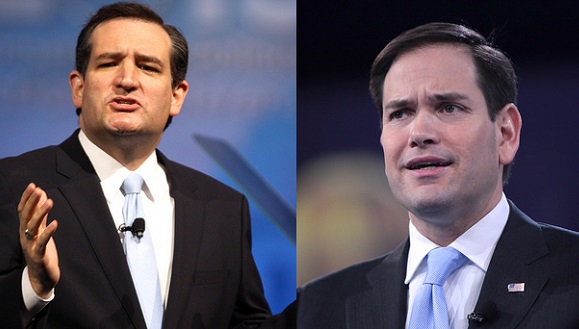
Cruz Rubio Spanish

Photo Credit: Gage Skidmore / Flickr / Creative Commons

Heated words between the two Latino U.S. senators seeking the Republican nomination earlier this year may have been the first time national-level candidates cudgeled each other over their use of Spanish on the campaign trail.  Current party frontrunner Donald Trump set the stage for it in June 2015, when he declared that Mexicans are “bringing drugs, they’re bringing crime, they’re rapists, and some, I assume, are good people.”  In July, Trump promised a crowd in Phoenix that he would build a wall between the United States and Mexico – a trope and applause line that still stands front and center in his campaign.  Seven months later, during one of Ted Cruz’s attacks on Marco Rubio – over the issue of undocumented immigrants – the Texas senator attacked Rubio’s use of Spanish, saying:

“Marco has a long record when it comes to amnesty.  In the state of Florida, as speaker of the house, he supported in-state tuition for illegal immigrants.  In addition to that, Marco went on Univision in Spanish [emphasis added] and said he would not rescind President Obama’s illegal executive amnesty on his first day in office.”

Several years earlier, in a Fox News interview during his 2012 Senate campaign, Cruz refused to debate in Spanish, explaining:

“Most Texans speak English.  If we were in Mexico, if we were in Cuba, we’d do the debate in Spanish.   Here in Texas, we should do it in English.  [My opponent] wants to do a debate in a language where the vast majority of primary voters don’t understand it, because he doesn’t want them to hear about his record.”

Cruz’s attack on Rubio’s use of Spanish was a suggestion that he used the language to deceive non-Spanish speaking voters by saying one thing in Spanish and another in English.  This use of what linguists refer to as implicature – suggesting something in speech (or in writing) without explicitly stating or even openly implying it – is something that we all produce and have to interpret every day.  But Cruz makes a number of implicatures: that Spanish hides the truth from most voters; that the public political language for Texas is English and that Spanish should be used in other countries; and that he himself does not to fully embrace a Hispanic identity.  He also said that his Spanish was “lousy.”  In the February confrontation, Rubio turned the tables on Cruz by mocking his Spanish, asking “how [Cruz] knows what I said on Univision because he doesn’t speak [Spanish].”  (Cruz responded in idiomatic Spanish – “ahora mismo díselo en español, si tú quieres” – that was much better than “lousy.”)

Such attacks are not entirely new.  As the Dallas Morning News reported in February 2012, Cruz stated that the traditional “American dream” was being destroyed by “letting people use their native languages and grow dependent on government aid,” suggesting that non-English speakers are non-contributing members of the society.  He also perpetuated the nonsensical but persistent myth that immigrants actively “refuse” to learn English.  Rubio apparently believes, however, that speaking Spanish is an asset.  Former Florida Governor Jeb Bush – from a white, patrician family – had no difficulty spinning his Spanish skills positively.  But things are different for people surnamed Rubio or Cruz, for whom language use is a political decision.  Whereas Cruz attacked Rubio according to an old playbook – one that conjures up suspicious behavior and a refusal to integrate – Rubio calculated that bilingualism and biculturalism can now be positives in national politics.  With both Latinos out of the race, the baton has been passed back to Trump, who recently asserted that a U.S.-born “Mexican” judge named Gonzalo Curiel cannot fairly oversee a class action suit against him.  Rubio’s portrayal of language as a political asset, however, may be the more accurate bellwether in the long run, even if his party’s candidate continues to embrace the old playbook.

June 10, 2016

* Chip Gerfen is Professor of Linguistics and Spanish and Department Chair, World Languages and Cultures, American University.

Trumping GOP Resistance to Strengthened Ties with Cuba

By Eric Hershberg

Malecon Twilight

Nighttime on the Malécon in Havana, Cuba. Photo credit: William Beem / Google Images / Creative Commons

One wild card on the horizon in the normalization of U.S.-Cuba ties looks unlikely to materialize.  As pointed out in several CLALS publications (such as here and here), ever since Presidents Obama and Castro announced on December 17, 2014, that they intended to improve relations, there has been a sense of uncertainty regarding whether their successors might roll back the advances they make.  This was particularly so when several Republican politicians seeking their party’s presidential nomination campaigned against President Obama’s “coddling” of the Cuban Communists and his “unilateral concessions” to Havana.  Marco Rubio (Florida) and Ted Cruz (Texas) – two of the Cuban-Americans in the U.S. Senate –made particularly aggressive statements indicating an intention to reverse all or parts of the Obama administration’s executive actions affecting Cuba policy, which, unlike legislation, can be reversed by a subsequent administration.  But they have dropped out of the race as presumptive nominee Donald Trump defeated them and former Governor Jeb Bush, whose Florida political base, family background, and public statements also indicated opposition to normalization.

Trump and the leading Democratic candidate, Hillary Clinton, have very significant policy differences on many issues, but apparently not on Cuba.  Clinton in her memoirs about her tenure as Secretary of State, like Trump in his public statements, appears inclined to sustain the current direction of Washington’s engagement with Havana (although Trump claimed last year that “we should have made a better deal”).  The two likely nominees share noteworthy characteristics, including, remarkably, that they are the least popular candidates that either major party has nominated since polling data have been collected. Advocates of full normalization cannot take either candidate’s leadership on the issue for granted. Clinton’s challenger, Senator Bernie Sanders, has pushed her to the left on some domestic issues, but recent press profiles on her indicate that she remains wedded to a hawkish approach to foreign policy.  The endorsement of several key Washington Neo-Conservatives further suggests she could swing to the right on foreign policy matters.  On the other hand, Trump’s zigzagging on Cuba – 15 years ago he was a staunch proponent of the embargo – and his impulsive decision-making style leave open the possibility that he also could reverse Obama’s executive actions and call on the Congress to keep embargo legislation unchanged.

Although mistakes can occur and various wildcards can slow, or even break, the current momentum, the twists and turns of the U.S. primary election season seem to have diminished substantially prospects that a new President sworn in next January would significantly change Obama’s winning formula on Cuba.  Clinton will have no incentives to abandon a policy that she takes some credit for promoting.  Trump has, if anything, proven that he revels in taking on GOP orthodoxy – and will presumably continue to do so on Cuba policy.  His sympathies align much more clearly with the pro-business Chamber of Commerce, an aggressive opponent of the embargo against Cuba, than with the ideologues on the right of his party, and he will give a green light to the many members of Congress who want full trade with and free travel to the island to change the law.  Concerns that a new U.S. president could reverse Obama’s executive actions on January 20, 2017, can now be assuaged, and Congressional proponents of lifting the embargo likely will have time to build momentum to pass legislation rendering the executive measures moot.  One can imagine that the Donald’s criteria of success for Cuba policy begin with the glare of a gaudy neon Trump sign on a casino along the Havana Malecón, but it’s reasonable to wager that the Cuban government will negotiate a better deal.

May 31, 2016


President Obama’s Visit to Buenos Aires: An Important Gesture

By Katherine Hite*

Parque de la memoria Argentina

Parque de la Memoria, Argentina. Photo Credit: Jennifer Yin / Flickr / Creative Commons

While most eyes are on U.S. President Obama’s historic visit to Cuba, the timing and agenda of his follow-on travel to Argentina – while controversial – also is a significant opportunity for the United States to burnish its image in Latin America.  Obama arrives in Buenos Aires on the 40th anniversary of Argentina’s military coup d’etat, marking a brutal period of systematic human rights violations in which the United States lent tacit support.  In an important attempt to ameliorate the controversy over his timing, Obama will be delivering a cache of declassified documents on both what the U.S. knew regarding the 1976-1983 repression and on the green light that Secretary of State Henry Kissinger gave the dictatorship’s dirty war against political opponents during the final year of the Ford presidency.  In addition, the President will visit the Parque de la Memoria, site of a memorial to the thousands of victims of the military regime.  He’d expressed interest in a visit to the ex-Navy Mechanics School (ESMA), notorious former clandestine detention site where an estimated 5,000 Argentines were imprisoned, 90 percent of whom were murdered, but political sensitivities in Buenos Aires precluded it.

Argentina has pioneered efforts to come to terms with the past, from prosecuting and jailing former military officers guilty of violations, to “recuperating” former clandestine detention centers, where citizens were tortured, executed, and made to “disappear.”  Human rights activists have converted several of these former centers, such as the ex-ESMA, into spaces to remember and to educate the public with a message of accountability and of “never again.”  Some memory sites also seek to connect human rights violations of the past to ongoing violations, including police brutality and the abuse of the incarcerated, as well as to present-day struggles for social justice.  Argentine school children learn about their past and study the Universal Declaration of Human Rights.

It is an important moment for the U.S. president publicly to recognize the U.S. historic role in Argentina’s tragic past – and for Argentines to show Washington, itself accused of torture and clandestine detention in recent years within its “War on Terror,” that such abuses can never be tolerated and that perpetrators must be brought to justice for a democracy to be healthy and stable.  Countries throughout the region, including Chile, Uruguay, Peru, Colombia, El Salvador, and Guatemala, have similarly created memorials and museums of memory.  Chile’s Museum of Memory and Human Rights gets over 10,000 visitors a month.  It houses a large permanent display documenting the 1973-1990 dictatorship, and like the ex-ESMA, opens its spaces to human rights organizations, artists, theater groups, and others for workshops, plays, movie series, and more.  In El Salvador, the Museum of the Word and the Image sponsors an exhibit on the roots of the country’s civil war as well as memories of the suffering and resistance.  It has also sponsored exhibits on Salvadoran migration to the United States during the war and connects past to current violence, both within El Salvador and in close relation to the United States.  Together these efforts invite acknowledgment, reflection, and dialogue.  President Obama’s activities in Argentina, like President Clinton’s apology in Guatemala for the U.S. role in past violations in that country, are an important gesture that, within a broader U.S. commitment, could help facilitate a less tarnished image for Washington in Latin America along with his historic shift in policy toward Cuba.

March 21, 2016

* Katherine Hite is professor of political science at Vassar, with special interest in Latin American politics, social movements, and the legacies of violence for governments and societies throughout the Americas.

What do Latin Americans Make of the U.S. Election Campaign?

By Fulton Armstrong

Trump Wall Pope

Photo Credit: Daryl Lawson and Pingnews (modified) / YouTube and Flickr / Creative Commons

Remarks about Mexico and immigration by Donald Trump – leader in the U.S. Republican Party’s presidential nomination contest – have drawn intense criticism from some Latin American leaders, but their underlying concern may be about the implications of the broad support for his populist rhetoric regardless of who wins the party’s nomination in July.  Media throughout the hemisphere are reporting highlights of the U.S. campaign, focusing mostly on immigration and its connotations for the region.  Some reports touch on the challenges to unity facing both major U.S. political parties, such as Democratic pre-candidate Bernie Sanders’s pressure on the previously unbeatable Hillary Clinton.

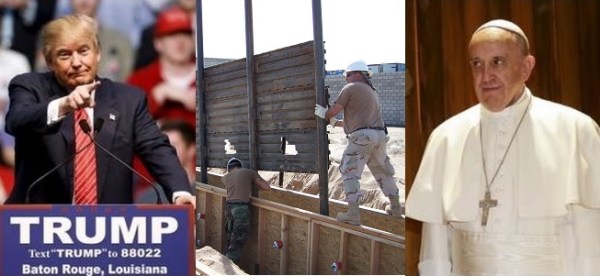
Most Latin American attention has gone to Trump and his statements.  His characterization of many Mexican immigrants as criminals, drug dealers, and rapists; his statement that Mexicans “bring tremendous infectious disease” into the United States; and his pledge to make Mexico pay billions of dollars for a new high wall on the border have drawn sharp rebukes from across Latin America.

  • Mexican President Peña Nieto, who initially remained on the sidelines when Trump brought the immigration issue to the table in a cynical fashion, recently compared Trump with Hitler and Mussolini. Former President Calderón called him a “racist” and lamented that he is “sowing anti-American hatred around the world.”  And his predecessor, Vicente Fox, said on U.S. television that Mexico wouldn’t pay for “that f**king wall.”
  • Argentina-born Pope Francis also criticized Trump. “A man who thinks only of walls is not a Christian,” he said.  Former Colombian President and OAS Secretary General Gaviria told Miami Herald columnist Andrés Oppenheimer that Trump “has the typical style of a Latin American caudillo,” scaring people and putting himself up as “the solution to all their problems.”
  • Ecuadoran President Correa said, “Trump’s rhetoric is so clumsy, so vulgar, that it will stir reaction in Latin America” – which would be “very bad for the United States” but positive for Latin American “progressive tendencies.”
  • In Venezuela, President Maduro has condemned Trump’s “threats” against Latin America as “brutal” and termed him a “thief full of hate.” On the street, however, comparisons between Chávez and Trump are part of daily conversation.

Racial slurs and rhetoric about walling out immigrants are, naturally, hair-trigger issues not just for Latin Americans.  If the Trump juggernaut rolls on, however, anxieties about its implications are likely to sweep across the hemisphere – not necessarily because he will win the general election in November, but because the broad support for his rhetoric about walls and deportations suggests a widening gap between the United States and the region.  Moreover, doubts about the credibility of the U.S. political model – already battered by the contested presidential election of 2000 and the decade-long gridlock in Washington between the executive and legislative branches of government – could multiply, especially if campaign violence spreads beyond Trump rallies.  Trump’s pledge to resume “enhanced interrogation” and “bring back a hell of a lot worse than waterboarding” of alleged Islamic extremists could further undercut U.S. moral authority.  Dismayed Republican leaders are privately floating the idea of rewriting the rules for their party convention this summer to overturn Trump’s primary victories and block his candidacy in the general election, but that too would be a spectacle that could undermine U.S. image in Latin America.  Moreover, other Republican candidates’ views may compound the problem.  Senator Ted Cruz is proud of having shut down the U.S. Government to make a political point during a skirmish with President Obama, and he and Senator Marco Rubio are fervent supporters of their party’s decision to refuse to meet with the President’s nominee to replace a recently deceased Supreme Court nominee, let alone give him or her a hearing and floor vote.  Ecuadoran President Correa’s remarks about the U.S. campaign empowering “progressive” forces is probably wishful thinking on his part, but Trump’s populism and his party’s questionable options could indeed appear contrary to some Latin American countries’ struggle to rid themselves of populist, authoritarian-style leaders.

March 14, 2016

A Divided Court on U.S. v. Texas: A Safety Net for the Administration?

By Dennis Stinchcomb

Supreme court Scalia

Photo Credit: Ted Eytan / Flickr / Creative Commons

The passing of Supreme Court Justice Antonin Scalia reshuffles the deck of possible outcomes in the highly politicized case involving President Obama’s executive actions on immigration.  When the White House petitioned the Court to review its dispute with Texas and 25 other states, it could not have imagined a result that now appears to be possible: a tie.  An evenly split decision would mean that the injunction against the measures issued by the lower court – the Fifth Circuit – would stand, an outcome that critics of Obama’s executive actions would herald as a triumph.  It may, however, also prove to be a safety net for the Administration and the over five million undocumented immigrants whose status is at stake because the law stipulates that a tie vote is not precedent-setting.  That means that the underlying case would proceed to trial in Texas district court – and could then potentially find its way back onto the Supreme Court’s docket, perhaps under more favorable conditions for a future Democratic administration.

This is, of course, purely speculative as a complex web of scenarios remain in play, including:

  • A 5-3 Decision in Favor of the Administration: If the Court finds that the states do not have the right (or standing) to sue the President, the case will be immediately dismissed.  A decision recognizing the states’ right to sue would force the Court to address the other two matters at stake – whether the President’s actions are consistent with existing immigration law, and whether he met the requirements for public notice and comment.  Some experts believe that members of the Court’s conservative wing may side with the Administration on these questions, striking down the injunction and allowing the deferred action programs to proceed.
  • A 3-5 Decision in Favor of Texas: A majority ruling against the Administration seems most plausible on the constitutional issue of whether the President abdicated his responsibility to “take care that the laws be faithfully executed.”  Though the Court had appended the separation-of-powers question to the roster of issues under consideration, it is under no obligation to hand down such a wide-reaching decision.  But should the case become a constitutional showdown, it is not inconceivable that a member of the Court’s liberal bloc might side with conservatives to prevent what would amount to be a significant expansion of executive authority – and an undermining of the judiciary’s ability to curb excesses.  Observers say it is less likely that a liberal would find the Administration in violation of immigration law or public notification procedures.

Beyond the struggle between the President and his opponents in the U.S. Senate over whether a successor to Scalia should be confirmed this year, the prospect of a tie in U.S. v. Texas and the potential for a rematch down the road has raised the stakes in this U.S. election year.  Candidates from both parties have been calling on voters to transform the November election into a referendum on the Supreme Court.  At least on the immigration front, the presidential nominees and voters alike will have to wait until the Court announces its decision in mid-summer to find out what exactly has been won or lost, and what more can be done or undone.  Though a tie would leave open the door for the legal merits of the case to be revisited by a full complement of justices under a new president during a non-election year, such a scenario is hardly ideal for the outgoing Administration.  The possibility that victory in the short-term for immigration conservatives could translate into a permanent victory should the Republican nominee win the presidency is a gamble the Administration would rather not face. 

 February 29, 2016


U.S.-Colombia: Launching “Peace Colombia”

By Eric Hershberg and Fulton Armstrong

Kerry Santos

Photo Credit: U.S. Department of State / Flickr / Public Domain

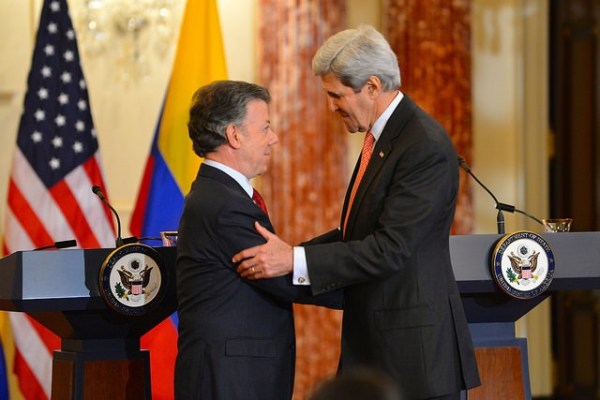
The United States, buoyed by good feelings about what President Obama called Colombia’s “remarkable transformation,” last week pledged $450 million a year in continued aid for the next five years, but it’s not clear yet whether “Peace Colombia” will be very different from Plan Colombia, to which the United States contributed some $10 billion.  The new spending includes unspecified amounts to support the reintegration of FARC combatants who lay down their arms as part of a peace accord expected next month, but much of the emphasis appears to be on old priorities, such as “consolidating and expanding progress in security and counternarcotics.”

  • Obama and Colombian President Santos announced the new program in Washington events marking the 15th anniversary of the launch of Plan Colombia. Amid the many remarks about Colombia’s progress, indicators such as homicide rates (down 50 percent since 2002), kidnapping rates (down 90 percent), economic growth (averaging 4.3 percent), and poverty and unemployment (down slightly) stand out.  By most accounts, moving around core regions of Colombia is easier and safer than it’s been in decades.

Some of these gains of the past 15 years remain tenuous, and “Peace Colombia” will face new challenges as well.  In speeches and backgrounders, government officials have acknowledged that coca eradication and crop substitution programs have failed to reverse Colombia’s role as the world’s biggest producer of coca.  Moreover, programs supporting the demobilization of the FARC will be more difficult to implement than those given to the rightwing paramilitaries in 2002-2006.  Tens of thousands of former paramilitaries are now active in bandas criminales (BACRIMs), which President Santos recently referred to as “2,500 miniscule criminal organizations scattered throughout the country.”  Changing economic circumstances could also complicate efforts to advance peace.  During the years of Plan Colombia, the country got a healthy bump from both domestic and foreign investment – because of the improved security environment as well as the external economic environment, including the U.S.-Colombia Free Trade Agreement and Chinese demand for commodities.  Investment remains strong, but the export boom is over, which is lowering growth and squeezing government budgets.

The creation of economic opportunity is at least as important to the success of Peace Colombia as continued support for the Colombian military and security system, although last week’s speeches and press releases did not shed much light on that.  Achieving peace and building democracy will also require addressing infrastructure deficits, educational inequality, inadequate job training, and poverty.  Several Florida congressmen, arguing that “Peace Colombia” supports an accord that’s overly generous to the FARC, say they’ll oppose Obama’s pledged aid.  The assistance will almost certainly advance, however, because of the strong Washington consensus that Colombia is its biggest (if not only) success worldwide in beating back irregular armed groups.  Moreover, as President Santos and U.S. Secretary of State Kerry emphasized in a press conference, there are no conditions on the new assistance – which should assuage Congressional opponents’ concerns that the relationship will get held up by investigations into alleged human rights violations in the past.  The Presidents spoke of pulling Colombia back from the “verge of collapse” in the 2000s to the “verge of peace” now.  A broadening of strategies in both capitals, including a reassessment of the emphasis on military options, could push the country toward becoming a more inclusive democracy, which ultimately may be what is required in order to achieve lasting peace.

February 8, 2016

U.S.-Cuba: Migration Policy Growing Tortuous, Dangerous

By Fulton Armstrong

Cuban migrants

Photo Credit: Coast Guard News / Flickr / Creative Commons

The surge in Cuban migration – prolonged at this point by U.S. policy paralysis – may show a dip soon but is growing tortuous and dangerous.  Since January 12, chartered aircraft and buses have been carrying about 360 Cubans a week from Costa Rica to El Salvador, and then through Guatemala and Mexico to the United States, where they are admitted with special status.  The US$550 cost of the trip is being paid by the migrants or unidentified “donors.”  The air bridge has begun relieving pressure on Costa Rica, which has been caring for 8,000 Cubans since Nicaragua in October halted the underground railway transporting them up the Central American isthmus.  (Three thousand more are reportedly stuck in Panama.)  Despite the progress, an estimated 1,500 migrants have left holding facilities and turned to alien-smugglers to take them to Mexico (for $800) or to the United States ($1,500), according to press reports.

  • Cubans’ fear of a change in U.S. migration policy since reestablishment of U.S.-Cuba diplomatic relations is most often cited as causing the surge, estimated at some 40,000 in 2015. It does not explain the estimated 20,000 who crossed into Texas in 2014 and before, when alien-smuggling networks were less developed.
  • Ecuador’s agreement to establish visa requirements for Cubans promises to slow the immediate flow, but the crisis has revealed corruption among migration authorities throughout the region, which will make stopping it difficult.
  • Central American resentment of the welcome Washington gives illegal migrants from Cuba is growing – aggravated in part by the arrival of airplanes from the United States full of deported citizens in the same timeframe. Senior officials from Costa Rica, El Salvador, and Guatemala have blamed the surge in trafficked Cubans on the preferences the United States gives them.

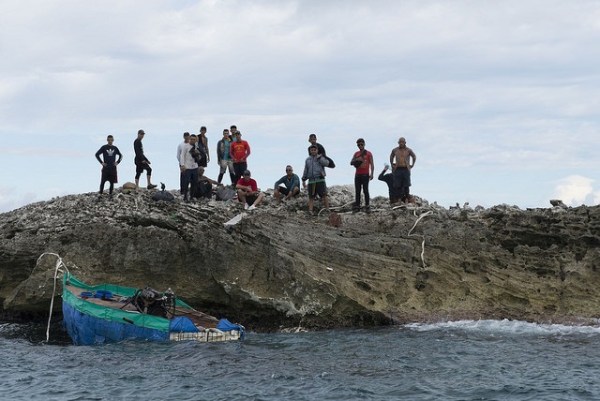
The U.S. Coast Guard reports an increase in the volume and violence of seaborne migration.  Migrants interdicted in Fiscal Year 2015 (ending September 30) grew to almost 3,000 – 900 more than the previous year – and, according to press reports, surged to 1,500 in the last quarter of 2015.  The Coast Guard says the migrants have concluded that Cuba’s economy will not improve even after U.S.-Cuba normalization, and they want to go before U.S. migration policy changes.  The service has reported a spike in violent confrontations with Coast Guard officers, violence against fellow migrants, and even suicide threats..

The U.S. government’s mantra that it will not change policy toward either overland or seaborne migrants is not working – and could even be backfiring by reminding Cubans of the special treatment they receive upon arrival.  The airlift and bussing of thousands of migrants from Costa Rica to the United States helps Costa Rica deal with its crisis, but also signals yet again to Cubans remaining on the island how far the United States will go to bring them in.  Violence among seaborne migrants has traditionally been rare, but the increased aggressiveness suggests that migrants have the impression that they can act with impunity and still be welcomed into the country.  Overland migrants’ preference to use coyotes, known for violence, is another red flag.  The United States has expended political capital by washing its hands of the Cuban migrant mess in Central America, and grumbling among the region’s leaders suggests that options like airlifts will disappear soon.  U.S. law, including the Cuban Adjustment Act, fully empowers the President to turn off the green light to undocumented Cuban migration – and reality could very well nudge him in that direction soon.

February 4, 2016

Lobbying Washington: Does it Work?

By Aaron T. Bell*

LatAm Lobbying

Photo credits: Jack Says Relax & AlexR. L., respectively / Flickr and Wikimedia Commons / Creative Commons

Latin American governments, political parties, and business associations have a long history of turning to U.S.-based lobbying, legal, and public relations firms to advance their interests in the United States – with mixed results.  Both national and multinational groups have been utilizing lobbyists since at least the 1940s, when the U.S. government began registering foreign agents.  Their most consistent goal over the decades has been to influence U.S. policy on foreign trade and investment, but they have also aimed to improve governments’ sagging reputation and protect them from adverse policies.  In the 1970s, a number of military regimes and right-wing political groups in Central and South America hired lobbyists to devise and implement strategies to counter criticism of their human rights record – to preserve trade and military assistance.

  • Some 30 Latin American countries and interests groups in 2010-14 registered foreign agents to influence U.S. policies. The Bahamas Ministry of Tourism spent the most, paying $128.9 million to promote tourism – as well as to monitor and speak with Congressional representatives about U.S. legislation related to transnational financial activities in which they are involved, such as the regulation of offshore tax havens and online casinos.
  • In 2013, Mexico ranked fifth worldwide, at $6.1 million. Both federal and local governments pay firms to burnish the image of their respective constituencies.  From 2010-12, for example, Mexico City worked with a firm to “enhance the image of Mexico City in light of recent negative media reports.”  In 2014, the Consejo de Promoción Turístico de México hired another company to “make Mexico an attractive destination.”
  • Ecuador, which at $1.1 million ranked twenty-second in 2013, spent nearly half a million dollars lobbying in support of the ultimately failed Yasuni rain forest oil drilling initiative.
  • More recently, the government of Honduras – burdened with the image as one of the most violent, corrupt, and crime-ridden countries in the world – hired lobbyists to “provide ongoing strategic counsel, media relations (proactive and reactive outreach), and third-party relations.” The firm, winning an initial one-year contract for $420,000, had just completed a nine-year relationship representing Russia.

A review of the U.S. Foreign Agents Registration Act (FARA) records indicates that foreign lobbyists represent almost exclusively governments, state agencies, and the private business sector, and that more popular civil-society actors – such as labor unions and indigenous organizations – are notably absent.  Even though foreign governments obviously judge the investment worthwhile, the impact of foreign-funded lobbyists is difficult to measure.  The Honduran government’s new push to burnish its image has paid off on Capitol Hill, according to observers, but a new initiative to reduce Honduran corruption doesn’t appear to have gone exactly as Tegucigalpa hoped.  Forced to respond to a protest wave calling for the creation of an independent investigative body similar to the Comisión Internacional contra la Impunidad en Guatemala (CICIG), the Honduran government agreed with the OAS to create the Misión de Apoyo Contra la Corrupción y la Impunidad en Honduras (MACCIH) as a collaborative effort.  MACCIH indeed lacks the independence – and the potential bite – that CICIG had, but it is significantly tougher than the Honduran President Juan Orlando Hernández initially proposed.  In this case at least, lobbyists have helped the government gain access and public relations points in Washington but didn’t get it off the hook entirely.

January 22, 2016

* Aaron Bell is an adjunct professor in History and American Studies at American University.