Latin American Integration: No New Ideas

By Carlos Malamud*

Heads of state stand for a picture at the 14th ALBA Summit held in Caracas in 2017

Heads of state at the 14th ALBA Summit held in Caracas in 2017/ EneasMx/ Wikimedia Commons

Several proposals claiming to promote regional integration in Latin America, particularly South America, have received attention in recent months, but proponents’ continued reliance on the same political-ideological alignments as always leaves little hope of bridging the deep splits in the region. Coming in the wake of completion of the EU-Mercosur trade agreement, after arduous and complicated negotiations, the proposals appeared to be good news. But that has not been the case.

  • The new push follows the creation of PROSUR by right-leaning governments in March and, more recently, efforts to relaunch UNASUR by left-leaning groups such as the Grupo de Puebla (Progresivamente) – each claiming commitment to unify the region behind their political visions. Two of the main advocates, Chilean President Sebastián Piñera on the right and Argentine Presidential Candidate Alberto Fernández on the left, have taken the easy path of convoking like-minded supporters while rejecting opponents.
  • These groups appear to have learned nothing from the first decade of the 21st century, when Venezuelan President Hugo Chávez pushed his Bolivarian project. The three efforts emblematic of the period – ALBA, CELAC, and UNASUR – all eventually failed. The rise of neoliberal governments in various countries since then has produced an even more complex situation. The new governments have continued emphasizing ideological conformity, reducing prospects for unity. Last December, a “Conservative Summit of the Americas” inspired by Brazilian President Jair Bolsonaro and his son met in Foz de Iguazú to rally the most extreme elements of the region’s right, conditioning participation on total agreement with its tenets.

There are exceptions.  The Pacific Alliance – a trade accord launched by Chile, Colombia, Peru, and Mexico eight years ago – has remained inclusive despite changes of government in each country. MERCOSUR, with its solid foundation and intense commercial exchanges, has also resisted ideological temptation in its way, although dismissive insults between President Bolsonaro and Argentine candidate Fernández do not bode well (even if both know that they need each other in the long run). But the fear is that extreme ideologies will, once again, trump national interests.

The intense electoral cycle of the past three years, and the pending elections in Argentina, Bolivia, and Uruguay, further complicate the situation. As the “turn to the right” has not turned out as predicted, the results of these three races this month will make regional relations even more unstable. The lack of a new vision for promoting Latin American regional integration is aggravated by the growing sense among both extremes of the political spectrum that they have to dig trenches.

  • The need for a new vision is obvious as the growing attacks on multilateralism and the escalation of the U.S.-China trade war are going to force practically all international actors to take sides. Latin America will suffer potentially grave consequences if its governments and political leaders don’t grasp that inclusion, not exclusion, is the only way to advance unity and integration. Acceptance of differences, dialogue, and negotiation are what’s needed now, as is a creative imagination that can accept reality as it is, with all its problems and imbalances. The question is whether the existing leaders will be able to overcome this sad state of affairs.

October 1, 2019

*Carlos Malamud is Senior Analyst for Latin America at the Elcano Royal Institute, and Professor of Latin American History at the Universidad Nacional de Educación a Distancia (UNED), Madrid. A version of this article originally was published in the Elcano Blog.

EU-MERCOSUR: Does Their New Association Agreement Mean Much?

By Thomas Andrew O’Keefe*

29/06/2019 Coletiva de Imprensa UE-Mercosul

Press conference about the trade agreement between the Mercosur and the EU / Palácio do Planalto / Creative Commons

After nearly two decades of intermittent negotiations, the European Union and the four core MERCOSUR nations (Argentina, Brazil, Paraguay, and Uruguay) have finally inked a trade agreement, but its real impact won’t be felt for years, if ever. When the negotiations began in the mid-1990s, the EU was the largest trading partner of the MERCOSUR countries, and the United States was number two. Today China is in first place, the European Union is second, and the U.S. is fourth, behind intra-Latin American trade (EU investors, however, continue to have the largest stock of foreign direct investment assets in the MERCOSUR region). When ratified, the EU-MERCOSUR Association Agreement, signed in Brussels on June 28, will exempt a little more than 90 percent of two-way trade from tariffs.

  • About 93 percent of MERCOSUR exports will eventually obtain duty-free access into the EU market, the bulk as soon as the agreement comes into effect. Agricultural commodities such as beef, chicken, corn, eggs, ethanol, honey, pork, rice, and sugar only get reduced duties, with many also subject to quotas. Another 100 MERCOSUR agricultural items are completely excluded from any type of preferential treatment.
  • Some 91 percent of European exports will get duty-free access to MERCOSUR, but gradually as tariffs are reduced over a 10-year period. The phase-out is over 15 years in the case of European automobiles, furniture, and shoes. MERCOSUR tariffs on the remaining 9 percent of primarily EU manufactured goods will remain in place permanently.
  • The agreement offers service providers from any signatory country full access to the markets of all the other signatory states.

MERCOSUR showed greater flexibility with the EU on agricultural subsidies than it had with the United States, a position that contributed to ultimate rejection of the Free Trade Area of the Americas (FTAA). Subsidies in the EU-MERCOSUR agreement are permitted if “necessary to achieve a public policy objective.” The MERCOSUR countries also capitulated on the use of anti-dumping tariffs on intra-hemisphere trade. The new accord, however, does authorize governments to impose a duty that is less than the margin of dumping if it adequately removes injury to the affected domestic industry. It also includes provisions for ensuring that sanitary and phytosanitary (SPS) measures as well as technical norms are not abused and become disguised impediments to free trade, although it permits enforcement of the European “precautionary principle” notion to restrict the importation of genetically modified food, for example, where the risks to health are not scientifically conclusive.

The agreement – now being “legally scrubbed” and translated into the EU’s 23 official languages – faces an elaborate, multi-year ratification process in the EU, where individual countries and the European Parliament must approve it, as well as each MERCOSUR government. Agricultural forces are already lining up in many European countries in opposition. In the meantime, the accord’s greatest impact is a signal by Brazilian President Bolsonaro and Argentine President Macri that they’re making progress on their stated objective to return MERCOSUR to its original trade focus – in contrast to their predecessors – and to claim an economic “victory” when growth in both countries remains stagnant.

  • Despite the flexibility MERCOSUR showed on agricultural subsidies and anti-dumping, its main sticking points with the United States in the FTAA, a free trade agreement with the United States seems remote as the Trump administration – in contrast to the Europeans – is unlikely to offer meaningful concessions based on the lesser developed status of the MERCOSUR countries. Neither will the Association Agreement with the EU reverse or even slow the region’s shift toward trade with China and the rest of Asia.

August 6, 2019

* Thomas Andrew O’Keefe is the President of New York City-based Mercosur Consulting Group, Ltd. and a lecturer at Stanford University. He is the author of Bush II, Obama, and the Decline of U.S. Hegemony in the Western Hemisphere.

South America: Regional Integration or Presidential Posturing?

By Stefano Palestini Céspedes*

47389747662_9be46749b5_z

South American Presidents waving to the cameras in Santiago, Chile / Flickr / Creative Commons

Seven South American presidents’ launch of brand-new regional grouping called PROSUR last week was intended to give a boost to their personal agendas rather than take a serious step toward regional integration. The announcement was made on March 22 at a summit organized by Chilean President Piñera and attended by the presidents of Argentina, Brazil, Colombia, Ecuador, Peru, and Paraguay. The declared goal of the summit was to overcome what Piñera called the “paralysis” of the decade-old UNASUR.  Its final declaration emphasized the need “more than ever to work together to update and strengthen the South American countries’ process of integration” in the face of current and future challenges, including “inserting ourselves in an efficient way into the fourth industrial revolution and society based on knowledge and information.”

  • The creation of the Forum for the Progress of South America (PROSUR), however, delivered very little in terms of regional integration. The Santiago Declaration does not tackle the obstacles that hampered UNASUR, such as its decision-making procedure based on consensus. On the contrary, the declaration envisions PROSUR as a forum exclusively based on presidential diplomacy, in which all decisions by definition must be taken by consensus.
  • The Presidents said the new organization will focus on infrastructure, energy, health, defense, and dealing with natural disasters – the same areas where UNASUR had shown some progress. The declaration did not mention any particular ongoing crisis, such as Venezuela, but it made clear that it would work for full respect for democracy, constitutional order, and human rights. Again, this is not a departure from UNASUR, which also had a democracy clause adopted and ratified by the national parliaments.

The summit promised political gains for several participants. For President Piñera, it was an opportunity to project himself as a regional leader able to convene and coordinate South American heads of states, at a time that his domestic popularity is decreasing. Ecuadorean President Moreno – the only central-left president attending the summit – had yet a new opportunity to signal his willingness to coexist with pro-market governments in the region. For Brazilian President Bolsonaro, a well-known skeptic of South American integration, the summit was a platform to show a more palatable image closer to his liberal peers.

President Piñera and his guests blamed UNASUR’s bureaucracy for its lack of effectiveness, opting instead for a lean mechanism based on presidential diplomacy. Most long-time observers believe, however, that UNASUR’s effectiveness was undermined by its very weak organizational capacity, with a powerless Secretary General and personnel made up of low-ranking national diplomats instead of qualified international civil servants. Presidential diplomacy, unburdened by a bureaucracy of specialists who analyze problems and possible solutions, works well when Presidents get along in ideological terms, but precedent shows it is vulnerable to collapse when governments have divergent preferences or when states must agree on complex transnational issues such as migration, drug-trafficking, or deep economic integration.

  • PROSUR will work exclusively as a forum (not as a regional organization) and its decisions and initiatives will have to be executed and monitored by the national bureaucracies of the member states, which by definition look after national interests rather than regional interests. The Santiago Summit has demonstrated that when it comes to regional integration, leftist and right-wing heads of government look and act alike. No matter which ideology they claim, South American presidents fear collective institutions, cherish presidential diplomacy, and prefer to create new initiatives with pompous names from scratch, rather than make necessary reforms to existing ones. As Uruguayan President Vázquez – who did not attend the summit – put it, South America has a long history of integration initiatives that have not brought about integration. The region would be better served by reinforcing and overhauling existing mechanisms such as MERCOSUR, the Andean Community, or the Pacific Alliance, and try to make them convergent in any possible way, rather than adding yet another acronym.

March 29, 2019

* Stefano Palestini Céspedes is an Assistant Professor at the Institute of Political Science, Catholic University of Chile.

South America: Can it Navigate the Changes Ahead?

By Leslie Elliott Armijo*

Latin america

Latin America / Google Images / Creative Commons

Venezuela is the latest example of how Latin America, especially South America, has missed an opportunity to demonstrate the sort of hemispheric leadership it has long striven for – and instead has ceded that role to the United States and even Russia and China.  Although the United States, and the rest of the hemisphere more generally, have been slow to realize it, economic drivers are making the world more multipolar.  In a recent article by two colleagues and myself, we analyze international financial statistics covering 180 countries from 1995 to 2013 that reveal the slow relative decline of the United States as the reigning financial hegemon.  U.S. influence, although still formidable by some margin, is eroding.

  • The Trump Administration’s activities in the larger world are also undermining Washington’s influence. Policies in the WTO and other trade actions writ large – such as withdrawing from the Trans-Pacific Partnership (TPP) and threatening and implementing trade sanctions with little apparent logic – have brushed even allies back. Positions on the Paris climate accord, at the United Nations, and in the President’s relations with North Korean leader Kim Jung Un and Russian President Vladimir Putin have left many around the world increasingly reluctant to follow the U.S. lead.

In this increasingly multipolar world, Latin America, especially South America, is going to find itself not so much freed of U.S. influence – as intellectuals in the region have often stated their wishes – as exposed to new pressures.  The change will be manifest mostly in the economic arena.  New research by McKinsey Global Institute suggests that global value chains are ever more concentrated within multinational corporation networks, which tie major markets (essentially the United States, Western Europe, China, and Japan) to geographically contiguous countries.  This is arguably good for closer neighbors, such as Central America and the Caribbean in our hemisphere, but potentially harmful to those left out – including Sub-Saharan Africa, possibly the Mideast, and South America.

South America has diversified its trade – generally a good thing – among the United States, EU, and East Asia, with the latter having become the major trading partner for a number of countries. Chile and others have been pushing hard to build the Pacific Alliance, as well as to institutionalize the alliance’s relationship with Mercosur. This strategy will be put to the test if, as early trends indicate, the world regionalizes and South America comes under great pressure to refocus on its relations with the United States. To protect and advance their interests in the future, South American countries probably will try to find the right balance between embracing and rejecting the declining yet still dominant hegemon to the north and, as in the case of Venezuela, developing their own strategic vision, forging unity among themselves, and putting some muscle behind an agenda that prepares them for the future.

March 18, 2019

* Leslie Elliott Armijo is an associate professor at the School for International Studies, Simon Fraser University, Vancouver. She is the co-author, with Daniel C. Tirone (Louisiana State University) and Hyoung-kyu Chey (National Graduate Institute for Policy Studies, Tokyo), of The Monetary and Financial Powers of States: Theory, Dataset, and Observations on the Trajectory of American Dominance.

Latin America Takes on Big Pharma

By Thomas Andrew O’Keefe*

Colorful pills in capsule form and tablet form

Generic pills / Shutterstock / Creative Commons

For the past decade, Latin America has attempted to reduce the prices of high-cost medications through either joint negotiations, pooled procurement, or both, but so far with limited success.  The incentive for reducing prices is that all Latin American countries have national health care systems, and in some cases (such as Colombia and Uruguay) are legally obligated to provide their citizens with any required medication free of charge and regardless of cost.

  • In the bigger countries, such as Brazil and Mexico, the prices for certain pharmaceutical products and medical devices for public-sector purchase at the federal, state, and even municipal level are negotiated by a single governmental entity. Argentina, Chile, and Mexico also have mechanisms for pooled procurement of public-sector health-related purchases at all levels of government.  Given its huge internal market, Brazil also unilaterally caps prices on medications and threatens to issue compulsory licenses to extract concessions from pharmaceutical multinationals.

Latin American countries have also tried turning to sub-regional mechanisms to protect themselves from excessively high prices, albeit with meager results.

  • The Central American Integration System (SICA) has the most active regional mechanism to negotiate the prices of high-cost drugs and medical devices. The governments of Belize, Costa Rica, the Dominican Republic, El Salvador, Guatemala, Honduras, Nicaragua, and Panama have authorized the Council of Central American Ministers of Health (COMISCA) to negotiate lower prices on their behalf.  Those medications and devices that obtain a reduction are then acquired by the public sector utilizing each government’s procurement procedures.  By negotiating as a bloc, the SICA countries report total savings of about US$60 million on dozens of products since the initiative began in 2010.
  • In late 2015, MERCOSUR launched a mechanism to negotiate prices for both the full and associate member states. Since those 12 countries coincided with UNASUR’s membership, that entity was given a supporting role to create a continental data bank of pharmaceutical prices paid by each member government that would be used to support the MERCOSUR negotiations.  That data bank proved to be ineffective, however, as not all countries submitted the required information and the methodologies for determining prices was inconsistent.  To date, MERCOSUR has only obtained price reductions for one HIV medication, manufactured by an Indian firm eager to establish a market presence in South America, and reportedly for an immunosuppressive drug used after organ transplants to lower the risk of rejection.  Reduction offers by Gilead for its Hepatitis C cure have, so far, been rejected by the MERCOSUR governments as inadequate.

MERCOSUR’s limited achievements appear to have encouraged individual countries to press on alone.  Colombia, while initially supporting the MERCOSUR initiative as an associate member, eventually established its own national mechanism to negotiate prices, and in July 2017 announced that it had obtained cost savings of up to 90 percent for three Hepatitis C treatments.  MERCOSUR’s sparse track record also helps to explain why Chile’s Minister of Health announced in October 2018 that his country, Argentina, Colombia, and Peru would utilize the Strategic Fund of the Pan American Health Organization (PAHO) to purchase 10 state-of-the art cancer treatments.  Because of PAHO’s annual bulk purchases, it is often able to obtain significant price reductions from pre-qualified manufacturers and suppliers that are then passed on to member governments.  Member states facing a public health emergency can also make purchases without cash in hand, as the Strategic Fund will extend a short-term loan at no interest.  In the future, the Latin American countries are likely to pragmatically utilize a range of options in trying to contain the rising costs of new medications that include both national and regional mechanisms as well as PAHO’s Strategic Fund.  The challenge will be to avoid Big Pharma “red lining” the region and excluding it from accessing the most innovative medical cures such as gene therapies that can fetch a million-dollar price tag per treatment.

February 19, 2019

* Thomas Andrew O’Keefe is president of New York City-based Mercosur Consulting Group, Ltd. and a lecturer at Stanford University.  He is the author of Bush II, Obama, and the Decline of U.S. Hegemony in the Western Hemisphere (New York: Routledge, 2018).

Seeking Rights from the Left

By Elisabeth Jay Friedman and Constanza Tabbush*

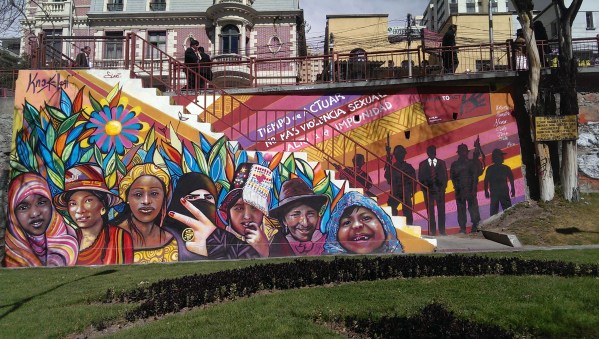
Image of colorful mural with diverse images of women. Text in the mural says: "It is time to act, no more sexual violence. No more impunity"

#TimeToAct Mural in La Paz, Bolivia, by artist Knorke Leaf/ ph: Shawnna Mullenax

The “Pink Tide” of left-leaning governments that came to power in Latin America at the beginning of the 21st century made a significant difference in the lives of women and LGBT people in the region, but its reliance on traditional gendered relations of power and strategic trade-offs among gender and sexual rights reduced its impact.  In a collaborative study we conducted with 12 other scholars from South and North America, we examined the issues of social welfare, political representation, violence against women, women’s bodily autonomy, and LGBT relationship and identity recognition across eight case studies – Argentina, Bolivia, Brazil, Chile, Ecuador, Nicaragua, Uruguay, and Venezuela.

  • We found significant progress under the Pink Tide. Most governments improved the basic economic conditions of poor women and their families, often through providing cash transfers.  In many cases, women’s representation in national legislatures advanced to some of the highest global ranks.  Some countries legalized same-sex relationships and enabled their citizens to claim their own gender identity.  They also opened up opportunities for feminist and queer movements to engage state actors and press forward their demands.

At the same time, many of these governments relied on heteropatriarchal relations of power – ones that privilege heterosexual men – thus ignoring, rejecting, or sidelining the more transformative elements of feminist, women’s, and LGBT advocates’ demands.  They also made strategic trade-offs among gender and sexual rights, such as promoting the rights of LGBT people or women’s political representation while denying reproductive health rights for women.  Moreover, the left’s more general political and economic projects have been profoundly, if at times unintentionally, informed by traditional understandings of gender and sexuality.  As a central example across most cases, not only did poor women’s unpaid care work fuel the much-celebrated social programs that reduced extreme poverty, but their unpaid community work undergirded the left political project as a whole.

  • The possibilities for gender and sexual justice seem to depend on institutional contexts as well as the organization and actions of collective actors seeking rights from the left. The degree of state institutionalization, particularly the effectiveness of checks on executive power, is critical in determining the ultimate impact of the left in power.  Moreover, the largely under-analyzed alliances that progressive political forces struck up with conservative religious ones in order to gain or hold onto power play a central role in determining the fate of policy issues – such as abortion – that touch traditional or cultural norms in Latin America.

As the pendulum swings back towards the right, the relationships among political and religious authorities which undergirded some of the challenges to gender and sexual justice under left governance appear likely to continue strengthening.  Indeed, insofar as right-wing nationalists and populists seek to redefine a national project as a counter to the ideals of the Pink Tide, they are deliberately targeting the ideas and people who seek to transform fundamental inequalities, such as those based on gender, sexuality, class, race, and ethnicity.  However, experiences under both the Pink Tide and the rise of the Right have led to alliances among those who continue to seek more just and equitable societies.  For example, consider the broad-based coalitions that undergirded massive mobilizations for legal abortion in Argentina and against Bolsonaro’s election in Brazil. 

February 4, 2019

*  Elisabeth Jay Friedman is professor of politics and Latin American studies at the University of San Francisco (on leave) and visiting scholar at the Interdisciplinary Center for the Study of Global Change, University of Minnesota.  Constanza Tabbush is research associate at Consejo Nacional de Investigaciones Científicas y Técnicas and the Interdisciplinary Institute of Gender Studies, University of Buenos Aires (on leave) and research specialist at UN Women.  Dr. Friedman edited and co-wrote the introduction of Seeking Rights from the Left: Gender, Sexuality, and the Latin American Pink Tide, published by Duke University Press and available here.  Dr. Tabbush co-wrote the introduction and the chapter on Argentina.

Mercosur: Diversifying Partnerships

By Andrés Serbin*

Mercosur Summit

A seminar at the 53rd Mercosur Summit. / Sabrina Pizzinato / UCIM / Creative Commons

Mercosur’s signing of a memorandum to increase economic and commercial cooperation with the Eurasian Economic Commission (EAEU) signals the trading bloc’s interest in diversifying its trade and political relationships beyond the western hemisphere.  The presidents of the Mercosur countries – Brazil, Argentina, Uruguay, and Paraguay –signed the agreement at the 53rd Mercosur Summit, held last month in Montevideo.  At a ceremony at which he accepted the rotating presidency from Uruguay, Argentine President Mauricio Macri emphasized the need for Mercosur to open not just to the Pacific Alliance, but also to Central America, Asia, and Africa.

  • Proposals for closer cooperation with the EAEU have been under study for many years, since Russia first created the Commonwealth of Independent States (CIS) from among the former Soviet republics (except the Baltic countries) after the end of the Soviet Union in 1991. The CIS was intended as a post-Soviet space under Russia’s leadership that would reconnect its members within a “Eurasian” geopolitical region distinct from both Europe and Asia.  The EAEU, formalized in 2015 under the leadership of Russia and Kazakhstan, now also includes Belarus, Kyrgyzstan, and Armenia.  Mercosur ministers agreed to sign the memorandum during meetings immediately before the summit, stating that enhanced cooperation and coordination with the EAEU – with which Mercosur would account for a combined 6.5 percent of world GDP – was consistent with efforts to strike a similar arrangement with the European Union.
  • Mercosur’s decision comes amid international tensions over trade and protectionism, but it cannot be divorced from the ideological, cultural, and geopolitical elements of the vision for “Great Eurasia” of which Russian President Vladimir Putin has spoken (and which Chinese President Xi Jinping has shared). The tensions between Russia and Ukraine, and Western pressures in retaliation, were a key driver of Moscow’s push for formalization of the EAEU as a potential interlocutor with the European Union while at the same time putting a brake on U.S. presence in the region.  Western analysts have debated the power of “neo-Eurasian” identity as a tool of geopolitical projection beyond the creation of a new economic bloc.  China is also a factor in Russia’s calculations.  The “Shanghai Cooperation Organization” (OCS) fostered by both countries and Beijing’s “New Silk Road” project, through Central Asia and to the EU, have also increased the salience of “Great Eurasia.”  Russia and China have increased cooperation in trade, in technology (including military) and against terrorism and extremism.  Through the EAEU and OCS mechanisms, they have extended contacts all the way to India and Pakistan and, potentially in the future, Iran and other countries.

Mercosur’s trade with the EAEU is asymmetrical in favor of the Latin American countries, with the exception of Brazil (with which it is more balanced), according to EAEU officials.  The EAEU has high internal tariffs and limited internal trade – except in bilateral trade between Russia and Belarus – but there are already tariff exemptions for Mercosur members.  Food appears to be the biggest Mercosur export to the region.  Experts believe that trade between the two blocs can be significantly increased, and that a free trade agreement can be signed before the completion of the EU-Mercosur FTA, which has been under negotiation for 20 years.

Although many Western analysts remain doubtful about the success of efforts to form a “Great Eurasia,” Mercosur apparently has determined that engagement with it is low-cost and potentially beneficial.  Beyond the possibility of expanded trade, the memorandum of cooperation signed in Montevideo suggests Mercosur sees a geostrategic interest in signaling openness to such collaboration.  The right-leaning governments of Latin America and the Caribbean are likely to remain generally aligned with the United States, but they have learned the importance of trade diversification over the past two decades.  Setting tradition and ideology aside, most are trying to interact with whomever can bring good deals to their countries in terms of trade, investment, and cooperation.  In the context of Russia and China’s interest in a “Great Eurasia,” Mercosur’s increased outreach to EAEU also reflects an important piece in a strategy to undertake the necessary diversification of its foreign policy in a changing world.

  •  The United States may not appreciate the wisdom of Mercosur’s approach. Eurasia is a blind spot for Washington, which focuses on Russia’s actions in Europe and China’s in Asia – but not in Central Asia itself or as a bridge to India, Pakistan, Iran, Turkey, and the Arab world.

January 7, 2019

* Andrés Serbin is an international analyst and president of the Regional Coordinator of Economic and Social Research (CRIES), a network of more than 70 research centers, think tanks, NGOs, and other organizations focused on Latin America and the Caribbean.  This article is adapted from one published by Perfil.com.

Southern Cone: Rapid Transition to Non-Conventional Renewable Energy

By Thomas Andrew O’Keefe*

Edificio Alexander

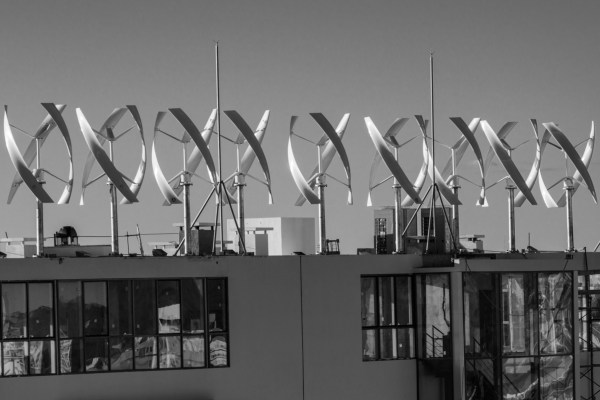
Edificio Alexander, a building in Punta del Este, Uruguay, that produces wind energy on its roof. / Jimmy Baikovicius / Flickr / Creative Commons

South America’s Southern Cone is undertaking a transition to non-conventional, renewable energy resources – that is, production not dependent on fossil fuels or large-scale hydropower – that creates the opportunity for a historic regional consensus on energy policy.  Uruguay and Chile are at the forefront.  Both lack significant fossil fuel reserves and have experienced crises when droughts detrimentally impacted hydro-supplied electricity.  For them, the rapid shift to other forms of domestically sourced renewables is as much a means to guarantee energy security as to combat climate change.  Approximately a third of Uruguay’s electricity is currently generated from wind power (up from only one percent as recently as 2013).  Similarly, about a third of Chile’s electric power – depending on the time of day – is sourced from the sun and the wind.

  • Brazil has also made significant strides in incorporating wind, and to a lesser degree, solar power into its energy matrix. The primary motivation is the need to offset carbon emissions from the burning of rain forests and the country’s greater use of natural gas.  Brazil has long enjoyed the cleanest energy of any large economy in the world because of its heavy reliance on hydropower, which still covers some two-thirds of the country’s electric needs.  Brazil was also a pioneer in the development of more environmentally friendly sugar-based ethanol (as opposed to corn favored in U.S. ethanol production); most passenger vehicles today have flex-fuel engines.  Paraguay gets almost all its electricity from hydropower (and exports the bulk of what it produces).
  • Argentina, while increasing exploitation of its large shale gas and oil reserves, in 2017 expanded renewable energy projects nearly 800 percent over the previous year, according to reports. President Mauricio Macri has created a more inviting investment climate for the private sector, rapidly increasing natural gas output, especially from the Vaca Muerta shale reserves in Patagonia.  He is also encouraging the expansion of renewable energy beyond large hydro by, among other things, allowing long-term power purchase agreements in U.S. dollars as a hedge against currency devaluations.  Furthermore, large industrial consumers face penalties if they do not meet increasing thresholds set for renewable energy use.  Current laws require that at least 20 percent of the nation’s electricity come from non-conventional renewables by the end of 2025, and they include tax exemptions, import duty waivers, and a special trust fund called FODER, created in 2016, to provide subsidized loans and other assistance.

The rapid expansion of the renewable energy sector in the Southern Cone will enable countries to export excess production to their neighbors, facilitated by a robust regulatory framework to facilitate the cross-border trade in energy resources.  In addition, by creating a fully integrated regional market in renewable energy products, a crucial backup is established for resources such as wind and solar power that are inevitably prone to interruptions during the day.  It would also mitigate the impact of droughts on hydro-generated electricity, which are likely to worsen with global climate change.  Accordingly, there are strong incentives to revive efforts begun by MERCOSUR in the late 1990s to integrate energy markets that collapsed with the Argentine energy crisis at the start of the 21st century.  The fact that all the Southern Cone governments are now ideologically aligned in favor of market-oriented economic and investment policies facilitates achieving a regional consensus on energy for the first time.  Governments in the region now need to move beyond the discussion phase to turn all this into a concrete reality.

October 19, 2018

*Thomas Andrew O’Keefe is the President of Mercosur Consulting Group, Ltd. and currently teaches at Stanford University in Palo Alto and Santiago, Chile.

South America: Venezuela Humanitarian Crisis Roiling Region

By Michael McCarthy*

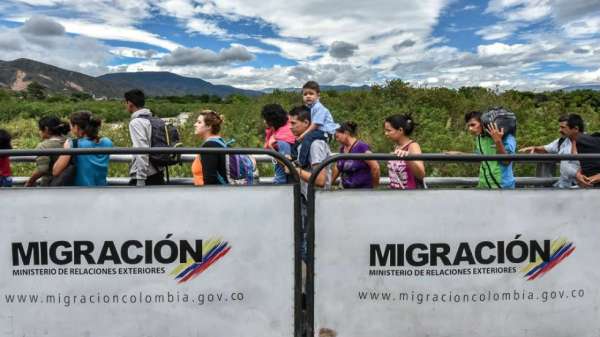
A line of Venezuelan migrants at a Colombian border checkpoint.

Venezuelan migrants at a Colombian border checkpoint. / Colombia Reports / Wikimedia

The humanitarian crisis driven by both Venezuela’s increasingly dire economic situation and political repression is taxing all of northern South America, with no remedy in sight.  In what UN High Commissioner for Refugees officials call “one of the largest mass-population movements in Latin American history,” an estimated 2.3 million Venezuelans – about 7 percent of the country’s population – have poured out of the country since 2014.  According to UNHCR, more than half of them suffer from malnutrition, and a significant percentage suffer from diseases, such as diphtheria and measles, previously thought to be under control.  The crisis is posing economic and security challenges to neighboring countries:

  • Colombia has seen the greatest flow. About one million refugees have crossed the border since 2015, but arrivals have peaked – reaching about 5,000 per day – as the Venezuelan economy hits new lows.  Venezuelans’ fears that Colombia’s new president, Iván Duque, will close the border have driven part of the surge, but Venezuelan President Nicolás Maduro’s recent policy announcements – including a fórmula mágica that includes controlling inflation by lopping five zeros off current prices – are main drivers, according to most observers.
  • Ecuador received more Venezuelans in the first half of 2018 than in all of 2017 (340,000 to 287,000). Confronted with severe disruptions in border communities, Quito has declared a month-long “emergency” in four border provinces and has sent doctors and other personnel to help mitigate the impact of the arrival of several thousand Venezuelans a day.  Ecuador has announced that it is now denying entry to persons without passports.  Quito last week called for a regional summit on the crisis in mid-September.
  • Peru is the largest refugee hosting country in the Americas, but it has now begun to demand official documentation.
  • Brazil has taken in several tens of thousands of Venezuelans, but the influx is provoking local tensions. A regional judge closed the border – a decision overturned by the Supreme Court – and locals in the border city of Pacaraima took matters into their own hands vigilante-style, burning down a tent city and chasing about 1,200 Venezuelans back across the border.  Argentina and Uruguay, which last granted residency to 31,000 and 2,500 Venezuelans, are beginning to feel pressure to slow the flow.
  • Guyana is also upset because Venezuelans claiming Guyanese citizenship are arriving with claims to properties held by others since at least the 1980s. As the International Court of Justice takes up Georgetown’s case on its decades-old border dispute with Venezuela, the refugees’ arrival is an unwelcome distraction.

The United States and European Union have offered assistance, mostly to Colombia.

  • Earlier this month, Washington announced it would give Colombia an additional US$9 million in aid to provide water, sanitation, hygiene and some medications to Venezuelan migrants – bringing the overall U.S. commitment to over US$46 million over the past two years. USAID has cast the aid as supporting a “regional response” to the problem, but Washington’s closest ally, Colombia, will receive the overwhelming share.  U.S. Defense Secretary Mattis has announced he’s sending a hospital ship, the USNS Comfort, to Colombia and “possibly other destinations” to help.
  • In June, the EU committed €35.1 million (US$40.2 million), mostly for “emergency aid and medium-term development assistance” for people remaining in Venezuela and for neighboring countries affected by the crisis, and the EU Commission promised it would mobilize its migration and asylum program to provide help for migrants.

Assistance from the U.S. and EU, as well as any future help from multilateral development banks, is crucial but, ultimately, these interventions are palliatives.  Durable solutions will have to come from within Venezuela and from regional initiatives.  The summit proposed by Ecuador will produce little without strong leadership that at the moment appears absent.  The Organization of American States seems fatigued by the issue, and its Secretary General’s personalization of the struggle against Maduro over the past year has left him few options as well. UNASUR has been severely weakened – most recently by Colombian President Duque’s announcement of his country’s definitive withdrawal from the group – and its interlocutors from past efforts to find a solution in Venezuela have refrained from public comment.  The leadership of UN refugee specialists is critical, but the Security Council is very divided over the Venezuela crisis and the Secretary General has failed to gain traction with efforts to take a more active political role to address the Venezuelan crisis.  With Maduro’s fórmula mágica for resolving Venezuela’s economic challenges having next to no possibility of helping, the hemisphere should not be surprised that the flow of refugees will surely continue.

August 28, 2018

* Michael McCarthy is a Research Fellow with the Center for Latin American & Latino Studies.  He publishes Caracas Wire, a newsletter on Venezuela and South America.

South America: Is UNASUR Dead?

By Stefano Palestini Céspedes*

Three men sit at a table with microphones and two flags behind them.

President pro tempore of UNASUR, Bolivian Foreign Minister Fernando Huanacuni (middle), held a press conference last week to discuss the suspended participation of six member countries. / UNASUR SG / Flickr / Creative Commons

The decision of UNASUR’s six center-right members to suspend their participation in the group underscores the immense challenges the regional organization faces but may also lead to its effective reform.  In a letter last Friday to the Foreign Minister of Bolivia, current President pro tempore of UNASUR, his colleagues from Argentina, Brazil, Chile, Colombia, Paraguay, and Peru communicated their decision to suspend participation and budget support for UNASUR immediately.  In the past, single governments have unilaterally withdrawn from a regional organization when they considered it was not serving their interests, but a collective – albeit temporary – exit is unprecedented for an international organization in Latin America.  UNASUR now has only six fully participating members.

  • Although considered by some a left wing organization, UNASUR grew out of an idea that can be traced back to Brazilian President Fernando Henrique Cardoso’s first South American Summit in 2000. Institutionalized under the leadership of Presidents Lula da Silva and Hugo Chávez in 2008, UNASUR successfully grouped together Bolivarian, center-left, and center-right governments during its first 10 years of existence.  Under the leadership of Chilean President Michelle Bachelet, it helped avert a presidential crisis in Bolivia in 2008 and mediated in a conflict between Colombia and Ecuador.  Two years later, it adopted a democracy clause that has been applied once, in Paraguay in 2012.  UNASUR agencies such as the South American Defense Council, the South American Health Council, and the Council for Planning and Infrastructure have enjoyed broad participation and delivered regional public goods.

The six dissenting foreign ministers explained in their letter that their decision was motivated by the “need to solve the anarchy (acefalia) of the organization.”  They referred explicitly to the vacancy of the post of Secretary General since January 2017.  In fact, the organization’s requirement that decisions be by consensus perennially complicates decision-making.  The candidate with majority support – Argentine José Octavio Bordón – was vetoed by Venezuela, which the six believe is in violation of the organization’s democratic commitment.  Venezuela is currently suspended from Mercosur; was not invited to the Summit of the Americas in Lima; and has been singled out by a Resolution of the OAS.  As the application of UNASUR’s democracy clause against President Maduro is also blocked by the consensus rule, the six seemingly had few courses of action to exercise their voice.

  • Some observers say the six– all center-right governments – seek to destroy UNASUR because it is supposedly leftist or Bolivarian. However, the dissenters have not initiated formal procedures to withdraw from UNASUR, which would have de facto started its dissolution.  Indeed, there are different stances among the six signatories of the letter, with some in favor of the dissolution and others in favor of overhauling UNASUR.  The prevailing position seems to be to press the remaining countries, mainly Bolivia, Ecuador, and Uruguay, to convince Venezuela to lift its veto of Bordón.

The impasse may provide opportunities to transform UNASUR into a more effective organization.  A first positive indicator has been the political leadership of the Bolivian foreign minister; instead of overreacting to the letter, he has convened all foreign ministers (including the six signatories) to a meeting to solve the impasse.  The Chilean foreign minister and others have urged reform, which in theory could be achieved by introducing a majority-voting mechanism to overcome the sort of deadlocks that hamper the organization.  The risk is obvious:  Bolivia could fail to persuade Maduro to drop his veto, in which case at least a couple of the dissenters would probably withdraw from UNASUR.  Some of these governments have never been enamored with South American multilateralism and believe their interests are best served by cultivating relations with the United States and China bilaterally.  But bilateralism cannot provide regional public goods – such as peace, infrastructure, and economic stability – and hardly ever results in a balanced global economic insertion because it benefits the party in the stronger position.  As several South American countries – including some of the six dissenters – are facing domestic turmoil, breaches of the rule of law, and threats to good governance, a strong regional organization in which all South American states sit as members is more necessary than ever.

April 27, 2018

* Stefano Palestini Céspedes is a former CLALS Research Fellow and Postdoctoral Fellow at the Department of Political and Social Sciences at the Freie Universität Berlin, where he specializes in international organizations and regional governance.