Latin America: Freelance Journalists are Essential but Vulnerable

By Bill Gentile*

Bill on patrol with the Sandinista Army in the northern mountains of Nicaragua in the 1980s.

Gentile on patrol with the Sandinista Army in the 1980s/ Backpack journalism – copyright Bill Gentile

Freelance journalists are at the center of covering many of the most important news stories in Latin America but face increasing threats to their security and well-being. Tough economic realities and competition from the internet have forced most traditional U.S. and European media to close their bureaus across the region since the 1980s. Whereas maintaining a bureau may have cost $250,000 a year (and double that for a TV production team), these companies can now get reporting from freelancers for a small fraction of that cost. Consumers of news in and outside Latin America have become steadily more dependent on unaffiliated journalists for information on key developments.

  • Prize-winning journalist Jason Motlagh, for example, is a freelancer who has done groundbreaking stories on gang activities in El Salvador, even accompanying specialists exhuming the bodies of murder victims whose families yearn to give them proper burial. Independent reporter Frank Smyth has covered violence in Central America, and in Colombia he uncovered that U.S. counter-narcotics aid was being diverted to death squads run by Colombian military intelligence. Ioan Grillo has explored tunnels under the U.S.-Mexico border through which drugs and humans are smuggled. Stories such as these are rarely, if ever, reported by the “legacy media” that used to have full-time staffers in the region.

Although news consumers outside Latin America depend on them for ground truth, the freelancers lack the infrastructure and protections of their brethren in staff media positions. They hire local “fixers” to navigate complex places and gain situational awareness, but they depend mostly on their wits – and luck – to survive. Many report feeling exploited.

  • Security is their top concern. Criminal groups target any reporter looking into their activities, and freelancers – who often have the depth, language, and ideals to cover them aggressively – pose a particular threat. When journalists working as staff for traditional media have been kidnapped, their companies have helped get them released – something that freelancers can only dream of. Protection from governments is important too. The Committee to Protect Journalists has reported that 75 of the 251 journalists arrested for their work in 2018 were freelancers.
  • Some companies’ tendency to pay late, or never, is another problem. Even journalists with strong track records report having been assigned stories, submitting them on time, and then waiting months for payment. Overdue fees of up to $60,000 are not unheard of. Because of declining budgets, even excellent reporters working for serious news outlets have been forced to change careers.

Despite these trying conditions, freelancers still do solid journalism that supports the interests of the countries in which they work and the international community. But fairness dictates that the media who use them and the consumers of their news, including Latin America watchers like us, support ways to better protect them and their jobs. Some organizations, such as the Pulitzer Center on Crisis Reporting, provide assistance to reporters. The London-based organization ACOS Alliance is trying to “embed a culture of safety” throughout the industry. Its “Freelance Journalists Safety Principles” have been endorsed by nearly 100 news organizations, but the code lacks an enforcement mechanism. Some freelancers have proposed forming a trade union, but the mechanisms for binding media to contracts will be difficult to establish. The elements of a solution are not beyond reach, however. The staff foreign correspondent, representing a powerful media organization in North America or Europe, may be a dying breed, but the truth that they seek to report is not.

October 29, 2019

*Bill Gentile, a veteran news reporter, teaches journalism at American University. His video series, FREELANCERS with Bill Gentile, is available on multiple platforms including iTunes, Amazon, Video On Demand and Google Play.


Latin America: Drug Traffickers Vary Routes as Circumstances Warrant

By Carolina Sampó

U.S officers confiscating narcotics in the Eastern Pacific

Crews from the U.S. Coast Guard Cutter Waesche offload nearly 660 kilograms of narcotics, Feb. 2, 2015 / Coast Guard Compass / Creative Commons / https://coastguard.dodlive.mil/files/2015/07/1785654.jpg

Drug traffickers, who have proven agile at avoiding detection and interdiction in the past, are increasingly creative in moving their product to market through circuitous routes – even moving cocaine through Africa on its way to the United States. Since cocaine is produced only in Colombia, Peru, and Bolivia but consumed in many other countries, the criminal organizations run robust, expansive distribution networks. Routes are not chosen by chance; the traffickers are rational actors who evaluate the risks and advantages depending on circumstances, just as they did by shifting the flow to Central America and Mexico in the early 2000s when counternarcotics operations made the Caribbean less hospitable. My review of the criminal organizations’ shifts indicates they see several basic factors as key to determining a low-risk route:

  • The weakness of the state used as a transit route is key. A state without control of its borders and without effective presence in significant parts of its territory is particularly vulnerable to domination by criminal organizations. Corruption and impunity in government and society in general are also major factors. The availability of logistics networks controlled by local criminal organizations guarantees the secure movement of drugs. To make the business sustainable in the long term, traffickers want groups to have cooperative relations, not competitive tensions, and solid control over operating areas. While some instability has proven helpful to traffickers’ expansion, too much undermines their confidence. Evidence suggests, for example, that the deepening crisis in Venezuela has persuaded some traffickers to choose Brazilian routes. 
  • The countries of the “Northern Triangle” of Central America – Guatemala, Honduras, and El Salvador – are vivid examples of how state weaknesses, corruption, and impunity open the door to Mexican and Colombian criminal organizations’ activities. Traffickers hire smaller criminal organizations – such as maras –to provide them the local support they need. In Venezuela, corruption has long been a factor, but the government’s inability to exercise sovereignty in border areas is increasingly a problem. The Colombian government does not exercise control over large parts of its national territory, and the breakdown of its peace agreement with the FARC suggests the situation will worsen. 

Some trafficking routes seem counterintuitive. Some of the cocaine reaching North America, for example, does not reach that market through Central America. My research indicates that it leaves South America through Brazil or Venezuela and goes to Western Africa, from which it is redirected to a final destination, sometimes entering the United States through Canada. 

  • The UN Office on Drugs and Crime (UNODC) reported last year that only 39 percent of the cocaine reaching the United States in 2016 came through Mexico, compared to 70 percent in 2013. Even though it may seem absurd, especially considering the distances involved in shipping through Africa, criminal organizations reduce risks if they do not take the Central American route. They are apparently using this new route also to create a wider market – some of the drug may go to Russia, for example, or to Asia and even Oceania – as well as to satisfy demand on the African continent. 

Governments seeking to stop the drug trade have not shown as much agility as have the traffickers, who have proven over the years that they can adapt to eradication, surveillance, and interdiction – which remain central elements of governments’ strategies. Colombia’s production surge, despite multi-billion-dollar programs over the past 20 years, shows that much work remains on strengthening the state and reducing corruption and impunity there as well as in transit nations. Addressing drug use as a public health challenge holds promise but requires political commitment that most big consumer countries have so far lacked. Efforts to follow the money trail and freeze suspects’ accounts help but haven’t dealt a mortal blow. No single tactic will work, and no strategy will work as long as governments’ partners show the vulnerabilities that traffickers are so adept at exploiting.

September 27, 2019

*  Carolina Sampó is Coordinator of the Center for Studies on Transnational Organized Crime (CeCOT), International Relations Institute, La Plata National University, and a researcher at the National Scientific and Technical Research Council (Conicet) and Professor at the Buenos Aires University.

Latin America: The Perils of Judicial Reform

by Aníbal Pérez-Liñán and Andrea Castagnola*

Former President of Chile and current head of the United Nations OHCHR Michelle Bachelet addresses the Chilean Supreme Court in 2015

Former President of Chile and current UN High Commissioner for Human Rights Michelle Bachelet addresses the Chilean Supreme Court in 2015/ Gobierno de Chile/ Flickr/ Creative Commons/ https://www.flickr.com/photos/gobiernodechile/22180910394

Conventional wisdom that institutional reforms always strengthen the judiciary is not supported by the facts. A constitutionally fixed number of justices is widely thought to make “court packing” more difficult, and longer terms in office supposedly protect judges from partisan trends. Nomination processes that involve multiple actors should produce moderate justices; high requirements for impeachment should protect judges from legislative threats; and explicit powers of judicial review should assure politicians’ compliance with judicial decisions. Our research, however, shows that institutional reforms often undermine judicial independence, even when they appear to improve constitutional design along these crucial dimensions.

  • Countries with longer democratic traditions such as the United States, Chile, Costa Rica, and Uruguay display low turnover: few justices leave office in any given year, and their exits appear to follow a random pattern. But countries like Bolivia, Honduras, Guatemala, El Salvador, and Paraguay – all of which nominally protect judges from political pressures – display abrupt patterns of judicial turnover. On repeated occasions, a majority of the court has left in the same year, allowing for a complete reshuffle. About half of all exits in our sample took place in years when more than 50 percent of a court left at once, mostly due to political pressures.
  • Some constitutions create turnover by design. Until 2001, for example, Honduran justices served for four years, concurrent with the presidential term. However, less than 30 percent of court reshuffles can be explained by constitutional rules. In Argentina, even though the Constitution grants Supreme Court justices life tenure, presidents forced a majority of justices out of office in 1947, 1955, 1958, 1966, 1973, 1976, and 1983.

Our project analyzed the tenure of almost 3,500 justices serving in Supreme Courts and Constitutional Tribunals in the Western Hemisphere since 1900. We found – against our expectations – that several constitutional reforms increased the likelihood of turnover in the high courts. Because major reforms produce turnover in Supreme Courts and Constitutional Tribunals, they create new opportunities for parties to appoint loyal judges and politicize the courts.

  • Constitutional reforms that involve more actors in the nomination of justices (i.e., “multilateralize” the process) also increase turnover in the high courts. Reforms that constrain the removal of justices (for example, requiring supermajorities for their impeachment) paradoxically have prompted the exit of justices in democracies. Constitutional reforms that granted courts explicit powers of judicial review of government actions increased judicial instability, and reforms that grant life tenure to justices on average created turnover in the high courts, particularly when adopted under dictatorships.
  • Two basic reasons seem to explain these paradoxes. In the short run, reformers exercise (and abuse) “constituent” power, restructuring the courts in ways that force the resignation of incumbent justices or create new vacancies. In the long run, formal constitutional protections for the judiciary create a strategic trap. If parties can use informal instruments, such as threats and bribes, to induce the resignation of judges, their incentives to deploy those blunt instruments are greater when justices are completely isolated from other forms of political influence.

Some features of constitutional design – including life terms and supermajority requirements to impeach judges – do explicitly protect justices against purges. Other constitutional features, however, create incentives for the political capture of high courts. Greater powers of judicial review, for example, make courts politically relevant and, therefore, more important targets. A constitutionally fixed number of seats prevents court “packing” but encourages purging as an alternative. Appointment procedures controlled by the President and Congress make purges profitable for them. Irrespective of their stated goals, constitutional amendments and replacements offer a window of opportunity to reorganize the composition of the judiciary.

  • Judicial purges occasionally pursue desirable goals, like the removal of judges who have been corrupt or obstructed transitions to democracy, but a recurrent pattern of politicized replacements inevitably produces a weak judiciary, creating an unstable interpretation of the laws and the Constitution.

July 9, 2019

* Aníbal Pérez-Liñán teaches political science and global affairs at the University of Notre Dame, and Andrea Castagnola teaches judicial politics at the Universidad Torcuato Di Tella, in Buenos Aires. Their project was supported by the National Science Foundation. Conclusions expressed here do not necessarily reflect the views of the NSF.

Latin America: Which Election Rules Work Best?

By Cynthia McClintock*

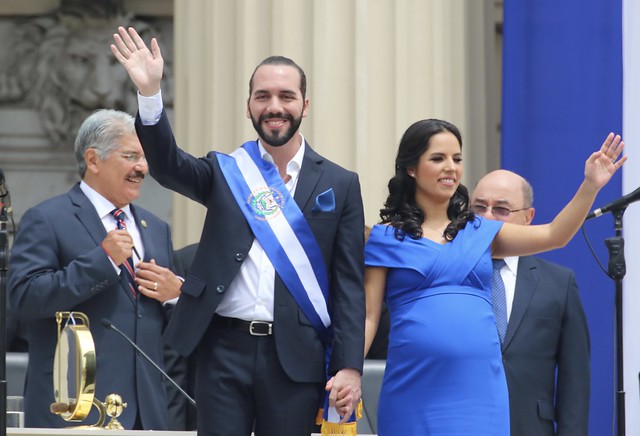
President Nayib Bukele and his wife waving to the crowd on his inauguration day

Inauguration of President Nayib Bukele in El Salvador / PresidenciaRD / Flickr / Creative Commons

Latin American countries’ shift in recent decades from presidential-election rules awarding victory to candidates winning a plurality (“first past the post”) to majority runoff (a second round between the top two candidates if no candidate reaches a majority) has been successful overall. By 2016, 12 of the region’s 18 countries classified as “electoral democracies” used runoff, compared to only one, Costa Rica, prior to 1978. (Click here for a full explanation of the classifications.) Adopted in part due to the traumatic military coup against Chile’s Salvador Allende, elected in 1970 with only 36 percent of the vote, runoff enhanced the legitimacy of incoming governments and enticed candidates towards the political center. The runoff reform also lowered barriers to entry into the electoral arena by the previously excluded political left – a major challenge to many Latin American democracies in the 1980s-2000s.

  • Under runoff, a new party is not a “spoiler” party. Runoff allows voters to vote more sincerely in the first round – for the candidate whom they prefer – rather than strategically, i.e., for the preferred candidate whom they think can win. Also, a party has a second opportunity – if it is the runner-up, to win, but otherwise to have its voice heard, usually through its power of endorsement. Under plurality, if a new party wants to have any chance to win, it usually must ally with another party with an established political base, but alliances are problematic and dilute the new party’s brand.
  • According to virtually all studies, including my study of Latin American elections between 1978 and 2012, the number of political parties was larger under runoff rules than under plurality rules. And, in my study, a “new party” became a “significant contender” considerably more often under runoff.

Because of the increase in the number of parties, many observers opposed runoff. Although five or 10 or, worse yet, 15 or 20 parties indeed pose challenges for governability, evidence shows that a larger number of parties was not in fact correlated with inferior scores for political and civil rights as measured by Freedom House and Varieties of Democracy (V-Dem). Under plurality, the hold of traditional “cartel” parties was not loosened and participation was not expanded.

  • Runoff also impeded the election of a president at an ideological extreme. By definition, a candidate cannot appeal only to the 30-40 percent of voters in a “base” that is outside mainstream opinion. Often, runoff has pulled presidential candidates towards the center – a process evolving over the span of several elections as the need to appeal to the center becomes clearer. Among the presidents in runoff systems shifting towards the center over one or more elections were Brazil’s Luiz Inácio (Lula) da Silva; El Salvador’s Mauricio Funes; Guatemala’s Álvaro Colom; Peru’s Ollanta Humala; and Uruguay’s Tabaré Vázquez. Latin American countries under runoff arguably enter a virtuous circle with lower barriers to entry, the requirement for majority support, and ideological moderation. By contrast, a vicious circle emerged in plurality countries such as Honduras, Paraguay, and Venezuela, where plurality was one factor blocking the emergence of new parties, and perceptions of exclusion abetted polarization.

To date in 2018-2019, elections were held in runoff countries (Brazil, Colombia, Costa Rica, and El Salvador) and plurality countries (Mexico, Panama, and Paraguay). The election in Costa Rica showed the enduring importance of runoff: the evangelical candidate who had won the first round with only 25 percent was defeated by a center-left candidate in a landslide in the runoff. By contrast, legitimacy deficits, with presidents winning less than 50 percent, were likely in both Panama and Paraguay, and a legitimacy deficit was only narrowly avoided in Mexico. Further, in El Salvador, President Nayib Bukele, leading a new coalition, defeated the two long-standing parties. By contrast, in the plurality elections in Mexico, Panama, and Paraguay, new parties did not make significant headway.

  • Overall, in 2018-2019, the trend was towards the candidate, whether to the right or the left, who most effectively channeled voter anger against official corruption. Also, the trend was towards more severe political polarization and, as a result, the growing possibility that the candidate most able to defeat every other candidate in a pair-wise contest – the “Condorcet winner” – did not win. In two of the three runoff countries – Brazil and Colombia – it appears very likely that the Condorcet winner did not reach the runoff. It is not yet clear, however, what, if anything, should be done to counter this possibility.

 Although of course no electoral rule is a panacea, the greater openness of the electoral arena under runoff rules has facilitated the defeat of long-standing parties that had lost majority support but retained political bases. Presidents have been enticed towards the political center and, with majorities of the vote, not suffered legitimacy deficits. There is no ideal solution to the challenge of the emergence of too many parties, but more promising remedies include scheduling the legislative vote after the first presidential round, as in France, and establishing thresholds for parties’ entry into the legislature. A ranked-choice voting system – the “instant runoff” system in place in only a handful of countries – could conceivably work in the long run, but runoff rules have already helped Latin America expand inclusion and secure victors’ legitimacy.

June 14, 2019

*Cynthia McClintock is Professor of Political Science and International Affairs at George Washington University. This article is excerpted from her paper The Reform of Presidential-Election Rules in Latin America: Plurality, Runoff, and Ranked-Choice Voting, presented at LASA in May 2019.


The Arrival of #MeToo in Latin America

By Brenda Werth

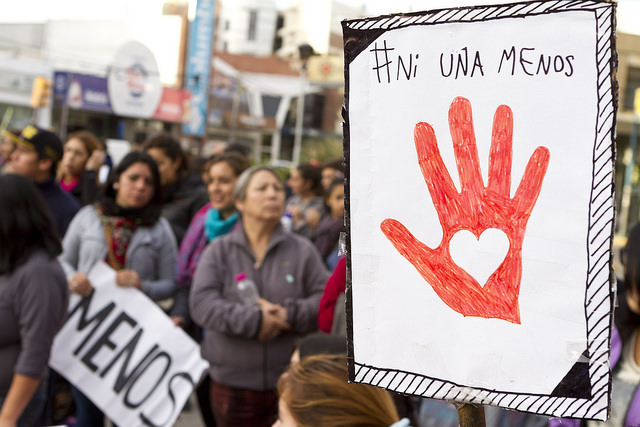
#NiUnaMenos

#NiUnaMenos Protest in Neuquen / Flickr/ Creative Commons

The #MeToo movement – described frequently as a moment of reckoning in the societies it touches– is arriving in Latin America, but the region’s own #NiUnaMenos movement provides a superior model for driving awareness of violence against women.  Latin America has a deep history of activism against gender violence, including decades of organizing against feminicide at the U.S.-Mexico border and most recently the mass mobilizations of #NiUnaMenos in Argentina, Peru, Brazil, and Chile.  Two major cases have breathed life into the framework of #MeToo in the past three months: Argentine actress Thelma Fardín’s open denunciation in December of actor Juan Darthés for raping her on the set of the children’s show “The Ugly Duckling” when she was 16 years old; and most recently, the mounting accusations of sexual assault and misconduct against former Costa Rican President and Nobel Laureate Oscar Árias Sánchez.  In denouncing celebrities and politicians in positions of power, #MeToo in Latin America replicates the pattern of “toppling the powerful, not the ordinary.”

While the significance of bringing down the powerful and those who historically have seemed most immune from prosecution and public scrutiny should not be underestimated, the concern that #MeToo so far has had little effect in changing attitudes of the ordinary or holding the ordinary accountable is a valid one and presents a much bigger and strategically important problem.  New York Times writer Amanda Taub writes that “the movement has had little effect on the broader problem of sexual abuse, harassment and violence by men who are neither famous nor particularly powerful.” While addressing the broader problem of sexual abuse, holding perpetrators accountable, and implementing long term systemic change are central tenets to the original mission of #MeToo as envisioned by founder Tarana Burke, there is a sense that the movement’s adaptation and subsequent viralization have narrowed the movement to focus primarily on cases of sexual abuse with potential for media spectacularity.

  • The #NiUnaMenos movement in Latin America, on the other hand, offers concrete examples of how to address the broader problem of sexual abuse and gender violence at the grassroots level through open popular assemblies, rallies, demonstrations, collective performances, and social media. University of California Professor Alyson Brysk notes the importance of the grassroots organizing against gender violence that preceded #MeToo.  #NiUnaMenos was first introduced in 2015 by Argentine journalists, activists and artists who, outraged by the murder of 14-year old Chiara Páez by her boyfriend, announced a call of action via social media to build solidarity against gender violence and feminicide.  Cecilia Palmeiro, one of the movement’s founding members, says #NiUnaMenos embraces a “feminism from below” that is intersectional, transversal, and horizontal and engages with marginalized communities, with a revolutionary lineage of activism passed down from the Mothers, Grandmothers and other human rights groups.  In joining forces with the International Women’s Strikes, #NiUnaMenos makes the crucial link between gender violence and the forms of economic inequality and exploitation that affect women worldwide.

While #MeToo “jumps to countries across Asia, Europe, and Latin America,” the lessons of movements from Latin America such as #NiUnaMenos are indeed more valuable – and worth being studied by the United States and Europe. A hemispheric exchange of ideas, methods, and practices between movements such as #MeToo and #NiUnaMenos would help establish new networks of solidarity while drawing attention to the diverse challenges and questions that inform both movements and the contexts in which they emerged. Furthermore, mutual acknowledgment of the sophistication and potential international impact of these and other movements would help to dispel the notion that Latin America is “catching up” by finally grappling with #MeToo and would contest the familiar trope of knowledge dissemination from North to South.

March 8, 2019

* Brenda Werth is Associate Professor and Department Chair, World Languages and Cultures, at American University.

A Right Turn in Latin America?

By Santiago Anria and Kenneth Roberts*

Jair Bolsonaro

Brazilian President Jair Bolsonaro in January 2019. / Marcos Brandão / Agência Senado / Flickr / Creative Commons

After a long winning streak, the left in Latin America has experienced electoral defeats in a number of former strongholds since 2015 – including Argentina, Chile, and Brazil – but the trend is not unidirectional and so far falls short of being a regional “right turn.”

  • Right wing presidents govern today in those three countries as well as Colombia, Guatemala, Paraguay, Honduras, Panama, and Peru – a scenario that is quite different from 2010, when about two-thirds of Latin Americans lived under some form of leftist government. Democratization, financial crises, and market liberalization shaped the 1980s-90s, while mounting social discontent against neoliberal market reforms helped to produce a “left turn” that spread across the region following the election of Hugo Chávez in 1998.  Leftist candidates won 30 presidential elections in 11 different Latin American countries between 1998 and 2014.

The current trend lines are hardly unidirectional across the region.  Mexico, which remained under conservative government when most of the region turned toward the left after 1998, has recently elected long-time leftist leader Andrés Manuel López Obrador to the presidency.  Incumbent leftist parties have been re-elected one or more times in Uruguay, Bolivia, Costa Rica, and El Salvador.  Notably, leftist parties in some countries where they have been historically weak, such as Colombia and Honduras, have strengthened electorally and organizationally, laying the groundwork for further growth.  Leftists’ records elsewhere are mixed.  Rivalries among Ecuadorean leftists make their future uncertain.  Venezuelan President Maduro and Nicaraguan President Ortega have resorted to increasingly repressive and authoritarian measures to maintain their grip on power.

  • With the possible exception of Brazil, the right’s surge is not the result of the sort of social backlash that brought the left to power. In general, the right’s victories appear to be a routine alternation of power rather than a regional wave with common starting points and driving forces.  Argentina and Chile are the two clearest examples of routine electoral alternation of power explained by retrospective, anti-incumbency voting in contexts of economic slow-downs, corruption scandals, and social policy discontent.  In countries like Paraguay and Honduras, on the other hand, the shifts were initiated by non-electoral means – a politically motivated presidential impeachment in the former and a military coup in the latter – and then consolidated through elections after the fact.  In Brazil, the right turn can be traced back to the social protests that broke out against Dilma Rousseff’s leftist PT government in June 2013, but former conservative allies’ opportunistic impeachment of Rousseff, along with their imprisonment of former President and PT founder Lula, seriously weakened her party – paving the way for the election of anti-establishment candidate Jair Bolsonaro.

The left in power is still strong, though probably not unbeatable today, in countries like Bolivia and Uruguay, at least in part because of their roots in and strong connections with social movements.  Unlike the PT, both Bolivia’s MAS and Uruguay’s FA have managed to preserve more of their movement character and to avoid extreme forms of top-down control and professionalization.  The ability of mass popular constituencies and grass-roots activism to hold party leaders accountable and steer public policies in desired directions—a condition largely absent in countries like Brazil, Ecuador, and Venezuela—has helped the left maintain cohesion in Bolivia and Uruguay.  This cohesion, accompanied by significant reductions of inequality, helps to explain the continued vitality of left parties in these countries.  The recent strengthening of leftist alternatives in Mexico and Colombia, moreover, should guard against facile assumptions that a region wide right turn is underway.  Conservative forces’ recent victories are better understood as a reinforcement of the post-neoliberal left-right programmatic structuring of political competition in Latin America than a unidirectional political shift to the right.  That said, Brazil wields significant political and economic influence in the region and, traditionally seen as an “early mover” in the region, may be a bellwether of the future.  The ability of President Bolsonaro and his model of governance to deliver the results that Brazilians want—and to operate within the parameters of democratic institutions—will be key factors in determining the direction and strength of the region’s rightist wave.

January 9, 2019

*Santiago Anria is Assistant Professor of Political Science and Latin American Studies at Dickinson College, and Kenneth Roberts is Professor of Government and Director of Latin American Studies at Cornell University.

Latin America: Research Can Drive Inclusion

By Judith Sutz and Rodrigo Arocena*

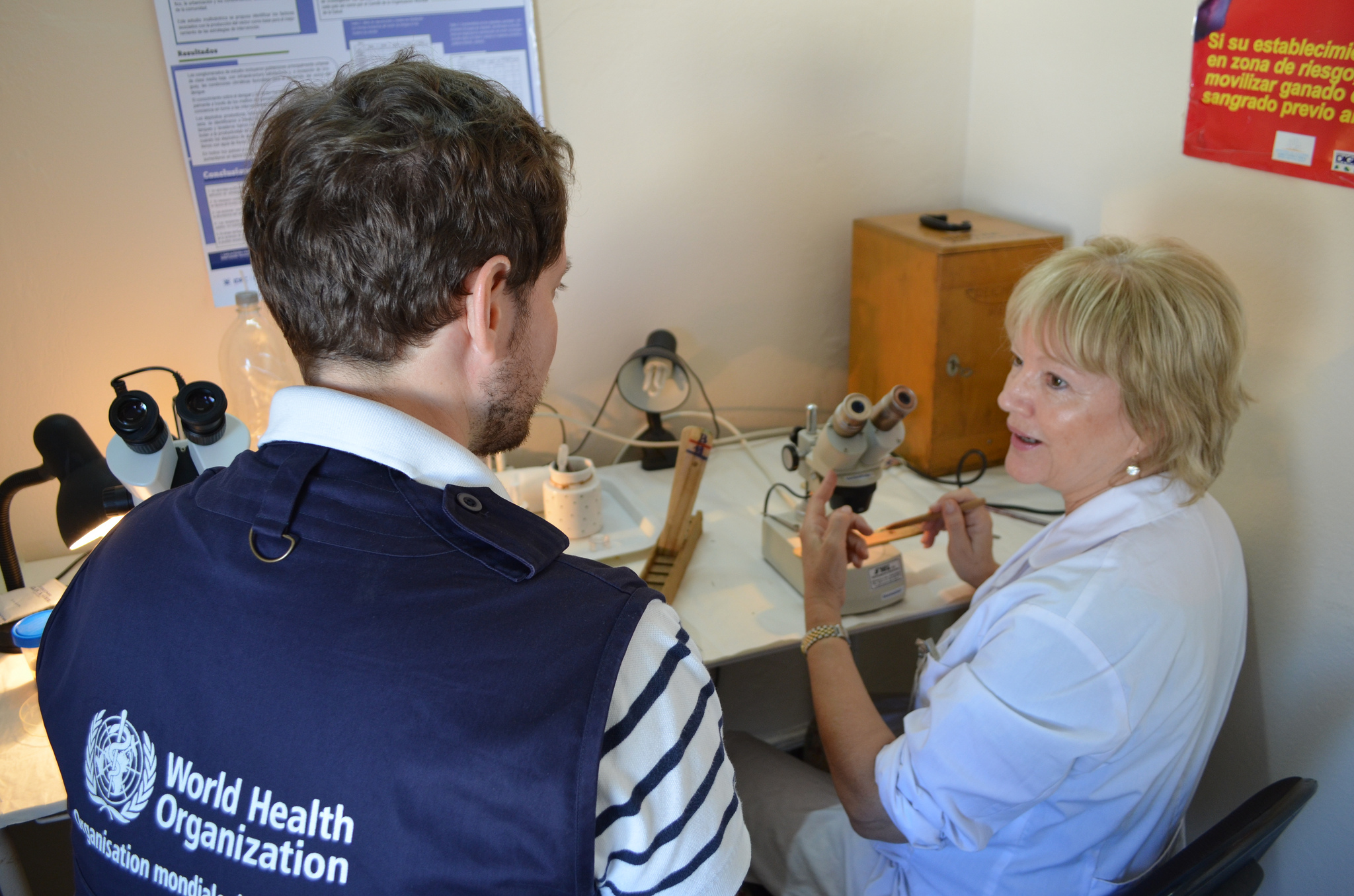
A woman points to a microscope while a man looks on.

Researchers from Uruguay’s Universidad de la República worked with partners from the World Health Organization on a project to prevent dengue fever in Salto, Uruguay. / PAHO / Flickr / Creative Commons

Research programs that address “invisible problems” in society – challenges that are generally overlooked – increase marginalized people’s inclusion far beyond solution of their immediate problems.  Problems lacking “agency” get little or no attention as competing demands for public funding crowd out resources for studying problems suffered by marginalized groups.  The solutions that arise from most research, moreover, are often too expensive and too elaborate for the less fortunate.

  • Many health problems denominated “neglected diseases” fall within what the World Health Organization calls “the 90/10 gap.” Some 90 percent of all the health research done around the world is devoted to the kind of health issues suffered by 10 percent of the world population, while the 90 percent get scant attention.

Money and political will are only part of the problem.  Research to identify a problem is in itself a challenge.  Our research indicates that some initial research is often all that is necessary to make an “invisible problem” explicit enough for policymakers to be forced to pay attention.

  • In Uruguay, a university research program in 2010 uncovered the link between rice workers’ health problems, including early death, and agrochemicals seeping into the water spread at plantations. The link was difficult to detect because their symptoms were all “normal” and had other common explanations, but an interdisciplinary team analyzed epidemiological data to confirm it, which prompted the Ministry of Public Health to take action.

A second challenge is developing new approaches to adapt existing solutions that work for the well off to sectors without resources.  Many times in the past, research stopped when a solution, albeit a costly one, was found – which has the consequence of excluding sectors of modest means.  But we know that new intellectual directions can break through even those technological barriers.

  • Once a vaccine was found for the bacterium Haemophilus influenzae type b (Hib), a dangerous pathogen that causes meningitis and other life-threatening diseases in children under five, the threat disappeared from developed countries. But it remained dangerous elsewhere in the world due to the high cost of the vaccine.  Researchers at the University of Havana explored a new approach and designed a synthetic vaccine with a very low cost of production – which many scientists have hailed as an important success.  Argentinean scientists’ development of a probiotic yogurt – called Yogurito – has provided an affordable solution to provide lactobacilli that children need for digestive health.  These “frugal innovations” yield huge benefits.

An inclusive research agenda – promoted by universities and other thought leaders throughout Latin America – can transform knowledge into a tool for social inclusion if the knowledge produced and diffused in the innovation system is focused on the broadest possible segment of society.  A Copernican shift of research agendas worldwide is unlikely in the short term, but a commitment to human sustainable development will necessarily open spaces for broader agendas over time.  Democratization of access to higher education is one important driver in building “inclusive innovation systems.”  In both developed and underdeveloped societies, “developmental universities” can play a big role in solving problems and, importantly, enfranchising broader segments of the population.  Inequality in knowledge – forgetting people with forgotten problems – is a source of broader inequality the reversal of which will be of benefit to all.  Seeing victims of illness who lack the cures that wealthier citizens have as agents, rather than just as patients, is an important first step.

September 20, 2018

* Judith Sutz is Professor and Academic Coordinator of the University Research Council of the Universidad de la República, Uruguay, and Rodrigo Arocena was the University’s rector.  Their recent book is Developmental Universities in Inclusive Innovation Systems: Alternatives for Knowledge Democratization in the Global South (Palgrave Macmillan, 2018).

Fake News: Threat to Democracy

By John Dinges*

Newspaper stand in Mexico City

A newspaper stand in Mexico City. As traditional news media faces growing competition from social media and emerging technologies, fake news poses a threat to legitimate news media and democracy itself. / Pablo Andrés Rivero / Flickr / Creative Commons

Fake news threatens to destroy the fundamental values of a free press throughout the hemisphere, and only a redoubling of efforts to build and protect investigative journalism would appear to offer hope in stemming its growing influence.  Journalism faces a number of challenges, including violence, authoritarian pressure, manipulation by commercial interests, and competition from “social media.”  But the combination of fake news and new technologies to spread it pose an asymmetric threat to legitimate news media and to democracy itself.

  • In its strict – and now largely unused – definition, fake news is fabricated information that’s designed to look like journalistic content but whose real purpose is to twist the truth and manipulate people’s behavior. Also called “black propaganda” and “disinformation,” it was engendered principally by intelligence agencies.  The CIA used it during the Cold War in Chile and other Latin American countries.  The Soviet Union’s KGB disseminated fabricated documents with authentic-looking formatting and signatures from Chile’s secret police.  Cuba’s Radio Havana promoted the false narrative that socialist president Salvador Allende was murdered in the 1973 military coup – he actually committed suicide.
  • The phenomenon now is broader and more threatening. Fake news has evolved to include attacks on the legitimacy of independent media, and its agile use of social media spread rapidly through personal electronic devices enhances its impact.  U.S. President Donald Trump has alleged (as recently as July 15) that the “media are the enemy of the American people.”  Latin American politicians have used accusations of fake news to attack legitimate media.  In Venezuela, the Chavista government invented the concept of “media terrorism.”  Fake news techniques are found most commonly in campaigns by authoritarian parties and governments.  Russia’s intelligence services, under President Vladimir Putin, have weaponized the techniques and are now systematically using them to intervene in European and U.S. elections, notably in supporting the 2016 victory of Donald Trump.

There is no consensus among journalists on a solution.  Tough experiences have shown, for example, that government regulatory actions tend to backfire against a free press; political leaders all too easily resort to actions that lead to the imposition of political hegemony and control.  Media laws in Ecuador, Venezuela, and Argentina were hailed as progressive in some quarters – mandating fairer distribution of broadcast spectrum, for example.  But they were most effectively used to impose political control on opposition media.  Journalists, moreover, have been thrown off balance by the phenomenon of fake news.  They have struggled to respond to effective attacks on their credibility and so far have failed to develop the tools needed to mount an effective counterattack.

  • The double challenge is how to enable consumers of media information to distinguish between false and truthful information – especially because the fake news products are designed to resonate with their biases – and how to strengthen legitimate journalists’ ability to rebuild their beleaguered credibility. Talking Points Memo journalist Josh Marshall, speaking of politically motivated falsehoods in a memo published by the U.S. House Permanent Select Committee on Intelligence last February, said:  “Conventional news and commentary [are] incapable of handling willful lying in the public sphere.”  In the case of the committee’s misleading memo, most observers agree, the legitimate media published accurate fact checking, but apparently the accurate stories had little corrective impact on public perceptions of the memo – handing a victory to fake news.

The other serious threats that journalism faces – such as the murder of dozens of Mexican journalists with practically total impunity, and the consolidation of ownership of the media in the hands of very few owners in most countries – are not insignificant.  Fake news, however, presents a more serious, even existential, threat because it short-circuits all three of the main functions of journalism in the preservation and consolidation of democracy – as sources of information the public needs in voting, as forums for political debate, and as investigators to monitor and evaluate government and private power.  In the ongoing asymmetric war between journalism and fake news, investigative journalism, if protected and funded, would appear to offer the most efficient defense for democracy.  Digital platforms have created new tools and platforms for investigative journalism, and new organizations, such as ProPublica, the International Consortium for Investigative Journalism, among others, are raising the skill level of professional journalists and enhancing their best practices.  Investigative journalists have the methodology, international base, and decades of experience needed to be the guard dogs against fake news – to investigate its purveyors, lay bare their agendas, and, over time, re-establish the truth upon which all democracies depend.

July 24, 2018

*John Dinges is an emeritus professor of journalism at Columbia University and lectures frequently in Latin America on media and democracy and investigative journalism.

A Summit in Search of the Americas

By Carlos Malamud*

A large round table encompasses a room with various heads of state from the Americas

Last week’s Summit of the Americas in Lima, Peru. / U.S. State Department / Public Domain

The Summit of the Americas in Lima last weekend has left its organizers and principal participants with a bittersweet feeling, leaning to the bitter.  The absence of Donald Trump, Raúl Castro, and Nicolás Maduro reflects only the existing difficulties.  The bigger problems relate to the impossibility of achieving general consensus about the big hemispheric issues, such as corruption or Venezuela, and – of even greater concern – the lack of clarity and substance of the Latin America policy of the United States.

  • The Summits initially were linked to Washington’s efforts to create the Free Trade Area of the Americas (FTAA), but since that project’s failure they have represented the United States’ ongoing interest in Latin America and the Caribbean. That explains why, since the Summit process was created in 1994, no resident of the White House has missed a Summit – regardless of how complicated national and international situations have been.  That was until Donald Trump gave priority to the conflict in Syria over his relationship with Latin American counterparts.

The disturbing thing is not just Trump’s conflict with Mexico, or his hostility toward Cuba and Venezuela.  Neither is the deterioration of the image of the United States in Latin America since President Obama’s term ended.  The fundamental problem is the lack of clear indications from the Trump Administration about its intentions and objectives in the region.  This is the case even with the closest countries.  For example, several South American countries’ exports to the United States could be affected by the trade war between Beijing and Washington.  But no one has clear answers about the policies driving these events, and no one is taking steps to reduce the impact of them or of Washington’s lack of policy.

  • Even though the official theme of the Summit was “Democratic Governance against Corruption,” it was impossible for the participants to go beyond good words and advance any global solutions. Without a doubt, this is good evidence of the weakness of regional integration.  In their Final Declaration, the leaders were unable to include either a condemnation of Venezuela or a call to disregard its Presidential elections on May 20.  Instead, what we got was a statement by the Grupo de Lima plus the United States expressing extreme concern for the situation in Venezuela.  Despite the decline of the Bolivarian project and Maduro’s isolation, Bolivia, Cuba and some Caribbean states dependent for oil on Petrocaribe remain capable of blocking hemispheric consensus.

This probably will not be the last Summit of the Americas, but the future of these hemispheric meetings depends in great part on the capacity of the governments in the hemisphere, beginning with the United Sates, to redefine continental relations and find anew the essence of the Americas.  This means more than just responding to the growing Chinese role; it means putting on the table the real problems that affect the continent and going beyond mere rhetoric about them.  For now, with hemispheric relations buffeted by the unpredictable slams issuing in the form of Trump’s tweets, it will be difficult to get there.

April 17, 2018

*Carlos Malamud is Senior Analyst for Latin America at the Elcano Royal Institute, and Professor of Latin American History at the Universidad Nacional de Educación a Distancia (UNED), Madrid.  A version of this article was originally published in El Heraldo de México.

Latin America: Evangelical Churches Gaining Influence

By Carlos Malamud*

Five people stand up in front of a screen with their arms raised

The evangelical political party Partido Encuentro Social (PES) held a rally earlier this month in Mexico City. / Twitter: @PESoficialPPN / Creative Commons

The line between religion and politics is getting increasingly blurred in Latin America as evangelical churches grow in strength and candidates try to curry the support of – or at least avoid confrontation with – the faithful.  Tensions over mixing religion and politics have historic roots in Europe and Latin America and persisted throughout the 20th century, but we are witnessing a new phenomenon in Latin America now.  In much of the region, evangelical churches are showing an increased political presence and institutional representation in partisan politics.

  • In Mexico, the secular Movimiento de Regeneración Nacional (MORENA) and the Partido del Trabajo (PT) have struck an alliance with the evangelical Partido Encuentro Social (PES) to back presidential candidate Andrés Manuel López Obrador. Guatemalan President Jimmy Morales is an evangelical, and Costa Rica – if current polls prove correct – could soon have Fabricio Alvarado, an evangelical pastor, as President.  In Brazil, presidential aspirant Jair Bolsonaro has been building popular support by, among other things, appealing to the an evangelical base, even though most Brazilian evangelical churches aren’t reaching for executive power but rather support parties concentrated on building local, provincial, and congressional influence.
  • The evangelical churches’ membership has grown steadily but unevenly in recent decades. About 20 percent of all Latin Americans are evangelicals.  In Mexico, they account for more than 10 percent of the population.  In Peru, Ecuador, Colombia, Venezuela, Argentina, and Panama, observers estimate more than 15 percent.  In Brazil and Costa Rica, the number reaches 20 percent, while in Guatemala, Honduras, and Nicaragua it surpasses 40 percent.

The evangelical churches’ political agenda is centered on defense of family values – basically opposition to abortion, same-sex marriage, divorce, euthanasia, and what they erroneously call “gender ideology.”  On these topics on certain occasions, there’s a striking convergence with the Catholic hierarchy, Social-Christians, and conservative parties.  The evangelicals do not usually take positions, however, on other issues in which the government has a strong role, such as the economy or international relations.

The evangelical phenomenon reflects a double dynamic:  the unstoppable surge in non-Catholic faithful poses an enormous challenge for the region’s deeply rooted bishops conferences, and the growing distrust for political leaders and parties has facilitated the emergence of new options, including evangelicals, with barely articulated platforms.  The faithful who profess the tenets of evangelicalism are disciplined, and pastors’ positions have a lot of influence over them.  Even if not linked directly to candidates through the parties, voters’ evangelical affiliation and their churches’ recommendations have a strong influence over them.  The evangelical vote, moreover, is highly desired by all candidates and at least indirectly influences campaigns.  Candidates in Colombia, Brazil, or Mexico, as in other Latin American countries, are making that increasingly obvious as elections approach.

March 20, 2018

*Carlos Malamud is Senior Analyst for Latin America at the Elcano Royal Institute, and Professor of Latin American History at the Universidad Nacional de Educación a Distancia (UNED), Madrid.  A version of this article was originally published in El Heraldo de México.