Mass Deportations Could Create a US Recession

By Ernesto Castañeda
Interview by Diana Castrillon with Ernesto Castañeda published in Stornia August 13, 2024. Edited and expanded by Castañeda. Original in Spanish. Translated by Castañeda.

Diana Castrillon: “Irregular immigration is one of the most important issues in the presidential campaigns of the candidates, Republican Donald Trump and Democrat Kamala Harris. On the one hand, the Biden administration, of which Vice President Harris is part, restricted the number of asylum seekers entering the country, and on the other hand, Republicans are promising the “largest mass deportation program in US history” if they win the White House this fall.

Anti-immigrant sentiment in the United States is on the rise, with more than half (55%) of Americans this year saying they would like to see a decrease in immigration, a first since 2001. This is partly due to the belief that immigrants, particularly undocumented immigrants, are a burden on government resources and contribute nothing to the economy.

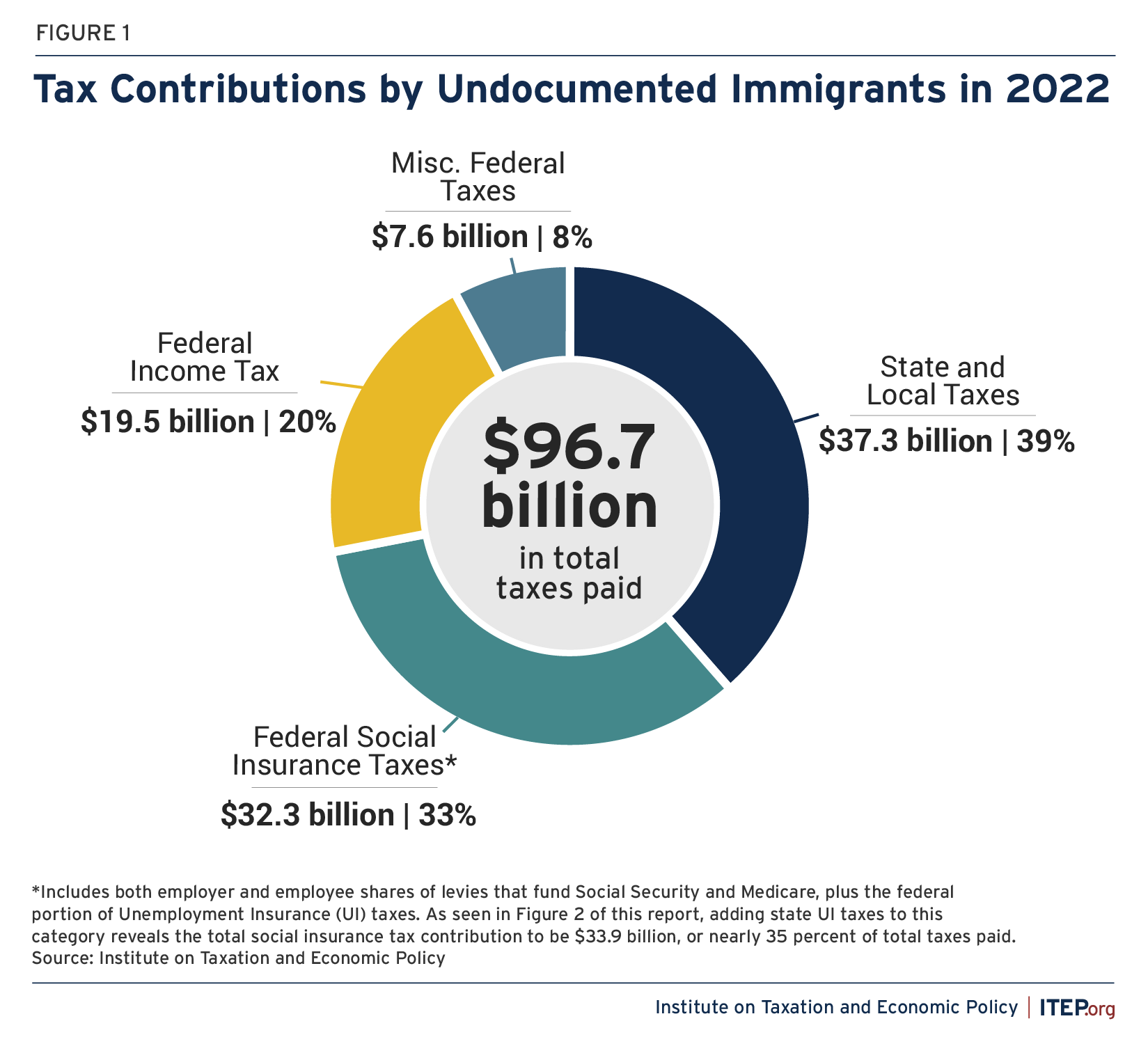
However, a new study from the Institute on Taxation and Economic Policy shows that the opposite is true. According to the report, undocumented immigrants contributed nearly $100 billion in taxes during 2022, while being unable to access many of the programs their tax dollars funded. Of that nearly $100 billion, $60 billion went to the federal government. For every million undocumented immigrants, federal services receive an additional $8.9 billion in tax revenue. More than a third of the taxes paid by these immigrants go to programs they cannot access, such as Social Security ($25.7 billion), Medicare ($6.4 billion), and unemployment insurance ($1.8 billion).

In addition, undocumented immigrants often pay higher tax rates than American citizens: in 40 of the 50 U.S. states, illegal immigrants pay higher state and local tax rates than the 1% of households with the highest incomes. In addition, they cannot receive many tax credits and often do not realize that they can claim refunds or prefer not to. “In total, the federal tax contribution of undocumented immigrants amounted to $59.4 billion in 2022, while the state and local tax contribution stood at $37.3 billion,” the authors of the study wrote. “These figures make it clear that decisions on immigration policy have substantial implications for public revenues at all levels of government,” the report says.

In an interview with Stornia, Ernesto Castañeda PhD, Director of the Immigration Lab and the Center for Latin American and Latino Studies at American University in Washington DC, said that immigrants are necessary and essential for the economic growth of the United States.

Diana Castrillon: How does an undocumented immigrant pay taxes, if as their name suggests, they are irregular migrants?

Ernesto Castañeda: Undocumented immigrants pay taxes every time they buy something; there is a sales tax, and the percentage depends on each locality. If they buy houses, they also pay taxes, or if they rent, there is a percentage that must be paid in taxes to the local and federal governments. Undocumented people who work in formal companies, which are many, can have a temporary identification to pay taxes (ITIN), which works in a similar way to a Social Security number, so they pay payroll taxes like any other person working in the United States. There are some undocumented people who use false or incorrect identification documents, but someone lends them one, and so they pay into the Social Security and retirement and health programs. However, since the number is false or does not belong to them, they do not have access to those benefits when they retire. So, not only do they pay for these services, but many immigrants do not ask for these benefits. Therefore, they have a net or even greater contribution than the citizens who pay, but then they withdraw those benefits such as social security after retirement. It is a gain that the federal government and the Treasury openly accept that happens.

So, are undocumented immigrants paying more taxes than American citizens themselves?

Yes—the rate of many undocumented people who pay taxes is higher than the rates paid by the richest people in the country. Of course, their incomes are different, but the rate is sometimes higher or very similar to that of citizens. Citizens fill out their tax returns and often ask for tax returns and reimbursements, for example, they get a credit for having children, but many undocumented taxpayers do not make these claims because they do not want to be denied citizenship in the future for having asked for aid. Nor do they ask for support programs for their children, who are already citizens and have the right to those services, out of fear. We have documented that, indeed, immigrants use fewer social services than U.S.-born citizens (Castañeda and Cione, 2024).

It seems that undocumented immigrants are between a rock and a hard place now with the electoral campaign on both the Republican and Democratic sides. Is there concern in the community?

Some politicians use undocumented immigrants as scapegoats. On the one hand, Trump makes this threat of mass deportations, but it is unlikely that he will do it. He had promised that before, and when he was president, he did not deport as many people. That doesn’t mean that people aren’t scared now, and if he wins, he’s going to create real terror among the people who already live in fear of themselves or their family members being found. That’s a reality that undocumented immigrants have been living with for many years.

As for asylum, in fact, many people are fleeing Cuba, Venezuela, Nicaragua, and Haiti, many with proof of persecution, and now the government has changed how it processes these asylum cases. The border is closed to many of these asylum requests as it was during the pandemic, so we’re seeing fewer people let in through the wall in between ports of entry. The Biden-Harris administration thinks that this can help them electorally so that Republicans don’t criticize them about the border supposedly being open or about undocumented individuals or those seeking asylum temporarily receiving food and housing in some cities. At some point, they will have to reopen the border to asylum seekers because national and international law calls to receive people who are asking for asylum. Some will be accepted, others will not after processing their applications.

Trump would need a lot of money and policing. He would have to create a totalitarian state to be able to deport all the people who are here. Many of these people have been here for more than 10 years. Their children are citizens. They work, and they contribute. So, deporting in massive numbers or stopping receiving immigrants and asylum seekers is a great attack on the United States and the economy could contract. Massive deportations from the interior could create a recession because, as we indicated, migrants pay billions in taxes. However, taxes are a small percentage of what people earn, and most of what immigrants earn is spent in the cities where they live. With the work they do, they generate economic growth, services, and entertainment.

A few days ago, JD Vance, Donald Trump’s vice-presidential candidate, justified the mass deportation plan and said that undocumented immigrants are stealing jobs from American citizens. Is there a line of Americans waiting for immigrants to be deported to take their jobs?

It doesn’t work like that. Trump and Vance are wrong about immigrants taking jobs from citizens or African Americans. It’s an easy stereotype to sell. Some voters may have had an experience where it seemed that could be the case. However, if we look at the economy in general, immigration generates new jobs. In Florida, the strictest anti-immigrant law in the country is in effect. In fact, many undocumented immigrants have left the state, and today, there is not enough labor for construction, services such as hotels, or even to pick oranges. So, the businesses that needed that labor to generate wealth now do not have their business functioning 100%. Middle-sized farm owners have had to close because they lack the labor, and some small businesses have had to limit their service hours. If there is no construction, there is no housing, and there is more inflation for existing housing. Immigrants arrive and need a place to live, someone to cut their hair, and someone to sell them food, so they generate work and income for merchants. Immigrants start more service businesses, as well as large companies, than those born in the United States. We also know that in general, immigrants employ more people than business owners who are from the country.

It is not like there is an economic pie that is shared by the number of people who are here plus those who arrive. Indeed, the more people arrive, the bigger the pie becomes, so there will be more pie for everyone to share. It is not unfair competition, and that is seen in the unemployment rates. Under the Biden-Harris administration, we have a historically low unemployment rate for African Americans and for Latinos. There are very few citizens of European origin who are unemployed because some immigrants are taking their jobs. They usually do not find work because they do not have enough education to take a job or, on the contrary, because they have too much education and there is no high-income job that they can take. Or because they refuse to move to look for work. Unemployment rates are low and what business owners complain about is that they do not have enough staff in organizations to expand their businesses. This also affects citizens looking for services and having to wait longer in restaurants because there are not enough waiters or cooks.

What is the answer to immigration management, more temporary employment visas, legalizing undocumented immigrants, or building more walls on the border?

The solution to long-term cases of irregular immigration is to increase temporary employment visas so that people can migrate legally. There are programs such as the H2A and H2B visas, which are examples of visas that work very well. People come, work, and return to their country because they have already earned income in dollars and want to be with their families. The problem is that there are limits, there are quotas for these visas, they are for certain types of jobs, and there is more demand for these temporary workers than the law allows. Congress has to pass legislation to increase the number of these visas. Thus, the House of Representatives and the Senate, along with enough members from both parties, have to agree. Many Republicans refuse to reform immigration because they want to use it for electoral purposes rather than solve the issue.

For the people who are already here, the solution is to legalize them. By giving papers or work permits to those who are here, many would earn more money, have more confidence to invest, and pay more taxes. This would be an injection into the American economy, and they could bring their relatives legally and expand the worker base a little more. That is something that neither Trump nor Vance understands, and they would never do it. Unlike President Ronald Reagan, who did sign a law like that, although reluctantly. It is not something that Kamala Harris or Tim Walz have wanted to talk about much in the campaign either because people use it as a very simple attack, but they have a political history of supporting these types of measures.

And with this legalization of undocumented immigrants in the United States, do Latin American countries win or lose?

Remittances represent only 4% of the wealth that immigrants generate in the United States, and a migrant who is more established sends remittances less often. Remittances help support families in economic need, but they represent long family separations until the migrant ends up returning or tries to bring the entire family. So, it is short-term help, but it puts families that are divided in emotional difficulty. In any country that loses migrants, from farmers to scientists, from teachers to doctors —like Cuba which loses a couple of million professional migrants every year for the last couple of years— and increasingly weakens its economy. The same is true of the Venezuelan economy, which, among other things, has been weakened by emigration.

Remittances are short-term aid, but the real economic growth happens where the migrants live, in this case, the United States.

According to the study by the Institute for Fiscal and Economic Policy, work authorization would be beneficial for everyone since granting undocumented immigrants a work authorization would result in an increase in their tax contributions from $40 billion to $137 billion per year since the work authorization would increase salaries.

Ernesto Castañeda PhD, Director of the Immigration Lab and the Center for Latin American and Latino Studies, American University in Washington DC.

This piece can be reproduced completely or partially with proper attribution to its author.

The Spanish version of this text is available at the following link: https://aulablog.net/2024/08/26/deportaciones-masivas-podrian-crear-una-recesion-en-ee-uu/


Venezuela: Authoritarian Election Aftermath

By Michael McCarthy

Photo credit to Matias Delacroix /AP

In the wake of a sham Presidential election event, Venezuela’s complex crisis appears to be deepening. Marked by electoral authorities’ apocryphal claims of a government victory, Maduro’s iron-fisted post-election crackdown against the opposition, and thus far unsuccessful efforts at international mediation from Brazil, Colombia, and Mexico, the ongoing electoral episode has placed the government and opposition in an increasingly bitter conflict.

Stuck in between stands the population, a large portion of which may migrate unless hope for political change can be revitalized. The region should brace itself for a new movement of Venezuelans abroad.   

The opposition coalition continues to press its case. The opposition is led by María Corina Machado, the winner of open primaries who was forced to endorse Edmundo González Urrutia after the government-controlled courts banned her candidacy. Their election witnesses documented a landslide victory — 67% to 31% for González Urrutia. Due to both the total lack of transparency by the electoral authorities (disaggregated precinct-level data has still not been published though that was the norm in previous Maduro-era elections) and the validity of election witness tally sheets consolidated by the González Urrutia campaign, opposition claims have resonated widely. The Biden administration and multiple Latin American governments recognized González Urrutia as the winner of the election, while even historical Left-wing allies of the chavista political movement, such as former President of Argentina Cristina Fernández de Kirchner, cast serious doubts on Maduro´s claim to victory.

Privately, numerous pro-government voices have admitted they cannot attest to the credibility of the official results, which state that Maduro won with 51% of the vote, a telling admission that no independent checks on executive power grabs exist. However, despite Maduro´s most acute crisis of legitimacy yet, no highly influential ruling party official or strategic international ally (Bolivia, China, Cuba, Russia) has publicly aired such concerns. Maduro seems more influenced by the hard line elements in his government and, amid his intransigence toward calls for releasing credible electoral data, his government seems headed for greater international isolation. Meanwhile, the opposition — though strengthened by its impressive organizational effort to retrieve over 80% of the tally sheets from voting centers — is struggling to capitalize on its status as the electoral majority.

The Biden administration is losing patience with the situation. Following a period of pre-election diplomatic engagement with Maduro, Washington is strongly considering the imposition of new individual sanctions against government authorities involved in engineering the fraudulent election results and responsible for recent human rights violations. According to Venezuelan human rights groups, Maduro’s security forces have arbitrarily detained over 1,500 persons since the July 28 vote, including activists and leaders from the different opposition coalition partners, as well as one hundred and thirty adolescents. Over 20 demonstrators died amid state repression against post-election protests held to contest the official results.

As this dark post-election period continues to unfold, Maduro not only has a corrupt and ideologically conditioned army but also time on his side. The regime´s cohesion, while lower than in previous moments of chavismo´s 25 years of rule, appears to be sufficiently strong for Maduro to hold power until the new presidential period begins in January 2025. Maduro holding power does not guarantee Venezuela’s stability. Rather, the electoral crisis is likely to translate into weaker than previously forecast economic growth (4% according to Spring 2024 projections by the IMF), a scenario that could, in turn prompt Maduro to panic and forsake the more pragmatic economic policies he’s been pursuing to contain inflation. Indeed, Maduro has never articulated an overarching vision to unify the movement the way Chávez did. While his ongoing use of coercion and repression has helped him secure loyalties among ruling party power brokers, those tools cannot fix the underlying problem of internal political fragmentations, some of which grew more salient during the multi-billion corruption scandal that resulted in Maduro jailing his oil czar Tareck El-Aissami, among others.

Thus, while the return to democracy in Venezuela still seems far off, it is also true that Maduro´s leadership has never been under as much pressure as it is today. His ability to deliver economic gains from the oil sector is likely to decline, with historical investors such as China likely to take a wait-and-see approach and Maduro´s ambition to join the BRICs+ and obtain New Development Bank financing likely to go unfulfilled. If the economy spirals downward, then Maduro will face tougher questions from his own coalition’s strategic players in the military. In this respect, Maduro’s blatant rigging of the vote count opens a new, highly uncertain chapter in chavismo’s already stressful history of losing popular legitimacy.

Over sixty years ago, a previous Venezuelan dictator, Marco Pérez Jíménez, lost power months after holding a fraudulent plebiscite on his rule. A general uprising catalyzed a coup against Pérez Jiménez, which in turn yielded a caretaker transition government that later paved the way for restoring democratic rule. History may not repeat itself, but if one is searching for reasons to believe Maduro has not consolidated power for good, Venezuela’s past has plenty to offer.

Michael McCarthy is President of Caracas Wire, and Adjunct Professor of International Affairs at George Washington University

Edited by Ernesto Castaneda, Director of the Center for Latin America and Latino Studies

This piece can be reproduced completely or partially with proper attribution to its author.

Latin America-Caribbean: Illicit Fishing is Environmental Security Challenge

By A.J. Manuzzi*

The Ecuadorian naval vessel, LAE Island San Cristobal / Defense Visual Information Distribution Service / Creative Commons license

Illegal, unreported, and unregulated (IUU) fishing and associated crimes are undermining coastal communities throughout Latin America and the Caribbean – hurting the economic wellbeing of licit fishers and reducing coastal and ocean biodiversity, fish stocks, and food security. The EU and the UN Food and Agriculture Organization (FAO) have made ending IUU fishing a priority because it contributes to overfishing, enables labor abuses, and violates international norms on sovereignty and biodiversity.

IUU fishing comprises a diverse slate of illicit acts, including foreign vessels fishing in another country’s sovereign waters without permission; disregard for international environmental laws; and inadequate catch reporting to state authorities. Illicit actors include large distant-water fleets (DWFs) backed by states like China, Taiwan, and Japan as well as individual locally based artisanal vessels with small crews. 

  • Latin America represents only 2.1 percent of global aquaculture production, but its losses to IUU fishing – losses that experts estimate to be $2.3 billion a year – make it the third-hardest hit continent. According to a 2020 study by the Fisheries Economics Research Unit and the Sea Around Us organization at the University of British Columbia, income losses are as high as $600 million, and tax revenue losses are as high as $300 million dollars, with the other $1.4 billion owing to the general redirection of catches from legitimate to the illicit seafood trade.
  • Costa Rica has seen by-kill of young fish from the use of illegal nets as well as incursions by illegal fishermen in its offshore national parks. Until recently, Ecuador faced a flotilla of as many as 340 Chinese vessels catching and storing marine life around the Galapagos Islands. In Jamaica, depleted seafood stocks have pushed local fishers into deeper waters, where there is a risk of collision with IUU fishers searching for diminishing sources of conch and lobster. In Suriname, IUU fishers have been known to steal the nets of domestic fishers.

IUU fishing often involves forced labor and other crimes, further harming coastal communities and billions of people worldwide whose economies and diets are tied to fish. By undercutting legal market prices, it threatens the livelihood of licit fishers who pay fair wages and don’t have the same technological advantages. 

  • Overfishing reduces supplies for local communities. The FAO estimates that total fish consumption in Latin America and the Caribbean will increase 33 percent by 2030 (more than any other region). Overfishing by IUU actors has already forced the Dominican Republic and Jamaica to increase imports of fish and seafood and impose new catch quotas that, when expanded in other countries, would likely affect the more than 3 million people in the region who work in fishing or aquaculture.
  • Related crimes are committed by artisanal fishers operating in coastal waters, where they illegally harvest seaweed, pursue endangered species, fish in the off-season, or engage in smuggling; domestic industrial fishers who misreport catches; and DWFs that use flags of convenience to trick authorities. 
  • IUU fishers threaten biodiversity because they are heavily skewed toward immediate predation, with little concern for the long-term economic impact and environmental costs. They also complicate states’ fishery sustainability efforts, making implementation of the UN Sustainable Development Goal to eliminate IUU fishing fall far behind. In addition, shark finning is prominent in Costa RicaEcuador, and Chile despite domestic and international laws against it. Nine of the 12 shark species found aboard a Chinese IUU freighter off Ecuador in 2017 were endangered. 

The regulatory frameworks for fighting IUU fishing are weak; enforcement tools are lacking; and most countries lack the resolve to address the problem. The current international framework includes a hodgepodge of international and national agreements and initiatives, without the active engagement of many of the world’s largest fishing nations. 

  • The cornerstone is the Agreement on Port State Measures (PSMA), which binds signatories to reduce illicit fishing by denying IUU fishing vessels access to port services and to lessen access of illicit catch to international markets. International bodies such as the FAO provide tools for tracking vessels, but regional fisheries management organizations (RFMOs) and advocacy groups like Oceana say that there is only limited sovereign commitment to the rules. Some of the most seriously affected countries are those with the fewest resources to combat the problem.

The combination of IUU fishing and related crimes, such as labor abuses and copy-cat practices by local fishers, pose threats to national economies, food security, and ultimately regional stability. What’s needed is obvious: enhanced monitoring, control, and surveillance capacity; updated legal instruments and increased judicial sanctions; and more resolute multilateral action on fishing subsidies and ocean protection. One question is whether the victims of IUU fishing themselves can muster the national and regional resolve to address the problem – sacrificing the short-term gain of permissiveness for the long-term goal of protecting strategic interests. Without that resolve, Latin America and the Caribbean will continue to be victimized by IUU fishing and the inequality, labor abuses, resource exploitation, and violations of national sovereignty it enables.

July 21, 2022

*A.J. Manuzzi is a Master’s student in International Affairs in the School of International Service. This article draws on research he performed as a Research Assistant for a CLALS project on Illegal, Unreported, and Unregulated (IUU) fishing in nine Latin American and Caribbean countries.

Pegasus: Powerful Tool for Law Enforcement … and Repression

By Fulton Armstrong

Malware infection/ Blogtrepreneur/ Flickr/ Creative Commons License

Latin American human rights groups’ outcry about Mexican and Panamanian deployment of the “Pegasus” spying tool to keep tabs on critics has had little or no impact, and governments are suspected of using it more aggressively than ever. The Israeli security company NSO has been licensing the software in the region since at least 2010 supposedly to help law enforcement agencies, but recent revelations about Salvadoran President Nayib Bukele’s extensive use of it indicates that it has become an increasingly powerful tool for repressing political opponents and the media.

  • Pegasus gives users total control of targets’ mobile phones using either the Android or Apple operating system, enabling them to exfiltrate all data on them, turn on microphones and cameras, and commandeer owners’ communications. Because it penetrates a device’s root level, the tool can collect WhatsApp and other encrypted services that users generally think are secure.
  • NSO claims it licenses the software only to governments and requires them to promise to use it only against terrorists, traffickers, and other criminal enterprises. According to the press, the software helped Mexican authorities capture Joaquín Guzmán Loera (“El Chapo”) in 2016, and European investigators have used it to arrest dozens of suspects in a multinational child-abuse ring.

But the company clearly is not enforcing license restrictions as governments are using it to spy on critics with impunity around the world, including Latin America.

  • During the administration of Mexican President Peña Nieto, Mexico used it against human rights experts and journalists investigating disappearances and corruption. Panamanian President Ricardo Martinelli used public health funds to buy Pegasus to harass political opponents. Rights groups cite strong circumstantial evidence that Colombia conducted a Pegasus-style attack against critics during protests last year and that Honduras and Guatemala have purchased licenses for similar software.
  • Bukele’s use of a new “zero-click” version of Pegasus – which doesn’t require the victim to tap a malware link – was perhaps the region’s boldest attack yet. It took over the mobile devices of most of the editors, reporters, and staff at the newspaper El Faro. An analysis by the Toronto-based The Citizen Lab found that some of their phones were reinfected up to 40 times to make sure that operating system updates and other adjustments didn’t cut off access to data. The organization said that journalists from other Salvadoran news organizations and prominent human rights activists were also targeted. Bukele’s spokesperson denied it all.

Human rights groups point out that governments that spy on opponents often act on the information they collect – subjecting them to harassment, malicious prosecution, violence, death threats, and physical harm. Observers also warn that the software kit almost certainly has been deployed in other Latin American countries, some of which historically have been aggressive in running tel-taps and electronic intercept operations against citizens.

The international community doesn’t appear likely to categorize it as a serious violation of human rights and demand that NSO stop selling it soon.

  • NSO has obvious business reasons for turning a blind eye to abuses, and the Israeli government has used license approvals in many countries to secure diplomatic support for its positions in multilateral contexts. Panamanian observers credit it with persuading Martinelli to make Panama one of only eight countries to vote with Israel on a UN resolution in 2012, and press reports indicate it remains an important diplomatic tool in Israel’s pursuit of objectives in the Middle East.
  • The EU, which has jealously protected internet privacy, has been relatively quiet, just recently opening investigations. Last November, Washington put NSO on its “entity list” blocked from receiving certain new U.S. technologies – reportedly because Israel violated its promise to block deployment in the United States – but the U.S. government has bought copies for “testing” purposes. (FBI says it will not deploy it, but NSO has reportedly created a separate product, called Phantom, for U.S. collection operations.) U.S. agencies have fought Apple and other phone manufacturers over encryption technology baked into their devices in the past.

Popular outrage doesn’t seem likely to lead to new legislation either. Most citizens, who see themselves as “doing nothing wrong and having nothing to hide,” do not sense the implications of the theft of their information and are therefore unlikely to call for a crackdown. Indeed, told that the software helps authorities break up criminal rings, many may privately support deployments. Salvadoran President Bukele was caught red-handed, but he probably sees his historically high popularity as a green light to continue.

February 10, 2022

China-Latin America: Literature Shows Varying Perspectives on Beijing’s Intentions

By Andrés Serbin*

Communicating Influence: China’s Messaging in Latin America and the Caribbean project page logo

By frequently casting China-Latin America relations as a “triangular relationship” between China, the United States, and Latin America, much of the academic literature generates a series of misunderstandings. Studies in both the English-speaking community and in China generally portray Latin America and the Caribbean (LAC) as a relatively homogeneous and unified area – ignoring regional fragmentation and diversity – in a triangular relationship with the two superpowers. But Latin American analysts are increasingly focused on the widely varying nature of countries’ bilateral and subregional ties with each.

  • Latin American analysts generally produce theoretically more complex, politically diverse, and ultimately contradictory approaches to the relationships. Whereas the theoretical disciplines of international relations (IR) and international political economy (IPE) are ubiquitous in the English-speaking community, recent debates and critiques in Latin America reveal accelerated development of their own theoretical and conceptual approaches.

The two sets of analyses overlap in several important areas, such as China’s primary interest in securing resources and in investing its booming wealth in the region, but they yield different interpretations of its strategic objectives. Most views center around China promoting a version of globalization based on its geostrategic objectives, generating an increasingly tense dispute between the United States, as the traditional hegemonic power, and the rising PRC. This competition occurs mainly in the commercial and technological arenas, but it has military and cultural elements as well.

  • The Western epistemic community, to some extent reflecting the demands and expectations of the political milieu in which they work, frequently regards the Chinese presence in Latin America as a threat to U.S. interests and the autonomy of LAC countries. In this dynamic, China’s objectives go beyond economics and into spaces from which the United States has withdrawn. Latin America, despite its peripheral situation, is immersed in and eventually subordinated to a broader and more global geostrategic dispute, even if (as most analysts believe) China is not trying to impose its political system and development model on the region. 
  • Others tend to view China’s modernization and transformation, its remarkable need for commodities, and its ability to finance large acquisitions and projects as having important bilateral effects for the region. China has incorporated countries into its “Belt and Road Initiative” (BRI) infrastructure megaproject. Recently, it has undertaken an aggressive “health diplomacy” project during the COVID‑19 pandemic. 

The Latin American perspective is independent of efforts by LAC-based and Chinese analysts to foster joint research and interaction in the past 25 years; Chinese input into LAC analysis is growing but still limited. 

  • The most prolific LAC authors maintain fluid links with U.S. and European academic counterparts, but their work draws on theoretical frameworks that are rooted in approaches developed in the region. This includes a wealth of economic analysis and statistical data developed by individual scholars, research centers, and networks (such as Red‑ALC China), and institutions such as the UN-sponsored Economic Commission for Latin America and the Caribbean (ECLAC). Many aspects of China’s policies, such as their impact on labor, environment, regional industrialization, and increasing LAC indebtedness to China (the “debt trap”) have been criticized, but its “soft power” has expanded significantly and benefited many in LAC.

This significant body of research and publications about China’s activities in LAC reflects three predominant disciplinary and theoretical approaches in addition to analysts’ own perceptions of their national interests.

  • The focus of international relations neorealism on China’s potentially destabilizing effects in the region and its relations with the United States gives short shrift to other important actors in the region and world. It also stimulates an inaccurate vision of Latin America as a monolithic, unitary actor and deep down expresses a subtle neocolonialism and “neocolonialist paradigm.” 
  • The emphasis of the international political economy approach is on China’s intentions as predominantly linked to its development – and not as a threat to the United States. Most argue that Latin America must develop its relationship with China and maintain its links with the United States simultaneously, without getting involved in a confrontation between them. 
  • But LAC is showing a third, hybrid approach mixing IPE and geopolitical analysis to contextualize China’s influence. It has shown that some “benign” impacts have also generated new dependency and center-periphery relations that can be characterized as a “dependency with Chinese characteristics.”

The debate between these differing interpretations –viewing dynamics as either bilateral or triangular – will continue to mold U.S., Chinese, and LAC countries’ policies as China pursues its global projection strategy.

January 21, 2022

* Andrés Serbin is an international analyst and president of the Regional Coordinator of Economic and Social Research (CRIES), a network of more than 70 research centers, think tanks, NGOs, and other organizations focused on Latin America and the Caribbean. This article is adapted from his recent CLALS Working Paper, Latin America-China Relations: A Review of Recent Literature (2010-2020)

China in Latin America: Exaggerating Medical Diplomacy

By Christopher Kambhu*

Peru’s Foreign Ministry greets Sinopharm staff/ Ministerio de Relaciones Exteriores/ Flickr/ Creative Commons License

China has garnered positive media coverage throughout Latin America for its COVID‑19 diplomacy, but it is far from clear if these efforts have altered the country’s regional standing. Coverage of its medical diplomacy has oversold its impact compared to the United States and obscured varying levels of support between countries.

  • Since the pandemic’s emergence across Latin America in early 2020, China has engaged in diplomatic efforts to send medical supplies – and later vaccines – throughout the region. Research by CLALS shows that, as of this month, China has donated $253 million worth of medical supplies, from masks to field hospitals. In addition, Beijing and its diplomatic corps have facilitated donations worth tens of millions of dollars from other Chinese entities, including foundations, businesses, and provincial and local governments. China has sold 409 million doses of domestically developed vaccines and further donated 1 million doses in Latin America and the Caribbean.

Deliveries of vaccines and medical supplies typically include photos ops at the airport, with Chinese flags conspicuously placed on packaging. Announcements of medical donations often include ceremonies at the Chinese embassy in the recipient country, even when the donation is from a non-state entity. These events obscure the line between state and non-state aid, and between vaccine sales and donations. By blurring these distinctions, some media have given unearned credit to Beijing by reporting “Chinese donations” without specifying the source.

  • This communication strategy has effectively created a narrative that China is gaining influence in Latin America through its medical diplomacy. The resulting media coverage – particularly think pieces analyzing geopolitical implications – has overshadowed the fact that Washington has provided more regional assistance than Beijing. As of this month, the United States has donated $310 million in medical supplies and cash assistance, significantly more than what China has donated. The same is true with vaccines: the U.S. has sold 427 million doses of domestically developed vaccines and donated 46 million more, outpacing Chinese efforts.
  • The narrative surrounding China’s medical diplomacy has also buried differences between individual countries. None of the countries that recognize Taiwan – Guatemala, Haiti, Honduras, Nicaragua, and Paraguay – have received any medical donations, nor have they been able to procure Chinese vaccines. In April 2020, Paraguay’s legislature debated switching recognition to China from Taiwan to appease Beijing and gain access to Chinese support.
  • The Chinese government has also used vaccines to quell criticism from regional leaders. In May 2021, Sinovac executives reportedly told Brazilian officials that vaccine shipping delays were due to Brazilian President Jair Bolsonaro’s continued ridicule of China as COVID-19’s country of origin. Acting under reported pressure from Beijing, the executives indicated that improved Sino-Brazilian relations would resolve the issue.

As the pandemic continues wreaking havoc on Latin American economies and societies, China’s medical diplomacy faces a changing landscape. The United States has increased its own vaccine diplomacy in recent months, including donations totaling 2.6 billion doses to COVAX, a UN-backed initiative distributing vaccines to low- and middle-income nations (China has only contributed 120 million doses). The Administration of President Joe Biden now is also promoting its medical diplomacy efforts with as much fanfare as Beijing.

  • While China’s efforts have generated a positive narrative, they have not fundamentally altered its standing in Latin America. Politicians, public health workers, and citizens appreciated the donations of masks and other medical supplies in the pandemic’s early days, but the response to China’s vaccines has been more muted. Access to Chinese-made vaccines is better than none, but they do not match the higher efficacy (real and perceived) of U.S. and European vaccines. Moreover, regional leaders are not rushing to embrace Beijing; Bolsonaro continues denigrating China even while its vaccines constitute more than one third of Brazil’s supply. Despite its successful communication strategies to date, China must look long-term to convert this generally positive narrative into improved public opinion.

November 23, 2021

* Christopher Kambhu is a Program Coordinator at CLALS. This research is part of a CLALS project on China’s Messaging in Latin America and the Caribbean, supported by the Institute for War & Peace Reporting with funding from the U.S. Department of State. 

Latin America: China’s Huawei Maintains its Foothold

By Luiza Duarte*

Brazilian President Jair Bolsonaro meets with Zou Zhilei, regional president of Huawei Latin America/ Palácio do Planalto/ Flickr/ Creative Commons License

Resisting U.S. pressure, Latin American countries are proceeding with Huawei as a potential or confirmed choice for their 5G wireless networks – while trying to attract other Chinese investments in their technology infrastructure.

  • Washington has been trying to shut out Huawei on security grounds since 2012, when U.S. companies were forbidden from using Huawei networking equipment. In May 2019, in the context of an escalating trade war, President Trump labeled the company a security threat and banned it from U.S. communications networks. The Biden Administration hasn’t reversed the sanctions.
  • These actions and the U.S. “Clean Network” campaign, emphasizing Huawei’s links to the Chinese government and alleged espionage activities, influenced Australia, Japan, Sweden, the United Kingdom, and others to institute similar bans. In 2018, at Washington’s request, Canada arrested Huawei’s Chief Financial Officer and Vice-Chairwoman, Meng Wanzhou, for alleged fraud, moving the issue into the international media spotlight.

Huawei has been present in Latin America for about two decades; it’s a key provider for the 4G network and associated infrastructure used by major telecom operators. Research for the CLALS China’s Messaging Project shows that 10 countries are likely to use Huawei technology despite U.S. concerns. Eight or so others are avoiding taking a position on the issue, but none have come forward to declare a ban on the company. 

  • At least 30 5G tests have been recorded in a dozen Latin American countries, more than one third of them with Huawei as the provider. The company secured an agreement with Uruguay to deepen cooperation on 5G and donated a telecommunications tower to Guatemala for training technicians on 4G and 5G networks. Colombia announced it won’t ban the company and Argentina has enabled five connection points for the new system in Buenos Aires using Huawei’s technology. Costa Rica and Venezuela’s 4G network relies heavily on Huawei’s infrastructure. In 2008, the Chinese company opened an office in Honduras, and it’s now the main provider for telecommunications companies in the country. It supplied nearly all of Cuba’s internet infrastructure.
  • Other countries are also unwilling to cut all ties to Huawei. French Guiana will comply with the French cybersecurity agency’s decision to grant time-limited waivers on 5G for wireless operators that use Huawei. This year, the United States has struck a deal with Ecuador – helping it reduce its debt – conditioned on the exclusion of Chinese companies from its telecom networks, according to the Financial Times. Two months later, the country’s National Telecommunications Corporation (CNT) and Nokia announced that they will begin to deploy 5G in the country, even though its pre-commercial tests were done with Huawei.
  • The COVID‑19 pandemic and the political battle around Huawei have delayed 5G-specific spectrum auctions in many Latin American and Caribbean countries. About one third of them don’t have concrete plans yet to adopt the next generation of mobile technology, and only Chile and Brazil have completed the tender to assign the 5G spectrum. Operators in ArgentinaUruguayPeruTrinidad and Tobago, and Suriname have launched the network in limited areas. Others are in different phases of the technological transition. 

The region’s two biggest markets have spoken of restrictions on Huawei, but continued reliance on the company suggests major collaboration will continue in one form or another.

  • Brazil’s main wireless firms already use Huawei for more than half of their networks and argue that banning Huawei would add billions of dollars in additional costs that would be passed on to consumers. The country’s auction was delayed several times and finally established a compromise involving a dual network – one (non-Huawei) for the government and all federal agencies, and one that did not block Huawei from servicing more than 242 million active mobile connections, according to the National Telecommunications Agency (ANATEL).
  • In Mexico, Huawei is excluded from the system’s “core” and areas near the U.S. border, but it’s present in other parts of the country. The company claims to be building the largest public Wi-Fi network in Latin America, with more than 30,000 hotspots in the México Conectado project. 

Huawei is undertaking robust lobbying campaigns to circumvent U.S. pressure and security concerns surrounding the firm’s hardware and software. Competitive pricing for its mobile, network, and cloud-based services has been key to establishing itself as “affordable, reliable and ultramodern.” Chinese diplomats are mobilized in the press and in social media to defend the company. But Huawei is also deploying a mix of traditional and controversial public relations strategies: large advertisement campaigns with local stars, events, partnership with universities and institutions, donations of equipment to governmental branches and businesses. It has donated 5G network kits to test agribusiness “Internet of Things” (IoT) services. It is also directly engaging decision makers, such as by hiring former Brazilian President Michel Temer to do its 5G lobbying in Brazil. 

  • Economic dependency on China made local governments fear retaliation and substantial financial consequences of a Huawei ban – a scenario that’s been even more sensitive during the pandemic. China holds a strategic position as a supplier of pharmaceutical items and COVID‑19 vaccines, while the region faces a public health and economic crisis.

November 19, 2021

Luiza Duarte is a research fellow at the Wilson Center, Brazil Institute, and CLALS. Her work focuses on Latin America-China relations. This research is part of a CLALS project on China’s Messaging in Latin America and the Caribbean, supported by the Institute for War & Peace Reporting with funding from the U.S. Department of State. 

Confucius Institutes: Building a Capacity for Business with China

By Madeline Elminowski*

Confucius Institute at the Universidade Federal do Ceará in Brazil/ Universidade Federal do Ceará/ Flickr/ Creative Commons License

China’s Confucius Institutes (CIs) in Latin America and the Caribbean form a cornerstone of its global public diplomacy efforts – with an increasingly clear emphasis on laying the groundwork for deeper business relations. As the U.S.-China rivalry has heated up, these educational and cultural promotion centers, which are partially financed by China’s Ministry of Education, have come under greater scrutiny in the United States, Canada, Australia, the UK, and elsewhere in Europe. Questions about Chinese propaganda and free speech have led to the closure of a growing number of CIs in those countries.

  • Since the first CI was established in Latin America and the Caribbean in 2006 in Mexico, the number has expanded to 44 in 21 countries, and Chinese government statements indicate plans to create more. According to Beijing media, more than one million students across the region have so far engaged with CIs. While concerns about the CIs’ operations have also been raised in these countries, debate has been more muted and at least so far has not led to the closure of any.

CIs worldwide feature curricula focused on teaching Mandarin and Chinese government-approved courses on Chinese civilization and history. In Latin America and the Caribbean, they aggressively tie these courses to training in Chinese business practices. In 2012, for example, a “Business Confucius Institute” was established at the Fundação Armando Alvares Penteado in São Paulo, Brazil. Courses on China’s business lexicon, how to interact with Chinese business partners, and how to leverage business opportunities with Chinese companies are now common in other Confucius programs.

  • In welcome ceremonies for students, CIs highlight these themes, promote study-abroad programs and business courses, and present themselves as places to develop specific business skills directly transferrable to the job market. They often offer classes of varying lengths, up to eight weeks, to help students acquire the interpersonal skills and practical knowledge for business transactions with Chinese companies.
  • Language classes in the CI at Chile’s Universidad Santo Tomás, for example, are pitched as a way to become fluent in the language of Chile’s “main commercial partner.” The CI at the Pontifícia Universidade Católica do Rio de Janeiro (one of 11 CIs in Brazil) offers a business-oriented program of study designed for employment for Chinese companies in Rio and for Brazilian national companies seeking to develop a Chinese partnership. CIs serve as channels for interested Chinese companies to recruit employees and interns from the region. The Universidade Estadual Paulista’s CI routinely posts job opportunities on its website. It also offers an annual job fair to connect Chinese companies located in Brazil with local Brazilians interested in working in China-Brazil business relations.

The CIs are increasingly functioning as conduits to promote Chinese business relations with the region, often incorporating events to discuss Chinese business projects and showcasing potential professional avenues of advancement for students.

  • China’s Belt and Road Initiative (BRI) was the main topic of a World Forum of Chinese Studies at the Universidad National La Plata in Argentina in 2018. Speakers from both Latin America and China discussed inclusion of Latin America in the BRI and its potential to generate opportunities for Chinese tourism in the region.

The Confucius Institutes are a major element of China’s long-term strategy for promoting trade and economic relations with countries across Latin America and the Caribbean. While the Biden Administration is now slowly rolling out its “Build Back Better” initiative, China’s expanding Belt and Road Initiative has momentum – 18 countries in the region have signed on to the BRI since 2017. CIs support this effort by helping to train a generation of Latin American professionals to work more closely with Chinese partners. The potential long-term implications for the United States of a Latin American workforce and business class better positioned to leverage attractive opportunities in and with China are clear.

November 11, 2021

*Madeline Elminowski is a master’s student in International Affairs, with a focus on Comparative and Regional Studies. This post reflects work carried out for a CLALS project on China’s Messaging in Latin America and the Caribbean, supported by the Institute for War & Peace Reporting with funding from the U.S. Department of State.

Putting “Teeth” in the Requirement for Consultation with Indigenous Peoples

By Thomas Andrew O’Keefe*

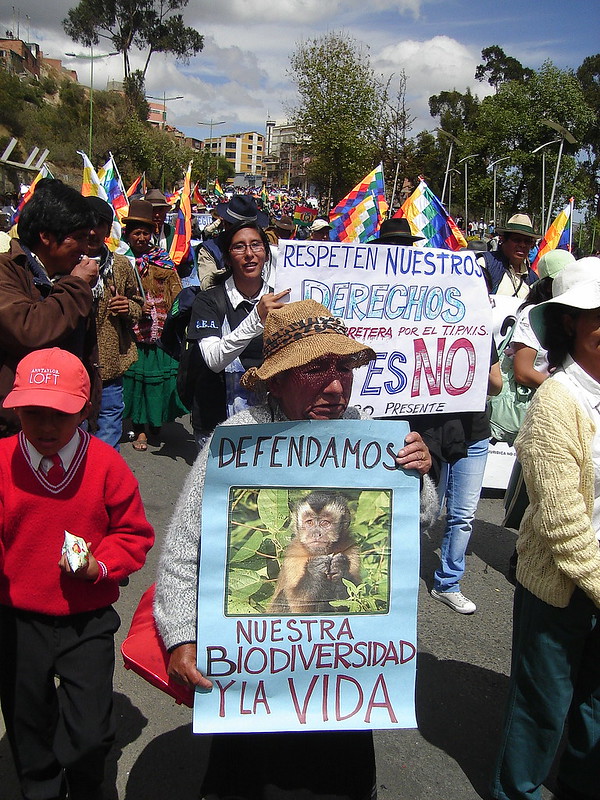
Indigenous groups in Bolivia march in defense of the TIPNIS/ Pablo Andrés Rivero/ Flickr/ Creative Commons License

In no other region of the world have as many countries ratified International Labor Organization Convention 169 – requiring that governments consult Indigenous communities before approving projects that may detrimentally impact them – as Latin America, but human rights due diligence standards adopted by companies involved in investment projects are proving much more effective in guaranteeing adequate and effective consultations rather than government action. This is true even though ILO 169 requires that governments consult with local communities before giving the green light to investment or development projects that affect Indigenous lands, natural resources, and water supplies. 

  • Neither Canada nor the United States has ratified ILO 169, and they were among only four countries that voted against the United Nations Declaration on the Rights of Indigenous Peoples (UNDRIP) when it came up for a vote in the UN General Assembly in 2007, which endorsed the “free, prior, and informed consent” principle. Colombia was the only Latin American country not to fully embrace the UNDRIP.

Despite widespread ratification of ILO 169 and endorsement of the UNDRIP, Latin America is plagued by social conflicts involving Indigenous peoples who feel they were never adequately consulted. The most infamous example was in 2009 at Bagua in Amazonian Peru, when the administration of President Alan García used lethal force to counter protests by Indigenous peoples opposed to legal changes that facilitated energy, mining, and agricultural concessions on their lands. The violence resulted in the deaths of 34 people (mostly policemen) and hundreds of injured. Many of these social conflicts have delayed the completion of major energy and mining projects throughout Latin America for years, sometimes forcing their abandonment or the revocation by governments of previously granted concessions. The direct financial losses incurred by businesses have been huge, not to mention the damage to corporate branding image.  

  • One reason for persistent conflicts throughout Latin America is that ILO 169 offers no definitive answer as to what happens if an Indigenous community vetoes a proposed project. Presumably that wouldn’t occur if the consultation were effective. But ILO 169 is vague on the precise consultation process a government must follow, leading to wide national variations as to who must be consulted and how. Although the UNDRIP implies that Indigenous peoples have the right to reject a project, its provisions are not considered legally binding by most governments unless specifically incorporated into domestic law. Even in Bolivia, one of the few countries where “free, prior and informed consent” is the law of the land, this did not prevent the administration of President Evo Morales from going ahead with a highway through the TIPNIS reserve in eastern Bolivia over the objections of its Indigenous inhabitants.

The growing importance of Environmental, Social and Governance (ESG) criteria in corporate decision-making, including the adoption of internal human rights due diligence policies and practices, may finally lead to effective consultation mechanisms that accept the notion that Indigenous peoples have the final say in either approving or rejecting a project that threatens their way of life or will permanently displace them from ancestral lands. For one thing, good faith consultation with Indigenous peoples is now a recognized international human right. More importantly, businesses are not absolved by a government’s failure to fulfill the obligation to consult Indigenous peoples on projects affecting them.

  • Multilateral lending agencies such as the Inter-American Development Bank have developed performance standards that include a consent requirement that must be adhered to by any company seeking their financing for investment projects that may impact Indigenous people. In addition, equity investors with investment risk management concerns are emerging as important guarantors of corporate consultation and consent with Indigenous communities, particularly in the natural resource extraction industry.
  • If the ESG criteria weren’t a big enough stick for private sector compliance, there is also an emerging trend in Europe and at the UN to make human rights due diligence principles mandatory for businesses. For example, France passed a law in 2017 that requires companies with a substantial presence in the country to adopt reasonable vigilance measures to allow for risk identification and for the prevention of severe violations of human rights directly or indirectly from the operations of the companies and their subsidiaries.  Businesses that do not meet their vigilance obligations are liable for damages incurred by victims. These emerging legal obligations encompass not only the foreign operations of corporations but increasingly extend to the entire production and supply chain. 

October 28, 2021

* Thomas Andrew O’Keefe is the President of Mercosur Consulting Group, Ltd and author of the chapter “Human Rights Due Diligence Practices for Adequate and Effective Consultation with Indigenous Peoples” in a forthcoming book to be published by the American Bar Association.

Latin America: Is COVID Creating Space for Tax Reform?

By Tasha Fairfield*

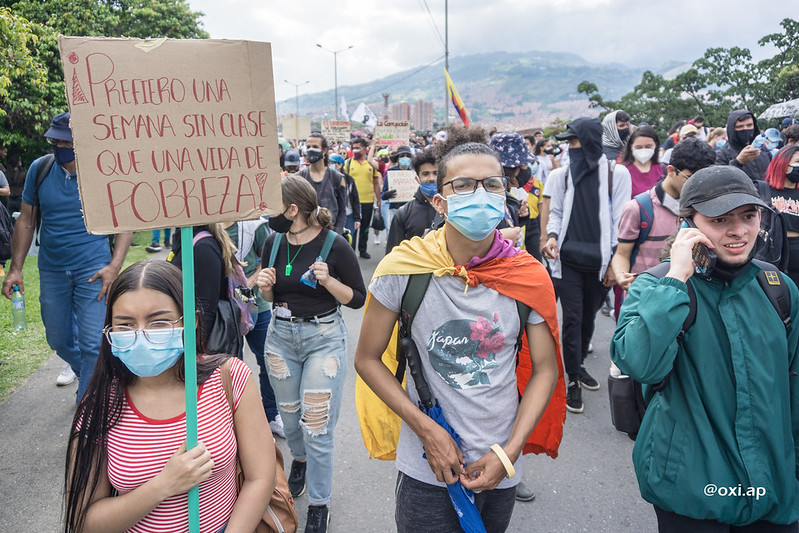
National strike in Colombia against the Duque administration’s proposed tax reform/ Oxi.Ap/ Flickr/ Creative Commons License

The COVID‑19 pandemic and associated fiscal stress have pushed taxation to the forefront of national political agendas in Latin America and beyond, but leaders need to learn from past failures to achieve success. The question of taxing the rich has gained salience, giving rise to multiple proposals for wealth taxes around the globe. Debate over raising revenue to finance social spending and other pandemic-related priorities by taxing economic elites is particularly important in Latin America, given its staggering inequality.

  • Economically, raising revenue from the upper crust of the income and wealth distribution can actually be optimal and efficient, as Piketty and Saez have shown. From a normative perspective, almost everyone agrees that, in principle, those with more should bear a larger portion of the tax burden. Taxing the rich should be especially popular in highly unequal countries, where the rich are a tiny fraction of the populations and the vast majority would stand to benefit.  

The politics of taxing economic elites tend to be more complicated, however. On the one hand, big business conglomerates and wealthy individuals often enjoy multiple sources of power that end up mattering more than public opinion during the policymaking process. On the other hand, while the majority may approve of progressive taxation, neither voters nor social movements have given priority to demanding that economic elites be taxed more heavily. They tend to see taxation as not directly affecting average citizens, and the technical details of reform initiatives can be difficult. Public support can nevertheless play an important role in counterbalancing the power of economic elites – especially during electoral periods, when politicians tend to be more concerned about what voters want.

  • When progressive tax initiatives do not visibly and narrowly target economic elites – as occurred in Bolivia’s attempt to reinstate an individual income tax in 2003 – the public may reject them. In the Bolivian case, Finance Ministry experts designed a technically appealing flat tax that would be easy to administer yet progressive in practice, thanks to a threshold exemption that produced higher effective tax rates for higher income earners. But the flat marginal tax rate sparked widespread misperception that the proposal was regressive.
  • Inconsistent government messaging also fostered misperceptions that the tax would affect a wide swath of Bolivians. President Gonzalo Sánchez de Lozada at one point asked the “middle class” to “assume this sacrifice,” even though in reality that “middle class” was only a tiny, privileged group of highly paid wage-earners and independent professionals. The proposed reform ended up provoking popular protests, despite the fact that most participants would have been exempt from the tax, and the reform was quickly abandoned. 

The pandemic era increases the opportunity that a strategy linking tax reform to social spending – an approach that has been used successfully in many previous instances – will gain momentum. Programs that provide tangible benefits naturally draw greater interest and support from popular sectors than taxes targeting economic elites.

  • The more immediate and visible the associated benefits, such as expanded and more generous cash transfers, the more effective this strategy can be. In Chile, for example, center-left governments in the 1990s and 2000s made popular social spending initiatives contingent on tax increases, leaving the rightwing opposition exposed to popular wrath if they the chose to vote against the package. An analogous approach is earmarking tax increases to finance social programs. Technocrats dislike earmarking because it creates budget rigidities, but the political advantages are clear.
  • The pandemic has greatly augmented social need and threatens to exacerbate inequality. Colombia’s experience last May, however, shows that linking spending to taxes alone may not be enough. The Duque administration’s proposed tax reform was explicitly intended to finance expansion of basic income support for poor Colombians, and the measures were presented together within a single reform package. Yet the initiative failed because the tax measures were not adequately targeted at economic elites. A second effort later in the year fared better because the sales tax measures and a proposed income tax threshold reduction were removed.

October 13, 2021

* Tasha Fairfield is an associate professor in development studies at the London School of Economics. Her book, Private Wealth and Public Revenue in Latin America: Business Power and Tax Politics, examines how and when the interests of economic elites prevail in unequal democracies through comparative analysis of tax reform in Chile, Argentina, and Bolivia after economic liberalization.