(Not) Welcome to Florida: The Impact of Anti-Immigrant Policies

By Katheryn Olmos

Image of Welcome to Florida: The Sunshine State sign retrieved from Flikr

The atmosphere is so thick in Florida, you could cut it with a knife. Immigrants feel like they cannot catch a breath. As one immigrant told me, “every day there is something new.” Imagine having to check a map of zones to avoid every time you want to go outside, commuting further away from home to shop for groceries, having to refrain from speaking your native language in public, or avoiding going out to get coffee with a friend to lower the risk of encountering ICE raids or deportation. Living in constant fear, paranoia, and mistrust is no way to live.

State patrols will sit along highways to spot white working vans. In one case, a construction worker was pulled over in his working white van one evening at the end of January because his headlights were “too opaque.” The police officer asked him, “How long have you been in the U.S.?” to which the worker replied, “Over 20 years.” Then the officer gives him a ticket for driving without a license and tells him to go on with his day.

Shortly after the incident, Florida Governor Ron Desantis announced that he would enforce Section 287(g) of the Illegal Immigration Reform and Immigrant Responsibility Act of 1996. Therefore, the Florida Highway Safety and Motor Vehicles (FLHSMV) will join forces with the U.S. Immigration and Customs Enforcement (ICE). Through this partnership, ICE authorizes the Florida Highway Patrol to arrest and detain undocumented immigrants. State troopers will now ask individuals about their immigration status on day-to-day traffic stops. Additionally, state troopers are authorized to detain those suspected to be undocumented, regardless of their actual immigration status. This would completely dismiss the notion of “innocent until proven guilty,” leading to racial profiling of Latino drivers and causing fear among Florida residents. Florida residents have seen an increase in law enforcement. Latinos are more frequently reporting seeing people they know stopped and detained by law enforcement. It feels that this policy is only targeting the brown and immigrant community in Florida.

As Florida faces various problems, including the housing crisis, high home and auto insurance premiums, environmental crisis, and idle hurricane impacts, Desantis believes the so-called “immigration crisis” is the biggest issue at hand. On February 13, Desantis signed the “toughest immigration law in the country.” With this legislation, Desantis will allocate $298 million for detaining and deporting immigrants and increase the penalty for crimes committed by immigrants, including requiring the death penalty for undocumented immigrants who commit capital crimes. Additionally, Desantis is creating a new crime of entering the state of Florida as an undocumented person on top of the already existing federal crime of entering the U.S. through an irregular pathway.

There has been an increase in people moving in from out-of-state, including former residents of New York, California, and New Jersey. Many of them are moving to a state where their out-of-state wages for remote work or social security payments get them further, and the politics better align with their conservative beliefs. The changing demographics and anti-immigrant politics in Florida have also been creating a hostile environment for immigrant Floridians.

While Florida is experiencing an increase in residents from out of state, there is also an increase in immigrant residents moving to safer places out of state. Fleeing persecution is a recurring theme for immigrants; they often find themselves in a state of movement and fear while hoping to one day achieve the American Dream. Those who have lived in Florida for many years, even decades, face significant challenges when it comes to leaving their homes. Many immigrants who have established homes, businesses, children, and pets would prefer to remain in Florida. Immigrants who have built lives in Florida or lack the financial resources to leave are modifying their social and economic behaviors out of fear of deportation.

Florida is already witnessing the impact of migrants no longer participating in their social and economic atmosphere. Businesses that rely on Latino consumers are feeling this impact. Restaurants and other franchises that tend to be busy on weekend nights are empty. Rosy, a frequenter of Jacksonville, Florida’s Latino nightlife, says local Latino bar and club events are practically empty. She states that Latino clubs that always had long wait times to enter now have no lines.

Construction work is down due to high interest rates, weather conditions, and labor shortages. Despite Desantis’ push for mass deportations to solve the housing crisis in Florida, we need immigrants to solve the housing crisis in Florida. On February 20, 6 Mexican workers were detained at a gas station on Southside Blvd. in Jacksonville, Florida. Every day more and more innocent Latinos are detained by ICE. Instilling fear against our most vulnerable yet essential members of the community is not the solution to any of the state’s problems

Katheryn Olmos is a Research Assistant at the Center for Latin American and Latino Studies and a graduate student at the Sociology Research and Practice program at American University.

Edited by Ernesto Castañeda, Director, and Emma Wyler, Wilfredo Flores, intern at the Center for Latin American and Latino Studies and the Immigration Lab.

New York City’s Shift To The Right

By Caryalyn Jean

One surprising trend that emerged from the 2024 elections was New York City’s subtle shift to the right. Although the overall results of how each of the five boroughs that make up the city did not change, Trump gained 30% of the overall votes in the 2024 election as opposed to 19% in 2016. There were significant shifts in working-class neighborhoods in the Bronx and Queens. One reason for this may have been the high cost of living in New York and believing that Trump would bring prices down. Nonetheless, we must consider xenophobic messaging on both sides of the political aisle to get the full picture.

Since the initial arrival to of busses with immigrants and asylum seekers from Texas and Arizona to New York City, harmful rhetoric about them has had real-life implications. For instance, in late January 2024 reporting began surrounding an altercation which took place in Times Square between NYPD and a group of migrants. Former Police Commissioner Edward Caban responded to the incident with, “a wave of migrant crime has washed over our city.”  Mayor Eric Adams described the incident as “an attack on the foundation of our symbol of safety.” Despite body cam footage released just a few days after the initial reporting, both the media and residents alike repeated the messaging purported by Eric Adams and the NYPD Residents sharing the Eric Adams administration’s belief that migrants’ presence is correlated to an increase in crime in the city is reflected in the results of May 2024 poll. Of the 974 eligible New York City voters surveyed, “over 70 percent blamed migrants in the city for the current crime rate, with 41 percent saying immigration is having a ‘significant’ impact and 31 percent saying a ‘fair amount’ of impact.” 

New Yorker’s shift to the right is not limited to the presidential election. Another election result that may appear surprising to some is Republican Stephan Chan’s New York State Senate District 17 win, beating incumbent Iwen Chu. In 2020, New York State underwent a redistricting cycle, and Iwen Chu was the first representative of the newly formed district and served as representation for the growing Asian population in the area. Reporter Michael Lange described Chu’s loss as the solidification of “the Chinese Republican realignment in Southern Brooklyn.” On his campaign website, Stephan Chan emphasized being an immigrant from Hong Kong, a long time Bensonhurst resident, his law enforcement background, and his strong family ties. He also emphasizes his opposition of “wasteful spending of our tax dollars” juxtaposed to photo of himself at a protest opposing the building of a homeless shelter in Gravesend. Unsurprisingly, Chan’s opposition is not limited to homeless shelters. In a campaign ad, a supporter states, “he won’t hand out freebies to migrants while we pay the price.” This reflects not only Chan’s stance on spending on resources for migrants, but of some New Yorkers who often feel like New York City provides recently arrived migrants with services that long-time New Yorkers do not have access to.

On the national level, the growing anti-immigrant sentiment can be seen in how New York’s Congresspeople voted on the Lanken-Riley Act. This bill will allow the Department of Homeland security to detain undocumented immigrants who have been accused of burglary, theft, larceny or shoplifting. It also allows for states to sue the federal government for “decisions or alleged failures related to immigration enforcement.” Opponents of the bill are concerned about the erosion of due process for those accused of crimes and the lack of funding that is required to implement it. On January 23, 2025, the bill passed 263 to 156, with 6 out of 17 New York House members representing Downstate New York voting “Yea.” The bill was signed by President Trump on January 29, 2025. 

These election results amongst other things have already caused great concern around the upcoming mayoral and gubernatorial races. Ironically, despite Adam’s law and order campaign, he is in legal trouble. Likewise, since fall 2024, New Yorkers have been left many questions. During a November 6, 2024, news conference, Eric Adams was asked about his administration’s plans to cooperate with Donald Trump’s mass deportation efforts. In reply, Adams stated “We cannot add to the anxiety and fear that people are experiencing.”  The following week, Adams affirmed New York City’s sanctuary city status but stated that he believed that laws surrounding local law enforcement’s cooperation with Immigration and Customs Enforcement should be changed. Adams was also present as Trump’s inauguration and cancelled his attendance at various Martin Luther King Day celebrations to many New Yorker’s dismay. His reluctance to outright denounce Trump’s stance on immigration and recent ICE raids has caused uneasiness for immigrant advocacy groups within the city and causes further speculation that Adam’s refusal to publicly critique Trump is for his own personal gain. Democrats have long relied on New York City to keep New York State blue but shifts to the right in New York City may lead to the party losing its stronghold in the country.

Caryalyn Jean, Sociology Research and Practice MA (SORP) Student at American University

Ecuador: The Formation of Gangs in Prison Systems

By Erica Criollo

January 17, 2024

Solidarity rally in Queens, New York by members of the Ecuadorian diaspora. Photo by Erica Criollo 

On January 7th, 2024, José Adolfo Macías Villamar, alias“Fito,” the leader of one of Ecuador’s most prominent gangs, was found missing from his luxury prison cell the day he was meant to be transferred to a maximum-security prison to be held in isolation.

While Macías began his 34-year sentence in 2011, he remained the leader of the criminal gang, Los Choneros, due to their longstanding influence over government officials and extensive illicit drug networks. Following his escape, the country descended into chaos resulting in President Daniel Noboa declaring that the country was under “armed internal conflict” to mitigate gang wars and the killings of police officers.

This presidential declaration has prompted questions as to how Ecuador could have experienced such a sudden upsurge in gang violence. Along with government corruption, the escalation can be traced to the gradual formation of gangs dominating prison systems over several years. 

 In 2003, Los Choneros, who are associated with Mexican and Colombian cartels, took control of the drug trafficking route in the province of Manabí, Ecuador, from where drug shipments were sent to Mexico, the United States, and several European countries. Transnational networks and external groups engaged in the illicit drug trade utilized Ecuador’s coasts, leveraging its access to major shipping routes and ports to transport illicit drugs across international borders. 

Furthermore, Ecuador’s adoption of the U.S. dollar, coupled with inadequate enforcement and prevalent corruption, has facilitated money laundering by drug traffickers through industries such as real estate, illegal mining, and the illicit timber trade. This impacted the way corruption played a role in the country’s efforts to combat such illicit activities. 

When Former President Rafael Correa took office in 2007, he gained public favor through his initiative to remove the United States from the Manta military base from which the U.S. has been controlling anti-drug efforts with targets against the Colombian illicit drug trade since 1999.

However, following the U.S. withdrawal from the Manta military base, the country witnessed a worsening of drug trafficking. Former President Correa failed to stop the activities of groups like Los Choneros and other Mexican cartels, allowing the unhindered transportation of drugs to and from Ecuador.

Before Macías, Los Choneros was led by Jorge Luis Zambrano, alias “Rasquiña,” who, while incarcerated, directed orders alongside arrested gang members. By 2010, the group had transitioned to operating within prison systems and communicating with members on the outside. This operational shift steered the group away from international drug trafficking, focusing instead on micro-trafficking, contract killings, extortion, and contraband activities.

Emerging factional gangs, including Los Choneros, Gorras, Lagartos, Latin Kings, and the Cubanos, have become more extensive and aggressive, leading to deadly conflicts in prisons. In 2019, a brutal fight claimed the lives of several inmate gang members at Penitenciaria del Litoral, and in 2021, a prison riot resulted in the deaths of 119 inmates in the same facility. These deviations of gangs were also a result of government initiative in dismantling gang groups through the transfer of leaders between prisons, but it only multiplied the presence of gang wars.

Following Zambrano’s death in 2020, Macías obtained leadership, triggering an uproar of chaos and gang violence across the country as gang leaders fought to dominate. Despite being in prison, Macías remained in control. For him, communication with members was not an obstacle, as several reports indicate Macías’ prison cell had plugs to charge his cell phone and an internet router. Macías was also open to sharing his lavish living space on social media, regularly throwing parties, and having access to weapons, appliances, liquor, jewelry, and ceramics.

Ecuador has experienced a long trajectory of government corruption which has led to an escalation in gang formation and violence in prison systems. With Macías’ most recent escape, the country has been submitted to crazed gang members responsible for several car bombings, kidnappings, and slayings of prison guards and innocent civilians. In response to President Daniel Noboa’s crackdown on gang members in prisons, gang leaders on the outside have resorted to hostage-taking, capturing military and prison guards. These captives are coerced into recording messages, pleading with President Noboa to halt military operations in prisons and cease the killing of gang members. The objective behind these threats is to secure the gangs’ dominance within prisons and ensure the unrestricted proliferation of gang members. 

In one such video shared on Facebook, a gang member asserts, “Just as you safeguard the right to life of Ecuadorian citizens, we too have the right to live…we are not afraid of your tactics.” In essence, Ecuador is confronted with a formidable coalition of gangs wielding enough power to subvert the law and pursue their objectives, fueled by their substantial numbers and collective readiness to act in unison to carry out attacks. 

Currently, President Noboa’s plan to overpower gang violence is to enforce stricter regulations in prisons. However, this raises concerns for Ecuadorian citizens alarmed by several online videos featuring hostages pleading with the government for compliance to spare their lives. As events unfold, President Noboa’s actions will require careful consideration to ensure that no more civilian lives are endangered and to respect the human rights of all people. 

*Erica Criollo is a Graduate Research Assistant of the Immigration Lab at American University. 

Creative Commons license. Free to republish without changing content for news and not-for-profit purposes. 

Blinken and Mayorkas visited Mexico to Discuss Migration

By Ernesto Castañeda

January 11, 2024

Republicans in Congress are denying funding to Ukraine and Israel over migration and border security, but the premises and assumptions used to discuss the issue fail to take the following elements into account.

It is hard to determine if numbers are really without precedent. There has been a change in that immigrants come and turn themselves in to try to come in with a legal immigration status, such as through asylum or the regularization programs available to Ukrainians, Afghans, Cubans, Haitians, Venezuelans, Nicaraguans, and other groups. In previous decades, many low-skilled workers knew there were no avenues to enter legally and would try to pass undetected and live undocumented in the United States. That is less common today for so-called low-skilled, recently arrived immigrants. So, an imaginary example would be to count people who once would mainly drive to New York City for the holidays and then compare them to a time when most people would arrive via plane. It would be easier to count the people arriving on planes, but that would not necessarily mean that there are more people arriving now by plane than the ones who arrived driving in the past. 

Historically, numbers are not comparable because, before Title 42, apprehensions were counted versus encounters afterward. Previously, most apprehensions would happen inside the U.S., while today, most people present themselves in groups and in a visible manner at ports of entry, along the physical border, or in front of the border wall. Another important difference is that in the past, undocumented workers relied on established family members and networks to get provisional housing and food and find a job. Many recent arrivals may not have close people in the United States and are actively asking for temporary housing and food from city governments. The U.S. does this for refugees and has done it in the past for Cubans and others escaping repressive regimes. Research and history show that these short-term expenses have been good investments, given that refugees and immigrants are more likely than U.S.-born individuals to work, start businesses, and be innovative leaders. Republicans in Congress have denied requests from the White House to provide funding to cities to cover some of these costs.

Some propose detention as deterrence, but prolonged detention in the United States is very expensive and mainly benefits the companies or workers providing and managing detention centers.

A misconception repeated in the media is that most people are immigrating illegally. That is technically incorrect because people are presenting themselves to immigration authorities. Many migrants are applying to legal programs, asking for asylum, or being placed in deportation proceedings.

The situation that we are seeing at the border and some of the solutions proposed indicate some important points that have been rarely discussed,

1) Border walls do not work. Smugglers can cut them, and people can walk around them or come in front of them on U.S. territory. 

2) People are turning themselves in, so contrary to what Trump said recently, authorities know where people are from and where they are going. They have notices to appear in immigration court, and they register an address in order to receive notices and updates if they want to continue with their asylum process and regularize their status. In the past, a great majority of people go to their migration court hearings.

3) CBP One appointments are too cumbersome to make, and there are not enough slots available, so people are showing themselves at ports of entry and between them.

4) The parole program for Haitians, Cubans, Venezuelans, and Nicaraguans is working to create a more rational and orderly process. Taking the program away —as Republicans in the Senate want—would make things worse. 

5) Putting more pressure on Mexico to deport more people and stop them from getting to the border is unsustainable. Mexico cannot manage the issue by itself unless it gets pressure and funding from the U.S. and international organizations, like Colombia does, to establish immigrant integration programs for immigrants who want to stay in Mexico, and it provides paths to citizenship for them. 

Thus, Blinken, Mayorkas, and their companions and team’s visit to Mexico is important. Mexico has been a willing partner, agreeing to take people from third countries under the Remain in Mexico and Title 42 programs, but those programs could only work temporarily. Mexico has also increased the number of deportations. However, deportation only works if people are unwilling to try multiple times. Increasing immigration surveillance, deterrence, and deportation does make arriving in the U.S. harder. It also makes it more expensive and thus attractive for organized crime to get involved in it as a business, thus getting more people to the border once they figure out the business model and logistics even with new policies in place. 

Mexican President Andrés Manuel López Obrador has asked for a regularization of U.S. relations with Cuba and Venezuela. There have been positive steps with Venezuela already. This could be a good opportunity to remove Cuba from the list of states sponsoring terrorism, which would reduce some of the emigration pressure in Cuba. 

Mexican authorities have disbanded many caravans and slowed the trek of thousands of migrants. Nevertheless, people who are escaping violence and persecution or have sold everything will try to get to the United States. 

Long-term ways to address the root causes of migration are to continue providing international aid and supporting democratic institutions. One has to keep in mind human rights. The Mexican Supreme Court of Justice has found that profiling people suspected to be migrants in buses to be unconstitutional. To engage the Mexican Army is not the solution either.

The silver lining is that despite the images we see in the news and seasonal peaks, it is not as if all the world is on the way to the U.S.-Mexico border. Most people want to stay home.

Congresswoman Delia C. Ramirez (IL-03)

Congresswoman Delia C. Ramirez (IL-03) presenting immigration policies the Congress could be working on instead.

In the January 10 hearing towards impeaching DHS Secretary Alejandro Mayorkas, Republicans repeated many myths, cliches, and anti-immigrant talking points but did not propose any sensible solutions. It was remarkable that Democrats in the committee saw the political nature of the exercise, and many offered actual solutions to improve the situation at the border and inside the United States in a way that makes the immigration and asylum processes more humane and above ground.

Ernesto Castañeda is the Director of the Center for Latino American and Latino Studies and the Immigration Lab at American University.

Creative Commons license. Free to republish without changing content for news and not-for-profit purposes. 

North America: More Support Than Meets the Eye

By Malcolm Fairbrother, Tom Long, and Clarisa Pérez-Armendáriz*

Mexican President Andrés Manuel López Obrador (L) and Canadian Prime Minister Justin Trudeau (R) join President Joe Biden for the North American Leaders Summit (NALS) at The White House/ The White House/ Flickr/ United States government work

U.S., Canadian, and Mexican leaders’ support for North American integration has ebbed and flowed in the years since the North American Free Trade Agreement (NAFTA) was signed in 1994. But our analysis of some previously little-known polls taken a few years ago shows that, even when support for trade integration and other big-picture institutional initiatives has been weak, interest in some forms of cooperation has been relatively strong in all three countries.

  • Discussions of North American integration have been fraught from the beginning. Fiery debates over NAFTA in the early 1990s meant politicians had to work hard to sell regional cooperation. Canadian politicians’ approach to North America has been pragmatic, low-key, and mostly bilateral with the United States. U.S. politicians gave North American cooperation a tepid embrace at best, until Donald Trump turned to repeatedly badmouthing NAFTA and both neighbors. Although Mexican political and business leaders’ enthusiasm for NAFTA has cooled in recent years, and President Andrés Manuel López Obrador is a longtime NAFTA critic, they have made a reluctant peace with its regional economic structures.

Perceptions of NAFTA as a political loser paint too dark a scenario for North American cooperation. Though U.S. views briefly soured and polarized in 2016-17, strong public support for the agreement’s successor – the U.S.-Mexico-Canada Agreement (USMCA) – suggest those negative views were short-lived. North American cooperation beyond trade enjoys robust support. Our analysis of surveys conducted before the “Trump shock” shows that respondents in Canada, Mexico, and the United States have long favored more cooperation in a variety of areas, albeit with a few important qualifications. In our recently published study, Areas, Sovereignty Costs, and North Americans’ Attitudes Toward Regional Cooperation, we show: 

  • The three countries share strikingly similar aggregate levels of support for free trade. But levels of support for regional coordination in six different issue areas – currency, energy, defense, economic affairs, environment, and border security – vary by issue and country, and are often higher. For respondents, it matters “on what” North America cooperates in ways that questions about trade and NAFTA do not capture. For example, there was significant support in all three countries for regional policy coordination with respect to environmental protection and border security.
  • Mexicans show the highest level of aggregate support for regional cooperation, but also the greatest variation by issue area, suggesting that they are attuned to the potential costs and benefits of cooperating in an asymmetrical region. Only Mexicans express much support for North American currency coordination, but they showed comparatively little desire for cooperation in energy. They are strong backers of border and environmental cooperation.
  • Although Canadians are skeptical of the benefits of some aspects of the relationship, they also identify cooperation on the border and environment as worth pursuing. Canadians expressed the lowest average support for policy coordination. In contrast to their government’s approach, Canadians slightly prefer trilateralism to bilateralism. Indeed, Canadians, Mexicans, and Americans don’t always want to cooperate trilaterally. Americans report stronger support for regionalism with Canada alone, rather than trilateral cooperation with both Canada and Mexico. 

North America is a highly asymmetric, U.S.-centric region. That shapes patterns of public attitudes as Canadians and Mexicans are concerned about national vulnerabilities vis-a-vis the United States. Mexican citizens’ support appears to be shaped by perceptions that Mexico stands to gain from regional cooperation on many shared problems that Mexico struggles to address alone, such as the environment and border security. Still, support for coordination in the United States also was comparatively high for border security, perhaps a result of politicians’ dramatizing a supposed U.S. inability to “control” the border. 

  • Paying attention to the issues where public support exists and overlaps may allow supporters of regional projects to build on firmer – albeit narrow – ground.

March 22, 2022

Malcolm Fairbrother is Professor in the Department of Sociology, Umeå University and the Institute for Futures Studies, Sweden, and the Department of Sociology, University of Graz, in Austria. Tom Long is Associate Professor in the Department of Politics and International Studies, University of Warwick, UK and Affiliated Professor in the División de Estudios Internacionales, Centro de Investigación y Docencia Económicas, Mexico. Clarisa Pérez-Armendáriz is Associate Professor the Politics Department and Program in Latin American and Latinx Studies at Bates College, USA. This article, part of the Robert A. Pastor North American Research Initiative, draws on “Issue-Areas, Sovereignty Costs, and North Americans’ Attitudes Toward Regional Cooperation,” published recently in Global Studies Quarterly. The underlying surveysRethinking North America, were conducted in 2013 by Miguel Basáñez, Frank Graves, and Robert Pastor. 

Biden’s North American Reset?

By Tom Long and Eric Hershberg*

Map of North America/ Public Domain/ Creative Commons License

A North American approach to regional cooperation could make a comeback under the administration of U.S. President Joe Biden. Though promoted with little enthusiasm by President Obama and derided by the Trump administration, the utility of North American cooperation is suggested by a combination of factors: the desire to turn the page on Trump’s transactional approach to neighbors, interest in “near-shoring” as a result of the pandemic and frictions with China, and the growing salience of shared transnational challenges.

  • Trump played on anti-NAFTA and anti-Mexican sentiments in his rise to power. He followed his divisive campaign with dramatic standoffs over the border wall, tariffs on Canada and Mexico, and nativist immigration and asylum policies. Policy statements from the Biden campaign, Democratic Party platform, and transition team suggest the new president will be eager to signal his rejection of such policies, making a pro-North American stance attractive in the broader context of a return to multilateralism. To be sure, elements of the Democratic Party long harbored skeptical views of North American cooperation (especially NAFTA), but the anti-North American stance is now thoroughly associated with Trump, and Democrats have found themselves defending the concept during the last four years.
  • The pandemic and rising tensions with China have raised questions about the desirability of far-flung supply chains, at least for sensitive products like medical and telecommunications equipment. Revelations about forced-labor practices in China have also put human rights back on the trade agenda. This is an issue for Canada, too, given its tensions with China over electronics giant Huawei. At the same time, it presents an opportunity for Mexico.
  • Transnational challenges including public health, migration, and security have long provided a rationale for greater policy coordination in North America. Many of these issues have grown from irritants to major problems given the neglect and perverse U.S. policies of the last four years.

Under President Biden, these factors may give North American cooperation a new lease on life. As a regional policy framework, “North America” could give renewed stimulus to North American economic integration, which had stagnated due to China’s rise, increased border controls after September 11, 2001, limited investment in coordination or infrastructure, and various migration and security crises along the U.S.-Mexico border. Trump’s rhetorical and policy barrage has awakened powerful interests to defend economic integration at the same time that it has motivated civil society organizations to defend North America’s integrated transnational communities.

Progress is likely even if the phrase “North America” is slow to return. NAFTA was officially replaced in July 2020 by a new pact that preserved most of its features but stripped “North America” from its name. (The three signatories have named the deal differently – USMCA in the U.S., TMEC in Mexico, and CUSMA/ACEUM in Canada – but none includes “North America.”) The separation of “North America” from the pact creates, counterintuitively, an opportunity to expand the understanding of the region and related policy frameworks.

  • Politically, “North America” could provide a useful space for Mexican President Andrés Manuel López Obrador, who has shown little interest in Biden’s initiatives for bilateral cooperation and has provoked tensions with Washington through his handling of the Cienfuegos case, to provide leadership.
  • Practically, many deeply “North American” issues, particularly migration, suggest a wider understanding of the region to include parts of Central America and the Caribbean. Tensions about Central American migration will be high on the new administration’s agenda, but addressing these challenges through a North American lens offers a constructive contrast to Trump’s narrow nationalism.
  • Economically, given the contrast between countries of South America that have been more deeply reliant on exports to China versus those that are still most closely linked to the U.S. market, a broadened North America could provide a forum – larger and more diverse than NAFTA but smaller and more focused than the Summit of the Americas – to address regional policy challenges.

President Biden inherits an old trilateral region that seemingly has no name and a badly damaged economic partnership, but the gravitational pull of the U.S. market, new rhetoric and policies from Washington, and other underlying drivers should restore the economic and political importance of the region, offering an opportunity to rethink the boundaries and purpose of North America.

January 21, 2021

* Tom Long is Associate Professor at the University of Warwick and Chair of the Robert A. Pastor North American Research Initiative at American University. Eric Hershberg is Director of the Center for Latin American and Latino Studies and Professor of Government at American University.

USMCA: Devil’s in the Details on Automotive Content

By Frank L. DuBois*

Automated manufacturing of cars

Automated car manufacturing/ Steve Jurvetson/ Flickr/ Creative Commons License

The automotive trade regime in the recently completed U.S.-Mexico-Canada Trade Agreement (USMCA) – “NAFTA 2.0” – will create headaches for many manufacturers but appears unlikely to deliver the big boost in jobs it promises. Much of the focus of the negotiations was on changing the automotive rules of origin (ROOs) to encourage more auto manufacturing in the United States and Canada and make it difficult for automakers to shift production from high-wage locations to low-wage factories in Mexico. Under the new rules, some manufacturers will see significant changes in operational strategies while others will be less impacted.

According to the agreement, a 2.5 percent tariff will be applied to the import value of cars (25 percent for light trucks) if the vehicles don’t meet the new ROOs:

  • 70 percent Regional Value Content (RVC) rather than 62.5 percent under the old rules.
  • 40 percent of the Labor Value Content (LVC) of vehicles (45 percent in the case of light trucks) must be made in plants that employ workers making at least $16 per hour.
  • 70 percent of the value of steel and aluminum used in the vehicle must be of regional origin.

The Kogod Made in America Auto Index (KMIAA), which I’ve been compiling for seven years, challenges assumptions used when calculating the U.S. content of a car, including some used as marketing strategies to portray products as being more “American” than what a buyer might think.

  • KMIAA results and rankings differ significantly from those indices that evaluate domestic content solely based on where a car is assembled, without taking into account the country of ownership of the brand. (Japanese, Korean and German car manufacturers are treated the same as U.S. manufacturers despite non-US R&D and profits that are repatriated back to the home country). Location of manufacture of engines and transmissions, which account for approximately 21 percent of vehicle value, may also not be addressed in other indices. Likewise, assembly labor accounts for around 6 percent of vehicle value.
  • The index reveals the complicated nature of content calculations. Toyota assembles only one vehicle at its plant in Tijuana – the Tacoma light truck with an engine of either U.S. or Japanese origin (depending on displacement) and a transmission of either U.S. or Thailand origin. Toyota has made the same truck in San Antonio, Texas, but recently announced that all of Tacoma production will be moving to the Mexican factory. Toyota is likely to reduce its non-North American sourcing (fewer engines and transmissions from Asia), and restructure supply chains to place a premium on U.S. parts and power train sourcing. Other manufacturers face greater shifts. The Audi Q5, for example, currently has 79 percent Mexican parts content and only 3 percent U.S. parts.

Producers’ operational responses are likely to run the gamut from full compliance to limited changes. Some automakers may simply pay the WTO tariff of 2.5 percent for access to the U.S. market. A separate requirement that at least 40 percent of the value of cars be made in plants with $16 per hour labor will be problematic given that wages in Mexican auto plants average $3 to $4 per hour. Producers will have to decide whether to raise wages in Mexican plants, shift sourcing to U.S. and Canadian plants, or attempt to develop ways to game the system by shifting some high-wage expenses into the labor value category. While the new rules may boost some manufacturing jobs in the U.S. and Canada, they will raise costs leading to lower auto sales, and have nowhere near the impact that their boosters have promised. Again, the devil is in the details.

March 5, 2020

* Frank L. DuBois is an Associate Professor of Information Technology and Analytics at American University’s Kogod School of Business. Data for the KMIAA comes from data automakers provide under the American Automotive Labeling Act (AALA) and from field visits to car lots in the DC metropolitan area.

AMLO’s Foreign Policy: A Blast from the Past, or Abandoned Dream?

By Laura Macdonald*

AMLO Cabinet

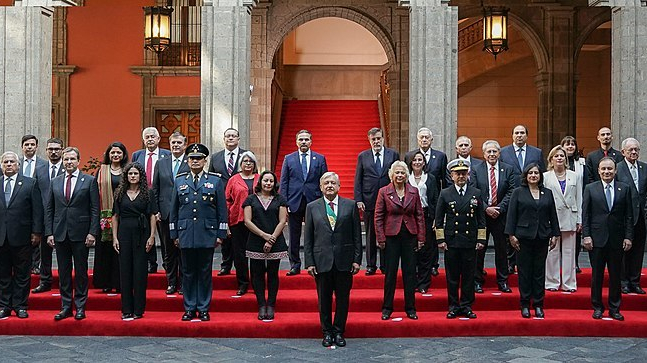
López Obrador stands with members of his cabinet for an official photo in December 2018/ Prensa AMLO/ Wikimedia Commons/ https://commons.wikimedia.org/wiki/File:Andres_Manuel_Lopez_Obrador_2.jpg


Mexican President Andrés Manuel López Obrador (AMLO) took office last January with a pledge to focus almost exclusively on his country’s many internal challenges, but international affairs have intruded upon his wish to downplay foreign policy, forcing him to make difficult compromises.

  • AMLO rode into office with the slogan “la mejor política exterior es la política interior” (the best foreign policy is domestic policy). Mexico’s high levels of corruption, impunity, entrenched poverty, widespread violence, and human rights violations were his top priorities. He was elected with a mandate to clean up the political system and crack down on the “mafia of power,” which he and millions of Mexicans perceived as the source of most of their country’s problems. The unpopular foreign policy of his predecessor, PRI president Peña Nieto – who tried to curry favor with President Trump and his family despite the U.S. President’s repeated insults to Mexico and Mexicans – encouraged a more nationalist response as well.
  • In his inaugural speech in the Mexico City zócalo, he laid out an approach to foreign policy based on themes of self-determination, non-intervention, peaceful solution to disputes, development cooperation, defense of human rights, and the rights of migrants. This position is reminiscent of the deeply rooted policy of non-intervention known as the Estrada Doctrine adopted by the Partido Revolucionario Institucional (PRI), the long-time Mexican dominant party, in the 1930s. AMLO’s political roots are in that party and reflect that heritage – he has said he won’t travel outside of the country except to sign international agreements and he skipped the June G20 summit in Osaka, Japan.

Nevertheless, the world has intruded upon AMLO. Trump’s statements and actions have forced him to act and react, and Central America’s crises have thrust him into an overwhelmingly hostile regional context. He has had mixed results:

  • Despite his previous opposition to free trade, AMLO made a strategic decision to renegotiate NAFTA and to refrain from direct confrontation with the Trump administration. Mexico was forced to accept various measures that may harm its interests in the long term, including the rules for domestic origin and intellectual property rights.
  • He has continued Mexico’s traditional principles of non-intervention and self-determination – the Estrada Doctrine – and advocated for the recognition of existing regimes instead of meddling in their internal affairs. This position has led to a break with the position of the Lima Group, of which it is still a member, regarding Mexico’s position so far has been vindicated by the failure to date of the Lima Group’s advocacy of regime change and the bellicose position of the Trump administration, but Mexico has not been seen to be playing a leading role in orchestrating negotiations in response to the Venezuelan crisis, and is isolated from the position of the U.S., Canada, and most Latin American states.
  • Despite early statements in which the AMLO administration cast migration as not inherently problematic and called for policies to address the causes of Central American migration, it subsequently shifted its position under intense U.S. pressure and agreed to policies that would limit the numbers of migrants crossing into the United States from Mexico and create a growing humanitarian challenge within Mexico itself.
  • As part of AMLO’s law of “republican austerity,” he has closed trade and agricultural offices in embassiesand consulates around the world, and has eliminated the offices of ProMéxico, which promoted international trade and investment into Mexico. Diplomatic staff, untrained in commercial issues, are supposed to take over their responsibilities. This decision, framed as scaling back the swollen ranks of highly paid public officials, will affect the government’s ability to diversify trade and investment away from the U.S. market and reduce its ability to defend the country’s interests in ongoing trade negotiations.

The AMLO government faces the daunting prospect of trying to respond to Trump without risking economic disaster or losing all shreds of national dignity. In the context of an already globalized economy, Mexico cannot achieve its domestic priorities without a recognition of the importance of foreign policy and active international engagement, in tandem with progressive allies – other governments as well as domestic and international civil society. So far, he has been able to navigate these shoals and retains high levels of popularity at home, but his economic policies focused on re-activation of the domestic market and have not yet born fruit. A more active and progressive foreign policy could help shore up his domestic and international legitimacy as the economy lags.

September 5, 2019

* Laura Macdonald is a Professor in the Department of Political Science and the Institute of Political Economy at Carleton University in Ottawa.

U.S.-Mexico: Tariffs, Threats, and Trade Agreements

By Ken Shadlen*

Cargo ships

Cargo ships off shore of Galveston Island, TX / Jocelyn Augustino / Creative Commons / https://commons.wikimedia.org/wiki/File:FEMA_-_38860_-_Cargo_ships_off_shore_of_Galveston_Island,_TX.jpg

The United States’ threat last week to apply tariffs on imports from Mexico, unless Mexico revamped its approach to Central American migrants passing through the country, underscores the power asymmetries in the global economy – and undermines the credibility of U.S. trade agreements elsewhere. President Trump threatened to abrogate U.S. commitments under NAFTA (and the WTO) unless Mexico introduced measures in an area that is not addressed by NAFTA. While the tariffs won’t be applied, at least not now, and there is debate about just how much Mexico changed its migration policies as a result of Washington’s maneuver, the linkage between trade and “non-trade” issues such as immigration, especially within preferential trade agreements such as NAFTA, have deep implications for the political economy of international trade.

  • Many critics of Trump’s threats claim that immigration policy and trade policy are distinct, and that it makes no sense for the administration to link the two. But this misses the point: what is and is not “trade” is determined politically. Since the 1980s, the United States has conditioned market access on the introduction and enforcement of a wide range of “trade-related” policies, including investment, intellectual property, government procurement practices, and so on. Market size confers to the importing country the power to define what constitutes “trade,” and the definition of “trade” thus has changed according to Washington’s preferences. In that sense, Trump’s linkage maneuver is not at all new.
  • On the one hand, NAFTA is the outcome of massive linkage of this sort, as Mexico was required to introduce extensive changes to policies and practices in a range of trade-related policy areas in order to qualify for the agreement. On the other hand, NAFTA was meant to protect against further “ad hoc linkage,” with new conditions attached at the whim of the United States.
  • Prior to NAFTA, Mexico’s exports largely entered the U.S. market under the Generalized System of Preferences (GSP), which offers preferential market access to exports from developing countries under a wide range of conditions. But GSP preferences can be withdrawn unilaterally, and, as the importing country, the United States changed GSP preferences in response to its changing sentiments. Beneficiary countries always ran the risk of having the U.S. Congress and Executive attach additional conditions to the program, like ornaments on a Christmas tree.
  • NAFTA and other NAFTA-like trade agreements that have followed promised to deliver substantially more predictability and stability than the GSP.

Recent events question these premises. In 2017-18, Trump warned that Washington would withdraw entirely from NAFTA unless it was renegotiated on terms more to his liking. Last week’s threat to remove preferential market access unless Mexico changed its immigration policies and practices is precisely the sort of behavior that NAFTA was meant to protect against. The agreement supposedly replaced the unstable preferences of GSP, which were always vulnerable to the whims of U.S. politicians, with a new set of preferences that were clearly defined, had fixed conditions, and were less prone to being unilaterally withdrawn. But evidently it didn’t.

Washington’s actions are similar to if the Mexican government announced it would stop enforcing copyrights and patents of U.S. firms, unless the United States were to substantially increase science and technology assistance to help upgrade the stock of biologists, chemists, and engineers in Mexico. The reaction to such an announcement would be ridicule, and Washington would claim NAFTA (and the WTO) binds Mexico to protect intellectual property. The United States would assert, moreover, that its science and technology assistance is not covered by NAFTA; Mexico’s threat would elicit no change of behavior on the part of the US. 

  • Beyond NAFTA per se, these events make one wonder why any country would sign a trade agreement with the United States. After all, if countries already have preferential market access under the GSP, then one of the main benefits of reciprocal trade agreements is to lock-in and stabilize those preferences – even with the need to make substantial concessions on “trade-related” policy areas. If, in reality, only half of the bargain is locked in, if the benefits can be made to disappear at the whim of the U.S. President, then for many trading partners the benefits of such agreements will be unlikely to compensate for the costs.

June 11, 2019

*Ken Shadlen is Professor of Development Studies and Head of Department in the Department of International Development at the London School of Economics and Political Science.

Trump on NAFTA: An Offer Canada Can’t Refuse?

By Malcolm Fairbrother*

Chrystia Freeland meets with Mexican President Enrique Peña Nieto

Canadian Foreign Minister Chrystia Freeland meets with Mexican President Enrique Peña Nieto in July 2018. / Presidencia de la República Mexicana / Flickr / Creative Commons

U.S. President Donald Trump’s threat last week to abrogate free trade with Canada while signing a new bilateral agreement with Mexico alone has led many to think that NAFTA – which will be 25 years old on January 1, 2019 – has no future.  But the likeliest outcome remains just a set of fairly modest changes to the agreement.  Much of Trump’s bluster on NAFTA does not reflect the facts in U.S.-Canada-Mexico trade, though Canadian officials will still have to take his threats seriously.  Canadian Foreign Minister Chrystia Freeland, whose government sat out the United States’ renegotiation of NAFTA with Mexico this summer, rushed to Washington after the bilateral accord was announced, launching new talks with U.S. counterparts.  While Trump has said he will make no concessions, Freeland has continued seeking common ground, and looks ready to compromise on at least some issues.

  • The best econometric studies suggest that North American free trade has had disappointingly modest benefits – nowhere near advocates’ earlier projections. But the transition costs of moving to a world without free trade would still be enormously costly for Canada.  The economic and political risk of the highly unlikely, but not completely inconceivable, scenario of losing NAFTA entirely are just too great for the Canadian government to bear.

Canada, which in past negotiations stood up for Mexico on some key issues, now finds itself in the ironic position of looking to Mexico for support.  The two countries are often in a position to benefit from working together, but Trump’s wrath has tempted each to throw the other under the bus – a classic prisoner’s dilemma.

  • In the last few weeks, Mexico decided to give the U.S. what it wanted: most importantly, protectionist rules of origin for autos and textiles, and some enhanced intellectual property rights. Mexico calculated that, compared to Trump’s threats not long ago to kill NAFTA in its entirety, these concessions were a modest price to pay to keep the agreement alive.  Also importantly, Mexican leaders appear to have avoided a national humiliation of epic proportions – putting an end to Trump’s dream of getting Mexico to pay for the wall he wants to build on the border.
  • Looking for a much-needed “win,” Trump has now made an offer he thinks Canada can’t refuse. His wish list covers things Canada specifically fought hard for in the original free trade talks back in the 1980s and 90s, including protections for Canada’s cultural industries and agricultural supply management programs, and what Canada’s trade minister said in 1992 were “the vitally important dispute settlement provisions” of Chapter 19.  Now, just as Canadian opponents of free trade forewarned in the 1980s, Canada’s economy has become so enmeshed with that of its much larger neighbor that the government cannot say no to the demands of an aggressive administration in Washington.

Yet the situation does not spell disaster for U.S.-Canada trade or for Canada itself.  Trump’s claims notwithstanding, the U.S. Congress has final say over U.S. trade policy, and most of its members (with business lobbyists whispering in their ears) recognize that severing the many economic ties built up between Canada and the United States over the last quarter-century would be unnecessarily disruptive and costly.  Freeland and her negotiators will know that Trump’s threat to kill free trade is not really credible.

  •  Even caving on all of Trump’s demands would not be catastrophic for Canada. Contrary to Trump’s zero-sum perspective on trade (like on everything else) as an international battleground, most of the important conflicts with respect to trade are actually within countries.  Canada’s supply management system favors the country’s producers at the expense of consumers, for example, just as do strict rules of origin for U.S. textiles manufacturers.  So while the transition costs of dismantling free trade in North America would be substantial, the impacts of the changes Trump is proposing would be tolerable to all three countries – even if some make no sense (the sunset clause); are just giveaways to specific industries (stricter patents for pharmaceuticals); or favor some industries at the expense of others (U.S. lumber producers and U.S. home builders, respectively, as regards the possible elimination of Chapter 19).  For Canada’s government, the heaviest costs of compromise will be political: Justin Trudeau’s Liberal government will have to choose which bitter pill to swallow, as any concessions will lead to angry recriminations from one domestic constituency or another.

September 7, 2018

* Malcolm Fairbrother is Professor of Sociology at Umeå University and a researcher at the Institute for Futures Studies, both in Sweden.  He is originally from Vancouver, and has been a visiting researcher at multiple institutions in all three countries of North America. He has also participated in the Center’s North America Research Initiative.